EP1275965A1 - Verfahren zum Identifizieren von Substanzen, die die Interleukin-4 (IL-4) Signalkette beeinflussen - Google Patents
Verfahren zum Identifizieren von Substanzen, die die Interleukin-4 (IL-4) Signalkette beeinflussen Download PDFInfo
- Publication number
- EP1275965A1 EP1275965A1 EP01117097A EP01117097A EP1275965A1 EP 1275965 A1 EP1275965 A1 EP 1275965A1 EP 01117097 A EP01117097 A EP 01117097A EP 01117097 A EP01117097 A EP 01117097A EP 1275965 A1 EP1275965 A1 EP 1275965A1
- Authority
- EP
- European Patent Office
- Prior art keywords
- stat6
- ncoa
- amino acid
- polypeptide
- seq
- Prior art date
- Legal status (The legal status is an assumption and is not a legal conclusion. Google has not performed a legal analysis and makes no representation as to the accuracy of the status listed.)
- Withdrawn
Links
Images




Classifications
-
- G—PHYSICS
- G01—MEASURING; TESTING
- G01N—INVESTIGATING OR ANALYSING MATERIALS BY DETERMINING THEIR CHEMICAL OR PHYSICAL PROPERTIES
- G01N33/00—Investigating or analysing materials by specific methods not covered by groups G01N1/00 - G01N31/00
- G01N33/48—Biological material, e.g. blood, urine; Haemocytometers
- G01N33/50—Chemical analysis of biological material, e.g. blood, urine; Testing involving biospecific ligand binding methods; Immunological testing
- G01N33/68—Chemical analysis of biological material, e.g. blood, urine; Testing involving biospecific ligand binding methods; Immunological testing involving proteins, peptides or amino acids
- G01N33/6872—Intracellular protein regulatory factors and their receptors, e.g. including ion channels
-
- A—HUMAN NECESSITIES
- A61—MEDICAL OR VETERINARY SCIENCE; HYGIENE
- A61P—SPECIFIC THERAPEUTIC ACTIVITY OF CHEMICAL COMPOUNDS OR MEDICINAL PREPARATIONS
- A61P11/00—Drugs for disorders of the respiratory system
- A61P11/06—Antiasthmatics
-
- A—HUMAN NECESSITIES
- A61—MEDICAL OR VETERINARY SCIENCE; HYGIENE
- A61P—SPECIFIC THERAPEUTIC ACTIVITY OF CHEMICAL COMPOUNDS OR MEDICINAL PREPARATIONS
- A61P35/00—Antineoplastic agents
-
- G—PHYSICS
- G01—MEASURING; TESTING
- G01N—INVESTIGATING OR ANALYSING MATERIALS BY DETERMINING THEIR CHEMICAL OR PHYSICAL PROPERTIES
- G01N2500/00—Screening for compounds of potential therapeutic value
- G01N2500/02—Screening involving studying the effect of compounds C on the interaction between interacting molecules A and B (e.g. A = enzyme and B = substrate for A, or A = receptor and B = ligand for the receptor)
Definitions
- the present invention belongs to the field of identification of pharmaceutically active substances and the use of such substances in therapy, in particular in inflammatory airway diseases.
- IL-4 dependent signaling plays an important role in regulation of immune and/or anti-inflammatory responses in inflammatory airway diseases, for example asthma.
- IL-4 regulates immune and anti-inflammatory responses. It promotes the differentiation of T helper precursors towards the Th2 lineage while inhibiting Th1 development.
- IL-4 stimulation of B cells triggers immunoglobulin class switching to IgE isotype. This recombination is thought to be initiated following the transcriptional activation of the germline s promoter which leads to the generation of the sterile ⁇ transcript.
- Most of the IL-4 regulated functions are mediated by the s ignal t ransducer and a ctivator of t ranscription 6 (STAT6).
- STAT6 belongs to the STAT protein family, which transmit signals from activated cytokine receptors to the nucleus. Following their cytokine-induced tyrosine phosphorylation exerted by Janus kinases (JAKs). STATs dimerize and move to the nucleus where they modulate transcription through specific DNA sequence elements (Darnell 1997; Darnell et al., 1994; Ihle 1996). So far, seven mammalian STATs have been identified (STAT1, STAT2, STAT3, STAT4, STAT5a, STAT5b, STAT6). They share the same structure of functional domains.
- the N-terminal portion mediates cooperative binding of multiple DNA sites (Vinkemeier et al., 1996; Xu et al., 1996).
- the region that determine the DNA binding site specificity is located between amino acids 400 and 500 (Horvath et al., 1995).
- the SH2 domain mediates association with the activated receptor (Greenlund et al., 1994; Stahl et al., 1995) and dimerization via reciprocal SH2-phospho-tyrosine interaction (Schindler et al., 1995; Shuai et al., 1994).
- the C-terminal part constitutes the transactivation domain (Darnell 1997; Hoey and Schindler 1998).
- STAT3 and STAT5 are expressed in most cell types and activated by a variety of cytokines and growth factors, other STAT proteins play specific roles in host defenses (Darnell 1997).
- STAT6 is activated in response to IL-4 (Hou et al., 1994) and IL-13.
- STAT6 deficient mice have defects in IL-4 mediated functions including Th2 development, induction of CD23 and MHC class II expression, immunoglobulin class switching to IgE, demonstrating the essential role of STAT6 in these IL-4 responsive induced functions (Kaplan et al., 1996; Shimoda et al., 1996).
- STAT6 binding sites have been identified in several of IL-4 responsive genes. They are best characterized in the Ig germline ⁇ promoter, which contains a composite binding element for STAT6 and the CAAT/enhancer-binding protein (C/EBP) (Delphin and Stavnezer 1995).
- the transactivation domain of STAT6 was characterized as a modular, proline-rich region in the C-terminus of the protein.
- Activation of transcription in general requires the recruitment of transcriptional co-activators, which are part of chromatin remodeling complexes possessing histone acetyl transferase activities and serve a bridge to the basal transcriptional apparatus (Hampsey and Reinberg 1999).
- transcriptional co-activators which are part of chromatin remodeling complexes possessing histone acetyl transferase activities and serve a bridge to the basal transcriptional apparatus (Hampsey and Reinberg 1999).
- Functionally conserved co-activators CREB binding protein (CBP) and p300 could be identified to be recruited by STAT6 and required for transcriptional induction by IL-4 (Gingras et al., 1999).
- p300/CBP are also recruited by different classes of transcription factors, including nuclear receptors (NR), AP-1, p53, p65 subunit of NFkB and STAT1, STAT2 and STATS (Goodman et al 2000; Pfitzner et al., 1998)
- NCoA nuclear co-activator
- SRC- steroid receptor co-activator
- NCoA-1/SRC-1 Onate et al., 1995; Kamei et al.1996); NCoA-2/TIF2/GRIP1 (Voegel et al., 1996; Hong et al., 1997) and p/CIP/ACTR/AIB1 (Torchia et al., 1997; Chen et al., 1997; Anzick et al., 1997) have been identified. NCoA factors can also associate with p300/CBP (Kamei et al., 1996; Yao et al., 1996).
- NCoA-1 nuclear coactivator 1
- STAT6 activating gene expression in response to IL-4 is strongly enhanced by and is depending on NCoA-1 (nuclear coactivator 1) in vivo and in vitro as set forth in example 2.
- NCoA-1 interacts directly with STAT6 whereas no other member of the NCoA co-activator family bind to STAT6.
- Over-expression of the STAT6 interacting domain of NCoA-1 inhibits transactivation by STAT6 in a transdominant manner.
- NCoA-1 binds independently to a specific part of the STAT6 transactivation domain.
- the present invention provides a method and/or a test system to determine whether a substance can modulate, i.e. acts as an inhibitor or activator of IL-4 dependent signaling.
- a substance can modulate, i.e. acts as an inhibitor or activator of a biological activity of STAT6.
- the present invention also provides pharmaceutical compositions and methods for treating animals, preferably human beings suffering from an inflammatory airway disease, preferably asthma.
- biological activity of STAT6 includes, for example, an interaction of STAT6 with as well as the binding of STAT6 to factors other than STAT6 which are necessary to induce transcription.
- the preferred meaning of the term "biological activity of STAT6" in the context of the invention is inducing transcription as a result of IL-4 signaling, the more preferred meaning is the interaction of STAT6 with and binding to NCoA-1 resulting in forming a complex as a prerequisite to induce transcription of genes with STAT6 responsive elements, preferably in an inflammatory airway disease.
- the invention also concerns functional equivalents, like naturally occurring alleles, derivatives, variants, mutants, and fragments of STAT6 having the ability to interact with as well as bind to NCoA-1.
- a fragment of STAT6 comprising at least amino acid 677 to 847 of STAT6 (SEQ ID NO:2), more preferred is a fragment comprising at least amino acids 792 to 847 (SEQ ID NO: 5).
- Such a fragment may be fused to another amino acid sequence.
- such a derivative can be a fusion polypeptide comprising e.g . part of a glutathione S transferase fused to at least amino acid 677 to 847 of STAT6, as exemplified in SEQ ID No.1.
- NCoA-1 i.e. enhancing a biological activity of STAT6 preferably in an inflammatory airway disease is dependent, for example, on interaction of NCoA-1 with STAT6, preferably direct binding of both proteins.
- the invention also concerns functional equivalents, like naturally occurring alleles, derivatives, variants for example the homologous human amino acid sequence, mutants and fragments of NCoA-1 having the ability to interact with as well as to bind to STAT6.
- the present invention relates to a fragment of NCoA-1 comprising at least amino acid 212 to 463 of NCoA-1.
- Such a fragment may be fused to an other amino acid sequence.
- such a derivative can be a fusion polypeptide comprising e.g.
- His tag histidine tag
- NCoA-1 or a fragment thereof is labeled with a detectable label, for example fused to a histidine tag.
- the present invention concerns a method which can be performed in a cellular system as well as in a cell free system for determining whether a substance is able to modulate the interaction of STAT6 with NCoA-1, preferably a method for determining whether a substance is an activator i.e. promotes the interaction of both peptides or an inhibitor i.e. prevents said interaction.
- This method is characterized in that STAT6 or fragments or derivatives thereof having the ability to bind to NCoA-1 are brought into contact with NCoA-1 or fragments or derivatives of NCoA-1 having the ability to bind to STAT6 under conditions where STAT6 and NCoA-1 or said fragments or derivatives are capable of forming a complex, and said complex can be used to induce a measurable readout Said readout is measured in the absence or presence of the substance of interest.
- measuring a readout comprises techniques known in the art to detect that STAT6 and NCoA-1 or fragments or derivatives thereof according to the invention have been interacted according to the invention. For example direct detection of a formed complex according to the invention can be performed e.g.
- NCoA-1 or fragments or derivatives can be used, for example one of said interacting polypeptides can be labeled with e.g. a fused histidine tag and recognized by a molecule which specifically binds to the tag e.g. a histidine specific antibody.
- Said antibody can be detected by techniques well known in the art e.g. using a second antibody which itself is linked e.g. to an enzyme which is capable of catalyzing a measurable reaction, for example by detecting reaction products like modified substrates or by-products e.g. like emitting light.
- the present invention concerns a test method for determining whether a substance is an activator or inhibitor of said interaction according to the invention. Since an interaction of STAT6 with NCoA-1 triggering IL-4 signaling is involved in a inflammatory airway disease and plays a role in mediating inflammation, a substance modulating the biological activity of STAT6 and or of NCoA-1 can be used for treating a inflammatory airway diseases, preferably asthma, or can be used as lead compound for optimization of the function of the substance in a way that the optimized substance is suitable for treating inflammatory airway diseases, preferably asthma.
- the present invention also concerns a test method for determining whether a substance is an activator or an inhibitor of the interaction of STAT6 with NCoA-1.
- a test system useful for performing a method of the invention may comprise a cellular or a cell-free system.
- one embodiment of the invention concerns a test system that is designed in a way to allow the testing of substances acting on the interaction of STAT6 with NCoA-1 or fragments or variants or derivatives thereof according to the invention, e.g. using expression of a reporter-gene, e.g. luciferase gene or the like, as a measurable readout regulated by a STAT6 responsive element.
- a test method according to the invention can on the one hand be useful for high throughput testing suitable for determining whether a substance is an inhibitor or activator of the invention, but also e.g. for secondary testing or validation of a hit or lead substance identified in high throughput testing.
- test system for performing a method of the invention, a test system according to the invention can be used.
- a test system of the invention may comprises, elements well known in the art. Said test system is designed in a way to measure the interaction of STAT6 with NCoA-1 or fragments or derivative according to the invention which can be performed by immobilizing one of the interacting polypeptides on a solid surface preferably on the bottom of a vessel more preferred on a ELISA plate.
- the other polypeptide preferably detectably labeled more preferred labeled with a histidine tag as well as the substance of interest or a mock control, optionally in a suitable solvent is added under conditions enabling both said polypeptides to bind to each other.
- Prior to detect the interaction of said polypeptides according to the invention i.e. prior to the detection of the formed complex unbound polypeptides can be removed to promote detection of said complex which can be performed by measuring the amount of detectably labeled second polypeptide bound to the first polypeptide.
- the present invention also concerns a substance identified in a method according to the invention to be an inhibitor or activator of the interaction of STAT6 with NCoA-1 according to the invention.
- a substance of the present invention is any compound which is capable of activating or preferably inhibiting a function of said interaction according to the invention.
- An example of a way to activate or inhibit a function of said interaction is by binding to one of respective polypeptides with a higher affinity and thereby blocking binding domain and/or a functional domain of at least one of said polypeptides, which can be done reversibly or irreversibly, depending on the nature of the substance applied.
- the invention also concerns a substance which is e.g. an antibody or an organic or inorganic compound directly binding to or interfering with said interaction and thereby affecting STAT6's biological activity.
- the present invention also relates to the use of a substance according to the invention for the treatment for a inflammatory airway disease.
- a pharmaceutical composition comprising at least one of the substances according to the invention determined to be an activator or an inhibitor.
- the composition may be manufactured in a manner that is itself known, e.g. by means of conventional mixing, dissolving, granulating, dragee-making, levigating, powdering, emulsifying, encapsulating, entrapping or lyophilizing processes.
- the substances can be tested in animal models for example an animal suffering from an inflammatory airway disorder or a transgenic animal over-expressing STAT6 and or NCoA-1.
- Toxicity and therapeutic efficacy of a substance according to the invention can be determined by standard pharmaceutical procedures, which include conducting cell culture and animal experiments to determine the IC 50 , LD 50 and ED 50 .
- the data obtained are used for estimating the animal or more preferred the human dose range, which will also depend on the dosage form (tablets, capsules, aerosol sprays ampules, etc.) and the administration route (for example transdermal, oral, buccal, nasal, enteral, parenteral, inhalative, intratracheal, or rectal).
- a pharmaceutical composition containing at least one substance according to the invention as an active ingredient can be formulated in conventional manner. Methods for making such formulations can be found in manuals, e.g. "Remington Pharmaceutical Science”. Examples for ingredients that are useful for formulating at least one substance according to the present invention are also found in WO 99/18193, which is hereby incorporated by reference.
- the invention concerns a method for treating a inflammatory airway disease according to the invention.
- Such method comprises administering to a being, preferably to a human being, in need of such treatment a suitable amount of a pharmaceutical composition comprising at least one substance determined to be an activator or inhibitor by a method according to the invention for determining whether a substance is an activator or an inhibitor of the interaction of STAT6 with NCoA-1 according to the invention.
- the invention relates to a method for selectively modulating interaction of STAT6 with NCoA-1 according to the invention comprising administering a substance determined to be an activator or inhibitor said interaction.
- Example 1 is meant to illustrate the present invention, however, shall not be construed as limitation. However, the Example 1 describes most preferred embodiments of the invention.
- GST-STAT6 aa 677-847 and His-tagged NCoA-1 aa 212-463 are expressed in E. coli, purified by affinity-chromat connecting and dialyzed against 1xPBS according to the art.
- the obtained signal gives a measure of the amount of NCoA-1, which has bound to the STAT6.
- Table 1 His-NCoA-1 (aa 212-463) bound to GST-STAT6 (aa 677-847) in an ELISA Assay. No. coated protein Added Partner protein 1. Antibody 2. Antibody Extinction 493 nm s. d. 1. GST-STAT6 (677-847) His-NCoA-1 (212-463) ⁇ -Penta-His ⁇ -mouse-HRP 0,795 0,036 2. - His-NCoA-1 (212-463) ⁇ -Penta-His ⁇ -mouse-HRP 0,097 0,036 3.
- GST-STAT6 (677-847) - ⁇ -Penta-His ⁇ -mouse-HRP 0,006 0,000 4. - - ⁇ -Penta-His ⁇ -mouse-HRP 0,005 0,001 5.
- GST-STAT6 (677-847) His-NCoA-1 (212-463) - ⁇ -mouse-HRP 0,006 0,000 6.
- His-NCoA-1 212-463) - ⁇ -mouse-HRP 0,005 0.001
- the signals in the presence of the test compounds can be compared to the control value e.g. in the absence of a test substance.
- Example 2 IL-4 signaling inducing STAT 6 dependent transcription is enhanced by NCoA-1
- NCoA-1 as an important factor in IL-4 signaling
- NCoA-1 enhances the IL-4 induced transcription by STAT6
- NCoA-1 strongly enhances the transactivation potential of the C-terminal tansactivation domain of STAT6
- NCoA-1 enhances STAT6-mediated transactivation
- GAL4-DBD GAL-4 DNA binding domain
- Fig. 2A Two GAL4 fusion proteins, possessing either the main transactivation function of STAT6 (amino acids 677 to 791) and the extreme C terminus of STAT6 (amino acids 792 to 847) (Fig. 2A) are used to investigate, whether NCoA-1 is recruited to these domains.
- the various GAL4-STAT6 TAD constructs and a luciferase reporter construct containing three GAL4 response elements in its promoter region are transiently transfected into HepG2 with or without cotransfection of the coactivator NCoA-1. Expression of the isolated GAL4-DBD does not result in a significant enhancement of the luciferase reporter gene activity, which is also not effected by cotransfection of NCoA-1 (Fig.
- GAL4-STAT6 (677-791) strongly induces the reporter gene expression (lane 3). Cotransfection of NCoA-1 leads to a slight enhancement (lane 4). GAL4-STAT6 (792-847) does not significantly induce the reporter gene activity, indicating that this domain has a minor transactivation potential when fused to the GAL4 DBD. Surprisingly, cotransfection of NCoA-1 strongly enhances the transactivation function of the extreme C terminal domain of STAT6 to a level as high as the main transactivation domain of STAT6 (compare lane 6 and 4).
- NCoA-1 serves as a coactivator of the STAT6 transactivation domain.
- the cell type specific effect of NCoA-1 on the main transactivation domain of STAT6 (aa 677-791) might be due to an indirect recruitment of NCoA-1 to this domain by cell specific factors.
- NCoA-1 and STAT6 interact in vivo. The interaction depends on the presence of the far C-terminal region of STAT6.
- the transactivation domain of STAT6 interacts with NCoA-1, but not with NCoA-2 and p/CIP in vitro.
- NCoA-1 specifically interacts with STAT6 and serves as a coactivator for STAT6.
- the transactivation domain of STAT6 interacts directly with amino acids 212 to 462 of NCoA-1
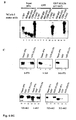
- NCoA-1 contains several structural and functional domains (Fig. 6A). To investigate, which domain in NCoA-1 mediates the interaction with STAT6, we test various fragments of NCoA-1 for interaction with STAT6 in pull-down experiments (Fig. 6A). We use GST STAT6 fusion protein comprising residues 677 to 847 to analyze the binding to various fragments of in vitro translated labeled NCoA-1. We observe specific interaction of an N-terminal fragment spanning amino acids 1 to 781 (Fig. 6B, lane 11) and the full length NCoA-1 protein (lane 15) with GST-STAT6 TAD, but no interaction with GST alone (lanes 6-10).
- Fig. 6A we dissect the N-terminal region of NCoA-1 and test different fragments in pulldown experiments (Fig. 6A).
- NCoA-1 The minimal fragment of NCoA-1, that is still able to interact with GST STAT6 possess the region from amino acids 213 to 462 which comprises the Per-Arnt-Sim (PAS) domain B and part of the serine/threonine rich domain (lane 18). Further deletion of the N-terminus (313-462, lane 21) or the C-terminus (1-361, lane 6) abolish the binding. Strong interaction is also observed when GST STAT6 is incubated with purified Histidin-tagged NCoA-1 (212-462) (data not shown), confirming that the interaction between NCoA-1 and STAT6 is direct and does not depend on additional proteins
- NCoA-1 acts as a dominant negative for transcriptional activation by STAT6
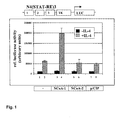
- NCoA-1 but not NCoA-2 and pCIP, enhances the IL-4 induced transcription by STAT6.
- HepG2 cells are transfected with N4(STAT-RE)3 TK LUC reporter plasmid (2 ⁇ g), STAT6 expression vector (25 ng), NCoA-1, NCoA-2, p/CIP or empty expression vectors (200 ng) along with SV40-LacZ expression plasmid (25 ng) as a transfection control, as indicated.
- Transfected cells are either treated with IL-4 (10 ng/ml) for 16 hours (striped bars) or left untreated (filled bars).
- Cell extracts are prepared and luciferase activities are determined. The relative luciferase activities are normalized to ⁇ -galactosidase activities. Average values are given from 3 independent experiments with standard deviations.
- A Structure of human STAT6 and the fusion proteins of the GAL4-DNA binding domain (DBD) with the STAT6 transactivation domain (TAD) are shown.
- the GAL4-DBD amino acids 1 to 147) is fused to different regions of STAT6 TAD. Amino acid (aa) position, DBD, SH2 domain, TAD and the cytokine-dependent phosphorylation site (Y) are indicated.
- Ba/F3 cells are transfected with the reporter plasmid (GAL4-RE)3TK LUC (5 ⁇ g), the plasmids encoding the GAL4-DBD or GAL4-DBD-STAT6-TAD fusion proteins (50 ng), NCoA-1 (500 ng) or empty expression plasmid and SV40- LacZ expression plasmid (1 ⁇ g) as indicated.
- B and C Relative luciferase activities are determined and normalized against ⁇ -galactosidase activities. The average of three independent experiments with standard deviations are shown.
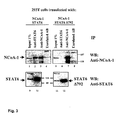
- 293T cells are transfected with expression vector encoding full length or truncated STAT6 along with NCoA-1 expression vector.
- Whole cell extracts are prepared and immunoprecipitated with STAT6-specific antibody, NCoA-1-specific antibody or unrelated antibody. All samples are analyzed by SDS-PAGE and Western blotting with antiserum against NCoA-1 (upper pannel) and STAT6 (lower pannel). An aliquot of the cell lysate corresponding to 1 % of the material used for the assay is analyzed in parallel (lanes 1, 5, 9 and 11).
- Fig. 4 The transactivation domain of STAT6 specifically interacts with NCoA-1 in vitro.
- GST or GST-STAT6 -TAD fusion protein are purified from E. coli, bound to glutathione-Sepharose and incubated with NCoA-1, NCoA-2 or p/CIP respectively, transcribed and translated in vitro in the presence of ( 35 S)methionine. Material bound to the glutathione-Sepharose is recovered from the binding reaction, washed extensively, and analysed by SDS-PAGE and fluorography (lanes 4-9). Input control in lanes 1-3 reflects 10 % of the total amount of ⁇ 35 S ⁇ methionine labeled protein used in the experiments.
- STAT6 contacts NCoA-1 via the far C-terminal part of its transactivation domain.
- NCoA-1 Structure of human STAT6 and the GST-STAT6 TAD fusion proteins.
- NCoA-1 is labeled with ( 35 S)methionine by in vitro translation and incubated with glutathione-Sepharose bound GST or GST-STAT6 fusion proteins as indicated. Specifically bound material is eluted from the glutathione-Sepharose and resolved by SDS-PAGE. An aliquot of the reticulocyte lysate corresponding to 10 % of the material used for the assay is analyzed in parallel (lanes 1). Radioactive labeled protein is visualized by fluorography.
- C To control the amount of GST fusion proteins in the reaction Coomassie staining is performed.
- NCoA-1 mediates interaction with STAT6.
- NCoA-1 constructs (A) Schematic representation of the NCoA-1 constructs. The full-length NCoA-1 and a series of NCoA-1 deletion mutants are shown. Basic helix-loop-helix (bHLH), Per-Arnt-Sim domain (PAS), nuclear receptor interaction domain (NID), CBP interaction domain(CID)/activation domain 1 (AD1), activation domain 2 (AD2) are indicated. The amino acid numbers for each construct are shown. NCoA-1 fragments binding to STAT6 are represented with striped rectangles, non binding fragments with white rectangles.
- NCoA-1 and a series of NCoA-1 fragments are in vitro translated in the presence of ( 35 S)methionine and incubated with GST alone or GST-STAT6-TAD fusion proteins bound to glutathione-Sepharose as indicated. Precipitated proteins are washed, eluted and resolved by SDS-PAGE. Aliquots of the in vitro translated NCoA-1 deletion mutants corresponding to 10 % of the material used for the interaction assay are analyzed in parallel (B lanes 1-5, C lanes 1,4,7,10,16, 19). Radioactive labeled protein is visualized by fluorography.
- A Structure of NCoA-1. Depicted are functional and structural domains basic helix-loop-helix (bHLH), Per-Arnt-Sim domain (PAS) and nuclear receptor interaction domain (NID).
- B Ba/F3 cells are transfected with 200 ng of STAT6 expression vector, 3 ⁇ g of expression vector encoding the indicated fragments of NCoA-1 or empty vector, along with 5 ⁇ g of Ig ⁇ -TK LUC reporter plasmid and 1 ⁇ g of SV40-LacZ expression vector. 4 hours after transfection cells are treated with IL-4 or left untreated. 20 hours after transfection cells are harvested and luciferase activities are determined and normalized against ⁇ -galactosidase activities. The values represent the averages from three independent experiments.
- AIB1 a steroid receptor coactivator amplified in breast and ovarian cancer. Science 277:965-8.
- Nuclear receptor coactivator ACTR is a novel histone acetyltransferase and forms a multimeric activation complex with P/CAF and CBP/p300. Cell 90:569-80.
- IL-4 interleukin 4
- Ligand-induced IFN gamma receptor tyrosine phosphorylation couples the receptor to its signal transduction system (p91). Embo J 13:1591-600.
- GRIP1 a transcriptional coactivator for the AF-2 transactivation domain of steroid, thyroid, retinoid, and vitamin D receptors. Mol Cell Biol 17:2735-44.
- the nuclear hormone receptor coactivator SRC-1 is a specific target of p300. Proc Natl Acad Sci U S A 93:10626-31.
Landscapes
- Health & Medical Sciences (AREA)
- Life Sciences & Earth Sciences (AREA)
- Chemical & Material Sciences (AREA)
- Engineering & Computer Science (AREA)
- Medicinal Chemistry (AREA)
- Molecular Biology (AREA)
- General Health & Medical Sciences (AREA)
- Nuclear Medicine, Radiotherapy & Molecular Imaging (AREA)
- Urology & Nephrology (AREA)
- Animal Behavior & Ethology (AREA)
- Organic Chemistry (AREA)
- Public Health (AREA)
- Veterinary Medicine (AREA)
- Cell Biology (AREA)
- Pharmacology & Pharmacy (AREA)
- Pulmonology (AREA)
- General Chemical & Material Sciences (AREA)
- Biomedical Technology (AREA)
- Chemical Kinetics & Catalysis (AREA)
- Hematology (AREA)
- Immunology (AREA)
- Biotechnology (AREA)
- Bioinformatics & Cheminformatics (AREA)
- Food Science & Technology (AREA)
- Physics & Mathematics (AREA)
- Analytical Chemistry (AREA)
- Biochemistry (AREA)
- General Physics & Mathematics (AREA)
- Pathology (AREA)
- Proteomics, Peptides & Aminoacids (AREA)
- Microbiology (AREA)
- Peptides Or Proteins (AREA)
- Medicines Containing Antibodies Or Antigens For Use As Internal Diagnostic Agents (AREA)
- Investigating Or Analysing Biological Materials (AREA)
- Medicines That Contain Protein Lipid Enzymes And Other Medicines (AREA)
- Measuring Or Testing Involving Enzymes Or Micro-Organisms (AREA)
- Acyclic And Carbocyclic Compounds In Medicinal Compositions (AREA)
- Preparation Of Compounds By Using Micro-Organisms (AREA)
Priority Applications (13)
| Application Number | Priority Date | Filing Date | Title |
|---|---|---|---|
| EP01117097A EP1275965A1 (de) | 2001-07-13 | 2001-07-13 | Verfahren zum Identifizieren von Substanzen, die die Interleukin-4 (IL-4) Signalkette beeinflussen |
| JP2003512712A JP2005500046A (ja) | 2001-07-13 | 2002-06-22 | インターロイキン4(il−4)の情報伝達を調節する物質を確認する方法 |
| DK02784827T DK1410040T3 (da) | 2001-07-13 | 2002-06-22 | Fremgangsmåde til identifikation af stoffer, der modulerer interleukin-4 (IL-4)-signalering |
| ES02784827T ES2275927T3 (es) | 2001-07-13 | 2002-06-22 | Metodo para la identificacion de sustancias que modulan la señalizacion de la interleucina (il-4). |
| DE60216105T DE60216105T2 (de) | 2001-07-13 | 2002-06-22 | Verfahren zur identifizierung von substanzen, die die interleukin 4 (il-4) signalkette modulieren |
| AU2002354584A AU2002354584A1 (en) | 2001-07-13 | 2002-06-22 | Method for identifying substances which modulate interleukin 4 (il-4) signaling |
| EP02784827A EP1410040B1 (de) | 2001-07-13 | 2002-06-22 | Verfahren zur identifizierung von substanzen, die die interleukin 4 (il-4) signalkette modulieren |
| CA2450179A CA2450179C (en) | 2001-07-13 | 2002-06-22 | Identification of stat6 modulators using ncoa-1/stat6 interaction |
| MXPA04000275A MXPA04000275A (es) | 2001-07-13 | 2002-06-22 | Metodo para identificar sustancias que modulan la senalizacion de interleucina 4 (il-4). |
| AT02784827T ATE345505T1 (de) | 2001-07-13 | 2002-06-22 | Verfahren zur identifizierung von substanzen, die die interleukin 4 (il-4) signalkette modulieren |
| PCT/EP2002/006920 WO2003006995A2 (en) | 2001-07-13 | 2002-06-22 | Method for identifying substances which modulate interleukin 4 (il-4) signaling |
| US10/190,866 US7226747B2 (en) | 2001-07-13 | 2002-07-08 | Method of identifying substances which modulate interleukin 4(IL-4) signaling |
| US11/741,136 US7585638B2 (en) | 2001-07-13 | 2007-04-27 | Test system for measuring the interaction of STAT 6 with NCoA-1 |
Applications Claiming Priority (1)
| Application Number | Priority Date | Filing Date | Title |
|---|---|---|---|
| EP01117097A EP1275965A1 (de) | 2001-07-13 | 2001-07-13 | Verfahren zum Identifizieren von Substanzen, die die Interleukin-4 (IL-4) Signalkette beeinflussen |
Publications (1)
| Publication Number | Publication Date |
|---|---|
| EP1275965A1 true EP1275965A1 (de) | 2003-01-15 |
Family
ID=8178039
Family Applications (2)
| Application Number | Title | Priority Date | Filing Date |
|---|---|---|---|
| EP01117097A Withdrawn EP1275965A1 (de) | 2001-07-13 | 2001-07-13 | Verfahren zum Identifizieren von Substanzen, die die Interleukin-4 (IL-4) Signalkette beeinflussen |
| EP02784827A Expired - Lifetime EP1410040B1 (de) | 2001-07-13 | 2002-06-22 | Verfahren zur identifizierung von substanzen, die die interleukin 4 (il-4) signalkette modulieren |
Family Applications After (1)
| Application Number | Title | Priority Date | Filing Date |
|---|---|---|---|
| EP02784827A Expired - Lifetime EP1410040B1 (de) | 2001-07-13 | 2002-06-22 | Verfahren zur identifizierung von substanzen, die die interleukin 4 (il-4) signalkette modulieren |
Country Status (10)
| Country | Link |
|---|---|
| EP (2) | EP1275965A1 (de) |
| JP (1) | JP2005500046A (de) |
| AT (1) | ATE345505T1 (de) |
| AU (1) | AU2002354584A1 (de) |
| CA (1) | CA2450179C (de) |
| DE (1) | DE60216105T2 (de) |
| DK (1) | DK1410040T3 (de) |
| ES (1) | ES2275927T3 (de) |
| MX (1) | MXPA04000275A (de) |
| WO (1) | WO2003006995A2 (de) |
Citations (2)
| Publication number | Priority date | Publication date | Assignee | Title |
|---|---|---|---|---|
| WO1999041608A2 (en) * | 1998-02-12 | 1999-08-19 | Prolifix Limited | Interaction between cyclin d1 and steroid receptor co-activators |
| WO1999050283A1 (en) * | 1998-03-31 | 1999-10-07 | Tularik Inc. | High throughput screening assays for modulators of stat4 and stat6 activity |
Family Cites Families (1)
| Publication number | Priority date | Publication date | Assignee | Title |
|---|---|---|---|---|
| AU9123898A (en) * | 1997-08-27 | 1999-03-16 | Government Of The United States Of America, As Represented By The Secretary Of The Department Of Health And Human Services, The | Attenuated and dominant negative variant cdnas of stat6: stat6b and stat6c |
-
2001
- 2001-07-13 EP EP01117097A patent/EP1275965A1/de not_active Withdrawn
-
2002
- 2002-06-22 JP JP2003512712A patent/JP2005500046A/ja active Pending
- 2002-06-22 MX MXPA04000275A patent/MXPA04000275A/es active IP Right Grant
- 2002-06-22 ES ES02784827T patent/ES2275927T3/es not_active Expired - Lifetime
- 2002-06-22 DE DE60216105T patent/DE60216105T2/de not_active Expired - Lifetime
- 2002-06-22 AT AT02784827T patent/ATE345505T1/de active
- 2002-06-22 EP EP02784827A patent/EP1410040B1/de not_active Expired - Lifetime
- 2002-06-22 DK DK02784827T patent/DK1410040T3/da active
- 2002-06-22 AU AU2002354584A patent/AU2002354584A1/en not_active Abandoned
- 2002-06-22 CA CA2450179A patent/CA2450179C/en not_active Expired - Fee Related
- 2002-06-22 WO PCT/EP2002/006920 patent/WO2003006995A2/en not_active Ceased
Patent Citations (2)
| Publication number | Priority date | Publication date | Assignee | Title |
|---|---|---|---|---|
| WO1999041608A2 (en) * | 1998-02-12 | 1999-08-19 | Prolifix Limited | Interaction between cyclin d1 and steroid receptor co-activators |
| WO1999050283A1 (en) * | 1998-03-31 | 1999-10-07 | Tularik Inc. | High throughput screening assays for modulators of stat4 and stat6 activity |
Non-Patent Citations (1)
| Title |
|---|
| LITTERST CLAUDIA M ET AL: "Transcriptional activation by STAT6 requires the direct interaction with NCoA-1.", JOURNAL OF BIOLOGICAL CHEMISTRY, vol. 276, no. 49, 7 December 2001 (2001-12-07), December 7, 2001, pages 45713 - 45721, XP002193661, ISSN: 0021-9258 * |
Also Published As
| Publication number | Publication date |
|---|---|
| EP1410040B1 (de) | 2006-11-15 |
| DE60216105T2 (de) | 2007-03-01 |
| MXPA04000275A (es) | 2005-07-25 |
| WO2003006995A3 (en) | 2003-11-27 |
| AU2002354584A1 (en) | 2003-01-29 |
| DK1410040T3 (da) | 2007-03-12 |
| ATE345505T1 (de) | 2006-12-15 |
| CA2450179A1 (en) | 2003-01-23 |
| EP1410040A2 (de) | 2004-04-21 |
| CA2450179C (en) | 2011-08-09 |
| JP2005500046A (ja) | 2005-01-06 |
| ES2275927T3 (es) | 2007-06-16 |
| DE60216105D1 (de) | 2006-12-28 |
| WO2003006995A2 (en) | 2003-01-23 |
Similar Documents
| Publication | Publication Date | Title |
|---|---|---|
| Tang et al. | A novel transcription regulatory complex containing death domain-associated protein and the ATR-X syndrome protein | |
| Sun et al. | Interaction of the Ski oncoprotein with Smad3 regulates TGF-β signaling | |
| Long et al. | Pc2-mediated sumoylation of Smad-interacting protein 1 attenuates transcriptional repression of E-cadherin | |
| Ray et al. | STAT3 NH2-terminal acetylation is activated by the hepatic acute-phase response and required for IL-6 induction of angiotensinogen | |
| Gerlitz et al. | Novel functional features of the Lis-H domain: role in protein dimerization, half-life and cellular localization | |
| Ray et al. | Inducible STAT3 NH2 terminal mono-ubiquitination promotes BRD4 complex formation to regulate apoptosis | |
| Nakadai et al. | Two target gene activation pathways for orphan ERR nuclear receptors | |
| AU2001265947B9 (en) | Enzymatic assays for screening anti-cancer agents | |
| US7306905B2 (en) | Method of identifying substances useful for promoting resistance to cell stress | |
| Lefebvre et al. | The tumor suppressor HIC1 (hypermethylated in cancer 1) is O‐GlcNAc glycosylated | |
| AU2001265947A1 (en) | Enzymatic assays for screening anti-cancer agents | |
| US7226747B2 (en) | Method of identifying substances which modulate interleukin 4(IL-4) signaling | |
| EP1275965A1 (de) | Verfahren zum Identifizieren von Substanzen, die die Interleukin-4 (IL-4) Signalkette beeinflussen | |
| Balakrishnan et al. | THAP5 is a DNA-binding transcriptional repressor that is regulated in melanoma cells during DNA damage-induced cell death | |
| Kong et al. | Hepatitis B virus X protein regulates transactivation activity and protein stability of the cancer‐amplified transcription coactivator ASC‐2 | |
| US7229762B2 (en) | Proteomic screening for redox state dependent protein—protein interactions | |
| US20050142634A1 (en) | Novel modulator of non-genomic activity of nuclear receptors (mnar) and uses thereof | |
| US7202024B2 (en) | bbc3 Gene promoter and methods for identifying modulators of apoptosis and bbc3 gene expression using a bbc3 gene promoter | |
| KR101250193B1 (ko) | Bcl3를 이용한 항-세포사멸 또는 세포사멸-유도 물질의 스크리닝 방법 | |
| Zheng et al. | Acetylation and alternative splicing regulate ZNF76-mediated transcription | |
| US20080064027A1 (en) | TEL/Etv6-mediated inhibition of cell proliferation | |
| WO2001081587A1 (en) | Acetyltransferase and uses thereof | |
| Gong | In vitro investigation and characterization of ING1 protein interactions | |
| Polley et al. | T: G mismatch-specific thymine-DNA glycosylase (TDG) as a coregulator of transcription interacts with SRC1 family members... | |
| AU2002315406A1 (en) | BBC3 gene promoter and methods for identifying modulators of apoptosis and BBC3 gene expression using a BBC3 gene promoter |
Legal Events
| Date | Code | Title | Description |
|---|---|---|---|
| PUAI | Public reference made under article 153(3) epc to a published international application that has entered the european phase |
Free format text: ORIGINAL CODE: 0009012 |
|
| AK | Designated contracting states |
Kind code of ref document: A1 Designated state(s): AT BE CH CY DE DK ES FI FR GB GR IE IT LI LU MC NL PT SE TR |
|
| AX | Request for extension of the european patent |
Free format text: AL;LT;LV;MK;RO;SI |
|
| AKX | Designation fees paid | ||
| REG | Reference to a national code |
Ref country code: DE Ref legal event code: 8566 |
|
| STAA | Information on the status of an ep patent application or granted ep patent |
Free format text: STATUS: THE APPLICATION IS DEEMED TO BE WITHDRAWN |
|
| 18D | Application deemed to be withdrawn |
Effective date: 20030716 |