EP1277408A2 - Verwendung von Wasser-in-Öl-Emulsion zur Stabilisierung von Brat- und Siedefett unter Frittierbedingungen - Google Patents
Verwendung von Wasser-in-Öl-Emulsion zur Stabilisierung von Brat- und Siedefett unter Frittierbedingungen Download PDFInfo
- Publication number
- EP1277408A2 EP1277408A2 EP02102031A EP02102031A EP1277408A2 EP 1277408 A2 EP1277408 A2 EP 1277408A2 EP 02102031 A EP02102031 A EP 02102031A EP 02102031 A EP02102031 A EP 02102031A EP 1277408 A2 EP1277408 A2 EP 1277408A2
- Authority
- EP
- European Patent Office
- Prior art keywords
- water
- frying
- oil emulsion
- fat
- deep
- Prior art date
- Legal status (The legal status is an assumption and is not a legal conclusion. Google has not performed a legal analysis and makes no representation as to the accuracy of the status listed.)
- Withdrawn
Links
Images
Classifications
-
- A—HUMAN NECESSITIES
- A23—FOODS OR FOODSTUFFS; TREATMENT THEREOF, NOT COVERED BY OTHER CLASSES
- A23D—EDIBLE OILS OR FATS, e.g. MARGARINES, SHORTENINGS OR COOKING OILS
- A23D9/00—Other edible oils or fats, e.g. shortenings or cooking oils
- A23D9/007—Other edible oils or fats, e.g. shortenings or cooking oils characterised by ingredients other than fatty acid triglycerides
-
- A—HUMAN NECESSITIES
- A23—FOODS OR FOODSTUFFS; TREATMENT THEREOF, NOT COVERED BY OTHER CLASSES
- A23D—EDIBLE OILS OR FATS, e.g. MARGARINES, SHORTENINGS OR COOKING OILS
- A23D7/00—Edible oil or fat compositions containing an aqueous phase, e.g. margarines
- A23D7/005—Edible oil or fat compositions containing an aqueous phase, e.g. margarines characterised by ingredients other than fatty acid triglycerides
- A23D7/0053—Compositions other than spreads
Definitions
- Frying is a preparation process in which the food, z. B. French fries, floating in fat at about 120 to 200 ° C in the presence of Water that is bound in the food is cooked. The heat transfer on the food is carried out through the frying medium (frying fat).
- the frying fat is changed structurally on a regular basis.
- Degradation products are formed as a result of oxidation and Polymerization reactions that negatively affect the quality of the frying fat.
- Many factors play a role here, such as the type and amount of the food to be fried and the nature of the food Deep fryer (surface, volume, type of heat transfer, metal contacts), Frying fat (composition, heat stability, addition of fresh oil) and the type special kitchen technology (filter) and protective measures (use of silicone oils, antioxidants, nitrogen) play a role.
- the Deep-frying medium In the frying process itself, after the first contact of the food with the Deep-frying medium (oil) forms an approx. 0.3 mm edge layer and is initially free in water present in a food (e.g. French fries) to approx. 100 ° C (Meat 80 ° C) heated to then exit the food as water vapor. A temperature of around 100 ° C forms, which slowly penetrates into the interior and desorbed the bound water. This creates a pressure and temperature gradient to the inside of the food (fried food). The high pressure in the The peripheral zone of the food prevents the fat from penetrating into this phase the food. Is not enough heat, z. B. by too low temperature or too much cooling of the fat (too much fried food added) no more water escapes than steam.
- a food e.g. French fries
- 100 ° C Meeat 80 ° C
- a temperature of around 100 ° C forms, which slowly penetrates into the interior and desorbed the bound water. This creates a pressure and temperature
- the core of the food e.g. fries Fries
- the system contains deep-frying fat ⁇ -> food to be fried in a kind of balance.
- the heat energy supplied to the deep fryer is mainly used by the system for the baking process consumed and not to decompose the frying fat, which is reflected in strong would make smoke noticeable.
- the content of soaps and others increases polar decomposition products of the fat too strong, this will also be in the food any remaining water is completely released to the frying fat.
- French fries for example eventually become hollow inside (unattractive) and the fried goods takes more fat due to the increased viscosity of the fat on the surface than when using a fresh frying medium, which is not only in one increased fat consumption noticeable, but also one too greasy Taste of the fried food (e.g. French fries) leads.
- Modified fat components are essentially dependent on the Composition of the frying fat and the temperature used.
- the heat stability frying fat plays an important role. It depends on the type of fat.
- Hard edible fats such as palm kernel fat or hardened fats are more stable than Oils with a higher content of monounsaturated and polyunsaturated fatty acids.
- the Heat stability can also be achieved using (a) artificial antioxidants such as TBHQ, gallates, BHA, BHT, dimethylpolysiloxane (silicone), (b) natural antioxidants such as tocopherols, ginger, sage and rosemary extracts or concentrates or (c) special oil blends that have a high natural antioxidant content active substances (e.g. sesame oil or rice husk oil) can be achieved.
- artificial antioxidants such as TBHQ, gallates, BHA, BHT, dimethylpolysiloxane (silicone)
- natural antioxidants such as tocopherols, ginger, sage and rosemary extracts or concentrates
- c) special oil blends that have a high natural antioxidant content active substances (e.g. sesame oil or rice husk oil) can be achieved.
- Nutritional physiology is also becoming increasingly important when choosing frying fat Aspects such as the lowest possible level of trans fatty acids (e.g. ⁇ 10%, preferably ⁇ 5%, calculated as triglyceride per hundred grams of fat).
- a so-called "Miroil Fry Powder” is already known for stabilizing frying fat. This is a powder-like preparation from one mineral powder (pearlites) with approx. 50% water and 5-10% citric acid, which is added directly to the frying fat in a dosage of 20 g / 10 kg fat.
- the powder Miroil-Fry-Powder is however in some countries because of the possible Inclusion of the pearlite together with the food when added directly to the Fryer not allowed.
- Optimal deep-frying does not only mean slowing down fat but also to improve the quality of the fried food.
- compositions and methods to be specified which enable a deep-frying medium (deep-frying fat) to be stabilized and preferably at the same time the quality of a fried food in comparison to foods that are fried in a conventional manner.
- the invention is based on the following findings, which are considered individually some were already known, some were unknown, and in particular never considered in their combination.
- the presence of water in a deep-frying medium during the deep-frying process surprisingly not only leads to a longer shelf life of the deep-frying medium resulting from the suppression of oxidative processes, but also leads to an improvement in the quality of the deep-fried food.
- This positive effect of water is based on the fact that deep-frying is a process in which, in addition to a mass transfer (transfer of water from the food to the deep-frying medium and transfer of fat / oil from the deep-frying medium to the food to be deep-fried), there is also a heat exchange between Deep-frying medium (frying fat) and food are done.
- Common frying fats have a high heat capacity, but they do not transfer the stored heat to a food to be fried, while water has a high specific transfer coefficient, as can be seen from the table below.
- component Specific heat transfer coefficient according to Sahin [kJ / kg K] water 4,182 Protein 1,550 fat 1,670 carbohydrates 1,420
- the presence of water in one affects Frying medium, e.g. when deep-frying meat, the pore size of the formed Crust positive and leads in particular to a more aesthetically pleasing exterior Texture of the fried food.
- the Increase the shelf life (usability) of frying fat several times e.g. to four times the shelf life of the frying fat in the absence of the invention Emulsion.
- the quality of the fried products increased.
- the temperature of a deep-frying medium during a deep-frying process always be chosen to be about 10 ° C lower than without use the emulsion of the invention. This naturally results in a considerable one Energy savings in the range of about 5-10%.
- a preferred frying temperature when using the emulsion according to the invention is in the range of 160-165 ° C.
- the fat intake was cut in half decreases when the emulsion according to the invention is used in the deep-frying medium.
- the fat intake can be drastically reduced; this applies in addition to fries Fries especially such products as donuts and fish fingers. This will the loss of frying fat due to the passage of fat into the food to be fried significantly reduced.
- the fried food itself stays warm and works much longer not soaked in fat even after cooling.
- Frying temperatures will slow down spoilage significantly; so many chemical reaction that contributes to fat deterioration at higher temperatures, does not take place at a lower (frying) temperature.
- the water-in-oil emulsions according to the invention comprise one or more antioxidants (Antioxidant) in combination with water-soluble carboxylic acids.
- Antioxidant antioxidants
- Carboxylic acid and antioxidants are preferably selected in this way and in terms of quantity coordinated that the antidoxidative and thereby heat stabilizing Effect of the antioxidants compared to the sole use of the antioxidant is strengthened synergistically.
- the synergistic reinforcement is probably based on this based on a complex interaction of the two components. by virtue of the presence of carboxylic acid and antioxidant is advantageous also the deposition of frying fat polymerisation products on the (metal) surfaces the fryer prevents.
- the water-soluble carboxylic acid used according to the invention is preferably in able to complex metal ions (metal complexing carboxylic acid); especially preferred in the context of the invention is the use of citric acid.
- the water soluble carboxylic acid is used in an amount of e.g. 5-10 % By weight used.
- the water-soluble carboxylic acid e.g. citric acid
- the aqueous phase can of course other water-soluble substances can also be added, e.g. reducing sugars that brown the food by promoting the Maillard reaction support.
- citric acid is a synergistic reinforcement the antioxidative effect of the antioxidant or agents used determine.
- the presence of citric acid at least largely prevents the deposition of brown polymerization products from the cooking fat used on the metal surface of the fryer, as initial tests show.
- antioxidants used according to the invention are preferred in the oil phase (fat phase) of the water-in-oil emulsion according to the invention used.
- Preferred antioxidants are Tocopherols (tocopherol extract), which in particular improve the storage stability contribute, as well as ascorbyl palmitate, which in particular to heat stabilization of a cooking fat.
- the use of other antioxidants of course also possible.
- the antioxidant or antioxidants be in the oil phase, while the water-soluble carboxylic acid in the aqueous phase is present.
- main components of the oil phase (fat phase) of the water-in-oil emulsion according to the invention are preferably either native and / or unrefined edible oils used. These have one compared to refined edible oils (raffinates) higher heat stabilizing effect.
- the aqueous phase of a water-in-oil emulsion according to the invention is usually located in an amount of 15-25% by weight, preferably 18-22% by weight, based on on the total mass of the emulsion according to the invention.
- the emulsion is usually stabilized by a common emulsifier.
- the invention Water-in-oil emulsion in the desired amount (see above) the one to be stabilized Deep-frying medium was added, the emulsion character usually being lost goes.
- the aqueous phase of the water-in-oil emulsion according to the invention dissolves namely usually in the large amount of frying fat to which it was added, at least completely in the heat.
- One is preferably to be stabilized Frying fat added such an amount of emulsion according to the invention that the Frying fat at the addition temperature and preferably also at the frying temperature is saturated with water. This creates the balance between water in the food (Deep-fried food) and water in the deep-frying fat are advantageously influenced.
- the oxidation process slowed down during frying and the heat transfer from the fat to the fried food Food improved during heating.
- an emulsion model mixture of 1000 ml composed of e.g. about 200-600 ml (preferably 400 ml) of native rapeseed oil, approx. 200-600 ml (preferably 400 ml) corn oil, approx. 100-500 ml (e.g. 200 ml) of a solution of approx. 10 g citric acid per 100 ml of water (10% aqueous solution of citric acid), approx. 5-20 g (preferably 10 g) emulsifier (see above; preferably fat content 0.1-5%), approx.
- 1000 ml composed of e.g. about 200-600 ml (preferably 400 ml) of native rapeseed oil, approx. 200-600 ml (preferably 400 ml) corn oil, approx. 100-500 ml (e.g. 200 ml) of a solution of approx. 10 g citric acid per 100 ml of water (10% aqueous solution of citric acid),
- the usability of the frying fat was confirmed by the addition of model mixture according to the invention extended to about four to six times. in the Experiment, the walls and heating elements of the fryer remained free of brown deposits, as under comparable conditions in the absence of the invention Emulsion occurs regularly.
- a multiple addition of the invention Emulsion to a frying fat e.g. after several, e.g. eight hours each further improved the effect according to the invention and led to an optimization the frying conditions.
- the following example illustrates the advantages of adding an inventive one Emulsion to get a frying fat.
- a commercially available frying fat based on vegetable oil was 0.4% by weight added emulsion according to the invention, which (based on the inventive Emulsion) 80% by weight of oils, 16% by weight of water, 1-2% by weight of citric acid and ascorbyl palmitate, Tocopherol extract and emulsifiers included. In that way Deep-frying oil was no longer present in the heat after the addition, but rather the water had completely dissolved in the frying medium.
- the treated frying medium was then used to determine its relative stability compared with an untreated deep-frying medium otherwise of the same composition.
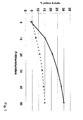
- French fries, croquettes, Breaded schnitzel and breaded fish, deep fried in the first deep fryer the frying medium treated according to the invention and in the second deep fryer the untreated deep-frying medium was used. After every 10 hours a sample of the frying medium was taken from each of the two fryers and the content of polar fractions determined, which is a measure of the thermal Decomposition of the frying medium can be viewed.
- Emulsion-treated frying medium is still very low even after 50 hours of operation, so that nothing stood in the way of further use of the frying medium would have. Only a dark discoloration was found in the deep-frying medium treated, which, however, proved to be harmless in terms of food chemistry and is probably due to the Maillard reaction.
- the discharge of treated frying medium was clear during the experiment less than the discharge of untreated deep-frying medium.
- the untreated Deep frying medium was added to 2.5 liters of untreated oil / 8 hours to remove the fat to balance, a total of 22.5 l of oil (frying medium) were added.
Landscapes
- Chemical & Material Sciences (AREA)
- Oil, Petroleum & Natural Gas (AREA)
- Life Sciences & Earth Sciences (AREA)
- Engineering & Computer Science (AREA)
- Food Science & Technology (AREA)
- Polymers & Plastics (AREA)
- Edible Oils And Fats (AREA)
- Colloid Chemistry (AREA)
Abstract
Description
| Komponente | Spezifischer Wärmeübertragungskoeffizient nach Sahin [kJ/kg K] |
| Wasser | 4,182 |
| Eiweiss | 1,550 |
| Fett | 1,670 |
| Kohlenhydrate | 1,420 |
- Öle (Fette) in einer Menge von 70-90 Gew.-%, vorzugsweise 75-85 Gew.-%,
- Wasser in einer Menge von etwa 12-20 Gew.-%, vorzugsweise 14-18 Gew.-%,
- eine oder mehrere wasserlösliche Carbonsäuren (z.B. Zitronensäure) in einer Menge von etwa 0,5-4 Gew.-%, vorzugsweise etwa 1-2 Gew.-% in der verwendeten Emulsion,
- ein oder mehrere Antioxidationsmittel (Antioxidantien), z.B. Tocopherolextrakt und/oder Ascorbylpalmitat, in einer Menge von vorzugsweise 0,1-1 Gew.-%;
- einen oder mehrere Emulgatoren zur Bildung und/oder Stabilisierung der erfindungsgemäßen Emulsion sowie
- gegebenenfalls weitere übliche Zusatzstoffe (z.B. reduzierender Zucker);
Claims (15)
- Wasser-in-ÖI-Emulsion als Zusatzmittel für Brat-, Siede- und Frittierfette,
dadurch gekennzeichnet, dass die Wasser-in-Öl-Emulsion Antioxidantien in Kombination mit wasserlöslichen Carbonsäuren enthält. - Wasser-in-Öl-Emulsion nach Anspruch 1,
dadurch gekennzeichnet, dass die Carbonsäure metall-komplexierend ist. - Wasser-in-Öl-Emulsion nach Anspruch 1 oder 2,
dadurch gekennzeichnet, dass die Carbonsäure Zitronensäure ist. - Wasser-in-ÖI-Emulsion nach einem der Ansprüche 1 bis 3,
dadurch gekennzeichnet, dass die Carbonsäure als 5 bis 10%ige wässrige Lösung Bestandteil der Wasserphase der Wasser-in-Öl-Emulsion ist. - Wasser-in-ÖI-Emulsion nach einem der Ansprüche 1 bis 4,
dadurch gekennzeichnet, dass ein Öl-Anteil an der Wasser-in-ÖI-Emulsion natives oder ein nicht raffiniertes Speiseöl ist. - Wasser-in-ÖI-Emulsion nach einem der Ansprüche 1 bis 5,
dadurch gekennzeichnet, dass die Antioxidantien Tocopherole und/oder Ascorbylpalmitat umfassen. - Wasser-in-ÖI-Emulsion nach einem der Ansprüche 1 bis 6,
dadurch gekennzeichnet, dass die Wasser-in-ÖI-Emulsion einen Emulgator enthält. - Wasser-in-Öl-Emulsion nach Anspruch 7,
dadurch gekennzeichnet, dass der Emulgator ein Ester von Mono- und Diglyceriden mit Fettsäuren oder organischen Säuren ist. - Wasser-in-Öl-Emulsion nach Anspruch 7,
dadurch gekennzeichnet, dass der Emulgator ein polykondensierter Glycerinester mit polykondensierten Fettsäuren ist. - Wasser-in-Öl-Emulsion nach Anspruch 7,
dadurch gekennzeichnet, dass der Emulgator ein polykondensierter Glycerinester mit Ricinolsäure oder polykondensierten Ricinolsäure ist. - Wasser-in-Öl-Emulsion nach einem der Ansprüche 1 bis 10,
dadurch gekennzeichnet, dass der Wassergehalt der Wasser-in-ÖI-Emulsion 1 bis 30 Gew.-% beträgt. - Wasser-in-ÖI-Emulsion nach einem der Ansprüche 1 bis 10,
dadurch gekennzeichnet, dass die Wasser-in-ÖI-Emulsionumfasst, wobei die Summe der eingesetzten Bestandteile 100 Gew.-% beträgt.Öle (Fette) in einer Menge von 70-90 Gew.-%,Wasser in einer Menge von 12-20 Gew.-%,eine oder mehrere wasserlösliche Carbonsäuren in einer Menge von 0,5-4 Gew.-%,ein oder mehrere Antioxidantien in einer Menge von 0,1-1 Gew.-%;gegebenenfalls einen oder mehrere Emulgatoren sowiegegebenenfalls weitere übliche Zusatzstoffe - Verwendung einer Wasser-in-ÖI-Emulsion nach einem der Ansprüche 1 bis 12 als Zusatzmittel für zu erhitzende Brat-, Siede- und Frittierfett.
- Verwendung einer Wasser-in-ÖI-Emulsion nach einem der Ansprüche 1 bis 12 als Zusatzmittel für ein zu erhitzendes Brat-, Siede- oder Frittierfett, wobei der Anteil der Wasser-in-ÖI-Emulsion im Brat-, Siede- oder Frittierfett 0,5 bis 10 Gew.-% beträgt.
- Verfahren zur Stabilisierung eines Frittiermediums,
dadurch gekennzeichnet, dass dem Frittiermedium eine Wasser-in-ÖI-Emulsion nach einem der Ansprüche 1-12 zugesetzt wird.
Applications Claiming Priority (2)
| Application Number | Priority Date | Filing Date | Title |
|---|---|---|---|
| DE10134881 | 2001-07-18 | ||
| DE10134881A DE10134881A1 (de) | 2001-07-18 | 2001-07-18 | Verwendung von Wasser-in-Öl-Emulsion zur Stabilisierung von Brat- und Siedefett unter Frittierbedingungen |
Publications (2)
| Publication Number | Publication Date |
|---|---|
| EP1277408A2 true EP1277408A2 (de) | 2003-01-22 |
| EP1277408A3 EP1277408A3 (de) | 2003-03-12 |
Family
ID=7692178
Family Applications (1)
| Application Number | Title | Priority Date | Filing Date |
|---|---|---|---|
| EP02102031A Withdrawn EP1277408A3 (de) | 2001-07-18 | 2002-07-15 | Verwendung von Wasser-in-Öl-Emulsion zur Stabilisierung von Brat- und Siedefett unter Frittierbedingungen |
Country Status (3)
| Country | Link |
|---|---|
| US (1) | US20030026887A1 (de) |
| EP (1) | EP1277408A3 (de) |
| DE (1) | DE10134881A1 (de) |
Families Citing this family (3)
| Publication number | Priority date | Publication date | Assignee | Title |
|---|---|---|---|---|
| US7794766B2 (en) * | 2005-08-25 | 2010-09-14 | Brunob Ii B.V. | Oil modifier to lower fat content of fried foods |
| WO2009013757A1 (en) * | 2007-07-26 | 2009-01-29 | Frutarom Ltd. | Composition for protecting oils and fat |
| PL2520175T3 (pl) * | 2009-12-29 | 2017-07-31 | Team Foods Colombia S.A. | Kompozycja tłuszczowa, która zmniejsza tworzenie się szronu na mrożonych, wstępnie smażonych produktach spożywczych |
Family Cites Families (7)
| Publication number | Priority date | Publication date | Assignee | Title |
|---|---|---|---|---|
| US3846457A (en) * | 1971-06-28 | 1974-11-05 | Procter & Gamble | Deep fat frying with edta esters to reduce darkening |
| JPH0698760B2 (ja) * | 1986-10-13 | 1994-12-07 | キヤノン株式会社 | 液体噴射記録ヘツド |
| US5230916A (en) * | 1991-01-07 | 1993-07-27 | Kabi Pharmacia Ab | Ascorbic acid complex having antioxidant function and improved solubility in lipid materials |
| GB2280449B (en) * | 1993-07-02 | 1996-10-02 | Charleville Res | A method for preparing an edible water-in-oil emulsion |
| GB2297759A (en) * | 1995-02-13 | 1996-08-14 | Nestle Sa | Microemulsions containing functional substances |
| UA73327C2 (en) * | 1999-11-15 | 2005-07-15 | Water and oil emulsion | |
| US6210732B1 (en) * | 2000-02-03 | 2001-04-03 | James A. Papanton | Cooking oil additive and method of using |
-
2001
- 2001-07-18 DE DE10134881A patent/DE10134881A1/de not_active Withdrawn
-
2002
- 2002-07-15 EP EP02102031A patent/EP1277408A3/de not_active Withdrawn
- 2002-07-17 US US10/197,030 patent/US20030026887A1/en not_active Abandoned
Also Published As
| Publication number | Publication date |
|---|---|
| DE10134881A1 (de) | 2003-02-06 |
| EP1277408A3 (de) | 2003-03-12 |
| US20030026887A1 (en) | 2003-02-06 |
Similar Documents
| Publication | Publication Date | Title |
|---|---|---|
| DE68907477T2 (de) | Essbare Öl-/Fett-Zusammensetzungen. | |
| DE69721431T2 (de) | Allzweck-Ölzusammensetzung | |
| DE60114606T2 (de) | Ausgewogene lipidzusammensetzung enthaltende eier | |
| DE69623904T2 (de) | Stabile essbare Ölzusammensetzung | |
| DE112008002315B4 (de) | Herstellung von Fettsäure-Metallsalzen in fester Form | |
| Bopitiya et al. | Antioxidant potential of rice bran oil prepared from red and white rice | |
| DE3643615A1 (de) | Antioxidierender extrakt aus lippenbluetlern sowie verfahren zur herstellung dieses extrakts | |
| DE2035069A1 (de) | Koch , Brat und Salatole mit hypo cholestennamischen Eigenschaften | |
| DE60202510T2 (de) | Verfahren zur Herstellung von fritierten Lebensmitteln | |
| DE1913078A1 (de) | Verbesserte Zusammensetzung zum Behandeln von Fleisch,insbesondere zur Verarbeitung von Gefluegel | |
| DE68907040T2 (de) | Aromakonzentrat. | |
| DE602005003127T2 (de) | Lokale applikation von meerölen bei lebensmitteln | |
| DE2646672C3 (de) | Snacks | |
| CN106889206A (zh) | 一种煎炸专用油 | |
| EP3052571A1 (de) | Temperaturstabile formulierung mit natürlichem farbstoff für lebensmittel | |
| WO2015064569A1 (ja) | 加熱調理用油脂 | |
| EP1277408A2 (de) | Verwendung von Wasser-in-Öl-Emulsion zur Stabilisierung von Brat- und Siedefett unter Frittierbedingungen | |
| DE2144285A1 (de) | Gießfähige Margarinen und Verfahren zu deren Herstellung | |
| DE60121747T2 (de) | Giessbare bratölzusammensetzung | |
| Tarmizi et al. | Feasibility of continuous frying system to improve the quality indices of palm olein for the production of extruded product | |
| EP3290498B1 (de) | Verwendung von metallionen-komplexierenden verbindungen zur aromastabilisierung | |
| KR20170002390A (ko) | 김용 유지조성물 및 김 도포용 유지 및 한국풍 조미김의 제조방법 | |
| DE1692652A1 (de) | Verfahren zum Wuerzen von Fleisch | |
| DE2850401A1 (de) | Vorgekochte kartoffelprodukte und verfahren zu ihrer herstellung | |
| DE69100786T2 (de) | Aroma-Oel und Verfahren zu seiner Herstellung. |
Legal Events
| Date | Code | Title | Description |
|---|---|---|---|
| PUAI | Public reference made under article 153(3) epc to a published international application that has entered the european phase |
Free format text: ORIGINAL CODE: 0009012 |
|
| AK | Designated contracting states |
Kind code of ref document: A2 Designated state(s): AT BE BG CH CY CZ DE DK EE ES FI FR GB GR IE IT LI LU MC NL PT SE SK TR |
|
| AX | Request for extension of the european patent |
Free format text: AL;LT;LV;MK;RO;SI |
|
| PUAL | Search report despatched |
Free format text: ORIGINAL CODE: 0009013 |
|
| AK | Designated contracting states |
Kind code of ref document: A3 Designated state(s): AT BE BG CH CY CZ DE DK EE ES FI FR GB GR IE IT LI LU MC NL PT SE SK TR Designated state(s): AT BE BG CH CY CZ DE DK EE ES FI FR GB GR IE IT LI LU MC NL PT SE SK TR |
|
| AX | Request for extension of the european patent |
Extension state: AL LT LV MK RO SI |
|
| 17P | Request for examination filed |
Effective date: 20030912 |
|
| AKX | Designation fees paid |
Designated state(s): AT BE BG CH CY CZ DE DK EE ES FI FR GB GR IE IT LI LU MC NL PT SE SK TR |
|
| STAA | Information on the status of an ep patent application or granted ep patent |
Free format text: STATUS: THE APPLICATION IS DEEMED TO BE WITHDRAWN |
|
| 18D | Application deemed to be withdrawn |
Effective date: 20060201 |