EP1277632B1 - Procédé de commande à distance pour le verrouillage et/ou le déverrouillage d'un véhicule - Google Patents
Procédé de commande à distance pour le verrouillage et/ou le déverrouillage d'un véhicule Download PDFInfo
- Publication number
- EP1277632B1 EP1277632B1 EP20020015419 EP02015419A EP1277632B1 EP 1277632 B1 EP1277632 B1 EP 1277632B1 EP 20020015419 EP20020015419 EP 20020015419 EP 02015419 A EP02015419 A EP 02015419A EP 1277632 B1 EP1277632 B1 EP 1277632B1
- Authority
- EP
- European Patent Office
- Prior art keywords
- receiver
- time
- transmitter
- clock
- data telegram
- Prior art date
- Legal status (The legal status is an assumption and is not a legal conclusion. Google has not performed a legal analysis and makes no representation as to the accuracy of the status listed.)
- Expired - Lifetime
Links
Images


Classifications
-
- G—PHYSICS
- G07—CHECKING-DEVICES
- G07C—TIME OR ATTENDANCE REGISTERS; REGISTERING OR INDICATING THE WORKING OF MACHINES; GENERATING RANDOM NUMBERS; VOTING OR LOTTERY APPARATUS; ARRANGEMENTS, SYSTEMS OR APPARATUS FOR CHECKING NOT PROVIDED FOR ELSEWHERE
- G07C9/00—Individual registration on entry or exit
- G07C9/00174—Electronically operated locks; Circuits therefor; Nonmechanical keys therefor, e.g. passive or active electrical keys or other data carriers without mechanical keys
- G07C9/00182—Electronically operated locks; Circuits therefor; Nonmechanical keys therefor, e.g. passive or active electrical keys or other data carriers without mechanical keys operated with unidirectional data transmission between data carrier and locks
-
- B—PERFORMING OPERATIONS; TRANSPORTING
- B60—VEHICLES IN GENERAL
- B60R—VEHICLES, VEHICLE FITTINGS, OR VEHICLE PARTS, NOT OTHERWISE PROVIDED FOR
- B60R25/00—Fittings or systems for preventing or indicating unauthorised use or theft of vehicles
- B60R25/20—Means to switch the anti-theft system on or off
- B60R25/24—Means to switch the anti-theft system on or off using electronic identifiers containing a code not memorised by the user
-
- G—PHYSICS
- G07—CHECKING-DEVICES
- G07C—TIME OR ATTENDANCE REGISTERS; REGISTERING OR INDICATING THE WORKING OF MACHINES; GENERATING RANDOM NUMBERS; VOTING OR LOTTERY APPARATUS; ARRANGEMENTS, SYSTEMS OR APPARATUS FOR CHECKING NOT PROVIDED FOR ELSEWHERE
- G07C9/00—Individual registration on entry or exit
- G07C9/00174—Electronically operated locks; Circuits therefor; Nonmechanical keys therefor, e.g. passive or active electrical keys or other data carriers without mechanical keys
- G07C9/00182—Electronically operated locks; Circuits therefor; Nonmechanical keys therefor, e.g. passive or active electrical keys or other data carriers without mechanical keys operated with unidirectional data transmission between data carrier and locks
- G07C2009/00238—Electronically operated locks; Circuits therefor; Nonmechanical keys therefor, e.g. passive or active electrical keys or other data carriers without mechanical keys operated with unidirectional data transmission between data carrier and locks the transmittted data signal containing a code which is changed
- G07C2009/00253—Electronically operated locks; Circuits therefor; Nonmechanical keys therefor, e.g. passive or active electrical keys or other data carriers without mechanical keys operated with unidirectional data transmission between data carrier and locks the transmittted data signal containing a code which is changed dynamically, e.g. variable code - rolling code
-
- G—PHYSICS
- G07—CHECKING-DEVICES
- G07C—TIME OR ATTENDANCE REGISTERS; REGISTERING OR INDICATING THE WORKING OF MACHINES; GENERATING RANDOM NUMBERS; VOTING OR LOTTERY APPARATUS; ARRANGEMENTS, SYSTEMS OR APPARATUS FOR CHECKING NOT PROVIDED FOR ELSEWHERE
- G07C9/00—Individual registration on entry or exit
- G07C9/00174—Electronically operated locks; Circuits therefor; Nonmechanical keys therefor, e.g. passive or active electrical keys or other data carriers without mechanical keys
- G07C2009/00753—Electronically operated locks; Circuits therefor; Nonmechanical keys therefor, e.g. passive or active electrical keys or other data carriers without mechanical keys operated by active electrical keys
- G07C2009/00769—Electronically operated locks; Circuits therefor; Nonmechanical keys therefor, e.g. passive or active electrical keys or other data carriers without mechanical keys operated by active electrical keys with data transmission performed by wireless means
- G07C2009/00793—Electronically operated locks; Circuits therefor; Nonmechanical keys therefor, e.g. passive or active electrical keys or other data carriers without mechanical keys operated by active electrical keys with data transmission performed by wireless means by Hertzian waves
Definitions
- the invention relates to a method for the remote-controlled locking and / or unlocking of a vehicle with at least one mobile operator side transmitter (a so-called radio key) and a vehicle-side receiver.
- a mobile operator side transmitter a so-called radio key
- the sender After an operation of the transmitter which is actively activated by the operator, e.g. by a keystroke or passively e.g. can be triggered by the signal of a proximity sensor, the sender transmits an encrypted, secret code in the form of a data telegram to a receiver in the vehicle.
- the secret code is also known to the receiver in the vehicle as an expected value for the next code comparison.
- the code comparison takes place in the receiver, wherein the vehicle-side receiver is defined so that it includes the code comparator, even if it is not integrated in a structural unit with other components of the receiver.
- a so-called change code is used.
- the transmitted code is changed each time.
- the determination (calculation) of the respective change code takes place via a secret algorithm, which is implemented both in the transmitter and in the receiver.
- a secret algorithm which is implemented both in the transmitter and in the receiver.
- both the transmitter and the receiver have a counter for the already generated change codes or a memory for the last used change code. This makes it possible for the receiver to predetermine the next change code as an expected value.
- Such a method is known from EP 0 719 370 B1.
- DE 4 227 887 thus discloses a generic method according to the preamble of claim 1.
- the object of the invention is therefore to provide a method with which the attack described above is thwarted.
- the transmitter and the receiver each have a clock that are synchronized with each other.
- a time information is derived from the current transmitter time, which is added to the data telegram to be sent.
- this time information is then extracted from the data telegram, the receiver only validating those data telegrams whose time information is within a certain time window relative to the respective current receiver time, two or more transmitters are used with one clock, wherein in the receiver for each transmitter clock time is provided a corresponding receiver clock time, which is synchronized with the respective transmitter clock, the receiver has only one clock, each a transmitter-specific synchronization time shift of a particular transmitter clock is determined to the one receiver clock and stored in a table and the assignment of the respective transmitter clock time to the corresponding receiver clock time based on a transmitted with the data telegram transmitter identification by the respective transmitter-specific synchronization time shift is found based on the transmitter identifier.
- the attack described above is effectively prevented, since even with a failure of the code synchronization synchronization of the receiver, the time synchronization is maintained. If the attacker transmits the recorded data telegram again at a later time, the receiver can determine the invalidity of the data telegram even if the change code is valid, since the transmitter clock time contained in the data telegram lies outside the predetermined time window relative to the respectively current receiver time.
- the time window is preferably in the order of seconds in the order of magnitude.
- the data telegram is provided with a time stamp, which makes verifiable delivery on time.
- the operator-side transmitter comprises a transmitting device for transmitting the data telegram.
- the transmitter may be, for example, a radio transmitter, an IR transmitter or an ultrasonic transmitter, wherein the transmitting device is designed accordingly.
- the transmitter has a code generator for calculating the respective current switching code.
- the transmitter now also has a preferably quartz-controlled clock. All components of the transmitter are preferably integrated in a housing, for example a radio key.
- the receiver in the vehicle has a corresponding receiving device for receiving the data telegram and a code comparator in order to compare the code sent in the data telegram with the expected value.
- the receiver now likewise has a preferably quartz-controlled clock and a time comparator.
- the two clocks (transmitter clock, receiver clock) are synchronized with each other, so that a time comparison can be performed.
- Various types of synchronization to be used advantageously here will be described below.
- the data telegram generated by the transmitter now also includes, in addition to the code, time information which is derived from the transmitter clock time.
- the time information essentially defines the time at which the data telegram was generated or sent.
- the time information is now extracted from the data telegram, wherein it is checked in a time comparator whether the time defined by the time information is within a predetermined time window relative to the receiver time. Only if this is the case, the data telegram is accepted as valid. In this case, a comparison of the transmitted code with the expected value then takes place. Of course you can The code comparison also takes place before the time comparison or even simultaneously. It is important that the code comparison and the time comparison must provide a positive result in order to trigger an action (locking and / or unlocking).
- the time information is encrypted.
- the transmitter has an encryption unit for encrypting the transmitter clock time.
- a decryption unit is arranged in the receiver. By encrypting the time information, the time stamp of the data telegram is protected against manipulation.
- the plaintext data string of the time information is encrypted for itself and appended to or preceded by the code data string.
- time information serves as an encryption key for an encryption algorithm with which the code is encrypted.
- the data telegram then consists of an encrypted data string.
- time information is then derived in the receiver from the permitted time window as a decryption key, with which the code is then decrypted.
- the encrypted time information itself serves as a change code.
- the transmitter clock and the receiver clock are set synchronously, for example, when the vehicle is delivered. If the time standards used (oscillating crystals) are sufficiently stable compared to the validation time window of the receiver, then subsequent synchronizations can be dispensed with. This first (initialization) synchronization can be done automatically, in which the receiver time is set to the transmitter clock time in an initialization data telegram on a first-time operation of the transmitter.
- the receiver time will be after Receiving a valid data telegram based on the time information contained in this data telegram set according to the transmitter clock time.
- This synchronization can take place after every valid data telegram or only after a certain number of data telegrams.
- the dubbing can also be carried out via radio time signals (eg from the DCF 77 radio time transmitter) received by the transmitter and the receiver, the transmitter and / or receiver time being set in accordance with the radio time signal.
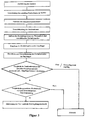
- a receiver clock time is provided in the receiver for each of these non-synchronous transmitter clock times, which is synchronized with the respective transmitter clock time (see FIG.
- the assignment of the respective transmitter clock time to the corresponding receiver clock time preferably takes place on the basis of a transmitter identifier (for example serial number) which is transmitted in the data telegram.
- each with its own time standard (quartz) can be provided.
- the receiver has only a quartz-controlled time standard, wherein the synchronization to the various transmitter clocks, for example, via a software program that determines the transmitter-specific synchronization time shift of a particular station clock to a receiver clock and stores in a table , This table also stores the station-specific current change code. The corresponding entries are found using the sender identification.
Landscapes
- Engineering & Computer Science (AREA)
- Mechanical Engineering (AREA)
- Computer Networks & Wireless Communication (AREA)
- Physics & Mathematics (AREA)
- General Physics & Mathematics (AREA)
- Lock And Its Accessories (AREA)
Claims (7)
- Procédé de verrouillage et/ou de déverrouillage télécommandé d'un véhicule, comportant au moins un émetteur mobile côté utilisateur du véhicule et un récepteur côté véhicule, dans lequel- le récepteur reçoit de la part de l'émetteur un code sous forme d'un télégramme de données,- le code émis est comparé dans le récepteur à une valeur escomptée,- en cas de concordance du code émis avec la valeur escomptée, le récepteur active l'actionnement d'un mécanisme de verrouillage et/ou de déverrouillage,- l'émetteur et le récepteur présentent chacun une horloge, ces horloges étant synchronisées l'une à l'autre,- une information de temps étant dérivée de l'heure d'émetteur actuelle respective,- cette information de temps est ajoutée au télégramme de données à émettre,- le récepteur extrait l'information de temps hors du télégramme de données,- le récepteur n'évalue comme étant valables que des télégrammes de données dont l'information de temps est située dans une fenêtre de temps déterminée par rapport à l'heure de récepteur actuelle respective,caractérisé en ce que- deux émetteurs ou plus sont utilisés avec chacun une horloge, et pour chaque heure d'émetteur une heure de récepteur correspondante est prévue dans le récepteur, laquelle est synchronisée à l'heure d'émetteur respective,- le récepteur ne présente qu'une horloge,- un décalage horaire de synchronisation spécifique à l'émetteur, d'une horloge d'émetteur déterminée, est déterminé par rapport à ladite une horloge de récepteur et déposé dans un tableau,- l'attribution d'une heure d'émetteur respective par rapport à l'heure de récepteur correspondante a lieu à l'aide d'une identification d'émetteur émise avec le télégramme de données, en trouvant le décalage horaire de synchronisation spécifique à l'émetteur à l'aide de l'identification d'émetteur.
- Procédé selon la revendication 1, caractérisé en ce que le temps de récepteur est réglé en actionnant une première fois l'émetteur dans un télégramme de données d'initialisation correspondant à l'heure d'émetteur.
- Procédé selon la revendication 1, caractérisé en ce que l'heure de récepteur est réglée après réception d'un télégramme de données valide à l'aide de l'information de temps contenue dans ce télégramme de données en fonction de l'heure d'émetteur.
- Procédé selon la revendication 1 ou 2, caractérisé en ce que l'émetteur et/ou le récepteur présente un récepteur de signal horaire radio, l'heure d'émetteur et/ou l'heure de récepteur étant réglée en fonction du signal horaire radio.
- Procédé selon l'une des revendications précédentes, caractérisé en ce que l'information de temps émise dans le télégramme de données est transmise de manière chiffré et l'information de temps chiffrée est déchiffrée dans le récepteur.
- Procédé selon la revendication 5, caractérisé en ce que l'information de temps sert de clé de chiffrage pour algorithme de chiffrage avec lequel le code est chiffré.
- Procédé selon la revendication 5, caractérisé en ce que l'information de temps chiffrée est utilisée en soi à titre de code.
Applications Claiming Priority (2)
| Application Number | Priority Date | Filing Date | Title |
|---|---|---|---|
| DE10134837 | 2001-07-17 | ||
| DE2001134837 DE10134837A1 (de) | 2001-07-17 | 2001-07-17 | Verfahren zum fernbedienten Ver- und/oder Entriegeln eines Fahrzeuges |
Publications (3)
| Publication Number | Publication Date |
|---|---|
| EP1277632A2 EP1277632A2 (fr) | 2003-01-22 |
| EP1277632A3 EP1277632A3 (fr) | 2003-12-17 |
| EP1277632B1 true EP1277632B1 (fr) | 2006-11-29 |
Family
ID=7692149
Family Applications (1)
| Application Number | Title | Priority Date | Filing Date |
|---|---|---|---|
| EP20020015419 Expired - Lifetime EP1277632B1 (fr) | 2001-07-17 | 2002-07-11 | Procédé de commande à distance pour le verrouillage et/ou le déverrouillage d'un véhicule |
Country Status (2)
| Country | Link |
|---|---|
| EP (1) | EP1277632B1 (fr) |
| DE (2) | DE10134837A1 (fr) |
Families Citing this family (8)
| Publication number | Priority date | Publication date | Assignee | Title |
|---|---|---|---|---|
| DE10202321B4 (de) * | 2002-01-23 | 2008-12-11 | Robert Bosch Gmbh | System und Methode zur elektronischen Authentifizierung |
| DE10310869A1 (de) * | 2003-03-11 | 2004-09-23 | Fachhochschule Köln | Verfahren und Vorrichtung zur Detektion einer Relais-Attacke |
| US20060038654A1 (en) * | 2004-08-18 | 2006-02-23 | Khalil Mohamad A | Wireless messenger system |
| DE102005015702A1 (de) * | 2005-04-05 | 2006-10-12 | Daimlerchrysler Ag | Fahrzeugschließsystem |
| DE102007010992A1 (de) | 2007-03-05 | 2008-09-11 | Conti Temic Microelectronic Gmbh | Verfahren und Vorrichtung zur Übertragung von Daten und zum Durchführen der Reaktionen auf diese Daten |
| DE102014105244A1 (de) * | 2013-12-05 | 2015-06-11 | Deutsche Post Ag | Verfahren zum Deaktivieren des Verriegelns zumindest einer Tür eines Gehäuses |
| DE102016220620A1 (de) * | 2016-10-20 | 2018-04-26 | Volkswagen Aktiengesellschaft | Verfahren zur Freigabe einer fernsteuerbaren Fahrzeugfunktion und Fahrzeugverriegelungssystem |
| DE102017207758B4 (de) * | 2017-05-09 | 2020-07-09 | Audi Ag | Verfahren zum manipulationssicheren Betreiben eines Funkschlüsselsystems eines Kraftfahrzeugs, Funkschlüsselsystem und Kraftfahrzeug mit Funkschlüsselsystem |
Family Cites Families (13)
| Publication number | Priority date | Publication date | Assignee | Title |
|---|---|---|---|---|
| JPS5715779A (en) * | 1980-07-01 | 1982-01-27 | Iwasaki Electronics | Electronic lock |
| GB9001804D0 (en) * | 1990-01-26 | 1990-03-28 | Automatic Button Co The Ltd | Dynamic lock and key |
| DE4227887C1 (de) * | 1992-08-22 | 1994-01-05 | Kiekert Gmbh Co Kg | Zentralverriegelungsanlage für ein Kraftfahrzeug |
| DE4238858C1 (de) * | 1992-08-22 | 1994-02-03 | Kiekert Gmbh Co Kg | Zentralverriegelungsanlage für ein Kraftfahrzeug |
| GB9320767D0 (en) * | 1993-10-08 | 1993-12-01 | British Tech Group | Vehicle security |
| US5369706A (en) | 1993-11-05 | 1994-11-29 | United Technologies Automotive, Inc. | Resynchronizing transmitters to receivers for secure vehicle entry using cryptography or rolling code |
| DE4411780C2 (de) * | 1994-04-06 | 1998-12-17 | Wolfgang A Dr Rer Nat Redmann | Abhörsichere Zugangskontrollvorrichtung |
| DE4430315C2 (de) * | 1994-08-26 | 1997-10-23 | Telefunken Microelectron | Verfahren zum Betrieb eines Schließsystems für verschließbare Gegenstände |
| DE4433499C2 (de) * | 1994-09-20 | 1998-06-18 | Siemens Ag | Elektronisches Diebstahlschutzsystem für ein Kraftfahrzeug |
| DE19622720C2 (de) * | 1996-06-06 | 1999-07-15 | Megamos F & G Sicherheit | Authentifizierungseinrichtung mit Schlüsselzahlspeicher |
| DE19652256A1 (de) * | 1996-12-16 | 1998-06-18 | Bosch Gmbh Robert | Verfahren zur Sicherung der Datenübertragung |
| DE19714556A1 (de) * | 1997-04-09 | 1998-10-15 | Claas Ohg | Vorrichtung und Verfahren zur fahrerspezifischen Einstellung von Fahrzeugeinrichtungen |
| DE59908925D1 (de) * | 1998-02-24 | 2004-04-29 | Delphi Automotive Systems Gmbh | Freigabesystem für die Freigabe von Funktionen einer Einrichtung |
-
2001
- 2001-07-17 DE DE2001134837 patent/DE10134837A1/de not_active Withdrawn
-
2002
- 2002-07-11 EP EP20020015419 patent/EP1277632B1/fr not_active Expired - Lifetime
- 2002-07-11 DE DE50208827T patent/DE50208827D1/de not_active Expired - Lifetime
Also Published As
| Publication number | Publication date |
|---|---|
| DE10134837A1 (de) | 2003-01-30 |
| EP1277632A2 (fr) | 2003-01-22 |
| DE50208827D1 (de) | 2007-01-11 |
| EP1277632A3 (fr) | 2003-12-17 |
Similar Documents
| Publication | Publication Date | Title |
|---|---|---|
| EP1999725B1 (fr) | Procédé de protection d'un bien mobile, notamment d'un véhicule, contre toute utilisation non autorisée | |
| DE3244049C2 (de) | Zentralverriegelungsanlage für ein Kraftfahrzeug | |
| DE69734898T2 (de) | Verfahren und system zur absicherung von fernsprech-anrufssteuerungseinrichtungen | |
| EP3043684B1 (fr) | Boîtier comprenant une unité de déverrouillage et procédé de déverrouillage d'une ou de plusieurs portes du boîtier | |
| DE69535362T2 (de) | Rollierendes Code-Verschlüsselungsverfahren für ein fernbedienbares schlüsselloses Eingangssystem | |
| DE60307587T2 (de) | Radio Kommunikationensystem, verteilten Schlüssel Verwaltungsserver und Terminal | |
| DE3905651C2 (fr) | ||
| EP3504677B1 (fr) | Procédé et système permettant d'ouvrir et/ou d'utiliser au moins un véhicule | |
| DE69729064T2 (de) | Resynchronisation durch variablen Tastendruck für fernbedienbare schlüssellose Eingangssystem | |
| DE102006011685B4 (de) | Sicherheitssystem mit gegenseitiger Berechtigungsüberprüfung mit Wiederherstellung aus einer teilweisen Programmierung | |
| DE102019120207A1 (de) | Passives schlüsselloses Zugangssystem | |
| EP0723896A2 (fr) | Procédé de protection anti-vol pour véhicules à moteur | |
| EP1277632B1 (fr) | Procédé de commande à distance pour le verrouillage et/ou le déverrouillage d'un véhicule | |
| DE19716111A1 (de) | Verfahren zur gegenseitigen Authentifizierung zweier Einheiten | |
| DE102014017618B4 (de) | Verfahren zur Freigabe und/oder Auslösung einer Fahrzeugfunktion eines Kraftfahrzeugs und Kraftfahrzeug | |
| DE19501004C2 (de) | Verfahren zur verifizierbaren Datenübertragung zwischen einem Transponder und einem Lesegerät | |
| DE4433499C2 (de) | Elektronisches Diebstahlschutzsystem für ein Kraftfahrzeug | |
| EP3567557A1 (fr) | Système de fermeture | |
| DE10112573C2 (de) | Verfahren zum Initialisieren eines Diebstahlschutzsystems für ein Kraftfahrzeug | |
| DE4223258C2 (de) | Verfahren zur verifizierbaren Übertragung von Daten | |
| EP3621042B1 (fr) | Procédé de vérification | |
| DE102007040094B4 (de) | Verfahren und System zur reversiblen Durchführung von Konfigurationsänderungen | |
| DE4405385A1 (de) | Elektronische Vorrichtung zur Verhinderung der unbefugten Inbetriebnahme von Kraftfahrzeugen | |
| DE69721066T2 (de) | Automatische resynchronisation für fernbedienbare schlüssellose eingangsysteme | |
| EP0667506B1 (fr) | Télécommande pour mines |
Legal Events
| Date | Code | Title | Description |
|---|---|---|---|
| PUAI | Public reference made under article 153(3) epc to a published international application that has entered the european phase |
Free format text: ORIGINAL CODE: 0009012 |
|
| AK | Designated contracting states |
Kind code of ref document: A2 Designated state(s): AT BE BG CH CY CZ DE DK EE ES FI FR GB GR IE IT LI LU MC NL PT SE SK TR |
|
| AX | Request for extension of the european patent |
Free format text: AL;LT;LV;MK;RO;SI |
|
| PUAL | Search report despatched |
Free format text: ORIGINAL CODE: 0009013 |
|
| AK | Designated contracting states |
Kind code of ref document: A3 Designated state(s): AT BE BG CH CY CZ DE DK EE ES FI FR GB GR IE IT LI LU MC NL PT SE SK TR |
|
| AX | Request for extension of the european patent |
Extension state: AL LT LV MK RO SI |
|
| 17P | Request for examination filed |
Effective date: 20040526 |
|
| AKX | Designation fees paid |
Designated state(s): DE ES FR GB IT SE |
|
| RAP1 | Party data changed (applicant data changed or rights of an application transferred) |
Owner name: HELLA KGAA HUECK & CO. |
|
| 17Q | First examination report despatched |
Effective date: 20050211 |
|
| GRAP | Despatch of communication of intention to grant a patent |
Free format text: ORIGINAL CODE: EPIDOSNIGR1 |
|
| GRAS | Grant fee paid |
Free format text: ORIGINAL CODE: EPIDOSNIGR3 |
|
| GRAA | (expected) grant |
Free format text: ORIGINAL CODE: 0009210 |
|
| AK | Designated contracting states |
Kind code of ref document: B1 Designated state(s): DE ES FR GB IT SE |
|
| PG25 | Lapsed in a contracting state [announced via postgrant information from national office to epo] |
Ref country code: IT Free format text: LAPSE BECAUSE OF FAILURE TO SUBMIT A TRANSLATION OF THE DESCRIPTION OR TO PAY THE FEE WITHIN THE PRESCRIBED TIME-LIMIT;WARNING: LAPSES OF ITALIAN PATENTS WITH EFFECTIVE DATE BEFORE 2007 MAY HAVE OCCURRED AT ANY TIME BEFORE 2007. THE CORRECT EFFECTIVE DATE MAY BE DIFFERENT FROM THE ONE RECORDED. Effective date: 20061129 |
|
| REG | Reference to a national code |
Ref country code: GB Ref legal event code: FG4D Free format text: NOT ENGLISH |
|
| REF | Corresponds to: |
Ref document number: 50208827 Country of ref document: DE Date of ref document: 20070111 Kind code of ref document: P |
|
| PG25 | Lapsed in a contracting state [announced via postgrant information from national office to epo] |
Ref country code: SE Free format text: LAPSE BECAUSE OF FAILURE TO SUBMIT A TRANSLATION OF THE DESCRIPTION OR TO PAY THE FEE WITHIN THE PRESCRIBED TIME-LIMIT Effective date: 20070228 |
|
| PG25 | Lapsed in a contracting state [announced via postgrant information from national office to epo] |
Ref country code: ES Free format text: LAPSE BECAUSE OF FAILURE TO SUBMIT A TRANSLATION OF THE DESCRIPTION OR TO PAY THE FEE WITHIN THE PRESCRIBED TIME-LIMIT Effective date: 20070312 |
|
| ET | Fr: translation filed | ||
| GBV | Gb: ep patent (uk) treated as always having been void in accordance with gb section 77(7)/1977 [no translation filed] |
Effective date: 20061129 |
|
| PLBE | No opposition filed within time limit |
Free format text: ORIGINAL CODE: 0009261 |
|
| STAA | Information on the status of an ep patent application or granted ep patent |
Free format text: STATUS: NO OPPOSITION FILED WITHIN TIME LIMIT |
|
| 26N | No opposition filed |
Effective date: 20070830 |
|
| PG25 | Lapsed in a contracting state [announced via postgrant information from national office to epo] |
Ref country code: GB Free format text: LAPSE BECAUSE OF FAILURE TO SUBMIT A TRANSLATION OF THE DESCRIPTION OR TO PAY THE FEE WITHIN THE PRESCRIBED TIME-LIMIT Effective date: 20061129 |
|
| PGFP | Annual fee paid to national office [announced via postgrant information from national office to epo] |
Ref country code: FR Payment date: 20090710 Year of fee payment: 8 |
|
| REG | Reference to a national code |
Ref country code: FR Ref legal event code: ST Effective date: 20110331 |
|
| PG25 | Lapsed in a contracting state [announced via postgrant information from national office to epo] |
Ref country code: FR Free format text: LAPSE BECAUSE OF NON-PAYMENT OF DUE FEES Effective date: 20100802 |
|
| REG | Reference to a national code |
Ref country code: DE Ref legal event code: R081 Ref document number: 50208827 Country of ref document: DE Owner name: HELLA GMBH & CO. KGAA, DE Free format text: FORMER OWNER: HELLA KGAA HUECK & CO., 59557 LIPPSTADT, DE |
|
| PGFP | Annual fee paid to national office [announced via postgrant information from national office to epo] |
Ref country code: DE Payment date: 20210616 Year of fee payment: 20 |
|
| REG | Reference to a national code |
Ref country code: DE Ref legal event code: R071 Ref document number: 50208827 Country of ref document: DE |