EP1277837A2 - Séquences d'ADN spécifique d'épididymis et leur utilisation - Google Patents
Séquences d'ADN spécifique d'épididymis et leur utilisation Download PDFInfo
- Publication number
- EP1277837A2 EP1277837A2 EP02013561A EP02013561A EP1277837A2 EP 1277837 A2 EP1277837 A2 EP 1277837A2 EP 02013561 A EP02013561 A EP 02013561A EP 02013561 A EP02013561 A EP 02013561A EP 1277837 A2 EP1277837 A2 EP 1277837A2
- Authority
- EP
- European Patent Office
- Prior art keywords
- sequences
- epididymis
- polypeptides
- fragments
- antibodies
- Prior art date
- Legal status (The legal status is an assumption and is not a legal conclusion. Google has not performed a legal analysis and makes no representation as to the accuracy of the status listed.)
- Withdrawn
Links
Images



Classifications
-
- C—CHEMISTRY; METALLURGY
- C07—ORGANIC CHEMISTRY
- C07K—PEPTIDES
- C07K14/00—Peptides having more than 20 amino acids; Gastrins; Somatostatins; Melanotropins; Derivatives thereof
- C07K14/435—Peptides having more than 20 amino acids; Gastrins; Somatostatins; Melanotropins; Derivatives thereof from animals; from humans
- C07K14/46—Peptides having more than 20 amino acids; Gastrins; Somatostatins; Melanotropins; Derivatives thereof from animals; from humans from vertebrates
- C07K14/47—Peptides having more than 20 amino acids; Gastrins; Somatostatins; Melanotropins; Derivatives thereof from animals; from humans from vertebrates from mammals
-
- A—HUMAN NECESSITIES
- A61—MEDICAL OR VETERINARY SCIENCE; HYGIENE
- A61P—SPECIFIC THERAPEUTIC ACTIVITY OF CHEMICAL COMPOUNDS OR MEDICINAL PREPARATIONS
- A61P15/00—Drugs for genital or sexual disorders; Contraceptives
- A61P15/08—Drugs for genital or sexual disorders; Contraceptives for gonadal disorders or for enhancing fertility, e.g. inducers of ovulation or of spermatogenesis
-
- C—CHEMISTRY; METALLURGY
- C07—ORGANIC CHEMISTRY
- C07K—PEPTIDES
- C07K16/00—Immunoglobulins [IG], e.g. monoclonal or polyclonal antibodies
- C07K16/18—Immunoglobulins [IG], e.g. monoclonal or polyclonal antibodies against material from animals or humans
-
- A—HUMAN NECESSITIES
- A61—MEDICAL OR VETERINARY SCIENCE; HYGIENE
- A61K—PREPARATIONS FOR MEDICAL, DENTAL OR TOILETRY PURPOSES
- A61K38/00—Medicinal preparations containing peptides
Definitions
- the invention relates to new, epididymis-specific DNA sequences (Seq. ID No. 5) as well as polypeptides derived therefrom and their use in the manufacture of pharmaceuticals for Diagnosis and treatment of male infertility.
- the epididymis (epididymis) a key role. In humans it consists of one only 5 m long canal, which is very meandering is.
- the still immature sperm formed in the testicle are transported to the epididymis and during a 2 to Passage lasting 3 days subjected to a maturation process, in Course of which she gain their mobility.
- the epididymis-specific invention Polypeptides of human origin and fragments the same and allelic variants with the same immunogenicity proposed.
- the DNA sequences are also for use in diagnosis according to sequence listing (Seq. ID No. 5) and syngeneic sequences or fragments of the same, but also such nucleotide sequences, which hybridize with the aforementioned - especially as Probes - suitable, due to the degeneration of the genetic Codes caused deviations included according to the invention are.
- polypeptides To identify the polypeptides according to the invention first a cDNA library from epididymal mRNA in lambda gt11 (Clontech, California), then the epididymis-specific Recombinants in a complex sequence of differential hybridization steps selected (see FIG 1) and then in the bacterial plasmid pSB (Stratagene, California, USA) subcloned and characterized.
- the differential screening aimed to clone mRNA's to isolate which in the epididymis tissue but not in the tissue other and functionally related organs are present or there only occur in a significantly reduced number of copies.
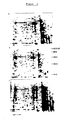
- the method used according to the invention served in the first step human testicular tissue as reference material. Because some of the Tissue samples from orchiectomized used as starting material Men came from different medications had been treated, it had to be checked first whether and to what extent the medication influences the respective Exerts polypeptide pattern. However, it could affect 7 patients different ages and different medications are shown (see. Example 2 and Figure 2a to c) that the Patterns through prior drug administration only are insignificantly influenced and that also the individual Deviations are small.
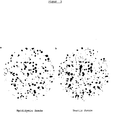
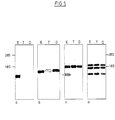
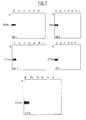
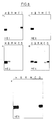
- Figures 5 to 8 are schematic drawings of each underlying autoradiograms.
- the DNA sequences of the cDNA clones HE 1 to HE according to the invention 5 (Seq. ID Nos. 1 to 5) were given as in Example 7 analyzed. The results are shown in the sequence listing; represents the DNA sequence indicated for HE 3 (Seq. ID No. 3) represents a fragment which is based on the genomic DNA is located downstream of the coding region. Although that Fragment HE 3 (Seq. ID No. 3) not as a basis for the production of the corresponding polypeptide, it forms as Probe for the detection of the corresponding mRNA of the clone HE 3 valuable diagnostic tool.
- the HE 5 clone can be used according to conventional methods Vectors transferred into pro- or eukaryotic host cells and are expressed there as proteins.
- sequence includes all sequences that differ from derived from the same or homologous gene and for the polypeptides encode in the sense of the invention or for the production of probes are usable.
- the invention further includes naturally occurring allelic Variations of the polypeptides or fragments according to the invention such allele variations, the different allelic forms both from each other as well as from the in the sequence listing under the Seq. ID no. 5 given amino acid sequence with regard to the respective sequence length as well as in Regarding deletions, substitutions, insertions or additions can distinguish from amino acids.
- Suitable vectors for prokaryotic host cells are, for example, plasmids of the pET series (Rosenburg et al., "Vectors for selective expression of cloned DNAs by T7 RNA polymerase", Gene, 56 , pp. 125-135 (1987)), the pGEX- Series (Pharmacia, Freiburg) and the pRIT series (Pharmacia, Freiburg).
- Examples of prokaryotic host cells are the usual laboratory strains of Escherichia coli K12 and the strains BL21 (DE3) and LE392.
- Suitable vector systems for eukaryotic host cells in the case of mammalian cells are SV40 viruses, polyoma viruses, adenoviruses, various retroviruses, papillomaviruses (PWJ Rigby, "Expression of cloned genes in eucaryotic cells using vector systems derived from viral replicons", genetic engineering, 3 , pp. 84-141 (1982)), and vaccinia viruses (Mackett et al., "The construction and characterization of vaccinia virus recombinants expressing foreign genes", DNA Cloning, vol.
- vectors for insect cells are pJVETL baculoviruses (Invitrogen, San Diego, Calif., USA), while for yeast cells, for example, pJP31, YEp and YIp plasmids (Carter et al., "Expression and secretion of foreign genes in Yeast ", DNA Cloning, Vol. III, (1987), IRL Press, Oxford) can be used.
- Suitable mammalian cells are e.g. COS cells, CHO cells, AtT20 cells and NIH3T3 cells (Rigby, op. cit., Mackett et al., op. cit.), while suitable insect cells e.g. Sf9 (Invitrogen, San Diego, Calif., USA).
- suitable yeast cells are e.g. X4003-5B (Carter, op. Cit.).
- polypeptide corresponding to the clone HE 5 can follow known processes can be chemically synthesized (J.M. Stewart, "Synthesis and use of neuropeptides", neuroendocrine peptides Methodology, ed. P.M. Conn, Academic Press, New York, pp. 815-844 (1989))).
- nucleotide sequences according to the invention inclusive their complementary sequences, their expression products as well as antibodies produced on the basis thereof for the first time the possibility of disorders in the protein metabolism of the Diagnosing epididymis and treating it if necessary.
- the cDNA sequences or their complementary ones Label sequences or fragments thereof and as a probe for in situ hybridization in tissue diagnostics of biopsy specimens or thin sections can be used to obtain the physiological condition of the tissue in terms of existing To determine proteins.
- Labeled antibodies can also be used in this context, those of the polypeptides or fragments according to the invention the same induced and are able to with an immune reaction the corresponding tissue proteins.
- polypeptides or fragments according to the invention the same with the same biological effectiveness for in vitro Treatment of sperm of infertile men.
- Polyclonal and monoclonal antibodies for use in Immunological detection methods can be carried out with the aid of the invention high-purity polypeptides produced in a known manner become.
- Such antibodies can be based on the complete polypeptides and on the basis of fragments and Produce allelic variants of the same, insofar as these the have the same immunogenicity (cf. Examples 8, 9).
- a computer can potentially be used immunogenic region of the respective one of interest, from the corresponding one select protein sequence derived from cDNA sequence, which on the one hand is relatively hydrophilic and therefore on the The outside of the protein molecule is on the other hand, but not through the formation of cysteine double bridges or possible glycosylation sites is disturbed in its steric conformation.
- This peptide region is then optionally combined synthesized with flanking amino acids, below Carrier substances coupled and as an immunogen for induction of antibodies used (see Example 9).
- the cDNA insert of interest can be used, for example overall or a large area of it into one clone suitable expression plasmid vector. Afterwards Transformation into suitable bacteria allow this Vectors inducible expression of the from the cDNA molecule encoded protein.
- the bacteriogenic produced in this way Protein or protein fragment can be purified from the Bacterial extract directly as an antigen for immunization Induction of antibodies can be used (see Example 8).
- the antibodies can be labeled with a label such as e.g. a fluorescent Provide molecule (fluorophore) and, for example, at Sperm samples are used to check for the presence of infertility of epididymis-specific proteins on the sperm surface with the help of immunofluorescence.
- a label such as e.g. a fluorescent Provide molecule (fluorophore) and, for example, at Sperm samples are used to check for the presence of infertility of epididymis-specific proteins on the sperm surface with the help of immunofluorescence.
- polypeptides can also be used to isolate the corresponding polypeptides from body fluids, for example by means of column chromatography serve.
- the invention accordingly also includes such natural sources isolated polypeptides.
- the HE proteins are only synthesized in male organs are, they are particularly for use in suitable for the female organism.
- the one there against the foreign proteins Antibodies generated only become epididymal proteins adhering to sperm recognize in the female genital tract and to their Agglutination or inactivation, but not too undesirable Side effects from reactions with proteins of the female Organism.
- a contraceptive immunization in the male organism Administration of HE proteins to trigger an autoimmune response, which is in the area of the epididymis in the form of a Inactivating the sperm that migrates through it affects another form of application.
- DNA probes as well against these antibodies when exploring the physiology and pathology not only of the human epididymis, but also sperm and their interaction with oocytes, in all Animal species with cross-reactive activities (e.g. dog, cattle and Cat) can be used.
- RNA was obtained from the frozen tissues of human testicles (Testis) and epididymis (Epididymis) by the method of JM Chirgwin et al., Isolation of biologically active ribonucleic acid from sources enriched in ribonuclease, Biochemistry, 18 , 5294, (1979). extracted from men with prostate cancer aged 58 and 74 by orchiectomy, extracted using guanidine isothiocyanate and then purified by cesium chloride density gradient centrifugation. By using an oligo (dT) cellulose column, poly (A) + RNA could be enriched by affinity chromatography, as described by H. Aviv & P.
- RNA samples were precipitated with ethanol and, after resuspending in sterile water, stored in a concentration of 1 ⁇ g / ⁇ l at -80 ° C.
- RNA from epididymis and testes from Example 1 were each translated in vitro in a cell-free system of a rabbit reticulocyte lysate (New England Nuclear (NEN), Dreieich, FRG) .
- the synthesis was carried out in the presence of ( 35 S) -methionine specific activity (1000 Ci / mmol).
- the resulting protein products were then electrophoresed in a two-dimensional gel (see PH O'Farrel, High resolution two-dimensional electrophoresis of proteins, J.Biol. Chem., 250 , 4007-4021 (1975)).
- a change in expression in the epididymis due to previous treatment with antiandrogens shows a comparison of the Figures 2a and 2b. Bands reduced in Figure 2a compared to Figure 2b are marked by large arrows. The molecular weights of the protein marker are given in kilodaltons. Products similar to actin (A) and tubulin (T) are labeled.
- RNA from human epididymis (E) from a patient treated with cyproterone acetate and the same amount of total RNA from human testis (T) and human Decidua (D) were in a horizontal 1.3% formaldehyde agarose gel 16 Electrophoresed for hours at a constant voltage of 25 volts (see Maniatis et al., Molecular Cloning: A Laboratory Manual, Cold Spring Harbor Laboratory, Cold Spring Harbor, NY, (1982) ( Figure 3)). To determine the size of the RNAs, the gel was additionally loaded with an RNA ladder (0.24-9.5 kB).
- RNA was then transferred to nylon membranes (Hybond N, Amersham) by capillary blotting in the presence of 20 x SSC.
- the blots were subsequently hybridized successively with radioactive, potentially epididymis-specific cDNA probes.
- the probes were isolated by Eco RI restriction of the lambda gt11 DNA subcloned in the plasmid pBS and subsequent Biotrap elution and after radioactive labeling had a specific radioactivity of> 10 9 cpm / ⁇ g (cf. AP Feinberg and B. Vogelstein, A technique for radiolabelling DNA restriction endonuclease fragments to high specific activity, Analytical Biochemistry, 132 , 6-13, (1983)).
- the hybridization took place overnight at a radioactivity concentration of 1-2 x 10 6 cpm / ml.
- the filters were then washed step by step with increasing stringency, starting with 2 x SSC at room temperature up to 0.1 x SSC at a temperature of 65 ° C.
- the filters were incubated for 15 minutes at 65 ° C. in the presence of 2 mM Tris (pH 7.5), 1 mM EDTA and 0.1% SDS.
- the dried filters were autoradiographically examined for the presence of probe material before being used for repeated hybridization with another probe in the absence of signals.
- the results from cross hybridizations with the original phage library enabled the 36 epididymis-specific cDNA clones to be assigned to five independent families (HE 1, HE 2, HE 3, HE 4 and HE 5), each comprising a set of related clones (see FIG. 6 for HE 2 and HE 4). It could be shown that the five cDNA clone families are derived from five different, relatively short mRNA molecules. Their approximate lengths and the frequencies counted based on the correlation of hybridization signals with the phage library in relation to the occurrence of each cDNA family sequence from HE 1 to HE 5 are shown in Table 1.
- RNA from epididymis (E), Decidua (D), testis (T), prostate (P), kidney (K), pituitary gland (Pi) and the lymphoblastoma cell line IM9 (I) were separated according to Example 4 and transferred to nylon membranes.
- 8 ⁇ g total RNA from each epididymis (E), thyroid (Th), pituitary (Pi), muscle (M), kidney (K), adrenal gland (A) and the lymphoblastoma cell line IM9 were used (I) separated analogously and also transferred to a nylon membrane.
- FIG. 8 shows the autoradiograms of the Northern blot analysis developed for clones HE 1 to HE 5, which were developed after an exposure time of 8 hours.
- the base sequence of the longest cDNA clone from the families HE 1 to HE 5 according to Examples 4, 5 and 6 was determined using the dideoxy method according to Sanger, F. and Coulson, AR "A rapid method for determining sequences in DNA by primed synthesis with DNA polymerase "J. Mol. Biol. 94 , 441 (1975).
- pBS subclones were produced according to Example 3 and converted into single-stranded DNA's under alkaline conditions.
- the protein-coding regions of the cDNA clones HE 2 and HE 4 inserted in the pBS subclones prepared according to Example 3 were cut out with the aid of the restriction endonucleases Bgl I and Pst I (HE 2) or Dde I and in separate batches in the usual way (Sambrook et al., "Molecular Cloning - A Laboratory Manual", 2nd edition, Cold Spring Harbor Laboratory Press (1989)) into the expression plasmid vector pET3 (Rosenberg et al., "Vectors for selective expression of cloned DNAs by T7 RNA polymerase ", Gene, 56 , 125-135 (1987)) under the respective reading frame.
- This vector enables the insertion of the various cDNA inserts directly behind (downstream) a promoter sequence specific for the enzyme T7 polymerase.
- the bacteriogenic polypeptides produced in this way were then gel electrophoresed from the bacterial extracts purified and directly as antigens for immunization used by rabbits and chickens.
- the sequence -Asp-Lys-Glu-Gly- was generated by computer as a possible antigenic epitope of the HE 4 polypeptide (SEQ ID NO. 4) identified and along with the flanking amino acids in the overall sequence -Asn-Asp-Lys-Glu-Gly-Ser-Ala-Pro-Gln-Val-Asn-Ile-Asn-Phe- (Seq. ID No. 7) by the Merrifield method (J.M. Stewart, "Synthesis and use of neuropeptides", Neuroendocrine Peptide Methodology, ed. P.M. Conn, Academic Press, New York, pp. 815-844 (1989)) chemically synthesized, wherein a cysteine at position 81 of the sequence of HE 4 (Seq. ID No. 4) was replaced by an alanine.
- a potentially immunogenic epitope of HE 1 (Seq. ID No. 1) determined and including accompanying Total amino acids -Gln-Lys-Asp-Lys-Thr-Tyr-Ser-Tyr-Leu-Pro-Val-Lys-Ser-Glu-Tyr-Pro (Seq. ID No. 8) chemical synthesized.
- the immunogenic fragments of the polypeptides HE 1 and HE 4 produced in this way were then each treated with m-maleimidobenzoic acid N-hydroxysuccinamide ester (M8759, Sigma) (Sambrook et al., "Molecular Cloning - A Laboratory Manual", 2nd edition , Cold Spring Harbor Laboratory Press (1989)) coupled to carrier substances (keyhole limpet hemocyanin, KLH) and used as antigens for the immunization of rabbits to produce antibodies.
- M8759 m-maleimidobenzoic acid N-hydroxysuccinamide ester
Landscapes
- Health & Medical Sciences (AREA)
- Chemical & Material Sciences (AREA)
- Organic Chemistry (AREA)
- Life Sciences & Earth Sciences (AREA)
- General Health & Medical Sciences (AREA)
- Medicinal Chemistry (AREA)
- Reproductive Health (AREA)
- Biochemistry (AREA)
- Biophysics (AREA)
- Genetics & Genomics (AREA)
- Molecular Biology (AREA)
- Proteomics, Peptides & Aminoacids (AREA)
- Bioinformatics & Cheminformatics (AREA)
- Public Health (AREA)
- Gynecology & Obstetrics (AREA)
- Engineering & Computer Science (AREA)
- Immunology (AREA)
- Endocrinology (AREA)
- Chemical Kinetics & Catalysis (AREA)
- General Chemical & Material Sciences (AREA)
- Nuclear Medicine, Radiotherapy & Molecular Imaging (AREA)
- Pharmacology & Pharmacy (AREA)
- Animal Behavior & Ethology (AREA)
- Pregnancy & Childbirth (AREA)
- Veterinary Medicine (AREA)
- Toxicology (AREA)
- Zoology (AREA)
- Gastroenterology & Hepatology (AREA)
- Peptides Or Proteins (AREA)
- Measuring Or Testing Involving Enzymes Or Micro-Organisms (AREA)
- Medicines Containing Antibodies Or Antigens For Use As Internal Diagnostic Agents (AREA)
- Preparation Of Compounds By Using Micro-Organisms (AREA)
- Saccharide Compounds (AREA)
- Micro-Organisms Or Cultivation Processes Thereof (AREA)
Applications Claiming Priority (6)
| Application Number | Priority Date | Filing Date | Title |
|---|---|---|---|
| DE4002981A DE4002981C2 (de) | 1990-02-01 | 1990-02-01 | Humane, Epididymis-spezifische Polypeptide und deren Verwendung zur Therapie und Diagnose männlicher Infertilität |
| DE4000298 | 1990-02-01 | ||
| DE4038189A DE4038189C2 (de) | 1990-02-01 | 1990-11-30 | Humanes, Epididymis-spezifisches Polypeptid und dessen Verwendung zur Therapie und Diagnose männlicher Infertilität |
| DE4038189 | 1990-11-30 | ||
| EP98250131A EP0878544A1 (fr) | 1990-02-01 | 1991-01-29 | Séquences d'ADN spécifique d'épididymis et leur utilisation |
| EP91250021A EP0440321B1 (fr) | 1990-02-01 | 1991-01-29 | Polypeptides spécifique d'épididymis et leur utilisation |
Related Parent Applications (1)
| Application Number | Title | Priority Date | Filing Date |
|---|---|---|---|
| EP98250131A Division EP0878544A1 (fr) | 1990-02-01 | 1991-01-29 | Séquences d'ADN spécifique d'épididymis et leur utilisation |
Publications (2)
| Publication Number | Publication Date |
|---|---|
| EP1277837A2 true EP1277837A2 (fr) | 2003-01-22 |
| EP1277837A3 EP1277837A3 (fr) | 2007-09-19 |
Family
ID=25889626
Family Applications (3)
| Application Number | Title | Priority Date | Filing Date |
|---|---|---|---|
| EP91250021A Expired - Lifetime EP0440321B1 (fr) | 1990-02-01 | 1991-01-29 | Polypeptides spécifique d'épididymis et leur utilisation |
| EP02013561A Withdrawn EP1277837A3 (fr) | 1990-02-01 | 1991-01-29 | Séquences d'ADN spécifique d'épididymis et leur utilisation |
| EP98250131A Withdrawn EP0878544A1 (fr) | 1990-02-01 | 1991-01-29 | Séquences d'ADN spécifique d'épididymis et leur utilisation |
Family Applications Before (1)
| Application Number | Title | Priority Date | Filing Date |
|---|---|---|---|
| EP91250021A Expired - Lifetime EP0440321B1 (fr) | 1990-02-01 | 1991-01-29 | Polypeptides spécifique d'épididymis et leur utilisation |
Family Applications After (1)
| Application Number | Title | Priority Date | Filing Date |
|---|---|---|---|
| EP98250131A Withdrawn EP0878544A1 (fr) | 1990-02-01 | 1991-01-29 | Séquences d'ADN spécifique d'épididymis et leur utilisation |
Country Status (6)
| Country | Link |
|---|---|
| EP (3) | EP0440321B1 (fr) |
| AT (1) | ATE175719T1 (fr) |
| DE (3) | DE4002981C2 (fr) |
| DK (1) | DK0440321T3 (fr) |
| ES (1) | ES2127192T3 (fr) |
| GR (1) | GR3029608T3 (fr) |
Families Citing this family (9)
| Publication number | Priority date | Publication date | Assignee | Title |
|---|---|---|---|---|
| DE4002981C2 (de) * | 1990-02-01 | 1998-03-12 | Ihf Inst Fuer Hormon Und Fortp | Humane, Epididymis-spezifische Polypeptide und deren Verwendung zur Therapie und Diagnose männlicher Infertilität |
| DE19617940A1 (de) * | 1996-04-29 | 1997-10-30 | Ihf Inst Fuer Hormon Und Fortp | Nebenhoden-spezifisches Rezeptorprotein und dessen Verwendung |
| WO2001016354A1 (fr) * | 1999-09-02 | 2001-03-08 | Gene Logic, Inc. | Modulation de he4 dans des maladies inflammatoires et renales |
| AU3086301A (en) * | 2000-01-05 | 2001-07-16 | Emory University | Epididymal antimicrobial peptides |
| US6600019B2 (en) * | 2000-01-06 | 2003-07-29 | Curagen Corporation | Polypeptides and nucleic acids encoding same |
| DE10028376A1 (de) * | 2000-06-08 | 2002-03-28 | Ihf Inst Fuer Hormon Und Fortp | Epididymis-spezifische Proteine mit Fibronektin Typ II-Modulen |
| WO2002059369A2 (fr) * | 2000-11-01 | 2002-08-01 | University Of Medicine And Dentistry New Jersey Medical School | Compositions et procedes de traitement des maladies liees a une mauvaise regulation du cholesterol |
| GB0028971D0 (en) * | 2000-11-28 | 2001-01-10 | Inpharmatica Ltd | Novel proteins |
| US7270960B2 (en) * | 2001-08-29 | 2007-09-18 | Pacific Northwest Research Institute | Diagnosis of ovarian carcinomas |
Family Cites Families (2)
| Publication number | Priority date | Publication date | Assignee | Title |
|---|---|---|---|---|
| DE4002981C2 (de) * | 1990-02-01 | 1998-03-12 | Ihf Inst Fuer Hormon Und Fortp | Humane, Epididymis-spezifische Polypeptide und deren Verwendung zur Therapie und Diagnose männlicher Infertilität |
| GB9108056D0 (en) * | 1991-04-16 | 1991-06-05 | Hale Geoffrey | Synthetic antigen |
-
1990
- 1990-02-01 DE DE4002981A patent/DE4002981C2/de not_active Expired - Fee Related
- 1990-11-30 DE DE4038189A patent/DE4038189C2/de not_active Expired - Fee Related
-
1991
- 1991-01-29 EP EP91250021A patent/EP0440321B1/fr not_active Expired - Lifetime
- 1991-01-29 ES ES91250021T patent/ES2127192T3/es not_active Expired - Lifetime
- 1991-01-29 EP EP02013561A patent/EP1277837A3/fr not_active Withdrawn
- 1991-01-29 DE DE59109085T patent/DE59109085D1/de not_active Expired - Fee Related
- 1991-01-29 DK DK91250021T patent/DK0440321T3/da active
- 1991-01-29 EP EP98250131A patent/EP0878544A1/fr not_active Withdrawn
- 1991-01-29 AT AT91250021T patent/ATE175719T1/de not_active IP Right Cessation
-
1999
- 1999-03-08 GR GR990400695T patent/GR3029608T3/el unknown
Non-Patent Citations (7)
Also Published As
| Publication number | Publication date |
|---|---|
| DE4002981C2 (de) | 1998-03-12 |
| DK0440321T3 (da) | 1999-08-30 |
| DE4038189A1 (de) | 1992-06-04 |
| ES2127192T3 (es) | 1999-04-16 |
| GR3029608T3 (en) | 1999-06-30 |
| ATE175719T1 (de) | 1999-01-15 |
| DE4002981A1 (de) | 1991-08-08 |
| EP0440321B1 (fr) | 1999-01-13 |
| DE4038189C2 (de) | 1998-07-16 |
| DE59109085D1 (de) | 1999-02-25 |
| EP1277837A3 (fr) | 2007-09-19 |
| EP0878544A1 (fr) | 1998-11-18 |
| EP0440321A2 (fr) | 1991-08-07 |
| EP0440321A3 (en) | 1992-05-27 |
Similar Documents
| Publication | Publication Date | Title |
|---|---|---|
| DE69526339T2 (de) | Monoklonale antikörper, die an den vorläufer des tumorabstossantigen mage-1 anbinden, rekombinantes mage-1, und von mage-1 abgebieteteimmunogene peptide | |
| DE69727966T2 (de) | Ein mit krebs assoziiertes antigen kodierendes isoliertes nukleinsäuremolekül, das antigen selbst, und dessen verwendungen | |
| DE69631540T2 (de) | Materialien und methoden mit bezug zur identifizierung und sequenzierung des krebs-suszeptilitaetsgens brca2 und dessen anwendungen | |
| DE69117949T2 (de) | Mit akuter pankreatitis assoziiertes protein, mittel zur diagnose von akuter pankreatitis | |
| DE69302234T2 (de) | Menschliches Prohibitin und Prohibitin kodierende DNS | |
| DE69938015T2 (de) | Neue G Protein-gekoppelte Rezeptorproteine | |
| DE69734141T2 (de) | PROTEIN, DAS FÜR MENSCHLICHE Th2-ZELLEN SPEZIFISCH IST, DAFÜR KODIERENDES GEN UND KORRESPONDIERENDE TRANSFORMANTE, REKOMBINANTER VEKTOR UND MONOKLONALER ANTKÖRPER | |
| DE69333019T2 (de) | Delta opioidrezeptor-gene | |
| DE69229219T2 (de) | Neuartige, physiologisch aktive substanz epimorphin, für sie kodierende gene und antikörper gegen epimorphin | |
| EP0440321B1 (fr) | Polypeptides spécifique d'épididymis et leur utilisation | |
| EP0613497B1 (fr) | Antigene lymphoide cd30 | |
| EP0805204B1 (fr) | Protéine récepteur spécifique de l'épididyme et son utilisation | |
| DE60018279T2 (de) | Diagnostische verwendungen von gegen acetylcholinesterase oder deren c-terminale peptide gerichteten antikörpern | |
| DE69837507T2 (de) | Humanes Hedgehog-Protein | |
| DE60113968T2 (de) | Diagnose von brustkrebs unter verwendung von bcmp-7 als marker | |
| DE69132682T2 (de) | Zellwachstumsinhibitoren | |
| DE69330385T2 (de) | Schützende antigene gegen eine (echinococcus granulosus) infektion und impfstoffe die entsprechende antigene enthalten | |
| DE69728436T2 (de) | Leptin-protein aus schwein, dafür kodierende nukleinsäuren und verwendungen davon | |
| DE69616288T2 (de) | Nukleotid sequenzen und daraus abgleitete aminosäuresequenzen vom tumorgen int 6 | |
| DE10139874A1 (de) | Humane Mater-Proteine | |
| WO2001062913A1 (fr) | Globine de vertebres | |
| EP1007671B1 (fr) | Gene ii de fanconi | |
| DE69322960T2 (de) | Empfängnisverhütender impfstoff | |
| DE3879684T2 (de) | Von protein ps2 abgeleitete peptide. | |
| DE19547324C2 (de) | Humanes Muzin (MUC8) |
Legal Events
| Date | Code | Title | Description |
|---|---|---|---|
| PUAI | Public reference made under article 153(3) epc to a published international application that has entered the european phase |
Free format text: ORIGINAL CODE: 0009012 |
|
| 17P | Request for examination filed |
Effective date: 20020715 |
|
| AC | Divisional application: reference to earlier application |
Ref document number: 878544 Country of ref document: EP Ref document number: 440321 Country of ref document: EP |
|
| AK | Designated contracting states |
Kind code of ref document: A2 Designated state(s): AT BE CH DE DK ES FR GB GR IT LI LU NL SE |
|
| RAP1 | Party data changed (applicant data changed or rights of an application transferred) |
Owner name: BAYER SCHERING PHARMA AG |
|
| RAP1 | Party data changed (applicant data changed or rights of an application transferred) |
Owner name: BAYER SCHERING PHARMA AKTIENGESELLSCHAFT |
|
| PUAL | Search report despatched |
Free format text: ORIGINAL CODE: 0009013 |
|
| AK | Designated contracting states |
Kind code of ref document: A3 Designated state(s): AT BE CH DE DK ES FR GB GR IT LI LU NL SE |
|
| RIC1 | Information provided on ipc code assigned before grant |
Ipc: G01N 33/50 20060101ALI20070810BHEP Ipc: A61P 15/08 20060101ALI20070810BHEP Ipc: G01N 33/53 20060101ALI20070810BHEP Ipc: A61K 39/395 20060101ALI20070810BHEP Ipc: A61K 38/17 20060101ALI20070810BHEP Ipc: C07K 16/18 20060101ALI20070810BHEP Ipc: C07K 14/47 20060101ALI20070810BHEP Ipc: C12N 5/10 20060101ALI20070810BHEP Ipc: C12N 1/21 20060101ALI20070810BHEP Ipc: C12N 15/70 20060101ALI20070810BHEP Ipc: C12N 15/12 20060101AFI20021127BHEP |
|
| AKX | Designation fees paid |
Designated state(s): AT BE CH DE DK ES FR GB GR IT LI LU NL SE |
|
| 17Q | First examination report despatched |
Effective date: 20080902 |
|
| STAA | Information on the status of an ep patent application or granted ep patent |
Free format text: STATUS: THE APPLICATION IS DEEMED TO BE WITHDRAWN |
|
| 18D | Application deemed to be withdrawn |
Effective date: 20090113 |