EP1278112B1 - Procédé permettant au client d'accéder au serveur fournisseur de contenus sous contrôle d'un serveur localisateur de ressources - Google Patents
Procédé permettant au client d'accéder au serveur fournisseur de contenus sous contrôle d'un serveur localisateur de ressources Download PDFInfo
- Publication number
- EP1278112B1 EP1278112B1 EP01401870A EP01401870A EP1278112B1 EP 1278112 B1 EP1278112 B1 EP 1278112B1 EP 01401870 A EP01401870 A EP 01401870A EP 01401870 A EP01401870 A EP 01401870A EP 1278112 B1 EP1278112 B1 EP 1278112B1
- Authority
- EP
- European Patent Office
- Prior art keywords
- client
- server
- resource locator
- network
- digital signature
- Prior art date
- Legal status (The legal status is an assumption and is not a legal conclusion. Google has not performed a legal analysis and makes no representation as to the accuracy of the status listed.)
- Expired - Lifetime
Links
Images
Classifications
-
- G—PHYSICS
- G06—COMPUTING OR CALCULATING; COUNTING
- G06F—ELECTRIC DIGITAL DATA PROCESSING
- G06F21/00—Security arrangements for protecting computers, components thereof, programs or data against unauthorised activity
- G06F21/10—Protecting distributed programs or content, e.g. vending or licensing of copyrighted material ; Digital rights management [DRM]
Definitions
- the invention is related to the field of communications over networks, and specifically to authenticating and authorizing access of a user or client to a content provider server over a network such as the World Wide Web.
- the World Wide Web uses the stateless hypertext transfer protocol (HTTP) to allow a client to request content from a server over a network.
- HTTP stateless hypertext transfer protocol
- the HTTP protocol enables the transparent navigation from Web servers to Web servers through hypertext links.
- An hypertext link makes an association between a part of text and a URL (Uniform Resource Locator).
- a Web browser that runs on the machine of the client sends a HTTP GET message to a Web server running on the machine of the server.
- the address of the server is determined by a Uniform Resource Locator (URL) from the form " ⁇ protocol>:// ⁇ server-address>/ ⁇ path>/ ⁇ content>".
- the protocol HTTP is a client-server protocol, which uses a TCP network connection. How the data is interpreted by the browser depends on the MIME type of the returned data.
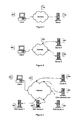
- Figure 1 depicts the basic settings required by the client-server protocol: A client (100) and a server (104) are connected via a network (102); this network can also be multiple interconnected networks, for example the Internet. In figure 1, on the client machine (100) could run a Web browser, on the server machine a Web server.
- a client can be authenticated, for example, via a simple login and password scheme over a secured connection (as example SSL or https).
- a simple login and password scheme over a secured connection (as example SSL or https).
- the server decides whether the client is authorized to access its content.
- the content requested by a client is on a server separate from the server authenticating the client.
- Such a configuration is depicted in Figure 2, where two separate servers 204 and 206 are depicted, in addition to the client computer system 200.
- the client may access either of the two servers over the network.
- a problem arises when the client accesses content provided by one of the servers - say server B - under the control of another server - say server A. In this case, the authentication scheme discussed above cannot be applied.
- US-A-5 870 546 is directed to the problem of determining the efficiency of advertising displayed to a client over a network; efficiency is measured as the number of times a client pursues the URL displayed in a server.
- a Web server system displaying the advertisement provides a client system with a URL reference to the advertised server.
- the URL reference is encoded with predetermined redirection and accounting data.
- the URL reference is decoded and the accounting data is stored. This makes it possible for the advertised server to identify the number of URL displayed in the Web server system displaying the advertisement which are effectively pursued by the client.
- US-A-5 963 915 discusses a method for performing trans-Internet purchase transactions. This document discusses the problem of "third party assumption of identity attack". The problem is that a third party may be able to continue a secure session started by another client browser, if client authentication occurs only at the initiation of a secure session. This document only discusses security of purchase transactions.
- US-A-5 708 780 describes a method of performing access control in which the client accesses the content server and is redirected to an authentication server if the URL to be accessed does not have the requested session identifier. The authentication server is thereby hidden from the client. Changing the content offered by the content provider requires the set of information files, to which the current SID authorises access, to be updated.
- the process for providing access of a client to a content provider server under control of a resource locator server comprises:
- the digital signature may be computed as a function of one or more of the following parameters : an address of the computer system of the client in the network, a unique identifier of the computer system of the client, the content to be accessed by the client, a client identification, time.
- This secret key may be generated using a cryptographic number generator.
- the step of checking the digital signature by the content provider preferably comprises computing another digital signature using the secret key and comparing the other digital signature with the digital signature contained in the resource locator.
- a cryptographic hash function and particularly a cryptographic hash function selected among MD5, SHA-1, MD2, MD4, RIPEMD-128 and RIPEMD-160.
- the content provider server is a content delivery network comprising at least two servers.
- One may then provide a secret key to the resource locator server and to one of the servers, and provide another secret key to the resource locator server and to another one of said at least two servers.
- the secret key for one of the two servers be computed using a cryptographic hash function of a main secret key and of an address of said one server in the network.
- the invention further provides a process for providing a resource locator to a client, in a resource locator server connected to a network, comprising:
- the invention further provides a process for providing access of a client to a content, in a content provider server connected to a network, comprising:
- the step of checking the digital signature may comprise computing another digital signature and comparing said another digital signature with the digital signature contained in said resource locator.
- the other digital signature may be computed as a function of the address.
- the access request may also contain a unique identifier of the computer system of the client and the other digital signature is then computed as a function of the unique identifier.
- the invention further provides a resource locator server, comprising
- the content provider server may be a content delivery network comprising at least two servers, and possible a redirection unit.
- a redirection unit it would have a program selecting one of the servers of said content delivery network and carrying out this process.
- the invention also provides a computer program product embodied in a computer-readable medium for providing a resource locator to a client, in a resource locator server connected to a network, the computer program product comprising:
- the invention also provides a computer program product embodied in a computer-readable medium for providing access of a client to a content, in a content provider server connected to a network, the computer program product comprising:
- Figure 2 shows a client server system connected via a network with two servers.
- One of the servers - server B in the rest of this example - is a content provider server.
- the other server - server A in this example - is a resource locator server providing to the client a resource locator for accessing server B.
- A be a content aggregator (for example a Web portal) that has a contractual relation with B, a content provider.
- A offers, via its Web site, links to content items that are served by a server (for example a Web server, an ftp server, or a streaming media server) operated by B. Since A and B have a contractual relation, they want to prevent that any non authorized third-party C can also offer links to the content provided by B.
- C could copy the links from A's Web pages and use them in its own Web pages, this being a form of "link hijacking".
- the links could also be copied by a client for later access to the content provided by B, or for forwarding to another client. This is another form of link hijacking.
- the invention solves this link hijacking problem by introducing a digital signature in the resource locator provided by the resource locator server A to the client, for accessing the content provider server B.
- the digital signature is representative of a right granted by the resource locator server A to the client for accessing the content provider server B; it is computed based on at least one unique characteristic of the computer system or of the connection of the computer system to the network.
- the client computer system accesses the content provider server using the resource locator; the content provider server B may then check the digital signature contained in the resource locator used by the client, and may allow the client to access content according to the result of this checking step.
- the resource locator is copied by the client, and is provided to a third party.
- the digital signature is computed based on at least one unique characteristic of the computer system or of the connection of the computer system to the network.
- the content provider server B may identify, upon receiving the rcsource locator from the third party, that the resource locator was transmitted by a party that does have the required unique characteristic. The content provider server may therefore refuse to serve the request of the third party.
- the invention uses a scheme based on a cryptographic hash function and on the use of a secret key.
- K Web is generated.
- the key is preferably generated with a cryptographically strong key generator. That means that it is not possible from an arbitrary sequence of keys to find the next key in the sequence. Implementations of cryptographically strong key generators are commercially available and a description of their implementation can be found in literature, for example in the reference of P. Gutman given above. K Web is distributed to A and B .
- H be a cryptographic hash function, for example MD5 (see Rivest reference), SHA-1 (see Secure Hash Standard), or any other.
- MD5 is publicly available.
- the output of the MD5 hash function is a 128 bits string whatever the input is.
- K Web is a secret key shared by A 's Web server (204) and by B's server (206).
- a viewer first connects to A's Web server.
- the web server may identify this viewer as authorized to connect to the web server. Examples to implement this given process use SSL, https, or other security settings known per se.
- All Web pages that contain links (URLs) to the content served by B's server are deployed as dynamic Web pages, that means that the Web pages are calculated in the moment the viewer accesses them.
- the resource locator is dynamically computed, so that the digital signature is computed based on the unique characteristic of the client computer system or of the client connection; the rest of the pages may be static.
- the method of this invention starts its authentication process.
- the authentication method which is integrated with A's Web server (for example using ASP, JSP, or other techniques to generate dynamic Web pages) replaces each link to B's content, with a new link that contains the original link plus optionally additional data (for example a unique user identifier and a timestamp) plus a digital signature.
- the signature is calculated by a cryptographic hash function, which takes as input this link and the additional data and a unique identifier of the client system or of its connection to the network and the secret key K Web .
- the IP address of the connection of the client system to the network is used as unique identifier.
- the viewer's IP address is known from the TCP connection with the Web server and is accessible from the implementation of the authentication method. For simplicity, the rest of this section describes the method without any additional data; the usefulness of additional data is then explained later in describing alternative use cases.
- the authentication be implemented as a Java Bean ("urlAuthenticator”), used by a Java Server Page (JSP) to generate a new authenticated link.
- JSP Java Server Page
- the viewer sends an HTTP GET request to A's Web server to see a Web page that contains the links to B's content (400).
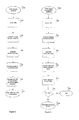
- the computational steps of the method implemented within A's Web server are depicted in the flowchart in figure 4. Each link is computed as soon as the page is requested (400).
- the method first extracts the URL to B's content (402), given in the JSP example above as parameter to the method's implementation (generateLink()).
- the IP address of the viewer's computer is extracted (404) and also passed to the method ( request.getRemoteHost()). In this example no additional data is passed to the method, which would be step (406).
- S 1 must be encoded to be a valid string inside a URL; in this example the value of S 1 is encoded as hexadecimal representation in a string, which guarantees that only characters of "0-9" and "a-e" are used, and that the total length is exactly 32 characters long in the case that MD5 is used as hash function.
- the original URL and the signature are concatenated to form a new valid URL to the requested content (410).
- This URL is then the output of the executed method (412) and is inserted into the Web page sent back to the viewer's browser.
- the viewer's application (for example, the Web browser or a plugin for the specified media-type if the URL denotes another protocol than the HTTP protocol) connects to B's server and requests the URL together with the signature (500).
- B's server passes the received URL (which would be http://www.b.com/1.asx?8978a19bc1c3a98d6467c603e1be299c to continue the previous example) together with the IP address IP V' (504) from the connection with the viewer to B's implementation of the authentication method.
- the authentication method extracts from the URL the contentid' (502) and S 1 (510).
- S 2 is equal to S 1 , the requested content is served by B's server (516), otherwise the operation is executed that is considered as the right response for an unauthorized user (514), for example a "Not authorized" HTTP error is returned.
- the process has the following advantages. Two providers, A and B , can ensure that content that B serves is only available to clients authorized by A . Only an initial secret key must be exchanged between A and B ; it is not needed to know all users that will be authorized by A in advance; i.e. A can admit later on more and other users to access B 's content.
- the described method does not need a real-time communication between the server that authenticates the user the first time ( A ) and the server that serves the content for the authorized user ( B ).
- connection between the user and the server that serves the content does not need to be secured. This is especially important for streaming content, which is served via UDP packets.
- the described method does not need that the original server communicates in real-time with one or several content servers. This leads to a higher performance of the described method for the authentication process.
- the described method is easier to implement and does not depend on network conditions between the original server and the content servers.
- the method has advantages especially if several content servers can serve the same content, since the secret key can be installed on each replica server; for example if the content was replicated to ensure higher availability or faster downloads.
- This method works for all forms of link hijacking : it works if a third party copies links from A, but also if an authorized user of A willfully discloses the links to B's content.
- the method also scales with the number of content servers. It may be used in a variety of related products. Examples are:
- the invention is not limited to the preferred embodiment exemplified above.
- the process was discussed above for dynamic Web pages. It also applies to static web pages, provided the digital signature is computed according to one unique characteristic of the client computer system or connection.
- the example uses a cryptographic hash function.
- Other means may be used for computing the digital signature - basically any function that is hard enough to reverse for the client, but may be easily computed by both the resource locator server and the content provider server. Functions other than cryptographic functions may not make it necessary to provide a secret key to the resource locator server and to the content provider server.
- the example uses as a unique characteristic the IP address; as discussed below, one may use another unique characteristic; generally speaking, the characteristic should be unique to avoid link hijacking, and is preferably difficult to alter by the client.
- additional data can be passed from A's Web server to B's server and it can be guaranteed that the viewer cannot alter this additional data.
- additional data can be passed from A's Web server to B's server and it can be guaranteed that the viewer cannot alter this additional data.
- the following can be useful in a pay-per-view system for streaming audio/video transmissions:
- A offers access to streaming transmission served by B's server, but wants additionally to ensure that the viewer cannot use the link obtained from A's Web page multiple times.
- A has also an agreement with B , that B provides A with the data how long a particular viewer has accessed a stream.
- A deploys a secured Web server, where each viewer authenticates himself first via a login and password scheme. After the viewer is authenticated and authorized to access the Web page, a unique user identification userid is assigned to this viewer. Additionally, the time is obtained, when the viewer selects a link to a stream.
- the URL that is computed by the described method is composed of the original URL plus the time plus the userid and followed by the signature as described above, but also computed above the additional data.
- B's server extracts from the URL the time and userid and refuses access to the stream, if the difference between the time in the URL and the actual time is greater than a given threshold (for example 10 minutes). This requires that the clocks between A's and B's servers are loosely synchronized (less than a 10 minutes difference) and that the time in the URL is encoded in an agreed timezone format, which is known by both servers (for example: Universal Time, UTC). B uses the obtained userid to report to A , how long the viewer has accessed the stream. The authentication method guarantees that the viewer cannot alter neither the time nor the userid to access the content from B .
- a given threshold for example 10 minutes.
- B operates a content delivery network (CDN), cfg. figure 3.
- CDN content delivery network
- the content is replicated on multiple servers. The described method works as described above, only the secret key K Web is given to all servers within the CDN.
- the secret key K Web is shared between A's Web server (304) and the redirection unit (306) of the CDN.
- the redirection unit of the CDN uses a different key K CDN to compute a new URL that is given back to the viewer.
- This secret key K CDN is shared between the redirection unit and all the content servers (308) of the CDN.
- a unique identifier for example the IP address of the chosen content server
- the server tests, if it has been selected by the redirection unit by comparing the unique identifier in the URL with its locally known unique identifier.
- the security of the process depends on the fact that an unauthorized person does not know the secret key. Therefore it is preferable to store the secret key on each server in a way that no unauthorized person has access to it.
- a different secret key can be assigned to each server, although this complicates the initialization phase, and the redirection unit must know, which server will serve the requested content for a particular request.
- the computation of a cryptographically strong secret key requires many CPU cycles, and the secret keys must be stored in a table by the redirection unit. In order to facilitate this process the following method can be taken:
- the redirection unit first has a main secret key K RU generated with a cryptographically strong key generator.
- a secret key K CS i H( K RU + IP CS i + K RU ) is generated and on each CDN server CS i the secret key K CS i is stored.
- the redirection unit computes the signature S 2 with the computed key K CS i instead of K CDN .
- the described invention uses in its preferred embodiment the IP address of the requester, since it is technically very difficult to masquerade its own IP address and being able to receive IP packets from a source in the Internet.
- the IP address is not the best authentication method.
- Firewalls, Web proxies and caches can intercept a request and formulate a new request originating at the interceptor.
- a different unique identifier can be taken by the described invention to replace the IP address in the method description; candidates for these unique identifiers are among others: the global unique identifier (GUID) supplied by some browsers and media players or the CPU serial number of the requester's machine.
- GUIID global unique identifier
- the main problem with those unique identifiers is that they are in theory easier to masquerade than the IP address.
- the other proposed unique identifiers can also be taken in addition to the IP address. It is possible to use more than one unique identifier.
- the description of the alternative embodiment within a CDN describes, how a central redirection unit can produce a new URL with a new digital signature.
- the redirection unit generates a document (HTML, XML, ASX, SMILE, or other format) with links that are calculated as described for the resource locator server.
- the described invention can be chained.
- a central redirection unit can produce a new URL with a new digital signature.
- the redirection is made transparently on the network path (e.g. through a Router or Layer 4 - 7 switch).
- a Layer 4 switch would redirect all HTTP requests to an HTTP cache for all end-users that are on this network path.
- the pages with the links generated by the resource location server are marked as non-cacheable; when the viewer requests the content from the content server, the cache uses the same method as the content server to check the digital signature and grants the access to the content in behalf of the content server.
- the redirection unit in this example: Layer 4 switch
Landscapes
- Engineering & Computer Science (AREA)
- Theoretical Computer Science (AREA)
- Software Systems (AREA)
- Technology Law (AREA)
- Computer Hardware Design (AREA)
- Computer Security & Cryptography (AREA)
- Physics & Mathematics (AREA)
- General Engineering & Computer Science (AREA)
- General Physics & Mathematics (AREA)
- Multimedia (AREA)
- Information Transfer Between Computers (AREA)
- Management, Administration, Business Operations System, And Electronic Commerce (AREA)
- Information Retrieval, Db Structures And Fs Structures Therefor (AREA)
- Storage Device Security (AREA)
- Mobile Radio Communication Systems (AREA)
Claims (47)
- Un procédé pour permettre l'accès d'un client à un serveur fournisseur de contenu sous le contrôle d'un serveur locateur (qui localise) de ressource, comprenant :le serveur locateur de ressource annonçant à des locateurs de ressource de clients le contenu du serveur fournisseur de contenu ;le client se connectant à un réseau à travers un système d'ordinateur et accédant au serveur locateur de ressource ;le serveur locateur de ressource fournissant au système d'ordinateur un locateur de ressource pour accéder au serveur fournisseur de contenu,
ledit locateur de ressource contenant une signature numérique représentative d'un droit accordé par le serveur locateur de ressource au client pour accéder au serveur fournisseur de contenu, ladite signature numérique étant calculée sur la base d'au moins une caractéristique unique du système d'ordinateur ou de la liaison du système d'ordinateur au réseau et étant basée sur un moyen d'identification du contenu auquel on doit accéder ;le système d'ordinateur client accédant au serveur fournisseur de contenu en utilisant ledit locateur de ressource ;le serveur fournisseur de contenu vérifiant la signature numérique contenue dans le locateur de ressource pour la liaison du client au réseau et permettant au client d'accéder au contenu en correspondance au résultat de cette étape de vérification. - Le procédé selon la revendication 1, dans lequel l'étape consistant à fournir comprend, pour le serveur locateur de ressource, le calcul de la signature numérique comme une fonction d'une adresse du système d'ordinateur du client dans le réseau.
- Le procédé selon la revendication 1, dans lequel l'étape consistant à fournir comprend, pour le serveur locateur de ressource, le calcul de la signature numérique comme une fonction d'un moyen d'identification unique du système d'ordinateur du client.
- Le procédé selon la revendication 1, 2 ou 3, dans lequel l'étape consistant à fournir comprend, pour le serveur locateur de ressource, le calcul de la signature numérique comme une fonction d'un moyen d'identification de client.
- Le procédé selon l'une des revendications 1 à 4, dans lequel l'étape consistant à fournir comprend, pour le serveur locateur de ressource, le calcul de la signature numérique comme une fonction du temps.
- Le procédé selon l'une des revendications 1 à 5, comprenant en outre l'étape consistant à fournir un code secret au serveur locateur de ressource et au serveur fournisseur de contenu, et dans lequel l'étape consistant à fournir comprend, pour le serveur locateur de ressource, le calcul de la signature numérique comme une fonction du code secret.
- Le procédé selon la revendication 6, dans lequel l'étape consistant à fournir un code secret comprend la génération du code secret en utilisant un générateur de nombres cryptographiques.
- Le procédé selon la revendication 6 ou 7, dans lequel l'étape de vérification de la signature numérique par le fournisseur de contenu comprend le calcul d'une autre signature numérique en utilisant le code secret et la comparaison de ladite autre signature numérique avec la signature numérique contenue dans ledit locateur de ressource.
- Le procédé selon l'une des revendications 1 à 8, dans lequel l'étape de calcul comprend le calcul d'une fonction cryptographique de hachage.
- Le procédé selon l'une des revendications 2 à 9, dans lequel l'étape de calcul comprend le calcul d'une fonction cryptographique de hachage d'une chaíne comprenant au moins l'une parmi les adresses du système d'ordinateur du client dans le réseau, un moyen d'identification unique du système d'ordinateur du client, une fonction du contenu auquel le client doit accéder, une identification du client et l'heure.
- Le procédé selon la revendication 10, comprenant en outre l'étape consistant à fournir un code secret au serveur locateur de ressource et au serveur fournisseur de contenu, et dans lequel ladite chaíne comprend le code secret.
- Le procédé selon la revendication 11, dans lequel ladite fonction cryptographique de hachage est une fonction cryptographique codée.
- Le procédé selon l'une des revendications 9 à 12, dans lequel la fonction cryptographique de hachage est choisie parmi MD5, SHA-1, MD2, MD4, RIPEMD-128 et RIPEMD-160.
- Le procédé selon l'une des revendications 1 à 13, dans lequel le serveur fournisseur de contenu est un réseau de fourniture de contenu comprenant au moins deux serveurs.
- Le procédé selon la revendication 14, comprenant en outre l'étape de fourniture d'un code secret au serveur locateur de ressource et à l'un desdits au moins deux serveurs, et la fourniture d'un autre code secret au serveur locateur de ressource et à un autre desdits au moins deux serveurs.
- Le procédé selon la revendication 15, dans lequel un code secret pour l'un desdits au moins deux serveurs est calculé en utilisant une fonction cryptographique de hachage d'un code principal secret et une adresse dudit un serveur dans le réseau.
- Un procédé pour fournir un locateur de ressource à un client dans un serveur locateur de ressource relié à un réseau, comprenant :l'affichage de locateurs de ressource aux clients ;la réception à partir d'un réseau d'une demande d'accès pour l'un des locateurs de ressource affichés, en partant d'un système d'ordinateur reliant le client au réseau ;la fourniture au réseau vers le système d'ordinateur d'un locateur de ressource, ledit locateur de ressource contenant une signature numérique représentative d'un droit accordé par le serveur locateur de ressource au client pour accéder à une ressource localisée par ledit locateur de ressource, ladite signature numérique étant calculée sur la base d'au moins une caractéristique unique du système d'ordinateur ou de la liaison du système d'ordinateur au réseau et étant basée sur un moyen d'identification du contenu auquel on doit accéder.
- Le procédé selon la revendication 17, dans lequel l'étape de fourniture comprend le calcul de la signature numérique comme une fonction d'une adresse du système d'ordinateur du client dans le réseau.
- Le procédé selon la revendication 17, dans lequel l'étape de fourniture comprend le calcul de la signature numérique comme une fonction d'un moyen d'identification unique du système d'ordinateur du client.
- Le procédé selon la revendication 17, 18 ou 19, dans lequel l'étape de fourniture comprend le calcul de la signature numérique comme une fonction d'un moyen d'identification du client.
- Le procédé selon l'une des revendications 17 à 20, dans lequel l'étape de fourniture comprend le calcul de la signature numérique comme une fonction du temps.
- Le procédé selon l'une des revendications 17 à 20, dans lequel l'étape de fourniture comprend le calcul de la signature numérique comme une fonction d'un code secret.
- Le procédé selon l'une des revendications 17 à 20, dans lequel l'étape de calcul comprend le calcul d'une fonction cryptographique de hachage.
- Le procédé selon l'une des revendications 17 à 23, dans lequel l'étape de calcul comprend le calcul d'une fonction cryptographique de hachage d'une chaíne comprenant au moins l'une des adresses du système d'ordinateur du client dans le réseau, à un moyen d'identification unique du système d'ordinateur du client, une fonction de la ressource, un moyen d'identification du client et l'heure.
- Le procédé selon la revendication 24, dans lequel la chaíne comprend en outre un code secret.
- Le procédé selon la revendication 25, comprenant en outre l'étape de génération dudit code secret en utilisant un générateur de nombres cryptographiques.
- Le procédé selon les revendications 25 ou 26, dans lequel ladite fonction cryptographique de hachage est une fonction cryptographique de hachage codée.
- Le procédé selon l'une des revendications 23 à 27, dans lequel la fonction cryptographique de hachage est choisie parmi MD5, SHA-1, MD2, MD4, RIPEMD-128 et RIPEMD-160.
- Le procédé selon l'une des revendications 22 à 28, dans lequel ledit code secret est une fonction d'une adresse de serveur contenue dans ledit locateur de ressource.
- Le procédé selon la revendication 29, dans lequel ledit code secret est une fonction cryptographique de hachage d'une adresse de serveur contenue dans ledit locateur de ressource.
- Un procédé pour assurer l'accès d'un client à un contenu, dans un serveur fournisseur de contenu relié à un réseau, comprenant les étapes consistant :à recevoir du réseau une demande d'accès partant d'un système d'ordinateur reliant le client au réseau et contenant une signature numérique,à vérifier la signature numérique contenue dans un locateur de ressource selon au moins une caractéristique unique du système d'ordinateur ou de la liaison du système d'ordinateur au réseau, reçue dans ladite demande, et en correspondance à un moyen d'identification du contenu demandé par le client ; età permettre au client d'accéder au contenu en correspondance au résultat de cette étape de vérification.
- Le procédé selon la revendication 31, dans lequel l'étape de vérification de la signature numérique comprend le calcul d'une autre signature numérique et la comparaison de ladite autre signature numérique avec la signature numérique contenue dans ledit locateur de ressource.
- Le procédé selon la revendication 32, dans lequel ladite demande d'accès contient une adresse du système d'ordinateur du client dans le réseau, et dans lequel ladite autre signature numérique est calculée comme une fonction de l'adresse.
- Le procédé selon la revendication 32, dans lequel ladite demande d'accès contient un moyen d'identification unique du système d'ordinateur du client, et dans lequel ladite autre signature numérique est calculée comme une fonction du moyen d'identification unique.
- Le procédé selon l'une des revendications 32 à 34, dans lequel ladite demande d'accès contient un moyen d'identification du client et dans lequel ladite autre signature numérique est calculée comme une fonction de ladite identification du client.
- Le procédé selon l'une des revendications 32 à 35, dans lequel ladite autre signature numérique est calculée comme une fonction du temps.
- Le procédé selon l'une des revendications 32 à 36, dans lequel le serveur est muni d'un code secret, et dans lequel ladite autre signature numérique est calculée comme une fonction dudit code secret.
- Le procédé selon l'une des revendications 32 à 37, dans lequel l'étape de calcul d'une autre signature numérique comprend le calcul d'une fonction cryptographique de hachage.
- Le procédé selon l'une des revendications 32 à 38, dans lequel l'étape de calcul dudit autre code comprend le calcul d'une fonction cryptographique de hachage d'une chaíne comprenant au moins l'une des adresses du système d'ordinateur du client contenue dans ladite demande, un moyen d'identification unique du système d'ordinateur du client contenu dans ladite demande, une fonction du contenu auquel le client doit accéder, une identification du client contenue dans ladite demande, et l'heure.
- Le procédé selon la revendication 38 ou 39, dans lequel la fonction cryptographique de hachage est choisie parmi MD5, SHA-1, MD2, MD4, RIPEMD-128 et RIPEMD-160.
- Un serveur locateur de ressource, comprenant :une liaison à un réseau,un programme mettant en oeuvre le procédé selon l'une des revendications 17 à 30.
- Un serveur fournisseur de contenu comprenant :une liaison à un réseau,un programme mettant en oeuvre le procédé selon l'une des revendications 31 à 40.
- Le serveur selon la revendication 42, dans lequel le serveur fournisseur de contenu est un réseau fournisseur de contenu comprenant au moins deux serveurs.
- Le serveur selon la revendication 43, dans lequel le réseau de fourniture de contenu comprend une unité de redirection, ladite unité de redirection comprenant un programme mettant en oeuvre le procédé selon l'une des revendications 17 à 30.
- Le serveur selon la revendication 43, dans lequel le réseau de fourniture de contenu comprend une unité de redirection, ladite unité de redirection ayant un programme sélectionnant l'un des serveurs dudit réseau de fourniture de contenu et mettant en oeuvre le procédé selon l'une des revendications 17 à 30.
- Un produit de programme d'ordinateur mis en oeuvre dans un support lisible par un ordinateur pour fournir un locateur de ressource à un client, dans un serveur locateur de ressource relié à un réseau, le produit de programme d'ordinateur comprenant :des moyens de code de programmes lisibles par ordinateur pour afficher des locateurs de ressource aux clients,des moyens de code de programmes lisibles par ordinateur pour recevoir du réseau une demande d'accès pour l'un des locateurs de ressource affichés partant d'un système d'ordinateur reliant le client au réseau ;des moyens de code de programmes lisibles par ordinateur pour alimenter le réseau vers le système d'ordinateur d'un locateur de ressource,
ledit locateur de ressource contenant une signature numérique représentative d'un droit accordé par le serveur locateur de ressource au client pour accéder à une ressource localisée par ledit locateur de ressource, ladite signature numérique étant calculée sur la base d'au moins une caractéristique unique du système d'ordinateur ou de la liaison du système d'ordinateur au réseau et basée sur un moyen d'identification de la ressource. - Un produit de programme d'ordinateur mis en oeuvre dans un support lisible par un ordinateur pour assurer l'accès d'un client à un contenu, dans un serveur fournisseur de contenu relié à un réseau, le produit de programme d'ordinateur comprenant :des moyens de code de programmes lisibles par ordinateur pour recevoir du réseau une demande d'accès venant d'un système d'ordinateur reliant le client au réseau et contenant une signature numérique,des moyens de code de programmes lisibles par ordinateur pour vérifier la signature numérique contenue dans un locateur de ressource selon au moins une caractéristique unique du système d'ordinateur de la liaison du système d'ordinateur au réseau reçue dans ladite demande, et en correspondance à un moyen d'identification du contenu demandé par le client, etdes moyens de code de programmes lisibles par ordinateur pour permettre au client d'accéder au contenu en correspondance au résultat de cette étape de vérification.
Priority Applications (5)
| Application Number | Priority Date | Filing Date | Title |
|---|---|---|---|
| DE60100317T DE60100317T2 (de) | 2001-07-12 | 2001-07-12 | Verfahren zum Bereitstellen von Kundenzugriff auf einen inhaltanbietenden Server unter Kontrolle eines resoursenlokalisierenden Servers |
| AT01401870T ATE241820T1 (de) | 2001-07-12 | 2001-07-12 | Verfahren zum bereitstellen von kundenzugriff auf einen inhaltanbietenden server unter kontrolle eines resoursenlokalisierenden servers |
| EP01401870A EP1278112B1 (fr) | 2001-07-12 | 2001-07-12 | Procédé permettant au client d'accéder au serveur fournisseur de contenus sous contrôle d'un serveur localisateur de ressources |
| US10/184,437 US20030014503A1 (en) | 2001-07-12 | 2002-06-28 | Method and apparatus for providing access of a client to a content provider server under control of a resource locator server |
| JP2002204448A JP2003122724A (ja) | 2001-07-12 | 2002-07-12 | クライアントのコンテンツ提供サーバへのアクセスをリソース・ロケータ・サーバの制御下で提供する方法 |
Applications Claiming Priority (1)
| Application Number | Priority Date | Filing Date | Title |
|---|---|---|---|
| EP01401870A EP1278112B1 (fr) | 2001-07-12 | 2001-07-12 | Procédé permettant au client d'accéder au serveur fournisseur de contenus sous contrôle d'un serveur localisateur de ressources |
Publications (2)
| Publication Number | Publication Date |
|---|---|
| EP1278112A1 EP1278112A1 (fr) | 2003-01-22 |
| EP1278112B1 true EP1278112B1 (fr) | 2003-05-28 |
Family
ID=8182803
Family Applications (1)
| Application Number | Title | Priority Date | Filing Date |
|---|---|---|---|
| EP01401870A Expired - Lifetime EP1278112B1 (fr) | 2001-07-12 | 2001-07-12 | Procédé permettant au client d'accéder au serveur fournisseur de contenus sous contrôle d'un serveur localisateur de ressources |
Country Status (5)
| Country | Link |
|---|---|
| US (1) | US20030014503A1 (fr) |
| EP (1) | EP1278112B1 (fr) |
| JP (1) | JP2003122724A (fr) |
| AT (1) | ATE241820T1 (fr) |
| DE (1) | DE60100317T2 (fr) |
Families Citing this family (59)
| Publication number | Priority date | Publication date | Assignee | Title |
|---|---|---|---|---|
| US7836295B2 (en) * | 2002-07-29 | 2010-11-16 | International Business Machines Corporation | Method and apparatus for improving the resilience of content distribution networks to distributed denial of service attacks |
| US20060047952A1 (en) * | 2002-10-18 | 2006-03-02 | Koninklijke Philips Electronics, N.V. | Method, system, device , signal and computer program product for metadata protection in tv-anytime |
| US20040158606A1 (en) * | 2003-02-10 | 2004-08-12 | Mingtar Tsai | Transmission method of multimedia data over a network |
| US7562215B2 (en) * | 2003-05-21 | 2009-07-14 | Hewlett-Packard Development Company, L.P. | System and method for electronic document security |
| US6973654B1 (en) * | 2003-05-27 | 2005-12-06 | Microsoft Corporation | Systems and methods for the repartitioning of data |
| US7676551B1 (en) * | 2003-06-25 | 2010-03-09 | Microsoft Corporation | Lookup partitioning storage system and method |
| US8782654B2 (en) | 2004-03-13 | 2014-07-15 | Adaptive Computing Enterprises, Inc. | Co-allocating a reservation spanning different compute resources types |
| US9176785B2 (en) | 2004-03-13 | 2015-11-03 | Adaptive Computing Enterprises, Inc. | System and method for providing multi-resource management support in a compute environment |
| JP4264650B2 (ja) | 2004-04-07 | 2009-05-20 | ソニー株式会社 | コンテンツ伝送システム及びコンテンツ伝送方法、コンテンツ送信装置及びコンテンツ送信方法、コンテンツ受信装置及びコンテンツ受信方法、並びにコンピュータ・プログラム |
| US20070266388A1 (en) | 2004-06-18 | 2007-11-15 | Cluster Resources, Inc. | System and method for providing advanced reservations in a compute environment |
| US8176490B1 (en) | 2004-08-20 | 2012-05-08 | Adaptive Computing Enterprises, Inc. | System and method of interfacing a workload manager and scheduler with an identity manager |
| US8271980B2 (en) | 2004-11-08 | 2012-09-18 | Adaptive Computing Enterprises, Inc. | System and method of providing system jobs within a compute environment |
| US8010685B2 (en) * | 2004-11-09 | 2011-08-30 | Cisco Technology, Inc. | Method and apparatus for content classification |
| WO2006072994A1 (fr) * | 2005-01-07 | 2006-07-13 | Systemk Corporation | Système d’authentification d’ouverture de session avec une caméra en réseau |
| JP4471937B2 (ja) | 2005-02-07 | 2010-06-02 | 株式会社ソニー・コンピュータエンタテインメント | プロセッサのリソース管理によるコンテンツ制御方法および装置 |
| US20060200664A1 (en) * | 2005-03-07 | 2006-09-07 | Dave Whitehead | System and method for securing information accessible using a plurality of software applications |
| US8863143B2 (en) | 2006-03-16 | 2014-10-14 | Adaptive Computing Enterprises, Inc. | System and method for managing a hybrid compute environment |
| US8930536B2 (en) | 2005-03-16 | 2015-01-06 | Adaptive Computing Enterprises, Inc. | Virtual private cluster |
| US9231886B2 (en) | 2005-03-16 | 2016-01-05 | Adaptive Computing Enterprises, Inc. | Simple integration of an on-demand compute environment |
| US9015324B2 (en) | 2005-03-16 | 2015-04-21 | Adaptive Computing Enterprises, Inc. | System and method of brokering cloud computing resources |
| CA2603577A1 (fr) | 2005-04-07 | 2006-10-12 | Cluster Resources, Inc. | Acces a la demande a des ressources informatiques |
| US8782120B2 (en) | 2005-04-07 | 2014-07-15 | Adaptive Computing Enterprises, Inc. | Elastic management of compute resources between a web server and an on-demand compute environment |
| FR2887097A1 (fr) * | 2005-06-14 | 2006-12-15 | France Telecom | Procede de protection d'un code-source en langage semi-interprete |
| US8024290B2 (en) * | 2005-11-14 | 2011-09-20 | Yahoo! Inc. | Data synchronization and device handling |
| US20070260572A1 (en) * | 2006-05-03 | 2007-11-08 | Boucard John C | Interactive data management system |
| US20080034008A1 (en) * | 2006-08-03 | 2008-02-07 | Yahoo! Inc. | User side database |
| US20080172545A1 (en) * | 2007-01-12 | 2008-07-17 | John Christian Boucard | System and method for accessing and displaying interactive content and advertising |
| US20080172498A1 (en) * | 2007-01-12 | 2008-07-17 | John Christian Boucard | System and Apparatus for Managing Interactive Content, Advertising, and Devices |
| US8041773B2 (en) | 2007-09-24 | 2011-10-18 | The Research Foundation Of State University Of New York | Automatic clustering for self-organizing grids |
| US8489731B2 (en) | 2007-12-13 | 2013-07-16 | Highwinds Holdings, Inc. | Content delivery network with customized tracking of delivery data |
| US7962580B2 (en) * | 2007-12-13 | 2011-06-14 | Highwinds Holdings, Inc. | Content delivery network |
| US8707442B1 (en) * | 2008-01-18 | 2014-04-22 | Google Inc. | Dynamic universal resource locator (URL) construction for accessing media content |
| US20090271493A1 (en) * | 2008-04-29 | 2009-10-29 | Boucard John C | System and Apparatus for Managing Social Networking and Loyalty Program Data |
| US20100198674A1 (en) * | 2009-02-03 | 2010-08-05 | John Boucard | Brand Experience System |
| US20100199162A1 (en) * | 2009-02-03 | 2010-08-05 | John Boucard | Form Management System |
| US20100193587A1 (en) * | 2009-02-03 | 2010-08-05 | John Boucard | Interactive Printed Document System |
| US20130103785A1 (en) * | 2009-06-25 | 2013-04-25 | 3Crowd Technologies, Inc. | Redirecting content requests |
| US8560597B2 (en) | 2009-07-30 | 2013-10-15 | At&T Intellectual Property I, L.P. | Anycast transport protocol for content distribution networks |
| US10877695B2 (en) | 2009-10-30 | 2020-12-29 | Iii Holdings 2, Llc | Memcached server functionality in a cluster of data processing nodes |
| US11720290B2 (en) | 2009-10-30 | 2023-08-08 | Iii Holdings 2, Llc | Memcached server functionality in a cluster of data processing nodes |
| US8429616B2 (en) * | 2010-03-19 | 2013-04-23 | Ebay Inc. | Orthogonal experimentation in a computing environment |
| US20130103853A1 (en) | 2011-07-29 | 2013-04-25 | 3Crowd Technologies, Inc. | Directing clients based on communication format |
| US9680791B2 (en) | 2011-07-29 | 2017-06-13 | Fortinet, Inc. | Facilitating content accessibility via different communication formats |
| US8984605B2 (en) * | 2011-08-23 | 2015-03-17 | Zixcorp Systems, Inc. | Multi-factor authentication |
| EP2605479A1 (fr) * | 2011-12-16 | 2013-06-19 | British Telecommunications public limited company | Validation de terminal de réseau |
| EP2605478A1 (fr) * | 2011-12-16 | 2013-06-19 | British Telecommunications public limited company | Redirection de récupération des données |
| US20140359748A1 (en) | 2011-12-16 | 2014-12-04 | British Telecommunications Public Limited Company | Network terminal validation |
| US20160337318A1 (en) * | 2013-09-03 | 2016-11-17 | Pagefair Limited | Anti-tampering system |
| US9438610B2 (en) * | 2013-09-03 | 2016-09-06 | Pagefair Limited | Anti-tampering server |
| US9237019B2 (en) | 2013-09-25 | 2016-01-12 | Amazon Technologies, Inc. | Resource locators with keys |
| US9311500B2 (en) | 2013-09-25 | 2016-04-12 | Amazon Technologies, Inc. | Data security using request-supplied keys |
| US10089307B2 (en) | 2014-12-31 | 2018-10-02 | International Business Machines Corporation | Scalable distributed data store |
| DE102015214740A1 (de) * | 2015-08-03 | 2017-02-09 | Siemens Aktiengesellschaft | Verfahren und System zum Bereitstellen von Informationsdaten |
| US9973340B2 (en) * | 2015-11-13 | 2018-05-15 | Verizon Patent And Licensing Inc. | Mobile content delivery via toll-free uniform resource locators |
| FR3062013A1 (fr) * | 2017-01-16 | 2018-07-20 | Orange | Procedes et dispositifs de verification de la validite d'une delegation de diffusion de contenus chiffres |
| US10374948B2 (en) * | 2017-07-20 | 2019-08-06 | Huawei Technologies Co., Ltd. | Supporting mobility and multi-homing in the transport layer inside end-hosts |
| US11086963B2 (en) | 2018-12-05 | 2021-08-10 | Ebay Inc. | Adaptive data platforms |
| KR102817135B1 (ko) * | 2019-03-26 | 2025-06-05 | 구글 엘엘씨 | 다수의 암호화 디지털 서명들을 사용한 콘텐츠 액세스와 콘텐츠 전달의 인가 분리 |
| IL272521B2 (en) * | 2020-02-06 | 2023-05-01 | Google Llc | Creating sequences of network data while preventing the acquisition or manipulation of time data |
Family Cites Families (12)
| Publication number | Priority date | Publication date | Assignee | Title |
|---|---|---|---|---|
| US5708780A (en) * | 1995-06-07 | 1998-01-13 | Open Market, Inc. | Internet server access control and monitoring systems |
| US5963915A (en) * | 1996-02-21 | 1999-10-05 | Infoseek Corporation | Secure, convenient and efficient system and method of performing trans-internet purchase transactions |
| US5751956A (en) * | 1996-02-21 | 1998-05-12 | Infoseek Corporation | Method and apparatus for redirection of server external hyper-link references |
| US6032260A (en) * | 1997-11-13 | 2000-02-29 | Ncr Corporation | Method for issuing a new authenticated electronic ticket based on an expired authenticated ticket and distributed server architecture for using same |
| US6233577B1 (en) * | 1998-02-17 | 2001-05-15 | Phone.Com, Inc. | Centralized certificate management system for two-way interactive communication devices in data networks |
| US6356935B1 (en) * | 1998-08-14 | 2002-03-12 | Xircom Wireless, Inc. | Apparatus and method for an authenticated electronic userid |
| US6085321A (en) * | 1998-08-14 | 2000-07-04 | Omnipoint Corporation | Unique digital signature |
| US6463534B1 (en) * | 1999-03-26 | 2002-10-08 | Motorola, Inc. | Secure wireless electronic-commerce system with wireless network domain |
| US6775782B1 (en) * | 1999-03-31 | 2004-08-10 | International Business Machines Corporation | System and method for suspending and resuming digital certificates in a certificate-based user authentication application system |
| US7146505B1 (en) * | 1999-06-01 | 2006-12-05 | America Online, Inc. | Secure data exchange between date processing systems |
| US6324648B1 (en) * | 1999-12-14 | 2001-11-27 | Gte Service Corporation | Secure gateway having user identification and password authentication |
| US6510464B1 (en) * | 1999-12-14 | 2003-01-21 | Verizon Corporate Services Group Inc. | Secure gateway having routing feature |
-
2001
- 2001-07-12 EP EP01401870A patent/EP1278112B1/fr not_active Expired - Lifetime
- 2001-07-12 DE DE60100317T patent/DE60100317T2/de not_active Expired - Lifetime
- 2001-07-12 AT AT01401870T patent/ATE241820T1/de not_active IP Right Cessation
-
2002
- 2002-06-28 US US10/184,437 patent/US20030014503A1/en not_active Abandoned
- 2002-07-12 JP JP2002204448A patent/JP2003122724A/ja active Pending
Also Published As
| Publication number | Publication date |
|---|---|
| US20030014503A1 (en) | 2003-01-16 |
| ATE241820T1 (de) | 2003-06-15 |
| EP1278112A1 (fr) | 2003-01-22 |
| DE60100317D1 (de) | 2003-07-03 |
| DE60100317T2 (de) | 2004-04-29 |
| JP2003122724A (ja) | 2003-04-25 |
Similar Documents
| Publication | Publication Date | Title |
|---|---|---|
| EP1278112A1 (fr) | Procédé permettant au client d'accéder au serveur fournisseur de contenus sous contrôle d'un serveur localisateur de ressources | |
| Feamster et al. | Infranet: Circumventing web censorship and surveillance | |
| Baugher et al. | Self-verifying names for read-only named data | |
| US7373517B1 (en) | System and method for encrypting and decrypting files | |
| US9363237B2 (en) | Secure data exchange between data processing systems | |
| US9900155B2 (en) | Security techniques for cooperative file distribution | |
| KR100207815B1 (ko) | 클라이언트-서버 통신 인증방법 및 장치 | |
| US6463533B1 (en) | System for generating site-specific user aliases in a computer network | |
| US6041357A (en) | Common session token system and protocol | |
| RU2307391C2 (ru) | Способы дистанционного изменения пароля связи | |
| US7966491B2 (en) | Protection of the distribution of digital documents in a peer to peer network | |
| US20030065956A1 (en) | Challenge-response data communication protocol | |
| US7908649B1 (en) | Method and apparatus for providing efficient authorization services in a web cache | |
| US9172707B2 (en) | Reducing cross-site scripting attacks by segregating HTTP resources by subdomain | |
| KR20120128674A (ko) | 안전한 동적 권한위임 | |
| WO2011128183A2 (fr) | Procédé et appareil pour l'interfonctionnement avec une architecture d'authentification d'ouverture de session | |
| GB2318486A (en) | Data communications using public key cryptography | |
| KR20210112359A (ko) | 브라우저 쿠키 보안 | |
| Lesniewski-Laas et al. | {SSL} Splitting: Securely Serving Data from Untrusted Caches | |
| CN109862009A (zh) | 一种客户端身份校验方法及装置 | |
| US20060031680A1 (en) | System and method for controlling access to a computerized entity | |
| CN114124441A (zh) | 一种基于jwt的客户端认证方法及系统 | |
| CN112511862A (zh) | 一种ndn中mpeg-dash视频流的校验方法 | |
| Blundo et al. | A lightweight approach to authenticated web caching | |
| Koutny | Detecting Unauthorized Modification of HTTP Communication with Steganography |
Legal Events
| Date | Code | Title | Description |
|---|---|---|---|
| GRAH | Despatch of communication of intention to grant a patent |
Free format text: ORIGINAL CODE: EPIDOS IGRA |
|
| PUAI | Public reference made under article 153(3) epc to a published international application that has entered the european phase |
Free format text: ORIGINAL CODE: 0009012 |
|
| 17P | Request for examination filed |
Effective date: 20020504 |
|
| AK | Designated contracting states |
Kind code of ref document: A1 Designated state(s): AT BE CH CY DE DK ES FI FR GB GR IE IT LI LU MC NL PT SE TR |
|
| AX | Request for extension of the european patent |
Free format text: AL;LT;LV;MK;RO;SI |
|
| GRAH | Despatch of communication of intention to grant a patent |
Free format text: ORIGINAL CODE: EPIDOS IGRA |
|
| GRAA | (expected) grant |
Free format text: ORIGINAL CODE: 0009210 |
|
| AK | Designated contracting states |
Designated state(s): AT BE CH CY DE DK ES FI FR GB GR IE IT LI LU MC NL PT SE TR |
|
| AX | Request for extension of the european patent |
Extension state: AL LT LV MK RO SI |
|
| PG25 | Lapsed in a contracting state [announced via postgrant information from national office to epo] |
Ref country code: IT Free format text: LAPSE BECAUSE OF FAILURE TO SUBMIT A TRANSLATION OF THE DESCRIPTION OR TO PAY THE FEE WITHIN THE PRESCRIBED TIME-LIMIT;WARNING: LAPSES OF ITALIAN PATENTS WITH EFFECTIVE DATE BEFORE 2007 MAY HAVE OCCURRED AT ANY TIME BEFORE 2007. THE CORRECT EFFECTIVE DATE MAY BE DIFFERENT FROM THE ONE RECORDED. Effective date: 20030528 Ref country code: CH Free format text: LAPSE BECAUSE OF FAILURE TO SUBMIT A TRANSLATION OF THE DESCRIPTION OR TO PAY THE FEE WITHIN THE PRESCRIBED TIME-LIMIT Effective date: 20030528 Ref country code: FI Free format text: LAPSE BECAUSE OF FAILURE TO SUBMIT A TRANSLATION OF THE DESCRIPTION OR TO PAY THE FEE WITHIN THE PRESCRIBED TIME-LIMIT Effective date: 20030528 Ref country code: AT Free format text: LAPSE BECAUSE OF FAILURE TO SUBMIT A TRANSLATION OF THE DESCRIPTION OR TO PAY THE FEE WITHIN THE PRESCRIBED TIME-LIMIT Effective date: 20030528 Ref country code: BE Free format text: LAPSE BECAUSE OF FAILURE TO SUBMIT A TRANSLATION OF THE DESCRIPTION OR TO PAY THE FEE WITHIN THE PRESCRIBED TIME-LIMIT Effective date: 20030528 Ref country code: NL Free format text: LAPSE BECAUSE OF FAILURE TO SUBMIT A TRANSLATION OF THE DESCRIPTION OR TO PAY THE FEE WITHIN THE PRESCRIBED TIME-LIMIT Effective date: 20030528 Ref country code: TR Free format text: LAPSE BECAUSE OF FAILURE TO SUBMIT A TRANSLATION OF THE DESCRIPTION OR TO PAY THE FEE WITHIN THE PRESCRIBED TIME-LIMIT Effective date: 20030528 Ref country code: LI Free format text: LAPSE BECAUSE OF FAILURE TO SUBMIT A TRANSLATION OF THE DESCRIPTION OR TO PAY THE FEE WITHIN THE PRESCRIBED TIME-LIMIT Effective date: 20030528 |
|
| REG | Reference to a national code |
Ref country code: GB Ref legal event code: FG4D |
|
| REG | Reference to a national code |
Ref country code: CH Ref legal event code: EP |
|
| REG | Reference to a national code |
Ref country code: IE Ref legal event code: FG4D |
|
| REF | Corresponds to: |
Ref document number: 60100317 Country of ref document: DE Date of ref document: 20030703 Kind code of ref document: P |
|
| PG25 | Lapsed in a contracting state [announced via postgrant information from national office to epo] |
Ref country code: LU Free format text: LAPSE BECAUSE OF NON-PAYMENT OF DUE FEES Effective date: 20030712 Ref country code: CY Free format text: LAPSE BECAUSE OF FAILURE TO SUBMIT A TRANSLATION OF THE DESCRIPTION OR TO PAY THE FEE WITHIN THE PRESCRIBED TIME-LIMIT Effective date: 20030712 |
|
| PG25 | Lapsed in a contracting state [announced via postgrant information from national office to epo] |
Ref country code: IE Free format text: LAPSE BECAUSE OF NON-PAYMENT OF DUE FEES Effective date: 20030714 |
|
| PG25 | Lapsed in a contracting state [announced via postgrant information from national office to epo] |
Ref country code: MC Free format text: LAPSE BECAUSE OF NON-PAYMENT OF DUE FEES Effective date: 20030731 |
|
| PG25 | Lapsed in a contracting state [announced via postgrant information from national office to epo] |
Ref country code: GR Free format text: LAPSE BECAUSE OF FAILURE TO SUBMIT A TRANSLATION OF THE DESCRIPTION OR TO PAY THE FEE WITHIN THE PRESCRIBED TIME-LIMIT Effective date: 20030828 Ref country code: DK Free format text: LAPSE BECAUSE OF FAILURE TO SUBMIT A TRANSLATION OF THE DESCRIPTION OR TO PAY THE FEE WITHIN THE PRESCRIBED TIME-LIMIT Effective date: 20030828 Ref country code: SE Free format text: LAPSE BECAUSE OF FAILURE TO SUBMIT A TRANSLATION OF THE DESCRIPTION OR TO PAY THE FEE WITHIN THE PRESCRIBED TIME-LIMIT Effective date: 20030828 Ref country code: PT Free format text: LAPSE BECAUSE OF FAILURE TO SUBMIT A TRANSLATION OF THE DESCRIPTION OR TO PAY THE FEE WITHIN THE PRESCRIBED TIME-LIMIT Effective date: 20030828 |
|
| PG25 | Lapsed in a contracting state [announced via postgrant information from national office to epo] |
Ref country code: ES Free format text: LAPSE BECAUSE OF FAILURE TO SUBMIT A TRANSLATION OF THE DESCRIPTION OR TO PAY THE FEE WITHIN THE PRESCRIBED TIME-LIMIT Effective date: 20030908 |
|
| AKX | Designation fees paid |
Designated state(s): AT BE CH CY DE DK ES FI FR GB GR IE IT LI LU MC NL PT SE TR |
|
| NLV1 | Nl: lapsed or annulled due to failure to fulfill the requirements of art. 29p and 29m of the patents act | ||
| LTIE | Lt: invalidation of european patent or patent extension |
Effective date: 20030528 |
|
| REG | Reference to a national code |
Ref country code: CH Ref legal event code: PL |
|
| PLBE | No opposition filed within time limit |
Free format text: ORIGINAL CODE: 0009261 |
|
| STAA | Information on the status of an ep patent application or granted ep patent |
Free format text: STATUS: NO OPPOSITION FILED WITHIN TIME LIMIT |
|
| ET | Fr: translation filed | ||
| REG | Reference to a national code |
Ref country code: IE Ref legal event code: MM4A |
|
| 26N | No opposition filed |
Effective date: 20040302 |
|
| REG | Reference to a national code |
Ref country code: DE Ref legal event code: R082 Ref document number: 60100317 Country of ref document: DE Representative=s name: CABINET HIRSCH & ASSOCIES, FR |
|
| REG | Reference to a national code |
Ref country code: DE Ref legal event code: R081 Ref document number: 60100317 Country of ref document: DE Owner name: ASPERA FRANCE, FR Free format text: FORMER OWNER: CASTIFY NETWORKS S.A., VALBONNE, SOPHIA ANTIPOLIS, FR Effective date: 20131213 Ref country code: DE Ref legal event code: R081 Ref document number: 60100317 Country of ref document: DE Owner name: ASPERA FRANCE, FR Free format text: FORMER OWNER: CASTIFY NETWORKS S.A., VALBONNE, FR Effective date: 20131213 Ref country code: DE Ref legal event code: R082 Ref document number: 60100317 Country of ref document: DE Representative=s name: CABINET HIRSCH & ASSOCIES, FR Effective date: 20131213 |
|
| REG | Reference to a national code |
Ref country code: FR Ref legal event code: CA Effective date: 20140106 Ref country code: FR Ref legal event code: CD Owner name: ASPERA FRANCE, FR Effective date: 20140106 Ref country code: FR Ref legal event code: CJ Effective date: 20140106 |
|
| PGFP | Annual fee paid to national office [announced via postgrant information from national office to epo] |
Ref country code: FR Payment date: 20140528 Year of fee payment: 14 |
|
| REG | Reference to a national code |
Ref country code: FR Ref legal event code: ST Effective date: 20160331 |
|
| PG25 | Lapsed in a contracting state [announced via postgrant information from national office to epo] |
Ref country code: FR Free format text: LAPSE BECAUSE OF NON-PAYMENT OF DUE FEES Effective date: 20150731 |
|
| PGFP | Annual fee paid to national office [announced via postgrant information from national office to epo] |
Ref country code: GB Payment date: 20170728 Year of fee payment: 17 Ref country code: DE Payment date: 20170718 Year of fee payment: 17 |
|
| REG | Reference to a national code |
Ref country code: DE Ref legal event code: R119 Ref document number: 60100317 Country of ref document: DE |
|
| GBPC | Gb: european patent ceased through non-payment of renewal fee |
Effective date: 20180712 |
|
| PG25 | Lapsed in a contracting state [announced via postgrant information from national office to epo] |
Ref country code: DE Free format text: LAPSE BECAUSE OF NON-PAYMENT OF DUE FEES Effective date: 20190201 Ref country code: GB Free format text: LAPSE BECAUSE OF NON-PAYMENT OF DUE FEES Effective date: 20180712 |