EP1279743A2 - Nachweis von genetischen Polymorphismen durch allel-spezifische Amplifizierung unter Benutzung von angepassten Primern und darauffolgende Hybridisierung - Google Patents
Nachweis von genetischen Polymorphismen durch allel-spezifische Amplifizierung unter Benutzung von angepassten Primern und darauffolgende Hybridisierung Download PDFInfo
- Publication number
- EP1279743A2 EP1279743A2 EP02016784A EP02016784A EP1279743A2 EP 1279743 A2 EP1279743 A2 EP 1279743A2 EP 02016784 A EP02016784 A EP 02016784A EP 02016784 A EP02016784 A EP 02016784A EP 1279743 A2 EP1279743 A2 EP 1279743A2
- Authority
- EP
- European Patent Office
- Prior art keywords
- base
- primer
- nucleic acid
- nucleotide
- complementary
- Prior art date
- Legal status (The legal status is an assumption and is not a legal conclusion. Google has not performed a legal analysis and makes no representation as to the accuracy of the status listed.)
- Granted
Links
Images

Classifications
-
- C—CHEMISTRY; METALLURGY
- C12—BIOCHEMISTRY; BEER; SPIRITS; WINE; VINEGAR; MICROBIOLOGY; ENZYMOLOGY; MUTATION OR GENETIC ENGINEERING
- C12Q—MEASURING OR TESTING PROCESSES INVOLVING ENZYMES, NUCLEIC ACIDS OR MICROORGANISMS; COMPOSITIONS OR TEST PAPERS THEREFOR; PROCESSES OF PREPARING SUCH COMPOSITIONS; CONDITION-RESPONSIVE CONTROL IN MICROBIOLOGICAL OR ENZYMOLOGICAL PROCESSES
- C12Q1/00—Measuring or testing processes involving enzymes, nucleic acids or microorganisms; Compositions therefor; Processes of preparing such compositions
- C12Q1/68—Measuring or testing processes involving enzymes, nucleic acids or microorganisms; Compositions therefor; Processes of preparing such compositions involving nucleic acids
- C12Q1/6813—Hybridisation assays
- C12Q1/6816—Hybridisation assays characterised by the detection means
-
- C—CHEMISTRY; METALLURGY
- C12—BIOCHEMISTRY; BEER; SPIRITS; WINE; VINEGAR; MICROBIOLOGY; ENZYMOLOGY; MUTATION OR GENETIC ENGINEERING
- C12Q—MEASURING OR TESTING PROCESSES INVOLVING ENZYMES, NUCLEIC ACIDS OR MICROORGANISMS; COMPOSITIONS OR TEST PAPERS THEREFOR; PROCESSES OF PREPARING SUCH COMPOSITIONS; CONDITION-RESPONSIVE CONTROL IN MICROBIOLOGICAL OR ENZYMOLOGICAL PROCESSES
- C12Q1/00—Measuring or testing processes involving enzymes, nucleic acids or microorganisms; Compositions therefor; Processes of preparing such compositions
- C12Q1/68—Measuring or testing processes involving enzymes, nucleic acids or microorganisms; Compositions therefor; Processes of preparing such compositions involving nucleic acids
- C12Q1/6813—Hybridisation assays
- C12Q1/6827—Hybridisation assays for detection of mutation or polymorphism
Definitions
- This invention relates a novel primer capable to discriminate between two nucleic acids which differ by only one base, and which may be used to detect a single nucleotide polymorphism.
- the present invention also pertains to a method for detecting a polymorphism in a nucleic acid.
- Single nucleotide polymorphisms a set of single nucleotide variants at genomic loci, are distributed throughout a genome. In the human genome, such single nucleotide variation occurs relatively frequently, about once in every 200-1000 bases, resulting in millions of single nucleotide polymorphisms (Collins, et al. (1997) Science 278: 1580). In general, when a single nucleotide polymorphism exists at a locus within a gene for a structure protein, the variant may be dominant. On the other hand, when a single nucleotide polymorphism is at a locus within a gene for a catalytic enzyme, the variant may be recessive. See Beaudet et al.
- genetic recessive disorders caused by a polymorphism may include bovine leukocyte adhesion deficiency (BLAD, Shuster et al. (1992) Pro. Acad. Natl. Sci. USA 89: 9225-9229), citrullinemia (Dennis et al. (1989) Pro. Acad. Natl. Sci. USA 86: 7947-7951), maple syrup urine disease (MSUD, Zhang et al. (1990) J. Biol. Chem.
- a single nucleotide polymorphism can be "allelic.” That is, due to the existence of the polymorphism, some members of a species may have the unmutated sequence (i.e. the wild-type allele) whereas other members may have a mutated sequence (i.e. the mutant allele). Further, for each polymorphism, there are three possible genotypes: homozygous wild-type alleles, homozygous mutant alleles, and heterozygous alleles.
- the problem of the present invention is to provide an efficient method for detecting a single nucleotide polymorphism, including genotyping.
- one aspect of this invention features a discrimination primer for amplifying a nucleic acid that includes a first base at a position suspected of a polymorphism and a second base immediately 3' to the first base.
- This primer includes (1) a first nucleotide, which is located at the 3' terminus of the primer and contains a base that is complementary to the first base; (2) a second nucleotide, which is located immediately 5' to the first nucleotide and contains a base that is not complementary to the second base; (3) a segment of nucleotides (e.g., 5 to 50, or 10 to 40 nucleotides in length), which is located immediately 5' to the second nucleotide and is complementary to a part of the nucleic acid that is immediately 3' to the second base; and (4) a binding member of a specific binding pair covalently bonded to the 5' terminus of the segment.
- the first base of the nucleic acid can be mutant or wild-type.
- a nucleic acid targeted to be amplified can be DNA (ss or ds DNA) or RNA, in a purified or unpurified form. It also can be a genomic fragment or a restriction fragment.
- the term "complementary" refers to a sequence forming a duplex with another sequence when these sequences base pair with one another, perfectly or partly. In a perfect duplex, two sequences are precisely complementary. In a partial duplex, two sequences have at least one, two, or more mismatched base pairs, but are still capable of synthesizing a primer extension product.
- a specific binding pair refers to two binding members that specifically bind to one another.
- a binding member of the specific binding pair is an oligonucleotide that is not complementary to any part of the nucleic acid to be amplified, and the other member of the specific binding pair is also an oligonucleotide; both binding members can be 6 to 50 nucleotides (e.g., 10 to 40 nucleotides) in length.
- One binding member forms an integral part of the discrimination primer, and thus also of an amplification product extended therefrom. Via the binding member, the amplification product binds to the other binding member, which is immobilized (directly or indirectly) on a solid substrate. Affixation of the amplification product to a solid substrate facilitates its detection.
- this invention features a method for detecting a polymorphism in a nucleic acid.
- the method includes (1) providing a nucleic acid containing a base at a position suspected of a polymorphism; (2) amplifying the nucleic acid with a first binding member-containing discrimination primer (as described above) and another primer (an amplification primer); (3) contacting the amplified nucleic acid with a second binding member capable of binding to the first binding member; and (4) detecting the amplified nucleic acid that binds to the second binding member.
- this method includes amplifying the nucleic acid in the presence of two discrimination primers, one of which includes a mutant base in the nucleic acid sequence, and the other primer includes a wild-type base.
- amplifying refers to the process of producing multiple copies of a desired sequence of the provided nucleic acid or a portion thereof, e.g., 50 to 1000 nucleotides in length.
- An amplification primer is used to amplify a nucleic acid including a polymorphism. It can include a label at its 5' terminus.
- the label can be detected, directly or indirectly, by well-known techniques. Examples of the label include, but are not limited to, a fluorescent molecule (e.g., fluorescein and rhodamine), biotin (which can be detected by an anti-biotin specific antibody or an enzyme-conjugated avidin derivative), a radioactive isotope (e.g., 32 P or 125 I), a calorimetric reagent, and a chemiluminescent reagent.
- a fluorescent molecule e.g., fluorescein and rhodamine
- biotin which can be detected by an anti-biotin specific antibody or an enzyme-conjugated avidin derivative
- a radioactive isotope e.g., 32 P or 125 I
- calorimetric reagent e.g.
- kits for detecting a polymorphism include a discrimination primer and an amplification primer as described above.
- the kit can include two discrimination primers, one containing a mutant base at its 3' terminus, and the other containing a wild-type base at its 3' terminus.
- the kit can be used to analyze a polymorphism.
- the kit can be used to further determine the genotype of polymorphic alleles.
- the kit may further include an enzyme (i.e., DNA polymerase) and reagents for amplification (e.g., nucleotides, or analogs thereof such as deoxyinosine). It can also include solid substrates, such as glass plates or plastic microchips containing arrays of oligonucleotides (i.e., various binding members to be used to bind amplification products).
- an enzyme i.e., DNA polymerase
- reagents for amplification e.g., nucleotides, or analogs thereof such as deoxyinosine
- solid substrates such as glass plates or plastic microchips containing arrays of oligonucleotides (i.e., various binding members to be used to bind amplification products).
- the present invention relates to a discrimination primer, and an amplification primer, for use in an amplification reaction to detect a polymorphism.
- a “primer” is an oligonucleotide capable of acting as a point of initiation of synthesis of a primer extension product that is complementary to a nucleic acid strand (template or target sequence), when placed under suitable conditions (e.g., salt concentration, temperature, and pH) in the presence of nucleotides and other reagents for nucleic acid polymerization (e.g., a DNA dependent polymerase).
- a primer must be of a sufficient length (e.g., at least 6 nucleotides) to prime the synthesis of extension products.
- a discrimination primer and an amplification primer allows for preferential (e.g., exclusive) amplification of a nucleic acid that contains a polymorphism.
- a primer pair can be used to preferentially amplify one polymorphic allele (e.g., mutant allele) over the other (e.g., wild-type allele).
- the discrimination primer includes a first nucleotide, which is located at the 3' terminus of the primer and contains a base that is complementary to a first base suspected of a polymorphism in a nucleic acid; a second nucleotide, which is located immediately 5' to the first nucleotide and contains a base that is not complementary to a second base immediately 3' to the first base; a segment of nucleotides; and a binding member of a specific binding pair.
- the oligonucleotide consisting of the first and second nucleotides and the segment (at least 5 bases in length) is capable of acting as a point of initiation of synthesis of a primer extension product.
- a discrimination primer containing a mutant nucleotide at its 3' terminus has one more mismatched base when annealing to a wild-type allele than annealing to a mutant allele. More specifically, this discrimination primer has two mismatched bases at its 3' end when annealing to a wild-type allele, and is therefore not able to act as a point of initiation of synthesis of a primer extension reaction. Conversely, when the first base is mutant, the just-described discrimination primer has only one mismatched base at its 3' end, and can be used to act as a point of initiation of synthesis of a primer extension reaction.
- a discrimination primer can be optimized on a gene-by-gene basis to provide the greatest degree of discrimination between amplification of the wild-type allele and the mutant allele.
- the optimization will of necessity include some empirical observations, but a number of basic principles can be applied to select a suitable starting point for final optimization.
- a discrimination primer can be designed based on a known single nucleotide polymorphism in a gene, and also based on its properties, e.g., GC-content, annealing temperature, or internal pairing, which can be analyzed using software programs.
- a discrimination primer of this invention includes a first binding member, such that an amplification product can bind, via the first binding member, to a second binding member immobilized on a solid substrate.
- both binding members are oligonucleotides
- the optimization may further take account of annealing or other properties of the first and second binding members.
- annealing or other properties of the first and second binding members.
- a primer pair of this invention can be used to selectively amplify a nucleic acid with a single nucleotide polymorphism.
- the nucleic acid can be obtained from any suitable source, e.g., a tissue homogenate, blood, amniotic fluid, or chorionic villus samples; and can be DNA or RNA (in the case of RNA, reverse transcription is required before PCR amplification).
- PCR amplification can be carried out following standard procedures. See, e.g., Ausubel et al . (1989) Current Protocols in Molecular Biology John Wiley and Sons, New York; Innis et al .
- a discrimination primer that contains an oligonucleotide as the first binding member can be prepared by a synthetic method, or alternatively, by a ligation method (e.g., a method of using cyanogen bromide described in Selvasekaran and Turnbull (1999) Nucleic Acids Res. 27(2): 624).
- a discrimination primer that contains a peptide as the first binding member can be prepared by conjugation of a peptide and an oligonucleotide based on, e.g., a "native ligation" of an N-terminal thioester-functionalized peptide to a 5'-cysteinyl oligonucleotide. See Stetsenko and Gait (2000) J. Org. Chem. 65(16): 4900.
- an amplification product is detected on a solid substrate when a first binding member, an integral part of the amplification product, binds to a second binding member that is immobilized on a solid substrate. Affixing the amplification product to a solid substrate facilitates its detection.
- the second binding member can be directly immobilized on a solid support. It also can be indirectly immobilized on a solid substrate.
- the second binding member has a segment binds to the first binding member and has another segment that binds to a third binding member that has been immobilized on a solid substrate, it can be immobilized on the solid substrate via binding to the third binding member.
- a second binding member can be formed on the substrate by attaching a precursor molecule to the substrate and subsequently converting the precursor to the second binding member, such as de novo synthesis of nucleic acid at a precise region on the solid substrate by a photolithographic method.
- a precursor molecule to the substrate
- converting the precursor to the second binding member such as de novo synthesis of nucleic acid at a precise region on the solid substrate by a photolithographic method.
- the solid substrate can be an agarose, acrylamide, or polystyrene bead; a nylon or nitrocellulose membrane (for use in, e.g., dot or slot blot assays); a glass or plastic polymer; a silicon or silicon-glass (e.g., a microchip); or gold (e.g., gold plates).
- an amplification product is detected after it binds to an immobilized second binding member.
- the amplification product can be labeled by using a labeled amplification primer, or can be labeled, chemically or enzymatically, after amplification.
- the presence of the amplification product can be detected by fluorescence.
- the amplification product can be detected by monitoring a color shift due to proximity of the fluorophores resulting from binding of the amplification product to the second binding member.
- fluorescent labels include, but are not limited to, fluorescein, rhodamines, infrared dyes (e.g., IR-132 or IR-144; Kodak, Rochester, N.Y), and cyanine dyes (e.g., Cy3 or Cy5; Amersham Int'l, Cleveland). See Ranki et al. (1983) Gene 21: 77: Keller et al . (1991) J . Clin. Microbiol. 29: 638; and Urdea et al. (1987) Gene 61: 253.
- an assay can be performed as follows. Two discrimination primers and one amplification primer are used in PCR amplification. One discrimination primer has the 3' terminal nucleotide complementary to a mutant base, and is for use to preferentially amplify a mutant allele. The other discrimination primer has the 3' terminal nucleotide complementary to a wild-type base, and is for use to preferentially amplify a wild-type allele.
- the first binding members of the two discrimination primers are different oligonucleotides, and bind to different binding partners (i.e., second binding members), which are separately immobilized.
- binding of an amplification product to one immobilized binding partner, to the other immobilized binding partner, or to both indicates one of the three possible genotypes.
- this assay has a high sensitivity, i.e., up to 100 folds that an assay in which amplification products are detected on agarose gel.
- Example 1 Detection of a single nucleotide polymorphism using plasmid DNA
- BLAD bovine leukocyte adhesion deficiency
- a 1341 bp fragment was amplified from the BTCD18 gene, incorporated in a pGEM-T Easy vector system (Promega, Madison, WI, USA), and transformed in a bacterium host, Escherichia coli. Nucleic acids were prepared from all transformants and analyzed using the restriction enzyme Taql. The presence or absence of a TaqI-restriction site in a nucleic acid indicates the type of an allele. A wild-type allele possesses the TaqI restriction site, while a mutant allele does not. Two transformants with plasmids pGEM7-BD and pGEM8-BD were selected as representative standard gene fragments for wild-type allele and mutant allele, respectively. Their sequences were confirmed by sequence analysis.
- Discriminating amplification of two genetic alleles Discriminating amplification was performed by employing one amplification primer as a forward primer and two discrimination primers as reverse primers.
- HjT-F8a was designed as an amplification primer. It was 23 nucleotides in length, corresponding to 1020-1042 of the BTCD18 gene sequence: 5'-GAATTCACCAGCATAAGAGAATGGGGAG -3' (SEQ ID NO:1), and had biotin at its 5'-terminus.
- Two discrimination primers were R11-1-3mis18 (wild-type allele specific reverse primer), 5'- AGTTCTAGAGCGCTCGA GCCATCAGGTAGTACAGAT-3' (SEQ ID NO:2), and RM11-1-3mis18 (mutant allele specific reverse primer), 5'- GAGTCGTATTACGGATCCT CCATCAGGTAGTACAGAC-3' (SEQ ID NO:3).
- the two primers were based on 1218-1200 and 1217-1200 of the BTCD18 gene sequence, respectively, and their first binding members are underlined.
- the ultimate 3' base of wild-type (mutant) specific reverse primer was designed as a complementary base to the wild-type (mutant) allele. Each reverse primer had one mismatched base at penultimate position of the 3'-terminus. All primers were commercially prepared by standard oligonucleotide synthesis techniques (e.g., GENESET Singapore Biotech. Pte Ltd, Singapore).
- An amplification reaction was performed as follows. The reaction volume was 50 ⁇ L and the reaction mixture contained 50-100 ng DNA template, 5 ⁇ L 10X Taq DNA polymerase buffer, 5 ⁇ L 15 mM MgCl 2 , 250 ⁇ M dNTP each (Promega), 400 nM primer each, 2-2.5 units Taq DNA polymerase (Promega), and dH 2 O.
- a two-step amplification reaction was employed with temperature parameters of 94°C for 30 sec and 55°C for 20 sec for 30-35 cycles after one cycle with 94°C for 4 min. Amplification conditions were carried out using RoboCycler Temperature Cycler (Strategene).
- the amplification products were analyzed by using agarose gel electrophoresis.
- the gel showed that a specific amplification product with the right size (222 bp) was produced when the primers HjT-F8a and R11-1-3mis18 were mixed with the template pGEM7-BD (the wild-type allele), but not with the template pGEM8-BD (the mutant allele).
- the primers HjT-F8a and RM11-1-3mis18 were able to amplify the mutant allele pGEM8-BD, but were not able to amplify the wild-type allele pGEM7-BD.
- oligonucleotides Three types of the second binding members (i.e., oligonucleotides) were designed for analysis of amplification products of the mutant allele and the wild-type allele.
- Type 1 oligonucleotides were designed to identify the amplification products, i.e., HjT-P1, 5'-(T) 25 -CTGATGG AGGATCCGTAATACGACTC -3' (SEQ ID NO:4), and HjT-PM1, 5'-(T) 25 -CTGATGGC TCGAGCGCTCTAGAACT -3' (SEQ ID NO:5).
- the two underlined sequences are complementary to the first binding members of RM11-1-3mis18 (19 bp) and R11-1-3mis18 (17 bp), respectively.
- Type 2 oligonucleotides were designed for positive controls, i.e., HjT-Pco3, 5'-(T) 25 -CTCCCAAATCCTGGCAGGTCAGGCA-3' (SEQ ID NO:6) and HjT-Pco4, 5'-(T) 25 -GGCAGGTCAGGCAGTTGCGTTCAAC-3' (SEQ ID NO:7). Both sequences correspond to two regions of BTCD18 gene (1129-1153 and 1141-1165), respectively).
- a type 3 oligonucleotide was designed for a negative control, i.e., HjT-Nco1, 5'-(T) 25 -CTAGTTATTGCTCAGCGG-3' (SEQ ID NO:8), not homologous to any BTCD18 gene sequence.
- the oligonucleotide was dissolved in a probe solution (DR. Probsol, DR.Chip Biotechnology Inc., Taiwan) with a final concentration of 10 ⁇ M, spotted, and immobilized on a solid substrate.
- a probe solution DR. Probsol, DR.Chip Biotechnology Inc., Taiwan
- the amplification product from each discriminating amplification reaction mixture was diluted with a hybridization buffer in a ratio of 1 : (50-100).
- the diluted fraction was boiled for 5 min, chilled on ice, and applied to the just described solid support.
- the hybridization reaction was performed at 50-55°C for 1-2 hours using an oven.
- the solid support was washed with a wash buffer (0.5 mL) (DR. Wash, DR.Chip Biotechnology Inc., Taiwan) for at least three times.
- Biotin-specific colorimetric detection was performed by incubating the solid substrate with a Blocking Reagent (Roche), which contained alkaline phosphatase-conjugated streptavidin (Promega).
- An amplification product of a wild-type allele from the primers HjT-F8a and R11-1-3mis18 was detected as colored spots on the positions of HjT-PM1. Unexpectedly, the detection on the solid substrate was about 10-100 times more sensitive than analysis on ethidium bromide-stained agarose gel.
- Example 2 Detection of a single nucleotide polymorphism using genomic DAN isolated from blood and milk samples
- Genomic DNA isolated from blood samples Two whole blood samples, one from a healthy cow and the other from a BLAD carrier, were obtained from Hsinchu Branch, Taiwan Livestock Research Institute (Council of Agriculture, Executive Yuan). Each whole blood sample was transferred to a tube containing EDTA (1-2 mg/mL) to avoid clotting.
- EDTA 1-2 mg/mL
- To prepare the genomic DNA the whole blood sample was centrifuged at 3,000 xg for 5 min. After centrifugation, three layers were distinguishable: the upper layer was plasma, the intermediate layer contained concentrated leukocytes, and the bottom layer contained concentrated erythrocytes.
- the genomic DNA was extracted from the intermediate layer using QIAmp Blood Kit (QIAGEN, Hilden, Germany). About 10-20 ⁇ g genomic DNA was obtained from 1 mL whole blood sample.
- Genomic DNA isolated from milk samples Two milk samples, one from a healthy cow and the other from a BLAD carrier, were obtained from a local farm. Genomic DNA was extracted from a 15 mL milk sample by the alkalic lysis method as described in Shuster et al. (1992) Proc. Acad. Natl. Sci. U.S.A. 89: 9225-9229. The genomic DNA in the aqueous lysate was further purified by adding an organic mixture (phenol/chloroform (1:1)), followed by centrifugation at the maximum speed for 10 min at 4°C. After centrifugation, the aqueous layer was transferred to a tube. The genomic DNA was precipitated with 95% of ice-cold ethanol.
- Example 3 Detection of a single nucleotide polymorphism resulting a cattle recessive genetic disorder, bovine citrullinemia
- Bovine citrullinemia is one well-known cattle recessive genetic disorder as it has been mentioned in "Background” section of this patent application. This genetic disorder is an inborn error of urea cycle metabolism and characterized by consequent life-threatening hyperammonemia.
- the primary cause of bovine citrullinemia is a nonsense mutation, a single nucleotide polymorphism at position 256 (CGA ⁇ TGA), in the bovine argininosuccinate synthase ( B . taurus ASS gene; Accession No. M26198, NCBI GenBank).
- the single base substitution results in conversion of arginine-86 to a translation termination codon (Dennis et al ., 1989) and fail in enzyme synthesis.
- Detection of bovine argininosuccinate synthase deficiency is currently based on PCR/Restriction and gel electrophoresis method (Dennis et al., 1989).
- a 176bp-fragment was amplified using a pair of primer, digested by restriction enzyme Ava II, and analyzed by gel electrophoresis.
- the electrophoresis has to be performed either in 4% agarose or 12% acrylamide gel.
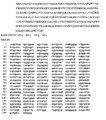
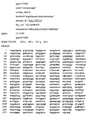
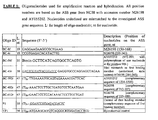
- a 1519 bp fragment was amplified from the cattle total genomic DNA with two primers, BC-8f and BC-4r (TABLE 1). This partial ASS gene sequence has been accepted by NCBI GenBank with the accession no. AY055202 (FIGURE 2). The amplified gene fragment was then incorporated in a pGEM-T Easy vector system (Promega, Madison, WI, USA) and transformed in a bacterium host, Escherichia coli. Two plasmids pGEM-ASSw and pGEM-ASSm mass-produced from E. coli transformants were selected as representative standard gene fragments for wild type allele and mutant type allele, respectively. Their insert sequences are confirmed by sequence analysis.
- This detection method is aimed at specific identification of the presence of ASS-mutant allele with one different nucleotide of cattle ASS gene, in comparison with normal wild type ASS gene (M21698, NCBI GenBank).
- the diagnostic finding of the presence and also the frequency of ASS-mutant allele becomes instructive and useful information for cattle genetic breeding, then the identification of wild type-allele.
- This further example will only focus on construction of optimal discriminating primers, amplification conditions, probes and hybridization system for identification of ASS-mutant allele.
- the discriminating amplification could be achieved by employing one primer amplification primer (BC-50f) as forward primer and one discriminating primer as reverse primer (BC-45r).
- BC-50f primer amplification primer
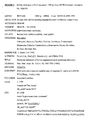
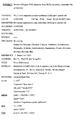
- the sequences of inventive primers are listed in TABLE 1.
- BC-50f was designed as an amplification primer. It was 20 nucleotides in length, corresponding to 972-991 of the ASS gene sequence (AY055202): 5'-GCTTCATCAGTGGCTCAGTG with polymorphism of one nucleotide at the position 986, and had biotin at its 5'-terminus.
- the discriminating primer was BC-45r, 5'-GAGTCGTATTACGGATCC GAGGTGCCCAGGAGGTAGAA and mutant allele-specific reverse primer. It is based on 284-265 of ASS gene sequence (M26198) and the first binding member is underlined. The ultimate 3' base of mutant specific reverse primer was designed as a complementary base to the mutant allele. The reverse primer had two mismatched bases at penultimate position and the last three postion of the 3'-terminus. All primers were commercially prepared by standard oligo-nucleotide synthesis techniques (e.g. GENESET Singapore Biotech. Pte Ltd, Singapore).
- the amplification reaction was performed as follows.
- the amplification reaction volume is 50 ⁇ l and the reaction mixture contained 50-100 ng DNA template, 5 ⁇ L 10X Taq DNA polymerase buffer, 5 ⁇ L 15 mM MgCl 2 , 250 ⁇ M dNTP each (Promega), 400 nM primer each, 2-2.5 units Taq DNA polymerase (Promega), and dH 2 O.
- a two-step amplification strategy was employed with temperature parameters of 94°C for 1 min and 60°C for 1.5 min for 30-35 cycles after one cycle with 94°C for 4 min.
- Amplification conditions were carried out using RoboCycler Temperature Cycler (Strategene).
- the amplification products were analyzed by using agarose gel electrophoresis.
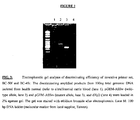
- the gel showed that a specific amplification product with the right size (506 bp) was produced when the primers BC-50f and BC-45r with the template pGEM-ASSm (the mutant allele, lane 3, FIG. 3). but not with the template pGEM-ASSw (the wild type allele, lane 2, FIG. 3).
- pGEM-ASSm the mutant allele, lane 3, FIG. 3
- the template pGEM-ASSw the wild type allele, lane 2, FIG. 3
- the amplification conditions could achieve the discrimination of mutant allele from wild type allele.
- the amplified products could be sometimes unspecific or unexpected even the molecular size on electrophoresis gel seems to be correct.
- a following hybridization technique with sequence-specific probes or sequence analysis could be applied for confirmation of the right amplified product. Sequence analysis of DNA fragment does not belong to routine method due to the lack of facility. The hybridization technique could be easily carried out in usual laboratory for molecular biology.
- Probe design Three types of probes were designed for analysis of amplification products. Their sequences are shown in the TABLE 1.
- the oligo-nucleotide was dissolved in a probe solution (DR. Probsol, DR.Chip Biotechnology Inc., Taiwan) with a final concentration of 10 ⁇ M, spotted, and immobilized on a solid support.
- a probe solution DR. Probsol, DR.Chip Biotechnology Inc., Taiwan
- the amplification product from each discriminating amplification reaction mixture was diluted with a hybridization buffer in a ratio of 1 : (50-100).
- the diluted fraction was boiled for 5 min, chilled on ice, and applied to the just described solid support.
- the hybridization reaction was performed at 50-55°C for 1-2 hours using an oven.
- the solid support was washed with a wash buffer (0.5 mL) (DR. Wash, DR.Chip Biotechnology Inc., Taiwan) for at least three times.
- Biotin-specific colorimetric detection was performed by incubating the solid substrate with a Blocking Reagent (Roche), which contained alkaline phosphatase-conjugated streptavidin (Promega).
- the solid substrate was washed three times with the wash buffer, and incubated with NBT/BCIP solution (Roche), which was diluted with a detection buffer in a ratio recommended by the supplier for about 10 min in the dark.
Landscapes
- Chemical & Material Sciences (AREA)
- Organic Chemistry (AREA)
- Life Sciences & Earth Sciences (AREA)
- Zoology (AREA)
- Wood Science & Technology (AREA)
- Proteomics, Peptides & Aminoacids (AREA)
- Health & Medical Sciences (AREA)
- Engineering & Computer Science (AREA)
- Microbiology (AREA)
- Immunology (AREA)
- Physics & Mathematics (AREA)
- Molecular Biology (AREA)
- Biotechnology (AREA)
- Biophysics (AREA)
- Analytical Chemistry (AREA)
- Biochemistry (AREA)
- Bioinformatics & Cheminformatics (AREA)
- General Engineering & Computer Science (AREA)
- General Health & Medical Sciences (AREA)
- Genetics & Genomics (AREA)
- Measuring Or Testing Involving Enzymes Or Micro-Organisms (AREA)
Applications Claiming Priority (2)
| Application Number | Priority Date | Filing Date | Title |
|---|---|---|---|
| US915780 | 2001-07-26 | ||
| US09/915,780 US20030022175A1 (en) | 2001-07-26 | 2001-07-26 | Diagnostic assay of genetic mutations by discriminating amplification and hybridization |
Publications (3)
| Publication Number | Publication Date |
|---|---|
| EP1279743A2 true EP1279743A2 (de) | 2003-01-29 |
| EP1279743A3 EP1279743A3 (de) | 2003-12-03 |
| EP1279743B1 EP1279743B1 (de) | 2009-04-15 |
Family
ID=25436239
Family Applications (1)
| Application Number | Title | Priority Date | Filing Date |
|---|---|---|---|
| EP02016784A Expired - Lifetime EP1279743B1 (de) | 2001-07-26 | 2002-07-26 | Nachweis von genetischen Polymorphismen durch allel-spezifische Amplifizierung unter Benutzung von angepassten Primern und darauffolgende Hybridisierung |
Country Status (4)
| Country | Link |
|---|---|
| US (1) | US20030022175A1 (de) |
| EP (1) | EP1279743B1 (de) |
| AT (1) | ATE428802T1 (de) |
| DE (1) | DE60231939D1 (de) |
Cited By (1)
| Publication number | Priority date | Publication date | Assignee | Title |
|---|---|---|---|---|
| US7838228B2 (en) | 2004-05-26 | 2010-11-23 | Expression Analytics Oy | Method of quantitative and/or comparative measurement of mRNA expression levels in small biological samples |
Families Citing this family (1)
| Publication number | Priority date | Publication date | Assignee | Title |
|---|---|---|---|---|
| JP2009247231A (ja) * | 2008-04-02 | 2009-10-29 | Olympus Corp | 標的塩基判別方法 |
Family Cites Families (3)
| Publication number | Priority date | Publication date | Assignee | Title |
|---|---|---|---|---|
| EP0333465B1 (de) * | 1988-03-18 | 1994-07-13 | Baylor College Of Medicine | Mutationsnachweis durch kompetitiven Oligonukleotid-Priming |
| GB9604267D0 (en) * | 1996-02-29 | 1996-05-01 | Royal Infirmary Of Edinburgh N | Mutation assay |
| WO2001036687A2 (en) * | 1999-11-15 | 2001-05-25 | Qiagen Genomics, Inc. | Simultaneous hybridization/priming for snp analysis |
-
2001
- 2001-07-26 US US09/915,780 patent/US20030022175A1/en not_active Abandoned
-
2002
- 2002-07-26 EP EP02016784A patent/EP1279743B1/de not_active Expired - Lifetime
- 2002-07-26 AT AT02016784T patent/ATE428802T1/de not_active IP Right Cessation
- 2002-07-26 DE DE60231939T patent/DE60231939D1/de not_active Expired - Lifetime
Cited By (1)
| Publication number | Priority date | Publication date | Assignee | Title |
|---|---|---|---|---|
| US7838228B2 (en) | 2004-05-26 | 2010-11-23 | Expression Analytics Oy | Method of quantitative and/or comparative measurement of mRNA expression levels in small biological samples |
Also Published As
| Publication number | Publication date |
|---|---|
| EP1279743B1 (de) | 2009-04-15 |
| DE60231939D1 (de) | 2009-05-28 |
| EP1279743A3 (de) | 2003-12-03 |
| ATE428802T1 (de) | 2009-05-15 |
| US20030022175A1 (en) | 2003-01-30 |
Similar Documents
| Publication | Publication Date | Title |
|---|---|---|
| US7250252B2 (en) | Amplification based polymorphism detection | |
| CN100354298C (zh) | 使用单核苷酸多态性组分析受损样品的方法和组合物 | |
| US20050191636A1 (en) | Detection of STRP, such as fragile X syndrome | |
| JPH05244996A (ja) | 変異核酸の検出方法 | |
| JPH11504517A (ja) | オリゴヌクレオチドの化学結合による核酸検出及び増幅 | |
| WO2008003244A1 (en) | Methods for identification of alleles | |
| WO1999031272A1 (en) | Cleaved amplified modified polymorphic sequence detection methods | |
| EP1436420B1 (de) | Test-streife-probesystem und verfahren zur nachweis von spezifischen nukleinsäuresequenzen | |
| US20090148849A1 (en) | One-step target detection assay | |
| AU2002329496A1 (en) | Test strip assay system and method for the detection of specific nucleic acid sequences | |
| JP2005536998A (ja) | 高親和性および高特異性を組み合わせた固相ベースの核酸アッセイ | |
| US7919611B2 (en) | Nucleotide primer set and nucleotide probe for detecting genotype of N-acetyltransferase-2 (NAT2) | |
| US20020142308A1 (en) | Methods and compositions for analyzing nucleotide sequence mismatches using RNase H | |
| US20020187470A1 (en) | Detection of single nucleotide polymorphisms | |
| US20090233272A1 (en) | Multiplexed Nucleic Acid Analysis with High Specificity | |
| EP1279743B1 (de) | Nachweis von genetischen Polymorphismen durch allel-spezifische Amplifizierung unter Benutzung von angepassten Primern und darauffolgende Hybridisierung | |
| US20160060696A1 (en) | Method for the identification by molecular techniques of genetic variants that encode no d antigen (d-) and altered c antigen (c+w) | |
| US10665327B2 (en) | High-throughput hybridization and reading method for biochips and system thereof | |
| US20040132047A1 (en) | Methods for detection of genetic alterations associated with cancer | |
| CA2396010A1 (en) | Detection of single nucleotide polymorphisms | |
| US20030232341A1 (en) | Detection of single nucleotide polymorphisms | |
| US20020031776A1 (en) | Enzymatic labeling and detection of DNA hybridization probes | |
| JPWO2014156513A1 (ja) | 変異の検出方法 | |
| JP2001522243A (ja) | 増幅ベースの突然変異検出 | |
| JP2008289365A (ja) | 好熱性好酸性菌の識別方法 |
Legal Events
| Date | Code | Title | Description |
|---|---|---|---|
| PUAI | Public reference made under article 153(3) epc to a published international application that has entered the european phase |
Free format text: ORIGINAL CODE: 0009012 |
|
| AK | Designated contracting states |
Designated state(s): AT BE BG CH CY CZ DE DK EE ES FI FR GB GR IE IT LI LU MC NL PT SE SK TR |
|
| AX | Request for extension of the european patent |
Extension state: AL LT LV MK RO SI |
|
| RAP1 | Party data changed (applicant data changed or rights of an application transferred) |
Owner name: DR. CHIP BIOTECHNOLOGY INCORPORATION |
|
| PUAL | Search report despatched |
Free format text: ORIGINAL CODE: 0009013 |
|
| AK | Designated contracting states |
Kind code of ref document: A3 Designated state(s): AT BE BG CH CY CZ DE DK EE ES FI FR GB GR IE IT LI LU MC NL PT SE SK TR |
|
| AX | Request for extension of the european patent |
Extension state: AL LT LV MK RO SI |
|
| 17P | Request for examination filed |
Effective date: 20040527 |
|
| AKX | Designation fees paid |
Designated state(s): AT BE BG CH CY CZ DE DK EE ES FI FR GB GR IE IT LI LU MC NL PT SE SK TR |
|
| 17Q | First examination report despatched |
Effective date: 20061115 |
|
| GRAP | Despatch of communication of intention to grant a patent |
Free format text: ORIGINAL CODE: EPIDOSNIGR1 |
|
| GRAS | Grant fee paid |
Free format text: ORIGINAL CODE: EPIDOSNIGR3 |
|
| GRAA | (expected) grant |
Free format text: ORIGINAL CODE: 0009210 |
|
| AK | Designated contracting states |
Kind code of ref document: B1 Designated state(s): AT BE BG CH CY CZ DE DK EE ES FI FR GB GR IE IT LI LU MC NL PT SE SK TR |
|
| REG | Reference to a national code |
Ref country code: GB Ref legal event code: FG4D Ref country code: CH Ref legal event code: EP |
|
| REG | Reference to a national code |
Ref country code: IE Ref legal event code: FG4D |
|
| REF | Corresponds to: |
Ref document number: 60231939 Country of ref document: DE Date of ref document: 20090528 Kind code of ref document: P |
|
| NLV1 | Nl: lapsed or annulled due to failure to fulfill the requirements of art. 29p and 29m of the patents act | ||
| PG25 | Lapsed in a contracting state [announced via postgrant information from national office to epo] |
Ref country code: PT Free format text: LAPSE BECAUSE OF FAILURE TO SUBMIT A TRANSLATION OF THE DESCRIPTION OR TO PAY THE FEE WITHIN THE PRESCRIBED TIME-LIMIT Effective date: 20090915 Ref country code: FI Free format text: LAPSE BECAUSE OF FAILURE TO SUBMIT A TRANSLATION OF THE DESCRIPTION OR TO PAY THE FEE WITHIN THE PRESCRIBED TIME-LIMIT Effective date: 20090415 Ref country code: ES Free format text: LAPSE BECAUSE OF FAILURE TO SUBMIT A TRANSLATION OF THE DESCRIPTION OR TO PAY THE FEE WITHIN THE PRESCRIBED TIME-LIMIT Effective date: 20090726 Ref country code: AT Free format text: LAPSE BECAUSE OF FAILURE TO SUBMIT A TRANSLATION OF THE DESCRIPTION OR TO PAY THE FEE WITHIN THE PRESCRIBED TIME-LIMIT Effective date: 20090415 |
|
| PG25 | Lapsed in a contracting state [announced via postgrant information from national office to epo] |
Ref country code: NL Free format text: LAPSE BECAUSE OF FAILURE TO SUBMIT A TRANSLATION OF THE DESCRIPTION OR TO PAY THE FEE WITHIN THE PRESCRIBED TIME-LIMIT Effective date: 20090415 Ref country code: SE Free format text: LAPSE BECAUSE OF FAILURE TO SUBMIT A TRANSLATION OF THE DESCRIPTION OR TO PAY THE FEE WITHIN THE PRESCRIBED TIME-LIMIT Effective date: 20090715 |
|
| PG25 | Lapsed in a contracting state [announced via postgrant information from national office to epo] |
Ref country code: CZ Free format text: LAPSE BECAUSE OF FAILURE TO SUBMIT A TRANSLATION OF THE DESCRIPTION OR TO PAY THE FEE WITHIN THE PRESCRIBED TIME-LIMIT Effective date: 20090415 Ref country code: DK Free format text: LAPSE BECAUSE OF FAILURE TO SUBMIT A TRANSLATION OF THE DESCRIPTION OR TO PAY THE FEE WITHIN THE PRESCRIBED TIME-LIMIT Effective date: 20090415 Ref country code: EE Free format text: LAPSE BECAUSE OF FAILURE TO SUBMIT A TRANSLATION OF THE DESCRIPTION OR TO PAY THE FEE WITHIN THE PRESCRIBED TIME-LIMIT Effective date: 20090415 |
|
| PLBE | No opposition filed within time limit |
Free format text: ORIGINAL CODE: 0009261 |
|
| STAA | Information on the status of an ep patent application or granted ep patent |
Free format text: STATUS: NO OPPOSITION FILED WITHIN TIME LIMIT |
|
| PG25 | Lapsed in a contracting state [announced via postgrant information from national office to epo] |
Ref country code: MC Free format text: LAPSE BECAUSE OF NON-PAYMENT OF DUE FEES Effective date: 20090731 Ref country code: SK Free format text: LAPSE BECAUSE OF FAILURE TO SUBMIT A TRANSLATION OF THE DESCRIPTION OR TO PAY THE FEE WITHIN THE PRESCRIBED TIME-LIMIT Effective date: 20090415 Ref country code: BE Free format text: LAPSE BECAUSE OF FAILURE TO SUBMIT A TRANSLATION OF THE DESCRIPTION OR TO PAY THE FEE WITHIN THE PRESCRIBED TIME-LIMIT Effective date: 20090415 |
|
| 26N | No opposition filed |
Effective date: 20100118 |
|
| PG25 | Lapsed in a contracting state [announced via postgrant information from national office to epo] |
Ref country code: BG Free format text: LAPSE BECAUSE OF FAILURE TO SUBMIT A TRANSLATION OF THE DESCRIPTION OR TO PAY THE FEE WITHIN THE PRESCRIBED TIME-LIMIT Effective date: 20090715 |
|
| PG25 | Lapsed in a contracting state [announced via postgrant information from national office to epo] |
Ref country code: GR Free format text: LAPSE BECAUSE OF FAILURE TO SUBMIT A TRANSLATION OF THE DESCRIPTION OR TO PAY THE FEE WITHIN THE PRESCRIBED TIME-LIMIT Effective date: 20090716 |
|
| PG25 | Lapsed in a contracting state [announced via postgrant information from national office to epo] |
Ref country code: IT Free format text: LAPSE BECAUSE OF FAILURE TO SUBMIT A TRANSLATION OF THE DESCRIPTION OR TO PAY THE FEE WITHIN THE PRESCRIBED TIME-LIMIT Effective date: 20090415 |
|
| PG25 | Lapsed in a contracting state [announced via postgrant information from national office to epo] |
Ref country code: LU Free format text: LAPSE BECAUSE OF NON-PAYMENT OF DUE FEES Effective date: 20090726 |
|
| PG25 | Lapsed in a contracting state [announced via postgrant information from national office to epo] |
Ref country code: TR Free format text: LAPSE BECAUSE OF FAILURE TO SUBMIT A TRANSLATION OF THE DESCRIPTION OR TO PAY THE FEE WITHIN THE PRESCRIBED TIME-LIMIT Effective date: 20090415 |
|
| PG25 | Lapsed in a contracting state [announced via postgrant information from national office to epo] |
Ref country code: CY Free format text: LAPSE BECAUSE OF FAILURE TO SUBMIT A TRANSLATION OF THE DESCRIPTION OR TO PAY THE FEE WITHIN THE PRESCRIBED TIME-LIMIT Effective date: 20090415 |
|
| PGFP | Annual fee paid to national office [announced via postgrant information from national office to epo] |
Ref country code: GB Payment date: 20140619 Year of fee payment: 13 Ref country code: IE Payment date: 20140619 Year of fee payment: 13 |
|
| PGFP | Annual fee paid to national office [announced via postgrant information from national office to epo] |
Ref country code: DE Payment date: 20140725 Year of fee payment: 13 Ref country code: CH Payment date: 20140728 Year of fee payment: 13 |
|
| PGFP | Annual fee paid to national office [announced via postgrant information from national office to epo] |
Ref country code: FR Payment date: 20140717 Year of fee payment: 13 |
|
| REG | Reference to a national code |
Ref country code: DE Ref legal event code: R119 Ref document number: 60231939 Country of ref document: DE |
|
| REG | Reference to a national code |
Ref country code: CH Ref legal event code: PL |
|
| GBPC | Gb: european patent ceased through non-payment of renewal fee |
Effective date: 20150726 |
|
| REG | Reference to a national code |
Ref country code: IE Ref legal event code: MM4A |
|
| PG25 | Lapsed in a contracting state [announced via postgrant information from national office to epo] |
Ref country code: DE Free format text: LAPSE BECAUSE OF NON-PAYMENT OF DUE FEES Effective date: 20160202 Ref country code: LI Free format text: LAPSE BECAUSE OF NON-PAYMENT OF DUE FEES Effective date: 20150731 Ref country code: GB Free format text: LAPSE BECAUSE OF NON-PAYMENT OF DUE FEES Effective date: 20150726 Ref country code: CH Free format text: LAPSE BECAUSE OF NON-PAYMENT OF DUE FEES Effective date: 20150731 |
|
| REG | Reference to a national code |
Ref country code: FR Ref legal event code: ST Effective date: 20160331 |
|
| PG25 | Lapsed in a contracting state [announced via postgrant information from national office to epo] |
Ref country code: FR Free format text: LAPSE BECAUSE OF NON-PAYMENT OF DUE FEES Effective date: 20150731 |
|
| PG25 | Lapsed in a contracting state [announced via postgrant information from national office to epo] |
Ref country code: IE Free format text: LAPSE BECAUSE OF NON-PAYMENT OF DUE FEES Effective date: 20150726 |