EP1282048A2 - Interaktive modulare Datenverarbeitungsstruktur zur lokalen und entfernten Verwirklichung von digitalen Museen - Google Patents
Interaktive modulare Datenverarbeitungsstruktur zur lokalen und entfernten Verwirklichung von digitalen Museen Download PDFInfo
- Publication number
- EP1282048A2 EP1282048A2 EP02078020A EP02078020A EP1282048A2 EP 1282048 A2 EP1282048 A2 EP 1282048A2 EP 02078020 A EP02078020 A EP 02078020A EP 02078020 A EP02078020 A EP 02078020A EP 1282048 A2 EP1282048 A2 EP 1282048A2
- Authority
- EP
- European Patent Office
- Prior art keywords
- data processing
- processing structure
- structure according
- application server
- database
- Prior art date
- Legal status (The legal status is an assumption and is not a legal conclusion. Google has not performed a legal analysis and makes no representation as to the accuracy of the status listed.)
- Withdrawn
Links
Images


Classifications
-
- G—PHYSICS
- G06—COMPUTING OR CALCULATING; COUNTING
- G06F—ELECTRIC DIGITAL DATA PROCESSING
- G06F16/00—Information retrieval; Database structures therefor; File system structures therefor
- G06F16/40—Information retrieval; Database structures therefor; File system structures therefor of multimedia data, e.g. slideshows comprising image and additional audio data
- G06F16/44—Browsing; Visualisation therefor
-
- G—PHYSICS
- G06—COMPUTING OR CALCULATING; COUNTING
- G06F—ELECTRIC DIGITAL DATA PROCESSING
- G06F16/00—Information retrieval; Database structures therefor; File system structures therefor
- G06F16/40—Information retrieval; Database structures therefor; File system structures therefor of multimedia data, e.g. slideshows comprising image and additional audio data
Definitions
- the present invention refers to an interactive modular data processing structure for local and remote fruition of multimedia digital museums, in particular a structure comprising hardware means, such as networks, work stations, digital video stations and software means capable of adapting different types of information interactively and simultaneously.
- CSM Collection Management System
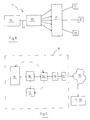
- the data processing apparatus claimed in said application can be described as an apparatus subdivided into two fundamental areas, in which a first area 1, the so-called Back End, that represents the part of the system that cannot be seen by the end users, is connected by means of a local high-performance communication network 10 to a second area 2, the so-called Front End, that represents the part of the system dedicated to the fruition of the stored information by the end users.
- a first area 1 the so-called Back End
- Front End that represents the part of the system dedicated to the fruition of the stored information by the end users.
- the CSM 5 is capable of memorizing and managing various types of computer data, as the database 6 is a multimedia database.
- the application server 7 has file server and database server functions.
- the multimedia database 6 provides for a ORDBMS (Object-Relational Database Management System) capable of supporting the management oriented towards the objects of complex data, such as multimedia data, and at the same time offers a query language based on an extension of the standard SQL (Structured Query Language).
- ORDBMS Object-Relational Database Management System
- the CSM 5 is based on an owner system, for realizing the data structure and procedures.
- the second area 2 comprises generic workstations 8 and 9, called client, in which more or less complex applications are carried out by drawing in real time on data present on server 7.
- said second area 2 also provides a series of management functions, to enable the users to draw use and orientation information from server 7 by means of the terminals.
- Each client 8 and 9 contains distinct application packages that draw on a specific portion of the multimedia database 6.
- the second area 2 also comprises stations 3 suited to contain applications that can also be spread outside the museum in the context of the interactive documentation system World Wide Web, that is, by the Internet network.
- the object of the present invention is to realize a data processing structure capable of adopting different types of context information.
- Additional object of the present invention is to realize a data processing structure that has the fundamental deposit of structured information, that is the CSM, in accordance with national standards, for example ICCD, and international standards, for example MDA Spectrum.
- Another object of the present invention is to realize a data processing structure that has a unified model of applications at front-end level for the terminal (client) stations.
- Another object of the present invention is to realize a data processing structure that has application objects that can represent other demands of a same application model at WEB terminal level.
- an interactive modular data processing structure for local and remote fruition of multimedia digital museums comprising a first and a second area operatively interconnected to each other by means of a high performance local network, said first area including a managing system of a first database, controlled by an application server, said second area including a plurality of stations connected to said application server through said high performance local network, characterized in that said application server is operatively connected so as to receive and memorize data and simultaneous information respectively from said plurality of stations and from a data management module.
- an interactive modular data processing structure for local and remote fruition of multimedia digital museums can be realized having an application server that can be customized and implemented by addition of accessories and/or new system modules so as to meet the needs of specific applications.
- the CSM is based on national standards, for example ICCD, and international standards, for example MDA Spectrum, for the structure of data and procedures.
- the CSM supplies a system for controlling lists of data and a synonym dictionary so that a complete terminological control of the input data can be made.
- a single access station that contains all the client remote modules.
- FIG. 2 A schematic representation of the interactive data processing structure according to the present invention is shown in Figure 2, in which it can be noted how the inventive data processing structure 40 is again subdivided into two fundamental areas, that is the Back End 11, connected by means of a high performance local communication network 12 to the Front End 13.
- the area of Back End 11 comprises a managing system of the CSM 14 type of a database 15, all controlled by an organization system 16, that is controlled by an application server.
- Front End 13 comprises generic client stations 17 - 18, interacting with each other by means of suitable connections 39, in which more or less complex applications are carried out by drawing in real time on data present on server 16.
- Front End 13 comprises client 19 suited to contain applications that can also be spread outside the museum in the context of the interactive documentation system World Wide Web, that is, by the Internet network.
- the CSM 14 is capable of memorizing and managing computer data of various types but it is also capable of managing control lists of the terms and a synonym dictionary.
- the new CMS 14 system therefore provides for a control of the synonyms, a control of the lists and is based on standard formats.
- the CSM 14 is based on the concept of creation of a common deposit both for the structures and for the data procedures.
- the CSM 14 as it has already been said, provides a list control and a synonym dictionary, so that all the data entered in the database 15 are automatically controlled or confirmed.
- this is capable of supporting the management orientated towards the objects of complex data, such as multimedia, and at the same time offering a specific query language based on an extension of the standard SQL (Structured Query Language).
- SQL Structured Query Language
- the application server 16 operates like a writing editor in XML language, so as to describe in an open and unified manner the functioning of the software modules memorized in the clients 17 - 19 of the area of Front End 13.
- each client 17 - 19 will be adopted to be connected to a specific address (URL) and will see to its own functionality with support from the writings of the types XML, Javascript, Java code and/or to ActiveX components.
- server 16 uses the language XML, which in addition guarantees greater flexibility and easier maintenance of the software modules memorized in the client 17 - 19.
- the sphere of interest is that of systematic vision, that coordinates traditional cartographic representation, for example thematic maps, with a three-dimensional representation of the landscape that can be explored, obtained by means of the combination of air photos and satellite photos with numerical height profiles.
- the sphere of geographic interest is that of the detail and interactive studying, through zooms on single landscape elements and/or on specific territory emergencies by means of the activation of hypertextual connections to single points of interest.
- This system for the three-dimensional graphics therefore permits, by means of a standard Internet connection at 56K-baud and with a browser of the type Atmosphere of Adobe, to explore and interact with three-dimensional worlds, making navigation an experience of high added value.
- the drawing illustrated in said Figure 3 is subdivided into a first area 20, suited to represent the area of Back End, and a second area 21, suited to represent the area of Front End.
- Zone 20 comprises the application server 16 connected to receive and transfer computer data, by means of standard protocol 22 of the type ODBC or OLE/DB, to its own database 23, and in addition comprises the CSM 14 connected to receive and transfer computer data implemented in national standards ICCD and international standards MDA Spectrum, by means of a specific query language 24 based on an extension of the standard SQL (Structured Query Language) to its own database 25, and finally comprises a system for developing the content 26 suited to sending context information 27 to said application server 16 and to exchanging reciprocally meta-data 28 with said application server 16.
- standard protocol 22 of the type ODBC or OLE/DB
- CSM 14 connected to receive and transfer computer data implemented in national standards ICCD and international standards MDA Spectrum
- a specific query language 24 based on an extension of the standard SQL (Structured Query Language) to its own database 25
- SQL Structured Query Language
- Zone 21 comprises the functionalities of public use, as clients 17 - 18, or World Wide Web, as client 19, that is zone 21 is a type of network which detects contextual information.
- Clients 17 - 19 receive and exchange information 29 in XML format with the application server 16.
- the application server 16 does not influence the CSM 14 but cooperates with it by means of a connection 30 with the database 25, so as to memorize its own information in the database 23.
- the application server 16 memorizes the contextual information 27 coming from the content development system 26, which is an application that is specifically dedicated to managing computer data, and from the network detecting contextual information 21, that is from the software applications memorized on the clients 17 - 19 used according to the particular needs of the users.
- the application server 16 thus memorizes all this information in its own database 23 and when an information request arrives from the network detecting contextual information 21, the application server 16 checks both the database 23 and the database 25, supplying the most appropriate reply 29.
- context information for example: 1) user context, that is users and classes of users, that is children, occasional users, professional users, foreign users etc.; 2) device context, that is technical information concerning the hardware structure; 3) space context, that is location of access to an application, that is inside the museum, in the city itself, in another country, etc.; 4) time context, that is time restrictions, for example time, day of the week of museum opening/closing times, etc.
- a user of a three-dimensional virtual representation of a museum by means of the Internet would like to be able to enter a corridor and to see, next to the entrance table, a show room that is not present in the real museum, which in that given instant contains a list of the most appreciated characteristics and objects in the museum. This is possible based, for example, on how long and for how many times an object was seen in the last week.
- the application could know what type of user is requesting the data, so as to return the most suitable reply on the basis of the user profile.
- the inventive informative architecture shown in Figure 2 also provides a module 37 capable of supplying a series of added value functionalities of particular interest and use for those types of museum infrastructures that already exist, in which the infrastructure itself is complex.
- the control station 37 provides for the additional functionalities that cover three distinct areas: 1) system functionality; 2) management functionality; 3) context management functionality.
- the system functionality is characterized in that it provides for: 1.1) supervision of the functioning methods of the client stations 17 - 19; 1.2) a control of the remote turn on /off of the client stations 17 - 19; 1.3) management of the system configuration of the client stations 17 - 19.
- the management functionality is characterized in that it provides for: 2.1) dynamic management of the map of the museum and configuration of the arrangement of the access, information, stairs and lift points,; 2.2) a dynamic arrangement of client stations 17 - 19 defined by symbols that can be defined by the user and then interacting with the rest of the system functionalities by means of the so-called DRAG&DROP, at the level of configuration of the contents, and contextual menus, at the level of supervision, statistics etc.
- the context management functionality is characterized in that it provides for: 3.1) management of an archive of all the multimedia contents present in the museum, both simple, for example images, videos, audio files, and composite, for example complete multimedia applications; 3.2) possibility to change content of a multimedia application present in the system also while it is being carried out, such as the replacement of an image, audio or video inside a presentation application or to the orientation and logging in client.
- the innovative idea of the present invention consists in the fact of defining an information architecture open to the intervention of the museum supervisor, to the continuous evolution of the contents and not bound to a supplier in particular.
- FIG. 8 a diagram that schematically represents the communication network 12 for the connection between the application server 16 and the clients 17-19 is shown according to the present invention.
- the multimedia applications in particular those that use video and images, require a great width of band.
- the information transmitted depends also on the relative speeds between the "information items”.
- each of the frames relating to a video sequence contains information that is not sufficient to reconstruct the complete message if it is not time linked to the following frame. Therefore the fruition of multimedia information is connected to the observance of time restrictions and therefore to a wide transmissive capacity.
- the present invention uses a communication network 12, mainly making use of the Fast Ethernet and Gigabit Ethernet technologies, with backbone networks 33 in optic fiber or in copper on STP cable, to optimize the network traffic.
- the Gigabit Ethernet standard specifies a transmission speed of 1000 Mbps on optic fiber or copper cabling; a topology based on switch capable of optimizing the communication performances is used.
- the present invention in addition provides for the use of star topology, in which the cables coming from the workstations 17 - 19 converge towards a central point consisting of a distributor of network connections (Hub 31).
- switch 32 For a more effective distribution of the traffic on the network a switch (switch 32) between the application server 16 and the battery of Hub 31 has to be provided for. In fact the network traffic is directed almost exclusively from server 16 towards work stations 17 - 19 and, without the use of a switch 32, the request for data by a work station 17 - 19 would reduce the transmissive band of the entire network 12.
- the presence of the Fast Ethernet or Gigabit Ethernet connections between the server 16 and the switch 32 guarantees a wide band of transmission and a constant flow of data between the server 16 and the work stations 17 - 19.
- FIG. 9 a diagram representing architecture of connection to Internet of the modular data processing apparatus is shown according to the present invention.
- the Back End 1 can in fact ensure functions of connection to a telematic Internet network by means of a dedicated communication server (server Web 34), that can share the data with the application server 16 inside the museum (also acting potentially as backup in the event of breakdown at the main server, as shown by the dotted lines) but which remains isolated from the external environment by means of suitable devices, so as to guarantee the system against undesired tampering and against unauthorized removal of the multimedia contents.
- server Web 34 dedicated communication server
- the server Web 34 set up for Intranet and Internet server functions, is connected to the telematic network of Internet 35 through a specialized server (firewall 36) and a manager of digital lines (router 37), and houses a database architecture capable of enabling telematic transactions in real time.
- the safety problem is one of the most important aspects in connection to Internet.
- the firewall 36 is only a specialized server, for filtering the incoming traffic according to certain specifications and only permits a certain type of outgoing traffic. It is advisable to install this module on a machine that is dedicated to the incoming mail of the museum network.
Landscapes
- Engineering & Computer Science (AREA)
- Theoretical Computer Science (AREA)
- Multimedia (AREA)
- Data Mining & Analysis (AREA)
- Databases & Information Systems (AREA)
- Physics & Mathematics (AREA)
- General Engineering & Computer Science (AREA)
- General Physics & Mathematics (AREA)
- Computer And Data Communications (AREA)
- Two-Way Televisions, Distribution Of Moving Picture Or The Like (AREA)
- Information Transfer Between Computers (AREA)
Applications Claiming Priority (2)
| Application Number | Priority Date | Filing Date | Title |
|---|---|---|---|
| ITMI20011696 | 2001-08-02 | ||
| IT2001MI001696A ITMI20011696A1 (it) | 2001-08-02 | 2001-08-02 | Struttura informatica modulare interattiva per la fruizione locale e remota di musei digitali multimediali |
Publications (2)
| Publication Number | Publication Date |
|---|---|
| EP1282048A2 true EP1282048A2 (de) | 2003-02-05 |
| EP1282048A3 EP1282048A3 (de) | 2004-10-13 |
Family
ID=11448221
Family Applications (1)
| Application Number | Title | Priority Date | Filing Date |
|---|---|---|---|
| EP02078020A Withdrawn EP1282048A3 (de) | 2001-08-02 | 2002-07-24 | Interaktive modulare Datenverarbeitungsstruktur zur lokalen und entfernten Verwirklichung von digitalen Museen |
Country Status (3)
| Country | Link |
|---|---|
| EP (1) | EP1282048A3 (de) |
| IT (1) | ITMI20011696A1 (de) |
| RU (1) | RU2002121053A (de) |
Families Citing this family (1)
| Publication number | Priority date | Publication date | Assignee | Title |
|---|---|---|---|---|
| RU2606638C2 (ru) * | 2014-08-14 | 2017-01-10 | Станислав Сергеевич Белов | Система интерактивного видеодоступа пользователей к экспозиции в режиме реального времени |
Family Cites Families (2)
| Publication number | Priority date | Publication date | Assignee | Title |
|---|---|---|---|---|
| JP2674521B2 (ja) * | 1994-09-21 | 1997-11-12 | 日本電気株式会社 | 移動体誘導装置 |
| US5884046A (en) * | 1996-10-23 | 1999-03-16 | Pluris, Inc. | Apparatus and method for sharing data and routing messages between a plurality of workstations in a local area network |
-
2001
- 2001-08-02 IT IT2001MI001696A patent/ITMI20011696A1/it unknown
-
2002
- 2002-07-24 EP EP02078020A patent/EP1282048A3/de not_active Withdrawn
- 2002-08-01 RU RU2002121053/09A patent/RU2002121053A/ru not_active Application Discontinuation
Also Published As
| Publication number | Publication date |
|---|---|
| EP1282048A3 (de) | 2004-10-13 |
| ITMI20011696A1 (it) | 2003-02-02 |
| RU2002121053A (ru) | 2004-03-10 |
| ITMI20011696A0 (it) | 2001-08-02 |
Similar Documents
| Publication | Publication Date | Title |
|---|---|---|
| JP7717610B2 (ja) | メッセージプッシュ方法、コンピュータプログラム及びサーバ | |
| US6216130B1 (en) | Geographic-based information technology management system | |
| US5901287A (en) | Information aggregation and synthesization system | |
| Berners-Lee et al. | WorldWideWeb: Proposal for a HyperText project | |
| Pröll et al. | Discovering next generation tourism information systems: A tour on TIScover | |
| US5905862A (en) | Automatic web site registration with multiple search engines | |
| US20030191832A1 (en) | Method and apparatus for controlled establishment of a turnkey system providing a centralized data aggregation and summary capability to third party entities | |
| CN1139333A (zh) | 专用化的实时信息显示 | |
| KR20010006320A (ko) | 전기통신장치 및 방법 | |
| US20020026471A1 (en) | Knowledge sharing between heterogeneous devices | |
| US5828887A (en) | Network based program loader system and method of operation | |
| CN109525670A (zh) | 一种智慧基建信息云平台系统 | |
| CN112291728A (zh) | 基于5g网络的私有行业应用平台实现架构 | |
| EP1282048A2 (de) | Interaktive modulare Datenverarbeitungsstruktur zur lokalen und entfernten Verwirklichung von digitalen Museen | |
| GB2353615A (en) | Selecting items such as data files | |
| CA2036265A1 (en) | Method for document administration utilizing iconic representations within a data processing system | |
| EP1241830B1 (de) | Verwaltung von Ereignisinformationsdaten mit einem mobilen Kommunikationsgerät | |
| Wollschlaeger et al. | XML based Description Model as a Platform for Web-based Maintenance | |
| Wollschlaeger et al. | A Web-based maintenance portal based on an XML content model | |
| US7024635B1 (en) | Modeling a computing architecture | |
| Park et al. | Ontology-based approach to intelligent ubiquitous tourist information system | |
| WO2001017246A1 (en) | Method and apparatus to link a network of live cameras | |
| Kirste et al. | Concepts for Mobile Information Visualization–The MoVi-Project | |
| Kahn | National information infrastructure components | |
| Karadkar et al. | Employing smart browsers to support flexible information presentation in Petri net-based digital libraries |
Legal Events
| Date | Code | Title | Description |
|---|---|---|---|
| PUAI | Public reference made under article 153(3) epc to a published international application that has entered the european phase |
Free format text: ORIGINAL CODE: 0009012 |
|
| AK | Designated contracting states |
Designated state(s): AT BE BG CH CY CZ DE DK EE ES FI FR GB GR IE IT LI LU MC NL PT SE SK TR |
|
| AX | Request for extension of the european patent |
Extension state: AL LT LV MK RO SI |
|
| RTI1 | Title (correction) |
Free format text: INTERACTIVE MODULAR DATA PROCESSING STRUCTURE FOR LOCAL AND REMOTE FRUITION OF MULTIMEDIA DIGITAL MUSEUMS |
|
| PUAL | Search report despatched |
Free format text: ORIGINAL CODE: 0009013 |
|
| AK | Designated contracting states |
Kind code of ref document: A3 Designated state(s): AT BE BG CH CY CZ DE DK EE ES FI FR GB GR IE IT LI LU MC NL PT SE SK TR |
|
| AX | Request for extension of the european patent |
Extension state: AL LT LV MK RO SI |
|
| AKX | Designation fees paid | ||
| REG | Reference to a national code |
Ref country code: DE Ref legal event code: 8566 |
|
| STAA | Information on the status of an ep patent application or granted ep patent |
Free format text: STATUS: THE APPLICATION IS DEEMED TO BE WITHDRAWN |
|
| 18D | Application deemed to be withdrawn |
Effective date: 20050414 |