EP1282283A2 - Abtastsystem von unbefugten Elementen unter Verwendung einer Netzwerkbrücke - Google Patents
Abtastsystem von unbefugten Elementen unter Verwendung einer Netzwerkbrücke Download PDFInfo
- Publication number
- EP1282283A2 EP1282283A2 EP02250370A EP02250370A EP1282283A2 EP 1282283 A2 EP1282283 A2 EP 1282283A2 EP 02250370 A EP02250370 A EP 02250370A EP 02250370 A EP02250370 A EP 02250370A EP 1282283 A2 EP1282283 A2 EP 1282283A2
- Authority
- EP
- European Patent Office
- Prior art keywords
- network bridge
- malware scanner
- network
- scanning
- data packets
- Prior art date
- Legal status (The legal status is an assumption and is not a legal conclusion. Google has not performed a legal analysis and makes no representation as to the accuracy of the status listed.)
- Withdrawn
Links
Images


Classifications
-
- H—ELECTRICITY
- H04—ELECTRIC COMMUNICATION TECHNIQUE
- H04L—TRANSMISSION OF DIGITAL INFORMATION, e.g. TELEGRAPHIC COMMUNICATION
- H04L63/00—Network architectures or network communication protocols for network security
- H04L63/02—Network architectures or network communication protocols for network security for separating internal from external traffic, e.g. firewalls
- H04L63/0209—Architectural arrangements, e.g. perimeter networks or demilitarized zones
-
- H—ELECTRICITY
- H04—ELECTRIC COMMUNICATION TECHNIQUE
- H04L—TRANSMISSION OF DIGITAL INFORMATION, e.g. TELEGRAPHIC COMMUNICATION
- H04L63/00—Network architectures or network communication protocols for network security
- H04L63/02—Network architectures or network communication protocols for network security for separating internal from external traffic, e.g. firewalls
- H04L63/0227—Filtering policies
- H04L63/0245—Filtering by information in the payload
-
- H—ELECTRICITY
- H04—ELECTRIC COMMUNICATION TECHNIQUE
- H04L—TRANSMISSION OF DIGITAL INFORMATION, e.g. TELEGRAPHIC COMMUNICATION
- H04L63/00—Network architectures or network communication protocols for network security
- H04L63/14—Network architectures or network communication protocols for network security for detecting or protecting against malicious traffic
- H04L63/1441—Countermeasures against malicious traffic
- H04L63/145—Countermeasures against malicious traffic the attack involving the propagation of malware through the network, e.g. viruses, trojans or worms
Definitions
- This invention relates to the field of data processing systems. More particularly, this invention relates to the field of malware scanning, such as computer virus scanning or e-mail content scanning, as applied in network environments.
- a large organisation will typically have a considerable investment in terms of time and effort in its network topology design and configuration.
- a large network may typically contain one or more gateways, routers and bridges operating in conjunction with one or more network segments. Once the topology of such a network has been established, changes in the topology, such as segment division and address changes, are time consuming and expensive to implement.
- malware such as computer viruses, Trojans, worms, banned computer programs or abusive e-mails
- Malware scanners are an important form of defence against such problems.
- FIG. 1 of the accompanying drawings schematically illustrates a simple network in the form of a server 2, a plurality of client computers 4, 6, 8 and a gateway 10 all connected upon a single network segment using the IP addresses 192.168.1.x.
- the gateway computer 10 separates this segment from the outside world and performs any necessary IP address translation as required.
- FIG. 2 of the accompanying drawings illustrates how the system of Figure 1 may be modified to include a malware scanner 12.
- the malware scanner 12 is physically interposed between the gateway computer 10 and the rest of the network. This divides the original single segment into two portions requiring a change in the network topology downstream of the gateway computer 10.
- the malware scanner 12 requires programming with appropriate IP addresses at each of its interfaces and the gateway computer 10 requires programming with a new IP address to reflect its new segment. Further changes may also be required in the client computers 4, 6, 8. Whilst the malware scanner 12 may provide effective malware defence, it brings with it a disadvantageous need to reconfigure the network which it is protecting. Often specialist knowledge is required to make such reconfiguration changes and in a more sophisticated and complex network environment the difficulties can be considerable.
- malware scanner may be added (although this is not illustrated) may be such that it is not physically interposed in the path of the network traffic, but instead forms a node on the segment which it protects. Whilst this may avoid the need for changes in the segment topology, there will typically be required significant other changes elsewhere in the system in order to ensure that network traffic is routed via the malware scanner that has been introduced. Thus, such alternative arrangements also carry with them similar significant disadvantages as those discussed in relation to Figure 2.
- network analysis tools that may be attached to a network to monitor the network traffic thereupon. Such network analysis tools are often used to help in diagnosing network problems. Typical functions provided by such network analysis tools are to record all the traffic on a network, identify the network addresses exchanging data packets and statistically analyse the data flow. If required, a detailed analysis of the particular messages being exchanged by one or more nodes within the network may also be monitored.
- Network bridges can be used to effectively isolate different portions of a network segment to reduce the occurrence of data collisions upon the network segments. As network bandwidths have increased and the use of switches has become more common, the need for network bridges has reduced.
- the present invention provides a network bridge having a malware scanner.
- the invention recognises that a network bridge, which may be inserted within a segment without requiring further changes within that segment, provides a mechanism by which access may be gained to the network traffic on that segment in order to allow malware scanning to be performed.
- a network bridge which may be inserted within a segment without requiring further changes within that segment, provides a mechanism by which access may be gained to the network traffic on that segment in order to allow malware scanning to be performed.
- the invention moves against this trend by recognising that in many circumstances in which malware scanning is required the absolute level of network performance is far less critical than might normally be considered.
- the increase in the data processing capabilities of data processing hardware is such that significant amounts of malware scanning can be performed within a network bridge without unduly impacting the overall system performance.
- the malware scanning needs to be performed at some point along the path between the source and destination and having this scanning take place within a network bridge does not introduce any more of a delay than having the scanning performed at another point, such as by the recipient.
- a data packet analyser is provided to selectively identify those data packets that are to be subject to scanning.
- This preferred feature of the invention recognises that not all data packets are capable of or require scanning and accordingly such packets are advantageously not delayed by being passed to the malware scanner.
- the data packet analyser can be responsive to different properties of the data packets to determine whether or not they are to be passed to the malware scanner, but in preferred embodiments the data packet analyser identifies the network layer protocol and/or the application layer protocol associated with a data packet as part of determining whether or not it should be passed to the malware scanner for scanning.
- malware scanning Whilst some types of malware scanning may be performed upon a part of a file, such as the identification of simple computer viruses, in preferred embodiments of the invention the malware scanner serves to concatenate a complete data file prior to scanning it for one or more of computer viruses, Trojans, worms, banned computer programs and banned words within e-mail messages.
- the bridge Whilst it would be possible for the bridge to buffer and re-transmit the data packets substantially unaltered once they had passed malware scanning, preferred embodiments are such that the malware scanner serves to forward a data file after scanning, and possible alteration via repair, to its intended recipient. This simplifies the load on the bridge and allows greater flexibility since the bridge does not try to reproduce exactly the same data packets.
- malware scanner could take a wide variety of forms. In particular both software based malware scanners and hardware based malware scanners are possible. More than one malware scanner may be associated with a particular network bridge, each of these malware scanners being responsible for scanning for a different type of malware, such as a software based e-mail scanner and a hardware based http scanner.
- the invention also provides a network bridge adapted for co-operation with a separate malware scanner than may be provided as a distinct entity.
- another aspect of the invention may be considered to be a malware scanner adapted to cooperate with a network bridge.
- a further aspect of the invention is a method of malware scanning in accordance with the above described techniques.
- FIG 3 schematically illustrates the network of Figure 1 but in this case incorporating a network bridge 14 between the gateway computer 10 and the rest of the network segment.
- a network bridge is effectively transparent to the data packets passing through it, at least in terms of their addressing, no configuration changes are required in the network segment illustrated in Figure 3 upon introduction of the network bridge 14.
- a malware scanner 16 is associated with (e.g. incorporated within or coupled to) the network bridge 14 and serves to concatenate data files to scan at least some of the data packets passing through the network bridge 14.
- the arrangement illustrated in Figure 3 would be appropriate to provide a malware scanner for SMTP data file types received by the gateway 10 and being sent to a mail server.
- Such SMTP data files are typically non-time critical and so a delay that might be introduced by the redirection of these data packets by the bridge 14 to the malware scanner 16 is relatively insignificant.
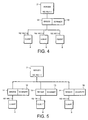
- Figure 4 schematically illustrates a different arrangement in which the network bridge 14 and malware scanner 16 are disposed between a server 2 and the client computers 4, 6, 8. Again no changes are required to the network topology, and in particular no address changes are necessary as the network bridge 14 is address transparent.
- the arrangement illustrated in Figure 4 might be appropriate to provide anti-computer virus scanning of data file stored upon the server 2.
- the malware scanner 16 would typically need to be of a higher performance than that illustrated in Figure 3 as delays in file access to data files stored on the server 2 would be likely to be more noticeable to a user.
- Figure 5 illustrates another example network topology.
- a network bridge 14 and associated malware scanner 16 is provided for each of the client computers 4, 6, 8 and serves to provide malware scanning for all data packets going to and from their particular associated client computer 4, 6, 8.
- a high performance malware scanner 16 would again be required for such an arrangement in order to not significantly degrade the performance of the system.
- the address transparent network bridges 14 mean that no address configuration changes are required when the network bridges 14 and their associated malware scanners 16 are introduced.
- malware scanners 16 illustrated in relation to Figures 3, 4 and 5 could be arranged to provide malware protection against one or more different types of malware.
- SMTP file scanning for banned words could be performed.
- FTP scanning might be provided for files downloaded from the internet as these are a high risk for virus infection.
- anti-virus scanning could be provided for the network internal file access protocols, such as NFS, that may be used within the local network itself to access files on the file server 2.
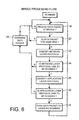
- FIG. 6 is a flow diagram schematically illustrating the processing performed by the network bridge 14.
- the network bridge 14 waits until it receives a data packet.
- the network bridge 14 checks to see if the data packet is one that is to pass through the network bridge 14 or is alternatively intended for a recipient on the same side of the network bridge 14 as the packet was received. If the data packet is not to pass through the network bridge 14, then processing is returned to step 18 to await receipt of the next data packet. If the data packet is to pass through the network bridge 14, then step 22 serves to identify the network layer protocol associated with thatdata packet. At step 24 this network layer protocol is checked to see if it is one which is to be scanned by the associated malware scanner 16. It may well be that the malware scanner 16 is only able to deal with network layer protocols of particular types, such as, but not limited to TCP/IP, IPX, SNA or Appletalk with other network layer protocols being forwarded without scanning via step 26.
- network layer protocols of particular types, such as, but not limited to TCP/IP, IPX, SNA
- step 28 serves to identify the application layer protocol associated with that data packet. Again only certain types of application layer protocol (such as, for example, SMTP, FTP, HTTP, SMB or NFS) may be intended for scanning by the associated malware scanner 16 and these are selected for scanning by step 30. If the identified application layer protocol is not one that is to be scanned, then the data packet is again forwarded to its intended recipient via step 26. If the data packet has both a network layer protocol and an application layer protocol matching those that are to be scanned, then processing will proceed to step 32 at which the data packet is passed to the malware scanner 16 in order to be concatenated to form a data file to be scanned. Processing then returns to step 18 to await the next data packet.
- application layer protocol such as, for example, SMTP, FTP, HTTP, SMB or NFS
- FIG 7 schematically illustrates the processing flow within the malware scanner 16.
- the malware scanner waits to receive data packets from the network bridge 14 as passed to it via step 32 of Figure 6.
- step 36 serves to identify the file being transmitted in the data payload of that data packet. It may well be that the data packets passing across the network mix together a plurality of different data files and accordingly the malware scanner needs to separate out the data payloads for these different data files in order that they can be properly concatenated to their respective data files.
- Step 38 performs the concatenation of the data payload of the data packet into its respective data file.
- step 40 a determination is made as to whether or not a complete data file has been received by the receipt of the latest data packet. If a complete data file has not yet been received, then processing returns to step 34 to await the next data packet. In preferred embodiments, additional processing may be performed in step 40 to provide mechanisms for dealing with incorrect operation, such as excessively delayed files being dealt with through timeouts, or file corruption, that might otherwise prevent the system operating properly.
- step 42 serves to apply the appropriate form of malware scanning using known malware scanning techniques, such as computer virus scanning (for viruses, Trojans, worms or banned files), e-mail scanning and the like.
- a test is made as to whether or not the computer file has passed its scan. If the computer file has not passed its scan, then step 46 serves to repair or delete the file (as may be set by user configuration) and then issue an alert (such as sending an e-mail to a user configured address) at step 48. After step 48, or if the computer filed passed it scan as indicated at step 44, then step 50 serves to send the data file that has been scanned back to the network bridge 14 for it to be retransmitted to its intended recipient by the network bridge 14.
- known malware scanning techniques such as computer virus scanning (for viruses, Trojans, worms or banned files), e-mail scanning and the like.
- step 44 a test is made as to whether or not the computer file has passed its scan. If the computer file has not passed its scan, then step 46 serves to repair or delete the file (a
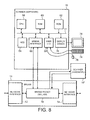
- FIG 8 schematically illustrates the network bridge 14 and the malware scanner 16 in more detail.
- the network bridge 14 includes respective network interface units 52, 54 at its two connection points to the network in which it is inserted. These network interface units 52, 54 operate to receive all data packets on their associated network line and pass these packets to a packet analysis unit 56.
- This packet analysis unit 56 may be provided in the form of high speed hardware for performing the processing illustrated in Figure 6 or software.
- two different malware scanners 16, 16' are provided and accordingly step 32 of Figure 6 would be modified to pass the identified data packets to the appropriate one of the malware scanners, 16, 16' that was to handle it in dependence upon the identified network layer protocol and/or application layer protocol.
- the appropriate malware scanner 16, 16' has scanned, and possibly repaired, a data file, then it returns this data file to a packet analysis unit 16 where it may be again broken down into data packets for forwarding to its intended recipient via the appropriate network interface unit 52, 54.
- the malware scanner 16 is illustrated in the form of a software based scanner using a general purpose computer formed of a central processing unit 58, a random access memory 60, a read only memory 62, a hard disk drive 64, a bridge interface unit 66, a user input/output unit 68 and a display driver 70 all connected via a common bus 72.
- This form of general purpose computer architecture is well known and operates with the central processing unit 58 executing program instructions that may be stored in one or more of the random access memory 60, the read only memory 62 or upon the hard disk drive 64.
- the processing performed by the central processing unit 58 may effectively carry out malware scanning by comparing a received data file against a collection of malware defining data, such as virus definition data.
- This virus definition data, and an associated scanner engine program may be automatically updated from a central source, such as an anti-virus providers FTP server, with the scanner 16 making an internet connection via a detected gateway to download updated virus definition data or an updated scanner engine program.
- the software scanner 16 may be configured by a user providing inputs via a keyboard 74 and a mouse 76 whilst observing a generated user interface on a monitor 78.
- web based configuration of the software scanner 16 may be possible via a network connection to the software scanner 16 with the elements 68, 70, 74, 76 and 78 then being redundant.
- Alternative architectures of the general purpose computer are also possible.
- a hardware based scanner 16' may also be provided.
- the software based scanner 16 could perform non-time critical scanning such as SMTP scanning whereas an optional high performance hardware scanner 16' could be provided, for example, to scan for computer viruses with NFS application layer protocol data packets. It may be that a wide variety of different malware scanner plug-ins could be provided tailored to particular types of malware scanning that could be performed upon the data packets intercepted by the network bridge 14. A user could then decide to adopt however many of these malware scanners as was appropriate to their requirements and budget.
Landscapes
- Engineering & Computer Science (AREA)
- Computer Security & Cryptography (AREA)
- Computer Hardware Design (AREA)
- Computing Systems (AREA)
- General Engineering & Computer Science (AREA)
- Computer Networks & Wireless Communication (AREA)
- Signal Processing (AREA)
- Health & Medical Sciences (AREA)
- General Health & Medical Sciences (AREA)
- Virology (AREA)
- Data Exchanges In Wide-Area Networks (AREA)
- Communication Control (AREA)
Applications Claiming Priority (2)
| Application Number | Priority Date | Filing Date | Title |
|---|---|---|---|
| US912305 | 2001-07-26 | ||
| US09/912,305 US7023861B2 (en) | 2001-07-26 | 2001-07-26 | Malware scanning using a network bridge |
Publications (2)
| Publication Number | Publication Date |
|---|---|
| EP1282283A2 true EP1282283A2 (de) | 2003-02-05 |
| EP1282283A3 EP1282283A3 (de) | 2004-12-08 |
Family
ID=25431698
Family Applications (1)
| Application Number | Title | Priority Date | Filing Date |
|---|---|---|---|
| EP02250370A Withdrawn EP1282283A3 (de) | 2001-07-26 | 2002-01-18 | Abtastsystem von unbefugten Elementen unter Verwendung einer Netzwerkbrücke |
Country Status (2)
| Country | Link |
|---|---|
| US (1) | US7023861B2 (de) |
| EP (1) | EP1282283A3 (de) |
Cited By (2)
| Publication number | Priority date | Publication date | Assignee | Title |
|---|---|---|---|---|
| EP1335559A2 (de) | 2002-01-31 | 2003-08-13 | Nokia Corporation | Vorrichtung und Verfahren zur Sicherung gegen Virus in einem Gateway |
| CN104239795A (zh) * | 2014-09-16 | 2014-12-24 | 百度在线网络技术(北京)有限公司 | 文件的扫描方法及装置 |
Families Citing this family (54)
| Publication number | Priority date | Publication date | Assignee | Title |
|---|---|---|---|---|
| US20040073617A1 (en) * | 2000-06-19 | 2004-04-15 | Milliken Walter Clark | Hash-based systems and methods for detecting and preventing transmission of unwanted e-mail |
| US20050177238A1 (en) * | 2001-05-01 | 2005-08-11 | Khandkar Ashok C. | Radiolucent bone graft |
| US6792543B2 (en) | 2001-08-01 | 2004-09-14 | Networks Associates Technology, Inc. | Virus scanning on thin client devices using programmable assembly language |
| US7827611B2 (en) * | 2001-08-01 | 2010-11-02 | Mcafee, Inc. | Malware scanning user interface for wireless devices |
| US7117533B1 (en) * | 2001-08-03 | 2006-10-03 | Mcafee, Inc. | System and method for providing dynamic screening of transient messages in a distributed computing environment |
| DE10147889A1 (de) * | 2001-09-28 | 2003-04-30 | Siemens Ag | Proxy-Einheit, Verfahren zum rechnergestützten Schützen eines Applikations-Server-Programms und Anordnung mit einer Proxy-Einheit und einer Einheit zum Ausführen eines Applikations-Server-Programms |
| US20030172044A1 (en) * | 2001-11-06 | 2003-09-11 | Shamrao Andrew Divaker | Configuration-dependent download process |
| US7761605B1 (en) * | 2001-12-20 | 2010-07-20 | Mcafee, Inc. | Embedded anti-virus scanner for a network adapter |
| US8185943B1 (en) | 2001-12-20 | 2012-05-22 | Mcafee, Inc. | Network adapter firewall system and method |
| US7401359B2 (en) * | 2001-12-21 | 2008-07-15 | Mcafee, Inc. | Generating malware definition data for mobile computing devices |
| US20070113272A2 (en) | 2003-07-01 | 2007-05-17 | Securityprofiling, Inc. | Real-time vulnerability monitoring |
| US9118710B2 (en) | 2003-07-01 | 2015-08-25 | Securityprofiling, Llc | System, method, and computer program product for reporting an occurrence in different manners |
| US8984644B2 (en) | 2003-07-01 | 2015-03-17 | Securityprofiling, Llc | Anti-vulnerability system, method, and computer program product |
| US9118708B2 (en) | 2003-07-01 | 2015-08-25 | Securityprofiling, Llc | Multi-path remediation |
| US9350752B2 (en) | 2003-07-01 | 2016-05-24 | Securityprofiling, Llc | Anti-vulnerability system, method, and computer program product |
| US9118709B2 (en) | 2003-07-01 | 2015-08-25 | Securityprofiling, Llc | Anti-vulnerability system, method, and computer program product |
| US9100431B2 (en) | 2003-07-01 | 2015-08-04 | Securityprofiling, Llc | Computer program product and apparatus for multi-path remediation |
| US9118711B2 (en) | 2003-07-01 | 2015-08-25 | Securityprofiling, Llc | Anti-vulnerability system, method, and computer program product |
| US7640586B1 (en) * | 2003-07-07 | 2009-12-29 | Mcafee, Inc. | Reducing HTTP malware scanner latency using HTTP range queries for random access |
| JP4662944B2 (ja) | 2003-11-12 | 2011-03-30 | ザ トラスティーズ オブ コロンビア ユニヴァーシティ イン ザ シティ オブ ニューヨーク | 正常データのnグラム分布を用いてペイロード異常を検出するための装置、方法、及び媒体 |
| US20050154733A1 (en) * | 2003-12-05 | 2005-07-14 | David Meltzer | Real-time change detection for network systems |
| US7426574B2 (en) * | 2003-12-16 | 2008-09-16 | Trend Micro Incorporated | Technique for intercepting data in a peer-to-peer network |
| US7949329B2 (en) * | 2003-12-18 | 2011-05-24 | Alcatel-Lucent Usa Inc. | Network support for mobile handset anti-virus protection |
| DE10360210A1 (de) * | 2003-12-20 | 2005-07-28 | Robert Bosch Gmbh | Netzwerkbrücke |
| US7533415B2 (en) * | 2004-04-21 | 2009-05-12 | Trend Micro Incorporated | Method and apparatus for controlling traffic in a computer network |
| US20060015940A1 (en) * | 2004-07-14 | 2006-01-19 | Shay Zamir | Method for detecting unwanted executables |
| US20080222532A1 (en) * | 2004-11-30 | 2008-09-11 | Mester Michael L | Controlling and Monitoring Propagation Within a Network |
| US20060117387A1 (en) * | 2004-11-30 | 2006-06-01 | Gunsalus Bradley W | Propagation protection of email within a network |
| US7580164B2 (en) * | 2004-12-22 | 2009-08-25 | Ricoh Co., Ltd. | Document separator pages |
| US7844700B2 (en) * | 2005-03-31 | 2010-11-30 | Microsoft Corporation | Latency free scanning of malware at a network transit point |
| US20060250968A1 (en) * | 2005-05-03 | 2006-11-09 | Microsoft Corporation | Network access protection |
| US7890612B2 (en) * | 2006-05-08 | 2011-02-15 | Electro Guard Corp. | Method and apparatus for regulating data flow between a communications device and a network |
| US20080010538A1 (en) * | 2006-06-27 | 2008-01-10 | Symantec Corporation | Detecting suspicious embedded malicious content in benign file formats |
| US8136162B2 (en) | 2006-08-31 | 2012-03-13 | Broadcom Corporation | Intelligent network interface controller |
| US8838773B1 (en) * | 2006-09-29 | 2014-09-16 | Trend Micro Incorporated | Detecting anonymized data traffic |
| US20080127114A1 (en) * | 2006-11-28 | 2008-05-29 | Amit Vasudevan | Framework for stealth dynamic coarse and fine-grained malware analysis |
| US8689334B2 (en) * | 2007-02-28 | 2014-04-01 | Alcatel Lucent | Security protection for a customer programmable platform |
| US8220050B2 (en) * | 2008-03-31 | 2012-07-10 | Sophos Plc | Method and system for detecting restricted content associated with retrieved content |
| US8381298B2 (en) * | 2008-06-30 | 2013-02-19 | Microsoft Corporation | Malware detention for suspected malware |
| US8392379B2 (en) * | 2009-03-17 | 2013-03-05 | Sophos Plc | Method and system for preemptive scanning of computer files |
| US8589864B2 (en) * | 2010-01-26 | 2013-11-19 | International Business Machines Corporation | Automating the creation of an application provisioning model |
| US8082585B1 (en) * | 2010-09-13 | 2011-12-20 | Raymond R. Givonetti | Protecting computers from malware using a hardware solution that is not alterable by any software |
| KR20120072120A (ko) * | 2010-12-23 | 2012-07-03 | 한국전자통신연구원 | 악성 파일 진단 장치 및 방법, 악성 파일 감시 장치 및 방법 |
| US8595839B2 (en) * | 2011-01-21 | 2013-11-26 | International Business Machines Corporation | Selecting one of a plurality of scanner nodes to perform scan operations for an interface node receiving a file request |
| US9237188B1 (en) * | 2012-05-21 | 2016-01-12 | Amazon Technologies, Inc. | Virtual machine based content processing |
| US10659480B2 (en) * | 2013-03-07 | 2020-05-19 | Inquest, Llc | Integrated network threat analysis |
| US20140259168A1 (en) * | 2013-03-11 | 2014-09-11 | Alcatel-Lucent Usa Inc. | Malware identification using a hybrid host and network based approach |
| US11005814B2 (en) * | 2014-06-10 | 2021-05-11 | Hewlett Packard Enterprise Development Lp | Network security |
| US10205641B2 (en) * | 2015-07-17 | 2019-02-12 | Cisco Technology, Inc. | Inspection of traffic via SDN |
| EP3139548B1 (de) * | 2015-09-04 | 2018-04-11 | Airbus Operations | Hochzuverlässiges getrenntes gateway zur verbindung von verschiedenen domänen |
| TWI599905B (zh) * | 2016-05-23 | 2017-09-21 | 緯創資通股份有限公司 | 惡意碼的防護方法、系統及監控裝置 |
| US11683337B2 (en) | 2020-06-11 | 2023-06-20 | T-Mobile Usa, Inc. | Harvesting fully qualified domain names from malicious data packets |
| US11909764B1 (en) * | 2021-07-01 | 2024-02-20 | Rapid7, Inc. | Man-in-the-middle interceptor for application security testing |
| CN115174206B (zh) * | 2022-07-01 | 2024-04-02 | 江苏深网科技有限公司 | 透明网桥模式下的用户态应用安全检测方法及检测系统 |
Family Cites Families (20)
| Publication number | Priority date | Publication date | Assignee | Title |
|---|---|---|---|---|
| US5414833A (en) * | 1993-10-27 | 1995-05-09 | International Business Machines Corporation | Network security system and method using a parallel finite state machine adaptive active monitor and responder |
| US5606668A (en) * | 1993-12-15 | 1997-02-25 | Checkpoint Software Technologies Ltd. | System for securing inbound and outbound data packet flow in a computer network |
| US5623600A (en) * | 1995-09-26 | 1997-04-22 | Trend Micro, Incorporated | Virus detection and removal apparatus for computer networks |
| US5889943A (en) | 1995-09-26 | 1999-03-30 | Trend Micro Incorporated | Apparatus and method for electronic mail virus detection and elimination |
| US5828846A (en) * | 1995-11-22 | 1998-10-27 | Raptor Systems, Inc. | Controlling passage of packets or messages via a virtual connection or flow |
| US5796942A (en) * | 1996-11-21 | 1998-08-18 | Computer Associates International, Inc. | Method and apparatus for automated network-wide surveillance and security breach intervention |
| US6212558B1 (en) * | 1997-04-25 | 2001-04-03 | Anand K. Antur | Method and apparatus for configuring and managing firewalls and security devices |
| US6098172A (en) | 1997-09-12 | 2000-08-01 | Lucent Technologies Inc. | Methods and apparatus for a computer network firewall with proxy reflection |
| US6233618B1 (en) * | 1998-03-31 | 2001-05-15 | Content Advisor, Inc. | Access control of networked data |
| US6154465A (en) * | 1998-10-06 | 2000-11-28 | Vertical Networks, Inc. | Systems and methods for multiple mode voice and data communications using intelligenty bridged TDM and packet buses and methods for performing telephony and data functions using the same |
| US6804778B1 (en) * | 1999-04-15 | 2004-10-12 | Gilian Technologies, Ltd. | Data quality assurance |
| US6321267B1 (en) * | 1999-11-23 | 2001-11-20 | Escom Corporation | Method and apparatus for filtering junk email |
| US6553378B1 (en) * | 2000-03-31 | 2003-04-22 | Network Associates, Inc. | System and process for reporting network events with a plurality of hierarchically-structured databases in a distributed computing environment |
| US6567808B1 (en) * | 2000-03-31 | 2003-05-20 | Networks Associates, Inc. | System and process for brokering a plurality of security applications using a modular framework in a distributed computing environment |
| US6748534B1 (en) * | 2000-03-31 | 2004-06-08 | Networks Associates, Inc. | System and method for partitioned distributed scanning of a large dataset for viruses and other malware |
| US6553377B1 (en) * | 2000-03-31 | 2003-04-22 | Network Associates, Inc. | System and process for maintaining a plurality of remote security applications using a modular framework in a distributed computing environment |
| US6973577B1 (en) * | 2000-05-26 | 2005-12-06 | Mcafee, Inc. | System and method for dynamically detecting computer viruses through associative behavioral analysis of runtime state |
| US20020093527A1 (en) * | 2000-06-16 | 2002-07-18 | Sherlock Kieran G. | User interface for a security policy system and method |
| US6745192B1 (en) * | 2001-08-03 | 2004-06-01 | Networks Associates Technology Inc. | System and method for providing a multi-tiered hierarchical transient message store accessed using multiply hashed unique filenames |
| US6772345B1 (en) * | 2002-02-08 | 2004-08-03 | Networks Associates Technology, Inc. | Protocol-level malware scanner |
-
2001
- 2001-07-26 US US09/912,305 patent/US7023861B2/en not_active Expired - Lifetime
-
2002
- 2002-01-18 EP EP02250370A patent/EP1282283A3/de not_active Withdrawn
Cited By (4)
| Publication number | Priority date | Publication date | Assignee | Title |
|---|---|---|---|---|
| EP1335559A2 (de) | 2002-01-31 | 2003-08-13 | Nokia Corporation | Vorrichtung und Verfahren zur Sicherung gegen Virus in einem Gateway |
| EP1335559B1 (de) * | 2002-01-31 | 2012-02-29 | Nokia Corporation | Vorrichtung und Verfahren zur Sicherung gegen Virus in einem Gateway |
| CN104239795A (zh) * | 2014-09-16 | 2014-12-24 | 百度在线网络技术(北京)有限公司 | 文件的扫描方法及装置 |
| CN104239795B (zh) * | 2014-09-16 | 2017-11-24 | 百度在线网络技术(北京)有限公司 | 文件的扫描方法及装置 |
Also Published As
| Publication number | Publication date |
|---|---|
| EP1282283A3 (de) | 2004-12-08 |
| US7023861B2 (en) | 2006-04-04 |
| US20030021280A1 (en) | 2003-01-30 |
Similar Documents
| Publication | Publication Date | Title |
|---|---|---|
| US7023861B2 (en) | Malware scanning using a network bridge | |
| US7974286B2 (en) | Reduced redundant security screening | |
| EP1335559B1 (de) | Vorrichtung und Verfahren zur Sicherung gegen Virus in einem Gateway | |
| US8977744B2 (en) | Real-time network monitoring and security | |
| US9860210B1 (en) | Multi-layered application classification and decoding | |
| US6687732B1 (en) | Adaptive traffic bypassing in an intercepting network driver | |
| EP1734718A2 (de) | Computer-eingeführte Methode mit Realzeitwarteeinheit für das Ermitteln der Viren in der Datenübertragung auf einer Stromgrundlage | |
| CA2580026C (en) | Network-based security platform | |
| JP4447008B2 (ja) | メッセージプロテクションシステムにおける二段階ハッシュ値マッチング法 | |
| US8615010B1 (en) | System and method for managing traffic to a probe | |
| US20090307776A1 (en) | Method and apparatus for providing network security by scanning for viruses | |
| US9294487B2 (en) | Method and apparatus for providing network security | |
| US20070079366A1 (en) | Stateless bi-directional proxy | |
| US8307438B2 (en) | System, method, and computer program product for conditionally performing a scan on data based on an associated data structure | |
| US7971254B1 (en) | Method and system for low-latency detection of viruses transmitted over a network | |
| JP2007179523A (ja) | 悪意データを検出する端末装置及び関連方法 | |
| KR100518844B1 (ko) | 네트워크 패킷 검사 방법 |
Legal Events
| Date | Code | Title | Description |
|---|---|---|---|
| PUAI | Public reference made under article 153(3) epc to a published international application that has entered the european phase |
Free format text: ORIGINAL CODE: 0009012 |
|
| AK | Designated contracting states |
Designated state(s): AT BE CH CY DE DK ES FI FR GB GR IE IT LI LU MC NL PT SE TR |
|
| AX | Request for extension of the european patent |
Extension state: AL LT LV MK RO SI |
|
| PUAL | Search report despatched |
Free format text: ORIGINAL CODE: 0009013 |
|
| AK | Designated contracting states |
Kind code of ref document: A3 Designated state(s): AT BE CH CY DE DK ES FI FR GB GR IE IT LI LU MC NL PT SE TR |
|
| AX | Request for extension of the european patent |
Extension state: AL LT LV MK RO SI |
|
| AKX | Designation fees paid | ||
| REG | Reference to a national code |
Ref country code: DE Ref legal event code: 8566 |
|
| STAA | Information on the status of an ep patent application or granted ep patent |
Free format text: STATUS: THE APPLICATION IS DEEMED TO BE WITHDRAWN |
|
| 18D | Application deemed to be withdrawn |
Effective date: 20050609 |