EP1282294A2 - Verfahren und personalisiertes System zur Bereitstellung von Telekommunikationsdiensten - Google Patents
Verfahren und personalisiertes System zur Bereitstellung von Telekommunikationsdiensten Download PDFInfo
- Publication number
- EP1282294A2 EP1282294A2 EP02012579A EP02012579A EP1282294A2 EP 1282294 A2 EP1282294 A2 EP 1282294A2 EP 02012579 A EP02012579 A EP 02012579A EP 02012579 A EP02012579 A EP 02012579A EP 1282294 A2 EP1282294 A2 EP 1282294A2
- Authority
- EP
- European Patent Office
- Prior art keywords
- personal profile
- subscriber
- provisioning system
- profile form
- personal
- Prior art date
- Legal status (The legal status is an assumption and is not a legal conclusion. Google has not performed a legal analysis and makes no representation as to the accuracy of the status listed.)
- Withdrawn
Links
Images


Classifications
-
- H—ELECTRICITY
- H04—ELECTRIC COMMUNICATION TECHNIQUE
- H04M—TELEPHONIC COMMUNICATION
- H04M3/00—Automatic or semi-automatic exchanges
- H04M3/42—Systems providing special services or facilities to subscribers
- H04M3/42136—Administration or customisation of services
- H04M3/42153—Administration or customisation of services by subscriber
Definitions
- the present invention relates in general to the telecommunications field and, in particular, to a provisioning system, apparatus and method that provides a personal profile form to a person and allows the person to interact with the personal profile form so that they can subscribe and unsubscribe to telecommunications services and/or modify service attributes of one or more calling features in their telecommunications service profile.
- a subscriber Today in the telecommunications field, it is difficult for a subscriber to add, disable or update a calling feature (e.g., call forwarding, speed calling, call blocking%) in their telecommunication service profile.
- a calling feature e.g., call forwarding, speed calling, call blocking
- the subscriber would have to talk to an operator in order to change a calling feature in their telecommunication service profile.
- the subscriber had to dial a service number and wait a while before the call was answered by an operator. Then, the operator would ask one or more questions to verify the identity of the subscriber and after that the subscriber would have the difficult task of communicating the actual service request to the operator.
- the subscriber often has a difficult task of communicating the service request to the operator because the operator may not know all of the details about the different calling features and/or the operator and subscriber may not be able to effectively communicate with one another due to language barriers.
- the subscriber can interact with a service subscription form generated by the traditional complicated web based provisioning system to change calling features in his/her telecommunications service profile.
- the service subscription form shows all the data fields for all of the calling features that are offered by the network operator.
- a subscriber has to be authorized to access a web server in order to interact with the service subscription form which is not personalized and then they have to stay on-line until the transaction is complete.
- the service subscription form is not personalized the subscriber has the difficult and time consuming tasks of navigating through a large number of data fields in the service subscription form just to change a calling feature in their telecommunication service profile. Accordingly, there is a need for a provisioning system that generates a user-friendly and personalized profile form for each subscriber which they can use to modify service attributes of one or more calling features in their telecommunications service profile. This need and other needs are addressed by the provisioning system, the apparatus and the method of the present invention.
- the present invention includes a provisioning system, apparatus and method that provides a personal profile form to a person and allows that person to interact with the personal profile form to subscribe and unsubscribe to telecommunications services and/or modify service attributes of one or more calling features in their telecommunications service profile.
- the provisioning system generates a personal profile form and allows a person to interact with the personal profile form so that they can add, disable or update a calling feature in their telecommunications service profile.
- the provisioning system then uses an expert program to analyze the personal profile form in order to determine whether the person changed anything on the personal profile form. If the person requested that a change be made to their telecommunication service profile, then the provisioning system implements that change and updates his/her telecommunication service profile.
- FIGURES 1-7 there is disclosed a preferred embodiment of the present invention where a system 100 and a preferred method 700 are described that provides a personal profile form to a person and allows that person to interact with the personal profile form to create a telecommunications service profile or to make changes to their telecommunication service profile.
- a system 100 and a preferred method 700 are described that provides a personal profile form to a person and allows that person to interact with the personal profile form to create a telecommunications service profile or to make changes to their telecommunication service profile.
- the system 100 and preferred method 700 should not be construed in a limited manner.
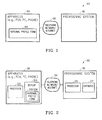
- FIGURE 1 there is a block diagram illustrating the basic components of a system 100 which includes a provisioning system 110 and an apparatus 120 (e.g., personal digital assistant (PDA), personal computer, intelligent phone).
- the apparatus 120 is used by a person that subscribes to or wants to subscribe to one or more calling features (e.g., call forwarding, speed calling, call blocking...) offered by a network operator.
- the network operator is typically the one that maintains the provisioning system 110.
- the provisioning system 110 and apparatus 120 can communicate with one another through a telecommunications network or the Internet 130.
- the provisioning system 110 is capable of generating a user-friendly profile form 140 which is created especially for that subscriber and personalized to indicate the calling features that make up their telecommunication service profile.
- the subscriber can interact with the personal profile form 140 to change their telecommunication service profile.
- the subscriber can interact with the personal profile form 140 to add, disable or update one or more calling features to, from or in their telecommunication service profile.
- the personal profile form 140 is created such that all of the unnecessary data fields or non-used calling features are hidden from the subscriber (e.g., see FIGURES 3 and 5).
- the personal profile form 140 can be downloaded from the provisioning system 110 and stored within the apparatus 120 (see FIGURES 1, 2 and 6).
- the personal profile form 140 can be maintained and stored at the provisioning system 110 and accessed by the subscriber with the help of apparatus 120 (see FIGURE 4). As such, each subscriber can select whether they want to store their personal profile form 140 at their apparatus 120 or at the provisioning system 110.
- the provisioning system 110 uses an expert program to analyze the personal profile form 140 and to determine if any calling features were changed by the subscriber. If the subscriber requested that a change be made to anyone of their calling features, then the provisioning system 110 would make those changes to the subscriber's telecommunications service profile.
- the capabilities of the system 100, the provisioning system 110 and the apparatus 120 are described below with respect to FIGURES 2-6.
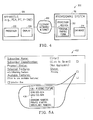
- FIGURE 2 there is a diagram of the system 100 which is used to help describe some of the capabilities of the present invention.
- a new subscriber e.g., John D. Doe
- a personal profile form 202 on which the new subscriber can enter their name and select one or more calling features they want included in their telecommunication service profile (see FIGURE 3A).
- the personal profile form 202 is downloaded by a processor 222 and shown in a display 224 of the apparatus 120.
- the subscriber can interact with the personal profile form 202 to select and configure one or more calling features such as:
- the subscriber can take as much time as they want to fill-out the blank personal profile form 202 and select the calling feature or calling features they want to have in their telecommunication service profile.
- the subscriber can interact with the personal profile form 202 in anyone of a variety of ways including, for example, pushing keys on the apparatus 120, using a mouse or using a stylus. If needed, the subscriber can interact with a separate page on the personal profile form 202 to add the necessary information needed to activate one of the calling features. For instance, the subscriber may interact with a page 206 behind the personal profile form 202 to add the names, speed dialing codes and phone numbers of people or places they want to have added to their speed calling feature. Again, the personal profile form 202 is created such that all of the unnecessary data fields or non-used calling features are hidden from the subscriber. In addition, the personal profile form 202 can be in many different languages.
- the subscriber can then forward the completed personal profile form 204 to the provisioning system 110 (see FIGURE 3B).
- the provisioning system 110 on a periodic basis can query the apparatus 120 to obtain the completed personal profile form 204.
- the completed personal profile form 204 can include fields such as:
- the provisioning system 110 and, in particular, a processor 212 can use an expert program to analyze the completed personal profile form 204 to determine what calling features the subscriber wants as part of their telecommunication service.
- the processor 212 then issues the appropriate commands to a database 214 which updates the various service tables therein so as to enable the selected calling features.
- the provisioning system 110 can notify the subscriber that he can now utilize the telecommunication services of the network.
- the subscriber can access and interact with the personal profile form 204 to make changes to their telecommunication service profile.
- the subscriber can interact with the personal profile form 204 to add, disable or update one or more calling features to, from or in their telecommunication service profile.
- the subscriber may want to update the call-forwarding feature to change the destination number where incoming calls are to be forwarded to the subscriber. If the subscriber wants the change to the call-forwarding feature to be immediately implemented (on a priority basis) the subscriber can send a special request along with the changed personal profile form 204 to the provisioning system 110.
- the provisioning system 110 will make the necessary changes to the service tables in the database 214 to implement the change in the call forwarding feature at a time when the update will have little impact on the performance of the network (e.g., make the change during off peak hours). Thereafter, the provisioning system 110 can notify the subscriber that the change or changes to his/her telecommunications service profile have or have not been made. If the requested change to the telecommunications service profile has not been made, then the provisioning system 110 can provide details to the subscriber as to why the requested change was not implemented by the network.
- the subscriber need not fill-out a blank personal profile form 202 in order to obtain a completed personal profile form 204 from the network. Because, the network operator can generate and submit a completed personal profile form to an existing subscriber who can then use the completed personal profile form to make changes to their telecommunication service profile without ever having to fill-out a blank personal profile form 202.
- the apparatus 120 used by the subscriber to interact with the personal profile form 204 may or may not be the phone used by the subscriber to make and receive phone calls.
- the personal profile form 204 can be customized by the provisioning system 110 to suit the particular capabilities of the apparatus 120 currently being used by the subscriber.
- the personal profile form 204 can have a menu format if an apparatus 120 does not have the necessary graphics capabilities to display the entire personal profile form 204.
- the apparatus 120 can include electronic devices such as:
- FIGURE 4 there is a diagram of the system 100 which is used to help describe some more capabilities of the present invention.
- a new subscriber e.g., Jane M. Smith
- a blank personal profile form 402 on which the new subscriber can enter their name and select one or more calling features they want included in their telecommunication service profile (see FIGURE 5A).
- the personal profile form 402 is maintained and stored at the provisioning system 110 and can be accessed from anywhere by the subscriber using an apparatus 120 (e.g., personal digital assistant (PDA), personal computer, intelligent phone).
- PDA personal digital assistant
- the subscriber using an apparatus 120 e.g., personal computer
- the subscriber using an apparatus 120 can interact with the personal profile form 402 (e.g., web page) to select and configure calling features such as:
- the subscriber can take as much time as they want to fill-out the blank personal profile form 402 and select the calling feature or calling features they want to have in their telecommunication service profile.
- the subscriber can interact with the personal profile form 402 in anyone of a variety of ways including, for example, pushing keys on the apparatus 120, using a mouse or using a stylus. If needed, the subscriber can interact with a separate page on the personal profile form 402 to add the necessary information needed to activate one of the calling features. For instance, the subscriber may interact with a page 406 associated with the call blocking feature to add the phone numbers of people they do not want to receive calls from.
- the personal profile form 402 is created such that all of the unnecessary data fields or non-used calling features are hidden from the subscriber.
- the personal profile form 402 can be in many different languages.
- the completed personal profile form 404 can include fields such as:
- the provisioning system 110 and, in particular, the processor 212 can use an expert program to analyze on a real time basis or on a periodic basis the completed personal profile form 404 to determine what calling features the subscriber wants as part of their telecommunication service.
- the processor 212 then issues the appropriate commands to the database 214 which updates the various service tables therein so as to enable the selected calling features.
- the provisioning system 110 can notify the subscriber that they can now utilize the telecommunication services of the network.
- the subscriber can access and interact with the personal profile form 404 to make changes to their telecommunication service profile.
- the subscriber can interact with the personal profile form 404 to add, disable or update one or more calling features to, from or in his/her telecommunication service profile. For instance, the subscriber may want to disable their conference-calling feature to save money until they need to setup a conference call at which time the subscriber can reactivate the conference-calling feature. If the subscriber wants the change to the conference-calling feature to be immediately implemented (on a priority basis) the subscriber can provide a special request to the provisioning system 110.
- the provisioning system 110 will make the necessary changes to the service tables in the database 214 to disable the conference calling feature at a time when the change will have little impact on the performance of the network (e.g., make the change during off peak hours). Thereafter, the provisioning system 110 can notify the subscriber that the change or changes to their telecommunication service profile have or have not been made. If the requested change to the telecommunications service profile has not been made, then the provisioning system 110 can provide details to the subscriber as to why the requested change was not implemented by the network. This ability to disable a calling feature whenever the subscriber wants can benefit the subscriber since they can save money by paying only for what they use.
- the subscriber need not fill-out a blank personal profile form 402 in order to obtain a completed personal profile form 404 from the network operator. Because, the network operator can generate and submit a completed personal profile form to an existing subscriber who can then use the completed personal profile form to make changes to their telecommunication service profile without ever having to fill-out a blank personal profile form 402.
- FIGURE 6 there is a diagram of the system 100 which is used to help describe even more capabilities of the present invention.
- a business 602 can store at their computer system 604 the personal profile forms 606 of their employees.
- the business 602 and each employee or class of employees can be considered a subscriber to the telecommunications service of the network.
- the provisioning system 110 can create a user-friendly profile form 606 for each employee that has been personalized to indicate each employee's telecommunications service profile.
- Each employee can access their personal profile form 606 with the help of an apparatus 120 (only three shown) that can be located at the business 602 or located outside of the business 602.
- An employee can use an apparatus 120 (e.g., PDA, personal computer, intelligent phone) to create or interact with a personal profile form 606.
- each employee can interact with their personal profile form 606 to add, disable or update one or more calling features to, from or in his/her telecommunications service profile.
- the personal profile forms 606 are created such that all of the unnecessary data fields or non-used calling features are hidden from the employees (e.g., see FIGURES 3 and 5). Below is a list of calling features that can be selected by an employee:
- the business 602 can compile all of the personal profile forms 606 that have been created and revised and forward these personal profile forms 606 to the provisioning system 110. In fact, the business 602 can send all of this data to the provisioning system 110 during off-peak hours to save network resources. Alternatively, the provisioning system 110 on a periodic basis can query the business 602 to obtain the personal profile forms 606 that have been created or revised by employees. Moreover, it should be understood that as far as submitting changes to the provisioning system 110, it can be automatic (program triggered) or manual (explicit command given by one of the users). These abilities to add, disable and modify a calling feature whenever an employee wants benefits the business since the business does not need support staff to gather these requests and can have the employees set up their own services.
- the provisioning system 110 then uses an expert program to issue the appropriate commands to a database 214 which updates the various service tables therein so as to activate or deactivate the calling features of the different employees. At this time, the provisioning system 110 can notify the business 602 as to which employees can now utilize or not utilize the requested telecommunication services of the network.
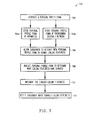
- FIGURE 7 there is a flowchart illustrating the basic steps of the preferred method 700.
- the provisioning system 110 generates (step 702) a user-friendly profile form 140 which is created especially for the subscriber and personalized to indicate the calling features that make-up their telecommunication service profile (see the completed personal profile forms 202 and 404 of FIGURES 3B and 5B).
- the personal profile form 140 is created such that all of the unnecessary data fields or non-used calling features are hidden from the subscriber.
- the personal profile form 140 can be in many different languages.
- the subscriber can download the personal profile form 140 from the provisioning system 110 and store (step 704a) the downloaded personal profile form 140 within the apparatus 120 (e.g., personal computer, personal digital assistant (PDA), intelligent phone). Or, the personal profile form 140 may be maintained and stored (step 704b) at the provisioning system 110 and accessed by the subscriber with the help of an apparatus 120.
- the apparatus 120 e.g., personal computer, personal digital assistant (PDA), intelligent phone.
- the personal profile form 140 may be maintained and stored (step 704b) at the provisioning system 110 and accessed by the subscriber with the help of an apparatus 120.
- the subscriber is allowed (step 706) to interact with the personal profile form 140 to change their telecommunication service profile.
- the subscriber can interact with the personal profile form 140 to add, disable or update one or more calling features to, from or in his/her telecommunications service profile.
- the calling features that the subscriber can change in their telecommunication service profile:
- the subscriber can take as much time as they want to interact with the personal profile form 140 to subscribe to and/or modify service attributes of one or more calling features in their telecommunication service profile. For instance, the subscriber can interact with the personal profile form 140 to add a voice mail calling feature and disable a caller identification feature in their telecommunication service profile.
- the completed personal profile form 140 can include fields such as (see also FIGURES 3B and 5B):
- the subscriber can then forward the personal profile form 140 to the provisioning system 110.
- the provisioning system 110 can query the apparatus 120 on a periodic basis to obtain the personal profile form 140.
- the provisioning system 110 uses an expert program to analyze (step 708) the personal profile form 140 and to determine whether any of the calling features were changed by the subscriber.
- the provisioning system 110 implements (step 710) those changes made to the calling feature(s).
- the provisioning system 110 issues a series of commands to the database 214 in order to update the various service tables and to make those changes to the calling feature(s).
- the provisioning system 110 notifies (step 712) the subscriber that their changes were or were not accepted by the network operator.
- a new subscriber can be issued a blank personal profile form so they can establish an account with the network operator. After filling out the blank personal profile form, the subscriber can then subscribe to and/or modify service attributes of one or more calling features of their telecommunication service as described above with respect to steps 702 through step 712.
- the present invention offers many different advantages to both network operators and subscribers. For instance, the present invention enables the network operator to provide telecommunications services to subscribers without having to hire and train a large number of operators.
- the network operators can also increase their revenue by offering user sensitive billing to their subscribers. For instance, the network operator could charge a premium fee for providing on-demand telecommunications services to a subscriber in that they pay only when they use a particular telecommunication service.
- the subscriber may pay a monthly service fee to have some calling features always activated instead of paying premium fees associated with user sensitive billing.
- the present invention offers many different advantages to the subscribers. For example, the subscribers no longer need to try and reach an operator and then communicate with that operator to make changes to their telecommunications service.
Landscapes
- Engineering & Computer Science (AREA)
- Signal Processing (AREA)
- Exchange Systems With Centralized Control (AREA)
- Telephonic Communication Services (AREA)
Applications Claiming Priority (2)
| Application Number | Priority Date | Filing Date | Title |
|---|---|---|---|
| US91808901A | 2001-07-30 | 2001-07-30 | |
| US918089 | 2001-07-30 |
Publications (2)
| Publication Number | Publication Date |
|---|---|
| EP1282294A2 true EP1282294A2 (de) | 2003-02-05 |
| EP1282294A3 EP1282294A3 (de) | 2004-12-08 |
Family
ID=25439786
Family Applications (1)
| Application Number | Title | Priority Date | Filing Date |
|---|---|---|---|
| EP02012579A Withdrawn EP1282294A3 (de) | 2001-07-30 | 2002-06-06 | Verfahren und personalisiertes System zur Bereitstellung von Telekommunikationsdiensten |
Country Status (1)
| Country | Link |
|---|---|
| EP (1) | EP1282294A3 (de) |
Cited By (1)
| Publication number | Priority date | Publication date | Assignee | Title |
|---|---|---|---|---|
| WO2007082414A1 (fr) * | 2006-01-23 | 2007-07-26 | Zte Corporation | Procédé de fourniture de service de personnalisation en sous-zone |
Family Cites Families (4)
| Publication number | Priority date | Publication date | Assignee | Title |
|---|---|---|---|---|
| JPH0926970A (ja) * | 1994-12-20 | 1997-01-28 | Sun Microsyst Inc | 情報を検索するコンピュータによる実行方法及び装置 |
| US6031836A (en) * | 1996-09-13 | 2000-02-29 | Lucent Technologies Inc. | Web-page interface to telephony features |
| WO1999015976A1 (en) * | 1997-09-26 | 1999-04-01 | Devine Carol Y | Integrated proxy interface for web based report requester tool set |
| US6185285B1 (en) * | 1997-10-14 | 2001-02-06 | At&T Corp. | Method for providing network users with improved management of a communications service feature |
-
2002
- 2002-06-06 EP EP02012579A patent/EP1282294A3/de not_active Withdrawn
Cited By (1)
| Publication number | Priority date | Publication date | Assignee | Title |
|---|---|---|---|---|
| WO2007082414A1 (fr) * | 2006-01-23 | 2007-07-26 | Zte Corporation | Procédé de fourniture de service de personnalisation en sous-zone |
Also Published As
| Publication number | Publication date |
|---|---|
| EP1282294A3 (de) | 2004-12-08 |
Similar Documents
| Publication | Publication Date | Title |
|---|---|---|
| JP7118662B2 (ja) | コンピューター読み取り可能な記録媒体 | |
| KR100521297B1 (ko) | 커뮤니케이션 시스템 및 기록 매체 | |
| WO2002037393A2 (en) | System and method for service specific notification | |
| US20060182243A1 (en) | Method for providing call intermediation services and system therefore | |
| CA2176177A1 (en) | Method for consolidation of multiple data sources | |
| CA2401326A1 (en) | Apparatus and method for mediating between callers and receivers using mobile phones | |
| JP2009187560A (ja) | 移動端末からのユーザの好みの設定 | |
| CN101107837A (zh) | 数据处理的过程 | |
| US20020087353A1 (en) | Method of connecting calls between a business card transmitter and a business card receiver through the medium of a web business card sent by the business card transmitter and system for the same | |
| CN101282500B (zh) | 支持多种访问方式的增值业务控制方法及系统 | |
| JP7438883B2 (ja) | サーバ装置およびプログラム | |
| KR20030007850A (ko) | 음성통화 접속대행 과금지원 시스템 | |
| EP1282294A2 (de) | Verfahren und personalisiertes System zur Bereitstellung von Telekommunikationsdiensten | |
| KR20000050071A (ko) | 무선 휴대통신단말기를 이용한 광고방법 | |
| KR20200144754A (ko) | 예약 관리 방법 및 장치 | |
| KR20000058229A (ko) | 골프장 예약 시스템 | |
| JP3844760B2 (ja) | 課金対象決定方法 | |
| CN114650148B (zh) | 一种基于社交应用的数据通讯方法、设备及可读存储介质 | |
| KR101481161B1 (ko) | 통화전 광고컨텐츠 제공 방법 및 이를 수행하기 위한 시스템 | |
| KR20010044725A (ko) | 인터넷망을 이용한 통화 콜백 서비스를 제공하는 시스템및 방법 | |
| CN114070936A (zh) | 一种互动式语音应答方法、装置及系统 | |
| JP2002024503A (ja) | 勤務管理システム | |
| KR20140087255A (ko) | 멀티미디어 콜아이디 서비스 시스템 및 그 방법 | |
| CN101068280B (zh) | 一种根据话单控制呼叫流程的方法及装置 | |
| KR20020016485A (ko) | 소프트웨어를 활용한 인터넷상의 아이디/패스워드 관리 및인터넷 접속방법에 관한 건 |
Legal Events
| Date | Code | Title | Description |
|---|---|---|---|
| PUAI | Public reference made under article 153(3) epc to a published international application that has entered the european phase |
Free format text: ORIGINAL CODE: 0009012 |
|
| AK | Designated contracting states |
Designated state(s): AT BE CH CY DE DK ES FI FR GB GR IE IT LI LU MC NL PT SE TR |
|
| AX | Request for extension of the european patent |
Extension state: AL LT LV MK RO SI |
|
| PUAL | Search report despatched |
Free format text: ORIGINAL CODE: 0009013 |
|
| AK | Designated contracting states |
Kind code of ref document: A3 Designated state(s): AT BE CH CY DE DK ES FI FR GB GR IE IT LI LU MC NL PT SE TR |
|
| AX | Request for extension of the european patent |
Extension state: AL LT LV MK RO SI |
|
| AKX | Designation fees paid | ||
| REG | Reference to a national code |
Ref country code: DE Ref legal event code: 8566 |
|
| STAA | Information on the status of an ep patent application or granted ep patent |
Free format text: STATUS: THE APPLICATION IS DEEMED TO BE WITHDRAWN |
|
| 18D | Application deemed to be withdrawn |
Effective date: 20050609 |