EP1282899B1 - Kopierschutzsystem - Google Patents
Kopierschutzsystem Download PDFInfo
- Publication number
- EP1282899B1 EP1282899B1 EP01931661A EP01931661A EP1282899B1 EP 1282899 B1 EP1282899 B1 EP 1282899B1 EP 01931661 A EP01931661 A EP 01931661A EP 01931661 A EP01931661 A EP 01931661A EP 1282899 B1 EP1282899 B1 EP 1282899B1
- Authority
- EP
- European Patent Office
- Prior art keywords
- signal
- information
- physical mark
- information carrier
- storing
- Prior art date
- Legal status (The legal status is an assumption and is not a legal conclusion. Google has not performed a legal analysis and makes no representation as to the accuracy of the status listed.)
- Expired - Lifetime
Links
Images


Classifications
-
- G—PHYSICS
- G11—INFORMATION STORAGE
- G11B—INFORMATION STORAGE BASED ON RELATIVE MOVEMENT BETWEEN RECORD CARRIER AND TRANSDUCER
- G11B20/00—Signal processing not specific to the method of recording or reproducing; Circuits therefor
- G11B20/10—Digital recording or reproducing
-
- G—PHYSICS
- G11—INFORMATION STORAGE
- G11B—INFORMATION STORAGE BASED ON RELATIVE MOVEMENT BETWEEN RECORD CARRIER AND TRANSDUCER
- G11B20/00—Signal processing not specific to the method of recording or reproducing; Circuits therefor
- G11B20/00086—Circuits for prevention of unauthorised reproduction or copying, e.g. piracy
- G11B20/0021—Circuits for prevention of unauthorised reproduction or copying, e.g. piracy involving encryption or decryption of contents recorded on or reproduced from a record carrier
- G11B20/0042—Circuits for prevention of unauthorised reproduction or copying, e.g. piracy involving encryption or decryption of contents recorded on or reproduced from a record carrier the copy protection scheme being related to a specific access protection standard
- G11B20/00449—Circuits for prevention of unauthorised reproduction or copying, e.g. piracy involving encryption or decryption of contents recorded on or reproduced from a record carrier the copy protection scheme being related to a specific access protection standard content scrambling system [CSS]
-
- G—PHYSICS
- G11—INFORMATION STORAGE
- G11B—INFORMATION STORAGE BASED ON RELATIVE MOVEMENT BETWEEN RECORD CARRIER AND TRANSDUCER
- G11B19/00—Driving, starting, stopping record carriers not specifically of filamentary or web form, or of supports therefor; Control thereof; Control of operating function ; Driving both disc and head
- G11B19/02—Control of operating function, e.g. switching from recording to reproducing
- G11B19/12—Control of operating function, e.g. switching from recording to reproducing by sensing distinguishing features of or on records, e.g. diameter end mark
- G11B19/122—Control of operating function, e.g. switching from recording to reproducing by sensing distinguishing features of or on records, e.g. diameter end mark involving the detection of an identification or authentication mark
-
- G—PHYSICS
- G11—INFORMATION STORAGE
- G11B—INFORMATION STORAGE BASED ON RELATIVE MOVEMENT BETWEEN RECORD CARRIER AND TRANSDUCER
- G11B20/00—Signal processing not specific to the method of recording or reproducing; Circuits therefor
- G11B20/00086—Circuits for prevention of unauthorised reproduction or copying, e.g. piracy
-
- G—PHYSICS
- G11—INFORMATION STORAGE
- G11B—INFORMATION STORAGE BASED ON RELATIVE MOVEMENT BETWEEN RECORD CARRIER AND TRANSDUCER
- G11B20/00—Signal processing not specific to the method of recording or reproducing; Circuits therefor
- G11B20/00086—Circuits for prevention of unauthorised reproduction or copying, e.g. piracy
- G11B20/00884—Circuits for prevention of unauthorised reproduction or copying, e.g. piracy involving a watermark, i.e. a barely perceptible transformation of the original data which can nevertheless be recognised by an algorithm
Definitions
- the invention relates to an apparatus for reading out information from an information carrier, the information including at least a first signal of at least partly encrypted content, to an apparatus for storing such information as well as to corresponding methods.
- the invention relates further to an information carrier, to a method of exchanging copy protection information and to a copy protection system.
- the proposed ROM-wobble can have a payload, which is (cryptographically) tied to the content, e.g. by using the payload in the watermark. This is where the wobble shows its real strength.
- the wobble could also be tied to CSS, which has the added bonus of providing an upgrade path.
- the problem with introducing the ROM-wobble is the presence of legacy ROM-discs with CSS content that do not have the wobble. I.e. there are two types of discs without a wobble: i) recordable or rewriteable discs which should be rejected when comprising protected content, e.g. CSS protected content, ii) legacy pre-recorded discs which should be played back (even when comprising (CSS) protected content).
- protected content e.g. CSS protected content
- legacy pre-recorded discs which should be played back (even when comprising (CSS) protected content.
- WO 97/43853 A discloses a method and apparatus for copyright protection for various optical recording media such as Digital Video Discs (DVDs) and magnetic tape cassette systems, such as W-VHS, which use a combination of a Copyright Signature Signal and an Authenticating Signature to permit the player to handle either copy-protected or non-copy-protected media, in a manner that is difficult to compromise.
- Both a Copyright Signature Signal and an Authenticating Signature are recorded on the media only when copy-protection is required.
- the nature of this Authenticating Signature is such that it will not be transferred to illicit copies made on recorders.
- the presence or absence of the Authenticating Signature causes the player to correctly play the program video.
- a second signal is logically embedded in the first signal. If this second signal is detected on the information carrier it is indicated that a physical mark has been used by a recording apparatus, e.g. by the mastering machine, for storing at least part of the information on the information carrier. If such a physical mark will then not be found on the information carrier then the information carrier may constitute an illegal copy.
- the invention has one system aspect and one implementation aspect.
- the system aspect is that there is (A) an information carrier with a special (physical) mark and (B) content on that carrier (first signal) containing a second signal (the trigger).
- the (copy-protection) system rule is that players should only play back content in two cases: (i) there is no trigger/second signal in the content and (ii) content which has a trigger/second signal, resides on a carrier WITH physical mark. A carrier without physical mark and WITH second signal in the content is illegal.
- the implementation aspect of this invention is a practical choice for the second signal (the trigger).
- the problem that is solved is that of storing a second signal into (audio/video) content, on the "logical level”, not on the “physical” level.
- This second signal observes the following constraints:
- the apparatus is provided for reading information from an optical record carrier like a CD or a DVD, i. e. the apparatus is a CD- or DVD-player.
- the second signal is embedded in the first signal by encoding it in a predetermined pattern of encrypted and unencrypted packs of the first signal.
- CSS-encrypted content is typically decrypted both in hardware (in tabletop DVD-players) and software (in PCs).
- Software decryption slows down the PC substantially, and seriously degrades the viewing quality of a DVD-film.
- the stream is divided into so called packs of 2 Kbytes each, and typically somewhere between 10-50% of the packs have been encrypted.
- a message for the purpose of copy protection may be transmitted by the deliberately encrypting packs following a certain pattern.
- s-1 are unencrypted and 1 is encrypted), with s prime, the polynomial should be chosen over GF(s).
- This principle can be generalized to pseudo-random sequences with bias 1/s, where s is not just prime, but the power of a prime.
- the linear feedback shift register is over Galois field GF(s) and its output is biased by interpreting emitted symbols '0' ... 's-n-1'as 'unencrypted' and 's-n'... 's-1' as 'encrypted'.
- the second signal is embedded in the first signal by selecting a key for at least partly encrypting the information from one of at least two groups of keys.
- the keys used to encrypt the content are 40 bits long.
- Another embodiment of the invention consists of designing a detection algorithm, i.e. a function operating on the key K: ⁇ f(K), where f(K) can be 0 or 1.
- f( ) should be chosen in such a way that when operating on the keys used in the DVD-titles published so far (on the order of 4000 keys), it always yields 0.
- f( ) is surprisingly simple a) to compute and b) to implement. Implementation requires storage of approximately 64 40-bit (non-confidential) constants, and computation requires seven 40-bit XOR operations plus shift register.
- the decoding algorithm used for decoding from which group of keys a certain key has been selected consists of examining the outcome of projecting an n-bit key onto a set of fixed n-bit numbers.
- the invention has as an important advantage that the second signal (the "wobble trigger") does not need decryption and watermark detection. This is accomplished by embedding the second signal, used to distinguish new media on which information is stored using a physical mark from legacy discs, in the encryption instead of in the watermark.
- the invention refers also to a method of reading out information, to an apparatus for storing information, to a method of storing information, to an information carrier for storing information, to a method of exchanging copy protection information and to a copy protection system as claimed in further independent claims. It shall be understood that these devices and methods can be developed further and can have further embodiments identical or similar to those which have been described above and which are laid down in the dependent claims of claim 1.
- Figure 1 shows an apparatus according to the invention for reading of the information carrier 17.
- the apparatus comprises driving means 26 for rotating the information carrier 17 and a read head 27 for reading out the tracks present on the information carrier.
- the read head 27 comprises an optical system of a known type to focus a light spot 28 on a track by means of a beam of light 29 guided through optical elements like a collimator lens 39, to collimate the beam of light and an objective lens, to focus the beam of light.
- This beam of light 29 originates from a radiation source 41, e.g. an infrared laser diode with a wavelength of 650 nm and an optical output of 1 mW.
- the read head 27 further comprises a tracking actuator for fine-positioning the light spot 28 in the radial direction in the middle of the track. Adjusting the position of the light spot to the position of the track can also be achieved be changing the position of the objective lens 40.
- the beam of light 29 is detected by a detector 42 of a known type, e.g. a quadrant detector generates detector signals 31 including a read signal, a tracking-error signal, focussing-error signal, synchronisation signal and lock-in signal.
- a beam splitting cube 43, a polarising beam splitting cube, a pellicle or a retarder can be used for this.
- the apparatus further comprises tracking means 32 connected to the read head 27 for receiving the tracking-error signal of the read head 27 and for steering the tracking actuator 30.
- the reading-out signal is converted in the read out means 34 into output information 33 the read out means for example comprising a channel decoder or an error-corrector.
- the apparatus further comprises an address detector 35 for retrieving the addresses from the detector signals 31 and positioning means 36 for coarse positioning the read head 27 in de radial direction of the track.
- the apparatus further comprises detection means 48 for receiving the detector signals 31 from the read head 27.
- the detector signals 31 are used by the detection means 48 for synchronising the read out means 34.
- the apparatus further comprises a system control unit 37 for receiving commands of a controlling computer system or a user and for regulating the apparatus by means of control lines 38, e.g. a system bus connected to the driving means 26, the positioning means 36, the address detector 35, the tracking means 32 and the read out means 34.
- FIG. 2 shows simply block diagram of a playback apparatus according to the invention.
- the encrypted content read from a disc 17 is transferred to a trigger checking unit 10 where it is checked if a trigger, i. e. a second signal is embedded in the encrypted content. The result of this check is provided to a play control unit 11.
- a wobble signal if detected on the disc 17, is also provided to the play control unit 11. According to these two inputs the play control unit 11 decides if the encrypted content read from the disc 17 shall be released for playback or not.
- a first step 100 it is checked if a trigger is present.
- a first decision step 101 it is then decided based on the result of the first step 100 if a playback of the read information is allowed (no trigger present) or a wobble needs to be present (trigger present) if playback shall be allowed. In the latter case it is checked in step 102 if a wobble is present. If this is the case then playback is allowed (step 103). If no wobble is present then playback of the read information is refused.
- a legacy disc is a pre-recorded disc comprising encrypted content
- a wobbled disc is a pre-recorded disc comprising a wobble
- a legacy drive is an old compliant drive
- a new drive is a new compliant drive
- Some encryption schemes do not encrypt the entire stream that they attempt to protect e.g. for performance reasons.
- the choice to encrypt only say 50% of the content represents a trade-off between de/encryption-effort and security offered.
- the content is divided into blocks, which can also be called “sectors” or "packs”. If the recorder encrypts only 50% of the sectors, it still has the freedom to choose which sectors to encrypt. For existing schemes this happens following a regular pattern (one encrypted, one in-the-clear, one encrypted etc.) for 50% or (one encrypted, two in-the-clear, one encrypted, two in- the-clear, etc.) for 33%.
- a fixed non-standard encryption pattern say (e.g.
- a second signal e.g. a wobble trigger
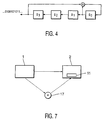
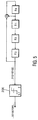
- Figure 4 shows a block diagram of a linear feedback shift register (LFSR) for generating a predetermined pattern to be used for encrypting certain packs of the first signal according to the invention.
- This LFSR has length four, but in practical cases it would have a length ⁇ 16...32.
- the simplest LFSR is over GF(2), in which case g 0 ...g 3 are just 0 or 1, i.e. bits, and addition (modulo 2) is just the boolean XOR-operation.
- ⁇ g 3 ,..g 0 ⁇ ⁇ 0,0,1,0 ⁇ , and the output is '1'.
- the set of boxes that participate in the calculation of the new g 0 (here the 0th and the 3rd box) are called the "taps" of the LFSR.
- g 3 ..g 0 output 1001 0010 1 0100 0 1000 0 0001 1 0011 0 0111 0 1111 0 ....
- This kind of LFSR has advantageous properties, e.g. on average it puts out as many 0's as 1's.
- the output '2102122..' is produced as follows: g 3 ..g 0 output 2102 1021 2 0212 1 2122 0 1221 2 2212 1 2121 2 1210 2 ...
- This is again an advantageous LFSR in the sense that roughly 1/3 of the output is '0's, 1/3 is '1's and 1/3 is '2's. Either '0' or '1' coming out can now be interpreted as a binary 0, and a '2' coming out can be interpreted as a binary '1'. This interpretation can be done in a mapping unit 200.
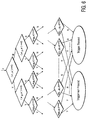
- the derivation of the function f is based on a mathematical result that can be stated roughly as follows. If X is a collection of m-bit keys, of size n, say, then there exists an m-bit number a such that if the collection X is partitioned into two parts according to the value of the parity of the XOR of elements from X with a, then each of the parts contains about half of the elements of X. If a is chosen at random, then for each e>1, the probability that the sizes of both parts differ from n/2 by at most e . sqrt(n) is at least 1/(1-e). Also, if n ⁇ m, then there is an a such that the XOR of a with all elements from X is 0.
- a function f can be constructed such that the evaluation of f(K) can be arranged in the form of a binary decision-tree of depth d with d approximately equal to log(n) - log(m), where log0 denotes the base-2 logarithm.
- the m-bit XOR of K is computed with the m-bit number a(v) corresponding to this node; the result of this XOR determines which of the two branches from v will be followed.
- the value of f(K) will be the computed XOR-value at the end-node that is reached after d steps.
- a copy protection system is shown in Figure 7.
- an apparatus 1 for storing information on an information carrier 17 which stores the information according to the method as described above using a first and a second signal.
- an apparatus 2 for reading out information from the information carrier 17 is shown which comprises means for detecting the first and second signal and a physical mark as described above. It further comprises means 11 for refusing playback of the information read from the information carrier if a second signal but no physical mark has been detected.
- the information regarding the second signal i. e. the information which second signal is used and how this second signal is logically embedded in the first signal is transmitted from the apparatus 1 for storing the information to the apparatus 2 for reading out the information so that the apparatus 2 for reading out the information can correctly detect the second signal.
- the invention as described above is not limited to the embodiments explained.
- the invention is not only related to DVD ROM-discs, but to all pre-recorded media in general.
- the invention is not only related to a wobble, but to all physical disc marks, which can be used for distinguishing pre-recorded discs from recordable discs.
- the invention is not only related to CSS, but to all encryption schemes.
- the invention is not only related to the triggers as described above, but related to all triggers obeying the following conditions: i) detection of the trigger is possible without decrypting the content, ii) the trigger can not be removed without decrypting the content.
Landscapes
- Engineering & Computer Science (AREA)
- Computer Security & Cryptography (AREA)
- Signal Processing (AREA)
- Signal Processing For Digital Recording And Reproducing (AREA)
- Optical Recording Or Reproduction (AREA)
- Lock And Its Accessories (AREA)
- Magnetic Bearings And Hydrostatic Bearings (AREA)
- Transition And Organic Metals Composition Catalysts For Addition Polymerization (AREA)
Claims (14)
- Gerät zum Auslesen von Informationen aus einem Informationsträger (17), wobei die Informationen mindestens ein erstes Signal eines zumindest teilweise verschlüsselten Inhalts enthalten, mit:dadurch gekennzeichnet, dassMitteln (10; 100) zum Ermitteln eines zweiten Signals, welches in dem ersten Signal logisch integriert ist,Mitteln (102) zum Ermitteln einer physikalischen Markierung, sowieMitteln (11) zur Verweigerung der Wiedergabe der aus dem Informationsträger ausgelesenen Informationen, wenn das zweite Signal, jedoch keine physikalische Markierung ermittelt wurde,
die Mittel (10; 100) zum Ermitteln eines zweiten Signals ein, in dem ersten Signal integriertes, zweites Signal ermitteln können, indem dieses in einem vorgegebenen Muster aus verschlüsselten und unverschlüsselten Paketen des ersten Signals codiert wird, und
die Mittel (102) zur Ermittlung einer physikalischen Markierung eine physikalische Markierung ermitteln können, welche verwendet wird, um auf dem Informationsträger zumindest einen Teil der Informationen zu speichern. - Gerät nach Anspruch 1, wobei das Muster ein pseudostatistisches Rauschbild darstellt.
- Gerät nach Anspruch 2, wobei das pseudostatistische Rauschbild durch ein linear rückgekoppeltes Schieberegister erzeugt wird.
- Gerät nach Anspruch 3, wobei das linear rückgekoppelte Schieberegister über dem Galois-Feld GF(s) ist und dessen Ausgang durch Interpretieren emittierter Symbole '0' ... 's-n-1' als ,unverschlüsselt' und 's-n' ... 's-1 als 'verschlüsselt' verschoben wird.
- Gerät nach Anspruch 1, wobei das zweite Signal durch Auswählen eines Schlüssels zum zumindest teilweisen Verschlüsseln der Informationen aus einer der mindestens zwei Schlüsselgruppen in dem ersten Signal integriert wird.
- Gerät nach Anspruch 5, wobei ein Schlüsselerkennungsalgorithmus eingesetzt wird, um den Schlüssel auszuwählen und zu entschlüsseln, aus welcher Schlüsselgruppe der Schlüssel ausgesucht wurde.
- Gerät nach Anspruch 6, wobei der Decodierungsalgorithmus sich aus dem Prüfen des Ergebnisses des Projizierens eines n-Bit-Schlüssels auf eine Menge von festen n-Bit-Zahlen zusammensetzt.
- Gerät nach Anspruch 7, wobei der Prüfungsvorgang in einer Form erfolgt, bei welcher an einem binären Baum hinuntergegangen wird, wobei bei einem Projektionswert 0 nach links und bei einem Projektionswert ungleich Null nach rechts gegangen wird.
- Methode zum Auslesen von Informationen aus einem Informationsträger (17), wobei die Informationen mindestens ein erstes Signal eines zumindest teilweise verschlüsselten Inhalts enthalten, wonach:dadurch gekennzeichnet, dassein zweites Signal, welches in dem ersten Signal logisch integriert ist, ermittelt wird (100),eine physikalische Markierung ermittelt wird (102), unddie Wiedergabe der von dem Informationssträger abgerufenen Informationen verweigert wird, wenn das zweite Signal, jedoch keine physikalische Markierung ermittelt wurde,
das zweite Signal in dem ersten Signal durch Codieren desselben in einem vorgegebenen Muster aus verschlüsselten und unverschlüsselten Paketen des ersten Signals integriert wird, und
die physikalische Markierung zum Speichern von zumindest einem Teil der Informationen auf dem Informationsträger verwendet wird. - Gerät zum Speichern von Informationen auf einem Informationsträger (17),
wobei die Informationen mindestens ein erstes Signal eines zumindest zum Teil verschlüsselten Inhalts enthalten, mit:dadurch gekennzeichnet, dassMitteln zur Verwendung einer physikalischen Markierung sowieMitteln zur logischen Integration eines zweiten Signals in dem ersten Signal unter Hinweis auf die Verwendung einer physikalischen Markierung, wobei das zweite Signal eingesetzt werden kann, um die Wiedergabe der von dem Informationsträger abgerufenen Informationen zu verweigern, wenn das zweite Signal, jedoch keine physikalische Markierung ermittelt wurde,
die Mittel zur logischen Integration eines zweiten Signals in dem ersten Signal das zweite Signal in dem ersten Signal durch Codieren desselben in einem vorgegebenen Muster aus verschlüsselten und unverschlüsselten Paketen des ersten Signals integrieren können, und
die Mittel zur Verwendung einer physikalischen Markierung eine solche zum Speichern von zumindest einem Teil der Informationen auf dem Informationsträger einsetzen können. - Methode zum Speichern von Informationen auf einem Informationsträger (17), wobei die Informationen mindestens ein erstes Signal eines zumindest zum Teil verschlüsselten Inhalts enthalten, wonach:dadurch gekennzeichnet, dasseine physikalische Markierung verwendet wird undein zweites Signal in dem ersten Signal unter Hinweis, dass eine physikalische Markierung verwendet wird, logisch integriert wird, wobei das zweite Signal eingesetzt werden kann, um die Wiedergabe der von dem Informationsträger abgerufenen Informationen zu verweigern, wenn das zweite Signal, jedoch keine physikalische Markierung ennittelt wurde,
das zweite Signal in dem ersten Signal durch Codieren desselben in einem vorgegebenen Muster aus verschlüsselten und unverschlüsselten Paketen des ersten Signals logisch integriert wird, und
die physikalische Markierung zum Speichern von zumindest einem Teil der Informationen auf dem Informationsträger verwendet wird. - Informationsträger (17), welcher Informationen, die mindestens ein erstes Signal eines zumindest teilweise verschlüsselten Inhalts enthalten, speichert, mit:dadurch gekennzeichnet, dasseiner physikalischen Markierung sowieeinem zweiten Signal, welches, unter Hinweis darauf, dass eine physikalische Markierung verwendet wird, in dem ersten Signal logisch integriert ist, wobei das zweite Signal eingesetzt werden kann, um die Wiedergabe der von dem Informationsträger abgerufenen Informationen zu verweigern, wenn das zweite Signal, jedoch keine physikalische Markierung ermittelt wurde,
das zweite Signal in dem ersten Signal durch Codieren desselben in einem vorgegebenen Muster aus verschlüsselten und unverschlüsselten Paketen des ersten Signals logisch integriert wird, und
die physikalische Markierung zum Speichern von zumindest einem Teil der Informationen auf dem Informationsträger verwendet wird. - Methode zum Austausch von Kopierschutzinformationen, um auf einem Informationsträger (17) gespeicherte Informationen, die mindestens ein erstes Signal eines zumindest zum Teil verschlüsselten Inhalts enthalten, zu schützen, wobei eine physikalische Markierung verwendet wird und die Kopierschutzinformationen ein zweites Signal enthalten, welches in dem ersten Signal unter Hinweis darauf, dass eine physikalische Markierung verwendet wird, logisch integriert ist, wobei die Kopierschutzinformationen eingesetzt werden können, um die Wiedergabe der von dem Informationsträger abgerufenen Informationen zu verweigern, wenn das zweite Signal, jedoch keine physikalische Markierung ermittelt wurde,
dadurch gekennzeichnet, dass
das zweite Signal in dem ersten Signal durch Codieren desselben in einem vorgegebenen Muster aus verschlüsselten und unverschlüsselten Paketen des ersten Signals logisch integriert wird, und
die physikalische Markierung zum Speichern von zumindest einem Teil der Informationen auf dem Informationsträger verwendet wird. - Kopierschutzsystem zum Austausch von Kopierschutzinformationen, um auf einem Informationsträger (17) gespeicherte Informationen, die mindestens ein erstes Signal eines zumindest zum Teil verschlüsselten Inhalts enthalten, zu schützen, mit:wobei die Kopierschutzinformationen ein zweites Signal enthalten, welches unter Hinweis darauf, dass eine physikalische Markierung verwendet wird, in dem ersten Signal logisch integriert ist, wobei die Kopierschutzinformationen eingesetzt werden können, um die Wiedergabe der von dem Informationsträger abgerufenen Informationen zu verweigern, wenn das zweite Signal, jedoch keine physikalische Markierung ermittelt wurde,einem Gerät (1) zum Speichern von Informationen auf einem Informationsträger, wie in Anspruch 10 beansprucht , sowieeinem Gerät (2) zum Auslesen von Informationen aus einem Informationsträger, wie in Anspruch 1 beansprucht,
dadurch gekennzeichnet, dass
das zweite Signal in dem ersten Signal durch Codieren desselben in einem vorgegebenen Muster aus verschlüsselten und unverschlüsselten Paketen des ersten Signals integriert wird, und
die physikalische Markierung zum Speichern von zumindest einem Teil der Informationen auf dem Informationsträger verwendet wird.
Priority Applications (1)
| Application Number | Priority Date | Filing Date | Title |
|---|---|---|---|
| EP01931661A EP1282899B1 (de) | 2000-05-10 | 2001-04-27 | Kopierschutzsystem |
Applications Claiming Priority (4)
| Application Number | Priority Date | Filing Date | Title |
|---|---|---|---|
| EP00201669 | 2000-05-10 | ||
| EP00201669 | 2000-05-10 | ||
| EP01931661A EP1282899B1 (de) | 2000-05-10 | 2001-04-27 | Kopierschutzsystem |
| PCT/EP2001/004768 WO2001086650A1 (en) | 2000-05-10 | 2001-04-27 | Copy protection system |
Publications (2)
| Publication Number | Publication Date |
|---|---|
| EP1282899A1 EP1282899A1 (de) | 2003-02-12 |
| EP1282899B1 true EP1282899B1 (de) | 2004-07-14 |
Family
ID=8171473
Family Applications (1)
| Application Number | Title | Priority Date | Filing Date |
|---|---|---|---|
| EP01931661A Expired - Lifetime EP1282899B1 (de) | 2000-05-10 | 2001-04-27 | Kopierschutzsystem |
Country Status (7)
| Country | Link |
|---|---|
| US (1) | US20020026587A1 (de) |
| EP (1) | EP1282899B1 (de) |
| JP (1) | JP2003532970A (de) |
| KR (1) | KR100817227B1 (de) |
| AT (1) | ATE271253T1 (de) |
| DE (1) | DE60104307T2 (de) |
| WO (1) | WO2001086650A1 (de) |
Families Citing this family (57)
| Publication number | Priority date | Publication date | Assignee | Title |
|---|---|---|---|---|
| US20050160271A9 (en) * | 1998-11-19 | 2005-07-21 | Brundage Trent J. | Identification document and related methods |
| US6697489B1 (en) * | 1999-03-30 | 2004-02-24 | Sony Corporation | Method and apparatus for securing control words |
| US7730300B2 (en) | 1999-03-30 | 2010-06-01 | Sony Corporation | Method and apparatus for protecting the transfer of data |
| US7565546B2 (en) * | 1999-03-30 | 2009-07-21 | Sony Corporation | System, method and apparatus for secure digital content transmission |
| US7039614B1 (en) * | 1999-11-09 | 2006-05-02 | Sony Corporation | Method for simulcrypting scrambled data to a plurality of conditional access devices |
| US7225164B1 (en) * | 2000-02-15 | 2007-05-29 | Sony Corporation | Method and apparatus for implementing revocation in broadcast networks |
| JP2002074831A (ja) * | 2000-08-31 | 2002-03-15 | Sony Corp | データ出力方法および装置、データ再生方法および装置、データ記録方法および装置、データ記録再生方法および装置 |
| ITMO20010038A1 (it) * | 2001-03-06 | 2002-09-06 | Elopak Systems | Apparato e metodo per la lavorazione di materia plastica e contenitore di prodotto fluido |
| US7747853B2 (en) * | 2001-06-06 | 2010-06-29 | Sony Corporation | IP delivery of secure digital content |
| US7350082B2 (en) * | 2001-06-06 | 2008-03-25 | Sony Corporation | Upgrading of encryption |
| US7895616B2 (en) * | 2001-06-06 | 2011-02-22 | Sony Corporation | Reconstitution of program streams split across multiple packet identifiers |
| US7336787B2 (en) | 2001-06-06 | 2008-02-26 | Sony Corporation | Critical packet partial encryption |
| US7292691B2 (en) * | 2002-01-02 | 2007-11-06 | Sony Corporation | Progressive video refresh slice detection |
| US7215770B2 (en) | 2002-01-02 | 2007-05-08 | Sony Corporation | System and method for partially encrypted multimedia stream |
| US7218738B2 (en) * | 2002-01-02 | 2007-05-15 | Sony Corporation | Encryption and content control in a digital broadcast system |
| US7302059B2 (en) | 2002-01-02 | 2007-11-27 | Sony Corporation | Star pattern partial encryption |
| US7376233B2 (en) | 2002-01-02 | 2008-05-20 | Sony Corporation | Video slice and active region based multiple partial encryption |
| US7765567B2 (en) * | 2002-01-02 | 2010-07-27 | Sony Corporation | Content replacement by PID mapping |
| US7823174B2 (en) * | 2002-01-02 | 2010-10-26 | Sony Corporation | Macro-block based content replacement by PID mapping |
| US7292690B2 (en) * | 2002-01-02 | 2007-11-06 | Sony Corporation | Video scene change detection |
| US7155012B2 (en) * | 2002-01-02 | 2006-12-26 | Sony Corporation | Slice mask and moat pattern partial encryption |
| US7242773B2 (en) * | 2002-09-09 | 2007-07-10 | Sony Corporation | Multiple partial encryption using retuning |
| US7233669B2 (en) * | 2002-01-02 | 2007-06-19 | Sony Corporation | Selective encryption to enable multiple decryption keys |
| KR20030081105A (ko) * | 2002-04-12 | 2003-10-17 | 마츠시타 덴끼 산교 가부시키가이샤 | 광 디스크 재생장치 및 광 디스크 재생 제어방법 |
| JP2003317378A (ja) * | 2002-04-15 | 2003-11-07 | Sony Corp | データ再生装置、データ記録装置、回路素子、データ再生方法及びデータ記録方法 |
| US20090180025A1 (en) * | 2002-05-28 | 2009-07-16 | Sony Corporation | Method and apparatus for overlaying graphics on video |
| US7530084B2 (en) * | 2002-05-28 | 2009-05-05 | Sony Corporation | Method and apparatus for synchronizing dynamic graphics |
| GB2373091A (en) * | 2002-05-29 | 2002-09-11 | Donald Eric Butterfield | Copy protection |
| US8818896B2 (en) * | 2002-09-09 | 2014-08-26 | Sony Corporation | Selective encryption with coverage encryption |
| US7724907B2 (en) * | 2002-11-05 | 2010-05-25 | Sony Corporation | Mechanism for protecting the transfer of digital content |
| US8572408B2 (en) * | 2002-11-05 | 2013-10-29 | Sony Corporation | Digital rights management of a digital device |
| US8667525B2 (en) * | 2002-12-13 | 2014-03-04 | Sony Corporation | Targeted advertisement selection from a digital stream |
| US8645988B2 (en) * | 2002-12-13 | 2014-02-04 | Sony Corporation | Content personalization for digital content |
| US7409702B2 (en) * | 2003-03-20 | 2008-08-05 | Sony Corporation | Auxiliary program association table |
| JP2004288271A (ja) * | 2003-03-20 | 2004-10-14 | Pioneer Electronic Corp | 情報処理装置、その方法、そのプログラム、そのプログラムを記録した記録媒体、および、再生装置 |
| US7292692B2 (en) * | 2003-03-25 | 2007-11-06 | Sony Corporation | Content scrambling with minimal impact on legacy devices |
| US20050036067A1 (en) * | 2003-08-05 | 2005-02-17 | Ryal Kim Annon | Variable perspective view of video images |
| US7286667B1 (en) | 2003-09-15 | 2007-10-23 | Sony Corporation | Decryption system |
| US20050066357A1 (en) * | 2003-09-22 | 2005-03-24 | Ryal Kim Annon | Modifying content rating |
| US7853980B2 (en) | 2003-10-31 | 2010-12-14 | Sony Corporation | Bi-directional indices for trick mode video-on-demand |
| US20050097596A1 (en) * | 2003-10-31 | 2005-05-05 | Pedlow Leo M.Jr. | Re-encrypted delivery of video-on-demand content |
| US7346163B2 (en) * | 2003-10-31 | 2008-03-18 | Sony Corporation | Dynamic composition of pre-encrypted video on demand content |
| US7263187B2 (en) | 2003-10-31 | 2007-08-28 | Sony Corporation | Batch mode session-based encryption of video on demand content |
| US7343013B2 (en) * | 2003-12-16 | 2008-03-11 | Sony Corporation | Composite session-based encryption of video on demand content |
| US7620180B2 (en) * | 2003-11-03 | 2009-11-17 | Sony Corporation | Preparation of content for multiple conditional access methods in video on demand |
| US20050102702A1 (en) * | 2003-11-12 | 2005-05-12 | Candelore Brant L. | Cablecard with content manipulation |
| US20050169473A1 (en) * | 2004-02-03 | 2005-08-04 | Candelore Brant L. | Multiple selective encryption with DRM |
| WO2005119664A1 (en) | 2004-06-03 | 2005-12-15 | Koninklijke Philips Electronics N.V. | Record carrier comprising a rom mark and a playback device for retrieving the rom mark |
| US7895617B2 (en) * | 2004-12-15 | 2011-02-22 | Sony Corporation | Content substitution editor |
| US8041190B2 (en) | 2004-12-15 | 2011-10-18 | Sony Corporation | System and method for the creation, synchronization and delivery of alternate content |
| EP1958194A2 (de) * | 2005-11-29 | 2008-08-20 | Koninklijke Philips Electronics N.V. | Aufzeichnungsträger mit kopierschutzmitteln |
| US8185921B2 (en) * | 2006-02-28 | 2012-05-22 | Sony Corporation | Parental control of displayed content using closed captioning |
| US7555464B2 (en) * | 2006-03-01 | 2009-06-30 | Sony Corporation | Multiple DRM management |
| WO2007138686A1 (ja) * | 2006-05-30 | 2007-12-06 | Pioneer Corporation | 記録可能型情報記録媒体、情報記録装置および情報記録方法 |
| CA2689528A1 (en) * | 2008-01-31 | 2009-08-06 | Kabushiki Kaisha Kenwood | Method for judging optical disc, optical disc device and program |
| US20100125741A1 (en) * | 2008-11-20 | 2010-05-20 | Seagate Technology Llc | Optical disc emulator |
| KR101305639B1 (ko) | 2010-09-10 | 2013-09-16 | 삼성전자주식회사 | 복제 방지를 위한 비휘발성 저장 장치 및 그 저장 장치의 인증 방법 |
Family Cites Families (4)
| Publication number | Priority date | Publication date | Assignee | Title |
|---|---|---|---|---|
| CN1123221C (zh) * | 1995-12-11 | 2003-10-01 | 皇家菲利浦电子有限公司 | 标记视频和/或音频信号 |
| AU3207697A (en) * | 1996-05-15 | 1997-12-05 | Macrovision Corporation | Method and apparatus for copy protection of copyrighted material on various recording media |
| WO1999011020A1 (en) * | 1997-08-22 | 1999-03-04 | Purdue Research Foundation | Hiding of encrypted data |
| JP4162294B2 (ja) * | 1998-07-03 | 2008-10-08 | パイオニア株式会社 | 複製制限機能を有する情報再生装置 |
-
2001
- 2001-04-27 AT AT01931661T patent/ATE271253T1/de not_active IP Right Cessation
- 2001-04-27 DE DE60104307T patent/DE60104307T2/de not_active Expired - Fee Related
- 2001-04-27 JP JP2001582780A patent/JP2003532970A/ja not_active Withdrawn
- 2001-04-27 EP EP01931661A patent/EP1282899B1/de not_active Expired - Lifetime
- 2001-04-27 WO PCT/EP2001/004768 patent/WO2001086650A1/en not_active Ceased
- 2001-04-27 KR KR1020027014912A patent/KR100817227B1/ko not_active Expired - Fee Related
- 2001-05-10 US US09/853,174 patent/US20020026587A1/en not_active Abandoned
Also Published As
| Publication number | Publication date |
|---|---|
| EP1282899A1 (de) | 2003-02-12 |
| ATE271253T1 (de) | 2004-07-15 |
| KR100817227B1 (ko) | 2008-03-27 |
| JP2003532970A (ja) | 2003-11-05 |
| DE60104307D1 (de) | 2004-08-19 |
| US20020026587A1 (en) | 2002-02-28 |
| WO2001086650A1 (en) | 2001-11-15 |
| DE60104307T2 (de) | 2005-08-25 |
| KR20030016255A (ko) | 2003-02-26 |
Similar Documents
| Publication | Publication Date | Title |
|---|---|---|
| US20020026587A1 (en) | Copy protection system | |
| AU695097B2 (en) | Method and apparatus for copy protection for various recording media | |
| CN1240066C (zh) | 有数据保护区的可记录存储介质 | |
| KR100583355B1 (ko) | 기록된 정보의 복제 방지 시스템 | |
| EP0906700B1 (de) | Verfahren und vorrichtung zur übertragung von inhaltsinformation und darauf bezogener zusatzinformation | |
| KR100421577B1 (ko) | 비디오지문을이용한다양한기록매체의복제방지를위한방법및장치 | |
| JP3688628B2 (ja) | 信号処理方法及び装置、信号再生方法及び装置、記録媒体 | |
| US20030185128A1 (en) | Optical disc and a reproduction method, reproduction apparatus, and recording apparatus for the same | |
| US20060023598A1 (en) | Method and apparatus for protecting against copying of content recorded on optical recording media | |
| EP1659584A1 (de) | Copyright-Verwaltungsverfahren, Verfahren und Vorrichtung zur Informationsaufzeichnung/Informationswiedergabe, Informationsaufzeichnungsmedium und Verfahren zur Herstellung des Mediums | |
| KR20030085585A (ko) | 매체에 저장된 컨텐츠의 비인증 사본의 재생을 방지하기위해 판독-전용 매체의 검증 영역을 이용한 키 재료의검증 방법 및 장치 | |
| WO2000026912A1 (en) | Optical disk, method of reproducing and copying optical disk, and method of preventing illegal use of optical disk | |
| US7624282B2 (en) | Method and apparatus for DVD copy protection with selective data pattern insertion | |
| EP1393317B1 (de) | Verschlüsselung und Entschlüsselung von Daten auf einem Aufzeichnungsträger | |
| KR20040097147A (ko) | 정보 기록 매체, 이용 관리 방법 및 이용 관리 장치 | |
| KR20030081105A (ko) | 광 디스크 재생장치 및 광 디스크 재생 제어방법 | |
| KR20020087980A (ko) | 카피 방지 신호 처리 방법 및 장치 | |
| EP0940810A1 (de) | Aufnahmemedium mit Urheberrechtsschutzmassnahmen | |
| CN101317227B (zh) | 播放器设备以及包括记录载体和播放器设备的系统 | |
| KR100556731B1 (ko) | 디스크의 암호화 기록/재생 장치 및 방법 | |
| JPH11154375A (ja) | 情報生成方法及び装置、情報再生方法及び装置並びに情報記録媒体 | |
| US20060253722A1 (en) | Uncopyable optical media through sector errors | |
| JP2004088540A (ja) | ディジタル情報信号の記録再生方法、記録再生システム、メディアドライブ、メディアドライブの記録再生方法、並びに記録媒体およびプログラム | |
| Li et al. | Antipiracy technology study on optical disks | |
| KR20060017762A (ko) | 영구 저장매체의 보호방법 및 장치 |
Legal Events
| Date | Code | Title | Description |
|---|---|---|---|
| PUAI | Public reference made under article 153(3) epc to a published international application that has entered the european phase |
Free format text: ORIGINAL CODE: 0009012 |
|
| 17P | Request for examination filed |
Effective date: 20021210 |
|
| AK | Designated contracting states |
Designated state(s): AT BE CH CY DE DK ES FI FR GB GR IE IT LI LU MC NL PT SE TR |
|
| 17Q | First examination report despatched |
Effective date: 20030717 |
|
| GRAP | Despatch of communication of intention to grant a patent |
Free format text: ORIGINAL CODE: EPIDOSNIGR1 |
|
| GRAS | Grant fee paid |
Free format text: ORIGINAL CODE: EPIDOSNIGR3 |
|
| GRAA | (expected) grant |
Free format text: ORIGINAL CODE: 0009210 |
|
| AK | Designated contracting states |
Kind code of ref document: B1 Designated state(s): AT BE CH CY DE DK ES FI FR GB GR IE IT LI LU MC NL PT SE TR |
|
| PG25 | Lapsed in a contracting state [announced via postgrant information from national office to epo] |
Ref country code: TR Free format text: LAPSE BECAUSE OF FAILURE TO SUBMIT A TRANSLATION OF THE DESCRIPTION OR TO PAY THE FEE WITHIN THE PRESCRIBED TIME-LIMIT Effective date: 20040714 Ref country code: NL Free format text: LAPSE BECAUSE OF FAILURE TO SUBMIT A TRANSLATION OF THE DESCRIPTION OR TO PAY THE FEE WITHIN THE PRESCRIBED TIME-LIMIT Effective date: 20040714 Ref country code: LI Free format text: LAPSE BECAUSE OF FAILURE TO SUBMIT A TRANSLATION OF THE DESCRIPTION OR TO PAY THE FEE WITHIN THE PRESCRIBED TIME-LIMIT Effective date: 20040714 Ref country code: IT Free format text: LAPSE BECAUSE OF FAILURE TO SUBMIT A TRANSLATION OF THE DESCRIPTION OR TO PAY THE FEE WITHIN THE PRE;WARNING: LAPSES OF ITALIAN PATENTS WITH EFFECTIVE DATE BEFORE 2007 MAY HAVE OCCURRED AT ANY TIME BEFORE 2007. THE CORRECT EFFECTIVE DATE MAY BE DIFFERENT FROM THE ONE RECORDED.SCRIBED TIME-LIMIT Effective date: 20040714 Ref country code: FI Free format text: LAPSE BECAUSE OF FAILURE TO SUBMIT A TRANSLATION OF THE DESCRIPTION OR TO PAY THE FEE WITHIN THE PRESCRIBED TIME-LIMIT Effective date: 20040714 Ref country code: CH Free format text: LAPSE BECAUSE OF FAILURE TO SUBMIT A TRANSLATION OF THE DESCRIPTION OR TO PAY THE FEE WITHIN THE PRESCRIBED TIME-LIMIT Effective date: 20040714 Ref country code: BE Free format text: LAPSE BECAUSE OF FAILURE TO SUBMIT A TRANSLATION OF THE DESCRIPTION OR TO PAY THE FEE WITHIN THE PRESCRIBED TIME-LIMIT Effective date: 20040714 Ref country code: AT Free format text: LAPSE BECAUSE OF FAILURE TO SUBMIT A TRANSLATION OF THE DESCRIPTION OR TO PAY THE FEE WITHIN THE PRESCRIBED TIME-LIMIT Effective date: 20040714 |
|
| REG | Reference to a national code |
Ref country code: GB Ref legal event code: FG4D |
|
| REG | Reference to a national code |
Ref country code: CH Ref legal event code: EP |
|
| REF | Corresponds to: |
Ref document number: 60104307 Country of ref document: DE Date of ref document: 20040819 Kind code of ref document: P |
|
| REG | Reference to a national code |
Ref country code: IE Ref legal event code: FG4D |
|
| PG25 | Lapsed in a contracting state [announced via postgrant information from national office to epo] |
Ref country code: SE Free format text: LAPSE BECAUSE OF FAILURE TO SUBMIT A TRANSLATION OF THE DESCRIPTION OR TO PAY THE FEE WITHIN THE PRESCRIBED TIME-LIMIT Effective date: 20041014 Ref country code: GR Free format text: LAPSE BECAUSE OF FAILURE TO SUBMIT A TRANSLATION OF THE DESCRIPTION OR TO PAY THE FEE WITHIN THE PRESCRIBED TIME-LIMIT Effective date: 20041014 Ref country code: DK Free format text: LAPSE BECAUSE OF FAILURE TO SUBMIT A TRANSLATION OF THE DESCRIPTION OR TO PAY THE FEE WITHIN THE PRESCRIBED TIME-LIMIT Effective date: 20041014 |
|
| PG25 | Lapsed in a contracting state [announced via postgrant information from national office to epo] |
Ref country code: ES Free format text: LAPSE BECAUSE OF FAILURE TO SUBMIT A TRANSLATION OF THE DESCRIPTION OR TO PAY THE FEE WITHIN THE PRESCRIBED TIME-LIMIT Effective date: 20041025 |
|
| NLV1 | Nl: lapsed or annulled due to failure to fulfill the requirements of art. 29p and 29m of the patents act | ||
| REG | Reference to a national code |
Ref country code: CH Ref legal event code: PL |
|
| ET | Fr: translation filed | ||
| PG25 | Lapsed in a contracting state [announced via postgrant information from national office to epo] |
Ref country code: LU Free format text: LAPSE BECAUSE OF NON-PAYMENT OF DUE FEES Effective date: 20050427 Ref country code: IE Free format text: LAPSE BECAUSE OF NON-PAYMENT OF DUE FEES Effective date: 20050427 Ref country code: CY Free format text: LAPSE BECAUSE OF FAILURE TO SUBMIT A TRANSLATION OF THE DESCRIPTION OR TO PAY THE FEE WITHIN THE PRESCRIBED TIME-LIMIT Effective date: 20050427 |
|
| PGFP | Annual fee paid to national office [announced via postgrant information from national office to epo] |
Ref country code: GB Payment date: 20050428 Year of fee payment: 5 Ref country code: FR Payment date: 20050428 Year of fee payment: 5 |
|
| PG25 | Lapsed in a contracting state [announced via postgrant information from national office to epo] |
Ref country code: MC Free format text: LAPSE BECAUSE OF NON-PAYMENT OF DUE FEES Effective date: 20050430 |
|
| PLBE | No opposition filed within time limit |
Free format text: ORIGINAL CODE: 0009261 |
|
| STAA | Information on the status of an ep patent application or granted ep patent |
Free format text: STATUS: NO OPPOSITION FILED WITHIN TIME LIMIT |
|
| PGFP | Annual fee paid to national office [announced via postgrant information from national office to epo] |
Ref country code: DE Payment date: 20050621 Year of fee payment: 5 |
|
| 26N | No opposition filed |
Effective date: 20050415 |
|
| PG25 | Lapsed in a contracting state [announced via postgrant information from national office to epo] |
Ref country code: GB Free format text: LAPSE BECAUSE OF NON-PAYMENT OF DUE FEES Effective date: 20060427 |
|
| PG25 | Lapsed in a contracting state [announced via postgrant information from national office to epo] |
Ref country code: DE Free format text: LAPSE BECAUSE OF NON-PAYMENT OF DUE FEES Effective date: 20061101 |
|
| GBPC | Gb: european patent ceased through non-payment of renewal fee |
Effective date: 20060427 |
|
| REG | Reference to a national code |
Ref country code: FR Ref legal event code: ST Effective date: 20061230 |
|
| PG25 | Lapsed in a contracting state [announced via postgrant information from national office to epo] |
Ref country code: PT Free format text: LAPSE BECAUSE OF NON-PAYMENT OF DUE FEES Effective date: 20041214 |
|
| PG25 | Lapsed in a contracting state [announced via postgrant information from national office to epo] |
Ref country code: FR Free format text: LAPSE BECAUSE OF NON-PAYMENT OF DUE FEES Effective date: 20060502 |