EP1283639B1 - Procédé et appareil pour la reproduction des oeuvres préenregistrées et en direct stockées sur un serveur - Google Patents
Procédé et appareil pour la reproduction des oeuvres préenregistrées et en direct stockées sur un serveur Download PDFInfo
- Publication number
- EP1283639B1 EP1283639B1 EP01306833A EP01306833A EP1283639B1 EP 1283639 B1 EP1283639 B1 EP 1283639B1 EP 01306833 A EP01306833 A EP 01306833A EP 01306833 A EP01306833 A EP 01306833A EP 1283639 B1 EP1283639 B1 EP 1283639B1
- Authority
- EP
- European Patent Office
- Prior art keywords
- source signals
- customer device
- encoded source
- reproduction
- customer
- Prior art date
- Legal status (The legal status is an assumption and is not a legal conclusion. Google has not performed a legal analysis and makes no representation as to the accuracy of the status listed.)
- Expired - Lifetime
Links
Images











Classifications
-
- H—ELECTRICITY
- H04—ELECTRIC COMMUNICATION TECHNIQUE
- H04N—PICTORIAL COMMUNICATION, e.g. TELEVISION
- H04N21/00—Selective content distribution, e.g. interactive television or video on demand [VOD]
- H04N21/20—Servers specifically adapted for the distribution of content, e.g. VOD servers; Operations thereof
- H04N21/23—Processing of content or additional data; Elementary server operations; Server middleware
- H04N21/238—Interfacing the downstream path of the transmission network, e.g. adapting the transmission rate of a video stream to network bandwidth; Processing of multiplex streams
- H04N21/23805—Controlling the feeding rate to the network, e.g. by controlling the video pump
-
- H—ELECTRICITY
- H04—ELECTRIC COMMUNICATION TECHNIQUE
- H04N—PICTORIAL COMMUNICATION, e.g. TELEVISION
- H04N21/00—Selective content distribution, e.g. interactive television or video on demand [VOD]
- H04N21/20—Servers specifically adapted for the distribution of content, e.g. VOD servers; Operations thereof
- H04N21/25—Management operations performed by the server for facilitating the content distribution or administrating data related to end-users or client devices, e.g. end-user or client device authentication, learning user preferences for recommending movies
- H04N21/258—Client or end-user data management, e.g. managing client capabilities, user preferences or demographics, processing of multiple end-users preferences to derive collaborative data
- H04N21/25866—Management of end-user data
- H04N21/25891—Management of end-user data being end-user preferences
-
- H—ELECTRICITY
- H04—ELECTRIC COMMUNICATION TECHNIQUE
- H04N—PICTORIAL COMMUNICATION, e.g. TELEVISION
- H04N21/00—Selective content distribution, e.g. interactive television or video on demand [VOD]
- H04N21/20—Servers specifically adapted for the distribution of content, e.g. VOD servers; Operations thereof
- H04N21/25—Management operations performed by the server for facilitating the content distribution or administrating data related to end-users or client devices, e.g. end-user or client device authentication, learning user preferences for recommending movies
- H04N21/266—Channel or content management, e.g. generation and management of keys and entitlement messages in a conditional access system, merging a VOD unicast channel into a multicast channel
- H04N21/2668—Creating a channel for a dedicated end-user group, e.g. insertion of targeted commercials based on end-user profiles
-
- H—ELECTRICITY
- H04—ELECTRIC COMMUNICATION TECHNIQUE
- H04N—PICTORIAL COMMUNICATION, e.g. TELEVISION
- H04N21/00—Selective content distribution, e.g. interactive television or video on demand [VOD]
- H04N21/40—Client devices specifically adapted for the reception of or interaction with content, e.g. set-top-box [STB]; Operations thereof
- H04N21/43—Processing of content or additional data, e.g. demultiplexing additional data from a digital video stream; Elementary client operations, e.g. monitoring of home network or synchronising decoder's clock; Client middleware
- H04N21/433—Content storage operation, e.g. storage operation in response to a pause request, caching operations
- H04N21/4331—Caching operations, e.g. of an advertisement for later insertion during playback
-
- H—ELECTRICITY
- H04—ELECTRIC COMMUNICATION TECHNIQUE
- H04N—PICTORIAL COMMUNICATION, e.g. TELEVISION
- H04N21/00—Selective content distribution, e.g. interactive television or video on demand [VOD]
- H04N21/40—Client devices specifically adapted for the reception of or interaction with content, e.g. set-top-box [STB]; Operations thereof
- H04N21/47—End-user applications
- H04N21/472—End-user interface for requesting content, additional data or services; End-user interface for interacting with content, e.g. for content reservation or setting reminders, for requesting event notification, for manipulating displayed content
- H04N21/47202—End-user interface for requesting content, additional data or services; End-user interface for interacting with content, e.g. for content reservation or setting reminders, for requesting event notification, for manipulating displayed content for requesting content on demand, e.g. video on demand
-
- H—ELECTRICITY
- H04—ELECTRIC COMMUNICATION TECHNIQUE
- H04N—PICTORIAL COMMUNICATION, e.g. TELEVISION
- H04N21/00—Selective content distribution, e.g. interactive television or video on demand [VOD]
- H04N21/40—Client devices specifically adapted for the reception of or interaction with content, e.g. set-top-box [STB]; Operations thereof
- H04N21/47—End-user applications
- H04N21/475—End-user interface for inputting end-user data, e.g. personal identification number [PIN], preference data
- H04N21/4755—End-user interface for inputting end-user data, e.g. personal identification number [PIN], preference data for defining user preferences, e.g. favourite actors or genre
-
- H—ELECTRICITY
- H04—ELECTRIC COMMUNICATION TECHNIQUE
- H04N—PICTORIAL COMMUNICATION, e.g. TELEVISION
- H04N21/00—Selective content distribution, e.g. interactive television or video on demand [VOD]
- H04N21/40—Client devices specifically adapted for the reception of or interaction with content, e.g. set-top-box [STB]; Operations thereof
- H04N21/47—End-user applications
- H04N21/482—End-user interface for programme selection
- H04N21/4828—End-user interface for programme selection for searching programme descriptors
-
- H—ELECTRICITY
- H04—ELECTRIC COMMUNICATION TECHNIQUE
- H04N—PICTORIAL COMMUNICATION, e.g. TELEVISION
- H04N21/00—Selective content distribution, e.g. interactive television or video on demand [VOD]
- H04N21/60—Network structure or processes for video distribution between server and client or between remote clients; Control signalling between clients, server and network components; Transmission of management data between server and client, e.g. sending from server to client commands for recording incoming content stream; Communication details between server and client
- H04N21/65—Transmission of management data between client and server
- H04N21/658—Transmission by the client directed to the server
- H04N21/6587—Control parameters, e.g. trick play commands, viewpoint selection
-
- H—ELECTRICITY
- H04—ELECTRIC COMMUNICATION TECHNIQUE
- H04N—PICTORIAL COMMUNICATION, e.g. TELEVISION
- H04N21/00—Selective content distribution, e.g. interactive television or video on demand [VOD]
- H04N21/80—Generation or processing of content or additional data by content creator independently of the distribution process; Content per se
- H04N21/81—Monomedia components thereof
- H04N21/812—Monomedia components thereof involving advertisement data
-
- H—ELECTRICITY
- H04—ELECTRIC COMMUNICATION TECHNIQUE
- H04N—PICTORIAL COMMUNICATION, e.g. TELEVISION
- H04N7/00—Television systems
- H04N7/16—Analogue secrecy systems; Analogue subscription systems
- H04N7/173—Analogue secrecy systems; Analogue subscription systems with two-way working, e.g. subscriber sending a programme selection signal
- H04N7/17309—Transmission or handling of upstream communications
- H04N7/17336—Handling of requests in head-ends
Definitions
- This invention relates to methods and apparatus for recording and reproducing prerecorded and live audio, visual and audiovisual works stored on a server, and more particularly, to methods and apparatus for recording a work on a server and reproducing the recorded portion of the work while the work is still in progress.
- This invention further relates to methods and apparatus for inserting advertisements and the like into prerecorded and live works when the works are reproduced.
- sites Users of the Internet can access sites, which provide video, audio and audiovisual (collectively "audiovisual") works more or less on demand.
- Those sites generally store such works in long term storage (e.g., disk memory), and reproduce the works through a relatively small RAM buffer.
- the stored works can be reproduced nearly on demand, but traditionally not while a work is actually in progress. This is a significant limitation to potential users who decide to view a television show, for example, from the beginning of the show, but miss the first portion of the show, or neglect to otherwise record the program in a video cassette recording or other time phase (delay) recording device.
- these works are generally very low bandwidth/resolution and not DVD quality MPEG2 video.
- Time delay recording features i.e., replaying a work while it is in progress
- recorders are generally located at the consumer's site and are difficult for many consumers to program and operate.
- the devices are expensive, and only one program can be recorded at a time.
- methods and apparatus for reproducing high bandwidth, high resolution audiovisual works while they are in progress which are easier to operate from a customer's perspective, which can, additionally, allow multiple programs to be stored and reproduced simultaneously without requiring the user to preprogram the device or set it to record.
- FIG. 28 A known system for reproducing audiovisual works on demand is shown in Fig. 28.
- Such a system 800 includes a server computer (CPU) 802 having a relatively small RAM 804.
- a redundant array of inexpensive disk drives (RAID) 806 is operatively connected to the server 802.
- the RAID 806 is a long term disk storage device which can store audio, visual and/or audiovisual works.
- the server 802, RAM 804 and RAID 806 together form a node 808.
- the node 808 can output about 30 streams of audiovisual works at an output 810.
- the output line 810 is typically an OC-3 optical fiber line.
- Additional nodes 808a, 808b...808n can be operatively connected to the node 808 through a single multiprocessor hub 812, or a plurality of hubs.
- the maximum number of nodes, which can be interconnected in such systems, is 256.
- the multiprocessor hub interconnects the nodes to produce a total potential output of 7,680 streams.
- This potential stream output is inadequate for modern server systems, which are relatively large and might service tens of thousands of customers.
- the cost per stream is fairly high in such systems.
- the size of the library (i.e., the number of selections) in long-term storage is limited, too, because the long-term storage device is usually disk-based.
- Advertising insertion at the local level is known, but all customers in a defined distribution segment see the same advertisements.
- advertisers want to target audiences with advertisements, which are more likely to appeal to viewers with a particular preference or demographic profile.
- reproduction with selectable advertising time intervals, including no time for advertisements might be desirable.
- Another problem for advertisers is that viewers often change channels to avoid commercials. There is a need for a method and apparatus which better assures advertisers that advertisements will be reproduced.
- WO-A-00/69163 discloses a targeted advertising system based on subgroups. Different subgroups are formed based one or more subscriber characteristics, and different targeted advertisements transmitted to the different subgroups. In the Internet-environment, the subgroups are formed by utilizing multicast addresses. In cable-based and satellite-based systems, the subgroups are formed by node configurations. The targeted advertisements may be transmitted simultaneously with programming and inserted locally, or may be inserted at a centralized distribution point such as a router or a cable television local head-end. An apparatus is presented which receives n program streams and m advertisements, and creates p presentation streams containing targeted advertisements, where p is greater than n .
- EP-A-1061465 discloses a method and apparatus for adaptively targeting advertisements to a specific client computer from a server within a distributed data processing system.
- the material that is downloaded to the client constitutes a datastream.
- the datastream is scanned to generate a list of keywords that are present within the datastream.
- the datastream may be analysed in real-time or cached and analysed on a delayed basis.
- the generated list of keywords represents a summary of the content that appears to be the focus of interest of the user.
- the keywords are compared against a database of advertisements, and the server selects an advertisement that matches the user's area of interest in comparison to the analysis of the user's browsing history. The selected advertisement is then inserted into the datastream to be routed to the client.
- WO-A-95/15658 discloses a network manager that monitors and manages cable headend components and set top terminals in a television delivery system.
- the network manager coordinates the reception of programming and control signals at a headend, storing signals for intelligent selection and distribution.
- the network manager uses a receiver, a work station, a program control information processing component, a network management CPU, databases, control software and an instruction memory.
- the network manager uses these components to manage headend components, such as signal reception equipment, an authorization component, a file server, MPEG decoders, buffers and modulators.
- the network manager accommodates various system services, including near video on demand, virtual video on demand, video on demand, interactive program services, program suggestion features, advertisement targeting, standard and custom menus, and data spooling and text overlaying.
- WO-A-98/37696 discloses a broadcast data distribution system which distributes directory and indexing information for the selection of viewing choices in broadcast and multicast networks with asymmetric uplink/downlink bandwidths. Examples of such systems include Digital Broadcast Satellite (DBS) and Cable Television (CATV) systems.
- DBS Digital Broadcast Satellite
- CATV Cable Television
- the system co-locates shared directory resources at directory servers which can provide the benefit of technology improvement through storage multiplexing to directory clients, which are assumed to have smaller, more heterogeneous and slowly-evolving memory and processing resources.
- the directory information stored at the directory clients is a subset of the information maintained at the directory servers selected on the basis of subscriber interest.
- This system automatically constructs both a target profile for each target object (program) that is broadcast, as well as a "target profile interest summary" for each subscriber, which target profile interest summary describes the subscriber's interest level in various types of target objects.
- the system evaluates the target profiles against the subscriber's target profile interest summaries to generate a subscriber-customised rank ordered listing of target objects most likely to be of interest to each subscriber, so that the subscriber can select from among these potentially relevant target objects, which were automatically selected by this system from the plethora of target objects available on the data distribution system.
- a method of recording video and/or audio programs and reproducing said programs on demand comprising the steps of: reproducing source signals, encoding said source signals for storage in a storage device, identifying said source signals under unique item addresses, storing the unique item addresses in a database, storing said encoded source signals in a storage device for subsequent retrieval, creating a menu of items from said unique item addresses stored in said database, transmitting the menu of items over a network to a customer device, displaying said menu of items, selecting one or more of said displayed items from a customer device for reproduction, reproducing said encoded source signals corresponding to said selected item, transmitting said reproduced encoded source signals over a network to the customer device, and reproducing said encoded source signals from said customer device for playback in either an audio and/or video format; characterised in that, during the course of storing said encoded source signals for a program in said storage device, the encoded source signals for that program are reproduced and transmitted to said customer device.
- apparatus for recording video and/or audio programs and reproducing said programs on demand comprising: means for reproducing source signals, means for encoding said source signals for storage in a storage device, means for identifying said source signals under unique item addresses, means for storing the unique item addresses in a database, means for storing said encoded source signals in a storage device for subsequent retrieval, means for creating a menu of items from said unique item addresses stored in said database, means for transmitting the menu of items over a network to a customer device, means for displaying said menu of items, means for selecting one or more of said displayed items from a customer device for reproduction, means for reproducing said encoded source signals corresponding to said selected item, means for transmitting said reproduced encoded source signals over a network to the customer device, and means for reproducing said encoded source signals from said customer device for playback in either an audio and/or video formal characterised in that the means for reproducing and transmitting the encoded source signals are operable, during the course of storing by
- prerecorded audio, video and audiovisual works stored on a server can be reproduced by storing a work in a RAM array and streaming the work fairly directly to customers on demand.
- a customer can enjoy an audiovisual work such as a television show, sports event on television, or the like, from the beginning of the broadcast, even if the customer begins watching the work while it is still in progress.
- the work can also be reproduced after it is completed. Advertisements shown during the reproduction can be selected and changed by the provider, as desired.
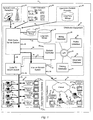
- a multimedia server system 10 includes a plurality of cable television and/or cable modem users or customers 12, and perhaps a plurality of Internet users or customers 14, all of whom are served by a distributor 16, such a broadcaster, cable networks, or any provider of audiovisual content to consumers.
- the distributor 16 receives audio, visual, and/or audiovisual content ("audiovisual works") which is reproduced from various sources, such as a network feed reception 18, local television sources 20, and perhaps upstream content providers 22.
- audiovisual works audio, visual, and/or audiovisual content
- Some or all of the audiovisual works are stored in one or more storage devices, as will be explained.
- the network feed reception 18 can handle live or recorded works received through satellite dishes, radio antennas, network connection, etc., and the local television sources 20 can produce live broadcasts or prerecorded events.
- the upstream content providers 22 could be centralized storage libraries of films, commercials, sports events, or any other audiovisual content.
- the cable television customers 12 typically communicate with the distributor 16 through a customer device 47 connected to fiber optic cables 24, which are preferable because each fiber optic strand in the cable has a relatively high bandwidth which can accommodate about 2500 information channels or more, including at least one channel for control communications between the customers and the distributor.
- any suitable connection including satellite, cable, wireless, other hard wired connection, or the like with sufficient bandwidth will work equally well. High bandwidth is necessary because it allows a distributor to serve many customers on a single fiber optic cable.
- existing cable networks may be utilized as a direct connection to the home when combined with a fiber link from the distributors 16 to a hub which converts the signals into a format suitable for transmission on existing cable system lines to the customer device 47.
- the customers 12, 14 may view and/or listen to works on any suitable display 47a or other reproduction device. Such devices many include a television, personal computer, stereo and the like.
- the distributor 16 communicates with the customer device 47 through a cable TV stream switch or hub 26 or other suitable high bandwidth connection.
- the distributor 16 routes customer requests from the customer device 47 through a system controller 30. Customer requests from the customers 12 are processed through lines 32, and customer requests from the customers 14 are processed through lines 34.
- the system controller 30 also executes customer requests.
- a line 36 is provided for executing playback commands.
- the playback material is sent to the customer device 47 over a connection 38 through the hub 26 and cable 24. Requested works are played back to the customers 14 through a connection 40, hub 28 and a cable or the like 41.
- the system controller 30 retrieves the requested work from the network feed reception 18, one of the local television sources 20, or the server 22.
- the controller 30 also uses a short term storage device 42, which is preferably a hard disk drive or the like, and a long term storage device 44, which could be a library apparatus which stores a plurality of magnetic tapes, optical disk drive cartridges, etc.
- the system controller 30 also uses a RAM cache server system 46, which can process a plurality of customer requests simultaneously, and can load information from the short term storage device 42 or the long term storage device 44, as required.
- the system controller 30 is also connected to a local area network (LAN) 48, which provides access to a billing database 50, a customer profile database 52, and a catalog database 54. Using these databases, the system controller 30 can find the location of requested content, retrieve and use customer profiles to insert commercials or the like into the work, and bill the customer for requested viewings.
- the controller 30 also has access to an advertiser database 56, which the controller can use to insert target advertisements according to desired customer profiles.
- the advertisers can also be billed through the billing database 50, and payments can be made to the owners of the works, as needed. Of course, there are many other ways accounting and billing can be accomplished.
- the RAM cache server system 46 is shown in greater detail in Fig. 2.
- the server 46 includes a plurality of input/output stream modules 100...100n and a storage module 102, all interconnected through a backplane bus 104. Data lines 106, address lines 108 and control lines 110 are provided as needed.
- Each input/output stream module 100 can typically have up to eight (or more) processing units 112...112n, connected to a large RAM array 114.
- the processing units 112 each include a data access processor 116 which communicates with the RAM 114 through control and data lines 118, in response to playback commands received from the system controller 30 on the line 36.
- Each processing unit 112 also includes a protocol encoder/decoder 120 which can accept an input on lines 19, or produce an output on an OC-12 fiber or other high bandwidth connection in the lines 38 and/or 40 (Fig. 1).
- the storage module 102 preferably includes any number of storage processors 122...122n, each of which has a number of associated protocol encoders/decoders 124...124n.
- the protocol encoder/decoders 124 are connected to the lines 43 and 45, for access to short term storage 42 and long term storage 44, respectively.
- the storage module 102 controls incoming and outgoing data through a bus arbitrator 126.
- the lines 43 and 45 can be one Gbit/sec fibre channel, one Gbit/sec Ethernet cable, or any other suitable high bandwidth connection.
- each of the data access processors 116 has direct access to its associated RAM 114, and virtually direct access to the RAM arrays 114 in the other input/output stream modules 100 because the system does not require hubs or other processors between the different RAM arrays.
- the data access processors RAM arrays 116 also have virtually direct access to short term storage 42 and long term storage 44, through the back plane 104. In this manner, a virtually unlimited number of streams can be output because the RAM arrays are essentially directly accessible to the output channels.
- Each RAM array 114 preferably has at least 32-64 gigabytes of memory. Since modern compression techniques such as MPEG video can store about eight seconds of an audiovisual work in about four megabytes of memory, each RAM 114 can store up to about 36 hours of recorded information with present compression techniques. Of course, the size of the RAM array 114 may be larger or smaller, depending on the compression technique used and the amount oftime to be stored. Also, because incoming material is stored directly in the RAM 114, playback can begin while the original work is still in progress, which is a form of time phase recording/reproduction. The time phase delay can be any desired amount of time. In fact, the source information can be reproduced and transmitted at nearly the identical time that the information is stored before the entire work is stored.
- Fig. 3 is a detailed drawing of a typical customer device 47 which is used by a consumer 12, 14 to reproduce audiovisual works to a viewing and/or listening device such as a television, monitor, computer or stereo.
- the term audiovisual works is intended to mean works of audio nature, video nature or a combination of both.
- the customer device operates by using a central processing unit (CPU) 300.
- the CPU 300 retrieves instructions from the ROM 302 over data bus 304.
- ROM 302 can be EPROM, FLASH or the like.
- the CPU 300 also utilizes RAM 306 through a bus 308 for local buffer storage and video decoding.
- the customer device 47 can also contain a local storage device (348) which may be made up of solid state memory, magnetic storage, optical storage, or any combination thereof, and is connected to CPU 300 over interface bus 374.
- the local storage device 348 may be used for any function requiring local storage, but would typically be used for storing commercials locally, so that the server would only periodically load up commercials, preferably during non-peak periods.
- the local storage device 348 may also be used to record/or buffer a stream of information to be viewed or listened to by a customer, so that it may later be time phase reproduced without connection to the system 10.
- the customer device 47 is connected to the distributor equipment 16 using network or cable port 318 which in turn connects to line protocol encoder and decoder 314.
- the CPU 300 connects to the encoder/decoder 314 using line interface bus 316.
- the customer device 47 may have one or more USB ports 328, which are connected to a USB controller 330.
- the USB ports 328 can be used for attaching a keyboard or any other USB device.
- the USB controller 330 is attached to CPU 300 over data bus 342.
- the customer device 47 may also have a smart card port 332 which is attached to Smart Card Interface 334, which in turn connects to CPU 300 over data bus 342.
- the Smart Card port 332 may be used for credit card payments for products and services, including any fees associated with the service provided by the customer device.
- the customer device 47 may also contain one or more Firewire IEEE 1394 input ports 320 and output ports 322. Such ports may utilize the Firewire digital video (DV) protocol.
- DV Firewire digital video
- the ports may also be used to upload any other type of digital information.
- Such DV ports are connected to digital video interface 324, which in turn connects to CPU 300 over DV bus 326.
- the input port 320 may be used for instance, to upload digital video (DV) from a camcorder to the RAM 306 or local storage device 348 for later viewing. It may also be transmitted for storage in the content provider equipment 16 for subsequent viewing at a later date.
- Other data and information, including audiovisual works may also be downloaded through the digital video output port 322.
- An infrared (IR) interface port 340 can be used for a remote control 344 or a wireless keyboard 346 for controlling the customer device 47.
- the IR interface 340 is connected to CPU 300 over data bus 342.
- the IR interface 340 may also be used to upload or download any type of information or data, including audiovisual data encoded for infrared transmission.
- the customer device 47 also may include a Compact Flash, or Smart Flash card port 336, which is connected to a controller 338.
- the controller 338 is in turn be controlled by CPU 300 over data bus 342.
- a portable non-volatile ram device such as a Compact Flash or Smart Flash card may be read by the customer device 47 through memory card reader port 336. Photos and other information, including audiovisual information may also be uploaded or downloaded through the memory card reader port 336.
- any other suitable port through which audiovisual information and other data may pass can be incorporated into the customer device 47.
- the CPU 300 In order to output the video signals from the customer device 47, the CPU 300 would connect to video output converter 352 over video interface bus 350.
- the output from converter 352 would typically utilize standard commercially available connectors and protocols. These could include S-Video output 354, composite video 356, component video 358, and HDTV output 360.
- the CPU 300 In order to output the audio signals from the customer device 47, the CPU 300 would connect to digital audio output Interface 364, and analog audio output converter 368 using an audio data and control bus 362.
- the digital audio output Interface 364 will typically utilize standard commercially available connectors and protocols such as SPDIF for transmitting digital information through a port 366. In some cases the SPDIF digital output from port 366 would transmit encoded Surround Sound information.
- the analog audio output interface 368 converts the digital audio information into analog signals and could utilize standard commercially available connectors such as RCA or phonograph plugs for left channel 370 and right channel 372. It is also possible to output, transmit or transfer audio and or visual information or data by utilizing DV ports 320 and 322, USB ports 328, Smart Card port 332, Compact Flash port 336, or IR/wireless interface 340.
- the customer device 47 can also contain a LCD, LED, or similar display 310. This display would be useful for showing the current status, current channel (2,5,7,9,etc.), current network (ABC, NBC, etc.), or other pertinent information.
- the display 310 is connected to CPU 300 using a display bus 312.
- the customer device 47 there is significant flexibility and many ways to implement the customer device 47. Since all operations are under control of the CPU 300, the entire functionality of the customer device can be changed with a program change to the ROM/FLASH 302. Since there are established communications between the system controller 30 and the CPU 300, any suitable program up-date can be downloaded from the distributor to the customer device 47 automatically.
- Fig. 4 is a chart, which describes the operation of the multimedia server system 10 from the customer's perspective, and the manner in which the system controller is programmed.
- the controller 30 searches the entire database 54 or a section of the database using a suitable search engine and provides search results to the customer's device in a menu (S515), from which the user selects a first audio, video, or audiovisual work for replay on demand (S520).
- a first work is selected, the system controller 30 begins playback of the selected work through a selected portal (S525).
- the user can replay the entire work continuously, or pause the playback indefinitely (S530), or as limited by the distributor 16. In the event of a pause, the system saves the current playback location under the user profile (S535). Of course, the work can be paused prior to completing storage of the work, if desired.
- the user can search for a second work (S540).
- the system again returns search results, which can include works, which are in progress (S545). If the second work is a work in progress (S550), the system can begin playback from the beginning of the second work (S555), if desired.
- the second selected work can also be paused if desired (S560), causing the system to save that playback location for the customer, as well (S565).
- S560 paused program if desired
- the customer can select the first work, for example, from a "paused program" menu (S570), and the controller 30 will play back the selected work from the location of the pause (S575).
- the user can select the second paused program or another available program (S580), and complete that, as well (S585).
- the second work can be paused again (S590), if desired, and stored by the system controller (S595).
- the customer can sign off and terminate the connection (S600).
- the system can be programmed to disable sign off and other functions until commercial displays have been completed.
- the user can select multiple items from a channel or other list and determine the order of reproduction of one or more items in the list.
- the user could also select a later time for reproduction, if desired.
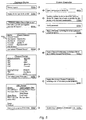
- a connection is established with the system controller (S500 and S505 in Fig. 4) is shown in greater detail in Fig. 5.
- the system controller 30 responds by asking the client/customer device 47 for its device type and device ID (S505a), which are provided by the client/customer device (S500b).
- the system controller 30 looks up the customer in the profile database 52 based on the device ID, and supplies a list of users or profiles for the device, with password requirements, if any (S505b). For example, a customer device 47 for a family of four might have four user profiles.
- the user can be presented with an introductory message, such as "Welcome, please select profile to use", and a menu from which the user can select a profile such as a user name or the like and supplies a password can be supplied, if required (S500c).
- an introductory message such as "Welcome, please select profile to use”
- a menu from which the user can select a profile such as a user name or the like and supplies a password can be supplied, if required (S500c).
- the system controller verifies the password and supplies a "Start" page, which may include a list of the customers' paused programs and/or favorites (S505d).
- the "Start" page is displayed and the user selects an option from the menu on the start page (S500d).
- One method for selection of programs to be reproduced may be provided via a menu of channel portals (Fig. 5) S500e which is displayed via the customer device 47.
- One option is to select a new search (S510), or to choose a list of available programs from a particular channel portal, such as NBC®, ABC®, CNN®, ESPN® networks, etc.
- Each channel portal can represent the available content from a particular broadcaster or other content aggregator. It may be further organized by category, such as news, sports etc.
- the consumer can accesses channel portals through a master menu of channel portals displayed by the customer device 47. Once selected, the specific channel portal displays upcoming live broadcasts, pre-recorded programming and other programming available to the consumer through the
- the time, which the program is first available, is displayed if the program is a live broadcast or if the provider 16 determines the program may only be selected for reproduction after a certain time. Similarly, the last reproduction time, if any, is also displayed identifying the last time a program may be requested for reproduction.
- Each of these limitations can be set by the distributor 16 or other party who may control the viewing rights of the program.
- One option for local control as opposed to system control is that a parent, for instance, might program the customer device 47 to only allow certain programming to be viewed by their children. Thus, when the child logs into the customer device 47, only those shows which have been enabled by the parent can be viewed. A parent may also set total viewing time per day as well as well as times of day when viewing is enabled. These settings are stored in the profile database 52.
- a separate custom channel portal may also be created which shows only those shows selected by a customer 12, 14. These selections are also stored in the profile database 52 for later recall.
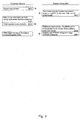
- the sign off process is shown in greater detail in Fig. 6.
- the system can be programmed so that a session can be terminated by the user with a sign-off or termination request (S600).
- the system controller 30 can inquire as to the reason for the termination (S602), which could be a line drop out, a customer request, etc.
- the customer 47 device provides the current status and reason for termination (S603), if possible, which is saved in the device database under the users profile (S604).
- the customer may be informed of a successful termination and the connection is terminated (S605).
- the current status stored the device database includes information as to where the customer was in the playback of the work at termination.
- Old searches can be updated in the manner shown in Fig. 7 by requesting an old search list (S610).
- the system controller looks up old searches in the user's profile in the device database (S612), and returns search criteria such as key words, etc. (S614).
- the old search criteria are displayed to the customer (S616).
- the customer can supply the old search criteria to the system controller, in which case an old search would be updated, or request a new search with new key words, etc. (S618).
- the system controller performs a search in the catalog database according to the criteria given by the customer (S620), and returns the search results, including program ID information for each result (S622).
- Program ID information can include title, length, release year, etc. Any suitable search engine may be integrated with the system controller for this purpose.
- the results of the search are displayed (S624), and the customer can request details, if desired (S626). If the customer requests detail, the system controller looks up those details in its catalog (S628) and returns the results to the customer (S630).
- the user can add to favorites, for example, in which case the customer device 47 provides program ID information to the system controller (S634).
- the system controller adds the program ID to the customer's profile in the device database (S636).
- the user selects "Play” (S638), and the system controller proceeds to the program illustrated in Fig. 8 (S640).
- Fig. 8 The manner in which programs are replayed with advertisement insertion is shown in Fig. 8.
- the system controller receives a playback request from a customer, which includes program ID information and a start location (S650)
- the system controller determines the location of the desired program in the system (S652). If the desired program is located in long term storage or short term storage, the system controller allocates server resources such as a storage processor 122, RAM 114, etc. (S654), and issues a transfer request with location information to the selected storage device (S656). Transfer from long term or short term storage to server resources is initiated (S658), the system starts reading data blocks in the short/long term storage device, and transfers the first block of data (S660). The first block of data is stored in RAM, and the system controller is informed that playback can begin (S662). It is not necessary to read and transfer the entire work before playback begins.
- server resources such as a storage processor 122, RAM 114, etc.
- the system controller then allocates a processing unit 112 and output stream 38 or 40 along with a hub 26 or 28 connection, and thus negotiates a network path having the necessary bandwidth (S664).
- the network path can be a dedicated path for a single user, or a multicast path for multiple users. Playback begins over the selected output stream (S664). This process continues until the entire work is taken from short or long term storage (S666).
- a customer can stop or pause a program in progress by requesting that the system stop playback (S670) (Fig. 9).
- the system controller saves the current playback location as a paused program in the profile for the user, and takes the customer off of the network path (S672). If desired, the customer device can hold the current video frame on the customer's screen until another function is selected (S674).
- a customer request to resume playback without returning to menus or the like will probably not be unusual (S676).
- the system controller searches for an existing stream, and if one is available and is close enough in time to the location at which the work was paused, adds the customer to a multicast tree list for that stream. If such a stream is not available, a new stream can be created (S678).
- the system controller informs the customer device 47 of the stream assignment, and begins playback of the program (S680), as described in Fig. 8.
- a previously paused program can be selected and play continued in the manner show in Fig. 10.
- a customer can request a paused program list (S690).
- the system controller looks up the paused programs in the profile database (S692) and returns a list of paused programs to the customer (S694).
- the paused programs are displayed (S696) and the customer selects a paused program to play (S697).
- the system controller looks up the selected program from the Paused Program Table in the customer's profile, retrieves the current playback location (S698) and playback begins (S699). The stream is found in the manner previously described.
- a stream number is assigned to each source provider by an operator or computer (S700).
- a source provider could be a television network, a local broadcaster, a live news feed, a live sports feed, movie producer, etc.
- a source provider will often provide a program on suitable recorded media.
- An input data stream is received, and encoding is initiated in the MPEG-2 format or the like (S702).
- a system unique address (SUA) is added.
- the SUA include the stream number, date and time the stream was originally shown, and a block count (S704 in Fig. 11).
- the SUA could contain additional or different information, if desired.
- the encoded data, including the assigned SUA, is written to RAM 46 in the distributor 16. As a given RAM array is filled, the data can be written to long term storage for archival purposes (S706).
- the start SUA is assigned by an operator or in some other manner, and the SUA plus all related catalog information is stored in the catalog database, with a length of zero (S708).
- the zero length indicates that the program is still in progress, and the total length has not yet been determined.
- the encoding process continues until the broadcast stream stops (S710).
- the catalog information changes when a new program begins, as in the case of major television networks.
- the location corresponding to the end of the program is identified, and the SUA for the ending location is stored in the catalog database, along with the program length, which can be calculated using the block count of Fig. 12 (S712 in Fig. 11).
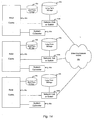
- the content provider just described is typically a cable TV provider or the like located on a single site. However, multiple sites could be used in the system, in the manner shown in Fig. 14.
- a plurality of distributors 16 and content providers 14 can be connected to a wide area network (WAN) 150. Any number can be interconnected through the WAN 150, each system having its own RAM cache 46a...46n, short term storage 42a...42n, long term storage 44a...44n, a network hub or switch 152a...152n, and a system controller 30a...30n. In this manner, all customers 12, content providers 14 and distributors 16 can access a vast number of works.
- WAN wide area network
- Advertisement insertion can be accomplished in many ways, including the manner shown in Fig. 14.
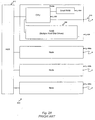
- a start marker 200 can be inserted at the beginning of a program, commercial markers 202, 204 can be inserted at desired points in the program, and an end marker 206 can be used to identify the end of the program.
- any desired commercial 208 or multiple thereof can be inserted, including those which were originally shown.
- the commercials can be selected by the advertiser according to any suitable criteria, including demographic or other information in the customer profile. In this manner, customers, geographical areas, etc. can be targeted for commercials which are more likely to be appealing, producing more sales for advertisers.
- the insertion points for advertisements are generally pre-established in the production of a program, and cannot be changed as a practical matter.
- any desired number of commercials that are shown from that insertion point until the replay point of a particular program can be easily selected.
- the decision as to whether to insert a one-minute commercial, (4) thirty second commercials or five minutes of different commercials (each of variable length) can be made by the broadcaster.
- the broadcaster can also control the aggregate number of minutes that a view watching on demand programming sees in commercials spread in a particular viewing segment.
- An algorithm calculates the aggregate number of minutes watched versus the number of commercials viewed. For instance, a consumer might watch for ten minutes and switch to another channel before the commercials are played. The user might also turn the system off without viewing the commercials. The number of minutes of commercials viewed on the second program, or when the system is turned back on, can be adjusted as desired by the broadcaster.
- Another alternative is to prevent the consumer 12, 14 from switching channels while a commercial break is in progress, or delaying a request by a consumer 12, 14 until the commercial reproduction has been completed.
- the method of advertising insertion can be accomplished in many ways.
- One such method is to combine the program with the advertising in the ram cache 46 or short term storage 42.
- Another method is to pause the broadcast of the program material at the ad insertion point, and substitute the broadcast stream for an advertising stream.
- the transmission of the program is resumed.
- An advertisement or a group of advertisements may also be stored in the customer device (47) in its local storage device (300) under a unique item address. These advertisements may be inserted when a commercial marker is recognized by the system, by switching the streams available for reproduction. The incoming program stream is paused until the completion of the commercial break and then resumed. Alternatively, the customer device may locally store the original program while the advertisement(s) is running, and time phase reproduce the original program when the advertising is complete, or it may send a resume command to the system controller 30 upon completion of the advertising.
- the customer device 47 also has the ability to simultaneously display static advertisements such as Internet banner advertisements along with a selected program.
- Internet banner advertisements may be superimposed on the program being displayed or displayed via split screen and can be provided either by the local storage device 348, RAM storage 306, or transmitted from the short term storage 42 or near term storage 44.
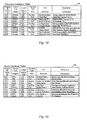
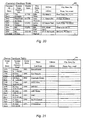
- the catalog database 54 can include several tables, including a music database table 250 (Fig. 16), a movie database table 252 (Fig. 17), a television database table 254 (Fig. 18) and a radio database table 256 (Fig. 19).
- a music database table 250 Fig. 16
- a movie database table 252 Fig. 17
- a television database table 254 Fig. 18
- a radio database table 256 Fig. 19
- each database table includes information from which the program and the owner of the program can be identified. If desired, the content type and category can be included, as well as the length release date and release times. Price information, as well as the title, key words, demographic and psychographic information, general description and other relevant and useful information can also be included, as desired.
- the database tables include the information customers need to make selections, as well as information computer systems need to retrieve, playback and view the works. Charging information may also be included.
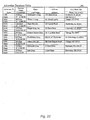
- the billing database 50 can include a customer billing database table 258 (Fig. 20) and an owner royalty database table 260 (Fig. 21).
- An advertiser database table 262 (Fig. 22) can also be provided.
- the tables 258, 260, 262 generally include information sufficient to bill customers, bill advertisers and pay the owners of the reproduced works.
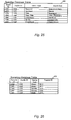
- the customer profile database 52 can include, but is not limited to a plurality of database tables, such as a devices database table 264 (Fig. 23), a user profile database table 266 (Fig. 24), a searches database table 268 (Fig. 25) and a favorites database table 270 (Fig. 26).
- the user profile database table 266 can include information such as passwords, and it can also include information of interest to advertisers, such as age, lifestyle, etc.
- a commercial database table 272 (Fig. 27) in the advertising database 56 is used to select the commercials to be shown. It is particularly helpful in targeting advertising.
- the content provider can select and insert advertising based on requests of advertisers.
- the user could also select advertisements from the advertising database, to view advertisements of interest to the user.
- the user could be presented with a menu of products or product groupings and select a product of interest, and view advertisements for that product.
- the system controller 30 processes all audiovisual works received through the network feed reception 18 through its RAM cache server system 46, and continuously stores the program material in either the short term storage device 42, or in long term permanent storage 44. If a customer requests a live broadcast, the live broadcast is routed to that customer through a selected portal in the cable TV stream switch 26.
- Original broadcasts which are expected to be very popular, are initially stored in the RAM cache server system 46. If a customer requests the program while it is still in progress, the system controller 30 can reproduce the work from the beginning, by playing it back from the RAM cache server system 46. If desired, the original broadcast can be temporarily stored in short term storage 42, or even long term storage 44, preferably after the original viewing is complete. In either case, the system controller can reproduce the work from the beginning, even when the original broadcast is still in progress.
- the system controller 30 can insert advertisements in accordance with information stored in the advertising database 56.
- the original advertisements can be retrieved and played back, new advertisements can be inserted into the work, or advertisements can be eliminated altogether, as desired.
- the many advantages of the invention are now apparent.
- the present invention can stream a virtually unlimited number of audiovisual works because the RAM in which the works are stored is local and is directly accessible to the output channels.
- the works can be produced while the original work is still in progress.
- the size of the library of works can be very large.
- the cost is relatively low if long term storage is a magnetic tape-based system or the like instead of hard drives, which is possible because the RAM cache server system is large.
- advertisements can be changed and targeted when works are reproduced.
- the term viewing may equally apply to the listening of audio works, the viewing of visual works, or works which are both audio and video in nature.
- aspects of the invention provide computer programs and/or operating programs which, when run on a computer or other program-controlled device, cause the computer or device to carry out methods embodying the invention or to become apparatus embodying the invention.
Landscapes
- Engineering & Computer Science (AREA)
- Multimedia (AREA)
- Signal Processing (AREA)
- Databases & Information Systems (AREA)
- Human Computer Interaction (AREA)
- Computer Graphics (AREA)
- Business, Economics & Management (AREA)
- Marketing (AREA)
- Two-Way Televisions, Distribution Of Moving Picture Or The Like (AREA)
- Television Signal Processing For Recording (AREA)
- Electrically Operated Instructional Devices (AREA)
Claims (45)
- Procédé d'enregistrement de programmes vidéo et/ou audio et de reproduction desdits programmes à la demande, ledit procédé comprenant les étapes :de reproduction de signaux de source ;de codage (S702) desdits signaux de source pour stockage dans un dispositif (46, 42, 44) de stockage ;d'identification (S704) desdits signaux de source sous des adresses uniques d'article ;de stockage (S708) des adresses uniques d'article dans une base de données (54) ;de stockage (S706) desdits signaux codés de source dans un dispositif (46, 42, 44) de stockage pour récupération ultérieure ;de création (S620) d'un menu d'articles à partir desdites adresses uniques d'article stockées dans ladite base de données ;de transmission (S622) du menu d'articles sur un réseau à un dispositif client (47) ;d'affichage (S624) dudit menu d'articles ;de choix (S638) pour reproduction d'un ou plusieurs desdits articles affichés à partir d'un dispositif client ;de reproduction (S650 à S662) desdits signaux codés de source correspondant audit article choisi ;de transmission (S664, S666) desdits signaux codés reproduits de source sur un réseau au dispositif client ; etde reproduction desdits signaux codés de source à partir dudit dispositif client pour lecture dans l'un ou l'autre d'un format audio et/ou vidéo ;caractérisé en ce que, au cours du stockage desdits signaux codés de source pour un programme dans ledit dispositif de stockage, les signaux codés de source pour ce programme sont reproduits et transmis audit dispositif client.
- Procédé selon la revendication 1, dans lequel, lors de la création dudit menu, un article correspondant à un programme pour lequel les signaux de source n'ont pas encore été complètement codés et stockés est inclus dans le menu.
- Procédé selon la revendication 1 ou 2, comprenant en outre l'étape de reproduction et de transmission desdits signaux codés de source avant de stocker tout le programme dans ledit dispositif de stockage.
- Procédé selon la revendication 1, 2 ou 3, comprenant en outre l'étape (S530 ; S670) de suspension à distance de la reproduction et de la transmission desdits signaux codés de source.
- Procédé selon la revendication 4, comprenant en outre l'étape consistant à permettre à un utilisateur d'un dispositif client de suspendre à distance la reproduction et la transmission desdits signaux codés de source avant de terminer le stockage desdits signaux codés de source dans ledit dispositif de stockage.
- Procédé selon l'une quelconque des revendications 1 à 5, comprenant en outre la réception (S530 à S590 ; S690, S697) d'un utilisateur du dispositif client, qui est à ce moment en train de lire et de visualiser des signaux de source pour au moins un programme, d'instructions en ce qui concerne les signaux de source pour le programme ou les programmes concernés à des fins de commande de transmission de ces signaux de source au dispositif client.
- Procédé selon l'une quelconque des revendications précédentes, comprenant les étapes :de codage des signaux de source pour le contenu préenregistré d'un premier programme à des moments prédéterminés (202) pour insertion du contenu choisi (208) d'un second programme pendant la reproduction du contenu du premier programme ;de reproduction du contenu du premier programme ;d'arrêt de la reproduction du contenu du premier programme pour insertion du contenu du second programme ;de reproduction du contenu du second programme ; etde poursuite de la reproduction du contenu du premier programme ;dans lequel le contenu du premier programme est reproduit en réponse à une instruction provenant d'un utilisateur dudit dispositif client, et le contenu du second programme est choisi d'après un profil (266) pour cet utilisateur.
- Procédé selon l'une quelconque des revendications précédentes, comprenant en outre l'étape d'insertion de publicités vidéo et/ou audio (208) dans des emplacements choisis desdits signaux codés de source.
- Procédé selon la revendication 8, comprenant en outre l'étape consistant de création d'une base de données (272) qui contient des publicités audio et/ou vidéo.
- Procédé selon la revendication 9, comprenant en outre l'étape d'insertions desdites publicités dans lesdits signaux codés de source stockés ou reproduits.
- Procédé selon la revendication 10, comprenant en outre l'étape d'insertion desdites publicités en se basant sur un critère prédéterminé développé à partir du profil personnel de l'utilisateur d'un dispositif client.
- Procédé selon la revendication 11, comprenant en outre l'étape de détermination de l'utilisateur du dispositif client en permettant à l'utilisateur/ l'utilisatrice du dispositif client de choisir son profil personnel (S500c) lors de l'utilisation du dispositif client.
- Procédé selon l'une quelconque des revendications précédentes, comprenant en outre l'étape de choix (S500e) d'un portail de canal, ledit portail de canal affichant un menu d'articles qui sont disponibles pour reproduction au moyen dudit dispositif client et qui correspondent auxdits signaux codés de source stockés dans ledit dispositif de stockage.
- Procédé selon l'une quelconque des revendications précédentes, comprenant en outre l'étape de fourniture d'un moteur de recherche qui est accessible au moyen dudit dispositif client, qui permet à un utilisateur de mener une recherche de deux articles ou plus dans ladite base de données.
- Procédé selon l'une quelconque des revendications précédentes, comprenant en outre une base de données de mots-clés (250, 252, 254, 256) qui identifient de l'information pertinente relative auxdits signaux codés de source stockés dans ledit dispositif de stockage.
- Procédé selon la revendication 14, comprenant en outre l'étape (S624) d'affichage des résultats de ladite recherche par ledit dispositif client.
- Procédé selon la revendication 16, comprenant en outre l'étape (S638) de choix d'un article à partir des résultats de ladite recherche pour reproduction au moyen dudit dispositif client.
- Procédé selon la revendication 13, comprenant en outre l'étape de choix d'un article correspondant auxdits signaux codés de source pour reproduction au moyen dudit dispositif client.
- Procédé selon la revendication 16, comprenant en outre l'étape de choix de multiples articles à partir des résultats de ladite recherche et de détermination de l'ordre de reproduction.
- Procédé selon la revendication 13, comprenant en outre l'étape de choix de multiples articles et de détermination de l'ordre de reproduction.
- Procédé selon la revendication 13, comprenant en outre l'étape de choix du moment de reproduction desdits articles choisis pour reproduction.
- Procédé selon la revendication 20, comprenant en outre l'étape de choix du moment de reproduction desdits articles choisis.
- Procédé selon l'une quelconque des revendications précédentes, comprenant en outre l'étape de stockage desdits signaux codés de source dans un dispositif (44) de stockage à long terme et de transfert desdits signaux de source à un dispositif (42) de stockage à court terme avant d'être reproduits et transmis audit dispositif client.
- Procédé selon la revendication 23, comprenant en outre l'étape de transfert desdits signaux codés de source dudit dispositif (44a à c) de stockage à long terme sur un réseau (150) à grande distance audit dispositif (42a à c) de stockage à court terme.
- Procédé selon la revendication 23, comprenant en outre l'étape de transfert desdits signaux codés de source stockés dans ledit dispositif (42) de stockage à court terme à un dispositif (114) de stockage à groupement de RAMs pour reproduction vers ledit dispositif client.
- Procédé selon l'une quelconque des revendications précédentes, comprenant en outre l'étape de stockage desdits signaux codés de source dans un dispositif (44) de stockage à long terme et de transfert desdits signaux codés de source à un dispositif (114) de stockage à groupement de RAMs avant d'être reproduits vers ledit dispositif client.
- Procédé selon la revendication 26, comprenant en outre l'étape de transfert desdits signaux codés de source dudit dispositif (44a à c) de stockage à long terme sur un réseau (150) à grande distance audit dispositif (114) de stockage à groupement de RAMs.
- Procédé selon l'une quelconque des revendications précédentes, comprenant en outre l'étape de stockage desdits signaux codés de source dans un dispositif (42) de stockage à court terme et de transfert de ladite information de source à un dispositif (114) de stockage à groupement de RAMs avant d'être reproduite vers ledit dispositif client.
- Procédé selon la revendication 28, comprenant en outre l'étape de transfert desdits signaux codés de source dudit dispositif (44) de stockage à court terme sur un réseau (150) à grande distance audit dispositif (114) de stockage à groupement de RAMs.
- Procédé selon l'une quelconque des revendications précédentes, comprenant l'étape de stockage d'annonces commerciales dans un dispositif de stockage pour insertion à des points prédéterminés (202) dans lesdits signaux codés reproduits de source avant transmission à un dispositif client.
- Procédé selon la revendication 30, comprenant en outre l'étape de remplacement de la reproduction et transmission desdits signaux codés choisis de source par la reproduction et transmission, audit dispositif client, desdites annonces commerciales stockées dans ladite base de données.
- Procédé selon l'une quelconque des revendications précédentes, comprenant en outre l'étape de stockage d'annonces commerciales dans ledit dispositif client (47).
- Procédé selon la revendication 32, comprenant en outre l'étape de reproduction desdites annonces commerciales stockées dans ledit dispositif client à des points prédéterminés, par remplacement desdits signaux codés transmis de source par lesdites annonces commerciales stockées dans ledit dispositif client.
- Procédé selon l'une quelconque des revendications précédentes, comprenant en outre l'étape de transmission d'annonces commerciales spécifiques à un dispositif client pour stockage locale dans celui-ci, en se basant sur de l'information personnelle fournie par un utilisateur.
- Procédé selon l'une quelconque des revendications précédentes, comprenant en outre l'étape d'insertion d'annonces commerciales dans lesdits signaux codés de source au moment où ils sont stockés dans ledit dispositif de stockage.
- Procédé selon la revendication 10, comprenant en outre l'étape d'insertion desdites publicités en se basant sur des préférences choisies par un utilisateur particulier d'un dispositif client.
- Procédé selon l'une quelconque des revendications précédentes, comprenant en outre l'étape de présentation d'un menu d'annonceurs spécifiques et d'invitation de l'utilisateur à choisir les annonceurs, de sorte que des publicités provenant desdits annonceurs choisis peuvent être insérées dans lesdits signaux codés de source stockés ou reproduits.
- Procédé selon l'une quelconque des revendications précédentes, comprenant en outre l'étape de présentation, à l'utilisateur au moyen du dispositif client, d'un menu de produits spécifiques et d'invitation d'un client à choisir lesdits produits, de sorte que des publicités pour lesdits produits choisis peuvent être insérées dans lesdits signaux codés de source stockés ou reproduits.
- Procédé selon l'une quelconque des revendications précédentes, comprenant en outre l'étape de présentation, à l'utilisateur au moyen du dispositif client, d'un menu de groupements de produits par catégorie et d'invitation d'un client à choisir des catégories de produits, de sorte que des publicités qui correspondent auxdites catégories choisies peuvent être insérées dans lesdits signaux codés de source avant d'être reproduits par ledit dispositif client.
- Procédé selon l'une quelconque des revendications précédentes, comprenant en outre l'étape (S700 à S712) de saisie d'émissions en direct telles qu'elles sont diffusées et de leur codage pour stockage dans ledit dispositif de stockage.
- Appareil destiné à enregistrer des programmes vidéo et/ou audio et à reproduire lesdits programmes à la demande, l'appareil (10) comprenant :un moyen (18, 20, 22) destiné à reproduire des signaux de source ;un moyen (120) destiné à coder lesdits signaux de source pour stockage dans un dispositif de stockage ;un moyen destiné à identifier lesdits signaux de source sous des adresses uniques d'article ;un moyen (30, 48) destiné à stocker les adresses uniques d'article dans une base de données (54) ;un moyen (30) destiné à stocker lesdits signaux codés de source dans un dispositif (46, 42, 44) de stockage pour récupération ultérieure ;un moyen (30) destiné à créer un menu d'articles à partir desdites adresses uniques d'article stockées dans ladite base de données ;un moyen (38, 40) destiné à transmettre le menu d'articles sur un réseau à un dispositif client (47) ;un moyen (47a) destiné à afficher ledit menu d'articles ;un moyen destiné à choisir, pour reproduction, un ou plusieurs desdits articles affichés à partir d'un dispositif client ;un moyen (30) destiné à reproduire lesdits signaux codés de source correspondant audit article choisi ;un moyen (38, 40) destiné à transmettre lesdits signaux codés reproduits de source sur un réseau au dispositif client ; etun moyen destiné à reproduire lesdits signaux codés de source à partir dudit dispositif client pour lecture dans l'un ou l'autre d'un format audio et/ou vidéo ;caractérisé en ce que le moyen (30, 38, 40) destiné à reproduire et à transmettre les signaux codés de source est utilisable, au cours du stockage par ledit moyen de stockage de signaux de source desdits signaux codés de source pour un programme dans ledit dispositif de stockage, pour reproduire et transmettre audit dispositif client les signaux codés de source pour ce programme.
- Appareil selon la revendication 41, comprenant :un moyen destiné à coder les signaux de source pour le contenu préenregistré d'un premier programme à des moments prédéterminés pour insertion du contenu choisi d'un second programme pendant la reproduction du contenu du premier programme ;un moyen destiné à reproduire le contenu du premier programme ;un moyen destiné à arrêter la reproduction du contenu du premier programme pour insertion du contenu du second programme ;un moyen destiné à reproduire le contenu du second programme ; etun moyen destiné à poursuivre la reproduction du contenu du premier programme ;dans lequel le contenu du premier programme est reproduit en réponse à une instruction provenant d'un utilisateur dudit dispositif client, et le contenu du second programme est choisi d'après un profil pour cet utilisateur.
- Appareil selon la revendication 41 ou 42, apte à distribuer simultanément une pluralité desdits signaux codés de source à partir d'une pluralité de sources à une pluralité d'utilisateurs, comprenant :une pluralité de modules (100) de flux d'entrée/sortie connectés en parallèle à un fond de panier (104) ; etau moins un module (102) de stockage connecté audit fond de panier ;lesdits modules de flux d'entrée/sortie comportant une pluralité d'unités (112) de traitement d'accès d'entrée/ sortie, et une mémoire vive (114) ;ladite mémoire vive étant connectée audit fond de panier et lesdites unités de traitement d'accès d'entrée/ sortie étant connectées à ladite mémoire vive, ladite mémoire vive étant capable de reproduire au moins 2 flux de données audiovisuelles ;ledit module de stockage comportant un arbitre de bus connecté audit fond de panier et une pluralité d'unités de traitement d'accès de stockage connectées audit arbitre de bus.
- Appareil selon la revendication 41, 42 ou 43, apte à distribuer simultanément une pluralité desdits signaux codés de source à partir d'une pluralité de sources à une pluralité d'utilisateurs, comprenant :un système (46a à c) de serveur d'antémémoires de RAM, lesdits signaux de source étant au moins temporairement stockés dans ledit système de serveur d'antémémoires de RAM ;une pluralité de commutateurs (152a à c) de flux connectés entre ledit système de serveur d'antémémoires de RAM et les utilisateurs, des signaux choisis de source étant envoyés à la demande à un ou plusieurs des utilisateurs par l'intermédiaire desdits commutateurs de flux ;un stockage (42a à c) de signal à court terme connecté audit système de serveur d'antémémoires de RAM ;un stockage (44a à c) de signal à long terme connecté audit système de serveur d'antémémoires de RAM, lesdits un ou plusieurs utilisateurs étant capables de demander des signaux d'information stockés dans ledit système de serveur d'antémémoires de RAM, dans ledit stockage à court terme ou dans ledit stockage à long terme par l'intermédiaire d'un régisseur (30a à c) du système ;ledit régisseur du système localisant lesdits signaux stockés choisis de source dans ledit système de serveur d'antémémoires de RAM ;ledit stockage à court terme ou ledit stockage à long terme, faisant que lesdits signaux stockés choisis sont récupérés et reproduits pour lesdits utilisateurs ;ledit régisseur du système faisant un enregistrement de ladite reproduction à des fins de facturation en ce qui concerne lesdits utilisateurs et à des fins de paiement en ce qui concerne lesdites sources si nécessaire ;ledit régisseur du système insérant des publicités choisies dans ladite reproduction pendant des temps prédéterminés à des intervalles prédéterminés, et faisant un enregistrement de ladite insertion de publicités.
- Appareil selon la revendication 44, dans lequel lesdites publicités sont choisies en fonction de profils (266) d'utilisateur.
Priority Applications (3)
| Application Number | Priority Date | Filing Date | Title |
|---|---|---|---|
| AT01306833T ATE361632T1 (de) | 2001-08-10 | 2001-08-10 | Verfahren und gerät zur voraufgezeichneten und direkten wiedergabe von auf einem server gespeicherter arbeiten |
| EP01306833A EP1283639B1 (fr) | 2001-08-10 | 2001-08-10 | Procédé et appareil pour la reproduction des oeuvres préenregistrées et en direct stockées sur un serveur |
| DE60128219T DE60128219T2 (de) | 2001-08-10 | 2001-08-10 | Verfahren und Gerät zur voraufgezeichneten und direkten Wiedergabe von auf einem Server gespeicherten Arbeiten |
Applications Claiming Priority (1)
| Application Number | Priority Date | Filing Date | Title |
|---|---|---|---|
| EP01306833A EP1283639B1 (fr) | 2001-08-10 | 2001-08-10 | Procédé et appareil pour la reproduction des oeuvres préenregistrées et en direct stockées sur un serveur |
Publications (2)
| Publication Number | Publication Date |
|---|---|
| EP1283639A1 EP1283639A1 (fr) | 2003-02-12 |
| EP1283639B1 true EP1283639B1 (fr) | 2007-05-02 |
Family
ID=8182177
Family Applications (1)
| Application Number | Title | Priority Date | Filing Date |
|---|---|---|---|
| EP01306833A Expired - Lifetime EP1283639B1 (fr) | 2001-08-10 | 2001-08-10 | Procédé et appareil pour la reproduction des oeuvres préenregistrées et en direct stockées sur un serveur |
Country Status (3)
| Country | Link |
|---|---|
| EP (1) | EP1283639B1 (fr) |
| AT (1) | ATE361632T1 (fr) |
| DE (1) | DE60128219T2 (fr) |
Cited By (2)
| Publication number | Priority date | Publication date | Assignee | Title |
|---|---|---|---|---|
| US8711862B2 (en) | 2008-03-20 | 2014-04-29 | Thomson Licensing | System, method and apparatus for pausing multi-channel broadcasts |
| US9088827B2 (en) | 2006-02-28 | 2015-07-21 | Rovi Guides, Inc. | Systems and methods for enhanced trick-play functions |
Families Citing this family (10)
| Publication number | Priority date | Publication date | Assignee | Title |
|---|---|---|---|---|
| US20050160465A1 (en) * | 2004-01-21 | 2005-07-21 | United Video Properties, Inc. | Interactive television system with automatic switching from broadcast media to streaming media |
| US7631336B2 (en) | 2004-07-30 | 2009-12-08 | Broadband Itv, Inc. | Method for converting, navigating and displaying video content uploaded from the internet to a digital TV video-on-demand platform |
| US9641902B2 (en) | 2007-06-26 | 2017-05-02 | Broadband Itv, Inc. | Dynamic adjustment of electronic program guide displays based on viewer preferences for minimizing navigation in VOD program selection |
| US11259059B2 (en) | 2004-07-30 | 2022-02-22 | Broadband Itv, Inc. | System for addressing on-demand TV program content on TV services platform of a digital TV services provider |
| US7590997B2 (en) | 2004-07-30 | 2009-09-15 | Broadband Itv, Inc. | System and method for managing, converting and displaying video content on a video-on-demand platform, including ads used for drill-down navigation and consumer-generated classified ads |
| US20090100496A1 (en) * | 2006-04-24 | 2009-04-16 | Andreas Bechtolsheim | Media server system |
| US7924456B1 (en) * | 2007-01-12 | 2011-04-12 | Broadbus Technologies, Inc. | Data distribution and buffering |
| US11570521B2 (en) | 2007-06-26 | 2023-01-31 | Broadband Itv, Inc. | Dynamic adjustment of electronic program guide displays based on viewer preferences for minimizing navigation in VOD program selection |
| EP2342848B1 (fr) | 2008-11-04 | 2020-05-06 | InterDigital Madison Patent Holdings | Système et procédé pour une fonction de décalage de programmation dans un système de diffusion multimédia multicanal |
| GB2496208B (en) * | 2011-11-07 | 2018-02-07 | Youview Ltd | Methods and apparatus for displaying broadcast television programmes |
Family Cites Families (8)
| Publication number | Priority date | Publication date | Assignee | Title |
|---|---|---|---|---|
| DE69030886T2 (de) * | 1989-08-23 | 1998-03-05 | Delta Beta Pty. Ltd., Fremantle, W.A. | Optimisierung einer programmübertragung |
| DE69426308T2 (de) * | 1993-12-02 | 2001-06-21 | Discovery Communications, Inc. | Netzsteuerung für kopfstellen in kabelfernsehsystemen |
| CA2135681C (fr) * | 1993-12-30 | 2000-01-18 | Srinivas V. Makam | Systeme et methode pour evaluer directement les memoires de stockage de longue duree |
| US5815662A (en) * | 1995-08-15 | 1998-09-29 | Ong; Lance | Predictive memory caching for media-on-demand systems |
| EP0962098B1 (fr) * | 1997-02-21 | 2004-01-14 | Pinpoint Incorporated | Systeme de distribution de donnees de radiodiffusion a largeurs de bande de liaisons montantes/descendantes asymetriques |
| JP2002544609A (ja) * | 1999-05-10 | 2002-12-24 | エクスパンス ネットワークス インコーポレイティッド | ディジタル・ストリームのための広告サブグループ |
| US7089194B1 (en) * | 1999-06-17 | 2006-08-08 | International Business Machines Corporation | Method and apparatus for providing reduced cost online service and adaptive targeting of advertisements |
| WO2001010125A1 (fr) * | 1999-08-02 | 2001-02-08 | Chung Randall M | Video sur demande fonctionnant entre un serveur ou un utilisateur et un autre utilisateur |
-
2001
- 2001-08-10 AT AT01306833T patent/ATE361632T1/de not_active IP Right Cessation
- 2001-08-10 DE DE60128219T patent/DE60128219T2/de not_active Expired - Lifetime
- 2001-08-10 EP EP01306833A patent/EP1283639B1/fr not_active Expired - Lifetime
Cited By (4)
| Publication number | Priority date | Publication date | Assignee | Title |
|---|---|---|---|---|
| US9088827B2 (en) | 2006-02-28 | 2015-07-21 | Rovi Guides, Inc. | Systems and methods for enhanced trick-play functions |
| US9271042B2 (en) | 2006-02-28 | 2016-02-23 | Rovi Guides, Inc. | Method for generating time based preview image for a video stream |
| US8711862B2 (en) | 2008-03-20 | 2014-04-29 | Thomson Licensing | System, method and apparatus for pausing multi-channel broadcasts |
| US9191608B2 (en) | 2008-03-20 | 2015-11-17 | Thomson Licensing | System and method for displaying priority transport stream data in a paused multi-channel broadcast multimedia system |
Also Published As
| Publication number | Publication date |
|---|---|
| DE60128219D1 (de) | 2007-06-14 |
| EP1283639A1 (fr) | 2003-02-12 |
| ATE361632T1 (de) | 2007-05-15 |
| DE60128219T2 (de) | 2008-01-10 |
Similar Documents
| Publication | Publication Date | Title |
|---|---|---|
| JP4858972B2 (ja) | 放送番組において広告を識別しかつ挿入するためのシステムおよび方法 | |
| JP4165686B2 (ja) | デジタルコンテンツの配信方法およびシステム | |
| US8719879B2 (en) | Method and apparatus for content delivery | |
| US20070174471A1 (en) | Secure, continous, proxy-optimized, device-to-device data download reception system and method of use | |
| CN101151893B (zh) | 存储和播放电视节目的方法和设备 | |
| US8024766B2 (en) | System and method for distributing network-based personal video | |
| US7984463B2 (en) | Instant video on demand playback | |
| CA2402318C (fr) | Enregistreur personnel et procede de mise en oeuvre et d'utilisation de cet enregistreur | |
| US20020046407A1 (en) | Use of web pages to remotely program a broadcast content recording system | |
| JP2001229112A (ja) | 遠隔視聴覚信号記録方法及びその装置 | |
| WO2002003671A1 (fr) | Profil utilisateur a contenu payant pondere | |
| JP2010504013A (ja) | デジタルメディア記録装置に基づいた広告 | |
| EP1283639B1 (fr) | Procédé et appareil pour la reproduction des oeuvres préenregistrées et en direct stockées sur un serveur | |
| RU2299523C2 (ru) | Система и способ идентификации и вставки рекламы в вещательные программы | |
| CA2400506A1 (fr) | Utilisation de pages web pour programmer a distance un systeme d'enregistrement de contenu | |
| US20040111754A1 (en) | System and method for delivering media content | |
| WO2002013521A1 (fr) | Systeme et procede de sequençage de programmes de radiodiffusion pour canaux personnels | |
| CA2455947C (fr) | Systeme et procede concus pour la distribution de contenu video personnel en reseau | |
| JP2012120078A (ja) | ザッピング録画番組視聴システム及びレコーダ装置 | |
| JP4552461B2 (ja) | 配信方法、配信システム及び情報処理装置 | |
| MXPA03003139A (en) | Systems and methods for caching data in media-on-demand systems |
Legal Events
| Date | Code | Title | Description |
|---|---|---|---|
| PUAI | Public reference made under article 153(3) epc to a published international application that has entered the european phase |
Free format text: ORIGINAL CODE: 0009012 |
|
| AK | Designated contracting states |
Designated state(s): AT BE CH CY DE DK ES FI FR GB GR IE IT LI LU MC NL PT SE TR |
|
| AX | Request for extension of the european patent |
Extension state: AL LT LV MK RO SI |
|
| 17P | Request for examination filed |
Effective date: 20030723 |
|
| AKX | Designation fees paid |
Designated state(s): AT BE CH CY DE DK ES FI FR GB GR IE IT LI LU MC NL PT SE TR |
|
| GRAP | Despatch of communication of intention to grant a patent |
Free format text: ORIGINAL CODE: EPIDOSNIGR1 |
|
| GRAS | Grant fee paid |
Free format text: ORIGINAL CODE: EPIDOSNIGR3 |
|
| GRAA | (expected) grant |
Free format text: ORIGINAL CODE: 0009210 |
|
| AK | Designated contracting states |
Kind code of ref document: B1 Designated state(s): AT BE CH CY DE DK ES FI FR GB GR IE IT LI LU MC NL PT SE TR |
|
| PG25 | Lapsed in a contracting state [announced via postgrant information from national office to epo] |
Ref country code: FI Free format text: LAPSE BECAUSE OF FAILURE TO SUBMIT A TRANSLATION OF THE DESCRIPTION OR TO PAY THE FEE WITHIN THE PRESCRIBED TIME-LIMIT Effective date: 20070502 Ref country code: LI Free format text: LAPSE BECAUSE OF FAILURE TO SUBMIT A TRANSLATION OF THE DESCRIPTION OR TO PAY THE FEE WITHIN THE PRESCRIBED TIME-LIMIT Effective date: 20070502 Ref country code: CH Free format text: LAPSE BECAUSE OF FAILURE TO SUBMIT A TRANSLATION OF THE DESCRIPTION OR TO PAY THE FEE WITHIN THE PRESCRIBED TIME-LIMIT Effective date: 20070502 |
|
| REG | Reference to a national code |
Ref country code: GB Ref legal event code: FG4D |
|
| REG | Reference to a national code |
Ref country code: CH Ref legal event code: EP |
|
| REG | Reference to a national code |
Ref country code: IE Ref legal event code: FG4D |
|
| REF | Corresponds to: |
Ref document number: 60128219 Country of ref document: DE Date of ref document: 20070614 Kind code of ref document: P |
|
| REG | Reference to a national code |
Ref country code: DE Ref legal event code: R096 Ref document number: 60128219 Country of ref document: DE Effective date: 20070614 |
|
| PG25 | Lapsed in a contracting state [announced via postgrant information from national office to epo] |
Ref country code: SE Free format text: LAPSE BECAUSE OF FAILURE TO SUBMIT A TRANSLATION OF THE DESCRIPTION OR TO PAY THE FEE WITHIN THE PRESCRIBED TIME-LIMIT Effective date: 20070802 |
|
| PG25 | Lapsed in a contracting state [announced via postgrant information from national office to epo] |
Ref country code: ES Free format text: LAPSE BECAUSE OF FAILURE TO SUBMIT A TRANSLATION OF THE DESCRIPTION OR TO PAY THE FEE WITHIN THE PRESCRIBED TIME-LIMIT Effective date: 20070813 |
|
| NLV1 | Nl: lapsed or annulled due to failure to fulfill the requirements of art. 29p and 29m of the patents act | ||
| ET | Fr: translation filed | ||
| REG | Reference to a national code |
Ref country code: CH Ref legal event code: PL |
|
| PG25 | Lapsed in a contracting state [announced via postgrant information from national office to epo] |
Ref country code: AT Free format text: LAPSE BECAUSE OF FAILURE TO SUBMIT A TRANSLATION OF THE DESCRIPTION OR TO PAY THE FEE WITHIN THE PRESCRIBED TIME-LIMIT Effective date: 20070502 |
|
| PG25 | Lapsed in a contracting state [announced via postgrant information from national office to epo] |
Ref country code: BE Free format text: LAPSE BECAUSE OF FAILURE TO SUBMIT A TRANSLATION OF THE DESCRIPTION OR TO PAY THE FEE WITHIN THE PRESCRIBED TIME-LIMIT Effective date: 20070502 |
|
| PG25 | Lapsed in a contracting state [announced via postgrant information from national office to epo] |
Ref country code: PT Free format text: LAPSE BECAUSE OF FAILURE TO SUBMIT A TRANSLATION OF THE DESCRIPTION OR TO PAY THE FEE WITHIN THE PRESCRIBED TIME-LIMIT Effective date: 20071002 Ref country code: DK Free format text: LAPSE BECAUSE OF FAILURE TO SUBMIT A TRANSLATION OF THE DESCRIPTION OR TO PAY THE FEE WITHIN THE PRESCRIBED TIME-LIMIT Effective date: 20070502 Ref country code: NL Free format text: LAPSE BECAUSE OF FAILURE TO SUBMIT A TRANSLATION OF THE DESCRIPTION OR TO PAY THE FEE WITHIN THE PRESCRIBED TIME-LIMIT Effective date: 20070502 |
|
| PLBE | No opposition filed within time limit |
Free format text: ORIGINAL CODE: 0009261 |
|
| STAA | Information on the status of an ep patent application or granted ep patent |
Free format text: STATUS: NO OPPOSITION FILED WITHIN TIME LIMIT |
|
| 26N | No opposition filed |
Effective date: 20080205 |
|
| PG25 | Lapsed in a contracting state [announced via postgrant information from national office to epo] |
Ref country code: IT Free format text: LAPSE BECAUSE OF FAILURE TO SUBMIT A TRANSLATION OF THE DESCRIPTION OR TO PAY THE FEE WITHIN THE PRESCRIBED TIME-LIMIT Effective date: 20070502 Ref country code: GR Free format text: LAPSE BECAUSE OF FAILURE TO SUBMIT A TRANSLATION OF THE DESCRIPTION OR TO PAY THE FEE WITHIN THE PRESCRIBED TIME-LIMIT Effective date: 20070803 Ref country code: MC Free format text: LAPSE BECAUSE OF NON-PAYMENT OF DUE FEES Effective date: 20070831 |
|
| REG | Reference to a national code |
Ref country code: DE Ref legal event code: R097 Ref document number: 60128219 Country of ref document: DE Effective date: 20080205 |
|
| PG25 | Lapsed in a contracting state [announced via postgrant information from national office to epo] |
Ref country code: IE Free format text: LAPSE BECAUSE OF NON-PAYMENT OF DUE FEES Effective date: 20070810 |
|
| PG25 | Lapsed in a contracting state [announced via postgrant information from national office to epo] |
Ref country code: CY Free format text: LAPSE BECAUSE OF FAILURE TO SUBMIT A TRANSLATION OF THE DESCRIPTION OR TO PAY THE FEE WITHIN THE PRESCRIBED TIME-LIMIT Effective date: 20070502 |
|
| PG25 | Lapsed in a contracting state [announced via postgrant information from national office to epo] |
Ref country code: LU Free format text: LAPSE BECAUSE OF NON-PAYMENT OF DUE FEES Effective date: 20070810 |
|
| PG25 | Lapsed in a contracting state [announced via postgrant information from national office to epo] |
Ref country code: TR Free format text: LAPSE BECAUSE OF FAILURE TO SUBMIT A TRANSLATION OF THE DESCRIPTION OR TO PAY THE FEE WITHIN THE PRESCRIBED TIME-LIMIT Effective date: 20070502 |
|
| REG | Reference to a national code |
Ref country code: GB Ref legal event code: 732E Free format text: REGISTERED BETWEEN 20130606 AND 20130612 |
|
| REG | Reference to a national code |
Ref country code: DE Ref legal event code: R082 Ref document number: 60128219 Country of ref document: DE Representative=s name: BEETZ & PARTNER PATENT- UND RECHTSANWAELTE, DE |
|
| REG | Reference to a national code |
Ref country code: DE Ref legal event code: R081 Ref document number: 60128219 Country of ref document: DE Owner name: MOTOROLA MOBILITY LLC, US Free format text: FORMER OWNER: BROADBUS TECHNOLOGIES, INC., WHEELING, US Effective date: 20130722 Ref country code: DE Ref legal event code: R082 Ref document number: 60128219 Country of ref document: DE Representative=s name: BEETZ & PARTNER PATENT- UND RECHTSANWAELTE, DE Effective date: 20130722 Ref country code: DE Ref legal event code: R081 Ref document number: 60128219 Country of ref document: DE Owner name: MOTOROLA MOBILITY LLC, LIBERTYVILLE, US Free format text: FORMER OWNER: BROADBUS TECHNOLOGIES, INC., WHEELING, ILL., US Effective date: 20130722 Ref country code: DE Ref legal event code: R082 Ref document number: 60128219 Country of ref document: DE Representative=s name: BEETZ & PARTNER MBB, DE Effective date: 20130722 Ref country code: DE Ref legal event code: R082 Ref document number: 60128219 Country of ref document: DE Representative=s name: BEETZ & PARTNER MBB PATENTANWAELTE, DE Effective date: 20130722 Ref country code: DE Ref legal event code: R082 Ref document number: 60128219 Country of ref document: DE Representative=s name: BEETZ & PARTNER MBB PATENT- UND RECHTSANWAELTE, DE Effective date: 20130722 Ref country code: DE Ref legal event code: R081 Ref document number: 60128219 Country of ref document: DE Owner name: GOOGLE TECHNOLOGY HOLDINGS LLC, MOUNTAIN VIEW, US Free format text: FORMER OWNER: BROADBUS TECHNOLOGIES, INC., WHEELING, ILL., US Effective date: 20130722 Ref country code: DE Ref legal event code: R082 Ref document number: 60128219 Country of ref document: DE Representative=s name: BETTEN & RESCH PATENT- UND RECHTSANWAELTE PART, DE Effective date: 20130722 |
|
| REG | Reference to a national code |
Ref country code: FR Ref legal event code: TP Owner name: GENERAL INSTRUMENT CORPORATION, US Effective date: 20130823 |
|
| REG | Reference to a national code |
Ref country code: FR Ref legal event code: TP Owner name: MOTOROLA MOBILITY LLC, US Effective date: 20131230 |
|
| REG | Reference to a national code |
Ref country code: FR Ref legal event code: PLFP Year of fee payment: 16 |
|
| REG | Reference to a national code |
Ref country code: FR Ref legal event code: PLFP Year of fee payment: 17 |
|
| REG | Reference to a national code |
Ref country code: GB Ref legal event code: 732E Free format text: REGISTERED BETWEEN 20170831 AND 20170906 |
|
| REG | Reference to a national code |
Ref country code: FR Ref legal event code: TP Owner name: GOOGLE TECHNOLOGY HOLDINGS LLC, US Effective date: 20171214 |
|
| REG | Reference to a national code |
Ref country code: DE Ref legal event code: R082 Ref document number: 60128219 Country of ref document: DE Representative=s name: BETTEN & RESCH PATENT- UND RECHTSANWAELTE PART, DE Ref country code: DE Ref legal event code: R081 Ref document number: 60128219 Country of ref document: DE Owner name: GOOGLE TECHNOLOGY HOLDINGS LLC, MOUNTAIN VIEW, US Free format text: FORMER OWNER: MOTOROLA MOBILITY LLC, LIBERTYVILLE, ILL., US |
|
| REG | Reference to a national code |
Ref country code: FR Ref legal event code: PLFP Year of fee payment: 18 |
|
| PGFP | Annual fee paid to national office [announced via postgrant information from national office to epo] |
Ref country code: FR Payment date: 20200825 Year of fee payment: 20 Ref country code: DE Payment date: 20200827 Year of fee payment: 20 Ref country code: GB Payment date: 20200827 Year of fee payment: 20 |
|
| REG | Reference to a national code |
Ref country code: DE Ref legal event code: R071 Ref document number: 60128219 Country of ref document: DE |
|
| REG | Reference to a national code |
Ref country code: GB Ref legal event code: PE20 Expiry date: 20210809 |
|
| PG25 | Lapsed in a contracting state [announced via postgrant information from national office to epo] |
Ref country code: GB Free format text: LAPSE BECAUSE OF EXPIRATION OF PROTECTION Effective date: 20210809 |
|
| P01 | Opt-out of the competence of the unified patent court (upc) registered |
Effective date: 20230516 |