EP1283837B1 - Neue thiochromanderivate und ihre verwendung als thrombininhibitoren - Google Patents
Neue thiochromanderivate und ihre verwendung als thrombininhibitoren Download PDFInfo
- Publication number
- EP1283837B1 EP1283837B1 EP01930400A EP01930400A EP1283837B1 EP 1283837 B1 EP1283837 B1 EP 1283837B1 EP 01930400 A EP01930400 A EP 01930400A EP 01930400 A EP01930400 A EP 01930400A EP 1283837 B1 EP1283837 B1 EP 1283837B1
- Authority
- EP
- European Patent Office
- Prior art keywords
- formula
- compound
- alkyl
- compounds
- group
- Prior art date
- Legal status (The legal status is an assumption and is not a legal conclusion. Google has not performed a legal analysis and makes no representation as to the accuracy of the status listed.)
- Expired - Lifetime
Links
- 0 *C(C1)=CC(*)=C(*CC2)C1C2(C(N(CC1)C1C(NCc(cc1)ccc1C(O*)=N)=O)=O)O Chemical compound *C(C1)=CC(*)=C(*CC2)C1C2(C(N(CC1)C1C(NCc(cc1)ccc1C(O*)=N)=O)=O)O 0.000 description 2
Classifications
-
- C—CHEMISTRY; METALLURGY
- C07—ORGANIC CHEMISTRY
- C07D—HETEROCYCLIC COMPOUNDS
- C07D409/00—Heterocyclic compounds containing two or more hetero rings, at least one ring having sulfur atoms as the only ring hetero atoms
- C07D409/02—Heterocyclic compounds containing two or more hetero rings, at least one ring having sulfur atoms as the only ring hetero atoms containing two hetero rings
- C07D409/06—Heterocyclic compounds containing two or more hetero rings, at least one ring having sulfur atoms as the only ring hetero atoms containing two hetero rings linked by a carbon chain containing only aliphatic carbon atoms
-
- A—HUMAN NECESSITIES
- A61—MEDICAL OR VETERINARY SCIENCE; HYGIENE
- A61P—SPECIFIC THERAPEUTIC ACTIVITY OF CHEMICAL COMPOUNDS OR MEDICINAL PREPARATIONS
- A61P43/00—Drugs for specific purposes, not provided for in groups A61P1/00-A61P41/00
-
- A—HUMAN NECESSITIES
- A61—MEDICAL OR VETERINARY SCIENCE; HYGIENE
- A61P—SPECIFIC THERAPEUTIC ACTIVITY OF CHEMICAL COMPOUNDS OR MEDICINAL PREPARATIONS
- A61P7/00—Drugs for disorders of the blood or the extracellular fluid
-
- A—HUMAN NECESSITIES
- A61—MEDICAL OR VETERINARY SCIENCE; HYGIENE
- A61P—SPECIFIC THERAPEUTIC ACTIVITY OF CHEMICAL COMPOUNDS OR MEDICINAL PREPARATIONS
- A61P7/00—Drugs for disorders of the blood or the extracellular fluid
- A61P7/02—Antithrombotic agents; Anticoagulants; Platelet aggregation inhibitors
-
- A—HUMAN NECESSITIES
- A61—MEDICAL OR VETERINARY SCIENCE; HYGIENE
- A61P—SPECIFIC THERAPEUTIC ACTIVITY OF CHEMICAL COMPOUNDS OR MEDICINAL PREPARATIONS
- A61P7/00—Drugs for disorders of the blood or the extracellular fluid
- A61P7/04—Antihaemorrhagics; Procoagulants; Haemostatic agents; Antifibrinolytic agents
-
- A—HUMAN NECESSITIES
- A61—MEDICAL OR VETERINARY SCIENCE; HYGIENE
- A61P—SPECIFIC THERAPEUTIC ACTIVITY OF CHEMICAL COMPOUNDS OR MEDICINAL PREPARATIONS
- A61P7/00—Drugs for disorders of the blood or the extracellular fluid
- A61P7/06—Antianaemics
-
- C—CHEMISTRY; METALLURGY
- C07—ORGANIC CHEMISTRY
- C07D—HETEROCYCLIC COMPOUNDS
- C07D413/00—Heterocyclic compounds containing two or more hetero rings, at least one ring having nitrogen and oxygen atoms as the only ring hetero atoms
- C07D413/14—Heterocyclic compounds containing two or more hetero rings, at least one ring having nitrogen and oxygen atoms as the only ring hetero atoms containing three or more hetero rings
Definitions
- This invention relates to novel pharmaceutically useful compounds, in particular compounds that are, or are prodrugs of, competitive inhibitors of trypsin-like serine proteases, especially thrombin, their use as medicaments, pharmaceutical compositions containing them and synthetic routes to their production.
- Blood coagulation is the key process involved in both haemostasis (i.e. the prevention of blood loss from a damaged vessel) and thrombosis (i.e. the formation of a blood clot in a blood vessel, sometimes leading to vessel obstruction).
- Coagulation is the result of a complex series of enzymatic reactions.
- One of the ultimate steps in this series of reactions is the conversion of the proenzyme prothrombin to the active enzyme thrombin.
- Thrombin is known to play a central role in coagulation. It activates platelets, leading to platelet aggregation, converts fibrinogen into fibrin monomers, which polymerise spontaneously into fibrin polymers, and activates factor XIII, which in turn crosslinks the polymers to form insoluble fibrin. Furthermore, thrombin activates factor V and factor VIII leading to a "positive feedback" generation of thrombin from prothrombin.
- thrombotic activity By inhibiting the aggregation of platelets and the formation and crosslinking of fibrin, effective inhibitors of thrombin would be expected to exhibit antithrombotic activity. In addition, antithrombotic activity would be expected to be enhanced by effective inhibition of the positive feedback mechanism.
- Thrombin inhibitors based on dipeptidyl derivatives with an ⁇ , ⁇ -aminoalkyl guanidine in the P1-position are known from US Patent N° 4,346,078 and International Patent Application WO 93/11152. Similar, structurally related, dipeptidyl derivatives have also been reported.
- International Patent Application WO 94/29336 discloses compounds with, for example, aminomethyl benzamidines, cyclic aminoalkyl amidines and cyclic aminoalkyl guanidines in the P1-position (International Patent Application WO 97/23499 discloses prodrugs of certain of these compounds); European Patent Application 0 648 780, discloses compounds with, for example, cyclic aminoalkyl guanidines in the P1-position.
- Thrombin inhibitors based on peptidyl derivatives, also having cyclic aminoalkyl guanidines (e.g. either 3- or 4- aminomethyl-1-amidino-piperidine) in the P1-position are known from European Patent Applications 0 468 231, 0 559 046 and 0 641 779.
- Thrombin inhibitors based on tripeptidyl derivatives with arginine aldehyde in the P1-position were first disclosed in European Patent Application 0 185 390.
- Inhibitors of serine proteases based on electrophilic ketones in the P1-position are also known.
- European Patent Application 0 195 212 discloses peptidyl ⁇ -keto esters and amides, European Patent Application 0 362 002 fluoroalkylamide ketones, European Patent Application 0 364 344 ⁇ , ⁇ , ⁇ -triketocompounds, and European Patent Application 0 530 167 ⁇ -alkoxy ketone derivatives of arginine in the P1-position.
- thrombin inhibitors based on peptidyl derivatives have been disclosed in European Patent Application 0 669 317 and International Patent Applications WO 95/35309, WO 95/23609, WO 96/25426, WO 97/02284, WO 97/46577, WO 96/32110, WO 96/31504, WO 96/03374. WO 98/06740, WO 97/49404 and WO 99/29664. Certain prodrugs of thrombin inhibitors have been disclosed in WO 97/33576.
- WO 98/57932 and WO 00/35869 disclose thrombin inhibitors, and prodrugs of thrombin inhibitors, based on peptidyl derivatives with fused. bi- or tri-cyclic acids at the P3-position.
- pharmaceutically acceptable derivatives of compounds of formula I includes pharmaceutically acceptable salts.
- suitable salts include inorganic acid (e.g. hydrogen halide), and organic acid (e.g. acetic, methanesulfonic or trifluoroacetic acid), addition salts.
- the alkyl part of alkoxy groups which R 2 may represent may, when there is a sufficient number of carbon atoms, be linear or branched, be saturated or unsaturated, be cyclic, acyclic or part cyclic/acyclic, and/or be optionally interrupted by an O atom.
- Halo groups which R 1 and R 2 may represent, and with which R 2 may be substituted include fluoro, chloro, bromo and iodo.
- Preferred compounds of the invention include those in which:
- More preferred compounds of the invention include those in which:
- Preferred compounds of formula I include the compounds of the Examples described hereinafter, particularly the compound of Example 1.
- Compounds of formula III may be prepared by complete or partial oxidation of a compound of formula VI, wherein R 1 and R 2 are as hereinbefore defined, for example under conditions such as those described hereinbefore for the synthesis of compounds of formula I (process step (iii)).
- Compounds of formula IV may be prepared by the coupling of a compound of formula III, as hereinbefore defined, with azetidine-2-carboxylic acid, for example under conditions such as those described hereinbefore for synthesis of compounds of formula I (see, for example, process steps (i) and (ii)).
- compounds of formula VI may be prepared by reaction of a compound of formula VIII, wherein R 1 and R 2 are as hereinbefore defined, with:
- the enantiomeric forms of compounds of formula VI may be separated by techniques known to those skilled in the art (e.g. by chromatography, using a chiral chromatographic medium).
- Compounds of formula VI may alternatively be prepared by way of a Sharpless stereoselective dihydroxylation of a compound of formula X, wherein R 1 and R 2 are as hereinbefore defined, under conditions known to those skilled in the art (e.g. at low temperature (e.g. 0°C), using, for example, the commercial reagent AD-mix- ⁇ TM in the presence of suitable solvent (e.g. t -butanol), followed by oxidation of the resultant intermediate (e.g. at elevated temperature (e.g. 75°C) in the presence of a stream of air and Pt/C (5 %) in acetone/water).
- suitable solvent e.g. t -butanol
- compounds of formula VIII are available using known and/or standard techniques.
- compounds of formula VIII may be prepared by cyclisation of a compound of formula XI, wherein L 1 represents a leaving group such as OH, C 1-4 alkoxy, C 1-4 acyloxy (optionally substituted by one or more halo atoms) or halo and R 1 and R 2 are as hereinbefore defined, for example in the presence of a suitable catalyst (e.g. trifluoroacetic anhydride, a protic acid such as H 2 SO 4 or a Lewis acid such as BF 3 ) and optionally in the presence of an appropriate solvent (e.g. CH 2 Cl 2 ).
- a suitable catalyst e.g. trifluoroacetic anhydride, a protic acid such as H 2 SO 4 or a Lewis acid such as BF 3
- an appropriate solvent e.g. CH 2 Cl 2
- compounds of formula XI may be prepared in accordance with known techniques.
- compounds of formula XI may be prepared by reaction of a compound of formula XII, wherein R 1 and R 2 are as hereinbefore defined, with a compound of formula XIII, wherein L 2 represents a leaving group such as halo and R x represents C 1-6 alkyl, for example at between room and reflux temperature in the presence of an appropriate base (e.g. triethylamine or Cs 2 CO 3 ) and a suitable solvent (e.g. ethyl acetate or acetone), followed by conversion of the OR x group into an L 1 group under conditions that are well known to those skilled in the art (e.g. for compounds of formula XI in which L 1 represents OH, by hydrolysis under alkaline conditions).
- an appropriate base e.g. triethylamine or Cs 2 CO 3
- a suitable solvent e.g. ethyl acetate or acetone
- the compounds of formula I may be isolated from their reaction mixtures using conventional techniques.
- Substituents on the aromatic ring in compounds of formulae I, III, IV, V, VI, VII, VIII, X, XI and XII may be introduced and/or interconverted using techniques well known to those skilled in the art.
- halo may be introduced, both into the aromatic ring and into the alkyl part of alkoxy groups that R 2 may represent, by reaction with suitable halogenating agents, for example as described hereinafter.
- pharmaceutically acceptable derivatives of compounds of formula I also include “protected” derivatives of compounds of formula I and/or compounds that act as prodrugs of compounds of formula I.
- derivatives of compounds of formula I as defined herein which are compounds of formula IA, wherein Y, R 1 and R 2 are as hereinbefore defined; D 1 and D 2 independently represent H, -OR 7 or R 8 , or D 1 , D 2 and R 3 , together with the amidine group to which they are attached, form a cyclic group of formula IIa, IIb, IIc, IId or IIe, wherein wavy lines indicate the points of attachment to the benzene ring; R 3 represents H, or R 3 , D 1 , and D 2 together with the amidine group to which they are attached, form a cyclic group of formula IIa, IIb, IIc, IId or IIe; R 4 and R 5 independently represent H or C 1-4 alkyl; R 6 represents H, C 1-6 alkyl (which latter group is optionally substituted by one or more halo groups) or C(O)OR 12 ; R 7 represents H, C 6-10 ary
- Suitable "pharmaceutically acceptable salts" of compounds of formula IA include inorganic acid (e.g. hydrogen halide), and organic acid (e.g. acetic, methanesulfonic or trifluoroacetic acid), addition salts.
- inorganic acid e.g. hydrogen halide
- organic acid e.g. acetic, methanesulfonic or trifluoroacetic acid
- the compounds of the invention may exhibit tautomerism. All tautomeric forms and mixtures thereof are included within the scope of the invention. Particular tautomeric forms that may be mentioned include those connected with the position of the double bond in the amidine functionality, and the position of the substituent D 1 or D 2 , in compounds of formula IA.
- substituents D 1 and D 2 are completely independent of each other.
- D 1 and D 2 may both be represented by R 8 in which, in both cases, R 8 represents -C(O)R 11b in which R 11b represents, in both cases, C 1-6 alkyl.
- R 8 represents -C(O)R 11b in which R 11b represents, in both cases, C 1-6 alkyl.
- the C 1-6 alkyl group may be the same of different.
- the compounds of formulae I and IA also contain at least two asymmetric carbon atoms and may therefore exhibit optical and/or diastereoisomerism. All diastereoisomers may be separated using conventional techniques, e.g. chromatography or fractional crystallisation.
- the various stereoisomers may be isolated by separation of a racemic or other mixture of the compounds using conventional, e.g. fractional crystallisation or HPLC. techniques.
- the desired optical isomers may be made by reaction of the appropriate optically active starting materials under conditions which will not cause racemisation or epimerisation, or by derivatisation, for example with a homochiral acid followed by separation of the diastereomeric derivatives by conventional means (e.g. HPLC. chromatography over silica). All stereoisomers are included within the scope of the invention.
- aryl includes phenyl, naphthyl (e.g. 2-naphthyl) and the like. Unless otherwise indicated, aryl groups are optionally substituted by one or more substituents selected form C 1-6 alkyl and halo.
- Alkyl and alkylene groups, as well as alkyl parts of alkoxy, alkylphenyl and acyloxy groups, in compounds of formula IA may, when there is a sufficient number of carbon atoms, be linear or branched, be saturated or unsaturated, be cyclic, acyclic or part cyclic/acyclic, and/or be optionally interrupted by an O atom.
- alkyl groups in compounds of formula IA are cyclic and interrupted by oxygen, they may then represent oxygen-containing heterocycles such as tetrahydrofuranyl or (where appropriate) tetrahydropyranyl.
- Halo groups in compounds of formula IA include fluoro, chloro, bromo and iodo.
- amino protective group includes groups mentioned in “Protective Groups in Organic Synthesis", 2 nd edition, T W Greene & P G M Wutz, Wiley-Interscience (1991), in particular those indexed at the start of the chapter entitled “Protection for the Amino Group” (see pages 309 to 315) of that reference, the disclosure in which document is hereby incorporated by reference.
- amino protective groups thus include:
- Compounds of formula IA in which D 1 , D 2 and R 3 , together with the amidine group to which they are attached, represent a group IId may be prepared by cyclisation of a compound of formula XXVI, wherein Hal is as hereinbefore defined (especially iodo) and Y, R 1 , R 2 , R 4 , R 5 and R 6 are as hereinbefore defined, for example at room temperature in the presence of a suitable base (e.g. DIPEA) and an appropriate solvent (e.g. dichloromethane).
- a suitable base e.g. DIPEA
- an appropriate solvent e.g. dichloromethane
- Compounds of formula XXVI may be prepared by reaction of a compound of formula XXVII, wherein Y, R 1 , R 2 and R 6 are as hereinbefore defined with a compound of formula XXVIII, Hal-C(O)OC(R 4 )(R 5 )Hal wherein Hal, R 4 and R 5 are as hereinbefore defined for example at room temperature in the presence of a suitable base (e.g. triethylamine) and an appropriate organic solvent (e.g. dichloromethane). It is preferred that, in compounds of formula XXVIII, Hal represents chloro. In such cases, the intermediate of formula XXVI that is formed comprises a chloro group, which, before cyclisation, is preferably converted to an iodo group, using techniques well know to those skilled in the art (e.g. reaction with NaI).
- Substituents on the aromatic and/or non-aromatic, carbocyclic and heterocyclic ring(s) in compounds of formulae IA, XIV, XV, XVI, XVII, XVIII, XIX, XX, XXI, XXIII, XXVI, XXVIII and XXIX may be introduced and/or interconverted using techniques well known to those skilled in the art.
- hydroxy may be alkylated to give alkoxy or acylated to give acyloxy
- alkoxy and acyloxy may be hydrolysed to give hydroxy.
- Functional groups that it is desirable to protect include hydroxy, amino, aldehyde, ketone, 2-hydroxycarboxylic acid and carboxylic acid.
- Suitable protecting groups for hydroxy include trialkylsilyl or diarylalhylsilyl groups (e.g. t -butyldimethylsilyl, t -butyldiphenylsilyl or trimethylsilyl) and tetrahydropyranyl.
- Suitable protecting groups for carboxylic acid include C 1-6 alkyl or benzyl esters.
- Suitable protecting groups for amino and amidino include t -butyloxycarbonyl, benzyloxycarbonyl or 2-trimethylsilylethoxycarbonyl (Teoc).
- Amidino nitrogens may also be protected by hydroxy or alkoxy groups, and may be either mono- or diprotected.
- Aldehydes and ketones may be protected as acetals and ketals, respectively, by reacting with e.g. ethylene glycol.
- 2-Hydroxy carboxylic acids may be protected by condensing with e.g. acetone.
- the protection and deprotection of functional groups may take place before or after coupling, or before or after any other reaction in the abovementioned schemes.
- Protected derivatives of compounds of formulae I and IA may be converted chemically to compounds of formulae I and IA using standard deprotection techniques (e.g. hydrogenation).
- Compounds of the invention may possess pharmacological activity as such.
- Compounds of the invention that may possess such activity include, but are not limited to, compounds of formula I.
- compounds of the invention may not possess such activity, but may be administered parenterally or orally, and thereafter metabolised in the body to form compounds that are pharmacologically active (including, but not limited to, corresponding compounds of formula I).
- Such compounds which also includes compounds that may possess some pharmacological activity, but that activity is appreciably lower than that of the "active" compounds to which they are metabolised), may therefore be described as "prodrugs" of the active compounds.
- the compounds of the invention are useful because they possess pharmacological activity, and/or are metabolised in the body following oral or parenteral administration to form compounds which possess pharmacological activity.
- the compounds of the invention are therefore indicated as pharmaceuticals.
- compounds of the invention are potent inhibitors of thrombin either as such and/or (e.g. in the case of prodrugs), are metabolised following administration to form potent inhibitors of thrombin, for example as demonstrated in the tests described below.
- prodrug of a thrombin inhibitor we include compounds that form a thrombin inhibitor, in an experimentally-detectable amount, and within a predetermined time (e.g. about 1 hour), following oral or parenteral administration.
- the compounds of the invention are thus expected to be useful in those conditions where inhibition of thrombin is required.
- the compounds of the invention are thus indicated in the treatment and/or prophylaxis of thrombosis and hypercoagulability in blood and tissues of animals including man.
- hypercoagulability may lead to thrombo-embolic diseases.
- Conditions associated with hypercoagulability and thrombo-embolic diseases which may be mentioned include inherited or acquired activated protein C resistance, such as the factor V-mutation (factor V Leiden), and inherited or acquired deficiencies in antithrombin III, protein C, protein S or heparin cofactor II.
- Other conditions known to be associated with hypercoagulability and thrombo-embolic disease include circulating antiphospholipid antibodies (Lupus anticoagulant), homocysteinemi, heparin induced thrombocytopenia and defects in fibrinolysis. The compounds of the invention are thus indicated both in the therapeutic and/or prophylactic treatment of these conditions.
- the compounds of the invention are further indicated in the treatment of conditions where there is an undesirable excess of thrombin without signs of hypercoagulability, for example in neurodegenerative diseases such as Alzheimer's disease.
- Particular disease states which may be mentioned include the therapeutic and/or prophylactic treatment of venous thrombosis and pulmonary embolism, arterial thrombosis (e.g. in myocardial infarction, unstable angina, thrombosis-based stroke and peripheral arterial thrombosis) and systemic embolism usually from the atrium during arterial fibrillation or from the left ventricle after transmural myocardial infarction or caused by congestive heart failure.
- venous thrombosis and pulmonary embolism e.g. in myocardial infarction, unstable angina, thrombosis-based stroke and peripheral arterial thrombosis
- systemic embolism usually from the atrium during arterial fibrillation or from the left ventricle after transmural myocardial infarction or caused by congestive heart failure.
- the compounds of the invention are expected to have utility in prophylaxis of re-occlusion (i.e. thrombosis) after thrombolysis, percutaneous trans-luminal angioplasty (PTA) and coronary bypass operations; the prevention of re-thrombosis after microsurgery and vascular surgery in general.
- prophylaxis of re-occlusion i.e. thrombosis
- PTA percutaneous trans-luminal angioplasty
- coronary bypass operations the prevention of re-thrombosis after microsurgery and vascular surgery in general.
- Further indications include the therapeutic and/or prophylactic treatment of disseminated intravascular coagulation caused by bacteria, multiple trauma, intoxication or any other mechanism; anticoagulant treatment when blood is in contact with foreign surfaces in the body such as vascular grafts, vascular stents, vascular catheters, mechanical and biological prosthetic valves or any other medical device; and anticoagulant treatment when blood is in contact with medical devices outside the body such as during cardiovascular surgery using a heart-lung machine or in haemodialysis.
- the compounds of the invention may also be useful for the therapeutic and/or prophylactic treatment of idiopathic and adult respiratory distress syndrome, pulmonary fibrosis following treatment with radiation or chemotherapy, septic shock, septicemia, inflammatory responses, which include, but are not limited to, edema, acute or chronic atherosclerosis such as coronary arterial disease, cerebral arterial disease, peripheral arterial disease, reperfusion damage, and restenosis after percutaneous trans-luminal angioplasty (PTA).
- PTA percutaneous trans-luminal angioplasty
- a method of treatment of a condition where inhibition of thrombin is required comprises administration of a therapeutically effective amount of a compound of the invention to a person suffering from, or susceptible to such a condition.
- the compounds of the invention will normally be administered orally, intravenously, subcutaneously, buccally, rectally, dermally, nasally, tracheally, bronchially, by any other parenteral route or via inhalation, in the form of pharmaceutical preparations comprising active compound either as a free base, or a pharmaceutically acceptable non-toxic organic or inorganic acid addition salt, in a pharmaceutically acceptable dosage form.
- the compositions may be administered at varying doses.
- the compounds of the invention may also be combined and/or co-administered with any antithrombotic agent with a different mechanism of action, such as the antiplatelet agents acetylsalicylic acid, ticlopidine.
- any antithrombotic agent with a different mechanism of action, such as the antiplatelet agents acetylsalicylic acid, ticlopidine.
- P 2 T ADP-receptor
- the compounds of the invention may further be combined and/or co-administered with thrombolytics such as tissue plasminogen activator (natural, recombinant or modified), streptokinase, urokinase, prourokinase, anisoylated plasminogen-streptokinase activator complex (APSAC), animal salivary gland plasminogen activators, and the like, in the treatment of thrombotic diseases, in particular myocardial infarction.
- tissue plasminogen activator naturally, recombinant or modified
- streptokinase urokinase
- prourokinase prourokinase
- anisoylated plasminogen-streptokinase activator complex APSAC
- animal salivary gland plasminogen activators and the like
- a pharmaceutical formulation including a compound of the invention, in admixture with a pharmaceutically acceptable adjuvant, diluent or carrier.
- Suitable daily doses of the compounds of the invention in therapeutic treatment of humans are about 0.001-100 mg/kg body weight at peroral administration and 0.001-50 mg/kg body weight at parenteral administration.
- the compounds of the invention have the advantage that they may, or may be metabolised to compounds that may, be more efficacious, be less toxic, be longer acting, have a broader range of activity, be more potent, produce fewer side effects, be more easily absorbed, or have a better pharmacokinetic profile, than, or have other useful pharmacological, physical, or chemical, properties over, compounds known in the prior art.
- the inhibitor solution (25 ⁇ L) is incubated with plasma (25 ⁇ L) for three minutes.
- Human thrombin (T 6769; Sigma Chem. Co or Hematologic Technologies) in buffer solution, pH 7.4 (25 ⁇ L, 4.0 NIH units/mL), is then added and the clotting time measured in an automatic device (KC 10; Amelung).
- the thrombin clotting time is expressed as absolute values (seconds) as well as the ratio of TT without inhibitor (TT 0 ) to TT with inhibitor (TT i ).
- the thrombin inhibitor potency is measured with a chromogenic substrate method, in a Plato 3300 robotic microplate processor (Rosys AG, CH-8634 Hombrechtikon, Switzerland), using 96-well, half volume microtitre plates (Costar, Cambridge, MA, USA; Cat No 3690).
- Stock solutions of test substance in DMSO (72 ⁇ L), 0.1 - 1 mmol/L, are diluted serially 1:3 (24 + 48 ⁇ L,) with DMSO to obtain ten different concentrations, which are analysed as samples in the assay.
- test sample 2 ⁇ L is diluted with 124 ⁇ L assay buffer, 12 ⁇ L of chromogenic substrate solution (S-2366, Chromogenix, Mölndal, Sweden) in assay buffer and finally 12 ⁇ L of ⁇ -thrombin solution (Human ⁇ -thrombin, Sigma Chemical Co. or Hematologic Technologies) in assay buffer, are added, and the samples mixed.
- the final assay concentrations are: test substance 0.00068 - 13.3 ⁇ mol/L, S-2366 0.30 mmol/L, ⁇ -thrombin 0.020 NIHU/mL.
- the linear absorbance increment during 40 minutes incubation at 37°C is used for calculation of percentage inhibition for the test samples, as compared to blanks without inhibitor.
- the IC 50 -robotic value corresponding to the inhibitor concentration which causes 50 % inhibition of the thrombin activity, is calculated from a log concentration vs. % inhibition curve.
- K i -determinations are made using a chromogenic substrate method, performed at 37°C on a Cobas Bio centrifugal analyser (Roche, Basel, Switzerland). Residual enzyme activity after incubation of human ⁇ -thrombin with various concentrations of test compound is determined at three different substrate concentrations, and is measured as the change in optical absorbance at 405 nm.
- Test compound solutions (100 uL; normally in buffer or saline containing BSA 10 g/L) are mixed with 200 ⁇ L of human ⁇ -thrombin (Sigma Chemical Co) in assay buffer (0.05 mol/L Tris-HCl pH 7.4, ionic strength 0.15 adjusted with NaCl) containing BSA (10 g/L), and analysed as samples in the Cobas Bio.
- assay buffer 0.05 mol/L Tris-HCl pH 7.4, ionic strength 0.15 adjusted with NaCl
- the final concentrations of S-2238 are 16, 24 and 50 ⁇ mol/L and of thrombin 0.125 NIH U/mL.
- the steady state reaction rate is used to construct Dixon plots, i.e. diagrams of inhibitor concentration vs. 1/( ⁇ DA/min).
- Dixon plots i.e. diagrams of inhibitor concentration vs. 1/( ⁇ DA/min).
- APTT is determined in pooled normal human citrated plasma with the reagent PTT Automated 5 manufactured by Stago. The inhibitors are added to the plasma (10 ⁇ L inhibitor solution to 90 ⁇ L plasma) and incubated with the APTT reagent for 3 minutes followed by the addition of 100 ⁇ L of calcium chloride solution (0.025 M) and APTT is determined by use of the coagulation analyser KC10 (Amelung) according to the instructions of the reagent producer.
- the clotting time is expressed as absolute values (seconds) as well as the ratio of APTT without inhibitor (APTT 0 ) to APTT with inhibitor (APTT i ).
- IC 50 APTT is defined as the concentration of inhibitor in human plasma that doubled the Activated Partial Thromboplastin Time.
- the inhibition of thrombin after oral or parenteral administration of the compounds of formula I, dissolved in ethanol:SolutolTM:water (5:5:90), is examined in conscious rats which, one or two days prior to the experiment, are equipped with a catheter for blood sampling from the carotid artery. On the experimental day blood samples are withdrawn at fixed times after the administration of the compound into plastic tubes containing 1 part sodium citrate solution (0.13 mol per L) and 9 parts of blood. The tubes are centrifuged to obtain platelet poor plasma. The plasma is used for determination of thrombin time or ecarin clotting time (ECT) as described below.
- ECT ecarin clotting time
- the citrated rat plasma 100 ⁇ L, is diluted with a saline solution, 0.9%, 100 ⁇ L, and plasma coagulation is started by the addition of human thrombin (T 6769, Sigma Chem Co, USA or Hematologic Technologies) in a buffer solution, pH 7.4, 100 ⁇ L, or ecarin (Pentapharm).
- human thrombin T 6769, Sigma Chem Co, USA or Hematologic Technologies
- a buffer solution pH 7.4, 100 ⁇ L, or ecarin (Pentapharm).
- the clotting time is measured in an automatic device (KC 10, Amelung, Germany).
- concentrations of the appropriate active thrombin inhibitor of formula I in the rat plasma are estimated by the use of standard curves relating the thrombin time or ecarin clotting time in the pooled citrated rat plasma to known concentrations of the corresponding "active" thrombin inhibitor dissolved in saline.
- the area under the curve after oral and/or parenteral administration of the corresponding prodrug compound of formula I is calculated (AUCpd) using the trapezoidal rule and extrapolation of data to infinity.
- bioavailability of the active thrombin inhibitor after oral or parenteral administration of the prodrug is calculated as below: [(AUCpd/dose)/(AUCactive,parenteral/dose] x 100 where AUCactive,parenteral represents the AUC obtained after parenteral administration of the corresponding active thrombin inhibitor to conscious rats as described above.
- the amount of the "active" thrombin inhibitor that is excreted in urine after oral or parenteral administration of "prodrug” compounds of the invention, dissolved in ethanol:SolutolTM:water (5:5:90), is estimated by determination of the thrombin time in urine ex vivo (assuming that thrombin time prolongation is caused by the aforementioned compound).
- Conscious rats are placed in metabolism cages, allowing separate collection of urine and faces, for 24 hours following oral administration of compounds of the invention.
- the thrombin time is determined on the collected urine as described below.
- Plasma coagulation is then initiated by the administration of human thrombin (T 6769, Sigma Chem Company) in buffer solution (pH 7.4; 100 ⁇ L). The clotting time is measured in an automatic device (KC 10; Amelung).
- the concentrations of the active thrombin inhibitor in the rat urine are estimated by the use of standard curves relating the thrombin time in the pooled normal citrated human plasma to known concentrations of the aforementioned active thrombin inhibitor dissolved in concentrated rat urine (or saline dilutions thereof). By multiplying the total rat urine production over the 24 hour period with the estimated mean concentration of the aforementioned active inhibitor in the urine, the amount of the active inhibitor excreted in the urine (AMOUNTpd) can be calculated.
- bioavailability of the active thrombin inhibitor after oral or parenteral administration of the prodrug is calculated as below: [(AMOUNTpd/dose)/(AMOUNTactive,parenteral/dose] x 100 where AMOUNTactive,parenteral represents the amount excreted in the urine after parenteral administration of the corresponding active thrombin inhibitor to conscious rats as described above.
- Prodrug compounds of formula IA are incubated at 37°C with liver microsomes or 10 000 g (referring to the centrifuge speed) supernatant fractions (i.e. s9 fraction) prepared from human or rat liver homogenate.
- the total protein concentration in the incubations are 1 or 3 mg/mL dissolved in 0.05 mol/L TRIS buffer (pH 7.4), and with the cofactors NADH (2.5 mmol/L) and NADPH (0. 8 mmol/L) present.
- the total volume of the incubate is 1.2 mL.
- the initial prodrug concentrations are 5 or 10 ⁇ mol/L. Samples are collected from the incubate at regular intervals more than 60 minutes after the start of the incubations.
- Samples (25 ⁇ L) from the incubate are mixed with an equal volume of human or rat plasma and an appropriate amount of thrombin, and the clotting time (i.e. thrombin time) is measured on a coagulometer (KC 10; Amelung).
- the amount of "active" thrombin inhibitor formed is estimated by the use of standard curves relating the thrombin time in pooled citrated human or rat plasma to known concentrations of the corresponding "active thrombin inhibitor".
- the amount of "active" thrombin inhibitor is alternatively, or in addition to the above-mentioned method, estimated by the use of LC-MS.
- Liver microsomes were prepared from Sprague-Dawley rats and human liver samples according to internal SOPs. The compounds were incubated at 37°C at a total microsome protein concentration of 3 mg/mL in a 0.05 mol/L TRIS buffer at pH 7.4, in the presence of the cofactors NADH (2.5 mmol/L) and NADPH (0.8 mmol/L). The initial concentration of compound was 5 or 10 ⁇ mol/L. Samples were taken for analysis up to 60 minutes after the start of the incubation. The enzymatic activity in the collected sample was immediately stopped by adding 20% myristic acid at a volume corresponding to 3.3% of the total sample volume. The concentration of compound remaining (FINAL CONC) in the 60 min. sample was determined by means of LCMS using a sample collected at zero time as reference (START CONC). The % of degraded thrombin inhibitor was calculated as: 100% x [START CONC]-[FINAL CONC] [SART CONC]
- Rats are anaesthetised with an intraperitoneal injection of sodium pentobarbital (80 mg/kg; Apoteksbolaget; Ume ⁇ , Sweden), followed by continuous infusion (12 mg/kg/h) throughout the experiment.
- Rat body temperature was maintained at 38°C throughout the experiment by external heating. The experiment started with a 5 minutes control period. Five minutes later, human 125 I-fibrinogen (80 kBq; IM53; Amersham International, Buckinghamshire, UK) was given intravenously and was used as a marker for the subsequent incorporation of fibrin(ogen) into the thrombus.
- the proximal end of the carotid artery segment was placed in a plastic tube (6 mm; Silastic® ; Dow Corning, MI, USA) opened lengthways, containing FeCl 3 -soaked (2 ⁇ l; 55% w/w; Merck, Darmstadt, Germany) filter paper (diameter 3 mm; 1F; Munktell, Grycksbo, Sweden).
- the left carotid artery was exposed to FeCl 3 for 10 minutes and was then removed from the plastic tube and soaked in saline. Fifty minutes later, the carotid artery was removed and rinsed in saline.
- Reference blood samples were also taken for determination of blood 125 I-activity, 10 minutes after the injection of 125 I -fibrinogen, and at the end of the experiment.
- the 125 I -activity in the reference blood samples and the vessel segment were measured in a gamma counter (1282 Compugamma;. LKB Wallac Oy, Turku, Finland) on the same day as the experiment was performed.
- the thrombus size was determined as the amount of 125 I-activity incorporated in the vessel segment in relation to the 125 I-activity in the blood (cpm/mg).
- the invention is illustrated by way of the following examples.
- the amino acid Aze is defined as the S-isomer if not otherwise specified.
- the examples were obtained as diastereoisomers if not otherwise specified.
- HATU (0.94 g; 2.5 mmol) was added to a solution of ( R )-6-chloro-4-hydroxy-8-methoxy-1,1-dioxothiochromane-4-yl-carboxylic acid (0.63 g; 2.05 mmol; see step (vii) above) in DMF (10 mL) at 0°C.
- DMF 10 mL
- a solution of H-Aze-Pab(Teoc) x 2 HCl 1.1 g; 2.5 mmol; see international patent application WO 98/57932
- N,N -diisopropylethylamine (1:4 mL; 8.0 mmol
- the sub-title compound was prepared analogously to the method described in Example 1(viii) above, starting from ( R )-6,8-dichloro-4-hydroxychromane-4-yl-carboxylic acid (0.19 g, 0.68 mmol; from step (vi) above) and H-Aze-Pab(Teoc) (0.37 g, 0.82 mmol; prepared as described in international patent application WO 98/57932). Yield: 0.28 g (65%). MS(m/z) 635 (M-1) - , 637 (M+1) + .
- the sub-title compound was prepared analogously to the method described in Example 1(viii) (alternative preparation, second step) above, starting from ( R )-6,8-dichloro-4-hydroxy-thiochxomane-4-yl-C(O)-Aze-Pab(Teoc) (0.100 g, 0.157 mmol; from step (vii) above) and m-chloroperbenzoic acid (0.125 g of 60 % ; 0.72 mmol). Yield: 0.040 g (38%). MS(m/z) 667 (M-1) - , 669 (M +1) + .
- Trifluoroacetic acid (1.0 mL) was added to a stirred ice/water-cooled solution of ( R )-6,8-dichloro-4-hydroxy-1,1-dioxothiochromane-4-yl-C(O)-Aze-Pab(Teoc) (40 mg, 60 ⁇ mol; from step (viii) above) in dichloromethane (10 mL). The cooling bath was removed after 30 min. After 1 h at rt, acetonitrile (30 mL) was added and the solvents were carefully removed under reduced pressure. The residue was dissolved in water and then freeze-dried. Yield: 27 mg (68%).
- the sub-title compound was prepared analogously to the method described in Example 1 (viii) (alternative preparation, first step) above, starting from ( R )-6-chloro-4-hydroxychromane-4-yl-carboxylic acid (0.178 g, 0.727 mmol; from step (iv) above) and H-Aze-Pab(Teoc) (0.36 g, 0:80 mmol; prepared as described in international patent application WO 98/57932). Yield: 0.31 g (71%). MS(m/z) 601 (M-1)- ; 603 (M+1) + .
- the sub-title compound was prepared analogously to the method described in Example 1(viii) (alternative preparation, second step) above, starting from ( R )-6-chloro-4-hydroxythio-chromane-4-yl-C(O)-Aze-Pab(Teoc) (0.113 g, 0.187 mmol; from step (v) above) and m -chloroperbenzoic acid (0.16 g of ⁇ 60%, 0.56 mmol). Yield: 0.029 g (27%). MS(m/z) 633 (M-1) - , 635 (M+1) + .
- Trifluoroacetic acid (1.0 mL) was added to a stirred ice/water-cooled solution of ( R )-6,8-dichloro-4-hydroxy-1,1-dioxothiochromane-4-yl-C(O)-Aze-Pab(OMe)(Teoc) (0.042 g, 0.060 mmol; from step (i) above) in dichloromethane (3 mL).
- the cooling bath was removed after 1 h. After 3 h at rt, acetonitrile was added and the solvents were carefully removed under reduced pressure.
- the crude product was purified using reversed-phase HPLC (acetonitrile : 0.1 M aq.
- Trifluoroacetic acid (3.0mL) was added to a stirred ice/water-cooled solution of ( R )-6-chloro-8-difluoromethoxy-4-hydroxy-1,1-dioxothiochromane-4-yl-Aze-Pab(Teoc) (71 mg; 0.10 mmol; from step (viii) above) in methylene chloride (1 mL). After 1h methylene chloride (3 mL) was added and the solvents were carefully removed under reduced pressure. The residue was dissolved in water/acetonitrile and freeze dried. Purification with reversed-phase HPLC (0.1M aq.
- n, s , i and t have their usual meanings: normal, secondary, iso and tertiary.
Landscapes
- Organic Chemistry (AREA)
- Chemical & Material Sciences (AREA)
- Health & Medical Sciences (AREA)
- Pharmacology & Pharmacy (AREA)
- Nuclear Medicine, Radiotherapy & Molecular Imaging (AREA)
- Veterinary Medicine (AREA)
- Chemical Kinetics & Catalysis (AREA)
- General Chemical & Material Sciences (AREA)
- Medicinal Chemistry (AREA)
- Life Sciences & Earth Sciences (AREA)
- Engineering & Computer Science (AREA)
- Bioinformatics & Cheminformatics (AREA)
- Public Health (AREA)
- Animal Behavior & Ethology (AREA)
- General Health & Medical Sciences (AREA)
- Hematology (AREA)
- Diabetes (AREA)
- Pharmaceuticals Containing Other Organic And Inorganic Compounds (AREA)
- Organic Low-Molecular-Weight Compounds And Preparation Thereof (AREA)
- Plural Heterocyclic Compounds (AREA)
- Acyclic And Carbocyclic Compounds In Medicinal Compositions (AREA)
- Medicines That Contain Protein Lipid Enzymes And Other Medicines (AREA)
Claims (20)
- Verbindungen der Formel Iin welcher
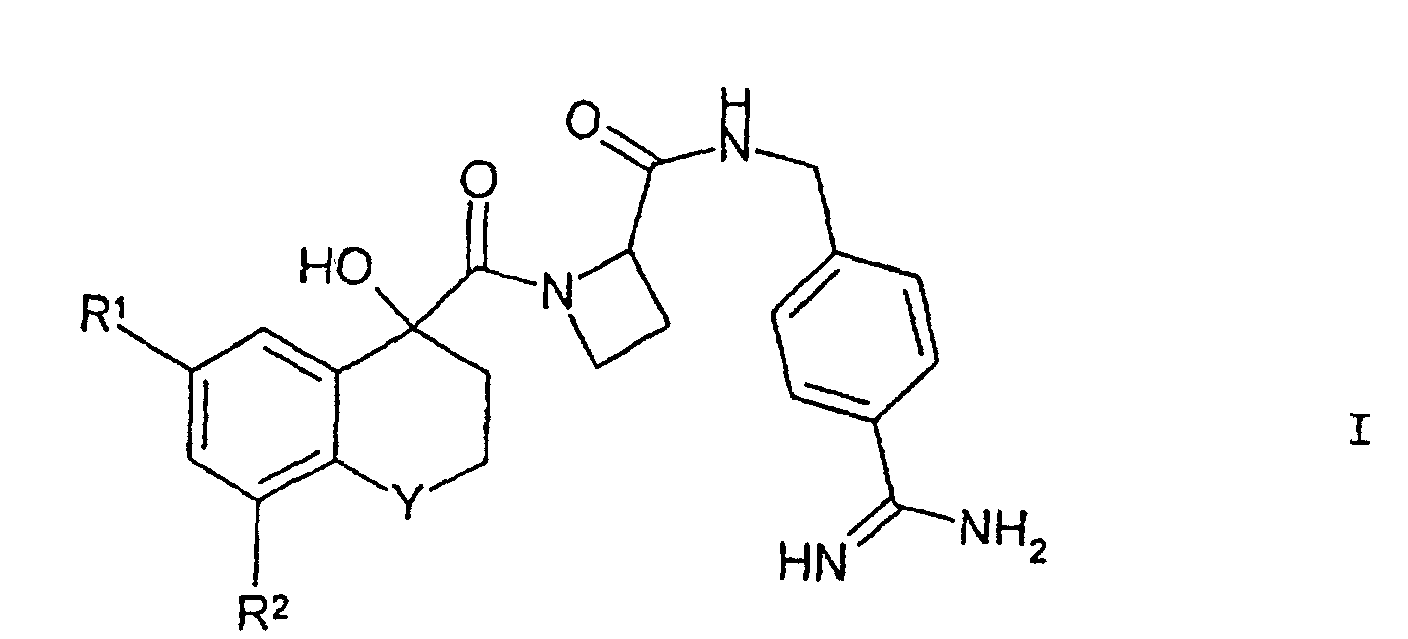
Y für S(O) oder S(O)2 steht;
R1 für Halogen steht; und
R2 für H, Halogen oder C1-4-Alkoxy steht (wobei die letztgenannte Gruppe gegebenenfalls durch eine oder mehrere Halogengruppen substituiert ist);
und deren pharmazeutisch unbedenkliche Derivate. - Verbindungen nach Anspruch 1, wobei R1 für Chlor steht.
- Verbindungen nach Anspruch 1 oder 2, wobei R2 für H, Halogen oder C1-2-Alkoxy steht (wobei die letztgenannte Gruppe gegebenenfalls durch eine oder mehrere Halogengruppen substituiert ist).
- Verbindungen nach einem der Ansprüche 1 bis 3, wobei R1 für Chlor und R2 für H, Clor, OCH3, OCHF2 oder OCF3 steht.
- Verbindungen nach Anspruch 4, wobei R2 für OCH3 steht.
- (R)-6-Chlor-4-hydroxy-8-methoxy-1,1-dioxothiochroman-4-yl-C(O)-(S)-Aze-Pab und dessen pharmazeutisch unbedenkliche Derivate.
- Verfahren zur Herstellung einer wie in Anspruch 1 definierten Verbindung der Formel I, bei dem man:(i) eine Verbindung der Formel IIIin welcher Y, R1 und R2 wie in Anspruch 1 definiert sind, mit 4-Amidinobenzyl-2-azetidincarbonsäureamid kuppelt;
 (ii) eine Verbindung der Formel IVin welcher Y, R1 und R2 wie in Anspruch 1 definiert sind, mit para-Amidinobenzylamin kuppelt;
 (iii) eine entsprechende Verbindung der Formel Vin welcher R1 und R2 wie in Anspruch 1 definiert sind, vollständig oder teilweise oxidiert;
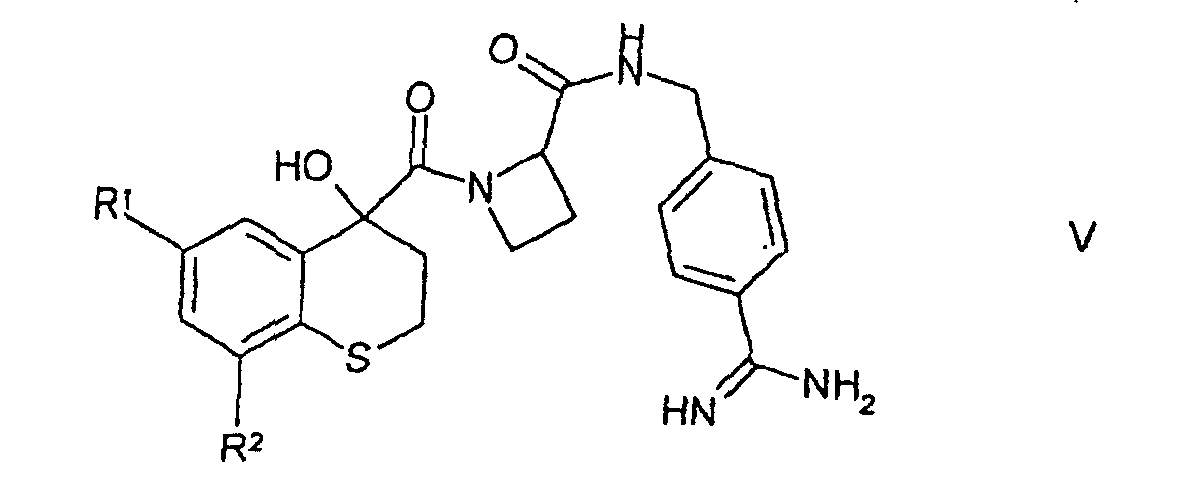 (iv) ein geschütztes Derivat einer wie in Anspruch 1 definierten Verbindung der Formel I entschützt; oder(v) einen Substituenten am aromatischen Ring einer wie in Anspruch 1 definierten Verbindung der Formel I einführt oder umwandelt.
 - Verbindungen nach Anspruch 1, bei denen es sich um pharmazeutisch unbedenkliche Derivate einer Verbindung der Formel I handelt, wobei es sich bei dem Derivat um eine Verbindung der Formel IAhandelt, in welcher

Y, R1 und R2 wie in einem der Ansprüche 1 bis 6 definiert sind;
D1 und D2 unabhängig voneinander für H, -OR7 oder R8 stehen, oder D1, D2 und R3 zusammen mit der Amidingruppe, an die sie gebunden sind, eine cyclische Gruppe der Formel IIa, IIb, IIc, IId oder IIe bilden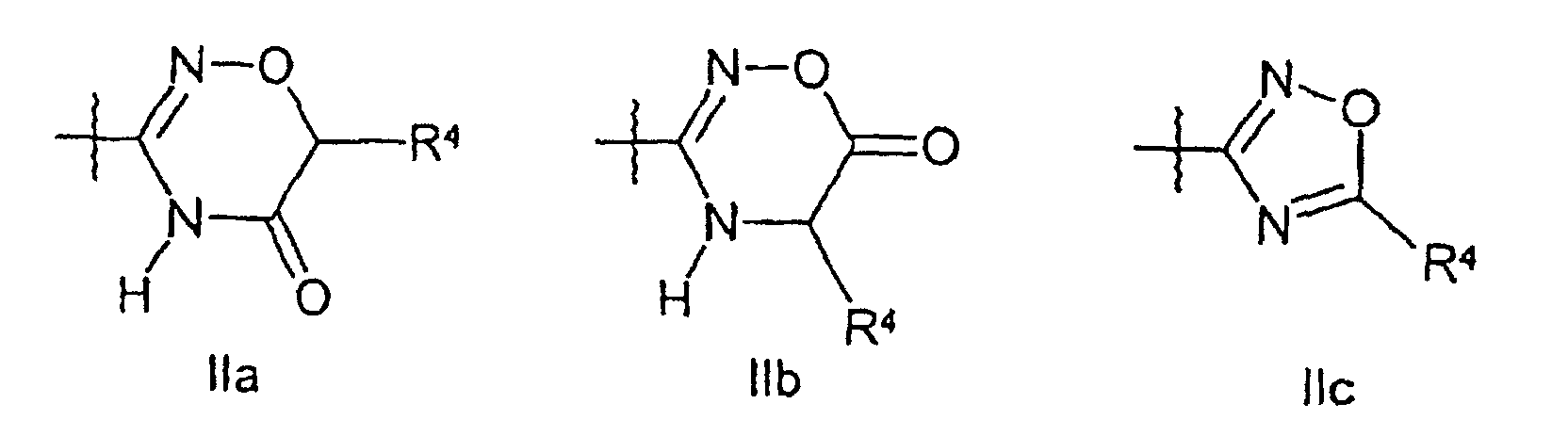 wobei die Wellenlinien die Verknüpfungsstellen mit dem Benzolring markieren;
R3 für H steht oder R3, D1 und D2 zusammen mit der Amidingruppe, an die sie gebunden sind, eine cyclische Gruppe der Formel IIa, IIb, IIc, IId oder IIe bilden;
R4 und R5 unabhängig voneinander für H oder C1-4-Alkyl stehen;
R6 für H, C1-6-Alkyl (wobei die letztgenannte Gruppe gegebenenfalls durch eine oder mehrere Halogengruppen substituiert ist) oder C(O)OR12 steht;
R7 für H, C6-10-Aryl, C1-10-Alkyl (wobei die letztgenannte Gruppe gegebenenfalls durch eine oder mehrere Halogengruppen substituiert ist), C1-3-Alkylphenyl, -C(R9a)(R9b)R10, -C(O)R11a, -C(O)OR12, -C(O)N(R13)R14 oder -(CH2)n(O)mR15 steht;
R8 für -C(R9a)(R9b)R10, -C(O)R11b oder -C(O)OR12 steht;
R9a und R9b jeweils unabhängig voneinander für H oder C1-6-Alkyl stehen;
R10 jeweils für -OC(O)R16a, -OC(O)OR17, -N(R18a)C(O)OR17 oder -OC(O)N(R18b)R17 steht;
R11a und R11b jeweils unabhängig voneinander für C6-10-Aryl, C1-3-Alkylphenyl (wobei die beiden letztgenannten Gruppen gegebenenfalls durch einen oder mehrere Substituenten ausgewählt aus C1-6-Alkyl und Halogen substituiert sind) oder -[C(R19a)(R19b)]pOC(O)R16b stehen, oder R11a für C1-17-Alkyl (gegebenenfalls substituiert durch C1-6-Alkoxy, C1-6-Acyloxy, Amino oder Halogen) steht oder R11b für C1-6-Alkyl steht;
R12 jeweils für C1-17-Alkyl (gegebenenfalls substituiert durch einen oder mehrere Substituenten ausgewählt aus C1-6-Alkoxy, C1-6-Acyloxy, -Si(R20a)(R20b)(R20c) und Halogen), C6-10-Aryl, C1-3-Alkylphenyl (wobei die beiden letztgenannten Gruppen gegebenenfalls durch C1-6-Alkyl, C1-6-Alkoxy, Cyano oder Halogen substituiert sind), -[C(R19a)(R19b)]qOC(O)R16b oder -CH2R21 steht;
R13 für H oder C1-7-Alkyl steht oder zusammen mit R14 für C4-5-Alkylen steht;
R14 für C6-10-Aryl oder C1-10-Alkyl steht (wobei die letztgenannte Gruppe gegebenenfalls durch einen oder mehrere Substituenten ausgewählt aus OH, Halogen, CO2H, C1-6-Alkoxy, C1-6-Acyloxy und C6-10-Aryl substituiert ist) oder zusammen mit R13 für C4-5-Alkylen steht;
R15 für gegebenenfalls durch eine oder mehrere -OC(O)C(H)(R22)N(G)(Ga)-Gruppen substituiertes C1-7-Alkyl steht;
R16a, R16b und R17 jeweils unabhängig voneinander für C6-10-Aryl oder C1-17-Alkyl stehen (wobei die letztgenannte Gruppe gegebenenfalls durch einen oder mehrere Substituenten ausgewählt aus -OH, Halogen, -CO2H, C1-6-Alkoxy, C1-6-Acyloxy und C6-10-Aryl substituiert ist) oder R16b für C1-6-Alkoxy (gegebenenfalls substituiert durch eine oder mehrere Substituenten ausgewählt aus C1-6-Alkyl und Halogen) steht;
R18a und R18b unabhängig voneinander für H oder C1-4-Alkyl stehen;
R19a und R19b jeweils unabhängig voneinander für H oder C1-6-Alkyl stehen;
R20a bis R20c jeweils unabhängig voneinander für C1-6-Alkyl oder Phenyl stehen;
R21 für das Strukturfragment IIfsteht;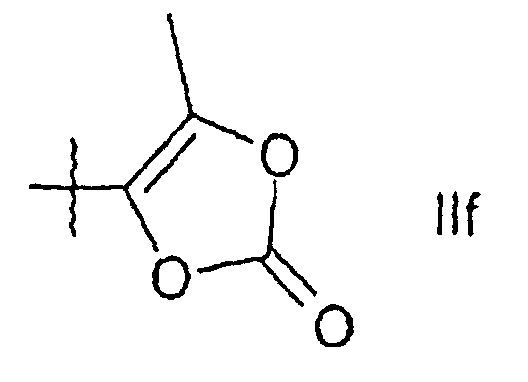
R22 für C3-4-Alkyl steht;
G und Ga unabhängig voneinander für H oder eine Aminoschutzgruppe stehen oder G und Ga zusammen für eine Aminoschutzgruppe stehen;
m für 0 oder 1 steht;
n für 1, 2 oder 3 steht;
p für 3 oder 4 steht;
q für 2 oder 3 steht;
und deren pharmazeutisch unbedenkliche Salze,
mit der Maßgabe, daß:(a) D1 und D2 nicht beide für H stehen; und(b) wenn einer der Reste D1 und D2 für -OR7 steht, der andere für H steht. - Nach einem der Ansprüche 1 bis 5 oder 8 definierte Verbindungen, wobei das Fragmentin der S-Konfiguration vorliegt.

- Nach einem der Ansprüche 1 bis 5 oder 8 oder 9 definierte Verbindungen der Formel I, wobei das Fragmentin der R-Konfiguration vorliegt.
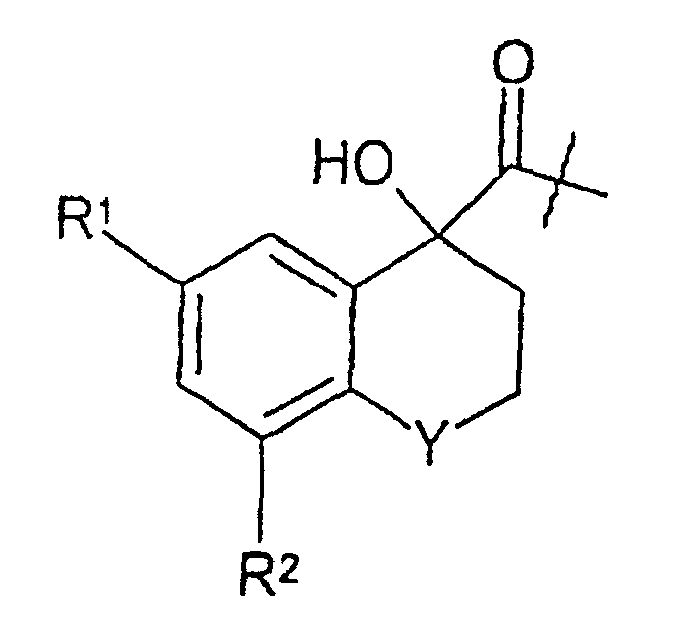
- Verfahren zur Herstellung einer wie in Anspruch 8 definierten Verbindung der Formel IA, bei dem man:(1) bei Verbindungen der Formel IA, in denen einer der Reste D1 und D2 für -OR7 steht (wobei R7 für H, C6-10-Aryl, C1-10-Alkyl (wobei die letztgenannte Gruppe gegebenenfalls durch eine oder mehrere Halogengruppen substituiert ist) oder C1-3-Alkylphenyl steht), eine Verbindung der Formel XIVin welcher Y, R1 und R2 wie in Anspruch 8 definiert sind, mit einer Verbindung der Formel XV
 in welcher Rb für niederes Alkyl steht und Y, R1 und R2 wie in Anspruch 8 definiert sind, umsetzt;
 (2) bei Verbindungen der Formel IA, in denen einer der Reste D1 und D2 für -OR7 steht (wobei R7 für H, C6-10-Aryl, C1-10-Alkyl (wobei die letztgenannte Gruppe gegebenenfalls durch eine oder mehrere Halogengruppen substituiert ist) oder C1-3-Alkylphenyl steht), eine entsprechende Verbindung der Formel IA, in welcher einer der Reste D1 und D2 für -C(O)OR12 steht und der andere Rest für H steht, mit einer wie oben definierten Verbindung der Formel XV umsetzt und anschließend die -C(O)OR12-Gruppe entfernt;(3) bei Verbindungen der Formel IA, in denen D1 oder D2 für R8 steht, eine entsprechende Verbindung der Formel I oder eine entsprechende Verbindung der Formel Ia, in der D1 oder D2 (je nach welchem Fall) für H steht, mit einer Verbindung der Formel XVII(4) bei Verbindungen der Formel IA, in denen einer der Reste D1 und D2 für -OR7 steht (wobei R7 nicht für H steht), eine entsprechende Verbindung der Formel IA, in der einer der reste D1 und D2 für -OH steht, mit einer Verbindung der Formel XVIII(5) bei Verbindungen der Formel IA, in denen einer der Reste D1 und D2 für H und der andere für -C(R9a)(R9b)R10 steht, wobei R10 für -OC(O)R16a, -OC(O)OR17 oder -OC(O)N(R18b)R17 steht, eine entsprechende Verbindung der Formel XIXin welcher Y, R1, R2, R9a und R9b wie in Anspruch 8 definiert sind, mit einer Verbindung der Formel XX
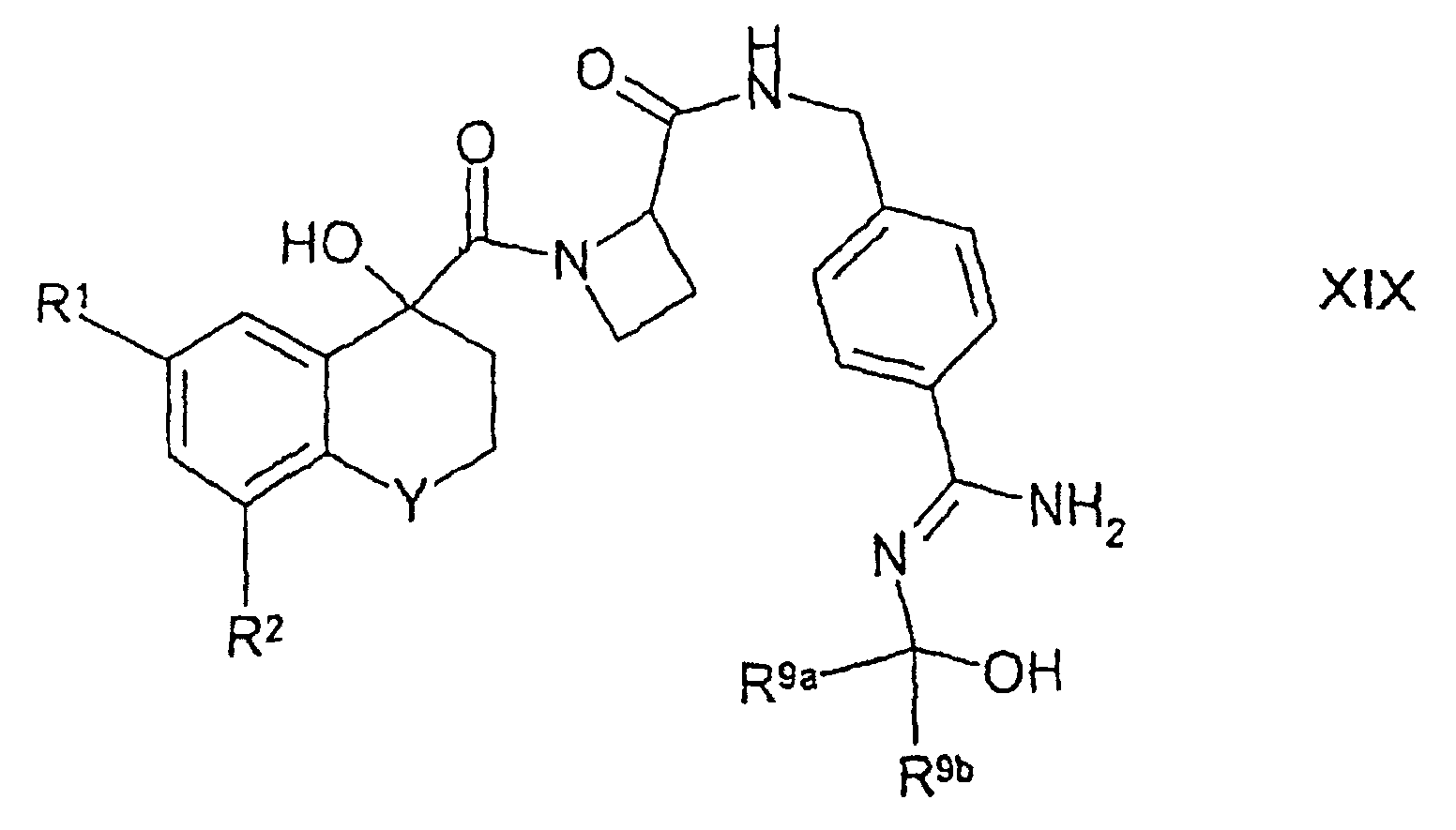 (6) bei Verbindungen der Formel IA, in denen D1, D2 und R3 zusammen mit der Amidingruppe, an die sie gebunden sind, für eine wie in Anspruch 8 definierte Gruppe IIa stehen, eine entsprechende Verbindung der Formel IA, in welcher D1 für OH steht, mit einer Verbindung der Formel XXII(7) bei Verbindungen der Formel IA, in denen D1, D2 und R3 zusammen mit der Amidingruppe, an die sie gebunden sind, für eine wie in Anspruch 8 definierte Gruppe IIb stehen, eine entsprechende Verbindung der Formel XXIIIin welcher Y, R1 und R2 wie in Anspruch 8 definiert sind, mit einer Verbindung der Formel XXIV
 (8) bei Verbindungen der Formel IA, in denen D1, D2 und R3 zusammen mit der Amidingruppe, an die sie gebunden sind, für eine wie in Anspruch 8 definierte Gruppe IIc stehen, eine entsprechende Verbindung der Formel IA, in welcher D1 für OH steht, mit einer Verbindung der Formel XXV(9) bei Verbindungen der Formel IA, in denen D1, D2 und R3 zusammen mit der Amidingruppe, an die sie gebunden sind, für eine wie in Anspruch 8 definierte Gruppe IId stehen, eine Verbindung der Formel XXVIin welcher Hal wie oben definiert ist und Y, R1, R2, R4, R5 und R6 wie in Anspruch 8 definiert sind, cyclisiert;
 (10) bei Verbindungen der Formel IA, in denen D1, D2 und R3 zusammen mit der Amidingruppe, an die sie gebunden sind, für eine wie in Anspruch 8 definierte Gruppe IIe stehen, eine entsprechende Verbindung der Formel XXIXin welcher Y, R1, R2 und R6 wie in Anspruch 8 definiert sind, mit Formaldehyd umsetzt;
 (11) ein geschütztes Derivat einer wie in Anspruch 8 definierten Verbindung der Formel IA entschützt; oder(12) an einem oder mehreren aromatischen und/oder nichtaromatischen, carbocyclischen und heterocyclischen Ringen in wie in Anspruch 8 definierten Verbindungen der Formel IA einen Substituenten einführt oder umwandelt.
 - Pharmazeutische Formulierung, enthaltend eine wie in einem der Ansprüche 1 bis 6 oder 8 bis 10 definierte Verbindung oder ein pharmazeutisch unbedenkliches Derivat oder Salz davon (je nach Fall), in einer Mischung mit einem pharmazeutisch unbedenklichen Adjuvans, Verdünnungsmittel oder Träger.
- Wie in einem der Ansprüche 1 bis 6 oder 8 bis 10 definierte Verbindungen und deren pharmazeutisch unbedenkliche Derivate und Salze (je nach Fall) zur Verwendung als Arzneimittel.
- Wie in einem der Ansprüche 1 bis 6 oder 8 bis 10 definierte Verbindungen und deren pharmazeutisch unbedenkliche Derivate und Salze (je nach Fall) zur Verwendung bei der Behandlung eines Leidens, bei dem es erforderlich ist, Thrombin zu inhibieren.
- Wie in einem der Ansprüche 1 bis 6 oder 8 bis 10 definierte Verbindungen und deren pharmazeutisch unbedenkliche Derivate und Salze (je nach Fall) zur Verwendung bei der Behandlung von Thrombose.
- Wie in einem der Ansprüche 1 bis 6 oder 8 bis 10 definierte Verbindungen und deren pharmazeutisch unbedenkliche Derivate und Salze (je nach Fall) zur Verwendung als Antikoagulationsmittel.
- Verwendung einer wie in einem der Ansprüche 1 bis 6 oder 8 bis 10 definierte Verbindungen und oder eines pharmazeutisch unbedenklichen Derivats und Salzes davon (je nach Fall), als Wirkstoff bei der Herstellung eines Medikaments zur Behandlung eines Leidens, bei dem es erforderlich ist, Thrombin zu inhibieren.
- Verwendung nach Anspruch 17, wobei es sich bei dem Leiden um Thrombose handelt.
- Verwendung nach Anspruch 17, wobei es sich bei dem Leiden um Hyperkoagulabilität in Blut- und/oder Geweben handelt.
- Verwendung einer wie in einem der Ansprüche 1 bis 6 oder 8 bis 10 definierten Verbindung oder eines pharmazeutisch unbedenklichen Derivats oder Salzes davon (je nach Fall) als Wirkstoff bei der Herstellung eines Antikoagulationsmittels.
Applications Claiming Priority (3)
| Application Number | Priority Date | Filing Date | Title |
|---|---|---|---|
| SE0001803A SE0001803D0 (sv) | 2000-05-16 | 2000-05-16 | New compounds i |
| SE0001803 | 2000-05-16 | ||
| PCT/SE2001/001052 WO2001087879A1 (en) | 2000-05-16 | 2001-05-14 | New thiochromane derivatives and their use as thrombin inhibitors |
Publications (2)
| Publication Number | Publication Date |
|---|---|
| EP1283837A1 EP1283837A1 (de) | 2003-02-19 |
| EP1283837B1 true EP1283837B1 (de) | 2004-02-25 |
Family
ID=20279688
Family Applications (1)
| Application Number | Title | Priority Date | Filing Date |
|---|---|---|---|
| EP01930400A Expired - Lifetime EP1283837B1 (de) | 2000-05-16 | 2001-05-14 | Neue thiochromanderivate und ihre verwendung als thrombininhibitoren |
Country Status (18)
| Country | Link |
|---|---|
| US (1) | US6716834B2 (de) |
| EP (1) | EP1283837B1 (de) |
| JP (1) | JP2003533522A (de) |
| KR (1) | KR100874393B1 (de) |
| CN (1) | CN1196696C (de) |
| AR (1) | AR028068A1 (de) |
| AT (1) | ATE260273T1 (de) |
| AU (2) | AU5693101A (de) |
| BR (1) | BR0110794A (de) |
| CA (1) | CA2407222A1 (de) |
| DE (1) | DE60102151T2 (de) |
| IL (2) | IL152396A0 (de) |
| MX (1) | MXPA02010711A (de) |
| NO (1) | NO323829B1 (de) |
| NZ (1) | NZ522133A (de) |
| SE (1) | SE0001803D0 (de) |
| WO (1) | WO2001087879A1 (de) |
| ZA (1) | ZA200208805B (de) |
Families Citing this family (14)
| Publication number | Priority date | Publication date | Assignee | Title |
|---|---|---|---|---|
| SE9804313D0 (sv) * | 1998-12-14 | 1998-12-14 | Astra Ab | New compounds |
| AR035216A1 (es) * | 2000-12-01 | 2004-05-05 | Astrazeneca Ab | Derivados de acido mandelico ,derivados farmaceuticamente aceptables, uso de estos derivados para la fabricacion de medicamentos, metodos de tratamiento ,procesos para la preparacion de estos derivados, y compuestos intermediarios |
| US7129233B2 (en) | 2000-12-01 | 2006-10-31 | Astrazeneca Ab | Mandelic acid derivatives and their use as thrombin inhibitors |
| AR034517A1 (es) * | 2001-06-21 | 2004-02-25 | Astrazeneca Ab | Formulacion farmaceutica |
| SE0201661D0 (sv) | 2002-05-31 | 2002-05-31 | Astrazeneca Ab | New salts |
| SE0201659D0 (sv) * | 2002-05-31 | 2002-05-31 | Astrazeneca Ab | Modified release pharmaceutical formulation |
| US7781424B2 (en) * | 2003-05-27 | 2010-08-24 | Astrazeneca Ab | Modified release pharmaceutical formulation |
| US7524354B2 (en) * | 2005-07-07 | 2009-04-28 | Research Foundation Of State University Of New York | Controlled synthesis of highly monodispersed gold nanoparticles |
| TW200827336A (en) * | 2006-12-06 | 2008-07-01 | Astrazeneca Ab | New crystalline forms |
| US20090061000A1 (en) * | 2007-08-31 | 2009-03-05 | Astrazeneca Ab | Pharmaceutical formulation use 030 |
| EA018502B1 (ru) | 2008-06-23 | 2013-08-30 | Астразенека Аб | Новые гетероциклические карбоксамиды и фармацевтические композиции, содержащие их |
| CN103819464B (zh) * | 2014-03-11 | 2015-10-07 | 南京工业大学 | 硫色满类化合物及其合成方法和制备抗真菌药物的应用 |
| DE102014108210A1 (de) * | 2014-06-11 | 2015-12-17 | Dietrich Gulba | Rodentizid |
| KR20230012592A (ko) * | 2020-05-19 | 2023-01-26 | 르 라보레또레 쎄르비에르 | 파라-아미노-벤질 링커, 이의 제조 방법 및 컨쥬게이트에서의 이의 용도 |
Family Cites Families (39)
| Publication number | Priority date | Publication date | Assignee | Title |
|---|---|---|---|---|
| HU178398B (en) | 1979-06-12 | 1982-04-28 | Gyogyszerkutato Intezet | Process for producing new agmatine derivatives of activity against haemagglutination |
| GB2161801B (en) | 1984-07-17 | 1987-10-07 | Erba Farmitalia | N-imidazolyl derivatives and process for their preparation |
| HU192646B (en) | 1984-12-21 | 1987-06-29 | Gyogyszerkutato Intezet | Process for preparing new n-alkyl-peptide aldehydes |
| ZA86746B (en) | 1985-02-04 | 1986-09-24 | Merrell Dow Pharma | Novel peptidase inhibitors |
| US5187157A (en) | 1987-06-05 | 1993-02-16 | Du Pont Merck Pharmaceutical Company | Peptide boronic acid inhibitors of trypsin-like proteases |
| ZA897515B (en) | 1988-10-07 | 1990-06-27 | Merrell Dow Pharma | Novel peptidase inhibitors |
| TW201303B (de) | 1990-07-05 | 1993-03-01 | Hoffmann La Roche | |
| CA2075154A1 (en) | 1991-08-06 | 1993-02-07 | Neelakantan Balasubramanian | Peptide aldehydes as antithrombotic agents |
| SE9102462D0 (sv) | 1991-08-28 | 1991-08-28 | Astra Ab | New isosteric peptides |
| NZ245039A (en) | 1991-11-12 | 1994-12-22 | Lilly Co Eli | N-phenylalanyl and n-phenylglycyl derivatives of the dipeptide of l-azetidine-2-carboxylic acid and l-arginine aldehyde; anti-blood clotting compositions |
| SE9103612D0 (sv) | 1991-12-04 | 1991-12-04 | Astra Ab | New peptide derivatives |
| DE69314478T2 (de) | 1992-03-04 | 1999-02-11 | Gyogyszerkutato Intezet Kft., Budapest | Neuartige antikoagulierende peptidderivate und arzneimittel die solche enthalten so wie entsprechendes herstellungsverfahren |
| TW223629B (de) | 1992-03-06 | 1994-05-11 | Hoffmann La Roche | |
| SE9301916D0 (sv) | 1993-06-03 | 1993-06-03 | Ab Astra | New peptides derivatives |
| EP0648780A1 (de) | 1993-08-26 | 1995-04-19 | Bristol-Myers Squibb Company | Heterozyklische Thrombinhemmer |
| TW394760B (en) | 1993-09-07 | 2000-06-21 | Hoffmann La Roche | Novel Carboxamides, process for their preparation and pharmaceutical composition containing the same |
| AU1025795A (en) | 1994-01-27 | 1995-08-03 | Mitsubishi Chemical Corporation | Prolineamide derivatives |
| ZA951617B (en) | 1994-03-04 | 1997-02-27 | Lilly Co Eli | Antithrombotic agents. |
| DE4421052A1 (de) | 1994-06-17 | 1995-12-21 | Basf Ag | Neue Thrombininhibitoren, ihre Herstellung und Verwendung |
| US5510369A (en) | 1994-07-22 | 1996-04-23 | Merck & Co., Inc. | Pyrrolidine thrombin inhibitors |
| CZ245797A3 (cs) | 1995-02-17 | 1998-06-17 | Basf Aktiengesellschaft | Derivát amidinu dipeptidu jako inhibitor thrombinu |
| AU698911B2 (en) | 1995-04-04 | 1998-11-12 | Merck & Co., Inc. | Thrombin inhibitors |
| US5629324A (en) | 1995-04-10 | 1997-05-13 | Merck & Co., Inc. | Thrombin inhibitors |
| SA96170106A (ar) * | 1995-07-06 | 2005-12-03 | أسترا أكتيبولاج | مشتقات حامض أميني جديدة |
| TWI238827B (en) | 1995-12-21 | 2005-09-01 | Astrazeneca Ab | Prodrugs of thrombin inhibitors |
| US6080767A (en) | 1996-01-02 | 2000-06-27 | Aventis Pharmaceuticals Products Inc. | Substituted n-[(aminoiminomethyl or aminomethyl)phenyl]propyl amides |
| AU1990197A (en) | 1996-03-12 | 1997-10-01 | Bristol-Myers Squibb Company | Carbamyl guanidine and amidine prodrugs |
| SE9601556D0 (sv) | 1996-04-24 | 1996-04-24 | Astra Ab | New pharmaceutical formulation of a thrombin inhibitor for parenteral use |
| EP0923555B1 (de) * | 1996-05-01 | 2005-06-15 | Ortho-McNeil Pharmaceutical, Inc. | Carboxamiderivate von pyrrolidin, piperidin und hexahydropiperizin für behandlung von thrombosen |
| SE9602263D0 (sv) * | 1996-06-07 | 1996-06-07 | Astra Ab | New amino acid derivatives |
| CA2258915A1 (en) | 1996-06-25 | 1997-12-31 | Michael Robert Wiley | Anticoagulant agents |
| KR20000022532A (ko) | 1996-06-27 | 2000-04-25 | 오노 야꾸힝 고교 가부시키가이샤 | 아릴(설파이드, 설폭시드 및 설폰)유도체 및 이를 활성 성분으로 함유하는 약물 |
| DE19632772A1 (de) | 1996-08-14 | 1998-02-19 | Basf Ag | Neue Benzamidine |
| WO1998057934A1 (en) | 1997-06-19 | 1998-12-23 | The Du Pont Merck Pharmaceutical Company | (AMIDINO)6-MEMBERED AROMATICS AS FACTOR Xa INHIBITORS |
| AR013084A1 (es) | 1997-06-19 | 2000-12-13 | Astrazeneca Ab | Derivados de amidino utiles como inhibidores de la trombina, composicion farmaceutica, utilizacion de dichos compuestos para la preparacion demedicamentos y proceso para la preparacion de los compuestos mencionados |
| SE9704543D0 (sv) | 1997-12-05 | 1997-12-05 | Astra Ab | New compounds |
| SE9804313D0 (sv) * | 1998-12-14 | 1998-12-14 | Astra Ab | New compounds |
| EP1150996B1 (de) * | 1999-01-13 | 2007-11-21 | AstraZeneca AB | Neue amidinbenzylamin-derivate und ihre verwendung als thrombin-inhibitoren |
| AR023819A1 (es) | 1999-05-03 | 2002-09-04 | Astrazeneca Ab | FORMULACIoN FARMACEUTICA, KIT DE PARTES Y UTILIZACION DE DICHA FORMULACION |
-
2000
- 2000-05-16 SE SE0001803A patent/SE0001803D0/xx unknown
-
2001
- 2001-05-02 AR ARP010102072A patent/AR028068A1/es unknown
- 2001-05-14 US US10/276,150 patent/US6716834B2/en not_active Expired - Fee Related
- 2001-05-14 WO PCT/SE2001/001052 patent/WO2001087879A1/en not_active Ceased
- 2001-05-14 IL IL15239601A patent/IL152396A0/xx unknown
- 2001-05-14 EP EP01930400A patent/EP1283837B1/de not_active Expired - Lifetime
- 2001-05-14 DE DE60102151T patent/DE60102151T2/de not_active Expired - Fee Related
- 2001-05-14 JP JP2001584273A patent/JP2003533522A/ja active Pending
- 2001-05-14 CN CNB018127487A patent/CN1196696C/zh not_active Expired - Fee Related
- 2001-05-14 CA CA002407222A patent/CA2407222A1/en not_active Abandoned
- 2001-05-14 AU AU5693101A patent/AU5693101A/xx active Pending
- 2001-05-14 AU AU2001256931A patent/AU2001256931B2/en not_active Ceased
- 2001-05-14 KR KR1020027015397A patent/KR100874393B1/ko not_active Expired - Fee Related
- 2001-05-14 NZ NZ522133A patent/NZ522133A/en unknown
- 2001-05-14 AT AT01930400T patent/ATE260273T1/de not_active IP Right Cessation
- 2001-05-14 MX MXPA02010711A patent/MXPA02010711A/es active IP Right Grant
- 2001-05-14 BR BR0110794-1A patent/BR0110794A/pt not_active IP Right Cessation
-
2002
- 2002-10-21 IL IL152396A patent/IL152396A/en not_active IP Right Cessation
- 2002-10-30 ZA ZA200208805A patent/ZA200208805B/en unknown
- 2002-11-15 NO NO20025504A patent/NO323829B1/no not_active IP Right Cessation
Also Published As
| Publication number | Publication date |
|---|---|
| KR100874393B1 (ko) | 2008-12-17 |
| US6716834B2 (en) | 2004-04-06 |
| BR0110794A (pt) | 2003-05-06 |
| AU2001256931B2 (en) | 2005-08-04 |
| IL152396A (en) | 2009-07-20 |
| ZA200208805B (en) | 2004-02-09 |
| WO2001087879A1 (en) | 2001-11-22 |
| CN1196696C (zh) | 2005-04-13 |
| MXPA02010711A (es) | 2003-03-10 |
| KR20030001507A (ko) | 2003-01-06 |
| CN1441799A (zh) | 2003-09-10 |
| CA2407222A1 (en) | 2001-11-22 |
| JP2003533522A (ja) | 2003-11-11 |
| NO323829B1 (no) | 2007-07-09 |
| NZ522133A (en) | 2004-11-26 |
| NO20025504D0 (no) | 2002-11-15 |
| IL152396A0 (en) | 2003-05-29 |
| NO20025504L (no) | 2002-11-15 |
| SE0001803D0 (sv) | 2000-05-16 |
| AU5693101A (en) | 2001-11-26 |
| AR028068A1 (es) | 2003-04-23 |
| DE60102151T2 (de) | 2004-09-16 |
| ATE260273T1 (de) | 2004-03-15 |
| US20030220317A1 (en) | 2003-11-27 |
| DE60102151D1 (de) | 2004-04-01 |
| EP1283837A1 (de) | 2003-02-19 |
Similar Documents
| Publication | Publication Date | Title |
|---|---|---|
| US20070249578A1 (en) | New amidino derivatives and their use as thrombin inhibitors | |
| EP1283837B1 (de) | Neue thiochromanderivate und ihre verwendung als thrombininhibitoren | |
| US6337394B2 (en) | Compounds | |
| US6599894B1 (en) | Amidinobenzylamine derivatives and their use as thrombin inhibitors | |
| AU2001256931A1 (en) | New thiochromane derivatives and their use as thrombin inhibitors | |
| EP1311480B1 (de) | Neue amidino-derivate und deren verwendung als thrombin-inhibitoren | |
| AU2001280395A1 (en) | New amidino derivatives and their use as thrombin inhibitors | |
| US6433186B1 (en) | Amidino derivatives and their use as thormbin inhibitors | |
| MXPA01005937A (en) | New amidino derivatives and their use as thrombin inhibitors | |
| HK1053121B (en) | New amidino derivatives and their use as thrombin inhibitors |
Legal Events
| Date | Code | Title | Description |
|---|---|---|---|
| PUAI | Public reference made under article 153(3) epc to a published international application that has entered the european phase |
Free format text: ORIGINAL CODE: 0009012 |
|
| 17P | Request for examination filed |
Effective date: 20021216 |
|
| AK | Designated contracting states |
Designated state(s): AT BE CH CY DE DK ES FI FR GB GR IE IT LI LU MC NL PT SE TR |
|
| AX | Request for extension of the european patent |
Extension state: AL LT LV MK RO SI |
|
| GRAP | Despatch of communication of intention to grant a patent |
Free format text: ORIGINAL CODE: EPIDOSNIGR1 |
|
| GRAS | Grant fee paid |
Free format text: ORIGINAL CODE: EPIDOSNIGR3 |
|
| RIN1 | Information on inventor provided before grant (corrected) |
Inventor name: KARLSSON, OLLE Inventor name: LINSCHOTEN, MARCEL,MEDIVIR AB Inventor name: INGHARDT, TORD Inventor name: SUNDEN, GUNNEL Inventor name: ANDERSSON, KJELL Inventor name: NYSTROEM, JAN-ERIK |
|
| GRAA | (expected) grant |
Free format text: ORIGINAL CODE: 0009210 |
|
| AK | Designated contracting states |
Kind code of ref document: B1 Designated state(s): AT BE CH CY DE DK ES FI FR GB GR IE IT LI LU MC NL PT SE TR |
|
| AX | Request for extension of the european patent |
Extension state: SI |
|
| PG25 | Lapsed in a contracting state [announced via postgrant information from national office to epo] |
Ref country code: FI Free format text: LAPSE BECAUSE OF FAILURE TO SUBMIT A TRANSLATION OF THE DESCRIPTION OR TO PAY THE FEE WITHIN THE PRESCRIBED TIME-LIMIT Effective date: 20040225 Ref country code: BE Free format text: LAPSE BECAUSE OF FAILURE TO SUBMIT A TRANSLATION OF THE DESCRIPTION OR TO PAY THE FEE WITHIN THE PRESCRIBED TIME-LIMIT Effective date: 20040225 Ref country code: AT Free format text: LAPSE BECAUSE OF FAILURE TO SUBMIT A TRANSLATION OF THE DESCRIPTION OR TO PAY THE FEE WITHIN THE PRESCRIBED TIME-LIMIT Effective date: 20040225 Ref country code: NL Free format text: LAPSE BECAUSE OF FAILURE TO SUBMIT A TRANSLATION OF THE DESCRIPTION OR TO PAY THE FEE WITHIN THE PRESCRIBED TIME-LIMIT Effective date: 20040225 Ref country code: TR Free format text: LAPSE BECAUSE OF FAILURE TO SUBMIT A TRANSLATION OF THE DESCRIPTION OR TO PAY THE FEE WITHIN THE PRESCRIBED TIME-LIMIT Effective date: 20040225 Ref country code: CY Free format text: LAPSE BECAUSE OF FAILURE TO SUBMIT A TRANSLATION OF THE DESCRIPTION OR TO PAY THE FEE WITHIN THE PRESCRIBED TIME-LIMIT Effective date: 20040225 |
|
| REG | Reference to a national code |
Ref country code: GB Ref legal event code: FG4D |
|
| REG | Reference to a national code |
Ref country code: CH Ref legal event code: EP |
|
| REG | Reference to a national code |
Ref country code: IE Ref legal event code: FG4D |
|
| REF | Corresponds to: |
Ref document number: 60102151 Country of ref document: DE Date of ref document: 20040401 Kind code of ref document: P |
|
| PG25 | Lapsed in a contracting state [announced via postgrant information from national office to epo] |
Ref country code: LU Free format text: LAPSE BECAUSE OF NON-PAYMENT OF DUE FEES Effective date: 20040514 Ref country code: IE Free format text: LAPSE BECAUSE OF NON-PAYMENT OF DUE FEES Effective date: 20040514 |
|
| PG25 | Lapsed in a contracting state [announced via postgrant information from national office to epo] |
Ref country code: GR Free format text: LAPSE BECAUSE OF FAILURE TO SUBMIT A TRANSLATION OF THE DESCRIPTION OR TO PAY THE FEE WITHIN THE PRESCRIBED TIME-LIMIT Effective date: 20040525 Ref country code: DK Free format text: LAPSE BECAUSE OF FAILURE TO SUBMIT A TRANSLATION OF THE DESCRIPTION OR TO PAY THE FEE WITHIN THE PRESCRIBED TIME-LIMIT Effective date: 20040525 |
|
| PG25 | Lapsed in a contracting state [announced via postgrant information from national office to epo] |
Ref country code: MC Free format text: LAPSE BECAUSE OF NON-PAYMENT OF DUE FEES Effective date: 20040531 |
|
| PG25 | Lapsed in a contracting state [announced via postgrant information from national office to epo] |
Ref country code: ES Free format text: LAPSE BECAUSE OF FAILURE TO SUBMIT A TRANSLATION OF THE DESCRIPTION OR TO PAY THE FEE WITHIN THE PRESCRIBED TIME-LIMIT Effective date: 20040605 |
|
| REG | Reference to a national code |
Ref country code: SE Ref legal event code: TRGR |
|
| NLV1 | Nl: lapsed or annulled due to failure to fulfill the requirements of art. 29p and 29m of the patents act | ||
| LTIE | Lt: invalidation of european patent or patent extension |
Effective date: 20040225 |
|
| ET | Fr: translation filed | ||
| PLBE | No opposition filed within time limit |
Free format text: ORIGINAL CODE: 0009261 |
|
| STAA | Information on the status of an ep patent application or granted ep patent |
Free format text: STATUS: NO OPPOSITION FILED WITHIN TIME LIMIT |
|
| REG | Reference to a national code |
Ref country code: IE Ref legal event code: MM4A |
|
| 26N | No opposition filed |
Effective date: 20041126 |
|
| PG25 | Lapsed in a contracting state [announced via postgrant information from national office to epo] |
Ref country code: PT Free format text: LAPSE BECAUSE OF NON-PAYMENT OF DUE FEES Effective date: 20040725 |
|
| PGFP | Annual fee paid to national office [announced via postgrant information from national office to epo] |
Ref country code: DE Payment date: 20090529 Year of fee payment: 9 Ref country code: FR Payment date: 20090507 Year of fee payment: 9 Ref country code: IT Payment date: 20090516 Year of fee payment: 9 Ref country code: SE Payment date: 20090507 Year of fee payment: 9 |
|
| PGFP | Annual fee paid to national office [announced via postgrant information from national office to epo] |
Ref country code: CH Payment date: 20090430 Year of fee payment: 9 |
|
| PGFP | Annual fee paid to national office [announced via postgrant information from national office to epo] |
Ref country code: GB Payment date: 20090407 Year of fee payment: 9 |
|
| REG | Reference to a national code |
Ref country code: HK Ref legal event code: WD Ref document number: 1051541 Country of ref document: HK |
|
| REG | Reference to a national code |
Ref country code: CH Ref legal event code: PL |
|
| GBPC | Gb: european patent ceased through non-payment of renewal fee |
Effective date: 20100514 |
|
| EUG | Se: european patent has lapsed | ||
| REG | Reference to a national code |
Ref country code: FR Ref legal event code: ST Effective date: 20110131 |
|
| PG25 | Lapsed in a contracting state [announced via postgrant information from national office to epo] |
Ref country code: CH Free format text: LAPSE BECAUSE OF NON-PAYMENT OF DUE FEES Effective date: 20100531 Ref country code: LI Free format text: LAPSE BECAUSE OF NON-PAYMENT OF DUE FEES Effective date: 20100531 |
|
| PG25 | Lapsed in a contracting state [announced via postgrant information from national office to epo] |
Ref country code: IT Free format text: LAPSE BECAUSE OF NON-PAYMENT OF DUE FEES Effective date: 20100514 Ref country code: SE Free format text: LAPSE BECAUSE OF NON-PAYMENT OF DUE FEES Effective date: 20100515 |
|
| PG25 | Lapsed in a contracting state [announced via postgrant information from national office to epo] |
Ref country code: DE Free format text: LAPSE BECAUSE OF NON-PAYMENT OF DUE FEES Effective date: 20101201 |
|
| PG25 | Lapsed in a contracting state [announced via postgrant information from national office to epo] |
Ref country code: FR Free format text: LAPSE BECAUSE OF NON-PAYMENT OF DUE FEES Effective date: 20100531 |
|
| PG25 | Lapsed in a contracting state [announced via postgrant information from national office to epo] |
Ref country code: GB Free format text: LAPSE BECAUSE OF NON-PAYMENT OF DUE FEES Effective date: 20100514 |