EP1286277A2 - Procédé et système de rapprochement d'arbres de fichiers modifiés - Google Patents
Procédé et système de rapprochement d'arbres de fichiers modifiés Download PDFInfo
- Publication number
- EP1286277A2 EP1286277A2 EP02012309A EP02012309A EP1286277A2 EP 1286277 A2 EP1286277 A2 EP 1286277A2 EP 02012309 A EP02012309 A EP 02012309A EP 02012309 A EP02012309 A EP 02012309A EP 1286277 A2 EP1286277 A2 EP 1286277A2
- Authority
- EP
- European Patent Office
- Prior art keywords
- changes
- file tree
- computer
- file
- tree
- Prior art date
- Legal status (The legal status is an assumption and is not a legal conclusion. Google has not performed a legal analysis and makes no representation as to the accuracy of the status listed.)
- Withdrawn
Links
Images



Classifications
-
- G—PHYSICS
- G06—COMPUTING OR CALCULATING; COUNTING
- G06F—ELECTRIC DIGITAL DATA PROCESSING
- G06F16/00—Information retrieval; Database structures therefor; File system structures therefor
- G06F16/10—File systems; File servers
-
- Y—GENERAL TAGGING OF NEW TECHNOLOGICAL DEVELOPMENTS; GENERAL TAGGING OF CROSS-SECTIONAL TECHNOLOGIES SPANNING OVER SEVERAL SECTIONS OF THE IPC; TECHNICAL SUBJECTS COVERED BY FORMER USPC CROSS-REFERENCE ART COLLECTIONS [XRACs] AND DIGESTS
- Y10—TECHNICAL SUBJECTS COVERED BY FORMER USPC
- Y10S—TECHNICAL SUBJECTS COVERED BY FORMER USPC CROSS-REFERENCE ART COLLECTIONS [XRACs] AND DIGESTS
- Y10S707/00—Data processing: database and file management or data structures
- Y10S707/99951—File or database maintenance
- Y10S707/99952—Coherency, e.g. same view to multiple users
- Y10S707/99953—Recoverability
Definitions
- the present invention relates to file tree reconcilers, and in particular to a method of reconciling any changes that have occurred in two file trees since they were last synchronized.
- a way to organize files and folders of a user on a computer is by arranging them in a structure commonly known as a tree. Oftentimes, this arrangement is changed by moving, adding, or deleting files and folders. When this happens, a new tree is generated. It is helpful to find and reconcile the differences between the old and new trees. Reconciling the differences found in the old and new trees is currently very difficult, and will be further explained below. Before discussing this problem, however, an overview of a tree data structure is provided.
- a tree data structure is illustrated in Figure 1.
- the apex of the tree 100 is commonly called the root.
- the root is usually a folder that contains all other sub-folders and files of a user.
- the root is the starting location of all folders and files of a computer user from where links spread out like branches of a tree to other sub-folders and files.
- the nodes (i.e., the actual files) of a tree are denoted by parent, child, leaf, and non-leaf nodes.
- a parent is any node that has a branch leading down to one or more lower nodes.
- root 100 is one example of a parent.
- a child is any node that has a branch leading up to a higher node. All nodes in Figure 1 except the root node is a child node. This child node category can be further segregated into left and right child depending upon the location of the child node with respect to its parent.
- Node 101 is a right child node, while node 102 is a left child node of parent node 103.
- a leaf node is any node that does not have any branches leading to lower levels in the tree. All nodes at the bottom most level of the tree (for example, 104, 105, and 106) are leaf nodes. In contrast, all other nodes are categorized as non-leaf nodes as they have a child node under them (for example, 100).
- a utility commonly called a comparator, compares the two file tree descriptions and generates a sequenced log of changes that transforms the old tree to a new tree.
- a complete description of the type of file tree comparator is contained in copending U.S. patent application "File Tree Comparator", Sr. No. _/_,_ filed on _ _, _, and assigned to the assignee of this patent application.
- a reconciler takes in as its input the log of changes (if one is available) from both the old and the new file trees and reconciles any changes that have occurred since the last synchronization.
- Xfiles allows comparing, reconciling any differences, and merging two file trees over a network.
- Xfiles reconcile any changes with the aid of a client/server program (graphical user interface on the client) that traverses a file tree and reports any files that are missing on the server or client machines, or are different.
- the main drawback with Xfiles is that after the entire tree is traversed in order to reconcile any changes, the entire tree (along with the changes) has to be transferred to the other side. If the tree is very large, a substantial amount of time might be wasted transferring large portions of the tree that are not modified. Moreover, if the network connection is slow, or network traffic high, Xfiles becomes prohibitively wasteful of resources.
- a second drawback with Xfiles is that it requires a "diff" command to find and reconcile any differences between the two trees.
- the "diff" command is a Unix command. Unix commands cannot be used on non-Unix operating systems, and since most operating systems are non-Unix, it prohibits the widespread use of Xfiles. Wrapper programs may be created in order to run the Xfiles utility and have its functions on non-Unix operating systems, but this is time consuming and difficult.
- Teamware includes methods for reconciling any changes in file trees, with the assumption that the file trees are of a special type - containing only SCCS folders and files - that are directly annotative.
- developers may each be assigned a separate sub-directory of a single root directory designated as a parent workspace for the current project.
- the parent workspace contains the original copies of each project file and records of each set of changes to each file.
- the developers obtain copies of project files for reading and editing purposes within their individual workspaces, and to record any modifications they make in a central location later on.
- a locking mechanism in SCCS prevents two developers from checking out the same file for editing at the same time.
- Teamware is restrictive because it detects file tree changes based on modification times rather than on change logs.
- Teamware automatically annotates only SCCS folders and files, it has no application to most file tree systems.
- Unison is a file synchronization tool for Unix and Windows operating systems. It allows two replicas of a collection of files, folders, or directories to be stored on different hosts or different disks on the same host, modified separately, and then brought up to date by propagating the changes in each replica to the other. Unison sends from one side (server or client) to the other the entire log, and makes the receiving side responsible for finding the differences in the files, folders, and directories of both sides and reconciling them. This system works well only because the utility has an indefinitely growing version log for each synced file, which is pruned only when all known synchronizers have seen the pruned versions. There is a time limit (usually a month) when the utility abandons files that have not been synced in order to prune the size of the log.
- Unison creates a log for the entire file tree and sends it across the network. If the file tree is large, the time involved in transmitting the log for the entire file tree can be time consuming, especially if the network connection is slow, or the network is highly congested. Moreover, if a file is not in use beyond the time limit, it is abandoned by the log. If the file has been abandoned, changes made to it may not be reflected in the log that is sent across to the other side. Furthermore, Unison detects file tree changes based on modification times rather than changes in the log. As mentioned earlier, since the entire file tree is sent across, this is a time consuming operation.
- a method of reconciling changes made to a first and a second file tree comprises receiving a first change log corresponding to a first file tree and a second change log corresponding to a second file tree; determining a first set of changes to make to said first file tree using said second change log; determining a second set of changes to make to said second file tree using said first change log; and reconciling said first and second file trees using said first and second set of changes.
- the method may further comprise detecting one or more changes that conflict and/or the detecting one or more changes that conflict may comprise generating said conflict list.
- the first file tree may reside on a client and/or the second file tree may reside on a server.
- a data processing unit for reconciling changes made to a first and a second file tree comprises means for receiving a first change log corresponding to a first file tree and a second change log corresponding to a second file tree; means for determining a first set of changes to make to said first file tree using said second change log; means for determining a second set of changes to make to said second file tree using said first change log; and means for reconciling said first and second file trees using said first and second set of changes.
- a computer program product comprises means configured to reconcile changes made to a first and a second file tree, said computer program product comprising computer readable code configured to cause a computer to receive a first change log corresponding to a first file tree and a second change log corresponding to a second file tree; computer readable code configured to cause a computer to determine a first set of changes to make to said first file tree using said second change log; computer readable code configured to cause a computer to determine a second set of changes to make to said second file tree using said first change log; and computer readable code configured to cause a computer to reconcile said first and second file trees using said first and second set of changes.
- a program may be provided having instructions adapted to make a computer carry out the above operations.
- a computer readable medium may include the program.
- the present invention relates to a file tree change reconciler.
- the reconciler takes as input two logs of changes made in two respective file trees. Using the logs, it generates two sequences of operations. One sequence is designed to transfer the second tree to the first. The other is designed to transfer the first tree to the second. Once applied, the sequence of changes reconciles the two trees.
- the first log resides on a client computing device, and the second log resides on a server computing device.
- the reconciler outputs two sets of changes that need to be applied to the respective file trees in order to synchronize them.
- the reconciler detects and outputs a list of changes that conflict with each other.
- a file tree reconciler receives in as input two logs of change operations made to two file trees.
- the reconciliation process is illustrated in Figures 2A and 2B.
- a first log is obtained. This first log can be obtained from a client, and is illustrated at step 204 in Figure 2B.
- a second log is obtained. This second log can be obtained from a server, and is illustrated at step 205 in Figure 2B.
- the reconciler converts each side's change log into a sequence of changes that can be applied to the other side.
- the change operations may be one of create, delete, modify, rename, or reparent.
- the reconciler converts the change log of the first log.
- step 206 the conversion of the client change log is illustrated at step 206 in Figure 2B.
- step 203 the reconciler converts the change log of the second log. If this second log is from the server, the conversion of the server change log is illustrated at step 207 in Figure 2B.
- the reconciler prior to converting the two change logs, the reconciler removes any conflicting changes from the sequence, and translates the remaining changes so as to take account of the other side's parallel changes.
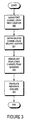
- This embodiment of the present invention is shown in Figure 3.
- a first log is obtained.
- a second log is obtained.
- the reconciler removes any conflicting changes from the sequence, and at step 303, it translates the remaining changes so as to take account of the other side's parallel changes.
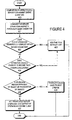
- the reconciler converts the server log which is shown in Figure 4.
- the reconciler compares it against the entire client log.
- the reconciler compares the server operation against the particular client operation.
- the reconciler checks to see if a client operation semantically conflicts with a server operation. If the client operation semantically conflicts with the server operation, the pair is added to a conflict list at step 403.
- the reconciler checks to see if the operation causes two objects to become each other's ancestors (an unresolvable loop if not attended to). If the operation is found to create the above problem, then the pair is added to the conflict list at step 403.
- the reconciler checks to see if the client operation is a rename or reparent of the object of the server operation, or of one of that object's ancestors in the tree. If step 405 is positive, then the server operation is translated to refer to the object using its new lineage at step 406. If on the other hand there are no conflict, rename, or reparent issues, then the translated server operation is added to the sequence of operations that the client is asked to perform at step 407.
- the reconciler converts the client log which is seen in Figure 5. It converts the client log by generating a sequence of operations to be performed on the server's file tree.
- the reconciler compares it against the entire server log.
- the reconciler compares the client operation against the particular server operation at step 501.
- the reconciler checks to see if a server operation semantically conflicts with a client operation. If the server operation semantically conflicts with the client operation, the pair is added to a conflict list at step 503.
- the reconciler checks to see if the operation causes two objects to become each other's ancestors (an unresolvable loop if not attended to). If the operation is found to create the above problem, then the pair is added to the conflict list at step 503.
- the reconciler checks to see if the server operation is a rename or reparent of the object of the client operation, or of one of that object's ancestors in the tree. If step 505 is positive, then the client operation is translated to refer to the object using its new lineage at step 506. If there are no conflict, rename, or reparent issues, then the translated client operation is added to the sequence of operations that the server is asked to perform at step 507.
- a computer-readable medium may be provided having a program embodied thereon, where the program is to make a computer or a system of data processing devices to execute functions or operations of the features and elements of the above described examples.
- a computer-readable medium can be a magnetic or optical or other tangible medium on which a program is recorded, but can also be a signal, e.g. analog or digital, electronic, magnetic or optical, in which the program is embodied for transmission.
- a computer program product may be provided comprising the computer-readable medium.
- a data processing unit may be provided for reconciling changes made to a first and a second file tree comprising means for receiving a first change log corresponding to a first file tree and a second change log corresponding to a second file tree; means for determining a first set of changes to make to said first file tree using said second change log; means for determining a second set of changes to make to said second file tree using said first change log; and means for reconciling said first and second file trees using said first and second set of changes.
- the data processing unit may comprise means for detecting one or more changes that conflict and/or means for generating a conflict list.
- the data processing unit may include a server and a client communicating with one another, wherein said first file tree resides on the client and/or wherein said second file tree resides on the server.
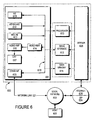
- An embodiment of the invention can be implemented as computer software in the form of computer readable code executed in a desktop general purpose computing environment such as environment 600 illustrated in Figure 6, or in the form of bytecode class files running in such an environment.
- a keyboard 610 and mouse 611 are coupled to a bi-directional system bus 618. The keyboard and mouse are for introducing user input to a computer 601 and communicating that user input to processor 613.
- Computer 601 may also include a communication interface 620 coupled to bus 618.
- Communication interface 620 provides a two-way data communication coupling via a network link 621 to a local network 622.
- ISDN integrated services digital network
- communication interface 620 provides a data communication connection to the corresponding type of telephone line, which comprises part of network link 621.
- LAN local area network
- communication interface 620 provides a data communication connection via network link 621 to a compatible LAN.
- Wireless links are also possible.
- communication interface 620 sends and receives electrical, electromagnetic or optical signals, which carry digital data streams representing various types of information.
- Network link 621 typically provides data communication through one or more networks to other data devices.
- network link 621 may provide a connection through local network 622 to local server computer 623 or to data equipment operated by ISP 624.
- ISP 624 in turn provides data communication services through the world wide packet data communication network now commonly referred to as the "Internet" 625.
- Internet 625 uses electrical, electromagnetic or optical signals, which carry digital data streams.
- the signals through the various networks and the signals on network link 621 and through communication interface 620, which carry the digital data to and from computer 600, are exemplary forms of carrier waves transporting the information.
- Processor 613 may reside wholly on client computer 601 or wholly on server 626 or processor 613 may have its computational power distributed between computer 601 and server 626. In the case where processor 613 resides wholly on server 626, the results of the computations performed by processor 613 are transmitted to computer 601 via Internet 625, Internet Service Provider (ISP) 624, local network 622 and communication interface 620. In this way, computer 601 is able to display the results of the computation to a user in the form of output.
- I/O (input/output) unit 609 coupled to bi-directional system bus 608 represents such I/O elements as a printer, A/V (audio/video) I/O, etc.
- Computer 601 includes a video memory 614, main memory 615 and mass storage 612, all coupled to bi-directional system bus 618 along with keyboard 610, mouse 611 and processor 613.
- main memory 615 and mass storage 612 can reside wholly on server 626 or computer 601, or they may be distributed between the two.
- Examples of systems where processor 613, main memory 615, and mass storage 612 are distributed between computer 601 and server 626 include the thin-client computing architecture developed by Sun Microsystems, Inc., the palm pilot computing device, Internet ready cellular phones, and other Internet computing devices.
- the mass storage 612 may include both fixed and removable media, such as magnetic, optical or magnetic optical storage systems or any other available mass storage technology.
- Bus 618 may contain, for example, thirty-two address lines for addressing video memory 614 or main memory 615.
- the system bus 618 also includes, for example, a 32-bit data bus for transferring data between and among the components, such as processor 613, main memory 615, video memory 614, and mass storage 612. Alternatively, multiplex data/address lines may be used instead of separate data and address lines.
- the processor 613 is a microprocessor manufactured by Motorola, such as the 680X0 processor or a microprocessor manufactured by Intel, such as the 80X86, or Pentium processor, or a SPARC microprocessor from Sun Microsystems, Inc.
- Main memory 615 is comprised of dynamic random access memory (DRAM).
- Video memory 614 is a dual-ported video random access memory. One port of the video memory 614 is coupled to video amplifier 616.
- the video amplifier 616 is used to drive the cathode ray tube (CRT) raster monitor 617.
- Video amplifier 616 is well known in the art and may be implemented by any suitable apparatus. This circuitry converts pixel data stored in video memory 614 to a raster signal suitable for use by monitor 617.
- Monitor 617 is a type of monitor suitable for displaying graphic images.
- Computer 601 can send messages and receive data, including program code, through the network(s), network link 621, and communication interface 620.
- remote server computer 626 might transmit a requested code for an application program through Internet 625, ISP 624, local network 622 and communication interface 620.
- the received code may be executed by processor 613 as it is received, and/or stored in mass storage 612, or other non-volatile storage for later execution.
- computer 600 may obtain application code in the form of a carrier wave.
- remote server computer 626 may execute applications using processor 613, and utilize mass storage 612, and/or video memory 615.
- the results of the execution at server 626 are then transmitted through Internet 625, ISP 624, local network 622, and communication interface 620.
- computer 601 performs only input and output functions.
- Application code may be embodied in any form of computer program product.
- a computer program product comprises a medium configured to store or transport computer readable code, or in which computer readable code may be embedded.
- Some examples of computer program products are CD-ROM disks, ROM cards, floppy disks, magnetic tapes, computer hard drives, servers on a network, and carrier waves.
- an article of manufacture may be provided with the following elements.
Landscapes
- Engineering & Computer Science (AREA)
- Theoretical Computer Science (AREA)
- Data Mining & Analysis (AREA)
- Databases & Information Systems (AREA)
- Physics & Mathematics (AREA)
- General Engineering & Computer Science (AREA)
- General Physics & Mathematics (AREA)
- Information Retrieval, Db Structures And Fs Structures Therefor (AREA)
Applications Claiming Priority (2)
| Application Number | Priority Date | Filing Date | Title |
|---|---|---|---|
| US29598701P | 2001-06-04 | 2001-06-04 | |
| US295987P | 2001-06-04 |
Publications (2)
| Publication Number | Publication Date |
|---|---|
| EP1286277A2 true EP1286277A2 (fr) | 2003-02-26 |
| EP1286277A3 EP1286277A3 (fr) | 2003-12-17 |
Family
ID=23140089
Family Applications (1)
| Application Number | Title | Priority Date | Filing Date |
|---|---|---|---|
| EP02012309A Withdrawn EP1286277A3 (fr) | 2001-06-04 | 2002-06-04 | Procédé et système de rapprochement d'arbres de fichiers modifiés |
Country Status (2)
| Country | Link |
|---|---|
| US (1) | US7085779B2 (fr) |
| EP (1) | EP1286277A3 (fr) |
Families Citing this family (23)
| Publication number | Priority date | Publication date | Assignee | Title |
|---|---|---|---|---|
| US7631001B2 (en) * | 2003-08-21 | 2009-12-08 | Microsoft Corporation | Electronic ink processing |
| WO2006018843A2 (fr) * | 2004-08-16 | 2006-02-23 | Beinsync Ltd. | Systeme est procede de synchronisation de donnees par le biais de plusieurs ordinateurs |
| US20070100902A1 (en) * | 2005-10-27 | 2007-05-03 | Dinesh Sinha | Two way incremental dynamic application data synchronization |
| US20070124255A1 (en) * | 2005-11-28 | 2007-05-31 | Tripwire, Inc. | Pluggable heterogeneous reconciliation |
| US20070162486A1 (en) * | 2005-12-30 | 2007-07-12 | Thomas Brueggemann | Merge tool for structured object models |
| GB2450048B (en) * | 2006-04-03 | 2010-12-29 | Beinsync Ltd | Peer to peer syncronization system and method |
| US8056063B2 (en) * | 2006-08-07 | 2011-11-08 | International Business Machines Corporation | Method and apparatus minimizing code duplication in a statically typeable language program |
| US8458127B1 (en) | 2007-12-28 | 2013-06-04 | Blue Coat Systems, Inc. | Application data synchronization |
| US7793002B2 (en) * | 2008-06-06 | 2010-09-07 | Fisher-Rosemount Systems, Inc. | Methods and apparatus for implementing a sequential synchronization hierarchy among networked devices |
| US8219541B2 (en) * | 2009-10-28 | 2012-07-10 | Ca, Inc. | System and method for automatically detecting, reporting, and tracking conflicts in a change management system |
| US8386421B2 (en) * | 2010-06-28 | 2013-02-26 | Microsoft Corporation | Concurrency control for confluent trees |
| US8412689B2 (en) | 2010-07-07 | 2013-04-02 | Microsoft Corporation | Shared log-structured multi-version transactional datastore with metadata to enable melding trees |
| US9848106B2 (en) | 2010-12-21 | 2017-12-19 | Microsoft Technology Licensing, Llc | Intelligent gameplay photo capture |
| US8332357B1 (en) | 2011-06-10 | 2012-12-11 | Microsoft Corporation | Identification of moved or renamed files in file synchronization |
| US9858288B2 (en) * | 2012-08-03 | 2018-01-02 | Egnyte, Inc. | System and method for event-based synchronization of remote and local file systems |
| WO2014128819A1 (fr) | 2013-02-19 | 2014-08-28 | 株式会社 日立製作所 | Système de traitement d'informations et son procédé de commande de synchronisation de données |
| US10380076B2 (en) * | 2014-07-21 | 2019-08-13 | Egnyte, Inc. | System and method for policy based synchronization of remote and local file systems |
| US10437789B2 (en) | 2015-04-10 | 2019-10-08 | Egnyte, Inc. | System and method for delete fencing during synchronization of remote and local file systems |
| US11144510B2 (en) | 2015-06-11 | 2021-10-12 | Egnyte, Inc. | System and method for synchronizing file systems with large namespaces |
| US20170177613A1 (en) | 2015-12-22 | 2017-06-22 | Egnyte, Inc. | Event-Based User State Synchronization in a Cloud Storage System |
| US10866963B2 (en) | 2017-12-28 | 2020-12-15 | Dropbox, Inc. | File system authentication |
| US10990364B2 (en) | 2018-06-06 | 2021-04-27 | Ab Initio Technology Llc | Updating executable graphs |
| US12517717B2 (en) | 2021-10-08 | 2026-01-06 | Ab Initio Technology Llc | Automated modification of computer programs |
Family Cites Families (11)
| Publication number | Priority date | Publication date | Assignee | Title |
|---|---|---|---|---|
| US4558413A (en) * | 1983-11-21 | 1985-12-10 | Xerox Corporation | Software version management system |
| JPH06324928A (ja) * | 1993-05-14 | 1994-11-25 | Mitsubishi Electric Corp | ログ生成装置とファイルの異なるバージョンの調停のための装置及び異なる場所にあるコンピュータファイルの異なるバージョンを調停するための装置 |
| US5588147A (en) * | 1994-01-14 | 1996-12-24 | Microsoft Corporation | Replication facility |
| US5434994A (en) | 1994-05-23 | 1995-07-18 | International Business Machines Corporation | System and method for maintaining replicated data coherency in a data processing system |
| US5956489A (en) * | 1995-06-07 | 1999-09-21 | Microsoft Corporation | Transaction replication system and method for supporting replicated transaction-based services |
| US5727202A (en) * | 1995-10-18 | 1998-03-10 | Palm Computing, Inc. | Method and apparatus for synchronizing information on two different computer systems |
| US6098078A (en) * | 1995-12-29 | 2000-08-01 | Lucent Technologies Inc. | Maintaining consistency of database replicas |
| US5778389A (en) * | 1996-05-23 | 1998-07-07 | Electronic Data Systems Corporation | Method and system for synchronizing computer file directories |
| US6240414B1 (en) * | 1997-09-28 | 2001-05-29 | Eisolutions, Inc. | Method of resolving data conflicts in a shared data environment |
| US6343299B1 (en) * | 1998-11-16 | 2002-01-29 | International Business Machines Corporation | Method and apparatus for random update synchronization among multiple computing devices |
| US6694336B1 (en) * | 2000-01-25 | 2004-02-17 | Fusionone, Inc. | Data transfer and synchronization system |
-
2001
- 2001-12-12 US US10/021,854 patent/US7085779B2/en not_active Expired - Lifetime
-
2002
- 2002-06-04 EP EP02012309A patent/EP1286277A3/fr not_active Withdrawn
Also Published As
| Publication number | Publication date |
|---|---|
| US20020184242A1 (en) | 2002-12-05 |
| EP1286277A3 (fr) | 2003-12-17 |
| US7085779B2 (en) | 2006-08-01 |
Similar Documents
| Publication | Publication Date | Title |
|---|---|---|
| US7085779B2 (en) | File tree change reconciler | |
| US7702641B2 (en) | Method and system for comparing and updating file trees | |
| US7165248B2 (en) | File tree conflict processor | |
| AU2018395858B2 (en) | Violation resolution in client synchronization | |
| US7401104B2 (en) | Systems and methods for synchronizing computer systems through an intermediary file system share or device | |
| AU2004267742B2 (en) | Automatic and dynamic provisioning of databases | |
| US7512638B2 (en) | Systems and methods for providing conflict handling for peer-to-peer synchronization of units of information manageable by a hardware/software interface system | |
| JP4583377B2 (ja) | ハードウェア/ソフトウェアインターフェースシステムにより管理可能な情報のユニットに対する関係および階層の同期サービスを実現するシステムおよび方法 | |
| US6681382B1 (en) | Method and system for using virtual labels in a software configuration management system | |
| US7143112B2 (en) | Method and apparatus for data integration | |
| AU2006200226B2 (en) | File system represented inside a database | |
| US7921419B2 (en) | Method and mechanism for managing incompatible changes in a distributed system | |
| US20140289280A1 (en) | System and Method for Bi-directional Conversion of Directed Acyclic Graphs and Inter-File Branching | |
| MX2010011958A (es) | Sincronizacion de documento a traves de protocolos sin estado. | |
| JP3450786B2 (ja) | 異なるデータファイルを調停する方法 | |
| GB2399663A (en) | Synchronising content between two sources using profiles | |
| US7577691B2 (en) | Extending hierarchical synchronization scopes to non-hierarchical scenarios | |
| GB2577971A (en) | Improving conflict resolution within synchronized compostite-part-based digital assets | |
| JP4580390B2 (ja) | ハードウェア/ソフトウェアインターフェイスシステムによって管理可能な情報単位の拡張および継承のためのシステムおよび方法 | |
| WO2005024551A2 (fr) | Systemes et procedes pour la synchronisation de systemes informatiques par un partage ou dispositif de systeme de fichier intermediaire | |
| US20120005162A1 (en) | Managing Copies of Data Structures in File Systems | |
| Belanger et al. | Infrastructure for wide-area software development | |
| EP1265156A2 (fr) | Processeur pour des conflits dans les arbres fichiers | |
| US8954443B1 (en) | Multi-protocol data object scanning by a storage virtualization system | |
| JPH1063676A (ja) | ドキュメント管理システム |
Legal Events
| Date | Code | Title | Description |
|---|---|---|---|
| PUAI | Public reference made under article 153(3) epc to a published international application that has entered the european phase |
Free format text: ORIGINAL CODE: 0009012 |
|
| AK | Designated contracting states |
Kind code of ref document: A2 Designated state(s): AT BE CH CY DE DK ES FI FR GB GR IE IT LI LU MC NL PT SE TR Designated state(s): AT BE CH CY DE DK ES FI FR GB GR IE IT LI LU MC NL PT SE TR |
|
| AX | Request for extension of the european patent |
Extension state: AL LT LV MK RO SI |
|
| PUAL | Search report despatched |
Free format text: ORIGINAL CODE: 0009013 |
|
| AK | Designated contracting states |
Kind code of ref document: A3 Designated state(s): AT BE CH CY DE DK ES FI FR GB GR IE IT LI LU MC NL PT SE TR |
|
| AX | Request for extension of the european patent |
Extension state: AL LT LV MK RO SI |
|
| AKX | Designation fees paid | ||
| REG | Reference to a national code |
Ref country code: DE Ref legal event code: 8566 |
|
| STAA | Information on the status of an ep patent application or granted ep patent |
Free format text: STATUS: THE APPLICATION IS DEEMED TO BE WITHDRAWN |
|
| 18D | Application deemed to be withdrawn |
Effective date: 20040620 |