EP1289223A2 - System und Verfahren zum mikromobilitätsbasierten Netz-Routing - Google Patents
System und Verfahren zum mikromobilitätsbasierten Netz-Routing Download PDFInfo
- Publication number
- EP1289223A2 EP1289223A2 EP02016991A EP02016991A EP1289223A2 EP 1289223 A2 EP1289223 A2 EP 1289223A2 EP 02016991 A EP02016991 A EP 02016991A EP 02016991 A EP02016991 A EP 02016991A EP 1289223 A2 EP1289223 A2 EP 1289223A2
- Authority
- EP
- European Patent Office
- Prior art keywords
- bsr
- micro
- mobile node
- network routing
- extension
- Prior art date
- Legal status (The legal status is an assumption and is not a legal conclusion. Google has not performed a legal analysis and makes no representation as to the accuracy of the status listed.)
- Granted
Links
Images















Classifications
-
- H—ELECTRICITY
- H04—ELECTRIC COMMUNICATION TECHNIQUE
- H04W—WIRELESS COMMUNICATION NETWORKS
- H04W8/00—Network data management
- H04W8/02—Processing of mobility data, e.g. registration information at HLR [Home Location Register] or VLR [Visitor Location Register]; Transfer of mobility data, e.g. between HLR, VLR or external networks
- H04W8/08—Mobility data transfer
- H04W8/087—Mobility data transfer for preserving data network PoA address despite hand-offs
-
- H—ELECTRICITY
- H04—ELECTRIC COMMUNICATION TECHNIQUE
- H04L—TRANSMISSION OF DIGITAL INFORMATION, e.g. TELEGRAPHIC COMMUNICATION
- H04L45/00—Routing or path finding of packets in data switching networks
-
- H—ELECTRICITY
- H04—ELECTRIC COMMUNICATION TECHNIQUE
- H04W—WIRELESS COMMUNICATION NETWORKS
- H04W36/00—Hand-off or reselection arrangements
- H04W36/16—Performing reselection for specific purposes
- H04W36/18—Performing reselection for specific purposes for allowing seamless reselection, e.g. soft reselection
- H04W36/185—Performing reselection for specific purposes for allowing seamless reselection, e.g. soft reselection using make before break
-
- H—ELECTRICITY
- H04—ELECTRIC COMMUNICATION TECHNIQUE
- H04W—WIRELESS COMMUNICATION NETWORKS
- H04W40/00—Communication routing or communication path finding
- H04W40/24—Connectivity information management, e.g. connectivity discovery or connectivity update
- H04W40/248—Connectivity information update
-
- H—ELECTRICITY
- H04—ELECTRIC COMMUNICATION TECHNIQUE
- H04W—WIRELESS COMMUNICATION NETWORKS
- H04W40/00—Communication routing or communication path finding
- H04W40/24—Connectivity information management, e.g. connectivity discovery or connectivity update
- H04W40/26—Connectivity information management, e.g. connectivity discovery or connectivity update for hybrid routing by combining proactive and reactive routing
-
- H—ELECTRICITY
- H04—ELECTRIC COMMUNICATION TECHNIQUE
- H04W—WIRELESS COMMUNICATION NETWORKS
- H04W40/00—Communication routing or communication path finding
- H04W40/34—Modification of an existing route
- H04W40/36—Modification of an existing route due to handover
-
- H—ELECTRICITY
- H04—ELECTRIC COMMUNICATION TECHNIQUE
- H04W—WIRELESS COMMUNICATION NETWORKS
- H04W8/00—Network data management
- H04W8/02—Processing of mobility data, e.g. registration information at HLR [Home Location Register] or VLR [Visitor Location Register]; Transfer of mobility data, e.g. between HLR, VLR or external networks
- H04W8/08—Mobility data transfer
- H04W8/085—Mobility data transfer involving hierarchical organized mobility servers, e.g. hierarchical mobile IP [HMIP]
-
- H—ELECTRICITY
- H04—ELECTRIC COMMUNICATION TECHNIQUE
- H04W—WIRELESS COMMUNICATION NETWORKS
- H04W80/00—Wireless network protocols or protocol adaptations to wireless operation
- H04W80/04—Network layer protocols, e.g. mobile IP [Internet Protocol]
Definitions
- a domain as defined in HAWAII can contain several hundred base stations, thereby increasing the probability that a MN (visiting a foreign domain), after having registered with its home agent, remains within the same wireless domain. In such a scenario the home agent's role is very much reduced.
- HAWAII defines a Domain Root Router (DRR) as the connecting device between the Internet and the wireless domain.
- DRR Domain Root Router
- the mobile node or mobile host uses the usual Mobile IP concepts when moving for the first time into a foreign domain.
- Correspondent nodes send packets to the home address of the mobile node.
- the home agent intercepts these packets and creates a tunnel using the co-located care-of address of the mobile node.
- the packets arrive at the DRR, they are forwarded in a hop-by-hop manner. At this point each hop uses the routing entries previously updated by the MN. This protocol is further extended with a support for paging.
- Domain Root Router is the Gateway to a Domain
- Each host has an IP address and a Home Domain.
- a domain may cover an area containing a few hundred base-stations, thereby increasing the probability that the mobile host is within its home domain. The home agent's job is very much reduced.
- Cellular IP is intended to allow routing of IP datagrams to a mobile host.
- the protocol along with mobile IP is intended to provide wide-area mobility support.
- Cellular IP has been designed to be used on a local level, like in a campus or metropolitan area network.
- the CIP gateway controls the traffic that is directed to and originating from the CIP domain.
- the CIP gateway includes two sub-components: the gateway controller and the gateway filter.
- the Gateway Controller receives packets that are usually update packets that are used by the Gateway to update the locations of the MN and are then dropped.
- the Filter checks to see if packets coming from within the domain are to be sent to the GC or forwarded on to the Internet.
- This protocol is the distinction made between idle and active nodes and the support for paging.
- a cellular IP network consists of interconnected Cellular IP (CIP) nodes.
- the nodes route packets inside the Cellular IP network and communicate via wireless interface with mobile hosts.
- CIP Cellular IP
- the Gateway Controller receives packets that are usually update packets that are used by the Gateway to update the locations of the MN and are then dropped.
- the Filter checks to see if packets coming from within the domain are to be sent to the GC or forwarded on to the Internet.
- HAWAII requires that the mobile node receive an agent advertisement as defined in Mobile IP before being able to update the routing entries along the path from the DRR to the last router.
- the latency involved in updating intermediate routers from the BS to the DRR after a handoff may not be in line with requirements for realtime applications.
- CIP imposes modifications to Mobile IP at the mobile node and the implementation of CIP at every mobile node, which are stringent restrictions and a drawback of the solution. Both protocols may face scalability problems if they are deployed over cellular infrastructure, where the number of users could be very large.
- CIP uses two parallel cache systems to store information related to location of mobile hosts. Mappings for active hosts are maintained in the routing-cache that has a small timeout value when compared to the timeout in paging cache. For a host that performs handoff frequently, the mappings are maintained at the routing-cache. Since the time-out values of the routing-cache are very small, it results in flushing the entry for a mobile from the routing cache of a node. Thus, packets would not be sent to the mobile host's old address resulting in less wastage of resources. An idle host sends fewer update packets since the time-out values for the routing-cache are larger.
- Paging update packets are sent by idle hosts to update the Paging-cache mappings, to reflect the current location but do not modify the routing-cache mappings. Paging update packets are discarded once it reaches the Gateway to prevent Cellular IP specific control operations from reaching the Internet.
- Packets transmitted by mobile hosts are routed to the gateway using regular hop-by-hop routing, the cellular IP nodes monitor these packets and update their routing-cache entries with the host address and the interface on which they arrived. Packets addressed to the mobile host are routed hop-by-hop in the reverse by the routing cache mappings. Mobile hosts that are active but do not have any data to send must send periodic route-update packets in order to ensure that route-caches are not purged. For reliability paging caches may also contain mobile hosts that are also contained by routing caches.
- the mobile host initiates handoff. When a mobile host migrates packets are directed to the new base station and these packets update the caches along its path to the gateway. If there are nodes that share both the paths then the old mappings are refreshed. Packets would be sent to the old base stations and to the new base station for a time equal to the timeout of the route-cache mappings. After the expiration of the timeout the cache entries for the old base stations are cleared.
- Wide area mobility occurs when a mobile host moves from one Cellular IP network to another.
- the mobile nodes distinguish between Cellular IP network by using the Cellular IP network identifier contained in the Base station's beacon signals.
- the beacon signal also contains the IP address of the gateway.
- a mobile host can start sending paging-update packets immediately.
- the gateway Upon receiving the first paging-update packet, the gateway performs admission control that could involve charging decisions, etc.
- the mobile host can send a mobile IP registration message to its home agent specifying the gateway's IP address as care-of-address.
- This scheme suggests using a hierarchical mobility management architecture to restrict handoff processing within the domain and uses multicast as a mechanism to deliver packets to multiple base stations to achieve fast handoffs.
- DFA Domain Foreign Agent
- the DFA works like a gateway into the domain.
- the DFA performs all functionality as mentioned in Mobile IP.
- DVMs Dynamic Virtual Macro-cells
- the base stations are logically organized into DVMs.
- the DVMs are formed by clusters of base stations adjacent to each other and may even overlap.
- Each BS may belong to multiple DVMs but each BS can only be the core of only one DVM.
- MN registers with the IP address of the DFA, which are broadcast on behalf of the DFA by the BS.
- the DFA assigns a multicast address unique within it domain for the MN.
- the MN informs the serving BS to subscribe to this multicast address.
- the BS in turn tells its neighboring BSs to subscribe to the multicast group.
- Packets destined to a MN within a domain are tunneled to the DFA, the DFA then forwards the packets to the multicast address of the MN.
- BSs subscribed to the multicast group receive the datagrams, and only that BS that serves the MN forwards the packet the other BSs just buffers them.
- Datagrams sent by a correspondent node are intercepted by the MN's HA and forwarded to the MN's VCoA.
- the MS intercepts these packets and tunnels them to the PCoA.
- the MS sends a (Home Address, Border Router) bind update messages to each of the CNs.
- the CNs on receiving these messages updates the MN's entry and sends the forthcoming packets to the MN's current PcoA.
- This proposal uses IP multicasting as a mechanism to achieve mobility. Every mobile node is issued a multicast address instead of a unicast address. There is no concept of Home Agent/ Foreign Agent The multicast address is used along with Location Servers and Multicast Routers to achieve mobility. It is not a solution to the problem of micro-mobility. It is protocol that challenges Mobile IP.
- Each MN is responsible for periodically updating its Location Server periodically with information on the Multicast Router (MR) serving it.
- MR Multicast Router
- each base station In addition to the normal capabilities of base station, in this scheme each base station also has the capability of working as a MR.
- the multicast router (MR_CN) within the network picks up the datagrams and checks a Location Server for information regarding the MN.
- the Location Server chosen depends upon the multicast address of the MN.
- the MR_CN On obtaining the address of the Multicast Router (MR_MN) that serves the MN, the MR_CN contacts the MR_MN and joins the multicast group and forwards the datagrams.
- MR_MN Multicast Router
- Each MR that receives the datagrams, de-tunnels the datagrams, and forwards them to the MN.
- the MN Before the MN moves from the coverage of one Multicast Router to another, the MN requests the MR within the new network to join the multicast group. Therefore the MN receives packets uninterrupted.
- the previous MR and the new MR of the MN receives the packets, but the previous MR would stop receiving datagrams after a certain time period.
- the objectives of the present invention are (among others) to circumvent the deficiencies in the prior art and affect the following:
- the MMM protocol takes advantage of IP multicast to achieve fast handoffs.
- the base stations as defined by the protocol are not merely passive bridges, but has an active participation in the working of the protocol. Efficient handoffs can be achieved if triggers from the link layer were used to perform network layer handoffs. All routers within the wireless domain are required to support IP multicast routing.
- the Main Access Router acts as the Gateway to the wireless domain and supports Mobile IP.
- the MAR may serve as a foreign agent and/or a home agent.
- MAR processes registration requests sent by a MN and also processes the BSR extension that are appended to the registration messages.
- the MAR is also required to allocate and insert a multicast address extension (MAE) before forwarding the registration reply.
- the MAR makes use of two caches to manage nodes within its domain.
- the Binding cache has entries for mobile nodes that are presently being served by the MAR.
- the probable cache has entries for MNs that are expecting to be approved for service by the MAR. Once the MN has been approved for service after having performed the necessary checks and after receiving a registration reply from the MN's HA, the MN entry is moved from the probable cache to the binding cache.
- the MAR implements the extensions as described in the Mobile IP literature.
- the BSR appends the BSR extension to each Mobile IP registration request and forwards the messages to the MAR.
- the BSR processes the multicast address extension appended to the Mobile IP registration reply.
- the BSRs also sends periodic neighbor binding update (NBU) message to every BSR that are on its neighbor list.
- NBU periodic neighbor binding update
- the BSR manages two caches; the binding cache is used by the BSR to manage mobile nodes under its coverage and the probable cache is used by the BSR to perform fast handoffs for mobile nodes that are under the coverage of its neighboring BSRs.
- the binding caches are updated by MNAE messages and the probable caches are updated by the NBU message.
- the NBU message is used by the neighboring BSRs (the definition of "neighboring BSR” is determined by the network operator either statically or dynamically) to manage their probable caches.
- the Base station Routers implement the extensions as described in known networking literature. Here it is assumed that each BSR knows the IP address of its neighboring BSRs (This can be easily configured by a Network Administrator). Each BSR also knows the IP address of its MAR.
- the MMM protocol extends the current Mobile IP protocol with a set of messages designed so that:
- the present invention extends existing Mobile IP protocols with the following additions:
- the present invention extends existing Mobile IP messaages with the following additions:
- the disclosed MMM protocol extends the current Mobile IP protocol with a set of messages designed so that:
- the link layer protocol at the BS serving the mobile node triggers a MNAE message.
- the BS informs its BSR of the arrival of a MN under its coverage.
- the base stations periodically send MNAE messages to the BSR with the list MNs under its coverage.
- the MN Upon receiving the advertisement the MN sends a registration request to the BSR.
- the BSR appends the BSR extension to the MN registration request and forwards it to its MAR.
- the MAR after having performed all the required checks (AAA protocol, challenge/response, and key exchange, NAI, etc.) forwards the registration request without the BSR extension (this extension is stripped by the MAR) to the mobile node's home agent.
- the MAR creates an entry in the pending cache for the MN with its home address and the address of the BSR serving the mobile node. To the HA, it appears as though theMARis hosting the MN. The HA, based on its policy, grants or denies the registration request. If the HA grants the request, it then sends a registration reply to the MAR with the appropriate flags.
- the mechanism previously described will trigger a second registration request.
- the new BSR processes the registration request as described previously (the BSR appends the BSR extension to the registration request).
- the MAR receiving the MN registration checks its pending cache for entries. If an entry exists, the MAR will conclude that the MN has moved under another BSR's coverage area while the mobile node's home agent processes the previous registration request. The MAR does not forward the new registration request to the MN's home agent.
- the MAR updates the pending cache to reflect the new BSR address.
- the MAR When the MAR receives a registration reply from the HA, it moves the entry for the MN from the probable cache to the binding cache and assigns a multicast address to the MN.
- the registration reply is then forwarded to the BSR along with the appended MAE.
- the BSR removes the MAE and forwards the registration reply to the MN. It also creates an entry binding the multicast address to the MN.
- the current BSR of the MN periodically informs its neighboring BSRs of the newly created bindings of MNs within its coverage using a NBU message.
- This message includes the MN home address, its CoA, HA address, the multicast address, link layer information and the lifetime of the registration for each MN within its coverage.
- the NBU message partially refreshes the probable cache entries. It is a partial refresh, because the cache will be entirely refreshed only after the BSR has received every NBUmessage from each of its neighboring BSRs.
- the base stations periodically send mobile node advertisement message to its BSR (the periodicity has not been defined) to refresh the bindings.
- the mobile node advertisement message partially refreshes BSR's binding cache entries. It is a partial refresh, as the cache will only be refreshed entirely after the BSR has received mobile node advertisement message from each of the base stations under its coverage.
- the BS If the MN moves to another BS connected to the same BSR, the BS immediately sends a mobile node advertisement message with the link layer information of the MN.
- the new BS informs the new BSR of the presence of the MN by sending a mobile node advertisement message. If the BSR has an entry in its probable cache associating the link layer information given by the BS to the one found in the probable cache then it sends a join message to the MAR (requesting to join the multicast group). Meanwhile, the old BSR, which does not receive a mobile node advertisement message from at least one of its base stations refreshing the binding cache entry of the MN, then moves the biding entry for the MN to its probable cache presuming that the mobile node has moved to its neighbor.
- the proposed protocol does not make any special requirement on the type of care-of address used by the MN.
- This address can either be a foreign agent care-of address or a co-located care-of address.
- the BSR appends the BSR extension to the registration request.
- the MAR processes the registration and removes the BSR extension.
- the MAR also allocates a multicast address for
- the home agent intercepts these datagrams and tunnels them to the care-of address (CoA) of the MN.
- the CoA is the MAR's IP address.
- the MAR upon receiving the tunneled packets checks to see if there is a valid binding cache entry for the MN. If the MAR has a valid entry for the MN, then it de-tunnels the packets and creates a new tunnel.
- the IP address of the MAR is set as the source address of the tunneled packets, the destination address is the multicast address assigned to the MN. The packets are then sent through this tunnel.
- Each BSR that has subscribed to the multicast group receives a copy and de-tunnels the packets and only the BSR that has a binding cache entry for the MN forwards the packets to the MN.
- the BSRs that do not have a binding cache entry for the MN discards the packets even though they may have an entry for the MN in their probable cache.
- the BS must inform the BSR of the presence of the MN. It must send a mobile node advertisement message that includes the link layer information of the MN.
- Two scenarios can be foreseen. In the first case the MN moves to a new BS but remains under the coverage of the same BSR (the old and the new base stations are being served by the same BSR), then no action is needed. In the second case the MN moves under the coverage of a BSR that is different from the old BSR (very likely that there would be an entry for the MN in the probable cache), then the new BSR must immediately subscribe to the multicast group. The new BSR also sends a NBU to its neighboring BSRs and if the old BSR is one among the neighboring BSRs, it would then move the entry for the MN from the binding cache to the probable cache.
- the Make-Before-Break (MBB) option requires that the neighboring BSRs of a serving BSR subscribe to the diffusion group as soon as they receive the NBU message. This option also requires that the neighboring BSRs (that have an entry in their probable cache and no entry in the binding cache) filter and discard all the incoming multicast packets. Filtering is stopped when a BSR receives a mobile node advertisement from one of its base stations for a particular MN.
- the present invention may be aptly described in terms of exemplary system block diagrams and procedural flowcharts. While these items are sufficient to instruct one of ordinary skill in the art the teachings of the present invention, they should not be strictly construed as limiting the scope of the present invention.
- system block diagrams may be combined and rearranged with no loss of generality, and procedural steps may be added or subtracted, and rearranged in order to achieve the same effect with no loss of teaching generality.
- the present invention as depicted in the attached exemplary system block diagrams and procedural flowcharts is for teaching purposes only and may be reworked by one skilled in the art depending on the intended target application.
- PC personal computer
- the term 'personal computer' should be given a broad meaning in this regard, as in general any computing device may be utilized to implement the teachings of the present invention, and the scope of the invention is not limited just to personal computer applications.
- Intranet will be used generally to denote any network communication system or environment.
- Intranet will denote communications that are local to a given system or user, and Internet will describe communications in a more distant local.
- Internet will describe communications in a more distant local.
- the present invention specifically anticipates that in some implementations the GUI development framework (and/or its runtime component) will communicate with the data used to drive the GUI over the Internet.
- the application driving the user interface may reside on one computer system and the data used for presentation and control may be contained somewhere else on another computer system and be accessed via any number of networking protocols.
- APIs Application Programming Interfaces
- SDKs Software Development Kits
- framework of the present invention may be incorporated into standard toolkits and the like which may or may not be integrated into an API framework for use in standard software development frameworks.
- the present invention may be embodied in a variety of data structures in some preferred embodiments.
- the form of such data structures as described herein is only exemplary.
- One skilled in the art would quickly realize that a wide variety of other data structures could be used equivalently in this application. Therefore, no data structure contained herein should be interpreted as limiting the scope of the present invention.
- the present invention may be embodied to affect transport of network protocol information over a variety of communication media.
- the signal format used to transmit such transmissions as described herein is only exemplary.
- One skilled in the art would quickly realize that a wide variety of other communication media could be used equivalently in this application. Therefore, no communication media contained herein should be interpreted as limiting the scope of the present invention.
- MAR Main Access Router
- the router connected to the wireless domain and to the Internet. This router needs to support mobile IP.
- BSR Base Station Router
- This terms designs the router connected to a set of bridges of base stations.
- the BSR coverage area is composed of every coverage area of each base station attached to the BSR.
- the BSR de-tunnels the outer header and forwards the inner packet to the mobile node.
- BS Base Station
- the area covered by a single base station The area covered by a single base station.
- This cache contains information sent by surrounding BSRs indicating that a mobile node has been authorized to use the wireless infrastructure.
- BS Base Station
- Mobile IP defines a protocol with which the mobile node retains its home address regardless the network it is connected to. This protocol has a major drawback when handoffs become too frequent. The process of registering via a foreign agent with the home agent creates an overhead that wills dramatically impacts on outgoing connections.
- BSR base station router
- the principle retained for the present invention protocol is to use the link layer protocol to trigger the sending of the agent advertisement message. Every base station is in charge of informing the BSR when a mobile node enters its cell.
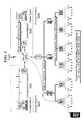
- the base stations are connected to a base station router (BSR), which is connected to the foreign domain network.
- BSR base station router
- the wireless domain network can either be built with a tree structure or another.
- the tree structure is retained for the description of the protocol.
- the important point is the exact topology of the network is well known by the operator of the say network. This implies that regardless the motion direction taken by the user the next BSR is predictable.
- MAR Main Access Router
- This router plays the role of the foreign and home agent as defined in mobile IP.
- the rest of the network routers are traditional IP router with a specific requirement to support multicast routing.
- the BSR manages two caches. One cache contains information on every binding association.
- the binding association contains the mobile node address, the multicast address, lifetime, etc.
- the BSR's second cache contains information on probable mobile node. This information is given by surrounding BSRs when a mobile node access has been granted.
- the MAR and BSRs MUST synchronize. During this process every BSR acquires knowledge of the FA capability of the MAR. This information is used by the each BSR to create a local agent advertisement message.
- the BS triggers the emission of the agent advertisement message by sending the mobile node advertisement message; the mobile node receives it and sends a registration request.
- the BSR inserts its IP address at the end of the mobile node registration request (the BSR extension) and forwards the entire message to the MAR.
- the MAR checks the registration and takes the appropriate action associated with each extension present in the message (AAA extension, challenge and response extension, network Access Identifier extension, etc.).
- the MAR removes the BSR extension and creates an entry in the pending cache associating the BSR to the mobile node registration request. Then the registration request is forwarded to the home agent. Once the registration reply from the home agent is received by the MAR, it assigns a multicast address that is associated to the mobile node binding.
- this base station informs the BSR of the newly arrived mobile node by sending link layer information of the mobile node. If the BSR has a cache entry for the mobile node, it updates the cache. If the BSR does not have a cache entry for the mobile node but has an entry in its probable cache, the BSR send a joint message toward the MAR. It then can receive and de-tunnel the packets send to the mobile node.
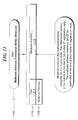
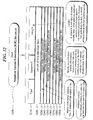
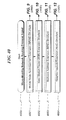
- the mobile node advertisement protocol structure extension is illustrated in FIG. 9 ( 0900 ) and typically comprises the following fields:
- the present invention protocol extends the current Mobile IP protocol with a set of messages designed to:
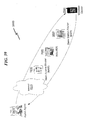
- the first scenario ( 1610 ) illustrated is when the mobile node is moving under the coverage area of a foreign domain ( 1611 ).
- FIG. 17-24 1700, 1800, 1900, 2000, 2100, 2200, 2300, 2400 ) and will now be discussed in detail.
- the link layer protocol at the base station triggers the emission of the mobile node advertisement message ( 1702 ).
- the BS informs the BSR of the entrance of a mobile node in the cell ( 1703 ).
- the base station MUST periodically send the mobile node advertisement message to the BSR with the list of mobile node located in the base station cell ( 1704 ).
- the BSR will base its decision on the presence of the link layer of the mobile node in its caches. If the binding cache is hit ( 1705 ), the BSR MUST refresh the entry ( 1706 ). If the probable cache is hit ( 1707 ), the BSR MUST joint the diffusion tree and transfer the entry from the probable cache to the binding cache ( 1708 ).
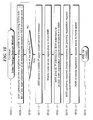
- the BSR MUST periodically send a neighbor binding update to the surrounding BSRs with the list of link layer information of all the mobile nodes located in the BSR coverage area ( 1809 ).
- the BSR MUST send a mobile IP agent advertisement message ( 1811 ).
- the mobile node sends the registration to the base station router (BSR) ( 1812 ).
- BSR which can be for instance the first BSR
- the BSR MUST add its IP address (i.e., BSR extension) to the mobile node registration request and forwards it to the MAR ( 1813 ).
- the MAR after having performed all the required checks necessary for granting the registration request (AAA protocol, challenge/response, and key exchange, NAI, etc.) ( 1814 ) forwards the registration request alone to the home agent ( 1815 ).
- the MAR creates an entry in the pending cache for the mobile node request, including the IP address of the BSR serving the mobile node ( 1916 ).
- the MAR apparently hosts the mobile node ( 1917 ).
- the home agent based on its own policy grants or denies the registration request ( 1918 ).
- the home agent Considering that the home agent grants the request ( 1919 ), it sends its reply to the foreign agent (i.e., the MAR) ( 1920 ).
- the mechanism previously described will trigger a second registration request ( 2023 ).
- the new BSR processes the registration request as described in the previous paragraph (i.e., the BSR appends the BSR extension to the registration request) ( 2024 ).
- the MAR receiving the mobile registration MUST check the pending cache ( 2025 ). If the cache is hit ( 2026 ), the MAR will conclude that the mobile node has moved to another cell while the home agent is processing the registration request ( 2027 ). The MAR MUST update the pending cache to reflect the new BSR address ( 2028 ).
- the MAR When the MAR receives the registration reply ( 2129 ) it updates its cache to reflect the result of the request (e.g., remove the entry in the pending cache and creates one entry in the binding cache) and assign a multicast address ( 2130 ).
- the registration reply is forwarded to the base station router preceding the multicast address extension ( 2131 ).
- the first BSR removes the multicast address extension and forwards the registration reply to the mobile node ( 2132 ). It also creates a binding entry associating the multicast address to the mobile node ( 2133 ).
- the first BSR periodically informs the second BSR of the newly created binding ( 2234 ).
- the message includes for each mobile node found in the binding cache the mobile node address, the care-of address, the home agent address, the multicast address, the link layer information and the lifetime of the registration.
- the neighbor binding update message refreshes partially the probable cache entries ( 2235 ). This is a partial refresh, as the cache will be entirely refreshed after having received every neighbor binding update message of each neighboring BSR.
- this base station MUST send periodically refresh message (mobile node advertisement) to the first BSR (periodicity needs to be defined based on application context) ( 2337 ).
- the mobile node advertisement message refreshes partially the binding cache entries ( 2338 ). This is a partial refresh, as the cache will be entirely refreshed after having received every mobile node advertisement message of each base station.
- the base station MUST send immediately a mobile node advertisement message with the link layer information of the mobile node that has generated the event ( 2340 ).
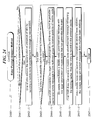
- the second BSR informs the second BSR of the presence of the mobile node by sending a mobile node advertisement message to the second BSR ( 2442 ). If the second BSR has an entry in its probable cache containing the information sent by the first BSR ( 2443 ), the second BSR associates the link layer information given by the BS to the one found in the probable cache and sends a message to join the multicast group to receive the packets of the mobile node ( 2444 ).
- the first BSR does not receive a mobile node advertisement message refreshing the binding cache, thus the entry is moved in the probable cache ( 2445 ). If the mobile node can receive and transmit via several base stations the mobile node will receive message from both several base stations ( 2446 ).
- the proposed protocol does not make any special requirement on the type care-of address used by the mobile node.
- This address can either be a foreign agent care-of address or a co-located care-of address.
- the MAR has initially required all the BSRs to set the 'R' bit in the agent advertisement message they send after receiving a mobile node advertisement message ( 2501 ). How the mobile node acquires the co-located care of address is out of the scope of the document but its implementation will be well known to one skilled in the art.
- the BSR appends the BSR extension after the registration request ( 2503 ).
- the MAR processes the registration and removes the BSR extension ( 2504 ).
- the MAR allocates a multicast address for the mobile node and appends it in the multicast address extension after the registration reply ( 2505 ).
- the only difference resides in the traffic management, i.e., which node removes the tunnel and forwards the packet to its mobile destination ( 2506 ).
- the next section describes how the traffic is managed when the mobile node uses a co-located care-of address.
- the correspondent node is located outside the wireless domain ( 2601 ).
- packets will be addressed to the home network ( 2602 ).
- the home agent captures and tunnels those packets to the care-of address found in its binding cache ( 2603 ). This address corresponds to main access router IP address.
- the MAR receives the tunneled packets ( 2604 ). If the MAR has a valid binding cache for the mobile node ( 2605 ), it de-tunnels the packet and creates a new tunnel ( 2606 ).
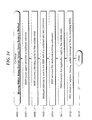
- FIG. 28 2800 . If the mobile node uses a co-located care-of address ( 2801 ), the MAR captures the datagram ( 2802 ) and tunnels them with the destination address set to the multicast address ( 2803 ). Each BSR that has subscribed to the group receives the packets ( 2804 ) and de-tunnels it ( 2805 ) and sends the packet to the mobile node ( 2806 ). The mobile node de-tunnels the packet as specified in mobile IP ( 2807 ).
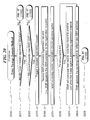
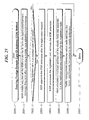
- FIG. 29 2900
- the traffic is sent to the mobile node home address ( 2902 ).
- the MAR searches its binding cache for a valid entry containing the mobile node home address ( 2903 ). If the cache is hit ( 2904 ), MAR tunnels the packet directly to the multicast group ( 2905 ). This mechanism enhances the performance of the overall network when route optimization is not used.
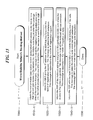
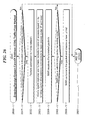
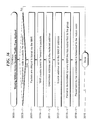
- the base station MUST inform the BSR of the presence of the mobile node ( 3002 ). It MUST send a mobile node advertisement message including the link layer information of the mobile node ( 3003 ). Two scenarios can be foreseen. If the mobile node has moved to another base station but remains under the coverage of the same BSR (i.e., the mobile node is served by a BS linked to the same BSR) ( 3004 ), then no action is needed ( 3008 ).
- the BSR If the mobile node is not among the ones served by the BSR (i.e., the BSR does not have a binding cache), but the BSR has an entry in the probable cache ( 3005 ), the BSR MUST immediately subscribe to the multicast group ( 3006 ).
- the BSR informs all BSRs in its neighborhood including the list of mobile node information ( 3007 ).
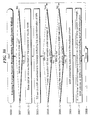
- the "make-before-break” option requires that the surrounding BSRs of a serving BSR subscribe to the diffusion group ( 3102 ) as soon as they receive the neighbor update message ( 3101 ).
- the option also requires that all the BSRs not currently serving the mobile node (i.e., the mobile node's entry is in the probable cache) to filter and discard all the incoming multicast packets ( 3103 ).
- the filtering is removed ( 3105 ) when the BSR received from one of its base stations a mobile node advertisement message including the mobile node link layer information ( 3104 ).
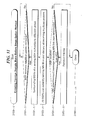
- the correspondent node if the correspondent node is outside the domain ( 3608 ), packets are obliged to transit via the MAR ( 3609 ), which applies the same principle as described in the previous paragraph.
- the MAR creates a tunnel ( 3610 ) with the destination address set to the multicast address ( 3611 ) and with the source address set to the MAR IP address ( 3612 ). This packet is detunneled by every BSR that has subscribed to the group ( 3613 ). The packet sent by the correspondent is forwarded to the mobile node ( 3614 ).
- the base station MUST maintain a cache including link-layer specific information of every mobile node located within its coverage area.
- the base station MUST sent periodically mobile node advertisement update (see previous section Mobile Node Advertisement ) containing all the link-layer specific information of all the mobile nodes located under its coverage area.
- the periodicity of this message remains to be defined. It is more likely that the periodicity will be linked to the number of base stations attached to the BSR and to the number of users that the BSR can manage.
- the number of messages sent should be tuned so that the signaling part of the protocol does not create a great overhead.
- the base station MUST immediately sent a mobile node advertisement message with the sub-type set to "new" (see previous section Mobile Node Advertisement ) giving the link-layer specific information of the mobile node, when it detects that a mobile node has enter its coverage area.
- This sequence is generically illustrated in FIG. 3 ( 0300 ).
- the BSR MUST process agent advertisement message sent by the MAR.
- the BSR MUST store the information given as it will be used to send local agent advertisement message to a mobile node.
- the BSR detects a MAR failure when it receives an agent advertisement message with a sequence number equal to zero. If the BSR receives an agent advertisement message with a sequence number different than zero just after its own power-up phase, this indicates that the BSR has rebooted. This case requires all mobile nodes to re-register with their home agent. This scenario is illustrated generically in FIG. 2 ( 0200 ).
- the base station router MUST manage two caches: the binding cache holds the information of all mobile nodes that are currently or were under one coverage area of the one of the base stations. Indeed a mobile node may have been included in the last mobile node advertisement message that will have refreshed the binding cache entry and may have moved under another coverage area managed by another base station router.
- the probable cache holds the information of the mobile nodes that are in the neighborhood. These mobile nodes may appear in the near future and the information is intended to help the handoff process.
- the base station MUST process the mobile node advertisement message. There are two different scenarios depending on the value of the sub-type field:
- the BSR MUST send periodically a neighbor update message with the list of mobile node located under its BSR coverage area. This list is sent to all the BSRs in the neighborhood. How the BSR knows the list of BSRs in the neighborhood is out of the scope of the document (e.g., the information could be given to the BSR via network management protocol, SNMP).
- SNMP network management protocol
- the BSR must process every neighbor update message received. Each of these messages includes the list of mobile node currently served by a neighboring BSR. For each mobile node included in the list the BSR MUST either creates an entry or refreshes an existing one. If the implementation wants to support the "make-before-break" option, the BSR MUST send an IGMP join message in direction of the MAR. If the entry in the probable cache expires, the entry MUST be deleted and the BSR MUST send a leave message in direction of the MAR. The lifetime of the probable cache entry is set to twice the sending rate of the neighbor update messages.
- the BSR For each multicast diffusion group that matches an entry in the binding cache and for which the BSR has subscribed the BSR MUST de-tunnel all packets received and forward them to the base stations. If the BSR implements the make-before-break feature, the BSR MUST be able to filter the multicast diffusion group that do not require packet processing (i.e., because the mobile node have not yet entered the BSR coverage area). The BSR knows the list of mobile nodes that require such processing by consulting the probable cache.
- the BSR When an entry of the probable cache is not refreshed, if the BSR does not implement the make-before-break option, the BSR MUST send an IGMP leave message in direction of the MAR. The entry MUST then be removed from the cache.
- the MAR MUST check the presence of the BSR extension.
- the registration request MUST be rejected by the MAR if the BSR extension is not included.
- the MAR must be able to determine the two following cases:
- the MAR finds that the registration request of the mobile is sent to refresh its current binding, the MAR MUST forward the registration to the home agent.
- the MAR MUST append the multicast address extension at the end of the registration reply received from the home agent. This extension MUST include the same multicast address has allocated during the processing of the initial registration request.
- the Internet IP network means may incorporate any number of Main Access Routers, routers, and/or base station routers to implement the hardware functionality required in this scenario.
- Software to implement the described protocols may be layered among any or all layers within this hardware structure.
- SGM Small Group Multicast
- XCAST Explicit Multicast
- a node In order to join a particular multicast group a node usually sends an IGMP join message to a source or to a centralized node depending upon the type of multicast technique being used.
- Traditional IP multicast uses a multicast address to forward datagrams to members of a particular group.
- the multicast routers from the source to group members update their tables reflecting the presence of group members downstream.
- Each multicast router forwards the datagrams till they reach the nodes that had subscribed to a group. This mechanism works well when the groups are very large and the number of groups are small in number.
- XCAST can effectively support large number of small multicast groups.
- Traditional IP multicast rely upon multicast routers to maintain multicast group information and therefore highly suitable for small number of large multicast groups.
- Large number of multicast groups could cause scalability problems because each multicast router would have to keep a lot of entries (for each group) and also the processing time involved in lookup.
- XCAST addresses this issue by eliminating the need for information (group information) be stored at each multicast router, instead each data packet carries the unicast address of the nodes that are members of this multicast group.
- the packets are replicated wherever necessary in order that all group members receive the datagrams.
- the source of the packets usually manages the group membership, therefore any node wishing to be a member of the group sends a message requesting to join a XCAST session.
- a domain may consist of few hundred base stations serving thousands of MNs.
- the MAR assigns a multicast address for every MN within its domain.
- the MAR therefore, has to keep an entry and the group membership for all MNs within its domain.
- the BSRs also have hundreds of multicast routing entries for mobile nodes under its coverage. This not only creates a bulky routing table but also increases the lookup time for each MN. If there are multicast routers between the MAR and the BSRs, then they would also need to have multicast entries for each MN.
- the advantages that multicast routing offers are negated because of the scalability problem that it poses here. This problem also exists with protocols that use host-based routing techniques.
- Data packets addressed to a MN visiting a foreign domain are received by the MAR, it then tunnels the packets to the BSRs using the XCAST mechanism.
- the datagrams are either replicated before sending them downstream depending upon the addresses listed in the XCAST header or sent undisturbed to a downstream neighbor.
- the BSRs decapsulates the datagrams and then forwards them to the appropriate MN.
- the MAR When the MAR receives a registration reply from the HA in response to the registration request sent by a MN, the MAR then creates an entry in the XCAST Table 4 containing the MN's Home Address, the CoA of the MN and an entry for the BSR (BSRs that appended their BSR extension) that had forwarded the registration request from the MN to the MAR.
- the entry has the unicast address of BSR that is serving the MN. This entry has to be refreshed periodically since it is a soft-state entry. Each entry has a lifetime for which they are valid and entries that are not refreshed periodically by join messages are flushed. BSRs wanting to keep the entries valid are required to send join messages with their BSR extensions to the MAR.
- XCAST Table Entries MN Home Address Care-Of Address BSRs Lifetime MN1 CoA1 BSR1 10 MN2 CoA2 BSR2 5 BSR3 10 MN3 COA3 BSR3 10
- Table 4 depicts the entries when using XCAST instead of IP multicast.
- the XCAST table only resides at the MAR.
- the routers from the MAR to the BSRs do not contain any XCAST table entries nor do they contain any information about a particular MN except normal IP routing.
- the intermediate routers therefore do not have to manage large multicast tables.
- the intermediate routers may have to perform replication of datagrams depending upon which router is the direct predecessor of the BSRs. At most times only those routers that are direct predecessor of the BSRs would have to perform replication and alter the XCAST header.
- MN1 has a multicast session associated with it and BSR1 is a member of the multicast session. This implies that MN1 is under the coverage of BSR1 and that BSR1 had forwarded the registration reply from the MN1 to the MAR.
- the MAR then either created a new entry or codified/refreshed an existing entry for the MN using the registration request with the BSR extension.
- MN2 is being handed over from BSR2 to BSR3 and therefore has two BSR entries because the lifetime for the entries are usually longer than the handoff latency.
- Table 5 reflects the entries in the XCAST session table at the MAR when using the MBB option.
- BSR1, BSR2, BSR3 and BSR4 are all members of the multicast session for MN1 (MN's unicast address is being used as the session id.), therefore all of them would receive datagrams intended for MN1. From the binding cache entry for the MN1 from Table 1 it is clear that MN1 is being served by BSR1. Therefore BSR2, BSR3 and BSR4 have to discard datagrams intended for MN1 once they receive the data packets from the MAR. Similarly BSR2, BSR3, BSR4 and BSR4 would receive datagrams intended for MN2.
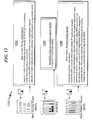
- FIG. 13 ( 1310, 1320, 1330 ) specifically anticipates that the protocols and methods described herein may be incorporated into computer media readable by one or more computer systems, whether they be Main Access Routers ( 1310 ), Routers ( 1320 ), and/or Base Station Routers ( 1330 ).
- This computer readable media may have a wide variety of forms well known or anticipated by one skilled in the art.
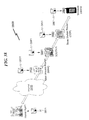
- the present invention anticipates the distributed nature of software as embodied in a variety of computer readable media, whether they be in one or more home agents ( 3811 ) or other network devices that communicate through the Internet ( 3821 ) via a series of software protocols to one or more Main Access Router ( 3831 ), Router ( 3841 ), and/or Base Station Router ( 3851 ) software components to one or more cooperating wireless devices ( 3861 ) operating under a coordinated software protocol embodied in a computer readable medium.
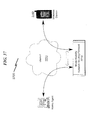
- one home agent ( 3910 ) or other network device communicates through the Internet ( 3920 ) via a series of one or more Main Access Routers ( 3930 ), Routers ( 3940 ), and/or Base Station Routers ( 3950 ) to one or more wireless devices ( 3960 ).
- the main advantage of the present invention protocol is the low latency that is incurred in establishing a network layer connection between the MN and the foreign network. This is achieved by taking advantage of the triggers offered by the link layer when a handoff occurs.
- the other advantage is the smoothness of the handoff that this protocol offers. Smooth handoff occurs because of the Make-Before-break option and this is achieved by taking advantage of multicasting techniques.
- the present invention protocol offers a new solution to the challenging micro-mobility issue. There are a number of other advantages this protocol offers when compared to the solutions mentioned earlier.
- This protocol is completely transparent to the MN, which is not aware of the wireless domain and see the BSR as a "pseudo" foreign agent.
- the use of multicast allows the deployment of MBB, presenting advantages in case of real-time traffic such as voice over IP, although it is important to note that the advantage has its own drawbacks.
- the main drawback is the useless traffic generated to the BSRs that do not serve the MN.
- One skilled in the art given the teachings of the present invention could readily build a simulation platform to validate the concept and measure the performance of the protocol. It would then be possible to ensure that the handoff latency is sufficiently small to offer an efficient quality of service for the end user.
- One skilled in the art given the teachings of the present invention could readily investigate the issues related to multicast routing.
- the communication profile is a strict one-to-few
- the present invention protocol can take advantage of small group multicast protocol (XCAST).
- XCAST small group multicast protocol
- One skilled in the art given the teachings of the present invention could readily make optimizations that to the base protocol with additional study techniques known in the art. Paging extensions based on MMM are anticipated as part of these techniques.
Landscapes
- Engineering & Computer Science (AREA)
- Computer Networks & Wireless Communication (AREA)
- Signal Processing (AREA)
- Databases & Information Systems (AREA)
- Mobile Radio Communication Systems (AREA)
- Data Exchanges In Wide-Area Networks (AREA)
- Telephonic Communication Services (AREA)
Applications Claiming Priority (4)
| Application Number | Priority Date | Filing Date | Title |
|---|---|---|---|
| US31684901P | 2001-08-29 | 2001-08-29 | |
| US316849P | 2001-08-29 | ||
| US10/068,525 US7339928B2 (en) | 2001-08-29 | 2002-02-04 | Micro-mobility network routing system and method |
| US68525 | 2002-02-04 |
Publications (3)
| Publication Number | Publication Date |
|---|---|
| EP1289223A2 true EP1289223A2 (de) | 2003-03-05 |
| EP1289223A3 EP1289223A3 (de) | 2004-05-26 |
| EP1289223B1 EP1289223B1 (de) | 2006-12-20 |
Family
ID=26749058
Family Applications (1)
| Application Number | Title | Priority Date | Filing Date |
|---|---|---|---|
| EP02016991A Expired - Lifetime EP1289223B1 (de) | 2001-08-29 | 2002-08-05 | System und Verfahren zum mikromobilitätsbasierten Netz-Routing |
Country Status (5)
| Country | Link |
|---|---|
| US (1) | US7339928B2 (de) |
| EP (1) | EP1289223B1 (de) |
| CN (1) | CN1298148C (de) |
| AT (1) | ATE349128T1 (de) |
| DE (1) | DE60216862T2 (de) |
Cited By (11)
| Publication number | Priority date | Publication date | Assignee | Title |
|---|---|---|---|---|
| EP1484866A1 (de) * | 2003-06-03 | 2004-12-08 | Microsoft Corporation | Selektive Vorauthentifizierung an vorhergesehenen primären drahtlosen Zugangspunkten |
| FR2863798A1 (fr) * | 2003-12-12 | 2005-06-17 | France Telecom | Procede et systeme de diffusion multicast vers un terminal nomade en fonction de la localisation. |
| WO2007070366A1 (en) * | 2005-12-12 | 2007-06-21 | Lucent Technologies Inc. | Method of downlink rate control |
| KR100734884B1 (ko) | 2006-07-11 | 2007-07-03 | 한국전자통신연구원 | Ieee 802.16/와이브로 망상의 네이버 탐색프로토콜 메시지 전송 방법 |
| WO2009011621A1 (en) | 2007-07-13 | 2009-01-22 | Telefonaktiebolaget L M Ericsson (Publ) | Method for reducing the control signaling in handover situations |
| EP1696685A4 (de) * | 2003-11-19 | 2009-05-13 | Nat Inst Inf & Comm Tech | Funkkommunikationssystem |
| GB2455978A (en) * | 2007-12-24 | 2009-07-01 | King S College London | Packet-switched access networks |
| EP1974554A4 (de) * | 2006-01-11 | 2012-12-19 | Cisco Tech Inc | Systeme und verfahren zur mobilitätsverwaltung in drahtlosen netzwerken |
| EP2541976A1 (de) * | 2004-02-19 | 2013-01-02 | Belair Networks Inc. | Leitweglenkung mit Wegeoptimierung für eine Mobilstation in vermaschten Netzen |
| EP2942905A4 (de) * | 2013-01-06 | 2016-09-07 | Zte Corp | Verfahren und vorrichtung zur registrierung einer multicast-quelle und herstellung eines multicast-weges |
| EP3313106A4 (de) * | 2015-06-18 | 2019-01-16 | Sony Corporation | System, verfahren und endgerätevorrichtung |
Families Citing this family (58)
| Publication number | Priority date | Publication date | Assignee | Title |
|---|---|---|---|---|
| US7065576B2 (en) * | 2001-09-27 | 2006-06-20 | Matsushita Electric Industrial Co., Ltd. | Dynamic multicast grouping for vehicles and other mobile objects |
| US8068832B2 (en) * | 2001-11-19 | 2011-11-29 | Nokia Corporation | Multicast session handover |
| US7471661B1 (en) * | 2002-02-20 | 2008-12-30 | Cisco Technology, Inc. | Methods and apparatus for supporting proxy mobile IP registration in a wireless local area network |
| AU2003212151A1 (en) * | 2002-03-18 | 2003-09-29 | Nortel Networks Limited | Resource allocation using an auto-discovery mechanism for provider-provisioned layer-2 and layer-3 virtual private networks |
| US7346053B1 (en) * | 2002-05-07 | 2008-03-18 | Cisco Technology, Inc. | Methods and apparatus for supporting IP multicast for a mobile router |
| JP4000933B2 (ja) * | 2002-07-19 | 2007-10-31 | ソニー株式会社 | 無線情報伝送システム及び無線通信方法、無線端末装置 |
| EP1532769B1 (de) * | 2002-08-21 | 2011-01-19 | Spyder Navigations L.L.C. | Paket-weiterleitung an ein verbindungsorientiertes netzwerk |
| US7487199B2 (en) * | 2002-09-24 | 2009-02-03 | Motorola, Inc. | Method and apparatus for maintaining SIP contact addresses |
| EP1408666A1 (de) * | 2002-10-09 | 2004-04-14 | Motorola, Inc. | Rutierung in einem Datenkommunikationsnetz |
| US7599323B2 (en) * | 2002-10-17 | 2009-10-06 | Alcatel-Lucent Usa Inc. | Multi-interface mobility client |
| US7499401B2 (en) * | 2002-10-21 | 2009-03-03 | Alcatel-Lucent Usa Inc. | Integrated web cache |
| US7562393B2 (en) * | 2002-10-21 | 2009-07-14 | Alcatel-Lucent Usa Inc. | Mobility access gateway |
| US20070208864A1 (en) * | 2002-10-21 | 2007-09-06 | Flynn Lori A | Mobility access gateway |
| US7515561B2 (en) * | 2002-11-12 | 2009-04-07 | Nokia Corporation | System and method for discovering network interface capabilities |
| GB2395629B (en) * | 2002-11-20 | 2006-06-21 | Motorola Inc | Wireless communications systems and methods |
| US7505432B2 (en) * | 2003-04-28 | 2009-03-17 | Cisco Technology, Inc. | Methods and apparatus for securing proxy Mobile IP |
| JP4076482B2 (ja) * | 2003-07-02 | 2008-04-16 | 株式会社エヌ・ティ・ティ・ドコモ | 移動ノード、移動通信システム及び通信制御方法 |
| KR100561470B1 (ko) * | 2003-10-18 | 2006-03-16 | 삼성전자주식회사 | 네트워크를 이용한 동보 인쇄방법 및 장치 |
| US8655755B2 (en) * | 2003-10-22 | 2014-02-18 | Scottrade, Inc. | System and method for the automated brokerage of financial instruments |
| US20050159149A1 (en) * | 2003-12-27 | 2005-07-21 | Wen Kuei-Ann | Network mobile communication device |
| FR2866498A1 (fr) * | 2004-02-17 | 2005-08-19 | Thomson Licensing Sa | Methode de transmission d'un flux multipoint dans un reseau local et dispositif de connexion implementant la methode |
| EP1578059A1 (de) * | 2004-03-19 | 2005-09-21 | Swisscom Mobile AG | WLAN Weiterreichung |
| US7924771B2 (en) * | 2004-04-13 | 2011-04-12 | Qualcomm, Incorporated | Multimedia communication using co-located care of address for bearer traffic |
| CN102395166B (zh) * | 2004-06-11 | 2014-08-06 | 三星电子株式会社 | 宽带无线接入通信系统中用于快速网络重入的移动站和基站 |
| JP3950874B2 (ja) * | 2004-07-01 | 2007-08-01 | 株式会社東芝 | ネットワーク接続装置、経路情報配布プログラム及び経路情報配布方法 |
| WO2006015513A1 (en) * | 2004-08-12 | 2006-02-16 | Intel Corporation | Method and system for processing multicast packets |
| JP4382094B2 (ja) * | 2004-08-12 | 2009-12-09 | 富士通株式会社 | 移動通信ネットワークシステム |
| KR100636318B1 (ko) * | 2004-09-07 | 2006-10-18 | 삼성전자주식회사 | CoA 바인딩 프로토콜을 이용한 어드레스 오너쉽인증방법 및 그 시스템 |
| US7676223B2 (en) * | 2004-09-13 | 2010-03-09 | Alcatel-Lucent Usa Inc. | Method for controlling a flow of information between secondary agents and a mobile device in a wireless communications system |
| DE102004047692A1 (de) * | 2004-09-30 | 2006-04-13 | Siemens Ag | Kommunikationssystem und Verfahren zur Bereitstellung eines mobilen Kommunikationsdienstes |
| DE102004057311B4 (de) * | 2004-11-26 | 2007-12-20 | T-Mobile International Ag & Co. Kg | Verfahren und System zur Unterstützung von Dienstekontinuität für mobile Kommunikation über unterschiedliche Zugangsnetzwerke |
| GB2422072B (en) * | 2005-01-10 | 2008-06-04 | Motorola Inc | A network node a communication node and a method of operation therefor |
| KR100597423B1 (ko) * | 2005-01-25 | 2006-07-05 | 삼성전자주식회사 | 이동 아이피(Mobile IP) 환경에 있어서,이동국(Mobile Node)의 등록 방법 및 상기방법에 의한 이동 아이피 네트워크 시스템 |
| US20060227745A1 (en) * | 2005-03-11 | 2006-10-12 | Interdigital Technology Corporation | Method and system for station location based neighbor determination and handover probability estimation |
| JPWO2006118188A1 (ja) * | 2005-04-28 | 2008-12-18 | 松下電器産業株式会社 | クロスオーバノード検出方法及びこの方法をコンピュータにより実行するためのクロスオーバノード検出用プログラム |
| JP4558577B2 (ja) * | 2005-05-12 | 2010-10-06 | パナソニック株式会社 | パケット中継方法およびホームエージェント |
| KR100677591B1 (ko) * | 2005-05-27 | 2007-02-02 | 삼성전자주식회사 | Sctp 기반의 핸드오버 기능을 구비한 단말장치 및핸드오버 방법 |
| WO2007015539A1 (ja) * | 2005-08-03 | 2007-02-08 | Matsushita Electric Industrial Co., Ltd. | クロスオーバノード検出前処理方法、この方法をコンピュータにより実行するためのクロスオーバノード検出前処理用プログラム、及びこの方法で用いられる移動端末 |
| US7899456B2 (en) * | 2005-12-16 | 2011-03-01 | International Business Machines Corporation | Method for faster mobility handoff of a mobile node |
| KR101185570B1 (ko) * | 2006-03-04 | 2012-09-24 | 삼성전자주식회사 | 이동망 환경에서의 다중 인터페이스를 이용한 자원예약방법 |
| US7865583B2 (en) | 2006-03-31 | 2011-01-04 | The Invention Science Fund I, Llc | Aggregating network activity using software provenance data |
| US8477683B2 (en) * | 2006-04-13 | 2013-07-02 | Qualcomm Incorporated | Configuring a host device by way of MMP |
| US20070254677A1 (en) * | 2006-05-01 | 2007-11-01 | Motorola, Inc. | Method and system to enable paging for mobile ip nodes |
| GB2438454B (en) * | 2006-05-26 | 2008-08-06 | Motorola Inc | Method and system for communication |
| US20080025256A1 (en) * | 2006-07-26 | 2008-01-31 | Boris Ginzburg | Multicasting techniques in wireless networks |
| CN100596101C (zh) * | 2006-08-31 | 2010-03-24 | 华为技术有限公司 | 一种本地移动性管理网络的报文路由方法和系统 |
| US20080077491A1 (en) * | 2006-09-21 | 2008-03-27 | Geraldine Robinson | Advertisement system and method |
| US8547891B2 (en) | 2006-10-10 | 2013-10-01 | Qualcomm Incorporated | Systems and methods for improving multicasting over a forward link |
| KR101030353B1 (ko) * | 2008-12-23 | 2011-04-20 | 삼성전자주식회사 | 근거리 통신 환경에서 이동단말기의 경로를 탐색하는 장치 및 방법 |
| US8385332B2 (en) * | 2009-01-12 | 2013-02-26 | Juniper Networks, Inc. | Network-based macro mobility in cellular networks using an extended routing protocol |
| US8509815B1 (en) * | 2009-05-21 | 2013-08-13 | Sprint Communications Company L.P. | Dynamically updating a home agent with location-based information |
| US20100309878A1 (en) * | 2009-06-08 | 2010-12-09 | Aleksandr Stolyar | Mobility access gateway |
| WO2012034600A1 (en) * | 2010-09-17 | 2012-03-22 | Nokia Siemens Networks Oy | Method and device for processing data in a communication network |
| EP2946604B8 (de) * | 2013-01-17 | 2021-03-03 | Apple Inc. | Systeme und verfahren zur mobilitätsoptimierung in einem heterogenen netzwerk |
| US9742798B2 (en) | 2015-03-16 | 2017-08-22 | Cisco Technology, Inc. | Mitigating neighbor discovery-based denial of service attacks |
| US10219166B2 (en) | 2015-04-30 | 2019-02-26 | Mist Systems, Inc. | Methods and apparatus for generating, transmitting and/or using beacons |
| US9363784B1 (en) | 2015-04-30 | 2016-06-07 | Mist Systems Inc. | Methods and apparatus relating to the use of real and/or virtual beacons |
| CN106658479B (zh) * | 2016-11-16 | 2020-12-11 | 广东新岸线科技有限公司 | 一种无线网络融合的实现方法 |
Family Cites Families (13)
| Publication number | Priority date | Publication date | Assignee | Title |
|---|---|---|---|---|
| US5325362A (en) * | 1993-09-29 | 1994-06-28 | Sun Microsystems, Inc. | Scalable and efficient intra-domain tunneling mobile-IP scheme |
| US5636220A (en) * | 1994-03-01 | 1997-06-03 | Motorola, Inc. | Packet delivery method for use in a wireless local area network (LAN) |
| CA2129197C (en) * | 1994-07-29 | 1999-11-09 | Roger Y.M. Cheung | Method and apparatus for connecting a wireless lan to a wired lan |
| JP2842524B2 (ja) * | 1996-06-06 | 1999-01-06 | 日本電気株式会社 | マルチキャストグループ構成方法及びマルチキャスト通信ネットワーク |
| JP3090194B2 (ja) * | 1997-02-24 | 2000-09-18 | 日本電気株式会社 | 移動ホストのマルチキャスト通信方法 |
| US6434134B1 (en) * | 1998-12-11 | 2002-08-13 | Lucent Technologies, Inc. | Dynamic address assignment for wireless devices accessing packet-based wired networks |
| US6578085B1 (en) | 1999-01-27 | 2003-06-10 | Nortel Networks Limited | System and method for route optimization in a wireless internet protocol network |
| WO2000054475A1 (en) | 1999-03-09 | 2000-09-14 | Telefonaktiebolaget Lm Ericsson (Publ) | Multicast handover for mobile internet protocol |
| JP3895176B2 (ja) | 1999-07-22 | 2007-03-22 | 株式会社日立製作所 | 移動体ipネットワークシステムおよびコネクション切替え方法 |
| AU7565000A (en) | 1999-09-21 | 2001-04-24 | Telefonaktiebolaget Lm Ericsson (Publ) | System and method for call routing in an integrated telecommunications network having a packet-switched network portion and a circuit-switched network portion |
| JP4060021B2 (ja) * | 2000-02-21 | 2008-03-12 | 富士通株式会社 | 移動通信サービス提供システム、および移動通信サービス提供方法 |
| US20020075866A1 (en) * | 2000-09-14 | 2002-06-20 | Troxel Gregory Donald | Delivering messages to a node at a foreign network |
| US6816912B1 (en) * | 2000-12-01 | 2004-11-09 | Utstarcom, Inc. | Method and system for tunnel optimized call setup for mobile nodes |
-
2002
- 2002-02-04 US US10/068,525 patent/US7339928B2/en not_active Expired - Fee Related
- 2002-08-05 DE DE60216862T patent/DE60216862T2/de not_active Expired - Lifetime
- 2002-08-05 AT AT02016991T patent/ATE349128T1/de not_active IP Right Cessation
- 2002-08-05 EP EP02016991A patent/EP1289223B1/de not_active Expired - Lifetime
- 2002-08-27 CN CNB021419469A patent/CN1298148C/zh not_active Expired - Fee Related
Non-Patent Citations (4)
| Title |
|---|
| HEISSENHUBER F ET AL: "HOME AGENT REDUNDANCY AND LOAD BALANCING IN MOBILE IPV6" BROADBAND COMMUNICATIONS. PROCEEDINGS OF THE INTERNATIONAL IFIP-IEEE CONFERENCE ON BROADBAND COMMUNICATIONS, XX, XX, 10 November 1999 (1999-11-10), pages 235-244, XP009002035 * |
| JOHNSON D B ET AL: "Mobility Support in IPv6" INTERNET RFC, 18 November 1998 (1998-11-18), XP002253905 Retrieved from the Internet: <URL:http://www.watersprings.org/pub/id/dr aft-ietf-mobileip-ipv6-07.txt> [retrieved on 2003-09-09] * |
| PERKINS C (EDITOR): "ip mobility support, rfc 2002" INTERNET RFC, October 1996 (1996-10), XP002233555 Retrieved from the Internet: <URL:http://www.faqs.org/rfc/rfc2002.htm> [retrieved on 2003-02-27] * |
| SESHAN S ET AL: "HANDOFFS IN CELLULAR WIRELESS NETWORKS: THE DAEDALUS IMPLEMENTATIONAND EXPERIENCE" WIRELESS PERSONAL COMMUNICATIONS, KLUWER ACADEMIC PUBLISHERS, NL, vol. 4, no. 2, 1 March 1997 (1997-03-01), pages 141-162, XP000728589 ISSN: 0929-6212 * |
Cited By (21)
| Publication number | Priority date | Publication date | Assignee | Title |
|---|---|---|---|---|
| US7460855B2 (en) | 2003-06-03 | 2008-12-02 | Microsoft Corporation | Selective pre-authentication to anticipated primary wireless access points |
| EP1484866A1 (de) * | 2003-06-03 | 2004-12-08 | Microsoft Corporation | Selektive Vorauthentifizierung an vorhergesehenen primären drahtlosen Zugangspunkten |
| US8055255B2 (en) | 2003-11-19 | 2011-11-08 | National Institute of Information and Communications Technology, Incorporated Admistrative Agency | Wireless communications system |
| EP1696685A4 (de) * | 2003-11-19 | 2009-05-13 | Nat Inst Inf & Comm Tech | Funkkommunikationssystem |
| US8265032B2 (en) | 2003-12-12 | 2012-09-11 | France Telecom | Method and system for multicast broadcasting towards a roaming terminal according to the location thereof |
| WO2005067201A1 (fr) * | 2003-12-12 | 2005-07-21 | France Telecom | Procede et systeme de diffusion multicast vers un terminal nomade en fonction de sa localisation |
| FR2863798A1 (fr) * | 2003-12-12 | 2005-06-17 | France Telecom | Procede et systeme de diffusion multicast vers un terminal nomade en fonction de la localisation. |
| US8811346B2 (en) | 2004-02-19 | 2014-08-19 | Belair Networks Inc. | Mobile station traffic routing |
| EP2541976A1 (de) * | 2004-02-19 | 2013-01-02 | Belair Networks Inc. | Leitweglenkung mit Wegeoptimierung für eine Mobilstation in vermaschten Netzen |
| WO2007070366A1 (en) * | 2005-12-12 | 2007-06-21 | Lucent Technologies Inc. | Method of downlink rate control |
| EP1974554A4 (de) * | 2006-01-11 | 2012-12-19 | Cisco Tech Inc | Systeme und verfahren zur mobilitätsverwaltung in drahtlosen netzwerken |
| KR100734884B1 (ko) | 2006-07-11 | 2007-07-03 | 한국전자통신연구원 | Ieee 802.16/와이브로 망상의 네이버 탐색프로토콜 메시지 전송 방법 |
| EP2174521A4 (de) * | 2007-07-13 | 2012-06-13 | Ericsson Telefon Ab L M | Verfahren zum verringern der steuersignalisierung in handover-situationen |
| WO2009011621A1 (en) | 2007-07-13 | 2009-01-22 | Telefonaktiebolaget L M Ericsson (Publ) | Method for reducing the control signaling in handover situations |
| CN101743768A (zh) * | 2007-07-13 | 2010-06-16 | 艾利森电话股份有限公司 | 用于在切换情景中减少控制信令的方法 |
| CN101743768B (zh) * | 2007-07-13 | 2018-11-13 | 艾利森电话股份有限公司 | 用于在切换情景中减少控制信令的方法 |
| GB2455978A (en) * | 2007-12-24 | 2009-07-01 | King S College London | Packet-switched access networks |
| EP2942905A4 (de) * | 2013-01-06 | 2016-09-07 | Zte Corp | Verfahren und vorrichtung zur registrierung einer multicast-quelle und herstellung eines multicast-weges |
| US9871718B2 (en) | 2013-01-06 | 2018-01-16 | Zte Corporation | Method and device for registering multicast source and establishing multicast path |
| EP3313106A4 (de) * | 2015-06-18 | 2019-01-16 | Sony Corporation | System, verfahren und endgerätevorrichtung |
| US10433153B2 (en) | 2015-06-18 | 2019-10-01 | Sony Corporation | System, method, and terminal device |
Also Published As
| Publication number | Publication date |
|---|---|
| EP1289223A3 (de) | 2004-05-26 |
| CN1407772A (zh) | 2003-04-02 |
| US20050213545A1 (en) | 2005-09-29 |
| CN1298148C (zh) | 2007-01-31 |
| DE60216862T2 (de) | 2007-10-18 |
| ATE349128T1 (de) | 2007-01-15 |
| DE60216862D1 (de) | 2007-02-01 |
| US7339928B2 (en) | 2008-03-04 |
| EP1289223B1 (de) | 2006-12-20 |
Similar Documents
| Publication | Publication Date | Title |
|---|---|---|
| US7339928B2 (en) | Micro-mobility network routing system and method | |
| US6804221B1 (en) | Micromobility using multicast | |
| US6988146B1 (en) | Simple multicast extension for mobile IP SMM | |
| JP4579905B2 (ja) | 分配された移動体エージェント | |
| US7672288B1 (en) | Arrangement for secure communication and key distribution in a telecommunication system | |
| Zhu et al. | A survey of mobility support in the Internet | |
| CN1321514C (zh) | 用于稳定切换的网络装置及使用其的切换方法 | |
| WO2001047191A1 (en) | Mobile ip for mobile ad hoc networks | |
| US7606201B2 (en) | Handover enabler | |
| JPWO2009057296A1 (ja) | 移動端末及びネットワークノード並びにパケット転送管理ノード | |
| EP1938552B1 (de) | Dynamische entdeckung von heimagenten mit spezifischer bindung | |
| CN101496425A (zh) | 用于在多个网络交互工作中通过本地代理进行动态本地地址分配的方法及设备 | |
| Helmy et al. | Efficient micro-mobility using intra-domain multicast-based mechanisms (M&M) | |
| US20100316035A1 (en) | Position information management device, network edge device, and mobile terminal | |
| CN1980252A (zh) | 地址冲突检测的实现方法及其地址冲突检测代理装置 | |
| Sethom et al. | Wireless MPLS: a new layer 2.5 micro-mobility scheme | |
| EP2071807A1 (de) | Verbessertes Mobile IP-System mit verteilten Home Agents | |
| KR101473678B1 (ko) | 모바일 노드의 홈 에이전트에 등록하기 위한 방법 및 외부 에이전트 | |
| JP5008680B2 (ja) | 通信システム及びモバイル・ホームエージェント | |
| Kim | Low latency cross layer handover scheme in proxy mobile IPv6 domain | |
| KR101037531B1 (ko) | 무선 인터넷 시스템에서 통신 상태 정보를 이용한 소프트핸드오버 방법 | |
| Goswami et al. | A survey on various route optimization techniques in network mobility | |
| Zhu et al. | Rfc 6301: A survey of mobility support in the internet | |
| Magret et al. | Multicast micro-mobility management | |
| Chuah et al. | Distributed Registration Extension to Mobile-IP |
Legal Events
| Date | Code | Title | Description |
|---|---|---|---|
| PUAI | Public reference made under article 153(3) epc to a published international application that has entered the european phase |
Free format text: ORIGINAL CODE: 0009012 |
|
| AK | Designated contracting states |
Kind code of ref document: A2 Designated state(s): AT BE BG CH CY CZ DE DK EE ES FI FR GB GR IE IT LI LU MC NL PT SE SK TR |
|
| AX | Request for extension of the european patent |
Extension state: AL LT LV MK RO SI |
|
| RIN1 | Information on inventor provided before grant (corrected) |
Inventor name: KUMAR CHOYI, VINOD Inventor name: SARIKAYA, BEHCET Inventor name: MAGRET, VINCENT |
|
| PUAL | Search report despatched |
Free format text: ORIGINAL CODE: 0009013 |
|
| AK | Designated contracting states |
Kind code of ref document: A3 Designated state(s): AT BE BG CH CY CZ DE DK EE ES FI FR GB GR IE IT LI LU MC NL PT SE SK TR |
|
| AX | Request for extension of the european patent |
Extension state: AL LT LV MK RO SI |
|
| RIN1 | Information on inventor provided before grant (corrected) |
Inventor name: SARIKAYA, BEHCET Inventor name: KUMAR CHOYI, VINOD Inventor name: MAGRET, VINCENT |
|
| RIN1 | Information on inventor provided before grant (corrected) |
Inventor name: MAGRET, VINCENT Inventor name: SARIKAYA, BEHCET Inventor name: KUMAR CHOYI, VINOD |
|
| 17P | Request for examination filed |
Effective date: 20041124 |
|
| AKX | Designation fees paid |
Designated state(s): AT BE BG CH CY CZ DE DK EE ES FI FR GB GR IE IT LI LU MC NL PT SE SK TR |
|
| 17Q | First examination report despatched |
Effective date: 20050215 |
|
| GRAP | Despatch of communication of intention to grant a patent |
Free format text: ORIGINAL CODE: EPIDOSNIGR1 |
|
| GRAS | Grant fee paid |
Free format text: ORIGINAL CODE: EPIDOSNIGR3 |
|
| GRAA | (expected) grant |
Free format text: ORIGINAL CODE: 0009210 |
|
| AK | Designated contracting states |
Kind code of ref document: B1 Designated state(s): AT BE BG CH CY CZ DE DK EE ES FI FR GB GR IE IT LI LU MC NL PT SE SK TR |
|
| PG25 | Lapsed in a contracting state [announced via postgrant information from national office to epo] |
Ref country code: NL Free format text: LAPSE BECAUSE OF FAILURE TO SUBMIT A TRANSLATION OF THE DESCRIPTION OR TO PAY THE FEE WITHIN THE PRESCRIBED TIME-LIMIT Effective date: 20061220 Ref country code: LI Free format text: LAPSE BECAUSE OF FAILURE TO SUBMIT A TRANSLATION OF THE DESCRIPTION OR TO PAY THE FEE WITHIN THE PRESCRIBED TIME-LIMIT Effective date: 20061220 Ref country code: AT Free format text: LAPSE BECAUSE OF FAILURE TO SUBMIT A TRANSLATION OF THE DESCRIPTION OR TO PAY THE FEE WITHIN THE PRESCRIBED TIME-LIMIT Effective date: 20061220 Ref country code: DK Free format text: LAPSE BECAUSE OF FAILURE TO SUBMIT A TRANSLATION OF THE DESCRIPTION OR TO PAY THE FEE WITHIN THE PRESCRIBED TIME-LIMIT Effective date: 20061220 Ref country code: CZ Free format text: LAPSE BECAUSE OF FAILURE TO SUBMIT A TRANSLATION OF THE DESCRIPTION OR TO PAY THE FEE WITHIN THE PRESCRIBED TIME-LIMIT Effective date: 20061220 Ref country code: FI Free format text: LAPSE BECAUSE OF FAILURE TO SUBMIT A TRANSLATION OF THE DESCRIPTION OR TO PAY THE FEE WITHIN THE PRESCRIBED TIME-LIMIT Effective date: 20061220 Ref country code: CH Free format text: LAPSE BECAUSE OF FAILURE TO SUBMIT A TRANSLATION OF THE DESCRIPTION OR TO PAY THE FEE WITHIN THE PRESCRIBED TIME-LIMIT Effective date: 20061220 Ref country code: SK Free format text: LAPSE BECAUSE OF FAILURE TO SUBMIT A TRANSLATION OF THE DESCRIPTION OR TO PAY THE FEE WITHIN THE PRESCRIBED TIME-LIMIT Effective date: 20061220 Ref country code: BE Free format text: LAPSE BECAUSE OF FAILURE TO SUBMIT A TRANSLATION OF THE DESCRIPTION OR TO PAY THE FEE WITHIN THE PRESCRIBED TIME-LIMIT Effective date: 20061220 |
|
| REG | Reference to a national code |
Ref country code: GB Ref legal event code: FG4D |
|
| REG | Reference to a national code |
Ref country code: CH Ref legal event code: EP |
|
| REF | Corresponds to: |
Ref document number: 60216862 Country of ref document: DE Date of ref document: 20070201 Kind code of ref document: P |
|
| REG | Reference to a national code |
Ref country code: IE Ref legal event code: FG4D |
|
| PG25 | Lapsed in a contracting state [announced via postgrant information from national office to epo] |
Ref country code: BG Free format text: LAPSE BECAUSE OF FAILURE TO SUBMIT A TRANSLATION OF THE DESCRIPTION OR TO PAY THE FEE WITHIN THE PRESCRIBED TIME-LIMIT Effective date: 20070320 Ref country code: SE Free format text: LAPSE BECAUSE OF FAILURE TO SUBMIT A TRANSLATION OF THE DESCRIPTION OR TO PAY THE FEE WITHIN THE PRESCRIBED TIME-LIMIT Effective date: 20070320 |
|
| PG25 | Lapsed in a contracting state [announced via postgrant information from national office to epo] |
Ref country code: ES Free format text: LAPSE BECAUSE OF FAILURE TO SUBMIT A TRANSLATION OF THE DESCRIPTION OR TO PAY THE FEE WITHIN THE PRESCRIBED TIME-LIMIT Effective date: 20070331 |
|
| RAP2 | Party data changed (patent owner data changed or rights of a patent transferred) |
Owner name: ALCATEL LUCENT |
|
| PG25 | Lapsed in a contracting state [announced via postgrant information from national office to epo] |
Ref country code: PT Free format text: LAPSE BECAUSE OF FAILURE TO SUBMIT A TRANSLATION OF THE DESCRIPTION OR TO PAY THE FEE WITHIN THE PRESCRIBED TIME-LIMIT Effective date: 20070423 |
|
| NLV1 | Nl: lapsed or annulled due to failure to fulfill the requirements of art. 29p and 29m of the patents act | ||
| REG | Reference to a national code |
Ref country code: CH Ref legal event code: PL |
|
| ET | Fr: translation filed | ||
| PLBE | No opposition filed within time limit |
Free format text: ORIGINAL CODE: 0009261 |
|
| STAA | Information on the status of an ep patent application or granted ep patent |
Free format text: STATUS: NO OPPOSITION FILED WITHIN TIME LIMIT |
|
| 26N | No opposition filed |
Effective date: 20070921 |
|
| PG25 | Lapsed in a contracting state [announced via postgrant information from national office to epo] |
Ref country code: GR Free format text: LAPSE BECAUSE OF FAILURE TO SUBMIT A TRANSLATION OF THE DESCRIPTION OR TO PAY THE FEE WITHIN THE PRESCRIBED TIME-LIMIT Effective date: 20070321 Ref country code: MC Free format text: LAPSE BECAUSE OF NON-PAYMENT OF DUE FEES Effective date: 20070831 |
|
| PG25 | Lapsed in a contracting state [announced via postgrant information from national office to epo] |
Ref country code: IE Free format text: LAPSE BECAUSE OF NON-PAYMENT OF DUE FEES Effective date: 20070807 |
|
| PG25 | Lapsed in a contracting state [announced via postgrant information from national office to epo] |
Ref country code: EE Free format text: LAPSE BECAUSE OF FAILURE TO SUBMIT A TRANSLATION OF THE DESCRIPTION OR TO PAY THE FEE WITHIN THE PRESCRIBED TIME-LIMIT Effective date: 20061220 |
|
| PG25 | Lapsed in a contracting state [announced via postgrant information from national office to epo] |
Ref country code: LU Free format text: LAPSE BECAUSE OF NON-PAYMENT OF DUE FEES Effective date: 20070805 Ref country code: CY Free format text: LAPSE BECAUSE OF FAILURE TO SUBMIT A TRANSLATION OF THE DESCRIPTION OR TO PAY THE FEE WITHIN THE PRESCRIBED TIME-LIMIT Effective date: 20061220 |
|
| PG25 | Lapsed in a contracting state [announced via postgrant information from national office to epo] |
Ref country code: TR Free format text: LAPSE BECAUSE OF FAILURE TO SUBMIT A TRANSLATION OF THE DESCRIPTION OR TO PAY THE FEE WITHIN THE PRESCRIBED TIME-LIMIT Effective date: 20061220 |
|
| REG | Reference to a national code |
Ref country code: FR Ref legal event code: GC Effective date: 20140717 |
|
| REG | Reference to a national code |
Ref country code: FR Ref legal event code: RG Effective date: 20141016 |
|
| REG | Reference to a national code |
Ref country code: FR Ref legal event code: CA Effective date: 20150521 |
|
| REG | Reference to a national code |
Ref country code: FR Ref legal event code: CA Effective date: 20150521 |
|
| REG | Reference to a national code |
Ref country code: FR Ref legal event code: PLFP Year of fee payment: 14 |
|
| REG | Reference to a national code |
Ref country code: FR Ref legal event code: PLFP Year of fee payment: 15 |
|
| REG | Reference to a national code |
Ref country code: FR Ref legal event code: PLFP Year of fee payment: 16 |
|
| REG | Reference to a national code |
Ref country code: FR Ref legal event code: PLFP Year of fee payment: 17 |
|
| PGFP | Annual fee paid to national office [announced via postgrant information from national office to epo] |
Ref country code: DE Payment date: 20180823 Year of fee payment: 17 Ref country code: IT Payment date: 20180830 Year of fee payment: 17 Ref country code: FR Payment date: 20180827 Year of fee payment: 17 |
|
| PGFP | Annual fee paid to national office [announced via postgrant information from national office to epo] |
Ref country code: GB Payment date: 20180822 Year of fee payment: 17 |
|
| REG | Reference to a national code |
Ref country code: DE Ref legal event code: R119 Ref document number: 60216862 Country of ref document: DE |
|
| GBPC | Gb: european patent ceased through non-payment of renewal fee |
Effective date: 20190805 |
|
| PG25 | Lapsed in a contracting state [announced via postgrant information from national office to epo] |
Ref country code: DE Free format text: LAPSE BECAUSE OF NON-PAYMENT OF DUE FEES Effective date: 20200303 Ref country code: FR Free format text: LAPSE BECAUSE OF NON-PAYMENT OF DUE FEES Effective date: 20190831 |
|
| PG25 | Lapsed in a contracting state [announced via postgrant information from national office to epo] |
Ref country code: IT Free format text: LAPSE BECAUSE OF NON-PAYMENT OF DUE FEES Effective date: 20190805 Ref country code: GB Free format text: LAPSE BECAUSE OF NON-PAYMENT OF DUE FEES Effective date: 20190805 |