EP1292340B1 - Transfektionssystem - Google Patents
Transfektionssystem Download PDFInfo
- Publication number
- EP1292340B1 EP1292340B1 EP01934009A EP01934009A EP1292340B1 EP 1292340 B1 EP1292340 B1 EP 1292340B1 EP 01934009 A EP01934009 A EP 01934009A EP 01934009 A EP01934009 A EP 01934009A EP 1292340 B1 EP1292340 B1 EP 1292340B1
- Authority
- EP
- European Patent Office
- Prior art keywords
- cells
- tissue
- transfection
- plasmid
- biopolymer
- Prior art date
- Legal status (The legal status is an assumption and is not a legal conclusion. Google has not performed a legal analysis and makes no representation as to the accuracy of the status listed.)
- Expired - Lifetime
Links
- 238000001890 transfection Methods 0.000 title claims abstract description 67
- 239000013612 plasmid Substances 0.000 claims abstract description 84
- 208000027418 Wounds and injury Diseases 0.000 claims abstract description 54
- 206010052428 Wound Diseases 0.000 claims abstract description 53
- 229920001222 biopolymer Polymers 0.000 claims abstract description 44
- 238000000034 method Methods 0.000 claims abstract description 44
- 108090000623 proteins and genes Proteins 0.000 claims abstract description 44
- 230000008929 regeneration Effects 0.000 claims abstract description 36
- 238000011069 regeneration method Methods 0.000 claims abstract description 36
- 230000029663 wound healing Effects 0.000 claims abstract description 28
- 238000011282 treatment Methods 0.000 claims abstract description 22
- 239000006285 cell suspension Substances 0.000 claims abstract description 20
- 239000000126 substance Substances 0.000 claims abstract description 20
- 230000007547 defect Effects 0.000 claims abstract description 19
- 239000000203 mixture Substances 0.000 claims abstract description 19
- 108010080379 Fibrin Tissue Adhesive Proteins 0.000 claims abstract description 18
- 230000008092 positive effect Effects 0.000 claims abstract description 18
- 239000008194 pharmaceutical composition Substances 0.000 claims abstract description 10
- 230000001225 therapeutic effect Effects 0.000 claims abstract description 8
- 230000001737 promoting effect Effects 0.000 claims abstract description 5
- 230000001172 regenerating effect Effects 0.000 claims abstract description 4
- 210000004027 cell Anatomy 0.000 claims description 146
- 210000001519 tissue Anatomy 0.000 claims description 60
- 210000002510 keratinocyte Anatomy 0.000 claims description 31
- 108090000190 Thrombin Proteins 0.000 claims description 25
- 229960004072 thrombin Drugs 0.000 claims description 25
- 210000003491 skin Anatomy 0.000 claims description 11
- 239000003814 drug Substances 0.000 claims description 8
- 210000002889 endothelial cell Anatomy 0.000 claims description 8
- 210000002950 fibroblast Anatomy 0.000 claims description 7
- 210000005036 nerve Anatomy 0.000 claims description 7
- 210000004116 schwann cell Anatomy 0.000 claims description 7
- 210000000988 bone and bone Anatomy 0.000 claims description 6
- 238000004519 manufacturing process Methods 0.000 claims description 6
- 210000000845 cartilage Anatomy 0.000 claims description 5
- 230000001684 chronic effect Effects 0.000 claims description 5
- 210000003205 muscle Anatomy 0.000 claims description 5
- 239000000725 suspension Substances 0.000 claims description 5
- 108010010803 Gelatin Proteins 0.000 claims description 3
- 230000003416 augmentation Effects 0.000 claims description 3
- 210000002919 epithelial cell Anatomy 0.000 claims description 3
- 229920000159 gelatin Polymers 0.000 claims description 3
- 239000008273 gelatin Substances 0.000 claims description 3
- 235000019322 gelatine Nutrition 0.000 claims description 3
- 235000011852 gelatine desserts Nutrition 0.000 claims description 3
- 239000007788 liquid Substances 0.000 claims description 3
- KIUKXJAPPMFGSW-DNGZLQJQSA-N (2S,3S,4S,5R,6R)-6-[(2S,3R,4R,5S,6R)-3-Acetamido-2-[(2S,3S,4R,5R,6R)-6-[(2R,3R,4R,5S,6R)-3-acetamido-2,5-dihydroxy-6-(hydroxymethyl)oxan-4-yl]oxy-2-carboxy-4,5-dihydroxyoxan-3-yl]oxy-5-hydroxy-6-(hydroxymethyl)oxan-4-yl]oxy-3,4,5-trihydroxyoxane-2-carboxylic acid Chemical compound CC(=O)N[C@H]1[C@H](O)O[C@H](CO)[C@@H](O)[C@@H]1O[C@H]1[C@H](O)[C@@H](O)[C@H](O[C@H]2[C@@H]([C@@H](O[C@H]3[C@@H]([C@@H](O)[C@H](O)[C@H](O3)C(O)=O)O)[C@H](O)[C@@H](CO)O2)NC(C)=O)[C@@H](C(O)=O)O1 KIUKXJAPPMFGSW-DNGZLQJQSA-N 0.000 claims description 2
- 102000008186 Collagen Human genes 0.000 claims description 2
- 108010035532 Collagen Proteins 0.000 claims description 2
- 229920000615 alginic acid Polymers 0.000 claims description 2
- 235000010443 alginic acid Nutrition 0.000 claims description 2
- 229920001436 collagen Polymers 0.000 claims description 2
- 239000000499 gel Substances 0.000 claims description 2
- 150000004676 glycans Chemical class 0.000 claims description 2
- 229920002674 hyaluronan Polymers 0.000 claims description 2
- 229960003160 hyaluronic acid Drugs 0.000 claims description 2
- 229920000620 organic polymer Polymers 0.000 claims description 2
- 210000000963 osteoblast Anatomy 0.000 claims description 2
- 210000002997 osteoclast Anatomy 0.000 claims description 2
- 229920001282 polysaccharide Polymers 0.000 claims description 2
- 239000005017 polysaccharide Substances 0.000 claims description 2
- FHVDTGUDJYJELY-UHFFFAOYSA-N 6-{[2-carboxy-4,5-dihydroxy-6-(phosphanyloxy)oxan-3-yl]oxy}-4,5-dihydroxy-3-phosphanyloxane-2-carboxylic acid Chemical compound O1C(C(O)=O)C(P)C(O)C(O)C1OC1C(C(O)=O)OC(OP)C(O)C1O FHVDTGUDJYJELY-UHFFFAOYSA-N 0.000 claims 1
- 229940072056 alginate Drugs 0.000 claims 1
- 210000001612 chondrocyte Anatomy 0.000 claims 1
- 229960005188 collagen Drugs 0.000 claims 1
- 239000003937 drug carrier Substances 0.000 claims 1
- 229940014259 gelatin Drugs 0.000 claims 1
- 229920000642 polymer Polymers 0.000 abstract description 6
- 241001465754 Metazoa Species 0.000 abstract description 3
- 239000011159 matrix material Substances 0.000 description 22
- 102000009024 Epidermal Growth Factor Human genes 0.000 description 21
- 108010073385 Fibrin Proteins 0.000 description 18
- 102000009123 Fibrin Human genes 0.000 description 18
- BWGVNKXGVNDBDI-UHFFFAOYSA-N Fibrin monomer Chemical compound CNC(=O)CNC(=O)CN BWGVNKXGVNDBDI-UHFFFAOYSA-N 0.000 description 18
- 229950003499 fibrin Drugs 0.000 description 18
- 108020004414 DNA Proteins 0.000 description 13
- 238000001727 in vivo Methods 0.000 description 13
- 108010049003 Fibrinogen Proteins 0.000 description 12
- 102000008946 Fibrinogen Human genes 0.000 description 12
- 229940012952 fibrinogen Drugs 0.000 description 12
- 230000008439 repair process Effects 0.000 description 12
- 230000002950 deficient Effects 0.000 description 10
- 230000035876 healing Effects 0.000 description 10
- 102000004169 proteins and genes Human genes 0.000 description 10
- 238000000338 in vitro Methods 0.000 description 9
- 239000002609 medium Substances 0.000 description 9
- 238000002360 preparation method Methods 0.000 description 9
- 238000011580 nude mouse model Methods 0.000 description 8
- 230000008569 process Effects 0.000 description 8
- 241000699660 Mus musculus Species 0.000 description 7
- 239000003102 growth factor Substances 0.000 description 6
- 239000013603 viral vector Substances 0.000 description 6
- 238000001574 biopsy Methods 0.000 description 5
- 239000000872 buffer Substances 0.000 description 5
- 238000009826 distribution Methods 0.000 description 5
- 239000013613 expression plasmid Substances 0.000 description 5
- 108090000765 processed proteins & peptides Proteins 0.000 description 5
- 230000017423 tissue regeneration Effects 0.000 description 5
- 241000700605 Viruses Species 0.000 description 4
- 210000004207 dermis Anatomy 0.000 description 4
- 210000002615 epidermis Anatomy 0.000 description 4
- 239000002502 liposome Substances 0.000 description 4
- 238000012360 testing method Methods 0.000 description 4
- 206010072170 Skin wound Diseases 0.000 description 3
- 108090000631 Trypsin Proteins 0.000 description 3
- 102000004142 Trypsin Human genes 0.000 description 3
- 238000012258 culturing Methods 0.000 description 3
- 230000006378 damage Effects 0.000 description 3
- 238000004520 electroporation Methods 0.000 description 3
- 230000012010 growth Effects 0.000 description 3
- 229940088597 hormone Drugs 0.000 description 3
- 239000005556 hormone Substances 0.000 description 3
- 238000011534 incubation Methods 0.000 description 3
- 239000000463 material Substances 0.000 description 3
- 230000001404 mediated effect Effects 0.000 description 3
- 210000000663 muscle cell Anatomy 0.000 description 3
- 102000004196 processed proteins & peptides Human genes 0.000 description 3
- 230000036573 scar formation Effects 0.000 description 3
- 238000011477 surgical intervention Methods 0.000 description 3
- 239000003106 tissue adhesive Substances 0.000 description 3
- 238000012546 transfer Methods 0.000 description 3
- 238000003146 transient transfection Methods 0.000 description 3
- 230000010415 tropism Effects 0.000 description 3
- 239000012588 trypsin Substances 0.000 description 3
- 241000701161 unidentified adenovirus Species 0.000 description 3
- 239000013598 vector Substances 0.000 description 3
- -1 Ca2+ ion Chemical class 0.000 description 2
- UXVMQQNJUSDDNG-UHFFFAOYSA-L Calcium chloride Chemical compound [Cl-].[Cl-].[Ca+2] UXVMQQNJUSDDNG-UHFFFAOYSA-L 0.000 description 2
- 102000004127 Cytokines Human genes 0.000 description 2
- 108090000695 Cytokines Proteins 0.000 description 2
- 238000002965 ELISA Methods 0.000 description 2
- OHCQJHSOBUTRHG-KGGHGJDLSA-N FORSKOLIN Chemical compound O=C([C@@]12O)C[C@](C)(C=C)O[C@]1(C)[C@@H](OC(=O)C)[C@@H](O)[C@@H]1[C@]2(C)[C@@H](O)CCC1(C)C OHCQJHSOBUTRHG-KGGHGJDLSA-N 0.000 description 2
- 102000016359 Fibronectins Human genes 0.000 description 2
- 108010067306 Fibronectins Proteins 0.000 description 2
- 241000699670 Mus sp. Species 0.000 description 2
- 108091028043 Nucleic acid sequence Proteins 0.000 description 2
- 102000013566 Plasminogen Human genes 0.000 description 2
- 108010051456 Plasminogen Proteins 0.000 description 2
- 108010039918 Polylysine Proteins 0.000 description 2
- 102000004887 Transforming Growth Factor beta Human genes 0.000 description 2
- 108090001012 Transforming Growth Factor beta Proteins 0.000 description 2
- 238000010171 animal model Methods 0.000 description 2
- 229910001628 calcium chloride Inorganic materials 0.000 description 2
- 239000001110 calcium chloride Substances 0.000 description 2
- 239000003795 chemical substances by application Substances 0.000 description 2
- 150000001875 compounds Chemical class 0.000 description 2
- 239000000356 contaminant Substances 0.000 description 2
- 238000011109 contamination Methods 0.000 description 2
- 238000007796 conventional method Methods 0.000 description 2
- 208000037265 diseases, disorders, signs and symptoms Diseases 0.000 description 2
- 108010007093 dispase Proteins 0.000 description 2
- 230000002500 effect on skin Effects 0.000 description 2
- 230000000694 effects Effects 0.000 description 2
- 210000003527 eukaryotic cell Anatomy 0.000 description 2
- 210000003494 hepatocyte Anatomy 0.000 description 2
- 208000014674 injury Diseases 0.000 description 2
- 239000010410 layer Substances 0.000 description 2
- 229920000656 polylysine Polymers 0.000 description 2
- 230000000644 propagated effect Effects 0.000 description 2
- 210000003497 sciatic nerve Anatomy 0.000 description 2
- 239000012679 serum free medium Substances 0.000 description 2
- UCSJYZPVAKXKNQ-HZYVHMACSA-N streptomycin Chemical compound CN[C@H]1[C@H](O)[C@@H](O)[C@H](CO)O[C@H]1O[C@@H]1[C@](C=O)(O)[C@H](C)O[C@H]1O[C@@H]1[C@@H](NC(N)=N)[C@H](O)[C@@H](NC(N)=N)[C@H](O)[C@H]1O UCSJYZPVAKXKNQ-HZYVHMACSA-N 0.000 description 2
- ZRKFYGHZFMAOKI-QMGMOQQFSA-N tgfbeta Chemical compound C([C@H](NC(=O)[C@H](C(C)C)NC(=O)CNC(=O)[C@H](CCC(O)=O)NC(=O)[C@H](CCCNC(N)=N)NC(=O)[C@H](CC(N)=O)NC(=O)[C@H](CC(C)C)NC(=O)[C@H]([C@@H](C)O)NC(=O)[C@H](CCC(O)=O)NC(=O)[C@H]([C@@H](C)O)NC(=O)[C@H](CC(C)C)NC(=O)CNC(=O)[C@H](C)NC(=O)[C@H](CO)NC(=O)[C@H](CCC(N)=O)NC(=O)[C@@H](NC(=O)[C@H](C)NC(=O)[C@H](C)NC(=O)[C@@H](NC(=O)[C@H](CC(C)C)NC(=O)[C@@H](N)CCSC)C(C)C)[C@@H](C)CC)C(=O)N[C@@H]([C@@H](C)O)C(=O)N[C@@H](C(C)C)C(=O)N[C@@H](CC=1C=CC=CC=1)C(=O)N[C@@H](C)C(=O)N1[C@@H](CCC1)C(=O)N[C@@H]([C@@H](C)O)C(=O)N[C@@H](CC(N)=O)C(=O)N[C@@H](CCC(O)=O)C(=O)N[C@@H](C)C(=O)N[C@@H](CC=1C=CC=CC=1)C(=O)N[C@@H](CCCNC(N)=N)C(=O)N[C@@H](C)C(=O)N[C@@H](CC(C)C)C(=O)N1[C@@H](CCC1)C(=O)N1[C@@H](CCC1)C(=O)N[C@@H](CCCNC(N)=N)C(=O)N[C@@H](CCC(O)=O)C(=O)N[C@@H](CCCNC(N)=N)C(=O)N[C@@H](CO)C(=O)N[C@@H](CCCNC(N)=N)C(=O)N[C@@H](CC(C)C)C(=O)N[C@@H](CC(C)C)C(O)=O)C1=CC=C(O)C=C1 ZRKFYGHZFMAOKI-QMGMOQQFSA-N 0.000 description 2
- 208000037816 tissue injury Diseases 0.000 description 2
- 238000003151 transfection method Methods 0.000 description 2
- 238000002054 transplantation Methods 0.000 description 2
- 230000003612 virological effect Effects 0.000 description 2
- FHYNZKLNCPUNEU-UHFFFAOYSA-N 4-[(3,4-dihydroxyphenyl)methyl]-3-[(4-hydroxyphenyl)methyl]oxolan-2-one Chemical compound C1=CC(O)=CC=C1CC1C(=O)OCC1CC1=CC=C(O)C(O)=C1 FHYNZKLNCPUNEU-UHFFFAOYSA-N 0.000 description 1
- 108010088751 Albumins Proteins 0.000 description 1
- 102000009027 Albumins Human genes 0.000 description 1
- 108020005544 Antisense RNA Proteins 0.000 description 1
- 108010039627 Aprotinin Proteins 0.000 description 1
- 102000004506 Blood Proteins Human genes 0.000 description 1
- 108010017384 Blood Proteins Proteins 0.000 description 1
- OYPRJOBELJOOCE-UHFFFAOYSA-N Calcium Chemical compound [Ca] OYPRJOBELJOOCE-UHFFFAOYSA-N 0.000 description 1
- 206010007710 Cartilage injury Diseases 0.000 description 1
- 108090000994 Catalytic RNA Proteins 0.000 description 1
- 102000053642 Catalytic RNA Human genes 0.000 description 1
- 102000029816 Collagenase Human genes 0.000 description 1
- 108060005980 Collagenase Proteins 0.000 description 1
- UHDGCWIWMRVCDJ-CCXZUQQUSA-N Cytarabine Chemical compound O=C1N=C(N)C=CN1[C@H]1[C@@H](O)[C@H](O)[C@@H](CO)O1 UHDGCWIWMRVCDJ-CCXZUQQUSA-N 0.000 description 1
- KDXKERNSBIXSRK-RXMQYKEDSA-N D-lysine Chemical compound NCCCC[C@@H](N)C(O)=O KDXKERNSBIXSRK-RXMQYKEDSA-N 0.000 description 1
- SUZLHDUTVMZSEV-UHFFFAOYSA-N Deoxycoleonol Natural products C12C(=O)CC(C)(C=C)OC2(C)C(OC(=O)C)C(O)C2C1(C)C(O)CCC2(C)C SUZLHDUTVMZSEV-UHFFFAOYSA-N 0.000 description 1
- KCXVZYZYPLLWCC-UHFFFAOYSA-N EDTA Chemical compound OC(=O)CN(CC(O)=O)CCN(CC(O)=O)CC(O)=O KCXVZYZYPLLWCC-UHFFFAOYSA-N 0.000 description 1
- 238000008157 ELISA kit Methods 0.000 description 1
- 102400001368 Epidermal growth factor Human genes 0.000 description 1
- 101800003838 Epidermal growth factor Proteins 0.000 description 1
- 102000003951 Erythropoietin Human genes 0.000 description 1
- 108090000394 Erythropoietin Proteins 0.000 description 1
- 108010054218 Factor VIII Proteins 0.000 description 1
- 102000001690 Factor VIII Human genes 0.000 description 1
- 108010071289 Factor XIII Proteins 0.000 description 1
- 108010000196 Factor XIIIa Proteins 0.000 description 1
- 102000003971 Fibroblast Growth Factor 1 Human genes 0.000 description 1
- 108090000386 Fibroblast Growth Factor 1 Proteins 0.000 description 1
- 102000003974 Fibroblast growth factor 2 Human genes 0.000 description 1
- 108090000379 Fibroblast growth factor 2 Proteins 0.000 description 1
- 102000018997 Growth Hormone Human genes 0.000 description 1
- 108010051696 Growth Hormone Proteins 0.000 description 1
- 239000012981 Hank's balanced salt solution Substances 0.000 description 1
- 241000282412 Homo Species 0.000 description 1
- 102000008100 Human Serum Albumin Human genes 0.000 description 1
- 108091006905 Human Serum Albumin Proteins 0.000 description 1
- 241000699666 Mus <mouse, genus> Species 0.000 description 1
- 208000037273 Pathologic Processes Diseases 0.000 description 1
- 229930182555 Penicillin Natural products 0.000 description 1
- JGSARLDLIJGVTE-MBNYWOFBSA-N Penicillin G Chemical compound N([C@H]1[C@H]2SC([C@@H](N2C1=O)C(O)=O)(C)C)C(=O)CC1=CC=CC=C1 JGSARLDLIJGVTE-MBNYWOFBSA-N 0.000 description 1
- 108010033276 Peptide Fragments Proteins 0.000 description 1
- 102000007079 Peptide Fragments Human genes 0.000 description 1
- 108010029485 Protein Isoforms Proteins 0.000 description 1
- 102000001708 Protein Isoforms Human genes 0.000 description 1
- 108010076504 Protein Sorting Signals Proteins 0.000 description 1
- 201000004681 Psoriasis Diseases 0.000 description 1
- 241000700159 Rattus Species 0.000 description 1
- 208000028990 Skin injury Diseases 0.000 description 1
- 108700019146 Transgenes Proteins 0.000 description 1
- 102000005789 Vascular Endothelial Growth Factors Human genes 0.000 description 1
- 108010019530 Vascular Endothelial Growth Factors Proteins 0.000 description 1
- 230000002159 abnormal effect Effects 0.000 description 1
- 230000009471 action Effects 0.000 description 1
- 230000001154 acute effect Effects 0.000 description 1
- 239000000853 adhesive Substances 0.000 description 1
- 230000001070 adhesive effect Effects 0.000 description 1
- 239000002313 adhesive film Substances 0.000 description 1
- 210000001789 adipocyte Anatomy 0.000 description 1
- 230000001270 agonistic effect Effects 0.000 description 1
- 230000003042 antagnostic effect Effects 0.000 description 1
- 230000000845 anti-microbial effect Effects 0.000 description 1
- 230000000692 anti-sense effect Effects 0.000 description 1
- 239000004599 antimicrobial Substances 0.000 description 1
- 238000013459 approach Methods 0.000 description 1
- 229960004405 aprotinin Drugs 0.000 description 1
- 206010003246 arthritis Diseases 0.000 description 1
- 239000012752 auxiliary agent Substances 0.000 description 1
- 230000008901 benefit Effects 0.000 description 1
- 230000015572 biosynthetic process Effects 0.000 description 1
- 210000001772 blood platelet Anatomy 0.000 description 1
- 229910052791 calcium Inorganic materials 0.000 description 1
- 239000011575 calcium Substances 0.000 description 1
- 239000000969 carrier Substances 0.000 description 1
- 238000005119 centrifugation Methods 0.000 description 1
- OHCQJHSOBUTRHG-UHFFFAOYSA-N colforsin Natural products OC12C(=O)CC(C)(C=C)OC1(C)C(OC(=O)C)C(O)C1C2(C)C(O)CCC1(C)C OHCQJHSOBUTRHG-UHFFFAOYSA-N 0.000 description 1
- 229960002424 collagenase Drugs 0.000 description 1
- 239000003184 complementary RNA Substances 0.000 description 1
- 210000001608 connective tissue cell Anatomy 0.000 description 1
- 238000002316 cosmetic surgery Methods 0.000 description 1
- 239000012228 culture supernatant Substances 0.000 description 1
- 230000003013 cytotoxicity Effects 0.000 description 1
- 231100000135 cytotoxicity Toxicity 0.000 description 1
- 230000003247 decreasing effect Effects 0.000 description 1
- 230000004069 differentiation Effects 0.000 description 1
- 201000010099 disease Diseases 0.000 description 1
- 208000035475 disorder Diseases 0.000 description 1
- 238000005516 engineering process Methods 0.000 description 1
- 210000001339 epidermal cell Anatomy 0.000 description 1
- 229940116977 epidermal growth factor Drugs 0.000 description 1
- 210000000981 epithelium Anatomy 0.000 description 1
- 229940105423 erythropoietin Drugs 0.000 description 1
- 229960000301 factor viii Drugs 0.000 description 1
- 229940012444 factor xiii Drugs 0.000 description 1
- 230000004927 fusion Effects 0.000 description 1
- 239000000122 growth hormone Substances 0.000 description 1
- 239000001963 growth medium Substances 0.000 description 1
- 230000002055 immunohistochemical effect Effects 0.000 description 1
- 239000003112 inhibitor Substances 0.000 description 1
- 230000002401 inhibitory effect Effects 0.000 description 1
- ZPNFWUPYTFPOJU-LPYSRVMUSA-N iniprol Chemical compound C([C@H]1C(=O)NCC(=O)NCC(=O)N[C@H]2CSSC[C@H]3C(=O)N[C@@H](CCCCN)C(=O)N[C@@H](C)C(=O)N[C@@H](CCCNC(N)=N)C(=O)N[C@H](C(N[C@H](C(=O)N[C@@H](CCCNC(N)=N)C(=O)N[C@@H](CC=4C=CC(O)=CC=4)C(=O)N[C@@H](CC=4C=CC=CC=4)C(=O)N[C@@H](CC=4C=CC(O)=CC=4)C(=O)N[C@@H](CC(N)=O)C(=O)N[C@@H](C)C(=O)N[C@@H](CCCCN)C(=O)N[C@@H](C)C(=O)NCC(=O)N[C@@H](CC(C)C)C(=O)N[C@@H](CSSC[C@H](NC(=O)[C@H](CC(O)=O)NC(=O)[C@H](CCC(O)=O)NC(=O)[C@H](C)NC(=O)[C@H](CO)NC(=O)[C@H](CCCCN)NC(=O)[C@H](CC=4C=CC=CC=4)NC(=O)[C@H](CC(N)=O)NC(=O)[C@H](CC(N)=O)NC(=O)[C@H](CCCNC(N)=N)NC(=O)[C@H](CCCCN)NC(=O)[C@H](C)NC(=O)[C@H](CCCNC(N)=N)NC2=O)C(=O)N[C@@H](CCSC)C(=O)N[C@@H](CCCNC(N)=N)C(=O)N[C@@H]([C@@H](C)O)C(=O)N[C@@H](CSSC[C@H](NC(=O)[C@H](CC=2C=CC=CC=2)NC(=O)[C@H](CC(O)=O)NC(=O)[C@H]2N(CCC2)C(=O)[C@@H](N)CCCNC(N)=N)C(=O)N[C@@H](CC(C)C)C(=O)N[C@@H](CCC(O)=O)C(=O)N2[C@@H](CCC2)C(=O)N2[C@@H](CCC2)C(=O)N[C@@H](CC=2C=CC(O)=CC=2)C(=O)N[C@@H]([C@@H](C)O)C(=O)NCC(=O)N2[C@@H](CCC2)C(=O)N3)C(=O)NCC(=O)NCC(=O)N[C@@H](C)C(O)=O)C(=O)N[C@@H](CCC(N)=O)C(=O)N[C@H](C(=O)N[C@@H](CC=2C=CC=CC=2)C(=O)N[C@H](C(=O)N1)C(C)C)[C@@H](C)O)[C@@H](C)CC)=O)[C@@H](C)CC)C1=CC=C(O)C=C1 ZPNFWUPYTFPOJU-LPYSRVMUSA-N 0.000 description 1
- 230000010354 integration Effects 0.000 description 1
- 238000011835 investigation Methods 0.000 description 1
- 238000002955 isolation Methods 0.000 description 1
- 210000004924 lung microvascular endothelial cell Anatomy 0.000 description 1
- 238000005259 measurement Methods 0.000 description 1
- 238000010297 mechanical methods and process Methods 0.000 description 1
- 239000011859 microparticle Substances 0.000 description 1
- 230000002297 mitogenic effect Effects 0.000 description 1
- 238000012986 modification Methods 0.000 description 1
- 230000004048 modification Effects 0.000 description 1
- 239000002365 multiple layer Substances 0.000 description 1
- 210000003098 myoblast Anatomy 0.000 description 1
- 239000002105 nanoparticle Substances 0.000 description 1
- 239000002674 ointment Substances 0.000 description 1
- 238000005457 optimization Methods 0.000 description 1
- 230000009054 pathological process Effects 0.000 description 1
- 239000008188 pellet Substances 0.000 description 1
- 230000035515 penetration Effects 0.000 description 1
- 229940049954 penicillin Drugs 0.000 description 1
- 210000000578 peripheral nerve Anatomy 0.000 description 1
- 239000000825 pharmaceutical preparation Substances 0.000 description 1
- 230000000704 physical effect Effects 0.000 description 1
- 229920001184 polypeptide Polymers 0.000 description 1
- OXCMYAYHXIHQOA-UHFFFAOYSA-N potassium;[2-butyl-5-chloro-3-[[4-[2-(1,2,4-triaza-3-azanidacyclopenta-1,4-dien-5-yl)phenyl]phenyl]methyl]imidazol-4-yl]methanol Chemical compound [K+].CCCCC1=NC(Cl)=C(CO)N1CC1=CC=C(C=2C(=CC=CC=2)C2=N[N-]N=N2)C=C1 OXCMYAYHXIHQOA-UHFFFAOYSA-N 0.000 description 1
- 239000000843 powder Substances 0.000 description 1
- 238000011533 pre-incubation Methods 0.000 description 1
- 210000000229 preadipocyte Anatomy 0.000 description 1
- 238000001556 precipitation Methods 0.000 description 1
- 239000002243 precursor Substances 0.000 description 1
- 230000002062 proliferating effect Effects 0.000 description 1
- 108091092562 ribozyme Proteins 0.000 description 1
- 230000003248 secreting effect Effects 0.000 description 1
- 238000010187 selection method Methods 0.000 description 1
- 238000000926 separation method Methods 0.000 description 1
- 230000037380 skin damage Effects 0.000 description 1
- 238000007711 solidification Methods 0.000 description 1
- 230000008023 solidification Effects 0.000 description 1
- 239000000243 solution Substances 0.000 description 1
- 229960005322 streptomycin Drugs 0.000 description 1
- 230000003319 supportive effect Effects 0.000 description 1
- 210000002437 synoviocyte Anatomy 0.000 description 1
- 230000009897 systematic effect Effects 0.000 description 1
- 229940075469 tissue adhesives Drugs 0.000 description 1
- 238000013518 transcription Methods 0.000 description 1
- 230000035897 transcription Effects 0.000 description 1
- 230000009466 transformation Effects 0.000 description 1
- 230000008733 trauma Effects 0.000 description 1
- 241001430294 unidentified retrovirus Species 0.000 description 1
- VBEQCZHXXJYVRD-GACYYNSASA-N uroanthelone Chemical compound C([C@@H](C(=O)N[C@H](C(=O)N[C@@H](CS)C(=O)N[C@@H](CC(N)=O)C(=O)N[C@@H](CS)C(=O)N[C@H](C(=O)N[C@@H]([C@@H](C)CC)C(=O)NCC(=O)N[C@@H](CC=1C=CC(O)=CC=1)C(=O)N[C@@H](CO)C(=O)NCC(=O)N[C@@H](CC(O)=O)C(=O)N[C@@H](CCCNC(N)=N)C(=O)N[C@@H](CS)C(=O)N[C@@H](CCC(N)=O)C(=O)N[C@@H]([C@@H](C)O)C(=O)N[C@@H](CCCNC(N)=N)C(=O)N[C@@H](CC(O)=O)C(=O)N[C@@H](CC(C)C)C(=O)N[C@@H](CCCNC(N)=N)C(=O)N[C@@H](CC=1C2=CC=CC=C2NC=1)C(=O)N[C@@H](CC=1C2=CC=CC=C2NC=1)C(=O)N[C@@H](CCC(O)=O)C(=O)N[C@@H](CC(C)C)C(=O)N[C@@H](CCCNC(N)=N)C(O)=O)C(C)C)[C@@H](C)O)NC(=O)[C@H](CO)NC(=O)[C@H](CC(O)=O)NC(=O)[C@H](CC(C)C)NC(=O)[C@H](CO)NC(=O)[C@H](CCC(O)=O)NC(=O)[C@@H](NC(=O)[C@H](CC=1NC=NC=1)NC(=O)[C@H](CCSC)NC(=O)[C@H](CS)NC(=O)[C@@H](NC(=O)CNC(=O)CNC(=O)[C@H](CC(N)=O)NC(=O)[C@H](CC(C)C)NC(=O)[C@H](CS)NC(=O)[C@H](CC=1C=CC(O)=CC=1)NC(=O)CNC(=O)[C@H](CC(O)=O)NC(=O)[C@H](CC=1C=CC(O)=CC=1)NC(=O)[C@H](CO)NC(=O)[C@H](CO)NC(=O)[C@H]1N(CCC1)C(=O)[C@H](CS)NC(=O)CNC(=O)[C@H]1N(CCC1)C(=O)[C@H](CC=1C=CC(O)=CC=1)NC(=O)[C@H](CO)NC(=O)[C@@H](N)CC(N)=O)C(C)C)[C@@H](C)CC)C1=CC=C(O)C=C1 VBEQCZHXXJYVRD-GACYYNSASA-N 0.000 description 1
- 230000010388 wound contraction Effects 0.000 description 1
Images



Classifications
-
- A—HUMAN NECESSITIES
- A61—MEDICAL OR VETERINARY SCIENCE; HYGIENE
- A61L—METHODS OR APPARATUS FOR STERILISING MATERIALS OR OBJECTS IN GENERAL; DISINFECTION, STERILISATION OR DEODORISATION OF AIR; CHEMICAL ASPECTS OF BANDAGES, DRESSINGS, ABSORBENT PADS OR SURGICAL ARTICLES; MATERIALS FOR BANDAGES, DRESSINGS, ABSORBENT PADS OR SURGICAL ARTICLES
- A61L26/00—Chemical aspects of, or use of materials for, wound dressings or bandages in liquid, gel or powder form
- A61L26/0057—Ingredients of undetermined constitution or reaction products thereof
-
- A—HUMAN NECESSITIES
- A61—MEDICAL OR VETERINARY SCIENCE; HYGIENE
- A61K—PREPARATIONS FOR MEDICAL, DENTAL OR TOILETRY PURPOSES
- A61K48/00—Medicinal preparations containing genetic material which is inserted into cells of the living body to treat genetic diseases; Gene therapy
-
- A—HUMAN NECESSITIES
- A61—MEDICAL OR VETERINARY SCIENCE; HYGIENE
- A61P—SPECIFIC THERAPEUTIC ACTIVITY OF CHEMICAL COMPOUNDS OR MEDICINAL PREPARATIONS
- A61P17/00—Drugs for dermatological disorders
-
- A—HUMAN NECESSITIES
- A61—MEDICAL OR VETERINARY SCIENCE; HYGIENE
- A61P—SPECIFIC THERAPEUTIC ACTIVITY OF CHEMICAL COMPOUNDS OR MEDICINAL PREPARATIONS
- A61P17/00—Drugs for dermatological disorders
- A61P17/02—Drugs for dermatological disorders for treating wounds, ulcers, burns, scars, keloids, or the like
-
- A—HUMAN NECESSITIES
- A61—MEDICAL OR VETERINARY SCIENCE; HYGIENE
- A61P—SPECIFIC THERAPEUTIC ACTIVITY OF CHEMICAL COMPOUNDS OR MEDICINAL PREPARATIONS
- A61P19/00—Drugs for skeletal disorders
-
- A—HUMAN NECESSITIES
- A61—MEDICAL OR VETERINARY SCIENCE; HYGIENE
- A61P—SPECIFIC THERAPEUTIC ACTIVITY OF CHEMICAL COMPOUNDS OR MEDICINAL PREPARATIONS
- A61P19/00—Drugs for skeletal disorders
- A61P19/02—Drugs for skeletal disorders for joint disorders, e.g. arthritis, arthrosis
-
- A—HUMAN NECESSITIES
- A61—MEDICAL OR VETERINARY SCIENCE; HYGIENE
- A61P—SPECIFIC THERAPEUTIC ACTIVITY OF CHEMICAL COMPOUNDS OR MEDICINAL PREPARATIONS
- A61P19/00—Drugs for skeletal disorders
- A61P19/08—Drugs for skeletal disorders for bone diseases, e.g. rachitism, Paget's disease
-
- A—HUMAN NECESSITIES
- A61—MEDICAL OR VETERINARY SCIENCE; HYGIENE
- A61P—SPECIFIC THERAPEUTIC ACTIVITY OF CHEMICAL COMPOUNDS OR MEDICINAL PREPARATIONS
- A61P21/00—Drugs for disorders of the muscular or neuromuscular system
-
- A—HUMAN NECESSITIES
- A61—MEDICAL OR VETERINARY SCIENCE; HYGIENE
- A61P—SPECIFIC THERAPEUTIC ACTIVITY OF CHEMICAL COMPOUNDS OR MEDICINAL PREPARATIONS
- A61P25/00—Drugs for disorders of the nervous system
-
- A—HUMAN NECESSITIES
- A61—MEDICAL OR VETERINARY SCIENCE; HYGIENE
- A61P—SPECIFIC THERAPEUTIC ACTIVITY OF CHEMICAL COMPOUNDS OR MEDICINAL PREPARATIONS
- A61P41/00—Drugs used in surgical methods, e.g. surgery adjuvants for preventing adhesion or for vitreum substitution
-
- A—HUMAN NECESSITIES
- A61—MEDICAL OR VETERINARY SCIENCE; HYGIENE
- A61P—SPECIFIC THERAPEUTIC ACTIVITY OF CHEMICAL COMPOUNDS OR MEDICINAL PREPARATIONS
- A61P43/00—Drugs for specific purposes, not provided for in groups A61P1/00-A61P41/00
Definitions
- the present invention relates to matrix-mediated transfection systems, wherein the matrix consists of a self-hardening biopolymer. Moreover, the invention relates to a method of producing a preparation containing plasmid DNA, a component of the self-hardening material, and a cell suspension of the cells to be transfected, the preparation itself and its use for treating tissue injuries and changes.
- the present invention relates to a fibrin-mediated transfection system for cells for improved wound healing, tissue regeneration and tissue repair.
- tissue defects and their treatment represent a great problem. Both in surgical interventions and also as a consequence of wear, of external influences such as injuries caused by burns, a stroke, etc., corresponding traumas of the tissue occur the healing and regeneration of which is decisive. Also in many illnesses tissue is damaged, psoriasis and arthritis being mentioned by way of example.
- keratinocytes are, e.g., used for large-area burns. These are applied to the wound as autologous or allogenic grafts. These cells are grafted on the wound as so-called sheets, i.e. as multiple cell layers. For this purpose it is necessary to previously recover keratinocytes from the individual, to isolate then and to culture them in vitro so as to form multiple-layer cell sheets comprising a supportive matrix so that these may then be grafted onto the wound.
- a further possible way of accelerating the regeneration of the damaged tissue is the external administration of promoting factors.
- these factors may promote the growth of the cells involved in the regeneration process.
- these factors may also inhibit processes which counteract a rapid regeneration. So far, these factors which primarily are growth factors have been supplied to the injured tissue in many different ways, such as, e.g., by external application. However, this has the disadvantage that high doses had to be supplied. Moreover, most of the factors have only a short half-life in vivo so that multiple administrations had been necessary. When administering factors externally, there is also a risk that they might contain contaminants.
- adenoviral vectors are already being used, which have a broad tropism and are also capable of transfecting cells, such as muscle cells, hepatocytes, synovial cells, epithelial cells and the like. Moreover, adenoviruses are capable of transfecting cells which do not divide.
- Adenoviruses although capable of transfecting non-proliferating cells, also have the afore-mentioned disadvantages of viral vectors, i.e. they integrate randomly into the genome of the target cell. Thereby other important genes may be destroyed.
- the polymorphism rates in viruses are high and, last but not least, these recombinantly prepared viruses have to be propagated and processed for transfection.
- transfection systems with non-viral compositions are, e.g., liposome-mediated method (e.g. Lipo Stammin®).
- liposome-mediated method e.g. Lipo Stammin®
- a disadvantage of these liposomes is, e.g., a remaining cytotoxicity of the liposomal transfection agent concerning the target cells. This means that the cells to be transfected (target cells) are damaged by the transfection agent itself, causing them to die.
- the nude DNA or the DNA associated with liposomes or other carrier molecules can directly be shot onto the cells to be transfected.
- this method partially allows for the transfection of cells without a carrier, it is, however, a random transfection of the cell without allowing to determine the amount of material transfected. Neither is there a specificity of the system, primarily in the transient transfection of cells.
- the transfection by means of electroporation has the disadvantage that the transfection is performed in vitro in a special apparatus. At first, the cells have to be propagated. This requires various method steps, and the risk of a contamination of the cell suspension is high. There have already been attempts to transfect DNA directly into cells without the use of auxiliary agents. Yet with this approach, the transfection efficiency is too low.
- fibroblasts transfected with a foreign gene can be used for the treatment of wounds, with the foreign gene encoding a factor promoting wound healing. Yet these fibroblasts merely constitute a medium which is to avoid the external administration of the factor that promotes wound healing.
- the administered fibroblasts themselves have been irradiated such that they can no longer divide. Thus, they themselves do not participate as cells in wound healing.
- the fibroblast cell line described in DE 197 16 098 constitutes an immortalized cell line which is permanently transfected with the plasmid.
- a permanent transfection of the cells is not always desirable, instead a transient transfection of the cells is preferred so that expression of the factor encoded by the plasmid will occur only for a certain period of time. When wound healing has been finished, continued expression of this factor is not desirable. On the contrary, this could, e.g., promote scar formation and an abnormal formation of the tissue structure which is unwanted.
- the present invention relates to a method for preparing a composition for wound healing, and for repairing and regenerating tissue. According to the invention, this is achieved by the following steps:
- a further aspect of the present invention relates to a composition for wound healing, and for the repair and regeneration of the damaged tissue itself.
- This composition comprises
- this preparation can be used for the treatment of damaged tissue and for the treatment of wounds.
- the invention relates to a kit containing a plasmid which comprises a gene coding for a substance, preferably for a protein which has a positive effect on the wound healing process and on the regeneration process of the damaged tissue, a cell suspension of cells involved in the regeneration of the damaged tissue, and a component of a self-hardening biopolymer, as well as optionally the second component of this biopolymer which is required for or facilitates the hardening or solidification.
- the present invention relates to the manufacture of a medicament for treating tissue defects using a composition prepared according to the present invention, a pharmaceutical composition as defined therein or a kit according to the present invention.
- an appropriate repair/support cell pair would be keratinocytes/endothelial cells.
- Appropriate other pairs of repair/support cells are to be defined according to the wound/tissue to be healed, repaired and/or regenerated.
- the present invention provides a new method which does not require an extra component for the transfection of the cells in vitro, i.e. no auxiliary means, such as viral vectors, liposomes etc., or methods, such as, e.g., electroporation. Furthermore, no transfection-mediating substances are required, such as, e.g. poly-lysine.
- the method according to the invention for the transfection of cells by means of plasmids is effected by a self-hardening biopolymer matrix. This transfection may be performed both in vitro and in vivo, preferably, however, the transfection is performed ex vivo. What is decisive is that a composition comprising the above-mentioned components, i.e.
- the cells, the plasmid and the self-hardening biopolymer matrix or a component thereof, respectively, together is applied on or to the damaged area.
- the cells have either been transfected prior to grafting the composition on the damaged region, or the transfection occurs immediately after administration of the composition to the damaged tissue, preferably transfection of the cell occurs ex vivo so that the uniformly distributed cells are present in a transfected state.
- the self-hardening biopolymer may already be hardened or solidified or gelled when administered to the damaged tissue area or to the tissue defect. Yet hardening may equally occur after administration of the composition to the area to be treated.
- the composition may, however, also be present in two components, one component containing the self-hardening biopolymer, the cells and the plasmid, whereas the second component contains a further compound for hardening of the biopolymer.
- the second component may, however, also be provided by the treatment-requiring tissue itself, so to speak in vivo, such as, e.g., thrombin in a fibrin adhesive which then will allow for the hardening of the biopolymer in vivo.
- the latter possibility is a further preferred form.
- the present invention provides a transient transfection system comprising a plasmid DNA which codes for a gene that has a positive effect on the progression of regeneration of the tissue, a suspension of cells which are to be transfected, and a self-hardening biopolymer.
- the invention relates to a transfection system comprising cells involved in wound healing and in the regeneration and repair of tissue defects, in particular of the skin, with a plasmid encoding a gene which codes for a substance to be expressed, and a self-hardening biopolymer, such as a component/components of a fibrin adhesive
- the component of the self-hardening biopolymer allows for a better penetration of the plasmid/uptake by the cells.
- the non-bound plasmid is taken up by the cells more easily, the transfection rate is highly improved without using further transfection-promoting or mediating substances.
- this transfection system With the assistance of this transfection system it is, moreover, possible to homogenously apply to the damaged area transfected cells which accelerate wound healing and the regeneration of the damaged tissue. Thereby it is possible to completely cover the damaged region, such as, e.g., a full thickness wound so that wound healing and the regeneration of the damaged or defective tissue will occur rapidly. In this instance, the substance expressed by the transfected cells accelerates healing.
- the transfection system according to the invention also allows for the ex vivo production of live cell constructs, i.e. of transfected cells, without using other transfection-promoting or mediating substances than the biopolymer component.
- the present invention provides a simple, immediately available system with which, with minimal time requirements and with as little surgical intervention as possible, in patients suffering from major burn wounds or from chronic wounds, autologous cells are provided which are or have been transfected with genes that code for proteins or peptides, respectively, which have a positive effect on wound healing.
- the advantage of the present invention resides in the rapid availability of transfected, autologous/allogenic cells which have the potency of repairing cell defects and simultaneously provide the required substances by autosynthesis in optimal form. Moreover, by the homogenous distribution of the transfected cells it is possible to rapidly attain a therapeutic effect. This is particularly true of wound healing of the skin.
- the present invention comprises a kit containing the components of the transfection system, i.e. a plasmid which comprises a gene/genes coding for a substance, in particular for a protein/peptide having a positive effect on the regeneration of the tissue, target cells which are transfected, as well as the self-hardening polymer or a component thereof, respectively.
- a plasmid which comprises a gene/genes coding for a substance, in particular for a protein/peptide having a positive effect on the regeneration of the tissue, target cells which are transfected, as well as the self-hardening polymer or a component thereof, respectively.
- the preparation obtained by the method according to the invention may be used for the treatment of damaged or defective tissue, in particular full thickness wounds, e.g. of the skin. It also allows for the treatment of humans and animals suffering from damaged or defective tissue and full thickness wounds, in particular wounds of the skin.
- diseases or disorders preferably treated include burn wounds, bone, muscle, nerve or cartilage defects, chronic wounds or tissue augmentations, especially preferred is a method for wound healing in the skin.
- composition obtained according to the invention allows for the rapid therapeutic treatment of injured or defective tissue. Particularly due to the homogenous distribution of the transfected cells it is possible to quickly and homogenously treat full thickness wounds. In particular, also the inaesthetic scar formation with full thickness wounds can be reduced or avoided.
- the target cells which are transfected by the transfection system according to the invention are already present in the matrix in transfected form. These cells are homogenously distributed in the matrix so that a homogenous healing may occur.
- a matrix is applied to the damaged tissue which contains the ex vivo transfected target cells which in turn contain genes coding for substances that have a positive effect on the regeneration of the defective tissue.
- transfection of the cells may also occur after application in the matrix.
- buffers for the transfection of cells several parameters like e.g. buffers, buffer concentration, time period or ratios of buffer to self-hardening polymer component can be optimized for the different cell types. It was especially found that the presence of CaCl 2 , especially in the low amounts used, has no effect on the.transfection efficiency.
- self-hardening polymer particularly is to be understood as a substance which, following the so-called hardening, will have changed physical properties, e.g. a different viscosity.
- the self-hardening polymer after hardening is, e.g., present as a gel, whereas prior to hardening the substance had a different, in particular lower, viscosity.
- biopolymer which can be self-hardening and biodegradable: fibrin adhesives or components thereof, collagens, gelatin, alginates, hyaluronic acid, polysaccharides, organic polymers (e.g. PEG, PGA, PLA), derivatives thereof and various combinations of these substances, respectively.
- Tissue adhesives based on fibrinogen have been known e.g. from AT-B-359 653, AT-B-359 652 and AT-B-369 990.
- they contain a factor which converts fibrinogen to fibrin. This may, e.g., be thrombin.
- thrombin By the action of thrombin, the fibrinogen contained will be converted to fibrin.
- Factor XIII optionally contained in the tissue adhesive will be activated to factor XIIIa. The latter crosslinks the formed fibrin to a high polymer.
- the thrombin activity required will be added to the fibrinogen in the form of a thrombin and Ca2+ ion-containing solution.
- the fibrinogen may contain further proteins, such as fibronectin, plasminogen and albumin.
- the tissue adhesive may, e.g., be such as the one described in DE 195 21 324 or in EP 0 345 246; particularly preferred is a fibrin adhesive obtainable under the trademark Tissucol® from Baxter, Germany.
- the plasmid DNA is mixed into the thrombin component of the fibrin adhesive.
- the cells preferably are added into the thrombin component and are mixed there, since the fibrinogen component has a higher viscosity.
- the plasmid-DNA and the cell suspension may, however, also be mixed into the fibrinogen component. If the plasmid DNA and the cell suspension are mixed into the fibrinogen component, the thrombin may be provided by the treatment-requiring tissue itself, i.e. in vivo.
- the biopolymer according to the invention promotes the efficiency of transfection, yet at the same time it is used as culturing matrix for the cells. This means that transfection and culturing occur in vivo in the same matrix, and no further purifying and isolating steps are required, neither are any further transfection-promoting means necessary.
- no transfection-mediating substances such as, e.g., poly-lysine, are required which act as a "mediator" between the matrix and the plasmid. In other words, the plasmid is not present bound to the matrix, but as a free plasmid.
- the matrix component may be present in various forms, both in lyophilized and in liquid form, as a dry powder, microparticles or nanoparticles. Furthermore, it is possible for the biopolymer to be present already as a hardened matrix, a gel-like mass, containing the transfected cells and the plasmid in a homogenous distribution.
- Plasmid-biopolymer combinations may be applied to the respective tissue either together or successively, in particular they may be sprayed on.
- the cells which according to the invention are used in the method of producing the preparation and thus are contained in the composition according to the invention comprise all types of cells which have a positive effect on tissue regeneration.
- these are keratinocytes, thrombocytes, osteoblasts, osteoclasts, fibroblasts, epithelial and endothelial cells, muscle cells, adipocytes, myoblasts, Schwann cells, other connective tissue cells, or precursors thereof etc.
- Particularly preferred are cells which play a substantial role in wound healing of the skin, such as keratinocytes.
- the cells are autologous or allogenic cells.
- the cells as they are to be used according to the invention may have been previously cultured or may be isolated freshly, i.e. have not been cultured.
- the plasmid containing a gene/genes which code(s) for a substance that has a positive effect on tissue regeneration may be an expression plasmid, such as is conventionally used for the expression of genes in eukaryotic cells.
- the gene/genes or the DNA, respectively, contained in the plasmid may code for protein(s) or peptide(s), respectively, which have a positive effect on tissue regeneration.
- this gene codes for factors, such as growth factors, cytokines, therapeutic proteins, hormones and peptide fragments of hormones, cytokine inhibitors, peptidic growth and differentiation factors.
- factors such as growth factors, cytokines, therapeutic proteins, hormones and peptide fragments of hormones, cytokine inhibitors, peptidic growth and differentiation factors.
- factors such as growth factors, cytokines, therapeutic proteins, hormones and peptide fragments of hormones, cytokine inhibitors, peptidic growth and differentiation factors.
- molecules of the TGF- ⁇ superfamily such as the various TGF- ⁇ isoforms
- keratinocyte, hepatocyte, epidermal growth factor, PDGF, EGF, VEGF NGF, erythropoietin, TPA, FGF-1 and FGF-2
- the plasmid may contain one or several DNA sequences which encode one or several of the above-indicated factors.
- it may also encode an antisense-RNA or ribozyme-RNA which then inhibit factors that interfere with wound healing.
- the preparation according to the invention and the kit according to the invention may particularly be used for therapeutic applications. They are suitable in the treatment of damaged or defective tissue, such as damaged or defective bones, cartilage, muscles, nerves or skin portions, in particular they are suitable for healing skin wounds.
- a further aspect of the present invention is the provision of a pharmaceutical composition for treating defective tissues, comprising a self-hardening biopolymer, a plasmid having the above-indicated properties, and target especially repair cells involved in the process of regenerating the defective tissue, in particular healing skin wounds.
- compositions may be present in several components. Apart from the target cells which are added shortly before the pharmaceutical preparation is being used, the pharmaceutical composition may be provided in liquid, lyophilized or deep-frozen form.
- the fields of use of the pharmaceutical composition particularly comprise human medicine, veterinary medicine and dental medicine.
- the relative amounts of plasmid, biopolymer component and cells can be precisely adjusted, or varied, respectively, depending on the type of tissue to be treated.
- the ratio of plasmid to biopolymer component is at least 5 ⁇ g/ml and preferably ranges between 5 and 100 ⁇ g/ml. Particularly preferred ranges are 5-25 ⁇ g/ml and levels around 50 ⁇ g/ml.
- the ratio of cells to plasmid ranges, e.g., between 25,000 and 2,500,000 cells/ ⁇ g of plasmid. Preferred ranges are 25,000- 75,000 cells/ ⁇ g of plasmid, 75,000-100,000 and 250,000-750,000.
- the ratio of cells to biopolymer component can be adjusted accordingly and optimized for each cell type and/or wound/tissue to be treated.
- the numbers of cells per ml of biopolymer may vary in a broad range, e.g. between 100,000 to 8 millions cells per ml of biopolymer component(s).
- the ratios also depend on whether an in vitro or an in vivo transfection is carried out.
- In vivo means the transfection of the cells added to the matrix ex vivo, which are homogenously distributed in the matrix with the likewise homogenously distributed plasmid DNA.
- the ratio of cells per ml of biopolymer component in an in vivo transfection is higher by a factor 3-10, preferably 4-6, than in the in vitro transfection.
- Expression plasmid In this example, as the expression plasmid, pCMV ⁇ -Gal and CMVhEGF were used which have already been described previously by Andree et al. (supra).
- the EGF expression plasmid consists of the very early transcription promoter of the CMV and encodes the secretory signal peptide of the human growth factor (hGF) and the mature EGF polypeptide in an in-frame fusion.
- the fibrin adhesive Tissucol® of Baxter, Heidelberg, Germany, was used as the fibrin adhesive.
- This two-component fibrin adhesive consists of heterologous human plasma protein fractions, the fibrinogen and the thrombin components.
- the fibrinogen component contains fibrinogen, plasma fibronectin, factor VIII, plasminogen, aprotinin and human albumin.
- the thrombin component consists of thrombin and calcium chloride.
- Cell preparations of the cells were obtained from skin samples following plastic surgery.
- the keratinocytes were separated from the dermis by using 0.3% dispase (Boehringer, Mannheim, Germany) after a 2 h incubation at 40°C.
- Epidermal cells subsequently were obtained as single cell suspension by using 0.05% trypsin and 0.02% EDTA (GIBCO, Germany) at 37°C for 30 min and re-suspended in serum-free medium.
- the cells were used either directly or cultured according to standard protocols (Horch et al., supra).
- the medium was exchanged every 24 h and shock-frozen at -70°C.
- the plasmid DNA concentration amounted to 20 ⁇ g/ml of thrombin.
- the expressed protein was detected in vitro by aid of a commercially available ELISA kit (Quantikin, R&D Systems, Minneapolis, USA).
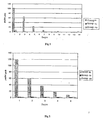
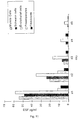
- Fig. 1 The results of the measurement of the EGF protein in the culture supernatant are represented in Fig. 1. It has been shown that in group 1, an up to 100-fold increase of the EGF protein concentration as compared to the control groups (group 2 and group 3) could be attained.
- the maximum EGF concentration was measured after 24 h (group 1a: 102.14 ⁇ g/ml; group 1b: 119.3 ⁇ g/ml ; control 5.1 and 2.26 ⁇ g/ml, respectively). After 5 days, a decrease to 23.3 and 8.85 ⁇ g/ml, respectively, could be observed).
- the EGF concentration measured 14 days after incubation, showed a further decrease for group 1a to 2.24 ⁇ g/ml at day 14.
- the thrombin component contained either the pCMV ⁇ -Gal or the EGF expression plasmid.
- the wounds were covered with a semi-permeable adhesive film (Op-site, Smith & Nephew, Largo, FL) which then is attached to the site and covered with an antimicrobial ointment.
- the expression of the EGF transgene was monitored at days 1, 3, 5, and 7 by measuring the EGF concentration in the wound homogenisate.
- days 1, 3, 5 two mice each per group
- day 7 one mouse per group
- biopsies were taken, which included the entire wound so as to obtain a homogenate of the wound and thus demonstrate the EGF protein.
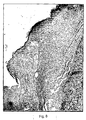
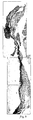
- immuno-histochemical tests were carried out by means of conventional histological methods.
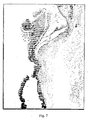
- Fig. 2 The results are illustrated in Fig. 2. As can be seen, 24 h after transformation with the EGF-plasmid, the non-cultured human keratinocytes exhibit a 181-fold increased EGF concentration as compared to wounds transfected with the pCMV ⁇ -Gal as the control (Fig. 4). EGF concentrations were detected for the entire 7-day testing period. Yet within the first three days they decreased rapidly, starting from 180 ⁇ g/ml at day 1 post treatment until approximately 20 ⁇ g/ml at day 7 post treatment.
- EGF-plasmid, Tissucol® and cell preparations were used as described in Example 1. Only the amount of keratinocytes was varied between 100 000, 1 million, 2 millions and 5 millions. The highest expression rates of EGF were obtained in using a cell number of 2 millions/333 ⁇ l of fibrin clot, which amounts to about 6 millions cells/ml of clot (see Fig. 5).
- Group 1 Fibrin and EGF-plasmid Group 2 Fibrin and keratinocytes
- the dermis was chopped into approximately 4 cm 2 sized pieces.
- the endothelial cells were obtained from the dermis following the separation of dermis and epidermis after overnight incubation in dispase (2,4 U/ml) at 4°C.
- the dermal pieces were recut and incubated with trypsin at 37°C for 30 minutes. Pressure was applied to the dermal pieces using a scalpel to obtain the endothelial cells.
- the petridish was then rinsed with EGM (5%).
- the suspension was filtered /70 ⁇ m). After centrifugation at 1300 U/min for 5 minutes the pellet was resuspended in 5% EGM and plated on gelatin coated flasks.
Landscapes
- Health & Medical Sciences (AREA)
- Life Sciences & Earth Sciences (AREA)
- Chemical & Material Sciences (AREA)
- Animal Behavior & Ethology (AREA)
- Engineering & Computer Science (AREA)
- Veterinary Medicine (AREA)
- Public Health (AREA)
- General Health & Medical Sciences (AREA)
- Medicinal Chemistry (AREA)
- Pharmacology & Pharmacy (AREA)
- Chemical Kinetics & Catalysis (AREA)
- Organic Chemistry (AREA)
- Nuclear Medicine, Radiotherapy & Molecular Imaging (AREA)
- Bioinformatics & Cheminformatics (AREA)
- General Chemical & Material Sciences (AREA)
- Physical Education & Sports Medicine (AREA)
- Epidemiology (AREA)
- Orthopedic Medicine & Surgery (AREA)
- Genetics & Genomics (AREA)
- Dermatology (AREA)
- Neurology (AREA)
- Materials Engineering (AREA)
- Molecular Biology (AREA)
- Biotechnology (AREA)
- Rheumatology (AREA)
- Surgery (AREA)
- Immunology (AREA)
- Neurosurgery (AREA)
- Biomedical Technology (AREA)
- Medicines That Contain Protein Lipid Enzymes And Other Medicines (AREA)
- Medicines Containing Material From Animals Or Micro-Organisms (AREA)
- Materials For Medical Uses (AREA)
- Medicinal Preparation (AREA)
- Materials For Photolithography (AREA)
- Pharmaceuticals Containing Other Organic And Inorganic Compounds (AREA)
- Sorption Type Refrigeration Machines (AREA)
- Gyroscopes (AREA)
Claims (23)
- Verfahren zum Herstellen einer Zusammensetzung zur Wundheilung und zum Reparieren und Regenerieren von Säugergewebe, wobei das Verfahren die folgenden Schritte umfaßt:dadurch gekennzeichnet, daß die Komponenten (a), (b) und (c) miteinander gleichzeitig oder nacheinander inkubiert werden, so daß das Plasmid und die Zellsuspension homogen verteilt in einer der Biopolymerkomponenten erhalten werden.a. Bereitstellen einer Plasmid-DNA in im wesentlichen reiner Form, die ein Gen kodiert, das einen positiven Effekt auf den Verlauf der Regeneration des Gewebes aufweist,b. Bereitstellen von einer Komponente/Komponenten eines selbsthärtenden Biopolymers undc. Bereitstellen einer Zellsuspension mit Zellen, welche die Regeneration unterstützen,
- Verfahren nach Anspruch 1, dadurch gekennzeichnet, daß das Biopolymer aus einem Fibrinkleber, Kollagen, Gelatine, Alginat, Hyaluronsäure, Polysaccharid, organischem Polymer oder Derivaten davon bzw. Kombinationen davon ausgewählt ist.
- Verfahren nach Anspruch 1 oder 2, dadurch gekennzeichnet, daß das Biopolymer ein Fibrinkleber ist.
- Verfahren nach einem der Ansprüche 1 bis 3, dadurch gekennzeichnet, daß das Plasmid und die Zellen in der Thrombinkomponente des Fibrinklebers sind.
- Verfahren nach einem der Ansprüche 1 bis 3, dadurch gekennzeichnet, daß das Biopolymer in einer flüssigen oder lyophilisierten Form bereitgestellt wird.
- Verfahren nach einem der Ansprüche 1 bis 5, dadurch gekennzeichnet, daß das Verhältnis von Plasmid zu Biopolymerkomponente 5-25 µg/ml, vorzugsweise 10-20 µg/ml, ist.
- Verfahren nach einem der Ansprüche 1 bis 6, dadurch gekennzeichnet, daß das Verhältnis von Plasmid zu Biopolymerkomponente 25-100 µg/ml, vorzugsweise etwa 50 µg/ml, ist.
- Verfahren nach einem der Ansprüche 1 bis 7, dadurch gekennzeichnet, daß das Verhältnis von 25000 bis 75000 Zellen/µg Plasmid ist.
- Verfahren nach einem der Ansprüche 1 bis 7, dadurch gekennzeichnet, daß das Verhältnis 75000 bis 100000 Zellen/µg Plasmid, vorzugsweise etwa 50000, ist.
- Verfahren nach einem der vorhergehenden Ansprüche, dadurch gekennzeichnet, daß die Anzahl von Zellen pro ml Biopolymerkomponente 200000 bis 5000000, vorzugsweise 3000000, ist.
- Verfahren nach einem der vorhergehenden Ansprüche, dadurch gekennzeichnet, daß die Zellsuspension eine Suspension von Zellen, ausgewählt aus Keratinozyten, Chondrozyten, Fibroblasten, epithelialen Zellen, endothelialen Zellen, Schwann-Zellen, Osteoblasten und Osteoklasten, ist.
- Transfektionssystem, enthaltend eine Plasmid-DNA in im wesentlichen reiner Form, die ein Gen kodiert, welches einen positiven Effekt auf den Verlauf der Regeneration des Gewebes aufweist, eine Komponente eines selbsthärtenden Biopolymers und eine Zellsuspension mit Zellen, welche die Regeneration unterstützen, und welches keine weiteren Transfektion-fördernden oder Transfektion-vermittelnden Substanzen enthält.
- Pharmazeutische Zusammensetzung, enthaltend eine Plasmid-DNA in im wesentlichen reiner Form, die ein Gen kodiert, das einen positiven Effekt auf den Verlauf der Regeneration des Gewebes aufweist, Komponenten eines selbsthärtenden Biopolymers, eine Zellsuspension mit Zellen, welche die Regeneration fördern, und gegebenenfalls einen weiteren pharmazeutisch verträglichen Träger und keine weiteren Transfektion-fördernden oder Transfektion-vermittelnden Substanzen.
- Therapeutischer Kit zum Behandeln von Gewebedefekten, dereine Plasmid-DNA in im wesentlichen reiner Form, die ein Gen kodiert, das einen positiven Effekt auf den Verlauf der Regeneration des Gewebes aufweist,Komponenten eines selbsthärtenden Biopolymers undeine Zellsuspension, umfassend Zellen, welche die Regeneration unterstützen, umfaßt und der keine weiteren Transfektion-fördernden oder Transfektion-vermittelnden Substanzen enthält.
- Therapeutischer Kit, enthaltend eine nach einem Verfahren nach einem der Ansprüche 1 bis 11 erhältliche Zusammensetzung.
- Verwendung eines Transfektionssystems der pharmazeutischen Zusammensetzung oder des therapeutischen Kits nach einem der Ansprüche 12 bis 15 in der Herstellung eines Medikaments zum Behandeln von Gewebedefekten.
- Verwendung nach Anspruch 16, wobei die Gewebedefekte ausgewählt sind aus der Gruppe, bestehend aus Verbrennungswunden, Knochen-, Muskel-, Nerven- oder Knorpelschäden, chronischen Wunden und Gewebeaugmentationen.
- Verwendung nach Anspruch 16, wobei das Behandeln der Gewebedefekte eine Wundheilung in der Haut ist.
- Verwendung nach einem der Ansprüche 16 bis 18, wobei die Zusammensetzung auf den Gewebedefekt zu sprühen ist.
- Verwendung eines Gels, welches die nach einem Verfahren nach einem der Ansprüche 1 bis 11 erhältliche pharmazeutische Zusammensetzung enthält, in der Herstellung eines Medikaments zum Behandeln von Gewebedefekten.
- Verwendung einer Zusammensetzung, hergestellt nach einem der Ansprüche 1 bis 11, eines Systems nach Anspruch 12, einer pharmazeutischen Zusammensetzung nach Anspruch 13 oder eines Kits nach Anspruch 14 oder 15 in der Herstellung eines Medikaments zum Behandeln von Gewebedefekten.
- Verwendung nach Anspruch 21, wobei die Gewebedefekte ausgewählt sind aus der Gruppe, bestehend aus Verbrennungswunden, Knochen-, Muskel-, Nerven- oder Knorpelschäden, chronischen Wunden und Gewebeaugmentationen.
- Verwendung nach Anspruch 21 oder 22, wobei das Behandeln der Gewebedefekte eine Wundheilung in der Haut ist.
Applications Claiming Priority (3)
| Application Number | Priority Date | Filing Date | Title |
|---|---|---|---|
| DE10025609A DE10025609A1 (de) | 2000-05-24 | 2000-05-24 | Transfektionssystem |
| DE10025609 | 2000-05-24 | ||
| PCT/EP2001/005937 WO2001089593A1 (en) | 2000-05-24 | 2001-05-23 | Transfection system |
Publications (2)
| Publication Number | Publication Date |
|---|---|
| EP1292340A1 EP1292340A1 (de) | 2003-03-19 |
| EP1292340B1 true EP1292340B1 (de) | 2005-10-19 |
Family
ID=7643316
Family Applications (1)
| Application Number | Title | Priority Date | Filing Date |
|---|---|---|---|
| EP01934009A Expired - Lifetime EP1292340B1 (de) | 2000-05-24 | 2001-05-23 | Transfektionssystem |
Country Status (9)
| Country | Link |
|---|---|
| US (1) | US20040043007A1 (de) |
| EP (1) | EP1292340B1 (de) |
| JP (3) | JP4951185B2 (de) |
| AT (1) | ATE306946T1 (de) |
| AU (2) | AU2001260328A1 (de) |
| CA (1) | CA2410000C (de) |
| DE (2) | DE10025609A1 (de) |
| ES (1) | ES2252234T3 (de) |
| WO (1) | WO2001089593A1 (de) |
Families Citing this family (7)
| Publication number | Priority date | Publication date | Assignee | Title |
|---|---|---|---|---|
| DE102007040252A1 (de) * | 2006-09-11 | 2008-06-12 | Gerlach, Jörg, Prof. Dr. | Sprühapparat für Zellen und Methode zur Anwendung gesprühter Zellen |
| US8387282B2 (en) | 2010-04-26 | 2013-03-05 | Nike, Inc. | Cable tightening system for an article of footwear |
| DE102011100450B8 (de) | 2011-04-27 | 2013-10-17 | Jörg Gerlach | Apparat zum Sprühen von Zellen, Herstellung des Apparates, Methode zum Sprühen mit dem Apparat und eine Zellsuspension gesprüht mit dem Apparat |
| ES2399273B1 (es) * | 2011-09-13 | 2014-01-28 | Universidad Politécnica De Valencia | Estuco para la conservación y restauración de materiales óseos. |
| CA3027493C (en) | 2016-06-14 | 2021-04-06 | Renovacare Sciences Corp. | Modular device for cell spraying |
| CN112957485A (zh) * | 2021-02-22 | 2021-06-15 | 上海药明生物技术有限公司 | 一种基于巴氏灭菌的质粒dna灭菌处理方法、所得灭菌质粒dna及应用 |
| CN119193700A (zh) * | 2024-11-15 | 2024-12-27 | 华南农业大学 | 一种鸡原始生殖腺细胞的脂质体转染方法 |
Family Cites Families (7)
| Publication number | Priority date | Publication date | Assignee | Title |
|---|---|---|---|---|
| US5661132A (en) * | 1989-12-14 | 1997-08-26 | Auragen, Inc. | Wound healing |
| WO1993024627A1 (en) * | 1992-06-03 | 1993-12-09 | Case Western Reserve University | Bandage for continuous application of biologicals |
| US5962427A (en) * | 1994-02-18 | 1999-10-05 | The Regent Of The University Of Michigan | In vivo gene transfer methods for wound healing |
| DE19521324C1 (de) * | 1995-06-12 | 1996-10-31 | Immuno Ag | Gewebeklebstoff und Verwendung desselben als Hämostyptikum |
| DE19716098A1 (de) * | 1997-04-17 | 1998-10-22 | Univ Ludwigs Albert | Fibroblasten mit einem Fremdgen enthaltende Zusammensetzung zur Behandlung von Wunden |
| US20020064517A1 (en) * | 1998-04-30 | 2002-05-30 | Stewart A. Cederholm-Williams | Fibrin sealant as a transfection/transformation vehicle for gene therapy |
| NZ528340A (en) * | 1998-12-02 | 2005-07-29 | Bristol Myers Squibb Co | Spray delivery of cells |
-
2000
- 2000-05-24 DE DE10025609A patent/DE10025609A1/de not_active Ceased
-
2001
- 2001-05-23 DE DE60114193T patent/DE60114193T2/de not_active Expired - Lifetime
- 2001-05-23 AU AU2001260328A patent/AU2001260328A1/en not_active Abandoned
- 2001-05-23 JP JP2001585834A patent/JP4951185B2/ja not_active Expired - Fee Related
- 2001-05-23 EP EP01934009A patent/EP1292340B1/de not_active Expired - Lifetime
- 2001-05-23 WO PCT/EP2001/005937 patent/WO2001089593A1/en not_active Ceased
- 2001-05-23 ES ES01934009T patent/ES2252234T3/es not_active Expired - Lifetime
- 2001-05-23 CA CA2410000A patent/CA2410000C/en not_active Expired - Fee Related
- 2001-05-23 AT AT01934009T patent/ATE306946T1/de active
- 2001-05-23 US US10/296,087 patent/US20040043007A1/en not_active Abandoned
-
2007
- 2007-03-28 AU AU2007201342A patent/AU2007201342B2/en not_active Ceased
-
2008
- 2008-05-20 JP JP2008132143A patent/JP2008208145A/ja not_active Withdrawn
-
2011
- 2011-10-31 JP JP2011239632A patent/JP2012021034A/ja not_active Withdrawn
Also Published As
| Publication number | Publication date |
|---|---|
| DE60114193T2 (de) | 2006-11-23 |
| JP2008208145A (ja) | 2008-09-11 |
| AU2007201342B2 (en) | 2009-01-08 |
| EP1292340A1 (de) | 2003-03-19 |
| AU2007201342A1 (en) | 2007-04-19 |
| JP2004531453A (ja) | 2004-10-14 |
| WO2001089593A1 (en) | 2001-11-29 |
| AU2001260328A1 (en) | 2001-12-03 |
| ATE306946T1 (de) | 2005-11-15 |
| CA2410000A1 (en) | 2001-11-29 |
| DE60114193D1 (de) | 2006-03-02 |
| CA2410000C (en) | 2011-01-25 |
| JP4951185B2 (ja) | 2012-06-13 |
| DE10025609A1 (de) | 2001-12-13 |
| US20040043007A1 (en) | 2004-03-04 |
| ES2252234T3 (es) | 2006-05-16 |
| JP2012021034A (ja) | 2012-02-02 |
Similar Documents
| Publication | Publication Date | Title |
|---|---|---|
| CA2438904C (en) | Rapid preparation of stem cell matrices for use in tissue and organ treatment and repair | |
| Qiu et al. | Periosteal matrix-derived hydrogel promotes bone repair through an early immune regulation coupled with enhanced angio-and osteogenesis | |
| EP1699915B1 (de) | Verwendung des erythropoietins zur regeneration von lebergewebe | |
| AU2007201342B2 (en) | Transfection System | |
| US6479052B1 (en) | Spray delivery of cells | |
| EP3576775B1 (de) | Verfahren und zusammensetzungen zur herstellung einer matrix | |
| CA2530490A1 (en) | Conditioned matrix compositions for tissue restoration | |
| US20040082511A1 (en) | Drug composition for the promotion of tissue regeneration | |
| JP2004531453A5 (de) | ||
| JP2002501491A (ja) | 外来・異種遺伝子を有する繊維芽細胞を含んでなる創傷治癒組成物 | |
| AU2002240542A1 (en) | Rapid preparation of stem cell matrices for use in tissue and organ treatment and repair |
Legal Events
| Date | Code | Title | Description |
|---|---|---|---|
| PUAI | Public reference made under article 153(3) epc to a published international application that has entered the european phase |
Free format text: ORIGINAL CODE: 0009012 |
|
| 17P | Request for examination filed |
Effective date: 20021227 |
|
| AK | Designated contracting states |
Kind code of ref document: A1 Designated state(s): AT BE CH CY DE DK ES FI FR GB GR IE IT LI LU MC NL PT SE TR |
|
| AX | Request for extension of the european patent |
Extension state: AL LT LV MK RO SI |
|
| RIN1 | Information on inventor provided before grant (corrected) |
Inventor name: STARK, G., BJOERN Inventor name: ANDREE, CHRISTOPH Inventor name: VOIGT, MATTHIAS |
|
| 17Q | First examination report despatched |
Effective date: 20041008 |
|
| GRAP | Despatch of communication of intention to grant a patent |
Free format text: ORIGINAL CODE: EPIDOSNIGR1 |
|
| GRAS | Grant fee paid |
Free format text: ORIGINAL CODE: EPIDOSNIGR3 |
|
| GRAA | (expected) grant |
Free format text: ORIGINAL CODE: 0009210 |
|
| AK | Designated contracting states |
Kind code of ref document: B1 Designated state(s): AT BE CH CY DE DK ES FI FR GB GR IE IT LI LU MC NL PT SE TR |
|
| PG25 | Lapsed in a contracting state [announced via postgrant information from national office to epo] |
Ref country code: CH Free format text: LAPSE BECAUSE OF FAILURE TO SUBMIT A TRANSLATION OF THE DESCRIPTION OR TO PAY THE FEE WITHIN THE PRESCRIBED TIME-LIMIT Effective date: 20051019 Ref country code: BE Free format text: LAPSE BECAUSE OF FAILURE TO SUBMIT A TRANSLATION OF THE DESCRIPTION OR TO PAY THE FEE WITHIN THE PRESCRIBED TIME-LIMIT Effective date: 20051019 Ref country code: NL Free format text: LAPSE BECAUSE OF FAILURE TO SUBMIT A TRANSLATION OF THE DESCRIPTION OR TO PAY THE FEE WITHIN THE PRESCRIBED TIME-LIMIT Effective date: 20051019 Ref country code: FI Free format text: LAPSE BECAUSE OF FAILURE TO SUBMIT A TRANSLATION OF THE DESCRIPTION OR TO PAY THE FEE WITHIN THE PRESCRIBED TIME-LIMIT Effective date: 20051019 Ref country code: LI Free format text: LAPSE BECAUSE OF FAILURE TO SUBMIT A TRANSLATION OF THE DESCRIPTION OR TO PAY THE FEE WITHIN THE PRESCRIBED TIME-LIMIT Effective date: 20051019 |
|
| REG | Reference to a national code |
Ref country code: GB Ref legal event code: FG4D |
|
| REG | Reference to a national code |
Ref country code: CH Ref legal event code: EP |
|
| REG | Reference to a national code |
Ref country code: IE Ref legal event code: FG4D |
|
| PG25 | Lapsed in a contracting state [announced via postgrant information from national office to epo] |
Ref country code: SE Free format text: LAPSE BECAUSE OF FAILURE TO SUBMIT A TRANSLATION OF THE DESCRIPTION OR TO PAY THE FEE WITHIN THE PRESCRIBED TIME-LIMIT Effective date: 20060119 Ref country code: DK Free format text: LAPSE BECAUSE OF FAILURE TO SUBMIT A TRANSLATION OF THE DESCRIPTION OR TO PAY THE FEE WITHIN THE PRESCRIBED TIME-LIMIT Effective date: 20060119 Ref country code: GR Free format text: LAPSE BECAUSE OF FAILURE TO SUBMIT A TRANSLATION OF THE DESCRIPTION OR TO PAY THE FEE WITHIN THE PRESCRIBED TIME-LIMIT Effective date: 20060119 |
|
| REF | Corresponds to: |
Ref document number: 60114193 Country of ref document: DE Date of ref document: 20060302 Kind code of ref document: P |
|
| PG25 | Lapsed in a contracting state [announced via postgrant information from national office to epo] |
Ref country code: PT Free format text: LAPSE BECAUSE OF FAILURE TO SUBMIT A TRANSLATION OF THE DESCRIPTION OR TO PAY THE FEE WITHIN THE PRESCRIBED TIME-LIMIT Effective date: 20060320 |
|
| NLV1 | Nl: lapsed or annulled due to failure to fulfill the requirements of art. 29p and 29m of the patents act | ||
| REG | Reference to a national code |
Ref country code: CH Ref legal event code: PL |
|
| REG | Reference to a national code |
Ref country code: ES Ref legal event code: FG2A Ref document number: 2252234 Country of ref document: ES Kind code of ref document: T3 |
|
| PG25 | Lapsed in a contracting state [announced via postgrant information from national office to epo] |
Ref country code: MC Free format text: LAPSE BECAUSE OF NON-PAYMENT OF DUE FEES Effective date: 20060531 |
|
| ET | Fr: translation filed | ||
| PLBE | No opposition filed within time limit |
Free format text: ORIGINAL CODE: 0009261 |
|
| STAA | Information on the status of an ep patent application or granted ep patent |
Free format text: STATUS: NO OPPOSITION FILED WITHIN TIME LIMIT |
|
| 26N | No opposition filed |
Effective date: 20060720 |
|
| PG25 | Lapsed in a contracting state [announced via postgrant information from national office to epo] |
Ref country code: TR Free format text: LAPSE BECAUSE OF FAILURE TO SUBMIT A TRANSLATION OF THE DESCRIPTION OR TO PAY THE FEE WITHIN THE PRESCRIBED TIME-LIMIT Effective date: 20051019 Ref country code: LU Free format text: LAPSE BECAUSE OF NON-PAYMENT OF DUE FEES Effective date: 20060523 |
|
| PG25 | Lapsed in a contracting state [announced via postgrant information from national office to epo] |
Ref country code: CY Free format text: LAPSE BECAUSE OF FAILURE TO SUBMIT A TRANSLATION OF THE DESCRIPTION OR TO PAY THE FEE WITHIN THE PRESCRIBED TIME-LIMIT Effective date: 20051019 |
|
| PGFP | Annual fee paid to national office [announced via postgrant information from national office to epo] |
Ref country code: DE Payment date: 20120529 Year of fee payment: 12 Ref country code: IE Payment date: 20120525 Year of fee payment: 12 |
|
| PGFP | Annual fee paid to national office [announced via postgrant information from national office to epo] |
Ref country code: GB Payment date: 20120525 Year of fee payment: 12 Ref country code: FR Payment date: 20120607 Year of fee payment: 12 |
|
| PGFP | Annual fee paid to national office [announced via postgrant information from national office to epo] |
Ref country code: IT Payment date: 20120524 Year of fee payment: 12 |
|
| PGFP | Annual fee paid to national office [announced via postgrant information from national office to epo] |
Ref country code: ES Payment date: 20120528 Year of fee payment: 12 |
|
| PGFP | Annual fee paid to national office [announced via postgrant information from national office to epo] |
Ref country code: AT Payment date: 20120502 Year of fee payment: 12 |
|
| REG | Reference to a national code |
Ref country code: AT Ref legal event code: MM01 Ref document number: 306946 Country of ref document: AT Kind code of ref document: T Effective date: 20130531 |
|
| GBPC | Gb: european patent ceased through non-payment of renewal fee |
Effective date: 20130523 |
|
| PG25 | Lapsed in a contracting state [announced via postgrant information from national office to epo] |
Ref country code: AT Free format text: LAPSE BECAUSE OF NON-PAYMENT OF DUE FEES Effective date: 20130531 Ref country code: DE Free format text: LAPSE BECAUSE OF NON-PAYMENT OF DUE FEES Effective date: 20131203 |
|
| REG | Reference to a national code |
Ref country code: IE Ref legal event code: MM4A |
|
| REG | Reference to a national code |
Ref country code: DE Ref legal event code: R119 Ref document number: 60114193 Country of ref document: DE Effective date: 20131203 |
|
| PG25 | Lapsed in a contracting state [announced via postgrant information from national office to epo] |
Ref country code: IT Free format text: LAPSE BECAUSE OF NON-PAYMENT OF DUE FEES Effective date: 20130523 |
|
| REG | Reference to a national code |
Ref country code: FR Ref legal event code: ST Effective date: 20140131 |
|
| PG25 | Lapsed in a contracting state [announced via postgrant information from national office to epo] |
Ref country code: IE Free format text: LAPSE BECAUSE OF NON-PAYMENT OF DUE FEES Effective date: 20130523 Ref country code: GB Free format text: LAPSE BECAUSE OF NON-PAYMENT OF DUE FEES Effective date: 20130523 |
|
| PG25 | Lapsed in a contracting state [announced via postgrant information from national office to epo] |
Ref country code: FR Free format text: LAPSE BECAUSE OF NON-PAYMENT OF DUE FEES Effective date: 20130531 |
|
| REG | Reference to a national code |
Ref country code: ES Ref legal event code: FD2A Effective date: 20140714 |
|
| PG25 | Lapsed in a contracting state [announced via postgrant information from national office to epo] |
Ref country code: ES Free format text: LAPSE BECAUSE OF NON-PAYMENT OF DUE FEES Effective date: 20130524 |