EP1293901A2 - Verteiltes Verarbeitungssystem, Jobverteilungsverfahren und Verteilungsprogramm - Google Patents
Verteiltes Verarbeitungssystem, Jobverteilungsverfahren und Verteilungsprogramm Download PDFInfo
- Publication number
- EP1293901A2 EP1293901A2 EP02021242A EP02021242A EP1293901A2 EP 1293901 A2 EP1293901 A2 EP 1293901A2 EP 02021242 A EP02021242 A EP 02021242A EP 02021242 A EP02021242 A EP 02021242A EP 1293901 A2 EP1293901 A2 EP 1293901A2
- Authority
- EP
- European Patent Office
- Prior art keywords
- job
- loaded
- priority
- jobs
- lowered
- Prior art date
- Legal status (The legal status is an assumption and is not a legal conclusion. Google has not performed a legal analysis and makes no representation as to the accuracy of the status listed.)
- Withdrawn
Links
Images



Classifications
-
- G—PHYSICS
- G06—COMPUTING OR CALCULATING; COUNTING
- G06F—ELECTRIC DIGITAL DATA PROCESSING
- G06F9/00—Arrangements for program control, e.g. control units
- G06F9/06—Arrangements for program control, e.g. control units using stored programs, i.e. using an internal store of processing equipment to receive or retain programs
- G06F9/46—Multiprogramming arrangements
- G06F9/50—Allocation of resources, e.g. of the central processing unit [CPU]
- G06F9/5005—Allocation of resources, e.g. of the central processing unit [CPU] to service a request
- G06F9/5027—Allocation of resources, e.g. of the central processing unit [CPU] to service a request the resource being a machine, e.g. CPUs, Servers, Terminals
- G06F9/5038—Allocation of resources, e.g. of the central processing unit [CPU] to service a request the resource being a machine, e.g. CPUs, Servers, Terminals considering the execution order of a plurality of tasks, e.g. taking priority or time dependency constraints into consideration
-
- G—PHYSICS
- G06—COMPUTING OR CALCULATING; COUNTING
- G06F—ELECTRIC DIGITAL DATA PROCESSING
- G06F2209/00—Indexing scheme relating to G06F9/00
- G06F2209/50—Indexing scheme relating to G06F9/50
- G06F2209/5021—Priority
-
- G—PHYSICS
- G06—COMPUTING OR CALCULATING; COUNTING
- G06F—ELECTRIC DIGITAL DATA PROCESSING
- G06F2209/00—Indexing scheme relating to G06F9/00
- G06F2209/50—Indexing scheme relating to G06F9/50
- G06F2209/508—Monitor
Definitions
- a method of distributing jobs in a distributed processing computer system the following have already been practiced: (1) a method of distributing jobs at the time of startup thereof in accordance with the status of consumption of respective server resources, as described in Japanese Patent Publication No. H10-11406; (2) a method of predicting beforehand the amount of server resources which are to be consumed by jobs to be executed and of distributing the jobs such that an aggregate of server resources to be used by the jobs is not to exceed a total amount of resources of the server, as described in Japanese Patent Publication No. H10-19864; and (3) a method of distributing jobs in accordance with a preset policy.
- Servers which constitute a large-scale distributed computer system are very expensive products. Since the system is constituted of a large number of servers, each of the previously-described job distribution methods effectively utilizes server resources, and a track record of consumption of server resources is reflected in a charge to a user.
- a first problem lies in that a user's desire pertaining to a time factor cannot be satisfied. Specifically, a job cannot be processed flexibly in accordance with situations; namely, when a time factor or a time limit is set for completing a job, the job is assigned a higher priority so as to be processed within the shortest period of time; and, when no time factor or no time limit is set for completing a job or when a comparatively loose time limit is set for a job, the job is processed at a lower priority.
- the conventional techniques enable efficient distribution of jobs loaded into a distributed computer system to respective servers in the sequence in which the jobs have been loaded.
- a method of distributing jobs there is disclosed (1) the previously-described method of determining away to distribute jobs in consideration of the available status of respective servers at the time of startup of the jobs.
- Present business activities entail a necessity for processing various jobs; that is, a job which is to be processed within a short period of time or a job whose processing involves consumption of several days.
- a job which is to be processed within a short period of time or a job whose processing involves consumption of several days.
- the job is requested with a lower priority.
- only jobs involving short periods of processing time are automatically processed at higher priorities.
- the same can be achieved even when jobs involving short periods of processing time are assigned higher priorities.
- the conventional job distribution methods are for efficiently processing jobs within the shortest periods of time in the sequence in which the jobs are loaded into a distributed computer system.
- these methods do not taken into consideration a timetable element; that is, a user' s desired completion time of a job.
- a track record of use of the computer is preferably compiled in consideration of priorities assigned to the jobs requested by a user.
- the invention also aims at providing a distributed processing system and a job distribution processing method, which provide a reward to a user who has assigned a lower priority to his/her job which and issues a bill in accordance with the result of adjustment of priorities.
- a distributed computer system corresponds to a distributed computer system including a plurality of computers linked together by way of a network, the system comprising means for saving, in a referable manner, execution history data pertaining to a job processed by the system (i.e., a job execution history saving function 102) ; means for predicting a completion time of a loaded job, from processing capacity and operating condition of the system and the execution history data (a function 105 for computing completion time of queued jobs) ; and means for adjusting a rate of decrease in priority of the loaded job in accordance with the completion time of the job as predicted for a case where the priority of the loaded job is lowered (i.e., a job execution priority management function 103).
- a rate of decrease in priority of the loaded job is lowered in accordance with the completion time of the job as predicted for a case where the priority of the loaded job is lowered.
- This enables lowering of priorities of individual jobs in accordance with their completion times. Priorities of other jobs are increased as a result of lowering of the priority of a loaded job.
- the user can select a job execution method in accordance with circumstances of respective jobs.
- the means for predicting a completion time of a loaded job enables prediction of respective completion times of jobs under execution and respective completion times of jobs in queue having priorities higher than that of the loaded job. Hence, when the priorities of the loaded job are lowered, jobs can be appropriately distributed within a distributed processing system in accordance with completion times of the jobs.
- a distributed processing system is directed toward that defined in the first or second aspect of the invention and further comprises means for selecting from the execution history data a job analogous to the job loaded by a user of the system, wherein the means for predicting a completion time of a loaded job predicts a completion time of the job for a case where the priority of the loaded job is lowered, by reference to execution history data pertaining to the selected analogous job.
- an analogous job can be retrieved from execution history data, by means of selecting from the execution history data a job analogous to the job loaded by the user, thereby enabling an improvement in the prediction accuracy of completion time of the job.
- a distributed processing system is directed toward that defined in any one of the first through third aspects and further comprises means for specifying a job number of the job analogous to the job loaded by a user of the system from among jobs executed in the past, wherein the means for predicting a completion time of a loaded job predicts a completion time of the job for a case where the priority of the loaded job is lowered, by reference to execution history data pertaining to the job assigned the specified job number.
- an analogous job can be referenced directly from the execution history data, by means of designating a job number of the job analogous to the loaded job from among the jobs executed in the past.
- the prediction accuracy of completion time of the job can be improved.
- a distributed processing system is directed toward that defined in any one of the first through fourth aspects of the invention and further comprises means for inputting a predicted execution time of a job loaded by a user of the system, wherein, when a job analogous to the loaded job is not found in the jobs executed in the past, the means for predicting a completion time of a loaded job predicts a completion time of the job for a case where the priority of the loaded job is lowered, by reference to the entered, predicted execution time.
- a completion time of the loaded job can appropriately predicted, by means of the user entering a predicted execution time.
- a distributed processing system is directed toward that defined in any one of the first through fifth aspects of the invention and further comprises charging means for increasing or decreasing a computer usage fee per unit time for a loaded job in accordance with a change in the priority of the job when the priority of the job has been changed by means for adjusting a rate of decrease in the priority of the loaded job.
- a distributed processing system is directed toward that defined in any one of the first through sixth aspects of the invention and further comprises charging means for increasing a computer usage fee per unit time for the loaded job when priorities of other jobs are lowered as a result of adjustment having been performed so as to increase the priority of the loaded job with use of the means for adjusting a rate of decrease in the priority of the loaded job and simultaneously lowering computer usage fees for the other jobs whose priorities have been lowered by an amount corresponding to the increase in the computer usage fee.
- a distributed job processing method corresponds to a distributed job processing method which uses a distributed computer system including a plurality of computers linked together by way of a network, the method comprising: a step of saving, in a referable manner, execution history data pertaining to a job processed by the system; a step of predicting a completion time of a loaded job, from processing capacity and operating condition of the system and the execution history data; and a step of adjusting a rate of decrease in priority of the loaded job in accordance with the completion time of the job as predicted for a case where the priority of the loaded job is lowered.
- a rate of decrease in priority of the loaded job is lowered in accordance with the completion time of the job predicted for a case where the priority of the loaded job is lowered. This enables lowering of priorities of individual jobs in accordance with their completion times. Priorities of other jobs are increased as a result of lowering of the priority of a loaded job. Hence, the user can select a job execution method in accordance with circumstances of respective jobs.
- a distributed processing method is directed toward that defined in the eighth aspect of the invention, wherein, when the priority of a loaded job is lowered, a completion time of jobs under execution and jobs in queue having priorities higher than that of the loaded job is predicted in the step of predicting a completion time of a loaded job.
- the distributed processing method of the ninth aspect of the invention there can be predicted respective completion times of jobs under execution and respective completion times of jobs in queue having priorities higher than that of the loaded job. Hence, when the priorities of the loaded job are lowered, jobs can be appropriately distributed within a distributed processing system in accordance with completion times of the jobs.
- a distributed processing method is directed toward that defined in the eighth or ninth aspect of the invention and further comprises a step of selecting from the execution history data a job analogous to the job loaded by a user of the system; and a step of predicting a completion time of a loaded job for a case where the priority of the loaded job is lowered, by reference to execution history data pertaining to the selected analogous job.
- a distributed processing method is directed toward that defined in any one of the eighth through tenth aspects of the invention and further comprises a step of inputting a predicted execution time of a job loaded by a user of the system; and, when a job analogous to the loaded job is not found among the jobs executed in the past, a step of predicting a completion time of a loaded job for a case where the priority of the loaded job is lowered, by reference to the entered, predicted execution time.
- a computer usage fee per unit time for a job of interest is increased or decreased in accordance with a change in the priority of the job, through charging operation.
- Adistributedprocessing method is directed toward that defined in any one of the eighth through thirteenth aspects of the invention and further comprises a charging step of increasing a computer usage fee per unit time for the loaded job when priorities of other jobs are lowered as a result of adjustment having been performed so as to increase the priority of the loaded job by use of the means for adjusting a rate of decrease in the priority of the loaded job and simultaneously lowering computer usage fees for the other jobs whose priorities have been lowered by an amount corresponding to the increase in the computer usage fee.
- Fig. 1 is a block diagram showing the configuration of a distributed computer system for activating a distributed processing system according to an embodiment of the invention.
- Fig. 2 is a block diagram showing an example functional configuration of a job queuing server which materializes primary functions according to the invention in connection with the distributed computer system shown in Fig. 1.
- a client 2 is a computer which loads a job.
- a job queuing server 31 is a computer which determines apriority of a job corresponding to a user' s desired time factor; that is, a completion time of a job, searches for a server capable of optimally executing the job, and distributes the job.
- a storage device 32 for saving data pertaining to the history of execution of a job (hereinafter simply called "execution history data”) is connected to the job queuing server 31.
- File servers 41, 42 are computers for holding an input file and an application program, which are to be used for a job.
- Servers 51, 52, and 53 are computers for executing a job.
- a charge aggregation server 6 is a computer for effecting a charging operation on the basis of execution history data.
- a job file, an input file, and an application file are stored in a storage device connected to the servers 41, 42.
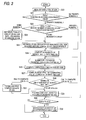
- step S20 the user specifies an execution time limit in the form of a job request form shown in Fig. 4, thus loading the job into the job queuing server 31.
- numeral "1" is specified in a job execution priority field. If the job is to be executed at a normal priority, numeral "0" is specified in the job execution priority field.
- step S21 If numeral "0" is provided in the job execution priority field, in step S21 no change is made to the job execution priority. Hence, processing proceeds to step S30.
- numeral "1" is provided in the job execution priority field, designation is performed so as to assign a lower priority to a job, and hence processing proceeds to step S22.
- step S23 the analogous job is retrieved from execution history data 32 by means of the job history reference function 101.
- the job history reference function 101 utilizes, e.g., a user's name, the kind of a job, and the name of a task unit group.
- the job queuing server 31 displays a list of results of retrieval of analogous jobs in the form of an analogous job display format shown in Fig. 5. The user selects an execution number of an analogous job.
- step S24 the job history reference function 101 searches for a time which will be required before completion of a job, from the job history data 32.
- the availability of the server capable of executing the job loaded this time is computed, by means of the server availability computation function 106. Specifically, a completion time of the loaded job is precisely predicted on the basis of a job progress rate of the job currently executed in the server and an operation schedule of the server.
- the server availability computation function 106 ascertains a timetable and hours during which a server will be available with regard to the respective servers, by way of the server operation schedule management function 108. For example, if a server is described as being scheduled to stop operation 12 hours from now, the server is omitted from candidates available for a job.
- the server availability computation function 106 merges operating conditions of respective servers in the data format shown in Fig. 6.
- the availability (AVA) of each server with regard to queued jobs can be computed.
- AVA job progress rate (PROG) x computation capability of a server (SPEC)
- step S25 the availability (AVA) of respective servers is computed, and computation results of all servers which have been compiled are used as availability.
- Job consumption capability is determined, by means of multiplying the computation capability (SPEC) required for completing a job of interest by a time required until completion of the job (seconds).
- SPEC computation capability
- step S26 an aggregate of job consumption capabilities of queued jobs is divided by an aggregate of computation capabilities of servers capable of executing the queued jobs.
- the result of division is added to the availability (AVA) computed in step S25, thereby computing the time (Quitime) required until completion of a currently-queued job.
- the extent to which the priority of the job is lowered is adjusted, thus satisfying the user's desire. More specifically, in relation to a group of jobs whose priorities have been lowered, a determination is made as to whether or not the job will be completed by a user's desired time and date, by means of modifying priorities of queuing jobs.
- Criteria 2 A computer usage fee which is higher than that applied to a job having no priority is not to be applied to a job whose priority has been lowered.
- step S28 on the basis of such criteria, a determination is made as to whether or not a job will be completed by a user's desired time limit (i.e., Reqtime), by means of, e.g., the following computation equation.
- Reqtime a user's desired time limit
- a third determination is directed toward a case where a job of interest can be completed by a user's desired time limit. Processing proceeds to step S29.
- step S29 a computer usage fee per unit time which is a requisite for completing a job by the user's desired time limit is calculated and provided to the user.
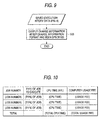
- step S30 the user renders a final determination as to execution of a job from the computer usage fees per unit time provided by the job queuing server 31 and expected completion times. If the job is not executed, processing is terminated in step S30. In contrast, if the job is executed, in step S32 various data sets pertaining to a job execution history are saved in the execution history data 32 in the storage format shown in Fig. 8 after completion of the job.
- the charge aggregation server 6 has the function of compiling charge aggregation information, which is based on a computer usage fee per unit time set at the time of changing of priority of a queued job, from the execution history data saved in step S32 and of outputting the thus-compiled information.
- a computer usage fee is computed on a per-user basis from the information which assumes the storage format of the execution history data 32 and is shown in Fig. 8. For instance, a computer usage fee is computed on a user-by-user basis in the output format shown in Fig. 10.
- an individual computer usage fee is determined, by means of multiplying a computer usage fee per unit time by a time which elapses before completion of a job.
- a reward is afforded to that user.
- a user who desires to curtail a computer usage fee can select a way to use a distributed computer system with a lower job priority.
- priorities of the jobs are controlled in accordance with time factors or limits of the jobs.
Landscapes
- Engineering & Computer Science (AREA)
- Software Systems (AREA)
- Theoretical Computer Science (AREA)
- Physics & Mathematics (AREA)
- General Engineering & Computer Science (AREA)
- General Physics & Mathematics (AREA)
- Multi Processors (AREA)
- Computer And Data Communications (AREA)
Applications Claiming Priority (2)
| Application Number | Priority Date | Filing Date | Title |
|---|---|---|---|
| JP2001283360A JP2003091424A (ja) | 2001-09-18 | 2001-09-18 | 分散処理システムおよびジョブ分散処理方法 |
| JP2001283360 | 2001-09-18 |
Publications (2)
| Publication Number | Publication Date |
|---|---|
| EP1293901A2 true EP1293901A2 (de) | 2003-03-19 |
| EP1293901A3 EP1293901A3 (de) | 2004-09-01 |
Family
ID=19106859
Family Applications (1)
| Application Number | Title | Priority Date | Filing Date |
|---|---|---|---|
| EP02021242A Withdrawn EP1293901A3 (de) | 2001-09-18 | 2002-09-18 | Verteiltes Verarbeitungssystem, Jobverteilungsverfahren und Verteilungsprogramm |
Country Status (3)
| Country | Link |
|---|---|
| US (1) | US20030074387A1 (de) |
| EP (1) | EP1293901A3 (de) |
| JP (1) | JP2003091424A (de) |
Families Citing this family (38)
| Publication number | Priority date | Publication date | Assignee | Title |
|---|---|---|---|---|
| JP2003256222A (ja) * | 2002-03-04 | 2003-09-10 | Matsushita Electric Ind Co Ltd | 分散処理システム、ジョブ分散処理方法およびプログラム |
| JP2005031771A (ja) * | 2003-07-08 | 2005-02-03 | Hitachi Ltd | ジョブスケジューリング管理方法及びシステム並びにプログラム |
| JP3861868B2 (ja) * | 2003-09-22 | 2006-12-27 | ブラザー工業株式会社 | ジョブ管理装置、ジョブ管理プログラム、およびそれらを備えた画像形成装置 |
| US7954062B2 (en) * | 2005-01-03 | 2011-05-31 | International Business Machines Corporation | Application status board mitigation system and method |
| JP4281719B2 (ja) * | 2005-08-10 | 2009-06-17 | コニカミノルタビジネステクノロジーズ株式会社 | ファイル処理装置、ファイル処理方法、およびファイル処理プログラム |
| JP5004320B2 (ja) | 2006-02-15 | 2012-08-22 | キヤノン株式会社 | ジョブ処理装置、ジョブ処理方法及びプログラム |
| US7600139B2 (en) * | 2006-03-23 | 2009-10-06 | Sony Ericsson Mobile Communications Ab | Dynamic battery advisor |
| US8522240B1 (en) * | 2006-10-19 | 2013-08-27 | United Services Automobile Association (Usaa) | Systems and methods for collaborative task management |
| JP2008204243A (ja) * | 2007-02-21 | 2008-09-04 | Hitachi Software Eng Co Ltd | ジョブ実行制御方法およびシステム |
| US8234644B2 (en) * | 2007-07-12 | 2012-07-31 | International Business Machines Corporation | Selecting a system management product for performance of system management tasks |
| JP4935595B2 (ja) * | 2007-09-21 | 2012-05-23 | 富士通株式会社 | ジョブ管理方法、ジョブ管理装置およびジョブ管理プログラム |
| US8402138B2 (en) * | 2008-04-08 | 2013-03-19 | Infosys Technologies Limited | Method and system for server consolidation using a hill climbing algorithm |
| JP5120061B2 (ja) | 2008-05-15 | 2013-01-16 | 富士通株式会社 | 優先度制御プログラム、優先度制御装置、及び優先度制御方法 |
| US8151008B2 (en) * | 2008-07-02 | 2012-04-03 | Cradle Ip, Llc | Method and system for performing DMA in a multi-core system-on-chip using deadline-based scheduling |
| JP2010015452A (ja) * | 2008-07-04 | 2010-01-21 | Denso Corp | プログラム実行装置および実行制御プログラム |
| US8412827B2 (en) * | 2009-12-10 | 2013-04-02 | At&T Intellectual Property I, L.P. | Apparatus and method for providing computing resources |
| JP5471466B2 (ja) * | 2010-01-12 | 2014-04-16 | 株式会社リコー | 画像処理デバイス排他制御装置、制御方法、プログラム及び記録媒体 |
| US8566287B2 (en) * | 2010-01-29 | 2013-10-22 | Hewlett-Packard Development Company, L.P. | Method and apparatus for scheduling data backups |
| TWI426393B (zh) * | 2010-02-12 | 2014-02-11 | 精英電腦股份有限公司 | 雲端計算資源排程方法與應用之系統 |
| US9552478B2 (en) * | 2010-05-18 | 2017-01-24 | AO Kaspersky Lab | Team security for portable information devices |
| KR101880452B1 (ko) * | 2012-02-06 | 2018-08-17 | 삼성전자주식회사 | 커널 수행 순서 스케줄링 방법 및 장치 |
| JP6052571B2 (ja) * | 2012-03-24 | 2016-12-27 | 日本電気株式会社 | 情報処理システム、情報処理方法、情報処理装置およびその制御方法と制御プログラム |
| US8914663B2 (en) | 2012-03-28 | 2014-12-16 | Hewlett-Packard Development Company, L.P. | Rescheduling failed backup jobs |
| JP2014119860A (ja) * | 2012-12-14 | 2014-06-30 | Hitachi Systems Ltd | スケジュール管理システム |
| US9535614B2 (en) * | 2013-11-21 | 2017-01-03 | Sandisk Technologies Llc | Temperature based flash memory system maintenance |
| US20150205526A1 (en) * | 2014-01-18 | 2015-07-23 | International Business Machines Corporation | Queuing latency feedback mechanism to improve i/o performance |
| US9600327B2 (en) * | 2014-07-10 | 2017-03-21 | Oracle International Corporation | Process scheduling and execution in distributed computing environments |
| EP3018581B1 (de) * | 2014-11-06 | 2017-03-08 | Fujitsu Limited | Datenbereitstellungsverwaltungssystem |
| CN107430526B (zh) * | 2015-03-24 | 2021-10-29 | 瑞典爱立信有限公司 | 用于调度数据处理的方法和节点 |
| US10594798B2 (en) * | 2016-06-16 | 2020-03-17 | Veniam, Inc. | Systems and methods for managing containers in a network of moving things |
| US10269456B2 (en) | 2017-05-05 | 2019-04-23 | Bank Of America Corporation | System for identification of treatment and resource deployment based on treatment interaction |
| US10454941B2 (en) | 2017-05-05 | 2019-10-22 | Bank Of America Corporation | Person-to-person network architecture for secure authorization and approval |
| US10872321B2 (en) | 2017-05-05 | 2020-12-22 | Bank Of America Corporation | Machine initiated user status update system |
| US10437899B2 (en) | 2017-05-05 | 2019-10-08 | Bank Of America Corporation | System for distributed server data management with multi-user access |
| US10430300B2 (en) * | 2017-06-05 | 2019-10-01 | Bank Of America Corporation | Predictive analysis, scheduling and observation system for use with loading multiple files |
| US10034608B1 (en) | 2017-08-14 | 2018-07-31 | Bank Of America Corporation | System for receiving transmissions from disparate node and triggering automatic portal action |
| CN111610977B (zh) * | 2020-05-19 | 2024-06-25 | 腾讯科技(深圳)有限公司 | 一种编译方法和相关装置 |
| US12487848B2 (en) * | 2022-07-21 | 2025-12-02 | Dell Products Lp | Method and apparatus for companion device hub experience efficacy management |
Family Cites Families (13)
| Publication number | Priority date | Publication date | Assignee | Title |
|---|---|---|---|---|
| US3587054A (en) * | 1968-09-06 | 1971-06-22 | Bell Telephone Labor Inc | Scheme allowing real time alteration of a data processing system operating strategy |
| DE69031233T2 (de) * | 1989-02-24 | 1997-12-04 | At & T Corp | Adaptive Arbeitsfolgeplanung für Mehrfachverarbeitungssysteme |
| US5303369A (en) * | 1990-08-31 | 1994-04-12 | Texas Instruments Incorporated | Scheduling system for multiprocessor operating system |
| JP3658420B2 (ja) * | 1994-04-14 | 2005-06-08 | 株式会社日立製作所 | 分散処理システム |
| JP3037182B2 (ja) * | 1997-02-17 | 2000-04-24 | 日本電気株式会社 | タスク管理方式 |
| US6223205B1 (en) * | 1997-10-20 | 2001-04-24 | Mor Harchol-Balter | Method and apparatus for assigning tasks in a distributed server system |
| JP3226022B2 (ja) * | 1997-11-14 | 2001-11-05 | 日本電気株式会社 | 通信制御方法およびその装置 |
| US20020152060A1 (en) * | 1998-08-31 | 2002-10-17 | Tseng Ping-Sheng | Inter-chip communication system |
| US6658485B1 (en) * | 1998-10-19 | 2003-12-02 | International Business Machines Corporation | Dynamic priority-based scheduling in a message queuing system |
| KR20020097156A (ko) * | 2000-11-09 | 2002-12-31 | 코닌클리케 필립스 일렉트로닉스 엔.브이. | 주기적 작업의 최상의 경우의 응답시간을 결정하는 방법및 시스템 |
| JP2003029989A (ja) * | 2001-07-16 | 2003-01-31 | Matsushita Electric Ind Co Ltd | 分散処理システムおよびジョブ分散処理方法 |
| US7065764B1 (en) * | 2001-07-20 | 2006-06-20 | Netrendered, Inc. | Dynamically allocated cluster system |
| US6954737B2 (en) * | 2001-11-05 | 2005-10-11 | Johnsondiversey, Inc. | Method and apparatus for work management for facility maintenance |
-
2001
- 2001-09-18 JP JP2001283360A patent/JP2003091424A/ja not_active Withdrawn
-
2002
- 2002-09-16 US US10/243,875 patent/US20030074387A1/en not_active Abandoned
- 2002-09-18 EP EP02021242A patent/EP1293901A3/de not_active Withdrawn
Also Published As
| Publication number | Publication date |
|---|---|
| EP1293901A3 (de) | 2004-09-01 |
| JP2003091424A (ja) | 2003-03-28 |
| US20030074387A1 (en) | 2003-04-17 |
Similar Documents
| Publication | Publication Date | Title |
|---|---|---|
| EP1293901A2 (de) | Verteiltes Verarbeitungssystem, Jobverteilungsverfahren und Verteilungsprogramm | |
| EP1282038A2 (de) | Verfahren und Vorrichtung zur verteilten Auftragsbearbeitung | |
| Yu et al. | QoS-based scheduling of workflow applications on service grids | |
| CN111480145B (zh) | 用于根据基于信用的机制来调度工作负载的系统和方法 | |
| US8689227B2 (en) | System and method for integrating capacity planning and workload management | |
| US8195800B2 (en) | Computer resource distribution method based on prediction | |
| US8041797B2 (en) | Apparatus and method for allocating resources based on service level agreement predictions and associated costs | |
| US8046767B2 (en) | Systems and methods for providing capacity management of resource pools for servicing workloads | |
| Lee et al. | Profit-driven service request scheduling in clouds | |
| US20070016907A1 (en) | Method, system and computer program for automatic provisioning of resources to scheduled jobs | |
| US8793693B2 (en) | Apparatus and method for predicting a processing time of a computer | |
| EP1469387B1 (de) | Verfahren und System zur Zuweisung von Ressourcen eines Computers | |
| JP4965578B2 (ja) | ローカル・グリッドをサポートするためにホスト・グリッド内の割り振りポリシを変更するためのコンピュータ実装方法、並びに、そのデータ処理システム及びコンピュータ・プログラム | |
| US20110154353A1 (en) | Demand-Driven Workload Scheduling Optimization on Shared Computing Resources | |
| US20100005473A1 (en) | System and method for controlling computing resource consumption | |
| US20120159499A1 (en) | Resource optimization | |
| US8458007B2 (en) | Work order estimator | |
| WO2003075160A1 (en) | Decentralized processing system, job decentralized processing method, and program | |
| Afzal et al. | Capacity planning and scheduling in Grid computing environments | |
| JP2009514117A5 (de) | ||
| US20020004814A1 (en) | Job distributed processing method and distributed processing system | |
| US7496564B2 (en) | Resource optimizations in computing utilities | |
| US20050138422A1 (en) | System and method for metering the performance of a data processing system | |
| Vanmechelen et al. | Combining futures and spot markets: A hybrid market approach to economic grid resource management | |
| Macías et al. | Enforcing service level agreements using an economically enhanced resource manager |
Legal Events
| Date | Code | Title | Description |
|---|---|---|---|
| PUAI | Public reference made under article 153(3) epc to a published international application that has entered the european phase |
Free format text: ORIGINAL CODE: 0009012 |
|
| AK | Designated contracting states |
Kind code of ref document: A2 Designated state(s): AT BE BG CH CY CZ DE DK EE ES FI FR GB GR IE IT LI LU MC NL PT SE SK TR Designated state(s): AT BE BG CH CY CZ DE DK EE ES FI FR GB GR IE IT LI LU MC NL PT SE SK TR |
|
| AX | Request for extension of the european patent |
Extension state: AL LT LV MK RO SI |
|
| PUAL | Search report despatched |
Free format text: ORIGINAL CODE: 0009013 |
|
| AK | Designated contracting states |
Kind code of ref document: A3 Designated state(s): AT BE BG CH CY CZ DE DK EE ES FI FR GB GR IE IT LI LU MC NL PT SE SK TR |
|
| AX | Request for extension of the european patent |
Extension state: AL LT LV MK RO SI |
|
| RIC1 | Information provided on ipc code assigned before grant |
Ipc: 7G 06F 9/46 A |
|
| 17P | Request for examination filed |
Effective date: 20041102 |
|
| AKX | Designation fees paid |
Designated state(s): DE FR GB |
|
| RBV | Designated contracting states (corrected) |
Designated state(s): DE FR GB |
|
| RAP1 | Party data changed (applicant data changed or rights of an application transferred) |
Owner name: PANASONIC CORPORATION |
|
| 17Q | First examination report despatched |
Effective date: 20090129 |
|
| STAA | Information on the status of an ep patent application or granted ep patent |
Free format text: STATUS: THE APPLICATION IS DEEMED TO BE WITHDRAWN |
|
| 18D | Application deemed to be withdrawn |
Effective date: 20090609 |