EP1300514B1 - Verwendung wässriger Aufhellpräparationen zum Aufhellen von natürlichen und synthetischen Materialien - Google Patents
Verwendung wässriger Aufhellpräparationen zum Aufhellen von natürlichen und synthetischen Materialien Download PDFInfo
- Publication number
- EP1300514B1 EP1300514B1 EP02021336A EP02021336A EP1300514B1 EP 1300514 B1 EP1300514 B1 EP 1300514B1 EP 02021336 A EP02021336 A EP 02021336A EP 02021336 A EP02021336 A EP 02021336A EP 1300514 B1 EP1300514 B1 EP 1300514B1
- Authority
- EP
- European Patent Office
- Prior art keywords
- aqueous
- brightener
- preparations according
- alkyl
- water
- Prior art date
- Legal status (The legal status is an assumption and is not a legal conclusion. Google has not performed a legal analysis and makes no representation as to the accuracy of the status listed.)
- Expired - Lifetime
Links
Classifications
-
- D—TEXTILES; PAPER
- D21—PAPER-MAKING; PRODUCTION OF CELLULOSE
- D21H—PULP COMPOSITIONS; PREPARATION THEREOF NOT COVERED BY SUBCLASSES D21C OR D21D; IMPREGNATING OR COATING OF PAPER; TREATMENT OF FINISHED PAPER NOT COVERED BY CLASS B31 OR SUBCLASS D21G; PAPER NOT OTHERWISE PROVIDED FOR
- D21H21/00—Non-fibrous material added to the pulp, characterised by its function, form or properties; Paper-impregnating or coating material, characterised by its function, form or properties
- D21H21/14—Non-fibrous material added to the pulp, characterised by its function, form or properties; Paper-impregnating or coating material, characterised by its function, form or properties characterised by function or properties in or on the paper
- D21H21/30—Luminescent or fluorescent substances, e.g. for optical bleaching
-
- D—TEXTILES; PAPER
- D06—TREATMENT OF TEXTILES OR THE LIKE; LAUNDERING; FLEXIBLE MATERIALS NOT OTHERWISE PROVIDED FOR
- D06L—DRY-CLEANING, WASHING OR BLEACHING FIBRES, FILAMENTS, THREADS, YARNS, FABRICS, FEATHERS OR MADE-UP FIBROUS GOODS; BLEACHING LEATHER OR FURS
- D06L4/00—Bleaching fibres, filaments, threads, yarns, fabrics, feathers or made-up fibrous goods; Bleaching leather or furs
- D06L4/60—Optical bleaching or brightening
- D06L4/614—Optical bleaching or brightening in aqueous solvents
- D06L4/621—Optical bleaching or brightening in aqueous solvents with anionic brighteners
-
- D—TEXTILES; PAPER
- D06—TREATMENT OF TEXTILES OR THE LIKE; LAUNDERING; FLEXIBLE MATERIALS NOT OTHERWISE PROVIDED FOR
- D06L—DRY-CLEANING, WASHING OR BLEACHING FIBRES, FILAMENTS, THREADS, YARNS, FABRICS, FEATHERS OR MADE-UP FIBROUS GOODS; BLEACHING LEATHER OR FURS
- D06L4/00—Bleaching fibres, filaments, threads, yarns, fabrics, feathers or made-up fibrous goods; Bleaching leather or furs
- D06L4/60—Optical bleaching or brightening
- D06L4/664—Preparations of optical brighteners; Optical brighteners in aerosol form; Physical treatment of optical brighteners
Definitions
- the invention relates to the use of aqueous preparations of optical brighteners for lightening paper.
- the optical brightening of paper is used in the pulp, in the glue or film press and in the paper coating.
- ecological aspects e.g. in the sense of avoiding organic sewage loads and economic aspects e.g. be considered in terms of cost-effective procedures.
- the state of the art is the use of liquid auto whitener formulations, be it in the form of solutions or suspensions, also called slurries or slurries.
- stilbene brighteners containing sulfo or carboxylic acid groups in particular triazinyl stilbene brighteners, which are often characterized by good substantivity on the one hand, but are correspondingly characterized by limited cold water solubility on the other hand.
- triazinyl stilbene brighteners In purely aqueous solutions, they tend to form crystalline precipitates even at low concentrations and ambient temperature ( ⁇ 40 ° C.).
- Storage-stable aqueous solutions, such as in DE-A-2 928 053 Therefore, in addition contain significant amounts of adjusting agents, solubilizers such as urea and / or organic solvents such as polyalkylene glycols.
- DE-A-3 523 207 describes low-dust solid brightener preparations for use in textile dyebaths, which are obtained by mixing a spray-dried optical brightener formulation with an aromatic carboxylic acid ester or fatty acid polyol ester and which are characterized by a good hot water solubility (80 ° C).
- such solutions are not stable in long-term stability against crystalline precipitates in higher concentrations.
- WO-A-0 119 804 refers to novel 4,4'-diaminostilbene-2,2'-disulphonic acid compounds of a particular formula which are useful as fluorescent whiteners.
- EP-A-0 825 188 and EP-A-0 808 837 also each concern Diaminostilbendisulfonklareorganizen a certain formula, which are suitable as fluorescent whitening agents, and are used in particular for increasing the sun protection factor of textiles.
- optical brighteners All methods of applying optical brighteners in paper have in common is that preparations of the optical brightener are used, which are tailored to a sufficient stability and use at normal temperature and in addition to the "active ingredient" of the optical brightener even more undesirable for the paper process Need auxiliaries. For example, suspensions and slurries generally require organic dispersants and stabilizers; solid preparations often require diluents and / or dedusting agents. Known, At normal temperature, long-term stable solutions of optical brighteners are limited in their concentration at about 20% and require a large extent adjuster and / or co-solvent.
- aqueous whitener preparations in particular solutions of optical brighteners, with a temperature of 40 ° C. to 98 ° C.
- the aqueous preparations to be used according to the invention preferably have a high content of optical brighteners, are preferably substantially free of undesirable organic components, and preferably free of crystalline brightener particles, in particular their hydrate forms. They are therefore very well suited for the continuous and discontinuous lightening of synthetic or natural materials, preferably fiber materials, in particular of paper in the mass u / o surface.
- the temperature of the preparation is 60-95 ° C.
- water-soluble means a solubility of> 0.1 g / l, preferably> 1 g / l, in particular> 5 g / l at 20 ° C.
- the brightener preparation consists of more than 90 wt .-%, preferably more than 95 wt .-%, more preferably more than 98 wt .-% of the components a) and b).
- the aqueous brightener preparations are generally liquid.
- R 1 , R 2 and R 3 are independently -NH 2 , -NH-CH 3 , -NH-C 2 H 5 , -N (CH 3 ) 2 , -N (C 2 H 5 ) 2 , -NH -CH 2 CH 2 OH, -NH-C 2 -C 4 -hydroxyalkyl, -N (C 2 -C 4 -hydroxyalkyl) 2 -NH-CH 2 CH 2 SO 3 H; -NH-CH 2 -CH 2 -O-CH 2 -CH 2 -OH, -OCH 3 , -OCH (CH 3 ) 2 , -O-CH 2 -CH 2 -O-CH 3 , -N (CH 2 -CH 2 -OH) 2 , -N (CH 2 -CHOH-CH 3 ) 2 , morpholino, -SCH 3 , -N (CH 2 -CH 2 -OH) CH 2 -CH 2 -CONH 2 and any
- Preferred amino acid residues are derived e.g. from glycine, sarcosine, ⁇ -alanine, aspartic acid or iminodiacetic acid.
- M is preferably H, Na, Li, K, Ca, Mg, ammonium or ammonium, which is mono-, di-, tri- or terasubstituiert by C 1 -C 4 alkyl, C 2 -C 4 hydroxyalkyl or a mixture it.
- optical brighteners are preferably present in the form of their salts, in particular as sodium or potassium salts.
- optical brighteners from the row of stems are, for example, in EP-A-0 385 374 described.
- the cationic brighteners can be obtained, for example, by cationization of anionic brighteners, in particular sulfo and / or carboxyl groups, for example by means of polymeric quaternary ammonium compounds.
- anionic brighteners in particular sulfo and / or carboxyl groups
- Such brighteners are eg in WO-A 9967317 described.
- the aqueous brightener preparations may contain a small amount of further, preferably ⁇ 10% by weight of auxiliaries.
- auxiliaries such as adjusting agents, surfactants and / or defoamers, as well as organic thickeners (protective colloids), preservatives and / or electrolytes.
- the aqueous brightener preparations preferably contain only very small proportions of organic additives, auxiliaries and / or impurities, in particular less than 3% by weight, based on brightener of component a), very particularly less than 1% by weight.
- the aqueous preparations do not contain organic co-solvents.
- the electrolyte may be mentioned sodium chloride, sodium sulfate, sodium carbonate, or one of the corresponding potassium salts or mixtures of these substances.
- the amount of electrolyte may be less than or equal to 2 wt .-%, preferably 0.001 to 2 wt .-%, based on the total weight of the aqueous preparation, in particular 0.001 to 0.5 wt .-%.
- aqueous brightener preparations to be used according to the invention may contain, preferably, formulation auxiliaries of component c)
- sulfonated aromatics in the context of this application also understood sulfomethylated aromatics.
- Preferred sulfonated aromatics are: naphthalenesulfonic acids, phenolsulfonic acids, dihydroxybenzenesulfonic acids, sulfonated ditolyl ethers, sulfomethylated 4,4'-dihydroxydiphenylsulfone, sulfonated diphenylmethane, sulfonated biphenyl, sulfonated hydroxybiphenyl, especially 2-hydroxybiphenyl, sulfonated terphenyl or benzenesulfonic acids.
- Suitable aldehydes and / or ketones of component B) are in particular aliphatic, cycloaliphatic and aromatic. Preference is given to aliphatic aldehydes, particular preference being given to formaldehyde and other aliphatic aldehydes having 3 to 5 C atoms.
- Suitable non-sulfonated aromatics of component C) are, for example, phenol, cresol, 4,4'-dihydroxydiphenylsulfone or dihydroxydiphenylmethane.
- urea derivatives for example dimethylolurea, melamine or guanidine can be mentioned.
- the condensation product preferably obtained in the condensation preferably has an average degree of condensation of 1 to 150, particularly preferably from 1 to 20, in particular from 1 to 5.
- condensation products of component c) can be used as aqueous solution or suspension or as a solid, for example as powder or granules, preferably as spray-dried powder or granules.
- Preferred condensation products of component c) have an inorganic salt content of less than 10 wt .-%, preferably less than 5 wt .-%, in particular less than 1 wt .-%, based on the aqueous solution or suspension of the component or based on the solid used component c).
- low in monomer is meant a residual monomer content of less than 30% by weight, preferably less than 20% by weight, based on the condensation product, in particular ⁇ 10% by weight, preferably ⁇ 5% by weight. Residual monomers in this context are understood to mean the reactants used to prepare the condensation product.
- Such low-salt and restmonomerenarme condensation products are for example made EP-A 816,406 known.
- the condensation products of component c) can be prepared, for example, by first treating the sulfonated aromatics of component A) optionally in admixture with unsulfonated aromatics of component C) by reacting the underlying aromatics with a sulfonating agent, preferably sulfuric acid, in particular concentrated sulfuric acid, chlorosulfonic acid, Sulfamic acid or oleum.
- a sulfonating agent preferably sulfuric acid, in particular concentrated sulfuric acid, chlorosulfonic acid, Sulfamic acid or oleum.
- underlying aromatics are preferably 0.4 to 3.2 mol, in particular 0.8 to 1.6 mol sulfonating agent used.
- the condensation is carried out with aldehydes and / or ketones of components B), preferably formaldehyde, optionally together with further compounds of component C).
- the condensation is preferably carried out in aqueous solution at a pH of 0 to 9.
- a pH of 0 to 9 preferably per mole of the sulfonated aromatic A) or per mole of a mixture of sulfonated aromatics of component A) and non-sulfonated aromatics of component C) 0, 4 to 1.5 mol, in particular 0.4 to 1.0 mol of component B) is used.
- the separation of the inorganic acid or its salts and the reduction of the residual monomer content can be carried out, for example, by means of membrane separation processes.
- Preferred membrane separation processes are ultrafiltration, diffusion dialysis or electrodialysis.
- the membranes used in the membrane separation processes preferably in the ultrafiltration in a preferred embodiment have a molecular weight cut-off (MWCO) of 1,000 to 10,000 daltons.
- MWCO molecular weight cut-off
- the separation of the inorganic acid by means of a membrane separation process is preferably carried out by diafiltration with acid-stable ultrafiltration or nanofiltration membranes in Querstromfiltrationtechnik.
- suitable membranes are polyhydantoin membranes, as they are known EP-A 65 20 44 are known.
- Preferred membranes for this purpose have an MWCO level of 2,000 to 10,000 daltons.
- this process step is concurrently concentrated.
- aqueous brightener preparations may still contain organic thickeners.
- Suitable thickening agents are those from the group of anionic or nonionic organic water-soluble polymers. Particularly preferred are organic thickeners which have a solubility in water of> 100 g / l.
- the organic thickener used is preferably a compound whose 4% strength aqueous solution has a viscosity of .gtoreq.2 mPa.s at 20.degree.
- Preferred thickeners are starch, derivatized starch and, in particular, degraded starch.
- degraded starch is obtained by e.g. native potato, wheat, corn, rice or tapioca starch undergoes oxidative, thermal, enzymatic or hydrolytic degradation. Oxidatively degraded starches are preferred here, potato starch oxidatively degraded with hypochlorite being particularly preferred.
- dextrins and cyclodextrins are particularly suitable.
- dextrins are preferably white dextrins, yellow dextrins and maltodextrins with a cold water solubility of greater than 50 wt .-%, preferably greater than 90%, measured at 10 g to 200 ml of water at 20 ° C understood.
- Preferred cyclodextrins are those of the type ⁇ -CD with 6 glucopyranose units, ⁇ -CD with 7 glucopyranose units and ⁇ -CD with 8 glucopyranose units and branched AB, AC, AD-diclosyl-CD and mixtures of said dextrins.
- Preferred anionic polyhydroxy compounds are polysaccharides, in particular xanthan and carboxymethyl cellulose in question.
- the cellulose derivatives used may preferably be methylcellulose, hydroxymethylcellulose, hydroxyethyl and -propylcellulose as thickening agents.
- suitable thickeners are at least partially hydrolysed (saponified) polymers and copolymers of vinyl acetate which are completely dispersible in water, preferably completely soluble.
- hydrolyzed polymers and copolymers of vinyl acetate having a degree of hydrolysis of from 70 to 97%, preferably from 80 to 92%, a molecular weight of from 1,000 to 150,000, preferably from 2,000 to 100,000, g / mol and an outlet viscosity (determined on a 4% strength basis) aqueous solution at 20 ° C) of 2 to 35 mPa.s, preferably 2 to 10 mPa.s.
- Particularly preferred are partially hydrolyzed polyvinyl alcohols and polyvinyl alcohol itself.
- copolymers of vinyl acetate are meant in particular fully or partially hydrolyzed vinyl alcohol copolymers as thickeners, in particular fully saponified copolymers of alkyl vinyl ester and vinyl acetate with a proportion of alkyl vinyl ester of preferably 5 to 20 mol%, very particularly copolymers of alkyl vinyl acetate and vinyl acetate.
- thickeners are homopolymers and copolymers of N-vinylpyrrolidone which completely disperse in water.
- the molecular weight of the homopolymers and copolymers of N-vinylpyrrolidone is 2,000-1,200,000, preferably 10,000-150,000 g / mol.
- the aqueous brightener preparations may contain crystallization inhibitors, e.g. Cholesterol, vanillin, and / or compounds from the group of terpenes, terpenoids, fatty acids and / or fatty acid esters.
- crystallization inhibitors e.g. Cholesterol, vanillin, and / or compounds from the group of terpenes, terpenoids, fatty acids and / or fatty acid esters.
- the brighteners of component a), in particular of the general formula (I) are either known or can be prepared by methods known per se and i.d.R. used as the free acid or as its salts, preferably alkali metal salts.
- the preparation of the concentrated aqueous brightener preparations is preferably carried out by introducing the water-moist press cake and / or the dry form of a compound of formula (I) in water, preferably demineralized water, which already has a temperature of 40 to 98 ° C or in water, still on a temperature of 40 to 98 ° C must be brought. Before, during and / or after the introduction, it is possible to add, if appropriate, the abovementioned auxiliaries and / or electrolyte.
- the water-moist presscake of the free acid of at least one brightener of the comp. A) in water at a temperature of 40 to 98 ° C, preferably 60 to 95 ° C, registered and thereby with a base, preferably an alkali metal hydroxide a pH of 8-12, in particular 8.5-10.
- a base preferably an alkali metal hydroxide a pH of 8-12, in particular 8.5-10.
- the aqueous brightener preparations to be used according to the invention thus obtained can be purified, for example by means of clarification filtration of undissolved constituents and unwanted by-products from brightener synthesis (eg.
- Triazines are freed. Following the said pH adjustment or before or after a possible clarification filtration, the aqueous preparations can be adjusted to a desired brightener concentration with water, if appropriate together with the abovementioned excipients.
- the use according to the invention is characterized in that the aqueous brightener preparation at a temperature of 40-98 ° C., if appropriate after dilution with water, is introduced into an aqueous pulp mixture, paper coating slip or glue or film press liquor.
- the aqueous brightener preparations of comp. A) to be used according to the invention can be obtained in which a solid brightener preparations or the dried brightener of comp. A) with aqueous base at a temperature of 40-98.degree. C., preferably 60.degree. 95 ° C, and a pH of 8-12, preferably 8.5-10, are transferred into a solution, which may optionally be followed by a clarification.
- aqueous brightener preparations to be used according to the invention, in which the synthesis product of the brightener of comp. A), without isolation of the synthesis product in solid form, is converted directly into the aqueous brightener preparation.
- the synthesis product of the brightener of comp. A without isolation of the synthesis product in solid form
- the aqueous preparation obtained in this way can subsequently also be subjected to an i.a. be subjected to discontinuous sewage filtration.
- the aqueous preparations can also be filtered by means of continuous processes, such as, for example, micro or ultrafiltration processes, and if necessary be concentrated.
- continuous processes such as, for example, micro or ultrafiltration processes, and if necessary be concentrated.
- salts and low molecular weight components can be eliminated particularly efficiently.
- the aqueous brightener preparations can also be prepared by combining the said processes.
- aqueous brightener preparations relate to the lightening of paper pulp in papermaking ("mass coloration"), e.g. Pulp, chemical pulp (mechanical and mechanical pulp), the whitening of the coating compositions commonly used in the paper industry and namely the lightening of unfilled, but especially of precipitated paper pulp and pigmented coatings, as well as the lightening in the glue or film press.
- mass coloration e.g. Pulp, chemical pulp (mechanical and mechanical pulp)
- the whitening of the coating compositions commonly used in the paper industry namely the lightening of unfilled, but especially of precipitated paper pulp and pigmented coatings, as well as the lightening in the glue or film press.
- the aqueous brightener preparation is kept at the temperature range from 40 ° to 98 ° C. from the time of its setting or preparation until it is introduced directly into the application medium or to any necessary predilution, ie over the duration of storage and the transport.
- the brightener preparation has a temperature of 40-98 ° C. immediately before it is introduced into the application medium.
- the temperature of the aqueous preparation is adjusted so that a complete solution of the brightener is present.
- the aqueous preparation partially or completely solidifies or precipitates during storage or transportation at low temperatures, it is preferable to raise the temperature prior to use, for example by heating the storage tank or shipping container until the brightener is complete again is dissolved and the aqueous preparation is again free of precipitates.
- the aqueous brightener preparation continuously or discontinuously, preferably continuously to a concentration of 0.01 to 40 wt.% Res. to the comp. a), in particular 1 - 25 wt .-% at a temperature of 15 - 75 ° C, in particular 20 - 55 ° C, and a pH of 6.0 - 12, in particular 6.5 - 11, completely especially 6.5-9.5, diluted in the form of their solution with water and then the aqueous pulp mixture, paper coating slip or glue or film press liquor is supplied.
- the aqueous brightener preparation can be introduced undiluted in the form of the aqueous brightener preparations into the aforementioned application media.
- the aqueous brightener preparation itself or an aqueous dilution thereof may be added to the pulp prior to drying at any stage of the papermaking process.
- both the aqueous brightener preparation and an aqueous medium, iA water, in a desired ratio for example.
- a stirred tank or in a pipeline continuously together- and the resulting mixture is supplied to the stock flow or the dilution water of the paper machine in the desired ratio.
- the known coating compositions generally include, as binders, plastic dispersions based on copolymers of butadiene-styrene, acrylonitrile-butadiene-styrene, acrylates, ethylene-vinyl chloride or ethylene-vinyl acetate or on the basis of homopolymers such as polyvinyl chloride, polyvinylidene chloride, polyethylene, polyvinyl acetate or polyurethanes.
- a preferred binder consists of styrene-butyl acrylate or styrene-butadiene-acrylic acid copolymers. Further polymer latices are, for example, in US-A-3,265,654 described.
- Aluminum silicates such as china clay and kaolin, barium sulfate, satin white, titanium dioxide or calcium carbonate in natural or precipitated form are usually used to pigment the coating compositions.
- These coating compositions preferably contain from 5 to 75% by weight of at least one white pigment.
- the binder is preferably used in an amount sufficient for the dry content of polymeric compound to constitute 1 to 30% by weight, preferably 5 to 25% by weight of the white pigment.
- the amount of the aqueous brightener preparation to be used according to the invention is calculated such that the brightener of component a) is present in amounts of 0.005 to 2% by weight, in particular 0.01 to 1.5% by weight, based on white pigment.
- the coating composition can be prepared, for example, by mixing the components in any order at temperatures of from 10 to 100.degree. C., preferably from 20 to 80.degree.
- the components include here the usual tools that can be used to control the rheological properties, such as viscosity or water retention, the coating compositions.
- auxiliaries are, for example, natural binders, such as starch, casein, protein or gelatin, cellulose ethers, such as carboxyalkylcellulose or hydroxyalkylcellulose, alginic acid, alginates, polyethylene oxide or polyethylene oxide alkyl ethers, copolymers of ethylene oxide and propylene oxide, polyvinyl alcohol, polyvinylpyrrolidone, water-soluble condensation products of formaldehyde with urea or melamine, polyphosphates or polyacrylic acid salts.
- natural binders such as starch, casein, protein or gelatin
- cellulose ethers such as carboxyalkylcellulose or hydroxyalkylcellulose
- alginic acid alginates
- polyethylene oxide or polyethylene oxide alkyl ethers copolymers of ethylene oxide and propylene oxide
- polyvinyl alcohol polyvinylpyrrolidone
- water-soluble condensation products of formaldehyde with urea or melamine polyphosphates or
- aqueous brightener preparations to be used according to the invention are incorporated either into the finished coating slip or into one of the components of the slip compound.
- the aqueous preparations may be added directly or may also be added in the form of aqueous dilutions. If appropriate, aqueous dilutions are continuously prepared and introduced continuously into the process of the so-called intermediate step.
- the coating composition can be used for coating cellulose-based materials, in particular paper, wood, foils, such as e.g. Cellulose, cellulose triacetate, cotton fabrics, etc. can be used. Particularly preferred is the application to paper, cardboard and cardboard and photographic paper.
- the coating composition may be applied to the substrate by any conventional method, for example an air knife, a doctor blade, a brush, a roller, a squeegee or a rod, followed by coating, e.g. with an infrared dryer, hot air dryer and / or contact dryer at temperatures of the substrate surface in the range of 60 to 200 ° C, preferably from 90 to 130 ° C, to a residual moisture content of 3 to 6 wt .-% is dried.
- any conventional method for example an air knife, a doctor blade, a brush, a roller, a squeegee or a rod, followed by coating, e.g. with an infrared dryer, hot air dryer and / or contact dryer at temperatures of the substrate surface in the range of 60 to 200 ° C, preferably from 90 to 130 ° C, to a residual moisture content of 3 to 6 wt .-% is dried.
- the coatings obtained are further characterized by an optimal distribution of the optical brightener over the entire surface and a consequent increase in the whiteness and high light fastness.
- aqueous brightener preparations to be used according to the invention are furthermore distinguished by a number of advantages.
- liquid preparations they are easy to dose, at a temperature of 40-98 ° C, especially above 60 ° C. very well storable, and can easily be transported in isolated, preferably heated containers such as road tank containers in large units and possibly also stored. Due to the very good stability of these preparations can be dispensed with stirred tanks in storage.
- aqueous dilutions with a content of 0.01-15% by weight are stable in the stated pH and temperature range over a period of at least 1 hour.
- aqueous brightener preparations can be used for the surface application in the standard liquors for the size press or film press, being added in portions or continuously in the form of the aqueous preparations themselves or dilutions prepared therefrom.
- the titrator template contained 250 g of 10% sodium hydroxide solution.
- the pH was adjusted to 6.8 with 7 g of 10% sodium hydroxide solution.
- reactor B Within 1.5 hours, the contents from reactor A were transferred to reactor B. The temperature in the reactor B was kept at 95 ° C and the pH to 7.5 by titration with 10% sodium hydroxide solution constant. The mixture was then heated to 98-100 ° C. for 2.5 hours with continued titration.
- the mixture was allowed to cool to 85 ° C and adjusted at this temperature by adding hydrochloric acid a pH of 4.2. The mixture was stirred for 30 minutes and the temperature was allowed to drop to 50-55 ° C.
- the aqueous brightener preparation thus obtained was storage-stable over a period of more than 30 days at a temperature of 75 ° C. and showed no crystalline precipitation or segregation.
- Baykanol®SL (Bayer AG, formaldehyde condensation product of comp. C) based on sulfonated ditolyl ether), based on the brightening agent, was added with stirring and completely dissolved.
- This aqueous brightener preparation was stable over a period of more than 30 days at a temperature of 65 ° C and showed no crystalline precipitation or segregation.
- This aqueous brightener preparation was stable over a period of more than 30 days at a temperature of 65 ° C and showed no crystalline precipitation or segregation.
- a solution prepared according to Example 2 was spray-dried by means of a Einstoffdüsentrockners with an air inlet temperature of 220 ° C and an outlet temperature of 90 ° C with Feingut Weghoff Installation. This gave a solid in the form of a microgranules with 5.6 wt .-% residual moisture (determined by IR drying) and an E1 / 1 value of 550, which is in 90 ° C hot deionized water at a pH of 8.7 with a concentration of up to 75 wt .-% completely dissolved.
- This aqueous whitener preparation with an E1 / 1 value of 445 was stable over a period of more than 14 days at a temperature of 85 ° C and showed no crystalline precipitates or segregation. She possessed a still liquid, especially pumpable consistency.
- Example 5 As described in Example 5, but with the addition of 0.16 wt.% Of the hot aqueous brightener preparation according to Example 4 paper sheets were also obtained with comparable good white aspect and excellent levelness.
- Example 7 Use according to the invention in a paper coating
- the pH of the coating color was adjusted to 8-8.5 with dilute sodium hydroxide solution, and the solids content of the coating color was adjusted to 60-65% by addition of water.
- the coating color was divided into 3 parts and in each case a part of the coating color, the hot aqueous brightener preparations described in Example 1 to 3 were introduced homogeneously in an amount of 10 g based on 1 kg of coating color and over a period of 10 min. mixed.
- the pH of the liquors was about 7.
- the wet intake was about 50-60%.
- a prepared according to Example 1 aqueous brightener preparation at a temperature of 75 ° C was over a period of 1 hour (stationary operation) continuously by means of a heated gear pump in an amount of 350 kg / h together with 650 l / h 45 ° C warm, ?tsalztem Water introduced into a 50 l stirred tank with propeller and at the same time 1000 kg / h of the concentrated solution thus obtained removed from the bottom side by means of a rotor-stator pump.
- the feeding of the aqueous preparation was carried out in the vicinity of the stirrer with a container filled to 70%. The stirrer speed was adjusted so that a sufficient mixing effect with low foaming was achieved.
- the container filling was about 35 l, the average residence time of the mixture in the stirred tank 2.1 minutes.
- Samples taken at 5 minute intervals downstream of the discharge pump contained the desired clear solution with a specific absorbance of 57 +/- 0.5 at 350 nm.
- the stability of the solution to precipitation was greater than 3 hours (with cooling to room temperature).
- the concentrated solution thus obtained was therefore outstandingly suitable for being metered into the stream of a paper machine continuously in the desired ratio (desired concentration of brightener active ingredient).
- the aqueous Auheller josparationen according to the compositions of Examples 2 and 3 could be solved with comparable good results continuously.
- the release stability was with the aqueous whitener preparation from Example 2 more than 6 hours, and it could be obtained at room temperature sufficiently stable clear solutions to a concentration of more than 22 wt .-% of the brightener active ingredient.
- the aqueous brightener preparation from example 3 showed an even better release stability even at concentrations above 22% by weight of the brightener active ingredient.
- Example 10 Application to cotton, pad drying method
- the addition of the brightener active ingredient was carried out with stirring by introducing the appropriate amount of hot aqueous brightener preparation from Examples 1-4 and subsequent addition of sodium sulfate.
- the liquor pickup of the fabric was adjusted to about 80% by squeezing between the padder rolls. Immediately afterwards, the goods were dried by a tenter passage at 100 ° C for 30 seconds. By this treatment, a very good whitening effect was achieved in each case on the goods.
- the addition of the brightener active ingredient was carried out in each case with stirring by introducing the appropriate amount of hot aqueous brightener preparation from Examples 1-4.
- the goods were squeezed between rollers to a liquor pick-up of about 80% of the dry weight. This was followed by drying on the tenter at 100 ° C. for 30 seconds. Condensation was also performed on the tenter at 150 ° C for 4 minutes.
Landscapes
- Engineering & Computer Science (AREA)
- Textile Engineering (AREA)
- Paper (AREA)
- Compositions Of Macromolecular Compounds (AREA)
- Cosmetics (AREA)
Description
- Die Erfindung betrifft die Verwendung von wässrigen Präparationen optischer Aufheller zum Aufhellen von Papier.
- Die optische Aufhellung von Papier kommt in der Papiermasse, in der Leim- bzw. Filmpresse und im Papierstrich zur Anwendung. Bei der Aufhellung insbesondere von Papier in der Papiermasse müssen heute verstärkt ökologische Aspekte z.B. im Sinne von Vermeidung organischer Abwasserfrachten und ökonomische Aspekte z.B. im Sinne von kostengünstigen Verfahren berücksichtigt werden. Stand der Technik ist die Verwendung flüssiger Authellerformulierungen, sei es in Form von Lösungen oder von Suspensionen, auch Aufschlämmungen oder Slurries genannt.
- Bevorzugt werden sulfo- oder carbonsäuregruppenhaltige Stilbenaufheller, insbesondere Triazinylstilbenaufheller eingesetzt, die sich oft durch eine gute Substantivität einerseits auszeichnen, aber entsprechend durch eine begrenzte Kaltwasserlöslichkeit andererseits gekennzeichnet sind. In rein wässrigen Lösungen neigen sie bereits bei niedrigen Konzentrationen und Umgebungstemperatur (< 40°C) zu kristallinen Ausfällungen. Lagerstabile wässrige Lösungen, wie sie z.B. in
DE-A-2 928 053 beschrieben sind, enthalten daher zusätzlich erhebliche Mengen an Stellmitteln, Lösungsvermittler wie z.B. Harnstoff und/oder organischen Lösungsmitteln wie z.B. Polyalkylenglykole. - In
DE-A-2 715 864 werden daher als Ausweg "Aufschlämmungen" sprich Suspensionen optischer Aufheller beschrieben, die durch Mischen der wasserfeuchten Aufhellerpresskuchen mit Dispergiermitteln und gegebenenfalls Zugabe von Elektrolyt, organische Streckungsmittel (Harnstoff etc.) sowie Geliermitteln hergestellt werden. Diese Aufschlämmungen sind jedoch, wie inEP-A-385 374 EP-A-385 374 EP-A-835 906 - In
DE-A-2 715 864 werden zudem die Vorteile hinsichtlich des Staubverhaltens von Aufschlämmungen gegenüber trockenen Pulvern, die durch Trocknung und Mahlung der wasserfeuchten Presskuchen erhalten werden, herausgestellt. - In
DE-A-3 523 207 werden staubarme feste Aufhellerpräparationen für die Anwendung in Textil-Färbebädern beschrieben, die durch Mischung einer sprühgetrockneten optischen Aufhellerformulierung mit einem aromatischen Carbonsäureester oder Fettsäurepolyolester erhalten werden und die sich durch eine gute Heißwasserlöslichkeit (80°C) auszeichnen. Derartig Lösungen sind jedoch in höheren Konzentrationen nicht langzeitstabil gegen kristalline Ausfällungen. -
WO-A-0 119 804 EP-A-0 825 188 undEP-A-0 808 837 betreffen ebenfalls jeweils Diaminostilbendisulfonsäureverbindungen einer bestimmten Formel, die sich als fluoreszierende Weißmacher eignen, und insbesondere zur Erhöhung des Sonnenschutzfaktors von Textilien eingesetzt werden. - Allen Methoden der Applikation von optischen Aufhellern in Papier gemeinsam ist, dass Präparationen der optischen Aufheller zum Einsatz kommen, die auf eine ausreichende Stabilität und den Einsatz bei Normaltemperatur abgestimmt sind und die neben dem "Wirkstoff" des optischen Aufhellers selbst noch weitere für den Papierprozess unerwünschte Hilfsstoffe benötigen. So erfordern Suspensionen und Anschlämmungen i.A. organische Dispergier- und Stabilisierungsmittel, feste Präparationen erfordern oft Verschnittmittel und/oder Entstaubungsmittel. Bekannte, bei Normaltemperatur ausreichend langzeitstabile Lösungen von optischen Aufhellern sind hinsichtlich ihrer Konzentration bei ca. 20 % begrenzt und benötigen in großem Umfang Stellmittel und /oder Co-Lösungsmittel.
- Überraschenderweise wurde nun gefunden, dass wässrige Aufhellerpräparationen, insbesondere Lösungen optischer Aufheller, mit einer Temperatur von 40°C bis 98°C sich im Vergleich zu festen Präparationen erheblich leichter und schneller in Wasser einbringen lassen. Die erfindungsgemäß zu verwendenden wässrigen Präparationen besitzen vorzugsweise einen hohen Gehalt an optischen Aufheller, sind bevorzugt weitgehend frei von unerwünschten organischen Komponenten, und vorzugsweise frei von kristallinen Aufhellerteilchen, insbesondere deren Hydratformen. Sie sind daher für die kontinuierliche und diskontinuierliche Aufhellung synthetischen oder natürlichen Materialien, vorzugsweise Fasermaterialien, insbesondere von Papier in der Masse u/o Oberfläche sehr gut geeignet.
- Gegenstand der Erfindung ist daher die Verwendung wässriger Aufhellerpräparationen mit einer Temperatur von 40-98°C zum Eintrag in eine wässrige Zellstoffmischung, Papierstreichmasse und/oder Leim- bzw. Filmpressenflotte zur optischen Aufhellung von Papier enthaltend
- a) 15 - 85 Gew.-%, insbesondere 20 - 65 Gew.-% wenigstens eines wasserlöslichen optischen Aufhellers aus der Gruppe der Distilbene oder der Triazinylflavonate der allgemeinen Formel (I)

- R1, R2 und R3 unabhängig voneinander Phenoxy; mono- oder disulfoniertes Phenoxy; Phenylamino; mono- oder disulfoniertes Phenylamino; Phenylamino substituiert durch C1-C3-Alkyl, Cyano, Halogen, COOR, CONH-R, NH-COR, SO2NH-R, O-R; Morpholino; Piperidino; Pyrrolidino; -OC1-C4-Alkyl;
-NH(C1-C4-Alkyl); -N(C1-C4-Alkyl)2; -NHC2-C4-Alkylen-OR;
-N(C2-C4-Hydroxyalkyl)2; -NHC2-C4-Alkylen-O-C2-C4-Alkylen-OR;
eine Aminosäure oder ein Aminosäureamid, von deren Aminogruppe ein Wasserstoffatom entfernt wurde;
-NHCH2CH2OH; -N(CH2CH2OH)2; -N(CH3)(CH2CH2OH); -NH2; -OCH3;
-S-C1-C4-Alkyl; -S-Aryl; -Cl; -NH-CH2CH2SO3H;
-N(CH2CH2SO3H)2; oder
-N(CH2CH2OH)CH2CH2CONH2 bedeuten, und - R H oder C1-C3-Alkyl und M den Rest eines Alkali-, Erdalkali-, Ammonium- oder Aminsalzes bedeutet.
- R1, R2 und R3 unabhängig voneinander Phenoxy; mono- oder disulfoniertes Phenoxy; Phenylamino; mono- oder disulfoniertes Phenylamino; Phenylamino substituiert durch C1-C3-Alkyl, Cyano, Halogen, COOR, CONH-R, NH-COR, SO2NH-R, O-R; Morpholino; Piperidino; Pyrrolidino; -OC1-C4-Alkyl;
- b) 85-15 Gew.% Wasser.
- Vorzugsweise beträgt die Temperatur der Präparation 60 - 95°C.
- Im Rahmen dieser Anmeldung wird unter "wasserlöslich" eine Löslichkeit von >0,1 g/l, vorzugsweise >1 g/l, insbesondere >5 g/l bei 20°C verstanden.
- In einer bevorzugten Ausführungsform besteht die Aufhellerpräparation zu mehr als 90 Gew.-%, vorzugsweise zu mehr als 95 Gew.-%, besonders bevorzugt zu mehr als 98 Gew.-% aus den Komponenten a) und b).
- Die wässrigen Aufhellerpräparationen sind im allgemeinen flüssig.
- Die optischen Aufheller der Komponente a) sind vorzugsweise anionische oder kationische Aufheller. Dabei handelt es sich insbesondere um Aufheller aus der Gruppe der sulfo- und/oder carboxylgruppenhaltigen Aufheller, -NHCH2CH2OH; -N(CH2CH2OH)2; -N(CH3)(CH2CH2OH); -NH2; -OCH3; -S-C1-C4-Alkyl; -S-Aryl; -Cl; -NH-CH2CH2SO3H; -N(CH2CH2SO3H)2; oder -N(CH2CH2OH)CH2CH2CONH2 bedeuten, und
- R
- H oder C1-C3-Alkyl und M den Rest eines Alkali-, Erdalkali-, Ammoniumoder Aminsalzes bedeutet. Unter Aminsalzionen sind solche der Formel H⊕NR4R5R6 bevorzugt, in denen R4, R5 und R6 unabhängig von einander Wasserstoff, Alkyl, Alkenyl, Hydroxyalkyl, Cyanoalkyl, Halogenalkyl oder Phenylalkyl bedeuten oder worin R4 und R5 zusammen die Ergänzung zu einem 5 bis 7-gliedrigen gesättigten Stickstoffheterocycluses darstellen, der noch zusätzlich ein Stickstoff- oder Sauerstoffatom als Ringglied enthalten kann, beispielsweise einen Piperidin, Piperazin, Pyrrolidin-, Imidazolin- oder Morpholinring, während R6 für Wasserstoff steht.
- Insbesondere bedeuten R1, R2 und R3 unabhängig voneinander -NH2, -NH-CH3, -NH-C2H5, -N(CH3)2, -N(C2H5)2, -NH-CH2CH2OH, -NH-C2-C4-Hydroxyalkyl, -N(C2-C4-Hydroxyalkyl)2 -NH-CH2CH2SO3H; -NH-CH2-CH2-O-CH2-CH2-OH, -OCH3, -OCH(CH3)2, -O-CH2-CH2-O-CH3, -N(CH2-CH2-OH)2, -N(CH2-CHOH-CH3)2, Morpholino, -SCH3, -N(CH2-CH2-OH)CH2-CH2-CONH2 sowie einen der nachstehenden Reste

- Bevorzugte Aminosäurereste leiten sich z.B. ab von Glycin, Sarcosin, β-Alanin, Asparaginsäure oder Iminodiessigsäure.
- M ist vorzugsweise H, Na, Li, K, Ca, Mg, Ammonium oder Ammonium, welches mono-, di-, tri- oder terasubstituiert ist durch C1-C4-Alkyl, C2-C4-Hydroxyalkyl oder einer Mischung daraus.
- Bevorzugt liegen die optischen Aufheller in Form ihrer Salze vor, insbesondere als Na- oder K-Salze.
- Besonders bevorzugt sind optische Aufheller der Formel (I), worin
- R1 und R2
- für -N(CH2-CH2-OH)2 und
- R3
- für

- M
- die obige Bedeutung hat, insbesondere für Na+ oder K+ steht.
- Die optischen Aufheller aus der Distilbenreihe sind beispielsweise in
EP-A-0 385 374 beschrieben. - Die kationischen Aufheller können beispielsweise durch Kationisierung von anionischen, insbesondere sulfo- und/oder carboxylgruppenhaltigen Aufhellern, beispielsweise mittels polymerer quarternärer Ammoniumverbindungen, erhalten werden. Solche Aufheller sind z.B. in
WO-A 9967317 - Gegebenenfalls können die wässrigen Aufhellerpräparationen in geringer Menge weitere, vorzugsweise <10 Gew.-% Hilfsstoffe enthalten. Als solche sind z.B. zu nennen Formulierhilfsmittel wie Stellmittel, oberflächenaktive Mittel und/oder Entschäumer, sowie organische Verdickungsmittel (Schutzkolloide), Konservierungsmittel und/oder Elektrolyte. Bevorzugt enthalten die wässrigen Aufhellerpräparationen jedoch aus ökologischen Gründen nur sehr geringe Anteile an organischen Zuschlagstoffen, Hilfsmitteln und/oder Verunreinigungen, insbesondere insgesamt weniger als 3 Gew.-% bezogen auf Aufheller der Komponente a), ganz besonders weniger als 1 Gew.-%. Besonders bevorzugt enthalten die wässrigen Präparationen keine organischen Co-Lösungsmittel.
- Als Elektrolyt sind zu nennen Natriumchlorid, Natriumsulfat, Natriumcarbonat, oder eines der entsprechenden Kaliumsalze oder Mischungen der genannten Stoffe. Die Menge an Elektrolyt kann kleiner gleich 2 Gew.-%, vorzugsweise 0,001 bis 2 Gew.-%, bezogen auf das Gesamtgewicht der wässrigen Präparation, insbesondere 0,001 bis 0,5 Gew.-% betragen.
- Insbesondere können die erfindungsgemäß zu verwendenden wässrigen Aufhellerpräparationen Formulierhilfsmittel der Komponente c) enthalten, vorzugsweise
- 0,1 bis 5 Gew.-%, bezogen auf die Komponente a) der Präparation, wenigstens eines Kondensationsproduktes auf Basis von
- A) sulfonierten Aromaten
- B) Aldehyden und/oder Ketonen und gegebenenfalls
- C) einer oder mehrerer Verbindungen aus der Gruppe der nicht sulfonierten Aromaten, Harnstoff und Harnstoffderivaten.
- Als sulfonierte Aromaten der Komp. A) werden im Rahmen dieser Anmeldung auch sulfomethylierte Aromaten verstanden. Bevorzugte sulfonierte Aromaten sind: Naphthalinsulfonsäuren, Phenolsulfonsäuren, Dihydroxybenzolsulfonsäuren, sulfonierte Ditolylether, sulfomethyliertes 4,4'-Dihydroxydiphenylsulfon, sulfoniertes Diphenylmethan, sulfoniertes Biphenyl, sulfoniertes Hydroxybiphenyl, insbesondere 2-Hydroxybiphenyl, sulfoniertes Terphenyl oder Benzolsulfonsäuren.
- Als Aldehyde und/oder Ketone der Komponente B) kommen insbesondere aliphatische, cycloaliphatische sowie aromatische in Frage. Bevorzugt sind aliphatische Aldehyde, wobei besonders bevorzugt Formaldehyd sowie andere aliphatische Aldehyde mit 3 bis 5 C-Atomen in Frage kommen.
- Als nicht sulfonierte Aromaten der Komponente C) kommen beispielsweise Phenol, Kresol, 4,4'-Dihydroxydiphenylsulfon oder Dihydroxydiphenylmethan in Frage.
- Als Harnstoffderivate können beispielsweise Dimethylolharnstoff, Melamin oder Guanidin genannt werden.
- Als bevorzugtes Kondensationsprodukt der Komponente c) wird eines auf Basis von
- A) wenigstens einem sulfonierten Aromaten, ausgewählt aus der Gruppe von Phenolsulfonsäuren, Dihydroxybenzolsulfonsäuren, sulfomethyliertes 4,4'-Dihydroxydiphenylsulfon, sulfoniertes Diphenylmethan, sulfoniertes Biphenyl, sulfoniertes Hydroxybiphenyl, insbesondere 2-Hydroxybiphenyl, sulfoniertes Terphenyl und Benzolsulfonsäuren, insbesondere Naphthalinsulfonsäuren und sulfonierte Ditolylether,
- B) Formaldehyd und gegebenenfalls
- C) einer oder mehreren Verbindungen, ausgewählt aus der Gruppe von Phenol, Kresol, 4,4'-Dihydroxydiphenylsulfon, Dihydroxydiphenylmethan, Harnstoff, Dimethylolharnstoff, Melamin und Guanidin
- Das bei der Kondensation bevorzugt erhaltene Kondensationsprodukt besitzt vorzugsweise einen mittleren Kondensationsgrad von 1 bis 150, besonders bevorzugt von 1 bis 20, insbesondere von 1 bis 5.
- Die Kondensationsprodukte der Komponente c) können als wässrige Lösung oder Suspension oder als Feststoff beispielsweise als Pulver oder Granulat, vorzugsweise als sprühgetrocknetes Pulver oder Granulat, eingesetzt werden.
- Bevorzugte Kondensationsprodukte der Komponente c) weisen einen anorganischen Salzgehalt von unter 10 Gew.-%, vorzugsweise unter 5 Gew.-%, insbesondere unter 1 Gew.-% auf, bezogen auf die eingesetzte wässrige Lösung bzw. Suspension der Komponente bzw. bezogen auf den eingesetzten Feststoff der Komponente c).
- Ebenfalls bevorzugt ist es, restmonomerenarme bis restmonomerenfreie Kondensationsprodukte der Komponente c) einzusetzen.
- Unter "monomerenarm" wird ein Restmonomerengehalt von weniger als 30 Gew.-%, vorzugsweise weniger als 20 Gew.-%, bezogen auf das Kondensationsprodukt, insbesondere <10 Gew.-%, vorzugsweise <5 Gew.-%, verstanden. Unter Restmonomeren werden in diesem Zusammenhang, die zur Herstellung des Kondensationsproduktes eingesetzten Reaktanden verstanden.
- Derartige salzarme und restmonomerenarme Kondensationsprodukte sind beispielsweise aus
EP-A 816 406 - Die Kondensationsprodukte der Komponente c) können beispielsweise dadurch hergestellt werden, dass man zunächst die sulfonierten Aromaten der Komponente A) gegebenenfalls im Gemisch mit nicht sulfonierten Aromaten der Komponente C) durch Umsetzung der zugrundliegenden Aromaten mit einem Sulfonisierungsmittel vorzugsweise Schwefelsäure, insbesondere konzentrierte Schwefelsäure, Chlorsulfonsäure, Amidosulfonsäure oder Oleum, herstellt.
- Auf 1 mol des der Komponente A) zugrundeliegenden Aromaten werden vorzugsweise 0,4 bis 3,2 mol, insbesondere 0,8 bis 1,6 mol Sulfonierungsmittel eingesetzt.
- Anschließend erfolgt die Kondensation mit Aldehyden und/oder Ketonen der Komponenten B), vorzugsweise Formaldehyd, gegebenenfalls zusammen mit weiteren Verbindungen der Komponente C). Die Kondensation erfolgt vorzugsweise in wässriger Lösung bei einem pH-Wert von 0 bis 9. Hierbei werden vorzugsweise pro Mol des sulfonierten Aromaten A) bzw. pro Mol einer Mischung aus sulfonierten Aromaten der Komponente A) und nicht sulfonierten Aromaten der Komponente C) 0,4 bis 1,5 mol, insbesondere 0,4 bis 1,0 mol der Komponente B) eingesetzt.
- Daran schließt sich gegebenenfalls die Neutralisation des sulfonsauren Kondensationsproduktes der Komponente c) mit einer Base an.
- Die Abtrennung der anorganischen Säure oder ihrer Salze sowie die Verringerung des Restmonomerengehaltes kann beispielsweise mittels Membrantrennverfahren durchgeführt werden. Als bevorzugte Membrantrennverfahren kommen dabei die Ultrafiltration, die Diffusionsdialyse oder Elektrodialyse in Frage.
- Die bei den Membrantrennverfahren vorzugsweise bei der Ultrafiltration eingesetzten Membranen besitzen in einer bevorzugten Ausführungsform ein molecular-weightcut-off (MWCO) von 1 000 bis 10 000 Dalton.
- Die Abtrennung der anorganischen Säure mit Hilfe eines Membrantrennverfahrens erfolgt vorzugsweise auf dem Wege der Diafiltration mit säurestabilen Ultra- oder Nanofiltrationsmembranen in Querstromfiltrationsweise. Als geeignete Membranen sind dabei beispielsweise Polyhydantoinmembranen zu nennen, wie sie aus
EP-A 65 20 44 - Bevorzugte Membranen für diesen Zweck besitzen ein MWCO-level von 2 000 bis 10 000 Dalton. Gegebenenfalls wird bei diesem Verfahrensschritt gleichzeitig aufkonzentriert.
- Weiterhin können die wässrigen Aufhellerpräparationen noch organische Verdickungsmittel enthalten.
- Als geeignete Verdickungsmittel sind solche aus der Gruppe der anionischen oder nicht-ionischen organischen wasserlöslichen Polymere zu nennen. Besonders bevorzugt sind organische Verdickungsmittel, die eine Löslichkeit in Wasser von >100 g/l besitzen.
- Vorzugsweise wird als organisches Verdickungsmittel eine Verbindung eingesetzt, deren 4 %ige wässrige Lösung bei 20°C eine Viskosität von ≥2 mPa.s aufweist.
- Bevorzugte organische Verdickungsmittel sind Verbindungen, ausgewählt aus nachfolgenden Gruppen:
- Dextrine oder Cyclodextrine,
- Stärke und Stärkederivate, insbesondere abgebaute oder teilabgebaute Stärke,
- anionische Polyhydroxyverbindungen, insbesondere Xanthan oder Carboxymethylcellulose
- Cellulosederivate wie z.B. Methylcellulose, insbesondere Hydroxymethyl-, Hydroxyethyl- oder Hydroxypropylcellulose,
- partiell hydrolysierte Polymerisate von Vinylacetat, vorzugsweise Polyvinylalkohol, die zu mehr als 70 % hydrolysiert sind und/oder Vinylalkohol-Copolymerisate, vorzugsweise Copolymere aus Vinylacetat und Alkylvinyl-ester, die partiell oder vollständig verseift sind, sowie Polyvinylalkohol selbst,
- Polymerisate von N-Vinylpyrrolidon, oder Copolymerisate mit Vinylestern.
- Bevorzugt kommen als Verdickungsmittel Stärke, derivatisierte Stärke und insbesondere abgebaute Stärke in Frage.
- Abgebaute Stärke wird beispielsweise erhalten, indem man z.B. native Kartoffel-, Weizen, Mais-, Reis- oder Tapiokastärke einem oxidativen, thermischen, enzymatischen oder hydrolytischen Abbau unterwirft. Bevorzugt sind hierbei oxidativ abgebaute Stärken, besonders bevorzugt ist mit Hypochlorit oxidativ abgebaute Kartoffelstärke.
- Weiterhin kommen insbesondere Dextrine und Cyclodextrine in Frage. Als Dextrine werden vorzugsweise Weißdextrine, Gelbdextrine sowie Maltodextrine mit einer Kaltwasserlöslichkeit von größer 50 Gew.-%, vorzugsweise größer 90 %, gemessen bei 10 g auf 200 ml Wasser bei 20°C, verstanden.
- Bevorzugte Cyclodextrine sind solche vom Typ α-CD mit 6 Glucopyranose-Einheiten, β-CD mit 7 Glucopyranose-Einheiten und γ-CD mit 8 Glucopyranose-Einheiten sowie verzweigte AB, AC, AD-Diclosyl-CD und Mischungen der genannten Dextrine.
- Als bevorzugte anionische Polyhydroxyverbindungen kommen Polysaccharide, insbesondere Xanthan sowie Carboxymethylcellulose in Frage.
- Als Cellulosederivate können als Verdickungsmittel bevorzugt Methylcellulose, Hydroxymethylcellulose, Hydroxyethyl- und -propylcellulose eingesetzt werden.
- Insbesondere kommen als Verdickungsmittel wenigstens partiell hydrolysierte (verseifte) Polymerisate und Copolymerisate von Vinylacetat, welche in Wasser vollständig dispergierbar, vorzugsweise vollständig löslich sind, in Frage. Bevorzugt sind hydrolysierte Polymerisate und Copolymerisate von Vinylacetat mit einem Hydrolysegrad von 70 bis 97 %, vorzugsweise von 80 bis 92 %, einem Molekulargewicht von 1 000 bis 150.000, vorzugsweise 2000 bis 100 000 g/mol sowie einer Auslaufviskosität (bestimmt an einer 4 %igen wässrigen Lösung bei 20°C) von 2 bis 35 mPa.s, vorzugsweise 2 bis 10 mPa.s.
- Besonders bevorzugt sind partiell hydrolysierte Polyvinylalkohole sowie Polyvinylalkohol selbst.
- Unter Copolymerisate von Vinylacetat werden als Verdickungsmittel insbesondere voll- oder teilverseifte Vinylalkohol-Copolymerisate verstanden, insbesondere vollverseifte Copolymere aus Alkylvinylester und Vinylacetat mit einem Anteil an Alkylvinylester von vorzugsweise 5 bis 20 Mol%, ganz besonders Copolymere aus Alkylvinylacetat und Vinylacetat.
- Weiterhin kommen als Verdickungsmittel Homo- und Copolymerisate von N-Vinylpyrrolidon in Frage, die in Wasser vollständig dispergieren.
- Das Molekulargewicht der Homo- und Copolymerisate von N-Vinylpyrrolidon beträgt 2 000 - 1 200 000, vorzugsweise 10.000 - 150 000 g/mol.
- Ganz besonders bevorzugt sind Homopolymerisate von N-Vinylpyrrolidon sowie Copolymerisate mit Vinylestern und Na-Methacrylat.
- In einer besonderen Ausführungsform können die wässrigen Aufhellerpräparationen Kristallisationsinhibitoren enthalten wie z.B. Cholesterin, Vanillin, und/oder Verbindungen aus der Gruppe der Terpene, Terpenoide, Fettsäuren und/oder Fettsäureester.
- Die Aufheller der Komponente a), insbesondere der allgemeinen Formel (I) sind entweder bekannt oder können nach an sich bekannten Methoden hergestellt werden und werden i.d.R. als freie Säure oder als ihre Salze, vorzugsweise Alkalimetallsalze eingesetzt.
- Die Herstellung der konzentrierten wässrigen Aufhellerpräparationen erfolgt vorzugsweise durch Einbringen des wasserfeuchten Presskuchens und/oder der trockenen Form einer Verbindung der Formel (I) in Wasser, vorzugsweise demineralisiertes Wasser, das bereits eine Temperatur 40 bis 98°C besitzt oder in Wasser, das noch auf eine Temperatur von 40 bis 98°C gebracht werden muss. Vor, während und/oder nach der Einbringung können gegebenenfalls die genannten Hilfsmittel und/oder Elektrolyt zugesetzt werden.
- In einer besonders bevorzugten Ausführung wird der wasserfeuchte Presskuchen der freien Säure wenigstens eines Aufhellers der Komp. a) in Wasser bei einer Temperatur von 40 - 98°C, vorzugsweise 60 - 95°C, eingetragen und dabei mit einer Base, vorzugsweise einem Alkalihydroxid auf einen pH von 8 - 12, insbesondere 8,5 -10 eingestellt. Ggf. können die so erhaltenen erfindungsgemäß zu verwendenden wässrigen Aufhellerpräparationen z.B. mittels Klärfiltration von nicht gelösten Bestandteilen und unerwünschten Nebenprodukten aus der Aufhellersynthese (z.B.
- Triazine) befreit werden. Im Anschluss an die genannte pH Einstellung bzw. vor oder nach einer möglichen Klärfiltration können die wässrigen Präparationen mit Wasser, ggf. zusammen mit den genannten Hilfsstoffen, auf eine gewünschte Aufhellerkonzentration eingestellt werden.
- Die erfindungsgemäße Verwendung ist dadurch gekennzeichnet, dass die wässrige Aufhellerpräparation mit einer Temperatur von 40 - 98°C ggf. nach Verdünnung mit Wasser in eine wässrige Zellstoffmischung, Papierstreichmasse oder Leim- bzw. Filmpressenflotte eingebracht wird.
- In einer weiteren bevorzugten Ausführungsform können die erfindungsgemäß zu verwendenden wässrigen Aufhellerpräparationen der Komp. a) erhalten werden, in dem eine feste Aufhellerpräparationen oder der getrocknete Aufheller der Komp. a) mit wässriger Base bei einer Temperatur von 40 - 98°C, vorzugsweise 60 - 95°C, und einem pH von 8 - 12, vorzugsweise 8,5 - 10, in eine Lösung überführt werden, woran sich gegebenenfalls eine Klärfiltration anschließen kann.
- Besonders bevorzugt ist ein Verfahren zur Herstellung der erfindungsgemäß zu verwendenden wässrigen Aufhellerpräparationen, in dem das Syntheseprodukt des Aufhellers der Komp. a), ohne Isolierung des Syntheseproduktes in fester Form, direkt in die wässrige Aufhellerpräparation überführt wird. Hierzu ist es gegebenenfalls erforderlich, den pH und die Temperatur des Syntheseproduktes in den oben genannten Bereichen einzustellen; erforderlichenfalls kann eine Abtrennung von Wasser, überschüssigen Edukten oder Nebenprodukten der Synthese z.B. durch Phasentrennung erfolgen. Die so erhaltene wässrige Präparation kann ggf. anschließend noch einer wie oben beschriebenen, i.A. diskontinuierlich betriebenen Klärfiltration unterzogen werden.
- Anstelle der Klärfiltration können die wässrigen Präparationen auch mittels kontinuierlicher Verfahren wie z.B. Micro- oder Ultrafiltrationsverfahren filtriert und ggf. aufkonzentriert werden. Hierbei können bspw. auch noch enthaltene Salze und niedermolekulare Bestandteile besonders effizient eliminiert werden.
- Erfindungsgemäß können die wässrigen Aufhellerpräparationen auch durch Kombination der genannten Verfahren hergestellt werden.
- Die erfindungsgemäße Verwendung der wässrigen Aufheller-präparationen betrifft das Aufhellen von Papiermassen bei der Papierherstellung ("Massefärbung"), z.B. Zellstoff, Holzstoff (chemical and mechanical pulp), das Aufhellen der in der Papierindustrie üblicherweise verwendeten Streichmassen und zwar das Aufhellen von ungefüllten, insbesondere aber von gefällten Papiermassen und pigmentierten Streichmassen, sowie das Aufhellen in der Leim- bzw. Filmpresse.
- In einer bevorzugten Ausführungsform der erfindungsgemäßen Verwendung wird die wässrige Aufhellerpräparation vom Zeitpunkt ihrer Einstellung bzw. Herstellung bis unmittelbar zum Eintrag in das. Anwendungsmedium bzw. zur ggf. erforderlichen Vorverdünnung auf den Temperaturbereich von 40 - 98°C gehalten, d.h. über die Dauer der Lagerung und des Transportes hinweg. Bei der erfindungsgemäßen Verwendung ist es bevorzugt, dass unmittelbar vor dem Eintrag in das Anwendungsmedium die Aufhellerpräparation eine Temperatur von 40 - 98°C besitzt. Besonders bevorzugt wird die Temperatur der wässrigen Präparation so eingestellt, dass eine vollständige Lösung des Aufhellers vorliegt.
- In dem Fall, dass die wässrige Präparation teilweise oder vollständig sich verfestigt oder ausfällt während der Lagerung, oder dem Transport bei niedrigen Temperaturen, ist es bevorzugt die Temperatur vor der Nutzung zu erhöhen, beispielsweise durch Erwärmung des Lagertanks oder Transportcontainers, bis der Aufheller wieder vollständig gelöst ist und die wässrige Präparation wieder frei von Ausfällungen ist.
- Beschrieben wird auch, jedoch nicht beansprucht dass die wässrige Aufhellerpräparation kontinuierlich oder diskontinuierlich, vorzugsweise kontinuierlich auf eine Konzentration von 0,01 - 40 Gew.% bez. auf die Komp. a), insbesondere 1 - 25 Gew.-% bei einer Temperatur von 15 - 75°C, insbesondere 20 - 55°C, und einem pH von 6,0 - 12, insbesondere 6,5 - 11, ganz besonders 6,5 - 9,5, in Form ihrer Lösung mit Wasser verdünnt und anschließend der wässrigen Zellstoffmischung, Papierstreichmasse oder Leim- bzw. Filmpressenflotte zugeführt wird. Erfindungsgemäß kann die wässrige Aufhellerpräparation unverdünnt in Form der wässrigen Aufhellerpräparationen selber in die genannten Anwendungsmedien eingebracht werden.
- Bei der Massefärbung kann die wässrige Aufhellerpräparation selbst oder eine wässrige Verdünnung daraus der Papiermasse in jeder Stufe des Papierherstellungsprozesses vor Trocknung zugegeben werde.
- Unter kontinuierlich sei verstanden, dass sowohl die wässrige Aufhellerpräparation als auch ein wässriges Medium, i.A. Wasser, in einem gewünschten Verhältnis bspw. in einem Rührwerksbehälter oder in einer Rohrleitung kontinuierlich zusammen- und die erhaltene Mischung dem Stoffstrom oder dem Verdünnungswasser der Papiermaschine im gewünschten Verhältnis zugeführt wird.
- Die bekannten Streichmassen enthalten i.A. als Bindemittel u.a. Kunststoffdispersionen auf Basis von Copolymerisaten aus Butadien-Styrol, Acrylnitril-Butadien-Styrol, Acrylsäureestern, Ethylen-Vinylchlorid oder Ethylen-Vinylacetat oder auf Basis von Homopolymerisaten, wie Polyvinylchlorid, Polyvinylidenchlorid, Polyethylen, Polyvinylacetat oder Polyurethanen. Ein bevorzugtes Bindemittel besteht aus Styrol-Butylacrylat- oder Styrol-Butadien-Acrylsäure-Mischpolymerisaten. Weitere Polymerlatices sind beispielsweise in
US-A-3 265 654 beschrieben. - Zum Pigmentieren der Streichmassen dienen üblicherweise Aluminiumsilikate, wie China-Clay und Kaolin, ferner Bariumsulfat, Satinweiss, Titandioxid oder Calciumcarbonat in natürlicher oder gefällter Form.
- Diese Streichmassen enthalten vorzugsweise 5 bis 75 Gew.-% wenigstens eines Weißpigmentes. Das Bindemittel wird vorzugsweise in einer Menge verwendet, die ausreicht, dass der Trockengehalt an polymerer Verbindung 1 bis 30 Gew.-%, vorzugsweise 5 bis 25 Gew.-% des Weißpigmentes ausmacht. Die Menge der erfindungsgemäß einzusetzenden wässrigen Aufhellerpräparation berechnet sich derart, dass der Aufheller der Komponente a) in Mengen von 0,005 bis 2 Gew.-%, insbesondere 0,01 bis 1,5 Gew.-%, bezogen auf Weißpigment, vorliegt.
- Die Streichmasse kann beispielsweise dadurch hergestellt werden, dass man die Komponenten in beliebiger Reihenfolge bei Temperaturen von 10 bis 100°C, vorzugsweise 20 bis 80°C, mischt. Zu den Komponenten zählen hier auch die üblichen Hilfsmittel, die zur Regulierung der rheologischen Eigenschaften, wie Viskosität oder Wasserrückhaltevermögen, der Streichmassen eingesetzt werden können. Solche Hilfsmittel sind z.B. natürliche Bindemittel, wie Stärke, Casein, Protein oder Gelatine, Celluloseether, wie Carboxyalkylcellulose oder Hydroxyalkylcellulose, Alginsäure, Alginate, Polyethylenoxid oder Polyethylenoxidalkylether, Mischpolymerisate von Ethylenoxid und Propylenoxid, Polyvinylalkohol, Polyvinylpyrrolidon, wasserlösliche Kondensationsprodukte vom Formaldehyd mit Harnstoff oder Melamin, Polyphosphate oder polyacrylsaure Salze.
- Die erfindungsgemäß zu verwendenden wässrigen Aufhellerpräparationen werden entweder in die fertige Streichmasse oder in eine der Komponenten der Streichmasse eingearbeitet. Die wässrigen Präparationen können dabei direkt zugegeben oder ebenfalls in Form von wässrigen Verdünnungen zugesetzt werden. Wässrige Verdünnungen werden gegebenenfalls kontinuierlich hergestellt und in den Prozess des sog. Zwischenschrittes kontinuierlich eingebracht.
- Die Streichmasse kann zum Beschichten von cellulosebasierenden Materialien, insbesondere Papier, Holz, Folien, wie z.B. Cellulose, Cellulosetriacetat, Baumwoll-Textilstoffen etc. verwendet werden. Besonders bevorzugt ist die Anwendung auf Papier, Pappe und Karton sowie Photopapieren.
- Die Streichmasse kann auf das Substrat durch jedes herkömmliche Verfahren aufgebracht werden, beispielsweise mit einem Luftmesser, einem Streichmesser, einer Bürste, einer Rolle, einer Rakel oder einem Stab, worauf dann die Beschichtung z.B. mit einem Infrarottrockner, Heißlufttrockner und/oder Kontakttrockner bei Temperaturen der Substratoberfläche im Bereich von 60 bis 200°C, vorzugsweise von 90 bis 130°C, bis auf eine Restfeuchte von 3 bis 6 Gew.-% getrocknet wird.
- Durch die Verwendung der Streichmassen zeichnen sich weiterhin die erhaltenen Beschichtungen durch eine optimale Verteilung der optischen Aufheller über die gesamte Oberfläche und eine dadurch bedingte Steigerung des Weißgrades sowie eine hohe Lichtechtheit aus.
- Die erfindungsgemäß zu verwendenden wässrigen Aufhellerpräparationen zeichnen sich weiterhin durch eine Reihe von Vorteilen aus. Als flüssige Präparationen sind sie gut dosierbar, bei einer Temperatur von 40 - 98°C, insbesondere oberhalb 60°C sehr gut lagerfähig, und können leicht in isolierten, vorzugsweise beheizten Behältern wie z.B. Straßentankcontainern auch in großen Einheiten transportiert und ggf. auch gelagert werden. Aufgrund der sehr guten Stabilität dieser Präparationen kann auf gerührte Tanks in der Lagerung verzichtet werden.
- Ganz besonders sind sie in Wasser bei pH oberhalb von 6,5 und einer Temperatur von 15 - 55°C, insbesondere Kaltwasser in beliebigen Konzentrationen leicht verdünnbar und bilden dabei sofort rückstandsfreie Mischungen, vorzugsweise Lösungen, die in dem genannten Temperatur- und pH-Bereich über einen für die Verarbeitung ausreichenden Zeitraum stabil sind. Insbesondere sind wässrige Verdünnungen mit einem Gehalt von 0,01 - 15 Gew.-% in dem genannten pH und Temperaturbereich über einen Zeitraum von mindestens 1 Stunde stabil.
- Die wässrigen Aufhellerpräparationen können für die Oberflächenanwendung in den üblichen Flotten für die Leim- bzw. Filmpresse verwendet werden, dabei portionsweise oder kontinuierlich in Form der wässrigen Präparationen selber oder daraus hergestellten Verdünnungen zugegeben werden.
- In einem Reaktor A wurden 700 ml Wasser und 10 g Kochsalz eingetragen und 10 min verrührt. Anschließend setzte man unter Rühren 1,0 g eines Polyethers aus Isodecylalkohol, 6 mol Ethylenoxyd und 8 mol Propylenoxyd zu und kühlte auf ca. 10°C ab.
- Man trug unter Rühren 100 g Cyanurchlorid (0,542 mol) ein, spülte mit 100 ml Wasser nach und verrührte die Suspension, bis der pH auf 4,5 gefallen war.
- Dazu titrierte man eine wässrige auf 10°C gekühlte Lösung, die in 1200 ml 0,3mol 4,4'-Diaminostilben-2,2'-disulfonsäure-dinatriumsalz und 0,3 mol Natriumcarbonat enthielt, wobei man die Temperatur der Reaktionsmischung auf 18°C ansteigen ließ. Für die Zugabe verwendete man einen automatischen Titrator, den man auf den oberen Grenzwert von pH 4,5 einstellte.
- Theoretisch konnten 1084 ml verbraucht werden. Der Endpunkt der Reaktion war erreicht, als innerhalb von 10 Minuten weniger als 5 ml verbraucht wurden. Das war nach 2 bis 2,5 Stunden bei einem Verbrauch von 99 % der Theorie der Fall. Es entstand eine gut rührbare hellgelbe Suspension.
- Man wechselte die Titratorvorlage. Die Titratorvorlage enthielt 250 g 10%ige Natronlauge.
- Man stellte den pH-Wert mit 7 g 10 %iger Natronlauge auf 6,8 ein.
- Anschließend ließ man 49,5 g Anilin (0,53 mol) innerhalb von 30 Minuten einlaufen, wobei man die Temperatur im Reaktor auf 25°C ansteigen ließ. Man rührte 1,5 Stunden bei 25°C nach. Bis zu diesem Zeitpunkt wurden über den Titrator 215 g 10% ige Natronlauge (0,54 mol) eindosiert. Die Aufnahme betrug am Ende der Nachrührzeit weniger als 2 ml in 10 Minuten.
- In einem zweiten Reaktor B legte man 300 ml Wasser vor, gab 84 g einer 80 %igen Diethanolaminlösung (0,64 mol) zu und erwärmte auf 95°C.
- Innerhalb von 1,5 Stunden wurde der Inhalt aus dem Reaktor A in den Reaktor B überführt. Dabei wurde die Temperatur im Reaktor B auf 95°C und der pH auf 7,5 durch Titration mit 10 %iger Natronlauge konstant gehalten. Anschließend wurde unter fortgesetzter Titration 2,5 Stunden auf 98 - 100°C erhitzt.
- Verbrauch an 10 %iger Natronlauge: 180 g (0,45 mol).
- Man ließ auf 85°C abkühlen und stellte bei dieser Temperatur durch Zugabe von Salzsäure einen pH von 4,2 ein. Man rührte 30 min nach und ließ die Temperatur dabei auf 50 -55°C abfallen.
- Das Produkt wurde abfiltriert und sorgfältig mit Wasser gewaschen. Nach dem Trocknen bei 50°C im Vakuum erhielt man 245g Produkt mit einem E1/1-Wert von 600 (spezifische Extinktion gemessen bei 350 nm Wellenlänge).
- Das Produkt entspricht der Verbindung der Formel

- Anschließend wurden in einem Reaktor 430 ml Wasser vorgelegt und auf ca. 90°C erhitzt. Man gab das gesamte Produkt in drei gleichen Teilen hinzu, wobei jeder Teil durch Zugabe von 70 g 10 %iger Natronlauge in Lösung gebracht wurde. Der pH der resultierenden gelbbraunen trüben Lösung wurde mit 10 %iger Natronlauge auf 8,9 eingestellt.
- Man filtrierte bei 80-90°C über ein Tiefenfilter und erhielt 890 g einer klaren Lösung mit einem E1/1-Wert von 165 (gemessen bei 350 nm Wellenlänge).
- Die so erhaltene wässrige Aufhellerpräparation war über einen Zeitraum von mehr als 30 Tagen bei einer Temperatur von 75°C lagerstabil und zeigte keine kristallinen Ausfällungen oder Entmischung.
- Nach dem in Beispiel 1 beschriebenen Verfahren wurde eine klare Lösung des gleichen Aufhellers hergestellt und im Anschluss an die Tiefenfiltration bei einer Temperatur von 90°C
- 0,5 Gew.-% Baykanol®SL (Bayer AG, Formaldehyd-Kondensationsprodukt der Komp. c) auf Basis von sulfonierten Ditolylether) bezogen auf den Aufhellerwirkstoff unter Rühren zugesetzt und vollständig gelöst.
- Man erhielt eine klare Lösung mit einem E1/1-Wert von 157 (gemessen bei 350 nm Wellenlänge).
- Diese wässrige Aufhellerpräparation war über einen Zeitraum von mehr als 30 Tagen bei einer Temperatur von 65°C lagerstabil und zeigte keine kristallinen Ausfällungen oder Entmischung.
- Nach dem in Beispiel 1 beschriebenen Verfahren wurde eine klare Lösung des gleichen Aufhellers hergestellt und im Anschluss an die Tiefenfiltration bei einer Temperatur von 90°C
- 1,9 Gew.-% einer 28 %igen wässrigen Lösung eines Formaldehyd-Kondensationsproduktes aus 4,4'-Dihydroxydiphenylsulfon und Naphthalinsulfonsäure, das mittels einer Querstrom-Ultrafiltration wie in Beispiel 5, von
EP-A-1 049 745 beschrieben entsalzt und restmonomerenarm eingestellt wurde, eingetragen und vollständig gelöst. - Man erhielt eine klare Lösung mit einem E1/1-Wert von 155 (gemessen bei 350 nm Wellenlänge).
- Diese wässrige Aufhellerpräparation war über einen Zeitraum von mehr als 30 Tagen bei einer Temperatur von 65°C lagerstabil und zeigte keine kristallinen Ausfällungen oder Entmischung.
- Eine gemäß Beispiel 2 hergestellte Lösung wurde mittels eines Einstoffdüsentrockners mit einer Lufteintrittstemperatur von 220°C und einer Austrittstemperatur von 90°C unter Feingutrückführung sprühgetrocknet. Man erhielt einen Feststoff in Form eines Microgranulates mit 5,6 Gew.-% Restfeuchte (Bestimmung mittels IR-Trocknung) und einem E1/1-Wert von 550, der sich in 90°C heißem deionisiertem Wasser bei einem pH von 8,7 mit einer Konzentration von bis zu 75 Gew.-% vollständig löste. Diese wässrige Aufhellerpräparation mit einem E1/1-Wert von 445 (gemessen bei 350 nm Wellenlänge) war über einen Zeitraum von mehr als 14 Tagen bei einer Temperatur von 85°C lagerstabil und zeigte keine kristallinen Ausfällungen oder Entmischung. Sie besaß dabei eine noch flüssige, insbesondere pumpbare Konsistenz.
- In einem Laborblattbildner wurden 200 ml einer 2,5 %igen wässrigen Zellstoffmischung, enthaltend 30 Teile nordischen Langfasersulfatzellstoff und 70 Teile nordischen Kurzfasersulfatzellstoff vorgelegt und mit 800 ml deionisiertem Wasser aufgefüllt. Anschließend wurde jeweils 0,4 Gew.-%, bezogen auf den Feststoffgehalt der Zellstoffmischung der heißen wässrigen Aufhellerpräparationen der Beispiele 1 - 3 unter Rühren eingebracht und nach 10 Minuten Rühren das Handblatt auf dem Sieb geformt; die erhaltenen Blätter wurden anschließend auf einem Trocknungszylinder bei einer Temperatur von 95°C vorsichtig getrocknet und für einen Zeitraum von 12 Stunden bei 23°C und 50 % relativer Luftfeuchtigkeit konditioniert.
- Diese handgemachten Papierblätter zeigten einen hohen Weißgrad und ausgezeichnete Egalität.
- Wie in Beispiel 5 beschrieben, jedoch unter Zugabe von 0,16 Gew. % der heißen wässrigen Aufhellerpräparation gemäß Beispiel 4 wurden ebenfalls Papierblätter mit vergleichbar gutem Weißaspekt und ausgezeichneter Egalität erhalten.
- Aufheller- und holzfreie DIN A4 Rohpapiere (Flächengewicht 80 g/m2) wurden auf einem Laborrakelgerät (Firma Erichsen, K-Control-Coater, Modell K 202) mit Streichfarben folgender Zusammensetzung bestrichen:
- 60 Teile Calciumcarbonat
- 40 Teile Kaolin
- 10 Teile SBR-Latex
- 1 Teil Polyvinylalkohol
- 0,25 Teile Polyacrylsäure
- Der pH-Wert der Streichfarbe wurde mit verdünnter Natronlauge auf 8-8,5 eingestellt und der Feststoffgehalt der Streichfarbe durch Zusatz von Wasser auf 60 - 65% eingestellt. Die Streichfarbe wurde in 3 Teile geteilt und in je einem Teil der Streichfarbe wurden die in Beispiel 1 bis 3 beschriebenen heißen wässrigen Aufhellerpräparationen in einer Menge von 10 g bezogen auf 1 kg Streichfarbe homogen eingebracht und über einen Zeitraum von 10 min. gemischt.
- Die so bestrichenen Blätter wurden 1 min bei 95°C im Trockenzylinder getrocknet und danach für 3 Stunden bei 23°C und einer Luftfeuchtigkeit von 50 % gelagert, bevor sie vermessen wurden. Es resultierten in allen 3 Fällen Papiere mit einem sehr hohem Weißgrad und guter Egalität.
- Aufheller- und holzfreie DIN A4 Rohpapiere (Flächengewicht 80 g/m2) wurden auf einer Laborleimpresse (Firma Werner Matthis AG, TYP-Nr. HF 18374) mit wässrigen Flotten benetzt, enthaltend
- 50 g/l Stärke und
- 2 g/l der wässrigen Aufhellerpräparationen entsprechend der Zusammensetzung aus Beispiel 1 bis 3, die in ihrer heißen Form eingebracht wurden.
- Der pH-Wert der Flotten betrug etwa 7. Die Nassaufnahme betrug dabei ca. 50-60 %.
- Anschließend wurden die Blätter 1 min bei 95°C im Trockenzylinder getrocknet und danach für 3 Stunden bei 23°C und einer Luftfeuchtigkeit von 50 % gelagert, bevor sie vermessen wurden. Es resultierten in allen drei Fällen Papiere mit einem sehr guten Weißgrad.
- Eine nach Beispiel 1 hergestellte wässrige Aufhellerpräparation mit einer Temperatur von 75°C wurde über einen Zeitraum von 1 Stunde (stationärer Betrieb) kontinuierlich mittels einer beheizten Zahnradpumpe in einer Menge von 350 kg/h zusammen mit 650 l/h 45°C warmen, teilentsalztem Wasser in einen 50 l fassenden Rührbehälter mit Propellerrührer eingeleitet und gleichzeitig 1000 kg/h der so erhaltenen konzentrierten Lösung bodenseitig mittels einer Rotor-Stator-Pumpe entnommen. Die Zuführung der wässrigen Präparation erfolgte dabei in Rührernähe bei zu 70 % gefülltem Behälter. Die Rührerdrehzahl war dabei so eingestellt, dass eine ausreichende Mischwirkung mit geringer Schaumbildung erreicht wurde. Im stationären Zustand betrug die Behälterfüllung etwa 35 l, die mittlere Verweilzeit der Mischung im Rührbehälter 2,1 Minuten. Proben, die in Abständen von 5 min hinter der Austragspumpe entnommen wurden, enthielten die gewünschte klare Lösung mit einer spezifischen Extinktion von 57 +/- 0,5 bei 350 nm. Die Stabilität der Lösung gegen Ausfällung betrug mehr als 3 Stunden (unter Abkühlung auf Raumtemperatur). Die so erhaltene konzentrierte Lösung war daher hervorragend geeignet, um in den Stoffstrom einer Papiermaschine fortlaufend im gewünschtem Verhältnis (gewünschte Konzentration des Aufhellerwirkstoffes) dosiert zu werden.
- Mit dem beschriebenen Verfahren war es außerdem möglich, ausreichend stabile, klare Lösungen bis zu einer Konzentration von mehr als 18 Gew.-% des Aufhellerwirkstoffes einzustellen.
- Mit dem gleichen Verfahren konnten ebenso die wässrigen Auhellerpräparationen gemäß den Zusammensetzungen aus den Beispielen 2 und 3 mit vergleichbar gutem Ergebnis kontinuierlich gelöst werden. Allerdings betrug die Lösestabilität mit der wässrigen Aufhellerpräparation aus Beispiel 2 mehr als 6 Stunden, und es konnten bei Raumtemperatur ausreichend stabile klare Lösungen bis zu einer Konzentration von mehr als 22 Gew.-% des Aufhellerwirkstoffes erhalten werden. Die wässrige Aufhellerpräparation aus Beispiel 3 zeigte eine noch bessere Lösestabilität selbst bei Konzentrationen oberhalb von 22 Gew.-% des Aufhellerwirkstoffes.
- Abgekochte und gebleichte Baumwollwebware wurde auf dem Labor-Foulard mit verschiedenen wässrigen Flotten geklotzt, die jeweils
- 14 g/l Aufhellerwirkstoff aus Beispiel 1-4 und
- 3 g/l Natriumsulfat enthielten.
- Die Zugabe des Aufhellerwirkstoffes erfolgte unter Rühren durch Eintrag der entsprechenden Menge an heißer wässriger Aufhellerpräparation aus den Beispielen 1-4 und anschließender Zugabe von Natriumsulfat.
- Die Flottenaufnahme des Gewebes wurde durch Abquetschen zwischen den Foulardwalzen auf ca. 80% eingestellt. Sofort anschließend erfolgte die Trocknung der Ware durch eine Spannrahmenpassage bei 100°C für 30 Sekunden. Durch diese Behandlung wurde jeweils auf der Ware ein sehr guter Aufhelleffekt erzielt.
- Abgekochte und gebleichte Baumwollpopeline wurde auf dem Labor-Foulard mit verschiedenen, auf den wässrigen Präparationen der Beispiele 1-4 basierenden wässrigen Flotten folgender Zusammensetzung imprägniert:
- 14 g/l Aufhellerwirkstoff aus Beispiel 1-4 und
- 105 g/l einer Kunstharzvorkondensatmischung bestehend aus
- 80 g/l Fixapret®NF (Produkt der BASF) und
- 25 g/l Condensol® N (Produkt der BASF).
- Die Zugabe des Aufhellerwirkstoffes erfolgte jeweils unter Rühren durch Eintrag der entsprechenden Menge an heißer wässriger Aufhellerpräparation aus den Beispielen 1-4.
- Die Ware wurde zwischen Walzen auf eine Flottenaufnahme von ca. 80% des Trockengewichtes abgequetscht. Anschließend erfolgte die Trocknung auf dem Spannrahmen bei 100°C für 30 Sekunden. Kondensiert wurde ebenfalls auf dem Spannrahmen bei 150°C für 4 Minuten.
- Durch diese Behandlung wurde jeweils auf der Ware ein sehr guter Aufhelleffekt erzielt.
Claims (12)
- Verwendung wässriger Aufhellerpräparationen mit einer Temperatur von 40-98°C zum Eintrag in eine wässrige Zellstoffmischung, Papierstreichmasse und/oder Leim- bzw. Filmpressenflotte zur optischen Aufhellung von Papier, wobei die Aufhellerpräparationa) 15 bis 85 Gew.-% wenigstens eines wasserlöslichen optischen Aufhellers enthält, der ausgewählt wird aus der Gruppe der Distilbene oder der Triazinylflavonate der allgemeinen Formel (I)worin
 R1, R2 und R3 unabhängig voneinander Phenoxy; mono- oder disulfoniertes Phenoxy; Phenylamino; mono- oder disulfoniertes Phenylamino; Phenylamino substituiert durch C1-C3-Alkyl, Cyano, Halogen, COOR, CONH-R, NH-COR, SO2NH-R, O-R; Morpholino; Piperidino; Pyrrolidino; -OC1-C4-Alkyl; -NH(C1-C4-Alkyl-); -N(C1-C4-Alkyl)2; -NHC2-C4-Alkylen-OR; -N(C2-C4-Hydroxyalkyl)2; -NHC2-C4-Alkylen-O-C2-C4-Alkylen-OR; eine Aminosäure oder ein Aminosäureamid, von deren Aminogruppe ein Wasserstoffatom entfernt wurde;
-NHCH2CH2OH; -N(CH2CH2OH)2; -N(CH3)(CH2CH2OH); -NH2;
-OCH3;
-S-C1-C4-Alkyl; -S-Aryl; Cl; -NH-CH2CH2SO3H;
-N(CH2CH2SO3H)2; oder
-N(CH2CH2OH)CH2CH2CONH2 bedeuten, undR H oder C1-C3-Alkyl und M den Rest eines Alkali-, Erdalkali-, Ammonium- oder Aminsalzes bedeutet. - Verwendung wässriger Aufhellerpräparationen gemäß Anspruch 1, dadurch gekennzeichnet, dass die Temperatur der Präparation 60-95°C beträgt.
- Verwendung wässriger Aufhellerpräparationen gemäß Anspruch 1 oder 2, dadurch gekennzeichnet, dass die Aufhellerpräparation 20 bis 65 Gew.-% wenigstens eines wasserlöslichen optischen Aufhellers der Komponente a) enthält.
- Verwendung wässriger Aufhellerpräparationen gemäß einem der Ansprüche 1 bis 3, dadurch gekennzeichnet, dass die Aufhellerpräparationen frei sind von kristallinen Aufhellerteilchen, insbesondere deren Hydratformen.
- Verwendung wässriger Aufhellerpräparationen gemäß Anspruch 1, dadurch gekennzeichnet, dass der wasserlösliche optische Aufheller der Komponentea) ausgewählt wird aus der Gruppe der Triazinylflavonante der Formel (I)
 R1, R2 und R3 unabhängig voneinander
-NH2, -NH-CH3, -NH-C2H5, -N(CH3)2, -N(C2H5)2, -NH-CH2CH2OH,
-NH-C2-C4-Hydroxyalkyl, -N(C2-C4-Hydroxyalkyl)2, -NH-CH2CH2SO3H,
-NH-CH2-CH2-O-CH2-CH2-OH, -OCH3, -OCH(CH3)2, -O-CH2-CH2-O-CH3,
-N(CH2-CH2-OH)2, -N(CH2-CHOH-CH3)2, Morpholino, -SCH3,
-N(CH2-CH2-OH)CH2-CH2-CONH2 sowie einen der nachstehenden Reste


- Verwendung wässriger Aufhellerpräparationen gemäß Anspruch 1, dadurch gekennzeichnet, dass
R1 und R2 für -N(CH2-CH2-OH)2 und
R3 für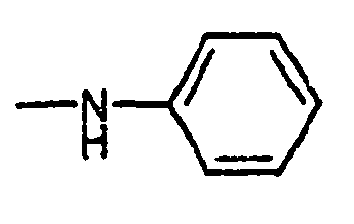
M die obige Bedeutung hat, insbesondere für Na+ oder K+ steht. - Verwendung wässriger Aufhellerpräparationen gemäß wenigstens einem der Ansprüche 1-6 enthaltend
b) 85 - 15 Gew.-% Wasser. - Verwendung wässriger Aufhellerpräparationen gemäß wenigstens einem der Ansprüche 1-7 enthaltend zusätzlich
c) 0,1 - 5 Gew.-% bezogen auf Aufheller der Komponente a) wenigstens eines Kondensationsproduktes auf Basis vonA) sulfonierten AromatenB) Aldehyden und/oder Ketonen und gegebenenfallsC) einer oder mehrerer Verbindungen aus der Gruppe der nicht sulfonierten Aromaten, Harnstoff und Harnstoffderivaten. - Verwendung wässriger Aufhellerpräparationen gemäß wenigstens einem der Ansprüche 1-8 enthaltend als Komponente c) ein Kondensationsprodukt auf Basis vonA) Ditolylethersulfonsäure undB) Formaldehyd oderA) Naphthalinsulfonsäure,B) Formaldehyd undC) 4,4'-Diphenylsulfon.
- Verwendung wässriger Aufhellerpräparationen gemäß Anspruch 1 zum optischen Aufhellen von Papier in der Masse.
- Verwendung wässriger Aufhellerpräparationen gemäß Anspruch 1 zum optischen Aufhellen von Papier in der Oberfläche.
- Verwendung wässriger Aufhellerpräparationen gemäß Anspruch 1, dadurch gekennzeichnet, dass die wässrige Aufhellerpräparation nach Verdünnung mit Wasser in die wässrige Zellstoffmischung, Papierstreichmasse und/oder Leim- bzw. Filmpressenflotte eingebracht wird.
Applications Claiming Priority (2)
| Application Number | Priority Date | Filing Date | Title |
|---|---|---|---|
| DE10149313 | 2001-10-05 | ||
| DE10149313A DE10149313A1 (de) | 2001-10-05 | 2001-10-05 | Verwendung wässriger Aufhellerpräparationen zum Aufhellen von natürlichen und synthetischen Materialien |
Publications (2)
| Publication Number | Publication Date |
|---|---|
| EP1300514A1 EP1300514A1 (de) | 2003-04-09 |
| EP1300514B1 true EP1300514B1 (de) | 2008-08-13 |
Family
ID=7701614
Family Applications (1)
| Application Number | Title | Priority Date | Filing Date |
|---|---|---|---|
| EP02021336A Expired - Lifetime EP1300514B1 (de) | 2001-10-05 | 2002-09-23 | Verwendung wässriger Aufhellpräparationen zum Aufhellen von natürlichen und synthetischen Materialien |
Country Status (6)
| Country | Link |
|---|---|
| US (1) | US20030089888A1 (de) |
| EP (1) | EP1300514B1 (de) |
| AT (1) | ATE404731T1 (de) |
| CA (1) | CA2406295A1 (de) |
| DE (2) | DE10149313A1 (de) |
| PT (1) | PT1300514E (de) |
Families Citing this family (19)
| Publication number | Priority date | Publication date | Assignee | Title |
|---|---|---|---|---|
| EP1631715B1 (de) * | 2003-06-11 | 2012-01-04 | Basf Se | Lagerstabile, optische aufheller-formulierungen |
| BRPI0715395A2 (pt) * | 2003-08-08 | 2013-06-25 | Clariant Finance Bvi Ltd | soluÇÕes aquosas de alvejantes àpticos |
| EP1774097A2 (de) * | 2004-07-07 | 2007-04-18 | Novozymes North America, Inc. | Verwendung von cyclodextrin zur verringerung der vergilbung von pulpe und papier |
| US20060124266A1 (en) * | 2004-11-23 | 2006-06-15 | Novozymes North America, Inc. | Use of cyclodextrins for reducing deposits during paper production |
| EP1712677A1 (de) * | 2005-04-08 | 2006-10-18 | Clariant International Ltd. | Wässerige Lösungen von optischen Aufhellern |
| US20060246383A1 (en) * | 2005-04-29 | 2006-11-02 | Kai-Kong Iu | Amphoteric stilbene composition |
| US7682438B2 (en) * | 2005-11-01 | 2010-03-23 | International Paper Company | Paper substrate having enhanced print density |
| CA2655454A1 (en) * | 2006-08-08 | 2008-02-14 | Clariant Finance (Bvi) Limited | Aqueous solutions of optical brighteners |
| AT505874B1 (de) * | 2007-10-10 | 2015-05-15 | Miba Frictec Gmbh | Verfahren zur herstellung eines reibbelages |
| WO2009074548A2 (en) * | 2007-12-12 | 2009-06-18 | Clariant International Ltd | Storage stable solutions of optical brighteners |
| US8057637B2 (en) | 2007-12-26 | 2011-11-15 | International Paper Company | Paper substrate containing a wetting agent and having improved print mottle |
| WO2009118247A1 (en) * | 2008-03-26 | 2009-10-01 | Clariant International Ltd | Improved optical brightening compositions |
| US8613834B2 (en) | 2008-04-03 | 2013-12-24 | Basf Se | Paper coating or binding formulations and methods of making and using same |
| DE602008004328D1 (de) * | 2008-06-11 | 2011-02-17 | Kemira Germany Gmbh | Zusammensetzung und Verfahren zur Papierbleichung |
| US8460511B2 (en) * | 2008-10-01 | 2013-06-11 | International Paper Company | Paper substrate containing a wetting agent and having improved printability |
| DE102009044430A1 (de) * | 2009-11-05 | 2011-05-12 | Baumeister Chemicals & Consulting Gmbh & Co. Kg | Streichfarbe zur Verbesserung der Qualitäts- und Laufeigenschaften von Druckträgern und Herstellungsverfahren der Streichfarbe |
| EP2412870B1 (de) * | 2010-07-30 | 2013-04-17 | Blankophor GmbH & Co. KG | Zusammensetzung und Verfahren zur Papierbleichung |
| CN103194086B (zh) * | 2013-03-14 | 2014-07-02 | 浙江传化华洋化工有限公司 | 一种含氨基丙酸衍生物荧光增白剂的合成方法 |
| EP3246321B1 (de) * | 2016-05-17 | 2018-10-03 | Blankophor GmbH & Co. KG | Optische aufheller und mischungen davon |
Family Cites Families (33)
| Publication number | Priority date | Publication date | Assignee | Title |
|---|---|---|---|---|
| DE1011889B (de) * | 1956-06-14 | 1957-07-11 | Cassella Farbwerke Mainkur Ag | Verfahren zur Herstellung von optischen Bleichmitteln |
| DE1098485B (de) * | 1957-06-05 | 1961-02-02 | Bayer Ag | Aufhellungsmittel |
| DE1100583B (de) * | 1958-01-08 | 1961-03-02 | Bayer Ag | Aufhellungsmittel |
| CH386436A (de) * | 1960-07-28 | 1965-01-15 | Geigy Ag J R | Verfahren zur Herstellung von Bis-triazinylaminostilbenverbindungen |
| DE1495645C3 (de) * | 1961-05-26 | 1974-11-07 | Bayer Ag, 5090 Leverkusen | Verfahren zur Herstellung stabiler, wäßriger Emulsionen bzw. Dispersionen von Äthylen-Mischpolymerisaten |
| BE755820A (fr) * | 1969-09-12 | 1971-03-08 | Sandoz Sa | Composition de blanchiment optique |
| US3962115A (en) * | 1970-07-09 | 1976-06-08 | Ciba-Geigy Ag | Treatment of optical brightening agents |
| BE786308A (fr) * | 1971-07-16 | 1973-01-15 | Ciba Geigy | Acides bis-s-triazinylamino-stilbene-2,2' -disulfoniques, leur preparation et leur utilisation comme azurants optiques |
| JPS5116060B2 (de) * | 1972-08-04 | 1976-05-21 | ||
| CH582275A5 (de) * | 1973-02-02 | 1976-11-30 | Ciba Geigy Ag | |
| CH587831A5 (de) * | 1973-05-17 | 1977-05-13 | Sandoz Ag | |
| CH583211A5 (de) * | 1973-05-22 | 1976-12-31 | Sandoz Ag | |
| US4167626A (en) * | 1974-08-14 | 1979-09-11 | Sandoz Ltd. | Triazolyl stilbene triazoles |
| CH596290A5 (de) * | 1975-01-22 | 1978-03-15 | Ciba Geigy Ag | |
| US4212763A (en) * | 1977-07-04 | 1980-07-15 | Ciba-Geigy Corporation | Bis-triazinylaminostilbene compounds and their use as fluorescent brightening agents |
| US4364845A (en) * | 1978-07-17 | 1982-12-21 | Ciba-Geigy Corporation | Concentrated aqueous solutions of sulfo group-containing fluorescent brighteners which are stable on storage |
| US4339238A (en) * | 1980-01-14 | 1982-07-13 | Ciba-Geigy Corporation | Stable aqueous formulations of stilbene fluorescent whitening agents |
| CH647021A5 (de) * | 1981-09-22 | 1984-12-28 | Ciba Geigy Ag | Verfahren zur herstellung lagerstabiler aufhellerformulierungen. |
| US4762868A (en) * | 1985-06-13 | 1988-08-09 | North Broken Hill Limited | Coated front copy paper |
| BR9000850A (pt) * | 1989-02-28 | 1991-02-05 | Ciba Geigy Ag | Formulacao aclaradora estavel a armazenagem,processo para sua preparacao e aplicacao |
| DE4338196A1 (de) * | 1993-11-09 | 1995-05-11 | Bayer Ag | Verfahren zum Reinigen organischer Syntheseprodukte |
| DE4343857A1 (de) * | 1993-12-22 | 1995-06-29 | Hoechst Ag | Öl-in-Wasser-Emulsionen |
| GB9412590D0 (en) * | 1994-06-23 | 1994-08-10 | Sandoz Ltd | Organic compounds |
| US5591489A (en) * | 1995-05-04 | 1997-01-07 | Sequa Chemicals, Inc. | Process for surface sizing paper or paperboard |
| GB9610832D0 (en) * | 1996-05-23 | 1996-07-31 | Ciba Geigy Ag | Stilbene compounds and their use |
| EP0816406B1 (de) * | 1996-06-26 | 2000-09-06 | Bayer Ag | Verfahren zur Herstellung salzarmer Präparationen von Kondensationsprodukten |
| GB9617322D0 (en) * | 1996-08-17 | 1996-09-25 | Ciba Geigy Ag | Triazine derivatives and their use |
| GB9813248D0 (en) * | 1998-06-22 | 1998-08-19 | Clariant Int Ltd | Improvements in or relating to organic compounds |
| AU6842600A (en) * | 1999-09-10 | 2001-04-17 | Ciba Specialty Chemicals Holding Inc. | Triazinylaminostilbene derivative as fluorescent whitening agents |
| AU1143401A (en) * | 1999-10-29 | 2001-05-14 | Ciba Specialty Chemicals Holding Inc. | Process for the preparation of solutions of anionic organic compounds |
| DE19954959A1 (de) * | 1999-11-16 | 2001-05-17 | Henkel Kgaa | Umhüllte teilchenförmige Peroxoverbindungen |
| ATE352588T1 (de) * | 2000-05-26 | 2007-02-15 | Ciba Sc Holding Ag | Verfahren zur herstellung von lösungen anionischer organischer verbindungen |
| GB0100610D0 (en) * | 2001-01-10 | 2001-02-21 | Clariant Int Ltd | Improvements in or relating to organic compounds |
-
2001
- 2001-10-05 DE DE10149313A patent/DE10149313A1/de not_active Withdrawn
-
2002
- 2002-09-20 US US10/251,561 patent/US20030089888A1/en not_active Abandoned
- 2002-09-23 AT AT02021336T patent/ATE404731T1/de active
- 2002-09-23 DE DE50212628T patent/DE50212628D1/de not_active Expired - Lifetime
- 2002-09-23 PT PT02021336T patent/PT1300514E/pt unknown
- 2002-09-23 EP EP02021336A patent/EP1300514B1/de not_active Expired - Lifetime
- 2002-10-02 CA CA002406295A patent/CA2406295A1/en not_active Abandoned
Also Published As
| Publication number | Publication date |
|---|---|
| DE10149313A1 (de) | 2003-04-17 |
| ATE404731T1 (de) | 2008-08-15 |
| US20030089888A1 (en) | 2003-05-15 |
| DE50212628D1 (de) | 2008-09-25 |
| CA2406295A1 (en) | 2003-04-05 |
| EP1300514A1 (de) | 2003-04-09 |
| PT1300514E (pt) | 2008-11-20 |
Similar Documents
| Publication | Publication Date | Title |
|---|---|---|
| EP1300514B1 (de) | Verwendung wässriger Aufhellpräparationen zum Aufhellen von natürlichen und synthetischen Materialien | |
| EP1355004B1 (de) | Verwendung von Aufhellern zur Herstellung von Streichmassen | |
| DE69807397T2 (de) | Triazinylaminostilben Verbindungen | |
| EP0992547B1 (de) | Verfahren zur Herstellung von Farbstoffen und/oder Aufhellerzubereitungen | |
| DE69522172T2 (de) | Zubereitung eines fluoreszierenden Weisstöners | |
| DE3234784C2 (de) | ||
| DE1795047A1 (de) | Bis-s-triazinylamino-stilben-2,2'-disulfonsaeuren | |
| EP0274666B1 (de) | Weisstönerhaltige Papierstreichmassen | |
| MXPA97007803A (en) | Dispersions of fluorescen whitening agents | |
| DE3535566A1 (de) | Natriumlignosulfonate mit niedrigem elektrolytgehalt | |
| DE3235747C2 (de) | Verfahren zur Herstellung von lagerstabilen Farbstoffpräparaten | |
| DE1930307A1 (de) | Kationische Derivate der 4,4'-Bis-s-triazinylamino-stilbendisulfosaeure-2,2',Verfahren zu ihrer Herstellung und Verwendung als optische Aufhellungsmittel | |
| DD144934A5 (de) | Lagerstabile,konzentrierte waessrige loesungen von sulfogruppenhaltigen optischen aufhellern | |
| US20050239744A1 (en) | Method of producing microcrystalline cellulose-containing compositions | |
| DE2715864A1 (de) | Verfahren zum optischen aufhellen von papier | |
| JPS6291564A (ja) | 湿潤性組成物およびその生成方法 | |
| EP1177180B1 (de) | Stilbenaufheller | |
| EP1300513A2 (de) | Verwendung fester Aufhellerpräparationen zum Aufhellen von Papier | |
| EP0382054A2 (de) | Chemisch modifizierte Proteine | |
| DE10150894A1 (de) | Feste Aufhellerpräparationen | |
| EP1335001A1 (de) | Feste Aufhellerpräparationen | |
| EP1624105B1 (de) | Alkanolammoniumhaltige Triazinylflavonataufheller | |
| CN101711267B (zh) | 稳定的液体制剂 | |
| DE2152285B2 (de) | Waessrige phenol/formaldehyd-harz- suspension, verfahren zu deren herstellung und deren verwendung | |
| EP0014180B1 (de) | Stabile konzentrierte Lösung eines Farbstoffes der Disazoreihe, Verfahren zu deren Herstellung und Verwendung dieser Lösung |
Legal Events
| Date | Code | Title | Description |
|---|---|---|---|
| PUAI | Public reference made under article 153(3) epc to a published international application that has entered the european phase |
Free format text: ORIGINAL CODE: 0009012 |
|
| AK | Designated contracting states |
Kind code of ref document: A1 Designated state(s): AT BE BG CH CY CZ DE DK EE ES FI FR GB GR IE IT LI LU MC NL PT SE SK TR |
|
| AX | Request for extension of the european patent |
Extension state: AL LT LV MK RO SI |
|
| 17P | Request for examination filed |
Effective date: 20031009 |
|
| AKX | Designation fees paid |
Designated state(s): AT BE BG CH CY CZ DE DK EE ES FI FR GB GR IE IT LI LU MC NL PT SE SK TR |
|
| RAP1 | Party data changed (applicant data changed or rights of an application transferred) |
Owner name: BAYER CHEMICALS AG |
|
| 17Q | First examination report despatched |
Effective date: 20040813 |
|
| RAP1 | Party data changed (applicant data changed or rights of an application transferred) |
Owner name: LANXESS DEUTSCHLAND GMBH |
|
| 17Q | First examination report despatched |
Effective date: 20040813 |
|
| RAP1 | Party data changed (applicant data changed or rights of an application transferred) |
Owner name: KEMIRA OYJ |
|
| RAP1 | Party data changed (applicant data changed or rights of an application transferred) |
Owner name: KEMIRA OYJ |
|
| GRAP | Despatch of communication of intention to grant a patent |
Free format text: ORIGINAL CODE: EPIDOSNIGR1 |
|
| GRAS | Grant fee paid |
Free format text: ORIGINAL CODE: EPIDOSNIGR3 |
|
| GRAA | (expected) grant |
Free format text: ORIGINAL CODE: 0009210 |
|
| AK | Designated contracting states |
Kind code of ref document: B1 Designated state(s): AT BE BG CH CY CZ DE DK EE ES FI FR GB GR IE IT LI LU MC NL PT SE SK TR |
|
| REG | Reference to a national code |
Ref country code: GB Ref legal event code: FG4D Free format text: NOT ENGLISH |
|
| REG | Reference to a national code |
Ref country code: CH Ref legal event code: EP |
|
| REG | Reference to a national code |
Ref country code: IE Ref legal event code: FG4D Free format text: LANGUAGE OF EP DOCUMENT: GERMAN |
|
| REF | Corresponds to: |
Ref document number: 50212628 Country of ref document: DE Date of ref document: 20080925 Kind code of ref document: P |
|
| REG | Reference to a national code |
Ref country code: CH Ref legal event code: NV Representative=s name: ING. MARCO ZARDI C/O M. ZARDI & CO. S.A. |
|
| REG | Reference to a national code |
Ref country code: PT Ref legal event code: SC4A Free format text: AVAILABILITY OF NATIONAL TRANSLATION Effective date: 20081110 |
|
| REG | Reference to a national code |
Ref country code: SE Ref legal event code: TRGR |
|
| PG25 | Lapsed in a contracting state [announced via postgrant information from national office to epo] |
Ref country code: NL Free format text: LAPSE BECAUSE OF FAILURE TO SUBMIT A TRANSLATION OF THE DESCRIPTION OR TO PAY THE FEE WITHIN THE PRESCRIBED TIME-LIMIT Effective date: 20080813 Ref country code: ES Free format text: LAPSE BECAUSE OF FAILURE TO SUBMIT A TRANSLATION OF THE DESCRIPTION OR TO PAY THE FEE WITHIN THE PRESCRIBED TIME-LIMIT Effective date: 20081124 |
|
| BERE | Be: lapsed |
Owner name: KEMIRA OYJ Effective date: 20080930 |
|
| REG | Reference to a national code |
Ref country code: IE Ref legal event code: FD4D |
|
| PG25 | Lapsed in a contracting state [announced via postgrant information from national office to epo] |
Ref country code: IE Free format text: LAPSE BECAUSE OF FAILURE TO SUBMIT A TRANSLATION OF THE DESCRIPTION OR TO PAY THE FEE WITHIN THE PRESCRIBED TIME-LIMIT Effective date: 20080813 Ref country code: DK Free format text: LAPSE BECAUSE OF FAILURE TO SUBMIT A TRANSLATION OF THE DESCRIPTION OR TO PAY THE FEE WITHIN THE PRESCRIBED TIME-LIMIT Effective date: 20080813 Ref country code: BG Free format text: LAPSE BECAUSE OF FAILURE TO SUBMIT A TRANSLATION OF THE DESCRIPTION OR TO PAY THE FEE WITHIN THE PRESCRIBED TIME-LIMIT Effective date: 20081113 Ref country code: MC Free format text: LAPSE BECAUSE OF NON-PAYMENT OF DUE FEES Effective date: 20080930 |
|
| PG25 | Lapsed in a contracting state [announced via postgrant information from national office to epo] |
Ref country code: CZ Free format text: LAPSE BECAUSE OF FAILURE TO SUBMIT A TRANSLATION OF THE DESCRIPTION OR TO PAY THE FEE WITHIN THE PRESCRIBED TIME-LIMIT Effective date: 20080813 |
|
| PLBE | No opposition filed within time limit |
Free format text: ORIGINAL CODE: 0009261 |
|
| STAA | Information on the status of an ep patent application or granted ep patent |
Free format text: STATUS: NO OPPOSITION FILED WITHIN TIME LIMIT |
|
| 26N | No opposition filed |
Effective date: 20090514 |
|
| GBPC | Gb: european patent ceased through non-payment of renewal fee |
Effective date: 20081113 |
|
| PG25 | Lapsed in a contracting state [announced via postgrant information from national office to epo] |
Ref country code: EE Free format text: LAPSE BECAUSE OF FAILURE TO SUBMIT A TRANSLATION OF THE DESCRIPTION OR TO PAY THE FEE WITHIN THE PRESCRIBED TIME-LIMIT Effective date: 20080813 Ref country code: BE Free format text: LAPSE BECAUSE OF NON-PAYMENT OF DUE FEES Effective date: 20080930 |
|
| PG25 | Lapsed in a contracting state [announced via postgrant information from national office to epo] |
Ref country code: GB Free format text: LAPSE BECAUSE OF NON-PAYMENT OF DUE FEES Effective date: 20081113 |
|
| PG25 | Lapsed in a contracting state [announced via postgrant information from national office to epo] |
Ref country code: LU Free format text: LAPSE BECAUSE OF NON-PAYMENT OF DUE FEES Effective date: 20080923 Ref country code: CY Free format text: LAPSE BECAUSE OF FAILURE TO SUBMIT A TRANSLATION OF THE DESCRIPTION OR TO PAY THE FEE WITHIN THE PRESCRIBED TIME-LIMIT Effective date: 20080813 |
|
| PG25 | Lapsed in a contracting state [announced via postgrant information from national office to epo] |
Ref country code: TR Free format text: LAPSE BECAUSE OF FAILURE TO SUBMIT A TRANSLATION OF THE DESCRIPTION OR TO PAY THE FEE WITHIN THE PRESCRIBED TIME-LIMIT Effective date: 20080813 |
|
| PG25 | Lapsed in a contracting state [announced via postgrant information from national office to epo] |
Ref country code: GR Free format text: LAPSE BECAUSE OF FAILURE TO SUBMIT A TRANSLATION OF THE DESCRIPTION OR TO PAY THE FEE WITHIN THE PRESCRIBED TIME-LIMIT Effective date: 20081114 |
|
| PGFP | Annual fee paid to national office [announced via postgrant information from national office to epo] |
Ref country code: IT Payment date: 20100928 Year of fee payment: 9 |
|
| REG | Reference to a national code |
Ref country code: DE Ref legal event code: R081 Ref document number: 50212628 Country of ref document: DE Owner name: BLANKOPHOR GMBH & CO. KG, DE Free format text: FORMER OWNER: KEMIRA OYJ, HELSINKI, FI Effective date: 20110519 |
|
| REG | Reference to a national code |
Ref country code: CH Ref legal event code: PUE Owner name: BLANKOPHOR GMBH & CO. KG Free format text: KEMIRA OYJ#PORKKALANKATU 3#00180 HELSINKI (FI) -TRANSFER TO- BLANKOPHOR GMBH & CO. KG#MARIE-CURIE-STRASSE 10#51377 LEVERKUSEN (DE) |
|
| REG | Reference to a national code |
Ref country code: PT Ref legal event code: PC4A Owner name: BLANKOPHOR GMBH & CO. KG, DE Effective date: 20110908 |
|
| PGFP | Annual fee paid to national office [announced via postgrant information from national office to epo] |
Ref country code: CH Payment date: 20110926 Year of fee payment: 10 |
|
| PGFP | Annual fee paid to national office [announced via postgrant information from national office to epo] |
Ref country code: SK Payment date: 20110916 Year of fee payment: 10 Ref country code: SE Payment date: 20110923 Year of fee payment: 10 Ref country code: FI Payment date: 20110922 Year of fee payment: 10 Ref country code: DE Payment date: 20110916 Year of fee payment: 10 Ref country code: AT Payment date: 20110922 Year of fee payment: 10 Ref country code: FR Payment date: 20111005 Year of fee payment: 10 Ref country code: PT Payment date: 20110909 Year of fee payment: 10 |
|
| REG | Reference to a national code |
Ref country code: FR Ref legal event code: TP Owner name: BLANKOPHOR GMBH & CO. KG, DE Effective date: 20111021 |
|
| REG | Reference to a national code |
Ref country code: SK Ref legal event code: PC4A Ref document number: E 4537 Country of ref document: SK Owner name: BLANKOPHOR GMBH & CO. KG, LEVERKUSEN, DE Free format text: FORMER OWNER: KEMIRA OYJ, HELSINKI, FI Effective date: 20110822 |
|
| REG | Reference to a national code |
Ref country code: DE Ref legal event code: R082 Ref document number: 50212628 Country of ref document: DE Representative=s name: PATENT- UND RECHTSANWAELTE BARDEHLE PAGENBERG, DE |
|
| REG | Reference to a national code |
Ref country code: DE Ref legal event code: R082 Ref document number: 50212628 Country of ref document: DE Representative=s name: BARDEHLE PAGENBERG PARTNERSCHAFT PATENTANWAELT, DE Effective date: 20120227 Ref country code: DE Ref legal event code: R081 Ref document number: 50212628 Country of ref document: DE Owner name: BLANKOPHOR GMBH & CO. KG, DE Free format text: FORMER OWNER: BLANKOPHOR GMBH & CO. KG, 51377 LEVERKUSEN, DE Effective date: 20120227 |
|
| REG | Reference to a national code |
Ref country code: PT Ref legal event code: MM4A Free format text: LAPSE DUE TO NON-PAYMENT OF FEES Effective date: 20130325 |
|
| PG25 | Lapsed in a contracting state [announced via postgrant information from national office to epo] |
Ref country code: SE Free format text: LAPSE BECAUSE OF NON-PAYMENT OF DUE FEES Effective date: 20120924 Ref country code: FI Free format text: LAPSE BECAUSE OF NON-PAYMENT OF DUE FEES Effective date: 20120923 |
|
| REG | Reference to a national code |
Ref country code: SE Ref legal event code: EUG Ref country code: CH Ref legal event code: PL |
|
| REG | Reference to a national code |
Ref country code: AT Ref legal event code: MM01 Ref document number: 404731 Country of ref document: AT Kind code of ref document: T Effective date: 20120923 |
|
| PG25 | Lapsed in a contracting state [announced via postgrant information from national office to epo] |
Ref country code: PT Free format text: LAPSE BECAUSE OF NON-PAYMENT OF DUE FEES Effective date: 20130325 |
|
| REG | Reference to a national code |
Ref country code: SK Ref legal event code: MM4A Ref document number: E 4537 Country of ref document: SK Effective date: 20120923 |
|
| REG | Reference to a national code |
Ref country code: FR Ref legal event code: ST Effective date: 20130531 |
|
| PG25 | Lapsed in a contracting state [announced via postgrant information from national office to epo] |
Ref country code: LI Free format text: LAPSE BECAUSE OF NON-PAYMENT OF DUE FEES Effective date: 20120930 Ref country code: AT Free format text: LAPSE BECAUSE OF NON-PAYMENT OF DUE FEES Effective date: 20120923 Ref country code: DE Free format text: LAPSE BECAUSE OF NON-PAYMENT OF DUE FEES Effective date: 20130403 Ref country code: SK Free format text: LAPSE BECAUSE OF NON-PAYMENT OF DUE FEES Effective date: 20120923 Ref country code: CH Free format text: LAPSE BECAUSE OF NON-PAYMENT OF DUE FEES Effective date: 20120930 |
|
| PG25 | Lapsed in a contracting state [announced via postgrant information from national office to epo] |
Ref country code: IT Free format text: LAPSE BECAUSE OF NON-PAYMENT OF DUE FEES Effective date: 20120923 Ref country code: FR Free format text: LAPSE BECAUSE OF NON-PAYMENT OF DUE FEES Effective date: 20121001 |
|
| REG | Reference to a national code |
Ref country code: DE Ref legal event code: R119 Ref document number: 50212628 Country of ref document: DE Effective date: 20130403 |