EP1302547A2 - Verfahren zum Nachweis und Unterscheiden von Nukleinsäuresequenzen - Google Patents
Verfahren zum Nachweis und Unterscheiden von Nukleinsäuresequenzen Download PDFInfo
- Publication number
- EP1302547A2 EP1302547A2 EP02079575A EP02079575A EP1302547A2 EP 1302547 A2 EP1302547 A2 EP 1302547A2 EP 02079575 A EP02079575 A EP 02079575A EP 02079575 A EP02079575 A EP 02079575A EP 1302547 A2 EP1302547 A2 EP 1302547A2
- Authority
- EP
- European Patent Office
- Prior art keywords
- nucleic acid
- preselected
- acid sequence
- immobilized
- acid sequences
- Prior art date
- Legal status (The legal status is an assumption and is not a legal conclusion. Google has not performed a legal analysis and makes no representation as to the accuracy of the status listed.)
- Ceased
Links
Images



Classifications
-
- C—CHEMISTRY; METALLURGY
- C07—ORGANIC CHEMISTRY
- C07H—SUGARS; DERIVATIVES THEREOF; NUCLEOSIDES; NUCLEOTIDES; NUCLEIC ACIDS
- C07H21/00—Compounds containing two or more mononucleotide units having separate phosphate or polyphosphate groups linked by saccharide radicals of nucleoside groups, e.g. nucleic acids
-
- C—CHEMISTRY; METALLURGY
- C12—BIOCHEMISTRY; BEER; SPIRITS; WINE; VINEGAR; MICROBIOLOGY; ENZYMOLOGY; MUTATION OR GENETIC ENGINEERING
- C12Q—MEASURING OR TESTING PROCESSES INVOLVING ENZYMES, NUCLEIC ACIDS OR MICROORGANISMS; COMPOSITIONS OR TEST PAPERS THEREFOR; PROCESSES OF PREPARING SUCH COMPOSITIONS; CONDITION-RESPONSIVE CONTROL IN MICROBIOLOGICAL OR ENZYMOLOGICAL PROCESSES
- C12Q1/00—Measuring or testing processes involving enzymes, nucleic acids or microorganisms; Compositions therefor; Processes of preparing such compositions
- C12Q1/68—Measuring or testing processes involving enzymes, nucleic acids or microorganisms; Compositions therefor; Processes of preparing such compositions involving nucleic acids
- C12Q1/6813—Hybridisation assays
- C12Q1/6827—Hybridisation assays for detection of mutation or polymorphism
-
- C—CHEMISTRY; METALLURGY
- C12—BIOCHEMISTRY; BEER; SPIRITS; WINE; VINEGAR; MICROBIOLOGY; ENZYMOLOGY; MUTATION OR GENETIC ENGINEERING
- C12Q—MEASURING OR TESTING PROCESSES INVOLVING ENZYMES, NUCLEIC ACIDS OR MICROORGANISMS; COMPOSITIONS OR TEST PAPERS THEREFOR; PROCESSES OF PREPARING SUCH COMPOSITIONS; CONDITION-RESPONSIVE CONTROL IN MICROBIOLOGICAL OR ENZYMOLOGICAL PROCESSES
- C12Q1/00—Measuring or testing processes involving enzymes, nucleic acids or microorganisms; Compositions therefor; Processes of preparing such compositions
- C12Q1/68—Measuring or testing processes involving enzymes, nucleic acids or microorganisms; Compositions therefor; Processes of preparing such compositions involving nucleic acids
- C12Q1/6813—Hybridisation assays
- C12Q1/6834—Enzymatic or biochemical coupling of nucleic acids to a solid phase
-
- C—CHEMISTRY; METALLURGY
- C12—BIOCHEMISTRY; BEER; SPIRITS; WINE; VINEGAR; MICROBIOLOGY; ENZYMOLOGY; MUTATION OR GENETIC ENGINEERING
- C12Q—MEASURING OR TESTING PROCESSES INVOLVING ENZYMES, NUCLEIC ACIDS OR MICROORGANISMS; COMPOSITIONS OR TEST PAPERS THEREFOR; PROCESSES OF PREPARING SUCH COMPOSITIONS; CONDITION-RESPONSIVE CONTROL IN MICROBIOLOGICAL OR ENZYMOLOGICAL PROCESSES
- C12Q1/00—Measuring or testing processes involving enzymes, nucleic acids or microorganisms; Compositions therefor; Processes of preparing such compositions
- C12Q1/68—Measuring or testing processes involving enzymes, nucleic acids or microorganisms; Compositions therefor; Processes of preparing such compositions involving nucleic acids
- C12Q1/6844—Nucleic acid amplification reactions
- C12Q1/6853—Nucleic acid amplification reactions using modified primers or templates
-
- C—CHEMISTRY; METALLURGY
- C12—BIOCHEMISTRY; BEER; SPIRITS; WINE; VINEGAR; MICROBIOLOGY; ENZYMOLOGY; MUTATION OR GENETIC ENGINEERING
- C12Q—MEASURING OR TESTING PROCESSES INVOLVING ENZYMES, NUCLEIC ACIDS OR MICROORGANISMS; COMPOSITIONS OR TEST PAPERS THEREFOR; PROCESSES OF PREPARING SUCH COMPOSITIONS; CONDITION-RESPONSIVE CONTROL IN MICROBIOLOGICAL OR ENZYMOLOGICAL PROCESSES
- C12Q1/00—Measuring or testing processes involving enzymes, nucleic acids or microorganisms; Compositions therefor; Processes of preparing such compositions
- C12Q1/68—Measuring or testing processes involving enzymes, nucleic acids or microorganisms; Compositions therefor; Processes of preparing such compositions involving nucleic acids
- C12Q1/6844—Nucleic acid amplification reactions
- C12Q1/6858—Allele-specific amplification
Definitions
- the present invention relates to a method for detecting and for discriminating between nucleic acid sequences if present in a sample. More specifically, the invention relates to a method for determining if a particular DNA or RNA sequence is present in a sample. The invention also relates to discriminating between sequences which differ from each other by as little as a single nucleotide.
- the DNA or RNA may be single or double stranded, and may be a single species or a component of a mixture of nucleic acids.
- the method of the invention utilizes a novel primer design.
- the sequence of the primer is composed of two portions, the 3' portion is a primer specific for the target nucleic acid sequence and the 5' portion is complementary to a preselected nucleic acid sequence.
- Extension of the 3' portion of the primer with labeled deoxynucleosides triphosphate yields a labeled extension product if, but only if, the template includes the target sequence.
- the labeled extension product is detected by hybridization of the 5' portion to the preselected sequence.
- the genome of an organism is unique. Not only do the genomes of different species differ, but the genomes of different individuals within a species differ (with the exception of identical twins or clones). These differences provide individual and species specific characteristics which can be used for identification by nucleic acid biochemical techniques such as hybridization and polymerase mediated reactions, both dependent for their specificity on precise base pairing.
- nucleic acid based diagnostics The goal of nucleic acid based diagnostics is the detection of specific nucleic acid sequences. This goal often requires the detection of a specific sequence in the presence of other sequences. In certain cases it is necessary to discriminate between closely related sequences, even sequences which differ by only a single nucleotide. Prior art methods for doing so are described in various publications. For example, the use of allele-specific oligonucleotide (ASO) hybridization probes for the detection of specific nucleic acid sequences has been described (Wu et al., DNA 8 :135-142 (1989); Thein, et al., Br. J . Haematol. 70 :225-231 (1988); Connor, et al., Proc. Natl.
- ASO allele-specific oligonucleotide
- ASO hybridization has been combined with PCR amplification for the specific detection of various disease alleles (Impraim, et al., Biochem. Biophys. Res. Commun. 142 :710-716 (1987); Saiki, et al., Nature 324 :163-166 (1986); Farr, et al., Proc.Natl. Acad.Sci. USA 85 :1629-1633 (1988); Saiki, et al., N.Enql.J.Med. 319 :537-541 (1988); Chehab, et al., Nature 329 :293-294 (1987)).
- the present invention provides an alternative for the analysis of PCR amplification products to determine the presence or absence of specific sequences.
- This invention provides a method for determining the presence or absence of a target nucleic acid sequence present in a sample and for discriminating between any two nucleic acid sequences even if such sequences differ only by a single nucleotide.
- the nucleic sequences may be single or double stranded DNA or RNA.
- the target sequence may be relatively pure species or a component of a nucleic acid mixture. It may be produced by an in vitro amplification such as a PCR or ligation amplification reaction or by a plurality of cycles of primer extension.
- the method of the invention entails extension of a novel two component primer on templates which may or may not include a target nucleic acid sequence.
- the 3' portion of the primer is complementary to a portion of the template adjacent the target sequence.
- the 5' portion of the primer is complementary to a different preselected nucleic acid sequence.
- Extension of the 3' portion of the primer with a labeled deoxynucleoside triphosphates yields a labeled extension product if, but only if, the template includes the target sequence.
- the presence of such a labeled primer extension product is detected by hybridization of the 5' portion to the preselected sequence.
- the preselected sequence is preferably immobilized on a solid support. A plurality of preselected sequences immobilized on a solid support to provide an array for concurrent screening of a plurality of labeled primer extension products is provided.
- One practical embodiment of the invention relates to methods for diagnosing diseases such as sickle cell anemia or thalassemia caused by a defective allele. Kits for performing such a diagnosis are provided.
- Oligonucleotide refers to a nucleic acid sequence composed of two or more nucleotides. It can be derived from natural sources but is often synthesized chemically. It can be of any length. It is generally used as a primer, a probe or a component of ligation reaction.
- Primer refers to an oligonucleotide which is used to initiate nucleic acid synthesis by a template dependent polymerase such as a DNA polymerase.
- the primer is complementary to a portion of a template nucleic acid.
- Primer extension refers to the process of elongation of a primer on a nucleic acid template.
- a template dependent polymerase such as a DNA polymerase incorporates a nucleotide complementary to the template strand on the 3' end of a primer which is annealed to a template. The polymerase will thus synthesize a faithful complementary copy of the template. If only a single nucleoside triphosphate is present in a primer extension reaction, then that nucleotide will be incorporated in the primer extension product only if the base of the nucleoside triphosphate is complementary to the base of the template immediately adjacent to the 3' end of the primer.
- Allele refers to one of two or more alternative forms of a gene occupying corresponding sites (loci) on homologous chromosomes.
- loci sites on homologous chromosomes.
- the DNA sequence of alleles of a locus differ from each other by at least one nucleotide.
- Target refers to the nucleic acid sequence to be detected or discriminated.
- sample refers to a nucleic acid which may or may not contain the target.
- the sample nucleic acid may be DNA or RNA, single or double stranded and present in a relatively pure form in the sample or one component of a mixture in the sample.
- RNA it is often useful to convert the RNA into DNA using a reverse transcription step.
- the DNA product can then be analyzed directly or subjected to an amplification step prior to analysis by the present invention.
- Allele specific primer extension refers to a method as disclosed in copending application Serial No. 07/683,137 filed April 10, 1991 pursuant to which an oligonucleotide primer is annealed to a DNA template 3' with respect to a nucleotide indicative of the presence or absence of a target allelic variation.
- the primer is then extended in the presence of labelled dNTP in which the N is complementary to the nucleotide indicative of the presence or absence of the target allelic variation in the template.
- the 3' portion of the primer is complementary to a sequence adjacent a target sequence which may or may not be present in a sample.
- the 5' portion of the primer is complementary to a known or preselected sequence preferably immobilized on a solid support and arranged in a particular pattern.
- the two components of the primer may have any desired number of nucleotides.
- The>number of nucleotides in each portion of the primer may be the same or different.
- each portion of the primer contains from about 10 to about 100 nucleotides.
- the word "about” indicates a variance e.g., of plus or minus ten nucleotides.
- Figure 2 illustrates the principle of the invention as applied to identify and discriminate between two allelic nucleic acid sequences which may be present in a sample and which differ by a single nucleotide. As illustrated, a sample may contain either "A-T” or "C-G” alleles.
- the primer is hybridized to the alleles immediately adjacent the variant nucleotides responsible for the allelism.
- ASPE reactions are performed with each of four labeled deoxynucleoside triphosphates independently. Only one of the primer extension reactions will label the primer for each of the different alleles.
- the amplification product is subjected to hybridization with a primer which includes a 3' portion complementary to the "A-T" allele which is then subjected to extension with labeled dNTP. Extension will occur only with dTTP if the A-T allele is present in the sample. No extension occurs with ATP, dCTP or dGTP.
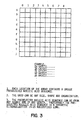
- the labeled primer extension product is screened by hybridization of the 5' portion of the labeled primer with the solid support depicted by Figure 3.
- Each location on the array of sequences contains a different preselected oligonucleotide.
- the solid support may be of any size with any desired number of locations.
- the preselected oligonucleotides immobilized at each of the grid locations are preferably at least 10-100, preferably 15 to 25 nucleotides in length.
- Hybridization preferably, but not necessarily, occurs under substantially the same conditions at each location on the array.
- the present invention is suitable for the detection of any nucleic acid.
- a sample were suspected of containing a nucleic acid specific for a pathogen, the sample could be analyzed by the present invention.
- a novel primer would be synthesized with a 3' portion specific for the pathogen genome and a 5' portion complementary to a preselected sequence.
- the sample would be either analyzed directly or after amplification by PCR.
- the present invention is also suitable for discriminating between individuals on the basis of genetic differences. For example, the determination of which alleles are preset at 20 different dimorphic, genetically unlinked loci would provide a powerful method useful in forensic science to discriminate between different individuals.
- the present invention is useful, e.g., in transplantation medicines, to determine which HLA alleles are present in a DNA sample of an individual.
- the first step involves the amplification of the target sequence with a primer set (TYR 1 and TYR 2) specific for the TYR locus. After the amplification, the template is prepared for the next step by eliminating the remaining dNTPs.
- a primer set TYR 1 and TYR 2 specific for the TYR locus.
- Figure 4 shows an overview of the procedure called ASPE-capture, applied in this example to the detection of the amplified dimorphic sequence present at the TYR locus produced by the first step.
- the method consists of three steps. This procedure is locus and allele specific in that it is designed both to specifically detect the presence of the amplification product and to determine the target identifying polymorphic nucleotide of the analyzed locus.
- Figure 4 depicts two separate primer extension reactions which have as common ingredients the DNA template, the ASPE primer, and the Ampli-Taq polymerase. The two reactions differ in that they contain different nucleoside triphosphates: allele A1 is detected by including ⁇ - 32 P dGTP and allele A2 by including ⁇ - 32 P TTP.
- the ASPE primer is a 40 nucleotide long oligonucleotide which includes two different portions (X and Y) each having a different role.
- Sequence Y is identical to the sense sequence of the TYR gene with its 3' nucleotide immediately flanking the polymorphic base. This portion of the ASPE primer participates in the primer extension reaction. Y sequence is extended by the Ampli-Taq DNA polymerase whenever an ⁇ - 32 P labeled nucleotide complementary to the polymorphic base is present in the reaction. For a DNA template from individuals homozygous for the TYR-A1 allele, the ASPE primer will be only extended by ⁇ - 32 P labeled dGTP. ⁇ - 32 P labeled TTP will be added to the ASPE primer when a DNA template from individuals homozygous for the TYR-A2 allele is analyzed.
- Sequence X is complementary to a grid oligonucleotide, thus permitting capture of the primer extension product on the grid.
- the labeling of the primer extension product could be accomplished using fluorescently labeled deoxynucleoside triphosphates or dideoxynucleoside triphosphates.
- the capture could be accomplished by hybridization in solution to an oligonucleotide which can later be immobilized (for example by utilizing biotin-avidin, hapten-antibody reactions).
- Oligonucleotides were synthesized on a Cruachem PS 250 DNA synthesizer. Oligonucleotides for amplifying the target sequence (TYR 1 and TYR 2) were purified by HPLC. The oligonucleotide used in the allele specific primer extension reactions (ASPE primer) was purified by HPLC followed by a 20% polyacrylamide gel/7M urea. The sequences of the synthetic oligonucleotides utilized are presented in Table 1.
- the grid oligonucleotide for attachment to the nylon membrane was prepared as follows: 3'Amine-ON CPC columns (0.2 ⁇ mole) were purchased from Cruachem and were used on the Cruachem PS 250 DNA synthesizer. Three 1,3 propanediol nucleoside substitutes were coupled directly to the column prior to coupling the grid oligonucleotide sequence.
- the protected 1,3 propanediol phosphoramidite was prepared essentially as described by Seela and Kaiser, Nucleic Acids Res. 15 :3113-3129 (1987). This phosphoramidite was placed in the X position of the synthesizer.
- the synthesizer was programmed to synthesize 5'CGCAGAGACGATGGACGTCAXXX.
- the oligonucleotide is deprotected as usual and the oligonucleotide recovered by ethanol precipitation.
- the oligonucleotide contains a 3'NH 2 group.
- the membranes containing the grid oligonucleotides were prepared according to Zhang, et al., Nucleic Acids Res. 19 :3929-3933 (1991). Briefly, Biodyne C membranes (Pall Biosupport, NJ) were rinsed with 0.1N HCl and then treated for 15 minutes with 20% EDC (1-Ethyl-3-[dimethylamion propyl] carbodiimide hydrochloride) (w/v) in deionized water. After the activation process, the membranes were immediately set in a 96 well Bio-dot apparatus (Bio-Rad, Richmond, CA). The grid oligonucleotide was mixed with 0.5 M sodium bicarbonate buffer pH 8.4 and applied to the membranes for 15 minutes. The membranes were rinsed with TBS/0.1% Tween-20 (Tris buffered saline) and then treated with 0.1 N NaOH for 10 minutes. Finally, filters were rinsed with deionized water.
- DNA (50ng) from ten random individuals was amplified with a primer set derived from exon I of the human tyrosinase gene (TYR) (GenBank Accession M27160; Locus HUMTYRA) in a 50 ⁇ l reaction volume containing 50 mM KCl, 10 mM Tris-HCl (pH 8.3), 1.5 mM MgCl 2 , 0.01% (w/v) gelatin, 10 pmol of each primer, 0.2 mM each dATP, dCTP, dGTP, TTP, and 2.5 units of Ampli-taq polymerase (Perkin Elmer Cetus). The reaction was performed in a thermal cycler (Perkin Elmer).
- TTP human tyrosinase gene
- the reaction mixture was denatured at 94°C for 3 minutes, then the cycle was continued by annealing the primers at 65°C for 1 minute and extending the primers at 72°C for 1 minute. After extension, the samples were denatured at 94°C for 30 seconds. The annealing, extension, and denaturation cycle was repeated 40 times. After the last cycle, the samples were incubated at 65°C for 1 minute, at 72°C for 6 minutes and finally at 4°C until analyzed.
- each sample was subjected to two separate primer extension reactions using ⁇ - 32 P labeled dGTP and TTP respectively. Mixtures were denatured at 94°C for 3 minutes and then subjected to 10 cycles consisting of 1 second annealing at 55°C and 30 seconds denaturation at 94°C. After the reaction, samples were ethanol precipitated and used for hybridization.
- 6X SSC 0.15 M NaCl, 0.015 M sodium citrate
- Grid oligonucleotides were designed to be 20 nucleotides in length and to have a base composition of 50% G+C. This design allows hybridization reactions to be carried out with a single hybridization temperature for all sequences.
- the first 20 grid oligonucleotide sequences were generated by starting with the sequence 5'GGGGGCCCCCTTTTTAAAAA (25% of each of the four bases). This sequence was then randomized by the RANDOMIZATION option (group length 1, randomize all) within the program GENED in the Intellegenetic Suite software for molecular biology (Intelligenetics, Mountain View, CA) to give the first sequence in Table 2. Each of the next 19 sequences were generated by randomizing the previous sequence in the list.
- dNTPs deoxynucleoside triphosphates
- DE52 (Whatman) was suspended in a buffer containing 10 mM Tris-HCl, pH 7.5 (TE) such that the ratio of DE52 to buffer was 1:2.
- the DE52 suspension (0.2 ml) was poured into a 1 ml micropipette tip (e.g., the blue tip for Gilson P-1000 PipetmanTM) which had been plugged with glass wool and washed with 1 ml of TE.
- the sample e.g., the product of a polymerase chain reaction
- the column was washed with 1 ml of TE.
- the dNTPs were eluted with 4 X 0.5 ml of 0.2 M NaCl. Finally, the sample was recovered, essentially free of dNTPs by 0.2 ml 1M NaCl. The sample could then be used directly in a primer extension reaction.
Landscapes
- Chemical & Material Sciences (AREA)
- Life Sciences & Earth Sciences (AREA)
- Organic Chemistry (AREA)
- Health & Medical Sciences (AREA)
- Engineering & Computer Science (AREA)
- Proteomics, Peptides & Aminoacids (AREA)
- Zoology (AREA)
- Wood Science & Technology (AREA)
- Biochemistry (AREA)
- Molecular Biology (AREA)
- General Health & Medical Sciences (AREA)
- Genetics & Genomics (AREA)
- Biotechnology (AREA)
- Biophysics (AREA)
- Microbiology (AREA)
- Immunology (AREA)
- Analytical Chemistry (AREA)
- Bioinformatics & Cheminformatics (AREA)
- General Engineering & Computer Science (AREA)
- Physics & Mathematics (AREA)
- Chemical Kinetics & Catalysis (AREA)
- Measuring Or Testing Involving Enzymes Or Micro-Organisms (AREA)
Applications Claiming Priority (1)
| Application Number | Priority Date | Filing Date | Title |
|---|---|---|---|
| PCT/US1992/005133 WO1993025563A1 (en) | 1992-06-17 | 1992-06-17 | A method of detecting and discriminating between nucleic acid sequences |
Related Parent Applications (1)
| Application Number | Title | Priority Date | Filing Date |
|---|---|---|---|
| EP92914420A Division EP0607151B1 (de) | 1992-06-17 | 1992-06-17 | Verfahren zum nachweis und unterscheiden von nukleinsäuresequenzen |
Publications (2)
| Publication Number | Publication Date |
|---|---|
| EP1302547A2 true EP1302547A2 (de) | 2003-04-16 |
| EP1302547A3 EP1302547A3 (de) | 2003-11-12 |
Family
ID=22231171
Family Applications (1)
| Application Number | Title | Priority Date | Filing Date |
|---|---|---|---|
| EP02079575A Ceased EP1302547A3 (de) | 1992-06-17 | 1992-06-17 | Verfahren zum Nachweis und Unterscheiden von Nukleinsäuresequenzen |
Country Status (2)
| Country | Link |
|---|---|
| EP (1) | EP1302547A3 (de) |
| DE (1) | DE69232846T2 (de) |
Cited By (2)
| Publication number | Priority date | Publication date | Assignee | Title |
|---|---|---|---|---|
| US7553957B2 (en) | 2007-04-25 | 2009-06-30 | Asiagen Corporation | Methods and kits for detecting classical swine fever virus |
| CN101638691B (zh) * | 2009-08-28 | 2011-12-21 | 陆学东 | 用于核酸pcr产物直接测序的测序引物和测序方法 |
Family Cites Families (7)
| Publication number | Priority date | Publication date | Assignee | Title |
|---|---|---|---|---|
| US4818680A (en) * | 1985-12-18 | 1989-04-04 | Mary Collins | Method and kit involving displacement and rehybridization of labeled polynucleotide |
| AU3694689A (en) * | 1988-04-28 | 1989-11-24 | Mark H. Skolnick | Amplified sequence polymorphisms (asps) |
| AU656514B2 (en) * | 1989-02-13 | 1995-02-09 | Geneco Pty Ltd | Detection of a nucleic acid sequence or a change therein |
| WO1990012115A1 (en) * | 1989-03-21 | 1990-10-18 | Collaborative Research, Inc. | A dna diagnostic test using an exonuclease activity |
| GB8920097D0 (en) * | 1989-09-06 | 1989-10-18 | Ici Plc | Amplification processes |
| WO1991012343A2 (en) * | 1990-02-07 | 1991-08-22 | F. Hoffmann-La Roche Ag | Detection of point mutations in genes encoding gtp binding proteins |
| IL97222A (en) * | 1990-02-16 | 1995-08-31 | Orion Yhtymae Oy | Method and reagent for determining specific nucleotide variations |
-
1992
- 1992-06-17 EP EP02079575A patent/EP1302547A3/de not_active Ceased
- 1992-06-17 DE DE69232846T patent/DE69232846T2/de not_active Revoked
Cited By (2)
| Publication number | Priority date | Publication date | Assignee | Title |
|---|---|---|---|---|
| US7553957B2 (en) | 2007-04-25 | 2009-06-30 | Asiagen Corporation | Methods and kits for detecting classical swine fever virus |
| CN101638691B (zh) * | 2009-08-28 | 2011-12-21 | 陆学东 | 用于核酸pcr产物直接测序的测序引物和测序方法 |
Also Published As
| Publication number | Publication date |
|---|---|
| EP1302547A3 (de) | 2003-11-12 |
| AU2251192A (en) | 1994-01-04 |
| AU674127B2 (en) | 1996-12-12 |
| DE69232846D1 (de) | 2002-12-19 |
| DE69232846T2 (de) | 2003-08-21 |
Similar Documents
| Publication | Publication Date | Title |
|---|---|---|
| US5981176A (en) | Method of detecting and discriminating between nucleic acid sequences | |
| EP0607151B1 (de) | Verfahren zum nachweis und unterscheiden von nukleinsäuresequenzen | |
| AU704625B2 (en) | Method for characterizing nucleic acid molecules | |
| Wu et al. | Allele-specific enzymatic amplification of beta-globin genomic DNA for diagnosis of sickle cell anemia. | |
| US5639611A (en) | Allele specific polymerase chain reaction | |
| EP1712618B1 (de) | Verfahren zur amplifikation von nukleinsäure und verfahren zum nachweis mutierter nukleinsäure unter verwendung desselben | |
| EP0333465B1 (de) | Mutationsnachweis durch kompetitiven Oligonukleotid-Priming | |
| JP5249581B2 (ja) | 核酸の単離および増幅方法 | |
| Ahmadian et al. | Single-nucleotide polymorphism analysis by pyrosequencing | |
| CA1340121E (en) | Process for amplifying, detecting and/or cloning nucleic acid sequences | |
| JP3150061B2 (ja) | 遺伝子発現分析方法 | |
| JP3421036B2 (ja) | Dna配列の解析のための化学的方法 | |
| US5593830A (en) | DNA sequence-based HLA class I typing method | |
| CA2318760C (en) | Method for determining dna nucleotide sequence | |
| US5658764A (en) | Method and kits for detection of fragile X specific, GC-rich DNA sequences | |
| JP2000505312A (ja) | 標的核酸配列増幅 | |
| JP2001501092A (ja) | Dnaの配列決定法 | |
| IL92474A (en) | Reaction method and combination for determining nucleotide sequences | |
| KR20110014997A (ko) | Dna 기재의 프로파일링 검정을 위한 물질 및 방법 | |
| WO1989007149A1 (en) | Genomic amplification with direct sequencing | |
| WO1994021820A1 (en) | Nucleic acid sequences having single stranded ends | |
| Carvalho et al. | Optimization of a multiplex minisequencing protocol for population studies and medical genetics | |
| US20030113754A1 (en) | Method for random cDNA amplification | |
| KR101249635B1 (ko) | 양극성 장애 진단용 egr2 유전자 snp, 그를 포함하는 마이크로어레이 및 키트 | |
| AU674127C (en) | A method of detecting and discriminating between nucleic acid sequences |
Legal Events
| Date | Code | Title | Description |
|---|---|---|---|
| PUAI | Public reference made under article 153(3) epc to a published international application that has entered the european phase |
Free format text: ORIGINAL CODE: 0009012 |
|
| 17P | Request for examination filed |
Effective date: 20021120 |
|
| AC | Divisional application: reference to earlier application |
Ref document number: 0607151 Country of ref document: EP Kind code of ref document: P |
|
| AK | Designated contracting states |
Designated state(s): DE FR GB |
|
| PUAL | Search report despatched |
Free format text: ORIGINAL CODE: 0009013 |
|
| AK | Designated contracting states |
Kind code of ref document: A3 Designated state(s): DE FR GB |
|
| 17Q | First examination report despatched |
Effective date: 20040603 |
|
| AKX | Designation fees paid |
Designated state(s): DE FR GB |
|
| STAA | Information on the status of an ep patent application or granted ep patent |
Free format text: STATUS: THE APPLICATION HAS BEEN REFUSED |
|
| 18R | Application refused |
Effective date: 20080815 |