EP1304848A2 - Mécanisme de sécurité flexible de message electronique - Google Patents
Mécanisme de sécurité flexible de message electronique Download PDFInfo
- Publication number
- EP1304848A2 EP1304848A2 EP02023650A EP02023650A EP1304848A2 EP 1304848 A2 EP1304848 A2 EP 1304848A2 EP 02023650 A EP02023650 A EP 02023650A EP 02023650 A EP02023650 A EP 02023650A EP 1304848 A2 EP1304848 A2 EP 1304848A2
- Authority
- EP
- European Patent Office
- Prior art keywords
- credential
- computer
- electronic message
- computing system
- act
- Prior art date
- Legal status (The legal status is an assumption and is not a legal conclusion. Google has not performed a legal analysis and makes no representation as to the accuracy of the status listed.)
- Granted
Links
Images


Classifications
-
- H—ELECTRICITY
- H04—ELECTRIC COMMUNICATION TECHNIQUE
- H04L—TRANSMISSION OF DIGITAL INFORMATION, e.g. TELEGRAPHIC COMMUNICATION
- H04L63/00—Network architectures or network communication protocols for network security
- H04L63/12—Applying verification of the received information
- H04L63/123—Applying verification of the received information received data contents, e.g. message integrity
-
- H—ELECTRICITY
- H04—ELECTRIC COMMUNICATION TECHNIQUE
- H04L—TRANSMISSION OF DIGITAL INFORMATION, e.g. TELEGRAPHIC COMMUNICATION
- H04L51/00—User-to-user messaging in packet-switching networks, transmitted according to store-and-forward or real-time protocols, e.g. e-mail
-
- H—ELECTRICITY
- H04—ELECTRIC COMMUNICATION TECHNIQUE
- H04L—TRANSMISSION OF DIGITAL INFORMATION, e.g. TELEGRAPHIC COMMUNICATION
- H04L51/00—User-to-user messaging in packet-switching networks, transmitted according to store-and-forward or real-time protocols, e.g. e-mail
- H04L51/21—Monitoring or handling of messages
- H04L51/222—Monitoring or handling of messages using geographical location information, e.g. messages transmitted or received in proximity of a certain spot or area
-
- H—ELECTRICITY
- H04—ELECTRIC COMMUNICATION TECHNIQUE
- H04L—TRANSMISSION OF DIGITAL INFORMATION, e.g. TELEGRAPHIC COMMUNICATION
- H04L63/00—Network architectures or network communication protocols for network security
- H04L63/12—Applying verification of the received information
- H04L63/126—Applying verification of the received information the source of the received data
-
- H—ELECTRICITY
- H04—ELECTRIC COMMUNICATION TECHNIQUE
- H04L—TRANSMISSION OF DIGITAL INFORMATION, e.g. TELEGRAPHIC COMMUNICATION
- H04L67/00—Network arrangements or protocols for supporting network services or applications
- H04L67/01—Protocols
- H04L67/02—Protocols based on web technology, e.g. hypertext transfer protocol [HTTP]
-
- H—ELECTRICITY
- H04—ELECTRIC COMMUNICATION TECHNIQUE
- H04L—TRANSMISSION OF DIGITAL INFORMATION, e.g. TELEGRAPHIC COMMUNICATION
- H04L67/00—Network arrangements or protocols for supporting network services or applications
- H04L67/50—Network services
- H04L67/56—Provisioning of proxy services
-
- H—ELECTRICITY
- H04—ELECTRIC COMMUNICATION TECHNIQUE
- H04L—TRANSMISSION OF DIGITAL INFORMATION, e.g. TELEGRAPHIC COMMUNICATION
- H04L63/00—Network architectures or network communication protocols for network security
- H04L63/04—Network architectures or network communication protocols for network security for providing a confidential data exchange among entities communicating through data packet networks
- H04L63/0428—Network architectures or network communication protocols for network security for providing a confidential data exchange among entities communicating through data packet networks wherein the data content is protected, e.g. by encrypting or encapsulating the payload
-
- H—ELECTRICITY
- H04—ELECTRIC COMMUNICATION TECHNIQUE
- H04L—TRANSMISSION OF DIGITAL INFORMATION, e.g. TELEGRAPHIC COMMUNICATION
- H04L67/00—Network arrangements or protocols for supporting network services or applications
- H04L67/50—Network services
- H04L67/56—Provisioning of proxy services
- H04L67/561—Adding application-functional data or data for application control, e.g. adding metadata
Definitions
- the present invention relates to electronic messaging, and more particularly, to mechanisms for allowing more flexible use of security mechanisms when communicating using electronic messages.
- Computing technology has transformed the way we work and play. Modern computer networking technologies and infrastructures allow for different applications and users to communicate data electronically even over vast distances relatively quickly using readily-available computing systems.
- Such computing systems may include, for example, desktop computers, laptop computers, Personal Digital Assistants (PDAs), digital telephones, or the like.
- PDAs Personal Digital Assistants
- computing systems are so interconnected that one computing system is literally capable of communicating with any one of many millions of other computing systems spread throughout the globe. This is useful as we are now able to communicate more readily.
- this high level of interconnectivity also exposes us to security problems. For example, often it is necessary to verify that a computing device or associated user is truly the same entity that they purport to be in a process called authentication. Also, it is often important to validate the integrity of an electronic message to be sure that the electronic message has not been compromised during transmission.
- Improvements in security mechanisms are of significant benefit since breaches in security can cause much harm, financial and otherwise, to entities who rightfully desire secure electronic communications.
- the principles of the present invention improve security over conventional security technologies as will be described in further detail below.
- the principles of the present invention relate to mechanisms for providing reliable and flexible security mechanisms when communicating using electronic messages.
- the electronic message may have multiple different types of credentials.
- the electronic message may include the encoding format and type of each of the credentials thus allowing for convenient access of the credential by either the recipient computing system, or by an intermediary computing system.
- the electronic message may also include multiple signatures that were each signed using a different credential.
- the signatures may each have a reference to a location even external to the electronic message.
- the recipient computing system may evaluate the external credential against the signature to determining whether tampering of the electronic message may have occurred.
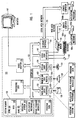
- FIG. 1 illustrates a suitable computing system in which the principles of the present invention may be employed
- FIG. 2 illustrates a flowchart of a method for securely transmitting an electronic message in accordance with the principles of the present invention
- Figure 3 illustrates a data structure of an electronic message having multiple different types of credentials in the header of the electronic message in accordance with the principles of the present invention
- Figure 4A illustrates a network environment in which multiple different credentials are used to identify a source computing system to a particular recipient computing system in a model called herein the "multiple credential - single recipient model";
- Figure 4B illustrates a network environment in which different credentials in the electronic message may be used to identify the source computing system to an intermediary computing system and to identify the source computing device to a recipient computing system in a model called herein the "serial credential model";
- Figure 4C illustrates a network environment in which different credentials in the electronic message may be used to identify the source computing system to different recipient computing systems in a model called herein the "parallel credential model";
- Figure 4D illustrates a network environment which combines all of the models of Figures 4A, 4B and 4C;
- Figure 5 illustrates a credential semantic inheritance tree in accordance with the principles of the present invention.
- the principles of the present invention relate to methods, systems, computer program products, and data structures that allow more secure communications of an electronic message.
- Multiple different credentials and/or signatures based on different credentials may be included in a header portion of a single electronic message. These different signatures and/or credentials may be used by different recipient computing systems, by a single recipient computing system, or even by different computing systems along a routing path of the electronic message.
- the electronic message may include an identification of an encoding algorithm and the type of credential included in the electronic message. Accordingly, multiple different credentials may be included that have different encoding.
- the recipient computing system may decode and process the credential as appropriate given the identification of the encoding algorithm and the type of credential.
- the electronic message may include a pointer that references a credential that is accessible to the recipient computing system, either within the same electronic message, or from some other location.
- the recipient computing system may then compare the referenced credentials from the credentials used to generate the signature. If a match occurs, then the data signed can be associated with the credentials. Accordingly, the integrity of any statement made in the credentials such as identity, rights, and so forth, may be verified.
- Embodiments within the scope of the present invention include computer-readable media for carrying or having computer-executable instructions or data structures stored thereon.
- Such computer-readable media can be any available media which can be accessed by a general purpose or special purpose computer.
- Such computer-readable media can comprise physical computer-readable media such as RAM, ROM, EEPROM, CD-ROM or other optical disk storage, magnetic disk storage or other magnetic storage devices, or any other medium which can be used to carry or store desired program code means in the form of computer-executable instructions or data structures and which can be accessed by a general purpose or special purpose computer.
- Computer-executable instructions comprise, for example, instructions and data which cause a general purpose computer, special purpose computer, or special purpose processing device to perform a certain function or group of functions.
- FIG. 1 and the following discussion are intended to provide a brief, general description of a suitable computing environment in which the invention may be implemented.
- the invention will be described in the general context of computer-executable instructions, such as program modules, being executed by computers in network environments.
- program modules include routines, programs, objects, components, data structures, and the like, that perform particular tasks or implement particular abstract data types.
- the invention may be practiced in network computing environments with many types of computer system configurations, including personal computers, hand-held devices, multi-processor systems, microprocessor-based or programmable consumer electronics, network PCs, minicomputers, mainframe computers, and the like.
- the invention may also be practiced in distributed computing environments where tasks are performed by local and remote processing devices that are linked (either by hardwired links, wireless links, or by a combination of hardwired or wireless links) through a communications network.
- program modules may be located in both local and remote memory storage devices.
- an exemplary system for implementing the invention includes a general purpose computing device in the form of a conventional computer 120, including a processing unit 121, a system memory 122, and a system bus 123 that couples various system components including the system memory 122 to the processing unit 121.
- element numbers begin with the same number as the figure in which the corresponding elements were first introduced. For example, all of the element numbers in Figure 1 are numbered in the 100's while the element numbers in Figure 2 are number in the 200's, and so forth.
- the system bus 123 may be any of several types of bus structures including a memory bus or memory controller, a peripheral bus, and a local bus using any of a variety of bus architectures.
- the system memory includes read only memory (ROM) 124 and random access memory (RAM) 125.
- ROM read only memory
- RAM random access memory
- the computer 120 may also include a magnetic hard disk drive 127 for reading from and writing to a magnetic hard disk 139, a magnetic disk drive 128 for reading from or writing to a removable magnetic disk 129, and an optical disk drive 130 for reading from or writing to removable optical disk 131 such as a CD-ROM or other optical media.
- the magnetic hard disk drive 127, magnetic disk drive 128, and optical disk drive 130 are connected to the system bus 123 by a hard disk drive interface 132, a magnetic disk drive-interface 133, and an optical drive interface 134, respectively.
- the drives and their associated computer-readable media provide nonvolatile storage of computer-executable instructions, data structures, program modules and other data for the computer 120.
- exemplary environment described herein employs a magnetic hard disk 139, a removable magnetic disk 129 and a removable optical disk 131
- other types of computer readable media for storing data can be used, including magnetic cassettes, flash memory cards, digital video disks, Bernoulli cartridges, RAMs, ROMs, and the like.
- Program code means comprising one or more program modules may be stored on the hard disk 139, magnetic disk 129, optical disk 131, ROM 124 or RAM 125, including an operating system 135, one or more application programs 136, other program modules 137, and program data 138.
- a user may enter commands and information into the computer 120 through keyboard 140, pointing device 142, or other input devices (not shown), such as a microphone, joy stick, game pad, satellite dish, scanner, or the like.
- These and other input devices are often connected to the processing unit 121 through a serial port interface 46 coupled to system bus 123.
- the input devices may be connected by other interfaces, such as a parallel port, a game port or a universal serial bus (USB).
- a monitor 147 or another display device is also connected to system bus 123 via an interface, such as video adapter 148.
- personal computers typically include other peripheral output devices (not shown), such as speakers and printers.
- the computer 120 may operate in a networked environment using logical connections to one or more remote computers, such as remote computers 149a and 149b.
- Remote computers 149a and 149b may each be another personal computer, a server, a router, a network PC, a peer device or other common network node, and typically include many or all of the elements described above relative to the computer 120, although only memory storage devices 150a and 150b and their associated application programs 136a and 136b have been illustrated in Figure 1.
- the logical connections depicted in Figure 1 include a local area network (LAN) 151 and a wide area network (WAN) 152 that are presented here by way of example and not limitation.
- LAN local area network
- WAN wide area network
- Such networking environments are commonplace in office-wide or enterprise-wide computer networks, intranets and the Internet.
- the computer 120 When used in a LAN networking environment, the computer 120 is connected to the local network 151 through a network interface or adapter 153. When used in a WAN networking environment, the computer 120 may include a modem 154, a wireless link, or other means for establishing communications over the wide area network 152, such as the Internet.
- the modem 154 which may be internal or external, is connected to the system bus 123 via the serial port interface 146.
- program modules depicted relative to the computer 120, or portions thereof may be stored in the remote memory storage device. It will be appreciated that the network connections shown are exemplary and other means of establishing communications over wide area network 152 may be used.
- FIG. 1 illustrates an example of a computing system that may implement the principles of the present invention
- any computing system may implement the features of the present invention.
- a "computing system” is defined as any hardware component or components that are capable of using software to perform one or more functions. Examples of computing systems include desktop computers, laptop computers, Personal Digital Assistants (PDAs), telephones, or any other system or device that has processing capability.
- PDAs Personal Digital Assistants
- Figure 2 illustrates a method 200 for performing electronic messaging in a secure manner. Some of the acts and the step of the method 200 are performed by a sender computing system that sends an electronic message. Those acts and that step are generally listed in the left column of Figure 2 under the heading "SENDER”. Other acts of the method 200 are performed be a receiver computing system that receives the electronic message. Those acts are generally listed in the right column of Figure 2 under the heading "RECEIVER”.
- the method 200 includes a functional, result-oriented step for constructing an electronic message so as to provide increased security (step 210).
- This functional, result-oriented step may include any corresponding acts for accomplishing this result.
- the step 210 includes corresponding acts 211 through 218.
- An example electronic message data structure is illustrated in Figure 3 as electronic message 300. The method of Figure 2 will be described with frequent reference to the electronic message data structure of Figure 3.
- the method 200 includes an act of designating at least one destination address in the electronic message (act 211).
- the destination address corresponds to one or more recipient computing systems.
- the electronic message includes. a header field 310 and a body field 330.
- the body field 330 may contain the content of the information desired to be communicated to the recipient(s), while the header field 310 contains information that facilitates proper and secure transport and processing of the electronic message.
- the header field 310 includes a destination address field 311 that contains the destination address or addresses of one or more desired recipients of the electronic message.
- the method 300 then includes an act of including one or more security tokens in a header portion of the electronic message (act 212).
- the one of more security tokens may be, for example, one or more signatures.
- the header field 310 includes a first signature 312, a possible second signature 313, and potentially other signatures 314.
- the first signature 312 is oval-shaped to represent that the first signature may have been signed using a corresponding credential 315, which is also represented as being oval-shaped.
- the second signature 313 is trapezoidal-shaped to represent that the second signature may have been signed using a different corresponding credential 316, which is also represented as being trapezoidal-shaped.
- the method 300 includes an act of encoding one of more credentials (act 213), and then the act of including the one or more encoded credentials in the electronic message (act 214).
- the credential(s) included in the electronic message may not be encoded at all thus eliminating act 213.
- a credential will not be included in the electronic message either thus eliminating act 214. For example, there may not be any cause for including a credential if there is a reference to an associated credential field described below where the credential may be external to the electronic message.
- the credentials may be, for example, any item of information that helps to identify and/or authenticate the credential provider.
- One type of credential is a license, which contains a set of related assertions signed by an authority. Some assertions may be about keys that may be used to sign and/or encrypt messages.
- Example licenses include X.509 certificates and Kerberos tickets.
- the owner of a license is a principle entity that can use the license authoritatively. Specifically, the principle has the knowledge necessary to apply the cryptographic keys located in the attached license or licenses attached therein.
- the included credentials are represented by first credential 315, second credential 316, and other credentials 317.
- the method 200 also includes an act of including, in the header portion, an identification of an encoding format of the credential(s) (act 215).
- This identification is represented in Figure 3 for the first credential 315 by the encoding format field 318A.
- the identification is represented in Figure 3 for the second credential 316 by the encoding format field 318B.
- the method 300 also includes an act of including, in the header portion, an identification of a type of the credential (act 216).
- the type of credential may be an X.509 certificate or a Kerberos ticket.
- the identification of the type of credential is represented in Figure 3 for the first credential 315 by the credential type field 319A, and for the second credential 316 by the credential type field 319B.
- the encoding format there is an identification of the encoding format and a credential type for each of the credentials included in the electronic message, although this is not necessary.
- the encoding format may be listed in just one portion of the electronic message.
- the credential type is the same for all of the credentials in the electronic message, the credential format may just be listed once.
- a particular credential has a default encoding format (and/or credential type)
- the particular encoding format (and/or credential type) need not be expressly included for that credential.
- the identification of the encoding format and credential type are illustrated as being included in the corresponding credential field. If these fields are included in the corresponding credential field, acts 215 and 216 would occur concurrently with act 213 for that credential. However, the encoding format and type field may instead just be associated with the corresponding credential field.
- the method 300 also includes an act of generating a reference indicating where a credential associated with the signature may be found (act 217), and including the reference in the header portion of the electronic message (act 218).
- the reference is represented in Figure 3 for the first signature 312 by the reference to associated credential field 320A, and for the second signature 313 by the reference to associated credential field 320B. While the reference may include a reference to a position internal to the electronic message (e.g., credential fields 316 and 317), the reference may also be a Uniform Resource Locator (URL) that identifies a location external to the electronic message where the associated credential may be found.
- URL Uniform Resource Locator
- the sending computing system then transmits the electronic message to one or more recipient computing system (act 219), which then receive the electronic message (act 220).
- the electronic message may contain multiple different signatures that were generated using multiple different kinds of credentials.
- the recipient computing system may then select one of a multiple signatures included in a header portion of the electronic message (act 221), and then reads that electronic signature from the electronic message (act 222). Accordingly, the recipient computing system may choose one, some, or all of the included signatures depending one which one the recipient computing system is configured to process and trust.
- Figure 4A illustrates a network environment 400A in which multiple different credentials are used to identify a source computing system 401A to a particular recipient computing system 411A in a model called herein the "multiple credential - single recipient model".
- a single recipient computing system 411A uses two different credentials 421 and 422 in order to authenticate the source computing system 401A.
- the credentials are illustrated in Figures 4A through 4D as having different shapes to emphasize that the credentials may be of different types.
- Figure 4B illustrates a network environment 400B in which different credentials in the electronic message may be used to identify a source computing system 400B to an intermediary computing system 411B and to identify the source computing device 401B to a recipient computing system 412B in a model called herein the "serial credential model".
- the intermediary computing system 411B uses the credential 421, while the recipient computing system 412B uses the credential 422.
- Figure 4C illustrates a network environment 400C in which different credentials in the electronic message may be used to identify the source computing device to different recipient computing devices 411C and 412C in a model called herein the "parallel credential model".
- the recipient computing system 411C uses the credential 421, while the recipient computing system 412C uses the credential 422.
- Figure 4D illustrates a network environment 400D which combines all of the models of Figures 4A, 4B and 4C in one of many possible ways.
- the electronic message includes three credentials 421, 422 and 423.
- Credential 423 is different than credentials 421 and 422 as represented by its triangular shape.
- the intermediary computing system 411C uses credential 421, recipient computing system 412D uses credential 422, and recipient computing system 413D uses credentials 422 and 423.
- the receiving computing system also may read the reference that indicates where an associated credential may be found (act 223), use that reference to find the credential (act 224), and then determine if the credential corresponds with the electronic signature. (act 225). If there the referenced credential corresponds to the signature, then the data signed can be associated with the credential. Accordingly, the integrity of any statements made in the credentials such as identity, rights, and so forth, may be more assured, especially if the referenced credential was external to the electronic message and thus not subject to the same tampering instances that the electronic message may be subject to.
- the electronic message 300 may be a Simple Object Access Protocol (SOAP) envelope although this is not required.
- SOAP Simple Object Access Protocol
- the two provisional patent applications previously incorporated herein by reference provide several examples of SOAP envelopes which incorporate various aspects of the present invention.
- the following SOAP envelope is a code example of one specific embodiment of the data structure of the electronic message 300.
- the code example is represented in eXtensible Markup Language (XML) version 1.0. Line numbering has been added for clarity in explaining the structure of the code example.
- XML eXtensible Markup Language
- Line numbering has been added for clarity in explaining the structure of the code example.
- this code example shows one specific implementation, there are a vast variety of different implementations that may employ the principles of the present invention.
- this example illustrates the use of headers hierarchically structured in a certain way and having particular header uses, other embodiments may have a different hierarchy and usage of headers without departing from the scope of the principles of the present invention.
- Line 1 defines the XML version that the SOAP envelope follows as well as the encoding format for the SOAP envelope as a whole.
- Lines 2 through 80 define a SOAP envelope that includes two different credentials, two different signatures signed using the credentials, and references to the credentials for each of the signatures. Also, the encoding type and format type of each of the credentials is specified.
- Lines 3 through 5 define global namespace abbreviations used throughout the SOAP envelope. It is standard practice to specify namespace abbreviation in this portion of the SOAP envelope. These namespace abbreviations correspond to a namespace that defines a standard for how particular elements to which the namespace applies are to be interpreted.
- Lines 77 though 79 represent the body of the SOAP envelope and is an example of the body field 330 of Figure 3. Note that the actual body content is replaced with the capitalized term "BODY". Capitalized terms are used throughout the code example to replace actual content whose value is not specifically included in the code example and the value is not important to the principles of the present invention. For example, the term "BODY" in line 78 could be any content without affecting the principles of the present invention.
- Lines 6 though 76 represent the header information for the SOAP envelope and is an example of the header field 310 of Figure 3.
- Lines 7 through 9 express the path that the electronic message is to take.
- Intermediary computing systems such as intermediary computing system 411B of Figure 4B may be specified in this section.
- Lines 10 through 25 define a unique SOAP header called "credentials".
- This header may include several different credential types.
- the encoding format and type of the credential may also be specified in this header.
- lines 12 through 18 contain a binary license (see line 17) called "X509License" (see line 16), which is identified as being an X.509 certificate (see line 14), and which is identified as being encoded using base64binary encoding (see line 15).
- Line 14 is an example of the credential type field 319A of Figure 3.
- Line 15 is an example of the encoding format field 318A of Figure 3.
- Line 17 is an example of the first credential field 315 of Figure 3.
- lines 19 through 24 contain a binary credential (see line 23) called "BinaryCredential" (see line 22), which is identified as being in a binary credential format (see line 20), and which is identified as being encoded also using base64binary encoding (see line 21).
- Line 20 is an example of the credential type field 319B of Figure 3.
- Line 21 is an example of the encoding format field 318B of Figure 3.
- Line 23 is an example of the second credential field 316 of Figure 3.
- Lines 26 through 75 define an "integrity" header that contains two signatures, each having a reference location to find a corresponding credential that may be used to verify the integrity of the electronic message (i.e., that the electronic message was sent by the signer of the signature, and that the electronic message has not been altered in transit).
- a first signature element is referenced from lines 27 through 50, with the second signature element being referenced from lines 51 through 74.
- Each signature element follows the schema defined by XML digital signature in accordance with the "http://www.w3.org/2000/15xmldsig#" namespace.
- KeyInfo child element within each XML digital signature includes a "LicenseLocation” element that references the location of a license (or other credential) that may be used to verify the integrity of the electronic message.
- the first signature element includes a "SignedInfo" element from lines 28 through 43 which defines canonicalization methods, digest algorithms, and various transforms that apply to the signature.
- the first signature value is included at line 45 and is an example of the first signature field 312 of Figure 3.
- the license location specified at line 48 is an example of the reference to associated credential field 320A of Figure 3.
- the second signature element is similar to the first signature element except that the second signature value is at line 69 and represents an example of second signature field 313 of Figure 3, while the license location is specified at line 72 and represents an example of the reference to associated credential field 320B of Figure 3.
- the principles of the present invention allow for the communication of multiple different credentials in a single electronic message.
- the reference to an associated credential allows for the integrity of electronic messages to be verified.
- a binary license there are two different credentials included in the electronic message, a binary license and a binary credential.
- These credential types may be abstractly structured in an inheritance tree.
- a hierarchically-structured credential semantics inheritance tree that includes these credential types is illustrates as tree 500 in Figure 5..
- the tree 500 includes an abstract credential data type 501 at its base.
- the abstract credential is structured in accordance with a schema 501A and has handling rules 501B.
- the schema 501A describes the basic structure of the abstract credential data type.
- the handling rules 501B describe how to handle the abstract credential.
- One of the first-tier branches of the tree 500 is an abstract license data type 511, which includes an extended schema 511A and extended handling rules 511B.
- the schema and the handling rules from parent nodes in the tree 500 may be inherited by the child nodes.
- the schema 511A of the abstract license may reflect the schema 501A of the abstract credential with some specified extensions.
- the handling rules 511B may represent further handling rules in addition to the handling rules 501B specified at the abstract credential data type.
- Another of the first-tier branches of the tree 500 is a binary credential data type 512 that includes schema 512A and handling rules 512B.
- a second tier-branch of the tree includes binary license 521 having schema 521A and handling rules 521B.
- the tree 500 may be further expanded by defining a schema that extends on the schema of a parent node, and/or by defining further handling rules in addition to those provided for a parent node.
- the source computing system When determining how to structure a binary license for example, the source computing system would use the schema 521A. If the schema 521A represented incremental structural changes rather than a complete structural definition, the source computing system may also consult the schema of ancestral data types 511 and 501 to determine the final structural form of the binary license. When receiving a binary license, the recipient computing system may use the schema 521A to determine how to parse the binary license, along with the handling rules 521B to determine how to treat the binary license in terms of how to process the binary license and what authorities to grant in response to the binary license. The handling rules 521B may represent incremental handling rules in which case the ancestral handling rules 511B and 501B may also be consulted to determine proper handling.
- the tree 500 may be stored at both the source computing system and the recipient computing system so as to ensure consistent treatment of credentials.
Landscapes
- Engineering & Computer Science (AREA)
- Computer Security & Cryptography (AREA)
- Computer Networks & Wireless Communication (AREA)
- Signal Processing (AREA)
- Computer Hardware Design (AREA)
- Computing Systems (AREA)
- General Engineering & Computer Science (AREA)
- Storage Device Security (AREA)
- Alarm Systems (AREA)
Applications Claiming Priority (4)
| Application Number | Priority Date | Filing Date | Title |
|---|---|---|---|
| US219898 | 1998-12-24 | ||
| US34637001P | 2001-10-19 | 2001-10-19 | |
| US346370P | 2001-10-19 | ||
| US10/219,898 US7293283B2 (en) | 2001-10-16 | 2002-08-14 | Flexible electronic message security mechanism |
Publications (3)
| Publication Number | Publication Date |
|---|---|
| EP1304848A2 true EP1304848A2 (fr) | 2003-04-23 |
| EP1304848A3 EP1304848A3 (fr) | 2010-09-22 |
| EP1304848B1 EP1304848B1 (fr) | 2017-05-17 |
Family
ID=26914377
Family Applications (1)
| Application Number | Title | Priority Date | Filing Date |
|---|---|---|---|
| EP02023650.1A Expired - Lifetime EP1304848B1 (fr) | 2001-10-19 | 2002-10-21 | Mécanisme de sécurité flexible de message éléctronique |
Country Status (4)
| Country | Link |
|---|---|
| US (1) | US7293283B2 (fr) |
| EP (1) | EP1304848B1 (fr) |
| ES (1) | ES2637251T3 (fr) |
| HK (1) | HK1054639B (fr) |
Cited By (7)
| Publication number | Priority date | Publication date | Assignee | Title |
|---|---|---|---|---|
| BE1018397A3 (nl) * | 2008-12-30 | 2010-10-05 | Group Dado 13 Bv Met Beperkte | Werkwijze voor het labelen van datapakketten, eenheden om deze werkwijze te realiseren, alsmede netwerk dat van deze werkwijze gebruik maakt. |
| WO2010111440A3 (fr) * | 2009-03-25 | 2011-03-10 | Pacid Technologies, Llc | Dispositif fonctionnel pour sécuriser une communication |
| US8479021B2 (en) | 2011-09-29 | 2013-07-02 | Pacid Technologies, Llc | Secure island computing system and method |
| US8539241B2 (en) | 2009-03-25 | 2013-09-17 | Pacid Technologies, Llc | Method and system for securing communication |
| US8726032B2 (en) | 2009-03-25 | 2014-05-13 | Pacid Technologies, Llc | System and method for protecting secrets file |
| US8782408B2 (en) | 2009-03-25 | 2014-07-15 | Pacid Technologies, Llc | Method and system for securing communication |
| US8934625B2 (en) | 2009-03-25 | 2015-01-13 | Pacid Technologies, Llc | Method and system for securing communication |
Families Citing this family (16)
| Publication number | Priority date | Publication date | Assignee | Title |
|---|---|---|---|---|
| EP1303097A3 (fr) | 2001-10-16 | 2005-11-30 | Microsoft Corporation | Systeme virtuel réparti de sécurité |
| US7194553B2 (en) | 2001-10-16 | 2007-03-20 | Microsoft Corporation | Resolving virtual network names |
| US8015204B2 (en) | 2001-10-16 | 2011-09-06 | Microsoft Corporation | Scoped access control metadata element |
| US7676540B2 (en) | 2001-10-16 | 2010-03-09 | Microsoft Corporation | Scoped referral statements |
| US7899047B2 (en) | 2001-11-27 | 2011-03-01 | Microsoft Corporation | Virtual network with adaptive dispatcher |
| US7546452B2 (en) * | 2002-08-20 | 2009-06-09 | Intel Corporation | Hardware-based credential management |
| US7457955B2 (en) * | 2004-01-14 | 2008-11-25 | Brandmail Solutions, Inc. | Method and apparatus for trusted branded email |
| US7676846B2 (en) * | 2004-02-13 | 2010-03-09 | Microsoft Corporation | Binding content to an entity |
| US8782405B2 (en) * | 2004-03-18 | 2014-07-15 | International Business Machines Corporation | Providing transaction-level security |
| US20070006294A1 (en) * | 2005-06-30 | 2007-01-04 | Hunter G K | Secure flow control for a data flow in a computer and data flow in a computer network |
| US7814328B1 (en) * | 2005-09-12 | 2010-10-12 | Microsoft Corporation | Digital signatures for embedded code |
| US8060747B1 (en) | 2005-09-12 | 2011-11-15 | Microsoft Corporation | Digital signatures for embedded code |
| US8205087B2 (en) * | 2006-02-27 | 2012-06-19 | Microsoft Corporation | Tool for digitally signing multiple documents |
| US8190902B2 (en) * | 2006-02-27 | 2012-05-29 | Microsoft Corporation | Techniques for digital signature formation and verification |
| US20080165970A1 (en) * | 2007-01-05 | 2008-07-10 | Chung Hyen V | runtime mechanism for flexible messaging security protocols |
| US20080168273A1 (en) * | 2007-01-05 | 2008-07-10 | Chung Hyen V | Configuration mechanism for flexible messaging security protocols |
Citations (2)
| Publication number | Priority date | Publication date | Assignee | Title |
|---|---|---|---|---|
| WO1997050205A1 (fr) | 1996-06-26 | 1997-12-31 | Intel Corporation | Signature numerique de conventions a partir de noeuds situes a distance |
| EP1111559A2 (fr) | 1999-12-23 | 2001-06-27 | CheckFree Services Corporation | Sécurisation de transactions électroniques dans des réseaux publics |
Family Cites Families (23)
| Publication number | Priority date | Publication date | Assignee | Title |
|---|---|---|---|---|
| US5903882A (en) * | 1996-12-13 | 1999-05-11 | Certco, Llc | Reliance server for electronic transaction system |
| US6449638B1 (en) | 1998-01-07 | 2002-09-10 | Microsoft Corporation | Channel definition architecture extension |
| US6356920B1 (en) | 1998-03-09 | 2002-03-12 | X-Aware, Inc | Dynamic, hierarchical data exchange system |
| IL139410A0 (en) | 1998-05-07 | 2001-11-25 | Samsung Electronics Co Ltd | Method and apparatus for universally accessible command and control information in a network |
| US6393456B1 (en) | 1998-11-30 | 2002-05-21 | Microsoft Corporation | System, method, and computer program product for workflow processing using internet interoperable electronic messaging with mime multiple content type |
| US6446113B1 (en) | 1999-07-19 | 2002-09-03 | Groove Networks, Inc. | Method and apparatus for activity-based collaboration by a computer system equipped with a dynamics manager |
| US6351748B1 (en) | 1999-07-26 | 2002-02-26 | Microsoft Corporation | File system level access source control of resources within standard request-response protocols |
| US6496849B1 (en) | 1999-08-30 | 2002-12-17 | Zaplet, Inc. | Electronic media for communicating information among a group of participants |
| US6523063B1 (en) | 1999-08-30 | 2003-02-18 | Zaplet, Inc. | Method system and program product for accessing a file using values from a redirect message string for each change of the link identifier |
| US6209124B1 (en) | 1999-08-30 | 2001-03-27 | Touchnet Information Systems, Inc. | Method of markup language accessing of host systems and data using a constructed intermediary |
| US6505233B1 (en) | 1999-08-30 | 2003-01-07 | Zaplet, Inc. | Method for communicating information among a group of participants |
| US6507865B1 (en) | 1999-08-30 | 2003-01-14 | Zaplet, Inc. | Method and system for group content collaboration |
| US6477580B1 (en) | 1999-08-31 | 2002-11-05 | Accenture Llp | Self-described stream in a communication services patterns environment |
| US6532455B1 (en) | 1999-12-22 | 2003-03-11 | Sequoia Software Corporation | Method and system for content-based document security, routing, and action execution |
| JP2002091299A (ja) * | 2000-08-31 | 2002-03-27 | Internatl Business Mach Corp <Ibm> | 電子署名システム、電子署名方法、電子署名の仲介方法、電子署名の仲介システム、情報端末および記録媒体 |
| AU2001296866A1 (en) | 2000-09-05 | 2002-03-22 | Zaplet, Inc. | Methods and apparatus providing electronic messages that are linked and aggregated |
| US20020157004A1 (en) * | 2001-02-15 | 2002-10-24 | Smith Ned M. | Method of enforcing authorization in shared processes using electronic contracts |
| US7689711B2 (en) | 2001-03-26 | 2010-03-30 | Salesforce.Com, Inc. | System and method for routing messages between applications |
| US20030093678A1 (en) * | 2001-04-23 | 2003-05-15 | Bowe John J. | Server-side digital signature system |
| US6748380B2 (en) | 2001-05-14 | 2004-06-08 | International Business Machines Corporation | Method, system, and program product for permission to access software |
| US20020188638A1 (en) | 2001-06-08 | 2002-12-12 | Walter Hamscher | Document negotiation |
| US20030074482A1 (en) | 2001-10-16 | 2003-04-17 | Christensen Erik B. | Composable messaging protocol |
| US7523314B2 (en) | 2003-12-22 | 2009-04-21 | Voltage Security, Inc. | Identity-based-encryption message management system |
-
2002
- 2002-08-14 US US10/219,898 patent/US7293283B2/en not_active Expired - Fee Related
- 2002-10-21 EP EP02023650.1A patent/EP1304848B1/fr not_active Expired - Lifetime
- 2002-10-21 ES ES02023650.1T patent/ES2637251T3/es not_active Expired - Lifetime
-
2003
- 2003-09-22 HK HK03106776.4A patent/HK1054639B/en not_active IP Right Cessation
Patent Citations (2)
| Publication number | Priority date | Publication date | Assignee | Title |
|---|---|---|---|---|
| WO1997050205A1 (fr) | 1996-06-26 | 1997-12-31 | Intel Corporation | Signature numerique de conventions a partir de noeuds situes a distance |
| EP1111559A2 (fr) | 1999-12-23 | 2001-06-27 | CheckFree Services Corporation | Sécurisation de transactions électroniques dans des réseaux publics |
Cited By (21)
| Publication number | Priority date | Publication date | Assignee | Title |
|---|---|---|---|---|
| BE1018397A3 (nl) * | 2008-12-30 | 2010-10-05 | Group Dado 13 Bv Met Beperkte | Werkwijze voor het labelen van datapakketten, eenheden om deze werkwijze te realiseren, alsmede netwerk dat van deze werkwijze gebruik maakt. |
| US9172533B2 (en) | 2009-03-25 | 2015-10-27 | Pacid Technologies, Llc | Method and system for securing communication |
| US9882883B2 (en) | 2009-03-25 | 2018-01-30 | Pacid Technologies, Llc | Method and system for securing communication |
| US8539241B2 (en) | 2009-03-25 | 2013-09-17 | Pacid Technologies, Llc | Method and system for securing communication |
| US8726032B2 (en) | 2009-03-25 | 2014-05-13 | Pacid Technologies, Llc | System and method for protecting secrets file |
| US8782408B2 (en) | 2009-03-25 | 2014-07-15 | Pacid Technologies, Llc | Method and system for securing communication |
| US8934625B2 (en) | 2009-03-25 | 2015-01-13 | Pacid Technologies, Llc | Method and system for securing communication |
| US8959350B2 (en) | 2009-03-25 | 2015-02-17 | Pacid Technologies, Llc | Token for securing communication |
| US9009484B2 (en) | 2009-03-25 | 2015-04-14 | Pacid Technologies, Llc | Method and system for securing communication |
| WO2010111440A3 (fr) * | 2009-03-25 | 2011-03-10 | Pacid Technologies, Llc | Dispositif fonctionnel pour sécuriser une communication |
| US11070530B2 (en) | 2009-03-25 | 2021-07-20 | Pacid Technologies, Llc | System and method for authenticating users |
| US9876771B2 (en) | 2009-03-25 | 2018-01-23 | Pacid Technologies, Llc | System and method for authenticating users |
| US10484344B2 (en) | 2009-03-25 | 2019-11-19 | Pacid Technologies, Llc | System and method for authenticating users |
| US9407610B2 (en) | 2009-03-25 | 2016-08-02 | Pacid Technologies, Llc | Method and system for securing communication |
| US9165153B2 (en) | 2009-03-25 | 2015-10-20 | Pacid Technologies, Llc | System and method for protecting secrets file |
| US10044689B2 (en) | 2009-03-25 | 2018-08-07 | Pacid Technologies, Llc | System and method for authenticating users |
| US10171433B2 (en) | 2009-03-25 | 2019-01-01 | Pacid Technologies, Llc | System and method for authenticating users |
| US10320765B2 (en) | 2009-03-25 | 2019-06-11 | Pacid Technologies, Llc | Method and system for securing communication |
| US10275364B2 (en) | 2011-09-29 | 2019-04-30 | Pacid Technologies, Llc | Secure island computing system and method |
| US9443110B2 (en) | 2011-09-29 | 2016-09-13 | Pacid Technologies, Llc | Secure island computing system and method |
| US8479021B2 (en) | 2011-09-29 | 2013-07-02 | Pacid Technologies, Llc | Secure island computing system and method |
Also Published As
| Publication number | Publication date |
|---|---|
| HK1054639B (en) | 2018-03-29 |
| EP1304848A3 (fr) | 2010-09-22 |
| US20030088790A1 (en) | 2003-05-08 |
| ES2637251T3 (es) | 2017-10-11 |
| US7293283B2 (en) | 2007-11-06 |
| EP1304848B1 (fr) | 2017-05-17 |
Similar Documents
| Publication | Publication Date | Title |
|---|---|---|
| US7536712B2 (en) | Flexible electronic message security mechanism | |
| EP1304848A2 (fr) | Mécanisme de sécurité flexible de message electronique | |
| Reed et al. | Decentralized identifiers (dids) v1. 0 | |
| HK1054639A (en) | Flexible electronic message security mechanism | |
| US7418457B2 (en) | Scoped metadata | |
| US8239954B2 (en) | Access control based on program properties | |
| US20040078577A1 (en) | Method and apparatus for providing xml document encryption | |
| US7904710B2 (en) | Method and system for providing a secure message transfer within a network system | |
| Eastlake 3rd et al. | (Extensible Markup Language) XML-Signature Syntax and Processing | |
| Eastlake et al. | Secure XML: The New Syntax for Signatures and Encryption | |
| CN114912133A (zh) | 一种去中心化的标识符的生成方法、系统、终端及介质 | |
| Bhargavan et al. | A semantics for web services authentication | |
| Bartel et al. | XML signature syntax and processing version 1.1 | |
| Polivy et al. | Authenticating distributed data using Web services and XML signatures | |
| Kleiner et al. | Web services security: A preliminary study using Casper and FDR | |
| Liu et al. | XML data integrity based on concatenated hash function | |
| Ellison | DeviceSecurity: 1 service template | |
| Qian | Dynamic authorization support in large distributed systems | |
| Xavier | XML based security for e-commerce applications | |
| Park et al. | XML key information system for secure e-trading. | |
| Eastlake 3rd et al. | RFC3075: XML-Signature Syntax and Processing | |
| Knap et al. | Towards more secure Web services: Pitfalls of various approaches to XML Signature verification process | |
| Eastlake 3rd et al. | RFC3275:(Extensible Markup Language) XML-Signature Syntax and Processing | |
| Abd El-Aziz et al. | A comprehensive presentation to XML signature and encryption | |
| Imbault | RFC 9767: Grant Negotiation and Authorization Protocol Resource Server Connections |
Legal Events
| Date | Code | Title | Description |
|---|---|---|---|
| PUAI | Public reference made under article 153(3) epc to a published international application that has entered the european phase |
Free format text: ORIGINAL CODE: 0009012 |
|
| AK | Designated contracting states |
Designated state(s): AT BE BG CH CY CZ DE DK EE ES FI FR GB GR IE IT LI LU MC NL PT SE SK TR |
|
| AX | Request for extension of the european patent |
Extension state: AL LT LV MK RO SI |
|
| PUAL | Search report despatched |
Free format text: ORIGINAL CODE: 0009013 |
|
| AK | Designated contracting states |
Kind code of ref document: A3 Designated state(s): AT BE BG CH CY CZ DE DK EE ES FI FR GB GR IE IT LI LU MC NL PT SE SK TR |
|
| AX | Request for extension of the european patent |
Extension state: AL LT LV MK RO SI |
|
| 17P | Request for examination filed |
Effective date: 20110211 |
|
| 17Q | First examination report despatched |
Effective date: 20110323 |
|
| AKX | Designation fees paid |
Designated state(s): AT BE BG CH CY CZ DE DK EE ES FI FR GB GR IE IT LI LU MC NL PT SE SK TR |
|
| RAP1 | Party data changed (applicant data changed or rights of an application transferred) |
Owner name: MICROSOFT TECHNOLOGY LICENSING, LLC |
|
| REG | Reference to a national code |
Ref country code: DE Ref legal event code: R079 Ref document number: 60248876 Country of ref document: DE Free format text: PREVIOUS MAIN CLASS: H04L0029060000 Ipc: H04L0012580000 |
|
| RIC1 | Information provided on ipc code assigned before grant |
Ipc: H04L 29/06 20060101ALI20160426BHEP Ipc: H04L 29/08 20060101ALI20160426BHEP Ipc: H04L 12/58 20060101AFI20160426BHEP |
|
| GRAP | Despatch of communication of intention to grant a patent |
Free format text: ORIGINAL CODE: EPIDOSNIGR1 |
|
| INTG | Intention to grant announced |
Effective date: 20161213 |
|
| GRAS | Grant fee paid |
Free format text: ORIGINAL CODE: EPIDOSNIGR3 |
|
| GRAA | (expected) grant |
Free format text: ORIGINAL CODE: 0009210 |
|
| AK | Designated contracting states |
Kind code of ref document: B1 Designated state(s): AT BE BG CH CY CZ DE DK EE ES FI FR GB GR IE IT LI LU MC NL PT SE SK TR |
|
| REG | Reference to a national code |
Ref country code: GB Ref legal event code: FG4D |
|
| REG | Reference to a national code |
Ref country code: CH Ref legal event code: EP |
|
| REG | Reference to a national code |
Ref country code: IE Ref legal event code: FG4D |
|
| REG | Reference to a national code |
Ref country code: AT Ref legal event code: REF Ref document number: 895362 Country of ref document: AT Kind code of ref document: T Effective date: 20170615 |
|
| REG | Reference to a national code |
Ref country code: DE Ref legal event code: R096 Ref document number: 60248876 Country of ref document: DE |
|
| REG | Reference to a national code |
Ref country code: NL Ref legal event code: FP |
|
| REG | Reference to a national code |
Ref country code: FR Ref legal event code: PLFP Year of fee payment: 16 |
|
| REG | Reference to a national code |
Ref country code: ES Ref legal event code: FG2A Ref document number: 2637251 Country of ref document: ES Kind code of ref document: T3 Effective date: 20171011 |
|
| REG | Reference to a national code |
Ref country code: AT Ref legal event code: MK05 Ref document number: 895362 Country of ref document: AT Kind code of ref document: T Effective date: 20170517 |
|
| PG25 | Lapsed in a contracting state [announced via postgrant information from national office to epo] |
Ref country code: GR Free format text: LAPSE BECAUSE OF FAILURE TO SUBMIT A TRANSLATION OF THE DESCRIPTION OR TO PAY THE FEE WITHIN THE PRESCRIBED TIME-LIMIT Effective date: 20170818 Ref country code: FI Free format text: LAPSE BECAUSE OF FAILURE TO SUBMIT A TRANSLATION OF THE DESCRIPTION OR TO PAY THE FEE WITHIN THE PRESCRIBED TIME-LIMIT Effective date: 20170517 Ref country code: AT Free format text: LAPSE BECAUSE OF FAILURE TO SUBMIT A TRANSLATION OF THE DESCRIPTION OR TO PAY THE FEE WITHIN THE PRESCRIBED TIME-LIMIT Effective date: 20170517 |
|
| PG25 | Lapsed in a contracting state [announced via postgrant information from national office to epo] |
Ref country code: SE Free format text: LAPSE BECAUSE OF FAILURE TO SUBMIT A TRANSLATION OF THE DESCRIPTION OR TO PAY THE FEE WITHIN THE PRESCRIBED TIME-LIMIT Effective date: 20170517 Ref country code: BG Free format text: LAPSE BECAUSE OF FAILURE TO SUBMIT A TRANSLATION OF THE DESCRIPTION OR TO PAY THE FEE WITHIN THE PRESCRIBED TIME-LIMIT Effective date: 20170817 |
|
| PG25 | Lapsed in a contracting state [announced via postgrant information from national office to epo] |
Ref country code: EE Free format text: LAPSE BECAUSE OF FAILURE TO SUBMIT A TRANSLATION OF THE DESCRIPTION OR TO PAY THE FEE WITHIN THE PRESCRIBED TIME-LIMIT Effective date: 20170517 Ref country code: DK Free format text: LAPSE BECAUSE OF FAILURE TO SUBMIT A TRANSLATION OF THE DESCRIPTION OR TO PAY THE FEE WITHIN THE PRESCRIBED TIME-LIMIT Effective date: 20170517 Ref country code: CZ Free format text: LAPSE BECAUSE OF FAILURE TO SUBMIT A TRANSLATION OF THE DESCRIPTION OR TO PAY THE FEE WITHIN THE PRESCRIBED TIME-LIMIT Effective date: 20170517 Ref country code: SK Free format text: LAPSE BECAUSE OF FAILURE TO SUBMIT A TRANSLATION OF THE DESCRIPTION OR TO PAY THE FEE WITHIN THE PRESCRIBED TIME-LIMIT Effective date: 20170517 |
|
| REG | Reference to a national code |
Ref country code: DE Ref legal event code: R097 Ref document number: 60248876 Country of ref document: DE |
|
| PLBE | No opposition filed within time limit |
Free format text: ORIGINAL CODE: 0009261 |
|
| STAA | Information on the status of an ep patent application or granted ep patent |
Free format text: STATUS: NO OPPOSITION FILED WITHIN TIME LIMIT |
|
| REG | Reference to a national code |
Ref country code: HK Ref legal event code: GR Ref document number: 1054639 Country of ref document: HK |
|
| 26N | No opposition filed |
Effective date: 20180220 |
|
| PG25 | Lapsed in a contracting state [announced via postgrant information from national office to epo] |
Ref country code: MC Free format text: LAPSE BECAUSE OF FAILURE TO SUBMIT A TRANSLATION OF THE DESCRIPTION OR TO PAY THE FEE WITHIN THE PRESCRIBED TIME-LIMIT Effective date: 20170517 |
|
| REG | Reference to a national code |
Ref country code: CH Ref legal event code: PL |
|
| REG | Reference to a national code |
Ref country code: IE Ref legal event code: MM4A |
|
| PG25 | Lapsed in a contracting state [announced via postgrant information from national office to epo] |
Ref country code: LI Free format text: LAPSE BECAUSE OF NON-PAYMENT OF DUE FEES Effective date: 20171031 Ref country code: LU Free format text: LAPSE BECAUSE OF NON-PAYMENT OF DUE FEES Effective date: 20171021 Ref country code: CH Free format text: LAPSE BECAUSE OF NON-PAYMENT OF DUE FEES Effective date: 20171031 |
|
| REG | Reference to a national code |
Ref country code: BE Ref legal event code: MM Effective date: 20171031 |
|
| PG25 | Lapsed in a contracting state [announced via postgrant information from national office to epo] |
Ref country code: BE Free format text: LAPSE BECAUSE OF NON-PAYMENT OF DUE FEES Effective date: 20171031 |
|
| REG | Reference to a national code |
Ref country code: FR Ref legal event code: PLFP Year of fee payment: 17 |
|
| PG25 | Lapsed in a contracting state [announced via postgrant information from national office to epo] |
Ref country code: IE Free format text: LAPSE BECAUSE OF NON-PAYMENT OF DUE FEES Effective date: 20171021 |
|
| PGFP | Annual fee paid to national office [announced via postgrant information from national office to epo] |
Ref country code: FR Payment date: 20180913 Year of fee payment: 17 |
|
| PGFP | Annual fee paid to national office [announced via postgrant information from national office to epo] |
Ref country code: NL Payment date: 20181017 Year of fee payment: 17 |
|
| PGFP | Annual fee paid to national office [announced via postgrant information from national office to epo] |
Ref country code: DE Payment date: 20181009 Year of fee payment: 17 |
|
| PGFP | Annual fee paid to national office [announced via postgrant information from national office to epo] |
Ref country code: IT Payment date: 20181018 Year of fee payment: 17 Ref country code: GB Payment date: 20181017 Year of fee payment: 17 Ref country code: ES Payment date: 20181102 Year of fee payment: 17 |
|
| PG25 | Lapsed in a contracting state [announced via postgrant information from national office to epo] |
Ref country code: CY Free format text: LAPSE BECAUSE OF NON-PAYMENT OF DUE FEES Effective date: 20170517 |
|
| PG25 | Lapsed in a contracting state [announced via postgrant information from national office to epo] |
Ref country code: TR Free format text: LAPSE BECAUSE OF FAILURE TO SUBMIT A TRANSLATION OF THE DESCRIPTION OR TO PAY THE FEE WITHIN THE PRESCRIBED TIME-LIMIT Effective date: 20170517 |
|
| REG | Reference to a national code |
Ref country code: DE Ref legal event code: R119 Ref document number: 60248876 Country of ref document: DE |
|
| PG25 | Lapsed in a contracting state [announced via postgrant information from national office to epo] |
Ref country code: PT Free format text: LAPSE BECAUSE OF FAILURE TO SUBMIT A TRANSLATION OF THE DESCRIPTION OR TO PAY THE FEE WITHIN THE PRESCRIBED TIME-LIMIT Effective date: 20170517 |
|
| REG | Reference to a national code |
Ref country code: NL Ref legal event code: MM Effective date: 20191101 |
|
| PG25 | Lapsed in a contracting state [announced via postgrant information from national office to epo] |
Ref country code: DE Free format text: LAPSE BECAUSE OF NON-PAYMENT OF DUE FEES Effective date: 20200501 |
|
| PG25 | Lapsed in a contracting state [announced via postgrant information from national office to epo] |
Ref country code: NL Free format text: LAPSE BECAUSE OF NON-PAYMENT OF DUE FEES Effective date: 20191101 |
|
| GBPC | Gb: european patent ceased through non-payment of renewal fee |
Effective date: 20191021 |
|
| PG25 | Lapsed in a contracting state [announced via postgrant information from national office to epo] |
Ref country code: GB Free format text: LAPSE BECAUSE OF NON-PAYMENT OF DUE FEES Effective date: 20191021 Ref country code: FR Free format text: LAPSE BECAUSE OF NON-PAYMENT OF DUE FEES Effective date: 20191031 Ref country code: IT Free format text: LAPSE BECAUSE OF NON-PAYMENT OF DUE FEES Effective date: 20191021 |
|
| PG25 | Lapsed in a contracting state [announced via postgrant information from national office to epo] |
Ref country code: ES Free format text: LAPSE BECAUSE OF NON-PAYMENT OF DUE FEES Effective date: 20191022 |