EP1307802B1 - Procede et dispositif pour authentification centralisee - Google Patents
Procede et dispositif pour authentification centralisee Download PDFInfo
- Publication number
- EP1307802B1 EP1307802B1 EP01935153A EP01935153A EP1307802B1 EP 1307802 B1 EP1307802 B1 EP 1307802B1 EP 01935153 A EP01935153 A EP 01935153A EP 01935153 A EP01935153 A EP 01935153A EP 1307802 B1 EP1307802 B1 EP 1307802B1
- Authority
- EP
- European Patent Office
- Prior art keywords
- authentication
- token
- user
- agent
- password
- Prior art date
- Legal status (The legal status is an assumption and is not a legal conclusion. Google has not performed a legal analysis and makes no representation as to the accuracy of the status listed.)
- Expired - Lifetime
Links
Images




Classifications
-
- G—PHYSICS
- G06—COMPUTING OR CALCULATING; COUNTING
- G06F—ELECTRIC DIGITAL DATA PROCESSING
- G06F21/00—Security arrangements for protecting computers, components thereof, programs or data against unauthorised activity
- G06F21/30—Authentication, i.e. establishing the identity or authorisation of security principals
- G06F21/31—User authentication
-
- G—PHYSICS
- G06—COMPUTING OR CALCULATING; COUNTING
- G06F—ELECTRIC DIGITAL DATA PROCESSING
- G06F2221/00—Indexing scheme relating to security arrangements for protecting computers, components thereof, programs or data against unauthorised activity
- G06F2221/21—Indexing scheme relating to G06F21/00 and subgroups addressing additional information or applications relating to security arrangements for protecting computers, components thereof, programs or data against unauthorised activity
- G06F2221/2115—Third party
Definitions
- the present invention relates generally to authentication in computer systems, and will be specifically disclosed as a method and apparatus for centralized user authentication in a computer network.
- login security refers to limiting physical access to a given computer resource.
- servers in a client/server network are often maintained in a locked room with limited access.
- Login security can vary greatly from one computer system to the next.
- One common form of login security comprises a login phase and an authentication phase.
- the login phase typically involves prompting a source (such as a user, a program, a resource, etc.) which is attempting to enter the system for a name and a password. After successfully proving knowledge of the password, the source is authenticated and is allowed whatever level of access is permitted for the source.
- the content of login security often varies from one computer system to the next.
- a user may have a user name and password for one system and have a different user name and password for another system. Accordingly, the user in the previous example is required to remember his user name and password for both systems.
- the problem is even further compounded in a network of computers having a plurality of computers and programs each operating its own login security system, wherein the user may potentially be required to remember a user name a password for each of the different computers and programs.
- an object of the invention is to provide an improved method and apparatus for authentication in a computer system. Additional objectives, advantages and novel features of the invention will be set forth in the description that follows and, in part, will become apparent to those skilled in the art upon examining or practicing the invention. The objects and advantages of the invention may be realized and obtained by means of the instrumentalities and combinations particularly pointed out in the appended claims.
- One aspect of the present invention is a computer system comprising a network of computers.
- An authentication server on the network comprises an authentication engine having a first state wherein the authentication engine uses a password comprising two elements and a second state wherein the authentication engine uses a password comprising one element.
- the authentication engine further comprises an application programming interface through which other computers of the network may make requests to the authentication engine.
- a plurality of agent computers on the network each comprise agent software for the authentication server being encoded for sending a first authentication request via the application programming interface using a password comprising two elements, and if authentication is not established in response to the first authentication request, sending a second authentication request via the application programming interface using a password comprising one element.
- Another aspect of the invention is a method for centralized user authentication on a computer network where each of a plurality of agent computers perform the method.
- a user identifier and token is obtained by at least one of the plurality of networked computers.
- the user identifier and token are concatenated and passed to a central authentication system on the network.
- a response is received from the central authentication system, and if the response does not permit access, the token is passed as a password to the central authentication system.
- Yet another aspect of the invention is a method for centralized user authentication on a computer network.
- a user identifier and token are obtained by an agent computer of a central authentication system.
- the user identifier and token are passed to the central authentication system on the network. If the central authentication system requires the user identifier and token, the passed user identifier and token are processed by the central authentication system to determine whether the user is authenticated. If the central authentication system requires only the token, the passed token is processed by the central authentication system to determine whether the user is authenticated.
- Computers or computer systems are generally any device capable of processing data in accordance with one or more instructions. Examples of computers include personal computers, workstations, servers, mainframes, embedded systems, microprocessors, discrete logic systems, analog systems, and the like.
- nodes which is a generic term referring to a point in a interconnected system.
- the present invention may be implemented, for example, by operating a computer system 1000 to execute a sequence of machine-readable instructions.
- These instructions may reside in various types of signal bearing media, such hard disk drive 1010 and main memory 1020.
- another aspect of the present invention concerns a program product, comprising signal bearing media embodying a program of machine-readable instructions, executable by a digital data processor, such as central processing unit (CPU) 1030, to perform method steps.
- the machine-readable instructions may comprise any one of a number of programming languages known in the art (e.g., C, C++, etc.).
- computer system 1000 comprises main or central processing unit (CPU) 1030, which is connected to main memory 1020 (e.g., random access memory (RAM)), a display adapter 1040, an auxiliary storage adapter 1050, and a network adapter 1060. These system components are interconnected through the use of a system bus 1070.
- main memory 1020 e.g., random access memory (RAM)
- CPU 1030 may be, for example, a Pentium Processor made by Intel Corporation. However, it should be understood that the present invention is not limited to any one make of processor and the invention may be practiced using some other type of a processor such as a co-processor or an auxiliary processor.
- Auxiliary storage adapter 1050 is used to connect mass storage devices (such as hard disk drive 1010) to computer system 1000. The program need not necessarily all simultaneously reside on computer system 1000. Indeed, this latter scenario would likely be the case if computer system 1000 were a network computer, and therefore, be dependent upon an on-demand shipping mechanism for access to mechanisms or portions of mechanisms that resided on a server.
- Display adapter 1050 is used to directly connect a display device to computer system 1000.
- Network adapter 1060 is used to connect computer system 1000 to other computer systems.
- signal bearing media include: recordable type media, such as floppy disks, hard disk drives, and CD ROMs and transmission type media, such as digital and analog communications links and wireless.
- Fig. 2 illustrates an example of a network 10, shown here as a client/server network implemented as a local area network "LAN” or wide area network "WAN".
- a client/server network is only one type of network, and a variety of other configurations, such as local area networks, wide area networks, peer-to-peer connections, modem connections, the Internet, and the like, are also considered networks.
- a client/server network a plurality of nodes are interconnected such that the various nodes send and/or receive information to/from a server and one another.
- a plurality of server nodes 11 are interconnected to a plurality of client nodes 12 using a communication link 13, such as network interface cards (e.g., Ethernet, token ring, etc.), parallel cables, serial cables, telephone lines, universal serial bus "USB”, Firewire, IEEE-1394, Bluetooth, fiber optics, infrared "IR”, radio frequency “RF”, and the like.
- network interface cards e.g., Ethernet, token ring, etc.
- parallel cables e.g., serial cables, telephone lines, universal serial bus "USB”, Firewire, IEEE-1394, Bluetooth, fiber optics, infrared "IR”, radio frequency “RF”, and the like.
- Fig. 2 also depicts a computer readable medium 14, shown here as a floppy diskette.
- a computer readable medium stores information readable by a computer, such as programs, data files, etc.
- a computer readable medium can take a variety of forms, including magnetic storage (such as hard drives, floppy diskettes, tape, etc.), optical storage (such as laser disks, compact disks, digital video disks “DVD”, etc.), electronic storage (such as random access memory "RAM”, read only memory “ROM”, programmable read only memory “PROM”, flash memory, memory sticks, etc.), and the like.
- Some types of computer readable media which are sometimes described as being non-volatile, can retain data in the absence of power so that the information is available when power is restored.
- the network 10 includes a central authentication system 15.
- the central authentication system 15 is a centrally managed point to authenticate users on the network 10 and provides a centralized authentication source for the network 10.
- the central authentication system 15 can take a variety of different forms including a single machine, a distributed system, a master/slave arrangement, and the like.
- the central authentication system 15 uses a strong two-factor authentication system.
- the central authentication system 15 takes the form of an authentication server.
- the authentication server may comprise Access Control Encryption "ACE" server from RSA Security, Inc.
- the other computers on the network 10, including clients 12 or other servers 11, can be authentication agents of the authentication server 15. Sometimes an authentication agent is referred to as a client of the authentication server or an agent machine.
- An agent machine is a known and trusted entity to the authentication server 15 and is registered with the authentication server 15.
- the agent machine 20 which is an authentication agent of the authentication server 15, comprises an agent 21, which typically takes the form of executable software running on the agent machine 20.
- the agent 21 is adapted to send authentication requests via the application program interface "API" 22 for the authentication engine 24 operating on the authentication server 15.
- the authentication engine 24 processes authentication requests and replies via the API 22 whether or not a user have been authenticated.
- the method of the present invention may be performed directly by the authentication agent 21, the API 22, or potentially in the authentication engine 24.
- the authentication agent 21 is adapted to send authentication requests via API 22 for the authentication engine 24 operating on the authentication server 15.
- An authentication server 15 uses a strong two-factor authentication engine 24.
- Authentication requests through the API 22 comprise two variables: a login identification and a password (sometimes the password is referred to as a passcode).
- the login identification often referred to as login ID, typically takes the form of an alpha-numeric string unique to a user. For instance, the login ID for Steve Johnston may be "SJohnston.”
- the login ID is registered with the authentication engine 24 and is known by the user.
- the password may comprise a PIN in combination with a token or biometric reading.
- the biometric reading may include fingerprint, voiceprint, retina scan, thermal imaging or the like.
- the content of the password depends upon the state of the authentication engine 24 for the account associated with the login ID.
- the authentication server may include three states or modes: normal, new PIN, and next token.
- normal mode the password is a combination of two values concatenated with one another: a personal identifier and a token.
- the personal identifier is an alpha-numeric string, such as a personal identification number "PIN.”
- the token is also a alpha-numeric string, which is preferably generated by a token generator, such as the SecurID authentication provided by RSA Security Inc.
- the SecurID system is a parallel system for generating tokens.
- a process operating with the user periodically generates a numeric code.
- a similar process operating with the authentication engine 24 synchronously generates the same numeric code as the process running with the user. Accordingly, at any time the user and the authentication engine 24 both have common knowledge of a token.
- New PIN mode occurs when the authentication engine 24 does not recognize the PIN associated with the user, such as for a first time user, when the user forgets his PIN and an administrator resets the mode to ''New PIN" mode, a threshold number of failures occurs, or the like.
- the password passed by the API 22 to the authentication engine 24 consists only of the token.
- Next token mode can be triggered by electronic drift in the parallel to the generator, a threshold number of login failures followed by a success login, and the like.
- the password passed by the API 22 to the authentication engine 24 is the same as normal mode having a concatenated value of the personal identifier and token. While the values passed by the API 22 to the authentication engine 24 varies on the state of the user, only the authentication engine 24 has knowledge of the state, so the agent 21 will not know what information needs to be passed for the password.
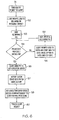
- Fig. 4 depicts a flowchart of an authentication process 30, portions of which are preferably implemented as a program running with or part of the agent 21.
- the process logic can be compiled integrally with the agent 21.
- the process logic can be implemented as a function, such as a dynamic link library "DLL" or the like triggered by the agent 21.
- the agent 21 prompts the user to enter his login ID, PIN, and token.
- the user is presented a dialog box with separate fields for each value.
- an API request is prepared by the agent 21 comprising the login ID and password concatenated with the PIN and token.
- the authentication request is sent by the API 22 to the authentication engine 24.
- the agent determines whether the authentication was valid. If valid, at step 34 the process determines whether the user is in next token mode. If so, the next token process 40 is implemented, and if not a success acknowledgment "ACK" is sent to the agent 21. If the authentication was invalid, the agent prepares a new API request comprising the login ID and password using only the token. At step 35 if the new request is valid, the new PIN mode process 50 is implemented. If, however, the authentication request was invalid, the process determines at step 36 whether the account for the entered login ID was disabled. If disabled, an account disabled ACK is sent to the agent 21, and if not disabled a try again ACK is sent to the agent 21.
- the agent 21 prepares the API request by mixing the PIN and token together to form a Passcode. This mixing can be based on a pre-defined algorithm.
- the authentication request is sent by the API 22 to the authentication engine 24.
- the authentication engine 24 contains the same algorithm to authenticate the mixed PIN and token (Passcode).
- the authentication engine 24 may utilize the algorithm to "un-mix" the Passcode to obtain the PIN and token.
- portions of the process logic 30 can be incorporated with the authentication engine 24.
- a concatenated password of the PIN and token could be passed to the authentication engine 23, and at step 35 the authentication engine 24 would parse the password to read only the token, preferably by extracting only the last number of characters in the password corresponding to the length of the token.
- the authentication engine 24 at step 35 calculates the token from the password using a reverse hash algorithm. For example, a user enters a Login ID and token generated using a token generation device with hashing for an entered PIN. A user inputs the PIN in the token generation device and the device generates a specific token from an algorithm incorporating the PIN.
- the user enters the hashed token and the Login ID, wherein the authentication agent passes the token and Login ID to the authentication engine 24.
- the authentication engine 24 deconstructs the hashed token to verify the token by utilization of a stored PIN corresponding to the Login ID.
- the API 22 could accept separate variables for the login ID, user identifier, and token, as opposed to a concatenated password. Accordingly, the authentication engine 24 need only read the variable for the token.
- Fig. 5 depicts a flowchart for a next token mode process 40.
- a next token request is sent to the agent 21.
- the agent 21 at step 42 prompts the user with the previous token and asks the user to wait till the next token is displayed on the SecurID.
- the user enters the next token, which is passed to the authentication engine 24 from the authentication agent 21 or its API 22.
- the next token is evaluated to determine if it is valid. If so, at step 45 a success message is sent to the agent 21 followed by a success ACK. If not, the process determines at step 46 whether a threshold number of attempts have been reached. If not, the process returns to step 41 and the number of attempts is incremented. If so, a failure message is sent to the agent 21 at step 47 followed by a failure ACK.
- Fig. 6 depicts a flowchart for a new PIN mode process 50.
- the new PIN mode is an administratively set mode, i.e. an administrator must configure the user's authentication state to new PIN mode.
- a new PIN request is sent to the agent 21 from the authentication engine 24.
- the agent 21 at step 52 prompts the user to enter and reconfirm the previously entered PIN.
- the user enters the reconfirmation PIN.
- the reconfirmation PIN is compared to the previously entered PIN by the agent 21 to see if they match. If so, at step 55, the PIN data is sent to the authentication engine 24 by the agent 21.
- the authentication engine sets the PIN for the user's account at step 57.
- the authentication engine sends a success acknowledgment to the agent for the final process. If the reconfirmation PIN does not match the previously entered PIN at step 54, the client prompts the user to enter and verify a new PIN (step 56). The user enters and reconfirms the PIN at step 59. The process then repeats step 54 to determine if the PIN numbers match.
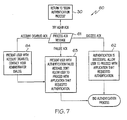
- Fig. 7 depicts a flowchart of agent process 60 based on ACK messages.
- ACK messages are received and processed at block 61. If a try again ACK was received, the process moves to the authentication process 30. If a success ACK was received, at block 62 authentication is a success and the user is allowed to proceed. If a failure ACK was received, at block 63 the user is presented a authentication failed message and the user is not allowed access. If an account disable ACK was received, the user is presented at block 64 with an account disable message, followed by an authentication failed message.
- a dialog box is presented prompting the user for user name and a passcode.
- a dialog box is presented in the form of Fig. 8.
- the above code grabs the PIN value entered in the dialog box of Fig. 8 and sets it in a variable strPassword.
- the OK button on the dialog box is selected, the Class Cdlgsma::OnOK() listed below is invoked.
- an authentication request ( A ) is executed where both the strPassword (i.e. PIN) and strToken are passed to the function SmaLogonUser() which invokes the class CsmaAuth::Logon(). If the authentication API responds ACM_ACCESS_DENIED, typical implementations would present a message box denying access and the process ends.
- another attempt ( B ) is executed where the authentication request is made without the strPassword variable (i.e. using the token only). If the authentication API responds ACM_NEW_PIN_REQUIRED, the normal logic for new PIN mode is employed. If the authentication API responds with anything else, a message box is presented denying access.
- Fig. 9 illustrates one embodiment of the present invention for one or more different types of transactions.
- a centralized authentication system 81 is used to authenticate users for a variety of different transactions, including both business and consumer mass markets.
- Four examples of such transactions include point of sale transactions 82 (e.g. credit card purchases at retail stores), system and/or information access for businesses 83 (e.g. authentication for a company's network), financial institutions providing consumer services 84 (e.g. on-line banking, account transfers, payment, investments, ATM access, traditional banking services, and the like), and electronic commerce 85 (e.g. Internet sales).
- point of sale transactions 82 e.g. credit card purchases at retail stores
- system and/or information access for businesses 83 e.g. authentication for a company's network
- financial institutions providing consumer services 84 e.g. on-line banking, account transfers, payment, investments, ATM access, traditional banking services, and the like
- electronic commerce 85 e.g. Internet sales
- One or more agent machines are clients to the central authentication system 81.
- an agent machine is dedicated to only one type of transaction, however, it should be realized that any given agent machine may be associated with a plurality of different types of transactions.
- a user has a single and uniform authentication methodology for each of the various types of transactions. Beyond the convenience of a uniform authentication methodology, improved authentication can also be realized.
- many consumer related transactions require only a PIN or password (e.g. ATM, on-line banking, etc.).
- the only authentication sometimes involves a clerk comparing a signature, if this duty is performed at all. If a strong authentication system is used, such a two-factor systems using a PIN in combination with a token or biometric reading, authentication for many systems will be dramatically improved.
- Fee structures can vary widely, including monthly or annual rates for access to the central authentication service, flat rates for each transaction, variable rates based on the value of the transaction, variable rates based on authentication volume, any combination of the foregoing, and the like. Further, revenue generation through sales and/or leases of token generating devices could complement or replace authentication fees.
- Example 1 depicts an exemplary interaction in which the authentication server is in "Normal” mode.
- Example 2 depicts an exemplary illustration in which the authentication server is in "New PIN” mode.
- Example 3 depicts an exemplary interaction in which the authentication server is in ''Next Token” mode.
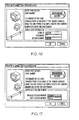
- the authentication client 21 begins the interaction by requesting a Login ID, Password and SecurID Number. After the user has enter the information and clicks on "OK", the authentication client concatenates the Password and SecurID Number as the Passcode. The authentication client then sends the Login ID and Passcode to the authentication server. If the correct information was entered and the Passcode is valid, the authentication server returns the error code "ACM_OK". The authentication client receives the error code and presents the user with a dialog box informing the user of the successful authentication interaction as depicted in Fig. 11.
- an administrative user has configured the authentication server to be in a state of ''New PIN" mode.
- the authentication client 21 begins the interaction by requesting a Login ID, Password (PIN) and SecurID Number. After the user has enter the information and clicks on "OK", the authentication client concatenates the Password and SecurID Number as the Passcode. The authentication client then sends the Login ID and Passcode to the authentication server. Since the user's account is in "New PIN” mode, the authentication server returns the error code "ACM_ACCESS_DENIED". The authentication client then retries the authentication request, but this time only sends a Passcode containing the SecurID Number (i.e., no PIN number).
- the authentication server If the revised Passcode (i.e. SecurID) correctly corresponds to the Login ID, the authentication server returns the error code "ACM_NEW_PIN_REQUIRED". The authentication client then displays a dialog box to the user as depicted in Fig. 13, requesting the user to reconfirm the Password (PIN). If the user enters a Password that matches the password in the original dialog of Fig. 12, then the PIN is sent to the authentication server and is set for the user's account. The authentication server, then changes the state from ''New PIN" mode to "Normal" mode. If the user does not enter a password that matches the previously entered password, the authentication client displays, as depicted in Fig. 14, a dialog box informing the user of the failure to match.
- Fig. 14 a dialog box informing the user of the failure to match.
- the authentication client prompts the user to enter a new Password and reconfirm the password as depicted in Fig. 15.
- the authentication client compares the new PIN with the reconfirmation PIN, and sends the new PIN to the authentication server when the PIN numbers match. Once the authentication server is sent the new PIN, the authentication server returns an error code of "ACM_SUCCESS".
- the authentication server is in ''Next Token" mode.
- the authentication client 21 begins the interaction by requesting a Login ID, Password and SecurID (Token) Number. After the user has enter the information and clicks on "OK", the authentication client concatenates the Password and SecurID Number as the Passcode. The authentication client then sends the Login ID and Passcode to the authentication server. Since the user's account is in "Next Token” mode, the authentication server will return the error code "ACM_NEXT_CODE_REQUIRED" to the client.
- the authentication client as depicted in Fig.
- SecurID Number is sent to the authentication server.
- the authentication server determines whether the SecurID Number is correct, and if so returns an error code to the authentication client of "ACM_SUCCESS".
- the authentication client receives the error code and presents the user with a dialog box informing the user of the successful authentication interaction as depicted in Fig. 18.
Landscapes
- Engineering & Computer Science (AREA)
- Computer Security & Cryptography (AREA)
- Theoretical Computer Science (AREA)
- Computer Hardware Design (AREA)
- Software Systems (AREA)
- Physics & Mathematics (AREA)
- General Engineering & Computer Science (AREA)
- General Physics & Mathematics (AREA)
- Storage Device Security (AREA)
- Cash Registers Or Receiving Machines (AREA)
- Computer And Data Communications (AREA)
- Multi Processors (AREA)
Claims (16)
- Un système informatique comprenant :ledit système informatique étant caractérisé en ce que ledit serveur d'authentification comprend :a) un réseau d'ordinateurs (10),b) un serveur d'authentification (15) sur le réseau,c) une pluralité d'ordinateurs agents (20) sur le réseau, chacun de ladite pluralité d'ordinateurs agents comprenant un logiciel agent (21) pour le serveur d'authentification,et ledit logiciel agent (21) pour le serveur d'authentification (15) est codé pour :i) un moteur d'authentification (24) ayant un premier état dans lequel le moteur d'authentification utilise un mot de passe comprenant deux éléments, et un deuxième état dans lequel le moteur d'authentification utilise un mot de passe comprenant un seul élément ; etii) une interface de programmation d'application par le biais de laquelle les autres ordinateurs du réseau peuvent envoyer des requêtes au moteur d'authentification (24) ;i) envoyer une première requête d'authentification par le biais de l'interface de programmation d'application au moteur d'authentification (24) en utilisant un mot de passe comprenant deux éléments ; etii) si l'authentification n'est pas établie en réponse à la première requête d'authentification, envoyer une seconde requête d'authentification au moteur d'authentification (24) par le biais de l'interface de programmation d'application, en utilisant un mot de passe comprenant un seul élément.
- Le système informatique selon la revendication 1, dans lequel les deux éléments du mot de passe dans le premier état sont un identifiant utilisateur et un jeton d'authentification.
- Le système informatique selon la revendication 2, dans lequel le mot de passe dans le premier état est une chaíne comprenant la concaténation de l'identifiant utilisateur et du jeton d'authentification.
- Le système informatique selon la revendication 2, dans lequel un dispositif de production d'un jeton d'authentification et un moteur d'authentification produisent de façon indépendante le jeton d'authentification en parallèle.
- Le système informatique selon la revendication 2, dans lequel l'identifiant utilisateur est un numéro d'identification personnel (PIN).
- Le système informatique selon la revendication 5, dans lequel le second état est un nouveau mode PIN.
- Le système informatique selon la revendication 2, dans lequel le un seul élément du mot de passe pour le second état est un jeton d'authentification.
- Le système informatique selon l'une quelconque des revendications 1 à 7, dans lequel le moteur d'authentification est un service d'authentification utilisateur puissant à deux facteurs, géré de manière centrale.
- Le système informatique selon l'une quelconque des revendications 1 à 8, dans lequel un ou plusieurs de la pluralité d'ordinateurs agents sont des serveurs sur le réseau.
- Un procédé d'authentification utilisateur centralisée sur un réseau informatique (10) dans lequel chacun d'une pluralité d'ordinateurs agents (20) exécute le procédé, comprenant les étapes consistant à :ledit procédé étant caractérisé en ce qu'il comprend en outre les étapes consistant à :a) prévoir un agent d'authentification sur chacun des ordinateurs agents (20) ;b) inviter un utilisateur, par le biais de l'agent d'authentification, à saisir une identification utilisateur et un jeton d'authentification ;c) recevoir l'identifiant utilisateur et le jeton d'authentification de la part de l'utilisateur ;d) concaténer l'identifiant utilisateur et le jeton d'authentification ;e) transmettre l'identifiant utilisateur et le jeton d'authentification concaténés à un système d'authentification central sur le réseau ;f) recevoir une réponse de la part du système d'authentification central ; etg) si la réponse n'autorise pas l'accès, transmettre le jeton d'authentification en tant qu'un mot de passe au système d'authentification central.
- Le procédé selon la revendication 10, dans lequel à l'étape (e) l'identifiant utilisateur et le jeton d'authentification concaténés sont transmis en tant qu'un mot de passe au système d'authentification central.
- Le procédé selon la revendication 10 ou la revendication 11, dans lequel à l'étape (g) le jeton d'authentification est transmis en tant qu'un mot de passe si la réponse refuse l'accès.
- Le procédé selon l'une quelconque des revendications 10, 11 ou 12, dans lequel à l'étape (c), un identifiant de connexion ID est en outre obtenu.
- Le procédé selon l'une quelconque des revendications 10, 11, 12 ou 13, dans lequel à l'étape (e), l'identifiant de connexion ID est transmis en outre au système d'authentification central.
- Un support de lecture informatique (14), comprenant des instructions pour exécuter le procédé d'authentification utilisateur centralisée sur un réseau informatique (10) dans lequel chacun d'une pluralité d'ordinateurs agents (20) exécute le procédé, lesdites instructions comprenant les étapes consistant à :ledit support de lecture informatique étant caractérisé en ce que lesdites instructions comprennent en outre les étapes consistant à :a) prévoir un agent d'authentification sur chacun des ordinateurs agents (20) ;b) inviter un utilisateur, par le biais de l'agent d'authentification, à saisir une identification utilisateur et un jeton d'authentification ;c) recevoir l'identifiant utilisateur et le jeton d'authentification de la part de l'utilisateur ;d) concaténer l'identifiant utilisateur et le jeton d'authentification ;e) transmettre l'identifiant utilisateur et le jeton d'authentification concaténés à un système d'authentification central sur le réseau ;f) recevoir une réponse de la part du système d'authentification central ; etg) si la réponse n'autorise pas l'accès, transmettre le jeton d'authentification en tant qu'un mot de passe au système d'authentification central.
- Un produit programme, comprenant un support porteur de signaux renfermant un programme d'instructions machine lisibles, exécutable par un processeur de données numériques, afin d'exécuter un procédé d'authentification utilisateur centralisée sur un réseau informatique (10) dans lequel chacun d'une pluralité d'ordinateurs agents (20) exécute le procédé, lesdites instructions comprenant les étapes consistant à :ledit produit programme étant caractérisé en ce que lesdites instructions comprennent en outre les étapes consistant à :a) prévoir un agent d'authentification sur chacun des ordinateurs agents (20) ;b) inviter un utilisateur, par le biais de l'agent d'authentification, à saisir une identification utilisateur et un jeton d'authentification ;c) recevoir l'identifiant utilisateur et le jeton d'authentification de la part de l'utilisateur ;d) concaténer l'identifiant utilisateur et le jeton d'authentification ;e) transmettre l'identifiant utilisateur et le jeton d'authentification concaténés à un système d'authentification central sur le réseau ;f) recevoir une réponse de la part du système d'authentification central ; etg) si la réponse n'autorise pas l'accès, transmettre le jeton d'authentification en tant qu'un mot de passe au système d'authentification central.
Applications Claiming Priority (3)
| Application Number | Priority Date | Filing Date | Title |
|---|---|---|---|
| US56788600A | 2000-05-10 | 2000-05-10 | |
| US567886 | 2000-05-10 | ||
| PCT/US2001/014807 WO2001086392A2 (fr) | 2000-05-10 | 2001-05-08 | Procede et dispositif pour authentification centralisee |
Publications (2)
| Publication Number | Publication Date |
|---|---|
| EP1307802A2 EP1307802A2 (fr) | 2003-05-07 |
| EP1307802B1 true EP1307802B1 (fr) | 2005-01-26 |
Family
ID=24269035
Family Applications (1)
| Application Number | Title | Priority Date | Filing Date |
|---|---|---|---|
| EP01935153A Expired - Lifetime EP1307802B1 (fr) | 2000-05-10 | 2001-05-08 | Procede et dispositif pour authentification centralisee |
Country Status (5)
| Country | Link |
|---|---|
| EP (1) | EP1307802B1 (fr) |
| AT (1) | ATE288099T1 (fr) |
| AU (1) | AU2001261271A1 (fr) |
| DE (1) | DE60108645T8 (fr) |
| WO (1) | WO2001086392A2 (fr) |
Families Citing this family (5)
| Publication number | Priority date | Publication date | Assignee | Title |
|---|---|---|---|---|
| US20050066219A1 (en) | 2001-12-28 | 2005-03-24 | James Hoffman | Personal digital server pds |
| EP1472816A4 (fr) * | 2002-01-30 | 2010-01-27 | Tecsec Inc | Systeme d'acces utilisant une identification et une authentification multi-facteurs |
| US7451217B2 (en) | 2002-12-19 | 2008-11-11 | International Business Machines Corporation | Method and system for peer-to-peer authorization |
| US10063549B1 (en) | 2011-06-27 | 2018-08-28 | EMC IP Holding Company LLC | Techniques for sharing authentication data among authentication servers |
| CN116388853B (zh) * | 2023-04-26 | 2023-12-12 | 中国人民解放军32039部队 | 对多目标接力数传服务的注册认证方法和装置 |
Family Cites Families (5)
| Publication number | Priority date | Publication date | Assignee | Title |
|---|---|---|---|---|
| US4720860A (en) * | 1984-11-30 | 1988-01-19 | Security Dynamics Technologies, Inc. | Method and apparatus for positively identifying an individual |
| US4885778A (en) * | 1984-11-30 | 1989-12-05 | Weiss Kenneth P | Method and apparatus for synchronizing generation of separate, free running, time dependent equipment |
| US5491752A (en) * | 1993-03-18 | 1996-02-13 | Digital Equipment Corporation, Patent Law Group | System for increasing the difficulty of password guessing attacks in a distributed authentication scheme employing authentication tokens |
| JP3053527B2 (ja) * | 1993-07-30 | 2000-06-19 | インターナショナル・ビジネス・マシーンズ・コーポレイション | パスワードを有効化する方法及び装置、パスワードを生成し且つ予備的に有効化する方法及び装置、認証コードを使用して資源のアクセスを制御する方法及び装置 |
| DE4411780C2 (de) * | 1994-04-06 | 1998-12-17 | Wolfgang A Dr Rer Nat Redmann | Abhörsichere Zugangskontrollvorrichtung |
-
2001
- 2001-05-08 EP EP01935153A patent/EP1307802B1/fr not_active Expired - Lifetime
- 2001-05-08 WO PCT/US2001/014807 patent/WO2001086392A2/fr not_active Ceased
- 2001-05-08 AT AT01935153T patent/ATE288099T1/de not_active IP Right Cessation
- 2001-05-08 DE DE60108645T patent/DE60108645T8/de not_active Expired - Fee Related
- 2001-05-08 AU AU2001261271A patent/AU2001261271A1/en not_active Abandoned
Also Published As
| Publication number | Publication date |
|---|---|
| AU2001261271A1 (en) | 2001-11-20 |
| DE60108645D1 (de) | 2005-03-03 |
| DE60108645T8 (de) | 2006-04-27 |
| WO2001086392A3 (fr) | 2003-02-27 |
| WO2001086392A2 (fr) | 2001-11-15 |
| DE60108645T2 (de) | 2006-01-12 |
| EP1307802A2 (fr) | 2003-05-07 |
| ATE288099T1 (de) | 2005-02-15 |
Similar Documents
| Publication | Publication Date | Title |
|---|---|---|
| JP4433472B2 (ja) | 分散型認証処理 | |
| CA2448853C (fr) | Methodes et systemes d'authentification d'un utilisateur pour sous-emplacements d'un emplacement de reseau | |
| CA2578186C (fr) | Systeme et procede de commande d'acces | |
| US9544314B2 (en) | Method for managing access to protected computer resources | |
| US7134138B2 (en) | Methods and apparatus for providing security for a data storage system | |
| US7590684B2 (en) | System providing methodology for access control with cooperative enforcement | |
| US8522361B2 (en) | Tokenized resource access | |
| EP1914658B1 (fr) | Centre de données à contrôle d'identité | |
| US20040059952A1 (en) | Authentication system | |
| US20010045451A1 (en) | Method and system for token-based authentication | |
| US20090235349A1 (en) | Method and apparatus for securely invoking a rest api | |
| KR20210095093A (ko) | 탈중앙화 아이디 앱을 이용하여 인증 서비스를 제공하는 방법 및 이를 이용한 탈중앙화 아이디 인증 서버 | |
| JPH07200429A (ja) | ディスクレス・ワークステーションの初期プログラム・ロードの安全化システム及び方法 | |
| CN101114237A (zh) | 转换鉴权令牌以促进应用程序之间的交互的方法和装置 | |
| JP2003296685A (ja) | スマートカード | |
| KR20210095061A (ko) | 탈중앙화 아이디 앱을 이용하여 인증 서비스를 제공하는 방법 및 이를 이용한 탈중앙화 아이디 인증 서버 | |
| EP1307802B1 (fr) | Procede et dispositif pour authentification centralisee | |
| US7610618B2 (en) | System and method for authenticating a subject | |
| CN119232389B (zh) | 超算接口可信鉴别方法、系统及计算设备 | |
| US20080022004A1 (en) | Method And System For Providing Resources By Using Virtual Path | |
| US20250392462A1 (en) | System and method for providing a secure access to a webpage | |
| EP1564928A1 (fr) | Procede pour authentification de plusieurs utilisateurs | |
| Wild | Fast Authentication Streamlining Tokens | |
| KR101066729B1 (ko) | 네트워크 위치의 하위 위치에 대한 사용자의 인증을 위한 방법 및 시스템 | |
| CN116961937A (zh) | 区块链程序的访问方法、相关设备及存储介质 |
Legal Events
| Date | Code | Title | Description |
|---|---|---|---|
| PUAI | Public reference made under article 153(3) epc to a published international application that has entered the european phase |
Free format text: ORIGINAL CODE: 0009012 |
|
| 17P | Request for examination filed |
Effective date: 20021122 |
|
| AK | Designated contracting states |
Designated state(s): AT BE CH CY DE DK ES FI FR GB GR IE IT LI LU MC NL PT SE TR |
|
| AX | Request for extension of the european patent |
Extension state: AL LT LV MK RO SI |
|
| 17Q | First examination report despatched |
Effective date: 20030829 |
|
| GRAP | Despatch of communication of intention to grant a patent |
Free format text: ORIGINAL CODE: EPIDOSNIGR1 |
|
| GRAS | Grant fee paid |
Free format text: ORIGINAL CODE: EPIDOSNIGR3 |
|
| GRAA | (expected) grant |
Free format text: ORIGINAL CODE: 0009210 |
|
| AK | Designated contracting states |
Kind code of ref document: B1 Designated state(s): AT BE CH CY DE DK ES FI FR GB GR IE IT LI LU MC NL PT SE TR |
|
| PG25 | Lapsed in a contracting state [announced via postgrant information from national office to epo] |
Ref country code: IT Free format text: LAPSE BECAUSE OF FAILURE TO SUBMIT A TRANSLATION OF THE DESCRIPTION OR TO PAY THE FEE WITHIN THE PRESCRIBED TIME-LIMIT;WARNING: LAPSES OF ITALIAN PATENTS WITH EFFECTIVE DATE BEFORE 2007 MAY HAVE OCCURRED AT ANY TIME BEFORE 2007. THE CORRECT EFFECTIVE DATE MAY BE DIFFERENT FROM THE ONE RECORDED. Effective date: 20050126 Ref country code: AT Free format text: LAPSE BECAUSE OF FAILURE TO SUBMIT A TRANSLATION OF THE DESCRIPTION OR TO PAY THE FEE WITHIN THE PRESCRIBED TIME-LIMIT Effective date: 20050126 Ref country code: BE Free format text: LAPSE BECAUSE OF FAILURE TO SUBMIT A TRANSLATION OF THE DESCRIPTION OR TO PAY THE FEE WITHIN THE PRESCRIBED TIME-LIMIT Effective date: 20050126 Ref country code: CH Free format text: LAPSE BECAUSE OF FAILURE TO SUBMIT A TRANSLATION OF THE DESCRIPTION OR TO PAY THE FEE WITHIN THE PRESCRIBED TIME-LIMIT Effective date: 20050126 Ref country code: FI Free format text: LAPSE BECAUSE OF FAILURE TO SUBMIT A TRANSLATION OF THE DESCRIPTION OR TO PAY THE FEE WITHIN THE PRESCRIBED TIME-LIMIT Effective date: 20050126 Ref country code: TR Free format text: LAPSE BECAUSE OF FAILURE TO SUBMIT A TRANSLATION OF THE DESCRIPTION OR TO PAY THE FEE WITHIN THE PRESCRIBED TIME-LIMIT Effective date: 20050126 Ref country code: NL Free format text: LAPSE BECAUSE OF FAILURE TO SUBMIT A TRANSLATION OF THE DESCRIPTION OR TO PAY THE FEE WITHIN THE PRESCRIBED TIME-LIMIT Effective date: 20050126 Ref country code: LI Free format text: LAPSE BECAUSE OF FAILURE TO SUBMIT A TRANSLATION OF THE DESCRIPTION OR TO PAY THE FEE WITHIN THE PRESCRIBED TIME-LIMIT Effective date: 20050126 |
|
| REG | Reference to a national code |
Ref country code: GB Ref legal event code: FG4D |
|
| REG | Reference to a national code |
Ref country code: CH Ref legal event code: EP |
|
| REG | Reference to a national code |
Ref country code: IE Ref legal event code: FG4D |
|
| REF | Corresponds to: |
Ref document number: 60108645 Country of ref document: DE Date of ref document: 20050303 Kind code of ref document: P |
|
| PG25 | Lapsed in a contracting state [announced via postgrant information from national office to epo] |
Ref country code: DK Free format text: LAPSE BECAUSE OF FAILURE TO SUBMIT A TRANSLATION OF THE DESCRIPTION OR TO PAY THE FEE WITHIN THE PRESCRIBED TIME-LIMIT Effective date: 20050426 Ref country code: GR Free format text: LAPSE BECAUSE OF FAILURE TO SUBMIT A TRANSLATION OF THE DESCRIPTION OR TO PAY THE FEE WITHIN THE PRESCRIBED TIME-LIMIT Effective date: 20050426 Ref country code: SE Free format text: LAPSE BECAUSE OF FAILURE TO SUBMIT A TRANSLATION OF THE DESCRIPTION OR TO PAY THE FEE WITHIN THE PRESCRIBED TIME-LIMIT Effective date: 20050426 |
|
| PG25 | Lapsed in a contracting state [announced via postgrant information from national office to epo] |
Ref country code: ES Free format text: LAPSE BECAUSE OF FAILURE TO SUBMIT A TRANSLATION OF THE DESCRIPTION OR TO PAY THE FEE WITHIN THE PRESCRIBED TIME-LIMIT Effective date: 20050507 |
|
| PG25 | Lapsed in a contracting state [announced via postgrant information from national office to epo] |
Ref country code: LU Free format text: LAPSE BECAUSE OF NON-PAYMENT OF DUE FEES Effective date: 20050508 Ref country code: CY Free format text: LAPSE BECAUSE OF FAILURE TO SUBMIT A TRANSLATION OF THE DESCRIPTION OR TO PAY THE FEE WITHIN THE PRESCRIBED TIME-LIMIT Effective date: 20050508 |
|
| PG25 | Lapsed in a contracting state [announced via postgrant information from national office to epo] |
Ref country code: IE Free format text: LAPSE BECAUSE OF NON-PAYMENT OF DUE FEES Effective date: 20050509 |
|
| PG25 | Lapsed in a contracting state [announced via postgrant information from national office to epo] |
Ref country code: MC Free format text: LAPSE BECAUSE OF NON-PAYMENT OF DUE FEES Effective date: 20050531 |
|
| NLV1 | Nl: lapsed or annulled due to failure to fulfill the requirements of art. 29p and 29m of the patents act | ||
| REG | Reference to a national code |
Ref country code: CH Ref legal event code: PL |
|
| PLBE | No opposition filed within time limit |
Free format text: ORIGINAL CODE: 0009261 |
|
| STAA | Information on the status of an ep patent application or granted ep patent |
Free format text: STATUS: NO OPPOSITION FILED WITHIN TIME LIMIT |
|
| ET | Fr: translation filed | ||
| 26N | No opposition filed |
Effective date: 20051027 |
|
| REG | Reference to a national code |
Ref country code: IE Ref legal event code: MM4A |
|
| PG25 | Lapsed in a contracting state [announced via postgrant information from national office to epo] |
Ref country code: PT Free format text: LAPSE BECAUSE OF NON-PAYMENT OF DUE FEES Effective date: 20050626 |
|
| PGFP | Annual fee paid to national office [announced via postgrant information from national office to epo] |
Ref country code: DE Payment date: 20090529 Year of fee payment: 9 Ref country code: FR Payment date: 20090507 Year of fee payment: 9 |
|
| PGFP | Annual fee paid to national office [announced via postgrant information from national office to epo] |
Ref country code: GB Payment date: 20090407 Year of fee payment: 9 |
|
| GBPC | Gb: european patent ceased through non-payment of renewal fee |
Effective date: 20100508 |
|
| REG | Reference to a national code |
Ref country code: FR Ref legal event code: ST Effective date: 20110131 |
|
| PG25 | Lapsed in a contracting state [announced via postgrant information from national office to epo] |
Ref country code: DE Free format text: LAPSE BECAUSE OF NON-PAYMENT OF DUE FEES Effective date: 20101201 |
|
| PG25 | Lapsed in a contracting state [announced via postgrant information from national office to epo] |
Ref country code: FR Free format text: LAPSE BECAUSE OF NON-PAYMENT OF DUE FEES Effective date: 20100531 |
|
| PG25 | Lapsed in a contracting state [announced via postgrant information from national office to epo] |
Ref country code: GB Free format text: LAPSE BECAUSE OF NON-PAYMENT OF DUE FEES Effective date: 20100508 |