EP1308007B1 - Verfahren und vorrichtung zum übertragen von signalen - Google Patents
Verfahren und vorrichtung zum übertragen von signalen Download PDFInfo
- Publication number
- EP1308007B1 EP1308007B1 EP01971828A EP01971828A EP1308007B1 EP 1308007 B1 EP1308007 B1 EP 1308007B1 EP 01971828 A EP01971828 A EP 01971828A EP 01971828 A EP01971828 A EP 01971828A EP 1308007 B1 EP1308007 B1 EP 1308007B1
- Authority
- EP
- European Patent Office
- Prior art keywords
- signals
- category
- channel
- transmission rate
- periods
- Prior art date
- Legal status (The legal status is an assumption and is not a legal conclusion. Google has not performed a legal analysis and makes no representation as to the accuracy of the status listed.)
- Expired - Lifetime
Links
- 238000000034 method Methods 0.000 title claims abstract description 18
- 230000000694 effects Effects 0.000 claims abstract description 40
- 230000008054 signal transmission Effects 0.000 claims abstract description 30
- 230000005540 biological transmission Effects 0.000 claims description 68
- 238000004891 communication Methods 0.000 claims description 30
- 238000010295 mobile communication Methods 0.000 claims description 8
- 239000002699 waste material Substances 0.000 description 3
- 238000010586 diagram Methods 0.000 description 2
- 230000009977 dual effect Effects 0.000 description 2
- 238000012546 transfer Methods 0.000 description 2
- 230000032258 transport Effects 0.000 description 2
- 230000001419 dependent effect Effects 0.000 description 1
- 238000001514 detection method Methods 0.000 description 1
- 238000012423 maintenance Methods 0.000 description 1
- 238000012545 processing Methods 0.000 description 1
- 230000003595 spectral effect Effects 0.000 description 1
- 230000001755 vocal effect Effects 0.000 description 1
Images


Classifications
-
- H—ELECTRICITY
- H04—ELECTRIC COMMUNICATION TECHNIQUE
- H04L—TRANSMISSION OF DIGITAL INFORMATION, e.g. TELEGRAPHIC COMMUNICATION
- H04L12/00—Data switching networks
- H04L12/64—Hybrid switching systems
- H04L12/6418—Hybrid transport
-
- H—ELECTRICITY
- H04—ELECTRIC COMMUNICATION TECHNIQUE
- H04L—TRANSMISSION OF DIGITAL INFORMATION, e.g. TELEGRAPHIC COMMUNICATION
- H04L12/00—Data switching networks
- H04L12/64—Hybrid switching systems
- H04L12/6418—Hybrid transport
- H04L2012/6445—Admission control
- H04L2012/6456—Channel and bandwidth allocation
-
- H—ELECTRICITY
- H04—ELECTRIC COMMUNICATION TECHNIQUE
- H04L—TRANSMISSION OF DIGITAL INFORMATION, e.g. TELEGRAPHIC COMMUNICATION
- H04L12/00—Data switching networks
- H04L12/64—Hybrid switching systems
- H04L12/6418—Hybrid transport
- H04L2012/6494—Silence suppression
Definitions
- the present invention relates to a method and device for transmitting signals of a first category and signals of a second category over a link in a telecommunication system, where said link provides a predetermined signal transmission rate, and where the signals of the first category are associated with a real-time transmission and have a discontinuous characteristic according to which these signals of the first category comprise periods of activity and periods of inactivity.
- An example of such signals of the first category is speech
- an example of such signals of the second category is data.
- the periods of speech inactivity can be used advantageously, e.g. to reduce the sending power of a mobile device, in order to save energy.
- This is also known as discontinuous transmission (DTX).
- DTX discontinuous transmission
- it is therefore imaginable to define a first channel for carrying speech signals and a second channel for carrying data signals, where the first channel uses the transmission rate of the provided link during periods of speech activity, and the second channel uses the transmission rate during periods of speech inactivity.
- Fig. 2 schematically shows a bi-directional link 1 that has an up-link direction la and a down-link direction 1b. These two link directions will typically show a series of speech activity periods and speech inactivity periods, where it may be remarked that these periods will usually alternate between the up-link and down-link directions, due to the nature of verbal exchange between two partners in a conversation.
- a traffic channel (TCH) is assigned the data transmission rate of the link, in order to transmit speech.
- the given signal transmission rate of the link 1 is assigned to a packet data channel (PDCH), over which data packets are sent in one direction, and over which acknowledgment messages related to said data packets are sent in the other direction.
- PDCH packet data channel
- ARQ Automatic Retransmission reQuest
- the DTX concept leads to the disadvantageous situation that the data transmission in the periods of speech inactivity can become stalled, which means that the data transmission is inefficient and of lesser quality than could be obtained on the basis of the actual data transmission rate available during the periods of speech inactivity. In other words, this means that the available band-width during periods of speech inactivity is not efficiently used.
- DTM Dual Transfer Mode
- TCH represents the TCH
- P represents the PDCH.
- TCH represents the TCH
- P represents the PDCH.
- TCH represents the TCH
- P represents the PDCH.
- TCH the traffic channel
- TCH/H half-rate
- both of the above-discussed concepts namely DTX in connection with Fig. 2 and DTM in connection with Fig. 3 , suffer from the disadvantage that the transmission during periods of speech inactivity becomes inefficient.
- this problem is not restricted to the above-described example of the simultaneous transmission of speech and data, but will occur in any system that desires to transmit a first and second category of signals over link having a predetermined transmission rate, where the first category has a discontinuous characteristic comprising periods of activity and periods of inactivity.
- this could e.g. also be real-time video information.
- the signals of the second category do not have to be data as such, but could be any type of information that is suitable for best effort transmission at a lower priority than the first category of signals.
- US-5,757,801 From US-5,757,801 a method of statistically multiplexing time-sensitive data (e.g. voice or fax communication) and non-time-sensitive data (e.g. asynchronous digital data) onto a common link is known.
- the time-sensitive data is treated as high-priority and the non-time-sensitive as low priority data.
- the time-sensitive data being voice information, it is described to provide a silence detection function, such that in periods of silence, low priority data may be transmitted. Furthermore, whenever higher priority data is ready for transmission, low priority data transmissions are interrupted.
- the system of US-5,757,801 therefore operates as explained in connection with Fig. 2 .
- the object of the invention is to provide an improved method and device for transmitting signals of a first category and a second category over a link having a predetermined signal transmission rate, where the signals of the first category have a discontinuous characteristic, such that the above-described problems can be overcome and an efficient transmission can be obtained during periods of inactivity of the signals of the first category.
- a first proportion of the signal transmission rate provided by the link is assigned to the first channel and a second proportion is assigned to the second channel during periods of activity of the first category of signals.
- the transmission rate of the link is shared by the two channels.
- the proportion assigned to the second channel (which carries signals of the second category) is increased with respect to the proportion assigned during periods of activity.
- the second channel receives most or all of the transmission rate during periods of inactivity of the signals of the first category.
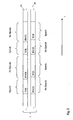
- Fig. 1 shows a bi-directional link similar to Figs. 2 and 3 . Also, it shows an example where the signals of the first category are speech signals. Also, Fig. 1 shows an example where the TCH and the PDCH share the predetermined transmission rate equally during periods of speech activity (i.e. TCH/H and PDCH at the same rate), and where the link transmission rate is fully allocated to the PDCH during periods of speech inactivity.
- the concept of the present invention when applied to the situation where packets of the second category are sent in the one link direction and feed-back packets (such as acknowledgment packets) are sent in the other link direction, as shown in the example Fig. 1 , achieves the important advantage that the transmission during periods of inactivity of signals of the first category (speech signals in Fig. 1 ) becomes highly efficient with respect to the concepts described above in connection with Figs. 2 and 3 .
- a channel for signals of the second category is provided during periods of activity of the signal of the first category, there is no stalling, because acknowledgment messages can always be sent.
- the periods of inactivity of the signals of the first category are used more efficiently for the second channel in comparison to the example of Fig. 3 (DTM), as the channel assignment for the second channel (PDCH) is increased, and preferably increased to the highest amount possible.
- the first channel is only used for a transmission of background noise during periods of speech inactivity, where the proportion of the signal transmission rate of the link used by the first channel for transmitting the background noise is lower than the proportion of the transmission rate assigned to the second channel during such periods of speech inactivity.
- the proportion of the signal transmission rate of the link used by the first channel for transmitting the background noise is lower than the proportion of the transmission rate assigned to the second channel during such periods of speech inactivity.
- the signals of the first category are speech signals
- the signals of the second category are data signals.
- the speech signals are transported in frames, as this is well known e.g. from GSM.
- the data signals are present in the form of data packets arranged in accordance with any suitable data transmission protocol, such as RLP or TCP, this transmission lying at a higher layer than the physical layer that handles the channel assignment for the first and second channels.
- the present invention is by no means restricted thereto, as the signals of the first category could e.g. also be real-time video signals, or any other type of signal having a discontinuous characteristic according to which periods of activity and periods of inactivity occur.
- the signals of the second category can be any type of signal that should be transmitted at best effort parallel to the signals of the first category.
- the following examples shall relate to mobile communication systems, as the field of mobile communications is a preferred application of the present invention. Namely, the more efficient use of band-width resources is of special importance in mobile communication systems, because band-width is a scarce resource in such systems.
- the present invention is by no means restricted thereto, as it in principle can be applied to any communication system in which signals of a first category and second category as defined in the claims are to be transmitted over a link of given transmission capacity.
- the link is physically defined by way of a time-slot in a TDMA scheme, such that said time-slot also determines the link transmission rate.
- the link can be provided in any suitable way, namely also by a frequency (FDMA), or a code (CDMA), or by any suitable combination of such multiple access concepts.
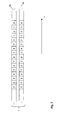
- Fig. 4 shows a schematic block diagram of a communication device according to the present invention, which here is a terminal station of a mobile communication system.
- the communication device comprises a data source 41, which can e.g. be some sort of data processing application, and it also comprises the basic telephone features of a speech control section 42, which especially contains a codec for coding and decoding speech, where said speech control section 42 is coupled to a microphone 44 and a loudspeaker 43.
- a data source 41 can e.g. be some sort of data processing application
- a speech control section 42 which especially contains a codec for coding and decoding speech, where said speech control section 42 is coupled to a microphone 44 and a loudspeaker 43.
- a speech control section 42 which especially contains a codec for coding and decoding speech
- the communication device figure 4 furthermore comprises a speech discriminator 45, which is adapted to discriminate between periods of speech activity and periods of speech inactivity ("silent" periods, in which the signal from the microphone 44 only contains background noise).
- the discriminator 45 can operate according to any known principle of speech discrimination as used in the known DTX systems. For example, a combination of threshold comparisons and spectral domain techniques can be employed. As this is well known in the art, it needs not be described further here.
- the communication device of Fig. 4 also comprises a channel management part 46 that is arranged to on the one hand establish channels for transmitting speech signals coming from the speech control section 42 and on the other hand for transmitting data signals coming from the data source 41, over the common link 1, which is a bi-directional link as shown in Fig. 1 .
- the channel management part will on the one hand establish the channels, and on the other hand perform the assignment of transmission rate to established channels. In other words, if a channel is not established, then no assignment can take place.
- the present invention is preferably implemented in such a way that once an appropriate operation mode is entered, e.g. as selected by the user, the channel management part will establish the first and second channel. When this mode is terminated, then the channels as defined in accordance with the invention are also terminated.
- the communication device of Fig. 4 is operated in such a way that the assignment of transmission rate provided for the link 1 is conducted as exemplified in Fig. 1 .
- the channel management part 46 and the node at the other end of link 1 e.g. a base station sub-system BSS in the case of a GSM communication system
- the transmission capacity of link 1 is assigned to both the traffic channel TCH for carrying speech signals and the packet data channel PDCH for carrying data signals.
- Fig. 1 only shows two channels, the present invention is also applicable to more than two channels.
- the proportion of transmission rate assigned to the data transmission channel PDCH is increased with respect to the proportion during speech periods.
- the entire transmission rate is assigned to the data transmission channel PDCH.
- the two terminal stations involved in the communication are arranged to create comfort noise during these periods of speech inactivity.
- the channel assignment during periods of speech inactivity in such a way that a large portion of the transmission rate is used by the data transmission channel PDCH, and only a small part is used by the TCH for transmitting background noise (e.g. > 90 % to the PDCH and ⁇ 10 % to the TCH).
- the assignment of data transmission rate to the speech channel TCH and the data channel PDCH is variable during the periods of speech activity. This depends on the specific requirements of the individual system, and can e.g. also depend on factors such as supplementary channels (i.e. the case where more than the two channels TCH and PDCH are provided), etc. It is, however, preferable that the assignment during periods of speech activity is in a fixed proportion, e.g. 1/4 to the data channel PDCH and 3/4 to the traffic channel TCH. Such a fixed proportionality has the advantage of easier maintenance. More preferably, the two channels share the data transmission rate at 1/2 each.
- the traffic channel becomes a half-rate traffic channel TCH/H as is already well known for GSM half-rate systems, and the other half of the transmission rate provided by the link is assigned to the packet data channel PDCH.
- the TCH/H corresponds to a half-assigned time-slot, where every second burst is assigned, while the PDCH is equally a half-assigned time-slot in which every other second burst is assigned.
- the PDCH is assigned every burst to thereby fully use the time-slot.
- the channel management part 46 will instruct the codec in speech control section 42 to switch to lower rate coding (e.g. half-rate coding) of speech if the concept of Fig. 1 is used.
- lower rate coding e.g. half-rate coding
- the channel assignment during periods of speech activity is performed regardless of the presence or absence of data packets to be transmitted.
- the advantage is the simplicity of the control scheme. Namely, if the communication device is operated to enter a mode in which the concept of the present invention is applied, then the channel assignment as indicated in Fig. 1 is automatically activated.
- the available transmission rate of the link is shared between the speech channel or traffic channel TCH and the packet data channel PDCH during periods of speech activity, and the proportion of data transmission rate assigned to the PDCH is increased during periods of speech inactivity.
- this concept is especially advantageous in connection with bi-directional links, in which the data signals carried by the PDCH are in the one link direction data packets, and in the other link direction feed-back packets related to the received data packets, e.g. acknowledgment messages in the context of an ARQ scheme.
- feed-back packets for controlling the flow of data packets, such as RLC (Radio Link Control) or also TCP (Transmission Control Protocol). Both the RLC protocol and the TCP protocol are well known in the art and well described in corresponding specifications, such that a further description is not necessary here.
- the protocol using feed-back packets is implemented or arranged, e.g. if the acknowledgment packets are sent automatically or if they are only sent in response to a polling message from the data packet sender.
- the present invention provides an effect not providable by the system described in connection with Fig. 2 .
- the present invention provides an effect not attainable by the system of Fig. 3 , because in Fig. 3 there is a waste of transmission capacity for the traffic channel in those periods, in which there is no speech. Therefore, in summary, the system of the present invention achieves the effect not achievable by either the system of Fig. 2 or of Fig. 3 .
- the identification of the assigned channel type by the receiving end of link 1 can be done in any desired or suitable way, e.g. by means of appropriate headers in frames.
- the so-called stealing bits of the physical layer frame are used for identifying the assigned channel. This can be used in the up-link as well as the down-link direction.
- the stealing bits are starting bits provided by a burst that are not coded together with the payload. For example, the first two bits are not coded with the payload. Over the course of several bursts such stealing bits code information about the content of these bursts. For example, in GPRS four bursts form one radio block, such that eight stealing bits are available for indicating which coding for the payload has been used.
- the RLC PDUs carry data.
- the voice frames carry speech during periods of speech activity, and carry data during periods of speech inactivity, to thereby achieve the concept shown in Fig. 1 .
- the channel management part simply places data into the voice frames during periods of speech inactivity, and changes the stolen bit(s) in the voice frame, such that the receiver will correctly identify the frame as carrying data.
- the traffic channel TCH will not only carry the speech signals, but also the other known associated virtual channels for transporting control information, such as the FACCH (Fast Associated Control Channel), the SACCH (Slow Associated Control Channel), etc. and the data packet channel PDCH will also carry the known associated GPRS virtual channels, such as the PACCH (Packet Associated Control Channel).
- FACCH Frest Associated Control Channel
- SACCH Slow Associated Control Channel
- PDCH Packet Associated Control Channel
- GPRS packet-switching
- the situation underlying the present invention is such that a link with a predetermined data transmission rate is present, i.e. a dedicated circuit-switched link.
- a so-called temporary block flow is assigned every time that data is to be sent. This is due to the connectionless concept underlying GPRS.
- the TBF includes assigned resources (such as a time-slot) as well as established RLC entities.
Landscapes
- Engineering & Computer Science (AREA)
- Computer Networks & Wireless Communication (AREA)
- Signal Processing (AREA)
- Mobile Radio Communication Systems (AREA)
- Transplanting Machines (AREA)
- Radar Systems Or Details Thereof (AREA)
- Two-Way Televisions, Distribution Of Moving Picture Or The Like (AREA)
Claims (19)
- Verfahren eines Übertragens von Signalen einer ersten Kategorie und Signalen einer zweiten Kategorie über eine Verbindung (1) in einem Telekommunikationssystem, wobei die Verbindung eine vorbestimmte Signalübertragungsrate bereitstellt, wobei die Signale der ersten Kategorie mit einer Echtzeitübertragung verknüpft sind und eine diskontinuierliche Eigenschaft aufweisen, gemäß der die Signale der ersten Kategorie Aktivitätszeiträume und Inaktivitätszeiträume umfassen, wobei das Verfahren umfasst:Bereitstellen eines ersten Kanals (TCH) zum Tragen von Signalen der ersten Kategorie und Bereitstellen eines zweiten Kanals (PDCH) zum Tragen von Signalen der zweiten Kategorie,Zuordnen eines ersten Teils der vorbestimmten Signalübertragungsrate zu dem ersten Kanal (TCH) und eines zweiten Teils der vorbestimmten Signalübertragungsrate zu einem zweiten Kanal (PDCH) während Aktivitätszeiträumen der Signale der ersten Kategorie derart, dass sogar in Aktivitätszeiträumen der Signale der ersten Kategorie immer ein zweiter Kanal (PDCH) vorliegt, undwährend Inaktivitätszeiträumen der Signale der ersten Kategorie, Erhöhen des Teils der vorbestimmten Signalübertragungsrate, die dem zweiten Kanal (PDCH) während Aktivitätszeiträumen der Signale der ersten Kategorie zugeordnet ist.
- Verfahren nach Anspruch 1, wobei während Aktivitätszeiträumen der Signale der ersten Kategorie der erste und zweite Kanal jeweils einen festen Teil der vorbestimmten Signalübertragungsrate verwenden.
- Verfahren nach Anspruch 2, wobei während Aktivitätszeiträumen der Signale der ersten Kategorie der erste und zweite Kanal jeweils eine Hälfte der vorbestimmten Signalübertragungsrate verwenden.
- Verfahren nach einem der Ansprüche 1 bis 3, wobei die Signale der ersten Kategorie Echtzeit-Sprachsignale sind.
- Verfahren nach Anspruch 4, wobei während Sprach-Inaktivitätszeiträumen der erste Kanal lediglich für eine Übertragung von Hintergrundrauschen verwendet wird, wobei der Teil der vorbestimmten Signalübertragungsrate, die von dem ersten Kanal zum Übertragen von Hintergrundrauschen während Sprach-Inaktivitätszeiträumen verwendet wird, niedriger als der Teil der vorbestimmten Signalübertragungsrate ist, die von dem zweiten Kanal verwendet wird.
- Verfahren nach einem der Ansprüche 1 bis 3, wobei die Signale der ersten Kategorie Echtzeit-Videosignale sind.
- Verfahren nach einem der Ansprüche 1 bis 6, wobei die Signale der zweiten Kategorie Nicht-Echtzeit-Datenpakete, die von einem ersten Ende der Verbindung an ein zweites Ende gesendet werden und Bestätigungspakete zum Bestätigen des korrekten Empfangs eines Datenpaketes sind, wobei die Bestätigungspakete von dem zweiten Ende an das erste Ende gesendet werden.
- Verfahren nach einem der Ansprüche 1 bis 7, wobei die Verbindung zwischen einer Terminalstation und einem Knoten des Telekommunikationssystems hergestellt wird.
- Verfahren nach Anspruch 8, wobei das Telekommunikationssystem ein Mobilkommunikationssystem ist und die Terminalstation eine Mobilstation ist.
- Verfahren nach Anspruch 1, wobei die Verbindung eine bidirektionale Verbindung mit einer ersten Richtung und einer zweiten Richtung ist, wobei die Signale der zweiten Kategorie aus Datenpaketen, die in der ersten Richtung gesendet werden sollen und Bestätigungspaketen bestehen, die in der zweiten Richtung gesendet werden sollen und der erste und zweite Kanal zumindest in der zweiten Richtung bereitgestellt werden.
- Kommunikationsgerät, wobei das Kommunikationsgerät betriebsfähig ist, Signale einer ersten Kategorie und Signale einer zweiten Kategorie über eine Verbindung in einem Telekommunikationssystem zu senden, wobei die Verbindung eine vorbestimmte Signalübertragungsrate bereitstellt, wobei die Signale der ersten Kategorie mit einer Echtzeitübertragung verknüpft sind und eine diskontinuierliche Eigenschaft aufweisen, gemäß der die Signale der ersten Kategorie Aktivitätszeiträume und Inaktivitätszeiträume umfassen, wobei das Kommunikationsgerät umfasst:einen Kanalherstellungsteil (46), der angeordnet ist, einen ersten Kanal (TCH) zum Tragen von Signalen der ersten Kategorie und einen zweiten Kanal (PDCH) zum Tragen von Signalen der zweiten Kategorie bereitzustellen,einen Diskriminator (45) zum Unterscheiden zwischen Aktivitätszeiträumen und Inaktivitätszeiträumen der Signale der ersten Kategorie, undeinen Kanalverwaltungsteil (46), der angeordnet ist, mit dem Diskriminator zu kommunizieren, wobei der Kanalverwaltungsteil betriebsfähig ist, einen ersten Teil der vorbestimmten Signalübertragungsrate zu dem ersten Kanal (TCH) und einen zweiten Teil der vorbestimmten Übertragungsrate zu einem zweiten Kanal (PDCH) während Aktivitätszeiträumen der Signale der ersten Kategorie derart zuzuordnen, die durch den Sprachdiskriminator angezeigt werden, dass sogar in Aktivitätszeiträumen der Signale der ersten Kategorie immer ein zweiter Kanal (PDCH) vorliegt und während Inaktivitätszeiträumen der Signale der ersten Kategorie, die von dem Sprachdiskriminator angezeigt werden, den Teil der vorbestimmten Signalübertragungsrate zu erhöhen, die zu dem zweiten Kanal (PDCH) während Aktivitätszeiträumen der Signale der ersten Kategorie zugeordnet ist.
- Kommunikationsgerät nach Anspruch 11, wobei der Kanalverwaltungsteil derart angeordnet ist, dass während Aktivitätszeiträumen der Signale der ersten Kategorie der erste und zweite Kanal jeweils einen festen Teil der vorbestimmten Signalübertragungsrate verwenden.
- Kommunikationsgerät nach Anspruch 12, wobei der Kanalverwaltungsteil derart angeordnet ist, dass während Aktivitätszeiträumen der Signale der ersten Kategorie der erste und zweite Kanal jeweils eine Hälfte der vorbestimmten Signalübertragungsrate verwenden.
- Kommunikationsgerät nach einem der Ansprüche 11 bis 13, wobei die Signale der ersten Kategorie Echtzeit-Sprachsignale sind.
- Kommunikationsgerät nach Anspruch 14, wobei der Kanalverwaltungsteil derart angeordnet ist, dass während Sprach-Inaktivitätszeiträumen der erste Kanal lediglich zu einer Übertragung von Hintergrundrauschen verwendet wird, wobei der Teil der vorbestimmten Übertragungsrate, der zu dem ersten Kanal zum Übertragen von Hintergrundrauschen während Sprach-Inaktivitätszeiträumen zugeordnet ist, niedriger als der Teil der Signalübertragungsrate ist, die zu dem zweiten Kanal zugeordnet ist.
- Kommunikationsgerät nach einem der Ansprüche 11 bis 13, wobei die Signale der ersten Kategorie Echtzeit-Videosignale sind.
- Kommunikationsgerät nach einem der Ansprüche 11 bis 16, wobei die Signale der zweiten Kategorie Nicht-Echtzeit-Datenpakete, die von dem Kommunikationsgerät über die Verbindung gesendet werden oder Bestätigungspakete zum Bestätigen des korrekten Empfangs eines Datenpakets sind, das von dem Kommunikationsgerät über die Verbindung empfangen wird.
- Kommunikationsgerät nach einem der Ansprüche 11 bis 17, wobei das Kommunikationsgerät eine Terminalstation des Telekommunikationssystems ist.
- Kommunikationsgerät nach Anspruch 18, wobei das Telekommunikationssystem ein Mobilkommunikationssystem ist und die Terminalstation eine Mobilstation ist.
Priority Applications (1)
| Application Number | Priority Date | Filing Date | Title |
|---|---|---|---|
| EP01971828A EP1308007B1 (de) | 2000-08-07 | 2001-07-31 | Verfahren und vorrichtung zum übertragen von signalen |
Applications Claiming Priority (4)
| Application Number | Priority Date | Filing Date | Title |
|---|---|---|---|
| EP00116233A EP1179932A1 (de) | 2000-08-07 | 2000-08-07 | Verfahren und Vorrichtung zum Übertragen von zwei Verschiedenen Signalen-Kategorien |
| EP00116233 | 2000-08-07 | ||
| EP01971828A EP1308007B1 (de) | 2000-08-07 | 2001-07-31 | Verfahren und vorrichtung zum übertragen von signalen |
| PCT/EP2001/008853 WO2002013471A1 (en) | 2000-08-07 | 2001-07-31 | A method and device for transmitting signals |
Publications (2)
| Publication Number | Publication Date |
|---|---|
| EP1308007A1 EP1308007A1 (de) | 2003-05-07 |
| EP1308007B1 true EP1308007B1 (de) | 2009-09-09 |
Family
ID=8169366
Family Applications (2)
| Application Number | Title | Priority Date | Filing Date |
|---|---|---|---|
| EP00116233A Withdrawn EP1179932A1 (de) | 2000-08-07 | 2000-08-07 | Verfahren und Vorrichtung zum Übertragen von zwei Verschiedenen Signalen-Kategorien |
| EP01971828A Expired - Lifetime EP1308007B1 (de) | 2000-08-07 | 2001-07-31 | Verfahren und vorrichtung zum übertragen von signalen |
Family Applications Before (1)
| Application Number | Title | Priority Date | Filing Date |
|---|---|---|---|
| EP00116233A Withdrawn EP1179932A1 (de) | 2000-08-07 | 2000-08-07 | Verfahren und Vorrichtung zum Übertragen von zwei Verschiedenen Signalen-Kategorien |
Country Status (7)
| Country | Link |
|---|---|
| US (1) | US20040106417A1 (de) |
| EP (2) | EP1179932A1 (de) |
| AT (1) | ATE442726T1 (de) |
| AU (1) | AU9171001A (de) |
| DE (1) | DE60139878D1 (de) |
| ES (1) | ES2332991T3 (de) |
| WO (1) | WO2002013471A1 (de) |
Families Citing this family (12)
| Publication number | Priority date | Publication date | Assignee | Title |
|---|---|---|---|---|
| FI111776B (fi) | 2001-05-28 | 2003-09-15 | Nokia Corp | Ohjausviestien välittäminen pakettidataverkon ohjauskanavilla |
| ATE356512T1 (de) | 2002-05-21 | 2007-03-15 | Nokia Corp | Verfahren zum umsortieren von paketstrom-diensten |
| FI20021314A0 (fi) * | 2002-07-03 | 2002-07-03 | Nokia Corp | Tiedonsiirtomenetelmä ja järjestely |
| FI20021869A0 (fi) | 2002-10-18 | 2002-10-18 | Nokia Corp | Menetelmä ja laite pakettidatan siirtämiseksi langattomassa pakettidataverkossa |
| US7903571B1 (en) * | 2004-07-09 | 2011-03-08 | Hewlett-Packard Develpment Company, L.P. | System and method for improving multi-node processing |
| US20070058660A1 (en) * | 2005-07-22 | 2007-03-15 | Interdigital Technology Corporation | Wireless communication method and apparatus for controlling access to Aloha slots |
| US20080026755A1 (en) * | 2006-07-26 | 2008-01-31 | Motorola, Inc. | Method and system for establishing a multiple transfer mode session |
| KR100922733B1 (ko) * | 2007-12-17 | 2009-10-22 | 한국전자통신연구원 | Ip 주소와 전화번호의 실시간 이동성을 동시에 제공하는복합 스위치의 경로 설정 방법 |
| US20090233634A1 (en) * | 2008-03-17 | 2009-09-17 | Interdigital Patent Holdings, Inc. | Public warning system for mobile devices |
| US8355359B2 (en) | 2008-08-04 | 2013-01-15 | Orbital Sciences Corporation | Secondary payload interface |
| WO2010054378A1 (en) * | 2008-11-10 | 2010-05-14 | Interdigital Patent Holdings, Inc. | Method and apparatus for transmitting public warning system notification messages on a facch |
| US8681679B2 (en) * | 2009-12-21 | 2014-03-25 | Lg Electronics Inc. | Transmitting system and method for transmitting digital broadcast signal |
Family Cites Families (9)
| Publication number | Priority date | Publication date | Assignee | Title |
|---|---|---|---|---|
| US575801A (en) * | 1897-01-26 | Char-drier | ||
| US5757801A (en) * | 1994-04-19 | 1998-05-26 | Multi-Tech Systems, Inc. | Advanced priority statistical multiplexer |
| FI101332B (fi) * | 1995-12-18 | 1998-05-29 | Nokia Telecommunications Oy | Epäjatkuvalähetys monikanavaisessa suurinopeuksisessa datasiirrossa |
| US6097733A (en) * | 1997-06-13 | 2000-08-01 | Nortel Networks Corporation | System and associated method of operation for managing bandwidth in a wireless communication system supporting multimedia communications |
| FI980293A7 (fi) * | 1998-02-09 | 1999-08-10 | Nokia Corp | Multimedia- ja monipalvelupuhelut matkaviestinverkossa |
| US6266345B1 (en) * | 1998-04-24 | 2001-07-24 | Xuan Zhon Ni | Method and apparatus for dynamic allocation of bandwidth to data with varying bit rates |
| US6373860B1 (en) * | 1998-07-29 | 2002-04-16 | Centillium Communications, Inc. | Dynamically-assigned voice and data channels in a digital-subscriber line (DSL) |
| US6452941B1 (en) * | 1998-09-16 | 2002-09-17 | Telefonaktiebolaget Lm Ericsson (Publ) | Method and system for alternating transmission of codec mode information |
| US6493331B1 (en) * | 2000-03-30 | 2002-12-10 | Qualcomm Incorporated | Method and apparatus for controlling transmissions of a communications systems |
-
2000
- 2000-08-07 EP EP00116233A patent/EP1179932A1/de not_active Withdrawn
-
2001
- 2001-07-31 ES ES01971828T patent/ES2332991T3/es not_active Expired - Lifetime
- 2001-07-31 DE DE60139878T patent/DE60139878D1/de not_active Expired - Lifetime
- 2001-07-31 AT AT01971828T patent/ATE442726T1/de not_active IP Right Cessation
- 2001-07-31 EP EP01971828A patent/EP1308007B1/de not_active Expired - Lifetime
- 2001-07-31 AU AU9171001A patent/AU9171001A/xx active Pending
- 2001-07-31 WO PCT/EP2001/008853 patent/WO2002013471A1/en not_active Ceased
- 2001-07-31 US US10/344,072 patent/US20040106417A1/en not_active Abandoned
Also Published As
| Publication number | Publication date |
|---|---|
| WO2002013471A1 (en) | 2002-02-14 |
| DE60139878D1 (de) | 2009-10-22 |
| EP1179932A1 (de) | 2002-02-13 |
| EP1308007A1 (de) | 2003-05-07 |
| US20040106417A1 (en) | 2004-06-03 |
| AU9171001A (en) | 2002-02-18 |
| ATE442726T1 (de) | 2009-09-15 |
| ES2332991T3 (es) | 2010-02-16 |
Similar Documents
| Publication | Publication Date | Title |
|---|---|---|
| CN100493007C (zh) | 对话务信道消息按优先序列排列的系统和方法 | |
| EP0809901B1 (de) | Mehrkanaliger hochgeschwindigkeitsdatentransfer | |
| US6791944B1 (en) | Mobile terminal and base station in a packet radio services network | |
| US8149779B2 (en) | Method and apparatus for scheduling uplink rates adaptively to fast rate ramping in a packet communication system | |
| US20040160984A1 (en) | Variable packet lengths for high packet data rate communications | |
| KR20050086716A (ko) | 부정 프레임 응답의 제어를 위해 유휴 프레임을 사용하는 방법 및 시스템 | |
| US20090034462A1 (en) | Tbf bi-directional optimization for tcp | |
| EP1308007B1 (de) | Verfahren und vorrichtung zum übertragen von signalen | |
| EP1169799A1 (de) | Kommunikationssystem | |
| JP2009189015A (ja) | チャネルを共用する通信システム | |
| EP1595425B1 (de) | Verfahren und vorrichtung zur verwendung eines verkehrskanals für die übermittlung von steuerdaten in einem drahtlosen kommunikationssystem | |
| CA2356117A1 (en) | Signalling method and telecommunication system | |
| EP1854328A2 (de) | Diskontinuierliche(r) übertragung/empfang in einem kommunikationssystem | |
| US6963580B2 (en) | Method and apparatus for controlling access to a communication channel | |
| US5712860A (en) | Methods and system for using multi-block bursts in half duplex subscriber unit transmissions | |
| US6389474B1 (en) | Method and apparatus for accessing a shared channel in a wireless network using a time slot allocation technique based on detecting the usage of the channel during a round trip interval | |
| US6404753B1 (en) | Method and apparatus for controlling access to a communication channel | |
| US7881328B2 (en) | Method and apparatus for controlling access to a communication channel | |
| WO1999035875A1 (en) | Method for performing discontinous transmission in an asynchronous transfer mode | |
| US8391301B2 (en) | Method for micro-controller and DSP based data communication within a transceiver | |
| EP0984641A2 (de) | Mobiles Endgerät und Basisstation für ein Paketdatendienst eines Funknetzes | |
| EP2015495A1 (de) | Drahtlose basisstation und steuerverfahren zur drahtlosen kommunikation | |
| EP1320228B1 (de) | Drahtloses Telekommunikationssystem mit Mehrfachrahmen-Struktur und variabler Datenkanalrate | |
| JPH09116485A (ja) | 無線通信システムおよび無線端末装置 | |
| HK1003691B (en) | Multichannel high-speed data transfer |
Legal Events
| Date | Code | Title | Description |
|---|---|---|---|
| PUAI | Public reference made under article 153(3) epc to a published international application that has entered the european phase |
Free format text: ORIGINAL CODE: 0009012 |
|
| 17P | Request for examination filed |
Effective date: 20030219 |
|
| AK | Designated contracting states |
Designated state(s): AT BE CH CY DE DK ES FI FR GB GR IE IT LI LU MC NL PT SE TR |
|
| AX | Request for extension of the european patent |
Extension state: AL LT LV MK RO SI |
|
| RAP1 | Party data changed (applicant data changed or rights of an application transferred) |
Owner name: TELEFONAKTIEBOLAGET LM ERICSSON (PUBL) |
|
| GRAP | Despatch of communication of intention to grant a patent |
Free format text: ORIGINAL CODE: EPIDOSNIGR1 |
|
| GRAS | Grant fee paid |
Free format text: ORIGINAL CODE: EPIDOSNIGR3 |
|
| GRAA | (expected) grant |
Free format text: ORIGINAL CODE: 0009210 |
|
| AK | Designated contracting states |
Kind code of ref document: B1 Designated state(s): AT BE CH CY DE DK ES FI FR GB GR IE IT LI LU MC NL PT SE TR |
|
| REG | Reference to a national code |
Ref country code: GB Ref legal event code: FG4D |
|
| REG | Reference to a national code |
Ref country code: CH Ref legal event code: EP |
|
| REG | Reference to a national code |
Ref country code: IE Ref legal event code: FG4D |
|
| REF | Corresponds to: |
Ref document number: 60139878 Country of ref document: DE Date of ref document: 20091022 Kind code of ref document: P |
|
| REG | Reference to a national code |
Ref country code: GR Ref legal event code: EP Ref document number: 20090402448 Country of ref document: GR |
|
| PG25 | Lapsed in a contracting state [announced via postgrant information from national office to epo] |
Ref country code: FI Free format text: LAPSE BECAUSE OF FAILURE TO SUBMIT A TRANSLATION OF THE DESCRIPTION OR TO PAY THE FEE WITHIN THE PRESCRIBED TIME-LIMIT Effective date: 20090909 Ref country code: SE Free format text: LAPSE BECAUSE OF FAILURE TO SUBMIT A TRANSLATION OF THE DESCRIPTION OR TO PAY THE FEE WITHIN THE PRESCRIBED TIME-LIMIT Effective date: 20090909 |
|
| REG | Reference to a national code |
Ref country code: ES Ref legal event code: FG2A Ref document number: 2332991 Country of ref document: ES Kind code of ref document: T3 |
|
| PG25 | Lapsed in a contracting state [announced via postgrant information from national office to epo] |
Ref country code: CY Free format text: LAPSE BECAUSE OF FAILURE TO SUBMIT A TRANSLATION OF THE DESCRIPTION OR TO PAY THE FEE WITHIN THE PRESCRIBED TIME-LIMIT Effective date: 20090909 |
|
| PG25 | Lapsed in a contracting state [announced via postgrant information from national office to epo] |
Ref country code: PT Free format text: LAPSE BECAUSE OF FAILURE TO SUBMIT A TRANSLATION OF THE DESCRIPTION OR TO PAY THE FEE WITHIN THE PRESCRIBED TIME-LIMIT Effective date: 20100111 |
|
| PG25 | Lapsed in a contracting state [announced via postgrant information from national office to epo] |
Ref country code: AT Free format text: LAPSE BECAUSE OF FAILURE TO SUBMIT A TRANSLATION OF THE DESCRIPTION OR TO PAY THE FEE WITHIN THE PRESCRIBED TIME-LIMIT Effective date: 20090909 Ref country code: BE Free format text: LAPSE BECAUSE OF FAILURE TO SUBMIT A TRANSLATION OF THE DESCRIPTION OR TO PAY THE FEE WITHIN THE PRESCRIBED TIME-LIMIT Effective date: 20090909 |
|
| PLBE | No opposition filed within time limit |
Free format text: ORIGINAL CODE: 0009261 |
|
| STAA | Information on the status of an ep patent application or granted ep patent |
Free format text: STATUS: NO OPPOSITION FILED WITHIN TIME LIMIT |
|
| PG25 | Lapsed in a contracting state [announced via postgrant information from national office to epo] |
Ref country code: DK Free format text: LAPSE BECAUSE OF FAILURE TO SUBMIT A TRANSLATION OF THE DESCRIPTION OR TO PAY THE FEE WITHIN THE PRESCRIBED TIME-LIMIT Effective date: 20090909 |
|
| 26N | No opposition filed |
Effective date: 20100610 |
|
| PG25 | Lapsed in a contracting state [announced via postgrant information from national office to epo] |
Ref country code: MC Free format text: LAPSE BECAUSE OF NON-PAYMENT OF DUE FEES Effective date: 20100731 |
|
| REG | Reference to a national code |
Ref country code: CH Ref legal event code: PL |
|
| PG25 | Lapsed in a contracting state [announced via postgrant information from national office to epo] |
Ref country code: IT Free format text: LAPSE BECAUSE OF FAILURE TO SUBMIT A TRANSLATION OF THE DESCRIPTION OR TO PAY THE FEE WITHIN THE PRESCRIBED TIME-LIMIT Effective date: 20090909 |
|
| REG | Reference to a national code |
Ref country code: FR Ref legal event code: ST Effective date: 20110331 |
|
| PG25 | Lapsed in a contracting state [announced via postgrant information from national office to epo] |
Ref country code: LI Free format text: LAPSE BECAUSE OF NON-PAYMENT OF DUE FEES Effective date: 20100731 Ref country code: CH Free format text: LAPSE BECAUSE OF NON-PAYMENT OF DUE FEES Effective date: 20100731 |
|
| PG25 | Lapsed in a contracting state [announced via postgrant information from national office to epo] |
Ref country code: FR Free format text: LAPSE BECAUSE OF NON-PAYMENT OF DUE FEES Effective date: 20100802 |
|
| PG25 | Lapsed in a contracting state [announced via postgrant information from national office to epo] |
Ref country code: LU Free format text: LAPSE BECAUSE OF NON-PAYMENT OF DUE FEES Effective date: 20100731 |
|
| PG25 | Lapsed in a contracting state [announced via postgrant information from national office to epo] |
Ref country code: TR Free format text: LAPSE BECAUSE OF FAILURE TO SUBMIT A TRANSLATION OF THE DESCRIPTION OR TO PAY THE FEE WITHIN THE PRESCRIBED TIME-LIMIT Effective date: 20090909 |
|
| PGFP | Annual fee paid to national office [announced via postgrant information from national office to epo] |
Ref country code: DE Payment date: 20140729 Year of fee payment: 14 Ref country code: IE Payment date: 20140728 Year of fee payment: 14 Ref country code: GR Payment date: 20140729 Year of fee payment: 14 |
|
| PGFP | Annual fee paid to national office [announced via postgrant information from national office to epo] |
Ref country code: ES Payment date: 20140728 Year of fee payment: 14 Ref country code: GB Payment date: 20140729 Year of fee payment: 14 |
|
| REG | Reference to a national code |
Ref country code: DE Ref legal event code: R119 Ref document number: 60139878 Country of ref document: DE |
|
| GBPC | Gb: european patent ceased through non-payment of renewal fee |
Effective date: 20150731 |
|
| PG25 | Lapsed in a contracting state [announced via postgrant information from national office to epo] |
Ref country code: GB Free format text: LAPSE BECAUSE OF NON-PAYMENT OF DUE FEES Effective date: 20150731 Ref country code: DE Free format text: LAPSE BECAUSE OF NON-PAYMENT OF DUE FEES Effective date: 20160202 |
|
| REG | Reference to a national code |
Ref country code: IE Ref legal event code: MM4A |
|
| PG25 | Lapsed in a contracting state [announced via postgrant information from national office to epo] |
Ref country code: GR Free format text: LAPSE BECAUSE OF NON-PAYMENT OF DUE FEES Effective date: 20160202 |
|
| REG | Reference to a national code |
Ref country code: GR Ref legal event code: ML Ref document number: 20090402448 Country of ref document: GR Effective date: 20160202 |
|
| PG25 | Lapsed in a contracting state [announced via postgrant information from national office to epo] |
Ref country code: IE Free format text: LAPSE BECAUSE OF NON-PAYMENT OF DUE FEES Effective date: 20150731 |
|
| PG25 | Lapsed in a contracting state [announced via postgrant information from national office to epo] |
Ref country code: ES Free format text: LAPSE BECAUSE OF NON-PAYMENT OF DUE FEES Effective date: 20150801 |
|
| REG | Reference to a national code |
Ref country code: ES Ref legal event code: FD2A Effective date: 20180709 |
|
| PGFP | Annual fee paid to national office [announced via postgrant information from national office to epo] |
Ref country code: NL Payment date: 20180726 Year of fee payment: 18 |
|
| PG25 | Lapsed in a contracting state [announced via postgrant information from national office to epo] |
Ref country code: NL Free format text: LAPSE BECAUSE OF NON-PAYMENT OF DUE FEES Effective date: 20190801 |
|
| REG | Reference to a national code |
Ref country code: NL Ref legal event code: MM Effective date: 20190801 |