EP1308054B1 - Procedes et systemes assurant des services de reseau de telecommunications mobiles dans un noeud d'acheminement de reseau - Google Patents
Procedes et systemes assurant des services de reseau de telecommunications mobiles dans un noeud d'acheminement de reseau Download PDFInfo
- Publication number
- EP1308054B1 EP1308054B1 EP01959313A EP01959313A EP1308054B1 EP 1308054 B1 EP1308054 B1 EP 1308054B1 EP 01959313 A EP01959313 A EP 01959313A EP 01959313 A EP01959313 A EP 01959313A EP 1308054 B1 EP1308054 B1 EP 1308054B1
- Authority
- EP
- European Patent Office
- Prior art keywords
- mobile
- service
- message
- signaling
- signaling message
- Prior art date
- Legal status (The legal status is an assumption and is not a legal conclusion. Google has not performed a legal analysis and makes no representation as to the accuracy of the status listed.)
- Expired - Lifetime
Links
- 230000011664 signaling Effects 0.000 claims abstract description 121
- 238000012545 processing Methods 0.000 claims abstract description 35
- 230000004044 response Effects 0.000 claims abstract description 21
- 238000012546 transfer Methods 0.000 claims abstract description 8
- 238000000034 method Methods 0.000 claims description 135
- 230000008569 process Effects 0.000 claims description 107
- 238000004891 communication Methods 0.000 claims description 47
- 230000006870 function Effects 0.000 claims description 47
- 238000010295 mobile communication Methods 0.000 claims description 25
- 238000013519 translation Methods 0.000 claims description 18
- 238000013500 data storage Methods 0.000 claims description 3
- 101001134276 Homo sapiens S-methyl-5'-thioadenosine phosphorylase Proteins 0.000 claims 1
- 102100022050 Protein canopy homolog 2 Human genes 0.000 claims 1
- 230000003287 optical effect Effects 0.000 claims 1
- 238000010586 diagram Methods 0.000 description 13
- 230000001413 cellular effect Effects 0.000 description 5
- 238000012423 maintenance Methods 0.000 description 4
- 108010042484 Mannose-Binding Protein-Associated Serine Proteases Proteins 0.000 description 3
- 102000004528 Mannose-Binding Protein-Associated Serine Proteases Human genes 0.000 description 3
- 230000005540 biological transmission Effects 0.000 description 3
- 238000012937 correction Methods 0.000 description 3
- 238000001514 detection method Methods 0.000 description 3
- 238000007726 management method Methods 0.000 description 3
- 230000006855 networking Effects 0.000 description 3
- 230000001960 triggered effect Effects 0.000 description 3
- 230000008901 benefit Effects 0.000 description 2
- 230000003139 buffering effect Effects 0.000 description 2
- 101000710013 Homo sapiens Reversion-inducing cysteine-rich protein with Kazal motifs Proteins 0.000 description 1
- 101000661807 Homo sapiens Suppressor of tumorigenicity 14 protein Proteins 0.000 description 1
- 238000013480 data collection Methods 0.000 description 1
- 238000011156 evaluation Methods 0.000 description 1
- 230000008571 general function Effects 0.000 description 1
- 230000003993 interaction Effects 0.000 description 1
- 108090000237 interleukin-24 Proteins 0.000 description 1
- 238000005259 measurement Methods 0.000 description 1
- 238000012986 modification Methods 0.000 description 1
- 230000004048 modification Effects 0.000 description 1
- 230000008450 motivation Effects 0.000 description 1
- 230000002093 peripheral effect Effects 0.000 description 1
- 230000009131 signaling function Effects 0.000 description 1
Images



Classifications
-
- H—ELECTRICITY
- H04—ELECTRIC COMMUNICATION TECHNIQUE
- H04Q—SELECTING
- H04Q3/00—Selecting arrangements
- H04Q3/0016—Arrangements providing connection between exchanges
- H04Q3/0029—Provisions for intelligent networking
- H04Q3/0045—Provisions for intelligent networking involving hybrid, i.e. a mixture of public and private, or multi-vendor systems
-
- H—ELECTRICITY
- H04—ELECTRIC COMMUNICATION TECHNIQUE
- H04Q—SELECTING
- H04Q3/00—Selecting arrangements
- H04Q3/0016—Arrangements providing connection between exchanges
- H04Q3/0025—Provisions for signalling
Definitions
- the present invention relates to call signaling services performed in a mobile telecommunications network, and more particularly to methods and systems for providing such services in a network routing element.
- a typical wireless or cellular telecommunications network is illustrated in Fig. 1.
- Such networks typically employ a number of functional elements or entities including but not limited to; a telecommunication terminal or telephone handset 102, a base station (BS) 104 and associated base station controller (BSC) 106, a mobile switching center (MSC) 108 , a gateway MSC (GMSC) 110 , a home location register (HLR) 112, a visitor location register (VLR) 114, an equipment identity register (EIR) 116, and an authentication center (AuC) 118.
- These network elements are communicatively coupled via a variety of communication link types, which in turn may employ a variety of communication protocols. An example of such a network element can be found in WO 0 035 153.
- Mobile switching center (MSC) 108 is the functional entity that represents an automatic packet switching system within a wireless communication network. When such a packet switching system is implemented so as to serve as the interface for user traffic between the cellular network and other public switched networks, the corresponding node is often referred to as a Gateway MSC or GMSC.
- MSC 108 provides basic switching functionality and coordinates the establishment of calls between wireless end users.
- the MSC is directly responsible for transmission facilities management, mobility management, and call processing functions.
- the MSC is typically in direct contact with both base stations (BSs) and with voice and signaling related network nodes.
- the MSC incorporates switching functions, mobile application functions, and other service logic functions.
- HLR 112 is the functional entity that represents the primary database repository of subscriber information used to provide control and intelligence in wireless networks.
- the term register denotes control and processing center functions as well as the database functions.
- the HLR is managed by the wireless service provider and represents the "home" database for subscribers who have subscribed to service in a particular geographic area.
- the HLR contains a record for each "home" subscriber that includes location information, subscriber status, subscribed features, and directory numbers. Supplementary services or features that are provided to a subscriber are ultimately controlled by an HLR.
- An HLR incorporates database functions, mobile application functions, as well as other service logic functions, and may serve one or more MSCs.
- Visitor location register (VLR) 114 is the functional entity that represents the local database, control, and processing functions that maintain temporary records associated with individual network subscribers.
- a VLR is managed by a wireless service provider and represents a temporary database of "visiting" subscribers that have roamed outside of their home service area.
- a "roaming" visitor can be a mobile subscriber being served by one of many systems serviced by their wireless service provider or network operator.
- a roaming visitor can also be a mobile subscriber who is roaming in a non-home, or visited, service area (i.e., a network operated by different service provider).
- a VLR contains subscriber location, status, and service information that is derived from a roaming subscriber's HLR.
- a local network MSC accesses a VLR to retrieve information for the handling of calls to and from visiting subscribers.
- a VLR incorporates database functions, mobile application functions, as well as other service logic functions and may serve one or more MSCs.
- Equipment identity register (EIR) 116 is the functional entity that represents the database repository for mobile equipment related information. EIRs are typically used to store information related to electronic serial numbers (ESNs) associated with mobile terminals (e.g., handsets). Such an EIR database implementation could be used to prevent stolen or unauthorized mobile terminals from being activated and used within a wireless network fraudulently.
- ESNs electronic serial numbers
- Authentication center (AuC) 118 is the functional entity that represents the authentication functions used to verify and validate a mobile subscriber's identity.
- the AuC manages and processes authentication information related to a particular mobile subscriber. Typically, this information consists of encryption and authentication keys as well as complex mathematical algorithms used to prevent fraudulent or unauthorized use of the wireless network.
- An AuC incorporates database functions used for the authentication keys and authentication algorithm functions.
- the above described wireless network elements function together in concert to provide the intelligent network services typically associated with modern wireless telecommunication networks. As such, inter-communication between these network elements is a very important issue, and is facilitated at least in part by signaling communication links.
- the signaling protocols for mobile communications are defined in the Global System for Mobile Communications (GSM) standards.
- GSM Global System for Mobile Communications
- Both IS-41 and GSM standards include a mobile application part (MAP) protocol component for performing mobile call signaling functions.
- MAP message is intended to refer to both IS-41 and GSM MAP messages.
- call processing encompasses a wide variety of functions that establish, maintain, and tear down calls to and from mobile subscribers (where a call is defined as a temporary communication between end users for the purpose of exchanging information).
- Mobile calls include a sequence of events that allocate and assign the resources and signaling channels required to establish a communication connection, with the first event in the sequence typically being call establishment.
- the act of call establishment or call setup in a wireless communications network includes a set of functions that arrange for the connection of cellular calls.
- Mobile-originated calls are those that are placed or originate from a mobile station, while mobile-terminated calls are defined as those calls that are made to a mobile station.
- Mobile-originated calls are established from a mobile subscriber (MS) (i.e., the calling party) to a telecommunications termination point (i.e., the called party) that can be located in either a wired or wireless telecommunications network.
- MS mobile subscriber
- telecommunications termination point i.e., the called party
- Mobile-terminated calls are established from either a wired or wireless "calling party" telecommunications terminal to a "called party" mobile subscriber.
- wireless signaling is also responsible for providing general mobility management services.
- Such services enable the communications network to maintain location and mobile subscriber status information so that end users can make and receive such mobile-originated and mobile-terminated calls while moving or roaming from place to place.
- a mobile-to-mobile call is usually treated as the combination of a mobile-originated call scenario and a mobile-terminated call scenario.
- Both mobile-originated and mobile-terminated calls typically make use of the extensive infrastructure and routing facilities that exist within the public switched telephone network (PSTN) to create the connections between the calling and called parties.
- PSTN public switched telephone network
- call signaling / connection through direct trunking between mobile switching centers (MSCs) that are in close proximity is sometimes employed for mobile-to-mobile calls.
- MSCs mobile switching centers
- Such local mesh networking architectures are typically used in high traffic areas where there are many mobile subscribers and many mobile-to-mobile calls.
- IS-41 call processing signaling is used to obtain the location, status, routing, and any special call treatment information about a mobile subscriber to properly complete mobile-terminated calls. It is also used to obtain call treatment and routing information for mobile-originated calls.
- This signaling is provided by the IS-41 intersystem operations.
- IS-41 signaling is also used to control the inter-MSC trunks.
- Call control signaling is generally provided by the out-of-band SS7 ISUP protocol, but can be provided via an in-band multifrequency (MF) type signaling protocol.
- MF multifrequency
- signaling can be provided by GSM, IS-41, SS7 ISUP or combination of thereof.
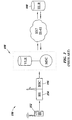
- FIG. 2 Shown in Fig. 2 is an example of a typical wireless signaling progression associated with registration of a mobile station or handset in a wireless communication network 150.
- mobile station registration is the process by which a mobile subscriber (MS) is identified to the network and consequently indicates their location and status to the responsible network functional entities.
- MS mobile subscriber
- the network entities primarily responsible for maintaining MS location and status information are the VLR and HLR.
- VLR functionality is incorporated directly within an MSC switching node.
- a mobile subscriber handset 152 sends a signal, requesting a call setup, to a local base station 154 .
- the base station unit 154 with the assistance of base station controller 156 , signals the combined MSCNLR entity 158 , thereby conveying the call request.
- the combined MSC/VLR 158 then formulates an IS-41 signaling message (e.g., a LocationRequest Invoke message), which is intended to obtain information about the location of the called party, and transmits this message to the called party mobile subscriber's HLR 160.
- HLR 160 receives the information request message and subsequently responds to MSC/VLR 158 with a new message (e.g., a LocationRequest Return Result message) which contains at least a portion of the information necessary to complete the requested call.
- FIG. 2 is only one of the many signaling related communication operations that are required to facilitate the broad range of functions and user services provided by modern wireless telecommunication networks.
- a simplified wireless network 170 that includes a first MSC node 174, a second MSC node 176, a third MSC node 178, and a plurality of wireless service related nodes (e.g., HLR, EIR, AuC). More particularly, network 170 includes a mated pair of HLR nodes, generally indicated by the numeral 180 .
- the MSC and wireless service nodes are typically interconnected via an intermediate SS7 network using an IS-41 communication protocol. It will be appreciated that in the network architecture shown, each of the MSC nodes 174, 176, 178 is connected to the mobile service nodes via a Signal Transfer Point (STP) 182 .
- STP Signal Transfer Point
- an IS-41 mobile signaling message sent from an MSC to a mobile service node typically includes a Message Transport Part (MTP) level 1 component 186 , an MTP level 2 component 188 , an MTP level 3 component 190 , a Signaling Connection Control Part (SCCP) component 192 , a Transaction Capabilities Application Part (TCAP) component 194 , and an IS-41 Mobile Application Part (MAP) component 196, as generally indicated in Figure 4.
- MTP Message Transport Part
- SCCP Signaling Connection Control Part
- TCAP Transaction Capabilities Application Part
- MAP IS-41 Mobile Application Part
- an STP deployed in a mobile communications network typically uses only information contained in MTP levels 186 through 190 of a mobile services signaling message to perform the routing necessary to deliver the signaling message to a target destination.
- an STP may utilize information contained in the SCCP portion 192 of the signaling packet to make a routing decision.
- utilization or processing of signaling message information content above the SCCP layer 192 does not occur at the STP.
- the present invention includes a communications network element that is capable of providing the message routing functionality of a Signal Transfer Point (STP) as well as the functionality typically provided by wireless service nodes.
- wireless or mobile service nodes include, but are not limited to, a Home Location Register, a Visitor Location Register (VLR), an Authentication Center (AuC), an Equipment Identity Register (EIR), a World Wide Web (WWW) translation server, and a Short Message Service (SMS) center.
- the mobile services routing node includes a communication module capable of transmitting and receiving data packets over a network. A discrimination process receives incoming data packets and subsequently directs certain packets to a mobile services database manager.
- the mobile services database manager facilitates access to an appropriately provisioned mobile service database process based on information contained within the data packets.
- Signaling message packets received by the mobile services routing node may result in the updating or modification of data contained within one or more of the mobile service database processes.
- mobile service database process may generate new messages, in response to the receipt of certain mobile service related signaling messages.
- HLR Home Location Register
- VLR Visitor Location Register
- EIR Equipment Identity Register
- AuC Authentication Center
- SMS Short Message Service
- WWW World Wide Web
- MIN Mobile Identification Number
- Mobile communication network 200 that includes a mobile services routing node (MSRN) 202 of the present invention.
- Mobile communication network 200 also includes a first mobile switching center (MSC) node 212 , a second MSC node 214 , a third MSC node 216 , as well as a Gateway MSC (GMSC) node 218 .
- MSC mobile switching center
- GMSC Gateway MSC
- Each of the MSC nodes and the GMSC node are connected to MSRN 202 via one or more signaling communication links. It will be appreciated that such signaling communication links could be configured to support Signaling System 7 (SS7) / Message Transport Part (MTP), Internet Protocol (IP), Asynchronous Transfer Mode (ATM), or functionally similar communication protocols.
- SS7 Signaling System 7
- MTP Message Transport Part
- IP Internet Protocol
- ATM Asynchronous Transfer Mode
- MSRN 202 includes a plurality of mobile service processes that are integral with and generally contained within the node. More particularly, MSRN 202 includes a first Home Location Register (HLR) process 204 , a second HLR process 206 , an Equipment Identity Register (EIR) process 208, and an Authentication Center (AuC) process 210. As such, MSRN 202 is adapted not only to receive and route mobile call setup / teardown related signaling messages, but also to receive, process, and respond to certain mobile service related signaling messages.
- HLR Home Location Register
- EIR Equipment Identity Register
- AuC Authentication Center
- FIG. 6 Shown in Figure 6 is a block diagram of one embodiment of a mobile services routing node (MSRN) 250 of the present invention.
- mobile services routing node 250 employs an internal architecture similar to that of high performance STP and signaling gateway (SG) products which are marketed by the assignee of the present application as the Eagle® STP and IP7 Secure Gateway tm , respectively available from Tekelec, Inc. of Calabasas, California.
- SG signaling gateway
- a detailed description of the Eagle® STP may be found in the Eagle® Feature Guide PN/910-1225-01, Rev. B, January 1998, published by Tekelec, the disclosure of which is hereby incorporated herein by reference.
- an Eagle® STP 250 includes the following subsystems: a Maintenance and Administration Subsystem (MAS) 252 , a communication subsystem 254 and an application subsystem 256 .
- the MAS 252 provides maintenance communications, initial program load, peripheral services, alarm processing and system disks.
- the communication subsystem 254 includes an Interprocessor Message Transport (IMT) bus that is the main communication bus among all subsystems in the Eagle® STP 250. This high-speed communications system functions as two 125 Mbps counter-rotating serial buses.
- IMT Interprocessor Message Transport
- the application subsystem 256 includes application cards that are capable of communicating with the other cards through the IMT buses. Numerous types of application cards can be incorporated into STP 250 , including: a Link Interface Module (LIM) 258 that provides SS7 links and X.25 links, a Data Communication Module (DCM) 260 that provides a TCP/IP interface over Ethernet, and a Translation Service Module (TSM) 264 may also be provided to support triggered local number portability service.
- LIM Link Interface Module
- DCM Data Communication Module
- TSM Translation Service Module
- DCM 260 can be employed in a similar manner to provide for the transport of Internet Protocol (IP) encapsulated SS7 messages over an IP network, as described in the above referenced Feature Notice IP 7 Secure Gateway tm Release 1.0 publication.
- IP Internet Protocol
- a detailed description of the functionality of DCM 260 is described in PCT Publication Nos. WO 00/35155 and WO 00/35156 and in commonly-assigned copending U.S. Patent Application No. 09/588,852, the disclosures of which are incorporated herein by reference in their entirety.
- MSM 262 is a novel feature of the present invention that is not described in any of the above-referenced publications. MSM 262 is adapted to maintain and support one or more mobile service database processes. Such processes may include, but are not limited to: a Home Location Register (HLR) process, a Visitor Location Register (VLR) process, an Equipment Identity Register (EIR) process, an Authentication Center (AuC) process, a Short Message Service (SMS) process, and a mobile subscriber ID-to-World Wide Web (WWW) user ID translation process.
- HLR Home Location Register
- VLR Visitor Location Register
- EIR Equipment Identity Register
- AuC Authentication Center
- SMS Short Message Service
- WWWW mobile subscriber ID-to-World Wide Web
- a mobile subscriber ID is in the form of a Mobile Subscriber Integrated Services Digital Network (MSISDN) or international Mobile Subscriber Identifier (IMSI) number and a World Wide Web user ID is in the form of a Uniform Resource Locator (URL) or an email address.
- MSISDN Mobile Subscriber Integrated Services Digital Network
- IMSI international Mobile Subscriber Identifier
- URL Uniform Resource Locator
- MSRN Mobile Services Routing Node
- MSRN 300 includes a high speed Interprocessor Message Transport (IMT) communications bus 310.
- IMT bus 310 Communicatively coupled to IMT bus 310 are a number of distributed processing modules or cards including: a pair of Maintenance and Administration Subsystem Processors (MASPs) 312, a pair of SS7 capable Link Interface Modules (LIMs) 320 and 350, and an Mobile Services Module (MSM) 370.
- MASPs Maintenance and Administration Subsystem Processors
- LIMs Link Interface Modules
- MSM Mobile Services Module
- a module as described herein may comprise a printed circuit board having a number of chips, such as a microprocessor and one or more memory chips, mounted thereon.
- the microprocessor may execute the mobile network service functions described herein.
- An exemplary microprocessor suitable for use with embodiments of the present invention is the x86 or Pentium® microprocessor available from Intel Corporation.
- each card or module may include one or more application-specific integrated circuits (ASICs) for performing the STP routing and mobile network service functions described herein. Either implementation or a combination of such implementations is intended to be within the scope of the invention.
- ASICs application-specific integrated circuits
- MASP pair 312 implement the maintenance and administration subsystem functions described above. As the MASP pair 312 are not particularly relevant to a discussion of the flexible routing attributes of the present invention, a detailed discussion of their function is not provided herein. For a comprehensive discussion of additional MASP operations and functionality, the above-referenced Tekelec publications can be consulted.
- LIM 320 is comprised of a number of sub-component processes including, but not limited to; an SS7 MTP level 1 process 322, an SS7 MTP level 2 process 324, an I/O buffer or queue 326, an SS7 MTP level 3 HMDC process 328, an HMDT process 330, and an HMRT process 332.
- MTP level 1 and 2 processes 322 and 324 respectively, provide the facilities necessary to send and receive digital data over a particular physical media / physical interface, as well as to provide error detection / correction and sequenced delivery of all SS7 message packets.
- I/O queue 326 provides for temporary buffering of incoming and outgoing signaling message packets.
- MTP level 3 HMDC process 328 receives signaling messages from the lower processing layers and performs a discrimination function, effectively determining whether an incoming SS7 message packet requires internal processing or is simply to be through switched.
- the HMDT process 330 handles the internal routing of SS7 message packets that require additional processing prior to final routing.
- LIM 350 the three functional processes associated with LIM 350 shown in Figure 7 are simply those processes that are relevant to a discussion of out-bound LIM operation in the examples of mobile services routing node operation disclosed herein.
- the processes explicitly shown on the out-bound LIM 350 include an I/O queue 352 and MTP level 1 and 2 processes 356 and 354 , respectively.
- I/O queue 352 facilitates temporary buffering of incoming and outgoing signaling message packets.
- MTP level 2 process 354 and an MTP level 1 process 356 respectively, provide the facilities necessary to send and receive digital data over a particular physical media / physical interface, as well as to provide error detection / correction and sequenced delivery of all SS7 message packets.
- MSM Mobile Services Module
- an MSM card includes the database and database control processes necessary to provide and generally support the mobile services functionality of the mobile services routing node.
- the MSM 370 shown in Figure 7 is comprised, in part, of an SCCP subsystem controller known as a Signaling Connection Routing Controller (SCRC) process 372 , a Mobile Services Subsystem Manager (MSSM) process 374 , a cache of dedicated high-speed random access memory (RAM) 376 , which is used to support one or more mobile service processes or applications.
- SCRC Signaling Connection Routing Controller
- MSSM Mobile Services Subsystem Manager
- RAM dedicated high-speed random access memory
- MSRN 300 is provisioned to support an Equipment Identity Register (EIR) process 378, an Authentication Center (AuC) process 380, a Home Location Register (HLR) process 382, and a World Wide Web (WWW) translation process 384.
- EIR Equipment Identity Register
- AuC Authentication Center
- HLR Home Location Register
- WWW World Wide Web
- SCRC process 372 is responsible for discrimination of signaling messages at the SCCP level, and for distributing the signaling messages to a higher processing level when appropriate.
- the next highest processing level is represented by the mobile services subsystem manager (MSSM) process 374 .
- MSSM mobile services subsystem manager
- MSSM process 374 is responsible for determining which specific mobile service application is required for successful processing of a particular incoming signaling message packet. Again, as will be appreciated from Figure 7, a number of mobile service applications may be simultaneously provisioned on a single MSM card. It will be further appreciated that an embodiment of an MSRN wherein only one mobile service application is provisioned would not necessarily require a separate MSSM process, as the functions typically performed by a MSSM could be included in the mobile service application process (MSAP) and/or in a LIM-based HMDC discrimination process. In one embodiment, MSSM process 374 examines the Subsystem (SSN) component of an SS7 point code - SSN address contained in a received mobile service signaling message.
- SSN Subsystem
- SSN numbers represent the address of a provisioned application at a given signaling node.
- a SSN value of 6 typically indicates that HLR service is required
- a SSN value of 7 indicates that VLR service is required
- a SSN value of 9 indicates that EIR service is required
- a SSN value of 10 indicates that AuC service is required
- a SSN value of 11 indicates that SMS service is required.
- SSN values may be "user defined" so as to indicate a new or non-standard mobile service, such as WWW translation service.
- mobile service identification schemes may be employed which are equally effective. For instance, in the revision C version of the IS-41 protocol, an MSC Identification Number (MSCIN) and Sender Identification Number (SIN) parameters may be used to perform the same addressing function as a conventional point code - subsystem type identifier.
- MSM 370 also includes an HMRT process 386 that is responsible for the routing of any message packets generated by an appropriately provisioned mobile service application. That is, the HMRT process 386 determines to which LIM card a mobile service application generated signaling message packet should be routed for subsequent outbound transmission into the communication network.
- MSM 370 is in communication with and serviced by an external provisioning system (EPS), generally indicated by the numeral 400 , that further includes an external operations and administration processor (EOAP) 402 and an associated high-speed, fast access mass data storage device 404.
- EPS 400 provides a mobile network operator with a means to add data, remove data, update data, and generally provision the various mobile service applications that are maintained in the RAM cache 376 .
- EPS 400 serves as the interface between a mobile network operator and the MSRN mobile service database applications.
- an EPS receives and stores mobile service related information in the mass storage device 404 and then, in turn, is responsible for the controlled downloading this data to the appropriate mobile service applications which it services.
- the EOAP subsystem 402 could be implemented in the form of a software application that executes on an industry standard, open systems platform, such as a Sun Microsystems workstation.
- the EOAP platform and associated mass data storage system could be interfaced to a MSM card via a high speed Ethernet communication link.
- EIR application 378 contains the logic necessary to interpret an EIR related signaling message that is received from the mobile services subsystem manager (MSSM) process 374. Furthermore, EIR application 378 includes a database of mobile terminal-related data. Such mobile terminal data might include a listing of subscriber MSISDN or ISMI numbers and the mobile terminal electronic serial numbers (ESNs) associated therewith, as indicated in the sample EIR database 450 presented in Figure 8. It will be further appreciated that EIR application or process 378 is also adapted to generate a new "reply" message in response to the receipt of certain EIR "query" messages. Such reply messages could include information that indicates whether a particular mobile terminal is stolen or perhaps is being fraudulently used, in which case, network service could be denied.
- SMSSM mobile services subsystem manager
- AuC application 380 contains the logic necessary to interpret an Authentication related signaling message that is received from the mobile services subsystem manager (MSSM) process 374.
- AuC application 380 also includes complex mathematical algorithms that are used in conjunction with encryption and authentication key data to prevent fraudulent use of network resources. In essence, it is the responsibility of the AuC application 380 to verify and validate the identity of a mobile terminal that is requesting access to or utilizing network resources.
- each mobile terminal is assigned or programmed with a secret authentication key (A-key).
- A-key values are not known by customers or equipment distributors and are "readable" by only the mobile terminal manufacturer.
- Also programmed in the mobile terminal is a private encryption algorithm that is, again, readable only by the manufacturer.
- a network authentication center sends the mobile terminal a "public encryption key.”
- the mobile terminal being authenticated evaluates it's private encryption algorithm using both the received public key and it's "private" A-key.
- the value resulting from the encryption algorithm evaluation is subsequently transmitted back to the network authentication center where it is compared to an "expected" value. If the values match, authentication is considered successful and the mobile subscriber is permitted to access the desired network resources. If the values do not match, the mobile subscriber may not be permitted to access the network.
- AuC application 380 further includes an authentication database process 452, an example of which is provided in Figure 8.
- Authentication database 452 includes a listing of subscriber MSISDN or ISMI numbers with associated public key and expected mobile terminal response values.
- AuC application 380 is also adapted not only to receive and process authentication requests but also to generate messages in response to the receipt of certain AuC related "query" messages.
- the example authentication scheme and corresponding AuC database 452 is merely intended to illustrate the general function and concept of mobile terminal authentication. Any number of widely differing authentication schemes, requiring significantly different authentication database structures could easily be employed in a mobile services routing node of the present invention.
- HLR application 382 contains the logic necessary to interpret an HLR service related signaling message that is received from the mobile services subsystem manager (MSSM) process 374 .
- MSSM mobile services subsystem manager
- HLR functionality supports: features required to maintain a uniform subscriber interface, signaling network access, delivery of incoming calls regardless of mobile subscriber location, subscriber roaming, usage and measurements data collection, fraud protection service, and enhanced calling features.
- HLR application 382 also includes a database process 454 that can be easily provisioned to maintain and provide access to the mobile subscriber information that is required to implement such mobile services or functionality. It will be appreciated that the HLR database 454 shown in Figure 8 is intended to represent a simplified HLR database structure.
- HLR database 454 includes a listing of subscriber MSISDN or ISMI numbers with associated VLR identification information (e.g., point code and subsystem), subscriber registration status, subscriber credit status information, and subscriber call forward service information.
- VLR identification information e.g., point code and subsystem
- HLR application 382 is adapted not only to receive and process HLR related service requests but also to generate messages in response to the receipt of certain such HLR related service request messages.
- WWW application 384 contains the logic necessary to interpret a WWW translation service related signaling message that is received from the mobile services subsystem manager (MSSM) process 374 .
- WWW translation service could involve the translation of a called or calling party mobile identification number (e.g., MSISDN or IMSI) into a corresponding WWW-capable address, such as an email address or a URL address.
- MSISDN mobile identification number
- IMSI mobile identification number
- Shown in Figure 8 is a sample WWW database process 456 that comprises the WWW application 384 .
- WWW database 456 includes a listing of subscriber MSISDN or ISMI numbers with associated subscriber email and URL address values.
- WWW application 384 is also adapted not only to receive and process WWW translation requests but also to generate messages in response to the receipt of certain WWW related service messages.
- WWW database 456 could also be configured to include a relationship between a mobile subscriber identification number (e.g., MSISDN or IMSI) and an Internet Protocol (IP) address and port number.
- MSISDN or IMSI mobile subscriber identification number
- IP Internet Protocol
- the path of a typical SS7 mobile service signaling message is traced from reception at the mobile services routing node (MSRN) 300 at the inbound LIM 320, through the mobile service administration process, and on to the outbound LIM 350.
- MSRN mobile services routing node
- the example presented in Figure 7 and discussed in detail below involves processing associated with a hypothetical IS-41 LocationRequest Invoke type message.
- Such an IS-41 signaling message is generated when an MSC receives a request to place a call to a mobile subscriber.
- the MSC formulates a LocationRequest Invoke message to the HLR associated with the called mobile subscriber.
- the HLR is responsible for providing the MSC with sufficient information about the called mobile subscriber so as to permit the call to be completed.
- Such information is typically provided by the HLR in the form of a LocationRequest Return Result signaling message.
- an incoming LocationRequest Invoke (LRI) message in the form of an IS-41 MAP MSU is received at inbound LIM module 320.
- the incoming LRI message is received and processed by the MTP Level 1 and 2 processes 322 and 324 , respectively.
- MTP Level 1 and 2 processing complete, the signaling message packet is temporarily buffered in the I/O queue 326 ( ST4 ) before being passed up the stack to the MTP Level 3, HMDC process 328 where SCCP type processing is performed ( ST5 ).
- the SCCP portion of the LRI MSU includes a destination point code (DPC) field, a Called Party Routing Indicator (CdPA RI) field, and a Called Party Subsystem Number (CdPA SSN) field.
- DPC destination point code
- CdPA RI Called Party Routing Indicator
- CdPA SSN Called Party Subsystem Number
- the destination point code (DPC) field value of the LRI message is set to the point code (PC) of the mobile services routing node (MSRN)
- the SCCP MSU Called Party Routing Indicator (CdPA RI) field is set to SSN
- the SCCP MSU Called Party Subsystem Number (CdPA SSN) field is set to the HLR SSN of the MSRN 300 .
- DPC value contained in an incoming mobile signaling message be set to the PC of the MSRN.
- an MSRN can be configured to intercept such MAP messages that are addressed to point codes other than it's own.
- HMDC process 328 examines the message packet and determines that the DPC of the packet is the PC of the mobile services routing node 300 ( ST6 ). Consequently, further processing of the MSU within the MSRN node is assumed to be necessary, and the packet is passed to the HMDT process 330 .
- HMDT process 330 examines the Service Indicator (SI) field of the MSU, which indicates that the message is of an SCCP type ( ST7 ). As such, HMDT process 330 places the MSU on high speed IMT bus 310 for transport to MSM 370 and subsequent mobile service processing ( ST8 ).
- SI Service Indicator
- step ST9 the LRI MSU is received and examined by SCRC process 372 that is resident on MSM 370.
- SCRC process 372 forwards the LRI MSU to the mobile services subsystem manager (MSSM) process 374 , as indicated by step ST12 .
- MSSM process 374 examines the received LRI MSU and determines that the MSU requires HLR service and that HLR application 382 is available. Consequently, the LRI MSU is passed to HLR application 382 where it is processed.
- HLR process 382 responds to the LocationRequest Invoke message by generating a new, LocationRequest Return Result (LRRR) message ( ST14 ).
- This LRRR message contains information that is stored or is derived from information that is maintained in the HLR database process 454 .
- the new LRRR MSU is passed from the originating HLR application 382 to the MSM-based HMRT process 386 ( ST15 ).
- HMRT process 386 determines to which LIM card the LRRR message packet should be routed for subsequent outbound transmission. In this case, the HMRT process 386 determines that the desired outbound signaling link associated with the routing of the LRRR MSU is located on LIM 350 .
- the signaling message packet is internally routed across the IMT bus 310 to LIM 350, where it is generally received by the I/O queue process 352 ( ST16 ).
- the LRRR message packet is passed from the I/O queue 352 on to the MTP Level 2 and Level 1 processes 354 and 356 , respectively and subsequently transmitted into the network ( ST17 ).
- MTP level 1 and 2 layer processes 356 and 354 respectively, provide the facilities necessary to send and receive digital data over a particular physical media / physical interface, as well as to provide error detection / correction and sequenced delivery of all SS7 message packets transmitted into the SS7 network.
- HLR example is merely illustrative of the basic MSRN architecture and MSM processing methodology. Any number of mobile services could be simultaneously provisioned on a MSRN node, and the fundamental operation of the associated MSM-based mobile service applications would be similar to the sample HLR application scenario presented above.
- a response message generated by one mobile service application may be destined for another MSM-based mobile service application residing in the same MSRN node.
- an incoming signaling message received and processed by one MSM-based mobile service application may effectively trigger the generation of a new, related signaling message by another MSM-based mobile service application residing in the same MSRN node.
- VLR Mobility Location Register
- EIR EIR
- AuC AuC
- SMS WWW
- WWW Wireless Local Area Network
- other mobile service applications could be implemented and operated in a manner similar to that described above for MSM-based HLR service.
Landscapes
- Engineering & Computer Science (AREA)
- Computer Networks & Wireless Communication (AREA)
- Mobile Radio Communication Systems (AREA)
- Pharmaceuticals Containing Other Organic And Inorganic Compounds (AREA)
Claims (48)
- Élément de réseau pour effectuer des opérations classiques d'acheminement par Point de Transfert de Signal (STP) et pour traiter de plus des messages de signalisation liés du service mobile dans un réseau de communication, l'élément de réseau comprenant :(a) un module de communication susceptible de transmettre des messages de signalisation à, de recevoir des messages de signalisation de, et d'acheminer des messages de signalisation à l'intérieur d'un réseau de communication, définissant de ce fait un service STP ;(b) un module de services mobiles (MSM) incluant au moins un processus applicatif de service mobile (MSAP) pour effectuer une fonction de services mobiles incluant au moins l'une d'une fonction HLR, d'une fonction VLR, d'une fonction EIR, d'une fonction SMSC et d'une fonction AuC en réponse à un premier message de signalisation reçu par le module de communication ; et(c) un processus de discrimination pour traiter le message de signalisation reçu par le module de communication et pour diriger par la suite le message de signalisation vers le MSM sur la base d'au moins un paramètre dans le premier message de signalisation.
- Élément de réseau selon la revendication 1, dans lequel le premier message de signalisation est un message de signalisation de Système de Signalisation numéro 7 (SS7).
- Élément de réseau selon la revendication 2, dans lequel le message de signalisation de Système de Signalisation numéro 7 (SS7) comprend un applicatif du service mobile (MAP).
- Élément de réseau selon la revendication 1, dans lequel le réseau de communication est un réseau à Protocole Internet (IP) transportant des messages d'applicatif du service mobile (MAP) de SS7 d'IP encapsulés.
- Élément de réseau selon la revendication 1, dans lequel le module de communication est un Module d'Interface de Liaison (LIM) de Système de Signalisation numéro 7 (SS7).
- Élément de réseau selon la revendication 1, dans lequel le module de communication est un Module de Communication de Données (DCM) de Protocole Internet (IP).
- Élément de réseau selon la revendication 1, dans lequel le MSM comprend un gestionnaire de sous-système de service mobile (MSSM) pour recevoir le premier message de signalisation et pour diriger par la suite le premier message de signalisation vers l'un d'une pluralité de MSAP mis à disposition.
- Élément de réseau selon la revendication 1, dans lequel le MSAP est un processus applicatif d'enregistreur de localisation nominal (HLR).
- Élément de réseau selon la revendication 1, dans lequel le MSAP est un processus applicatif d'enregistreur de localisation de visiteurs (VLR).
- Élément de réseau selon la revendication 1, dans lequel le MSAP est un processus applicatif d'enregistreur d'identité d'équipement (EIR).
- Élément de réseau selon la revendication 1, dans lequel le MSAP est un processus applicatif de centre d'authentification (AuC).
- Élément de réseau selon la revendication 1, dans lequel le MSAP est un processus applicatif de Centre de Service de Message Court (SMSC).
- Élément de réseau selon la revendication 1, dans lequel le MSAP est un processus applicatif de transposition du Web.
- Élément de réseau selon la revendication 1, dans lequel le MSAP est d'un seul tenant avec l'élément de réseau et est contenu dans ce dernier.
- Élément de réseau selon la revendication 1, dans lequel le MSAP est placé sur un serveur de base de données externe couplé par communication à l'élément de réseau.
- Élément de réseau selon la revendication 1, dans lequel le MSM comprend une base de données pour procurer la fonction de services mobiles, et la base de données est maintenue dans une mémoire à accès direct, à haute vitesse.
- Élément de réseau selon la revendication 1, dans lequel le MSM comprend une base de données pour procurer la fonction de services mobiles, et la base de données est maintenue sur un support de stockage à disque optique à haute vitesse.
- Élément de réseau selon la revendication 1, comprenant un système externe de mise à disposition de MSAP couplé par communication au MSM.
- Élément de réseau selon la revendication 18, dans lequel le système externe de mise à disposition comprend un dispositif de stockage de données de grande capacité à haute vitesse.
- Noeud d'acheminement de services mobiles comprenant :(a) un premier module de communication pour effectuer des fonctions d'acheminement d'applicatif de transfert de message SS7 comprenant l'acheminement de premiers messages SS7 vers des liaisons de signalisation en partance et de seconds messages de signalisation SS7 vers des modules internes de communication pour un traitement supplémentaire, procurant de ce fait des services STP ;(b) une base de données de services mobiles pour stocker des informations pour procurer un service mobile de communication comprenant au moins l'un du service HLR, du service VLR, du service AuC, du service EIR et du service SMSC ; et(c) un processus applicatif de services mobiles recevant au moins certains des seconds messages de signalisation SS7 et procurant le service mobile de communication sur la base des informations contenues dans la base de données de services mobiles en réponse au second message de signalisation SS7.
- Noeud d'acheminement de services mobiles selon la revendication 20, dans lequel la base de données de services mobiles est une base de données formant enregistreur de localisation nominal (HLR) pour stocker des informations concernant des abonnés nominaux, le processus applicatif de services mobiles est un processus HLR, et le service mobile de communication est un service HLR.
- Noeud d'acheminement de services mobiles selon la revendication 20, dans lequel la base de données de services mobiles est une base de données formant enregistreur d'identité d'équipement (EIR), l'applicatif de services mobiles est un processus EIR, et le service mobile de communication est un service EIR.
- Noeud d'acheminement de services mobiles selon la revendication 20, dans lequel la base de données de services mobiles est une base de données formant centre d'authentification (AuC), le processus applicatif de services mobiles est un processus AuC, et le service mobile de communication est un service AuC.
- Noeud d'acheminement de services mobiles selon la revendication 20, dans lequel la base de données de services mobiles est une base de données formant enregistreur de localisation des visiteurs (VLR) pour stocker des informations concernant des abonnés visiteurs, le processus applicatif de services mobiles est un processus VLR, et le service mobile de communication est un service VLR.
- Noeud d'acheminement de services mobiles selon la revendication 20, dans lequel la base de données de services mobiles est une base de données de transposition Web (WWW) pour stocker des informations pour transposer des informations d'abonné du service mobile dans les seconds messages de signalisation d'appel en informations d'adresse WWW, le processus applicatif de services mobiles est un service de transposition WWW, et le service mobile de communication est un service de transposition WWW.
- Procédé pour traiter et acheminer un message de signalisation lié de service mobile par un noeud d'acheminement de services mobiles (MSRN) dans un réseau de communication, le procédé comprenant les étapes consistant à :au niveau d'un noeud d'acheminement de services mobiles :(a) recevoir un message de signalisation en provenance d'un réseau de communication ;(b) fournir des services STP pour le message de signalisation ;(c) déterminer si le message de signalisation exige un traitement de service mobile ;(d) en réponse à la détermination que le message de signalisation exige un traitement de service mobile, envoyer le message à un processus applicatif de service mobile (MSAP) mis à disposition avec le MSRN ; et(e) au niveau du MSAP, fournir un service mobile de communication comprenant au moins l'un d'un service HLR, d'un service VLR, d'un service EIR, d'un service AuC, et d'un service SMSC en réponse au message de signalisation.
- Procédé selon la revendication 26, dans lequel le message de signalisation est un message de signalisation de Système de Signalisation numéro 7 (SS7).
- Procédé selon la revendication 26, dans lequel le message de signalisation de Système de Signalisation numéro 7 (SS7) comprend un applicatif du service mobile (MAP).
- Procédé selon la revendication 26, dans lequel la réception d'un message de signalisation en provenance d'un réseau de communication comprend la réception du message de signalisation en provenance d'un réseau de Système de Signalisation numéro 7 (SS7).
- Procédé selon la revendication 26, dans lequel la réception d'un message de signalisation en provenance d'un réseau de communication comprend la réception du message de signalisation en provenance d'un réseau de Protocole d'Internet (IP) transportant des messages d'applicatif du service mobile (MAP) de SS7 d'IP encapsulés.
- Procédé selon la revendication 26, dans lequel la réception d'un message de signalisation comprend la réception d'un message de signalisation adressé à un code de point du MSRN.
- Procédé selon la revendication 26, dans lequel la détermination si le message de signalisation contient un message qui exige un traitement de service mobile comprend l'examen d'informations dans l'Octet Indicateur de Service (SIO) du message de signalisation.
- Procédé selon la revendication 26, dans lequel la détermination si le message de signalisation exige un traitement de service mobile comprend l'examen d'informations dans une couche applicative de commande de connexion de signalisation (SCCP) du message de signalisation.
- Procédé selon la revendication 33, dans lequel l'examen des informations SCCP comprend l'examen d'une valeur de sous-système (SSN) qui identifie le type de service mobile nécessaire.
- Procédé selon la revendication 26, dans lequel la fourniture d'un service mobile de communication comprend la production d'un message de signalisation de communication du service mobile en réponse au message de signalisation
- Procédé selon la revendication 26, dans lequel la fourniture d'un service mobile de communication au niveau du MSAP comprend l'expédition du message de signalisation à un second MSAP et la production d'un message de communication du service mobile au niveau du second MSAP.
- Procédé selon la revendication 26, dans lequel la fourniture d'un service mobile de communication comprend la fourniture d'un service d'enregistreur de localisation nominal (HLR).
- Procédé selon la revendication 26, dans lequel la fourniture d'un service mobile de communication comprend la fourniture d'un service d'enregistreur de localisation des visiteurs (VLR).
- Procédé selon la revendication 26, dans lequel la fourniture d'un service mobile de communication comprend la fourniture d'un service d'enregistreur d'identité d'équipement (EIR).
- Procédé selon la revendication 26, dans lequel la fourniture d'un service mobile de communication comprend la fourniture d'un service de centre d'authentification (AuC).
- Procédé selon la revendication 26, dans lequel la fourniture d'un service mobile de communication comprend la fourniture d'un service de message court.
- Procédé selon la revendication 26, dans lequel la fourniture d'un service mobile de communication comprend la fourniture d'un service de transposition WWW.
- Procédé selon la revendication 37, dans lequel le message de signalisation est un message d'appel de demande de localisation, la fourniture d'un service HLR comprend l'exécution d'une consultation dans une base de données HLR située à l'intérieur du MSRN, et la formulation d'un message de réponse de demande de localisation contenant des informations d'abonné du service mobile extraites à partir de la base de données HLR.
- Procédé selon la revendication 38, dans lequel le message de signalisation est un message d'appel de demande de localisation, la fourniture d'un service VLR comprend l'exécution d'une consultation dans une base de données VLR située à l'intérieur du MSRN, et la formulation d'un message de réponse de demande de localisation contenant des informations d'abonné du service mobile extraites à partir de la base de données VLR.
- Procédé selon la revendication 39, dans lequel le message de signalisation est un message d'interrogation EIR, la fourniture d'un service EIR comprend l'exécution d'une consultation dans une base de données EIR située à l'intérieur du MSRN pour déterminer si un combiné mobile associé à l'interrogation EIR est frauduleusement utilisé, et la formulation d'un message de réponse EIR à l'interrogation EIR.
- Procédé selon la revendication 40, dans lequel le message de signalisation est un message de demande d'authentification, et la fourniture d'un service AuC comprend les étapes consistant à:(a) exécuter une consultation dans une base de données AuC basée sur le message de demande d'authentification ;(b) fournir une réponse comprenant une clé de chiffrage publique à un combiné mobile ;(c) recevoir une réponse en provenance du combiné mobile ; et(d) octroyer l'accès du combiné mobile à un réseau de communication du service mobile en réponse à une valeur dans la réponse provenant du combiné mobile étant égale à une valeur attendue.
- Procédé selon la revendication 41, dans lequel la fourniture d'un service de message court comprend l'envoi d'un message de service par message court à un abonné du service mobile en réponse au message de signalisation.
- Procédé selon la revendication 42, dans lequel la fourniture d'un service de transposition WWW comprend l'exécution d'une consultation dans une base de données WWW située à l'intérieur du MSRN et l'extraction d'informations d'adresse WWW pour un abonné du service mobile sur la base d'informations contenues dans le message de signalisation.
Applications Claiming Priority (3)
| Application Number | Priority Date | Filing Date | Title |
|---|---|---|---|
| US09/626,590 US6735441B1 (en) | 1999-11-16 | 2000-07-27 | Methods and systems for providing mobile telecommunications network services in a routing node |
| US626590 | 2000-07-27 | ||
| PCT/US2001/023833 WO2002011462A2 (fr) | 2000-07-27 | 2001-07-27 | Procedes et systemes assurant des services de reseau de telecommunications mobiles dans un noeud d'acheminement de reseau |
Publications (2)
| Publication Number | Publication Date |
|---|---|
| EP1308054A2 EP1308054A2 (fr) | 2003-05-07 |
| EP1308054B1 true EP1308054B1 (fr) | 2004-03-03 |
Family
ID=24511036
Family Applications (1)
| Application Number | Title | Priority Date | Filing Date |
|---|---|---|---|
| EP01959313A Expired - Lifetime EP1308054B1 (fr) | 2000-07-27 | 2001-07-27 | Procedes et systemes assurant des services de reseau de telecommunications mobiles dans un noeud d'acheminement de reseau |
Country Status (5)
| Country | Link |
|---|---|
| EP (1) | EP1308054B1 (fr) |
| AT (1) | ATE261229T1 (fr) |
| AU (1) | AU2001280881A1 (fr) |
| DE (1) | DE60102248T2 (fr) |
| WO (1) | WO2002011462A2 (fr) |
Cited By (2)
| Publication number | Priority date | Publication date | Assignee | Title |
|---|---|---|---|---|
| US9143942B2 (en) | 2013-03-14 | 2015-09-22 | Tekelec Global, Inc. | Methods, systems, and computer readable media for providing a multi-network equipment identity register |
| US9313759B2 (en) | 2009-10-16 | 2016-04-12 | Tekelec, Inc. | Methods, systems, and computer readable media for providing triggerless equipment identity register (EIR) service in a diameter network |
Families Citing this family (2)
| Publication number | Priority date | Publication date | Assignee | Title |
|---|---|---|---|---|
| US7812206B2 (en) | 2006-03-21 | 2010-10-12 | Bp Corporation North America Inc. | Apparatus and process for the separation of solids and liquids |
| US8530716B2 (en) | 2008-08-14 | 2013-09-10 | Bp Corporation North America Inc. | Melt-crystallization separation and purification process |
Family Cites Families (1)
| Publication number | Priority date | Publication date | Assignee | Title |
|---|---|---|---|---|
| US6434140B1 (en) * | 1998-12-04 | 2002-08-13 | Nortel Networks Limited | System and method for implementing XoIP over ANSI-136-A circuit/switched/packet-switched mobile communications networks |
-
2001
- 2001-07-27 DE DE60102248T patent/DE60102248T2/de not_active Expired - Lifetime
- 2001-07-27 EP EP01959313A patent/EP1308054B1/fr not_active Expired - Lifetime
- 2001-07-27 AT AT01959313T patent/ATE261229T1/de not_active IP Right Cessation
- 2001-07-27 AU AU2001280881A patent/AU2001280881A1/en not_active Abandoned
- 2001-07-27 WO PCT/US2001/023833 patent/WO2002011462A2/fr not_active Ceased
Cited By (2)
| Publication number | Priority date | Publication date | Assignee | Title |
|---|---|---|---|---|
| US9313759B2 (en) | 2009-10-16 | 2016-04-12 | Tekelec, Inc. | Methods, systems, and computer readable media for providing triggerless equipment identity register (EIR) service in a diameter network |
| US9143942B2 (en) | 2013-03-14 | 2015-09-22 | Tekelec Global, Inc. | Methods, systems, and computer readable media for providing a multi-network equipment identity register |
Also Published As
| Publication number | Publication date |
|---|---|
| DE60102248T2 (de) | 2005-02-03 |
| DE60102248D1 (de) | 2004-04-08 |
| ATE261229T1 (de) | 2004-03-15 |
| AU2001280881A1 (en) | 2002-02-13 |
| WO2002011462A3 (fr) | 2002-04-25 |
| WO2002011462A2 (fr) | 2002-02-07 |
| EP1308054A2 (fr) | 2003-05-07 |
Similar Documents
| Publication | Publication Date | Title |
|---|---|---|
| US6735441B1 (en) | Methods and systems for providing mobile telecommunications network services in a routing node | |
| US7079524B2 (en) | Methods and systems for off-loading a-interface short message service (SMS) message traffic in a wireless communications network | |
| EP1741253B1 (fr) | Procédés et systèmes de filtrage des messages d'un sous-système application mobile (ssam) | |
| US6389008B1 (en) | Integrated radio telecommunications network and method of interworking an ANSI-41 network and the general packet radio service (GPRS) | |
| US6990347B2 (en) | Methods and systems for mobile application part (MAP) screening | |
| US6662017B2 (en) | Methods and systems for routing messages associated with ported subscribers in a mobile communications network | |
| WO2000027160A1 (fr) | Procedes et systemes permettant d'obtenir un tldn pour un systeme local en reponse a un appel reçu destine a une unite sans fil en itinerance dans un systeme visite | |
| WO2006117652A1 (fr) | Reseau d'acces radio a faible cout permettant la commutation locale | |
| US7113781B1 (en) | Methods and systems for generating and sending messages in a mobile communications network in response to a change in location of a subscriber | |
| WO2003061159A1 (fr) | Procedes et systemes pour la prestation de services de gestion de localisation mobile dans un noeud d'acheminement de reseau | |
| EP1123626A1 (fr) | Passerelle de numero itinerant de protocole internet | |
| WO2001003446A1 (fr) | Service de portabilite des numeros dans un systeme de telecommunication | |
| EP1247378B1 (fr) | Procedes et systemes permettant d'acheminer des messages dans un reseau de communication | |
| WO2001054444A1 (fr) | Procedes et systemes d'acheminement de messages associes a des abonnes transferes dans un reseau de communications mobiles | |
| EP1549033A1 (fr) | Systeme et procede d'avertissement d'erreurs de composition d'un numero | |
| EP1555844B1 (fr) | Procédé, appareill et configuration de réseau pour établir des connextions dans un réseau de commnunication | |
| EP1308054B1 (fr) | Procedes et systemes assurant des services de reseau de telecommunications mobiles dans un noeud d'acheminement de reseau | |
| EP1240798B1 (fr) | Itinerance a prepaiement dans des reseaux de telecommunication mobile | |
| EP2515594A1 (fr) | Routage des appels pour un terminal multi-mode dans un système de communications multi-mode | |
| IE20060918A1 (en) | A communications system and method |
Legal Events
| Date | Code | Title | Description |
|---|---|---|---|
| PUAI | Public reference made under article 153(3) epc to a published international application that has entered the european phase |
Free format text: ORIGINAL CODE: 0009012 |
|
| 17P | Request for examination filed |
Effective date: 20030227 |
|
| AK | Designated contracting states |
Designated state(s): AT BE CH CY DE DK ES FI FR GB GR IE IT LI LU MC NL PT SE TR |
|
| AX | Request for extension of the european patent |
Extension state: AL LT LV MK RO SI |
|
| RIN1 | Information on inventor provided before grant (corrected) |
Inventor name: SLATE, LARRY, GENE Inventor name: TURGEON, JOSEPH, LEONARD Inventor name: BAGAASEN, BYRON, C. Inventor name: FENNELL, CHESTER, C., JR. Inventor name: MARSICO, PETER, J. |
|
| GRAP | Despatch of communication of intention to grant a patent |
Free format text: ORIGINAL CODE: EPIDOSNIGR1 |
|
| GRAS | Grant fee paid |
Free format text: ORIGINAL CODE: EPIDOSNIGR3 |
|
| GRAA | (expected) grant |
Free format text: ORIGINAL CODE: 0009210 |
|
| AK | Designated contracting states |
Kind code of ref document: B1 Designated state(s): AT BE CH CY DE DK ES FI FR GB GR IE IT LI LU MC NL PT SE TR |
|
| PG25 | Lapsed in a contracting state [announced via postgrant information from national office to epo] |
Ref country code: IT Free format text: LAPSE BECAUSE OF FAILURE TO SUBMIT A TRANSLATION OF THE DESCRIPTION OR TO PAY THE FEE WITHIN THE PRESCRIBED TIME-LIMIT;WARNING: LAPSES OF ITALIAN PATENTS WITH EFFECTIVE DATE BEFORE 2007 MAY HAVE OCCURRED AT ANY TIME BEFORE 2007. THE CORRECT EFFECTIVE DATE MAY BE DIFFERENT FROM THE ONE RECORDED. Effective date: 20040303 Ref country code: CH Free format text: LAPSE BECAUSE OF FAILURE TO SUBMIT A TRANSLATION OF THE DESCRIPTION OR TO PAY THE FEE WITHIN THE PRESCRIBED TIME-LIMIT Effective date: 20040303 Ref country code: CY Free format text: LAPSE BECAUSE OF FAILURE TO SUBMIT A TRANSLATION OF THE DESCRIPTION OR TO PAY THE FEE WITHIN THE PRESCRIBED TIME-LIMIT Effective date: 20040303 Ref country code: TR Free format text: LAPSE BECAUSE OF FAILURE TO SUBMIT A TRANSLATION OF THE DESCRIPTION OR TO PAY THE FEE WITHIN THE PRESCRIBED TIME-LIMIT Effective date: 20040303 Ref country code: LI Free format text: LAPSE BECAUSE OF FAILURE TO SUBMIT A TRANSLATION OF THE DESCRIPTION OR TO PAY THE FEE WITHIN THE PRESCRIBED TIME-LIMIT Effective date: 20040303 Ref country code: AT Free format text: LAPSE BECAUSE OF FAILURE TO SUBMIT A TRANSLATION OF THE DESCRIPTION OR TO PAY THE FEE WITHIN THE PRESCRIBED TIME-LIMIT Effective date: 20040303 Ref country code: NL Free format text: LAPSE BECAUSE OF FAILURE TO SUBMIT A TRANSLATION OF THE DESCRIPTION OR TO PAY THE FEE WITHIN THE PRESCRIBED TIME-LIMIT Effective date: 20040303 Ref country code: ES Free format text: LAPSE BECAUSE OF FAILURE TO SUBMIT A TRANSLATION OF THE DESCRIPTION OR TO PAY THE FEE WITHIN THE PRESCRIBED TIME-LIMIT Effective date: 20040303 Ref country code: FI Free format text: LAPSE BECAUSE OF FAILURE TO SUBMIT A TRANSLATION OF THE DESCRIPTION OR TO PAY THE FEE WITHIN THE PRESCRIBED TIME-LIMIT Effective date: 20040303 Ref country code: BE Free format text: LAPSE BECAUSE OF FAILURE TO SUBMIT A TRANSLATION OF THE DESCRIPTION OR TO PAY THE FEE WITHIN THE PRESCRIBED TIME-LIMIT Effective date: 20040303 |
|
| REG | Reference to a national code |
Ref country code: GB Ref legal event code: FG4D |
|
| REG | Reference to a national code |
Ref country code: CH Ref legal event code: EP |
|
| REG | Reference to a national code |
Ref country code: IE Ref legal event code: FG4D |
|
| REF | Corresponds to: |
Ref document number: 60102248 Country of ref document: DE Date of ref document: 20040408 Kind code of ref document: P |
|
| PG25 | Lapsed in a contracting state [announced via postgrant information from national office to epo] |
Ref country code: SE Free format text: LAPSE BECAUSE OF FAILURE TO SUBMIT A TRANSLATION OF THE DESCRIPTION OR TO PAY THE FEE WITHIN THE PRESCRIBED TIME-LIMIT Effective date: 20040603 Ref country code: GR Free format text: LAPSE BECAUSE OF FAILURE TO SUBMIT A TRANSLATION OF THE DESCRIPTION OR TO PAY THE FEE WITHIN THE PRESCRIBED TIME-LIMIT Effective date: 20040603 Ref country code: DK Free format text: LAPSE BECAUSE OF FAILURE TO SUBMIT A TRANSLATION OF THE DESCRIPTION OR TO PAY THE FEE WITHIN THE PRESCRIBED TIME-LIMIT Effective date: 20040603 |
|
| PG25 | Lapsed in a contracting state [announced via postgrant information from national office to epo] |
Ref country code: LU Free format text: LAPSE BECAUSE OF NON-PAYMENT OF DUE FEES Effective date: 20040727 Ref country code: IE Free format text: LAPSE BECAUSE OF NON-PAYMENT OF DUE FEES Effective date: 20040727 |
|
| PG25 | Lapsed in a contracting state [announced via postgrant information from national office to epo] |
Ref country code: MC Free format text: LAPSE BECAUSE OF NON-PAYMENT OF DUE FEES Effective date: 20040731 |
|
| NLV1 | Nl: lapsed or annulled due to failure to fulfill the requirements of art. 29p and 29m of the patents act | ||
| LTIE | Lt: invalidation of european patent or patent extension |
Effective date: 20040303 |
|
| REG | Reference to a national code |
Ref country code: CH Ref legal event code: PL |
|
| ET | Fr: translation filed | ||
| PLBI | Opposition filed |
Free format text: ORIGINAL CODE: 0009260 |
|
| PLBQ | Unpublished change to opponent data |
Free format text: ORIGINAL CODE: EPIDOS OPPO |
|
| PLAB | Opposition data, opponent's data or that of the opponent's representative modified |
Free format text: ORIGINAL CODE: 0009299OPPO |
|
| PLBI | Opposition filed |
Free format text: ORIGINAL CODE: 0009260 |
|
| PLAN | Information deleted related to communication of a notice of opposition and request to file observations + time limit |
Free format text: ORIGINAL CODE: EPIDOSDOBS2 |
|
| PLAX | Notice of opposition and request to file observation + time limit sent |
Free format text: ORIGINAL CODE: EPIDOSNOBS2 |
|
| PLAX | Notice of opposition and request to file observation + time limit sent |
Free format text: ORIGINAL CODE: EPIDOSNOBS2 |
|
| 26 | Opposition filed |
Opponent name: SIEMENS AG Effective date: 20041203 |
|
| 26 | Opposition filed |
Opponent name: SIEMENS AG Effective date: 20041203 |
|
| REG | Reference to a national code |
Ref country code: IE Ref legal event code: MM4A |
|
| PLAX | Notice of opposition and request to file observation + time limit sent |
Free format text: ORIGINAL CODE: EPIDOSNOBS2 |
|
| PLBB | Reply of patent proprietor to notice(s) of opposition received |
Free format text: ORIGINAL CODE: EPIDOSNOBS3 |
|
| PG25 | Lapsed in a contracting state [announced via postgrant information from national office to epo] |
Ref country code: PT Free format text: LAPSE BECAUSE OF NON-PAYMENT OF DUE FEES Effective date: 20040803 |
|
| PLAB | Opposition data, opponent's data or that of the opponent's representative modified |
Free format text: ORIGINAL CODE: 0009299OPPO |
|
| R26 | Opposition filed (corrected) |
Opponent name: NOKIA SIEMENS NETWORKS GMBH & CO. KG Effective date: 20041203 |
|
| PGFP | Annual fee paid to national office [announced via postgrant information from national office to epo] |
Ref country code: FR Payment date: 20100805 Year of fee payment: 10 Ref country code: DE Payment date: 20100730 Year of fee payment: 10 |
|
| PGFP | Annual fee paid to national office [announced via postgrant information from national office to epo] |
Ref country code: GB Payment date: 20100721 Year of fee payment: 10 |
|
| PLBP | Opposition withdrawn |
Free format text: ORIGINAL CODE: 0009264 |
|
| PLBD | Termination of opposition procedure: decision despatched |
Free format text: ORIGINAL CODE: EPIDOSNOPC1 |
|
| PLBM | Termination of opposition procedure: date of legal effect published |
Free format text: ORIGINAL CODE: 0009276 |
|
| STAA | Information on the status of an ep patent application or granted ep patent |
Free format text: STATUS: OPPOSITION PROCEDURE CLOSED |
|
| 27C | Opposition proceedings terminated |
Effective date: 20110912 |
|
| GBPC | Gb: european patent ceased through non-payment of renewal fee |
Effective date: 20110727 |
|
| REG | Reference to a national code |
Ref country code: FR Ref legal event code: ST Effective date: 20120330 |
|
| PG25 | Lapsed in a contracting state [announced via postgrant information from national office to epo] |
Ref country code: DE Free format text: LAPSE BECAUSE OF NON-PAYMENT OF DUE FEES Effective date: 20120201 Ref country code: FR Free format text: LAPSE BECAUSE OF NON-PAYMENT OF DUE FEES Effective date: 20110801 |
|
| REG | Reference to a national code |
Ref country code: DE Ref legal event code: R119 Ref document number: 60102248 Country of ref document: DE Effective date: 20120201 |
|
| PG25 | Lapsed in a contracting state [announced via postgrant information from national office to epo] |
Ref country code: GB Free format text: LAPSE BECAUSE OF NON-PAYMENT OF DUE FEES Effective date: 20110727 |