EP1308929B1 - Einrichtung und verfahren zur spracherkennung - Google Patents
Einrichtung und verfahren zur spracherkennung Download PDFInfo
- Publication number
- EP1308929B1 EP1308929B1 EP01948009A EP01948009A EP1308929B1 EP 1308929 B1 EP1308929 B1 EP 1308929B1 EP 01948009 A EP01948009 A EP 01948009A EP 01948009 A EP01948009 A EP 01948009A EP 1308929 B1 EP1308929 B1 EP 1308929B1
- Authority
- EP
- European Patent Office
- Prior art keywords
- hidden markov
- probability
- markov models
- speech recognition
- state
- Prior art date
- Legal status (The legal status is an assumption and is not a legal conclusion. Google has not performed a legal analysis and makes no representation as to the accuracy of the status listed.)
- Expired - Lifetime
Links
- 238000000034 method Methods 0.000 title claims description 31
- 230000007704 transition Effects 0.000 claims description 48
- 230000006870 function Effects 0.000 claims description 28
- 230000015654 memory Effects 0.000 claims description 25
- 238000013500 data storage Methods 0.000 claims description 4
- 238000001514 detection method Methods 0.000 claims description 4
- 238000010586 diagram Methods 0.000 description 11
- 230000003936 working memory Effects 0.000 description 6
- 230000014509 gene expression Effects 0.000 description 3
- 238000004458 analytical method Methods 0.000 description 2
- 238000004519 manufacturing process Methods 0.000 description 2
- 230000001419 dependent effect Effects 0.000 description 1
- 238000005516 engineering process Methods 0.000 description 1
- 238000011156 evaluation Methods 0.000 description 1
- 239000000203 mixture Substances 0.000 description 1
- 238000013138 pruning Methods 0.000 description 1
Images




Classifications
-
- G—PHYSICS
- G10—MUSICAL INSTRUMENTS; ACOUSTICS
- G10L—SPEECH ANALYSIS TECHNIQUES OR SPEECH SYNTHESIS; SPEECH RECOGNITION; SPEECH OR VOICE PROCESSING TECHNIQUES; SPEECH OR AUDIO CODING OR DECODING
- G10L15/00—Speech recognition
- G10L15/08—Speech classification or search
- G10L15/14—Speech classification or search using statistical models, e.g. Hidden Markov Models [HMMs]
-
- G—PHYSICS
- G10—MUSICAL INSTRUMENTS; ACOUSTICS
- G10L—SPEECH ANALYSIS TECHNIQUES OR SPEECH SYNTHESIS; SPEECH RECOGNITION; SPEECH OR VOICE PROCESSING TECHNIQUES; SPEECH OR AUDIO CODING OR DECODING
- G10L15/00—Speech recognition
- G10L15/28—Constructional details of speech recognition systems
- G10L15/32—Multiple recognisers used in sequence or in parallel; Score combination systems therefor, e.g. voting systems
-
- G—PHYSICS
- G10—MUSICAL INSTRUMENTS; ACOUSTICS
- G10L—SPEECH ANALYSIS TECHNIQUES OR SPEECH SYNTHESIS; SPEECH RECOGNITION; SPEECH OR VOICE PROCESSING TECHNIQUES; SPEECH OR AUDIO CODING OR DECODING
- G10L15/00—Speech recognition
- G10L15/08—Speech classification or search
- G10L15/14—Speech classification or search using statistical models, e.g. Hidden Markov Models [HMMs]
- G10L15/142—Hidden Markov Models [HMMs]
-
- G—PHYSICS
- G10—MUSICAL INSTRUMENTS; ACOUSTICS
- G10L—SPEECH ANALYSIS TECHNIQUES OR SPEECH SYNTHESIS; SPEECH RECOGNITION; SPEECH OR VOICE PROCESSING TECHNIQUES; SPEECH OR AUDIO CODING OR DECODING
- G10L15/00—Speech recognition
- G10L15/28—Constructional details of speech recognition systems
Definitions
- the present invention relates to a speech recognition device and speech recognitionmethodusing hiddenMarkovmodels (HMMs). More particularly, the present invention makes it possible to recognize sounds of words contained in a vocabulary list with high accuracy and reduce memory requirements even if speech characteristics vary with the age and sex of the speaker or if there is more than one way to vocalize a single vocabulary item, for example, when expressed colloquially.
- HMMs hiddenMarkovmodels
- speaker independent speech recognition technology for recognizing fixed words common to unspecified users is known as speaker independent speech recognition.
- speaker independent speech recognition information about feature parameters of fixed words common to unspecified users is accumulated in a storage unit such as a ROM.
- Known methods for converting speech samples into a feature parameter sequence include cepstrum analysis and linear predictive analysis.
- methods employing hidden Markov models are generally used to prepare information (data) about feature parameters of fixed words common to unspecified users and compare the information with the feature parameter sequence converted from input speech.
- a phoneme set described in Chapter 2 of "Digital Signal Processing for Speech and Sound Information" is used as a speech unit and each phoneme is modeled using a hidden Markov model.
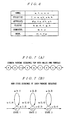
- Figure 6 shows a list of phoneme set labels.
- a word "Hokkaido,” for example, can be modeled using a network (sequence of fixed-word labels) of phoneme labels common to speakers.
- a(I, J) represents the transition probability of transition from state I to state J.
- a(1, 1) in the figure represents the transition probability of transition from state 1 to state 1.
- b(I, x) represents an output probability in state I when acoustic parameter (feature parameter) x is obtained.
- b(1, x) in the figure represents the output parameter in state 1 when acoustic parameter x is obtained.
- pI in Figure 7(B) represents the probability of state I and is updated according to Equation (1) below.
- p I max p I ⁇ 1 ⁇ a I ⁇ 1 , I , p I ⁇ a I , I ⁇ b I , X
- max( ) on the right side of Equation (1) means that the largest product is selected from among the products in max(). The same applies hereinafter.
- occurrence probabilities of the feature parameter sequence are calculated using Equation (1). Then, the highest probability is selected from the calculated probabilities and the phoneme label sequence which gives the highest probability is obtained as a recognition result of the input speech.
- an acoustic model for males and an acoustic model for females are prepared separately, as shown in Figure 9(A), using male voice data and female voice data and then hidden Markov model state sequences which compose a vocabulary to be recognized when spoken are prepared for males and females as shown in Figure 9(B).
- a(I, J) represents the transition probability of a model for females transitioning from state I to state J whileA(I, J) represents the transition probability of a model for males transitioning from state I to state J.
- b (I, x) represents an output probability in state I when acoustic parameter x of the model for females is obtained while B(I, x) represents an output probability in state I when acoustic parameter x of the model for males is obtained.
- pI in Figure 9(B) represents the probability of state I of the model for females and is updated according to Equation (2) below.
- p I max p I ⁇ 1 ⁇ a I ⁇ 1 , I , p I ⁇ a I , I ⁇ b I , X
- PI in Figure 9(B) represents the probability of state I of the model for males and is updated according to Equation (3) below.
- P I max P I ⁇ 1 ⁇ A I ⁇ 1 , I , P I ⁇ A I , I ⁇ B I , X
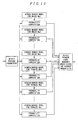
- feature parameters are detected in (extracted from) a speech signal.
- hidden Markov models (words) Ma1, Ma2, ... Man for males determined in advance and hidden Markov models (words) Mb1, Mb2, ... Mbn for females determined in advance
- occurrence probabilities of the feature parameter sequence are calculated using Equations (2) and (3). Then, the highest probability is selected from the calculated probabilities and the phoneme label sequence which gives the highest probability is obtained as a recognition result of the input speech.
- the speech recognition rate is improved compared to when one acoustic model (hidden Markov model) is prepared from male voice data and female voice data, but the memory used to compose a vocabulary doubles compared to when a common model for both males and females is used. Besides, the memory used to hold information about probabilities of various states also increases.
- the use of multi-template, gender-specific acoustic models for speaker independent speech recognition improves the speech recognition rate compared to when one acoustic model is prepared from male voice data and female voice data, but introduction of the multi-template practically doubles the vocabulary, resulting in increased memory usage.
- au(I, J) represents the transition probability of the phoneme u transitioning from state I to state J while ao(I, J) represents the transition probability of the phoneme o transitioning from state I to state J.
- bu (I, x) represents an output probability in state I when acoustic parameter x of the phoneme u is obtained while bo (I, x) represents an output probability in state I when acoustic parameter x of the phoneme o is obtained.
- uI in Figure 11(B) represents the probability of state I of the phoneme u and is updated according to Equation (4) below.
- u I max u I ⁇ 1 ⁇ a u I ⁇ 1 , I , u I ⁇ a u I , I ⁇ b u I , X
- oI in Figure 11(B) represents the probability of state I of the phoneme o and is updated according to Equation (5) below.
- o I max o I ⁇ 1 ⁇ a o I ⁇ 1 , I , o I ⁇ a o I , I ⁇ b o I , X
- an object of the present invention is to provide a speech recognition device and speech recognition method which can improve the accuracy of speech recognition rates without increasing the memory capacity of working memory or the like for speech recognition.
- the present invention provides a speech recognition device according to claim 1 for recognizing speech of unspecified speakers using hidden Markov models, the above described device comprising: detection means for detecting feature parameters of input speech; recognition data storage means for prestoring output probability functions and transition probabilities which use, as arguments, the above described feature parameters preset in multiple predetermined types of hidden Markov models which represent each of a plurality of predetermined words; recognition means for determining the occurrence probability that a sequence of the above described feature parameters will occur, with reference to the feature parameters detected by the above described detection means and to the above described hidden Markov models; characterized in that the above described recognition means gives each of the above described words a state sequence of one hidden Markov model common to the above described multiple types of hidden Markov models in the process of determining the above described occurrence probability, and the above described recognition means multiplies each preset pair of an output probability function value and a transition probability together among the output probability functions and transition probabilities stored in the above described recognition data storage means, selects the largest product as the probability of each state of the above described common hidden Mar
- Implementations of the speech recognition device include a speech recognition device characterized in that the above described recognition means shares the transition probability of each state of the above described hidden Markov model among the above described multiple types of hidden Markov models in order to determine the above described occurrence probability.
- Implementations of the speech recognition device include a speech recognition device characterized in that the above described multiple predetermined types of hidden Markov models consist of at least two types from among gender-specific hidden Markov models, age-specific multiple hidden Markov models, multiple hidden Markov models based on voice data which contain different types of noise, and other hidden Markov models.
- the present invention provides a speech recognition method as defined in claim 4.
- the method comprising the steps of: prestoring, in memory, output probability functions and transition probabilities which use, as arguments, the above described feature parameters preset in multiple predetermined types of hidden Markov models which represent each of a plurality of predetermined words; and detecting feature parameters of input speech during speech recognition, determining the occurrence probability that a sequence of the above described feature parameters will occur, with reference to the detected feature parameters and to the above described hidden Markov models, and recognizing the input speech based on the occurrence probability thus determined, characterized in that the above described method gives each of the above described words a state sequence of one hidden Markov model common to the above described multiple types of hidden Markov models in the process of determining the above described occurrence probability, multiplieseach preset pair of an output probability function value and a transition probability together among the output probability functions and transition probabilities stored in the above described memory, selects the largest product as the probability of each state of the above described common hidden Markov model, and determines the above described occurrence probability
- Implementations of the speech recognition method according to the present invention include a speech recognition method characterized in that the transition probability of each state of the above described hidden Markov model is shared among the above described multiple types of hidden Markov models in order to determine the above described occurrence probability.
- Implementations of the speech recognition method according to the present invention include a speech recognition method characterized in that the above described multiple predetermined types of hidden Markov models consist of at least two types from among gender-specific hidden Markov models, age-specific hidden Markov models, multiple hidden Markov models based on voice data which contain different types of noise, and other hidden Markov models.
- the present invention uses multiple types of hidden Markov models (acoustic models), but recognizes vocabulary items (words) without using multi-templates during speech recognition.
- it can improve the accuracy of speech recognition rates without increasing the memory capacity of working memory or the like for speech recognition.
- the present invention can improve the accuracy of speech recognition rates using one type of hidden Markov model without increasing the memory capacity of working memory or the like for speech recognition.
- the speech recognition device comprises at least a microphone 1, an A/D converter 2, a feature value detector 3, a speech recognizer 4, an output unit 5, a ROM 6, and a RAM 7, as shown in Figure 1.
- the microphone 1 converts speech into a corresponding analog electrical signal.
- the A/D converter 2 converts the analog signal into a digital signal.
- the feature value detector 3 determines feature parameters based on the digital signal and converts the determined feature parameters into a time series.
- the speech recognizer 4 recognizes speeches of unspecified speakers using hidden Markov models according to procedures described later. Details of the recognition procedures will be described later.
- the output unit 5, which may be, for example, a display unit, outputs recognition results produced by the speech recognizer 4.
- the ROM is a read only memory, which stores the speech recognition procedures described later, probability data about hidden Markov models for females described later, probability data about hidden Markov models for males described later, etc.
- the RAM is a freely readable/writable random access memory, which is used as a working memory during speech recognition as described later. It stores, for example, necessary data and results data temporarily during the process of speech recognition.
- hidden Markov models two types, hidden Markov models for males and females, will be prepared in advance for vocabulary items (words) such as "Hokkaido,” “Aomori,” and “Akita” which are to be recognized in speech recognition of unspecified speakers.
- words such as "Hokkaido,” “Aomori,” and “Akita” which are to be recognized in speech recognition of unspecified speakers.
- constants used to form multiple pairs of a transition probability and output probability function for individual states of each hidden Markov model are preset and these probability data are prestored in the ROM 6.
- a spoken word "hotskaidou” is entered by an adult speaker (irrespective of sex) through the microphone 1.
- the speech is converted into an analog electrical signal by the microphone 1 and then converted into a digital signal by the A/D converter 2.
- the feature value detector 3 determines feature parameters based on the digital signal and converts them into time-series feature parameters.
- the speech recognizer 4 determines the occurrence probability of a sequence of the feature parameters using the Viterbi algorithm shown in Figure 2 and recognizes the input speech based on the determined occurrence probability.
- Figure 2(A) shows a common phoneme sequence for both males and females while Figure 2(B) shows a hidden Markov model state sequence of each phoneme.
- a(I, J) represents the transition probability of a model for females transitioning from state I to state J whileA(I, J) represents the transition probability of a model for males transitioning from state I to state J.
- b(I, x) represents an output probability in state I when acoustic parameter x of the model for females is obtained while B(I, x) represents an output probability in state I when acoustic parameter x of the model for males is obtained.
- pI in Figure 2(B) represents the probability of state I in the common state sequence for both males and females and is updated according to Equation (6) below.
- p I max p I ⁇ 1 ⁇ Penter I , p I ⁇ P self I where probability PselfI and probability PenterI are given by Equation (7) and Equation (8).
- the speech recognizer 4 gives a state sequence of one common hidden Markov model to one vocabulary item (word) such as "Hokkaido” or “Aomori” common to separate hidden Markov models for males and females.
- the probability of each state of the common hidden Markov model is determined for each word.
- the output probability function and transition probability preset in the hidden Markov model for males are multiplied together using a given feature parameter as an argument (input) and the output probability function and transition probability preset in the hidden Markov model for females are multiplied together using the given feature parameter as an argument (input).
- the larger of the two probability values (products) determined is selected (see Equations (7) and (8)).
- Each state sequence thus created contains a mixture of products of probability data related to the hidden Markov model for males and products of probability data related to the hidden Markov model for females.
- the output probability function and transition probability preset in the hidden Markov model for males are multiplied together using the given feature parameter as an argument and the output probability function and transition probability preset in the hidden Markov model for females are multiplied together using the given feature parameter as an argument. Then, the larger of the two probability values (products) determined is selected.
- the products selected in this way are summed to determine the occurrence probability of each feature parameter sequence. Then, the highest probability is selected from the determined occurrence probabilities and the phoneme label sequence which gives the highest probability is obtained as a recognition result of the input speech.
- a word common to separate hidden Markov models for males and females has a state sequence of one common hidden Markov model and the probability of each state of the common hidden Markov model is determined.
- the output probability function and transition probability preset in the hidden Markov model for males are multiplied together using a given feature parameter as an argument and the output probability function and transition probability preset in the hidden Markov model for females are multiplied together using the given feature parameter as an argument. Then, the larger of the two probabilities determined is selected.
- this embodiment can improve the recognition rate regardless of differences in age and sex, using a plurality of hidden Markov models.
- this embodiment can reduce the memory capacity dependent on the number of states to be calculated to half the memory capacity required by the algorithm shown in Figures 9 and 10.
- the probability of each state in the common state sequence for both males and females is determined based on Equations (6) to (8) instead of using a state transition probability common to a model for males and model for females.
- a state transition probability common to a model for males and model for females may also be used.
- the largest output probability is selected first, and then the selected output probability is multiplied by the common transition probability.
- the speech recognition device has one hidden Markov model to handle the case where there is more than one way to pronounce a single vocabulary item, for example, when expressed colloquially.
- the speech recognition device is configured similarly to the speech recognition device shown in Figure 1, but differs in that probability data described later and recognition procedures described later are prestored in the ROM 6 and that the recognition procedures stored in the ROM 6 for the speech recognizer 4 are as described later. Thus, only the different parts will be described.
- each of the words to be recognized is represented by a hidden Markov model.
- differences in pronunciations of each word are partially expressed by a plurality of hidden Markov models while each word is represented as a whole by one hidden Markov model.
- Output probability functions and transition probabilities which use, as arguments, feature parameters preset in these hidden Markov models are prestored in the ROM 6.
- the speech recognizer 4 determines, as described below, the occurrence probability that a sequence of the feature parameters will occur, and then recognizes the input speech based on the occurrence probability thus determined.
- the speech recognizer 4 shares a state sequence of one hidden Markov model among the plurality of hidden Markov models for partial expression.
- the speech recognizer 4 multiplies each preset pair of an output probability function value and a transition probability together among the output probability functions and transition probabilities preset in the plurality of hidden Markov models for partial expression, and selects the largest product as the probability of each state of the common hidden Markov model.
- the speech recognizer 4 determines the occurrence probability based on the selected largest product and then recognizes the input speech based on the occurrence probability thus determined.
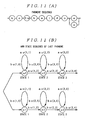
- Figure 4 shows a Viterbi algorithm used for the speech recognition device according to this embodiment.
- Figure 4(A) shows a phoneme sequence when, for example, vocabulary item "Hokkaido” is allowed to be pronounced both as “hotskaidou” and “hotskaidoo” while
- Figure 4(B) shows hidden Markov model states which represent the last phoneme that differs between the two pronunciations.
- au(I, J) represents the transition probability of the phoneme u transitioning from state I to state J while ao(I, J) represents the transition probability of the phoneme o transitioning from state I to state J.
- bu(I, x) represents an output probability in state I when acoustic parameter x of the phoneme u is obtained while bo (I, x) represents an output probability in state I when acoustic parameter x of the phoneme o is obtained.
- pI in Figure 4(B) represents the probability of state I in the state sequence of the phoneme u/o and is updated according to Equation (9) below.
- p I max p I ⁇ 1 ⁇ P enter I , p I ⁇ P self I where probability PselfI and probability PenterI are given by Equation (10) and Equation (11).
- P self I max a u I , I ⁇ b u I , X , a o I , I ⁇ b o I , X
- P enter I max a u I ⁇ 1 , I ⁇ b u I , X , a o I ⁇ 1 , I ⁇ b o I , X
- the Viterbi algorithm makes the speech recognizer 4 have a state sequence of a hidden Markov model common to the phoneme u and phoneme o. Then, the probability of each state of the common hidden Markov model is determined. To determine the probability of each state of the phoneme u and phoneme o, the output probability function and transition probability of the phoneme u in the hidden Markov model are multiplied together using a given feature parameter and the output probability function and transition probability of the phoneme o in the hidden Markov model are multiplied together using the given feature parameter. Then, the larger of the two probabilities (products) determined is selected.
- this embodiment shares a state sequence of one hidden Markov model between the phoneme u and phoneme o, it can reduce the memory capacity required for recognition computation in comparison to the algorithm in Figure 11.
- an average recognition rate is improved in comparison to the "condition in which common acoustic models for both males and females were used," as is the case with the "separate multi-template acoustic models for males and females were used.” Also, the number of persons for whom the recognition rate is lower than 60% is reduced as is the case with the "condition in which separate multi-template acoustic models for males and females were used.” This may be because the use of the separate models for males and females reduced the tendency toward lower recognition rates for more masculine voice or more feminine voice in terms of acoustic characteristics which was observed under the "condition in which common acoustic models for both males and females were used.”
- the embodiment of the present invention produced the same results as under the "condition in which common acoustic models for both males and females were used.”
- each word to be recognized in speech recognition is represented by two types of hidden Markov models, hidden Markov models for males and females, and output probability functions and transition probabilities preset in these hidden Markov models are prestored in the ROM 6.
- the speech recognizer 4 determines the occurrence probability that a sequence of the feature parameters will occur, and then recognizes the input speech based on the occurrence probability thus determined.
- the speech recognizer 4 has a state sequence of one hidden Markov model common to the two types of hidden Markov models for each word. Also, the probability of each state of the common hidden Markov model is determined. To do that, the output probability function and transition probability preset in the hidden Markov model for males are multiplied together using a given feature parameter and the output probability function and transition probability preset in the hidden Markov model for females are multiplied together using the given feature parameter. Then, the larger of the two probabilities determined is selected.
- the first case involves using two types of hidden Markov models, hidden Markov models for adults and children, to represent each word to be recognized in speech recognition.
- the second case involves using five types of hidden Markov models, hidden Markov models for adult males, adult females, aged males and aged females, and children, or using a plurality of separate hidden Markov models for different age groups.
- the third case involves using a hidden Markov model based on voice data which does not contain much noise and a hidden Markov model based on voice data which contains much noise to represent each word to be recognized in speech recognition.
- the noise level is very low if the car is not running, but noise increases as the car speeds up or the volume of a car stereo is turned up. Then, the signal-to-noise ratio (S/N ratio) can reach -10 dB.
- a hidden Markov model based on voice data with a signal-to-noise ratio of 20 dB and a hidden Markov model based on voice data with a signal-to-noise ratio of -10 dB are used.
- High speech recognition performance is maintained in a wide rage of environments from a high-noise environment with a signal-to-noise ratio of -10 dB to a quiet environment with a signal-to-noise ratio exceeding 20 dB.
- noise in a moving car there are various types of noise including noise in a moving car as described above, bustle in a downtown area, BGM, and noise in offices, plants, and other locations. And signal-to-noise ratio varies largely.
- a hidden Markov model based on superimposition with relatively quiet office noises and a hidden Markov model based on superimposition with high noises produced in a moving car may be used in combination.
- each word to be recognized in speech recognition may be represented, for example, by four types of hidden Markov models: gender-specific hidden Markov models and two hidden Markov models based on voice data containing different types of noise.
- hidden Markov models based on voice data divided into a plurality of groups with different features including acoustic characteristics which vary with the vocal-tract shape of the speaker such as length or thickness, how he/she opens his/her mouth, pitch, inflection, or accent of his/her voice, talking speed, or operating environment.
- the present invention uses multiple types of hidden Markov models (acoustic models), but recognizes vocabulary items (words) without using multi-templates during speech recognition.
- it can improve the accuracy of speech recognition rates without increasing the memory capacity of working memory or the like for speech recognition.
- the present invention can improve the accuracy of speech recognition rates using one type of hidden Markov model without increasing the memory capacity of working memory or the like for speech recognition.
Landscapes
- Engineering & Computer Science (AREA)
- Physics & Mathematics (AREA)
- Computational Linguistics (AREA)
- Health & Medical Sciences (AREA)
- Audiology, Speech & Language Pathology (AREA)
- Human Computer Interaction (AREA)
- Acoustics & Sound (AREA)
- Multimedia (AREA)
- Probability & Statistics with Applications (AREA)
- Machine Translation (AREA)
- Image Analysis (AREA)
Claims (6)
- Spracherkennungsvorrichtung zum Erkennen der Sprache von nicht spezifizierten Sprechern unter Verwendung von Hidden-Markov-Modellen, wobei die Vorrichtung aufweist:einer Erkennungseinrichtung zum Erkennen von Merkmalsparametern von Eingangssprache;einer Erkennungsdatenspeichereinrichtung zum Vorabspeichern von Ausgangswahrscheinlichkeitsfunktionen und Übergangswahrscheinlichkeiten, die als Argumente die Merkmalsparameter verwenden, welche in mehreren vorbestimmten Hidden-Markov-Modellen voreingestellt sind, welche jedes von mehreren vorbestimmten Wörtern repräsentieren;einer Erkennungseinrichtung zum Bestimmen der Wahrscheinlichkeit des Eintretens, dass eine Abfolge der Merkmalsparameter auftritt, in bezug auf die von der Erkennungseinrichtung erkannten Merkmalsparameter und auf die Hidden-Markov-Modelle,dadurch gekennzeichnet, dassdie Erkennungseinrichtung jedem der Wörter in dem Vorgang des Bestimmens der Eintrittswahrscheinlichkeit eine Zustandssequenz eines der Hidden-Markov-Modelle zuweist, das den mehreren Arten von Hidden-Markov-Modellen gemeinsam ist, unddie Erkennungseinrichtung jedes aus einem Ausgangswahrscheinlichkeitsfunktionswert und einer Übergangswahrscheinlichkeit gebildete Paar unter den in der Erkennungsdatenspeichereinrichtung gespeicherten Ausgangswahrscheinlichkeitsfunktionswerten und Übergangswahrscheinlichkeiten miteinander multipliziert, das größte Produkt als die Wahrscheinlichkeit jedes Zustands des gemeinsamen Hidden-Markov-Modells wählt, die Eintrittswahrscheinlichkeit basierend auf dem gewählten größten Produkt bestimmt, und anschließend die Eingangssprache basierend auf der solchermaßen bestimmten Eintrittswahrscheinlichkeit erkennt.
- Spracherkennungsvorrichtung nach Anspruch 1, dadurch gekennzeichnet, dass die Erkennungseinrichtung die Übergangswahrscheinlichkeit jedes Zustands des Hidden-Markov-Modells mit den mehreren Arten von Hidden-Markov-Modellen teilt, um die Eintrittswahrscheinlichkeit zu bestimmen.
- Spracherkennungsvorrichtung nach Anspruch 1 oder 2, dadurch gekennzeichnet, dass die mehreren vorbestimmten Arten von Hidden-Markov-Modellen mindestens zwei Arten umfassen, die unter geschlechtsspezifischen Hidden-Markov-Modellen, mehreren altersspezifischen Hidden-Markov-Modellen und mehreren Hidden-Markov-Modellen, die auf unterschiedliche Arten von Geräuschen enthaltenden Stimmendaten basieren, gewählt sind.
- Spracherkennungsverfahren mit den folgenden Schritten:Vorabspeichern von Ausgangswahrscheinlichkeitsfunktionen und Übergangswahrscheinlichkeiten in einen Speicher, die als Argumente die Merkmalsparameter verwenden, welche in mehreren vorbestimmten Hidden-Markov-Modellen voreingestellt sind, welche jedes von mehreren vorbestimmten Wörtern repräsentieren; undErkennen von Merkmalsparametern von Eingangssprache während der Spracherkennung, Bestimmen der Wahrscheinlichkeit des Eintretens, dass eine Sequenz der Merkmalsparameter auftritt, in bezug auf die erkannten Merkmalsparameter und die Hidden-Markov-Modelle, und Erkennen der Eingangssprache basierend auf der derart bestimmten Eintrittswahrscheinlichkeit,dadurch gekennzeichnet, dassdas Verfahren jedem der Wörter in dem Vorgang des Bestimmens der Eintrittswahrscheinlichkeit eine Zustandssequenz eines der Hidden-Markov-Modelle zuweist, das den mehreren Arten von Hidden-Markov-Modellen gemeinsam ist,jedes aus einem Ausgangswahrscheinlichkeitsfunktionswert und einer Übergangswahrscheinlichkeit gebildete Paar unter den in dem Speicher gespeicherten Ausgangswahrscheinlichkeitsfunktionswerten und Übergangswahrscheinlichkeiten miteinander multipliziert, das größte Produkt als die Wahrscheinlichkeit jedes Zustands des gemeinsamen Hidden-Markov-Modells wählt, unddie Eintrittswahrscheinlichkeit basierend auf dem gewählten größten Produkt bestimmt, und anschließend die Eingangssprache basierend auf der solchermaßen bestimmten Eintrittswahrscheinlichkeit erkennt.
- Spracherkennungsverfahren nach Anspruch 4, dadurch gekennzeichnet, dass die Übergangswahrscheinlichkeit jedes Zustands des Hidden-Markov-Modells mit den mehreren Arten von Hidden-Markov-Modellen geteilt wird, um die Eintrittswahrscheinlichkeit zu bestimmen.
- Spracherkennungsverfahren nach Anspruch 4 oder 5, dadurch gekennzeichnet, dass die mehreren vorbestimmten Arten von Hidden-Markov-Modellen mindestens zwei Arten umfassen, die unter geschlechtsspezifischen Hidden-Markov-Modellen, mehreren altersspezifischen Hidden-Markov-Modellen und mehreren Hidden-Markov-Modellen, die auf unterschiedliche Arten von Geräuschen enthaltenden Stimmendaten basieren, gewählt sind.
Applications Claiming Priority (3)
| Application Number | Priority Date | Filing Date | Title |
|---|---|---|---|
| JP2000212115 | 2000-07-13 | ||
| JP2000212115 | 2000-07-13 | ||
| PCT/JP2001/006092 WO2002007146A1 (en) | 2000-07-13 | 2001-07-13 | Speech recognition device and speech recognition method |
Publications (3)
| Publication Number | Publication Date |
|---|---|
| EP1308929A1 EP1308929A1 (de) | 2003-05-07 |
| EP1308929A4 EP1308929A4 (de) | 2005-10-12 |
| EP1308929B1 true EP1308929B1 (de) | 2006-11-15 |
Family
ID=18708076
Family Applications (1)
| Application Number | Title | Priority Date | Filing Date |
|---|---|---|---|
| EP01948009A Expired - Lifetime EP1308929B1 (de) | 2000-07-13 | 2001-07-13 | Einrichtung und verfahren zur spracherkennung |
Country Status (8)
| Country | Link |
|---|---|
| US (1) | US7272561B2 (de) |
| EP (1) | EP1308929B1 (de) |
| JP (1) | JP3888543B2 (de) |
| KR (1) | KR100547533B1 (de) |
| CN (1) | CN1185621C (de) |
| AU (1) | AU2001269521A1 (de) |
| DE (1) | DE60124559T2 (de) |
| WO (1) | WO2002007146A1 (de) |
Families Citing this family (33)
| Publication number | Priority date | Publication date | Assignee | Title |
|---|---|---|---|---|
| DE10127559A1 (de) * | 2001-06-06 | 2002-12-12 | Philips Corp Intellectual Pty | Benutzergruppenspezifisches Musterverarbeitungssystem |
| GB2391679B (en) * | 2002-02-04 | 2004-03-24 | Zentian Ltd | Speech recognition circuit using parallel processors |
| US7366295B2 (en) * | 2003-08-14 | 2008-04-29 | John David Patton | Telephone signal generator and methods and devices using the same |
| US7643989B2 (en) * | 2003-08-29 | 2010-01-05 | Microsoft Corporation | Method and apparatus for vocal tract resonance tracking using nonlinear predictor and target-guided temporal restraint |
| US7580570B2 (en) * | 2003-12-09 | 2009-08-25 | Microsoft Corporation | Accuracy model for recognition signal processing engines |
| JP2006171185A (ja) * | 2004-12-14 | 2006-06-29 | Asahi Kasei Corp | 音声認識装置および音声認識方法 |
| US7599719B2 (en) | 2005-02-14 | 2009-10-06 | John D. Patton | Telephone and telephone accessory signal generator and methods and devices using the same |
| DE602006010505D1 (de) | 2005-12-12 | 2009-12-31 | Gregory John Gadbois | Mehrstimmige Spracherkennung |
| US7778831B2 (en) * | 2006-02-21 | 2010-08-17 | Sony Computer Entertainment Inc. | Voice recognition with dynamic filter bank adjustment based on speaker categorization determined from runtime pitch |
| US7966183B1 (en) * | 2006-05-04 | 2011-06-21 | Texas Instruments Incorporated | Multiplying confidence scores for utterance verification in a mobile telephone |
| CN101174302B (zh) * | 2006-11-01 | 2010-05-12 | 财团法人工业技术研究院 | 图像平面中检测物体的方法与系统 |
| US20090071315A1 (en) * | 2007-05-04 | 2009-03-19 | Fortuna Joseph A | Music analysis and generation method |
| JP5200712B2 (ja) | 2008-07-10 | 2013-06-05 | 富士通株式会社 | 音声認識装置、音声認識方法及びコンピュータプログラム |
| US8645135B2 (en) * | 2008-09-12 | 2014-02-04 | Rosetta Stone, Ltd. | Method for creating a speech model |
| CN101741512B (zh) * | 2008-11-05 | 2013-04-17 | 华为技术有限公司 | 编码方法和装置 |
| US8392189B2 (en) * | 2009-09-28 | 2013-03-05 | Broadcom Corporation | Speech recognition using speech characteristic probabilities |
| CN101807397B (zh) * | 2010-03-03 | 2011-11-16 | 北京航空航天大学 | 一种基于隐半马尔可夫模型的噪声鲁棒的语音检测方法 |
| US9105053B2 (en) * | 2010-03-23 | 2015-08-11 | Nokia Technologies Oy | Method and apparatus for determining a user age range |
| US9734839B1 (en) * | 2012-06-20 | 2017-08-15 | Amazon Technologies, Inc. | Routing natural language commands to the appropriate applications |
| KR20140079092A (ko) * | 2012-12-18 | 2014-06-26 | 한국전자통신연구원 | 음향그룹의 전이확률을 활용한 문맥독립 성별인식 방법 및 장치 |
| US9275638B2 (en) * | 2013-03-12 | 2016-03-01 | Google Technology Holdings LLC | Method and apparatus for training a voice recognition model database |
| US20140365225A1 (en) * | 2013-06-05 | 2014-12-11 | DSP Group | Ultra-low-power adaptive, user independent, voice triggering schemes |
| CN103578471B (zh) * | 2013-10-18 | 2017-03-01 | 威盛电子股份有限公司 | 语音辨识方法及其电子装置 |
| KR101975057B1 (ko) | 2015-03-20 | 2019-05-03 | 한국전자통신연구원 | 잡음 환경에서의 음성 인식을 위한 특징 보상 장치 및 방법 |
| CN104810017B (zh) * | 2015-04-08 | 2018-07-17 | 广东外语外贸大学 | 基于语义分析的口语评测方法和系统 |
| US11107461B2 (en) | 2016-06-01 | 2021-08-31 | Massachusetts Institute Of Technology | Low-power automatic speech recognition device |
| JP6897677B2 (ja) * | 2016-06-15 | 2021-07-07 | ソニーグループ株式会社 | 情報処理装置及び情報処理方法 |
| DE102017219596A1 (de) * | 2016-12-22 | 2018-06-28 | Volkswagen Aktiengesellschaft | Sprachausgabestimme eines Sprachbediensystems |
| US10650802B2 (en) * | 2017-07-05 | 2020-05-12 | Panasonic Intellectual Property Management Co., Ltd. | Voice recognition method, recording medium, voice recognition device, and robot |
| CN113112030B (zh) * | 2019-04-28 | 2023-12-26 | 第四范式(北京)技术有限公司 | 训练模型的方法及系统和预测序列数据的方法及系统 |
| CN112528671A (zh) * | 2020-12-02 | 2021-03-19 | 北京小米松果电子有限公司 | 语义分析方法、装置以及存储介质 |
| CN114974227B (zh) * | 2021-02-24 | 2026-01-06 | 华为技术有限公司 | 语音识别及其模型训练方法 |
| WO2025112044A1 (zh) * | 2023-12-01 | 2025-06-05 | 瑞声声学科技(深圳)有限公司 | 一种语音唤醒方法、电子设备和计算机可读存储介质 |
Family Cites Families (7)
| Publication number | Priority date | Publication date | Assignee | Title |
|---|---|---|---|---|
| US5349645A (en) * | 1991-12-31 | 1994-09-20 | Matsushita Electric Industrial Co., Ltd. | Word hypothesizer for continuous speech decoding using stressed-vowel centered bidirectional tree searches |
| JP2983364B2 (ja) | 1992-01-23 | 1999-11-29 | 沖電気工業株式会社 | 隠れマルコフモデルと音声信号との類似度計算方法 |
| US5621859A (en) | 1994-01-19 | 1997-04-15 | Bbn Corporation | Single tree method for grammar directed, very large vocabulary speech recognizer |
| US5598507A (en) | 1994-04-12 | 1997-01-28 | Xerox Corporation | Method of speaker clustering for unknown speakers in conversational audio data |
| US5865626A (en) | 1996-08-30 | 1999-02-02 | Gte Internetworking Incorporated | Multi-dialect speech recognition method and apparatus |
| US5983180A (en) * | 1997-10-23 | 1999-11-09 | Softsound Limited | Recognition of sequential data using finite state sequence models organized in a tree structure |
| US6064963A (en) * | 1997-12-17 | 2000-05-16 | Opus Telecom, L.L.C. | Automatic key word or phrase speech recognition for the corrections industry |
-
2001
- 2001-07-13 EP EP01948009A patent/EP1308929B1/de not_active Expired - Lifetime
- 2001-07-13 CN CNB018127134A patent/CN1185621C/zh not_active Expired - Fee Related
- 2001-07-13 US US10/332,875 patent/US7272561B2/en not_active Expired - Lifetime
- 2001-07-13 DE DE60124559T patent/DE60124559T2/de not_active Expired - Lifetime
- 2001-07-13 JP JP2002512967A patent/JP3888543B2/ja not_active Expired - Fee Related
- 2001-07-13 WO PCT/JP2001/006092 patent/WO2002007146A1/ja not_active Ceased
- 2001-07-13 AU AU2001269521A patent/AU2001269521A1/en not_active Abandoned
- 2001-07-13 KR KR1020037000441A patent/KR100547533B1/ko not_active Expired - Fee Related
Also Published As
| Publication number | Publication date |
|---|---|
| AU2001269521A1 (en) | 2002-01-30 |
| US7272561B2 (en) | 2007-09-18 |
| JP3888543B2 (ja) | 2007-03-07 |
| EP1308929A4 (de) | 2005-10-12 |
| CN1441948A (zh) | 2003-09-10 |
| DE60124559T2 (de) | 2007-09-06 |
| US20050119883A1 (en) | 2005-06-02 |
| EP1308929A1 (de) | 2003-05-07 |
| KR100547533B1 (ko) | 2006-01-31 |
| DE60124559D1 (de) | 2006-12-28 |
| WO2002007146A1 (en) | 2002-01-24 |
| CN1185621C (zh) | 2005-01-19 |
| KR20030014331A (ko) | 2003-02-15 |
Similar Documents
| Publication | Publication Date | Title |
|---|---|---|
| EP1308929B1 (de) | Einrichtung und verfahren zur spracherkennung | |
| JPWO2002007146A1 (ja) | 音声認識装置及び音声認識方法 | |
| US5822728A (en) | Multistage word recognizer based on reliably detected phoneme similarity regions | |
| US4837831A (en) | Method for creating and using multiple-word sound models in speech recognition | |
| JP4786384B2 (ja) | 音声処理装置、音声処理方法および音声処理プログラム | |
| JP2986792B2 (ja) | 話者正規化処理装置及び音声認識装置 | |
| JP2692581B2 (ja) | 音響カテゴリ平均値計算装置及び適応化装置 | |
| US20030200086A1 (en) | Speech recognition apparatus, speech recognition method, and computer-readable recording medium in which speech recognition program is recorded | |
| US20030200090A1 (en) | Speech recognition apparatus, speech recognition method, and computer-readable recording medium in which speech recognition program is recorded | |
| EP1635327A1 (de) | Nachrichtenübertragungsgerät | |
| JP3001037B2 (ja) | 音声認識装置 | |
| US20020042712A1 (en) | Voice recognition system | |
| JPWO2010128560A1 (ja) | 音声認識装置、音声認識方法、及び音声認識プログラム | |
| US20030220792A1 (en) | Speech recognition apparatus, speech recognition method, and computer-readable recording medium in which speech recognition program is recorded | |
| Boite et al. | A new approach towards keyword spotting. | |
| US5875425A (en) | Speech recognition system for determining a recognition result at an intermediate state of processing | |
| US20040006469A1 (en) | Apparatus and method for updating lexicon | |
| US5732393A (en) | Voice recognition device using linear predictive coding | |
| JP3493849B2 (ja) | 音声認識装置 | |
| JPH0667698A (ja) | 音声認識装置 | |
| EP1369847B1 (de) | Verfahren und Vorrichtung zur Spracherkennung | |
| JP2007316330A (ja) | 韻律識別装置及び方法、並びに音声認識装置及び方法 | |
| JP2980382B2 (ja) | 話者適応音声認識方法および装置 | |
| JPH11311994A (ja) | 情報処理装置および方法、並びに提供媒体 | |
| JP2004139049A (ja) | 話者正規化方法及びそれを用いた音声認識装置 |
Legal Events
| Date | Code | Title | Description |
|---|---|---|---|
| PUAI | Public reference made under article 153(3) epc to a published international application that has entered the european phase |
Free format text: ORIGINAL CODE: 0009012 |
|
| 17P | Request for examination filed |
Effective date: 20021219 |
|
| AK | Designated contracting states |
Designated state(s): AT BE CH CY DE DK ES FI FR GB GR IE IT LI LU MC NL PT SE TR |
|
| AX | Request for extension of the european patent |
Extension state: AL LT LV MK RO SI |
|
| RBV | Designated contracting states (corrected) |
Designated state(s): AT BE CH CY DE ES FR GB IT LI |
|
| A4 | Supplementary search report drawn up and despatched |
Effective date: 20050830 |
|
| GRAP | Despatch of communication of intention to grant a patent |
Free format text: ORIGINAL CODE: EPIDOSNIGR1 |
|
| RBV | Designated contracting states (corrected) |
Designated state(s): DE ES FR GB IT |
|
| GRAS | Grant fee paid |
Free format text: ORIGINAL CODE: EPIDOSNIGR3 |
|
| GRAA | (expected) grant |
Free format text: ORIGINAL CODE: 0009210 |
|
| AK | Designated contracting states |
Kind code of ref document: B1 Designated state(s): DE ES FR GB IT |
|
| PG25 | Lapsed in a contracting state [announced via postgrant information from national office to epo] |
Ref country code: IT Free format text: LAPSE BECAUSE OF FAILURE TO SUBMIT A TRANSLATION OF THE DESCRIPTION OR TO PAY THE FEE WITHIN THE PRESCRIBED TIME-LIMIT;WARNING: LAPSES OF ITALIAN PATENTS WITH EFFECTIVE DATE BEFORE 2007 MAY HAVE OCCURRED AT ANY TIME BEFORE 2007. THE CORRECT EFFECTIVE DATE MAY BE DIFFERENT FROM THE ONE RECORDED. Effective date: 20061115 |
|
| REG | Reference to a national code |
Ref country code: GB Ref legal event code: FG4D |
|
| REF | Corresponds to: |
Ref document number: 60124559 Country of ref document: DE Date of ref document: 20061228 Kind code of ref document: P |
|
| PG25 | Lapsed in a contracting state [announced via postgrant information from national office to epo] |
Ref country code: ES Free format text: LAPSE BECAUSE OF FAILURE TO SUBMIT A TRANSLATION OF THE DESCRIPTION OR TO PAY THE FEE WITHIN THE PRESCRIBED TIME-LIMIT Effective date: 20070226 |
|
| ET | Fr: translation filed | ||
| PLBE | No opposition filed within time limit |
Free format text: ORIGINAL CODE: 0009261 |
|
| STAA | Information on the status of an ep patent application or granted ep patent |
Free format text: STATUS: NO OPPOSITION FILED WITHIN TIME LIMIT |
|
| 26N | No opposition filed |
Effective date: 20070817 |
|
| REG | Reference to a national code |
Ref country code: FR Ref legal event code: PLFP Year of fee payment: 15 |
|
| REG | Reference to a national code |
Ref country code: FR Ref legal event code: PLFP Year of fee payment: 16 |
|
| REG | Reference to a national code |
Ref country code: FR Ref legal event code: PLFP Year of fee payment: 17 |
|
| REG | Reference to a national code |
Ref country code: FR Ref legal event code: PLFP Year of fee payment: 18 |
|
| PGFP | Annual fee paid to national office [announced via postgrant information from national office to epo] |
Ref country code: FR Payment date: 20180612 Year of fee payment: 18 |
|
| PGFP | Annual fee paid to national office [announced via postgrant information from national office to epo] |
Ref country code: GB Payment date: 20180711 Year of fee payment: 18 |
|
| PGFP | Annual fee paid to national office [announced via postgrant information from national office to epo] |
Ref country code: DE Payment date: 20190702 Year of fee payment: 19 |
|
| GBPC | Gb: european patent ceased through non-payment of renewal fee |
Effective date: 20190713 |
|
| PG25 | Lapsed in a contracting state [announced via postgrant information from national office to epo] |
Ref country code: GB Free format text: LAPSE BECAUSE OF NON-PAYMENT OF DUE FEES Effective date: 20190713 |
|
| PG25 | Lapsed in a contracting state [announced via postgrant information from national office to epo] |
Ref country code: FR Free format text: LAPSE BECAUSE OF NON-PAYMENT OF DUE FEES Effective date: 20190731 |
|
| REG | Reference to a national code |
Ref country code: DE Ref legal event code: R119 Ref document number: 60124559 Country of ref document: DE |
|
| PG25 | Lapsed in a contracting state [announced via postgrant information from national office to epo] |
Ref country code: DE Free format text: LAPSE BECAUSE OF NON-PAYMENT OF DUE FEES Effective date: 20210202 |