EP1310080B1 - Universalkommunikationendatenbank-system und methode für integrierte dienstleistungen - Google Patents
Universalkommunikationendatenbank-system und methode für integrierte dienstleistungen Download PDFInfo
- Publication number
- EP1310080B1 EP1310080B1 EP01955078A EP01955078A EP1310080B1 EP 1310080 B1 EP1310080 B1 EP 1310080B1 EP 01955078 A EP01955078 A EP 01955078A EP 01955078 A EP01955078 A EP 01955078A EP 1310080 B1 EP1310080 B1 EP 1310080B1
- Authority
- EP
- European Patent Office
- Prior art keywords
- database
- pid
- communication
- subscriber
- network element
- Prior art date
- Legal status (The legal status is an assumption and is not a legal conclusion. Google has not performed a legal analysis and makes no representation as to the accuracy of the status listed.)
- Expired - Lifetime
Links
- 238000004891 communication Methods 0.000 title claims description 207
- 238000000034 method Methods 0.000 title claims description 24
- 238000011282 treatment Methods 0.000 claims description 37
- 230000005540 biological transmission Effects 0.000 claims description 5
- 238000012545 processing Methods 0.000 claims description 3
- 238000001824 photoionisation detection Methods 0.000 description 8
- ORQBXQOJMQIAOY-UHFFFAOYSA-N nobelium Chemical compound [No] ORQBXQOJMQIAOY-UHFFFAOYSA-N 0.000 description 6
- 238000007726 management method Methods 0.000 description 4
- 230000007812 deficiency Effects 0.000 description 3
- 230000000694 effects Effects 0.000 description 3
- 238000012986 modification Methods 0.000 description 3
- 230000004048 modification Effects 0.000 description 3
- 101100190462 Caenorhabditis elegans pid-1 gene Proteins 0.000 description 2
- 230000008859 change Effects 0.000 description 2
- 230000001419 dependent effect Effects 0.000 description 2
- 238000012423 maintenance Methods 0.000 description 2
- 238000013507 mapping Methods 0.000 description 2
- 230000007246 mechanism Effects 0.000 description 2
- 230000008569 process Effects 0.000 description 2
- 230000009467 reduction Effects 0.000 description 2
- 238000012216 screening Methods 0.000 description 2
- 238000007792 addition Methods 0.000 description 1
- 230000002776 aggregation Effects 0.000 description 1
- 238000004220 aggregation Methods 0.000 description 1
- 239000000969 carrier Substances 0.000 description 1
- 230000001413 cellular effect Effects 0.000 description 1
- 238000006243 chemical reaction Methods 0.000 description 1
- 238000010276 construction Methods 0.000 description 1
- 238000005516 engineering process Methods 0.000 description 1
- 230000000977 initiatory effect Effects 0.000 description 1
- 230000010354 integration Effects 0.000 description 1
- 230000003993 interaction Effects 0.000 description 1
- 230000002452 interceptive effect Effects 0.000 description 1
- 239000003550 marker Substances 0.000 description 1
- 238000012544 monitoring process Methods 0.000 description 1
- 238000011328 necessary treatment Methods 0.000 description 1
- 230000001960 triggered effect Effects 0.000 description 1
Images



Classifications
-
- H—ELECTRICITY
- H04—ELECTRIC COMMUNICATION TECHNIQUE
- H04M—TELEPHONIC COMMUNICATION
- H04M3/00—Automatic or semi-automatic exchanges
- H04M3/42—Systems providing special services or facilities to subscribers
- H04M3/42229—Personal communication services, i.e. services related to one subscriber independent of his terminal and/or location
Definitions
- the present invention relates to telecommunications networks and services and, more particularly, to a system and method for providing a universal communications database for supporting integrated services based on multiple types of communication within a network or a combination of networks.
- PSN packet-switched network
- CSN circuit-switched network
- NXX-XXXX typically either seven- (NXX-XXXX) or ten- (NPA-NXX-XXXX) digit directory numbers (wherein the XXXX identifies the four-digit customer line number, NXX is the three-digit central office (CO) code, and NPA is the three-digit area code) are used to route calls through the Public Switched Telephony Network (PSTN).
- PSTN Public Switched Telephony Network
- the wireline telephone service is tied to a fixed location, namely, a physical port or circuit and a directory telephone number is associated with a particular physical termination.
- a directory telephone number is associated with a particular physical termination.
- the individual is given a telephone number and all terminating calls to that telephone number are normally directed to the physical termination at that residence. While a "call forwarding" option is available to redirect a terminating call to a different telephone number, the calls are still directed to a new number which is associated with a different physical termination.
- the present invention advantageously provides a universal communications database method and system for supporting multiple types of communications based on a single Personal ID (PID) uniquely assigned to a subscriber.
- PID Personal ID
- the PID is preferably based on the subscriber's name and is associated with one or more communication type identifiers which identify to a network element as to the type of communication being engaged with respect to a particular subscriber.
- communication types are supported: wireline and wireless phone communications, multimedia sessions, Internet communication, email, facsimile transmissions, pager communications, etc.
- a generic communication event is defined so as to embrace these multiple types of communication.
- the unique combination of the PID and a communication type identifier is mapped to various treatment data for the communication events specified for the subscriber. Access privileges data and preference options data are also provided in the universal communications database for modifying the execution treatment of communication events, which database is preferably implemented using a hierarchical database architecture.
- the present invention is directed to a memory structure for storing a universal communications database usable in effectuating an integrated communications infrastructure.
- the universal communications database memory structure comprises a profile array including a plurality of PID values, each of which is uniquely associated with a particular subscriber registering with the universal communications database.
- At least one communication type identifier is associated with each PID value as an extension, suffix, or prefix thereto, wherein the communication type identifier operates to indicate to a network element the type of a communication event engaged with respect to a specific subscriber's PID value.
- Also included in the database is a structure corresponding to each PID value for storing a plurality of treatment data relating to the PID value based on its communication type identifiers.
- the signal is translated to provide appropriate treatment data for effectuating the communication event with respect to the specific subscriber to whom the PID value is assigned in the universal communications database.
- the present invention is directed to a method of effectuating communication based on a PID uniquely associated with a subscriber.
- a message signal indicative of a communication event with respect to the subscriber wherein the signal includes the PID and a communication type identifier
- the signal is analyzed to identify the communication event by examining the communication type identifier.
- a first database is queried to determine appropriate treatment data for the communication event based on the PID.
- the communication event is effectuated depending on the treatment data, if such data is available at the first database.
- a second database is queried by the network element to determine the treatment data for the communication event based on the PID.
- the communication event is effectuated with respect to the subscriber by utilizing the retrieved treatment data.
- the present invention is directed to a computer-accessible medium operable with a network element, the network element interacting with a universal communications database having PID indicia uniquely assigned to subscribers, wherein the computer-accessible medium carries a sequence of instructions provided for executing service logic with respect to a communication event based on the PID indicia.
- the service logic when executed by a processor forming a portion of the network element, causes the processor to perform the following steps.
- the universal communications database is queried by the network element to determine appropriate treatment data for the communication event based on the PID indicium. Subsequently, the communication event is effectuated for the subscriber based on the treatment retrieved from the universal communications database.
- the present invention is related to a database record management method for use with a network element in effectuating multiple types of communication based on PID indicia uniquely assigned to subscribers.
- a communication type identifier is coupled (as an extension, for example) to a particular PID indicium assigned to a specific subscriber for identifying a communication event.
- the network element queries a remote database for a profile record associated with the specific subscriber, wherein the profile record includes the specific subscriber's PID indicium and treatment data relating to the specific subscriber's PID.
- the network element Upon processing the particular communication event, the network element updates its local database by adding the profile record for the specific subscriber. Also, the network element requests the remote database to inform the local database when any changes in the the specific subscriber's profile record are effectuated at the remote database. Depending upon a configurable time period for monitoring activity, the profile record associated with the specific subscriber's PID is deleted from the local database if the profile record is not used by the network element in a predetermined time period.
- the present invention is directed to a call porting method for providing universal mobility to subscribers in a communications network having a database for storing PID data uniquely assigned to subscribers.
- a plurality of profile records are provided in the database wherein each profile record includes an association between the PID data assigned to a particular subscriber and a current telephony port ID or address used by that subscriber.
- a user Upon subscribing to a telephony service provided by a first service provider, a user registers at the database as a subscriber, using a first telephony port with a first telephony port address that is served by a first network element operated by the first service provider.
- a dial tone is available to the subscriber at the first telephony port for effectuating registration with the database, whereupon the first telephony port address is associated with the user/subscriber's unique PID.
- a message signal is received in the first network element, which signal is indicative of a phone call with respect to the user and includes the user's unique PID
- a determination is made if the phone call can be effectuated by ascertaining whether the user's PID is currently associated with the first telephony port address. If so, the phone call is then effectuated using the first telephony port address. Otherwise, the first network element queries the database to determine if the user has registered the user's PID from a second telephony port address. If it is determined that the user has registered the user's PID from a second telephony port address, the phone call is effectuated using the second telephony port address for the user.
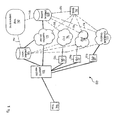
- FIG. 1 depicted therein is an exemplary embodiment an internetworking network arrangement 100 wherein a universal communications database, preferably hierarchically organized into a local database 106 and a remote database 108, is advantageously provided for facilitating integrated services in accordance with the teachings of the present invention.
- a profile array (not shown in this FIG.) is included in the databases wherein a single unique Personal ID (PID) is assigned to each of the subscribers in subscriber pool 110.
- the local database 106 is operably coupled to a network element (e.g., an exchange, switching point, etc.) 102 which is provided as a node in a network 114 wherein the databases and network elements can interact with each other without protocol conversions, media gateway/interfaces, and the like. Accordingly, the network portion 114 may be considered as the "native" network for the network element 102 and the databases 106, 108. Those skilled in the art should readily recognize that the network 114 may be operable as a circuit-switched network (CSN), a packet-switched network (PSN), or a combination thereof.
- CSN circuit-switched network
- PSN packet-switched network
- the network element 102 is preferably operable with one or more media gateways/interfaces (GW-IF) for effectuating multiple types of communication in accordance with the teachings of the present invention.
- GW-IF media gateways/interfaces
- a GW-IF 122 is provided for interoperability with a CSN network 116 for carrying out circuit-switched services.
- GW-IF 124 and GW-IF 126 are exemplified for effectuating interoperable internetworking functionality between the network element 102 and a PSN-based network infrastructure 118 and a hybrid/integrated network infrastructure 120, respectively.
- the remote database 108 of the present invention is preferably interoperable with the networks 116, 118 and 120 by way of appropriate protocols/interfaces for effectuating multiple integrated communications/services for a subscriber.
- Database interfacing paths 13 8, 136, and 134 are illustrative with respect to the CSN network 116, PSN network 118, and the hybrid/integrated network 120, respectively. Further, these networks are also interoperable with the local database 106 associated with the network element 102.
- the profile array information comprising the unique PID data for the subscribers is provided to be configurable by the subscribers, network operators, and the service providers such as wireline and wireless phone service providers, paging service providers, mobile Internet access providers, email service providers, Internet Service Providers (ISPs), Internet Access Providers (IAPs), Application Service Providers (ASPs), etc.
- the various network operators and service providers have service agreements with the universal communications database operator such that, for example, when a registered subscriber of the database also becomes a subscriber of a particular service provider, the service provider can interact directly or indirectly with the database to reconfigure the profile record associated with the registered subscriber.
- the registered subscriber may also cause a suitable modification to the profile record associated with the subscriber's unique PID indicium upon subscribing to a service from a service provider so as to effect a correspondence between the PID indicium and the particular service's treatment data which is to be used for effectuating a communication event pertaining to that service.
- reference numerals 128, 130 and 132 exemplify a plurality of interactive paths available to the subscribers for interacting with the databases 106 and 108. For instance, such paths may preferably be implemented using Web-based mechanisms.
- the PID indicia are associated with "standardized" communication type identifiers each of which identifies to a network element such as, e.g., network element 102 of the network arrangement 100, as to the type of a communication event. That is, for each type of communication, a specific identifier is implemented to indicate to the network elements the type of communication being engaged when a signal or message relating to a communication event is received thereat.
- wireless telephony communication identifier wireless telephony communication identifier
- wireline telephony communication identifier facsimile transmission communication identifier
- email communication identifier IP-based communication identifier
- pager communication identifier multimedia communication identifier
- a query is launched to the local database 106 to determine the treatment data for the received PID based on the communication type identifier included in the message.
- the communication event is effectuated thereafter with respect to the terminating party 112 associated with the received PID.
- the remote database 108 will be queried if the local database 106 is unable to provide the treatment data.
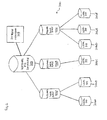
- a national PID database or registry 202 is preferably operable by a database registrar 208 for providing centralized database storage, maintenance, record-keeping, and registration.
- the database registrar 208 may employ any known or hitherto unknown mechanism for assigning PIDs to potential subscribers.
- a fairness-based algorithm such as first-come-first-served may be implemented.
- the database registrar 208 is preferably operable to resolve potential conflicts that may arise when two subscribers with identical personal indicia may attempt to register substantially at the same time.
- a plurality of regional-level databases are provided as intermediary databases to which queries may be launched by network elements when PID-based communication event messages received thereat are not resolved by the use of local databases such as, e.g., databases 206A through 206F.
- a network element may directly query the national PID database 202 when its local database does not have the necessary information to effectuate a communication event with respect to a particular PID.
- a remote database such as the remote database 108 shown and described in reference to FIG. 1 hereinabove may comprise a regional-level database or the national PID database 202.
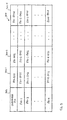
- FIGS. 3 and 4A-4B depict the various aspects of the universal communications database of the present invention for effectuating multiple types of communication based on single unique PIDs assigned to the registered subscribers.
- each type of communication is identified by a standardized communication type identifier, which is preferably provided as an extensible marker or extension to the PIDs.
- a PID-extension array 300 forming a database portion of the universal communications database is exemplified in FIG. 3, wherein each subscriber PID 302 is provided with one or more extensions to identify the various types of communication events that may be effectuated for a particular subscriber using a single unique PID.
- EXT.13 04-1 through EXT.N 3 04-N are illustrated for PID-1 through PID-K indicia, each extension set for a particular PID indicium forming at least a portion of a PID profile record associated therewith.
- N extensions the number of extensions
- the PID profile records of the database portion 300 may have different dimensions in some exemplary embodiments.
- communication type identifiers contemplated herein may not be solely limited to extensible markers appended to the PID indicia. Instead, they may be provided as prefixes or suffixes, or some other portion coupled to the PID indicia depending upon the requirements of a particular implementation.
- FIG. 4A depicts a database portion 400 exemplifying another aspect of the universal communications database of the present invention, wherein a communication type identifier column 402 comprising standardized extension markers is mapped to a communication event column 404 which specifies the various types of communication supported by the universal communications database.
- a plurality of extension identifiers, reference numerals 406-1 to 406-K are illustrated.
- Each identifier identifies a particular communication mode: email 408-1, fax transmission 408-2, voice communication 408-3 (which may be further differentiated into wireless and wireline events), pager communication 408-4, IP-based multimedia communication 408-K, et cetera.
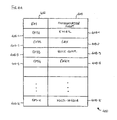
- FIG. 4B depicts a database portion 450 exemplifying another aspect of the universal communications database provided in accordance with the teachings of the present invention.
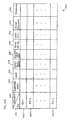
- a PID indicia column 451 is mapped to a set of attributes 453 comprising at least a portion of a PID profile record which includes various data for processing, effectuating, routing, or modifying a particular communication event for a specific PID.
- the unique PIDs assigned to the subscribers registering at the universal communications database are preferably based on the subscribers' personal indicia, e.g., given name, et cetera.
- a plurality of PID indicia, for example, PID-1 452-1 through PID-K 452-K are illustratively provided in the database portion 450.
- each PID indicium Associated with each PID indicium are: subscriber's name 454, address 456, subscriber's primary voice communication address 458 (e.g., wireless or wireline phone number), secondary voice communication address(es) 460, subscriber's pager and fax number(s) 462, one or more email address(s) 464, etc.
- each PID profile record preferably contains an access privileges portion 466 and a preference options portion 468 for modifying and qualifying a particular communication event. For example, these portions may comprise time-of-day preferences, device-dependent delivery options, call diversion options, algorithms to resolve multiple secondary phone numbers or email IDs, etc.
- any portion of the attribute set 453 of a particular profile record may be considered as a "call" treatment data portion used by a network element for obtaining network routing number(s), wireless or wireline phone address(es) for termination and/or origination, email address(es), pager/fax number(s), destination number(s), IP addresses, Uniform Resource Locators (URLs), mailto address(es), and various related privileges and options.
- a network element for obtaining network routing number(s), wireless or wireline phone address(es) for termination and/or origination, email address(es), pager/fax number(s), destination number(s), IP addresses, Uniform Resource Locators (URLs), mailto address(es), and various related privileges and options.
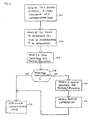
- FIG. 5 depicted therein is a flow chart comprising the steps involved in an exemplary method of effectuating a communication event in accordance with the teachings of the present invention.
- a signal or message indicative of a communication event with respect to a particular subscriber which signal/message comprises at least the PID indicium for the subscriber and a communication type identifier
- the signal/message is analyzed to determine the type of the communication to be effectuating by examining the communication type identifier (step 504).
- a first database is queried by the network element (e.g., a local database associated with the network element) to determine the treatment data for the communication event identified by the communication type identifier (step 506).
- the network element e.g., a local database associated with the network element
- a second database e.g., a regional database or a national database
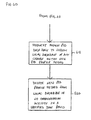
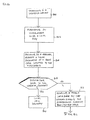
- FIGS. 6A and 6B depict a flow chart which includes the various steps involved in an exemplary database record management method for use in a hierarchically organized universal communications database of the present invention.
- a message signal indicative of a communication event for a subscriber Upon receiving in a network element a message signal indicative of a communication event for a subscriber (step 602), a determination is made if the communication transaction to be effectuated is based on a PID value (decision block 604). If the communication transaction is not based on PID indicia, conventional call treatment is provided by the network element (step 608), which may include interaction with legacy service nodes (e.g., Service Control Points (SCPs) operable in architectures such as the Intelligent Network (IN), Advanced Intelligent Network (AIN), or Wireless Intelligent Network (WIN)).
- legacy service nodes e.g., Service Control Points (SCPs) operable in architectures such as the Intelligent Network (IN), Advanced Intelligent Network (AIN), or Wireless Intelligent Network (WIN)
- the remote database is also requested to inform the local database of any changes that may take place in the profile record retrieved therefrom (step 618). Accordingly, such changes are also reflected in the local database's new PID profile record as they are effected in the remote database.
- the local database is preferably provided with the capability to delete the new PID record if there is no communication activity relating to that PID within a configurable time period (step 620).
- Subscriber A is a registered subscriber of a remote database 714 (e.g., a national database) wherein the profile record for the unique PID assigned to Subscriber A contains the current port ID and routing information associated with a wireline telephony service that Subscriber A currently receives.
- the physical port 706 used by Subscriber A to receive the service is served by a first network element, i.e., switch, 702, which may be an end office disposed in a local exchange carrier (LEC) network.
- a local database 710 operable in accordance with the teachings of the present invention is co-located with the first network element 702.
- an originating party 703 may initiate a call (i.e., a wireline communication event) to Subscriber A (i.e., terminating party 711) using the unique PID assigned to Subscriber A and an appropriate communication type identifier.
- the network element 702 resolves the PID indicium and communication type by querying the local database 710. Because the ID/routing information associated with the current port 706 is available to the network element, the call is terminated to the telephony station used by Subscriber A.
- Subscriber A When Subscriber A moves to a different geographic area (e.g., across a Local Access and Transport Area or LATA) or switches to a different telephony service provider where a separate port 708 is provided, Subscriber A de-registers from the previous port 706 and registers again from the new current port 708 at the remote database 714, which new current port is served by a second network element/switch 704.
- the POTS dial tone is preferably provided to all ports even before Subscriber A becomes a subscriber to a telephony service, wherein the dial tone is initially operable for database registration only. Accordingly, the PID profile record in the remote database 714 is updated with the port ID for the port 708 and its routing information.
- a local database 712 associated with the second network element 704 may also be correspondingly updated.
- the first network element 702 determines that Subscriber A has de-registered from the port 706 and, accordingly, queries the remote database 714 for the current routing information. Thereafter, the call is "ported" to the second network element 704 which completes the call.
- path 720 depicted in FIG. 7 may involve one or more networks for appropriate routing.
- paths 716 and 718 used by the network elements to query the remote database may also involve several types of networks, e.g., the Internet, for Web-based access.
- FIGS. 8A and 8B depict a flow chart which illustrates the steps involved in an exemplary call porting method for accomplishing universal mobility in a communications network system such as the network system 700 described hereinabove.
- a subscriber's PID profile record may be updated by the telephony service provider or by the subscriber to associate new telephone information with the subscriber's PID indicium. Accordingly, when the subscriber registers at the universal communications database using a physical port served by a network element, the port ID and routing information associated therewith are mapped into the PID's profile record (step 804).
- the local database is queried to determine the current local port ID associated with the subscriber's PID (decision block 808). If the current local port ID is available for the subscriber, the call is then delivered (step 810) in accordance with the preferences, if any (step 810). On the other hand, if the subscriber is no longer at the local port, a remote database is queried (step 812) as explained hereinabove. Accordingly, the new port ID and serving switch information is retrieved from the remote database for call routing (step 814). The call is then ported to the new serving switch for call delivery (step 816).
- the subscriber moves out of the new location (decision block 816)
- the subscriber de-registers from the current port (step 820) and re-registers at the remote database using the next new port available at the next new location (step 822).
- the present invention's universal communications database system and method provides an innovative solution wherein the various deficiencies and shortcomings set forth in the Background section of the present patent application are advantageously overcome.
- the mapping of a single unique PID to multiple communication events and treatment data associated therewith obviates the need to carry a plethora of contact numbers and addresses for various subscribers.
- a number of new services can be offered by utilizing the capability of the universal communications database of the present invention. For example, in addition to PID-based dialing, the following services are illustrative:
- the PID database of the present invention eliminates the need to remember telephone numbers, which may change frequently, an alternative solution to Local Number Portability is advantageously realized by the practice of the teachings of the present invention.
- a subscriber is no longer tied to a particular port or to a specific central office switch. There is no "porting" of the telephone number; rather, the subscription is allowed to move with the subscriber who can roam anywhere the service provider has service agreements via the universal communications database.
- any database that allows decoupling of telephone subscriptions from the physical ports of a network as described hereinabove may be used in lieu of a national PID database for accomplishing universal mobility in accordance herewith. That is, registration as set forth in the foregoing description does not have to be necessarily dependent on the national PID database. Rather, a telephone company (telco) can allow its subscribers roam and register from different ports by using its own database. Subscribers may be allowed to register from visited locations (served by different telcos, for example) by making arrangements with other operating companies.
- registration from a physical port may be customized such that it can be for (i) origination only, (ii) termination only, or (iii) both.
- multiple subscribers may register at a port whereby primary, secondary, et cetera, users may be specified. Accordingly, call treatment can be different for the users depending upon their designation. For instance, in order to invoke one's originating privileges, a user registered as a secondary subscriber will have to identify himself first as the secondary user before proceeding further. The registration for the secondary subscriber can be for the duration of a single call or a sequence of calls; or it can be valid until canceled. That is, different procedures have to be invoked for each case. In the case of a user registered as a primary user, the registration is provided on a "permanent" basis, i.e., until canceled.
- telcos can eliminate the need to disconnect a user's subscription from one location and start a new subscription from a new location by practicing the teachings of the present invention. As there are virtually millions of such operations taking place on an yearly basis, these costs can be avoided accordingly. From a subscriber's point of view, one can move into a new location and start the telephone service without the connection or service setup delay. Also, a subscriber does not have to change the network address and associated service options when the subscriber moves from one geographic location to another. Furthermore, in the practice of the present invention it is no longer necessary to play announcements such as "the subscriber's new number is " or "the number you have dialed is disconnected," and the like.
- such devices may comprise H.323-compatible terminals, Session Initiation Protocol (SIP)-based phones, and the like, in addition to pagers, Internet appliances, screen phones, facsimile machines, computers (personal computers, laptops, notebooks, palmtops, handheld devices, etc.), and the ubiquitous wireline and wireless phones.
- SIP Session Initiation Protocol
- the universal communications database may be implemented using any known or hitherto unknown programming language(s), and may be architected using multiple hierarchical levels which may be interfaced with different types of networks.
- the database portions and profile records exemplified hereinabove are illustrative only; such database portions may be combined in any form or portion. Accordingly, those skilled in the art should readily appreciate that these and other variations, additions, modifications, enhancements, et cetera, are deemed to be within the ambit of the present invention whose scope is determined solely by the following claims.
Landscapes
- Engineering & Computer Science (AREA)
- Signal Processing (AREA)
- Mobile Radio Communication Systems (AREA)
- Telephonic Communication Services (AREA)
- Facsimiles In General (AREA)
Claims (16)
- Speicherstruktur zum Speichern einer universellen Kommunikationsdatenbank (200), die zum Aktivieren einer integrierten Kommunikationsinfrastruktur genutzt werden kann und die Folgendes umfasst:eine Profilanordnung (300) einschließlich einer Vielzahl von PID-Werten (302), von denen jeder einer bestimmten Teilnehmerregistrierung in dieser universellen Kommunikationsdatenbank (200) eindeutig zugeordnet ist;mindestens eine jedem PID-Wert (302) zugeordnete Kennung der Kommunikationsart (304-1 bis 304-N), wobei diese Kennung der Kommunikationsart (304-1 bis 304-N) so arbeitet, dass sie einem Netzwerkelement (102) ein bestimmtes Kommunikationsereignis hinsichtlich des PID-Werts eines bestimmten Teilnehmers signalisiert, wobei diese Kennung der Kommunikationsart ein Präfix und ein Suffix für diesen PID-Wert des spezifischen Teilnehmers bildet; und eine Struktur (400) zu jedem PID-Wert zum Speichern einer Vielzahl von Verarbeitungsdaten (408-1 bis 408-K) mit Bezug auf diesen PID-Wert auf der Basis seiner Kennungen der Kommunikationsart,wobei, wenn ein Signal mit dem Hinweis auf ein Kommunikationsereignis in diesem Netzwerkelement (102) empfangen wird, dieses Signal mit einem bestimmten PID-Wert und einer zugeordnete Kennung der Kommunikationsart umgesetzt wird, so dass es entsprechende Verarbeitungsdaten bereitstellt zum Aktivieren dieses Kommunikationsereignisses.
- Speicherstruktur zum Speichern einer universellen Kommunikationsdatenbank (200) gemäß Anspruch 1, wobei jeder PID-Wert (302) ein alphabetisches Kenndatum auf der Basis des persönlichen Namens des Teilnehmers aufweist.
- Speicherstruktur zum Speichern einer universellen Kommunikationsdatenbank (200) gemäß Anspruch 2 oder Anspruch 1, wobei diese Verarbeitungsdaten (408-1 bis 408-K) auf der Basis einer der Kennungen der Kommunikationsart des PID-Werts mindestens eine der folgenden Komponenten umfasst:Informationen zur Weiterleitungsnummer, Informationen zur Festnetz-Telefonnummer, Informationen zur Mobil-Telefonnummer, Informationen zur Pager-Nummer, Informationen zur E-Mail-Adresse, Informationen zur aktuellen Telefonie-Port-ID und Informationen zur Faxübertragungsnummer.
- Speicherstruktur zum Speichern einer universellen Kommunikationsdatenbank (200) gemäß Anspruch 3 oder Anspruch 2 oder Anspruch 1, wobei dieses Kommunikationsereignis eine der folgenden Komponenten umfasst: einen Festnetz-Telefonanruf, eine Pager-Kommunikations-Session, einen Mobil-Telefonanruf, eine E-Mail-Kommunikations-Session, eine IP-Kommunikations-Session (Internet Protocol) und eine Multimedia-Kommunikations-Session.
- Speicherstruktur zum Speichern einer universellen Kommunikationsdatenbank (200) gemäß Anspruch 4, Anspruch 3, Anspruch 2 oder Anspruch 1, die des Weiteren einen Datenbankbereich (450) zum Angeben von Zugriffsberechtigungen (466) für jeden dieser PID-Werte umfasst, wobei diese Zugriffsberechtigungen (466) mit diesen Verarbeitungsdaten (408-1 bis 408-K) beim Aktivieren dieses Kommunikationsereignisses interagieren.
- Speicherstruktur zum Speichern einer universellen Kommunikationsdatenbank (200) gemäß Anspruch 4, Anspruch 3, Anspruch 2 oder Anspruch 1, die des Weiteren einen Datenbankbereich (450) zum Angeben von Präferenzoptionen (468) für jeden dieser PID-Werte umfasst, wobei diese Präferenzoptionen (468) mit diesen Verarbeitungsdaten (408-1 bis 408-K) beim Aktivieren dieses Kommunikationsereignisses interagieren.
- Verfahren zum Aktivieren einer Kommunikation auf der Basis einer einem Teilnehmer eindeutig zugeordneten persönlichen Personal ID (PID) (302), wobei dieses Verfahren die folgenden Schritte umfasst:Empfangen eines Signalhinweises zu einem Kommunikationsereignis zu diesem Teilnehmer in einem Netzwerkelement (102), wobei dieses Signal diese PID (302) umfasst und mindestens eine Kennung der Kommunikationsart (304-1 bis 304-N);Analysieren dieses Signals in diesem Netzwerkelement (120) zum Identifizieren dieses Kommmunikationsereignisses durch Untersuchen mindestens einer Kennung der Kommunikationsart (304-1 bis 304-N);Abfragen einer ersten Datenbank (106) zum Ermitteln geeigneter Verarbeitungsdaten für dieses Kommunikationsereignis auf der Basis dieses PID-Profildatensatzes (300,400,450); Aktivieren dieses Kommunikationsereignisses auf der Basis dieser Verarbeitungsdaten, sofern diese in dieser ersten Datenbank (106) verfügbar sind;andernfalls Abfragen einer zweiten Datenbank (108) zum Abrufen von Verarbeitungsdaten für dieses Kommunikationsereignis auf der Basis dieses PID-Profildatensatzes (300,400,450); und Aktivieren dieses Kommunikationsereignisses auf der Basis dieser aus der zweiten Datenbank (108) abgerufenen Verarbeitungsdaten.
- Verfahren zum Aktivieren der Kommunikation auf der Basis einer PID (302) gemäß Anspruch 7, die einem Teilnehmer eindeutig zugewiesen ist, wobei dieses Kommunikationsereignis eine der folgenden Komponenten umfasst: einen Festnetz-Telefonanruf, eine Pager-Kommunikations-Session, einen Mobil-Telefonanruf, eine E-Mail-Kommunikations-Session, eine IP-Kommunikations-Session (Internet Protoco1) und eine Multimedia-Kommunikations-Session.
- Verfahren zum Aktivieren der Kommunikation auf der Basis einer PID (302) gemäß Anspruch 8 oder Anspruch 7, die einem Teilnehmer eindeutig zugewiesen ist, wobei diese PID (302) ein alphabetisches Kenndatum auf der Basis des Namens des Teilnehmers umfasst und wobei diese Kennung der Kommunikationsart ein Präfix, ein Suffix, eine Erweiterung oder einen Anhang zu diesem alphabetischen Kenndatum bildet.
- Verfahren zum Aktivieren der Kommunikation auf der Basis einer PID (302) gemäß Anspruch 9, Anspruch 8 oder Anspruch 7, die einem Teilnehmer eindeutig zugewiesen ist, wobei dieses Verfahren des Weiteren den Vorgang zum Abrufen eines Präferenzoptionsprofils (468) für diese PID (302) aus dieser ersten Datenbank (106) oder dieser zweiten Datenbank (108) sowie das Modulieren dieser daraus abgerufenen Verarbeitungsdaten bei der Aktivierung dieses Kommunikationsereignisses umfasst.
- Verfahren zum Aktivieren der Kommunikation auf der Basis einer PID (302) gemäß Anspruch 10, Anspruch 9, Anspruch 8 oder Anspruch 7, die einem Teilnehmer eindeutig zugewiesen ist, wobei diese erste Datenbank (106) eine lokale Datenbank ist, die neben diesem Netzwerkelement (102) angeordnet ist.
- Verfahren zum Aktivieren der Kommunikation auf der Basis einer PID (302) gemäß Anspruch 11, Anspruch 10, Anspruch 9, Anspruch 8 oder Anspruch 7, die einem Teilnehmer eindeutig zugewiesen ist, wobei diese zweite Datenbank (108) eine regionale oder nationale Datenbank ist, die von diesem Netzwerkelement (102) abgefragt werden kann.
- Kommunikationsnetzwerk (100) zur Unterstützung mehrerer Arten der Kommunikation auf der Basis persönlicher ID-Kenndaten (PID), die Teilnehmern eindeutig zugeordnet sind, wobei das Kommunikationsnetzwerk Folgendes umfasst:ein Netzwerkelement (102) zum Empfangen eines Signal, das auf ein Kommunikationsereignis zu einem spezifischen Teilnehmer hinweist, wobei dieses Signal eindeutige, diesem spezifischen Teilnehmer zugeordnete PID-Kenndaten (302) umfasst und mindestens eine Kennung der Kommunikationsart (304-1 bis 304-N) zur Identifikation des Typs des Kommunikationsereignisses;Mittel in diesem Netzwerkelement (102) zum Analysieren dieses Signals, um die Art dieses Kommmunikationsereignisses zu ermitteln auf der Basis mindestens einer Kennung der Kommunikationsart (304-1 bis 304-N);eine diesem Netzwerkelement (102) zugeordnete Datenbankstruktur (106), wobei diese Datenbankstruktur (106) PID-Daten (300) umfasst und eine Vielzahl ihnen zugeordneter Profildatenbankbereiche (400, 450), wobei jeder Profildatensatz Verarbeitungsdaten (408-1 bis 408-K), Zugangsberechtigungsdaten (466) und Präferenzoptionsdaten (468) für einen bestimmten Teilnehmer umfasst, wobei diese Verarbeitungsdaten (408-1 bis 108-K), diese Zugangsberechtigungsdaten (466) und diese Präferenzoptionsdaten (468) für jede Art von Kommunikation betrieben werden können, die für diesen spezifischen Teilnehmer unterstützt wird; Mittel in diesem Netzwerkelement (102) zum Abfragen dieser Datenbankstruktur (106), wenn dieses Kommunikationsereignis auf der Basis dieser diesem spezifischen Teilnehmer und dieser Kennung der Kommunikationsart (304-1 bis 304-N) zugeordneten eindeutigen PID-Kenndaten (302) verarbeitet werden kann; ist dies der Fall, Verarbeitung dieses Kommunikationsereignisses dieser Zugriffsberechtigungsdaten (466) unddieser Präferenzoptionsdaten (468) für diesen spezifischen Teilnehmer auf der Basis von mindestens einem Satz dieser Verarbeitungsdaten (408-1 bis 408-K); andernfalls Abfragen einer fernen Datenbankstruktur (108) auf diese Verarbeitungsdaten (408-1 bis 408-K), diese Zugangsberechtigungsdaten (466) und diese Präferenzoptionsdaten (468) zu diesem Kommunikationsereignis für diese spezifischen Teilnehmer; undAktivieren dieses Kommunikationsereignisses für diesen spezifischen Teilnehmer mit mindestens einem dieser Verarbeitungsdaten-Sets (408-1 bis 408-K), wobei diese Zugangsberechtigungsdaten (466) und diese Präferenzoptionsdaten (468) aus dieser fernen Datenbankstruktur (108) abgerufen wurden.
- Anruf-Portierungsverfahren zur Bereitstellung einer universellen Mobilität für die Teilnehmer in einem Kommunikationsnetzwerk (100) mit einer Datenbank (106,108) zum Speichern persönlicher den Teilnehmern eindeutig zugeordneter ID-Daten (PID) (300) und einer Vielzahl ihnen zugeordneter Profildatenbankbereiche (400,950), wobei jeder Profildatensatz eine zuordnung zwischen diesen PID-Daten und einer aktuellen Telefonie-Port-Adresse für einen spezifischen Teilnehmer umfasst, wobei dieses Anruf-Portierungsverfahren Folgendes umfasst:Anmelden eines von einem ersten Dienstanbieter bereitgestellten Telefoniedienstes durch einen Benutzer;Registrieren bei dieser Datenbank (106,108) durch diesen Benutzer mit einem ersten Telefonie-Port mit einer ersten Telefonie-Port-Adresse, die von einem ersten Netzwerkelement (102) bedient wird, das von diesem ersten Dienstanbieter betrieben wird, wobei diese erste Telefonie-Port-Adresse der eindeutigen PID (302) dieses Benutzers zugeordnet ist;Empfangen eines Signals mit einem Hinweis auf einen Telefonanruf zu diesem Benutzer in einem ersten Netzwerkelement (102), wobei dieses Signal die eindeutige PID (302) dieses Benutzers enthält;Ermitteln in diesem ersten Netzwerkelement (302), ob dieser Telefonanruf aktiviert werden kann durch Überprüfen, ob die PID (302) dieses Benutzers derzeit dieser ersten Telefonie-Port-Adresse zugeordnet ist;ist dies der Fall, Aktivieren dieses Telefonanrufs mit der ersten Telefonie-Port-Adresse;andernfalls Abfragen dieser Datenbank (106,108) durch dieses erste Netzwerkelement (102), um festzustellen, ob dieser Benutzer die PID (302) dieses Benutzers von einer zweiten Telefonie-Port-Adresse aus registriert hat;ist dies der Fall, Abrufen dieser zweiten Telefonie-Port-Adresse für diesen Benutzer; und Aktivieren dieses Telefonanrufs für diesen Benutzer mit dieser zweiten Telefonie-Port-Adresse.
- Anruf-Portierungsverfahren zur Bereitstellung einer universellen Mobilität für die Teilnehmer in einem Kommunikationsnetzwerk (100) gemäß Anspruch 14, wobei die eindeutige PID (302) dieses Benutzers einen alphabetischen Bereich umfasst auf der Basis des Namens des Benutzers und wobei sich des Weiteren die erste und zweite Telefonie-Port-Adresse in unterschiedlichen geografischen Bereichen befinden.
- Anruf-Portierungsverfahren zur Bereitstellung einer universellen Mobilität für die Teilnehmer in einem Kommunikationsnetzwerk (100) gemäß Anspruch 15 oder Anspruch 14, wobei diese erste und zweite Telefonie-Port-Adresse von verschiedenen Dienstanbietern bedient werden.
Applications Claiming Priority (3)
| Application Number | Priority Date | Filing Date | Title |
|---|---|---|---|
| US627193 | 1984-07-02 | ||
| US62719300A | 2000-07-27 | 2000-07-27 | |
| PCT/US2001/041459 WO2002011408A2 (en) | 2000-07-27 | 2001-07-26 | Universal communications database system and method for integrated services |
Publications (2)
| Publication Number | Publication Date |
|---|---|
| EP1310080A2 EP1310080A2 (de) | 2003-05-14 |
| EP1310080B1 true EP1310080B1 (de) | 2007-06-20 |
Family
ID=24513611
Family Applications (1)
| Application Number | Title | Priority Date | Filing Date |
|---|---|---|---|
| EP01955078A Expired - Lifetime EP1310080B1 (de) | 2000-07-27 | 2001-07-26 | Universalkommunikationendatenbank-system und methode für integrierte dienstleistungen |
Country Status (4)
| Country | Link |
|---|---|
| EP (1) | EP1310080B1 (de) |
| AU (1) | AU2001277280A1 (de) |
| DE (1) | DE60129023T2 (de) |
| WO (1) | WO2002011408A2 (de) |
Families Citing this family (2)
| Publication number | Priority date | Publication date | Assignee | Title |
|---|---|---|---|---|
| EP1368975A1 (de) | 2001-03-09 | 2003-12-10 | Ayman L.L.C. | Universelles kontaktpunktidentifizierungssystem und -verfahren |
| US7161932B1 (en) | 2001-12-14 | 2007-01-09 | Alcatel | Apparatus, and associated method, for completing a call to a packet-network, telephonic station |
Family Cites Families (1)
| Publication number | Priority date | Publication date | Assignee | Title |
|---|---|---|---|---|
| JP2001333188A (ja) * | 2000-05-19 | 2001-11-30 | Fujitsu Ltd | 通信サービス情報提供システム |
-
2001
- 2001-07-26 EP EP01955078A patent/EP1310080B1/de not_active Expired - Lifetime
- 2001-07-26 WO PCT/US2001/041459 patent/WO2002011408A2/en not_active Ceased
- 2001-07-26 AU AU2001277280A patent/AU2001277280A1/en not_active Abandoned
- 2001-07-26 DE DE60129023T patent/DE60129023T2/de not_active Expired - Lifetime
Non-Patent Citations (1)
| Title |
|---|
| None * |
Also Published As
| Publication number | Publication date |
|---|---|
| WO2002011408A3 (en) | 2003-02-27 |
| DE60129023T2 (de) | 2008-02-21 |
| WO2002011408A2 (en) | 2002-02-07 |
| EP1310080A2 (de) | 2003-05-14 |
| AU2001277280A1 (en) | 2002-02-13 |
| DE60129023D1 (de) | 2007-08-02 |
Similar Documents
| Publication | Publication Date | Title |
|---|---|---|
| US6519242B1 (en) | Apparatus and method of PSTN based network roaming and SCP based subscriber management for internet telephony systems | |
| US6751459B1 (en) | Nomadic computing with personal mobility domain name system | |
| US6014379A (en) | Telecommunications custom calling services | |
| US6198738B1 (en) | Communications between the public switched telephone network and packetized data networks | |
| US8447024B2 (en) | Systems and methods for providing ENUM in an LNP environment | |
| EP1725066B1 (de) | Verfahren und Vorrichtung zum Auflösen einer Geräteidentifikation | |
| EP1518382B1 (de) | Verfahren zum routing von dienstanforderungen in einem netz, mittels e.164-nummern und dns | |
| JP4308911B2 (ja) | 加入者番号を再配置できる通信ネットワーク | |
| US6161008A (en) | Personal mobility and communication termination for users operating in a plurality of heterogeneous networks | |
| US20020080751A1 (en) | System and method for routing calls in a wireless communication network | |
| EP1950942B1 (de) | System zum realisieren eines nummernportabilitätsdienstes und verfahren dafür | |
| KR20000049276A (ko) | 이동 통신 가입자 번호의 이식성을 갖는 전기 통신 네트워크 | |
| EP2052567A1 (de) | Verfahren und system zur angeleiteten verbindungsherstellung zur ermöglichung der bereitstellung erweiterter kommunikationsdienste | |
| WO2000033523A1 (en) | System and method for mobile terminal registration in an integrated wireless packet-switched network | |
| JP2002125041A (ja) | 従来の国際電話ダイヤルプランを利用して少なくとも1つの新しいダイヤルプランを確立するための電気通信システム、サービス制御ポイント、および方法 | |
| US8102988B2 (en) | Method and system for dynamically terminating wireless and wireline calls between carriers | |
| EP1310080B1 (de) | Universalkommunikationendatenbank-system und methode für integrierte dienstleistungen | |
| CN112752260B (zh) | 用于携号转网发端查询的设备和方法 | |
| US7706519B2 (en) | Assembly, and associated method, for telephonic call connection with a virtually-resident telephonic station | |
| KR100695927B1 (ko) | 제 1, 2 통신 엔티티 간에 통신을 설정하는 방법 및 시스템 | |
| KR100580832B1 (ko) | Sip 망에서 이종 네트워크 주소를 통합한 범용 위치번호 서비스 제공 장치 및 제공 방법 | |
| KR20040072388A (ko) | 비동기 이동통신 시스템에서의 이동통신 응용 부프로토콜을 이용한 음성 사서함 서비스 제공 방법 | |
| WO2000079815A1 (en) | Mobility in packet-switched telephony networks | |
| JP2001160804A (ja) | マルチメディア・インテリジェント・ネットワーキングのためのモビリティ・フレームワーク |
Legal Events
| Date | Code | Title | Description |
|---|---|---|---|
| PUAI | Public reference made under article 153(3) epc to a published international application that has entered the european phase |
Free format text: ORIGINAL CODE: 0009012 |
|
| 17P | Request for examination filed |
Effective date: 20030125 |
|
| AK | Designated contracting states |
Designated state(s): AT BE CH CY DE DK ES FI FR GB GR IE IT LI LU MC NL PT SE TR |
|
| AX | Request for extension of the european patent |
Extension state: AL LT LV MK RO SI |
|
| RBV | Designated contracting states (corrected) |
Designated state(s): DE ES FR GB IT |
|
| GRAP | Despatch of communication of intention to grant a patent |
Free format text: ORIGINAL CODE: EPIDOSNIGR1 |
|
| GRAS | Grant fee paid |
Free format text: ORIGINAL CODE: EPIDOSNIGR3 |
|
| GRAA | (expected) grant |
Free format text: ORIGINAL CODE: 0009210 |
|
| AK | Designated contracting states |
Kind code of ref document: B1 Designated state(s): DE ES FR GB IT |
|
| REG | Reference to a national code |
Ref country code: GB Ref legal event code: FG4D |
|
| REF | Corresponds to: |
Ref document number: 60129023 Country of ref document: DE Date of ref document: 20070802 Kind code of ref document: P |
|
| ET | Fr: translation filed | ||
| PG25 | Lapsed in a contracting state [announced via postgrant information from national office to epo] |
Ref country code: ES Free format text: LAPSE BECAUSE OF FAILURE TO SUBMIT A TRANSLATION OF THE DESCRIPTION OR TO PAY THE FEE WITHIN THE PRESCRIBED TIME-LIMIT Effective date: 20071001 |
|
| PLBE | No opposition filed within time limit |
Free format text: ORIGINAL CODE: 0009261 |
|
| STAA | Information on the status of an ep patent application or granted ep patent |
Free format text: STATUS: NO OPPOSITION FILED WITHIN TIME LIMIT |
|
| PG25 | Lapsed in a contracting state [announced via postgrant information from national office to epo] |
Ref country code: IT Free format text: LAPSE BECAUSE OF FAILURE TO SUBMIT A TRANSLATION OF THE DESCRIPTION OR TO PAY THE FEE WITHIN THE PRESCRIBED TIME-LIMIT Effective date: 20070620 |
|
| 26N | No opposition filed |
Effective date: 20080325 |
|
| REG | Reference to a national code |
Ref country code: GB Ref legal event code: 732E Free format text: REGISTERED BETWEEN 20130912 AND 20130918 |
|
| REG | Reference to a national code |
Ref country code: FR Ref legal event code: TP Owner name: ALCATEL-LUCENT USA, INC., US Effective date: 20131121 Ref country code: FR Ref legal event code: CD Owner name: ALCATEL-LUCENT USA, INC., US Effective date: 20131121 |
|
| REG | Reference to a national code |
Ref country code: FR Ref legal event code: GC Effective date: 20140410 |
|
| REG | Reference to a national code |
Ref country code: FR Ref legal event code: RG Effective date: 20141015 |
|
| REG | Reference to a national code |
Ref country code: FR Ref legal event code: PLFP Year of fee payment: 15 |
|
| REG | Reference to a national code |
Ref country code: FR Ref legal event code: PLFP Year of fee payment: 16 |
|
| REG | Reference to a national code |
Ref country code: FR Ref legal event code: PLFP Year of fee payment: 17 |
|
| REG | Reference to a national code |
Ref country code: FR Ref legal event code: PLFP Year of fee payment: 18 |
|
| PGFP | Annual fee paid to national office [announced via postgrant information from national office to epo] |
Ref country code: FR Payment date: 20190619 Year of fee payment: 19 |
|
| PGFP | Annual fee paid to national office [announced via postgrant information from national office to epo] |
Ref country code: DE Payment date: 20190716 Year of fee payment: 19 |
|
| PGFP | Annual fee paid to national office [announced via postgrant information from national office to epo] |
Ref country code: GB Payment date: 20190724 Year of fee payment: 19 |
|
| REG | Reference to a national code |
Ref country code: DE Ref legal event code: R119 Ref document number: 60129023 Country of ref document: DE |
|
| GBPC | Gb: european patent ceased through non-payment of renewal fee |
Effective date: 20200726 |
|
| PG25 | Lapsed in a contracting state [announced via postgrant information from national office to epo] |
Ref country code: FR Free format text: LAPSE BECAUSE OF NON-PAYMENT OF DUE FEES Effective date: 20200731 Ref country code: GB Free format text: LAPSE BECAUSE OF NON-PAYMENT OF DUE FEES Effective date: 20200726 |
|
| PG25 | Lapsed in a contracting state [announced via postgrant information from national office to epo] |
Ref country code: DE Free format text: LAPSE BECAUSE OF NON-PAYMENT OF DUE FEES Effective date: 20210202 |