EP1310964A2 - System und Verfahren zur forlaufenden Optimierung von Regelvariablen während des Betriebs eines Kernreaktors - Google Patents
System und Verfahren zur forlaufenden Optimierung von Regelvariablen während des Betriebs eines Kernreaktors Download PDFInfo
- Publication number
- EP1310964A2 EP1310964A2 EP02257511A EP02257511A EP1310964A2 EP 1310964 A2 EP1310964 A2 EP 1310964A2 EP 02257511 A EP02257511 A EP 02257511A EP 02257511 A EP02257511 A EP 02257511A EP 1310964 A2 EP1310964 A2 EP 1310964A2
- Authority
- EP
- European Patent Office
- Prior art keywords
- reactor
- optimization
- control
- variables
- values
- Prior art date
- Legal status (The legal status is an assumption and is not a legal conclusion. Google has not performed a legal analysis and makes no representation as to the accuracy of the status listed.)
- Ceased
Links
- 238000005457 optimization Methods 0.000 title claims abstract description 148
- 238000000034 method Methods 0.000 title claims abstract description 87
- 230000008569 process Effects 0.000 claims abstract description 46
- 238000004891 communication Methods 0.000 claims abstract description 19
- 239000000446 fuel Substances 0.000 claims abstract description 17
- 230000004044 response Effects 0.000 claims description 28
- 238000004088 simulation Methods 0.000 claims description 27
- 238000013461 design Methods 0.000 claims description 20
- 238000003860 storage Methods 0.000 claims description 14
- 238000013486 operation strategy Methods 0.000 claims description 5
- 230000003252 repetitive effect Effects 0.000 abstract description 3
- 230000008859 change Effects 0.000 description 15
- 230000009257 reactivity Effects 0.000 description 15
- 238000012545 processing Methods 0.000 description 12
- 230000001419 dependent effect Effects 0.000 description 11
- 238000012986 modification Methods 0.000 description 11
- 230000004048 modification Effects 0.000 description 11
- 238000010586 diagram Methods 0.000 description 9
- 230000006872 improvement Effects 0.000 description 9
- 238000007726 management method Methods 0.000 description 6
- 238000005516 engineering process Methods 0.000 description 5
- 239000003758 nuclear fuel Substances 0.000 description 5
- XLYOFNOQVPJJNP-UHFFFAOYSA-N water Substances O XLYOFNOQVPJJNP-UHFFFAOYSA-N 0.000 description 5
- 238000003066 decision tree Methods 0.000 description 4
- 238000012544 monitoring process Methods 0.000 description 4
- 230000000694 effects Effects 0.000 description 3
- 238000012546 transfer Methods 0.000 description 3
- 238000013459 approach Methods 0.000 description 2
- 238000009835 boiling Methods 0.000 description 2
- 238000006243 chemical reaction Methods 0.000 description 2
- 238000005094 computer simulation Methods 0.000 description 2
- 239000002826 coolant Substances 0.000 description 2
- 238000013500 data storage Methods 0.000 description 2
- 239000012857 radioactive material Substances 0.000 description 2
- 238000011084 recovery Methods 0.000 description 2
- 230000035945 sensitivity Effects 0.000 description 2
- 230000009286 beneficial effect Effects 0.000 description 1
- 238000004422 calculation algorithm Methods 0.000 description 1
- 238000004364 calculation method Methods 0.000 description 1
- 238000011217 control strategy Methods 0.000 description 1
- 238000012937 correction Methods 0.000 description 1
- 230000001186 cumulative effect Effects 0.000 description 1
- 238000013523 data management Methods 0.000 description 1
- 238000011161 development Methods 0.000 description 1
- 238000009826 distribution Methods 0.000 description 1
- 238000004146 energy storage Methods 0.000 description 1
- 238000010348 incorporation Methods 0.000 description 1
- 238000009434 installation Methods 0.000 description 1
- 230000007774 longterm Effects 0.000 description 1
- 238000012423 maintenance Methods 0.000 description 1
- 238000012806 monitoring device Methods 0.000 description 1
- 230000001537 neural effect Effects 0.000 description 1
- 230000000737 periodic effect Effects 0.000 description 1
- 238000003908 quality control method Methods 0.000 description 1
- 230000009467 reduction Effects 0.000 description 1
- 238000012552 review Methods 0.000 description 1
- 239000000126 substance Substances 0.000 description 1
- 238000012360 testing method Methods 0.000 description 1
- 238000012549 training Methods 0.000 description 1
Images


Classifications
-
- G—PHYSICS
- G21—NUCLEAR PHYSICS; NUCLEAR ENGINEERING
- G21D—NUCLEAR POWER PLANT
- G21D3/00—Control of nuclear power plant
- G21D3/001—Computer implemented control
-
- G—PHYSICS
- G21—NUCLEAR PHYSICS; NUCLEAR ENGINEERING
- G21C—NUCLEAR REACTORS
- G21C17/00—Monitoring; Testing ; Maintaining
-
- G—PHYSICS
- G21—NUCLEAR PHYSICS; NUCLEAR ENGINEERING
- G21D—NUCLEAR POWER PLANT
- G21D3/00—Control of nuclear power plant
- G21D3/08—Regulation of any parameters in the plant
-
- Y—GENERAL TAGGING OF NEW TECHNOLOGICAL DEVELOPMENTS; GENERAL TAGGING OF CROSS-SECTIONAL TECHNOLOGIES SPANNING OVER SEVERAL SECTIONS OF THE IPC; TECHNICAL SUBJECTS COVERED BY FORMER USPC CROSS-REFERENCE ART COLLECTIONS [XRACs] AND DIGESTS
- Y02—TECHNOLOGIES OR APPLICATIONS FOR MITIGATION OR ADAPTATION AGAINST CLIMATE CHANGE
- Y02E—REDUCTION OF GREENHOUSE GAS [GHG] EMISSIONS, RELATED TO ENERGY GENERATION, TRANSMISSION OR DISTRIBUTION
- Y02E30/00—Energy generation of nuclear origin
-
- Y—GENERAL TAGGING OF NEW TECHNOLOGICAL DEVELOPMENTS; GENERAL TAGGING OF CROSS-SECTIONAL TECHNOLOGIES SPANNING OVER SEVERAL SECTIONS OF THE IPC; TECHNICAL SUBJECTS COVERED BY FORMER USPC CROSS-REFERENCE ART COLLECTIONS [XRACs] AND DIGESTS
- Y02—TECHNOLOGIES OR APPLICATIONS FOR MITIGATION OR ADAPTATION AGAINST CLIMATE CHANGE
- Y02E—REDUCTION OF GREENHOUSE GAS [GHG] EMISSIONS, RELATED TO ENERGY GENERATION, TRANSMISSION OR DISTRIBUTION
- Y02E30/00—Energy generation of nuclear origin
- Y02E30/30—Nuclear fission reactors
Definitions
- This invention generally concerns nuclear reactor operations optimization and management. More particularly, the present invention is directed toward identifying optimal reactor plant operational settings and an ongoing management strategy that incorporates a consideration of plant-specific constraints for a multiplicity of operational control-variables such as, for example, control blade positioning, cycle flow strategy, location of sequence exchanges, and other critical-to-quality control variables relevant to operation of a nuclear reactor plant throughout one or more reactor core refueling cycles.
- operational control-variables such as, for example, control blade positioning, cycle flow strategy, location of sequence exchanges, and other critical-to-quality control variables relevant to operation of a nuclear reactor plant throughout one or more reactor core refueling cycles.
- a nuclear reactor plant includes many different individual components that have dynamic characteristics which may affect any given strategy devised for eliciting a more efficient operation of the reactor core.
- a nuclear reactor core has many, e.g., several hundred, control blades which each require position and location identification throughout the direction of one or more cycles of fuel depletion.
- control blades which each require position and location identification throughout the direction of one or more cycles of fuel depletion.
- controllable elements and factors that affect the reactivity and overall efficiency of a reactor core must also be taken into consideration if one is to design or develop an effective control strategy for optimizing the performance of a reactor core at a particular reactor plant.
- Such variable "operational controls” also referred to herein as "independent control-variables” include various physical component and controllable operating conditions configurations within the reactor that can be individually adjusted or set before or during operation of the reactor.
- the locations of the various control blades within the reactor core are one of the many independent controllable variables that significantly affect the generated power output and overall efficiency of operation of a reactor.
- Other operational controls include such controllable variables as "core flow” (rate of water flow through the core) and the timing of the sequence exchange or exposure interval at which groups of control blades are changed.
- core flow rate of water flow through the core
- sequence exchange or exposure interval at which groups of control blades are changed.
- the reactor core In order to furnish and maintain a required energy output, the reactor core is periodically refueled with fresh fuel bundles. The duration between one refueling and the next is commonly referred to as a "fuel cycle”, “core cycle”, or “cycle” of operations and, depending on the particular reactor plant, is on the order of twelve to twenty-four months.
- a fuel cycle fuel cycle
- core cycle or “cycle” of operations
- the excess energy capability of the core is controlled by core coolant (water) flow and the control blades.
- a reactor core contains many such control blades which are fit between selected fuel bundles and are axially positioned within the core.
- the total number of control blades utilized in a reactor varies with core size and geometry, and is typically between fifty (50) and one-hundred and fifty (150).
- the axial position of control blades (e.g., fully inserted, fully withdrawn, or somewhere in between) is based on the need to control excess reactivity and to meet other operational constraints, such as thermal or reactivity margins.
- For each control blade there may be, for example, twenty-five or more possible axial positions and twenty-five or more "exposure" (duration of use) steps.
- Exposure duration of use
- control blades also influences core cycle energy and potential thermal limits. Since it is desirable to maximize the core-cycle energy in order to minimize nuclear fuel cycle costs, developing an optimum control blade positioning strategy is yet another type of independent control-variable optimization problem that should be taken into consideration when attempting to optimize operational management strategies.
- cycle operations and core management are determined on a "trial-and-error" basis based primarily on the past experiences of the reactor engineers. Due to circumstances that require a rapid response to changing plant operating conditions, a reactor engineer may be faced with the daunting challenge of specifying values for over one-hundred or more independent control-variables within a very short time frame. If a particular design constraint is not satisfied by an identified arrangement, then the arrangement is modified and a computer simulation is run. Because of the relatively long computer simulation time required for assessing the impact of a change in the value of even a single given independent control-variable, man-weeks of human and computer resources are typically required before an appropriate operational strategy is identified using this procedure.
- U.S. patent 5,790,616 to R. O. Jackson et al. describes an early attempt to perform optimization on control blade locations for a nuclear reactor.
- optimizations are performed using a genetics based algorithm at a single time sequence. Once the preferred rod patterns at a given time sequence are determined, the rods are established and the following time step is studied.
- a heuristic assumption is integrated into the system by assuming that the "best" set of rod patterns for the cycle are the rod patterns that provide for the lowest axial peak in the core. Although this heuristic assumption enabled the Jackson et al.
- the present invention is a system and method for identifying the best possible quantitative values for one or more operational control-variables that are collectively associated with the functioning and control of a nuclear reactor core and for determining an optimal operational strategy for one or more refueling cycles of the core.
- the present invention is a system and method for updating and maintaining an optimal operational strategy for a nuclear reactor continuously during the operation of the reactor over a duration of multiple refueling cycles.
- the system effectuates a continued optimization of reactor operations throughout the duration of a multiplicity of fuel cycles by effectively continuously providing updated reactor operations parameters (optimized control-variables) which may be directly implemented in controlling the reactor to result in a more flexible, economical and safe manner of operation.
- a system and method for optimizing multiple operational control-variables during operation of a nuclear reactor comprises a networked computer system that includes one or more host processors or computers programmed to execute an optimization process that identifies and/or implements changes to one or more of the many operational control-variables of a reactor plant in order to improve reactor fuel cycle efficiency, global reactor economics, and enhance operational flexibility.
- the present invention encompasses a computer network system with communications enhanced by connection to the Internet so as to distribute processing loads and to facilitate access and control of the optimization process from a wide variety of locations.
- optimization and updating of operational control-variables may proceed selectively under manual control for inputting specific optimization constraints and reactor state-point information or may proceed autonomously through a repetitive performing of the optimization process based upon a predetermined user-defined strategy stored on the network.
- GUI graphics input and display user-interface
- a reactor design specialist/engineer may selectively input and review various independent variable selections and their resulting dependent variable responses, or change various optimization constraints and controls in pursuit of alternative design strategies.
- the present invention may also be used to effectuate automatic repetitive adjustments to reactor controls to effectively provide continuous optimizations in reactor operation over the duration of one or more reactor fuel cycles.
- the following description is directed toward a presently preferred embodiment of the present invention, which may be implemented as a remote user application running, for example, under the Microsoft Windows 2000 operating system on Intel Pentium hardware with WEB for communications, Oracle for database structure, and UNIX for a database operating system.
- the present invention is not limited to any particular computer system or any particular environment. Instead, those skilled in the art will find that the system and methods of the present invention may be advantageously applied to any environment requiring continuous optimization of multiple control-variable critical processes or systems, including industrial, chemical, mechanical, nuclear, and biotech.
- the invention may be embodied using a variety of computer operation system platforms, including UNIX, LINUX, Mac OS, Open VMS, Solaris, SCO UNIX, Digital UNIX, HP UNIX, AIX, OSF, DOS, OS/2, BSD, Plan-9, and the like.
- the invention may be implemented using a variety of different hardware environments, including X86, Power PC, Strongarm, Alpha, Sparc, RISC, Cray, and the like. Therefore, the particular description of example embodiments of the invention provided herein is for purposes of illustration and not limitation.
- An example embodiment of the system of the present invention utilizes a network of independent processors for contemporaneously conducting multiple simulations of a reactor core operating under different conditions and constraints.
- Each simulation is representative of a different virtual operational case and comprises different sets of values for various reactor core operational parameters (i.e., the independent control-variables).
- the reactor core simulations provide output data that is indicative of selected performance parameters which reflect the operational state of the reactor throughout the duration of a reactor core fuel cycle.
- the simulation output data for each control-variable case is accumulated, normalized and mapped by a host processor to corresponding high-order polynomials that fit the reactor core simulation results data for each control-variable case.
- Coefficients that uniquely describe each polynomial are collected in an associated memory device as a multidimensional data array that serves as a type of virtual "response surface".
- the virtual response surface acts as a cyber-workspace and repository for storing resultant output data from many control-variable case simulations.
- the polynomials are then used to predict quantitative values (i.e., dependent variables) for the reactor performance parameters over a limited range of independent control-variable values.
- the predicted performance parameter values from each polynomial predictor are compared using an objective function to determine which particular associated independent control-variable(s) is likely to produce the greatest improvement.
- Another core simulation using the identified values is then performed to provide calibration of the polynomial predictors and to calibrate the polynomial coefficient data in the response surface with the simulation process.
- optimized parameter values for the independent variables associated with different reactor operations may be digitally communicated via, for example, LAN/WAN, the Internet or other network facilities for using and displaying at various locations.
- a Web-browser enabled computer connected to the Internet may be utilized as an output display device/terminal and may also serve as one of the optimization system processors as well as one of the reactor core simulation machines (core simulator).
- core simulator reactor core simulation machines
- operational strategy changes may occur due to a desire for a more economically efficient reactor performance, changes in the NRC licensing requirements, or bad predictions by the design simulators.
- an optimization process that provides recommendations for operation control variable selection. After the optimization process has completed execution, the predicted reactor performance data is stored in a general database accessible as part of the system network. Optimization output results including recommended values for the operational control-variables, resulting projected dependent variable values, comparisons of the projected values to limit values and the like are computed and made selectively available as an output.
- the present invention may also be used to schedule periodic re-optimizations on a regular or continual basis.
- Such automatically performed re-optimizations allow differences between expected simulator biases to be constantly re-calibrated to actual simulator results. Frequent such re-optimizations performed based on the most current reactor state-points, results in more accurate projections of future operations.
- the duration of the automatic re-optimizations is only limited by the speed of the individual host processors used in performing the optimization computations and the rate at which the general database is updated with current reactor operational data.
- FIGURE 1A shows an example hardware arrangement of components for providing a reactor control-variable optimization system.
- one or more host processors 10 are coupled via a local area network (LAN) 11, a wide area network (WAN) 17 or the Internet (TCP/IP network).
- Each processor 10 may host reactor simulation software and/or client software for accessing and displaying information provided via a graphic user interface (GUI) on a display device (12) coupled to the processor.
- the optimization system components may include one or more database storage devices 14 accessed via, for example, one or more database servers 13.
- the optimization system may include remotely located host processors and/or database storage devices in communication with local LAN 11 via connection to a remote LAN/WAN 17 or over the Internet, for example, via TCP/IP servers 15 and 16.
- a beneficial aspect of the present invention comes from the implementation of a system configuration that uncouples the graphical user interface (GUI) from the location of the computational environment where the optimization calculations are actually performed.
- GUI graphical user interface
- a TCP/IP network, LAN, WAN or a combination these and other of digital communications infrastructures may be used to connect a computer or terminal having a graphical user interface to one or more database storage devices and processors/servers that perform the optimization process computations.
- FIGURE 1B a data processing flow diagram illustrates an example system for continuous optimization of multiple operational control-variables of a nuclear reactor in accordance with the present invention.
- the flowchart shown provides a general processing overview of an example system and illustrates two fundamental operational processing modes: a manual input constraint definition process (manual loop 10) and an automated optimization updating process (automated loop 100).
- a manual input constraint definition process manual loop 10
- an automated optimization updating process automated loop 100
- updated results from a general database 101 may be viewed (102) by using a conventional display device (12) driven, for example, by a graphical user interface (GUI).
- General database 101 may consist of a central data base (as shown in the Figures) located on a single storage device or it may be a distributed data base located on multiple storage devices distributed throughout the optimization system network.
- optimization inputs database 106 which may be distinct from, or form a portion of, general database 101.
- an optimization program 107 determines appropriate values for the independent control-variables and provides resulting values for all dependent variables.
- This optimization output 108 is stored to general database 101 for subsequent access and viewing as described above.
- Optimized values for operational control variables e.g., rod pattern, flow strategy, sequence exchange times, sequence lengths, etc.
- displayable outputs for use in the operational management of the nuclear reactor core.
- an updated nuclear reactor state-point is first obtained from a general database 101 (loop 100).
- the updated state-point data may be produced, for example, from actual monitoring devices and sensors on the reactor or as a result of simulating reactor operations by a conventional reactor simulator process or program provided on one or more host processors 10 connected via networks 11, 17 or 18 of FIGURE 1A.
- the updated reactor state-point information is then used to make modifications to various optimization input parameters stored in Optimization Inputs database 106 based on an operational strategy set up during the manual input loop process(10).
- FIGURE 2 a block diagram illustrates some example information (content) of a general (central) database (201) used for of the present invention.
- the information in general database 201 may be stored, for example, using one or more mass data storage devices interconnected via the digital communications network of the system or it may reside entirely on a single centralized storage device.
- the general database also includes at least four basic types of data items: 1) user profile data 204; 2) process computer data 205; 3) offline model data 206; and 4) optimization data 207.
- User Profile Data 204 for example, enables the system to control access of each user to various information, while preventing access to certain predetermined restricted data.
- a centralized general database may include information for a multitude of nuclear reactors owned by a plurality of different companies, controlled access to such data may be implemented, for example, by requiring a password for access or some other conventional security access arrangement.
- Security may be enhanced, for example, by requiring identification of the user IP address and allowing only specific user and specific machine access privileges.
- Other profile data information may include, for example, cumulative user performance measures of the optimization performance status. Such information may provide insight towards additional user training requirements of specific users and may also be used to monitor optimization value for a specified user and reactor.
- the second type of data stored in general database 201 is Process Computer Data 205.
- This process computer data is the results of actual reactor plant monitoring of operational parameters such as: LHGR results, CPR results, cycle exposure, bundle exposures, core average exposures, blade depletions, core inlet enthalpy, blade positions, core flow rate, LPRM data, hot reactivity bias, cold reactivity bias, thermal power, electric power, etc.
- operational parameters such as: LHGR results, CPR results, cycle exposure, bundle exposures, core average exposures, blade depletions, core inlet enthalpy, blade positions, core flow rate, LPRM data, hot reactivity bias, cold reactivity bias, thermal power, electric power, etc.
- Process Computer Data 205 is the current and historical "Off-line" Model Data 206. This data is similar, although not exactly the same, to Process Computer Data 205. Although design inputs may be identical, differences may occur in reactor performance outputs due to various reactor simulator biases and other uncertainties. Moreover, different reactor simulators may have been used in producing the Process Computer Data and the Off-line Model Data. Such different reactor simulators may implement the simulation of reactor operations by using substantially different computational methodologies. Consequently, output from these reactor simulators (even though provided with identical input information) will often result in substantially different reactor output data. Because the optimization execution begins from the off-line simulator model, incorporation of the differences between Process Computer Data 205 and Off-line Model Data 206 is utilized to provide calibration to accommodate differences between different simulation models. Using such prudent calibration between different types of data allows optimization predictions for future operation to be more accurate and useful.
- the third type of data stored in general database 201 is Optimization Data 207.
- This type of data includes both current and historic information used for optimization input specification, strategy definition inputs, and optimization output results. (Optimization Inputs and Optimization Outputs are discussed in greater detail below with respect to FIGURE 5, FIGURE 6A, FIGURE 6B, and FIGURE 7).
- Database 201 may be accessed and/or updated both manually by a user through GUI 203 and automatically by the system during automated processing 202.
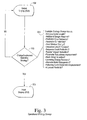
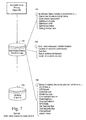
- FIGURE 3 provides an example list (304) of typical operational strategy issues that are likely to be considered, for example, by an engineer/operator when deciding whether a change in operating strategy or a new operation strategy should be implemented.
- changes 103) to the predefined operational inputs strategy definition using the GUI (104).
- the GUI may also provide a selection menu listing for editing or selecting predetermined strategy profiles and/or optimization inputs for affecting a change in operational strategy and the equivalent constraints.
- Strategy changes affecting predetermined values of parameters may be implemented, for example, via GUI 104. Listed immediately below are a few example reasons why implementing one or more strategy constraint change may be desirable:
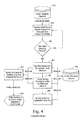
- FIGURE 4 illustrates a flowchart of an example procedure for computing and communicating an automated modification of optimization inputs of a predefined operational strategy as a consequence of a change in the last state-point of an operating reactor plant.
- a new updated state-point is determined and, using data from the general database 401, a comparison 402 is performed to determine if the most recent updated state-point is different than the state-point obtained from a previously run simulation. If the latest state-point has not changed (403), state-point comparisons 402 are continued. If the state-point has changed (404), a copy of the new state-point is copied to Optimization Inputs Database 409. In addition, a small change is made to the operational strategy (405) to reflect the change in the starting exposure.
- a optimization request flag is set (406) to identify the system for an optimization request. Since this aspect of the present invention is automated and requires no human intervention, notification of the automated implementation is provided via e-mail 408 to a predetermined specified distribution of recipients 407.
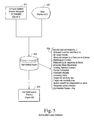
- FIGURE 5 is a block diagram illustrating example contents of an Optimization Input database (503) as a result of updated computed reactor state-point information (501) or manually input modifications.
- Optimization Input database modifications may originate from the automated process loop operations 501 or the manual process loop operations via graphical user interface 502.
- Optimization Inputs may include, but are not limited to data and parameters such as: state-point location, state-point filename, simulator model, allowable independent variables to optimize, optimization controls, preferred cycle exposure to be modeled, allowable blade movement ranges, starting depletion example, design constraints, constraint weights, licensing limits, target hot reactivity bias, target cold reactivity bias, search breadth for independent variables, response surface breadth, and optimization request flag.
- Each of these optimization inputs are stored in Optimization Input database 503 for use during Optimization process execution 504.
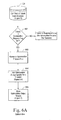
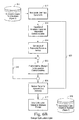
- FIGURE 6A illustrates example steps performed by optimization software running on one or more of the host processors (10) for performing the control-variable optimization process of the present invention.
- an optimization request flag is set.
- the values of the Optimization Inputs are obtained from the database (601) only after the request flag is tested (602) to determine if any changes have been made to the Optimization Inputs. If no changes to the Optimization Inputs have been made (i.e., request flag not set), the process reverts to the beginning entry point of the current manual or automatic loop (Fig. 1 B). If changes have been made, the new values are obtained from the database (601) and an optimization computation process is queued to run on a host processor (603). Once the optimization process computations are completed (604), the results are stored to the general database (605).
- FIGURE 6B illustrates a flowchart of an example optimization process computational engine.
- the most recent simulation state-point (501) information and user-specified optimization constraints (505) are obtained from Optimization Inputs database 611.
- the processing of two reactor simulator cases is initiated for each independent variable in order to determine the functional relationship of dependent variables to a change in a specified independent variable.
- the generation of a polynomial response surface is determined by solving for the coefficients of the polynomial. (The response surface transfer functions being normalized about the center-point to prolong usefulness during the optimization phase). Since there may be as many as several hundred independent variables, and a couple hundred thousand dependent variables for each independent variable, the above processing may potentially result in producing millions of polynomial response surface transfer functions.
- the transfer function polynomial response surface can be used to "predict" the response of the dependant variables for a given change in value of an independent variable 615. Consequently, computing simulated value changes for each of the independent variables provides an estimate of an optimum modification (i.e., change in quantitative value) which may be made to each independent variable.
- a reactor core operation simulator which may, for example, be a conventional core simulation program or process performed by one or more other host processors coupled to the network.
- a looping (619) of computing polynomial response surface predictions (615) and performing simulator calibrations/corrections is repeated until either: 1) the response surface becomes inaccurate, 2) a predetermined number of iterations is reached, or 3) until no further significant improvements to the computed solution are realized.
- loop 619 is exited, the range of the independent variable selection is reduced (616) and a new response surface is regenerated via processing "loop" 620.
- This larger response surface computation loop (620) is pursued until changes to an independent variable no longer improve the computed solution by a predetermined margin - which may be specified by optimization the user-input constraints.
- computed optimization output values (617) are stored in an Optimization Output Results database (618), which may be part of the general (central) database.
- FIGURE 7 is a block diagram illustrating example contents of information stored in an Optimization Output database 702, provide on a storage device in the system network.
- Three primary categories of optimization database contents are illustrated which include: 1) optimization status data 704, 2) optimization independent control-variables 705, and 3) resulting optimization dependent variable output predictions 706.
- the Optimization Status data 704 may include, but is not limited to, comparison results to design values, cycle length improvement, optimization results, optimization path, optimization status, and strategy comparisons.
- the Optimization independent Control-Variables 705 may include, for example, the location of the preferable control blades and equivalent blade groupings at all future requested exposures, the preferable core average flow at all future requested exposures, and the preferable sequence exchange exposure intervals.
- the Optimization Dependent variable output predictions, 706, may include (but are not limited to), for example, LHGR results, CPR results, cycle exposure, bundle exposure, core average exposure, blade depletions, core inlet enthalpy, LPRM data, hot reactivity bias, cold reactivity bias, thermal power, and electric power.
- the system and method of the present invention as described above may significantly improve the economic efficiency of operating nuclear reactors by providing suggested specifications of the operational control-variables that maximize energy and cycle length while providing the same or greater design margins needed to perform safe and flexible operation.
- Other practical uses of the present invention may include, but are not limited to:
- the method of the invention presented herein and described above may be practiced using most any type of computer network or interconnected system of processors having sufficient processing speed and associated data storage capacity and is not necessarily intended to be limited to any particular type of data processor or network.
- software elements of the present invention may be operative as one or more modules and may be embodied on a computer-readable medium for ease of transport between and/or installation on one or more host processors/computers in a networked environment.
- the method and system presented herein are applicable toward optimizing the operations of many different types of reactor plants, including but not limited to boiling water reactors (BWRs) and pressurized water reactors (PWRs).
Landscapes
- Engineering & Computer Science (AREA)
- Physics & Mathematics (AREA)
- General Engineering & Computer Science (AREA)
- Plasma & Fusion (AREA)
- High Energy & Nuclear Physics (AREA)
- Monitoring And Testing Of Nuclear Reactors (AREA)
- Testing And Monitoring For Control Systems (AREA)
Applications Claiming Priority (2)
| Application Number | Priority Date | Filing Date | Title |
|---|---|---|---|
| US09/683,004 US20030086520A1 (en) | 2001-11-07 | 2001-11-07 | System and method for continuous optimization of control-variables during operation of a nuclear reactor |
| US683004 | 2001-11-07 |
Publications (2)
| Publication Number | Publication Date |
|---|---|
| EP1310964A2 true EP1310964A2 (de) | 2003-05-14 |
| EP1310964A3 EP1310964A3 (de) | 2007-09-12 |
Family
ID=24742160
Family Applications (1)
| Application Number | Title | Priority Date | Filing Date |
|---|---|---|---|
| EP02257511A Ceased EP1310964A3 (de) | 2001-11-07 | 2002-10-30 | System und Verfahren zur forlaufenden Optimierung von Regelvariablen während des Betriebs eines Kernreaktors |
Country Status (6)
| Country | Link |
|---|---|
| US (2) | US20030086520A1 (de) |
| EP (1) | EP1310964A3 (de) |
| JP (1) | JP2003222695A (de) |
| KR (1) | KR100856180B1 (de) |
| MX (1) | MXPA02010894A (de) |
| TW (1) | TW594790B (de) |
Cited By (3)
| Publication number | Priority date | Publication date | Assignee | Title |
|---|---|---|---|---|
| EP1615232A3 (de) * | 2004-06-30 | 2007-10-24 | Global Nuclear Fuel-Americas, LLC | Verfahren, Anordnung und Computerprogramm zur Schaffung einer Dantenbank für Kernbrennstabbündelentwürfen von Kernreaktoren |
| EP1677314A3 (de) * | 2004-12-30 | 2007-10-31 | Global Nuclear Fuel-Americas, LLC | Verfahren zur Festlegung eines Atomreaktorkernentwurfes mit verminderter Steuerstabdichte |
| FR2947664A1 (fr) * | 2009-07-01 | 2011-01-07 | Areva Np | Dispositif de test d'un systeme de protection d'un reacteur d'une centrale nucleaire |
Families Citing this family (49)
| Publication number | Priority date | Publication date | Assignee | Title |
|---|---|---|---|---|
| US7487133B2 (en) * | 2002-09-19 | 2009-02-03 | Global Nuclear Fuel - Americas, Llc | Method and apparatus for adaptively determining weight factors within the context of an objective function |
| JP2004133650A (ja) * | 2002-10-10 | 2004-04-30 | Mitsubishi Heavy Ind Ltd | 制御用ロジックのシミュレーション検証方法及びシミュレーション検証用パソコン |
| US7072723B2 (en) * | 2002-10-23 | 2006-07-04 | Clearsight Systems Inc. | Method and system for optimization of general problems |
| US7231333B2 (en) * | 2003-03-31 | 2007-06-12 | Global Nuclear Fuel - Americas, Llc | Method and arrangement for developing core loading patterns in nuclear reactors |
| US7200541B2 (en) * | 2002-12-23 | 2007-04-03 | Global Nuclear Fuel-Americas, Llc | Method and arrangement for determining nuclear reactor core designs |
| US9047995B2 (en) * | 2002-12-18 | 2015-06-02 | Global Nuclear Fuel—Americas, LLC | Method and system for designing a nuclear reactor core for uprated power operations |
| US8873698B2 (en) * | 2002-12-18 | 2014-10-28 | Global Nuclear Fuel—Americas, LLC | Computer-implemented method and system for designing a nuclear reactor core which satisfies licensing criteria |
| US7926104B1 (en) * | 2003-04-16 | 2011-04-12 | Verizon Corporate Services Group Inc. | Methods and systems for network attack detection and prevention through redirection |
| US7280946B2 (en) * | 2003-04-30 | 2007-10-09 | Global Nuclear Fuel-Americas, Llc | Method and arrangement for determining pin enrichments in fuel bundle of nuclear reactor |
| US7730415B2 (en) * | 2003-09-05 | 2010-06-01 | Fisher-Rosemount Systems, Inc. | State machine function block with a user modifiable state transition configuration database |
| US6862329B1 (en) * | 2003-10-06 | 2005-03-01 | Global Nuclear Fuel-Americas Llc | In-cycle shuffle |
| US7499840B2 (en) * | 2003-10-06 | 2009-03-03 | Global Nuclear Fuel - Americas, Llc | Method and apparatus for creating and editing a nuclear reactor core loading template |
| JP4617503B2 (ja) * | 2003-12-15 | 2011-01-26 | 株式会社グローバル・ニュークリア・フュエル・ジャパン | 炉心監視システム |
| KR100596603B1 (ko) | 2004-01-09 | 2006-07-04 | 한국전력공사 | 원자로 핵계측 계통의 디지털 제어시스템 및 방법 |
| JP3861157B2 (ja) * | 2004-02-27 | 2006-12-20 | 国立大学法人広島大学 | 参照データ最適化装置とパターン認識システム |
| JP4643586B2 (ja) * | 2004-11-01 | 2011-03-02 | 富士通株式会社 | 最適設計管理装置、最適設計計算システム、最適設計管理方法、最適設計管理プログラム |
| US7574337B2 (en) * | 2004-12-30 | 2009-08-11 | Global Nuclear Fuel - Americas, Llc | Method of determining a fresh fuel bundle design for a core of a nuclear reactor |
| US7437276B2 (en) * | 2004-12-30 | 2008-10-14 | Global Nuclear Fuel -- Americas, Llc | Method and apparatus for evaluating a proposed solution to a constraint problem |
| US7672815B2 (en) * | 2004-12-30 | 2010-03-02 | Global Nuclear Fuel - Americas, Llc | Method and apparatus for evaluating a proposed solution to a constraint problem |
| US8041548B2 (en) | 2004-12-30 | 2011-10-18 | Global Nuclear Fuels-Americas, LLC | Method and apparatus for evaluating a proposed solution to a constraint problem for a nuclear reactor involving channel deformation |
| US8185836B2 (en) * | 2006-02-16 | 2012-05-22 | Global Nuclear Fuel - Americas Llc | Display, visualization, and processing tool for channel distortion and cell friction mitigation |
| US7420165B1 (en) * | 2006-06-09 | 2008-09-02 | Areva Np, Inc. | Method of determining the power transfer of nuclear component with a layer of material placed upon a heating surface of the component |
| US7472045B2 (en) * | 2006-12-13 | 2008-12-30 | Global Nuclear Fuel—Americas, LLC | Method for perturbating a nuclear reactor core fuel bundle design to generate a group of designs |
| US7685079B2 (en) * | 2006-12-21 | 2010-03-23 | Global Nuclear Fuel - Americas, Llc | Methods for evaluating robustness of solutions to constraint problems |
| US7633531B2 (en) | 2006-12-31 | 2009-12-15 | General Electric Company | Systems and methods for quantitatively assessing the quality of an image produced by an imaging system |
| US20080219394A1 (en) * | 2007-03-08 | 2008-09-11 | Mccord Richard D | Method and system for calculating an adjusted peak nodal power in a nuclear reactor |
| US8072204B1 (en) | 2007-05-09 | 2011-12-06 | Zilker Labs, Inc. | Control system optimization via digital diode emulation |
| KR100935777B1 (ko) * | 2008-02-15 | 2010-01-07 | 한국수력원자력 주식회사 | 비입증 인간기계연계시스템 기술의 이력축적시험을 위한가상운전 및 시험통제장치와 그 제어방법 |
| US8352148B2 (en) | 2008-05-21 | 2013-01-08 | General Electric Company | System for controlling input profiles of combined cycle power generation system |
| US8204180B1 (en) | 2008-08-08 | 2012-06-19 | Intervoice Limited Partnership | Systems and methods for preventing sensitive information from being communicated into a non-secure environment |
| US8955107B2 (en) | 2008-09-12 | 2015-02-10 | Juniper Networks, Inc. | Hierarchical application of security services within a computer network |
| KR100981145B1 (ko) | 2008-10-07 | 2010-09-10 | 한국수력원자력 주식회사 | 열수력 분석을 위한 자발적 분산 처리 시스템 및 그 방법 |
| US8040808B1 (en) * | 2008-10-20 | 2011-10-18 | Juniper Networks, Inc. | Service aware path selection with a network acceleration device |
| US8638076B2 (en) * | 2008-10-23 | 2014-01-28 | Intersil Americas Inc. | Transient processing mechanism for power converters |
| KR101107224B1 (ko) * | 2009-03-24 | 2012-01-25 | 한국원자력연구원 | 불확실성 분석용 입력자료 생성방법, 불확실성 분석방법, 불확실성 분석용 자료 생성장치 및 컴퓨터로 판독가능한 기록매체 |
| US9424376B2 (en) * | 2011-11-18 | 2016-08-23 | Terrapower, Llc | Enhanced neutronics systems |
| US20130304546A1 (en) * | 2012-05-11 | 2013-11-14 | Agni Corporation (Cayman Islands) | Novel systems and methods for optimizing profit or gross margin based on one of more values of process parameters for producing biofuel |
| US9305671B2 (en) | 2012-12-04 | 2016-04-05 | Nuscale Power, Llc | Managing electrical power for a nuclear reactor system |
| CN105321585B (zh) * | 2015-09-28 | 2018-01-19 | 中国船舶重工集团公司第七一九研究所 | 用于调试核动力装置控制系统的半实物仿真系统及方法 |
| FR3059459B1 (fr) * | 2016-11-25 | 2019-03-15 | Electricite De France | Optimisation de maintenance de centrale nucleaire |
| CN106777832B (zh) * | 2017-02-14 | 2017-12-26 | 中国科学院合肥物质科学研究院 | 一种数字反应堆 |
| EP3586341B1 (de) * | 2017-02-27 | 2023-10-25 | TerraPower, LLC | Verfahren zum modellierung eines kernreaktors |
| RU2759217C1 (ru) * | 2018-07-04 | 2021-11-11 | Акционерное Общество "Твэл" | Ядерный реактор с водой под давлением |
| JP7192150B2 (ja) * | 2019-05-07 | 2022-12-19 | フラマトム・ゲーエムベーハー | 加圧水型原子炉の管理方法および応分の管理システム |
| US11574094B2 (en) | 2019-06-09 | 2023-02-07 | BWXT Advanced Technologies LLC | Rapid digital nuclear reactor design using machine learning |
| US11581102B2 (en) * | 2019-09-09 | 2023-02-14 | Westinghouse Electric Company Llc | Nuclear control system with neural network |
| FR3108769B1 (fr) * | 2020-03-24 | 2022-04-01 | Electricite De France | Dispositif de contrôle d’une pluralité de réacteurs nucléaires |
| CN114254803B (zh) * | 2021-11-10 | 2025-09-23 | 中广核研究院有限公司 | 换料装载方案搜索优化方法 |
| CN119601272B (zh) * | 2024-10-24 | 2025-10-17 | 中国核动力研究设计院 | 一种多环路反应堆系统运行方法、装置、设备及介质 |
Family Cites Families (39)
| Publication number | Priority date | Publication date | Assignee | Title |
|---|---|---|---|---|
| US4330367A (en) | 1973-05-22 | 1982-05-18 | Combustion Engineering, Inc. | System and process for the control of a nuclear power system |
| US4459259A (en) | 1982-06-29 | 1984-07-10 | The United States Of America As Represented By The United States Department Of Energy | Digital computer operation of a nuclear reactor |
| US4552718A (en) | 1982-07-01 | 1985-11-12 | Westinghouse Electric Corp. | Method and apparatus for on-line monitoring of the operation of a complex non-linear process control system |
| US5530867A (en) | 1985-09-17 | 1996-06-25 | Beran; James T. | Software for self-programming |
| US4740349A (en) * | 1986-09-29 | 1988-04-26 | Westinghouse Electric Corp. | Machine implemented system for determining compliance of a complex process plant with technical specifications |
| US4853175A (en) | 1988-03-10 | 1989-08-01 | The Babcock & Wilcox Company | Power plant interactive display |
| JPH02130498A (ja) * | 1988-11-10 | 1990-05-18 | Nippon Atom Ind Group Co Ltd | 沸騰水型原子炉の熱的運転余裕監視装置 |
| US4997617A (en) | 1988-11-28 | 1991-03-05 | The Babcock & Wilcox Company | Real-time reactor coolant system pressure/temperature limit system |
| US5009833A (en) * | 1989-01-11 | 1991-04-23 | Westinghouse Electric Corp. | Expert system for surveillance, diagnosis and prognosis of plant operation |
| JPH0660826B2 (ja) | 1989-02-07 | 1994-08-10 | 動力炉・核燃料開発事業団 | プラントの異常診断方法 |
| US5091139A (en) | 1989-06-26 | 1992-02-25 | General Electric Company | Automated thermal limit monitor |
| JP3224810B2 (ja) | 1990-10-04 | 2001-11-05 | 株式会社東芝 | 燃料集合体の限界出力比計算装置 |
| DE69132286T2 (de) | 1990-11-14 | 2000-11-30 | Fujitsu Ltd., Kawasaki | Kombinationsproblem-Lösungsvorrichtungen |
| JP2679500B2 (ja) | 1990-12-17 | 1997-11-19 | モトローラ・インコーポレイテッド | 総合的なシステム歩留りを計算するための方法 |
| US5309485A (en) | 1992-07-06 | 1994-05-03 | General Electric Company | Core automated monitoring system |
| US5855009A (en) | 1992-07-31 | 1998-12-29 | Texas Instruments Incorporated | Concurrent design tradeoff analysis system and method |
| US5272736A (en) | 1992-11-05 | 1993-12-21 | General Electric Company | Core loading strategy for reload of a plurality of different fuel bundle fuel designs |
| US5311562A (en) | 1992-12-01 | 1994-05-10 | Westinghouse Electric Corp. | Plant maintenance with predictive diagnostics |
| CA2115876A1 (en) | 1993-03-22 | 1994-09-23 | Henry Alexander Kautz | Methods and apparatus for constraint satisfaction |
| SE509235C2 (sv) | 1993-05-11 | 1998-12-21 | Asea Atom Ab | Förfarande för övervakning med avseende på dryout av en kokarreaktor |
| US5631939A (en) | 1994-09-09 | 1997-05-20 | Hitachi, Ltd. | Initial core of nuclear power plant |
| JPH08166487A (ja) * | 1994-12-15 | 1996-06-25 | Toshiba Syst Technol Kk | 運転計画装置 |
| US5793636A (en) | 1995-04-28 | 1998-08-11 | Westinghouse Electric Corporation | Integrated fuel management system |
| KR100208653B1 (ko) | 1995-09-13 | 1999-07-15 | 윤덕용 | 원자력발전소의 운전원 작업반 |
| US5726913A (en) | 1995-10-24 | 1998-03-10 | Intel Corporation | Method and apparatus for analyzing interactions between workloads and locality dependent subsystems |
| US5923717A (en) | 1996-01-29 | 1999-07-13 | General Electric Company | Method and system for determining nuclear core loading arrangements |
| US5781430A (en) * | 1996-06-27 | 1998-07-14 | International Business Machines Corporation | Optimization method and system having multiple inputs and multiple output-responses |
| US5790616A (en) | 1996-08-09 | 1998-08-04 | General Electric Company | Method and system for determining nuclear reactor core control blade positioning |
| US5859885A (en) | 1996-11-27 | 1999-01-12 | Westinghouse Electric Coporation | Information display system |
| US5940816A (en) | 1997-01-29 | 1999-08-17 | International Business Machines Corporation | Multi-objective decision-support methodology |
| US5790618A (en) | 1997-07-21 | 1998-08-04 | General Electric Company | Method and system for determining the impact of a mislocated nuclear fuel bundle loading |
| FR2769402B1 (fr) | 1997-10-07 | 1999-12-17 | Framatome Sa | Technique de pilotage de reacteur nucleaire |
| US6272483B1 (en) | 1997-10-31 | 2001-08-07 | The State Of Oregon Acting By And Through The State Board Of Higher Education On Behalf Of The University Of Oregon | Cost-optimizing allocation system and method |
| US5912933A (en) * | 1997-12-04 | 1999-06-15 | General Electric Company | Method and system for direct evaluation of operating limit minimum critical power ratios for boiling water reactors |
| US6031984A (en) | 1998-03-09 | 2000-02-29 | I2 Technologies, Inc. | Method and apparatus for optimizing constraint models |
| US6345240B1 (en) | 1998-08-24 | 2002-02-05 | Agere Systems Guardian Corp. | Device and method for parallel simulation task generation and distribution |
| US6311313B1 (en) | 1998-12-29 | 2001-10-30 | International Business Machines Corporation | X-Y grid tree clock distribution network with tunable tree and grid networks |
| US6535568B1 (en) * | 1999-12-30 | 2003-03-18 | Global Nuclear Fuel -- Americas Llc | Method and system for generating thermal-mechanical limits for the operation of nuclear fuel rods |
| US6748348B1 (en) * | 1999-12-30 | 2004-06-08 | General Electric Company | Design method for nuclear reactor fuel management |
-
2001
- 2001-11-07 US US09/683,004 patent/US20030086520A1/en not_active Abandoned
-
2002
- 2002-10-24 TW TW091124695A patent/TW594790B/zh not_active IP Right Cessation
- 2002-10-30 EP EP02257511A patent/EP1310964A3/de not_active Ceased
- 2002-11-05 MX MXPA02010894A patent/MXPA02010894A/es not_active Application Discontinuation
- 2002-11-06 JP JP2002321942A patent/JP2003222695A/ja active Pending
- 2002-11-07 KR KR1020020068831A patent/KR100856180B1/ko not_active Expired - Fee Related
-
2003
- 2003-06-30 US US10/608,086 patent/US7555092B2/en not_active Expired - Fee Related
Cited By (3)
| Publication number | Priority date | Publication date | Assignee | Title |
|---|---|---|---|---|
| EP1615232A3 (de) * | 2004-06-30 | 2007-10-24 | Global Nuclear Fuel-Americas, LLC | Verfahren, Anordnung und Computerprogramm zur Schaffung einer Dantenbank für Kernbrennstabbündelentwürfen von Kernreaktoren |
| EP1677314A3 (de) * | 2004-12-30 | 2007-10-31 | Global Nuclear Fuel-Americas, LLC | Verfahren zur Festlegung eines Atomreaktorkernentwurfes mit verminderter Steuerstabdichte |
| FR2947664A1 (fr) * | 2009-07-01 | 2011-01-07 | Areva Np | Dispositif de test d'un systeme de protection d'un reacteur d'une centrale nucleaire |
Also Published As
| Publication number | Publication date |
|---|---|
| US20040101083A1 (en) | 2004-05-27 |
| KR100856180B1 (ko) | 2008-09-03 |
| KR20030038497A (ko) | 2003-05-16 |
| MXPA02010894A (es) | 2003-05-15 |
| EP1310964A3 (de) | 2007-09-12 |
| US7555092B2 (en) | 2009-06-30 |
| TW594790B (en) | 2004-06-21 |
| JP2003222695A (ja) | 2003-08-08 |
| US20030086520A1 (en) | 2003-05-08 |
Similar Documents
| Publication | Publication Date | Title |
|---|---|---|
| US7555092B2 (en) | System and method for continuous optimization of control-variables during operation of a nuclear reactor | |
| US7461038B2 (en) | Method and apparatus for evaluating robustness of proposed solution to constraint problem and considering robustness in developing a constraint problem solution | |
| EP1113457B1 (de) | System und Verfahren zur Optimierung einer Vielzahl von Betriebs- bzw. Steuerkenngrössen in einem Kernreaktor | |
| US8109766B2 (en) | Method for predicted reactor simulation | |
| US6611572B2 (en) | Determination of operating limit minimum critical power ratio | |
| US6862329B1 (en) | In-cycle shuffle | |
| EP1936637A1 (de) | Verfahren zur Beurteilung der Stichhaltigkeit von Lösungen von Zwangsproblemen | |
| JP2006017718A (ja) | 原子炉の燃料集合体設計を生成するための方法、装置、及びコンピュータプログラム | |
| KR20210148324A (ko) | 가압수 원자로를 관리하는 방법 및 그에 따른 관리 시스템 | |
| US20040151274A1 (en) | Method of improving nuclear reactor performance | |
| Turinsky et al. | Evolution of nuclear fuel management and reactor operational aid tools | |
| US8041548B2 (en) | Method and apparatus for evaluating a proposed solution to a constraint problem for a nuclear reactor involving channel deformation | |
| Guler et al. | Development of the VVER core loading optimization system | |
| JP2005172750A (ja) | 炉心監視システム | |
| Climaco et al. | A decision support system for power generation expansion planning with a case study | |
| Smith et al. | Light Water Reactor Sustainability Program: Analysis of Pressurized Water Reactor Station Blackout Caused by External Flooding Using the RISMC Toolkit | |
| Auve et al. | Implementation of Fast Searching Method for the Cross-Section Usage in HTGR Simulators | |
| Evdokimov et al. | Workout approaches to develop an expert system for fuel failures monitoring and analysis. Trending of recent data on WWER fuel failures |
Legal Events
| Date | Code | Title | Description |
|---|---|---|---|
| PUAI | Public reference made under article 153(3) epc to a published international application that has entered the european phase |
Free format text: ORIGINAL CODE: 0009012 |
|
| AK | Designated contracting states |
Designated state(s): AT BE BG CH CY CZ DE DK EE ES FI FR GB GR IE IT LI LU MC NL PT SE SK TR |
|
| AX | Request for extension of the european patent |
Extension state: AL LT LV MK RO SI |
|
| PUAL | Search report despatched |
Free format text: ORIGINAL CODE: 0009013 |
|
| AK | Designated contracting states |
Kind code of ref document: A3 Designated state(s): AT BE BG CH CY CZ DE DK EE ES FI FR GB GR IE IT LI LU MC NL PT SE SK TR |
|
| AX | Request for extension of the european patent |
Extension state: AL LT LV MK RO SI |
|
| 17P | Request for examination filed |
Effective date: 20080312 |
|
| 17Q | First examination report despatched |
Effective date: 20080416 |
|
| AKX | Designation fees paid |
Designated state(s): AT BE BG CH CY CZ DE DK EE ES FI FR GB GR IE IT LI LU MC NL PT SE SK TR |
|
| STAA | Information on the status of an ep patent application or granted ep patent |
Free format text: STATUS: THE APPLICATION HAS BEEN REFUSED |
|
| 18R | Application refused |
Effective date: 20091005 |