EP1312656A2 - Oberflächenmodifiziertes druckempfindliches Klebemittel, Verfahren zur Oberflächenmodifizierung eines Klebemittel sowie druckempfindliches Klebeband - Google Patents
Oberflächenmodifiziertes druckempfindliches Klebemittel, Verfahren zur Oberflächenmodifizierung eines Klebemittel sowie druckempfindliches Klebeband Download PDFInfo
- Publication number
- EP1312656A2 EP1312656A2 EP02025533A EP02025533A EP1312656A2 EP 1312656 A2 EP1312656 A2 EP 1312656A2 EP 02025533 A EP02025533 A EP 02025533A EP 02025533 A EP02025533 A EP 02025533A EP 1312656 A2 EP1312656 A2 EP 1312656A2
- Authority
- EP
- European Patent Office
- Prior art keywords
- pressure
- sensitive adhesive
- layer
- polymer
- modifying
- Prior art date
- Legal status (The legal status is an assumption and is not a legal conclusion. Google has not performed a legal analysis and makes no representation as to the accuracy of the status listed.)
- Withdrawn
Links
- 239000004820 Pressure-sensitive adhesive Substances 0.000 title claims abstract description 257
- 238000000034 method Methods 0.000 title claims abstract description 40
- 229920000642 polymer Polymers 0.000 claims abstract description 83
- 230000001070 adhesive effect Effects 0.000 claims abstract description 16
- 239000000853 adhesive Substances 0.000 claims abstract description 14
- 238000004132 cross linking Methods 0.000 claims abstract description 14
- 239000010410 layer Substances 0.000 claims description 184
- 229920002367 Polyisobutene Polymers 0.000 description 58
- -1 woods Substances 0.000 description 44
- 229920000058 polyacrylate Polymers 0.000 description 24
- 125000000524 functional group Chemical group 0.000 description 21
- 230000000052 comparative effect Effects 0.000 description 20
- 239000002985 plastic film Substances 0.000 description 19
- 229920006255 plastic film Polymers 0.000 description 18
- 229920005989 resin Polymers 0.000 description 16
- 239000011347 resin Substances 0.000 description 16
- 239000000463 material Substances 0.000 description 14
- 150000001875 compounds Chemical class 0.000 description 13
- XEKOWRVHYACXOJ-UHFFFAOYSA-N Ethyl acetate Chemical compound CCOC(C)=O XEKOWRVHYACXOJ-UHFFFAOYSA-N 0.000 description 12
- PPBRXRYQALVLMV-UHFFFAOYSA-N Styrene Chemical compound C=CC1=CC=CC=C1 PPBRXRYQALVLMV-UHFFFAOYSA-N 0.000 description 12
- 239000000203 mixture Substances 0.000 description 12
- 239000000178 monomer Substances 0.000 description 12
- 238000004458 analytical method Methods 0.000 description 11
- 238000006243 chemical reaction Methods 0.000 description 11
- 239000011248 coating agent Substances 0.000 description 11
- 238000000576 coating method Methods 0.000 description 11
- 125000002887 hydroxy group Chemical group [H]O* 0.000 description 11
- 229920001577 copolymer Polymers 0.000 description 10
- 229920001971 elastomer Polymers 0.000 description 10
- 238000012986 modification Methods 0.000 description 10
- 230000004048 modification Effects 0.000 description 10
- 239000007787 solid Substances 0.000 description 10
- 125000000391 vinyl group Chemical group [H]C([*])=C([H])[H] 0.000 description 10
- YXFVVABEGXRONW-UHFFFAOYSA-N Toluene Chemical compound CC1=CC=CC=C1 YXFVVABEGXRONW-UHFFFAOYSA-N 0.000 description 9
- 239000005060 rubber Substances 0.000 description 9
- 238000004833 X-ray photoelectron spectroscopy Methods 0.000 description 8
- 239000002390 adhesive tape Substances 0.000 description 8
- 238000009792 diffusion process Methods 0.000 description 8
- 229920006132 styrene block copolymer Polymers 0.000 description 7
- 238000012360 testing method Methods 0.000 description 7
- 238000012546 transfer Methods 0.000 description 7
- 239000004743 Polypropylene Substances 0.000 description 6
- NIXOWILDQLNWCW-UHFFFAOYSA-N acrylic acid group Chemical group C(C=C)(=O)O NIXOWILDQLNWCW-UHFFFAOYSA-N 0.000 description 6
- 229920005601 base polymer Polymers 0.000 description 6
- 229920001155 polypropylene Polymers 0.000 description 6
- 239000004698 Polyethylene Substances 0.000 description 5
- CQEYYJKEWSMYFG-UHFFFAOYSA-N butyl acrylate Chemical compound CCCCOC(=O)C=C CQEYYJKEWSMYFG-UHFFFAOYSA-N 0.000 description 5
- 239000010408 film Substances 0.000 description 5
- VOZRXNHHFUQHIL-UHFFFAOYSA-N glycidyl methacrylate Chemical compound CC(=C)C(=O)OCC1CO1 VOZRXNHHFUQHIL-UHFFFAOYSA-N 0.000 description 5
- 239000012948 isocyanate Substances 0.000 description 5
- 229920000573 polyethylene Polymers 0.000 description 5
- 238000004627 transmission electron microscopy Methods 0.000 description 5
- 229910052799 carbon Inorganic materials 0.000 description 4
- 125000004432 carbon atom Chemical group C* 0.000 description 4
- 239000003431 cross linking reagent Substances 0.000 description 4
- 230000000694 effects Effects 0.000 description 4
- 238000011156 evaluation Methods 0.000 description 4
- 239000000126 substance Substances 0.000 description 4
- GOXQRTZXKQZDDN-UHFFFAOYSA-N 2-Ethylhexyl acrylate Chemical compound CCCCC(CC)COC(=O)C=C GOXQRTZXKQZDDN-UHFFFAOYSA-N 0.000 description 3
- VSKJLJHPAFKHBX-UHFFFAOYSA-N 2-methylbuta-1,3-diene;styrene Chemical compound CC(=C)C=C.C=CC1=CC=CC=C1.C=CC1=CC=CC=C1 VSKJLJHPAFKHBX-UHFFFAOYSA-N 0.000 description 3
- 244000043261 Hevea brasiliensis Species 0.000 description 3
- 239000005062 Polybutadiene Substances 0.000 description 3
- XQBCVRSTVUHIGH-UHFFFAOYSA-L [dodecanoyloxy(dioctyl)stannyl] dodecanoate Chemical compound CCCCCCCCCCCC(=O)O[Sn](CCCCCCCC)(CCCCCCCC)OC(=O)CCCCCCCCCCC XQBCVRSTVUHIGH-UHFFFAOYSA-L 0.000 description 3
- 125000002915 carbonyl group Chemical group [*:2]C([*:1])=O 0.000 description 3
- 125000003178 carboxy group Chemical group [H]OC(*)=O 0.000 description 3
- 239000007809 chemical reaction catalyst Substances 0.000 description 3
- 150000002430 hydrocarbons Chemical group 0.000 description 3
- 239000004615 ingredient Substances 0.000 description 3
- IQPQWNKOIGAROB-UHFFFAOYSA-N isocyanate group Chemical group [N-]=C=O IQPQWNKOIGAROB-UHFFFAOYSA-N 0.000 description 3
- 229920003052 natural elastomer Polymers 0.000 description 3
- 229920001194 natural rubber Polymers 0.000 description 3
- 239000000123 paper Substances 0.000 description 3
- 229920002857 polybutadiene Polymers 0.000 description 3
- 229920001195 polyisoprene Polymers 0.000 description 3
- 239000002356 single layer Substances 0.000 description 3
- 238000004381 surface treatment Methods 0.000 description 3
- 229930195735 unsaturated hydrocarbon Natural products 0.000 description 3
- NLHHRLWOUZZQLW-UHFFFAOYSA-N Acrylonitrile Chemical compound C=CC#N NLHHRLWOUZZQLW-UHFFFAOYSA-N 0.000 description 2
- 239000004593 Epoxy Substances 0.000 description 2
- VGGSQFUCUMXWEO-UHFFFAOYSA-N Ethene Chemical compound C=C VGGSQFUCUMXWEO-UHFFFAOYSA-N 0.000 description 2
- 239000005977 Ethylene Substances 0.000 description 2
- 229920000877 Melamine resin Polymers 0.000 description 2
- BAPJBEWLBFYGME-UHFFFAOYSA-N Methyl acrylate Chemical compound COC(=O)C=C BAPJBEWLBFYGME-UHFFFAOYSA-N 0.000 description 2
- BZHJMEDXRYGGRV-UHFFFAOYSA-N Vinyl chloride Chemical compound ClC=C BZHJMEDXRYGGRV-UHFFFAOYSA-N 0.000 description 2
- 239000000654 additive Substances 0.000 description 2
- 230000032683 aging Effects 0.000 description 2
- MTAZNLWOLGHBHU-UHFFFAOYSA-N butadiene-styrene rubber Chemical compound C=CC=C.C=CC1=CC=CC=C1 MTAZNLWOLGHBHU-UHFFFAOYSA-N 0.000 description 2
- 229920005549 butyl rubber Polymers 0.000 description 2
- 238000007796 conventional method Methods 0.000 description 2
- 238000010894 electron beam technology Methods 0.000 description 2
- 239000003822 epoxy resin Substances 0.000 description 2
- 238000010438 heat treatment Methods 0.000 description 2
- 238000011835 investigation Methods 0.000 description 2
- 150000002513 isocyanates Chemical class 0.000 description 2
- 239000007788 liquid Substances 0.000 description 2
- 239000002184 metal Substances 0.000 description 2
- 229910052751 metal Inorganic materials 0.000 description 2
- 239000003208 petroleum Substances 0.000 description 2
- 229920001568 phenolic resin Polymers 0.000 description 2
- 239000005011 phenolic resin Substances 0.000 description 2
- 229920001084 poly(chloroprene) Polymers 0.000 description 2
- 229920000647 polyepoxide Polymers 0.000 description 2
- 229920006393 polyether sulfone Polymers 0.000 description 2
- 229920000139 polyethylene terephthalate Polymers 0.000 description 2
- 239000005020 polyethylene terephthalate Substances 0.000 description 2
- 229920005672 polyolefin resin Polymers 0.000 description 2
- 229920002635 polyurethane Polymers 0.000 description 2
- 125000002924 primary amino group Chemical group [H]N([H])* 0.000 description 2
- 125000005372 silanol group Chemical group 0.000 description 2
- 229920002379 silicone rubber Polymers 0.000 description 2
- 229920003048 styrene butadiene rubber Polymers 0.000 description 2
- 239000002344 surface layer Substances 0.000 description 2
- 229920002554 vinyl polymer Polymers 0.000 description 2
- XLYOFNOQVPJJNP-UHFFFAOYSA-N water Substances O XLYOFNOQVPJJNP-UHFFFAOYSA-N 0.000 description 2
- KPAPHODVWOVUJL-UHFFFAOYSA-N 1-benzofuran;1h-indene Chemical compound C1=CC=C2CC=CC2=C1.C1=CC=C2OC=CC2=C1 KPAPHODVWOVUJL-UHFFFAOYSA-N 0.000 description 1
- SMZOUWXMTYCWNB-UHFFFAOYSA-N 2-(2-methoxy-5-methylphenyl)ethanamine Chemical compound COC1=CC=C(C)C=C1CCN SMZOUWXMTYCWNB-UHFFFAOYSA-N 0.000 description 1
- JKNCOURZONDCGV-UHFFFAOYSA-N 2-(dimethylamino)ethyl 2-methylprop-2-enoate Chemical compound CN(C)CCOC(=O)C(C)=C JKNCOURZONDCGV-UHFFFAOYSA-N 0.000 description 1
- OMIGHNLMNHATMP-UHFFFAOYSA-N 2-hydroxyethyl prop-2-enoate Chemical compound OCCOC(=O)C=C OMIGHNLMNHATMP-UHFFFAOYSA-N 0.000 description 1
- DXPPIEDUBFUSEZ-UHFFFAOYSA-N 6-methylheptyl prop-2-enoate Chemical compound CC(C)CCCCCOC(=O)C=C DXPPIEDUBFUSEZ-UHFFFAOYSA-N 0.000 description 1
- CUXGDKOCSSIRKK-UHFFFAOYSA-N 7-methyloctyl prop-2-enoate Chemical compound CC(C)CCCCCCOC(=O)C=C CUXGDKOCSSIRKK-UHFFFAOYSA-N 0.000 description 1
- RSWGJHLUYNHPMX-UHFFFAOYSA-N Abietic-Saeure Natural products C12CCC(C(C)C)=CC2=CCC2C1(C)CCCC2(C)C(O)=O RSWGJHLUYNHPMX-UHFFFAOYSA-N 0.000 description 1
- HRPVXLWXLXDGHG-UHFFFAOYSA-N Acrylamide Chemical compound NC(=O)C=C HRPVXLWXLXDGHG-UHFFFAOYSA-N 0.000 description 1
- 239000004925 Acrylic resin Substances 0.000 description 1
- 229920000178 Acrylic resin Polymers 0.000 description 1
- RYGMFSIKBFXOCR-UHFFFAOYSA-N Copper Chemical compound [Cu] RYGMFSIKBFXOCR-UHFFFAOYSA-N 0.000 description 1
- MQIUGAXCHLFZKX-UHFFFAOYSA-N Di-n-octyl phthalate Natural products CCCCCCCCOC(=O)C1=CC=CC=C1C(=O)OCCCCCCCC MQIUGAXCHLFZKX-UHFFFAOYSA-N 0.000 description 1
- JIGUQPWFLRLWPJ-UHFFFAOYSA-N Ethyl acrylate Chemical compound CCOC(=O)C=C JIGUQPWFLRLWPJ-UHFFFAOYSA-N 0.000 description 1
- JHWNWJKBPDFINM-UHFFFAOYSA-N Laurolactam Chemical compound O=C1CCCCCCCCCCCN1 JHWNWJKBPDFINM-UHFFFAOYSA-N 0.000 description 1
- VVQNEPGJFQJSBK-UHFFFAOYSA-N Methyl methacrylate Chemical compound COC(=O)C(C)=C VVQNEPGJFQJSBK-UHFFFAOYSA-N 0.000 description 1
- WHNWPMSKXPGLAX-UHFFFAOYSA-N N-Vinyl-2-pyrrolidone Chemical compound C=CN1CCCC1=O WHNWPMSKXPGLAX-UHFFFAOYSA-N 0.000 description 1
- 229920000299 Nylon 12 Polymers 0.000 description 1
- 229920002292 Nylon 6 Polymers 0.000 description 1
- 229920002302 Nylon 6,6 Polymers 0.000 description 1
- CTQNGGLPUBDAKN-UHFFFAOYSA-N O-Xylene Chemical compound CC1=CC=CC=C1C CTQNGGLPUBDAKN-UHFFFAOYSA-N 0.000 description 1
- 239000004696 Poly ether ether ketone Substances 0.000 description 1
- 239000004642 Polyimide Substances 0.000 description 1
- 239000004793 Polystyrene Substances 0.000 description 1
- 229920001328 Polyvinylidene chloride Polymers 0.000 description 1
- KHPCPRHQVVSZAH-HUOMCSJISA-N Rosin Natural products O(C/C=C/c1ccccc1)[C@H]1[C@H](O)[C@@H](O)[C@@H](O)[C@@H](CO)O1 KHPCPRHQVVSZAH-HUOMCSJISA-N 0.000 description 1
- 229910000831 Steel Inorganic materials 0.000 description 1
- XTXRWKRVRITETP-UHFFFAOYSA-N Vinyl acetate Chemical compound CC(=O)OC=C XTXRWKRVRITETP-UHFFFAOYSA-N 0.000 description 1
- 125000004018 acid anhydride group Chemical group 0.000 description 1
- 229920000122 acrylonitrile butadiene styrene Polymers 0.000 description 1
- 125000001931 aliphatic group Chemical group 0.000 description 1
- 125000005250 alkyl acrylate group Chemical group 0.000 description 1
- 125000000217 alkyl group Chemical group 0.000 description 1
- 125000003368 amide group Chemical group 0.000 description 1
- 239000003963 antioxidant agent Substances 0.000 description 1
- 125000003118 aryl group Chemical group 0.000 description 1
- QVGXLLKOCUKJST-UHFFFAOYSA-N atomic oxygen Chemical compound [O] QVGXLLKOCUKJST-UHFFFAOYSA-N 0.000 description 1
- 230000015572 biosynthetic process Effects 0.000 description 1
- BJQHLKABXJIVAM-UHFFFAOYSA-N bis(2-ethylhexyl) phthalate Chemical compound CCCCC(CC)COC(=O)C1=CC=CC=C1C(=O)OCC(CC)CCCC BJQHLKABXJIVAM-UHFFFAOYSA-N 0.000 description 1
- 229920000402 bisphenol A polycarbonate polymer Polymers 0.000 description 1
- 229910052802 copper Inorganic materials 0.000 description 1
- 239000010949 copper Substances 0.000 description 1
- 238000003851 corona treatment Methods 0.000 description 1
- 125000004093 cyano group Chemical group *C#N 0.000 description 1
- 238000013016 damping Methods 0.000 description 1
- 230000007423 decrease Effects 0.000 description 1
- 239000004205 dimethyl polysiloxane Substances 0.000 description 1
- 238000007598 dipping method Methods 0.000 description 1
- 239000006185 dispersion Substances 0.000 description 1
- 238000009826 distribution Methods 0.000 description 1
- 238000001035 drying Methods 0.000 description 1
- 239000000806 elastomer Substances 0.000 description 1
- 125000003700 epoxy group Chemical group 0.000 description 1
- RTZKZFJDLAIYFH-UHFFFAOYSA-N ether Substances CCOCC RTZKZFJDLAIYFH-UHFFFAOYSA-N 0.000 description 1
- MJEMIOXXNCZZFK-UHFFFAOYSA-N ethylone Chemical compound CCNC(C)C(=O)C1=CC=C2OCOC2=C1 MJEMIOXXNCZZFK-UHFFFAOYSA-N 0.000 description 1
- 239000004744 fabric Substances 0.000 description 1
- 239000000945 filler Substances 0.000 description 1
- 239000011888 foil Substances 0.000 description 1
- 239000011521 glass Substances 0.000 description 1
- 238000010559 graft polymerization reaction Methods 0.000 description 1
- LNEPOXFFQSENCJ-UHFFFAOYSA-N haloperidol Chemical compound C1CC(O)(C=2C=CC(Cl)=CC=2)CCN1CCCC(=O)C1=CC=C(F)C=C1 LNEPOXFFQSENCJ-UHFFFAOYSA-N 0.000 description 1
- 150000002391 heterocyclic compounds Chemical class 0.000 description 1
- 238000007757 hot melt coating Methods 0.000 description 1
- 238000005984 hydrogenation reaction Methods 0.000 description 1
- 239000003999 initiator Substances 0.000 description 1
- 229920000592 inorganic polymer Polymers 0.000 description 1
- 230000001678 irradiating effect Effects 0.000 description 1
- FPYJFEHAWHCUMM-UHFFFAOYSA-N maleic anhydride Chemical compound O=C1OC(=O)C=C1 FPYJFEHAWHCUMM-UHFFFAOYSA-N 0.000 description 1
- 229910044991 metal oxide Inorganic materials 0.000 description 1
- 150000004706 metal oxides Chemical class 0.000 description 1
- 150000002739 metals Chemical class 0.000 description 1
- 229910052757 nitrogen Inorganic materials 0.000 description 1
- 125000004433 nitrogen atom Chemical group N* 0.000 description 1
- 230000003287 optical effect Effects 0.000 description 1
- 229920000620 organic polymer Polymers 0.000 description 1
- 239000001301 oxygen Substances 0.000 description 1
- 229910052760 oxygen Inorganic materials 0.000 description 1
- 125000004430 oxygen atom Chemical group O* 0.000 description 1
- PNJWIWWMYCMZRO-UHFFFAOYSA-N pent‐4‐en‐2‐one Natural products CC(=O)CC=C PNJWIWWMYCMZRO-UHFFFAOYSA-N 0.000 description 1
- 230000035699 permeability Effects 0.000 description 1
- 125000001997 phenyl group Chemical group [H]C1=C([H])C([H])=C(*)C([H])=C1[H] 0.000 description 1
- 239000000049 pigment Substances 0.000 description 1
- 238000009832 plasma treatment Methods 0.000 description 1
- 229920003023 plastic Polymers 0.000 description 1
- 239000004033 plastic Substances 0.000 description 1
- 229920000435 poly(dimethylsiloxane) Polymers 0.000 description 1
- 229920000636 poly(norbornene) polymer Polymers 0.000 description 1
- 229920002492 poly(sulfone) Polymers 0.000 description 1
- 229920001921 poly-methyl-phenyl-siloxane Polymers 0.000 description 1
- 229920006122 polyamide resin Polymers 0.000 description 1
- 229920001230 polyarylate Polymers 0.000 description 1
- 229920001083 polybutene Polymers 0.000 description 1
- 229920001748 polybutylene Polymers 0.000 description 1
- 229920001707 polybutylene terephthalate Polymers 0.000 description 1
- 229920000515 polycarbonate Polymers 0.000 description 1
- 239000004417 polycarbonate Substances 0.000 description 1
- 229920000728 polyester Polymers 0.000 description 1
- 229920001225 polyester resin Polymers 0.000 description 1
- 239000004645 polyester resin Substances 0.000 description 1
- 229920002530 polyetherether ketone Polymers 0.000 description 1
- 229920001721 polyimide Polymers 0.000 description 1
- 229920006324 polyoxymethylene Polymers 0.000 description 1
- 229920000069 polyphenylene sulfide Polymers 0.000 description 1
- 229920001296 polysiloxane Polymers 0.000 description 1
- 229920002223 polystyrene Polymers 0.000 description 1
- 229920001343 polytetrafluoroethylene Polymers 0.000 description 1
- 239000004810 polytetrafluoroethylene Substances 0.000 description 1
- 229920005749 polyurethane resin Polymers 0.000 description 1
- 229920002451 polyvinyl alcohol Polymers 0.000 description 1
- 229920000915 polyvinyl chloride Polymers 0.000 description 1
- 239000004800 polyvinyl chloride Substances 0.000 description 1
- 239000002243 precursor Substances 0.000 description 1
- 238000003825 pressing Methods 0.000 description 1
- 239000010734 process oil Substances 0.000 description 1
- QQONPFPTGQHPMA-UHFFFAOYSA-N propylene Natural products CC=C QQONPFPTGQHPMA-UHFFFAOYSA-N 0.000 description 1
- 125000004805 propylene group Chemical group [H]C([H])([H])C([H])([*:1])C([H])([H])[*:2] 0.000 description 1
- 239000011241 protective layer Substances 0.000 description 1
- 230000005855 radiation Effects 0.000 description 1
- 230000009257 reactivity Effects 0.000 description 1
- 230000001105 regulatory effect Effects 0.000 description 1
- 238000005096 rolling process Methods 0.000 description 1
- 150000003377 silicon compounds Chemical class 0.000 description 1
- 229920005573 silicon-containing polymer Polymers 0.000 description 1
- 229920002050 silicone resin Polymers 0.000 description 1
- 239000002904 solvent Substances 0.000 description 1
- 238000005507 spraying Methods 0.000 description 1
- 239000010959 steel Substances 0.000 description 1
- 229920001909 styrene-acrylic polymer Polymers 0.000 description 1
- 229920003051 synthetic elastomer Polymers 0.000 description 1
- 239000005061 synthetic rubber Substances 0.000 description 1
- 150000003505 terpenes Chemical class 0.000 description 1
- 235000007586 terpenes Nutrition 0.000 description 1
- 229920005992 thermoplastic resin Polymers 0.000 description 1
- 229920001187 thermosetting polymer Polymers 0.000 description 1
- 239000010409 thin film Substances 0.000 description 1
- KHPCPRHQVVSZAH-UHFFFAOYSA-N trans-cinnamyl beta-D-glucopyranoside Natural products OC1C(O)C(O)C(CO)OC1OCC=CC1=CC=CC=C1 KHPCPRHQVVSZAH-UHFFFAOYSA-N 0.000 description 1
- 229920001567 vinyl ester resin Polymers 0.000 description 1
- 239000008096 xylene Substances 0.000 description 1
- 239000004711 α-olefin Substances 0.000 description 1
Images

Classifications
-
- C—CHEMISTRY; METALLURGY
- C09—DYES; PAINTS; POLISHES; NATURAL RESINS; ADHESIVES; COMPOSITIONS NOT OTHERWISE PROVIDED FOR; APPLICATIONS OF MATERIALS NOT OTHERWISE PROVIDED FOR
- C09J—ADHESIVES; NON-MECHANICAL ASPECTS OF ADHESIVE PROCESSES IN GENERAL; ADHESIVE PROCESSES NOT PROVIDED FOR ELSEWHERE; USE OF MATERIALS AS ADHESIVES
- C09J175/00—Adhesives based on polyureas or polyurethanes; Adhesives based on derivatives of such polymers
- C09J175/04—Polyurethanes
-
- C—CHEMISTRY; METALLURGY
- C08—ORGANIC MACROMOLECULAR COMPOUNDS; THEIR PREPARATION OR CHEMICAL WORKING-UP; COMPOSITIONS BASED THEREON
- C08G—MACROMOLECULAR COMPOUNDS OBTAINED OTHERWISE THAN BY REACTIONS ONLY INVOLVING UNSATURATED CARBON-TO-CARBON BONDS
- C08G18/00—Polymeric products of isocyanates or isothiocyanates
- C08G18/06—Polymeric products of isocyanates or isothiocyanates with compounds having active hydrogen
- C08G18/28—Polymeric products of isocyanates or isothiocyanates with compounds having active hydrogen characterised by the compounds used containing active hydrogen
- C08G18/40—High-molecular-weight compounds
- C08G18/62—Polymers of compounds having carbon-to-carbon double bonds
- C08G18/6204—Polymers of olefins
-
- C—CHEMISTRY; METALLURGY
- C08—ORGANIC MACROMOLECULAR COMPOUNDS; THEIR PREPARATION OR CHEMICAL WORKING-UP; COMPOSITIONS BASED THEREON
- C08L—COMPOSITIONS OF MACROMOLECULAR COMPOUNDS
- C08L23/00—Compositions of homopolymers or copolymers of unsaturated aliphatic hydrocarbons having only one carbon-to-carbon double bond; Compositions of derivatives of such polymers
-
- C—CHEMISTRY; METALLURGY
- C09—DYES; PAINTS; POLISHES; NATURAL RESINS; ADHESIVES; COMPOSITIONS NOT OTHERWISE PROVIDED FOR; APPLICATIONS OF MATERIALS NOT OTHERWISE PROVIDED FOR
- C09J—ADHESIVES; NON-MECHANICAL ASPECTS OF ADHESIVE PROCESSES IN GENERAL; ADHESIVE PROCESSES NOT PROVIDED FOR ELSEWHERE; USE OF MATERIALS AS ADHESIVES
- C09J7/00—Adhesives in the form of films or foils
- C09J7/30—Adhesives in the form of films or foils characterised by the adhesive composition
- C09J7/38—Pressure-sensitive adhesives [PSA]
-
- C—CHEMISTRY; METALLURGY
- C08—ORGANIC MACROMOLECULAR COMPOUNDS; THEIR PREPARATION OR CHEMICAL WORKING-UP; COMPOSITIONS BASED THEREON
- C08G—MACROMOLECULAR COMPOUNDS OBTAINED OTHERWISE THAN BY REACTIONS ONLY INVOLVING UNSATURATED CARBON-TO-CARBON BONDS
- C08G2170/00—Compositions for adhesives
- C08G2170/40—Compositions for pressure-sensitive adhesives
-
- C—CHEMISTRY; METALLURGY
- C09—DYES; PAINTS; POLISHES; NATURAL RESINS; ADHESIVES; COMPOSITIONS NOT OTHERWISE PROVIDED FOR; APPLICATIONS OF MATERIALS NOT OTHERWISE PROVIDED FOR
- C09J—ADHESIVES; NON-MECHANICAL ASPECTS OF ADHESIVE PROCESSES IN GENERAL; ADHESIVE PROCESSES NOT PROVIDED FOR ELSEWHERE; USE OF MATERIALS AS ADHESIVES
- C09J2301/00—Additional features of adhesives in the form of films or foils
- C09J2301/30—Additional features of adhesives in the form of films or foils characterized by the chemical, physicochemical or physical properties of the adhesive or the carrier
- C09J2301/302—Additional features of adhesives in the form of films or foils characterized by the chemical, physicochemical or physical properties of the adhesive or the carrier the adhesive being pressure-sensitive, i.e. tacky at temperatures inferior to 30°C
-
- C—CHEMISTRY; METALLURGY
- C09—DYES; PAINTS; POLISHES; NATURAL RESINS; ADHESIVES; COMPOSITIONS NOT OTHERWISE PROVIDED FOR; APPLICATIONS OF MATERIALS NOT OTHERWISE PROVIDED FOR
- C09J—ADHESIVES; NON-MECHANICAL ASPECTS OF ADHESIVE PROCESSES IN GENERAL; ADHESIVE PROCESSES NOT PROVIDED FOR ELSEWHERE; USE OF MATERIALS AS ADHESIVES
- C09J2423/00—Presence of polyolefin
-
- C—CHEMISTRY; METALLURGY
- C09—DYES; PAINTS; POLISHES; NATURAL RESINS; ADHESIVES; COMPOSITIONS NOT OTHERWISE PROVIDED FOR; APPLICATIONS OF MATERIALS NOT OTHERWISE PROVIDED FOR
- C09J—ADHESIVES; NON-MECHANICAL ASPECTS OF ADHESIVE PROCESSES IN GENERAL; ADHESIVE PROCESSES NOT PROVIDED FOR ELSEWHERE; USE OF MATERIALS AS ADHESIVES
- C09J2433/00—Presence of (meth)acrylic polymer
-
- Y—GENERAL TAGGING OF NEW TECHNOLOGICAL DEVELOPMENTS; GENERAL TAGGING OF CROSS-SECTIONAL TECHNOLOGIES SPANNING OVER SEVERAL SECTIONS OF THE IPC; TECHNICAL SUBJECTS COVERED BY FORMER USPC CROSS-REFERENCE ART COLLECTIONS [XRACs] AND DIGESTS
- Y10—TECHNICAL SUBJECTS COVERED BY FORMER USPC
- Y10T—TECHNICAL SUBJECTS COVERED BY FORMER US CLASSIFICATION
- Y10T428/00—Stock material or miscellaneous articles
- Y10T428/28—Web or sheet containing structurally defined element or component and having an adhesive outermost layer
Definitions
- the present invention relates to a surface-modified pressure-sensitive adhesive in which the surface of the pressure-sensitive adhesive has been modified with a layer of another polymer for the purposes of improving or regulating the adhesive properties of the pressure-sensitive adhesive and imparting a new function.
- the invention further relates to a method of modifying a surface of a pressure-sensitive adhesive and to a pressure-sensitive adhesive tape or sheet which has a pressure-sensitive adhesive layer comprising the surface-modified pressure-sensitive adhesive.
- Pressure-sensitive adhesives are extensively used for adhesion to various adherends such as metals, glasses, woods, papers, corrugated boards, plastic materials, etc.
- Typical examples of pressure-sensitive adhesives include rubber-based pressure-sensitive adhesives comprising as the base polymer a rubber polymer, such as natural rubber, polyisobutylene, or a styrene/isoprene/styrene block copolymer, and acrylic pressure-sensitive adhesives comprising as the base polymer a polymer made up of components derived mainly from an acrylic monomer such as butyl acrylate or 2-ethylhexyl acrylate.
- pressure-sensitive adhesives the kind and chemical composition thereof and the like are suitably selected according to the functions desired.
- the functions required of pressure-sensitive adhesive tapes have been diversified, and two or more functions have come to be required of a single pressure-sensitive adhesive tape.
- Examples of the functions required of pressure-sensitive adhesives include functions required of the whole pressure-sensitive adhesive (or bulk) such as stress-relieving properties, high holding power, durability, heat resistance, soundproofing properties, vibration-damping properties, cushioning properties, electrical conductivity, electrical insulating properties, and selective permeability to substances (hereinafter sometimes referred to as "bulk functions") and functions required of the surface of the pressure-sensitive adhesive (interface between the adhesive and an adherend) such as initial adhesive properties, the property of changing in adhesive strength with time, high-strength adhesion, low-strength adhesion, removability, and selectivity for adherends (hereinafter sometimes referred to as "surface functions").
- a pressure-sensitive adhesive is required to simultaneously satisfy two or more of these functions. In general, however, there are often cases where it is difficult to simultaneously satisfy the desired bulk function and surface function by merely selecting one pressure-sensitive adhesive layer.
- a surface-protective material comprising a support base material and formed thereon a pressure-sensitive adhesive layer comprising polyisobutylene as the main component.
- This surface-protective material has such an excellent weatherability function that it is less apt to suffer an increase in adhesive strength with the lapse of time even upon exposure to sunlight and can be easily removed without leaving an adhesive residue.
- this material is insufficient in the function of initial adhesion to so-called poorly bondable adherends such as decorative steel sheets excellent in water repellency and soiling resistance, or in the function of such workability as a surface-protective material that even when part of the pressure-sensitive adhesive layer comes into contact with another part of the layer, these parts can be easily peeled from each other.
- a technique for overcoming those problems comprises modifying a surface of a pressure-sensitive adhesive so as to impart a bulk function and a surface function separately.
- this technique include (i) a method in which a dilute solution of a compound for surface modification is applied to a pressure-sensitive adhesive surface, (ii) a method of surface treatment used for the surface treatment of plastic films, such as corona discharge treatment, plasma treatment, radiation treatment, or optical graft polymerization, and (iii) a method in which a surface layer is fixed with chemical bonds by means of an interfacial contact reaction (see Japanese Patent Laid-Open No. 46112/1998).
- the conventional techniques described above have various problems as shown below.
- the method (i) in which a compound for surface modification is applied to a surface of a pressure-sensitive adhesive has a drawback that the strength of fixing of the surface-modifying layer is insufficient. Namely, adhesion at the interface between the surface-modifying layer and the pressure-sensitive adhesive surface is insufficient. Because of this, there are cases where after the pressure-sensitive adhesive tape obtained by this technique is applied, peeling readily occurs at the interface between the surface-modifying layer and the pressure-sensitive adhesive surface, or where the surface-modifying layer suffers a damage due to friction, etc., whereby the effect of the surface modification is lost.
- the surface treatment method (ii) enables the surface to have the effect of modification just after the treatment.
- this method is applied to flexible compositions such as pressure-sensitive adhesives, the effect of modification considerably decreases with the lapse of time due to the diffusion of the modifying layer into inner parts, inward orientation, etc. There are cases where the effect of modification is finally lost almost completely.
- both the polymer to be used for surface modification and the bulk of the pressure-sensitive adhesive should have functional groups having high reactivity.
- the degree of freedom of the selection of pressure-sensitive adhesives for the bulk and polymers for surface modification is low. Namely, the range in which this technique can be actually utilized is limited.
- an aim of the invention is to provide a surface-modified pressure-sensitive adhesive which is free from those problems of conventional techniques, a method of modifying a surface of a pressure-sensitive adhesive, and a pressure-sensitive adhesive tape or sheet having a pressure-sensitive adhesive layer comprising the surface-modified pressure-sensitive adhesive.
- the aim of the invention is to provide a surface-modified pressure-sensitive adhesive having a surface-modifying layer highly tenaciously fixed to the pressure-sensitive adhesive surface, a method of modifying a surface of a pressure-sensitive adhesive, and a pressure-sensitive adhesive tape or sheet having a pressure-sensitive adhesive layer comprising the surface-modified pressure-sensitive adhesive.
- Another aim of the invention is to provide a surface-modified pressure-sensitive adhesive excellent in the degree of freedom of the selection of polymers usable for forming its surface-modifying layer, a method of modifying a surface of a pressure-sensitive adhesive, and a pressure-sensitive adhesive tape or sheet having a pressure-sensitive adhesive layer comprising the surface-modified pressure-sensitive adhesive.
- the present inventors made intensive investigations in order to accomplished those aims. As a result, it has been found that when a surface of a pressure-sensitive adhesive is modified with another polymer by causing molecules of the polymer constituting a surface-modifying layer to diffuse from the pressure-sensitive adhesive surface to inner parts of the adhesive and then crosslinking the pressure-sensitive adhesive, then the surface-modifying layer made of that polymer can be tenaciously fixed to the pressure-sensitive adhesive surface.
- the invention has been completed based on this finding.
- the invention provides a surface-modified pressure-sensitive adhesive which comprises a pressure-sensitive adhesive and a surface-modifying layer made of another polymer, the surface-modifying layer being physically fixed to a surface of the pressure-sensitive adhesive.
- the surface-modified pressure-sensitive adhesive preferably is one in which molecules of the polymer constituting the surface-modifying layer have been diffused from the pressure-sensitive adhesive surface into inner parts of the adhesive and the pressure-sensitive adhesive has been crosslinked while the molecular chains of the polymer constituting the surface-modifying layer are kept being partly embedded in the pressure-sensitive adhesive.
- the surface-modifying layer may have a thickness of 1 ⁇ m or smaller.
- the invention further provides a method of modifying a surface of a pressure-sensitive adhesive by forming a surface-modifying layer physically fixed to the pressure-sensitive adhesive surface, the method comprising the following steps (A) to (C):
- the invention furthermore provides a pressure-sensitive adhesive tape or sheet which has a pressure-sensitive adhesive layer comprising the surface-modified pressure-sensitive adhesive described above.
- the surface-modified pressure-sensitive adhesive of the invention comprises pressure-sensitive adhesive layers which include: a pressure-sensitive adhesive base layer made of a pressure-sensitive adhesive; and a surface-modifying layer which is made of another polymer and physically fixed to a surface of the pressure-sensitive adhesive base layer. Consequently, the surface-modifying layer is highly tenaciously fixed to the pressure-sensitive adhesive surface.
- the pressure-sensitive adhesive constituting the pressure-sensitive adhesive base layer is not particularly limited, and any of known pressure-sensitive adhesives and the like, such as, e.g., acrylic pressure-sensitive adhesives and rubber-based pressure-sensitive adhesives, can be used.
- the acrylic pressure-sensitive adhesives generally comprise as the base polymer a copolymer of a monomer mixture comprising one or more alkyl acrylates as the main monomer(s), such as butyl acrylate, 2-ethylhexyl acrylate, isooctyl acrylate, isononyl acrylate, and ethyl acrylate, and one or more modifying monomers selected from cyano-containing vinyl compounds such as acrylonitrile, vinyl esters such as vinyl acetate, aromatic vinyl compounds such as styrene, alkyl methacrylates such as methyl methacrylate, carboxyl-containing vinyl compounds such as acrylic acid, vinyl compounds containing an acid anhydride group, such as maleic anhydride,
- the rubber-based pressure-sensitive adhesives generally comprise as the base polymer a rubber polymer selected from natural rubber, styrene/isoprene/styrene block copolymers, styrene/butadiene/styrene block copolymers, styrene/ethylene-butylene/styrene block copolymers, styrene-butadiene rubbers, polybutadiene, polyisoprene, polyisobutylene, butyl rubber, chloroprene rubber, silicone rubbers, and the like.
- a rubber polymer selected from natural rubber, styrene/isoprene/styrene block copolymers, styrene/butadiene/styrene block copolymers, styrene/ethylene-butylene/styrene block copolymers, styrene-butadiene rubbers, polybutadiene,
- Additives can be suitably incorporated into those pressure-sensitive adhesives.
- tackifier resins such as rosin resins, terpene resins, styrene resins, aliphatic petroleum resins, aromatic petroleum resins, xylene resins, phenolic resins, coumarone-indene resins, and hydrogenation products of these resins.
- the additives further include softeners such as liquid resins, liquid rubbers, polybutene, process oils, and dioctyl phthalate, antioxidants, fillers, pigments, and crosslinking agents.
- the pressure-sensitive adhesive base layer can be formed, for example, by applying any of those pressure-sensitive adhesives in a solution or aqueous dispersion form to a base material and drying the coating to remove the solvent or water, or by applying any of those pressure-sensitive adhesives by hot-melt coating or calender coating.
- the pressure-sensitive adhesive base layer may be formed by applying a monomer or oligomer as a precursor for a pressure-sensitive adhesive to a base material and irradiating the resultant coating with ultraviolet to photopolymerize the monomer or oligomer.
- the pressure-sensitive adhesive base layer can have a thickness selected from a wide range according to the intended use, kind of the adherend, etc. However, the thickness thereof is generally about from 1 to 10,000 ⁇ m, preferably about from 10 to 1,000 ⁇ m.
- the pressure-sensitive adhesive base layer may consist of a single layer or may be composed of two or more layers.
- the base material is not particularly limited as long as it has self-supporting properties. Examples thereof include plastic films or sheets made of a polymer such as a polyester, e.g., poly(ethylene terephthalate), or an olefin resin, e.g., polypropylene, papers, fabrics, metal foils, and release papers.
- the base material may consist of a single layer or may be composed of two or more layers.
- the base material is not particularly limited also in thickness, etc.
- the surface-modifying layer has been formed on a surface of the pressure-sensitive adhesive so as to modify the pressure-sensitive adhesive surface. It is therefore important that the surface-modifying layer be constituted of a polymer different from the polymer (base polymer) serving as the pressure-sensitive adhesive component of the pressure-sensitive adhesive constituting the pressure-sensitive adhesive base layer.
- the polymer to be used for forming this surface-modifying layer may be any polymer or polymer composition as long as it is capable of forming a layer (in particular, a thin film or thin layer) on the pressure-sensitive adhesive surface.
- a suitable polymer or polymer composition can be selected according to the surface function required.
- the polymer different from the polymer of the pressure-sensitive adhesive may be: a polymer which has the same main monomer components as the polymer of the pressure-sensitive adhesive but differs from it in comonomer components; a polymer which has the same main monomer components and the same comonomer components as the polymer of the pressure-sensitive adhesive but differs from it in the proportion of the comonomer components; or a polymer which has the same composition as the polymer of the pressure-sensitive adhesive but differs from it in a factor regarding molecular weight, e.g., weight-average molecular weight (or number-average molecular weight) or molecular weight distribution. It is a matter of course that the polymer different from the polymer of the pressure-sensitive adhesive may be a polymer composition differing in polymer combination.
- the polymer constituting the surface-modifying layer need not have specific reactive functional groups in the molecule and there are no limitations on combinations of functional groups, etc. Consequently, there are no particular limitations on combinations of the polymers for the respective layers, and polymers in an exceedingly wide range can be used.
- the polymer to be used for forming the surface-modifying layer may be a thermoplastic resin, thermosetting resin, or ultraviolet-curable resin, or may be an elastomer or rubber.
- the polymer may be either an organic polymer or an inorganic polymer.
- a polymer usually used as a pressure-sensitive adhesive e.g., an acrylic polymer, rubber polymer, or silicone polymer
- a polymer for forming the surface-modifying layer can be used alone or in combination of two or more thereof.
- polystyrene resins examples include acrylic resins (e.g., poly((meth)acrylic ester)s and copolymers of a (meth)acrylic ester with other copolymerizable monomer(s)), polyester resins (e.g., poly(ethylene terephthalate), poly(butylene terephthalate), and poly(ethylene naphthalate)), olefin resins (e.g., polyethylene, polypropylene, and copolymers of ethylene or propylene with other ⁇ -olefin(s) or copolymerizable monomer(s), such as ethylene/vinyl acetate copolymers), styrene resins (e.g., polystyrene and copolymers of styrene with other copolymerizable monomer(s), such as ABS resins and AS resins), vinyl chloride resins (e.g., poly(vinyl chloride)
- the thickness of the surface-modifying layer can be suitably selected according to the intended use, etc. However, the layer preferably is thin.
- the thickness of the surface-modifying layer can be selected, for example, from the range up to 1 ⁇ m (e.g., about from 0.001 to 1 ⁇ m), preferably up to 0.5 ⁇ m (e.g., about from 0.001 to 0.5 ⁇ m). Too large thicknesses of the surface-modifying layer (e.g., exceeding 1 ⁇ m) are undesirable in that there is a possibility that the properties of the surface-modifying layer might influence the pressure-sensitive adhesive base layer (bulk layer) to impair the function required of the bulk layer.
- the surface-modifying layer may consist of a single layer or may be composed of two or more layers.
- the surface-modifying layer physically fixed to a surface of the pressure-sensitive adhesive can be formed by the method of modifying a pressure-sensitive adhesive surface which comprises the following steps (A) to (C):
- a surface-modifying layer made of another polymer is formed on the surface of the pressure-sensitive adhesive without physically fixing the layer to the surface.
- a surface-modifying layer is formed which is not in the state of being physically fixed to the pressure-sensitive adhesive surface.
- This surface-modifying layer is a layer superposed on the pressure-sensitive adhesive base layer, which comprises a pressure-sensitive adhesive. Consequently, a known or common technique for layer formation (in particular, a technique capable of forming a thin layer) can be employed in step (A). Examples thereof include a method in which a solution of a polymer for forming the surface-modifying layer is applied to the pressure-sensitive adhesive base layer and then dried.
- Preferred techniques usable for this application include: a dipping method in which the pressure-sensitive adhesive is immersed in a solution (in particular, dilute solution) of a polymer for forming the surface-modifying layer and then pulled out therefrom; a method in which a solution (in particular, dilute solution) of a polymer for forming the surface-modifying layer is applied to the pressure-sensitive adhesive surface with a die coater, kiss-roll coater, roll coater, squeeze-roll coater, spin coater, or the like; and a method in which a solution (in particular, dilute solution) of a polymer for forming the surface-modifying layer is applied to the pressure-sensitive adhesive surface by spray coating or the like.
- step (B) molecules of the polymer of the surface-modifying layer obtained in step (A) described above (i.e., the surface-modifying layer formed on the pressure-sensitive adhesive surface without physical fixing) are diffused from the pressure-sensitive adhesive surface into inner parts of the pressure-sensitive adhesive.
- Methods for this molecular diffusion are not particularly limited, and a known or common method can be employed. It is known, as shown by recent investigations on polymers, that when polymers (which may be the same or different) are brought into contact with each other, mutual molecular diffusion occurs at the interface between these. There is hence no need of taking a special measure for the diffusion. However, it is preferred to secure a given time period for the diffusion and to accelerate the diffusion of polymer molecules by applying an external energy, e.g., heating. The time period of the diffusion, heating temperature, and the like are not particularly limited and can be suitably selected according to the kind of the polymer for forming the surface-modifying layer.
- step (C) the pressure-sensitive adhesive is crosslinked while keeping the molecular chains of the polymer constituting the surface-modifying layer in the state of being partly embedded in the pressure-sensitive adhesive, after the molecular diffusion in step (B) described above.
- the surface-modifying layer is physically fixed to the pressure-sensitive adhesive surface.
- Methods for crosslinking the pressure-sensitive adhesive are not particularly limited, and a known or common method for crosslinking pressure-sensitive adhesives can be employed. Examples thereof include (1) a method in which a polyfunctional compound is added which has two or more functional groups reactive with functional groups contained in the molecular chains of the pressure-sensitive adhesive and (2) a method in which a compound containing two or more unsaturated hydrocarbon groups is added.
- the method (1) in which a polyfunctional compound is added can be conducted, for example, in the following manners.
- the functional groups of the polymer serving as the pressure-sensitive adhesive component of the pressure-sensitive adhesive are carboxyl groups
- a polyfunctional compound having in the molecule two or more functional groups reactive with the carboxyl groups such as epoxy, isocyanate, amino, or silanol groups
- the polymer of the pressure-sensitive adhesive has no functional groups
- a functional-group-modified polyisobutylene can be added beforehand in which part (e.g., ends) of the molecule has been modified with functional groups (e.g., hydroxyl or vinyl), because the polyisobutylene as the adhesive base polymer contains no functional groups in the molecule.
- the functional groups of the functional-group-modified polyisobutylene are hydroxyl groups located at the ends, then a polyfunctional compound having in the molecule two or more isocyanate or silanol groups or the like, which are functional groups reactive with the hydroxyl groups, can be added.
- the two or more functional groups of the polyfunctional compound may be of at least one kind. Namely, the polyfunctional compound may have two or more of the same functional group or may have two or more kinds of functional groups in a total number of 2 or larger.
- a free-radical initiator can be added according to need.
- an external energy such as heat, ultraviolet, or electron beams can be applied (in the case of ultraviolet or electron beams, for example, the pressure-sensitive adhesive is irradiated therewith).
- the pressure-sensitive adhesive tape or sheet of the invention has a pressure-sensitive adhesive layer comprising the surface-modified pressure-sensitive adhesive described above.
- This pressure-sensitive adhesive tape or sheet which has a pressure-sensitive adhesive layer comprising the surface-modified pressure-sensitive adhesive, combines a bulk function required of the pressure-sensitive adhesive and a surface function required of the surface (interface between the tape or sheet and an adherend). Namely, it simultaneously satisfies two or more functions.
- Polyisobutylene having a weight-average molecular weight of 800,000 was dissolved in toluene so as to result in a solid concentration of 10% by weight to thereby obtain a polyisobutylene solution.
- To 100 parts by weight on a solid basis (polyisobutylene) of this polyisobutylene solution was added 6 parts by weight of a polyisobutylene modified with a hydroxyl group at each end and having a number-average molecular weight of 5,600 (manufactured by Kaneka Corp.).
- an acrylic polymer (copolymer) having a weight-average molecular weight of about 500,000 formed from 100 parts by weight of butyl acrylate and 1 part by weight of glycidyl methacrylate was dissolved in ethyl acetate so as to result in a solid concentration of 0.05% by weight.
- an acrylic polymer solution was obtained.
- the plastic film having the polyisobutylene-based pressure-sensitive adhesive layer was treated in the following manner.
- the plastic film was immersed in the acrylic polymer solution for 1 minute, subsequently vertically pulled out of the solution at a rate of 40 mm/min, and then dried at 80°C for 3 minutes.
- a thin layer of the acrylic polymer surface-modifying layer was physically formed on the surface of the polyisobutylene-based pressure-sensitive adhesive layer to produce a surface-modified polyisobutylene-based pressure-sensitive adhesive layer.
- this surface-modified polyisobutylene-based pressure-sensitive adhesive layer was aged at 60°C for 4 days to thereby diffuse molecules of the polymer of the surface-modifying layer into the pressure-sensitive adhesive layer and accelerate the crosslinking reaction in the pressure-sensitive adhesive layer between the hydroxyl groups of the polyisobutylene modified with hydroxyl at each end and the isocyanate groups of the crosslinking agent (trade name "Coronate HX").
- a polyisobutylene-based pressure-sensitive adhesive tape the surface of which had been modified with the acrylic polymer was obtained.
- the plastic film was immersed in the acrylic polymer solution for 1 minute, subsequently vertically pulled out of the solution at a rate of 40 mm/min, and then dried at 80°C for 3 minutes.
- a thin layer of the acrylic polymer surface-modifying layer was physically formed on the surface of the polyisobutylene-based pressure-sensitive adhesive layer to produce a surface-modified polyisobutylene-based pressure-sensitive adhesive layer.
- this surface-modified polyisobutylene-based pressure-sensitive adhesive layer was aged at 60°C for 4 days to thereby diffuse molecules of the polymer of the surface-modifying layer into the pressure-sensitive adhesive layer and accelerate the crosslinking reaction in the pressure-sensitive adhesive layer between the hydroxyl groups of the polyisobutylene modified with hydroxyl at each end and the isocyanate groups of the crosslinking agent (trade name "Coronate HX").
- a polyisobutylene-based pressure-sensitive adhesive tape the surface of which had been modified with the acrylic polymer was obtained.
- Example 2 The same 10 ⁇ m-thick polyisobutylene-based pressure-sensitive adhesive layer as in Example 1 was formed. This pressure-sensitive adhesive layer was not subjected to the surface modification treatment with an acrylic polymer. Thus, a surface-unmodified polyisobutylene-based pressure-sensitive adhesive tape was obtained.
- Polyisobutylene having a weight-average molecular weight of 800,000 was dissolved in toluene so as to result in a solid concentration of 10% by weight to thereby obtain a polyisobutylene solution.
- To 100 parts by weight on a solid basis (polyisobutylene) of this polyisobutylene solution was added 6 parts by weight of a polyisobutylene modified with a hydroxyl group at each end and having a number-average molecular weight of 5,600 (manufactured by Kaneka Corp.).
- dioctyltin dilaurate trade name "OL-1", manufactured by Tokyo Fine Chemical Co., Ltd.
- the resultant solution was applied to a 40 ⁇ m-thick plastic film made of a polypropylene/polyethylene blend (weight ratio, 9/1).
- the coating was dried at 80°C for 3 minutes to form a polyisobutylene-based pressure-sensitive adhesive layer having a thickness of 10 ⁇ m on the plastic film.
- the crosslinking agent having isocyanate groups (trade name "Coronate HX") was not added here.
- an acrylic polymer (copolymer) having a weight-average molecular weight of about 500,000 formed from 100 parts by weight of butyl acrylate and 1.1 part by weight of glycidyl methacrylate was dissolved in ethyl acetate so as to result in a solid concentration of 0.05% by weight.
- an acrylic polymer solution was obtained.
- the plastic film having the polyisobutylene-based pressure-sensitive adhesive layer was treated in the following manner.
- the plastic film was immersed in the acrylic polymer solution for 1 minute, subsequently vertically pulled out of the solution at a rate of 40 mm/min, and then dried at 80°C for 3 minutes.
- a thin layer of the acrylic polymer surface-modifying layer was physically formed on the surface of the polyisobutylene-based pressure-sensitive adhesive layer to produce a surface-modified polyisobutylene-based pressure-sensitive adhesive layer.
- this surface-modified polyisobutylene-based pressure-sensitive adhesive layer was aged at 60°C for 4 days.
- a polyisobutylene-based pressure-sensitive adhesive tape the surface of which had been modified with the acrylic polymer was obtained.
- Polyisobutylene having a weight-average molecular weight of 800,000 was dissolved in toluene so as to result in a solid concentration of 10% by weight to thereby obtain a polyisobutylene solution.
- To 100 parts by weight on a solid basis (polyisobutylene) of this polyisobutylene solution was added 12 parts by weight of a polyisobutylene modified with a hydroxyl group at each end and having a number-average molecular weight of 5,600 (manufactured by Kaneka Corp.).
- a polyfunctional isocyanate compound trade name "Coronate HX", manufactured by Nippon Polyurethane Co., Ltd.
- the resultant solution was applied to a 40 ⁇ m-thick plastic film made of a polypropylene/polyethylene blend (weight ratio, 9/1). The coating was dried at 80°C for 3 minutes to form a polyisobutylene-based pressure-sensitive adhesive layer having a thickness of 10 ⁇ m on the plastic film.
- the dioctyltin dilaurate (trade name "OL-1", manufactured by Tokyo Fine Chemical Co., Ltd.) as a reaction catalyst was not added here.
- an acrylic polymer (copolymer) having a weight-average molecular weight of about 500,000 formed from 100 parts by weight of butyl acrylate and 1.1 part by weight of glycidyl methacrylate was dissolved in ethyl acetate so as to result in a solid concentration of 0.05% by weight.
- an acrylic polymer solution was obtained.
- the plastic film having the polyisobutylene-based pressure-sensitive adhesive layer was treated in the following manner.
- the plastic film was immersed in the acrylic polymer solution for 1 minute, subsequently vertically pulled out of the solution at a rate of 40 mm/min, and then dried at 80°C for 3 minutes.
- a thin layer of the acrylic polymer surface-modifying layer
- a polyisobutylene-based pressure-sensitive adhesive tape the surface of which had been modified with the acrylic polymer was obtained.
- This pressure-sensitive adhesive layer had not undergone the 4-day aging at 60°C.
- the surface of the surface-modified polyisobutylene-based pressure-sensitive adhesive layer obtained in each of Examples 1 and 2 and Comparative Example 1 was analyzed by X-ray photoelectron spectroscopy (ESCA) to determine the proportions (atomic %) of the elements constituting the pressure-sensitive adhesive surface.
- the results obtained are shown in Table 1.
- waveform analysis for C 1 S (1S orbit for carbon atom) was conducted under the following conditions, and the results obtained are shown in Fig. 1.
- the abscissa indicates binding energy (eV) and the ordinate indicates the amount of photoelectrons for C 1 S (1S orbit for carbon atom) per second normalized with the photoelectron amount at the maximum peak being 1 (normalized intensity).
- Table 1 shows that the surfaces of the polyisobutylene-based pressure-sensitive adhesive layers obtained in Examples 1 and 2 each were considerably different in composition from the surface of the polybutylene-based pressure-sensitive adhesive layer obtained in Comparative Example 1 and had a far higher oxygen proportion than that in Comparative Example 1.
- the results of the waveform analysis for C 1 S of these pressure-sensitive adhesive layers show the following.
- the pressure-sensitive adhesive layers of Examples 1 and 2 each showed a peak attributable to carbonyl groups at a binding energy around 289 eV. This peak was not observed in Comparative Example 1, and can be thought to be derived from the acrylic ester(s). It can therefore be ascertained that the surface of each of the pressure-sensitive adhesive layers obtained in Examples 1 and 2 had been modified with the acrylic polymer.
- Example 1 the surface-modified polyisobutylene-based pressure-sensitive adhesive obtained in Example 1 was subjected to analysis by TEM (transmission electron microscopy) in which a photograph of a section around the surface was examined. This section photograph was taken by UBE Scientific Analysis Laboratory, Inc.
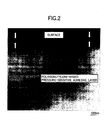
- the specific procedure was as follows. A sample was embedded in an epoxy resin, and a section of the embedded sample was prepared with an ultramicrotome. This section was dyed with a metal oxide, and a section to be examined was produced by the ultrathin sectioning method and examined by TEM. As a result, the section photograph shown in Fig. 2 was obtained.
- the apparatus used for the examination was "HITACHI H-7100FA", manufactured by Hitachi, Ltd., which was operated at an accelerating voltage of 100 kV. It can be ascertained from Fig. 2 that the surface-modified polyisobutylene-based pressure-sensitive adhesive obtained in Example 1 had, on the surface thereof, a thin layer having a thickness of about 50 nm, which is thought to be an acrylic polymer layer.
- the pressure-sensitive adhesive tapes obtained in Examples 1 and 2 and Comparative Examples 2 and 3 were cut into a width of 25 mm.
- Each of the resultant tape samples was applied to an automotive coating film (copper sheet coated with acrylic-melamine) by pressing the tape against the coating film by rolling a 2-kg rubber roller forward and backward once on the tape.
- the tape samples applied were subjected to an accelerated heat test at 80°C for 4 days and then peeled off to evaluate the transfer of the pressure-sensitive adhesive to the coating film, i.e., the adhesion of the surface-modifying layer to the pressure-sensitive adhesive layer.
- the results obtained are shown in Table 2.
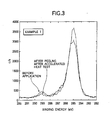
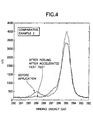
- the surface-modified pressure-sensitive adhesive tapes obtained in Example 1 and Comparative Example 2 were subjected to the analysis by X-ray photoelectron spectroscopy (ESCA) and the waveform analysis for C 1 S, before the application for the adhesion evaluation described above and after peeling after the accelerated heat test.
- the results obtained are shown in Figs. 3 and 4.
- the abscissa indicates binding energy (eV) and the ordinate indicates the amount of photoelectrons for C 1 S (1S orbit for carbon atom) per second.
- Example 1 which had not been applied and that which had been peeled off after the accelerated heat test each showed a peak attributable to surface carbonyl groups derived from the acrylic ester.
- Comparative Example 2 only the adhesive tape which had not been applied showed a peak attributable to carbonyl groups and the adhesive tape which had been peeled off after the accelerated heat test did not show the peak.
- the polymer layer when a surface of a pressure-sensitive adhesive is modified with a layer of a polymer different from the polymer constituting the adhesive, the polymer layer can be physically fixed to the pressure-sensitive adhesive surface highly tenaciously. Since no chemical reaction between the layer consisting only of a pressure-sensitive adhesive and the surface-modifying layer is utilized in fixing the surface-modifying layer to the pressure-sensitive adhesive base layer, there are no limitations on combinations of functional groups, etc. in material selection, and a combination of the two layers can be selected from an exceedingly wide range.
- the invention enables a bulk function required of the pressure-sensitive adhesive and a surface function required of the surface (interface between the adhesive tape or sheet and an adherend) to be separately designed/optimized.
- a pressure-sensitive adhesive having better functions can hence be obtained.
- the invention can simultaneously attain these functions.
Landscapes
- Chemical & Material Sciences (AREA)
- Organic Chemistry (AREA)
- Health & Medical Sciences (AREA)
- Chemical Kinetics & Catalysis (AREA)
- Medicinal Chemistry (AREA)
- Polymers & Plastics (AREA)
- Adhesive Tapes (AREA)
- Adhesives Or Adhesive Processes (AREA)
Applications Claiming Priority (2)
| Application Number | Priority Date | Filing Date | Title |
|---|---|---|---|
| JP2001348770 | 2001-11-14 | ||
| JP2001348770A JP2003147325A (ja) | 2001-11-14 | 2001-11-14 | 表面変性粘着剤および粘着剤の表面変性方法並びに粘着テープ又はシート |
Publications (2)
| Publication Number | Publication Date |
|---|---|
| EP1312656A2 true EP1312656A2 (de) | 2003-05-21 |
| EP1312656A3 EP1312656A3 (de) | 2004-02-04 |
Family
ID=19161545
Family Applications (1)
| Application Number | Title | Priority Date | Filing Date |
|---|---|---|---|
| EP02025533A Withdrawn EP1312656A3 (de) | 2001-11-14 | 2002-11-13 | Oberflächenmodifiziertes druckempfindliches Klebemittel, Verfahren zur Oberflächenmodifizierung eines Klebemittel sowie druckempfindliches Klebeband |
Country Status (3)
| Country | Link |
|---|---|
| US (1) | US20030091818A1 (de) |
| EP (1) | EP1312656A3 (de) |
| JP (1) | JP2003147325A (de) |
Cited By (3)
| Publication number | Priority date | Publication date | Assignee | Title |
|---|---|---|---|---|
| CN102627919A (zh) * | 2011-02-04 | 2012-08-08 | 日东电工株式会社 | 粘合剂和粘合带 |
| CN102627921A (zh) * | 2011-02-04 | 2012-08-08 | 日东电工株式会社 | 非水电池用粘合带 |
| EP2484735A1 (de) * | 2011-02-04 | 2012-08-08 | Nitto Denko Corporation | Klebeband zum Oberflächenschutz |
Families Citing this family (17)
| Publication number | Priority date | Publication date | Assignee | Title |
|---|---|---|---|---|
| US8586149B2 (en) * | 2003-06-18 | 2013-11-19 | Ford Global Technologies, Llc | Environmentally friendly reactive fixture to allow localized surface engineering for improved adhesion to coated and non-coated substrates |
| JP2005314579A (ja) | 2004-04-30 | 2005-11-10 | Nitto Denko Corp | 粘着剤組成物、および粘着シート類 |
| JP4562070B2 (ja) * | 2004-05-14 | 2010-10-13 | 日東電工株式会社 | 粘着剤組成物、粘着シート類、および表面保護フィルム |
| JP4917267B2 (ja) | 2004-09-16 | 2012-04-18 | 日東電工株式会社 | 粘着剤組成物、粘着シート類、および表面保護フィルム |
| JP4531628B2 (ja) | 2004-09-16 | 2010-08-25 | 日東電工株式会社 | 粘着剤組成物、粘着シート類、および表面保護フィルム |
| JP5259940B2 (ja) * | 2005-09-05 | 2013-08-07 | 日東電工株式会社 | 粘着剤組成物、粘着シートおよび表面保護フィルム |
| US7517561B2 (en) * | 2005-09-21 | 2009-04-14 | Ford Global Technologies, Llc | Method of coating a substrate for adhesive bonding |
| US7744984B2 (en) * | 2006-06-28 | 2010-06-29 | Ford Global Technologies, Llc | Method of treating substrates for bonding |
| JP4628416B2 (ja) * | 2007-11-30 | 2011-02-09 | 日東電工株式会社 | エラストマー偏在ポリマー層を有する粘弾性部材 |
| US20100151236A1 (en) * | 2008-12-11 | 2010-06-17 | Ford Global Technologies, Llc | Surface treatment for polymeric part adhesion |
| JP5623020B2 (ja) | 2009-02-27 | 2014-11-12 | 日東電工株式会社 | 粘着剤組成物、粘着剤層、及び、粘着シート |
| JP5624933B2 (ja) * | 2010-04-28 | 2014-11-12 | Hoya株式会社 | X線による性能評価方法およびその利用 |
| WO2014084349A1 (ja) * | 2012-11-30 | 2014-06-05 | リンテック株式会社 | 接着剤組成物、接着シートおよび電子デバイス |
| JP6548399B2 (ja) * | 2014-01-31 | 2019-07-24 | ソマール株式会社 | 接着シート |
| WO2017132106A1 (en) * | 2016-01-26 | 2017-08-03 | The Univeristy Of Akron | Polyisobutylene-based poly(urethane-urea)s |
| JP2019194016A (ja) * | 2018-04-26 | 2019-11-07 | 日東電工株式会社 | 表面改質シート、表面改質部材、塗装物、及び塗装物の製造方法 |
| CN115197664B (zh) * | 2022-08-01 | 2023-06-02 | 业成科技(成都)有限公司 | 光学胶组合物、光学胶膜及制造光学胶膜之方法 |
Citations (2)
| Publication number | Priority date | Publication date | Assignee | Title |
|---|---|---|---|---|
| EP0903387A1 (de) * | 1996-05-29 | 1999-03-24 | Nitto Denko Corporation | Verfahren zur oberflächermodifizierung eines druckemfindliches klebstoffes mit funktionellen gruppen |
| WO2002074875A1 (en) * | 2001-03-14 | 2002-09-26 | 3M Innovative Properties Company | Method of detackifying an edge face of a roll of tape using a radiation curable composition |
Family Cites Families (6)
| Publication number | Priority date | Publication date | Assignee | Title |
|---|---|---|---|---|
| JPS5813114B2 (ja) * | 1980-03-25 | 1983-03-11 | 日東電工株式会社 | 両面接着テ−プ及び該テ−プの製法 |
| JPS63181347A (ja) * | 1987-01-21 | 1988-07-26 | Bando Chem Ind Ltd | 感圧接着性シ−ト及びこれを用いる半導体ウエハ−のダイシング方法 |
| CN1133971C (zh) * | 1996-09-27 | 2004-01-07 | 艾弗里·丹尼森公司 | 压敏胶粘剂结构和制备压敏胶粘剂结构的方法 |
| JPH1150265A (ja) * | 1997-08-05 | 1999-02-23 | Nitto Denko Corp | 表面低エネルギ―化処理法 |
| JP3535380B2 (ja) * | 1998-04-24 | 2004-06-07 | 日東電工株式会社 | 柔軟性層の表面粘着化処理法 |
| FR2795084B1 (fr) * | 1999-06-18 | 2001-08-10 | Holdipro Finance | Film adhesif reticulable et procede d'assemblage utilisant un tel film |
-
2001
- 2001-11-14 JP JP2001348770A patent/JP2003147325A/ja active Pending
-
2002
- 2002-11-13 US US10/292,587 patent/US20030091818A1/en not_active Abandoned
- 2002-11-13 EP EP02025533A patent/EP1312656A3/de not_active Withdrawn
Patent Citations (2)
| Publication number | Priority date | Publication date | Assignee | Title |
|---|---|---|---|---|
| EP0903387A1 (de) * | 1996-05-29 | 1999-03-24 | Nitto Denko Corporation | Verfahren zur oberflächermodifizierung eines druckemfindliches klebstoffes mit funktionellen gruppen |
| WO2002074875A1 (en) * | 2001-03-14 | 2002-09-26 | 3M Innovative Properties Company | Method of detackifying an edge face of a roll of tape using a radiation curable composition |
Cited By (5)
| Publication number | Priority date | Publication date | Assignee | Title |
|---|---|---|---|---|
| CN102627919A (zh) * | 2011-02-04 | 2012-08-08 | 日东电工株式会社 | 粘合剂和粘合带 |
| CN102627921A (zh) * | 2011-02-04 | 2012-08-08 | 日东电工株式会社 | 非水电池用粘合带 |
| EP2484735A1 (de) * | 2011-02-04 | 2012-08-08 | Nitto Denko Corporation | Klebeband zum Oberflächenschutz |
| CN102627920A (zh) * | 2011-02-04 | 2012-08-08 | 日东电工株式会社 | 表面保护用粘合带 |
| EP2484736A1 (de) * | 2011-02-04 | 2012-08-08 | Nitto Denko Corporation | Haftmittel und Haftband |
Also Published As
| Publication number | Publication date |
|---|---|
| US20030091818A1 (en) | 2003-05-15 |
| JP2003147325A (ja) | 2003-05-21 |
| EP1312656A3 (de) | 2004-02-04 |
Similar Documents
| Publication | Publication Date | Title |
|---|---|---|
| US20030091818A1 (en) | Surface-modified pressure-sensitive adhesive, method of modifying surface of pressure-sensitive adhesive, and pressure-sensitive adhesive tape or sheet | |
| US6835422B2 (en) | Method of preparing an adhesive article | |
| EP0903387B1 (de) | Verfahren zur oberflächermodifizierung eines druckemfindliches klebstoffes mit funktionellen gruppen | |
| Strobel et al. | The role of low-molecular-weight oxidized materials in the adhesion properties of corona-treated polypropylene film | |
| CN103649251B (zh) | 增加具有上表面和下表面的压敏胶粘剂层的粘合性的方法 | |
| EP2105483B1 (de) | Lichtabschirmende, druckempfindliche Klebefolie | |
| CA2103359A1 (en) | Pressure-sensitive adhesives | |
| TW200927864A (en) | Double-sided pressure-sensitive adhesive tape or sheet for use in wiring circuit board and wiring circuit board | |
| KR20090107939A (ko) | 양면 점착 시트 및 그 제조 방법 | |
| CN101932638B (zh) | 硅氧烷自粘合剂、其生产方法、使用其的复合物及其应用 | |
| JP2018523715A (ja) | 転写テープ及び関連方法 | |
| CN103649253A (zh) | 由彼此直接层合的至少两个层a和b组成的胶粘带,优选为自胶粘带,层a或者b的至少一个或者两个为胶粘剂 | |
| EP0951948B1 (de) | Verfahren zum Klebrigmachen der Oberfläche einer weichen Folie | |
| CN102057005A (zh) | 捆扎胶带 | |
| JP4722249B2 (ja) | 接着力経日上昇性粘着剤、及び粘着テープ又はシート | |
| CN107207677B (zh) | 包含键接有乙烯基的丙烯酸系聚合物的电子束可固化的压敏粘合剂 | |
| JP6125157B2 (ja) | 粘着シート | |
| JP4776060B2 (ja) | 表面反応性官能基修飾粘着剤及び粘着テープ又はシート | |
| JP4097451B2 (ja) | 表面反応性官能基修飾粘着剤及び粘着テープ又はシート | |
| JPH0517726A (ja) | 粘着テープ | |
| JPS6210181A (ja) | 感圧性接着テ−プ類の製造法 | |
| JP4097454B2 (ja) | 表面反応性官能基修飾粘着剤及び粘着テープ又はシート | |
| JP4806497B2 (ja) | 表面変性フィルム状感圧性接着剤および表面保護材 | |
| DE102020204065A1 (de) | Verfahren zur Herstellung eines mehrschichtigen Klebebandes mit Schaumträger |
Legal Events
| Date | Code | Title | Description |
|---|---|---|---|
| PUAI | Public reference made under article 153(3) epc to a published international application that has entered the european phase |
Free format text: ORIGINAL CODE: 0009012 |
|
| AK | Designated contracting states |
Designated state(s): AT BE BG CH CY CZ DE DK EE ES FI FR GB GR IE IT LI LU MC NL PT SE SK TR |
|
| AX | Request for extension of the european patent |
Extension state: AL LT LV MK RO SI |
|
| PUAL | Search report despatched |
Free format text: ORIGINAL CODE: 0009013 |
|
| AK | Designated contracting states |
Kind code of ref document: A3 Designated state(s): AT BE BG CH CY CZ DE DK EE ES FI FR GB GR IE IT LI LU MC NL PT SE SK TR |
|
| AX | Request for extension of the european patent |
Extension state: AL LT LV MK RO SI |
|
| 17P | Request for examination filed |
Effective date: 20040504 |
|
| AKX | Designation fees paid |
Designated state(s): BE DE FR GB |
|
| 17Q | First examination report despatched |
Effective date: 20060711 |
|
| STAA | Information on the status of an ep patent application or granted ep patent |
Free format text: STATUS: THE APPLICATION IS DEEMED TO BE WITHDRAWN |
|
| 18D | Application deemed to be withdrawn |
Effective date: 20061122 |