EP1314324B1 - Traduction, comptage, et acheminement de messages dans une passerelle - Google Patents
Traduction, comptage, et acheminement de messages dans une passerelle Download PDFInfo
- Publication number
- EP1314324B1 EP1314324B1 EP00950411A EP00950411A EP1314324B1 EP 1314324 B1 EP1314324 B1 EP 1314324B1 EP 00950411 A EP00950411 A EP 00950411A EP 00950411 A EP00950411 A EP 00950411A EP 1314324 B1 EP1314324 B1 EP 1314324B1
- Authority
- EP
- European Patent Office
- Prior art keywords
- protocol
- signaling
- message
- routing
- accounting
- Prior art date
- Legal status (The legal status is an assumption and is not a legal conclusion. Google has not performed a legal analysis and makes no representation as to the accuracy of the status listed.)
- Expired - Lifetime
Links
- 238000013519 translation Methods 0.000 title claims description 48
- 230000011664 signaling Effects 0.000 claims abstract description 210
- 238000005259 measurement Methods 0.000 claims abstract description 13
- 238000000034 method Methods 0.000 claims description 112
- 238000004891 communication Methods 0.000 claims description 73
- 230000005540 biological transmission Effects 0.000 claims description 20
- 238000012545 processing Methods 0.000 claims description 16
- 238000012546 transfer Methods 0.000 claims description 12
- 230000000977 initiatory effect Effects 0.000 claims description 7
- 230000004044 response Effects 0.000 claims description 5
- 238000004590 computer program Methods 0.000 claims 9
- 230000008569 process Effects 0.000 description 93
- 238000010586 diagram Methods 0.000 description 7
- 230000006870 function Effects 0.000 description 7
- 101001012669 Homo sapiens Melanoma inhibitory activity protein 2 Proteins 0.000 description 5
- 102100029778 Melanoma inhibitory activity protein 2 Human genes 0.000 description 5
- 238000006243 chemical reaction Methods 0.000 description 4
- 238000012423 maintenance Methods 0.000 description 4
- 238000005538 encapsulation Methods 0.000 description 3
- 102100032008 Solute carrier family 40 member 1 Human genes 0.000 description 2
- 101710111423 Solute carrier family 40 member 1 Proteins 0.000 description 2
- 238000013461 design Methods 0.000 description 2
- 239000000284 extract Substances 0.000 description 2
- 230000002093 peripheral effect Effects 0.000 description 2
- 230000001960 triggered effect Effects 0.000 description 2
- 201000008217 Aggressive systemic mastocytosis Diseases 0.000 description 1
- 101100346892 Arabidopsis thaliana MTPA1 gene Proteins 0.000 description 1
- 101100346893 Arabidopsis thaliana MTPA2 gene Proteins 0.000 description 1
- 206010012812 Diffuse cutaneous mastocytosis Diseases 0.000 description 1
- 101150069989 MTP2 gene Proteins 0.000 description 1
- 101150006417 MTP3 gene Proteins 0.000 description 1
- 102100029181 PDZ and LIM domain protein 5 Human genes 0.000 description 1
- 101100098774 Rattus norvegicus Tap2 gene Proteins 0.000 description 1
- 238000004458 analytical method Methods 0.000 description 1
- 230000003139 buffering effect Effects 0.000 description 1
- 230000008859 change Effects 0.000 description 1
- 238000001514 detection method Methods 0.000 description 1
- 238000001541 differential confocal microscopy Methods 0.000 description 1
- 238000005516 engineering process Methods 0.000 description 1
- 150000004675 formic acid derivatives Chemical class 0.000 description 1
- 230000010354 integration Effects 0.000 description 1
- 238000007726 management method Methods 0.000 description 1
- 238000013507 mapping Methods 0.000 description 1
- 230000007246 mechanism Effects 0.000 description 1
- 230000006855 networking Effects 0.000 description 1
- 230000008520 organization Effects 0.000 description 1
- 238000012216 screening Methods 0.000 description 1
Images



Classifications
-
- H—ELECTRICITY
- H04—ELECTRIC COMMUNICATION TECHNIQUE
- H04Q—SELECTING
- H04Q3/00—Selecting arrangements
- H04Q3/0016—Arrangements providing connection between exchanges
- H04Q3/0029—Provisions for intelligent networking
- H04Q3/0045—Provisions for intelligent networking involving hybrid, i.e. a mixture of public and private, or multi-vendor systems
-
- H—ELECTRICITY
- H04—ELECTRIC COMMUNICATION TECHNIQUE
- H04L—TRANSMISSION OF DIGITAL INFORMATION, e.g. TELEGRAPHIC COMMUNICATION
- H04L69/00—Network arrangements, protocols or services independent of the application payload and not provided for in the other groups of this subclass
- H04L69/18—Multiprotocol handlers, e.g. single devices capable of handling multiple protocols
-
- H—ELECTRICITY
- H04—ELECTRIC COMMUNICATION TECHNIQUE
- H04Q—SELECTING
- H04Q3/00—Selecting arrangements
- H04Q3/0016—Arrangements providing connection between exchanges
- H04Q3/0025—Provisions for signalling
-
- H—ELECTRICITY
- H04—ELECTRIC COMMUNICATION TECHNIQUE
- H04L—TRANSMISSION OF DIGITAL INFORMATION, e.g. TELEGRAPHIC COMMUNICATION
- H04L12/00—Data switching networks
- H04L12/54—Store-and-forward switching systems
- H04L12/56—Packet switching systems
- H04L12/5601—Transfer mode dependent, e.g. ATM
- H04L2012/5629—Admission control
- H04L2012/563—Signalling, e.g. protocols, reference model
Definitions
- the present invention relates to the routing of signaling messages in a multi-protocol communications networking environment, and more particularly to methods and systems for providing message accounting services at an internetwork routing node that is also capable of receiving, translating, and routing signaling messages that utilize a variety of communication protocols.
- Lakshmi-Ratan R.A. "The Lucent Technologies Softswitch - Realizing the Promise of Convergence" Bell Labs Technical Journal, vol. 4, no. 2, April -June 1999, pages 174-195, XP000851517 ISSN: 1089-7089 , discloses a soft switch that functions as a tandem or service switching point note which handles bearer channel traffic, such as voice traffic.
- WO 00/35 155 A relates to methods and systems for communicating signalling system 7 (SS7) user part messages among SS7 notes and internet protocol (IP) notes.
- SS7 signalling system 7
- IP internet protocol
- US-A-5 852 660 discloses a network protocol conversion module within a telecommunications system. Signalling connection control part parameters within a signal generated within a first SS7 telecommunications network are converted into values and formates acceptable by a second SS7 telecommunications network by a converter residing within a gateway signal transfer point. Such a converter enables signals containing application layer data to be transported across two different SS7 telecommunications networks that are otherwise incompatible.
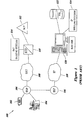
- FIG. 1 Shown in Figure 1 is a simplified communications network scenario that includes both a Signaling System 7 (SS7) and a Transmission Control Protocol / Internet Protocol (TCP/IP) communications network, generally indicated by the numeral 100.
- Network 100 includes both a conventional voice type calling party 102 and a computer terminal based data type calling party 104. Both calling parties are communicatively coupled to an originating End Office (EO) or Service Switching Point (SSP) 106.
- EO End Office
- SSP Service Switching Point
- SSP 106 is generally connected via an SS7 network 108 to an SS7 signaling message routing node, Signal Transfer Point (STP) 110.
- STP Signal Transfer Point
- SCP node 112 might include an 800 number database, a Line Information Database (LIDS), Local Number Portability database (LNP), or other database services typically associated with the Public Switched Telephone Network (PSTN).
- LIDS Line Information Database
- LNP Local Number Portability database
- PSTN Public Switched Telephone Network
- the overall stack can essentially be divided into two segments or layers: a lower level Message Transfer Part (MTP) layer and a higher level signaling application layer.
- MTP Message Transfer Part
- the MTP layer is comprised of three sub-levels that are identified as layers MTP1, MTP2 and MTP3. These three layers generally correspond to the physical, data link, and network levels as defined in the International Standards Organization (ISO) Open System Integration (OSI) protocol standard, and each layer can be configured to operate under one of many layer-specific protocols depending upon the particular network configuration scenario.
- the MTP1 layer protocol could be configured as DS0A, V.35, etc.
- Signaling application layer protocols commonly employed in an SS7 network include Transaction Capabilities Application Part (TCAP)/Signaling Connection Control Part (SCCP), ISDN User Part (ISUP), Telephone User Part (TUP), Mobile Application Part (MAP) and Broadband ISDN User Part (B/SUP).
- TCAP Transaction Capabilities Application Part
- SCCP Connection Control Part
- ISUP ISDN User Part
- TUP Telephone User Part
- MAP Mobile Application Part
- B/SUP Broadband ISDN User Part
- these SS7 signaling application protocols essentially correspond to OSI layers 4 through 7, and in some cases a portion of the OSI layer 3.
- Such signaling application layer protocols are concerned primarily with facilitating call setup/teardown and various call related services (e.g., toll free service, local number portability, calling name delivery, etc.).
- call related services e.g., toll free service, local number portability, calling name delivery, etc.
- the lower level MTP layers are concerned with, and responsible for, ensuring reliable transport of a signal
- SS7 signaling protocol messages are typically transmitted over dedicated communication links that employ an MTP transport protocol suite.
- ISP Internet Service Provider
- ISP 116 is also communicatively coupled to an Internet Protocol communications network 118, such as the Internet.
- ISP 116 effectively provides a calling party that is served by SSP 106 with access to the Internet 118.
- ISP 116 Connected to and generally contained within the Internet “cloud” 118 are a large number of data packet routers, one of which is shown in Figure 1 as router 120.
- database node 122 Further coupled to Internet data router 120 is a database node 122 and a billing system 124.
- Database node 122 might include domain name information, presence or statues information, or any number of database applications utilized by Internet type service providers or e-commerce type operators.
- billing system 124 is coupled to router 120 so as to generally track messages destined for Internet database node 122.
- the overall stack can essentially be divided into two components: a lower level or suite of transport related protocols and a higher level signaling application related layer.
- TCP Transmission Control Protocol
- IP based communication network it will be appreciated that the transport protocol suite, as referred to herein, refers to OSI layers 1 through 3. Consequently, with regard to TCP/IP based communication, OSI layers 4 through 7 are referred to herein as the higher level or signaling application related layers.
- Protocol converter node 126 is capable of receiving a TCP/IP based non-SS7 database query message (i.e., a message that employs a non-SS7 signaling application protocol such as session initiation protocol (SIP), H.323, etc.) and translating this message into an SS7/MTP formatted query message that can be processed by SCP 112 .
- a TCP/IP based non-SS7 database query message i.e., a message that employs a non-SS7 signaling application protocol such as session initiation protocol (SIP), H.323, etc.
- SIP session initiation protocol
- H.323 session initiation protocol
- What is needed is a system and method of providing a packet routing node that is capable of facilitating communication between networks that employ differing transport level protocols (e.g., MTP vs. TCP/IP) and differing signaling application level protocols (e.g., SS7 vs. SIP). Also needed is the ability for such a multi-protocol routing node to simultaneously provide centralized message accounting and billing capability in a multi-protocol communication network environment.
- transport level protocols e.g., MTP vs. TCP/IP
- signaling application level protocols e.g., SS7 vs. SIP
- a signaling application protocol refers to the particular type of higher level signaling protocol used in a communications network, such as SS7, SIP, H.323, or Normalized Call Control Protocol (NCCP).
- the session initiation protocol is defined in SIP: Session Initiation Protocol, RFC 2453, IETF Network Working Group (March 1999), the disclosure of which is incorporated herein by reference in its entirety.
- H.323 is defined in ITU Recommendation
- H.323 Packet Based Multimedia Systems (September 1999), the disclosure of which is incorporated by reference in its entirety.
- the MPG routing node includes a communication module or modules capable of transmitting and receiving data packets over MTP, TCP/IP, UDP/IP, and Stream Control Transmission Protocol (SCTP)/IP based networks, wherein these data packets may employ SS7, SIP, H.323, NCCP or similar signaling protocols.
- SCTP protocol is a protocol for transferring SS7 messages over an IP network. SCTP is defined in Stream Control Transmission Protocol ⁇ draft-ietf-sigtran-sctp-10.txt>, IETF Network Working Group (June 16, 2000), the disclosure of which is incorporated herein by reference in its entirety.
- TALI Transport Adapter Layer Interface
- each card or subsystems described below may include one or more microprocessors, such as an x86 or Pentium ® microprocessor available from Intel Corporation, and associated memory.
- NCCP Normalized Call Control Protocol
- IP 7 Secure Gateway TM for transmitting and receiving Transaction Capabilities Application Part (TCAP) messages over an Internet Protocol (IP) network are described in PCT Publication No. WO 00/35155, published June 15, 2000 , the disclosure of which is incorporated herein by reference in its entirety.
- IP 7 Secure Gateway TM for transmitting and receiving ISDN User Part (ISUP) messages over an Internet Protocol (IP) network are described in the above-referenced PCT Publication No. WO 00/35156 .
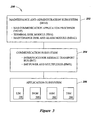
- an Eagle ® STP 250 includes the following subsystems: a Maintenance and Administration Subsystem (MAS) 252, a communication subsystem 254 and an application subsystem 256.
- the MAS 252 provides maintenance communications, initial program load, peripheral services, alarm processing and system disks.
- the communication subsystem 254 includes an Interprocessor Message Transport (IMT) bus that is the main communication bus among all subsystems in the Eagle ® STP 250. This high-speed communications system functions as two 125 Mbps counter-rotating serial buses.
- IMT Interprocessor Message Transport
- each card is assigned a unique IMT bus address so as to generally facilitate the internal communication of messages between provisioned application cards that are attached to the bus.
- DCM 260 is described in detail in one or more of the above-referenced PCT publications.
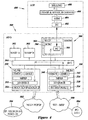
- MPG 300 is adapted to route message packets between two dissimilar communication networks, and to further provide message accounting and billing services associated with such inter-network routing.
- MPG routing and accounting node 300 employs an internal architecture that is similar in design and operation to that of an Eagle ® STP and an IP 7 Secure Gateway TM .
- MPG node 300 generally includes an Interprocessor Message Transport (IMT) bus 304 that is the main communication bus among all subsystems in the node.
- IMT Interprocessor Message Transport
- MPG node further includes a Maintenance and Administration Subsystem (MAS) 302.
- MAS 302 provides maintenance communications, initial program load, peripheral services, alarm processing and system disks.
- the MPG shown in Figure 4 also includes a pair of MLIM cards, 310 and 350, and an integrated message accounting and billing subsystem,
- the message accounting and billing subsystem is comprised of a Multi-protocol Accounting Service Module (MASM) 380 and an external Accounting Server Platform (ASP) 400.
- MAM Multi-protocol Accounting Service Module
- ASP 400 could assume the form of a Sun Workstation or similar type computing platform. It will be further appreciated that the entire message accounting and billing subsystem could also be integrated within the MPG switch, such that no significant external computing platform is required.
- MLIM 310 Shown in Figure 5 is one embodiment of a Multi-protocol Link Interface Module (MLIM) card 310 that is configured to transmit, receive, and generally facilitate communication between two communication networks that employ dissimilar signaling and transport protocol suites.
- MLIM 310 is somewhat similar in function and form to a conventional LIM, as described in the above referenced Tekelec Eagle and IP 7 Secure Gateway product and design publication.
- the MLIM, described herein, expands on the conventional LIM concept so as to provide the additional capability to communicate signaling information between dissimilar networks that utilize a variety of non-SS7 based signaling protocols and non-MTP based transport protocol suites.
- an MLIM card may be configured to include one or more transport protocol suite processes.
- MLIM card 310 is provisioned to support three transport protocol suite processes: a TCP/IP process 312, an MTP process 314, and an SCTP/IP process 316 .
- transport protocol suite processes 312, 314, and 316 Associated with each of the transport protocol suite processes 312, 314, and 316 is an input / output (I/O) queue 318, 320, and 322, respectively.
- I/O input / output
- these lower level protocol process can be configured via hardware, software or firmware to support the physical, data link, network, and transport layers of a variety of transport protocol suites such as MTP, TCP/IP, SCTP/IP, UDP/IP and others.
- these lower level transport protocol suite processes are responsible for implementing the functions and services generally associated with OSI levels 1 through 4.
- MLIM 310 further includes a Multi-Protocol Routing Process (MPRP) 324, which is comprised of a Routing and Accounting Manager (RAMG) process 326, a Multi-protocol Routing Database (MRD) process 328, and a plurality of signaling protocol specific translation processes. More specifically, in the particular example shown in Figure 5 , MLIM 310 is provisioned to include a TALI signaling protocol translation process 330, an H.323 signaling protocol translation process 332, an SS7 signaling protocol translation process 334, a SIP signaling protocol translation process 336, and an NCCP signaling protocol translation process 338.
- MPRP Multi-Protocol Routing Process
- each of these signaling protocol translation processes is adapted to receive an incoming signaling message that is formatted in a first signaling protocol and subsequently translate the contents of this message into a second signaling protocol.
- an SS7 signaling protocol message is received at MLIM 310 and subsequently delivered to NCCP signaling protocol translation process 338, where the SS7 formatted message content is parsed and translated into an NCCP formatted signaling protocol message.
- an NCCP formatted signaling message is a normalized ISUP signaling message used by IP nodes in an IP network.
- the present invention is not intended to be limited to the protocol translation processes illustrated in Figure 5 .
- other protocol translation processes such as M3UA, SUA, M2UA, M2PEER, IUA, MAP and WAP may be substituted for or included in addition to the processes illustrated in Figure 5 without departing from the scope of the invention.
- RAMG process 326 is adapted to receive incoming signaling messages and determine; (1) whether routing address translation is required, (2) whether transport suite protocol translation is required, (3) whether signaling application protocol translation is required, and (4) whether accounting of the message is required. If message accounting is required, RAMG process 326 is configured so as to produce a new message that is subsequently delivered to an associated accounting & billing subsystem. With particular regard to determining the need for transport suite protocol translation, it will be appreciated that such a need may be indirectly implied with the selection of an outbound communication link, port or socket.
- MRD process 328 may be comprised of multiple database table structures depending upon the particular MLIM configuration employed. More particularly, Figure 6a illustrates a sample MRD database structure 600 that might be associated with an MLIM card that is configured to communicate with an SS7 network. Figure 6b illustrates a sample MRD database structure 602 that might be associated with an MLIM card that is configured to communicate with an IP network.
- MLIM 310 configured with the MRD database 600 shown in Figure 6a receives an SS7 message destined for a node with an SS7 network address PC: 2-1-1 and SSN: 50
- a lookup in the MRD database 600 would subsequently inform the RAMG process 326 that: (1) the appropriate destination address is PC: 2-1-1, SSN: 50 (i.e., no routing address change is necessary); (2) the appropriate destination address requires an SS7 formatted message (i.e., no transport suite or signaling protocol translation is necessary); and (3) the accounting subsystem should not be notified ( i .e., no accounting of this message is necessary). Consequently, in this example scenario, the received SS7 signaling message would simply be routed or through switched.
- MLIM 310 configured with the MRD database 602 shown in Figure 6a receives an SS7 message destined for an SS7 network address PC: 1-1-1
- a lookup in the MRD database 602 would inform the RAMG process 326 that: (1) the appropriate destination address is an IP socket comprised of an IP address, 102.20.20.10, and an IP port 22; (2) the appropriate destination address requires an NCCP formatted message; and (3) the accounting subsystem should be notified. Consequently, the received SS7 signaling message would be passed from the RAMG process 326 to the NCCP signaling protocol translation process 338.
- NCCP translation process 338 would subsequently examine the information content of the original SS7 message and generate an equivalent NCCP-formatted message, as per a pre-determined set of SS7-to-NCCP inter-protocol message type conversion rules.
- inter-protocol message type conversion rules might include, for example, instructions or rules for creating the NCCP equivalent of an ANSI ISUP IAM message.
- conversion rules could include instructions for creating the NCCP equivalent of an 800 number, local number portability (LNP), or calling name (CNAM) SS7 TCAP query message.
- an incoming message could be translated or converted based on a domain name (DN) or an email address type identifier, as generally indicated in database table 602 ( Figure 6b ).
- DN domain name
- email address type identifier as generally indicated in database table 602 ( Figure 6b ).
- a normalized protocol could be any protocol adapted to facilitate efficient translation of signaling information and to further provide a universal signaling protocol that can be easily utilized by nodes that are required to provide service to a variety of signaling networks.
- RAMG process 326 formulates an accounting message, related to a received signaling message, and passes this accounting message on to the HMDT process 340 for subsequent delivery to and processing by the MASM module 380, as generally indicated in Figure 4 .
- the accounting message could simply be a copy of the original received signaling message, or the accounting message could be of a message type associated specifically with the accounting subsystem.
- a normalized accounting message (NAM) format is employed that is analogous to the NCCP signaling protocol concept.
- a NAM formatted accounting message employs a field or record structure that is essentially a superset of all parameters of interest from all signaling protocols of interest.
- parameters of interest in a SIP formatted signaling message can be easily accommodated in a NAM accounting message, as can parameters of interest in an SS7 formatted signaling message.
- a NAM accounting message can be encapsulated within an SCCP packet prior to internal routing within the MPG node. Such SCCP encapsulation can be performed by a RAMG process.
- the NAM format can be periodically expanded (or revised) to accommodate new or evolving signaling protocols that must be supported by an MPG node. In any event, the accounting subsystem is notified of the receipt of the incoming message.
- MPG node 300 includes a message accounting and billing subsystem that is comprised of an internal MASM card 380, and an external ASP accounting server platform 400. It will be appreciated the combination of MASM card 380 and ASP accounting server 400 includes the database and control processes necessary to achieve the accounting and billing functionality of the present invention. Again, it should also be appreciated that the entire message accounting subsystem could also be integrated completely within the MPG node.
- the MASM card 380 shown in Figure 4 includes a Signaling Connection Control Part (SCCP) subsystem 382 that is responsible for receiving and preliminary processing of incoming SCCP encapsulated accounting message packets.
- MASM card 380 also includes an SCCP controller known as a Signaling Connection Routing Controller (SCRC) process 384 and a high-speed Ethernet Controller (EC) process 386.
- SCCP Signaling Connection Routing Controller
- EC high-speed Ethernet Controller
- the SCCP subsystem 382 is responsible for receiving and preliminary processing of incoming SCCP encapsulated message packets
- the SCRC process 384 is responsible for discrimination and subsequent distribution of messages based on information contained in an SCCP packet.
- messages that satisfy the SCRC discrimination criteria are distributed or directed to the high-speed Ethernet Controller process 386 .
- EC process 386 is in turn responsible for controlling the process of communicating messages, via an Ethernet connection to and from the associated ASP server 400.
- ASP server 400 includes a corresponding high-speed Ethernet Controller process 402 that serves as the communications interface between MASM card 380 and an on-board Accounting Server Manager (ASM) process 404.
- ASM process 404 is responsible for the de-capsulation or removal of the SCCP envelope that contains the accounting message.
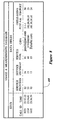
- the de-capsulated accounting message is then passed to an adjacent Usage and Measurements process 406 where usage and measurement statistics are created and stored in a Usage and Measurements Database (UMD) 410, such as that shown in Figure 8 .
- UMD Usage and Measurements Database
- copies of incoming signaling messages that require accounting service are encapsulated within an SCCP packet and subsequently internally routed to MASM 380.
- SCCP encapsulation is not essential to the operation of the message accounting subsystem of the present invention.
- Other internal encapsulating protocols could be just as easily employed, provided that a suitably provisioned MASM module is capable of receiving and processing the encapsulated messages. In fact, no encapsulation necessarily need be performed, so long as the accounting message generated by a RAMG type process can be received and generally processed by a suitable configured MASM module.
- node 504 is identified within the SS7 network by a point code (PC) value of 2-1-1, while the first message is addressed to a destination point code (DPC) value of 1-1-1.
- PC point code
- DPC destination point code
- Lower level transport protocol suite processing is performed on the incoming first message by Port process 314, and the first message is subsequently passed to an associated I/O queue 320.
- the first message is passed to the RAMG process 326.
- RAMG process 326 identifies the first message as having arrived via Port process 314, and directs a lookup in MRD database process 328 based on information contained in or associated with the first message.
- an incoming message that is addressed to a DPC value of 1-1-1 will be subsequently routed to a network element having an IP address of 102.20.20.10, port 22.
- MLIM 350 has been assigned an IMT bus address of 2201, and as indicated in Figure 6a , a connection or socket to this IP address has been established and is being maintained on the MLIM card having an IMT bus address of 2201. More specifically, a TCP/IP socket having a socket ID of 1 has been established on MLIM 350.
- the signaling protocol translation rule associated with the first message indicates the need to translate the received signaling message to an NCCP protocol prior to routing.
- RAMG process 326 passes the first message to NCCP signaling protocol translation process 338 along with information returned by the MRD database lookup operation.
- NCCP signaling protocol translation process 338 receives the first message and performs the SS7 to NCCP translation or mapping operation, thereby effectively creating a second, functionally equivalent NCCP formatted signaling message.
- the second NCCP formatted message is subsequently passed from the NCCP signaling protocol translation process 338 to HMRT process 342.
- HMRT process 342 identifies the destination MLIM card corresponding to IMT bus address 2201, and places the second signaling message on the IMT bus 304.
- the second message is then received by the MLIM card 350 , and essentially directed to the outbound I/O queue 352 associated with the destination TCP/IP socket process 354.
- Socket process 354 next receives the NCCP formatted signaling message and constructs or appends the appropriate lower level transport protocol suite required to facilitate transmission to the destination node through TCP/IP based network 502. With lower level transport protocol suite processing complete, the NCCP formatted signaling message is transmitted into the TCP/IP based network 502, as generally indicated in Figure 4 .
- RAMG process 326 is adapted to generate a NAM formatted accounting message that is associated with the first signaling message.
- This accounting message is produced in response to the instructions returned by the MRD process 328, indicating that message accounting service is required for the first signaling message.
- the accounting message assumes the form of a NAM message that is essentially encapsulated within an SCCP formatted packet.
- This SCCP encapsulated message is subsequently directed to HMDT process 340, which in turn directs the SCCP encapsulated accounting message to MASM card 380 via IMT bus 304.
- the SCCP encapsulated accounting message is received by a corresponding EC process 402 and subsequently passed to the Accounting Services Manager (ASM) process 404.
- ASM process 404 examines the received accounting message, removes the SCCP encapsulating layer and extracts the information from the NAM formatted accounting message according to a pre-determined set of usage and measurement rules. This usage and measurement information is then provided to the Usage and Measurements process 406 for analysis and storage.
- Billing information may be generated by the accounting subsystem via the billing process 408.
- Billing process 408 extracts information from the Usage and Measurements process 406 and applies a set of pre-determined billing rate rules, so as to effectively generate invoices or bills indicating costs associated with various aspects of communication services.
Landscapes
- Engineering & Computer Science (AREA)
- Computer Networks & Wireless Communication (AREA)
- Computer Security & Cryptography (AREA)
- Signal Processing (AREA)
- Data Exchanges In Wide-Area Networks (AREA)
- Computer And Data Communications (AREA)
- Communication Control (AREA)
- Meter Arrangements (AREA)
Claims (36)
- Elément de routage de messages de signalisation de réseau (300) fonctionnant comme un traducteur de protocole de points de transfert de signaux et messages de signalisation multiprotocole, l'élément de routage de messages de signalisation de réseau comprenant :(a) un premier module de communication (310) capable de recevoir, à partir d'un premier réseau de communication (500), un premier message de signalisation formaté selon une première suite de protocoles de transport et contenant une information qui est formatée selon un premier protocole de signalisation ;(b) une base de données de routage multiprotocole (MRD) (328) située sur le premier module de communication (310) pour stocker une information de traduction de protocole de signalisation et de routage ;(c) un module de routage multiprotocole (324) situé sur le premier module de communication (310) pour extraire une information de la base de données de routage multiprotocole (MRD) (328) et diriger le premier message de signalisation vers un module de traduction (330, 332, 334, 336, 338) sur la base de l'information ;(d) ledit module de traduction de protocole de signalisation (330, 332, 334, 336, 338) pour recevoir le premier message de signalisation et pour convertir l'information formatée selon le premier protocole de signalisation en un deuxième protocole de signalisation ;(e) un module de routage (HMRT) (342) pour effectuer le routage du premier message de signalisation converti en le deuxième protocole de signalisation à partir du premier module de communication (310) vers un deuxième module de communication (350) ; et(f) ledit deuxième module de communication (350) incluant un module de suite de protocoles de transport (354) pour recevoir le premier message de signalisation et pour appliquer une deuxième suite de protocoles de transport et des instructions de routage associées au premier message de signalisation, le deuxième module de communication (350) étant capable de transmettre, vers un deuxième réseau de communication (502), le premier message de signalisation formaté selon la deuxième suite de protocoles de transport contenant une information qui est formatée selon le deuxième protocole de signalisation.
- Elément de routage de messages de signalisation de réseau (300) selon la revendication 1, dans lequel le premier protocole de signalisation est un protocole de signalisation de système de signalisation 7 (SS7), un protocole de signalisation de protocole d'initiation de session (SIP), un protocole de signalisation H.323, ou un protocole de signalisation de commandes d'appels normalisé.
- Elément de routage de messages de signalisation de réseau (300) selon la revendication 1, dans lequel le deuxième protocole de signalisation est un protocole de signalisation SS7, un protocole de signalisation de protocole d'initiation de session (SIP), un protocole de signalisation H.323, ou un protocole de signalisation de commandes d'appels normalisé.
- Elément de routage de messages de signalisation de réseau (300) selon la revendication 1, dans lequel la première suite de protocoles de transport inclut le sous-système de transfert de messages (MTP) du protocole SS7, le protocole de contrôle de transmission/protocole Internet (TCP/IP), ou le protocole de transmission de contrôle de flux (SCTP/IP).
- Elément de routage de messages de signalisation de réseau (300) selon la revendication 1, dans lequel la deuxième suite de protocoles de transport inclut le sous-système de transfert de messages (MTP) du protocole SS7, le protocole de contrôle de transmission/protocole Internet (TCP/IP), ou le protocole de transmission de contrôle de flux (SCTP/IP).
- Elément de routage de messages de signalisation de réseau (300) selon la revendication 1 incluant un sous-système de comptabilisation de messages (380, 400) pour produire et maintenir des mesures d'utilisation et des informations de facturation associées aux messages qui sont traités et routés par l'élément de routage.
- Elément de routage de messages de signalisation de réseau (300) selon la revendication 6 dans lequel le sous-système de comptabilisation de messages (380, 400) est situé à l'intérieur de l'élément de routage de messages de signalisation de réseau (300).
- Elément de routage de messages de signalisation de réseau (300) selon la revendication 6 dans lequel le sous-système de comptabilisation de messages (380, 400) inclut une plate-forme de base de données (400) externe à l'élément de routage de messages de signalisation (300).
- Elément de routage de messages de signalisation de réseau (300) selon la revendication 8 dans lequel la plate-forme de base de données externe (400) est connectée à l'élément de routage de réseau (300) par l'intermédiaire d'une liaison Ethernet à haut débit.
- Elément de routage de messages de signalisation de réseau (300) selon la revendication 1 dans lequel la base de données de routage multiprotocole (MRD) contient des instructions de traitement du sous-système de comptabilisation de messages (380, 400).
- Elément de routage de messages de signalisation de réseau (300) selon la revendication 6 dans lequel le sous-système de comptabilisation de messages (380, 400) est configuré pour recevoir une copie du premier message.
- Elément de routage de messages de signalisation de réseau (300) selon la revendication 6 dans lequel le sous-système de facturation de messages (380, 400) est configuré pour recevoir un message Message de Comptabilisation Normalisé (NAM) qui est basé sur l'information contenue dans le premier message.
- Elément de routage de messages de signalisation de réseau (300) selon la revendication 1 dans lequel l'information de traduction de protocole de la base de données de routage multiprotocole (MRD) contient des instructions de traduction de protocole de signalisation.
- Elément de routage de messages de signalisation de réseau (300) selon la revendication 1 dans lequel la base de données de routage multiprotocole (MRD) est indexée par des valeurs d'hôtes et de ports IP, des valeurs de connecteurs réseaux, des codes de points, ou des valeurs d'adresses d'appelés.
- Elément de routage de messages de signalisation de réseau (300) selon la revendication 14 dans lequel les valeurs d'adresses d'appelés contiennent des numéros de téléphone, des noms de domaines, ou des adresses d'emails.
- Procédé de fonctionnement en tant que traducteur de protocole de points de transfert de signaux et messages de signalisation multiprotocole pour effectuer le routage de messages de signalisation entre des réseaux de communication (500, 502) avec différents protocoles de signalisation et différentes suites de protocoles de transport, le procédé consistant à :(a) recevoir, au niveau d'un premier module de communication (310), à partir d'un premier réseau de communication (500) qui utilise une première suite de protocoles de transport, un premier message de signalisation formaté selon un premier protocole de signalisation ;(b) déterminer où effectuer le routage du premier message de signalisation ;(c) déterminer si le premier message de signalisation requiert la traduction d'un protocole de signalisation ;(d) en réponse à la détermination du fait que le premier message de signalisation requiert la traduction d'un protocole de signalisation, effectuer le routage du premier message de signalisation vers un module de traduction de protocole de signalisation (330, 332, 334, 336, 338) situé sur le premier module de communication (310), sur la base d'une information extraite d'une base de données de routage multiprotocole (MRD) (328) située sur le premier module de communication (310), pour la traduction en un premier message de signalisation équivalent formaté dans un deuxième protocole de signalisation ;(e) effectuer le routage, au moyen d'un module de routage (HMRT) (342), du premier message de signalisation équivalent formaté dans le deuxième protocole de signalisation à partir du premier module de communication (310) vers un deuxième module de communication (350), et, au niveau du deuxième module de communication (350) :(i) appliquer une deuxième suite de protocoles de transport et des instructions de routage associées au premier message de signalisation équivalent ; et(ii) transmettre le premier message de signalisation équivalent dans un deuxième réseau de communication (502).
- Procédé selon la revendication 16 dans lequel le premier protocole de signalisation est un protocole de signalisation de système de signalisation 7 (SS7), un protocole de signalisation de protocole d'initiation de session (SIP), un protocole de signalisation H.323, ou un protocole de signalisation de protocole de commandes d'appels normalisé (NCCP).
- Procédé selon la revendication 16 dans lequel le deuxième protocole de signalisation est un protocole de signalisation SS7, un protocole de signalisation de protocole d'initiation de session (SIP), un protocole de signalisation H.323, ou un protocole de signalisation de protocole de commandes d'appels normalisé (NCCP).
- Procédé selon la revendication 16 dans lequel la première suite de protocoles de transport inclut le sous-système de transfert de messages (MTP) du protocole de signalisation SS7, le protocole de contrôle de transmission/protocole Internet (TCP/IP), ou le protocole de transmission de contrôle de flux/protocole Internet (SCTP/IP).
- Procédé selon la revendication 16 dans lequel la deuxième suite de protocoles de transport inclut le sous-système de transfert de messages (MTP) du protocole SS7, le protocole de contrôle de transmission/protocole Internet (TCP/IP), ou le protocole de transmission de contrôle de flux/protocole Internet (SCTP/IP).
- Procédé selon la revendication 16 dans lequel le fait de déterminer où effectuer le routage du premier message de signalisation inclut l'examen de règles de routage qui sont stockées dans une base de données de routage multiprotocole (MRD).
- Procédé selon la revendication 16 dans lequel le fait de déterminer si le premier message de signalisation requiert la traduction d'un protocole de signalisation inclut des règles de traduction de protocole de signalisation qui sont stockées dans une base de données de routage multiprotocole (MRD).
- Procédé selon la revendication 16 comprenant le fait de déterminer si un service de comptabilisation de messages est requis.
- Procédé selon la revendication 23 comprenant, en réponse à la détermination du fait qu'un service de comptabilisation de messages est requis, l'envoi d'un message de comptabilisation à un sous-système de comptabilisation de messages (380, 400).
- Procédé selon la revendication 24 dans lequel le message de comptabilisation est une copie du premier message.
- Procédé selon la revendication 24 dans lequel le message de comptabilisation est un message Message de Comptabilisation Normalisé (NAM) basé sur une information contenue dans un premier message.
- Procédé selon la revendication 23 dans lequel le fait de déterminer si un service de comptabilisation de messages est requis inclut l'examen de règles de service de comptabilisation de messages stockées dans une base de données de routage multiprotocole (MRD).
- Procédé selon la revendication 16 dans lequel l'application de la deuxième suite de protocoles de transport inclut l'application de la deuxième suite de protocoles de transport à un module d'interface de liaison multiprotocole de sortie (MLIM).
- Produit programme d'ordinateur pour commander un ou plusieurs modules de traitement destinés à fonctionner en tant que traducteur de protocole de points de transfert de signaux et messages de signalisation multiprotocole pour effectuer le routage de messages de signalisation entre des réseaux de communication (500, 502) avec différents protocoles de signalisation et différents protocoles de transport, le produit programme d'ordinateur comprenant des instructions exécutables par ordinateur incorporées dans un support qui peut être lu par un ordinateur pour effectuer des étapes consistant à :(a) recevoir, au niveau d'un premier module de communication (310), à partir d'un premier réseau de communication (500) qui utilise une première suite de protocoles de transport, un premier message de signalisation formaté selon un premier protocole de signalisation ;(b) déterminer où effectuer le routage du premier message de signalisation ;(c) déterminer si le premier message de signalisation requiert la traduction d'un protocole de signalisation ;(d) en réponse à la détermination du fait que le premier message de signalisation requiert la traduction d'un protocole de signalisation, effectuer le routage du premier message de signalisation vers un module de traduction de protocole de signalisation (330, 332, 334, 336, 338) situé sur le premier module de communication (310), sur la base d'une information extraite d'une base de données de routage multiprotocole (MRD) (328) située sur le premier module de communication (310), pour la traduction en un premier message de signalisation équivalent formaté dans un deuxième protocole de signalisation ;(e) effectuer le routage, au moyen d'un module de routage (HMRT) (342), du premier message de signalisation équivalent formaté dans le deuxième protocole de signalisation à partir du premier module de communication (310) vers un deuxième module de communication (350), et, au niveau du deuxième module de communication (350) :(i) appliquer une deuxième suite de protocoles de transport et des instructions de routage associées au premier message de signalisation équivalent ; et(ii) transmettre le premier message de signalisation équivalent dans un deuxième réseau de communication (502).
- Produit programme d'ordinateur selon la revendication 29, dans lequel l'exécution d'une recherche dans la base de données de routage multiprotocole (MRD) inclut le fait de déterminer si une comptabilisation est requise pour le premier message de signalisation.
- Produit programme d'ordinateur selon la revendication 30 comprenant, en réponse à la détermination du fait qu'une comptabilisation est requise pour le premier message de signalisation, la formulation d'un message de comptabilisation normalisé basé sur les instructions de comptabilisation.
- Produit programme d'ordinateur selon la revendication 31 comprenant le routage du message de comptabilisation normalisé vers un sous-système de comptabilisation de messages (380, 400).
- Produit programme d'ordinateur selon la revendication 29 dans lequel l'exécution d'une recherche dans la base de données de routage multiprotocole (MRD) inclut l'exécution de la recherche en utilisant un code de point contenu dans le premier message de signalisation.
- Produit programme d'ordinateur selon la revendication 29 dans lequel l'exécution d'une recherche dans la base de données de routage multiprotocole (MRD) inclut l'exécution de la recherche en utilisant une adresse d'appelé contenue dans le premier message de signalisation.
- Produit programme d'ordinateur selon la revendication 29 dans lequel l'exécution d'une recherche dans la base de données de routage multiprotocole (MRD) inclut l'exécution de la recherche en utilisant une adresse IP contenue dans le premier message de signalisation.
- Produit programme d'ordinateur selon la revendication 29 dans lequel l'exécution d'une recherche dans la base de données de routage multiprotocole (MRD) inclut l'exécution de la recherche en utilisant un nom de domaine contenu dans le premier message de signalisation.
Applications Claiming Priority (1)
| Application Number | Priority Date | Filing Date | Title |
|---|---|---|---|
| PCT/US2000/019515 WO2002007455A1 (fr) | 2000-07-18 | 2000-07-18 | Traduction, comptage, et acheminement de messages dans une passerelle |
Publications (2)
| Publication Number | Publication Date |
|---|---|
| EP1314324A1 EP1314324A1 (fr) | 2003-05-28 |
| EP1314324B1 true EP1314324B1 (fr) | 2008-08-27 |
Family
ID=21741599
Family Applications (1)
| Application Number | Title | Priority Date | Filing Date |
|---|---|---|---|
| EP00950411A Expired - Lifetime EP1314324B1 (fr) | 2000-07-18 | 2000-07-18 | Traduction, comptage, et acheminement de messages dans une passerelle |
Country Status (5)
| Country | Link |
|---|---|
| EP (1) | EP1314324B1 (fr) |
| AT (1) | ATE406760T1 (fr) |
| AU (1) | AU2000263520A1 (fr) |
| DE (1) | DE60040099D1 (fr) |
| WO (1) | WO2002007455A1 (fr) |
Cited By (15)
| Publication number | Priority date | Publication date | Assignee | Title |
|---|---|---|---|---|
| US7525997B2 (en) | 1998-12-04 | 2009-04-28 | Tekelec | Methods and systems for communicating SS7 messages over packet-based network using transport adapter layer interface |
| US7564870B2 (en) | 1997-07-02 | 2009-07-21 | Tekelec | Methods and systems for providing database node access control functionality in a communications network routing node |
| US7743131B2 (en) | 2000-06-01 | 2010-06-22 | Tekelec | Methods and systems for managing status audit messages in a gateway routing node |
| US7839889B2 (en) | 1998-12-04 | 2010-11-23 | Tekelec | Methods and systems for communicating signaling system 7 (SS7) user part messages among SS7 signaling points (SPs) and internet protocol (IP) nodes using signal transfer points (STPs) |
| US8478828B2 (en) | 2010-02-12 | 2013-07-02 | Tekelec, Inc. | Methods, systems, and computer readable media for inter-diameter-message processor routing |
| US8547908B2 (en) | 2011-03-03 | 2013-10-01 | Tekelec, Inc. | Methods, systems, and computer readable media for enriching a diameter signaling message |
| US8578050B2 (en) | 2010-02-12 | 2013-11-05 | Tekelec, Inc. | Methods, systems, and computer readable media for providing peer routing at a diameter node |
| US8613073B2 (en) | 2009-10-16 | 2013-12-17 | Tekelec, Inc. | Methods, systems, and computer readable media for providing diameter signaling router with firewall functionality |
| US8750126B2 (en) | 2009-10-16 | 2014-06-10 | Tekelec, Inc. | Methods, systems, and computer readable media for multi-interface monitoring and correlation of diameter signaling information |
| US9148388B2 (en) | 2013-05-23 | 2015-09-29 | Tekelec, Inc. | Methods, systems, and computer readable media for performing enhanced service routing |
| US9537775B2 (en) | 2013-09-23 | 2017-01-03 | Oracle International Corporation | Methods, systems, and computer readable media for diameter load and overload information and virtualization |
| US9888001B2 (en) | 2014-01-28 | 2018-02-06 | Oracle International Corporation | Methods, systems, and computer readable media for negotiating diameter capabilities |
| US9935922B2 (en) | 2011-01-21 | 2018-04-03 | Tekelec, Inc. | Methods, systems, and computer readable media for screening diameter messages within a diameter signaling router (DSR) having a distributed message processor architecture |
| US10027760B2 (en) | 2015-05-22 | 2018-07-17 | Oracle International Corporation | Methods, systems, and computer readable media for short and long term policy and charging rules function (PCRF) load balancing |
| US10117127B2 (en) | 2015-07-08 | 2018-10-30 | Oracle International Corporation | Methods, systems, and computer readable media for communicating radio access network congestion status information for large numbers of users |
Families Citing this family (2)
| Publication number | Priority date | Publication date | Assignee | Title |
|---|---|---|---|---|
| US7333826B2 (en) * | 2002-11-14 | 2008-02-19 | Northrop Grumman Corporation | Voice hub processing |
| US7532647B2 (en) | 2004-07-14 | 2009-05-12 | Tekelec | Methods and systems for auto-correlating message transfer part (MTP) priority and internet protocol (IP) type of service in converged networks |
Family Cites Families (2)
| Publication number | Priority date | Publication date | Assignee | Title |
|---|---|---|---|---|
| US5852660A (en) * | 1996-04-10 | 1998-12-22 | Ericsson Inc. | Network protocol conversion module within a telecommunications system |
| US6324183B1 (en) * | 1998-12-04 | 2001-11-27 | Tekelec | Systems and methods for communicating messages among signaling system 7 (SS7) signaling points (SPs) and internet protocol (IP) nodes using signal transfer points (STPS) |
-
2000
- 2000-07-18 DE DE60040099T patent/DE60040099D1/de not_active Expired - Lifetime
- 2000-07-18 AT AT00950411T patent/ATE406760T1/de not_active IP Right Cessation
- 2000-07-18 WO PCT/US2000/019515 patent/WO2002007455A1/fr not_active Ceased
- 2000-07-18 AU AU2000263520A patent/AU2000263520A1/en not_active Abandoned
- 2000-07-18 EP EP00950411A patent/EP1314324B1/fr not_active Expired - Lifetime
Cited By (35)
| Publication number | Priority date | Publication date | Assignee | Title |
|---|---|---|---|---|
| US7564870B2 (en) | 1997-07-02 | 2009-07-21 | Tekelec | Methods and systems for providing database node access control functionality in a communications network routing node |
| US8213410B2 (en) | 1998-12-04 | 2012-07-03 | Tekelec, Inc. | Methods and systems for communicating SS7 messages over packet-based network using transport adapter layer interface |
| US7573905B2 (en) | 1998-12-04 | 2009-08-11 | Tekelec | Methods and systems for communicating SS7 messages over packet-based network using transport adapter layer interface (TALI) |
| US7616659B2 (en) | 1998-12-04 | 2009-11-10 | Tekelec | Methods and systems for communicating SS7 messages over packet-based network using transport adapter layer interface |
| US7839889B2 (en) | 1998-12-04 | 2010-11-23 | Tekelec | Methods and systems for communicating signaling system 7 (SS7) user part messages among SS7 signaling points (SPs) and internet protocol (IP) nodes using signal transfer points (STPs) |
| US7525997B2 (en) | 1998-12-04 | 2009-04-28 | Tekelec | Methods and systems for communicating SS7 messages over packet-based network using transport adapter layer interface |
| US8750328B2 (en) | 1998-12-04 | 2014-06-10 | Tekelec Global, Inc. | Methods and systems for communicating signaling system 7 (SS7) user part messages among SS7 signaling points (SPs) and internet protocol (IP) nodes using signal transfer points (STPs) |
| US7743131B2 (en) | 2000-06-01 | 2010-06-22 | Tekelec | Methods and systems for managing status audit messages in a gateway routing node |
| US8224928B2 (en) | 2000-06-01 | 2012-07-17 | Tekelec, Inc. | Methods and systems for distributing operating status information within a converged network |
| US8613073B2 (en) | 2009-10-16 | 2013-12-17 | Tekelec, Inc. | Methods, systems, and computer readable media for providing diameter signaling router with firewall functionality |
| US9647986B2 (en) | 2009-10-16 | 2017-05-09 | Tekelec, Inc. | Methods, systems, and computer readable media for providing diameter signaling router with firewall functionality |
| US8958306B2 (en) | 2009-10-16 | 2015-02-17 | Tekelec, Inc. | Methods, systems, and computer readable media for providing diameter signaling router with integrated monitoring functionality |
| US8750126B2 (en) | 2009-10-16 | 2014-06-10 | Tekelec, Inc. | Methods, systems, and computer readable media for multi-interface monitoring and correlation of diameter signaling information |
| US8478828B2 (en) | 2010-02-12 | 2013-07-02 | Tekelec, Inc. | Methods, systems, and computer readable media for inter-diameter-message processor routing |
| US8498202B2 (en) | 2010-02-12 | 2013-07-30 | Tekelec, Inc. | Methods, systems, and computer readable media for diameter network management |
| US8554928B2 (en) | 2010-02-12 | 2013-10-08 | Tekelec, Inc. | Methods, systems, and computer readable media for providing origin routing at a diameter node |
| US8578050B2 (en) | 2010-02-12 | 2013-11-05 | Tekelec, Inc. | Methods, systems, and computer readable media for providing peer routing at a diameter node |
| US8601073B2 (en) | 2010-02-12 | 2013-12-03 | Tekelec, Inc. | Methods, systems, and computer readable media for source peer capacity-based diameter load sharing |
| US8532110B2 (en) | 2010-02-12 | 2013-09-10 | Tekelec, Inc. | Methods, systems, and computer readable media for diameter protocol harmonization |
| US8644324B2 (en) | 2010-02-12 | 2014-02-04 | Tekelec, Inc. | Methods, systems, and computer readable media for providing priority routing at a diameter node |
| US8527598B2 (en) | 2010-02-12 | 2013-09-03 | Tekelec, Inc. | Methods, systems, and computer readable media for answer-based routing of diameter request messages |
| US8504630B2 (en) | 2010-02-12 | 2013-08-06 | Tekelec, Inc. | Methods, systems, and computer readable media for diameter application loop prevention |
| US8792329B2 (en) | 2010-02-12 | 2014-07-29 | Tekelec, Inc. | Methods, systems, and computer readable media for performing diameter answer message-based network management at a diameter signaling router (DSR) |
| US8799391B2 (en) | 2010-02-12 | 2014-08-05 | Tekelec, Inc. | Methods, systems, and computer readable media for inter-diameter-message processor routing |
| US8483233B2 (en) | 2010-02-12 | 2013-07-09 | Tekelec, Inc. | Methods, systems, and computer readable media for providing local application routing at a diameter node |
| US8996636B2 (en) | 2010-02-12 | 2015-03-31 | Tekelec, Inc. | Methods, systems, and computer readable media for answer-based routing of diameter request messages |
| US8995256B2 (en) | 2010-02-12 | 2015-03-31 | Tekelec, Inc. | Methods, systems, and computer readable media for performing diameter answer message-based network management at a diameter signaling router (DSR) |
| US9088478B2 (en) | 2010-02-12 | 2015-07-21 | Tekelec, Inc. | Methods, systems, and computer readable media for inter-message processor status sharing |
| US9935922B2 (en) | 2011-01-21 | 2018-04-03 | Tekelec, Inc. | Methods, systems, and computer readable media for screening diameter messages within a diameter signaling router (DSR) having a distributed message processor architecture |
| US8547908B2 (en) | 2011-03-03 | 2013-10-01 | Tekelec, Inc. | Methods, systems, and computer readable media for enriching a diameter signaling message |
| US9148388B2 (en) | 2013-05-23 | 2015-09-29 | Tekelec, Inc. | Methods, systems, and computer readable media for performing enhanced service routing |
| US9537775B2 (en) | 2013-09-23 | 2017-01-03 | Oracle International Corporation | Methods, systems, and computer readable media for diameter load and overload information and virtualization |
| US9888001B2 (en) | 2014-01-28 | 2018-02-06 | Oracle International Corporation | Methods, systems, and computer readable media for negotiating diameter capabilities |
| US10027760B2 (en) | 2015-05-22 | 2018-07-17 | Oracle International Corporation | Methods, systems, and computer readable media for short and long term policy and charging rules function (PCRF) load balancing |
| US10117127B2 (en) | 2015-07-08 | 2018-10-30 | Oracle International Corporation | Methods, systems, and computer readable media for communicating radio access network congestion status information for large numbers of users |
Also Published As
| Publication number | Publication date |
|---|---|
| WO2002007455A1 (fr) | 2002-01-24 |
| AU2000263520A1 (en) | 2002-01-30 |
| DE60040099D1 (de) | 2008-10-09 |
| EP1314324A1 (fr) | 2003-05-28 |
| ATE406760T1 (de) | 2008-09-15 |
Similar Documents
| Publication | Publication Date | Title |
|---|---|---|
| US6967956B1 (en) | Methods and systems for providing message translation, accounting and routing service in a multi-protocol communications network environment | |
| EP1135905B1 (fr) | Communication de messages a des points de signalisation ss7 | |
| EP1356686B1 (fr) | Passerelle repartie d'acheminement de messages du systeme ss7 | |
| US6990089B2 (en) | Methods and systems for routing messages in a radio access network | |
| US6647113B2 (en) | Methods and systems for providing universal triggerless number portability | |
| US6987781B1 (en) | Methods and systems for routing signaling messages in a communications network using circuit identification code (CIC) information | |
| US6611533B1 (en) | Public telephone network, intelligent network, and internet protocol network services interworking | |
| EP1173969B1 (fr) | Procedes et systemes pour l'acheminement de messages de signalisation associes a des abonnes beneficiant de la conservation du numero, dans un reseau de telecommunications | |
| US6914973B2 (en) | Methods and systems for improving trunk utilization for calls to ported numbers | |
| JP4813539B2 (ja) | 電気通信システムにおけるシグナリング | |
| US7580517B2 (en) | Methods and systems for providing duplicate point code support in a signaling message routing node | |
| US7295579B2 (en) | Methods and systems for communicating signaling information using a normalized signaling protocol | |
| WO2002007455A1 (fr) | Traduction, comptage, et acheminement de messages dans une passerelle | |
| US20070121908A1 (en) | Methods, systems, and computer program products for providing address translation using subsequent address information | |
| EP1177660B1 (fr) | Procedes et systemes d'acheminement de messages de signalisation dans un reseau de telecommunication, au moyen d'informations de codes d'identification de circuit (cic) |
Legal Events
| Date | Code | Title | Description |
|---|---|---|---|
| PUAI | Public reference made under article 153(3) epc to a published international application that has entered the european phase |
Free format text: ORIGINAL CODE: 0009012 |
|
| 17P | Request for examination filed |
Effective date: 20030218 |
|
| AK | Designated contracting states |
Designated state(s): AT BE CH CY DE DK ES FI FR GB GR IE IT LI LU MC NL PT SE |
|
| AX | Request for extension of the european patent |
Extension state: AL LT LV MK RO SI |
|
| RIN1 | Information on inventor provided before grant (corrected) |
Inventor name: MARSICO, PETER, J. Inventor name: TINSLEY, ROBERT, JOHN Inventor name: SPRAGUE, DAVID, M. |
|
| 17Q | First examination report despatched |
Effective date: 20060623 |
|
| 17Q | First examination report despatched |
Effective date: 20060623 |
|
| GRAP | Despatch of communication of intention to grant a patent |
Free format text: ORIGINAL CODE: EPIDOSNIGR1 |
|
| GRAS | Grant fee paid |
Free format text: ORIGINAL CODE: EPIDOSNIGR3 |
|
| GRAA | (expected) grant |
Free format text: ORIGINAL CODE: 0009210 |
|
| AK | Designated contracting states |
Kind code of ref document: B1 Designated state(s): AT BE CH CY DE DK ES FI FR GB GR IE IT LI LU MC NL PT SE |
|
| REG | Reference to a national code |
Ref country code: GB Ref legal event code: FG4D |
|
| REG | Reference to a national code |
Ref country code: CH Ref legal event code: EP |
|
| REG | Reference to a national code |
Ref country code: IE Ref legal event code: FG4D |
|
| REF | Corresponds to: |
Ref document number: 60040099 Country of ref document: DE Date of ref document: 20081009 Kind code of ref document: P |
|
| REG | Reference to a national code |
Ref country code: SE Ref legal event code: TRGR |
|
| PG25 | Lapsed in a contracting state [announced via postgrant information from national office to epo] |
Ref country code: NL Free format text: LAPSE BECAUSE OF FAILURE TO SUBMIT A TRANSLATION OF THE DESCRIPTION OR TO PAY THE FEE WITHIN THE PRESCRIBED TIME-LIMIT Effective date: 20080827 Ref country code: ES Free format text: LAPSE BECAUSE OF FAILURE TO SUBMIT A TRANSLATION OF THE DESCRIPTION OR TO PAY THE FEE WITHIN THE PRESCRIBED TIME-LIMIT Effective date: 20081208 |
|
| PG25 | Lapsed in a contracting state [announced via postgrant information from national office to epo] |
Ref country code: AT Free format text: LAPSE BECAUSE OF FAILURE TO SUBMIT A TRANSLATION OF THE DESCRIPTION OR TO PAY THE FEE WITHIN THE PRESCRIBED TIME-LIMIT Effective date: 20080827 Ref country code: FI Free format text: LAPSE BECAUSE OF FAILURE TO SUBMIT A TRANSLATION OF THE DESCRIPTION OR TO PAY THE FEE WITHIN THE PRESCRIBED TIME-LIMIT Effective date: 20080827 |
|
| PG25 | Lapsed in a contracting state [announced via postgrant information from national office to epo] |
Ref country code: BE Free format text: LAPSE BECAUSE OF FAILURE TO SUBMIT A TRANSLATION OF THE DESCRIPTION OR TO PAY THE FEE WITHIN THE PRESCRIBED TIME-LIMIT Effective date: 20080827 |
|
| PG25 | Lapsed in a contracting state [announced via postgrant information from national office to epo] |
Ref country code: DK Free format text: LAPSE BECAUSE OF FAILURE TO SUBMIT A TRANSLATION OF THE DESCRIPTION OR TO PAY THE FEE WITHIN THE PRESCRIBED TIME-LIMIT Effective date: 20080827 |
|
| PG25 | Lapsed in a contracting state [announced via postgrant information from national office to epo] |
Ref country code: PT Free format text: LAPSE BECAUSE OF FAILURE TO SUBMIT A TRANSLATION OF THE DESCRIPTION OR TO PAY THE FEE WITHIN THE PRESCRIBED TIME-LIMIT Effective date: 20090127 |
|
| PLBE | No opposition filed within time limit |
Free format text: ORIGINAL CODE: 0009261 |
|
| STAA | Information on the status of an ep patent application or granted ep patent |
Free format text: STATUS: NO OPPOSITION FILED WITHIN TIME LIMIT |
|
| 26N | No opposition filed |
Effective date: 20090528 |
|
| PG25 | Lapsed in a contracting state [announced via postgrant information from national office to epo] |
Ref country code: MC Free format text: LAPSE BECAUSE OF NON-PAYMENT OF DUE FEES Effective date: 20090731 |
|
| REG | Reference to a national code |
Ref country code: CH Ref legal event code: PL |
|
| PG25 | Lapsed in a contracting state [announced via postgrant information from national office to epo] |
Ref country code: CH Free format text: LAPSE BECAUSE OF NON-PAYMENT OF DUE FEES Effective date: 20090731 Ref country code: LI Free format text: LAPSE BECAUSE OF NON-PAYMENT OF DUE FEES Effective date: 20090731 |
|
| PG25 | Lapsed in a contracting state [announced via postgrant information from national office to epo] |
Ref country code: IE Free format text: LAPSE BECAUSE OF NON-PAYMENT OF DUE FEES Effective date: 20090718 |
|
| PG25 | Lapsed in a contracting state [announced via postgrant information from national office to epo] |
Ref country code: GR Free format text: LAPSE BECAUSE OF FAILURE TO SUBMIT A TRANSLATION OF THE DESCRIPTION OR TO PAY THE FEE WITHIN THE PRESCRIBED TIME-LIMIT Effective date: 20081128 |
|
| PG25 | Lapsed in a contracting state [announced via postgrant information from national office to epo] |
Ref country code: LU Free format text: LAPSE BECAUSE OF NON-PAYMENT OF DUE FEES Effective date: 20090718 |
|
| PG25 | Lapsed in a contracting state [announced via postgrant information from national office to epo] |
Ref country code: CY Free format text: LAPSE BECAUSE OF FAILURE TO SUBMIT A TRANSLATION OF THE DESCRIPTION OR TO PAY THE FEE WITHIN THE PRESCRIBED TIME-LIMIT Effective date: 20080827 |
|
| REG | Reference to a national code |
Ref country code: DE Ref legal event code: R082 Ref document number: 60040099 Country of ref document: DE Representative=s name: ISARPATENT GBR PATENT- UND RECHTSANWAELTE, DE Effective date: 20120906 Ref country code: DE Ref legal event code: R081 Ref document number: 60040099 Country of ref document: DE Owner name: TEKELEC, INC.(N.D.GES.D.STAATES DELAWARE), MOR, US Free format text: FORMER OWNER: TEKELEC, CALABASAS, CALIF., US Effective date: 20120906 Ref country code: DE Ref legal event code: R081 Ref document number: 60040099 Country of ref document: DE Owner name: TEKELEC, INC.(N.D.GES.D.STAATES DELAWARE), MOR, US Free format text: FORMER OWNER: TEKELEC GLOBAL INC., MORRISVILLE, N.C., US Effective date: 20120906 Ref country code: DE Ref legal event code: R081 Ref document number: 60040099 Country of ref document: DE Owner name: TEKELEC, INC.(N.D.GES.D.STAATES DELAWARE), US Free format text: FORMER OWNER: TEKELEC, CALABASAS, US Effective date: 20120906 Ref country code: DE Ref legal event code: R081 Ref document number: 60040099 Country of ref document: DE Owner name: TEKELEC, INC.(N.D.GES.D.STAATES DELAWARE), US Free format text: FORMER OWNER: TEKELEC GLOBAL INC., MORRISVILLE, US Effective date: 20120906 |
|
| REG | Reference to a national code |
Ref country code: GB Ref legal event code: 732E Free format text: REGISTERED BETWEEN 20121122 AND 20121128 |
|
| REG | Reference to a national code |
Ref country code: FR Ref legal event code: CA Effective date: 20131003 Ref country code: FR Ref legal event code: CD Owner name: TEKELEC, INC., US Effective date: 20131003 Ref country code: FR Ref legal event code: TP Owner name: TEKELEC, INC., US Effective date: 20131003 |
|
| REG | Reference to a national code |
Ref country code: DE Ref legal event code: R082 Ref document number: 60040099 Country of ref document: DE |
|
| REG | Reference to a national code |
Ref country code: FR Ref legal event code: PLFP Year of fee payment: 17 |
|
| REG | Reference to a national code |
Ref country code: FR Ref legal event code: PLFP Year of fee payment: 18 |
|
| REG | Reference to a national code |
Ref country code: FR Ref legal event code: PLFP Year of fee payment: 19 |
|
| PGFP | Annual fee paid to national office [announced via postgrant information from national office to epo] |
Ref country code: FR Payment date: 20190619 Year of fee payment: 20 |
|
| PGFP | Annual fee paid to national office [announced via postgrant information from national office to epo] |
Ref country code: IT Payment date: 20190719 Year of fee payment: 20 Ref country code: SE Payment date: 20190710 Year of fee payment: 20 Ref country code: DE Payment date: 20190702 Year of fee payment: 20 |
|
| PGFP | Annual fee paid to national office [announced via postgrant information from national office to epo] |
Ref country code: GB Payment date: 20190717 Year of fee payment: 20 |
|
| REG | Reference to a national code |
Ref country code: DE Ref legal event code: R071 Ref document number: 60040099 Country of ref document: DE |
|
| REG | Reference to a national code |
Ref country code: GB Ref legal event code: PE20 Expiry date: 20200717 |
|
| REG | Reference to a national code |
Ref country code: SE Ref legal event code: EUG |
|
| REG | Reference to a national code |
Ref country code: SE Ref legal event code: EUG |
|
| PG25 | Lapsed in a contracting state [announced via postgrant information from national office to epo] |
Ref country code: GB Free format text: LAPSE BECAUSE OF EXPIRATION OF PROTECTION Effective date: 20200717 |