EP1317302B1 - Procede pour verifier l'etat de vigilence d'un humain - Google Patents
Procede pour verifier l'etat de vigilence d'un humain Download PDFInfo
- Publication number
- EP1317302B1 EP1317302B1 EP01972064A EP01972064A EP1317302B1 EP 1317302 B1 EP1317302 B1 EP 1317302B1 EP 01972064 A EP01972064 A EP 01972064A EP 01972064 A EP01972064 A EP 01972064A EP 1317302 B1 EP1317302 B1 EP 1317302B1
- Authority
- EP
- European Patent Office
- Prior art keywords
- melatonin
- light
- watt
- radiation
- human subject
- Prior art date
- Legal status (The legal status is an assumption and is not a legal conclusion. Google has not performed a legal analysis and makes no representation as to the accuracy of the status listed.)
- Expired - Lifetime
Links
- 238000000034 method Methods 0.000 title claims abstract description 48
- 241000282414 Homo sapiens Species 0.000 title claims abstract description 28
- 230000036626 alertness Effects 0.000 title claims abstract description 10
- YJPIGAIKUZMOQA-UHFFFAOYSA-N Melatonin Natural products COC1=CC=C2N(C(C)=O)C=C(CCN)C2=C1 YJPIGAIKUZMOQA-UHFFFAOYSA-N 0.000 claims abstract description 151
- 229960003987 melatonin Drugs 0.000 claims abstract description 151
- DRLFMBDRBRZALE-UHFFFAOYSA-N melatonin Chemical compound COC1=CC=C2NC=C(CCNC(C)=O)C2=C1 DRLFMBDRBRZALE-UHFFFAOYSA-N 0.000 claims abstract description 151
- 230000005855 radiation Effects 0.000 claims abstract description 76
- 230000001629 suppression Effects 0.000 claims abstract description 41
- 230000000694 effects Effects 0.000 claims abstract description 23
- 230000015556 catabolic process Effects 0.000 claims abstract description 5
- 238000006731 degradation reaction Methods 0.000 claims abstract description 5
- 230000000638 stimulation Effects 0.000 claims abstract 2
- 230000035945 sensitivity Effects 0.000 claims description 33
- 230000004907 flux Effects 0.000 claims description 25
- 230000003595 spectral effect Effects 0.000 claims description 10
- 238000001914 filtration Methods 0.000 claims description 2
- 230000004936 stimulating effect Effects 0.000 claims description 2
- 238000012216 screening Methods 0.000 claims 1
- 229940088597 hormone Drugs 0.000 abstract description 3
- 239000005556 hormone Substances 0.000 abstract description 3
- 238000011282 treatment Methods 0.000 description 18
- 230000004044 response Effects 0.000 description 12
- 230000027288 circadian rhythm Effects 0.000 description 9
- 230000003247 decreasing effect Effects 0.000 description 8
- 238000004519 manufacturing process Methods 0.000 description 8
- 238000009877 rendering Methods 0.000 description 8
- 238000004364 calculation method Methods 0.000 description 7
- 230000002060 circadian Effects 0.000 description 7
- QSHDDOUJBYECFT-UHFFFAOYSA-N mercury Chemical compound [Hg] QSHDDOUJBYECFT-UHFFFAOYSA-N 0.000 description 7
- 229910052753 mercury Inorganic materials 0.000 description 7
- 238000000295 emission spectrum Methods 0.000 description 6
- 230000033764 rhythmic process Effects 0.000 description 6
- 230000005540 biological transmission Effects 0.000 description 5
- 230000001419 dependent effect Effects 0.000 description 5
- 108020003175 receptors Proteins 0.000 description 5
- 241000282412 Homo Species 0.000 description 4
- 238000001720 action spectrum Methods 0.000 description 4
- 239000000835 fiber Substances 0.000 description 4
- 230000006870 function Effects 0.000 description 4
- 210000003128 head Anatomy 0.000 description 4
- 230000004310 photopic vision Effects 0.000 description 4
- 230000007958 sleep Effects 0.000 description 4
- 230000000007 visual effect Effects 0.000 description 4
- DGAQECJNVWCQMB-PUAWFVPOSA-M Ilexoside XXIX Chemical compound C[C@@H]1CC[C@@]2(CC[C@@]3(C(=CC[C@H]4[C@]3(CC[C@@H]5[C@@]4(CC[C@@H](C5(C)C)OS(=O)(=O)[O-])C)C)[C@@H]2[C@]1(C)O)C)C(=O)O[C@H]6[C@@H]([C@H]([C@@H]([C@H](O6)CO)O)O)O.[Na+] DGAQECJNVWCQMB-PUAWFVPOSA-M 0.000 description 3
- 206010041349 Somnolence Diseases 0.000 description 3
- 238000010521 absorption reaction Methods 0.000 description 3
- 230000008901 benefit Effects 0.000 description 3
- 239000011248 coating agent Substances 0.000 description 3
- 238000000576 coating method Methods 0.000 description 3
- 230000007423 decrease Effects 0.000 description 3
- 230000005672 electromagnetic field Effects 0.000 description 3
- 238000002474 experimental method Methods 0.000 description 3
- 230000004438 eyesight Effects 0.000 description 3
- 238000005286 illumination Methods 0.000 description 3
- 229910001507 metal halide Inorganic materials 0.000 description 3
- 150000005309 metal halides Chemical class 0.000 description 3
- 230000004297 night vision Effects 0.000 description 3
- 230000000474 nursing effect Effects 0.000 description 3
- 210000001525 retina Anatomy 0.000 description 3
- 208000012672 seasonal affective disease Diseases 0.000 description 3
- 229910052708 sodium Inorganic materials 0.000 description 3
- 239000011734 sodium Substances 0.000 description 3
- 238000002834 transmittance Methods 0.000 description 3
- 241001490312 Lithops pseudotruncatella Species 0.000 description 2
- 206010062519 Poor quality sleep Diseases 0.000 description 2
- 241000251539 Vertebrata <Metazoa> Species 0.000 description 2
- 230000002159 abnormal effect Effects 0.000 description 2
- 238000003556 assay Methods 0.000 description 2
- 239000008280 blood Substances 0.000 description 2
- 210000004369 blood Anatomy 0.000 description 2
- 230000008859 change Effects 0.000 description 2
- 238000010586 diagram Methods 0.000 description 2
- 238000009826 distribution Methods 0.000 description 2
- 239000003814 drug Substances 0.000 description 2
- 238000005516 engineering process Methods 0.000 description 2
- 238000005259 measurement Methods 0.000 description 2
- 239000000203 mixture Substances 0.000 description 2
- 108091008695 photoreceptors Proteins 0.000 description 2
- 210000004560 pineal gland Anatomy 0.000 description 2
- 210000001747 pupil Anatomy 0.000 description 2
- 238000003127 radioimmunoassay Methods 0.000 description 2
- 230000009467 reduction Effects 0.000 description 2
- 239000000523 sample Substances 0.000 description 2
- 230000003860 sleep quality Effects 0.000 description 2
- 238000001228 spectrum Methods 0.000 description 2
- 238000012360 testing method Methods 0.000 description 2
- 201000004569 Blindness Diseases 0.000 description 1
- 208000019888 Circadian rhythm sleep disease Diseases 0.000 description 1
- 206010009696 Clumsiness Diseases 0.000 description 1
- PEDCQBHIVMGVHV-UHFFFAOYSA-N Glycerine Chemical compound OCC(O)CO PEDCQBHIVMGVHV-UHFFFAOYSA-N 0.000 description 1
- 206010019133 Hangover Diseases 0.000 description 1
- HTTJABKRGRZYRN-UHFFFAOYSA-N Heparin Chemical compound OC1C(NC(=O)C)C(O)OC(COS(O)(=O)=O)C1OC1C(OS(O)(=O)=O)C(O)C(OC2C(C(OS(O)(=O)=O)C(OC3C(C(O)C(O)C(O3)C(O)=O)OS(O)(=O)=O)C(CO)O2)NS(O)(=O)=O)C(C(O)=O)O1 HTTJABKRGRZYRN-UHFFFAOYSA-N 0.000 description 1
- 208000001456 Jet Lag Syndrome Diseases 0.000 description 1
- WHXSMMKQMYFTQS-UHFFFAOYSA-N Lithium Chemical compound [Li] WHXSMMKQMYFTQS-UHFFFAOYSA-N 0.000 description 1
- 241000124008 Mammalia Species 0.000 description 1
- 241001465754 Metazoa Species 0.000 description 1
- 208000019022 Mood disease Diseases 0.000 description 1
- 208000006550 Mydriasis Diseases 0.000 description 1
- 208000032140 Sleepiness Diseases 0.000 description 1
- BGDKAVGWHJFAGW-UHFFFAOYSA-N Tropicamide Chemical compound C=1C=CC=CC=1C(CO)C(=O)N(CC)CC1=CC=NC=C1 BGDKAVGWHJFAGW-UHFFFAOYSA-N 0.000 description 1
- 230000004913 activation Effects 0.000 description 1
- 230000001154 acute effect Effects 0.000 description 1
- 230000006978 adaptation Effects 0.000 description 1
- 230000003679 aging effect Effects 0.000 description 1
- 229940035676 analgesics Drugs 0.000 description 1
- 239000000730 antalgic agent Substances 0.000 description 1
- 230000006399 behavior Effects 0.000 description 1
- 235000021152 breakfast Nutrition 0.000 description 1
- 230000008632 circadian clock Effects 0.000 description 1
- 230000001427 coherent effect Effects 0.000 description 1
- 230000004456 color vision Effects 0.000 description 1
- 210000004087 cornea Anatomy 0.000 description 1
- ZQJVLSOGSIIBCF-UHFFFAOYSA-N cyclic Melatonin Chemical compound C12=CC(OC)=CC=C2NC2=C1CCN2C(C)=O ZQJVLSOGSIIBCF-UHFFFAOYSA-N 0.000 description 1
- 238000007405 data analysis Methods 0.000 description 1
- 230000003111 delayed effect Effects 0.000 description 1
- 208000029436 dilated pupil Diseases 0.000 description 1
- 208000037265 diseases, disorders, signs and symptoms Diseases 0.000 description 1
- 208000035475 disorder Diseases 0.000 description 1
- 238000006073 displacement reaction Methods 0.000 description 1
- QGKBPWOLFJRLKE-UHFFFAOYSA-J distrontium;phosphonato phosphate Chemical compound [Sr+2].[Sr+2].[O-]P([O-])(=O)OP([O-])([O-])=O QGKBPWOLFJRLKE-UHFFFAOYSA-J 0.000 description 1
- 231100000673 dose–response relationship Toxicity 0.000 description 1
- 229940079593 drug Drugs 0.000 description 1
- 210000000245 forearm Anatomy 0.000 description 1
- 230000004313 glare Effects 0.000 description 1
- 229960002897 heparin Drugs 0.000 description 1
- 229920000669 heparin Polymers 0.000 description 1
- 238000003780 insertion Methods 0.000 description 1
- 230000037431 insertion Effects 0.000 description 1
- 208000033915 jet lag type circadian rhythm sleep disease Diseases 0.000 description 1
- 229910052744 lithium Inorganic materials 0.000 description 1
- 238000012423 maintenance Methods 0.000 description 1
- 239000003550 marker Substances 0.000 description 1
- 230000036997 mental performance Effects 0.000 description 1
- 230000036651 mood Effects 0.000 description 1
- 210000005036 nerve Anatomy 0.000 description 1
- 230000007935 neutral effect Effects 0.000 description 1
- 230000003287 optical effect Effects 0.000 description 1
- 239000003539 oral contraceptive agent Substances 0.000 description 1
- 230000008520 organization Effects 0.000 description 1
- 239000003973 paint Substances 0.000 description 1
- 230000000886 photobiology Effects 0.000 description 1
- 230000004800 psychological effect Effects 0.000 description 1
- 230000010344 pupil dilation Effects 0.000 description 1
- 230000000191 radiation effect Effects 0.000 description 1
- 210000000880 retinal rod photoreceptor cell Anatomy 0.000 description 1
- 230000000630 rising effect Effects 0.000 description 1
- 230000004296 scotopic vision Effects 0.000 description 1
- 230000008454 sleep-wake cycle Effects 0.000 description 1
- 230000037321 sleepiness Effects 0.000 description 1
- 230000000153 supplemental effect Effects 0.000 description 1
- 238000012353 t test Methods 0.000 description 1
- 230000002123 temporal effect Effects 0.000 description 1
- 229960004791 tropicamide Drugs 0.000 description 1
- 230000002618 waking effect Effects 0.000 description 1
Images



Classifications
-
- A—HUMAN NECESSITIES
- A61—MEDICAL OR VETERINARY SCIENCE; HYGIENE
- A61M—DEVICES FOR INTRODUCING MEDIA INTO, OR ONTO, THE BODY; DEVICES FOR TRANSDUCING BODY MEDIA OR FOR TAKING MEDIA FROM THE BODY; DEVICES FOR PRODUCING OR ENDING SLEEP OR STUPOR
- A61M21/00—Other devices or methods to cause a change in the state of consciousness; Devices for producing or ending sleep by mechanical, optical, or acoustical means, e.g. for hypnosis
-
- A—HUMAN NECESSITIES
- A61—MEDICAL OR VETERINARY SCIENCE; HYGIENE
- A61M—DEVICES FOR INTRODUCING MEDIA INTO, OR ONTO, THE BODY; DEVICES FOR TRANSDUCING BODY MEDIA OR FOR TAKING MEDIA FROM THE BODY; DEVICES FOR PRODUCING OR ENDING SLEEP OR STUPOR
- A61M21/00—Other devices or methods to cause a change in the state of consciousness; Devices for producing or ending sleep by mechanical, optical, or acoustical means, e.g. for hypnosis
- A61M21/02—Other devices or methods to cause a change in the state of consciousness; Devices for producing or ending sleep by mechanical, optical, or acoustical means, e.g. for hypnosis for inducing sleep or relaxation, e.g. by direct nerve stimulation, hypnosis, analgesia
-
- A—HUMAN NECESSITIES
- A61—MEDICAL OR VETERINARY SCIENCE; HYGIENE
- A61M—DEVICES FOR INTRODUCING MEDIA INTO, OR ONTO, THE BODY; DEVICES FOR TRANSDUCING BODY MEDIA OR FOR TAKING MEDIA FROM THE BODY; DEVICES FOR PRODUCING OR ENDING SLEEP OR STUPOR
- A61M21/00—Other devices or methods to cause a change in the state of consciousness; Devices for producing or ending sleep by mechanical, optical, or acoustical means, e.g. for hypnosis
- A61M2021/0005—Other devices or methods to cause a change in the state of consciousness; Devices for producing or ending sleep by mechanical, optical, or acoustical means, e.g. for hypnosis by the use of a particular sense, or stimulus
- A61M2021/0044—Other devices or methods to cause a change in the state of consciousness; Devices for producing or ending sleep by mechanical, optical, or acoustical means, e.g. for hypnosis by the use of a particular sense, or stimulus by the sight sense
-
- A—HUMAN NECESSITIES
- A61—MEDICAL OR VETERINARY SCIENCE; HYGIENE
- A61M—DEVICES FOR INTRODUCING MEDIA INTO, OR ONTO, THE BODY; DEVICES FOR TRANSDUCING BODY MEDIA OR FOR TAKING MEDIA FROM THE BODY; DEVICES FOR PRODUCING OR ENDING SLEEP OR STUPOR
- A61M21/00—Other devices or methods to cause a change in the state of consciousness; Devices for producing or ending sleep by mechanical, optical, or acoustical means, e.g. for hypnosis
- A61M2021/0005—Other devices or methods to cause a change in the state of consciousness; Devices for producing or ending sleep by mechanical, optical, or acoustical means, e.g. for hypnosis by the use of a particular sense, or stimulus
- A61M2021/0055—Other devices or methods to cause a change in the state of consciousness; Devices for producing or ending sleep by mechanical, optical, or acoustical means, e.g. for hypnosis by the use of a particular sense, or stimulus with electric or electro-magnetic fields
-
- A—HUMAN NECESSITIES
- A61—MEDICAL OR VETERINARY SCIENCE; HYGIENE
- A61M—DEVICES FOR INTRODUCING MEDIA INTO, OR ONTO, THE BODY; DEVICES FOR TRANSDUCING BODY MEDIA OR FOR TAKING MEDIA FROM THE BODY; DEVICES FOR PRODUCING OR ENDING SLEEP OR STUPOR
- A61M21/00—Other devices or methods to cause a change in the state of consciousness; Devices for producing or ending sleep by mechanical, optical, or acoustical means, e.g. for hypnosis
- A61M2021/0005—Other devices or methods to cause a change in the state of consciousness; Devices for producing or ending sleep by mechanical, optical, or acoustical means, e.g. for hypnosis by the use of a particular sense, or stimulus
- A61M2021/0083—Other devices or methods to cause a change in the state of consciousness; Devices for producing or ending sleep by mechanical, optical, or acoustical means, e.g. for hypnosis by the use of a particular sense, or stimulus especially for waking up
Definitions
- the invention relates to a method for controlling the alertness of a human subject via suitable light radiation.
- Melatonin is a hormone which shows a daily cycle and is considered as a marker of the phase of the biological rhythms. Melatonin is generally known as a sleeping hormone that influences the alertness of the human subject. Hence, when the melatonin cycle is controlled, the risk on making mistakes because of lack of alertness is decreased. A relatively low melatonin level stimulates alertness, a relatively high melatonin level increases sleepiness. Annals New York Academy of Sciences 453 (1985), p.376-378, states that the suppression of melatonin shows a highest sensitivity at a wavelength of about 509 nm. Suppressing melatonin is in the natural daily cycle possible in the 'dark' hours, so where there is only artificial illumination available.
- the melatonin level is relatively low, the level increases in the evening, and reaches a maximum at night and decreases gradually to the level during daytime, in the wake up period.
- many people have to work and drive at night and be alert to perform well and safe, and to sleep well at abnormal hours. Under these conditions many people run an enhanced risk on making mistakes, for example causing car accidents, and/or are likely to suffer from a distorted sleeping behavior.
- this object is achieved via a method according to claim 1.
- such short wavelength light is able to suppress melatonin production as considerably less light is required, owing to its increased efficacy.
- the amount of light that is necessary to effect melatonin suppression can be substantially reduced if the optimal wavelength, or band of wavelengths, is selected, thereby avoiding any problems with sight caused by undue glare or intense illumination.
- Melatonin is produced by the pineal gland, and it is believed that appropriate afferent optical nerves have an effect on the production of melatonin by the pineal gland.
- subjects directly observing a source of short wavelength light experience an acute reduction in the production of melatonin.
- administration of light to non-ocular parts of the body can also affect the melatonin suppression of the subject.
- the light of the present invention is administered ocularly.
- the doses to suppress melatonin as function of the wavelength are known for fully dilated pupils.
- Administering melatonin suppressive radiation can be integrated in light sources for vision, or in separate additional 'light' sources, or also in other light generating objects, for example integrated in monitors, TV sets, reading or even breakfast tables, goggles, visors, artificial windows.
- Many applications of light radiation for effective melatonin suppression or melatonin maintenance are detected in the home environment, the working place and in traffic and transportation.
- several basic options for spectral distributions of the light radiation are distinguished:
- the constant value of 683 is the luminous flux obtained by 1 Watt of light having a wavelength of 555 nm, being the maximum of the eye sensitivity.
- Figure 4 shows a typical melatonin sensitivity curve for people in the age of 20-40 years as obtained from experimental results.
- the efficiency of melatonin suppression via light radiation generally decreases by increasing age of the human subject.
- the melatonin is suppressed efficiently but with relatively low output of visible light radiation.
- This method is paticularly suited for nursing activities.
- This method is particularly appropriate to be used for relatively young people who have a high sensitivity for light, the melatonin is suppressed efficiently and the output of the visible light radiation is very low.
- the melatonin suppression is obtainable by light radiation that yield only a very low amount of visual light/lumen, i.e. deep blue, the melatonin suppressive radiation hardly influences the visual conditions created by light for vision purposes.
- These methods find their application in activities in which a dim visible lighting level is needed but in which activities require that people has to be kept alert and awake, for example in control rooms of an air field. Yet, even more demands are posed upon lighting levels for truck drivers at night, these drivers have to be both kept alert during their ride and must have good sight on the road.
- the truck driver is enabled both to stay awake and to have a good view on the road.
- melatonin suppressive radiation together with a sufficiently amount of visible light can be administered.
- Examples of such circumstances are outdoor container work activities in a shipyard, which work only requires that articles can be distinguished by their shape and/or text.
- melatonin suppressive radiation together with relatively high amounts of visible light can be administered. Examples of such circumstances are shift work, first aid centers in hospitals.
- CRI color rendering index
- Other examples for melatonin suppressive lighting methods are in schools, universities, libraries in classrooms, lecture halls, conference rooms.
- CRI color rendering index
- This method is appropriate for people not having options to catch sufficient daylight for example in the winter period, or elderly people with disturbed rhythms, or people with Monday morning hangover.
- the color temperature is relatively high which has a supporting psychological effect on the alertness next to the effect on alertness by melatonin suppression.
- Such combinations enable the addition of, for example, second light sources to an existing lighting system having only first light sources, to obtain the suitable light radiation.
- the lighting system thus obtained has a light source yielding the suitable light radiation and has the advantage that it is relatively cheap.
- Such applications can be found for people who wake up shortly in night hours or need to be inspected during night hours for example at home for elderly but also for parents with young kids, elderly homes, hospitals, nursing homes.
- the melatonin non-suppressive light for the 'sleepers' can be combined with alerting light for the 'watchers' in their working/observation room.
- Such types of light can be special nightlights, optionally integrated in bed head-units, orientation lights in halls, doorways, stairs.
- a controlled gradual change from melatonin suppressive radiation to non-suppressive radiation is obtainable whereby also continuously sufficient light is provided, enabling people to work correctly.
- This method is usable for example in light for people working in fast rotating shifts, eventually starting with a short period with suppressive light and ending with a period with non-suppressive light to accommodate easy sleep onset after the night shift and prevent any phase shifting of the biological clock.
- the method involving a shift from melatonin non-suppressive to suppressive radiation, depending on time of day, is usable in applications to re-synchronise biological clock in the case of travelling over various time zones, i.e. jet-lag.
- the output of the single light source is adjustable, for example by adjusting the lamp voltage.
- An example of such a light source is an electrodeless low-pressure mercury discharge fluorescent lamp (QL).
- QL electrodeless low-pressure mercury discharge fluorescent lamp
- the method is characterized in that filtering means are used for adjusting the suitable light radiation to be received by the human subject.
- filtering means are used for adjusting the suitable light radiation to be received by the human subject.
- melatonin suppressive radiation can be administered to the human subject while admission of this radiation to the eye can be chosen as desired. It is thus possible for persons to operate in the same environment of which one person should stay awake by interrupting his melatonin built-up, and for another person without interrupting his melatonin built-up.
- All vertebrates exhibit temporal organization in their activities.
- Preferred vertebrates for use of this method are mammals and, in general, it will be appreciated that it is particularly preferred to treat humans.
- man is naturally diurnal, sleeping through the night and active during the day.
- Such patterns of activity are not, however, fixed, and it is possible to adjust this circadian rhythm.
- Adjustment of the circadian rhythm is not without its problems, and can take several days during which the individual has to adjust, depending on both the amplitude of the displacement of the circadian axis and the individual concerned.
- the individual typically exhibits wakefulness during desired sleeping periods and, concomitantly, drowsiness during desired waking periods. Even when fully awake, if the individual is still adjusting, clumsiness and inefficiency are commonplace.
- WO98/51372 discloses a method for resetting a circadian clock in humans, which comprises the administration of non-solar light to a non-ocular region of the human body, optionally during sleep.
- US-A-5176133, US-A-5167228 and US-A-5163426 (Czeisler) all disclose methods for accurately assessing and rapidly modifying the phase and amplitude of the endogenous circadian pacemaker over a period of at least 36 hours, generally involving several hours exposure to bright light. It is believed that the reason why the prior art indicated that a wavelength of about 509 nm was the most effective at suppressing the production of melatonin was because of the problem of experimenting with human subjects. Typically, a single dose of light was applied, without obtaining a baseline reading, and the effect on reduction of melatonin expression was measured.
- the light administered to the subject need not be restricted to the preferred wavelength. However, it is essential that there be sufficient of the necessary wavelengths in the light administered to the subject in order to effect melatonin suppression.
- the lux level of the light source should be in the region of 40 lux or greater for wavelengths below 480 nm.
- General lux levels of up to 100,000 (equivalent to bright daylight) are feasible, but higher lux levels can not only be uncomfortable for the subject, but can also be expensive to produce and consume large amounts of power. Accordingly, it is preferred to provide lux levels of between about 60 and 500 lux, with levels between 70 and 300 being more preferred. Appropriate levels may be between about 80 and 150 lux.
- Duration of administration of light will be determined by many factors, including the state of the individual, the magnitude of the adjustment to the circadian pacemaker and the desired result.
- administration of light should occur when the subject is not otherwise exposed to bright daylight and at times when melatonin production is occurring, about to occur or just terminated.
- Peak production is generally between 01.00 - 05.00 hours.
- Administration in the period leading up to this and during this peak can shift the circadian rhythm substantially forward, i.e. delay it.
- administration of light after this peak can bring the rhythm back, so that either can be chosen in order to assist with trans-meridian travel or adaptation following shift work.
- the method is also particularly useful for the aged. It is common for the circadian rhythm of the elderly to be less robust, with substantial periods of wakefulness during the night, and periods of drowsiness during the day.
- Receptiveness to short wavelengths is substantially reduced in the elderly through aging effects on the lens and cornea.
- treatment with enhanced levels of short wavelength radiation serves to redefine and strengthen the circadian rhythm in the elderly, thereby allowing them to lead more normal lifestyles.
- the treatment for elderly patients is similar to that for those suffering SAD, but intensities are typically higher, so that lux levels of between 200 and 1000, more typically between 200 and 600 and, usefully, up to about 400, may be employed.
- Lux levels at the lower end of the preferred ranges may be employed where the short wavelength light is deployed in the vicinity of elderly people during a substantial proportion of normal daylight hours. Suitable levels will be readily determined by carers, for example.
- Blind people may also benefit from the present invention, with light either applied directly to the eyes. It will be will be appreciated that treatment will be highly dependent on the nature of the blindness in question.
- the wavelength of the light is greater than ultraviolet, although the present invention envisages wavelengths in the broader region with ultraviolet. In general, though, ultraviolet light should be avoided, in order to minimize risk to the subject.
- the fluence response curves for individual, monochromatic wavelengths are established. These are obtained by first measuring a baseline for each light treatment, and then administering different amounts of a given wavelength of light to the subject, at a specified time, in order to be able to establish a dose response curve for each wavelength studied. This allows ED 50 readings to be obtained from each dose fluence response curve. From this, we have established that the effective wavelength for suppressing melatonin production is substantially lower than expected, in the region of 400 to 460 nm.
- the wavelength study was conducted in study legs, each of which consisted of three consecutive nights.
- the first night was a baseline night followed by two light exposure nights.
- twenty study legs were conducted and each subject completed between one and sixteen legs.
- Test protocol started at 19.00 h. An indwelling cannula was placed in the subject's forearm. From 21.00 to 23.00 h the subjects were kept in dim light ( ⁇ 10 lux). Ninety minutes before the light treatment a single drop of pupil dilator Mimins Tropicamide 0.5% (Chauvin pharmaceuticals, Romford, UK) was placed in each eye. Immediately after insertion of the pupil dilator, subjects were asked to wear eye masks and lie in a semi-recumbent position. At 23.00 h the room lights were turned off and all subjects lay in a semi-recumbent position in complete darkness wearing eye masks.
- Subjects were given 30 minutes of light treatment at a set time between 23.30 and 02.30 h.
- the time of light treatment was individualised to occur on the rising slope of the endogenous (natural) melatonin rhythm, before melatonin peak production.
- Blood samples were taken at -90 minutes just before administration of the pupil dilation and then at 15 minute intervals, 15 minutes before the light exposure to one hour after lights off and then a final sample at a 30 minute interval. Blood samples were collected into lithium heparin tubes and centrifuged for 10 minutes at 3000 rpm. Plasma was separated and stored at -20°C until assayed.
- Each different light treatment was given for 30 minutes at various times between 23.30 and 02.30 h to between 3-7 subjects.
- Subjects were asked to place their heads in a light sphere ( infra ) and position themselves correctly by placing their chin on the chin rest and head against a headband.
- the chin rest was adjusted so that the individual's eyes were positioned at the level of the center line. They were asked to keep their eyes open and fix their gaze at a point marked in the back center of the sphere.
- a 45 cm diameter sphere (Apollo Lighting, Leeds, UK).
- the sphere had an opening cut in order to accommodate a subject's head.
- the inside of the sphere was coated with 8 coats of white reflective paint (Kodak White Reflective Coating, Integra Biosciences Ltd., Letchworth, Hertfordshire, UK) to give a 96% reflective surface (Macam Photometrics Ltd., Livingstone, Scotland, UK).
- An adjustable chin rest was built in house and painted with the reflective coating. This, together with a headband, was fitted to the sphere.
- This light sphere provides uniform illumination of the entire retina in a pupil-dilated individual.
- the sphere was illuminated via a fibre optic cable, which was attached to the top of the dome at a 20° angle. This cable was connected to the light source, which was provided by a metal halide arc lamp (Enlightened Technologies Associates Inc., Fairfax, VA, USA).
- Light boxes A and B use a 21Watt (W) miniature metal halide arc lamp developed by Welch-Allyn.
- Light boxes C and D use a 50W miniature metal halide arc lamp also developed by Welch-Allyn.
- Each light box contains a heat mirror between the light source and the fibre optic cable, to ensure Ultraviolet (UV) and infrared (IR) radiation is filtered out (Enlightened Technologies Associates Inc., Fairfax, VA, USA).
- UV radiation sources showed no UV emission when tested with a UV radiometer (UVP Inc., San Gabriel, CA, USA).
- Light sources were also tested for electromagnetic field (EMF) generation. All light treatment conditions showed no EMF greater than a background level of 0.1 ⁇ T.
- the intensity of the monochromatic light was adjusted using combinations of Kodak Wratten neutral density filters (Richard Frankfurt, Croydon, Surrey, UK) which were also placed in the input port of the sphere between the light probe and the sphere.
- the set up of the light source altered the spectral quality of the monochromatic light slightly and measurements with a spectrophotometer (Spectrascan 650 portable, Photoresearch, Chadsworth, CA, USA) confirmed the actual wavelengths at eye level.
- the ⁇ max of these were 424 nm, 456 nm, 472 nm, 496 nm, 520 nm and 548 nm ( ⁇ 1 ⁇ 2 5-13 nm).
- the spectral characteristics of the monochromatic light were also measured at the subjects' eye level to determine the percentage transmission of light at each wavelength through the filter. This was done so that if the sphere or fibre optic cable changed the spectral characteristics of the filters then this could be accounted for in the photon calculations.
- photons / cm 2 / s irradiance ( ⁇ W / cm 2 ) / energy of 1 photon at wavelength
- the energy of 1 photon of for example 500 nm light can be calculated by the following equation:
- the manufacturer provided the % transmittance for each monochromatic filter.
- the total photons were calculated by adding the photons/cm 2 /s transmitted at each 10 nm wavelength. For example, if a 500 nm filter only transmits 50 % at 500 nm and 1% at 490 nm and 1% at 510 nm then, in order to calculate the photons of the measured light, which consists of 96% 500 nm and 2% each of 490 nm and 510 nm, photons/cm 2 /s were calculated as described above and multiplied by the actual percentage transmittance.
- the photons/cm 2 /s at each 10 nm wavelength were then summed to give the total number of photons/cm 2 /s for the measured irradiance. This value was corrected for the duration of light exposure. For all calculations, the real measured photons were used.
- Plasma melatonin levels were determined by direct RIA (Radioimmunoassay). All plasma samples for each subject for each leg were measured in the same assay. Samples were assayed in night sequence ( i.e . 23.00 n1, n2, n3 and then the next time point for all three nights) to minimize any effect of assay drift on the measurements.
- the RIAcalc program determines the percentage of total counts bound or free, and then plots them as a function of known concentrations of the melatonin standards. A smooth curve is fitted through the standard points and the concentrations of the unknown samples are determined from this curve.
- each time point was expressed as a percentage of the corresponding baseline time point.
- the individual data were averaged for each time point. Paired Students' t test checked for significant differences between the baseline night and the light treatment night at each time point. These data showed that maximum melatonin suppression occurred around 30-45 minutes after lights on. Therefore these two points were used in the calculation of melatonin suppression.
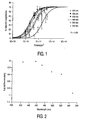
- the 50% maximal sensitivity ( ⁇ ) calculated from the fitted lines was: 1.86 x 10 16 photons/cm 2 at 424 nm, 1.79 x 10 16 photons/cm 2 at 456 nm, 2.29 x 10 16 photons/cm 2 at 472 nm, 3.60 x 10 16 photons/cm 2 at 496 nm, 4.23 x 10 16 photons/cm 2 at 520 nm light and 1.49 x 10 17 photons/cm 2 at 548 nm. These data were then plotted relative to 456 nm (Fig. 2).
- the action spectrum (Fig. 2) was then fitted using nomograms generated using Dartnall's nomogram for the four known photoreceptors. Individual nomograms for the rod (500 nm) receptor, blue (420 nm) cone, green (535 nm) cone and red (560 nm) cone were generated and combinations of different ratios were used to match with the observed melatonin suppression action spectrum. The best fit was obtained using 65% blue cone and 35% rod receptor (Fig. 3).
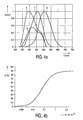
- Figure 4a clearly shows that the melatonin suppression sensitivity, compared with the photopic sensitivity and even compared with scotopic sensitivity, is shifted towards a shorter wavelength region.
- the sensitivity for the melatonin suppression peaks between 400-460 nm, with decreasing efficacy to about zero at 560 nm, the wavelength of 560 nm being close to a maximal sensitivity for photopic vision at 555 nm.
- the photopic vision (eye sensitivity flux) has a value of 683 lumen obtained by 1 Watt of light having a wavelength of 555 nm.
- Figure 4a further shows that the melatonin suppression sensitivity via the eye of elderly people is significantly decreased and that its maximum sensitivity is shifted towards a longer wavelength, i.e. to a wavelength of about 475 nm.
- Figure 4b shows the relationship between the degree of melatonin suppression and the radiation density in W/m2 for an exposure time of 30 minutes.
- the curve for a wavelength of 500 nm is given, the dependency on other wavelengths is similar, for 420-490 nm the curves are shifted to lower radiation densities, for 510-560 nm, the curves are shifted to higher radiation densities.
- About 50% melatonin suppression occurs at about 0.08 W/m2 in the case of a fully dilated pupil.
- the method roughly may comprise the following steps:
- Figure 6 shows an emission spectrum of a low-pressure mercury discharge lamp being part of a system with a nominal power of 15 Watt, of which effectively about 20% is converted into radiation, the lamp having an internal coating of SPE (strontium pyrophosphate activated with Eu 2+ ). Normally the lamp is used for photocopying. However, it is very appropriate for use in the method according to the invention as the emission spectrum of the lamp peaks at about 420 nm, at or close to the maximum of the melatonin suppression sensitivity. The lamp is effectively usable in the method according to the invention, as it is very suitable for suppressing melatonin at a low lighting level. The method is effectively used when an exposure time of 30 minutes is applied to the human subject with (dark) interval periods, i.e.
- the emission spectrum of the lamp has some undesired radiation, see Fig. 6.
- it has undesired radiation in the ultraviolet region, i.e. at shorter wavelengths than 380 nm, and in beyond the blue-green region, i.e. at wavelengths longer than 540 nm.
- This undesired radiation can be eliminated relatively simple by using appropriate filters.
- the lighting level caused by emission in beyond the blue-green region can be decreased very simple, for example by an absorption filter having a band-edge at about 510 nm. By this filter the lighting level is decreased down to about 1 lux, which is an appropriate light level for truck cabins.
- Figure 7 shows the emission spectra of "white"-high-pressure sodium discharge lamps A and B, respectively without filter (graph A) and with filter (graph B).
- the filter is a generally available absorption filter with an absorption edge at 460 nm.
- the lamp with filter, i.e. lamp B has suitable light radiation with an output fraction of melatonin suppressive radiation of about 0.09 Melatonin Watt/Watt.
- the lamp without filter, i.e. lamp A has a significantly higher output fraction of melatonin suppressive radiation, as is clear from its significantly higher emission, in particular in the wavelength region of 400-475 nm, i.e. about the maximum of the melatonin suppression sensitivity.
- the lamp B is appropriate in the case that visual conditions are demanding and sleep quality should not be decreased. Applications can be found for people who wake up shortly in night hours or need to be inspected during night hours, for example at home for elderly but also for parents with young kids, elderly homes, hospitals, nursing homes.
Landscapes
- Health & Medical Sciences (AREA)
- Anesthesiology (AREA)
- Heart & Thoracic Surgery (AREA)
- Animal Behavior & Ethology (AREA)
- Acoustics & Sound (AREA)
- Psychology (AREA)
- Engineering & Computer Science (AREA)
- Biomedical Technology (AREA)
- Veterinary Medicine (AREA)
- Hematology (AREA)
- Life Sciences & Earth Sciences (AREA)
- Physics & Mathematics (AREA)
- General Health & Medical Sciences (AREA)
- Public Health (AREA)
- Pain & Pain Management (AREA)
- Radiation-Therapy Devices (AREA)
- Exposure Control For Cameras (AREA)
- Micro-Organisms Or Cultivation Processes Thereof (AREA)
- Circuit Arrangement For Electric Light Sources In General (AREA)
Claims (6)
- Procédé pour vérifier la vigilance d'un sujet humain à l'aide d'un rayonnement lumineux adéquat, le sujet humain ayant un cycle de variation de la mélatonine impliquant au moins des phases de production de mélatonine et de dégradation de la mélatonine et se trouvant dans une phase dudit cycle, par suppression de ladite formation de la mélatonine ou par simulation de ladite dégradation de la mélatonine, le procédé comprenant les étapes suivantes :- exposition du sujet humain pendant une période d'exposition à un rayonnement lumineux adéquat en fonction d'un effet souhaité sur la phase dudit cycle, ledit effet souhaité étant la suppression de ladite production de la mélatonine ou la stimulation de ladite dégradation de la mélatonine ;dans lequel le rayonnement lumineux adéquat est spécifié par une fraction de sortie du rayonnement de suppression de la mélatonine en unités de mélatonine watt/watt et par un flux lumineux en unités de lumen/watt de lumière, la fraction de sortie du rayonnement de suppression de la mélatonine étant le produit de la puissance spectrale E(λ) normalisée à 1 et la sensibilité de la mélatonine M(λ), le produit intégré pour toutes les longueurs d'onde (λ),
dans lequel M(λ) connaît une pointe entre 400 à 460 nm et atteint environ zéro à 560 nm,
la fraction de sortie et le flux lumineux étant ajustés pour obtenir l'effet souhaité sur la phase dudit cycle,
le rayonnement lumineux étant administré par voie oculaire,
caractérisé en ce
que la fraction de sortie du rayonnement de suppression de la mélatonine est ≥ 0,45 mélatonine watt/watt et le flux lumineux ≤ 60 lumens/watt de lumière. - Procédé selon la revendication 1, caractérisé en ce que la fraction de sortie du rayonnement de suppression de la mélatonine est ≥ 0,45 mélatonine watt/watt et le flux lumineux ≤ 20 lumens/watt de lumière.
- Procédé selon la revendication 1, caractérisé en ce que la fraction de sortie du rayonnement de suppression de la mélatonine est ≥ 0,45 mélatonine watt/watt et le flux lumineux ≤ 10 lumens/watt de lumière.
- Procédé selon l'une de revendications 1 à 3, caractérisé en ce que des moyens d'ajustement du rayonnement lumineux adéquat à recevoir par le sujet humain sont choisis à partir du groupe composé des moyens de filtrage, d'une source lumineuse mobile et d'un système d'éclairage comprenant une source des première et deuxième sources lumineuses réglables.
- Procédé selon la revendication 1, caractérisé en ce que le sujet humain est exposé à la lumière pendant que l'analyse du rayonnement lumineux ambiant est effectuée.
- Procédé selon la revendication 1, caractérisé en ce que le sujet humain est exposé à la lumière avec des périodes d'intervalle sans ledit rayonnement lumineux entre deux périodes d'exposition.
Priority Applications (4)
| Application Number | Priority Date | Filing Date | Title |
|---|---|---|---|
| EP05109137A EP1614441B1 (fr) | 2000-09-08 | 2001-09-07 | Procédé pour vérifier l'état de vigilence d'un humain et source lumineuse à cet effet |
| EP10178634.1A EP2286862B1 (fr) | 2000-09-13 | 2001-09-07 | Procédé pour vérifier l'état de vigilence d'un humain et source lumineuse à cet effet |
| DK05109137.9T DK1614441T3 (da) | 2000-09-08 | 2001-09-07 | Fremgangsmåde til kontrol af vågenhed hos et menneske og en lyskilde til anvendelse i denne fremgangsmåde |
| EP01972064A EP1317302B1 (fr) | 2000-09-08 | 2001-09-07 | Procede pour verifier l'etat de vigilence d'un humain |
Applications Claiming Priority (8)
| Application Number | Priority Date | Filing Date | Title |
|---|---|---|---|
| GB0022089 | 2000-09-08 | ||
| GB0022089A GB0022089D0 (en) | 2000-09-08 | 2000-09-08 | Methods of circadian adjustment |
| EP00203180 | 2000-09-13 | ||
| EP00203180 | 2000-09-13 | ||
| GB0025207 | 2000-10-13 | ||
| GB0025207A GB0025207D0 (en) | 2000-10-13 | 2000-10-13 | Method of circadian adjustment |
| PCT/EP2001/010677 WO2002020079A1 (fr) | 2000-09-08 | 2001-09-07 | Procédé pour vérifier l'état de vigilence d'un humain et source lumineuse à cet effet |
| EP01972064A EP1317302B1 (fr) | 2000-09-08 | 2001-09-07 | Procede pour verifier l'etat de vigilence d'un humain |
Related Child Applications (3)
| Application Number | Title | Priority Date | Filing Date |
|---|---|---|---|
| EP05109137A Division EP1614441B1 (fr) | 2000-09-08 | 2001-09-07 | Procédé pour vérifier l'état de vigilence d'un humain et source lumineuse à cet effet |
| EP10178634.1A Division EP2286862B1 (fr) | 2000-09-13 | 2001-09-07 | Procédé pour vérifier l'état de vigilence d'un humain et source lumineuse à cet effet |
| EP05109137.9 Division-Into | 2005-10-03 |
Publications (2)
| Publication Number | Publication Date |
|---|---|
| EP1317302A1 EP1317302A1 (fr) | 2003-06-11 |
| EP1317302B1 true EP1317302B1 (fr) | 2006-06-07 |
Family
ID=43385708
Family Applications (3)
| Application Number | Title | Priority Date | Filing Date |
|---|---|---|---|
| EP01972064A Expired - Lifetime EP1317302B1 (fr) | 2000-09-08 | 2001-09-07 | Procede pour verifier l'etat de vigilence d'un humain |
| EP10178634.1A Expired - Lifetime EP2286862B1 (fr) | 2000-09-13 | 2001-09-07 | Procédé pour vérifier l'état de vigilence d'un humain et source lumineuse à cet effet |
| EP05109137A Expired - Lifetime EP1614441B1 (fr) | 2000-09-08 | 2001-09-07 | Procédé pour vérifier l'état de vigilence d'un humain et source lumineuse à cet effet |
Family Applications After (2)
| Application Number | Title | Priority Date | Filing Date |
|---|---|---|---|
| EP10178634.1A Expired - Lifetime EP2286862B1 (fr) | 2000-09-13 | 2001-09-07 | Procédé pour vérifier l'état de vigilence d'un humain et source lumineuse à cet effet |
| EP05109137A Expired - Lifetime EP1614441B1 (fr) | 2000-09-08 | 2001-09-07 | Procédé pour vérifier l'état de vigilence d'un humain et source lumineuse à cet effet |
Country Status (12)
| Country | Link |
|---|---|
| US (1) | US8028706B2 (fr) |
| EP (3) | EP1317302B1 (fr) |
| JP (2) | JP4928054B2 (fr) |
| KR (2) | KR100940004B1 (fr) |
| CN (1) | CN1296104C (fr) |
| AT (2) | ATE328633T1 (fr) |
| AU (1) | AU781737B2 (fr) |
| DE (2) | DE60120430T2 (fr) |
| DK (2) | DK1614441T3 (fr) |
| ES (2) | ES2355390T3 (fr) |
| TW (1) | TW541186B (fr) |
| WO (1) | WO2002020079A1 (fr) |
Families Citing this family (67)
| Publication number | Priority date | Publication date | Assignee | Title |
|---|---|---|---|---|
| CA2317319A1 (fr) | 2000-03-14 | 2001-09-14 | The Litebook Company Ltd | Dispositif de phototherapie |
| US20050073839A1 (en) * | 2003-09-18 | 2005-04-07 | The Litebook Company Ltd | Light therapy device |
| USD480480S1 (en) | 2000-08-30 | 2003-10-07 | The Litebook Company Ltd. | Light therapy device |
| TW541186B (en) | 2000-09-08 | 2003-07-11 | Koninkl Philips Electronics Nv | Method for controlling the alertness of a human subject and a light source for use in this method |
| GB2378656A (en) * | 2001-08-14 | 2003-02-19 | Stephen Bryce Hayes | Means for modulation of circadian rhythms |
| US20050179392A1 (en) * | 2002-06-06 | 2005-08-18 | Koninklijke Philips Electronics N.V. | Low-pressure mercury vapor discharge lamp |
| EP2157471A3 (fr) * | 2002-08-28 | 2010-03-03 | Robert Casper | Dispositif pour la prevention de la suppression de la secretion de melatonine par la lumiere en periode nocturne |
| WO2004088616A1 (fr) * | 2003-03-28 | 2004-10-14 | Sharp Kabushiki Kaisha | Dispositif d'affichage |
| JP2007534349A (ja) * | 2003-07-14 | 2007-11-29 | エイ. ツェイスラー,チャールズ | 短波長光を利用したサーカディアンサイクルの修正方法 |
| JP4663247B2 (ja) * | 2004-02-18 | 2011-04-06 | パナソニック電工株式会社 | 屋内用照明装置およびそれに用いる光源 |
| JP4544948B2 (ja) * | 2004-03-26 | 2010-09-15 | シャープ株式会社 | 画像表示制御装置 |
| US7438418B2 (en) * | 2005-02-23 | 2008-10-21 | Eyetracking, Inc. | Mental alertness and mental proficiency level determination |
| US7344251B2 (en) * | 2005-02-23 | 2008-03-18 | Eyetracking, Inc. | Mental alertness level determination |
| DE102005036275A1 (de) * | 2005-08-02 | 2007-02-08 | Berchtold Holding Gmbh | Operationsleuchte |
| US8602791B2 (en) * | 2005-11-04 | 2013-12-10 | Eye Tracking, Inc. | Generation of test stimuli in visual media |
| WO2007056373A2 (fr) | 2005-11-04 | 2007-05-18 | Eyetracking, Inc. | Caracterisation de regions dynamiques de donnees de supports numeriques |
| JP5415664B2 (ja) * | 2005-12-22 | 2014-02-12 | パナソニック株式会社 | 光源装置 |
| JP5134617B2 (ja) * | 2006-04-11 | 2013-01-30 | コーニンクレッカ フィリップス エレクトロニクス エヌ ヴィ | 光による光生物学的効果の制御 |
| EP2094064A4 (fr) * | 2006-12-08 | 2011-11-09 | Sharp Kk | Source de lumière, système de source de lumière et dispositif d'éclairage |
| WO2008146220A2 (fr) | 2007-05-25 | 2008-12-04 | Koninklijke Philips Electronics N.V. | Système d'éclairage |
| EP2180922A4 (fr) * | 2007-08-20 | 2010-09-29 | Univ Laval | Appareil à lumière artificielle et utilisation pour influencer l'état d'un sujet |
| WO2009029575A1 (fr) * | 2007-08-24 | 2009-03-05 | Photonic Developments Llc | Lampe à diode électroluminescente sans rayonnement supprimant la mélatonine |
| EP2257338B1 (fr) | 2008-03-22 | 2013-02-27 | Turbolite Vertriebs Gmbh | Dispositif pour stabiliser et modifier les rythmes biologiques et pour traiter les arythmies |
| US20110037378A1 (en) | 2008-04-28 | 2011-02-17 | Hiroshi Yagi | Fluorescent lamp |
| EP2348246A1 (fr) * | 2008-10-08 | 2011-07-27 | Kabushiki Kaisha Hayashibara Seibutsu Kagaku Kenkyujo | Dispositif d'éclairage |
| JP5668053B2 (ja) * | 2009-04-16 | 2015-02-12 | コーニンクレッカ フィリップス エヌ ヴェ | 照明装置及び睡眠慣性を低減する又は覚醒状態を制御する方法 |
| EP3592116B1 (fr) | 2009-10-08 | 2022-10-26 | Delos Living, LLC | Système d'éclairage à del |
| JP5515015B2 (ja) * | 2009-12-11 | 2014-06-11 | 有限会社ミニョンベル | 安眠誘導装置および安眠誘導方法 |
| US10359552B2 (en) | 2011-01-17 | 2019-07-23 | University Of Utah Research Foundation | Methods, systems, and apparatus for reducing the frequency and/or severity of photophobic responses or for modulating circadian cycles |
| US9446262B2 (en) * | 2011-02-04 | 2016-09-20 | Johnson & Johnson Vision Care, Inc. | Apparatus and method for formation of an energized ophthalmic device for light therapy |
| US9289622B2 (en) | 2011-04-06 | 2016-03-22 | Sharp Laboratories Of America, Inc. | Therapeutic light control system |
| JP2015534701A (ja) | 2012-08-28 | 2015-12-03 | デロス リビング エルエルシーDelos Living Llc | 居住環境に関連するウェルネスを増進するためのシステム、方法、及び物品 |
| WO2014047517A1 (fr) * | 2012-09-20 | 2014-03-27 | Myolite, Inc. | Système d'éclairage de protection |
| KR101475473B1 (ko) * | 2013-05-28 | 2014-12-22 | 주식회사 고영테크놀러지 | 굴곡형 수술장치 |
| US20160136451A1 (en) * | 2013-06-26 | 2016-05-19 | Koninklijke Philips N.V. | Illumination device and method for enhancing non-image forming responses |
| US9410664B2 (en) | 2013-08-29 | 2016-08-09 | Soraa, Inc. | Circadian friendly LED light source |
| CN105992612A (zh) | 2013-10-09 | 2016-10-05 | 飞利浦灯具控股公司 | 具有逼近白光的cri的无褪黑素抑制光源 |
| WO2015073933A1 (fr) | 2013-11-15 | 2015-05-21 | University Of Utah Research Foundation | Procédé et appareil de filtration de lumière de nanoparticule |
| KR102094965B1 (ko) | 2013-12-30 | 2020-03-31 | 삼성디스플레이 주식회사 | 각성 안경, 차량용 미러 유닛 및 표시장치 |
| JP6258060B2 (ja) * | 2014-02-13 | 2018-01-10 | アイシン精機株式会社 | 照明装置および照明方法 |
| EP3754588B1 (fr) | 2014-02-28 | 2023-08-16 | Delos Living LLC | Systèmes, procédés et articles pour améliorer le bien-être associé à des environnements habitables |
| JP2017533449A (ja) * | 2014-07-22 | 2017-11-09 | ザ ユニバーシティ オブ ユタ リサーチ ファウンデイション | 羞明反応の頻度および/または程度を低減する、または概日周期を調節する方法、システム、および装置 |
| KR102289437B1 (ko) | 2014-11-14 | 2021-08-12 | 삼성디스플레이 주식회사 | 표시 장치 및 그 제어방법 |
| WO2016115230A1 (fr) | 2015-01-13 | 2016-07-21 | Delos Living Llc | Systèmes, procédés et articles permettant de surveiller et d'améliorer le bien-être humain |
| US10401683B2 (en) | 2015-01-14 | 2019-09-03 | Soraa, Inc. | Low blue light displays |
| FR3032515B1 (fr) * | 2015-02-05 | 2017-01-27 | Maquet Sas | Equipement d'eclairage a stimulation optimale des fonctions non visuelles. |
| USD760913S1 (en) | 2015-06-12 | 2016-07-05 | Verilux, Inc. | Light therapy luminaire |
| USD760398S1 (en) | 2015-06-12 | 2016-06-28 | Verilux, Inc. | Lamp for light therapy |
| DE202015004814U1 (de) * | 2015-07-09 | 2015-10-15 | Sven Hädel | Demonstrator zur Simulation von Tageslicht |
| KR102386112B1 (ko) | 2015-07-30 | 2022-04-14 | 삼성디스플레이 주식회사 | 표시 장치 |
| US10257902B2 (en) | 2015-08-13 | 2019-04-09 | Signify Holding B.V. | Sleepy light |
| EP3466218A4 (fr) | 2016-06-03 | 2020-01-22 | Musco Corporation | Appareil, procédé et système de fourniture d'un éclairage circadien accordable à une luminosité et une couleur perçues constantes |
| US11338107B2 (en) | 2016-08-24 | 2022-05-24 | Delos Living Llc | Systems, methods and articles for enhancing wellness associated with habitable environments |
| US11541249B2 (en) * | 2017-05-05 | 2023-01-03 | Abl Ip Holding Llc | Systems and methods to provide circadian impact |
| EP3449975A1 (fr) * | 2017-08-28 | 2019-03-06 | BrainLit AB | Appareil d'éclairage |
| WO2019046580A1 (fr) | 2017-08-30 | 2019-03-07 | Delos Living Llc | Systèmes, procédés et articles pour évaluer et/ou améliorer la santé et le bien-être |
| WO2019140327A2 (fr) | 2018-01-11 | 2019-07-18 | Ecosense Lighting Inc. | Systèmes d'éclairage d'affichage à effets circadiens |
| WO2019140309A1 (fr) | 2018-01-11 | 2019-07-18 | Ecosense Lighting Inc. | Systèmes commutables pour lumière blanche à haut rendu de couleurs et à effets biologiques |
| EP3850458A4 (fr) | 2018-09-14 | 2022-06-08 | Delos Living, LLC | Systèmes et procédés d'assainissement d'air |
| US11783748B2 (en) | 2018-11-08 | 2023-10-10 | Korrus, Inc. | Display lighting systems with bioactive lighting |
| US20220001200A1 (en) | 2018-11-08 | 2022-01-06 | Ecosense Lighting Inc. | Switchable bioactive lighting |
| US12073775B2 (en) | 2018-11-08 | 2024-08-27 | Korrus, Inc. | Display lighting systems with bioactive lighting |
| WO2020176503A1 (fr) | 2019-02-26 | 2020-09-03 | Delos Living Llc | Procédé et appareil d'éclairage dans un environnement de bureau |
| US11898898B2 (en) | 2019-03-25 | 2024-02-13 | Delos Living Llc | Systems and methods for acoustic monitoring |
| US20210315083A1 (en) * | 2020-02-17 | 2021-10-07 | EcoSense Lighting, Inc. | Circadian outdoor equivalency metric for assessing photic environment and history |
| KR102489951B1 (ko) | 2021-03-26 | 2023-01-18 | 한국광기술원 | 빛에 의한 생체리듬 영향지수 측정장치 및 방법 |
| CN113409205B (zh) * | 2021-06-10 | 2023-11-24 | Oppo广东移动通信有限公司 | 图像处理方法、图像处理装置、存储介质与电子设备 |
Citations (2)
| Publication number | Priority date | Publication date | Assignee | Title |
|---|---|---|---|---|
| US4444190A (en) * | 1980-11-24 | 1984-04-24 | Mutzhas Maximilian F | Device for the phototherapeutic treatment of hyperbilirubinemia |
| WO2000002491A1 (fr) * | 1998-07-09 | 2000-01-20 | Curelight Ltd. | Appareil et procede de therapie photodynamique haute energie efficace de l'acne simple et de la seborrhee |
Family Cites Families (31)
| Publication number | Priority date | Publication date | Assignee | Title |
|---|---|---|---|---|
| US5163426A (en) | 1987-06-26 | 1992-11-17 | Brigham And Women's Hospital | Assessment and modification of a subject's endogenous circadian cycle |
| US5503637A (en) * | 1987-06-26 | 1996-04-02 | Light Sciences, Inc. | Apparatus for producing and delivering high-intensity light to a subject |
| US5545192A (en) | 1987-06-26 | 1996-08-13 | Brigham And Women's Hospital | Intermittent use of bright light to modify the circadian phase |
| US5167228A (en) | 1987-06-26 | 1992-12-01 | Brigham And Women's Hospital | Assessment and modification of endogenous circadian phase and amplitude |
| US5292345A (en) | 1987-08-24 | 1994-03-08 | Gerardo Ernesto A | Portable photoneuronic energizer |
| US5274403A (en) * | 1987-08-28 | 1993-12-28 | Gott George M | Lens useful in inhibiting the production of melatonin and lens produced thereby |
| US4858609A (en) * | 1987-12-04 | 1989-08-22 | Cole Roger J | Bright light mask |
| US5919217A (en) | 1987-12-08 | 1999-07-06 | Medic-Light, Inc. | Portable phototherapy unit |
| US5083858A (en) * | 1989-04-17 | 1992-01-28 | Girerd Rene J | Photobiologic sunglasses and transmitters |
| CA1334399C (fr) * | 1989-04-27 | 1995-02-14 | Murray M. Waldman | Lampe therapeutique |
| US5447528A (en) | 1989-10-30 | 1995-09-05 | Gerardo; Ernesto | Method of treating seasonal affective disorder |
| JP2819760B2 (ja) * | 1990-04-17 | 1998-11-05 | 松下電器産業株式会社 | 洗面化粧台 |
| JPH044506A (ja) * | 1990-04-20 | 1992-01-09 | Toshiba Lighting & Technol Corp | 照明装置および照明方法 |
| JP2582957B2 (ja) * | 1991-06-14 | 1997-02-19 | 松下電工株式会社 | 生体活性度モニターシステム |
| US5197941A (en) * | 1991-07-30 | 1993-03-30 | Barbara Whitaker | Portable device for controlling Circadian Rhythm disorders |
| CA2053566C (fr) * | 1991-10-16 | 2001-07-31 | Suzanne Maureen Waldman | Lunettes protectrices influencees par le cycle biologique |
| US5589741A (en) * | 1993-04-22 | 1996-12-31 | Research Foundation For Mental Hygiene, Inc. | System for creating naturalistic illumination cycles |
| JP3550784B2 (ja) * | 1994-03-28 | 2004-08-04 | 松下電工株式会社 | 目覚まし装置 |
| US5562719A (en) * | 1995-03-06 | 1996-10-08 | Lopez-Claros; Marcelo E. | Light therapy method and apparatus |
| US5805267A (en) * | 1996-06-13 | 1998-09-08 | Goldman; Neil | Interactive light field for programmed non-visual stimulation and monitoring |
| US5923398A (en) * | 1995-06-15 | 1999-07-13 | Enlightened Technologies, Inc. | Interactive light field for non-visual stimulation |
| DE19549092A1 (de) | 1995-12-29 | 1997-08-14 | Weth Gosbert Dr Med Dr Rer Nat | Lichttherapie mit der Biolampe zur Beeinflussung des Fibrinogenspiegels, der Ateriosklerose, von immunologischen Erkrankungen, der Psychose, Depression und weiteren Erkrankungen |
| JP3713815B2 (ja) * | 1996-03-12 | 2005-11-09 | 松下電工株式会社 | 照明システム |
| US6135117A (en) * | 1997-05-12 | 2000-10-24 | Cornell Research Foundation, Inc. | Non-ocular circadian clock resetting in humans |
| JP3944972B2 (ja) * | 1997-10-28 | 2007-07-18 | 松下電工株式会社 | 色温度制御照明装置とこれを用いた入眠装置、覚醒装置及び入眠覚醒装置 |
| US6235046B1 (en) * | 1998-01-21 | 2001-05-22 | David W. Gerdt | Passive photonic eye delivery system |
| WO2001085254A1 (fr) * | 2000-05-10 | 2001-11-15 | Thomas Jefferson University | Systeme photorecepteur s'utilisant pour la regulation de la melatonine et en phototherapie |
| TW541186B (en) | 2000-09-08 | 2003-07-11 | Koninkl Philips Electronics Nv | Method for controlling the alertness of a human subject and a light source for use in this method |
| US20050179392A1 (en) | 2002-06-06 | 2005-08-18 | Koninklijke Philips Electronics N.V. | Low-pressure mercury vapor discharge lamp |
| WO2004088616A1 (fr) | 2003-03-28 | 2004-10-14 | Sharp Kabushiki Kaisha | Dispositif d'affichage |
| US7438418B2 (en) | 2005-02-23 | 2008-10-21 | Eyetracking, Inc. | Mental alertness and mental proficiency level determination |
-
2001
- 2001-08-22 TW TW090120617A patent/TW541186B/zh not_active IP Right Cessation
- 2001-09-07 CN CNB018026877A patent/CN1296104C/zh not_active Expired - Fee Related
- 2001-09-07 AT AT01972064T patent/ATE328633T1/de not_active IP Right Cessation
- 2001-09-07 KR KR1020097000465A patent/KR100940004B1/ko not_active Expired - Fee Related
- 2001-09-07 DE DE60120430T patent/DE60120430T2/de not_active Expired - Lifetime
- 2001-09-07 DK DK05109137.9T patent/DK1614441T3/da active
- 2001-09-07 ES ES05109137T patent/ES2355390T3/es not_active Expired - Lifetime
- 2001-09-07 DK DK01972064T patent/DK1317302T3/da active
- 2001-09-07 WO PCT/EP2001/010677 patent/WO2002020079A1/fr not_active Ceased
- 2001-09-07 EP EP01972064A patent/EP1317302B1/fr not_active Expired - Lifetime
- 2001-09-07 EP EP10178634.1A patent/EP2286862B1/fr not_active Expired - Lifetime
- 2001-09-07 AT AT05109137T patent/ATE488263T1/de not_active IP Right Cessation
- 2001-09-07 DE DE60143495T patent/DE60143495D1/de not_active Expired - Lifetime
- 2001-09-07 AU AU91866/01A patent/AU781737B2/en not_active Ceased
- 2001-09-07 KR KR1020097000466A patent/KR100940002B1/ko not_active Expired - Fee Related
- 2001-09-07 JP JP2002524561A patent/JP4928054B2/ja not_active Expired - Fee Related
- 2001-09-07 US US10/129,696 patent/US8028706B2/en not_active Expired - Fee Related
- 2001-09-07 ES ES01972064T patent/ES2266262T3/es not_active Expired - Lifetime
- 2001-09-07 EP EP05109137A patent/EP1614441B1/fr not_active Expired - Lifetime
-
2011
- 2011-04-20 JP JP2011093824A patent/JP2011161246A/ja active Pending
Patent Citations (2)
| Publication number | Priority date | Publication date | Assignee | Title |
|---|---|---|---|---|
| US4444190A (en) * | 1980-11-24 | 1984-04-24 | Mutzhas Maximilian F | Device for the phototherapeutic treatment of hyperbilirubinemia |
| WO2000002491A1 (fr) * | 1998-07-09 | 2000-01-20 | Curelight Ltd. | Appareil et procede de therapie photodynamique haute energie efficace de l'acne simple et de la seborrhee |
Also Published As
| Publication number | Publication date |
|---|---|
| US20030069616A1 (en) | 2003-04-10 |
| AU9186601A (en) | 2002-03-22 |
| ES2266262T3 (es) | 2007-03-01 |
| AU781737B2 (en) | 2005-06-09 |
| KR100940004B1 (ko) | 2010-02-03 |
| EP2286862B1 (fr) | 2016-12-14 |
| DK1317302T3 (da) | 2006-10-09 |
| DE60143495D1 (de) | 2010-12-30 |
| KR100940002B1 (ko) | 2010-02-03 |
| DE60120430T2 (de) | 2006-12-28 |
| EP1317302A1 (fr) | 2003-06-11 |
| ATE328633T1 (de) | 2006-06-15 |
| JP4928054B2 (ja) | 2012-05-09 |
| WO2002020079A1 (fr) | 2002-03-14 |
| CN1388763A (zh) | 2003-01-01 |
| ES2355390T3 (es) | 2011-03-25 |
| JP2011161246A (ja) | 2011-08-25 |
| JP2004508106A (ja) | 2004-03-18 |
| KR20090019905A (ko) | 2009-02-25 |
| EP1614441A1 (fr) | 2006-01-11 |
| DK1614441T3 (da) | 2011-02-14 |
| TW541186B (en) | 2003-07-11 |
| EP1614441B1 (fr) | 2010-11-17 |
| CN1296104C (zh) | 2007-01-24 |
| DE60120430D1 (de) | 2006-07-20 |
| US8028706B2 (en) | 2011-10-04 |
| KR20090019906A (ko) | 2009-02-25 |
| EP2286862A1 (fr) | 2011-02-23 |
| ATE488263T1 (de) | 2010-12-15 |
Similar Documents
| Publication | Publication Date | Title |
|---|---|---|
| EP1317302B1 (fr) | Procede pour verifier l'etat de vigilence d'un humain | |
| US5304212A (en) | Assessment and modification of a human subject's circadian cycle | |
| Van Bommel et al. | Lighting for work: a review of visual and biological effects | |
| US5176133A (en) | Assessment and modification of circadian phase and amplitude | |
| CN102438689B (zh) | 用于减少睡眠惯性或控制警觉的照明设备及方法 | |
| US20060106437A1 (en) | Method for modifying or resetting the circadian cycle using short wavelength light | |
| Lasko et al. | Melatonin suppression by illumination of upper and lower visual fields | |
| US20050119106A1 (en) | Silicoboroncarbonitride ceramics and precursor compounds, method for the production and use thereof | |
| KR100935313B1 (ko) | 발광 시스템 및 광 소스 또는 광 소스들의 조합체 | |
| Kuchenbecker et al. | Toward an indoor lighting solution for social jet lag | |
| Tawfik | Natural Lighting as a Factor in Providing a Healthy Environment in Buildings | |
| Abd Rashid | PHYSIOLOGICAL REACTIONS TO LIGHT: THE UNDERSTANDING OF LIGHTING DESIGN THROUGH HEALTH AND VISUAL SAFETY |
Legal Events
| Date | Code | Title | Description |
|---|---|---|---|
| PUAI | Public reference made under article 153(3) epc to a published international application that has entered the european phase |
Free format text: ORIGINAL CODE: 0009012 |
|
| 17P | Request for examination filed |
Effective date: 20030408 |
|
| AK | Designated contracting states |
Designated state(s): AT BE CH CY DE DK ES FI FR GB GR IE IT LI LU MC NL PT SE TR |
|
| 17Q | First examination report despatched |
Effective date: 20040420 |
|
| GRAP | Despatch of communication of intention to grant a patent |
Free format text: ORIGINAL CODE: EPIDOSNIGR1 |
|
| RTI1 | Title (correction) |
Free format text: METHOD FOR CONTROLLING THE ALERTNESS OF A HUMAN SUBJECT |
|
| GRAS | Grant fee paid |
Free format text: ORIGINAL CODE: EPIDOSNIGR3 |
|
| GRAA | (expected) grant |
Free format text: ORIGINAL CODE: 0009210 |
|
| RAP1 | Party data changed (applicant data changed or rights of an application transferred) |
Owner name: KONINKLIJKE PHILIPS ELECTRONICS N.V. |
|
| AK | Designated contracting states |
Kind code of ref document: B1 Designated state(s): AT BE CH CY DE DK ES FI FR GB GR IE IT LI LU MC NL PT SE TR |
|
| PG25 | Lapsed in a contracting state [announced via postgrant information from national office to epo] |
Ref country code: FI Free format text: LAPSE BECAUSE OF FAILURE TO SUBMIT A TRANSLATION OF THE DESCRIPTION OR TO PAY THE FEE WITHIN THE PRESCRIBED TIME-LIMIT Effective date: 20060607 Ref country code: BE Free format text: LAPSE BECAUSE OF FAILURE TO SUBMIT A TRANSLATION OF THE DESCRIPTION OR TO PAY THE FEE WITHIN THE PRESCRIBED TIME-LIMIT Effective date: 20060607 Ref country code: NL Free format text: LAPSE BECAUSE OF FAILURE TO SUBMIT A TRANSLATION OF THE DESCRIPTION OR TO PAY THE FEE WITHIN THE PRESCRIBED TIME-LIMIT Effective date: 20060607 |
|
| REG | Reference to a national code |
Ref country code: GB Ref legal event code: FG4D |
|
| REG | Reference to a national code |
Ref country code: CH Ref legal event code: EP |
|
| REG | Reference to a national code |
Ref country code: IE Ref legal event code: FG4D |
|
| REF | Corresponds to: |
Ref document number: 60120430 Country of ref document: DE Date of ref document: 20060720 Kind code of ref document: P |
|
| PG25 | Lapsed in a contracting state [announced via postgrant information from national office to epo] |
Ref country code: IE Free format text: LAPSE BECAUSE OF NON-PAYMENT OF DUE FEES Effective date: 20060907 |
|
| REG | Reference to a national code |
Ref country code: SE Ref legal event code: TRGR |
|
| PGFP | Annual fee paid to national office [announced via postgrant information from national office to epo] |
Ref country code: AT Payment date: 20060925 Year of fee payment: 6 |
|
| PG25 | Lapsed in a contracting state [announced via postgrant information from national office to epo] |
Ref country code: MC Free format text: LAPSE BECAUSE OF NON-PAYMENT OF DUE FEES Effective date: 20060930 |
|
| REG | Reference to a national code |
Ref country code: DK Ref legal event code: T3 |
|
| PG25 | Lapsed in a contracting state [announced via postgrant information from national office to epo] |
Ref country code: PT Free format text: LAPSE BECAUSE OF FAILURE TO SUBMIT A TRANSLATION OF THE DESCRIPTION OR TO PAY THE FEE WITHIN THE PRESCRIBED TIME-LIMIT Effective date: 20061107 |
|
| NLV1 | Nl: lapsed or annulled due to failure to fulfill the requirements of art. 29p and 29m of the patents act | ||
| PGFP | Annual fee paid to national office [announced via postgrant information from national office to epo] |
Ref country code: CH Payment date: 20061228 Year of fee payment: 6 |
|
| ET | Fr: translation filed | ||
| REG | Reference to a national code |
Ref country code: ES Ref legal event code: FG2A Ref document number: 2266262 Country of ref document: ES Kind code of ref document: T3 |
|
| PLBE | No opposition filed within time limit |
Free format text: ORIGINAL CODE: 0009261 |
|
| STAA | Information on the status of an ep patent application or granted ep patent |
Free format text: STATUS: NO OPPOSITION FILED WITHIN TIME LIMIT |
|
| 26N | No opposition filed |
Effective date: 20070308 |
|
| PGFP | Annual fee paid to national office [announced via postgrant information from national office to epo] |
Ref country code: SE Payment date: 20060926 Year of fee payment: 6 |
|
| PG25 | Lapsed in a contracting state [announced via postgrant information from national office to epo] |
Ref country code: SE Free format text: LAPSE BECAUSE OF NON-PAYMENT OF DUE FEES Effective date: 20070908 Ref country code: GR Free format text: LAPSE BECAUSE OF FAILURE TO SUBMIT A TRANSLATION OF THE DESCRIPTION OR TO PAY THE FEE WITHIN THE PRESCRIBED TIME-LIMIT Effective date: 20060908 |
|
| REG | Reference to a national code |
Ref country code: CH Ref legal event code: PL |
|
| EUG | Se: european patent has lapsed | ||
| PG25 | Lapsed in a contracting state [announced via postgrant information from national office to epo] |
Ref country code: AT Free format text: LAPSE BECAUSE OF NON-PAYMENT OF DUE FEES Effective date: 20070907 |
|
| PG25 | Lapsed in a contracting state [announced via postgrant information from national office to epo] |
Ref country code: TR Free format text: LAPSE BECAUSE OF FAILURE TO SUBMIT A TRANSLATION OF THE DESCRIPTION OR TO PAY THE FEE WITHIN THE PRESCRIBED TIME-LIMIT Effective date: 20060607 Ref country code: LI Free format text: LAPSE BECAUSE OF NON-PAYMENT OF DUE FEES Effective date: 20070930 Ref country code: LU Free format text: LAPSE BECAUSE OF NON-PAYMENT OF DUE FEES Effective date: 20060907 Ref country code: CH Free format text: LAPSE BECAUSE OF NON-PAYMENT OF DUE FEES Effective date: 20070930 |
|
| PG25 | Lapsed in a contracting state [announced via postgrant information from national office to epo] |
Ref country code: CY Free format text: LAPSE BECAUSE OF FAILURE TO SUBMIT A TRANSLATION OF THE DESCRIPTION OR TO PAY THE FEE WITHIN THE PRESCRIBED TIME-LIMIT Effective date: 20060607 |
|
| REG | Reference to a national code |
Ref country code: ES Ref legal event code: PC2A Owner name: KONINKLIJKE PHILIPS N.V. Effective date: 20140221 |
|
| REG | Reference to a national code |
Ref country code: DE Ref legal event code: R082 Ref document number: 60120430 Country of ref document: DE Representative=s name: VOLMER, GEORG, DIPL.-ING., DE |
|
| REG | Reference to a national code |
Ref country code: DE Ref legal event code: R082 Ref document number: 60120430 Country of ref document: DE Representative=s name: VOLMER, GEORG, DIPL.-ING., DE Effective date: 20140328 Ref country code: DE Ref legal event code: R081 Ref document number: 60120430 Country of ref document: DE Owner name: KONINKLIJKE PHILIPS N.V., NL Free format text: FORMER OWNER: KONINKLIJKE PHILIPS ELECTRONICS N.V., EINDHOVEN, NL Effective date: 20140328 Ref country code: DE Ref legal event code: R082 Ref document number: 60120430 Country of ref document: DE Representative=s name: MEISSNER, BOLTE & PARTNER GBR, DE Effective date: 20140328 Ref country code: DE Ref legal event code: R082 Ref document number: 60120430 Country of ref document: DE Representative=s name: MEISSNER BOLTE PATENTANWAELTE RECHTSANWAELTE P, DE Effective date: 20140328 Ref country code: DE Ref legal event code: R081 Ref document number: 60120430 Country of ref document: DE Owner name: PHILIPS LIGHTING HOLDING B.V., NL Free format text: FORMER OWNER: KONINKLIJKE PHILIPS ELECTRONICS N.V., EINDHOVEN, NL Effective date: 20140328 |
|
| REG | Reference to a national code |
Ref country code: FR Ref legal event code: CD Owner name: KONINKLIJKE PHILIPS N.V., NL Effective date: 20141126 Ref country code: FR Ref legal event code: CA Effective date: 20141126 |
|
| REG | Reference to a national code |
Ref country code: FR Ref legal event code: PLFP Year of fee payment: 15 |
|
| REG | Reference to a national code |
Ref country code: DE Ref legal event code: R082 Ref document number: 60120430 Country of ref document: DE Representative=s name: MEISSNER, BOLTE & PARTNER GBR, DE Ref country code: DE Ref legal event code: R082 Ref document number: 60120430 Country of ref document: DE Representative=s name: MEISSNER BOLTE PATENTANWAELTE RECHTSANWAELTE P, DE |
|
| REG | Reference to a national code |
Ref country code: FR Ref legal event code: PLFP Year of fee payment: 16 |
|
| REG | Reference to a national code |
Ref country code: GB Ref legal event code: 732E Free format text: REGISTERED BETWEEN 20161006 AND 20161012 |
|
| REG | Reference to a national code |
Ref country code: DE Ref legal event code: R082 Ref document number: 60120430 Country of ref document: DE Representative=s name: MEISSNER BOLTE PATENTANWAELTE RECHTSANWAELTE P, DE Ref country code: DE Ref legal event code: R081 Ref document number: 60120430 Country of ref document: DE Owner name: PHILIPS LIGHTING HOLDING B.V., NL Free format text: FORMER OWNER: KONINKLIJKE PHILIPS N.V., EINDHOVEN, NL |
|
| REG | Reference to a national code |
Ref country code: FR Ref legal event code: PLFP Year of fee payment: 17 |
|
| PGFP | Annual fee paid to national office [announced via postgrant information from national office to epo] |
Ref country code: GB Payment date: 20170929 Year of fee payment: 17 Ref country code: IT Payment date: 20170922 Year of fee payment: 17 |
|
| PGFP | Annual fee paid to national office [announced via postgrant information from national office to epo] |
Ref country code: DK Payment date: 20170922 Year of fee payment: 17 |
|
| PGFP | Annual fee paid to national office [announced via postgrant information from national office to epo] |
Ref country code: DE Payment date: 20171130 Year of fee payment: 17 Ref country code: FR Payment date: 20171002 Year of fee payment: 17 |
|
| PGFP | Annual fee paid to national office [announced via postgrant information from national office to epo] |
Ref country code: ES Payment date: 20171025 Year of fee payment: 17 |
|
| REG | Reference to a national code |
Ref country code: DE Ref legal event code: R119 Ref document number: 60120430 Country of ref document: DE |
|
| REG | Reference to a national code |
Ref country code: DK Ref legal event code: EBP Effective date: 20180930 |
|
| GBPC | Gb: european patent ceased through non-payment of renewal fee |
Effective date: 20180907 |
|
| PG25 | Lapsed in a contracting state [announced via postgrant information from national office to epo] |
Ref country code: IT Free format text: LAPSE BECAUSE OF NON-PAYMENT OF DUE FEES Effective date: 20180907 Ref country code: DE Free format text: LAPSE BECAUSE OF NON-PAYMENT OF DUE FEES Effective date: 20190402 |
|
| PG25 | Lapsed in a contracting state [announced via postgrant information from national office to epo] |
Ref country code: FR Free format text: LAPSE BECAUSE OF NON-PAYMENT OF DUE FEES Effective date: 20180930 |
|
| REG | Reference to a national code |
Ref country code: ES Ref legal event code: FD2A Effective date: 20191030 |
|
| PG25 | Lapsed in a contracting state [announced via postgrant information from national office to epo] |
Ref country code: GB Free format text: LAPSE BECAUSE OF NON-PAYMENT OF DUE FEES Effective date: 20180907 Ref country code: DK Free format text: LAPSE BECAUSE OF NON-PAYMENT OF DUE FEES Effective date: 20180930 |
|
| PG25 | Lapsed in a contracting state [announced via postgrant information from national office to epo] |
Ref country code: ES Free format text: LAPSE BECAUSE OF NON-PAYMENT OF DUE FEES Effective date: 20180908 |