EP1317652B1 - Verfahren, vorrichtung und computerprogrammprodukt zur warnung vor einer hubschrauberheckbodenberührung - Google Patents
Verfahren, vorrichtung und computerprogrammprodukt zur warnung vor einer hubschrauberheckbodenberührung Download PDFInfo
- Publication number
- EP1317652B1 EP1317652B1 EP01939571A EP01939571A EP1317652B1 EP 1317652 B1 EP1317652 B1 EP 1317652B1 EP 01939571 A EP01939571 A EP 01939571A EP 01939571 A EP01939571 A EP 01939571A EP 1317652 B1 EP1317652 B1 EP 1317652B1
- Authority
- EP
- European Patent Office
- Prior art keywords
- signal
- aircraft
- indicative
- pitch
- rate
- Prior art date
- Legal status (The legal status is an assumption and is not a legal conclusion. Google has not performed a legal analysis and makes no representation as to the accuracy of the status listed.)
- Expired - Lifetime
Links
- 238000000034 method Methods 0.000 title claims abstract description 17
- 238000004590 computer program Methods 0.000 title claims abstract description 8
- 239000011295 pitch Substances 0.000 description 36
- 238000010586 diagram Methods 0.000 description 8
- 230000035945 sensitivity Effects 0.000 description 6
- 230000000007 visual effect Effects 0.000 description 6
- 239000011159 matrix material Substances 0.000 description 5
- 231100001261 hazardous Toxicity 0.000 description 4
- 238000012545 processing Methods 0.000 description 4
- 230000004913 activation Effects 0.000 description 2
- 238000013459 approach Methods 0.000 description 2
- 230000001143 conditioned effect Effects 0.000 description 2
- 230000006378 damage Effects 0.000 description 2
- 238000001514 detection method Methods 0.000 description 2
- 238000005286 illumination Methods 0.000 description 2
- 230000008569 process Effects 0.000 description 2
- 208000027418 Wounds and injury Diseases 0.000 description 1
- 230000008859 change Effects 0.000 description 1
- 238000010276 construction Methods 0.000 description 1
- 238000005516 engineering process Methods 0.000 description 1
- 239000000284 extract Substances 0.000 description 1
- 230000005283 ground state Effects 0.000 description 1
- 208000014674 injury Diseases 0.000 description 1
- 238000009434 installation Methods 0.000 description 1
- 238000004519 manufacturing process Methods 0.000 description 1
- 238000005259 measurement Methods 0.000 description 1
- 238000012986 modification Methods 0.000 description 1
- 230000004048 modification Effects 0.000 description 1
- 230000000737 periodic effect Effects 0.000 description 1
- 238000010845 search algorithm Methods 0.000 description 1
Images



Classifications
-
- G—PHYSICS
- G01—MEASURING; TESTING
- G01C—MEASURING DISTANCES, LEVELS OR BEARINGS; SURVEYING; NAVIGATION; GYROSCOPIC INSTRUMENTS; PHOTOGRAMMETRY OR VIDEOGRAMMETRY
- G01C5/00—Measuring height; Measuring distances transverse to line of sight; Levelling between separated points; Surveyors' levels
- G01C5/005—Measuring height; Measuring distances transverse to line of sight; Levelling between separated points; Surveyors' levels altimeters for aircraft
-
- B—PERFORMING OPERATIONS; TRANSPORTING
- B64—AIRCRAFT; AVIATION; COSMONAUTICS
- B64C—AEROPLANES; HELICOPTERS
- B64C27/00—Rotorcraft; Rotors peculiar thereto
- B64C27/82—Rotorcraft; Rotors peculiar thereto characterised by the provision of an auxiliary rotor or fluid-jet device for counter-balancing lifting rotor torque or changing direction of rotorcraft
-
- B—PERFORMING OPERATIONS; TRANSPORTING
- B64—AIRCRAFT; AVIATION; COSMONAUTICS
- B64D—EQUIPMENT FOR FITTING IN OR TO AIRCRAFT; FLIGHT SUITS; PARACHUTES; ARRANGEMENT OR MOUNTING OF POWER PLANTS OR PROPULSION TRANSMISSIONS IN AIRCRAFT
- B64D45/00—Aircraft indicators or protectors not otherwise provided for
- B64D45/04—Landing aids; Safety measures to prevent collision with earth's surface
Definitions
- the present invention is related to ground proximity warning systems and methods for rotary wing aircraft such as helicopters, gyrocopters, and tilt rotors.
- Ground proximity warning systems provide aural and visual warnings of conditions when the aircraft is in potentially hazardous proximity to terrain, and/or in a flight condition apparently inappropriate given the aircraft's position relative to terrain.
- Earlier generation ground proximity warning systems sensed dangerous approach to terrain by using a radar altimeter to sense height above the ground. The rate at which height above ground changes, is compared with a predefined envelope(s) to determine if a dangerous condition exists.
- Classic GPWS systems also contain additional alert functions called 'modes' that alert to other potentially hazardous conditions based on flight regime. Examples of GPWS devices are contained in U.S.
- EGPWS devices include a stored terrain database that compares the position of the aircraft in three dimensional space with the stored terrain information to identify potential conflicts.
- EGPWS devices may also include all the functionality and modes of the classic GPWS devices. Examples of EGPWS-type devices include U.S. Patent Nos.: 4,646,244 ; 5,839,080 ; 5,414,631 ; 5,448,563 ; 5,661,486 4,224,669 ; 6,088,634 ; 6,092,009 ; 6,122,570 ; and 6,138,060 .
- Rotary wing aircraft and aircraft capable of hover present unique challenges for ground proximity alerting due to the different flight profiles flown and the unique capabilities of rotary wing aircraft.
- rotary wing aircraft can cease all forward motion while still remaining airborne.
- Rotary wing aircraft can also descend straight down from a hover to land on all sorts of terrain, and need not make a gradual descent and approach to land as in the case of fixed wing aircraft.
- 5,781,126 includes a barometric altitude rate detector including a controller for adjusting this rate detector to account for downwash of the rotary wing.
- U.S. Patent No. 5,666,110 discloses a descent after take-off protection envelope.
- U.S. Patent No. 6,043,759 discloses a logic method and device for determining when the helicopter is in the airborne or ground state which assists with preventing nuisance alarms during helicopter autorotations.
- Serial number 08/844,116 discloses a device and method for generating altitude call outs during helicopter landing operations.
- Helicopters and certain other types of rotary wing aircraft often additionally contain a tail rotor and a tail boom which extends far behind and is out of sight of the pilot.
- Helicopters are also capable of off-airport landings, such as on rooftops, on oil rigs, and on hillsides, for example.
- the helicopter geometry and operating characteristics combine to present a risk of a tail strike during low altitude operations.
- a tail strike event can result in significant damage to the aircraft.
- a tail strike can cause complete loss of control and/or serious injury or death to the aircraft occupants.
- US4769645A discloses a warning system for excessive pitch attitude in helicopters in which a warning envelope is constructed from altitude and pitch inputs. The envelope is modified by increasing the altitude at which a warning is issued based on the rate of descent and rate of change of pitch.
- the present invention recognizes the problems in ground proximity alerting for rotary wing aircraft such as, for example, helicopters, gyrocopters and tilt rotors when in the rotor mode, hereinafter generically and interchangeably referred to as "helicopter(s)" or "rotary wing aircraft".
- helicopter(s) helicopters, gyrocopters and tilt rotors when in the rotor mode
- rotary wing aircraft have unique, yet normal operating capabilities including hover and an off-airport and heliport landing capability.
- the invention consist in a method for alerting the pilot of a rotary wing aircraft of a tail strike hazard comprising the steps of:
- the invention consist in a computer program product for altering a pilot of a rotary wing aircraft of a tail strike hazard comprising:
- the invention consists in an apparatus for alerting a pilot of a rotary wing aircraft of a tail strike hazard, the apparatus comprising:
- the invention may be included as part of a classic ground proximity warning system as described in U.S. Patent Nos. 5,781,126 ; 5,666,110 ; 6,043,759 , or as part of an enhanced ground proximity warning system such as described in US20020036574A . Further details and operation of the present invention will be described below with reference to the drawings.
- U.S. Patent No. 5,839,080 and US20020036574A describes an EGPWS device manufactured by Honeywell International Inc., and suitable for use with the present invention. Additional EGPWS features applicable to rotary wing aircraft are described in U.S. Patent Nos. 6,138,060 ; 6,122,570 ; 6,092,009 ; 6,088,634 ; as well as in co-pending United States application serial numbers: 09/099,822 ; 09/074,953 ; 09/103, 349 ; 09/255,670 ; and 09/496,297 .
- U.S. Patent Nos. 5,781,126 ; 5,666,110 and 6,043,759 describe a GPWS device(s) suitable for use with the present invention.
- Figs. 1 and 2 provide a top level description of such systems in block diagram form.
- a terrain awareness system 20 utilizes navigation information from a global positioning system and/or a flight management system (FMS) and/or inertial navigation system.
- System 20 further includes a terrain/obstacle database 24, an airport database 26 and a corrected barometric altitude signal which may be obtained from an air data computer or barometric altimeter.
- FMS flight management system
- System 20 further includes a terrain/obstacle database 24, an airport database 26 and a corrected barometric altitude signal which may be obtained from an air data computer or barometric altimeter.
- the latitude and longitude of the current aircraft position are applied to an airport and terrain search algorithm, indicated by a block 29 which includes location search logic for determining the terrain data, as well as the airport data surrounding the aircraft.
- Example search logic is described in U.S. Patent Nos. 4,675,823 and 4,914,436 assigned to the assignee of the present invention as well as in U.S. Patent No. 5,839,080 .
- Local terrain processing function 29 receives as input the aircraft position and heading data and retrieves from database(s) 24 and 26, the terrain, obstacle and/or runway data in the vicinity of the aircraft. As described in U.S. Patent No. 5,839,080 , terrain processing function 29 extracts and formats the local topographical data and terrain features to create a set of elevation matrix overlays that are positioned with respect to the current aircraft location. Each matrix element includes as data, the highest terrain altitude with respect to mean sea level (MSL) contained within that element's area. Terrain processing function 29 optionally retrieves any obstacle data associated with the matrix elements as well as retrieving data for the runway nearest the current location of the aircraft.
- MSL mean sea level
- a threat detection and terrain display processing function 30 receives as input the terrain data as processed by function 29 as well as the current aircraft position, altitude, attitude, speed and track information. The parameters are processed by function 30 to obtain a caution and a warning envelope ahead of the aircraft. If terrain data is contained within the caution or warning envelopes a potentially hazardous condition exits. When a potential hazard to the aircraft exists, function 30 controls the output of an alert which may include an aural warning, the illumination of a lamp, and/or visual depiction of the threat. If terrain proximate the aircraft penetrates the caution envelope boundary, the aural message " Caution Terrain, Caution Terrain " is generated, and alert discretes are provided for activation of visual annunciators. If terrain proximate the aircraft penetrates the warning envelope boundary, the aural message "Warning Terrain" is generated, and alert discretes are provided for activation of visual annunciators.
- Display 36 may comprise any cockpit display, such as, for example, a weather radar display, an Electronic Flight Instrument System (EFIS) display or a Honeywell UDI display.
- EFIS Electronic Flight Instrument System
- Fig. 2 contains a block diagram of a GPWS computer 140 suitable for use with the present invention. Unlike the EGPWS computer of Fig. 1 , the system of Fig. 2 does not include a terrain data base or methodology for comparing a current position of the aircraft to the stored terrain information. The system of Fig. 2 compares a radar altitude closure rate and height above terrain to detect hazardous proximity to terrain. Such a capability may also be included in the EGPWS computer of Fig. 1 .
- the EGPWS computer 20 and GPWS computer 140 as shown in Fig. 1 and in Fig. 2 may be implemented as executable code, an analog or digital electronic circuit, on a PCMCIA card, as programmable logic and/or as a general purpose processor.
- warning computer 20 is implemented as a line replaceable unit (LRU) containing a microprocessor.
- Database 24 is included on a PCMCIA card which may be loaded into the LRU and also used to provide periodic system upgrades.
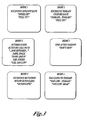
- Fig. 3 diagrams the six basic warning modes for the helicopter ground proximity warning system of the present invention.
- the various modes provide aural and visual alerts and warnings including warnings for: unsafe proximity to terrain, deviation below ILS glide slope, excessive bank angle, onset of severe wind shear, altitude awareness.
- Mode one for example, provides pilots with alert/warnings for high descent rates into terrain.
- a warning device compares the altitude above ground of the aircraft with the descent rate, preferably barometric descent rate, and issues a warning if the descent rate is excessive for the altitude at which the aircraft is flying.
- Mode two provides warnings for excessive closure rates to terrain with respect to altitude (AGL), phase of flight and speed.
- Mode three provides warnings for significant altitude loss after takeoff or low altitude go around as described in U.S. Patent No. 5,666,110 .
- a complete description of the system can be found in U.S. Patent No.4,818,992 .
- Mode four provides alerts and warnings for insufficient terrain clearance with respect to phase of flight and speed.
- Mode five provides glide slope alerts when the airplane is below 305 m (1,000 ft.) AGL with the gear down and the glide slope deviation exceeds a threshold number of dots below the ILS glide slope.
- Mode six provides callouts for descent through predefined altitudes (AGL). In particular, mode six is utilized during autorotation when the aircraft has lost all or partial engine power.
- Each of the various warning modes provides at least an aural alert for a particular hazard as shown.
- Mode 6 also includes a capability for alerting the pilot of a helicopter of a possible tail strike condition.
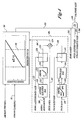
- Fig. 4 contains a top level block diagram of a tail strike warning function according to a preferred embodiment of the invention.
- a function generator 200 generates a tail strike warning protection envelope as a function of a height above terrain signal 202 and a predicted pitch signal 204.
- Height above terrain signal 202 is preferably obtained by direct measure using a radio altitude signal.
- indirect measure is also possible by noting the difference between current MSL altitude and the height of terrain as taken from the terrain database.
- the predicted pitch signal is estimated according to the process identified by block 206 of Fig. 4 .
- a signal 207, indicative of pitch angle is received from an inertial reference or vertical gyro as is familiar to those of skill in the art, and forms the primary basis for measure of the predicted pitch angle 204.
- Pitch angle signal 207 may be biased by an altitude rate signal and/or pitch rate signal to control sensitivity of the tail strike alert function in various flight conditions.
- the altitude rate bias increases the tail strike warning envelope sensitivity as a function of descent rate.
- the altitude rate bias is obtained by multiplying an altitude rate signal 208 by a gain in block 210.
- the gain term equals a number less than zero, e.g . (-) 0.00016667.
- Altitude rate signal 208 may be obtained as an output signal from the aircraft air data computer.
- the air data computer also outputs a validity discrete signal 211 to indicate rate data signal 208 is valid.
- Altitude rate signal 208 may optionally be obtained from analog altitude data sources aboard the aircraft, such as for example, an encoding transponder, or a barometric altimeter as is known to those of skill in the art. These alternative altitude sources can also provide a validity discrete 211.
- altitude rate signal 208 may be additionally conditioned to account for altimetry errors due to rotor downwash.
- U.S. Patent No. 5,781,126 describes a barometric altitude rate detector suitable for use with the present invention.
- gain block output signal 212 has a value corresponding to a number greater than zero. Since the altitude rate bias is intended to provide increased warning sensitivity as a function of descent rate, block 214 therefore operates as a limiter such that signal 216 is asserted only when signal 212 is positive. The altitude rate bias is thereby operative only during a descent condition. Switch 220 then switches the resulting rate bias signal 216 onto line 222 for input to summing junction 224.
- a pitch rate signal 240 is used to increase the sensitivity of the warning-envelope as a function of pitch rate. The more rapidly the aircraft pitches up, the more rapidly the tail boom pitches down. Signal 240 operates to increase the sensitivity of the warning envelope proportionally.
- pitch rate signal 240 is first input to a limiter 242.
- Limiter 242 limits the pitch rate modulation of the warning envelope to pitch rates less than 10°/sec.
- Pitch rate signal 240 may be provided by a pitch rate gyro, an inertial sensor, or differentiated from the pitch angle measurement.
- Output 244 of limiter 242 is then multiplied by a gain in block 246. Gain 246 is preferably chosen to be greater than zero such that as pitch rate increases the warning sensitivity also increases. In a preferred embodiment of the invention, gain 246 equals 0.5.
- the output 248 of gain 246 is provided to junction 224 by switch 249.
- Junction 224 outputs the pitch angle value as modulated by signals 222 and 248 to envelope function 200.
- risk of a tail strike exists and function 200 asserts a signal 252.
- Tail strike alert signal 256 may be input to a voice generator that outputs the aural alert: "Tail too low.”
- alert signal 256 may be used to activate illumination of a warning lamp or other cockpit visual alert.
- assertion of alert signal 256 may also be conditioned on various factors indicative of certain flight conditions. For example, when the hook is loaded and the aircraft has a load slung underneath, the radio altitude signal is frequently biased to reflect the fact that the load is closer to the ground than the aircraft. The value 202 input to function 200 will therefore cause function 200 to overestimate the risk of a tail strike and nuisance warnings will result. For this reason, a signal 262 can be provided to indicate the hook loaded condition and prevent assertion of tail strike alert signal 256.
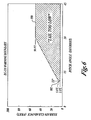
- Figs. 5 and 6 provide additional detail on the construction of warning envelope 250 of function 200.
- Fig. 5 illustrates a generic tail strike warning curve.
- the warning envelope has a first corner point 700 at eleven degrees and three feet above terrain and a second corner point 702 at 30 degrees and 15.2 m (50 feet) above terrain.
- Predicted pitch angle and terrain height coordinate values within the boundaries of resulting envelope 704 present a potential tail strike hazard and signal 252 will be asserted.
- Fig. 6 illustrates one such envelope 800 for an EC-155 aircraft.
- corner point 802 has been modified from that shown in Fig. 5 , to account for the extended tail boom of this aircraft.
- Selection of a modified warning envelope particular to a given aircraft can be made by virtue of a programming pin on the LRU.
- the chosen envelope can be loaded directly into the LRU at time of manufacture or installation; or via the PCMCIA card containing the terrain data and system upgrades.
- tail strike alert of the present invention need not be integral with a GPWS or EGPWS device and may be implemented, for example, as a stand alone function, apparatus or computer program, or otherwise hosted on any other available aircraft systems having a general purpose processor, or digital or analog electronic logic circuits.
- the invention is to be interpreted in view of the claims.
Landscapes
- Engineering & Computer Science (AREA)
- Aviation & Aerospace Engineering (AREA)
- Physics & Mathematics (AREA)
- General Physics & Mathematics (AREA)
- Radar, Positioning & Navigation (AREA)
- Remote Sensing (AREA)
- Mechanical Engineering (AREA)
- Emergency Alarm Devices (AREA)
- Traffic Control Systems (AREA)
- Navigation (AREA)
- Alarm Systems (AREA)
- Audible And Visible Signals (AREA)
Claims (20)
- Verfahren zum Warnen eines Piloten eines Drehflügelflugzeugs vor einer Heckaufsetzergefahr, mit den folgenden Schritten:Definieren einer Heckaufsetzer-Warnenveloppe (250, 704, 800) als Funktion einer Höhe über dem Gelände und einer Neigungslage;Empfangen eines Signals (202), das eine Höhe über dem Gelände des Flugzeugs angibt;Empfangen eines Signals (207), das eine Neigungslage des Flugzeugs angibt; gekennzeichnet durchArbeitspunkteinstellung des die Neigungslage angebenden Signals; undAusgeben eines Warnsignals (256), wenn das die Höhe über dem Gelände des Flugzeugs angebende Signal und das arbeitspunkteingestellte die Neigungslage des Flugzeugs angebende Signal (204) einen in der Enveloppe enthaltenen Zustand definieren.
- Verfahren nach Anspruch 1, wobei die Arbeitspunkteinstellung des die Neigungslage angebenden Signals (207) Folgendes umfasst:Empfangen eines Signals (240), das eine Neigungsgeschwindigkeit des Flugzeugs angibt; undVerwenden des die Neigungsgeschwindigkeit angebenden Signals, um den Arbeitspunkt des die Neigungslage angebenden Signals einzustellen.
- Verfahren nach Anspruch 1, wobei die Arbeitspunkteinstellung des die Neigungslage angebenden Signals (207) Folgendes umfasst:Empfangen eines Signals (208), das eine Höhengeschwindigkeit des Flugzeugs angibt; undVerwenden des die Höhengeschwindigkeit angebenden Signals, um den Arbeitspunkt des die Neigungslage angebenden Signals einzustellen.
- Verfahren nach Anspruch 1, wobei das Flugzeug ein Kipprotor ist.
- Verfahren nach Anspruch 1, ferner mit den Schritten des Modulierens der Enveloppe (250, 704, 800) als Funktion der Abstiegsgeschwindigkeit des Flugzeugs und/oder der Neigungsgeschwindigkeit des Flugzeugs.
- Computerprogrammprodukt zum Warnen eines Piloten eines Drehflügelflugzeugs vor einer Heckaufsetzgefahr, umfassend:ein computerlesbares Speichermedium das in dem Medium realisierte computerlesbare Programmcodemittel aufweist, wobei die computerlesbaren Programmcodemittel Folgendes umfassen:ein erstes Computeranweisungsmittel (200) zum Definieren einer Heckaufsetzer-Warnenveloppe (250, 704, 800) als Funktion einer Höhe über dem Gelände und einer Neigungslage;ein zweites Computeranweisungsmittel zum Lesen eines Signals, das eine Höhe über dem Gelände des Flugzeugs angibt;ein drittes Computeranweisungsmittel (224) zum Lesen eines Signals (207), das eine Neigungslage des Flugzeugs angibt; gekennzeichnet durch ein viertes Computeranweisungsmittel zum Arbeitspunkteinstellen des die Neigungslage angebenden Signals; undein fünftes Computeranweisungsmittel (254) zum Ausgeben eines Warnsignals (256), wenn das die Höhe über dem Gelände des Flugzeugs angebende Signal und das arbeitspunkteingestellte die Neigungslage des Flugzeugs angebende Signal (204) einen in der Enveloppe enthaltenen Zustand definieren.
- Computerprogrammprodukt nach Anspruch 6, wobei das dritte Computeranweisungsmittel ferner ein Computeranweisungsmittel zum Lesen eines Signals (207) umfasst, das einen Neigungswinkel des Flugzeugs angibt.
- Computerprogrammprodukt nach Anspruch 6, wobei das vierte Computeranweisungsmittel Folgendes umfasst:ein Computeranweisungsmittel zum Lesen eines Signals (208), das eine Höhengeschwindigkeit des Flugzeugs angibt; undwobei das vierte Computeranweisungsmittel (224) das die Höhengeschwindigkeit angebende Signal verwendet, um den Arbeitspunkt des die Neigungslage (204) angebenden Signals einzustellen.
- Computerprogrammprodukt nach Anspruch 6, ferner mit einem Computeranweisungsmittel zum Modulieren der Enveloppe (250, 704, 800) als Funktion der Abstiegsgeschwindigkeit des Flugzeugs und/oder der Neigungsgeschwindigkeit des Flugzeugs.
- Vorrichtung zum Warnen eines Piloten eines Drehflügelflugzeugs vor einer Heckaufsetzgefahr, wobei die Vorrichtung Folgendes umfasst:einen Eingang, geschaltet zum Empfangen eines Signals (202), das eine Höhe über dem Gelände des Flugzeugs angibt, und eines Signals (207), das eine Neigungslage des Flugzeugs angibt;einen Ausgang (252); undeinen mit dem Eingang und mit dem Ausgang gekoppelten Signalprozessor (200) zum Definieren einer Heckaufsetzer-Warnenveloppe (250, 704, 800) als Funktion einer Höhe über dem Gelände und einer Neigungslage;
dadurch gekennzeichnet, dass der Signalprozessor außerdem für Folgendes ausgelegt ist:Arbeitspunkteinstellung des die Neigungslage angebenden Signals; undAusgeben eines Warnsignals (256), wenn das die Höhe über dem Gelände des Flugzeugs angebende Signal und das arbeitspunkteingestellte die Neigungslage des Flugzeugs angebende Signal (204) einen in der Enveloppe enthaltenen Zustand definieren. - Vorrichtung nach Anspruch 10, wobei der Eingang ferner geschaltet ist zum Empfangen eines Signals (240), das eine Neigungsgeschwindigkeit des Flugzeugs angibt, und wobei der Signalprozessor (200) ferner das die Neigungsgeschwindigkeit angebende Signal verwendet, um den Arbeitspunkt des die Neigungslage angebenden Signals (207) einzustellen.
- Vorrichtung nach Anspruch 10, wobei der Eingang ferner geschaltet ist zum Empfangen eines Signals (208), das eine Höhengeschwindigkeit des Flugzeugs angibt, und wobei der Signalprozessor (200) ferner das die Höhengeschwindigkeit angebende Signal verwendet, um den Arbeitspunkt des die Neigungslage angebenden Signals (207) einzustellen.
- Vorrichtung nach Anspruch 10, wobei das Flugzeug ein Kipprotor ist.
- Vorrichtung nach Anspruch 10, wobei der Signalprozessor (200) ferner die Enveloppe (250, 704, 800) als Funktion einer Abstiegsgeschwindigkeit des Flugzeugs und/oder einer Neigungsgeschwindigkeit des Flugzeugs moduliert.
- Vorrichtung nach Anspruch 10, wobei der Signalprozessor (200) ferner das Warnsignal (206) als eine hörbare Warnung ausgibt.
- Vorrichtung nach Anspruch 10, wobei der Signalprozessor (200) einen Vielzweckprozessor umfasst.
- GPWS-Einrichtung, die die Vorrichtung nach Anspruch 10 umfasst.
- GPWS-Einrichtung nach Anspruch 17, wobei die GPWS-Einrichtung eine EGPWS-Einrichtung umfasst.
- GPWS-Einrichtung nach Anspruch 17, wobei der Signalprozessor (200) ferner die Enveloppe (250, 704, 800) als Funktion einer Abstiegsgeschwindigkeit des Flugzeugs und/oder einer Neigungsgeschwindigkeit des Flugzeugs moduliert.
- GPWS-Einrichtung nach Anspruch 17, wobei der Signalprozessor (200) das Warnsignal (256) als eine hörbare Warnung ausgibt.
Applications Claiming Priority (3)
| Application Number | Priority Date | Filing Date | Title |
|---|---|---|---|
| US23296700P | 2000-09-14 | 2000-09-14 | |
| US232967P | 2000-09-14 | ||
| PCT/US2001/017227 WO2002023125A1 (en) | 2000-09-14 | 2001-05-25 | Method, apparatus and computer program product for helicopter tail strike warning |
Publications (2)
| Publication Number | Publication Date |
|---|---|
| EP1317652A1 EP1317652A1 (de) | 2003-06-11 |
| EP1317652B1 true EP1317652B1 (de) | 2010-11-10 |
Family
ID=22875305
Family Applications (1)
| Application Number | Title | Priority Date | Filing Date |
|---|---|---|---|
| EP01939571A Expired - Lifetime EP1317652B1 (de) | 2000-09-14 | 2001-05-25 | Verfahren, vorrichtung und computerprogrammprodukt zur warnung vor einer hubschrauberheckbodenberührung |
Country Status (5)
| Country | Link |
|---|---|
| US (1) | US6737987B2 (de) |
| EP (1) | EP1317652B1 (de) |
| AT (1) | ATE487923T1 (de) |
| DE (1) | DE60143440D1 (de) |
| WO (1) | WO2002023125A1 (de) |
Families Citing this family (28)
| Publication number | Priority date | Publication date | Assignee | Title |
|---|---|---|---|---|
| US6906641B2 (en) * | 2000-05-26 | 2005-06-14 | Honeywell International Inc. | Apparatus, method and computer program product for helicopter enhanced ground proximity warning system |
| FR2848662B1 (fr) * | 2002-12-17 | 2005-03-04 | Thales Sa | Dispositif d'affichage pour equipement anticollision terrain embarque a bord d'aeronef |
| US20050113985A1 (en) * | 2003-11-26 | 2005-05-26 | Safe Flight Instrument Corporation | Obstacle avoidance system for rotary wing aircraft |
| US6980153B2 (en) * | 2004-05-17 | 2005-12-27 | Honeywell International Inc. | Radar altimeter for helicopter load carrying operations |
| US7126496B2 (en) * | 2004-09-30 | 2006-10-24 | Safe Flight Instrument Corporation | Tactile cueing system and method for aiding a helicopter pilot in making landings |
| US20060089759A1 (en) * | 2004-10-22 | 2006-04-27 | Honeywell International Inc. | Systems and methods for performing high accurate distance measuring for radar altimeters |
| US7145501B1 (en) | 2005-09-26 | 2006-12-05 | Honeywell International Inc. | Methods and systems for measuring terrain height |
| FR2893158B1 (fr) * | 2005-11-10 | 2007-12-28 | Thales Sa | Procede de generation d'une base de donnees comportant des informations topographiques sur des obstacles, et base de donnees d'obstacles. |
| FR2908218B1 (fr) * | 2006-11-07 | 2014-08-15 | Thales Sa | Dispositif d'aide a la navigation d'un aeronef dans une zone aeroportuaire |
| US7598888B2 (en) * | 2006-12-08 | 2009-10-06 | Sikorsky Aircraft Corporation | Rotary wing aircraft proximity warning system with a geographically based avoidance system |
| US20080173753A1 (en) * | 2007-01-22 | 2008-07-24 | Honeywell International Inc. | Methods and systems for monitoring approach of rotary wing aircraft |
| WO2009002645A2 (en) * | 2007-05-24 | 2008-12-31 | Aviation Communication & Surveillance Systems Llc | Systems and methods for aircraft winshear detection |
| EP2226766A3 (de) * | 2009-03-02 | 2014-06-11 | Sikorsky Aircraft Corporation | Rotorsystem-Gesundheitsüberwachung mit Schaftbelastungsmessungen und virtuelle Überwachung von Lasten |
| US9196168B2 (en) * | 2009-05-20 | 2015-11-24 | Textron Innovations Inc. | Collision avoidance and warning system |
| FR2956512B1 (fr) * | 2010-02-16 | 2012-03-09 | Airbus Operations Sas | Procede et dispositif de protection automatique d'un aeronef contre un taux de descente excessif. |
| US9261883B2 (en) * | 2010-05-07 | 2016-02-16 | Honeywell International Inc. | Systems and methods for performing excessive negative pitch alert and for biasing a sink rate alert |
| US9828113B2 (en) | 2013-11-05 | 2017-11-28 | Safe Flight Instrument Corporation | Tailstrike warning system |
| EP3066651A4 (de) * | 2013-11-05 | 2017-07-19 | Safe Flight Instrument Corporation | Heckanschlagwarnsystem |
| US9546003B2 (en) * | 2014-03-14 | 2017-01-17 | Safe Flight Instrument Corporation | Deflare pitch command |
| US20170008639A1 (en) | 2015-07-08 | 2017-01-12 | Safe Flight Instrument Corporation | Aircraft turbulence detection |
| US9989972B2 (en) * | 2016-02-22 | 2018-06-05 | The Boeing Company | Systems and methods to prevent an aircraft from tail contact with the ground |
| US10040574B1 (en) * | 2016-04-26 | 2018-08-07 | James William Laske, Jr. | Airplane anti-hijacking system |
| FR3063715B1 (fr) * | 2017-03-09 | 2019-04-12 | Dassault Aviation | Systeme d'avertissement de proximite au sol d'un aeronef, avionique et procede associe |
| US10585160B2 (en) * | 2017-04-18 | 2020-03-10 | Aviation Communication & Surveillance Systems, Llc | Systems and methods for activating a radio beacon for global aircraft tracking |
| US10852747B2 (en) * | 2018-02-21 | 2020-12-01 | The Boeing Company | Tailstrike awareness system |
| CN110069070B (zh) * | 2019-05-08 | 2022-01-18 | 成都高威节能科技有限公司 | 一种提高大型飞机起飞过程安全性的方法 |
| US11827376B2 (en) * | 2022-04-19 | 2023-11-28 | Honeywell International Inc. | Enhanced ground proximity warning system that selectively operates in both a helicopter mode and a fixed-wing mode |
| US20260004668A1 (en) * | 2024-06-27 | 2026-01-01 | The Boeing Company | Aircraft tail strike detection and prevention system and method |
Family Cites Families (32)
| Publication number | Priority date | Publication date | Assignee | Title |
|---|---|---|---|---|
| US3715718A (en) | 1970-08-11 | 1973-02-06 | Sundstrand Data Control | Ground proximity warning system utilizing radio and barometric altimeter combination |
| US3979717A (en) * | 1974-06-03 | 1976-09-07 | United Technologies Corporation | Helicopter warning system |
| US3936796A (en) | 1974-06-19 | 1976-02-03 | Sundstrand Data Control, Inc. | Aircraft ground proximity warning instrument |
| US3958218A (en) | 1974-10-03 | 1976-05-18 | Sundstrand Data Control, Inc. | Aircraft ground proximity warning system with speed compensation |
| US3944968A (en) | 1974-11-01 | 1976-03-16 | Sundstrand Data Control, Inc. | Aircraft ground proximity warning system having speed versus altitude compensation |
| US3947810A (en) | 1975-01-13 | 1976-03-30 | Sundstrand Data Control, Inc. | Negative climb rate after take-off warning system with predetermined loss of altitude inhibit |
| US3947808A (en) | 1975-01-13 | 1976-03-30 | Sundstrand Data Control, Inc. | Excessive descent rate warning system for aircraft |
| US3958219A (en) | 1975-03-06 | 1976-05-18 | Sundstrand Data Control, Inc. | Terrain closure warning system with altitude rate signal conditioning |
| US3934221A (en) | 1975-03-06 | 1976-01-20 | Sundstrand Data Control, Inc. | Terrain closure warning system with altitude rate signal conditioning |
| US4027838A (en) * | 1975-03-18 | 1977-06-07 | United Technologies Corporation | Helicopter warning system |
| US3925751A (en) | 1975-04-02 | 1975-12-09 | Sundstrand Data Control | Glide slope warning system with a variable warning rate |
| US3934222A (en) | 1975-04-02 | 1976-01-20 | Sundstrand Data Control, Inc. | Terrain closure warning system with climb inhibit and altitude gain measurement |
| US4030065A (en) | 1976-07-19 | 1977-06-14 | Sundstrand Corporation | Terrain clearance warning system for aircraft |
| US4060793A (en) | 1976-07-19 | 1977-11-29 | Sundstrand Data Control, Inc. | Excessive sink rate warning system for aircraft |
| US4224669A (en) | 1977-12-22 | 1980-09-23 | The Boeing Company | Minimum safe altitude monitoring, indication and warning system |
| US4215334A (en) | 1978-02-09 | 1980-07-29 | Sundstrand Data Control, Inc. | Aircraft excessive descent rate warning system |
| US4319218A (en) | 1980-01-04 | 1982-03-09 | Sundstrand Corporation | Negative climb after take-off warning system with configuration warning means |
| US4818992A (en) | 1983-06-10 | 1989-04-04 | Sundstrand Data Control, Inc. | Excessive altitude loss after take-off warning system for rotary wing aircraft |
| US4769645A (en) | 1983-06-10 | 1988-09-06 | Sundstrand Data Control, Inc. | Excessive pitch attitude warning system for rotary wing aircraft |
| US4551723A (en) | 1983-06-10 | 1985-11-05 | Sundstrand Data Control, Inc. | Excessive descent rate warning system for rotary wing aircraft |
| US4675823A (en) | 1983-12-09 | 1987-06-23 | Sundstrand Data Control, Inc. | Ground proximity warning system geographic area determination |
| US4646244A (en) | 1984-02-02 | 1987-02-24 | Sundstrand Data Control, Inc. | Terrain advisory system |
| US4914436A (en) | 1987-04-06 | 1990-04-03 | Sundstrand Data Control, Inc. | Ground proximity approach warning system without landing flap input |
| FR2697796B1 (fr) | 1992-11-10 | 1994-12-09 | Sextant Avionique | Dispositif d'évitement de collisions pour aéronef notamment avec le sol. |
| JPH0774718A (ja) | 1993-09-02 | 1995-03-17 | Mitsubishi Electric Corp | 時分割通信制御方法 |
| FR2718875B1 (fr) | 1994-04-15 | 1996-05-15 | Sextant Avionique | Dispositif d'aide à l'atterrissage. |
| US5666110A (en) | 1995-03-09 | 1997-09-09 | Paterson; Noel S. | Helicopter enhanced descent after take-off warning for GPWS |
| US5839080B1 (en) | 1995-07-31 | 2000-10-17 | Allied Signal Inc | Terrain awareness system |
| US6092009A (en) | 1995-07-31 | 2000-07-18 | Alliedsignal | Aircraft terrain information system |
| US6138060A (en) | 1995-07-31 | 2000-10-24 | Alliedsignal Inc. | Terrain awareness system |
| US6043759A (en) | 1996-07-29 | 2000-03-28 | Alliedsignal | Air-ground logic system and method for rotary wing aircraft |
| US5781126A (en) | 1996-07-29 | 1998-07-14 | Alliedsignal Inc. | Ground proximity warning system and methods for rotary wing aircraft |
-
2001
- 2001-05-25 AT AT01939571T patent/ATE487923T1/de not_active IP Right Cessation
- 2001-05-25 US US09/865,365 patent/US6737987B2/en not_active Expired - Lifetime
- 2001-05-25 WO PCT/US2001/017227 patent/WO2002023125A1/en not_active Ceased
- 2001-05-25 EP EP01939571A patent/EP1317652B1/de not_active Expired - Lifetime
- 2001-05-25 DE DE60143440T patent/DE60143440D1/de not_active Expired - Lifetime
Also Published As
| Publication number | Publication date |
|---|---|
| EP1317652A1 (de) | 2003-06-11 |
| US20020030607A1 (en) | 2002-03-14 |
| DE60143440D1 (de) | 2010-12-23 |
| ATE487923T1 (de) | 2010-11-15 |
| WO2002023125A1 (en) | 2002-03-21 |
| US6737987B2 (en) | 2004-05-18 |
Similar Documents
| Publication | Publication Date | Title |
|---|---|---|
| US6737987B2 (en) | Method, apparatus and computer program product for helicopter tail strike warning | |
| US6583733B2 (en) | Apparatus, method and computer program product for helicopter ground proximity warning system | |
| US6906641B2 (en) | Apparatus, method and computer program product for helicopter enhanced ground proximity warning system | |
| US6833797B2 (en) | Method, apparatus and computer program product for displaying terrain in rotary wing aircraft | |
| US6940427B2 (en) | Pitch alerting angle for enhanced ground proximity warning system (EGPWS) | |
| US6445310B1 (en) | Apparatus, methods, computer program products for generating a runway field clearance floor envelope about a selected runway | |
| US6691004B2 (en) | Method for determining a currently obtainable climb gradient of an aircraft | |
| US6043759A (en) | Air-ground logic system and method for rotary wing aircraft | |
| US9511880B2 (en) | Flight deck display systems and methods for generating vertical speed alerts during steep approaches of rotary wing aircraft | |
| EP1360457B1 (de) | Egpws schalthöhe für hubschrauber | |
| EP1157318B1 (de) | Verfahren und vorrichtung zur erzeugung einer bodennäherungswarnung und computerprogramm zum kontrollierten verändern der basisbreite einer alarmhülle | |
| EP3477261B1 (de) | Fluginstrumentwarnanzeige | |
| EP1290407B1 (de) | Vorrichtung, Verfahren und Computerprogrammprodukt für ein Hubschrauber-Bodennäherungswarnsystem | |
| US7133754B2 (en) | System and method for using airport information based on flying environment |
Legal Events
| Date | Code | Title | Description |
|---|---|---|---|
| PUAI | Public reference made under article 153(3) epc to a published international application that has entered the european phase |
Free format text: ORIGINAL CODE: 0009012 |
|
| 17P | Request for examination filed |
Effective date: 20030314 |
|
| AK | Designated contracting states |
Designated state(s): AT BE CH CY DE DK ES FI FR GB GR IE IT LI LU MC NL PT SE TR |
|
| AX | Request for extension of the european patent |
Extension state: AL LT LV MK RO SI |
|
| 17Q | First examination report despatched |
Effective date: 20080902 |
|
| R17C | First examination report despatched (corrected) |
Effective date: 20080916 |
|
| GRAP | Despatch of communication of intention to grant a patent |
Free format text: ORIGINAL CODE: EPIDOSNIGR1 |
|
| GRAS | Grant fee paid |
Free format text: ORIGINAL CODE: EPIDOSNIGR3 |
|
| GRAA | (expected) grant |
Free format text: ORIGINAL CODE: 0009210 |
|
| AK | Designated contracting states |
Kind code of ref document: B1 Designated state(s): AT BE CH CY DE DK ES FI FR GB GR IE IT LI LU MC NL PT SE TR |
|
| REG | Reference to a national code |
Ref country code: GB Ref legal event code: FG4D |
|
| REG | Reference to a national code |
Ref country code: CH Ref legal event code: EP |
|
| REG | Reference to a national code |
Ref country code: IE Ref legal event code: FG4D |
|
| REF | Corresponds to: |
Ref document number: 60143440 Country of ref document: DE Date of ref document: 20101223 Kind code of ref document: P |
|
| REG | Reference to a national code |
Ref country code: NL Ref legal event code: VDEP Effective date: 20101110 |
|
| PG25 | Lapsed in a contracting state [announced via postgrant information from national office to epo] |
Ref country code: NL Free format text: LAPSE BECAUSE OF FAILURE TO SUBMIT A TRANSLATION OF THE DESCRIPTION OR TO PAY THE FEE WITHIN THE PRESCRIBED TIME-LIMIT Effective date: 20101110 Ref country code: AT Free format text: LAPSE BECAUSE OF FAILURE TO SUBMIT A TRANSLATION OF THE DESCRIPTION OR TO PAY THE FEE WITHIN THE PRESCRIBED TIME-LIMIT Effective date: 20101110 Ref country code: FI Free format text: LAPSE BECAUSE OF FAILURE TO SUBMIT A TRANSLATION OF THE DESCRIPTION OR TO PAY THE FEE WITHIN THE PRESCRIBED TIME-LIMIT Effective date: 20101110 Ref country code: CY Free format text: LAPSE BECAUSE OF FAILURE TO SUBMIT A TRANSLATION OF THE DESCRIPTION OR TO PAY THE FEE WITHIN THE PRESCRIBED TIME-LIMIT Effective date: 20101110 Ref country code: SE Free format text: LAPSE BECAUSE OF FAILURE TO SUBMIT A TRANSLATION OF THE DESCRIPTION OR TO PAY THE FEE WITHIN THE PRESCRIBED TIME-LIMIT Effective date: 20101110 Ref country code: PT Free format text: LAPSE BECAUSE OF FAILURE TO SUBMIT A TRANSLATION OF THE DESCRIPTION OR TO PAY THE FEE WITHIN THE PRESCRIBED TIME-LIMIT Effective date: 20110310 |
|
| PG25 | Lapsed in a contracting state [announced via postgrant information from national office to epo] |
Ref country code: GR Free format text: LAPSE BECAUSE OF FAILURE TO SUBMIT A TRANSLATION OF THE DESCRIPTION OR TO PAY THE FEE WITHIN THE PRESCRIBED TIME-LIMIT Effective date: 20110211 |
|
| PG25 | Lapsed in a contracting state [announced via postgrant information from national office to epo] |
Ref country code: BE Free format text: LAPSE BECAUSE OF FAILURE TO SUBMIT A TRANSLATION OF THE DESCRIPTION OR TO PAY THE FEE WITHIN THE PRESCRIBED TIME-LIMIT Effective date: 20101110 Ref country code: ES Free format text: LAPSE BECAUSE OF FAILURE TO SUBMIT A TRANSLATION OF THE DESCRIPTION OR TO PAY THE FEE WITHIN THE PRESCRIBED TIME-LIMIT Effective date: 20110221 |
|
| PG25 | Lapsed in a contracting state [announced via postgrant information from national office to epo] |
Ref country code: DK Free format text: LAPSE BECAUSE OF FAILURE TO SUBMIT A TRANSLATION OF THE DESCRIPTION OR TO PAY THE FEE WITHIN THE PRESCRIBED TIME-LIMIT Effective date: 20101110 |
|
| PLBE | No opposition filed within time limit |
Free format text: ORIGINAL CODE: 0009261 |
|
| STAA | Information on the status of an ep patent application or granted ep patent |
Free format text: STATUS: NO OPPOSITION FILED WITHIN TIME LIMIT |
|
| 26N | No opposition filed |
Effective date: 20110811 |
|
| REG | Reference to a national code |
Ref country code: DE Ref legal event code: R097 Ref document number: 60143440 Country of ref document: DE Effective date: 20110811 |
|
| PG25 | Lapsed in a contracting state [announced via postgrant information from national office to epo] |
Ref country code: IT Free format text: LAPSE BECAUSE OF FAILURE TO SUBMIT A TRANSLATION OF THE DESCRIPTION OR TO PAY THE FEE WITHIN THE PRESCRIBED TIME-LIMIT Effective date: 20101110 Ref country code: MC Free format text: LAPSE BECAUSE OF NON-PAYMENT OF DUE FEES Effective date: 20110531 |
|
| REG | Reference to a national code |
Ref country code: CH Ref legal event code: PL |
|
| PG25 | Lapsed in a contracting state [announced via postgrant information from national office to epo] |
Ref country code: CH Free format text: LAPSE BECAUSE OF NON-PAYMENT OF DUE FEES Effective date: 20110531 Ref country code: LI Free format text: LAPSE BECAUSE OF NON-PAYMENT OF DUE FEES Effective date: 20110531 |
|
| REG | Reference to a national code |
Ref country code: IE Ref legal event code: MM4A |
|
| PG25 | Lapsed in a contracting state [announced via postgrant information from national office to epo] |
Ref country code: IE Free format text: LAPSE BECAUSE OF NON-PAYMENT OF DUE FEES Effective date: 20110525 |
|
| PG25 | Lapsed in a contracting state [announced via postgrant information from national office to epo] |
Ref country code: LU Free format text: LAPSE BECAUSE OF NON-PAYMENT OF DUE FEES Effective date: 20110525 |
|
| PG25 | Lapsed in a contracting state [announced via postgrant information from national office to epo] |
Ref country code: TR Free format text: LAPSE BECAUSE OF FAILURE TO SUBMIT A TRANSLATION OF THE DESCRIPTION OR TO PAY THE FEE WITHIN THE PRESCRIBED TIME-LIMIT Effective date: 20101110 |
|
| REG | Reference to a national code |
Ref country code: FR Ref legal event code: PLFP Year of fee payment: 16 |
|
| REG | Reference to a national code |
Ref country code: FR Ref legal event code: PLFP Year of fee payment: 17 |
|
| REG | Reference to a national code |
Ref country code: FR Ref legal event code: PLFP Year of fee payment: 18 |
|
| PGFP | Annual fee paid to national office [announced via postgrant information from national office to epo] |
Ref country code: DE Payment date: 20200529 Year of fee payment: 20 Ref country code: FR Payment date: 20200528 Year of fee payment: 20 |
|
| PGFP | Annual fee paid to national office [announced via postgrant information from national office to epo] |
Ref country code: GB Payment date: 20200528 Year of fee payment: 20 |
|
| REG | Reference to a national code |
Ref country code: DE Ref legal event code: R071 Ref document number: 60143440 Country of ref document: DE |
|
| REG | Reference to a national code |
Ref country code: GB Ref legal event code: PE20 Expiry date: 20210524 |
|
| PG25 | Lapsed in a contracting state [announced via postgrant information from national office to epo] |
Ref country code: GB Free format text: LAPSE BECAUSE OF EXPIRATION OF PROTECTION Effective date: 20210524 |
|
| P01 | Opt-out of the competence of the unified patent court (upc) registered |
Effective date: 20230525 |