EP1318558A2 - Génerateurs d'hydrogène pour piles à combustible - Google Patents
Génerateurs d'hydrogène pour piles à combustible Download PDFInfo
- Publication number
- EP1318558A2 EP1318558A2 EP02257847A EP02257847A EP1318558A2 EP 1318558 A2 EP1318558 A2 EP 1318558A2 EP 02257847 A EP02257847 A EP 02257847A EP 02257847 A EP02257847 A EP 02257847A EP 1318558 A2 EP1318558 A2 EP 1318558A2
- Authority
- EP
- European Patent Office
- Prior art keywords
- fuel cell
- hydrogen generator
- anode
- hydrogen
- generator
- Prior art date
- Legal status (The legal status is an assumption and is not a legal conclusion. Google has not performed a legal analysis and makes no representation as to the accuracy of the status listed.)
- Withdrawn
Links
Images










Classifications
-
- H—ELECTRICITY
- H01—ELECTRIC ELEMENTS
- H01M—PROCESSES OR MEANS, e.g. BATTERIES, FOR THE DIRECT CONVERSION OF CHEMICAL ENERGY INTO ELECTRICAL ENERGY
- H01M8/00—Fuel cells; Manufacture thereof
- H01M8/06—Combination of fuel cells with means for production of reactants or for treatment of residues
- H01M8/0606—Combination of fuel cells with means for production of reactants or for treatment of residues with means for production of gaseous reactants
- H01M8/065—Combination of fuel cells with means for production of reactants or for treatment of residues with means for production of gaseous reactants by dissolution of metals or alloys; by dehydriding metallic substances
-
- C—CHEMISTRY; METALLURGY
- C01—INORGANIC CHEMISTRY
- C01B—NON-METALLIC ELEMENTS; COMPOUNDS THEREOF; METALLOIDS OR COMPOUNDS THEREOF NOT COVERED BY SUBCLASS C01C
- C01B3/00—Hydrogen; Gaseous mixtures containing hydrogen; Separation of hydrogen from mixtures containing it; Purification of hydrogen; Reversible storage of hydrogen
- C01B3/02—Production of hydrogen; Production of gaseous mixtures containing hydrogen
- C01B3/06—Production of hydrogen; Production of gaseous mixtures containing hydrogen by reaction of inorganic compounds containing electro-positively bound hydrogen with inorganic reducing agents
- C01B3/08—Production of hydrogen; Production of gaseous mixtures containing hydrogen by reaction of inorganic compounds containing electro-positively bound hydrogen with inorganic reducing agents by reaction of inorganic compounds with metals
-
- Y—GENERAL TAGGING OF NEW TECHNOLOGICAL DEVELOPMENTS; GENERAL TAGGING OF CROSS-SECTIONAL TECHNOLOGIES SPANNING OVER SEVERAL SECTIONS OF THE IPC; TECHNICAL SUBJECTS COVERED BY FORMER USPC CROSS-REFERENCE ART COLLECTIONS [XRACs] AND DIGESTS
- Y02—TECHNOLOGIES OR APPLICATIONS FOR MITIGATION OR ADAPTATION AGAINST CLIMATE CHANGE
- Y02E—REDUCTION OF GREENHOUSE GAS [GHG] EMISSIONS, RELATED TO ENERGY GENERATION, TRANSMISSION OR DISTRIBUTION
- Y02E60/00—Enabling technologies; Technologies with a potential or indirect contribution to GHG emissions mitigation
- Y02E60/30—Hydrogen technology
- Y02E60/36—Hydrogen production from non-carbon containing sources, e.g. by water electrolysis
-
- Y—GENERAL TAGGING OF NEW TECHNOLOGICAL DEVELOPMENTS; GENERAL TAGGING OF CROSS-SECTIONAL TECHNOLOGIES SPANNING OVER SEVERAL SECTIONS OF THE IPC; TECHNICAL SUBJECTS COVERED BY FORMER USPC CROSS-REFERENCE ART COLLECTIONS [XRACs] AND DIGESTS
- Y02—TECHNOLOGIES OR APPLICATIONS FOR MITIGATION OR ADAPTATION AGAINST CLIMATE CHANGE
- Y02E—REDUCTION OF GREENHOUSE GAS [GHG] EMISSIONS, RELATED TO ENERGY GENERATION, TRANSMISSION OR DISTRIBUTION
- Y02E60/00—Enabling technologies; Technologies with a potential or indirect contribution to GHG emissions mitigation
- Y02E60/30—Hydrogen technology
- Y02E60/50—Fuel cells
Definitions
- the present invention relates generally to fuel cells and to hydrogen generators useful in fuel cells.
- the present invention seeks to provide improved fuel cells and hydrogen generators.
- an electric power generator including a fuel cell, which includes a fuel cell anode and a fuel cell cathode separated by at least one proton exchange membrane and a hydrogen generator operative to provide molecular hydrogen to the fuel cell anode.
- the hydrogen generator includes a catalyst and employs a water-based fuel including one of salts, bases and acids, as well as at least one of zinc, magnesium, iron and aluminum.
- the method includes the steps of employing a fuel cell, which includes a fuel cell anode and a fuel cell cathode separated by at least one proton exchange membrane and powering the fuel cell by employing a hydrogen generator operative to provide molecular hydrogen to the fuel cell anode.
- the hydrogen generator typically includes a catalyst and employs a water-based fuel including one of salts, bases and acids, as well as at least one of zinc, magnesium, iron and aluminum.
- an electric power generator which includes an anode and a cathode separated by at least one proton exchange membrane and a hydrogen generator operative to provide molecular hydrogen to the anode.
- the hydrogen generator includes a catalyst and employs a water-based fuel, wherein the extent of availability of the catalyst is controllable.
- the method includes the steps of employing a fuel cell including a fuel cell anode and a fuel cell cathode separated by at least one proton exchange membrane, powering the fuel cell by employing a hydrogen generator operative to provide molecular hydrogen to the fuel cell anode and governing the operation of the hydrogen generator by controlling the availability of at least one of a catalyst and a water-based fuel in contact with each other.
- a method for operating an electronic shelf label including a display which includes the steps of employing a fuel cell including a fuel cell anode and a fuel cell cathode separated by at least one proton exchange membrane to power the display, powering the fuel cell by employing a hydrogen generator operative to provide molecular hydrogen to the fuel cell anode and governing the operation of the hydrogen generator by controlling the availability of at least one of a catalyst and a water-based fuel in contact with each other.
- an electronic shelf label which includes a display and an electrical power generator for the display.
- the electrical power generator includes a fuel cell, which also includes a fuel cell anode and a fuel cell cathode separated by at least one proton exchange membrane and a hydrogen generator operative to provide molecular hydrogen to the fuel cell anode.
- the hydrogen generator includes a catalyst and employs a water-based fuel including one of salts, bases and acids, as well as at least one of zinc, magnesium, iron and aluminum.
- a method of operating an electronic shelf label including a display includes the steps of employing a fuel cell including a fuel cell anode and a fuel cell cathode separated by at least one proton exchange membrane to power the display and powering the fuel cell by employing a hydrogen generator operative to provide molecular hydrogen to the fuel cell anode.
- the hydrogen generator typically includes a catalyst and employs a water-based fuel including one of salts, bases and acids, as well as at least one of zinc, magnesium, iron and aluminum.
- an electronic shelf label which includes a display and an electrical power generator for the display.
- the electrical power generator includes a fuel cell including a fuel cell anode and a fuel cell cathode separated by at least one proton exchange membrane and a hydrogen generator operative to provide molecular hydrogen to the fuel cell anode.
- the hydrogen generator includes a catalyst and employing a water-based fuel, wherein the extent of availability of the catalyst is controllable.
- the catalyst includes at least one of metal belonging to the platinum metal group, metal belonging to the transition metal group, metal oxide belonging to the platinum metal group and metal oxide belonging to the transition metal group.
- the base includes at least one of hydroxide of potassium, sodium and lithium.
- the hydroxide of potassium, sodium and lithium is provided in solution in water.
- the acid includes at least one of sulfuric acid and citric acid.
- the sulfuric acid and citric acid is provided in solution in water.
- the water-based fuel includes zinc and the catalyst includes an impurity in the zinc.
- the impurity includes a transition metal.
- the water-based fuel includes aluminum and the catalyst includes an impurity in the aluminum.
- the impurity includes a transition metal.
- the water-based fuel includes magnesium and the catalyst includes an impurity in the magnesium.
- the impurity includes a transition metal.
- the extent of availability of the catalyst is controllable.
- the catalyst is formed onto an element, which is selectably introducible into the fuel.
- the electric power generator also includes a catalyst displacer which operates to selectably mechanically introduce the catalyst into the fuel.
- the electric power generator also includes a catalyst displacement controller, which is operative to control the extent of introduction of the catalyst into the fuel.
- the catalyst displacement controller employs a feedback functionality.
- the catalyst is selectably introduced into the fuel in liquid form.
- the electric power generator also includes a liquid catalyst introduction controller which operates to control the extent of introduction of the catalyst into the fuel.
- the liquid catalyst introduction controller employs feedback functionality.
- the catalyst defines a hydrogen generator cathode, at least one of zinc, magnesium, iron and aluminum defines a hydrogen generator anode and the hydrogen generator anode and the hydrogen generator cathode are electrically interconnected across a resistor.
- the hydrogen generator anode and the hydrogen generator cathode are electrically interconnected across a variable resistor or across a current controller.
- the current controller is a variable resistance and wherein varying the resistance varies the output of the hydrogen generator.
- the hydrogen generator produces electrical power, which is supplied together with electrical power, from the fuel cell.
- the salt is selected from a group consisting of halides, trihalides, acetates, sulfates, nitrates, borates, acid salts, chromate, stannate, perchlorate and basic salts of Group I metals, ammonium, Group II metals and Group III metals.
- the extent of availability of the water-based fuel is controllable.
- the availability of the water-based fuel is controllable by selectable introduction of water into a matrix containing at least one of salts, bases and acids, and at least one of zinc, magnesium, iron and aluminum and alloys thereof, and the catalyst.
- the catalyst includes at least one of metal belonging to a group consisting of the platinum metal group, metal belonging to the transition metal group, metal oxide belonging to a group consisting of the platinum metal group and metal oxide belonging to the transition metal group.
- the hydrogen generator produces electrical power which is supplied together with electrical power from the electrical power generator.
- the extent of availability of the water-based fuel is controllable.
- the availability of the water-based fuel is controllable by selectable introduction of water to a matrix containing at least one of salts, bases and acids, and at least one of zinc, magnesium, iron, aluminum, tin, calcium, sodium, lithium, lead, cadmium, metal hydrides based on at least one of nickel, titanium, rare earth metals and alloys thereof, and the catalyst.
- the electric power generator fitted inside at least one mobile electronic apparatus or portable electronic apparatus.
- an electric power generator employing a liquid fuel and includes an anode and a cathode separated by at least one proton exchange membrane, the one proton exchange membrane being an ion-plated, palladium containing, generally non-porous membrane.
- an electronic shelf label employing a liquid fuel, which includes a display and an electrical power generator for the display.
- the electrical power generator includes a fuel cell including a fuel cell anode and a fuel cell cathode separated by at least one proton exchange membrane.
- the one proton exchange membrane is an ion-plated, generally non-porous membrane, containing at least one of palladium and palladium alloy.
- the cathode is a porous cathode.
- the porous cathode is embodied in a porous, electrically conducting, matrix.
- the matrix includes carbon and platinum based catalyst as well as a binder.
- the one membrane lies in tight engagement with the porous cathode and is formed on a surface thereof, opposite to that surface which contacts the porous cathode.
- the one membrane includes a non-porous layer containing at least one of palladium metal and palladium alloy and the membrane lies between the cathode and the non-porous layer containing the palladium metal and palladium alloy.
- the layer has a thickness between 0.2 and 5 microns.
- the anode is porous and lies in tight engagement with the layer containing at least one of palladium metal and palladium alloy.
- the cathode is exposed to air and the anode is exposed to at least one of methanol and ethanol in solution.
- the anode is embodied in a matrix, which includes carbon, platinum and ruthenium based catalyst.
- the matrix includes carbon and platinum as well as a binder.
- the anode is porous and lies in tight engagement with the palladium containing layer.
- a method for electrical power generation which includes employing a fuel cell including a fuel cell anode and a fuel cell cathode separated by at least one proton exchange membrane including an ion-plated, palladium containing, generally non-porous membrane.
- a method for operating an electronic shelf label including a display which includes the steps of employing a fuel cell including a fuel cell anode and a fuel cell cathode separated by at least one proton exchange membrane including an ion-plated, palladium containing, generally non-porous membrane to power the display.
- the fuel cell cathode is exposed to air and the fuel cell anode is exposed to at least one of methanol and ethanol in solution.
- the electric power generator fitted inside at least one mobile electronic apparatus or portable electronic apparatus.
- the method includes the steps of providing an electric power generator, which includes a fuel cell including a fuel cell anode and a fuel cell cathode separated by at least one proton exchange membrane and a hydrogen generator operative to provide molecular hydrogen to the fuel cell anode.
- the hydrogen generator typically includes a catalyst and employs a water-based fuel including one of salts, bases and acids, as well as at least one of zinc, iron, tin and metal hydrides based on at least one of nickel, titanium, rare earth metals and alloys thereof.
- the catalyst preferably defines a hydrogen generator cathode.
- the at least one of zinc, iron, tin and metal hydrides based on at least one of nickel, titanium, rare earth metals and alloys thereof defines a hydrogen generator anode.
- the hydrogen generator anode and the hydrogen generator cathode are typically electrically interconnected across a current controller and the method for recharging an electric power generator also includes the step of. disconnecting the current controller from the anode and the cathode.
- the method for recharging an electric power generator also includes the steps of replenishing water in the water-based fuel, providing a DC current generator and connecting the anode to a negative electrode of the DC current supply and connecting the cathode to a positive electrode of the DC current supply and applying electric DC current from the electrodes of the DC current supply to the anode and cathodes of the electric power generator.
- an electric power generator which preferably includes a fuel cell including a fuel cell anode and a fuel cell cathode separated by at least one proton exchange membrane and a hydrogen generator operating to provide molecular hydrogen to the fuel cell anode.
- the hydrogen generator also includes a catalyst and employing a water-based fuel including one of salts, bases and acids, as well as at least one of zinc, iron, tin and metal hydrides based on at least one of nickel, titanium, rare earth metals and alloys thereof.
- the catalyst defines a hydrogen generator cathode.
- the zinc, iron, tin and metal hydrides based on at least one of nickel, titanium, rare earth metals and alloys thereof defines a hydrogen generator anode.
- the hydrogen generator anode and the hydrogen generator cathode are electrically interconnected across a current controller.
- the means also typically includes a DC current generator including a positive electrode and a negative electrode, means for disconnecting the current controller from the anode and the cathode and connecting the anode to the negative electrode of the DC current supply and connecting the cathode to the positive electrode of the DC current generator, means for replenishing water in the water-based fuel, and means for applying electric DC current from the electrodes of the DC current supply to the anode and cathodes of the electric power generator.
- an electronic computing system which includes at least one of a processor and a microprocessor and an electrical power generator for the processor and the microprocessor.
- the electrical power generator includes a fuel cell, which includes a fuel cell anode and a fuel cell cathode separated by at least one proton exchange membrane and a hydrogen generator operative to provide molecular hydrogen to the fuel cell anode.
- the hydrogen generator comprising a catalyst and employing a water-based fuel including one of salts, bases and acids, as well as at least one of zinc, magnesium, iron and aluminum.
- an electronic computing system which includes at least one of a processor and a microprocessor and an electrical power generator for the processor and the microprocessor.
- the electrical power generator includes a fuel cell, which includes a fuel cell anode and a fuel cell cathode separated by at least one proton exchange membrane and a hydrogen generator operative to provide molecular hydrogen to the fuel cell anode.
- the hydrogen generator includes a catalyst and employs a water-based fuel, wherein the extent of availability of the catalyst is controllable.
- the system employs a liquid fuel and includes at least one of a processor and a microprocessor and an electrical power generator for the at least one of a processor and a microprocessor.
- the electrical power generator includes a fuel cell, which includes a fuel cell anode and a fuel cell cathode separated by at least one proton exchange membrane, at least one of the proton exchange membranes is ion-plated, generally non-porous membrane, containing at least one of palladium and palladium alloy.
- a method of operating an electronic computing system which includes at least a processor or a microprocessor.
- the method includes the steps of: employing a fuel cell, which includes a fuel cell anode and a fuel cell cathode separated by at least one proton exchange membrane to power the processor or the microprocessor and powering the fuel cell by employing a hydrogen generator, which operates to provide molecular hydrogen to the fuel cell anode.
- the hydrogen generator includes a catalyst and employs a water-based fuel, which includes one of salts, bases and acids, as well as at least one of zinc, magnesium, iron and aluminum.
- a method for operating an electronic computing system which includes at least one of a processor and a microprocessor.
- the method includes the steps of: employing a fuel cell, which includes a fuel cell anode and a fuel cell cathode separated by at least one proton exchange membrane to power the processor and the microprocessor, powering the fuel cell by employing a hydrogen generator operative to provide molecular hydrogen to the fuel cell anode and governing the operation of the hydrogen generator by controlling the availability of at least one of a catalyst and a water-based fuel in contact with each other.
- a method for operating an electronic computing system which includes at least one of a processor and a microprocessor.
- the method includes employing a fuel cell, which includes a fuel cell anode and a fuel cell cathode separated by at least one proton exchange membrane including an ion-plated, palladium containing, generally non-porous membrane to power the processor and the microprocessor.
- an electronic mobile communication device which includes at least one of a transmitter and a receiver and an electrical power generator to provide electrical power to the transmitter and the receiver.
- the electrical power generator includes a fuel cell, which includes a fuel cell anode and a fuel cell cathode separated by at least one proton exchange membrane and a hydrogen generator operative to provide molecular hydrogen to the fuel cell anode.
- the hydrogen generator includes a catalyst and employs a water-based fuel, which includes one of salts, bases and acids, as well as at least one of zinc, magnesium, iron and aluminum.
- an electronic mobile communication device which includes at least one of a transmitter and a receiver and an electrical power generator to provide electrical power to the transmitter and the receiver.
- the electrical power generator includes a fuel cell, which includes a fuel cell anode and a fuel cell cathode separated by at least one proton exchange membrane and a hydrogen generator operative to provide molecular hydrogen to the fuel cell anode.
- the hydrogen generator includes a catalyst and employs a water-based fuel, wherein the extent of availability of the catalyst is controllable.
- an electronic mobile communication device which employs a liquid fuel and includes at least one of a transmitter and a receiver and an electrical power generator providing electrical power to the at least one of a transmitter and a receiver.
- the electrical power generator includes a fuel cell, which includes a fuel cell anode and a fuel cell cathode separated by at least one proton exchange membrane.
- the proton exchange membrane is ion-plated, generally non-porous membrane, containing at least one of palladium and palladium alloy.
- a method of operating an electronic mobile communication device which includes at least one of a processor or a microprocessor.
- the hydrogen generator includes a catalyst and employs a water-based fuel including one of salts, bases and acids, as well as at least one of zinc, magnesium, iron and aluminum.
- a method to provide electrical power to operate an electronic mobile communication device which includes at least one of a transmitter and a receiver.
- the method includes the steps of: employing a fuel cell, which includes a fuel cell anode and a fuel cell cathode separated by at least one proton exchange membrane to power the transmitter and the receiver, powering the fuel cell by employing a hydrogen generator operative to provide molecular hydrogen to the fuel cell anode and governing the operation of the hydrogen generator by controlling the availability of at least one of a catalyst and a water-based fuel in contact with each other.
- a method to provide electrical power to operate an electronic mobile communication device which includes at least one of a transmitter and a receiver.
- the method includes employing a fuel cell, which includes a fuel cell anode and a fuel cell cathode separated by at least one proton exchange membrane and also includes an ion-plated, palladium containing, generally non-porous membrane to power the at least one of a transmitter and a receiver.
- an electrically operated toy which includes a toy, an electrically operated element and an electrical power generator to provide electrical power to the electrically operated element.
- the electrical power generator includes a fuel cell, which includes a fuel cell anode and a fuel cell cathode separated by at least one proton exchange membrane and a hydrogen generator operative to provide molecular hydrogen to the fuel cell anode.
- the hydrogen generator includes a catalyst and employs a water-based fuel including one of salts, bases and acids, as well as at least one of zinc, magnesium, iron and aluminum.
- an electrically operated toy which includes a toy, an electrically operated element and an electrical power generator to provide electrical power to the electrically operated element.
- the electrical power generator includes a fuel cell, which includes a fuel cell anode and a fuel cell cathode separated by at least one proton exchange membrane and a hydrogen generator operative to provide molecular hydrogen to the fuel cell anode.
- the hydrogen generator includes a catalyst and employs a water-based fuel, wherein the extent of availability of the catalyst is controllable.
- an electrically operated toy which employs a liquid fuel and includes a toy, an electrically operated element and an electrical power generator to provide electrical power to the electrically operated element.
- the electrical power generator includes a fuel cell, which includes a fuel cell anode and a fuel cell cathode separated by at least one proton exchange membrane.
- the proton exchange membrane is ion-plated, generally non-porous membrane, containing at least one of palladium and palladium alloy.
- a method of operating an electrically operated toy includes the steps of: providing a toy, providing an electrically operated element inside the toy, employing a fuel cell, which includes a fuel cell anode and a fuel cell cathode separated by at least one proton exchange membrane to power the electrically operated element and powering the fuel cell by employing a hydrogen generator operative to provide molecular hydrogen to the fuel cell anode.
- the hydrogen generator includes a catalyst and employs a water-based fuel including one of salts, bases and acids, as well as at least one of zinc, magnesium, iron and aluminum.
- a method for operating an electrically operated toy includes the steps of: providing a toy, providing an electrically operated element inside the toy, employing a fuel cell, which includes a fuel cell anode and a fuel cell cathode separated by at least one proton exchange membrane to power the at least one of a transmitter and a receiver, powering the fuel cell by employing a hydrogen generator operative to provide molecular hydrogen to the fuel cell anode and governing the operation of the hydrogen generator by controlling the availability of at least one of a catalyst and a water-based fuel in contact with each other.
- a method for operating an electrically operated toy includes the steps of: providing a toy, providing an electrically operated element inside the toy, employing a fuel cell, which includes a fuel cell anode and a fuel cell cathode separated by at least one proton exchange membrane including an ion-plated, palladium containing, generally non-porous membrane to power the at least one of a transmitter and a receiver.
- FIGs. 1 and 2 are pictorial illustrations of an electrical power generator including a fuel cell and hydrogen generator useful therewith, constructed and operative in accordance with a preferred embodiment of the present invention.
- a hydrogen generator designated generally by reference numeral 100, which preferably comprises a container 102 in which is disposed a water-based fuel 104 including either:
- a catalyst 106 preferably based on at least one of a metal or metal oxide belonging to the platinum metal group or the transition metal group , is arranged to be selectably introducible into the water-based fuel.
- the catalyst 106 may be formed as a coating on a rod 108, which may be introduced to a selectable extent into water based fuel 104, typically via a suitable aperture 110 formed in container 102.
- the water-based fuel 104 includes zinc and the catalyst 106 may also comprise an impurity in the zinc.
- the impurity is preferably a transition metal.
- the water-based fuel 104 includes aluminum and the catalyst 106 may also comprise an impurity in the aluminum, which impurity preferably is a transition metal.
- the water-based fuel 104 includes magnesium and the catalyst 106 may also comprise an impurity in the magnesium, which impurity preferably is a transition metal.
- the water-based fuel 104 includes iron and the catalyst 106 may also comprise an impurity in the iron which impurity preferably is a transition metal apart from iron.
- the base may comprise a hydroxide of potassium, sodium or lithium or their mixtures preferably in solution in water.
- the acid may comprise inorganic acid such as sulfuric acid, preferably in aqueous solution, or an organic acid such as citric acid, preferably in aqueous solution.
- Hydrogen gas is released from water-based fuel 104, typically via a liquid impermeable filter 112 and passes via a conduit 114 through a cover 116 of container 102 to a diffuser 118, which underlies a hydrogen fuel cell 120.
- the hydrogen fuel cell 120 typically includes first and second printed circuit boards 140 and 142, each having plated-through electrical contacts formed thereon.
- the electrical contacts on circuit boards 140 and 142 are respectively designated by reference numerals 144 and 146.
- the electrical contacts 144 and 146 on respective first and second printed circuit boards 140 and 142 are preferably in partial registration with each other about respective apertures 148 and 150 thus forming pairs of electrical contacts 144 and 146.
- An electrical contact 144 of each pair of electrical contacts 144 and 146 is electrically connected to the electrical contact 146 of an adjacent pair of electrical contacts 144 and 146, as indicated symbolically by conductor 151.
- a plurality of cathodes 152 are located in respective apertures 148 and a plurality of anodes 154 are located in respective apertures 150.
- a membrane 156 is disposed between the first and second printed circuit boards 140 and 142, providing electrical insulation between the electrical contacts 144 and 146 on respective first and second printed circuit boards 140 and 142 and permitting ionic transfer thereacross between respective cathodes 152 and anodes 154.
- Cathodes 152 located in apertures 148 on the first printed circuit board 140 are exposed to air and the anodes 154 located in apertures 150 on the second printed circuit board 142 are exposed to hydrogen in diffuser 118.
- a first anode is connected to one side of a load via an electrical contact 146, here designated by reference numeral 161, and via an electrical conductor 162 and is also connected via a membrane 156, here designated by reference numeral 163, and by an electrical contact 144, here designated by reference numeral 164, to a corresponding cathode 152, here designated by reference numeral 165.
- Cathode 165 is connected via a connector 151 to a corresponding anode 154, here designated by reference numeral 166, via interconnected electrical contacts 144 and 146 here designated 164 and 167. In this manner all of the anodes 154 and cathodes 152 are interconnected in series.
- the last cathode in the series here designated by reference numeral 168 is connected to the opposite side of the load via an electrical contact 144 and via an electrical conductor 170.
- each fuel cell 120 comprises a multiplicity of fuel cell units.
- Each fuel cell unit typically comprises a set of electrical contacts 144 and 146, a cathode 152, an anode 154 and a membrane 156.
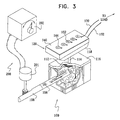
- Fig. 3 is a simplified pictorial illustration of the hydrogen generator 100 and hydrogen fuel cell 120 of Fig. 2 including hydrogen output control apparatus 200.
- selectable introduction of catalyst 106 may be effected by any suitable mechanical drive 201, in response to a control input from any suitable controller 202.
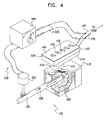
- Fig. 4 is a simplified pictorial illustration of the fuel cell and hydrogen generator 100 of Fig. 2 including hydrogen output control apparatus 203 including a controller 204 which utilizes feedback functionality and typically increases or decreases the extent of insertion of the catalyst 106 in accordance with the electrical power supplied to the load along conductors 162 and 170.
- the electrical power may be sensed by controller 204 via conductors 206.
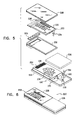
- Fig. 5 is a simplified exploded view pictorial illustration of an electronic shelf label employing the hydrogen generator 100 and fuel cell 120 of Figs. 3 and 4 and to Fig. 6, which is a simplified pictorial illustration of the electronic shelf label of Fig. 5 in an assembled form.
- an electronic shelf label 220 which preferably comprises a LCD display 222, or any other suitable electrically driven display.
- the LCD display may be a conventional LCD display, preferably employed HTN technology, which is available from multiple vendors, such as Display Tech of Hong Kong and Yeboo of China.
- the LCD display 222 which is supported by a LCD support frame 223, are located in housing 224.
- the housing 224 typically includes two parts which are typically snap-fit or press-fit together.
- a front housing portion 226 preferably includes a protective, at least partially transparent, cover layer 228, which is disposed over the LCD display 222 and in spaced relationship thereto.
- the electronic shelf label 220 preferably includes at least one fuel cell 230 powering the LCD display 222 and preferably other elements of the electronic shelf label 220, wherein each fuel cell 230 corresponds to a fuel cell unit of Fig. 1 and the assembly of fuel cells 230 corresponds to the fuel cell 120 of Fig. 1.
- the at least one fuel cell 230 and the other elements of the electronic shelf label are supported by a support frame 231.
- the at least one fuel cell 230 is preferably constructed and operative as described hereinabove with reference to Figs. 1 and 2 and is preferably associated with a hydrogen generator 232, such as hydrogen generator 100 illustrated in Figs. 3 and 4, which preferably fills most of the volume of the housing 224 which is not taken up by the remaining elements of the electronic shelf label. Hydrogen from hydrogen generator 232 is supplied to the at least one fuel cell 230 via a liquid impermeable filter 233.
- Electrical conductors 234 provide control signals from control circuitry (not shown), typically collocated with LCD display 222, to drive the mechanical drive 201 to control the introduction of the catalyst 106 into the water-based fuel 104.
- the electronic shelf label 220 may include at least one electrically powered illuminator, which is powered by the fuel cell 230.
- the illuminator is a flashing LED 236, which is typically mounted on the LCD support frame 223.
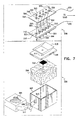
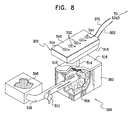
- FIGs. 7 and 8 are pictorial illustrations of a fuel cell and hydrogen generator useful therewith, constructed and operative in accordance with another preferred embodiment of the present invention.
- a hydrogen generator designated generally by reference numeral 300, which preferably comprises a container 302 in which is disposed a water-based fuel 304 including at least one of salts, bases and acids, and at least one of zinc, magnesium, iron, aluminum tin, calcium, sodium, lithium. metal hydrides based on nickel, titanium or rare earth metals, or alloys thereof.
- the liquid phase catalyst 306 may be controllably injected into water-based fuel 304, typically via a conduit 308 and a suitable aperture 310 formed in container 302.
- the amount of the catalyst 306 which is injected into the water based fuel 304 is controlled by a valve 311.
- water may be controllably injected into a matrix containing at least one of salts, bases and acids, and at least one of zinc, magnesium, iron, aluminum, tin, calcium, sodium, lithium, metal hydrides based on nickel or titanium or rare earth metals, or alloys thereof, and the catalyst.
- the base may comprise hydroxides of potassium, sodium or lithium or their mixtures thereof preferably in solution in water.
- the acid may comprise an inorganic acid such as sulfuric acid, preferably in aqueous solution or an organic acid such as citric acid, preferably in aqueous solution.
- the water-based fuel includes zinc and the catalyst may also comprise an impurity in the zinc.
- the impurity is preferably a transition metal.
- the water-based fuel includes aluminum and the catalyst may also comprise an impurity in the aluminum, which impurity preferably is a transition metal.
- the water-based fuel includes magnesium and the catalyst may also comprise an impurity in the magnesium, which impurity preferably is a transition metal.
- the water-based fuel includes iron and the catalysis may also comprise an impurity in the iron which impurity preferably is a transition metal apart from iron.
- Hydrogen gas is released from water-based fuel 304, typically via a liquid impermeable filter 312 and passes via a conduit 314 through a cover 316 of container 302 to a diffuser 318, which underlies a hydrogen fuel cell 320.
- the hydrogen fuel cell 320 typically includes first and second printed circuit boards 340 and 342, each having plated-through electrical contacts formed thereon.
- the electrical contacts on circuit boards 340 and 342 are respectively designated by reference numerals 344 and 346.
- the electrical contacts 344 and 346 on respective first and second printed circuit boards 340 and 342 are preferably in partial registration with each other about respective apertures 348 and 350 thus forming pairs of electrical contacts 344 and 346.
- An electrical contact 344 of each pair of electrical contacts 344 and 346 is electrically connected to the electrical contact 346 of an adjacent pair of electrical contacts 344 and 346, as indicated symbolically by conductor 351.
- a plurality of cathodes 352 are located in respective apertures 348 and a plurality of anodes 354 are located in respective apertures 350.
- Membranes 356 are disposed between the first and second printed circuit boards 340 and 342, providing electrical insulation between the electrical contacts 344 and 346 on respective first and second printed circuit boards 340 and 342 and permitting ionic transfer thereacross between respective electrodes 352 and 354.
- Cathodes 352 located in apertures 348 on the first printed circuit board 340 are exposed to air and the anodes 354 located in apertures 350 on the second printed circuit board 342 are exposed to hydrogen in diffuser 318.
- a first anode 354, here designated by reference numeral 360 is connected to one side of a load via the electrical contact 346 and via an electrical conductor 362 and is also connected via the membrane 356 and the electrical contact 344 to a corresponding cathode 352.
- the cathode 363 is connected to a corresponding anode 354, specifically designated by reference numeral 364, via the electrical contact 344, the conductor 351, specifically designated by reference numeral 366 and the electrical contact 346.
- the last cathode in the series here designated by reference numeral 368, is connected to the opposite side of the load via the electrical contact 344 and via an electrical conductor 370.
- Fig. 9 is a simplified pictorial illustration of the hydrogen generator 300 and hydrogen fuel cell 320 of Fig. 8 including hydrogen output control apparatus 400.
- controllable injection of the catalyst 306 may be effected by any suitable electrically controlled valve 401, in response to a control input from any suitable controller 402.
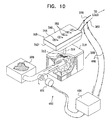
- Fig. 10 is a simplified pictorial illustration of the hydrogen generator 300 and hydrogen fuel cell 320 of Fig. 9 including hydrogen output control apparatus 403 including a controller 404 which utilizes feedback functionality and typically increases the amount of the catalyst 306 to compensate for a decrease of the voltage between the conductors 362 and 370. This voltage may be sensed by the controller apparatus 404 via conductors 406.
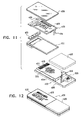
- Fig. 11 is a simplified exploded view pictorial illustration of an electronic shelf label employing the hydrogen generator 300 and fuel cell 320 of Fig. 8 and to Fig. 12, which is a simplified pictorial illustration of the electronic shelf label of Fig. 11 in an assembled form.
- an electronic shelf label 420 which preferably comprises a LCD display 422, or any other suitable electrically driven display.
- the LCD display may be a conventional LCD display, preferably employed HTN technology, which is available from multiple vendors, such as Display Tech of Hong Kong and Yeboo of China.
- the LCD display 422 which is supported by a LCD support frame 423, is located in a housing 424.
- the housing 424 typically includes two parts which are typically snap-fit or press-fit together.
- a front housing portion 426 preferably includes a protective, at least partially transparent, cover layer 428, which is disposed over the LCD display 422 and in spaced relationship thereto.
- the electronic shelf label 420 preferably includes at least one fuel cell 430 powering the LCD display 422 and preferably other elements of the electronic shelf label.
- the at least one fuel cell 430 and the other elements of the electronic shelf label are supported by a support frame 431.
- the at least one fuel cell 430 is preferably constructed and operative as described hereinabove with reference to fuel cell 320 of Figs. 7, 8, 9 and 10 and is preferably associated with a hydrogen generator 432, such as the hydrogen generator 300 illustrated in Figs. 7, 8, 9 and 10, which preferably fills most of the volume of the housing 424 which is not taken up by the remaining elements of the electronic shelf label. Hydrogen from the hydrogen generator 432 is supplied to the at least one fuel cell 430 via a liquid impermeable filter 433.
- Electrical conductors 434 provide control signals from control circuitry (not shown), typically collocated with LCD display 422, to an electrically controlled valve 436 in order to control the introduction of the catalyst 306 into the water-based fuel 304.
- the electronic shelf label 420 may include at least one electrically powered illuminator, which is powered by the fuel cell 430.
- the illuminator is a flashing LED 438, which is mounted on the LCD display support frame 423.
- FIGs. 13 and 14 are pictorial illustrations of an electrical power generator including a fuel cell and hydrogen generator useful therewith, constructed and operative in accordance with another preferred embodiment of the present invention.
- a hydrogen generator designated generally by reference numeral 500, which preferably comprises a container 502 containing an anode 504, a cathode 506, a water solution 508 and an optional but preferred porous separator sheet 510 separating between the anode 504 and the cathode 506.
- a resistor 512 typically of fixed resistance, is connected between the anode 504 and the cathode 506.
- anode 504 and the cathode 506 are mechanically supported by the walls of the container 502.
- the anode 504 includes zinc, aluminum iron or magnesium in sheet form.
- the anode may include zinc, aluminum, iron or magnesium as a pressed powder or a paste form wherein the powder or the paste is pressed on a flat support such as a sheet or a mesh.
- the flat support is electrically conducting and includes an electrical terminal.
- the cathode 506 is a plate or a mesh supporting a catalyst for hydrogen production.
- the catalyst preferably contains material based on the platinum metal group or the transition metal group.
- the cathode is electrically conducting and includes an electrical terminal 516
- the hydrogen generator may comprise multiplicity of cells of bipolar construction.
- the water solution includes at least one of salts, acids and bases, preferably in absorbed or gel form.
- the base may comprise hydroxides of potassium, sodium or lithium or their mixtures thereof preferably in solution in water.
- the acid may comprise an inorganic acid such as sulfuric acid, preferably in aqueous solution or an organic acid such as citric acid, preferably in aqueous solution.
- the rate at which hydrogen is released is proportional to the current flowing through resistor 512.
- Hydrogen gas is released, typically via a liquid impermeable filter 518 and passes via a conduit 520 through a cover 522 of container 502 to a diffuser 524, which underlies the hydrogen fuel cell 530.
- the hydrogen fuel cell 530 typically includes first and second printed circuit boards 540 and 542, each having plated-through electrical contacts formed thereon.
- the electrical contacts on circuit boards 540 and 542 are respectively designated by reference numerals 544 and 546.
- the electrical contacts 544 and 546 on respective first and second printed circuit boards 540 and 542 are preferably in partial registration with each other about respective apertures 548 and 550 thus forming pairs of electrical contacts 544 and 546.
- An electrical contact 544 of each pair of electrical contacts 544 and 546 is electrically connected to the electrical contact 546 of an adjacent pair of electrical contacts 544 and 546, as indicated symbolically by conductor 551.
- a plurality of cathodes 552 are located in respective apertures 548 and a plurality of anodes 554 are located in respective apertures 550.
- a membrane 556 is disposed between the first and second printed circuit boards 540 and 542, providing electrical insulation between the electrical contacts 544 and 546 on respective first and second printed circuit boards 540 and 542 and permitting ionic transfer thereacross between respective electrodes 552 and 554.
- Cathodes 552 located in apertures 548 on the first printed circuit board 540 are exposed to air and the anodes 554 located in apertures 550 on the second printed circuit board 542 are exposed to hydrogen in diffuser 524.
- a first anode 554, here designated by reference numeral 560 is connected to one side of a load via an electrical contact 546 and via an electrical conductor 562 and is also connected via a membrane 556 and an electrical contact 544 to a corresponding cathode 552.
- the cathode 552 is connected to a corresponding anode 554 via an electrical contact 544, an electrical connection 566 and the conductor 551. In this manner all of the anodes 554 and cathodes 552 are interconnected in series.
- the last cathode in the series, here designated by reference numeral 568 is connected to the opposite side of the load via an electrical contact 544 and via an electrical conductor 570.
- Fig. 15 is a simplified pictorial illustration of the hydrogen generator 500 and hydrogen fuel cell 530 of Fig. 13 including hydrogen output control apparatus 540 typically embodied in a variable resistor 541. As seen in Fig. 15, varying the resistance of the variable resistor 541 varies the current between the anode 504 and the cathode 506, thus changing the rate of release of hydrogen to the hydrogen fuel cell 530.
- Fig. 16A is a simplified pictorial illustration of the hydrogen generator 500 and hydrogen fuel cell 530 of Fig. 13 wherein the fuel cell 530 comprises one fuel cell unit and wherein one electrode of the hydrogen generator 500 is connected to the load and the other electrode of the hydrogen generator is connected to the opposite electrode of the hydrogen fuel cell 530.
- the anode 504 of the hydrogen generator 500 is connected to a first terminal of the load (not shown) via the anode terminal 514 and a conductor 562.
- the cathode 506 of the hydrogen generator 500 is connected via the cathode terminal 516, an electrical connector 545 and the electrical contact 546 to the first anode 560 of the hydrogen fuel cell 530.
- the cathode 552 of the fuel cell 530 is connected via electrical contact 568 and conductor 570 to a second terminal of the load. It is appreciated that the configuration of Fig. 16A provides increased power to the load relatively to the hydrogen generator 500 and the hydrogen fuel cell 530 of Figs. 14 and 15.
- the electrical power produced between the electrodes 504 and 506 of the hydrogen generator 500 of Figs. 14 and 15 is dissipated by the resistor 512 of Fig. 14 and on the variable resistor 540 of Fig. 15.
- the electrical power produced between the electrodes 504 and 506 of the hydrogen generator 500 is provided to the load together with the electrical power produced by the fuel cell 530. It is also appreciated that the configuration of Fig. 16A provides electrical feedback from the load to the hydrogen generator since the electric current that is consumed by the load is the same electric current that controls the production of hydrogen by the hydrogen generator 500..
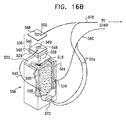
- Fig. 16B is a simplified pictorial illustration of the hydrogen generator 500 and hydrogen fuel cell 530 of Fig. 16A wherein a current controller 572 is connected between the terminals of the anode and cathode and wherein the current controller determines the current between the terminals according to the voltage measured over the load (not shown).
- the anode 504 of the hydrogen generator 500 is connected via the anode terminal 514 to a first terminal of the load (not shown) via a conductor 562.
- the cathode 506 of the hydrogen generator 500 is connected via the cathode terminal 516 and the conductor 545 to the anode 560 of the hydrogen fuel cell 530, via the contact 546.
- the cathode 552 is connected via electrical contact 568 and the conductor 570 to a second terminal of the load.
- the output terminals of a current controller 572 are connected to the terminals 514 and 516 of the anode and the cathode respectively and a pair of conductors 574 connects conductors 562 and 570 to the input terminals of the current controller. It is appreciated that the configuration of Fig. 16B provides increased power to the load relatively to the hydrogen generator 500 and the hydrogen fuel cell 530 of Figs. 14 and 15 and in a similar manner to Fig.
- Fig. 16B provides electrical feedback from the load to the hydrogen generator 500.
- the configuration shown in Fig. 16B may be useful when the current through the load decreases due to aging of the hydrogen generator or the fuel cell.
- the current controller 572 may reduce the resistance it provides between the electrodes 504 and 506 of the hydrogen generator 500, thus increasing the production of hydrogen to the fuel cell to compensate for the aging of the hydrogen generator.
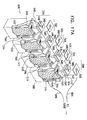
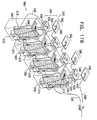
- Figs. 17A and 17B are simplified pictorial illustrations of two preferred implementations of an assembly of multiple pairs of the hydrogen generators 500 and the hydrogen fuel cells 530 of Figs. 16A and 16B respectively.
- the anode terminal 514 of a first hydrogen generator 500 here specifically designated by numeral 580
- the cathode terminal 516 of a second hydrogen generator 500 here specifically designated by numeral 582
- the anode terminal 514 of the hydrogen generator 582 is electrically connected to the cathode terminal 516 of a third hydrogen generator 500, here specifically designated by numeral 584.
- the anode terminal 514 of the third hydrogen generator 584 is electrically connected to the cathode terminal 516 of a fourth hydrogen generator 500, here specifically designated by numeral 586.
- the anode terminal 504 of the fourth hydrogen generator 586 is electrically connected to a load (not shown) via a conductor 590.
- the cathode terminal 516 of the first hydrogen generator 580 is connected via the conductor 545 and the electrical contact 546 to the anode 560 of a first fuel cell 530, here specifically designated by numeral 592.
- the cathode 552 of the first fuel cell 592 is connected via the electrical contact 568 of the first fuel cell 592 and the conductor 593 to the electrical contact 546 of a second fuel cell 530, here specifically designated by numeral 594 to the anode 560 of the second fuel cell 594.
- the cathode 552 of the second fuel cell 594 is connected via the electrical contact 568 of the second fuel cell 594 and conductor 595 to the electrical contact 546 of a third fuel cell 530, here specifically designated by numeral 596 to the anode 560 of the third fuel cell 596.
- the cathode 552 of the third fuel cell 596 is connected via the electrical contact 568 of the third fuel cell 596 and conductor 596 to the electrical contact 546 of a fourth fuel cell 530, here specifically designated by numeral 598 to the anode 560 of the fourth fuel cell 598.
- the cathode 552 of the fourth fuel cell 598 is connected via a conductor 600 to another terminal of the load.
- Fig. 17B is similar to Fig. 17A with the addition of a current controller 572 to each pair of a hydrogen generator 500 and a fuel cell 530, similarly to the arrangement shown in Fig. 17A.
- Fig. 17B shows that the cathode terminal 516 of the first hydrogen generator 580 is connected to the electrical contact 546 by the conductor 545.
- the output terminals of the respective current controller 572 are connected between the anode terminals 514 and the cathode terminals 516 of each of the hydrogen generators 580, 582, 584 and 586.
- each of the current controllers 572 are connected between the anode terminals 514 of each of the hydrogen generators 580, 582, 584 and 586 and the respective electrical contacts 568, of the corresponding fuel cells 592, 592, 596 and 598, as shown in Fig. 17B
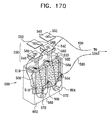
- Figs. 17C and 17D are simplified pictorial illustrations of yet another two preferred implementations of the assembly of multiple pairs of the hydrogen generators 500 and hydrogen fuel cells 530 of Figs. 16A and 16B.
- the multiplicity of hydrogen generators cells 500 is constructed in bipolar mode by implementing the anode of one hydrogen generator cell 602 and the cathode of its neighboring cell 604 in a single electrode 605.
- Fig. 17D is similar to Fig. 17C with the addition of a current controller 572 to each pair of a hydrogen generators 500 and fuel cell 530.
- Fig. 18A is a simplified exploded view pictorial illustration of an electronic shelf label employing a hydrogen generator assembly 606 and a fuel cell assembly 608, comprising at least one hydrogen generator 500 and at least one fuel cell 530. It is appreciated that the hydrogen generator assembly 606 and the fuel cell assembly 608 is preferably similar in construction and operation to the assembly of hydrogen generators 580, 582, 584 and 586 and to the assembly of fuel cells 592, 594, 596 and 598 of Fig. 17A.
- Fig. 18B is a simplified pictorial illustration of the electronic shelf label of Fig. 18A in an assembled form.
- an electronic shelf label 620 which preferably comprises a LCD display 622, or any other suitable electrically driven display.
- the LCD display may be a conventional LCD display, preferably employed HTN technology, which is available from multiple vendors, such as Display Tech of Hong Kong and Yeboo of China.
- the LCD display 622 which is supported by an LCD support frame 623, is located in a housing 624.
- the housing 624 typically includes two parts, which are typically snap-fit or press-fit together.
- a front housing portion 626 preferably includes a protective, at least partially transparent, cover layer 628, which is disposed over the LCD display 622 and in spaced relationship thereto.
- the electronic shelf label 620 preferably includes at least one fuel cell 530 powering the LCD display 622 and preferably other elements of the electronic shelf label.
- the at least one fuel cell 530 and the other elements of the electronic shelf label are supported by a support frame 629.
- the at least one fuel cell 530 is preferably constructed and operative as described hereinabove with reference to Fig. 16A and is associated with a hydrogen generator 500.
- the hydrogen generator assembly 606 preferably fill most of the volume of the housing 624 which is not taken up by the remaining elements of the electronic shelf label 620.
- An electrical conductor 634 connects a first electrode 636 of the hydrogen generator assembly 606 to the corresponding electrode of the fuel cell assembly 608 and a second electrical conductor 638 connects the second electrode of the hydrogen generator assembly 606 to the LCD display 622 in a similar configuration to the configuration shown in Fig. 16.
- Fig. 18A also shows that the hydrogen generator members of the hydrogen generator assembly are interconnected by the electrical connection assembly 640.
- the electronic shelf label 620 may include at least one electrically powered illuminator, which is powered by the power generated by the fuel cell 530 and the hydrogen generator 500.
- the illuminator is a flashing LED 636, which is mounted on the LCD display support frame 623.
- Fig. 18C is a simplified exploded view pictorial illustration of an electronic shelf label employing hydrogen generator 500 and fuel cell 530 of Fig. 17B and to Fig. 18D, which is a simplified pictorial illustration of the electronic shelf label of Fig. 18C in an assembled form.
- Figs. 18C and 18D are similar to Figs. 18A and 18B, respectively, with the addition of a current controller 572 to at least each pair of a hydrogen generator 500 and a fuel cell 530 of Fig. 18A, similarly to the arrangement shown in Fig. 17B.
- output terminals 642 and 644, of the respective current controller 572 are connected via conductors 646 to the anode and cathode terminals 514 and 516, respectively, of the anode 504 and the cathode 506 of the hydrogen generator 500.
- a first input terminal 648, of the current controller 572, is connected via a conductor 650 to the cathode 552 of the corresponding fuel cell 530.
- a second input terminal 652 is connected by an electrical conductor 654 to the output terminal 644 of the controller 572.
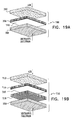
- Fig. 19A is a simplified sectional illustration of a direct methanol fuel cell 700 constructed and operative in accordance with another embodiment of the present invention.
- a porous cathode 702 which is typically comprised of a porous, electrically conducting matrix, preferably including carbon and platinum based-catalyst, as well as a suitable binder, such as Teflon ®.
- a membrane 704 typically lies in tight engagement with the porous cathode 702.
- a layer 706, of non-porous, palladium coating, is formed on the surface of the membrane 704, opposite to the membrane surface, which is in contact with the cathode 702.
- the coating 706 is typically between 0.2 and 5 microns thickness and preferably of 1 micron thickness.
- the palladium coating 706 is prepared by ion plating either onto the membrane surface 704 or onto the cathode surface 702.
- the layer 706 is positioned on the anode facing side of the membrane 704.
- the layer 706 is sandwiched, coated or laminated between two membranes 704.
- a porous, electrically conducting, anode 708 lies in tight engagement with palladium layer 706 and is preferably exposed to methanol solution.
- Anode 708 is typically comprised of a porous, electrically conducting matrix, preferably including carbon and a platinum-ruthenium based catalyst, as well as a suitable binder, such as Teflon. Additionally or alternatively, ethanol may be used in the fuel cell 700 in instead of methanol or in combination with methanol.
- Fig. 19B is a simplified sectional illustration of a fuel cell 710 constructed and operative in accordance with yet another embodiment of the present invention.
- air is in contact with a porous, electrically conducting, cathode 712, which is typically embodied in a porous matrix, preferably including carbon, platinum and ruthenium as well as a suitable binder, such as Teflon.
- a membrane 714 lies in tight engagement with porous cathode 712 and is formed on a surface thereof, opposite to that surface which contacts cathode 712, with a non-porous, palladium containing, layer 716, typically of thickness between 0.2 and 5 microns and preferably 1 micron.
- the palladium may be in alloy form.
- An additional membrane 718 lies in tight engagement with palladium layer 716.
- a porous, electrically conducting, anode 720 lies in tight engagement with membrane 718 and is exposed to methanol or ethanol or a combination thereof.
- Anode 720 is typically comprised of a carbon, platinum and ruthenium based matrix.
- the embodiments shown in Figs. 19A and 19B comprise a palladium layer 716, which is non-porous. Deposition of the non-porous layer 716 is preferably achieved by ion plating.
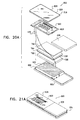
- Fig. 20A is a simplified exploded view pictorial illustration of an electronic shelf label employing the direct methanol fuel cell of Fig. 19A and to Fig. 21A, which is a simplified pictorial illustration of the electronic shelf label of Fig. 20A in an assembled form.
- ethanol may be used in the fuel cell 700 in instead of methanol or in combination with methanol.
- an electronic shelf label 820 which preferably comprises a LCD display 822, or any other suitable electrically driven display.
- the LCD display may be a conventional LCD display, preferably employed HTN technology, which is available from multiple vendors, such as Display Tech of Hong Kong and Yeboo of China.
- the LCD display 822 which is supported by a LCD support frame 823, is located in a housing 824.
- the housing 824 typically includes two parts, which are typically snap-fit or press-fit together.
- a front housing portion 826 preferably includes a protective, at least partially transparent, cover layer 828, which is disposed over the LCD display 822 and in spaced relationship thereto.
- the electronic shelf label 820 preferably includes at least one direct methanol fuel cell 700 of Fig. 19A.
- Fig. 20A shows that the direct methanol fuel cell 700 comprises a cathode 702, a membrane 704 comprising a palladium-containing layer 706, an anode 708 and a liquid methanol solution 829 disposed in a liquid methanol container 830.
- the direct methanol fuel cell 700 provides electrical power to the LCD display 822 and preferably other elements of the electronic shelf label.
- the fuel cell 700 preferably fills most of the volume of the housing 824, which is not taken up by the remaining elements of the electronic shelf label.
- Electrical conductors 830 connect the electrodes of the methanol fuel cell 700 to the LCD display support frame 823 .
- the electronic shelf label 820 may include at least one electrically powered illuminator, which is powered by the direct methanol fuel cell.
- the illuminator is a flashing LED 836, which is mounted on the LCD display support frame 823.
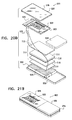
- Fig. 20B is a simplified exploded view pictorial illustration of an electronic shelf label employing the direct methanol fuel cell 710 of Fig. 19B and to Fig. 21B, which is a simplified pictorial illustration of the electronic shelf label of Fig. 20B in an assembled form.
- an electronic shelf label 920 which preferably comprises a LCD, display 922, or any other suitable electrically driven display.
- the LCD display may be a conventional LCD display, preferably employed HTN technology, which is available from multiple vendors, such as Display Tech of Hong Kong and Yeboo of China.
- the LCD display 922 which is supported by a support frame 923, is located in a housing 924.
- the housing 924 typically includes two parts, which are typically snap-fit or press-fit together.
- a front housing portion 926 preferably includes a protective, at least partially transparent, cover layer 928, which is disposed over the LCD display 922 and in spaced relationship thereto.
- the electronic shelf label 920 preferably includes at least one direct methanol fuel cell 710 of Fig. 19B.
- Fig. 20B shows a direct methanol fuel cell 710 comprising a cathode 712, a membrane 714 comprising a palladium-containing layer 716, an additional membrane 718, an anode 720 and liquid methanol solution 929 disposed in a liquid methanol container 930.
- the direct methanol fuel cell 710 provides electrical power to the LCD display 922 and preferably other elements of the electronic shelf label.
- the methanol fuel cell 710 preferably fills most of the volume of the housing 924, which is not taken up by the remaining elements of the electronic shelf label.
- Electrical conductors 930 connect the electrodes of the direct hydrogen fuel cell to the LCD support frame 923.
- the electronic shelf label 920 may include at least one electrically powered illuminator, which is powered by the direct methanol fuel cell.
- the illuminator is a flashing LED 936, which is mounted on the LCD support frame 923.
- FIG. 22 is a pictorial illustration of the hydrogen generator 500 of Fig. 14 being connected to a direct current power supply to be electrically recharged.
- a twin switch 940 connects the terminals 942 and 944 of the hydrogen generator 500 either to the terminals of a resistor 946 or to terminals 948 of a DC power supply 950. It is noted that the resistor 946 can be replaced with a variable resistor or a current controller as shown in Figs. 14 and 15.
- Fig. 23A is a simplified illustration of a preferred embodiment of a portable electronic equipment, powered by a fuel cell and a hydrogen generator, in accordance with a preferred embodiment of the present invention.
- the portable electronic equipment is a portable computing device, specifically a laptop computer 960, and an electric power generator 962 to provide power to the laptop computer 960.
- the electric power generator 962 comprises at least one fuel cell 964 and at least one hydrogen generator 966.
- the electronic power generator 962 can be of any of the types described in accordance with Figs. 1-4, 7-10 and 13-17D.
- a portable computing device can also be a palm-top computer, a hand held terminal, and a portable test equipment.
- the hydrogen generator can be a rechargeable hydrogen generator in accordance with a preferred embodiment of the present invention shown in Fig. 22.
- Fig. 23B is a simplified illustration of a preferred embodiment of a portable electronic equipment, powered by a fuel cell and a hydrogen generator, in accordance with a preferred embodiment of the present invention.
- the portable electronic equipment is a portable communication device, specifically a cellular telephone set 970, and an electric power generator 972 to provide power to the cellular telephone set 970.
- the electric power generator 972 comprises at least one fuel cell 974 and at least one hydrogen generator 976.
- the electronic power generator 972 can be of any of the types described in accordance with Figs. 1-4, 7-10 and 13-17D.
- the hydrogen generator can be a rechargeable hydrogen generator in accordance with a preferred embodiment of the present invention shown in Fig. 22.
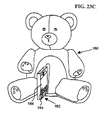
- Fig. 23C is a simplified illustration of a preferred embodiment of a portable electronic equipment, powered by a fuel cell and a hydrogen generator, in accordance with a preferred embodiment of the present invention.
- the portable electronic equipment comprises a toy 980 and an electric power generator 982.
- the electric power generator 982 comprises at least one fuel cell 984 and at least one hydrogen generator 986.
- the electronic power generator 982 can be of any of the types described in accordance with Figs. 1-4, 7-10 and 13-17D.
- the hydrogen generator can be a rechargeable hydrogen generator in accordance with a preferred embodiment of the present invention shown in Fig. 22.
Landscapes
- Chemical & Material Sciences (AREA)
- Engineering & Computer Science (AREA)
- Organic Chemistry (AREA)
- Chemical Kinetics & Catalysis (AREA)
- General Chemical & Material Sciences (AREA)
- Sustainable Energy (AREA)
- Sustainable Development (AREA)
- Electrochemistry (AREA)
- Life Sciences & Earth Sciences (AREA)
- Health & Medical Sciences (AREA)
- General Health & Medical Sciences (AREA)
- Combustion & Propulsion (AREA)
- Inorganic Chemistry (AREA)
- Manufacturing & Machinery (AREA)
- Catalysts (AREA)
- Fuel Cell (AREA)
Applications Claiming Priority (2)
| Application Number | Priority Date | Filing Date | Title |
|---|---|---|---|
| US14327 | 1987-02-13 | ||
| US10/014,327 US7074509B2 (en) | 2001-11-13 | 2001-11-13 | Hydrogen generators for fuel cells |
Publications (2)
| Publication Number | Publication Date |
|---|---|
| EP1318558A2 true EP1318558A2 (fr) | 2003-06-11 |
| EP1318558A3 EP1318558A3 (fr) | 2003-06-18 |
Family
ID=21764811
Family Applications (1)
| Application Number | Title | Priority Date | Filing Date |
|---|---|---|---|
| EP02257847A Withdrawn EP1318558A3 (fr) | 2001-11-13 | 2002-11-13 | Génerateurs d'hydrogène pour piles à combustible |
Country Status (2)
| Country | Link |
|---|---|
| US (2) | US7074509B2 (fr) |
| EP (1) | EP1318558A3 (fr) |
Cited By (1)
| Publication number | Priority date | Publication date | Assignee | Title |
|---|---|---|---|---|
| WO2006111335A1 (fr) * | 2005-04-18 | 2006-10-26 | Varta Microbattery Gmbh | Systeme de pile a combustible avec cellule electrochimique a degagement d'hydrogene |
Families Citing this family (60)
| Publication number | Priority date | Publication date | Assignee | Title |
|---|---|---|---|---|
| US7074509B2 (en) * | 2001-11-13 | 2006-07-11 | Eldat Communication Ltd. | Hydrogen generators for fuel cells |
| US7393369B2 (en) | 2002-06-11 | 2008-07-01 | Trulite, Inc. | Apparatus, system, and method for generating hydrogen |
| US20050014037A1 (en) * | 2002-12-04 | 2005-01-20 | Chris Boyer | Fuel cell with recombination catalyst |
| US7556660B2 (en) | 2003-06-11 | 2009-07-07 | James Kevin Shurtleff | Apparatus and system for promoting a substantially complete reaction of an anhydrous hydride reactant |
| US20060188436A1 (en) * | 2005-02-18 | 2006-08-24 | Linnard Griffin | Apparatus and method for the production of hydrogen |
| US20060180464A1 (en) * | 2003-08-19 | 2006-08-17 | Linnard Griffin | Apparatus and method for the controllable production of hydrogen at an accelerated rate |
| US20050042150A1 (en) * | 2003-08-19 | 2005-02-24 | Linnard Griffin | Apparatus and method for the production of hydrogen |
| US20050109162A1 (en) * | 2003-11-24 | 2005-05-26 | Linnard Griffin | Apparatus and method for the reduction of metals |
| US9029028B2 (en) | 2003-12-29 | 2015-05-12 | Honeywell International Inc. | Hydrogen and electrical power generator |
| US8153285B2 (en) * | 2003-12-29 | 2012-04-10 | Honeywell International Inc. | Micro fuel cell |
| TWI232608B (en) * | 2004-03-26 | 2005-05-11 | Nan Ya Printed Circuit Board | Flat panel direct methanol fuel cell and method of making the same |
| US7811541B2 (en) * | 2004-06-14 | 2010-10-12 | Signa Chemistry, Inc. | Silicide compositions containing alkali metals and methods of making the same |
| US20060131538A1 (en) * | 2004-11-03 | 2006-06-22 | Siegel Bart A | Hydrogen generating compositions and associated uses and methods of manufacture |
| AU2005304304B2 (en) * | 2004-11-12 | 2009-01-15 | Trulite, Inc. | Hydrogen generator cartridge |
| US7727293B2 (en) | 2005-02-25 | 2010-06-01 | SOCIéTé BIC | Hydrogen generating fuel cell cartridges |
| US7371481B2 (en) * | 2005-06-13 | 2008-05-13 | Hewlett-Packard Development Company, L.P. | Electrode having macropores and micropores therein |
| US8632928B2 (en) | 2010-11-08 | 2014-01-21 | Signa Chemistry, Inc. | Water reactive hydrogen fuel cell power system |
| KR20080064155A (ko) | 2005-10-14 | 2008-07-08 | 어플라이드 리써치 어쏘시에이츠 뉴질랜드 리미티드 | 표면 특징을 모니터링하는 방법 및 장치 |
| CA2577766A1 (fr) * | 2006-02-17 | 2007-08-17 | Nuvera Fuel Cells, Inc. | Methode de nettoyage des piles a combustible |
| US8080233B2 (en) * | 2006-05-12 | 2011-12-20 | Purdue Research Foundation | Power generation from solid aluminum |
| US7938879B2 (en) * | 2006-05-12 | 2011-05-10 | Purdue Research Foundation | Power generation from solid aluminum |
| US7651542B2 (en) | 2006-07-27 | 2010-01-26 | Thulite, Inc | System for generating hydrogen from a chemical hydride |
| US7648786B2 (en) | 2006-07-27 | 2010-01-19 | Trulite, Inc | System for generating electricity from a chemical hydride |
| KR100773532B1 (ko) * | 2006-11-22 | 2007-11-05 | 삼성에스디아이 주식회사 | 센서가 내장된 모노폴라형 막-전극 어셈블리 |
| US20080193810A1 (en) * | 2007-02-14 | 2008-08-14 | Samsung Electro-Mechanics Co.,Ltd. | Hydrogen generating apparatus and fuel cell power generation system |
| US20080193809A1 (en) * | 2007-02-14 | 2008-08-14 | Samsung Electro-Mechanics Co., Ltd. | Hydrogen generating apparatus and fuel cell power generation system |
| JP2008195598A (ja) * | 2007-02-14 | 2008-08-28 | Samsung Electro-Mechanics Co Ltd | 水素発生装置及び燃料電池発電システム |
| US7879205B2 (en) * | 2007-02-21 | 2011-02-01 | Samsung Electro-Mechanics Co., Ltd. | Hydrogen generating apparatus, fuel cell power generation system, method of controlling hydrogen generating quantity and recorded medium recorded program performing the same |
| US8357214B2 (en) | 2007-04-26 | 2013-01-22 | Trulite, Inc. | Apparatus, system, and method for generating a gas from solid reactant pouches |
| US20080296904A1 (en) * | 2007-05-29 | 2008-12-04 | Nasik Elahi | System for capturing energy from a moving fluid |
| KR20100061453A (ko) | 2007-07-25 | 2010-06-07 | 트루라이트 인크. | 하이브리드 전력의 생성 및 사용을 관리하는 장치, 시스템 및 방법 |
| US8323364B2 (en) * | 2007-07-31 | 2012-12-04 | Purdue Research Foundation | Control system for an on-demand gas generator |
| BRPI0921811A2 (pt) * | 2008-11-03 | 2016-01-12 | SOCIéTé BIC | aparelho de geração de gás. |
| US8986404B2 (en) | 2009-11-03 | 2015-03-24 | Societe Bic | Gas generator with starter mechanism and catalyst shield |
| EP2216846A1 (fr) * | 2009-01-28 | 2010-08-11 | Micronas GmbH | Cellule de combustible et procédé de fabrication de celle-ci |
| US9102528B2 (en) | 2009-03-30 | 2015-08-11 | Intelligent Energy Limited | Hydrogen generation systems and methods utilizing sodium silicide and sodium silica gel materials |
| JP5778131B2 (ja) | 2009-03-30 | 2015-09-16 | インテリジェント エナジー リミテッドIntelligent Energy Limited | ナトリウムシリサイドおよびナトリウムシリカゲル物質を使用する水素生成システムおよび方法 |
| US20110017153A1 (en) | 2009-07-22 | 2011-01-27 | Green On Demand, LLP (G.O.D.) | System for on demand hydrogen production and delivery of hydrogen to an internal combustion engine |
| US8895204B2 (en) | 2010-11-08 | 2014-11-25 | Intelligent Energy Limited | Water reactive hydrogen fuel cell power system |
| US9179844B2 (en) | 2011-11-28 | 2015-11-10 | Aranz Healthcare Limited | Handheld skin measuring or monitoring device |
| WO2014062833A1 (fr) | 2012-10-16 | 2014-04-24 | Helton Bill W | Catalyseurs de production d'hydrogène et systèmes et procédés associés |
| US10516195B2 (en) | 2012-12-04 | 2019-12-24 | Massachusetts Institute Of Technology | Anaerobic aluminum-water electrochemical cell |
| US10622690B2 (en) | 2012-12-04 | 2020-04-14 | Massachusetts Institute Of Technology | Anaerobic aluminum-water electrochemical cell |
| US10581129B2 (en) | 2012-12-04 | 2020-03-03 | Massachusetts Institute Of Technology | Anaerobic aluminum-water electrochemical cell |
| US10573944B2 (en) | 2012-12-04 | 2020-02-25 | Massachusetts Institute Of Technology | Anaerobic aluminum-water electrochemical cell |
| US10608307B2 (en) | 2012-12-04 | 2020-03-31 | Massachusetts Institute Of Technology | Anaerobic aluminum-water electrochemical cell |
| US10581128B2 (en) | 2012-12-04 | 2020-03-03 | Massachusetts Institute Of Technology | Anaerobic aluminum-water electrochemical cell |
| US10396418B2 (en) | 2012-12-04 | 2019-08-27 | Massachusetts Institute Of Technology | Anaerobic aluminum-water electrochemical cell |
| US10594010B2 (en) | 2012-12-04 | 2020-03-17 | Massachusetts Institute Of Technology | Anaerobic aluminum-water electrochemical cell |
| US10581127B2 (en) | 2012-12-04 | 2020-03-03 | Massachusetts Institute Of Technology | Anaerobic aluminum-water electrochemical cell |
| US10601095B2 (en) | 2012-12-04 | 2020-03-24 | Massachusetts Institute Of Technology | Anaerobic aluminum-water electrochemical cell |
| US10115975B2 (en) | 2014-01-31 | 2018-10-30 | Massachusetts Institute Of Technology | Water-activated permanganate electrochemical cell |
| CN104671201B (zh) * | 2015-02-15 | 2016-08-17 | 武汉科技大学 | 一种基于铵盐催化剂的硼氢化物水解反应的制氢方法 |
| SE1550580A1 (en) | 2015-05-07 | 2016-11-08 | Myfc Ab | Fuel cell based charger system and fuel generator therefor |
| US10013527B2 (en) | 2016-05-02 | 2018-07-03 | Aranz Healthcare Limited | Automatically assessing an anatomical surface feature and securely managing information related to the same |
| CN106532087A (zh) * | 2016-09-30 | 2017-03-22 | 李连博 | 燃料动力电池发电机及发电方法 |
| US11116407B2 (en) | 2016-11-17 | 2021-09-14 | Aranz Healthcare Limited | Anatomical surface assessment methods, devices and systems |
| EP4183328A1 (fr) | 2017-04-04 | 2023-05-24 | Aranz Healthcare Limited | Procédés, dispositifs et systèmes d'évaluation de surface anatomique |
| US12039726B2 (en) | 2019-05-20 | 2024-07-16 | Aranz Healthcare Limited | Automated or partially automated anatomical surface assessment methods, devices and systems |
| CN114186438B (zh) * | 2021-12-27 | 2022-10-25 | 天津大学 | 用于制氢的质子交换膜电解池性能预测模型的建立方法 |
Family Cites Families (104)
| Publication number | Priority date | Publication date | Assignee | Title |
|---|---|---|---|---|
| GB974242A (fr) | 1959-12-31 | |||
| US3313598A (en) * | 1965-06-07 | 1967-04-11 | Ethyl Corp | Method of controlled hydrogen generation |
| US3698795A (en) | 1971-01-26 | 1972-10-17 | Acton Research Corp | Diffraction grating with two diffracting surfaces |
| US3957483A (en) | 1971-04-16 | 1976-05-18 | Masahiro Suzuki | Magnesium composites and mixtures for hydrogen generation and method for manufacture thereof |
| US4072514A (en) | 1971-04-20 | 1978-02-07 | Suzuki Masahiro | Magnesium composites and mixtures for hydrogen generation and method for manufacture thereof |
| US3895102A (en) * | 1971-10-27 | 1975-07-15 | Delta F Corp | Solid fuel for the generation of hydrogen and method of preparing same |
| US3876470A (en) | 1972-11-29 | 1975-04-08 | Gen Motors Corp | Zinc plate shape change inhibition |
| NO137541C (no) * | 1974-05-03 | 1978-03-15 | Siemens Ag | Fremgangsmaate til fremstilling av hydrogen |
| US4002886A (en) | 1975-06-20 | 1977-01-11 | Ronald Murl Sundelin | Electronic price display unit |
| IL50024A (en) | 1976-07-12 | 1979-05-31 | Israel State | Secondary cells |
| US4814240A (en) * | 1976-07-12 | 1989-03-21 | Solomon Zaromb | Metal-consuming power generation methods |
| US4041221A (en) | 1976-07-27 | 1977-08-09 | Yardney Electric Corporation | Zinc electrodes and methods of making same |
| US4139149A (en) | 1977-08-31 | 1979-02-13 | Ncr Corporation | Display system |
| US4264362A (en) * | 1977-11-25 | 1981-04-28 | The United States Of America As Represented By The Secretary Of The Navy | Supercorroding galvanic cell alloys for generation of heat and gas |
| US4387297B1 (en) | 1980-02-29 | 1995-09-12 | Symbol Technologies Inc | Portable laser scanning system and scanning methods |
| US4294891A (en) | 1980-03-12 | 1981-10-13 | The Montefiore Hospital Association Of Western Pennsylvania | Intermittently refuelable implantable bio-oxidant fuel cell |
| DE3043692C2 (de) * | 1980-11-19 | 1985-07-11 | Ingenieurkontor Luebeck Prof. Gabler Nachf. Gmbh, 2400 Luebeck | Elektrische Gleichstromquelle |
| DE3109286C2 (de) | 1981-03-11 | 1985-02-07 | Standard Elektrik Lorenz Ag, 7000 Stuttgart | Optische Leseeinrichtung zum manuellen Abtasten und zum Auswerten optisch lesbarer Zeichencodeschriften |
| US4409470A (en) | 1982-01-25 | 1983-10-11 | Symbol Technologies, Inc. | Narrow-bodied, single-and twin-windowed portable laser scanning head for reading bar code symbols |
| US4521677A (en) | 1983-12-02 | 1985-06-04 | Sarwin Herbert S | Product control system for supermarkets and the like |
| US5019811A (en) | 1984-10-15 | 1991-05-28 | Unigrafic Ag | Device for marking edges of shelves |
| JPS61123867A (ja) | 1984-11-20 | 1986-06-11 | シャープ株式会社 | フィルム液晶実装方式 |
| DE3686170T2 (de) | 1985-02-28 | 1993-03-18 | Symbol Technologies Inc | Tragbarer abtastkopf mit laserdiode. |
| US5029034A (en) | 1985-04-19 | 1991-07-02 | Capital Cities/Abc Video Systems, Inc. | Video cassette with optical output of information |
| US4710820A (en) | 1986-05-22 | 1987-12-01 | Zenith Electronics Corporation | Single layer optical coupler for projection TV CRT |
| US4782219A (en) | 1986-07-02 | 1988-11-01 | Laser Identification Systems, Inc. | System and method for reading specular barcodes |
| US4766295A (en) | 1987-03-02 | 1988-08-23 | H.E. Butt Grocery Company | Electronic pricing display system |
| JPH01229390A (ja) | 1988-03-09 | 1989-09-13 | Tokyo Electric Co Ltd | 情報記憶表示カード |
| US6099522A (en) | 1989-02-06 | 2000-08-08 | Visx Inc. | Automated laser workstation for high precision surgical and industrial interventions |
| ATE133821T1 (de) | 1989-04-18 | 1996-02-15 | Ilid Pty Ltd | Datenübertragungssystem |
| US5572653A (en) | 1989-05-16 | 1996-11-05 | Rest Manufacturing, Inc. | Remote electronic information display system for retail facility |
| US5828427A (en) | 1990-06-11 | 1998-10-27 | Reveo, Inc. | Computer-based image display systems having direct and projection modes of viewing |
| US5089107A (en) | 1990-07-18 | 1992-02-18 | Francisco Pacheco | Bi-polar auto electrolytic hydrogen generator |
| EP0715158A3 (fr) * | 1990-08-06 | 1996-10-16 | Henri J R Maget | Palpeur électrochimique de force et de pression |
| GB2249854A (en) | 1990-10-17 | 1992-05-20 | Sainsbury J Plc | Electronic labels |
| DK52091D0 (da) | 1991-03-22 | 1991-03-22 | Esel Krabbe Systems As | Informationssystem |
| US5151684A (en) | 1991-04-12 | 1992-09-29 | Johnsen Edward L | Electronic inventory label and security apparatus |
| US6091884A (en) | 1991-08-19 | 2000-07-18 | Index Systems, Inc. | Enhancing operations of video tape cassette players |
| US5361871A (en) | 1991-08-20 | 1994-11-08 | Digicomp Research Corporation | Product information system for shoppers |
| US5461561A (en) | 1991-09-10 | 1995-10-24 | Electronic Retailing Systems International Inc. | System for recognizing display devices |
| US5465085A (en) | 1992-02-13 | 1995-11-07 | Display Network, Inc. | Retail store display system |
| US5510201A (en) * | 1992-04-24 | 1996-04-23 | H Power Corporation | Method of operating a fuel cell wherein hydrogen is generated by providing iron in situ |
| US5345071A (en) | 1992-04-27 | 1994-09-06 | Charles Dumont | Shopper's purchase monitoring device |
| US5457307A (en) | 1992-04-27 | 1995-10-10 | Dumont; Charles | Portable self-service bar code marker and reader for purchase monitoring |
| US5243504A (en) | 1992-07-29 | 1993-09-07 | Sejzer Daniel A | Sales promotion system and method for attracting consumer attention to each individual article being sold |
| US5374815A (en) | 1993-03-15 | 1994-12-20 | Electronic Retailing Systems Int'l Inc. | Technique for locating electronic labels in an electronic price display system |
| US5553412A (en) | 1993-03-25 | 1996-09-10 | Electronic Retailing Systems International, Inc. | Information display rail system |
| US5840270A (en) * | 1993-04-23 | 1998-11-24 | H Power Corporation | Catalytic method of generating hydrogen |
| US5830426A (en) | 1993-04-23 | 1998-11-03 | H Power Corporation | Aqueous hydrogen generation process |
| US5382779A (en) | 1993-05-07 | 1995-01-17 | Digicomp Research Corporation | Shelf price label verification apparatus and method |
| FR2716553B1 (fr) | 1994-02-21 | 1996-05-10 | Thierry Piot | Etiquetage informatisé d'un produit dans une surface de vente au public. |
| US5448226A (en) | 1994-02-24 | 1995-09-05 | Electronic Retailing Systems International, Inc. | Shelf talker management system |
| US5473146A (en) | 1994-04-04 | 1995-12-05 | At&T Global Information Solutions Company | System and method for connecting product information with electronic shelf displays |
| US5846669A (en) | 1994-05-12 | 1998-12-08 | Illinois Institute Of Technology | Hybrid electrolyte system |
| US6069596A (en) | 1994-05-17 | 2000-05-30 | Ncr Corporation | Electronic shelf label mounting system |
| US5575100A (en) | 1994-06-23 | 1996-11-19 | At&T Global Information Solutions Company | Electronic shelf label protective cover |
| US5514353A (en) | 1994-06-28 | 1996-05-07 | Af Sammer Corporation | Demand responsive hydrogen generator based on hydride water reaction |
| ATE449386T1 (de) | 1995-02-01 | 2009-12-15 | Symbol Technologies Inc | Tragbares optisches abtast-und zeigesystem |
| US6269342B1 (en) | 1995-04-28 | 2001-07-31 | Telxon Corporation | Programmable shelf tag system |
| WO1996032683A1 (fr) | 1995-04-13 | 1996-10-17 | Helfgott & Karas, P.C. | Systeme de machine de traitement des donnees des promotions de vente et affichage interactif modifiable particulierement utile dans ce systeme |
| US6093501A (en) * | 1995-06-07 | 2000-07-25 | H Power Corporation | Fuel cell using an aqueous hydrogen-generating process |
| IL114965A (en) | 1995-08-17 | 2001-01-11 | Eldat Comm Ltd | System and method for providing a store customer with personally associated prices for selected items |
| JP3267625B2 (ja) | 1995-10-23 | 2002-03-18 | サイトメトリクス インコーポレイテッド | 反射画像分析の方法および装置 |
| EP0788172B1 (fr) * | 1996-02-05 | 2001-12-05 | Matsushita Electric Industrial Co., Ltd. | Pile à combustible pour montage sur des appareils |
| IL117952A0 (en) | 1996-04-18 | 1996-08-04 | Eldat Communication Ltd | Product identification and counting system |
| IL118686A0 (en) | 1996-06-19 | 1996-10-16 | Eldat Communication Ltd | Navigation system using changeable signs |
| CA2247909A1 (fr) | 1996-06-21 | 1997-12-24 | James A. Bacnik | Support d'informations electroniques |
| US6011487A (en) | 1996-09-17 | 2000-01-04 | Ncr Corporation | System and method of locating wireless devices |
| JPH10101302A (ja) * | 1996-09-24 | 1998-04-21 | Toyota Motor Corp | 一酸化炭素濃度低減装置および一酸化炭素濃度低減方法 |
| EP0837439A3 (fr) | 1996-10-15 | 1998-09-30 | Ncr International Inc. | Etiquette électronique de prix comprenant une lampe de signalisation publicitaire |
| US5847378A (en) | 1996-10-15 | 1998-12-08 | Ncr Corporation | Electronic price label having a two-part overlay arrangement |
| US5753900A (en) | 1996-10-15 | 1998-05-19 | Ncr Corporation | Electronic price label having a switched light |
| IL119481A0 (en) | 1996-10-24 | 1997-01-10 | Eldat Communication Ltd | Personal shopping system |
| US5968325A (en) | 1997-01-07 | 1999-10-19 | A.T.S. Electro-Lube Holdings Ltd. | Auto-electrolytic hydrogen generator |
| WO1998032115A1 (fr) | 1997-01-20 | 1998-07-23 | Trion/Hl Llc | Dispositifs pour fixer et presenter des etiquettes electroniques et similaires |
| US6081612A (en) | 1997-02-28 | 2000-06-27 | Electro Optical Sciences Inc. | Systems and methods for the multispectral imaging and characterization of skin tissue |
| US5910653A (en) | 1997-04-09 | 1999-06-08 | Telxon Corporation | Shelf tag with ambient light detector |
| US6259971B1 (en) | 1997-06-30 | 2001-07-10 | Compaq Computer Corporation | Portable fuel-cell-powered system with ultrasonic atomization of H2O by-product |
| CA2240776C (fr) | 1997-07-18 | 2006-01-10 | Image Guided Technologies, Inc. | Systeme de poursuite optique ameliore |
| CA2297953A1 (fr) | 1997-07-25 | 1999-02-04 | Cardiac Pacemakers, Inc. | Systeme de batteries pour dispositif medical implantable |
| US6081558A (en) | 1997-08-20 | 2000-06-27 | Integration Associates, Inc. | Apparatus and method for low power operation with high sensitivity in a communications receiver |
| FR2772529B1 (fr) | 1997-12-17 | 2000-02-04 | Smurfit Worldwide Research Eur | Subsrat muni d'un dispositif electronique |
| US6211934B1 (en) | 1997-12-24 | 2001-04-03 | Honeywell Inc. | Method of and apparatuses for reducing infrared loading on display devices |
| US6085576A (en) | 1998-03-20 | 2000-07-11 | Cyrano Sciences, Inc. | Handheld sensing apparatus |
| AU2367499A (en) | 1998-04-09 | 1999-10-21 | Impulse In-Store Marketing Services Pty Ltd | Information display system |
| FR2778775A1 (fr) | 1998-05-18 | 1999-11-19 | Alain Jean Charles Couly | Etiquette electronique de prix variables |
| US6142322A (en) | 1998-05-26 | 2000-11-07 | Ers International, Inc. | Plastic shelf rails for electronic shelf labels and locking clips for attaching same to metal shelves |
| US6031585A (en) | 1998-05-28 | 2000-02-29 | Ncr Corporation | Electronic price label comprised of a liquid crystal display with polarizers perpendicular to each other creating a wide verticle viewing angle |
| IT244139Y1 (it) | 1998-07-17 | 2002-03-07 | Brentini Attilio | Etichetta elettronica per la visualizzazione di un prezzo |
| DE19840248A1 (de) | 1998-09-03 | 2000-03-16 | Fraunhofer Ges Forschung | Schaltungschip mit spezifischer Anschlußflächenanordnung |
| DE19840251B4 (de) | 1998-09-03 | 2004-02-12 | Fraunhofer-Gesellschaft zur Förderung der angewandten Forschung e.V. | Schaltungschip, insbesondere Transponder mit Lichtschutz |
| JP3304897B2 (ja) | 1998-11-20 | 2002-07-22 | 株式会社寺岡精工 | 電子棚札用カバーケース |
| US6326097B1 (en) | 1998-12-10 | 2001-12-04 | Manhattan Scientifics, Inc. | Micro-fuel cell power devices |
| US6162267A (en) | 1998-12-11 | 2000-12-19 | Uop Llc | Process for the generation of pure hydrogen for use with fuel cells |
| US6268077B1 (en) * | 1999-03-01 | 2001-07-31 | Motorola, Inc. | Portable fuel cell power supply |
| JP3674441B2 (ja) * | 2000-02-16 | 2005-07-20 | 日産自動車株式会社 | 改質器制御装置 |
| JP3747744B2 (ja) * | 2000-06-01 | 2006-02-22 | 日産自動車株式会社 | 燃料改質装置 |
| CN1309656C (zh) * | 2000-07-13 | 2007-04-11 | 美国氢能有限责任公司 | 用于控制水分解生成氢气的方法和设备 |
| US6395252B1 (en) * | 2000-09-29 | 2002-05-28 | Ut-Battelle, Llc | Method for the continuous production of hydrogen |
| CN1148823C (zh) * | 2001-04-23 | 2004-05-05 | 华南理工大学 | 使用液体燃料的燃料电池 |
| US6828049B2 (en) * | 2001-10-29 | 2004-12-07 | Hewlett-Packard Development Company, L.P. | Replaceable fuel cell apparatus having information storage device |
| US6770186B2 (en) * | 2001-11-13 | 2004-08-03 | Eldat Communication Ltd. | Rechargeable hydrogen-fueled motor vehicle |
| US7074509B2 (en) * | 2001-11-13 | 2006-07-11 | Eldat Communication Ltd. | Hydrogen generators for fuel cells |
| CA2517123C (fr) * | 2003-03-04 | 2015-02-10 | Pricer Ab | Etiquette electronique |
-
2001
- 2001-11-13 US US10/014,327 patent/US7074509B2/en not_active Expired - Lifetime
-
2002
- 2002-11-13 EP EP02257847A patent/EP1318558A3/fr not_active Withdrawn
-
2006
- 2006-05-23 US US11/438,923 patent/US8071242B2/en not_active Expired - Lifetime
Cited By (1)
| Publication number | Priority date | Publication date | Assignee | Title |
|---|---|---|---|---|
| WO2006111335A1 (fr) * | 2005-04-18 | 2006-10-26 | Varta Microbattery Gmbh | Systeme de pile a combustible avec cellule electrochimique a degagement d'hydrogene |
Also Published As
| Publication number | Publication date |
|---|---|
| US8071242B2 (en) | 2011-12-06 |
| US20030091878A1 (en) | 2003-05-15 |
| US7074509B2 (en) | 2006-07-11 |
| US20060210847A1 (en) | 2006-09-21 |
| EP1318558A3 (fr) | 2003-06-18 |
Similar Documents
| Publication | Publication Date | Title |
|---|---|---|
| US8071242B2 (en) | Hydrogen generators for fuel cells | |
| US7572302B2 (en) | Sheet-like chemical cell, fuel cell and methods for manufacturing thereof | |
| JP5143991B2 (ja) | 直接メタノール燃料電池システムおよびその製造方法 | |
| Fernández-Moreno et al. | A portable system powered with hydrogen and one single air-breathing PEM fuel cell | |
| JP2021153062A (ja) | タンク内電解質のリバランス機能を有する密閉された水性フロー電池システム | |
| EP1357627A2 (fr) | Pile à combustible alimentée directement au méthanol-air | |
| JP2002544650A (ja) | 燃料電池システムおよびこのようなシステムに対する燃料電池 | |
| EP1352441A2 (fr) | Capteur de methanol pour systeme de pile a combustible directe a methanol | |
| CA2243219A1 (fr) | Generation electrolytique de l'azote | |
| CN101527366A (zh) | 铝镁合金燃料电池供电装置 | |
| JP4781626B2 (ja) | 燃料電池 | |
| JP2006286239A (ja) | 直接型メタノール燃料電池システムおよびその制御方法 | |
| CN101325266B (zh) | 一种微型组合再生式燃料电池电源系统 | |
| JP4078251B2 (ja) | 燃料電池および小型電気機器 | |
| US20080193810A1 (en) | Hydrogen generating apparatus and fuel cell power generation system | |
| JP5344218B2 (ja) | 燃料電池システムおよび電子機器 | |
| CA2621600C (fr) | Generateur d'hydrogene et dispositif de piles a combustible pour la production d'energie muni d'un systeme de commande de la production d'hydrogene | |
| EP1959516A1 (fr) | Appareil de génération d'hydrogène et système générateur d'énergie avec de pile à combustible | |
| US20070048584A1 (en) | Fuel cell | |
| WO2007105291A1 (fr) | Pile a combustible | |
| US20070048583A1 (en) | Fuel cell | |
| JP2006202509A (ja) | 携帯型コンピュータ | |
| US20120267252A1 (en) | Method for generating hydrogen by using a fuel cell power generation system | |
| JP2006332018A (ja) | 燃料電池システム及び電気機器 | |
| KR100956683B1 (ko) | 수소발생장치의 전극연결방법 및 그것을 이용한수소발생장치 |
Legal Events
| Date | Code | Title | Description |
|---|---|---|---|
| PUAI | Public reference made under article 153(3) epc to a published international application that has entered the european phase |
Free format text: ORIGINAL CODE: 0009012 |
|
| PUAL | Search report despatched |
Free format text: ORIGINAL CODE: 0009013 |
|
| AK | Designated contracting states |
Designated state(s): AT BE BG CH CY CZ DE DK EE ES FI FR GB GR IE IT LI LU MC NL PT SE SK TR |
|
| AX | Request for extension of the european patent |
Extension state: AL LT LV MK RO SI |
|
| AK | Designated contracting states |
Designated state(s): AT BE BG CH CY CZ DE DK EE ES FI FR GB GR IE IT LI LU MC NL PT SE SK TR |
|
| AX | Request for extension of the european patent |
Extension state: AL LT LV MK RO SI |
|
| 17P | Request for examination filed |
Effective date: 20031218 |
|
| AKX | Designation fees paid |
Designated state(s): AT BE BG CH CY CZ DE DK EE ES FI FR GB GR IE IT LI LU MC NL PT SE SK TR |
|
| D17P | Request for examination filed (deleted) | ||
| DBV | Designated contracting states (deleted) | ||
| REG | Reference to a national code |
Ref country code: DE Ref legal event code: 8566 |
|
| STAA | Information on the status of an ep patent application or granted ep patent |
Free format text: STATUS: THE APPLICATION IS DEEMED TO BE WITHDRAWN |
|
| 18D | Application deemed to be withdrawn |
Effective date: 20031219 |