EP1319639A2 - Chemische Regelung von keramischer Porosität unter Verwendung von Karboxylaten-Alumoxanen - Google Patents
Chemische Regelung von keramischer Porosität unter Verwendung von Karboxylaten-Alumoxanen Download PDFInfo
- Publication number
- EP1319639A2 EP1319639A2 EP03004680A EP03004680A EP1319639A2 EP 1319639 A2 EP1319639 A2 EP 1319639A2 EP 03004680 A EP03004680 A EP 03004680A EP 03004680 A EP03004680 A EP 03004680A EP 1319639 A2 EP1319639 A2 EP 1319639A2
- Authority
- EP
- European Patent Office
- Prior art keywords
- alumoxane
- carboxylate
- particles
- nano
- boehmite
- Prior art date
- Legal status (The legal status is an assumption and is not a legal conclusion. Google has not performed a legal analysis and makes no representation as to the accuracy of the status listed.)
- Withdrawn
Links
- 239000000919 ceramic Substances 0.000 title claims abstract description 56
- 239000000126 substance Substances 0.000 title abstract description 16
- 239000011148 porous material Substances 0.000 claims abstract description 64
- 238000000034 method Methods 0.000 claims abstract description 53
- 239000002105 nanoparticle Substances 0.000 claims abstract description 36
- 238000009826 distribution Methods 0.000 claims abstract description 26
- 150000007942 carboxylates Chemical group 0.000 claims abstract description 20
- 239000000835 fiber Substances 0.000 claims description 78
- 239000012528 membrane Substances 0.000 claims description 56
- XLYOFNOQVPJJNP-UHFFFAOYSA-N water Substances O XLYOFNOQVPJJNP-UHFFFAOYSA-N 0.000 claims description 36
- 229910001868 water Inorganic materials 0.000 claims description 34
- FAHBNUUHRFUEAI-UHFFFAOYSA-M hydroxidooxidoaluminium Chemical compound O[Al]=O FAHBNUUHRFUEAI-UHFFFAOYSA-M 0.000 claims description 26
- 229910001593 boehmite Inorganic materials 0.000 claims description 25
- 238000010304 firing Methods 0.000 claims description 24
- 229920000049 Carbon (fiber) Polymers 0.000 claims description 23
- 239000004917 carbon fiber Substances 0.000 claims description 23
- 150000001735 carboxylic acids Chemical class 0.000 claims description 23
- 238000001035 drying Methods 0.000 claims description 23
- 229910052594 sapphire Inorganic materials 0.000 claims description 21
- 239000010980 sapphire Substances 0.000 claims description 17
- HBMJWWWQQXIZIP-UHFFFAOYSA-N silicon carbide Chemical compound [Si+]#[C-] HBMJWWWQQXIZIP-UHFFFAOYSA-N 0.000 claims description 17
- 229910010271 silicon carbide Inorganic materials 0.000 claims description 16
- QTBSBXVTEAMEQO-UHFFFAOYSA-N Acetic acid Chemical compound CC(O)=O QTBSBXVTEAMEQO-UHFFFAOYSA-N 0.000 claims description 15
- 238000006243 chemical reaction Methods 0.000 claims description 13
- 239000000203 mixture Substances 0.000 claims description 12
- 239000000047 product Substances 0.000 claims description 12
- VXAUWWUXCIMFIM-UHFFFAOYSA-M aluminum;oxygen(2-);hydroxide Chemical group [OH-].[O-2].[Al+3] VXAUWWUXCIMFIM-UHFFFAOYSA-M 0.000 claims description 10
- 238000002156 mixing Methods 0.000 claims description 10
- 239000002904 solvent Substances 0.000 claims description 10
- 125000000962 organic group Chemical group 0.000 claims description 7
- 238000001149 thermolysis Methods 0.000 claims description 7
- IJGRMHOSHXDMSA-UHFFFAOYSA-N Atomic nitrogen Chemical compound N#N IJGRMHOSHXDMSA-UHFFFAOYSA-N 0.000 claims description 6
- 125000003342 alkenyl group Chemical group 0.000 claims description 4
- 125000000217 alkyl group Chemical group 0.000 claims description 4
- 239000001257 hydrogen Substances 0.000 claims description 4
- 229910052739 hydrogen Inorganic materials 0.000 claims description 4
- 239000003039 volatile agent Substances 0.000 claims description 4
- 125000003118 aryl group Chemical group 0.000 claims description 3
- 125000005842 heteroatom Chemical group 0.000 claims description 3
- UFHFLCQGNIYNRP-UHFFFAOYSA-N Hydrogen Chemical compound [H][H] UFHFLCQGNIYNRP-UHFFFAOYSA-N 0.000 claims description 2
- NINIDFKCEFEMDL-UHFFFAOYSA-N Sulfur Chemical compound [S] NINIDFKCEFEMDL-UHFFFAOYSA-N 0.000 claims description 2
- 150000008378 aryl ethers Chemical group 0.000 claims description 2
- QVGXLLKOCUKJST-UHFFFAOYSA-N atomic oxygen Chemical compound [O] QVGXLLKOCUKJST-UHFFFAOYSA-N 0.000 claims description 2
- 125000000262 haloalkenyl group Chemical group 0.000 claims description 2
- 125000001188 haloalkyl group Chemical group 0.000 claims description 2
- BHEPBYXIRTUNPN-UHFFFAOYSA-N hydridophosphorus(.) (triplet) Chemical compound [PH] BHEPBYXIRTUNPN-UHFFFAOYSA-N 0.000 claims description 2
- 125000004435 hydrogen atom Chemical group [H]* 0.000 claims description 2
- VNWKTOKETHGBQD-UHFFFAOYSA-N methane Chemical compound C VNWKTOKETHGBQD-UHFFFAOYSA-N 0.000 claims description 2
- RMIODHQZRUFFFF-UHFFFAOYSA-N methoxyacetic acid Chemical compound COCC(O)=O RMIODHQZRUFFFF-UHFFFAOYSA-N 0.000 claims description 2
- 229910052757 nitrogen Inorganic materials 0.000 claims description 2
- 239000001301 oxygen Substances 0.000 claims description 2
- 229910052760 oxygen Inorganic materials 0.000 claims description 2
- 239000011593 sulfur Substances 0.000 claims description 2
- 229910052717 sulfur Inorganic materials 0.000 claims description 2
- 239000007795 chemical reaction product Substances 0.000 claims 6
- CLLLODNOQBVIMS-UHFFFAOYSA-N 2-(2-methoxyethoxy)acetic acid Chemical compound COCCOCC(O)=O CLLLODNOQBVIMS-UHFFFAOYSA-N 0.000 claims 1
- YHBWXWLDOKIVCJ-UHFFFAOYSA-N 2-[2-(2-methoxyethoxy)ethoxy]acetic acid Chemical compound COCCOCCOCC(O)=O YHBWXWLDOKIVCJ-UHFFFAOYSA-N 0.000 claims 1
- 229920000271 Kevlar® Polymers 0.000 claims 1
- 239000000470 constituent Substances 0.000 claims 1
- 238000001816 cooling Methods 0.000 claims 1
- 238000003618 dip coating Methods 0.000 claims 1
- 239000004744 fabric Substances 0.000 claims 1
- 239000004761 kevlar Substances 0.000 claims 1
- 230000015572 biosynthetic process Effects 0.000 abstract description 36
- PNEYBMLMFCGWSK-UHFFFAOYSA-N aluminium oxide Inorganic materials [O-2].[O-2].[O-2].[Al+3].[Al+3] PNEYBMLMFCGWSK-UHFFFAOYSA-N 0.000 abstract description 32
- 229940024548 aluminum oxide Drugs 0.000 abstract description 13
- TWNQGVIAIRXVLR-UHFFFAOYSA-N oxo(oxoalumanyloxy)alumane Chemical compound O=[Al]O[Al]=O TWNQGVIAIRXVLR-UHFFFAOYSA-N 0.000 abstract description 13
- 230000001419 dependent effect Effects 0.000 abstract description 12
- 239000011224 oxide ceramic Substances 0.000 abstract description 6
- 229910052574 oxide ceramic Inorganic materials 0.000 abstract description 6
- 239000000243 solution Substances 0.000 description 49
- 238000002360 preparation method Methods 0.000 description 44
- 230000008595 infiltration Effects 0.000 description 33
- 238000001764 infiltration Methods 0.000 description 33
- 229910001697 hibonite Inorganic materials 0.000 description 31
- 239000000499 gel Substances 0.000 description 28
- 238000003786 synthesis reaction Methods 0.000 description 23
- RTZKZFJDLAIYFH-UHFFFAOYSA-N Diethyl ether Chemical compound CCOCC RTZKZFJDLAIYFH-UHFFFAOYSA-N 0.000 description 22
- DABBEFIGOKNFCX-UHFFFAOYSA-N [AlH]1OCCCC1.C(C)(=O)O Chemical compound [AlH]1OCCCC1.C(C)(=O)O DABBEFIGOKNFCX-UHFFFAOYSA-N 0.000 description 22
- 238000000576 coating method Methods 0.000 description 19
- 239000000463 material Substances 0.000 description 16
- 239000011159 matrix material Substances 0.000 description 16
- LFQSCWFLJHTTHZ-UHFFFAOYSA-N Ethanol Chemical compound CCO LFQSCWFLJHTTHZ-UHFFFAOYSA-N 0.000 description 14
- 239000000843 powder Substances 0.000 description 14
- 229910000323 aluminium silicate Inorganic materials 0.000 description 13
- 239000011248 coating agent Substances 0.000 description 13
- HNPSIPDUKPIQMN-UHFFFAOYSA-N dioxosilane;oxo(oxoalumanyloxy)alumane Chemical compound O=[Si]=O.O=[Al]O[Al]=O HNPSIPDUKPIQMN-UHFFFAOYSA-N 0.000 description 13
- 239000003446 ligand Substances 0.000 description 13
- 238000003756 stirring Methods 0.000 description 11
- CSCPPACGZOOCGX-UHFFFAOYSA-N Acetone Chemical compound CC(C)=O CSCPPACGZOOCGX-UHFFFAOYSA-N 0.000 description 10
- HEDRZPFGACZZDS-UHFFFAOYSA-N Chloroform Chemical compound ClC(Cl)Cl HEDRZPFGACZZDS-UHFFFAOYSA-N 0.000 description 10
- 229910052782 aluminium Inorganic materials 0.000 description 10
- 239000002131 composite material Substances 0.000 description 10
- 238000007598 dipping method Methods 0.000 description 10
- XAGFODPZIPBFFR-UHFFFAOYSA-N aluminium Chemical compound [Al] XAGFODPZIPBFFR-UHFFFAOYSA-N 0.000 description 9
- 229910010293 ceramic material Inorganic materials 0.000 description 9
- 239000011521 glass Substances 0.000 description 9
- KAWJFMVQQZQFEH-UHFFFAOYSA-N [AlH]1OCCCC1.COC(C(=O)O)OCC Chemical compound [AlH]1OCCCC1.COC(C(=O)O)OCC KAWJFMVQQZQFEH-UHFFFAOYSA-N 0.000 description 8
- QOOCCVSNKIZANY-UHFFFAOYSA-N [AlH]1OCCCC1.C(C)(=O)O.COC(C(=O)O)OCCOCC Chemical compound [AlH]1OCCCC1.C(C)(=O)O.COC(C(=O)O)OCCOCC QOOCCVSNKIZANY-UHFFFAOYSA-N 0.000 description 7
- 125000001424 substituent group Chemical group 0.000 description 7
- PDBFBNHRIOBORC-UHFFFAOYSA-N [AlH]1OCCCC1.C(C)(=O)O.COC(C(=O)O)OCC Chemical compound [AlH]1OCCCC1.C(C)(=O)O.COC(C(=O)O)OCC PDBFBNHRIOBORC-UHFFFAOYSA-N 0.000 description 6
- 239000000706 filtrate Substances 0.000 description 6
- 238000004519 manufacturing process Methods 0.000 description 6
- 239000002245 particle Substances 0.000 description 6
- 239000000523 sample Substances 0.000 description 6
- 239000007787 solid Substances 0.000 description 6
- 230000004580 weight loss Effects 0.000 description 6
- 238000013459 approach Methods 0.000 description 5
- 238000005524 ceramic coating Methods 0.000 description 5
- 239000013078 crystal Substances 0.000 description 5
- AVHICRVJJTZPRX-UHFFFAOYSA-N oxaluminane propanedioic acid Chemical compound [AlH]1OCCCC1.C(CC(=O)O)(=O)O AVHICRVJJTZPRX-UHFFFAOYSA-N 0.000 description 5
- 230000035699 permeability Effects 0.000 description 5
- 239000002243 precursor Substances 0.000 description 5
- 238000012545 processing Methods 0.000 description 5
- 238000003980 solgel method Methods 0.000 description 5
- FAPWRFPIFSIZLT-UHFFFAOYSA-M Sodium chloride Chemical compound [Na+].[Cl-] FAPWRFPIFSIZLT-UHFFFAOYSA-M 0.000 description 4
- 239000002253 acid Substances 0.000 description 4
- -1 aluminum alkoxides Chemical class 0.000 description 4
- 238000004458 analytical method Methods 0.000 description 4
- 230000008901 benefit Effects 0.000 description 4
- 238000002296 dynamic light scattering Methods 0.000 description 4
- 230000006870 function Effects 0.000 description 4
- 238000001879 gelation Methods 0.000 description 4
- 230000003993 interaction Effects 0.000 description 4
- 230000016507 interphase Effects 0.000 description 4
- 239000011226 reinforced ceramic Substances 0.000 description 4
- 239000000758 substrate Substances 0.000 description 4
- RQXVPZVKTNXIFO-UHFFFAOYSA-N 2-(2-ethoxyethoxy)-2-methoxyacetic acid Chemical compound CCOCCOC(OC)C(O)=O RQXVPZVKTNXIFO-UHFFFAOYSA-N 0.000 description 3
- PCNIMCYKCZMRCY-UHFFFAOYSA-N 2-(2-ethoxyethoxy)-2-methoxyacetic acid oxaluminane Chemical compound [AlH]1OCCCC1.COC(C(=O)O)OCCOCC PCNIMCYKCZMRCY-UHFFFAOYSA-N 0.000 description 3
- LFBSPVORFUVINC-UHFFFAOYSA-N 2-ethoxy-2-methoxyacetic acid Chemical compound CCOC(OC)C(O)=O LFBSPVORFUVINC-UHFFFAOYSA-N 0.000 description 3
- YMWUJEATGCHHMB-UHFFFAOYSA-N Dichloromethane Chemical compound ClCCl YMWUJEATGCHHMB-UHFFFAOYSA-N 0.000 description 3
- OKKJLVBELUTLKV-UHFFFAOYSA-N Methanol Chemical compound OC OKKJLVBELUTLKV-UHFFFAOYSA-N 0.000 description 3
- HEMHJVSKTPXQMS-UHFFFAOYSA-M Sodium hydroxide Chemical compound [OH-].[Na+] HEMHJVSKTPXQMS-UHFFFAOYSA-M 0.000 description 3
- 239000000654 additive Substances 0.000 description 3
- 238000004814 ceramic processing Methods 0.000 description 3
- 239000006185 dispersion Substances 0.000 description 3
- 238000002474 experimental method Methods 0.000 description 3
- 230000004907 flux Effects 0.000 description 3
- 239000007789 gas Substances 0.000 description 3
- 230000007062 hydrolysis Effects 0.000 description 3
- 238000006460 hydrolysis reaction Methods 0.000 description 3
- 238000001000 micrograph Methods 0.000 description 3
- 238000007254 oxidation reaction Methods 0.000 description 3
- 230000001590 oxidative effect Effects 0.000 description 3
- 239000006069 physical mixture Substances 0.000 description 3
- 238000001556 precipitation Methods 0.000 description 3
- 230000008569 process Effects 0.000 description 3
- 230000009257 reactivity Effects 0.000 description 3
- 238000010992 reflux Methods 0.000 description 3
- OFOBLEOULBTSOW-UHFFFAOYSA-N Malonic acid Chemical compound OC(=O)CC(O)=O OFOBLEOULBTSOW-UHFFFAOYSA-N 0.000 description 2
- PXHVJJICTQNCMI-UHFFFAOYSA-N Nickel Chemical compound [Ni] PXHVJJICTQNCMI-UHFFFAOYSA-N 0.000 description 2
- 238000003917 TEM image Methods 0.000 description 2
- 150000007513 acids Chemical class 0.000 description 2
- AZDRQVAHHNSJOQ-UHFFFAOYSA-N alumane Chemical class [AlH3] AZDRQVAHHNSJOQ-UHFFFAOYSA-N 0.000 description 2
- WNROFYMDJYEPJX-UHFFFAOYSA-K aluminium hydroxide Chemical compound [OH-].[OH-].[OH-].[Al+3] WNROFYMDJYEPJX-UHFFFAOYSA-K 0.000 description 2
- 239000003054 catalyst Substances 0.000 description 2
- 230000008859 change Effects 0.000 description 2
- 239000000084 colloidal system Substances 0.000 description 2
- 150000001875 compounds Chemical class 0.000 description 2
- 230000007797 corrosion Effects 0.000 description 2
- 238000005260 corrosion Methods 0.000 description 2
- 229910052593 corundum Inorganic materials 0.000 description 2
- 239000008367 deionised water Substances 0.000 description 2
- 229910021641 deionized water Inorganic materials 0.000 description 2
- 238000013461 design Methods 0.000 description 2
- 229910001873 dinitrogen Inorganic materials 0.000 description 2
- 230000000694 effects Effects 0.000 description 2
- 230000007613 environmental effect Effects 0.000 description 2
- 238000001914 filtration Methods 0.000 description 2
- 239000011888 foil Substances 0.000 description 2
- 239000008187 granular material Substances 0.000 description 2
- 229910052500 inorganic mineral Inorganic materials 0.000 description 2
- 239000007788 liquid Substances 0.000 description 2
- 230000007246 mechanism Effects 0.000 description 2
- 239000011707 mineral Substances 0.000 description 2
- 239000007800 oxidant agent Substances 0.000 description 2
- 230000003647 oxidation Effects 0.000 description 2
- 230000002265 prevention Effects 0.000 description 2
- 238000000197 pyrolysis Methods 0.000 description 2
- 230000002787 reinforcement Effects 0.000 description 2
- 230000003014 reinforcing effect Effects 0.000 description 2
- 238000000926 separation method Methods 0.000 description 2
- 238000005245 sintering Methods 0.000 description 2
- 238000007569 slipcasting Methods 0.000 description 2
- 238000002791 soaking Methods 0.000 description 2
- 239000011780 sodium chloride Substances 0.000 description 2
- 125000006850 spacer group Chemical group 0.000 description 2
- 239000000725 suspension Substances 0.000 description 2
- 230000009466 transformation Effects 0.000 description 2
- 238000004627 transmission electron microscopy Methods 0.000 description 2
- 229910003158 γ-Al2O3 Inorganic materials 0.000 description 2
- BNGXYYYYKUGPPF-UHFFFAOYSA-M (3-methylphenyl)methyl-triphenylphosphanium;chloride Chemical compound [Cl-].CC1=CC=CC(C[P+](C=2C=CC=CC=2)(C=2C=CC=CC=2)C=2C=CC=CC=2)=C1 BNGXYYYYKUGPPF-UHFFFAOYSA-M 0.000 description 1
- MNARAEXGMVEFDO-UHFFFAOYSA-N 3-(2-fluoroethyl)-8-[4-(4-fluorophenyl)-4-oxobutyl]-1-phenyl-1,3,8-triazaspiro[4.5]decan-4-one Chemical compound C1CN(CCCC(=O)C=2C=CC(F)=CC=2)CCC21C(=O)N(CCF)CN2C1=CC=CC=C1 MNARAEXGMVEFDO-UHFFFAOYSA-N 0.000 description 1
- VHUUQVKOLVNVRT-UHFFFAOYSA-N Ammonium hydroxide Chemical compound [NH4+].[OH-] VHUUQVKOLVNVRT-UHFFFAOYSA-N 0.000 description 1
- OKTJSMMVPCPJKN-UHFFFAOYSA-N Carbon Chemical compound [C] OKTJSMMVPCPJKN-UHFFFAOYSA-N 0.000 description 1
- 239000004215 Carbon black (E152) Substances 0.000 description 1
- RWSOTUBLDIXVET-UHFFFAOYSA-N Dihydrogen sulfide Chemical group S RWSOTUBLDIXVET-UHFFFAOYSA-N 0.000 description 1
- 239000012901 Milli-Q water Substances 0.000 description 1
- MXRIRQGCELJRSN-UHFFFAOYSA-N O.O.O.[Al] Chemical compound O.O.O.[Al] MXRIRQGCELJRSN-UHFFFAOYSA-N 0.000 description 1
- IKJZCJMLIKMGBP-UHFFFAOYSA-N [AlH]1OCCCC1.COCC(=O)O Chemical compound [AlH]1OCCCC1.COCC(=O)O IKJZCJMLIKMGBP-UHFFFAOYSA-N 0.000 description 1
- CQBLUJRVOKGWCF-UHFFFAOYSA-N [O].[AlH3] Chemical group [O].[AlH3] CQBLUJRVOKGWCF-UHFFFAOYSA-N 0.000 description 1
- 239000002250 absorbent Substances 0.000 description 1
- 230000002745 absorbent Effects 0.000 description 1
- 239000004964 aerogel Substances 0.000 description 1
- 230000032683 aging Effects 0.000 description 1
- 125000001931 aliphatic group Chemical group 0.000 description 1
- 150000001412 amines Chemical group 0.000 description 1
- 239000000908 ammonium hydroxide Substances 0.000 description 1
- 229940069428 antacid Drugs 0.000 description 1
- 239000003159 antacid agent Substances 0.000 description 1
- 238000010420 art technique Methods 0.000 description 1
- 238000000089 atomic force micrograph Methods 0.000 description 1
- 239000002585 base Substances 0.000 description 1
- 239000011230 binding agent Substances 0.000 description 1
- 229910052799 carbon Inorganic materials 0.000 description 1
- 238000005266 casting Methods 0.000 description 1
- 239000012700 ceramic precursor Substances 0.000 description 1
- 238000003486 chemical etching Methods 0.000 description 1
- 239000008139 complexing agent Substances 0.000 description 1
- 239000000356 contaminant Substances 0.000 description 1
- 239000010431 corundum Substances 0.000 description 1
- 238000005336 cracking Methods 0.000 description 1
- 230000006378 damage Effects 0.000 description 1
- 238000000354 decomposition reaction Methods 0.000 description 1
- 230000007547 defect Effects 0.000 description 1
- 238000000280 densification Methods 0.000 description 1
- 230000001066 destructive effect Effects 0.000 description 1
- 230000001627 detrimental effect Effects 0.000 description 1
- 238000011161 development Methods 0.000 description 1
- 230000018109 developmental process Effects 0.000 description 1
- 238000004455 differential thermal analysis Methods 0.000 description 1
- 238000001473 dynamic force microscopy Methods 0.000 description 1
- 229920001971 elastomer Polymers 0.000 description 1
- 239000003792 electrolyte Substances 0.000 description 1
- 238000005516 engineering process Methods 0.000 description 1
- 239000003733 fiber-reinforced composite Substances 0.000 description 1
- 239000002657 fibrous material Substances 0.000 description 1
- 239000006260 foam Substances 0.000 description 1
- 125000000524 functional group Chemical group 0.000 description 1
- 239000003365 glass fiber Substances 0.000 description 1
- 238000010438 heat treatment Methods 0.000 description 1
- 239000001307 helium Substances 0.000 description 1
- 229910052734 helium Inorganic materials 0.000 description 1
- SWQJXJOGLNCZEY-UHFFFAOYSA-N helium atom Chemical compound [He] SWQJXJOGLNCZEY-UHFFFAOYSA-N 0.000 description 1
- 229930195733 hydrocarbon Natural products 0.000 description 1
- 150000002430 hydrocarbons Chemical class 0.000 description 1
- 238000010335 hydrothermal treatment Methods 0.000 description 1
- XLYOFNOQVPJJNP-UHFFFAOYSA-M hydroxide Chemical compound [OH-] XLYOFNOQVPJJNP-UHFFFAOYSA-M 0.000 description 1
- 150000004679 hydroxides Chemical class 0.000 description 1
- 125000002887 hydroxy group Chemical group [H]O* 0.000 description 1
- 239000012212 insulator Substances 0.000 description 1
- 238000010884 ion-beam technique Methods 0.000 description 1
- 150000002500 ions Chemical class 0.000 description 1
- 150000002576 ketones Chemical class 0.000 description 1
- 238000011031 large-scale manufacturing process Methods 0.000 description 1
- 238000005259 measurement Methods 0.000 description 1
- 238000010002 mechanical finishing Methods 0.000 description 1
- 238000002844 melting Methods 0.000 description 1
- 230000008018 melting Effects 0.000 description 1
- 229910052751 metal Inorganic materials 0.000 description 1
- 239000002184 metal Substances 0.000 description 1
- 239000011156 metal matrix composite Substances 0.000 description 1
- RMIODHQZRUFFFF-UHFFFAOYSA-M methoxyacetate Chemical compound COCC([O-])=O RMIODHQZRUFFFF-UHFFFAOYSA-M 0.000 description 1
- 150000002763 monocarboxylic acids Chemical class 0.000 description 1
- 239000004570 mortar (masonry) Substances 0.000 description 1
- 238000006386 neutralization reaction Methods 0.000 description 1
- 229910052759 nickel Inorganic materials 0.000 description 1
- 239000003960 organic solvent Substances 0.000 description 1
- YAKDMLCZRNPSPB-UHFFFAOYSA-N oxaluminane-2-carboxylic acid Chemical class OC(=O)[Al]1CCCCO1 YAKDMLCZRNPSPB-UHFFFAOYSA-N 0.000 description 1
- 150000003003 phosphines Chemical group 0.000 description 1
- 230000000704 physical effect Effects 0.000 description 1
- 238000000053 physical method Methods 0.000 description 1
- 239000004033 plastic Substances 0.000 description 1
- 229920003023 plastic Polymers 0.000 description 1
- 238000009700 powder processing Methods 0.000 description 1
- 230000002028 premature Effects 0.000 description 1
- 239000000376 reactant Substances 0.000 description 1
- 238000011084 recovery Methods 0.000 description 1
- 239000012744 reinforcing agent Substances 0.000 description 1
- 230000008439 repair process Effects 0.000 description 1
- 239000005060 rubber Substances 0.000 description 1
- 239000012266 salt solution Substances 0.000 description 1
- 238000001878 scanning electron micrograph Methods 0.000 description 1
- 230000035939 shock Effects 0.000 description 1
- 239000002002 slurry Substances 0.000 description 1
- 239000007962 solid dispersion Substances 0.000 description 1
- 239000011343 solid material Substances 0.000 description 1
- 238000001179 sorption measurement Methods 0.000 description 1
- 238000001228 spectrum Methods 0.000 description 1
- 239000007921 spray Substances 0.000 description 1
- 239000007858 starting material Substances 0.000 description 1
- 229910000601 superalloy Inorganic materials 0.000 description 1
- 230000002194 synthesizing effect Effects 0.000 description 1
- 238000010189 synthetic method Methods 0.000 description 1
- 238000007669 thermal treatment Methods 0.000 description 1
- 238000002411 thermogravimetry Methods 0.000 description 1
- 238000012546 transfer Methods 0.000 description 1
- 238000000844 transformation Methods 0.000 description 1
- 239000002699 waste material Substances 0.000 description 1
- 238000004065 wastewater treatment Methods 0.000 description 1
- 229910001845 yogo sapphire Inorganic materials 0.000 description 1
Images










Classifications
-
- B—PERFORMING OPERATIONS; TRANSPORTING
- B01—PHYSICAL OR CHEMICAL PROCESSES OR APPARATUS IN GENERAL
- B01D—SEPARATION
- B01D67/00—Processes specially adapted for manufacturing semi-permeable membranes for separation processes or apparatus
- B01D67/0039—Inorganic membrane manufacture
- B01D67/0049—Inorganic membrane manufacture by evaporation
-
- B—PERFORMING OPERATIONS; TRANSPORTING
- B01—PHYSICAL OR CHEMICAL PROCESSES OR APPARATUS IN GENERAL
- B01D—SEPARATION
- B01D69/00—Semi-permeable membranes for separation processes or apparatus characterised by their form, structure or properties; Manufacturing processes specially adapted therefor
- B01D69/10—Supported membranes; Membrane supports
-
- B—PERFORMING OPERATIONS; TRANSPORTING
- B01—PHYSICAL OR CHEMICAL PROCESSES OR APPARATUS IN GENERAL
- B01D—SEPARATION
- B01D71/00—Semi-permeable membranes for separation processes or apparatus characterised by the material; Manufacturing processes specially adapted therefor
- B01D71/02—Inorganic material
- B01D71/024—Oxides
- B01D71/025—Aluminium oxide
-
- B—PERFORMING OPERATIONS; TRANSPORTING
- B82—NANOTECHNOLOGY
- B82Y—SPECIFIC USES OR APPLICATIONS OF NANOSTRUCTURES; MEASUREMENT OR ANALYSIS OF NANOSTRUCTURES; MANUFACTURE OR TREATMENT OF NANOSTRUCTURES
- B82Y30/00—Nanotechnology for materials or surface science, e.g. nanocomposites
-
- C—CHEMISTRY; METALLURGY
- C01—INORGANIC CHEMISTRY
- C01F—COMPOUNDS OF THE METALS BERYLLIUM, MAGNESIUM, ALUMINIUM, CALCIUM, STRONTIUM, BARIUM, RADIUM, THORIUM, OR OF THE RARE-EARTH METALS
- C01F7/00—Compounds of aluminium
- C01F7/02—Aluminium oxide; Aluminium hydroxide; Aluminates
-
- C—CHEMISTRY; METALLURGY
- C01—INORGANIC CHEMISTRY
- C01F—COMPOUNDS OF THE METALS BERYLLIUM, MAGNESIUM, ALUMINIUM, CALCIUM, STRONTIUM, BARIUM, RADIUM, THORIUM, OR OF THE RARE-EARTH METALS
- C01F7/00—Compounds of aluminium
- C01F7/02—Aluminium oxide; Aluminium hydroxide; Aluminates
- C01F7/30—Preparation of aluminium oxide or hydroxide by thermal decomposition or by hydrolysis or oxidation of aluminium compounds
-
- C—CHEMISTRY; METALLURGY
- C03—GLASS; MINERAL OR SLAG WOOL
- C03C—CHEMICAL COMPOSITION OF GLASSES, GLAZES OR VITREOUS ENAMELS; SURFACE TREATMENT OF GLASS; SURFACE TREATMENT OF FIBRES OR FILAMENTS MADE FROM GLASS, MINERALS OR SLAGS; JOINING GLASS TO GLASS OR OTHER MATERIALS
- C03C23/00—Other surface treatment of glass not in the form of fibres or filaments
- C03C23/0095—Solution impregnating; Solution doping; Molecular stuffing, e.g. of porous glass
-
- C—CHEMISTRY; METALLURGY
- C04—CEMENTS; CONCRETE; ARTIFICIAL STONE; CERAMICS; REFRACTORIES
- C04B—LIME, MAGNESIA; SLAG; CEMENTS; COMPOSITIONS THEREOF, e.g. MORTARS, CONCRETE OR LIKE BUILDING MATERIALS; ARTIFICIAL STONE; CERAMICS; REFRACTORIES; TREATMENT OF NATURAL STONE
- C04B35/00—Shaped ceramic products characterised by their composition; Ceramics compositions; Processing powders of inorganic compounds preparatory to the manufacturing of ceramic products
- C04B35/01—Shaped ceramic products characterised by their composition; Ceramics compositions; Processing powders of inorganic compounds preparatory to the manufacturing of ceramic products based on oxide ceramics
- C04B35/10—Shaped ceramic products characterised by their composition; Ceramics compositions; Processing powders of inorganic compounds preparatory to the manufacturing of ceramic products based on oxide ceramics based on aluminium oxide
- C04B35/111—Fine ceramics
-
- C—CHEMISTRY; METALLURGY
- C04—CEMENTS; CONCRETE; ARTIFICIAL STONE; CERAMICS; REFRACTORIES
- C04B—LIME, MAGNESIA; SLAG; CEMENTS; COMPOSITIONS THEREOF, e.g. MORTARS, CONCRETE OR LIKE BUILDING MATERIALS; ARTIFICIAL STONE; CERAMICS; REFRACTORIES; TREATMENT OF NATURAL STONE
- C04B35/00—Shaped ceramic products characterised by their composition; Ceramics compositions; Processing powders of inorganic compounds preparatory to the manufacturing of ceramic products
- C04B35/622—Forming processes; Processing powders of inorganic compounds preparatory to the manufacturing of ceramic products
- C04B35/626—Preparing or treating the powders individually or as batches ; preparing or treating macroscopic reinforcing agents for ceramic products, e.g. fibres; mechanical aspects section B
- C04B35/628—Coating the powders or the macroscopic reinforcing agents
- C04B35/62844—Coating fibres
- C04B35/62847—Coating fibres with oxide ceramics
- C04B35/62852—Alumina or aluminates
-
- C—CHEMISTRY; METALLURGY
- C04—CEMENTS; CONCRETE; ARTIFICIAL STONE; CERAMICS; REFRACTORIES
- C04B—LIME, MAGNESIA; SLAG; CEMENTS; COMPOSITIONS THEREOF, e.g. MORTARS, CONCRETE OR LIKE BUILDING MATERIALS; ARTIFICIAL STONE; CERAMICS; REFRACTORIES; TREATMENT OF NATURAL STONE
- C04B35/00—Shaped ceramic products characterised by their composition; Ceramics compositions; Processing powders of inorganic compounds preparatory to the manufacturing of ceramic products
- C04B35/622—Forming processes; Processing powders of inorganic compounds preparatory to the manufacturing of ceramic products
- C04B35/626—Preparing or treating the powders individually or as batches ; preparing or treating macroscopic reinforcing agents for ceramic products, e.g. fibres; mechanical aspects section B
- C04B35/628—Coating the powders or the macroscopic reinforcing agents
- C04B35/62886—Coating the powders or the macroscopic reinforcing agents by wet chemical techniques
-
- C—CHEMISTRY; METALLURGY
- C04—CEMENTS; CONCRETE; ARTIFICIAL STONE; CERAMICS; REFRACTORIES
- C04B—LIME, MAGNESIA; SLAG; CEMENTS; COMPOSITIONS THEREOF, e.g. MORTARS, CONCRETE OR LIKE BUILDING MATERIALS; ARTIFICIAL STONE; CERAMICS; REFRACTORIES; TREATMENT OF NATURAL STONE
- C04B38/00—Porous mortars, concrete, artificial stone or ceramic ware; Preparation thereof
- C04B38/0022—Porous mortars, concrete, artificial stone or ceramic ware; Preparation thereof obtained by a chemical conversion or reaction other than those relating to the setting or hardening of cement-like material or to the formation of a sol or a gel, e.g. by carbonising or pyrolysing preformed cellular materials based on polymers, organo-metallic or organo-silicon precursors
-
- C—CHEMISTRY; METALLURGY
- C04—CEMENTS; CONCRETE; ARTIFICIAL STONE; CERAMICS; REFRACTORIES
- C04B—LIME, MAGNESIA; SLAG; CEMENTS; COMPOSITIONS THEREOF, e.g. MORTARS, CONCRETE OR LIKE BUILDING MATERIALS; ARTIFICIAL STONE; CERAMICS; REFRACTORIES; TREATMENT OF NATURAL STONE
- C04B41/00—After-treatment of mortars, concrete, artificial stone or ceramics; Treatment of natural stone
- C04B41/009—After-treatment of mortars, concrete, artificial stone or ceramics; Treatment of natural stone characterised by the material treated
-
- C—CHEMISTRY; METALLURGY
- C04—CEMENTS; CONCRETE; ARTIFICIAL STONE; CERAMICS; REFRACTORIES
- C04B—LIME, MAGNESIA; SLAG; CEMENTS; COMPOSITIONS THEREOF, e.g. MORTARS, CONCRETE OR LIKE BUILDING MATERIALS; ARTIFICIAL STONE; CERAMICS; REFRACTORIES; TREATMENT OF NATURAL STONE
- C04B41/00—After-treatment of mortars, concrete, artificial stone or ceramics; Treatment of natural stone
- C04B41/45—Coating or impregnating, e.g. injection in masonry, partial coating of green or fired ceramics, organic coating compositions for adhering together two concrete elements
- C04B41/4582—Porous coatings, e.g. coating containing porous fillers
-
- C—CHEMISTRY; METALLURGY
- C04—CEMENTS; CONCRETE; ARTIFICIAL STONE; CERAMICS; REFRACTORIES
- C04B—LIME, MAGNESIA; SLAG; CEMENTS; COMPOSITIONS THEREOF, e.g. MORTARS, CONCRETE OR LIKE BUILDING MATERIALS; ARTIFICIAL STONE; CERAMICS; REFRACTORIES; TREATMENT OF NATURAL STONE
- C04B41/00—After-treatment of mortars, concrete, artificial stone or ceramics; Treatment of natural stone
- C04B41/45—Coating or impregnating, e.g. injection in masonry, partial coating of green or fired ceramics, organic coating compositions for adhering together two concrete elements
- C04B41/4584—Coating or impregnating of particulate or fibrous ceramic material
-
- C—CHEMISTRY; METALLURGY
- C04—CEMENTS; CONCRETE; ARTIFICIAL STONE; CERAMICS; REFRACTORIES
- C04B—LIME, MAGNESIA; SLAG; CEMENTS; COMPOSITIONS THEREOF, e.g. MORTARS, CONCRETE OR LIKE BUILDING MATERIALS; ARTIFICIAL STONE; CERAMICS; REFRACTORIES; TREATMENT OF NATURAL STONE
- C04B41/00—After-treatment of mortars, concrete, artificial stone or ceramics; Treatment of natural stone
- C04B41/80—After-treatment of mortars, concrete, artificial stone or ceramics; Treatment of natural stone of only ceramics
- C04B41/81—Coating or impregnation
-
- B—PERFORMING OPERATIONS; TRANSPORTING
- B01—PHYSICAL OR CHEMICAL PROCESSES OR APPARATUS IN GENERAL
- B01D—SEPARATION
- B01D2323/00—Details relating to membrane preparation
- B01D2323/08—Specific temperatures applied
-
- B—PERFORMING OPERATIONS; TRANSPORTING
- B01—PHYSICAL OR CHEMICAL PROCESSES OR APPARATUS IN GENERAL
- B01D—SEPARATION
- B01D2323/00—Details relating to membrane preparation
- B01D2323/15—Use of additives
- B01D2323/18—Pore-control agents or pore formers
-
- B—PERFORMING OPERATIONS; TRANSPORTING
- B01—PHYSICAL OR CHEMICAL PROCESSES OR APPARATUS IN GENERAL
- B01D—SEPARATION
- B01D2323/00—Details relating to membrane preparation
- B01D2323/24—Use of template or surface directing agents [SDA]
-
- C—CHEMISTRY; METALLURGY
- C01—INORGANIC CHEMISTRY
- C01P—INDEXING SCHEME RELATING TO STRUCTURAL AND PHYSICAL ASPECTS OF SOLID INORGANIC COMPOUNDS
- C01P2004/00—Particle morphology
- C01P2004/01—Particle morphology depicted by an image
- C01P2004/04—Particle morphology depicted by an image obtained by TEM, STEM, STM or AFM
-
- C—CHEMISTRY; METALLURGY
- C01—INORGANIC CHEMISTRY
- C01P—INDEXING SCHEME RELATING TO STRUCTURAL AND PHYSICAL ASPECTS OF SOLID INORGANIC COMPOUNDS
- C01P2004/00—Particle morphology
- C01P2004/51—Particles with a specific particle size distribution
-
- C—CHEMISTRY; METALLURGY
- C01—INORGANIC CHEMISTRY
- C01P—INDEXING SCHEME RELATING TO STRUCTURAL AND PHYSICAL ASPECTS OF SOLID INORGANIC COMPOUNDS
- C01P2004/00—Particle morphology
- C01P2004/60—Particles characterised by their size
- C01P2004/64—Nanometer sized, i.e. from 1-100 nanometer
-
- C—CHEMISTRY; METALLURGY
- C04—CEMENTS; CONCRETE; ARTIFICIAL STONE; CERAMICS; REFRACTORIES
- C04B—LIME, MAGNESIA; SLAG; CEMENTS; COMPOSITIONS THEREOF, e.g. MORTARS, CONCRETE OR LIKE BUILDING MATERIALS; ARTIFICIAL STONE; CERAMICS; REFRACTORIES; TREATMENT OF NATURAL STONE
- C04B2235/00—Aspects relating to ceramic starting mixtures or sintered ceramic products
- C04B2235/02—Composition of constituents of the starting material or of secondary phases of the final product
- C04B2235/30—Constituents and secondary phases not being of a fibrous nature
- C04B2235/32—Metal oxides, mixed metal oxides, or oxide-forming salts thereof, e.g. carbonates, nitrates, (oxy)hydroxides, chlorides
- C04B2235/3217—Aluminum oxide or oxide forming salts thereof, e.g. bauxite, alpha-alumina
- C04B2235/3218—Aluminium (oxy)hydroxides, e.g. boehmite, gibbsite, alumina sol
-
- C—CHEMISTRY; METALLURGY
- C04—CEMENTS; CONCRETE; ARTIFICIAL STONE; CERAMICS; REFRACTORIES
- C04B—LIME, MAGNESIA; SLAG; CEMENTS; COMPOSITIONS THEREOF, e.g. MORTARS, CONCRETE OR LIKE BUILDING MATERIALS; ARTIFICIAL STONE; CERAMICS; REFRACTORIES; TREATMENT OF NATURAL STONE
- C04B2235/00—Aspects relating to ceramic starting mixtures or sintered ceramic products
- C04B2235/02—Composition of constituents of the starting material or of secondary phases of the final product
- C04B2235/50—Constituents or additives of the starting mixture chosen for their shape or used because of their shape or their physical appearance
- C04B2235/52—Constituents or additives characterised by their shapes
- C04B2235/5208—Fibers
- C04B2235/5216—Inorganic
- C04B2235/522—Oxidic
- C04B2235/5224—Alumina or aluminates
-
- C—CHEMISTRY; METALLURGY
- C04—CEMENTS; CONCRETE; ARTIFICIAL STONE; CERAMICS; REFRACTORIES
- C04B—LIME, MAGNESIA; SLAG; CEMENTS; COMPOSITIONS THEREOF, e.g. MORTARS, CONCRETE OR LIKE BUILDING MATERIALS; ARTIFICIAL STONE; CERAMICS; REFRACTORIES; TREATMENT OF NATURAL STONE
- C04B2235/00—Aspects relating to ceramic starting mixtures or sintered ceramic products
- C04B2235/02—Composition of constituents of the starting material or of secondary phases of the final product
- C04B2235/50—Constituents or additives of the starting mixture chosen for their shape or used because of their shape or their physical appearance
- C04B2235/52—Constituents or additives characterised by their shapes
- C04B2235/5208—Fibers
- C04B2235/5216—Inorganic
- C04B2235/524—Non-oxidic, e.g. borides, carbides, silicides or nitrides
- C04B2235/5244—Silicon carbide
-
- C—CHEMISTRY; METALLURGY
- C04—CEMENTS; CONCRETE; ARTIFICIAL STONE; CERAMICS; REFRACTORIES
- C04B—LIME, MAGNESIA; SLAG; CEMENTS; COMPOSITIONS THEREOF, e.g. MORTARS, CONCRETE OR LIKE BUILDING MATERIALS; ARTIFICIAL STONE; CERAMICS; REFRACTORIES; TREATMENT OF NATURAL STONE
- C04B2235/00—Aspects relating to ceramic starting mixtures or sintered ceramic products
- C04B2235/02—Composition of constituents of the starting material or of secondary phases of the final product
- C04B2235/50—Constituents or additives of the starting mixture chosen for their shape or used because of their shape or their physical appearance
- C04B2235/52—Constituents or additives characterised by their shapes
- C04B2235/5208—Fibers
- C04B2235/5216—Inorganic
- C04B2235/524—Non-oxidic, e.g. borides, carbides, silicides or nitrides
- C04B2235/5248—Carbon, e.g. graphite
-
- C—CHEMISTRY; METALLURGY
- C04—CEMENTS; CONCRETE; ARTIFICIAL STONE; CERAMICS; REFRACTORIES
- C04B—LIME, MAGNESIA; SLAG; CEMENTS; COMPOSITIONS THEREOF, e.g. MORTARS, CONCRETE OR LIKE BUILDING MATERIALS; ARTIFICIAL STONE; CERAMICS; REFRACTORIES; TREATMENT OF NATURAL STONE
- C04B2235/00—Aspects relating to ceramic starting mixtures or sintered ceramic products
- C04B2235/70—Aspects relating to sintered or melt-casted ceramic products
- C04B2235/74—Physical characteristics
- C04B2235/77—Density
Definitions
- the present invention relates generally to compositions of matter and methods for synthesizing a composition of matter including controlling the pore size, pore size distribution and porosity of aluminum-oxide based ceramics through the choice of substituents on carboxylate-alumoxanes and aluminum-oxide nanoparticles.
- the invention includes aluminum and aluminum oxide ceramic bodies with infra-granular pores in the nanometer range and methods for forming intra-granular pores in the nanometer range in alumina and aluminum oxide ceramic bodies.
- the invention provides for the control over pore size and pore size distribution by the use of chemical substituents on the carboxylate-alumoxanes and aluminum-oxide nanoparticles.
- the invention also includes the use of controlled-porosity ceramics for ceramic membrane filters and coatings and interphase layers for fibers and fiber reinforced composites.
- the oxides and hydroxides of aluminum are undoubtedly among the most industrially important chemicals. Their uses include: precursors for the production of aluminum metal, catalysts and absorbents; structural ceramic materials; reinforcing agents for plastics and rubbers, antacids and binders for the pharmaceutical industry; and as low dielectric loss insulators in the electronics industry.
- Traditional ceramic processing involves three basic steps generally referred to as powder-processing, shape-forming, and densification, often with a final mechanical finishing step (Kingery et al. 1976 and Richerson 1992). Whereas traditional sintering process are primarily for the manufacture of dense parts, solution-gelation processes have been applied industrially used for the production of porous materials and coatings.
- Solution-gelation involves a four stage process: dispersion; gelation; drying; and firing.
- a stable liquid dispersion or sol of the colloidal ceramic precursor is initially formed in a solvent with appropriate additives.
- the dispersion is polymerized to form a solid dispersion or gel.
- the excess liquid is removed from this gel by drying, and the final ceramic is formed by firing the gel at higher temperatures.
- the common solution-gelation route to aluminum oxides employs aluminum hydroxide (or hydroxide-based material) as the solid colloid, with the second phase being water and/or an organic solvent.
- Aluminum hydroxide gels have traditionally been prepared by the neutralization of a concentrated aluminum salt solution (Serna et al.
- alumina gels may be prepared from the hydrolysis of aluminum alkoxides, Al(OR) 3 (Eq. 1).
- the aluminum based sol-gels formed during the hydrolysis of aluminum compounds belong to a general class of compounds, namely alumoxanes. These materials were first reported in 1958 (Andrianov and Zhadanov, 1958) with siloxide substituents, however, they have since been prepared with a wide variety of substituents on aluminum. Recent work has shown that the structure of alumoxanes is as three dimensional cage compounds (Apblett et al. 1992 and Landry et al. 1993).
- siloxy-alurnoxanes [Al(O)(OH) x (OSiR 3 ) 1-x ] n
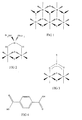
- siloxy-alurnoxanes consist of an aluminum-oxygen core structure ( Figure 1) analogous to that found in the mineral boehmite, [Al(O)(OH)] n , with a siloxide substituents.
- the "organic” is typically like that shown in Figure 2.
- the carboxylate anion, [RCO 2 ] - is an isoelectronic and structural analog of the organic portion found in the siloxy-alumoxanes ( Figure 3).
- the carboxylate-alumoxane materials prepared from the reaction of boehmite and carboxylic acids are air and water stable materials and are easily processable (Figure 7).
- the soluble carboxylate-alumoxanes can be dip-coated, spin coated, and spray-coated onto various substrates.
- the physical properties of these alumoxanes are highly dependent on the identity of the alkyl substituents, R, and range from those associated with insoluble crystalline powders to powders that readily form solutions or gels in hydrocarbon solvents and/or water.
- These alumoxanes are indefinitely stable under ambient conditions, and are adaptable to a wide range of processing techniques.
- the alumoxanes can be easily converted to aluminum oxide upon mild thermolysis, while they also react with metal complexes to form doped or mixed aluminum oxides (Kareiva et al. 1996).
- porosity pore size, pore size distribution and pore density
- Lower porosity improves strength, load-bearing capacity, and corrosion resistance, but can also lead to catastrophic failure from thermal shock, because the pores present act as crack stoppers in more porous ceramics. Cracks propagate intergranularly (between grains) and therefore the grain boundary toughness plays a large role in determining the fracture mode. Porosity between grains can promote crack propagation and lower the strength of a ceramic body. In both traditional and sol-gel processes, the porosity of the resulting ceramic is controlled through physical processing variables (Wilson and Stacey, 1981), such as the time or temperature of firing and the addition of pre-fired additives to seed crystal growth (Shelleman et al. 1986).
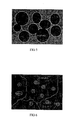
- the pore size, pore size distribution and porosity are functions of the ceramic particles used to make the ceramic body, because the porosity is determined by the gaps between the individual particles ( Figure 4) and is therefore inter-granular, that is between the crystal grains. For example, pores below 0.1 ⁇ m in diameter require that submicron powders be used (in traditional ceramic processing),, while smaller pores require sol-gel processing.
- Fiber reinforced ceramic matrix composites are potential candidates for use in high temperature structural applications (Courtright, 1991).
- aerospace applications include high thrust-to-weight ratio gas turbine engines and high-specific-impulse rocket motors.
- Ground based applications include high efficiency turbine and diesel engines.
- FRCMCs have higher strengths at lower densities, higher maximum use temperatures, and better oxidation resistance.
- FRCMCs fiber reinforced ceramic matrix composites
- oxide fibers e.g., sapphire
- SiC silicon carbide
- the matrix and fiber materials must be chemically compatible (i.e., not react with each other).
- the reinforcement is to enhance the fracture toughness.
- the fiber reinforcement prevents catastrophic brittle failure by providing mechanisms to dissipate energy during fracture.
- the operation of various toughening mechanisms, such as crack deflection, fiber pull out, and fiber bridging, depend to a large extent on the degree of chemical and/or mechanical bonding at the fiber-matrix interface. This chemical bonding is affected by the fiber surface chemistry and chemical reactivity between the fiber and matrix.
- the mechanical bonding is primarily controlled by the fiber surface morphology and the fiber/matrix thermal expansion match.
- composites with strong interfacial bonding exhibit brittle behavior, characterized by high strength and low fracture toughness. If the interfacial interaction is weak then a composite will fail by catastrophic manner, and show high fracture toughness but low strength. It is therefore highly desirable to control the interfacial bond in order to optimize the overall mechanical behavior of the composite.
- the fiber-matrix interface must be sufficiently weak to allow debonding and sliding when a crack impinges upon it from the matrix; otherwise the crack passes through the fiber (or the fiber fails near the crack tip) and there is minimal or no toughening (Michalke and Hellmann, 1988). To control the strength of fiber coatings and the interaction between the coating and both the fiber and matrix, is extremely important to control the porosity of the coating materials.
- Membrane charge, selectivity, and permeation rate vary as a function of pH, ionic strength and other characteristics of the feed water solution chemistry, Baltus (1997) and Kim and Stevens (1997). Membrane characteristics as well as the properties of the contaminants can be manipulated through adjustments in the solution chemistry of the feed stream in one or more pretreatment steps (Anderson et al. 1988). Ceramic membranes are typically produced by slip casting a colloidal suspension on a porous ceramic support: Okubo, et al. (1990), Elaloui et al. (1997), Lin et al. (1991), Lao et al. (1994), Zaspalis et al. (1992). A schematic view of a typical membrane design is shown in Figure 5.
- the individual membranes are mounted into a membrane module (see Figure 6).
- Control of the colloidal suspension in the sol-gel process and limitations on the size of colloids that can be produced have constrained the range of membrane types that can be produced.
- a key obstacle to overcome in advancing the use of ceramic membranes for pollution prevention applications is cost.
- the sol-gel processes currently used to produce commercially available ceramic membranes is energy intensive and difficult to control. Considerable time and expense is invested in verifying membrane integrity and re-casting membranes to repair imperfections.
- Alternative approaches for manufacture of ceramic membranes include the anodic oxidization of aluminum metal membranes (Furneaux et al. 1989), pore size being controlled by the applied voltage used in the anodic oxidation.
- Membrane permeability is a function of global porosity, membrane thickness, connectivity, and pore-size distribution.
- Membrane durability is obtained by high homogeneity and high density; the latter entails a clear compromise with permeability.
- Mechanical integrity is enhanced in such application by slip-casting a relatively thin selective membrane onto a larger, durable membrane of poor selectivity but high permeability.
- the present invention provides a method of controlling the porosity and pore size distribution of ceramic bodies comprising: reacting boehmite with a carboxylic acid to produce carboxylate-alumoxane nanoparticles; drying the carboxylate-alumoxane nano-particles; re-dissolving the carboxylate-alumoxane nano-particles in a solvent; drying the nano-particles; andfiring the dried nano-particles at a temperature greater than 300 °C.
- the inventive method preferably uses carboxylate-alumoxanes that can be described by the general formula: [Al(O) x (OH) y (O 2 CR) z ] n and/or [Al(O) x (OH) y (O 2 CR) z (O 2 CR') z' ] n and/or [Al(O) x (OH) y (O 2 CR) z (O 2 CR') z' (O 2 CR") z" ] n etc.
- RCO 2 - (and R'CO 2 - and R"CO 2 -) are mono-carboxylates and R (and R' and R") are the same or different and are from the group of a hydrogen and/or an organic group.
- the organic group is preferably an alkyl, alkenyl, aromatic, haloalkyl, haloalkenyl, haloaromatic groups or alkyl, alkenyl, aromatic ether groups or an organic group containing a hetero-atom including, oxygen, nitrogen, sulfur, phosphorous.
- These components may be prepared by the methods described in Landry et al. (1995), Apblett et al. (1992), Kareiva et al. (1996), and the preferred method of Callender et al.
- the composition of the carboxylate-alumoxane varies depending on the starting materials employed and the details of the synthetic method employed by Callender et al. (1997). Thermolysis of the carboxylate-alumoxanes results in alumina being formed.
- the size and distribution of pores within the alumina-oxide ceramic is dependent on the identity of the carboxylate substituents. In particular, the formation of intra- versus inter-granular porosity is dependent on the identity of the carboxylate substituents. Similarly, size and distribution of the pores is controlled by the choice of the organic substituents.
- the invention also provides methods for the manufacture of ceramic coatings on ceramic and carbon fibers for composite applications and ceramic membranes with nanometer sized pores. Dipping a ceramic or carbon fiber into a solution of the carboxylate-alumoxane in accordance with the invention, drying and firing provides a uniform coating of the aluminum-oxide based ceramic on the surface of the fiber.
- the pore size, pore size distribution and porosity, and hence the strength, permeability and surface adhesion of the ceramic coating is controlled by the choice of the substituent on the carboxylate-alumoxane.
- Thermolysis of self-supporting spun layers of the carboxylate-alumoxanes results in disks of alumina with controlled pore size, pore size distribution and porosity.
- a porous substrate may be dipped or coated with a solution of the carboxylate-alumoxane, followed by thermolysis to produce a composite membrane.
- the ceramic body comprises the thermolysis product of a carboxylate-alumoxane represented by the formula [Al(O) x (OH) y (O 2 CR) z ] n , wherein x is from 0 to 1.5, y is from 0 to 3, z is from 0 to 3, n is greater than 6, and R is hydrogen or an organic group.
- a carboxylate-alumoxane represented by the formula [Al(O) x (OH) y (O 2 CR) z ] n , wherein x is from 0 to 1.5, y is from 0 to 3, z is from 0 to 3, n is greater than 6, and R is hydrogen or an organic group.
- This invention discloses the use of carboxylate-alumoxanes ([Al(O) x (OH) y (O 2 CR) z ] n ) and/or aluminum-oxide nano-particles to prepare alumina and aluminum oxide-based ceramic bodies, coatings and membranes with chemically controlled pore sizes, pore size distributions and porosities.
- Such ceramics with chemically controlled porosities may be used as membrane materials with controlled pore size distributions or as coatings on fibers.
- the carboxylato-alumoxanes are precursors to alumina and aluminum oxides (Table 1) and are prepared by the reaction of boehmite or pseudoboehmite with carboxylic acids in a suitable solvent (Tables 2, 3, 4, and 5).
- the boehmite (or pseudoboehmite) source can be a commercial boehmite product such as Catapal (A, B, C, D, or FI, Vista Chemical Company) or boehmite prepared by the precipitation of aluminum nitrate with ammonium hydroxide and then hydrothermally treated at 200 °C for 24 hours or boehmite prepared by the hydrolysis of aluminum trialkoxides followed by hydrothermal treatment at 200 °C.
- the carboxylic acid can be any monocarboxylic acid.
- the carboxylic acid can be aromatic, aliphatic, and can contain hetero-atom functional groups such as hydroxyls, amines, mercaptans, phosphines, etc.
- the carboxylate alumoxanes are stable both in solution and the solid state.
- the solubility of the carboxylate alumoxanes is dependent only on the identity of the carboxylic acid residue, which is almost unrestricted according to the present invention. The solubility of the alumoxanes is therefore readily controlled so as to make them compatible with any co-reactants.
- the alumoxanes have yet further benefits with respect to large scale production of ternary and quaternary ceramics.
- the most dramatic of these is the simplicity of the alumoxane methodology.
- the alumoxane route is simple, and can be halted and/or modified at any stage without significant effects on the products.
- a careful control of pH, the use of additives to inhibit precipitation, and slow concentration steps are not required, thus making the alumoxane route easier and quicker than prior art techniques.
- Another benefit with respect to large scale processing is the relatively low cost of the alumoxane precursors.
- Thermogravimetric/differential thermal analysis (TG/DTA) of the carboxylate-alumoxanes generally indicates two major decomposition regions.
- the relative mass loss and temperatures at which these regions occur is dependent on the identity of the carboxylic acid.
- the volatiles are predominantly the carboxylic acid and water, with traces of the ketone, i.e., acetone is liberated from the acetate-alumoxane (A-alumoxane or A-A).
- A-alumoxane or A-A alumoxane
- the ceramic yield is conditional on the identity of the carboxylic acid: greatest for A-A ( ca. 75 %), lowest for methoxy(ethoxyethoxy)acetate-alumoxane (MEEA-A) ( ca. 20 %).
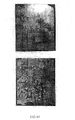
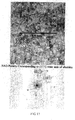
- the ⁇ -Al 2 O 3 formed from MEEA-, MEA-, and MA- (methoxyacetate) alumoxanes exists as a nanocrystalline matrix with a very high volume of large interconnecting pores, as determined by TEM studies ( Figure 13).
- analysis of the ⁇ -Al 2 O 3 formed from A-alumoxane revealed very fine uniform intra-granular porosity (Figure 14), in which the crystallite size is relatively large (ca. 2 ⁇ m).
- the difference in pore size and structure is more consistent with the chemical identity of the substituents than the physical processing conditions, i.e., a higher organic volume outgassed produces larger pores.
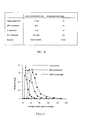
- alumoxane series it is possible to engineer pore size continuously between these extremes by using mixed ligand solutions (Figure 25).
- A-alumoxane acetate-alumoxane
- the pores are intra -granular, that is, they are within the individual crystal grains ( Figure 6).
- This novelty of chemical control over the formation of intra-granular (rather than inter-granular) porosity has the aforementioned benefit of increased fracture toughness.
- Intra-granular pores instead of inter-granular therefore allow increased fracture toughness and less opportunity for pore/boundary/crack interactions to occur.
- Control of pore size, pore size distribution and porosity, and hence density, through chemical means is an important departure from traditional ceramic processing in which physical methods only are applied.
- the porosity of the resulting alumina is dependent on the length of the carboxylate side chain. That is, the pore sizes for carboxylate-alumoxanes with CH 3 substituents is different from those with C 5 H 11 substituents.
- Another approach to controlling pore size, pore size distribution and porosity described herein is the use of spacer ligands.
- the alumoxane can be cross-linked after fabrication of the membrane with di-acids ( Figure 4). Upon pyrolysis, it then inhibits the collapse of the ceramic.
- a physical mixture of more than one carboxylate-alumoxane may be produced and fired to alumina (Tables 4, 5, 6 and 7).
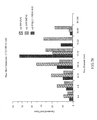
- the porosity (average pore size and pore size distribution) is dependent on the relative amounts of each carboxylate-alumoxane (Table 8). In general, the porosity is a mixture of the values of each individual carboxylate-alumoxane ( Figures 26 and 27).
- Mixed carboxylate-alumoxanes may be synthesized in which more than one type of carboxylate group is bonded to each of the alumoxane nano-particles.
- the resulting porosity is different than the individual materials, and is dependent on the relative concentration of each carboxylate used (Table 8).
- the relative intra- to inter-granular porosity can be controlled by the choice of carboxylate group and/or mixtures or carboxylate groups.
- a porous substrate such as a glass or ceramic filter frit may be spun coated, painted, or dip-coated with the carboxylate-alumoxane solution, Figure 21 (Tables 9 and 10). After drying and firing the composite consists of a membrane supported on a coarse filter ( Figure 20).
- the support for the carboxylate-alumoxane derived ceramic membrane does not have to be flat but may be a ceramic tube or column. If doped carboxylate-alumoxanes are employed, then the resulting membrane will have the composition of the doped carboxylate-alumoxane. In order to ensure that uniform membranes are produced, physical mixtures of different carboxylate-alumoxanes can be used. The lowering of phase formation/crystal growth temperatures observed for the carboxylate-alumoxane in comparison to sol-gel methods, allows for smaller pores to be generated without being sintered out during thermal treatment.
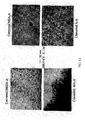
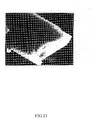
- Carbon or ceramic fibers can also be dipped or coated with a solution of the carboxylate-alumoxanes ( Figures 22, 23, and 24). After drying either in air, in an oven or with a heat gun, the carboxylate-alumoxane can be thermolyzed to give the appropriate ceramic coating with a chemically controlled porosity.
- Suitable ceramic fibers include (but are not limited to) silicon carbide ( Figure 23) and sapphire ( Figure 24). The conditions of thermolysis of the alumoxane coating are dependent on the type of the fiber and the identity of the carboxylate-alumoxane.
- the ceramic coatings produced using the carboxylate-alumoxanes show superior coverage, better uniformity, and lower defects than found for sol-gel type coatings, due to the nano-particle nature of the carboxylate-alumoxane. Furthermore, the lowering of phase formation/crystal growth temperatures observed for the carboxylate-alumoxane allow for less damage to the fiber substrate during formation of the ceramic coating.
- Pore size distributions are reported as a function of the BJH adsorption.
- AFM images of samples were obtained using a Nanoscope IIIa Scanning Probe Microscope, (Digital Instruments, Santa Barbara, CA) in tapping mode AFM. FESP tips were used with a pyramidal shape and end radius of 5 - 10 nm (also from Digital Instruments). Images were taken at scan sizes of 10 ⁇ m, 1 ⁇ m, and 200 nm, and the scan angle was changed from 0 to 45° to check the integrity of the images. Images were later processed to obtain roughness, grain size, and section analysis with the accompanying Nanoscope software. Permeability was derived from Flux experiments using dead end filtration cells from Spectrum and Sartorious.
- the cells were 400 mL and 200 mL (respectively) and were connected to a tank of zero-air for positive pressure.
- a pressure regulator was used to set constant pressure for each flux experiment at 10, 20, or 30 psi, and filtrate was collected in beakers and measured volumetrically.
- Ultrapure deionized water was used, obtained from a Milli-Q water filter.
- Membrane samples were epoxied to precut aluminum foil disks with precut holes in the center, of known area, matching each membrane piece. The membrane pieces had an area between 0.5 and 2 cm 2 and a thickness of 100 to 250 ⁇ m. Prewetted glass fiber supports were placed underneath the membranes to prevent cracking. Contact angle was measured with a goniometer.
- Samples from flux experiments were used, since they were already mounted on a pliable foil. Samples were placed upside-down on top of a glass container full of deionized water, with the sample submerged. An air bubble was placed on the sample surface and ten readings of the contact angle were read for each side of a bubble. Air bubbles occurring naturally on the membrane surface were measured using the same procedure. Surface charge was determined by measuring the electrophoretic mobility with a Zeta Meter. Membranes were crushed with a mortar and pestle and combined with sodium chloride as an electrolyte to form a 500 mg.L -1 alumoxane and 500 mg.L -1 NaCl solution. The solutions were set at various pHs using HCl or NaOH, and electrophoretic mobility and zeta potential were measured at several different voltages.
- Example 1 Synthesis of methoxy(ethoxyethoxy)acetate-alumoxane (MEEA-A).
- Pseudoboehmite (20.0 g) and methoxy(ethoxyethoxy)acetic acid (102 mL) were refluxed in water (400 mL) resulting in a clear solution after 72 h.
- the solution was centrifuged at 6000 rpm for 1 hour and decanted. Removal of the volatiles in vacuo (10 -2 Torr) at 90 °C yielded a gel which was then dissolved in ethanol (100 mL) while stirring (10 min.) then triturated with diethyl ether (200 mL).
- the white solid powder thus obtained was redissolved in water (100 mL) and dried at 50 °C for 24 h resulting in a clear glassy material.
- the MEEA-alumoxane is soluble in water, methanol, chloroform, and methylene chloride.
- the alumoxane was heated from 25 °C to 225 °C at the rate of 1°C/min., soaked for 30 mins. at 225 °C, followed by a temperature ramp up to 300 °C at the rate of 2 °C/min., and soaked for 80 mins., with a final ramp to the maximum temperature of 1100°C (over 360 minutes) which was then maintained for 400 minutes (Figure 8).
- Methoxy(ethoxyethoxy)acetic acid 60 mL was dissolved in 300 mL of water and Vista Captal B boehmite (12 g) was slowly added and allowed to reflux for 96 hours. The clear/yellow solution was filtered and the filtrate was evaporated under reduced pressure to a yellow gel. The gel was dissolved in ethanol and the white/yellow powder product was obtained upon addition of diethyl ether. Yield: 13.6 g. The TGA of the methoxy(ethoxy)acetate-alumoxane showed 22.3% ceramic yield (weight loss of 77.7% ).
- the alumoxane was heated from 25 °C to 200 °C at the rate of 1.5 °C.min -1 , soaked for 2 h. at 200 °C, followed by a temperature ramp up to 1000 °C at the rate of 5 °C.min -1 , soaked for 2 h.
- Example 3 Synthesis of Methoxy(ethoxy)acetate-alumoxane (MEA-A).
- Pseudoboehmite (10.0 g) and methoxy(ethoxy)acetic acid (38.0 mL) were refluxed in water (100 mL) for 24 h, resulting in a clear solution.
- the solution was centrifuged at 6000 rpm for 1 h and decanted.
- the water was removed in vacuo (10 -2 Torr) at 50 °C, resulting in a gel.
- the gel was washed with Et 2 O (3 x 75 mL) then dissolved in EtOH (50 mL) while stirring (10 minutes).
- the MEA-alumoxane was precipitated via the addition of Et 2 O (100 mL) as a white powder.
- the solid yield was approximately 25 g.
- the alumoxane was heated from 25 °C to 225 °C at the rate of 1°C/min., soaked for 30 mins. at 225 °C, followed by a temperature ramp up to 300 °C at the rate of 2 °C/min., and soaked for 80 mins., with a final ramp to the maximum temperature of 1100°C (over 360 minutes) which was then maintained for 400 minutes.
- Methoxy(ethoxy)acetic acid 152 mL was dissolved in 400 mL of water and Vista Captal B boehmite (40 g) was slowly added and allowed to reflux for 24 hours. The clear/yellow solution was filtered and the filtrate was evaporated under reduced pressure to a yellow gel. The gel was dissolved in ethanol and the white/yellow powder product was obtained upon addition of diethyl ether. Yield: 82.1 g. The TGA of the methoxy(ethoxy)acetate-alumoxane showed 27.0% ceramic yield (weight loss of 73.0 % ).
- the alumoxane was heated from 25 °C to 200 °C at the rate of 1.5 °C.min -1 , soaked for 2 h. at 200 °C, followed by a temperature ramp up to 1000 °C at the rate of 5 °C.min -1 , soaked for 2 h.
- the powder was dissolved in water (100 mL), isolated by filtration, concentrated under vacuum and dried at 50°C resulting in a white solid material.
- the alumoxane was heated from 25 °C to 225 °C at the rate of 1°C/min., soaked for 30 mins. at 225 °C, followed by a temperature ramp up to 300 °C at the rate of 2 °C/min., and soaked for 80 mins., with a final ramp to the maximum temperature of 1100°C (over 360 minutes) which was then maintained for 400 minutes.
- Pseudoboehmite (20.0 g) was slowly added to a vigorously stirring mixture of acetic acid (51.0 mL) in water (200 mL). The resulting slurry was decanted after 10 minutes and then centrifuged at 6000 rpm for 1 hour to yield a clear viscous solution. Removal of the volatiles in vacuo (10 -2 Torr) at 90°C results in clear, white granules. The granules were dissolved in water and dried for 24 hours at 80 °C to yield a clear glassy material. The alumoxane was heated from 25 °C to 225 °C at the rate of 1°C/min., soaked for 30 mins.
- the alumoxane was heated from 25 °C to 200 °C at the rate of 1.5 °C.mm -1 , soaked for 2 h. at 200 °C, followed by a temperature ramp up to 1000 °C at the rate of 5 °C.mm -1 , soaked for 2 h.
- Example 14 Synthesis of mixed ligand methoxy(ethoxy)acetate-acetate-alumoxane.
- Example 15 Synthesis of mixed ligand methoxy(ethoxy)acetate-acetate-alumoxane.
- Example 16 Synthesis of mixed ligand methoxy(ethoxy)acetate-acetate-alumoxane.
- Example 17 Synthesis of mixed ligand methoxy(ethoxy)acetate-acetate-alumoxane.
- Example 18 Synthesis of mixed ligand methoxy(ethoxy)acetate-acetate-alumoxane.
- Example 19 Synthesis of mixed ligand methoxy(ethoxy)acetate-acetate-alumoxane.
- Example 20 Synthesis of mixed ligand methoxy(ethoxyethoxy)acetate-acetate-alumoxane.
- Acetic acid (28.6 mL) and methoxy(ethoxyethoxy) acetic acid (76.7 mL) was dissolved in 500 mL of water and Vista Captal B boehmite (20 g) was slowly added and the solution was allowed to reflux for 72 hours. The solution was filtered and the filtrate was evaporated under reduced pressure resulting in a white/clear gel. The gel was dissolved in ethanol and the product was collected as a white powder upon the addition of diethyl ether. Yield: 25.4 g. The TGA of the product showed a 28.5 % ceramic yield (weight loss of 71.5%).
- the alumoxane was heated from 25 °C to 200 °C at the rate of 1.5 °C.min -1 , soaked for 2 h. at 200 °C, followed by a temperature ramp up to 1000 °C at the rate of 5 °C.min -1 , soaked for 2 h.
- Example 21 Synthesis of mixed ligand methoxy(ethoxyethoxy)acetate-acetate-alumoxane.
- Example 22 Physical Mixing of methoxy(ethoxy)acetate-alumoxane (MEA-A) and acetate -alumoxane (A-A).
- MEA-A (1.0 g) and A-A (1.0 g) were dissolved into about 20 mL of water. After stirring for approximately 0.5 hours the solutions were poured into drying containers. After approximately 36 hours, the solutions had evaporated to leave a thin membrane which is glass-like. The glassy membrane is then fired as described in example 2.
- Example 23 Physical Mixing of methoxy(ethoxy)acetate-alumoxane (MEA-A) and acetate-alumoxane (A-A).
- Example 24 Physical Mixing of methoxy(ethoxy)acetate-alumoxane (MEA-A) and acetate-alumoxane (A-A).
- Example 25 Physical Mixing of methoxy(ethoxy)acetate-alumoxane (MEA-A) and acetate-alumoxane (A-A).
- Example 26 Physical Mixing of chemically mixed methoxy(ethoxyethoxy)acetate-acetate-alumoxane (MEA/A-A) and acetate-alumoxane (A-A).
- MEA/A-A chemically mixed methoxy(ethoxyethoxy)acetate-acetate-alumoxane
- A-A acetate-alumoxane
- MEA/A-A (1.0 g) and A-A (1.0 g) were dissolved into 20 mL of water. After stirring for approximately 0.5 hours the solutions were poured into drying containers. After approximately 36 hours, the solutions had evaporated to leave a thin membrane which is glass-like. The glassy membrane is then fired by the conditions listed in Example 2.
- Example 27 Physical Mixing of chemically mixed methoxy(ethoxyethoxy)acetate-acetate-alumoxane (MEA/A-A) and acetate-alumoxane (A-A).
- MEA/A-A chemically mixed methoxy(ethoxyethoxy)acetate-acetate-alumoxane
- A-A acetate-alumoxane
- Example 28 Physical Mixing of chemically mixed methoxy(ethoxyethoxy)acetate-acetate-alumoxane (MEA/A-A) and acetate-alumoxane (A-A).
- MEA/A-A chemically mixed methoxy(ethoxyethoxy)acetate-acetate-alumoxane
- A-A acetate-alumoxane
- Example 29 Physical Mixing of chemically mixed methoxy(ethoxyethoxy)acetate-acetate-alumoxane (MEA/A-A) and acetate-alumoxane (A-A).
- MEA/A-A chemically mixed methoxy(ethoxyethoxy)acetate-acetate-alumoxane
- A-A acetate-alumoxane
- Example 30 Physical Mixing of chemically mixed methoxy(ethoxyethoxy)acetate-acetate-alumoxane (MEA/A-A) and acetate-alumoxane (A-A).
- MEA/A-A chemically mixed methoxy(ethoxyethoxy)acetate-acetate-alumoxane
- A-A acetate-alumoxane
- Example 31 Infiltration of alumino-silicate filters.
- a filter frit (pore size ca. 25 ⁇ m) was placed in a Schleck flask and evacuated.
- a solution of A-A (10 g) in 100 mL of water was introduced into the Schlenk by canula under vacuum which resulted in the ceramic frit "soaking up" the alumoxane solution.
- the frit was allowed to sit for approximately 0.5 hours under reduced pressure with an excess of the alumoxane solution covering the frit in the schlenk.
- the frit was then allowed to dry at room temperature. The frit was then either infiltrated again, fired, or fired then infiltrated again.
- Example 32 Infiltration of alumino-silicate filters.
- Example 33 Infiltration of alumino-silicate filters.
- Example 34 Infiltration of alumino-silicate filters.
- Example 35 Infiltration of alumino-silicate filters.
- Example 36 Infiltration of alumino-silicate filters.
- Example 37 Infiltration of alumino-silicate filters.
- Example 38 Infiltration of alumino-silicate filters.
- Example 39 Infiltration of alumino-silicate filters.
- Example 40 Infiltration of alumino-silicate filters.
- Example 41 Infiltration of alumino-silicate filters.
- Example 42 Infiltration of alumino-silicate filters.
- Example 43 Infiltration of alumino-silicate filters.
- Example 44 Infiltration of glass filters.
- a glass filter frit (pore size D) was placed in a Schleck flask and evacuated.
- a solution of A-A (10 g) in 100 mL of water was introduced into the Schlenk by canula under vacuum which resulted in the glass frit "soaking up" the alumoxane solution.
- the frit was allowed to sit for approximately 0.5 hours under reduced pressure with an excess of the alumoxane solution covering the frit in the schlenk.
- the frit was then allowed to dry at room temperature.
- the infiltration was repeated twice.
- the infiltrated glass frit was heated from 25 °C to 350 °C, analyzed by SEM, heated from 25 °C to 700 °C and analyzed.
- Example 45 Infiltration of glass filters.
- Example 46 Infiltration of glass filters.
- Example 47 Infiltration of glass filters.
- Example 48 Preparation of alumina coated carbon fibers.
- MEEA-alumoxane (0.1 g) was dissolved in CHCl 3 (5 mL) at room temperature. The fiber is dipped in MEEA-alumoxane solution and allowed to fully air dry, at room temperature. Repeat dipping/drying until desired coating thickness is obtained. The coated fiber was heated from 25 °C to 225 °C at the rate of 1 °C.min -1 , soaked for 30 mins. at 225 °C, followed by a temperature ramp up to 300 °C at the rate of 2 °C.min -1 , and soaked for 80 mins., with a final ramp to the maximum temperature of 1100 °C (over 360 minutes) which was then maintained for 400 minutes.
- Example 49 Preparation of alumina coated carbon fibers.
- Example 50 Preparation of alumina coated carbon fibers.
- Example 51 Preparation of alumina coated carbon fibers.
- Example 52 Preparation of alumina coated carbon fibers.
- Example 53 Preparation of alumina coated carbon fibers.
- MEEA-alumoxane (0.1 g) was dissolved in H 2 O (5 mL) with low heat (40 °C) and stirring. The fiber is dipped in MEEA-Alumoxane solution and allowed to partially dry at room temperature then dried in oven (45° C) for 24h. Repeat dipping/drying until desired coating thickness is obtained. The coated fiber was heated from 25 °C to 225 °C at the rate of 1 °C.min -1 , soaked for 30 mins.
- Example 54 Preparation of alumina coated carbon fibers.
- Example 55 Preparation of alumina coated carbon fibers.
- Example 56 Preparation of alumina coated carbon fibers.
- Example 57 Preparation of alumina coated carbon fibers.
- Example 58 Preparation of YAG coated carbon fibers.
- Yttrium-doped MEEA-alumoxane (0.5 g) was dissolved in H 2 O (5 mL) with low heat (40 °C) and stirring. The fiber is dipped in the Y-doped MEEA-alumoxane solution and allowed to partially dry at room temperature then dried in oven (45° C) for 24h. Repeat dipping/drying until desired coating thickness is obtained. The coated fiber was heated from 25 °C to 225 °C at the rate of 1 °C.min -1 , soaked for 30 mins.
- Example 59 Preparation of YAG coated carbon fibers.
- Example 60 Preparation of YAG coated carbon fibers.
- Example 61 Preparation of hibonite coated carbon fibers.
- Calcium-doped MEEA-alumoxane (0.5 g) was dissolved in H 2 O (5 mL) with low heat (40 °C) and stirring. The fiber is dipped in the Ca-doped MEEA-alumoxane solution and allowed to partially dry at room temperature then dried in oven (45° C) for 24h. Repeat dipping/drying until desired coating thickness is obtained. The coated fiber was heated from 25 °C to 225 °C at the rate of 1 °C.min -1 , soaked for 30 mins.
- Example 62 Preparation of hibonite coated carbon fibers.
- Example 63 Preparation of hibonite coated carbon fibers.
- Example 64 Preparation of hibonite coated carbon fibers.
- Calcium-doped MEEA-alumoxane (0.1 g) was dissolved in CHCl 3 (5 mL) at room temperature. The fiber is dipped in Ca-doped MEEA-alumoxane solution and allowed to fully air dry, at room temperature. Repeat dipping/drying until desired coating thickness is obtained. The coated fiber was heated from 25 °C to 225 °C at the rate of 1 °C.min -1 , soaked for 30 mins. at 225 °C, followed by a temperature ramp up to 300 °C at the rate of 2 °C.min -1 , and soaked for 80 mins., with a final ramp to the maximum temperature of 1100 °C (over 360 minutes) which was then maintained for 400 minutes.
- Example 65 Preparation of hibonite coated carbon fibers.
- Example 66 Preparation of hibonite coated carbon fibers.
- Example 67 Preparation of hibonite silicon carbide fibers.
- Calcium-doped MEA-alumoxane (0.1 g) was dissolved in CHCl 3 (5 mL) at room temperature.
- the SiC fiber was cleaned with acetone and dipped in a Ca-doped MEA-alumoxane solution and allowed to fully air dry, at room temperature. Repeat dipping/drying until desired coating thickness is obtained.
- the coated fiber was heated from 25 °C to 225 °C at the rate of 1 °C.min -1 , soaked for 30 mins.
- Example 68 Preparation of hibonite coated silicon carbide fibers.
- Example 69 Preparation of hibonite coated silicon carbide fibers.
- Example 70 Preparation of hibonite coated silicon carbide fibers.
- Example 71 Preparation of hibonite coated silicon carbide fibers.
- Example 72 Preparation of hibonite coated silicon carbide fibers.
- Example 73 Preparation of hibonite coated silicon carbide fibers.
- Example 74 Preparation of hibonite silicon carbide fibers.
- Calcium-doped MEA-alumoxane (0.5 g) was dissolved in H 2 O (5 mL) with low heat (40°C) and stirring.
- the fiber is cleaned with acetone and dipped in a metal-doped MEA-alumoxane solution and allowed to partially dry at room temperature then dried in oven (45° C) for 24 h. Repeat dipping/drying until desired coating thickness is obtained.
- the coated fiber was heated from 25 °C to 225 °C at the rate of 1 °C.min -1 , soaked for 30 mins.
- Example 75 Preparation of hibonite coated silicon carbide fibers.
- Example 76 Preparation of hibonite coated silicon carbide fibers.
- Example 77 Preparation of hibonite coated silicon carbide fibers.
- Example 78 Preparation of hibonite coated silicon carbide fibers.
- Example 79 Preparation of hibonite sapphire fibers.
- Calcium-doped MEA-alumoxane (0.1 g) was dissolved in CHCl 3 (5 mL) at room temperature.
- the sapphire fiber was cleaned with acetone and dipped in a Ca-doped MEA-alumoxane solution and allowed to fully air dry, at room temperature. Repeat dipping/drying until desired coating thickness is obtained.
- the coated fiber was heated from 25 °C to 225 °C at the rate of 1 °C.min -1 , soaked for 30 mins.
- Example 80 Preparation of hibonite coated sapphire fibers.
- Example 81 Preparation of hibonite coated sapphire fibers.
- Example 82 Preparation of hibonite coated sapphire fibers.
- Example 83 Preparation of hibonite coated sapphire fibers.
- Example 84 Preparation of hibonite coated sapphire fibers.
- Example 85 Preparation of hibonite coated sapphire fibers.
- Example 86 Preparation of hibonite sapphire fibers.
- Calcium-doped MEA-alumoxane (0.5 g) was dissolved in H 2 O (5 mL) with low heat (40°C) and stirring. The fiber is cleaned with acetone and dipped in a metal-doped MEA-alumoxane solution and allowed to dry at room temperature. Repeat dipping/drying until desired coating thickness is obtained. The coated fiber was heated from 25 °C to 225 °C at the rate of 1 °C.min -1 , soaked for 30 mins.
- Example 87 Preparation of hibonite coated sapphire fibers.
- Example 88 Preparation of hibonite coated sapphire fibers.
- Example 89 Preparation of hibonite coated sapphire fibers.
- Example 90 Preparation of hibonite coated sapphire fibers.
Landscapes
- Chemical & Material Sciences (AREA)
- Engineering & Computer Science (AREA)
- Ceramic Engineering (AREA)
- Organic Chemistry (AREA)
- Materials Engineering (AREA)
- Chemical Kinetics & Catalysis (AREA)
- Structural Engineering (AREA)
- Inorganic Chemistry (AREA)
- Manufacturing & Machinery (AREA)
- Life Sciences & Earth Sciences (AREA)
- Physics & Mathematics (AREA)
- Geology (AREA)
- General Chemical & Material Sciences (AREA)
- Nanotechnology (AREA)
- Thermal Sciences (AREA)
- Geochemistry & Mineralogy (AREA)
- Dispersion Chemistry (AREA)
- Composite Materials (AREA)
- Condensed Matter Physics & Semiconductors (AREA)
- General Physics & Mathematics (AREA)
- Crystallography & Structural Chemistry (AREA)
- Compounds Of Alkaline-Earth Elements, Aluminum Or Rare-Earth Metals (AREA)
Applications Claiming Priority (3)
| Application Number | Priority Date | Filing Date | Title |
|---|---|---|---|
| US7992698P | 1998-03-30 | 1998-03-30 | |
| US79926P | 1998-03-30 | ||
| EP99914011A EP1070029A1 (de) | 1998-03-30 | 1999-03-26 | Chemische reglung von ceramischer porosität unter verwendung von carboxylaten-alumoxanen |
Related Parent Applications (1)
| Application Number | Title | Priority Date | Filing Date |
|---|---|---|---|
| EP99914011A Division EP1070029A1 (de) | 1998-03-30 | 1999-03-26 | Chemische reglung von ceramischer porosität unter verwendung von carboxylaten-alumoxanen |
Publications (2)
| Publication Number | Publication Date |
|---|---|
| EP1319639A2 true EP1319639A2 (de) | 2003-06-18 |
| EP1319639A3 EP1319639A3 (de) | 2009-01-14 |
Family
ID=26153973
Family Applications (1)
| Application Number | Title | Priority Date | Filing Date |
|---|---|---|---|
| EP03004680A Withdrawn EP1319639A3 (de) | 1998-03-30 | 1999-03-26 | Chemische Regelung von keramischer Porosität unter Verwendung von Karboxylaten-Alumoxanen |
Country Status (1)
| Country | Link |
|---|---|
| EP (1) | EP1319639A3 (de) |
Cited By (4)
| Publication number | Priority date | Publication date | Assignee | Title |
|---|---|---|---|---|
| EP1634620A1 (de) * | 2004-09-10 | 2006-03-15 | L'oreal | Cosmetic composition comprising compounds showing a cage structure |
| EP2737940A3 (de) * | 2012-11-29 | 2015-04-29 | Hitachi, Ltd. | Verfahren zur Herstellung von aluminiumoxid-kristallpartikel-dispergiertem Aluminiumoxidsol, durch das Verfahren erhaltenes aluminiumoxid-kristallpartikel-dispergiertes Aluminiumoxidsol, und mit dem Sol hergestelltes aluminiumbeschichtetes Element |
| US10308541B2 (en) | 2014-11-13 | 2019-06-04 | Gerresheimer Glas Gmbh | Glass forming machine particle filter, a plunger unit, a blow head, a blow head support and a glass forming machine adapted to or comprising said filter |
| WO2023166317A1 (en) * | 2022-03-04 | 2023-09-07 | Evove Ltd | Membrane |
-
1999
- 1999-03-26 EP EP03004680A patent/EP1319639A3/de not_active Withdrawn
Non-Patent Citations (3)
| Title |
|---|
| CALLENDER R L ET AL: "AQUEOUS SYNTHESIS OF WATER-SOLUBLE ALUMOXANES: ENVIRONMENTAL BENIGN PRECURSORS TO ALUMINA AND ALUMINUM-BASED CERAMICS" CHEMISTRY OF MATERIALS, vol. 9, no. 11, 1 November 1997 (1997-11-01), pages 2418-2433, XP000729284 ISSN: 0897-4756 * |
| CHEMICAL ABSTRACTS, vol. 111, no. 24, 11 December 1989 (1989-12-11), Columbus, Ohio, US; abstract no.: 218306m, UHLHORN, R.J.R.: "High permselectivities of microporous silica modified gamma-alumina membranes" XP000181419 & JOURNAL OF MATERIALS SCIENCE LETTERS, vol. 8, no. 10, 1989, pages 1135-1138, * |
| KAVEIRA A. ET AL: "Carboxylate-Substituted Alumoxanes as Processable Precursors to Transition Metal-Aluminum and Lanthanide-Aluminum Mixed-Metal Oxides: Atomic Scale Mixing via a New Transmetalation Reaction" CHEMISTRY OF MATERIALS, vol. 8, no. 9, 1996, pages 2331-2340, XP002108262 ISSN: 0897-4756 * |
Cited By (5)
| Publication number | Priority date | Publication date | Assignee | Title |
|---|---|---|---|---|
| EP1634620A1 (de) * | 2004-09-10 | 2006-03-15 | L'oreal | Cosmetic composition comprising compounds showing a cage structure |
| FR2875135A1 (fr) * | 2004-09-10 | 2006-03-17 | Oreal | Composition cosmetique comprenant des composes ayant une structure cage |
| EP2737940A3 (de) * | 2012-11-29 | 2015-04-29 | Hitachi, Ltd. | Verfahren zur Herstellung von aluminiumoxid-kristallpartikel-dispergiertem Aluminiumoxidsol, durch das Verfahren erhaltenes aluminiumoxid-kristallpartikel-dispergiertes Aluminiumoxidsol, und mit dem Sol hergestelltes aluminiumbeschichtetes Element |
| US10308541B2 (en) | 2014-11-13 | 2019-06-04 | Gerresheimer Glas Gmbh | Glass forming machine particle filter, a plunger unit, a blow head, a blow head support and a glass forming machine adapted to or comprising said filter |
| WO2023166317A1 (en) * | 2022-03-04 | 2023-09-07 | Evove Ltd | Membrane |
Also Published As
| Publication number | Publication date |
|---|---|
| EP1319639A3 (de) | 2009-01-14 |
Similar Documents
| Publication | Publication Date | Title |
|---|---|---|
| WO1999050203A1 (en) | Chemical control over ceramic porosity using carboxylate-alumoxanes | |
| US5439624A (en) | Method for forming porous ceramic materials | |
| US7220454B2 (en) | Production method of high strength polycrystalline ceramic spheres | |
| US5770275A (en) | Molecular sieving silica membrane fabrication process | |
| Callender et al. | Aqueous synthesis of water-soluble alumoxanes: environmentally benign precursors to alumina and aluminum-based ceramics | |
| US5935646A (en) | Molecular sieving silica membrane fabrication process | |
| US5852088A (en) | Nanoporous ceramics with catalytic functionality | |
| WO2021118459A1 (en) | Porous composites, scaffolds, foams, methods of fabrication and uses thereof | |
| Wang et al. | Fabrication of porous SiC ceramics with special morphologies by sacrificing template method | |
| JPS61192306A (ja) | 透過性多孔質無機膜 | |
| Li et al. | Zirconia ultrafiltration membranes on silicon carbide substrate: microstructure and water flux | |
| Li et al. | Sol-gel derived zirconia membrane on silicon carbide substrate | |
| Sung et al. | Fabrication of macroporous SiC from templated preceramic polymers | |
| CN110833769B (zh) | 一种层状磷酸锆基分子筛膜及其制备方法 | |
| US6936306B1 (en) | Chemical control over ceramic porosity using carboxylate-alumoxanes | |
| JP2001247385A (ja) | 多孔質セラミック積層体及びその製造方法 | |
| JP3798162B2 (ja) | 多孔質セラミックフィルターとその製造方法 | |
| CN112299871A (zh) | 一种含碳化硅膜的多孔陶瓷的制备方法 | |
| US5268199A (en) | Alkali corrosion resistant coatings and ceramic foams having superfine open cell structure and method of processing | |
| Wang et al. | Macroporous SiC MoSi2 ceramics from templated hybrid MoCl5–polymethylsilane | |
| Klein et al. | Microporous oxides by the sol-gel process: synthesis and applications | |
| US20130160412A1 (en) | Permeable material, articles made therefrom and method of manufacture | |
| Guizard | Sol-gel chemistry and its application to porous membrane processing | |
| CN113800942B (zh) | 一种碳化硅分子筛膜支撑体及其在分子筛膜上的应用 | |
| Blanc et al. | Synthesis of hafnia powders and nanofiltration membranes by sol-gel process |
Legal Events
| Date | Code | Title | Description |
|---|---|---|---|
| PUAI | Public reference made under article 153(3) epc to a published international application that has entered the european phase |
Free format text: ORIGINAL CODE: 0009012 |
|
| 17P | Request for examination filed |
Effective date: 20030303 |
|
| AC | Divisional application: reference to earlier application |
Ref document number: 1070029 Country of ref document: EP Kind code of ref document: P |
|
| AK | Designated contracting states |
Designated state(s): DE FR GB IT NL |
|
| RIN1 | Information on inventor provided before grant (corrected) |
Inventor name: BAILEY, DIANE AMY Inventor name: BARRON, ANDREW ROSS Inventor name: WIESNER, MARK ROBERT Inventor name: JONES, CHRISTOPHER DANIEL Inventor name: CALLENDER, RHONDA LYNN |
|
| RIN1 | Information on inventor provided before grant (corrected) |
Inventor name: WIESNER, MARK ROBERT Inventor name: BAILEY, DIANE AMY Inventor name: JONES, CHRISTOPHER DANIEL Inventor name: BARRON, ANDREW ROSS Inventor name: CALLENDER, RHONDA LYNN |
|
| RIN1 | Information on inventor provided before grant (corrected) |
Inventor name: BAILEY, DIANE AMY Inventor name: WIESNER, MARK ROBERT Inventor name: BARRON, ANDREW ROSS Inventor name: JONES, CHRISTOPHER DANIEL Inventor name: CALLENDER, RHONDA LYNN |
|
| PUAL | Search report despatched |
Free format text: ORIGINAL CODE: 0009013 |
|
| AK | Designated contracting states |
Kind code of ref document: A3 Designated state(s): DE FR GB IT NL |
|
| RIC1 | Information provided on ipc code assigned before grant |
Ipc: C04B 41/50 20060101ALI20081209BHEP Ipc: C04B 38/00 20060101AFI20030405BHEP |
|
| AKX | Designation fees paid |
Designated state(s): DE FR GB IT NL |
|
| 17Q | First examination report despatched |
Effective date: 20090918 |
|
| STAA | Information on the status of an ep patent application or granted ep patent |
Free format text: STATUS: THE APPLICATION IS DEEMED TO BE WITHDRAWN |
|
| 18D | Application deemed to be withdrawn |
Effective date: 20100129 |