EP1320246A2 - Système et méthode pour des contacts clients prédictifs - Google Patents
Système et méthode pour des contacts clients prédictifs Download PDFInfo
- Publication number
- EP1320246A2 EP1320246A2 EP02090343A EP02090343A EP1320246A2 EP 1320246 A2 EP1320246 A2 EP 1320246A2 EP 02090343 A EP02090343 A EP 02090343A EP 02090343 A EP02090343 A EP 02090343A EP 1320246 A2 EP1320246 A2 EP 1320246A2
- Authority
- EP
- European Patent Office
- Prior art keywords
- transaction processing
- customer
- customer contact
- processing entity
- call
- Prior art date
- Legal status (The legal status is an assumption and is not a legal conclusion. Google has not performed a legal analysis and makes no representation as to the accuracy of the status listed.)
- Granted
Links
Images
Classifications
-
- H—ELECTRICITY
- H04—ELECTRIC COMMUNICATION TECHNIQUE
- H04M—TELEPHONIC COMMUNICATION
- H04M3/00—Automatic or semi-automatic exchanges
- H04M3/42—Systems providing special services or facilities to subscribers
- H04M3/50—Centralised arrangements for answering calls; Centralised arrangements for recording messages for absent or busy subscribers ; Centralised arrangements for recording messages
- H04M3/51—Centralised call answering arrangements requiring operator intervention, e.g. call or contact centers for telemarketing
- H04M3/5158—Centralised call answering arrangements requiring operator intervention, e.g. call or contact centers for telemarketing in combination with automated outdialling systems
-
- H—ELECTRICITY
- H04—ELECTRIC COMMUNICATION TECHNIQUE
- H04M—TELEPHONIC COMMUNICATION
- H04M3/00—Automatic or semi-automatic exchanges
- H04M3/42—Systems providing special services or facilities to subscribers
- H04M3/50—Centralised arrangements for answering calls; Centralised arrangements for recording messages for absent or busy subscribers ; Centralised arrangements for recording messages
- H04M3/51—Centralised call answering arrangements requiring operator intervention, e.g. call or contact centers for telemarketing
- H04M3/5183—Call or contact centers with computer-telephony arrangements
- H04M3/5191—Call or contact centers with computer-telephony arrangements interacting with the Internet
-
- H—ELECTRICITY
- H04—ELECTRIC COMMUNICATION TECHNIQUE
- H04M—TELEPHONIC COMMUNICATION
- H04M3/00—Automatic or semi-automatic exchanges
- H04M3/42—Systems providing special services or facilities to subscribers
- H04M3/50—Centralised arrangements for answering calls; Centralised arrangements for recording messages for absent or busy subscribers ; Centralised arrangements for recording messages
- H04M3/51—Centralised call answering arrangements requiring operator intervention, e.g. call or contact centers for telemarketing
- H04M3/523—Centralised call answering arrangements requiring operator intervention, e.g. call or contact centers for telemarketing with call distribution or queueing
- H04M3/5232—Call distribution algorithms
-
- H—ELECTRICITY
- H04—ELECTRIC COMMUNICATION TECHNIQUE
- H04M—TELEPHONIC COMMUNICATION
- H04M3/00—Automatic or semi-automatic exchanges
- H04M3/22—Arrangements for supervision, monitoring or testing
- H04M3/36—Statistical metering, e.g. recording occasions when traffic exceeds capacity of trunks
-
- H—ELECTRICITY
- H04—ELECTRIC COMMUNICATION TECHNIQUE
- H04M—TELEPHONIC COMMUNICATION
- H04M3/00—Automatic or semi-automatic exchanges
- H04M3/42—Systems providing special services or facilities to subscribers
- H04M3/50—Centralised arrangements for answering calls; Centralised arrangements for recording messages for absent or busy subscribers ; Centralised arrangements for recording messages
- H04M3/51—Centralised call answering arrangements requiring operator intervention, e.g. call or contact centers for telemarketing
- H04M3/523—Centralised call answering arrangements requiring operator intervention, e.g. call or contact centers for telemarketing with call distribution or queueing
- H04M3/5238—Centralised call answering arrangements requiring operator intervention, e.g. call or contact centers for telemarketing with call distribution or queueing with waiting time or load prediction arrangements
-
- H—ELECTRICITY
- H04—ELECTRIC COMMUNICATION TECHNIQUE
- H04M—TELEPHONIC COMMUNICATION
- H04M7/00—Arrangements for interconnection between switching centres
- H04M7/006—Networks other than PSTN/ISDN providing telephone service, e.g. Voice over Internet Protocol (VoIP), including next generation networks with a packet-switched transport layer
Definitions
- This invention relates generally to communication systems and, more particularly, to transaction processing systems.
- Communications systems with customer contact centers are known. Such systems are typically used as a means of distributing customer contacts, such as telephone calls, among a group of agents of an organization. As customer contacts are made with customers utilizing a communications network, such as a public switched telephone network (PSTN), the communications system directs the customer contacts to its agents based upon some algorithm. For example, a communications system such as an automatic call distributor (ACD), a private branch exchange (PBX), or a central office exchange service (Centrex) may recognize a call target based upon an identity of an incoming trunk line and route the call accordingly.
- ACD automatic call distributor
- PBX private branch exchange
- Centrex central office exchange service
- Businesses, service organizations, and other entities may use customer contact centers to process telephone calls, email messages and voice mail contacts for marketing, sales, product support, and other customer service functions.
- Agents of the customer contact center may communicate with a customer to handle inquiries, process billing orders, and perform research. In essence, the agents provide the wide array of services that the companies that use them require. Thus, the effectiveness and efficiency of a customer contact center may depend on agent communications.
- an agent is limited in the ways that the agent may contact a customer using communication other than the telephone.
- a predictive dialing system may aid the agent in contacting the customer.
- the predictive dialing system performs the mechanical tasks of establishing contact with the customer and assigning the call to an available agent.
- the agent wishes to contact a customer using data applications, e.g. chat
- the agent is unable to initiate contact with the customer without first having the customer contact the agent.
- a customer may send an email to the agent requesting that the agent chat via the Internet with the customer at 1:00pm. After the initial email communication, the agent may then be able to set up an Internet chat communication at 1:00pm.
- the current format For communicating with many customers, the current format is inefficient and ineffective.
- the current format requires the agent to spend more time trying to establish contact with a customer than actually communicating with the customer using a data application. Accordingly, a need exists for a system and method for predictive customer contacts.
- a method for distributing customer contacts to a transaction processing entity of a transaction processing system includes predicting a time for assignment of a customer contact to at least one transaction processing entity in the transaction processing system.
- the method also includes finding a transaction processing entity to handle the customer contact and routing the customer contact to the found transaction processing entity.
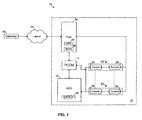
- FIG. 1 illustrates a block diagram of a transaction processing system in accordance with an embodiment of the invention.
- FIG. 1 depicts a block diagram of an exemplary embodiment of a transaction processing system 10 which may be used to route customer contacts across multiple access channels to a customer contact center 12.
- the customer contact center 12 may be defined as a communication technology that enables customers and agents of an enterprise to communicate across multiple access channels, including but not limited to telephone, Internet, radio, cellular, satellite, cable, facsimile, email, web and video.
- the customer contact center 12 may be described with reference to an automatic call distributor (ACD) 18.
- ACD automatic call distributor
- PBX, Centrex system or other system capable of incoming and/or outgoing communications may also be used in place of the ACD 18.
- Implementing a customer contact center 12 with any suitable switching system is considered to be equivalent and variations will not be further discussed.
- the customer contact center 12 is also often identified by other terms including call center, connected call center, customer care center, customer communications center and services center.
- a customer contact may be based on any suitable communications connection including, but not limited to, a switched circuit connection (i.e., through a public switched telephone network (PSTN)) or a packet data connection (e.g., through the Internet).
- PSTN public switched telephone network
- a switched circuit connection also sometimes referred to simply as a "telephone connection” in the telephony arts refers to a dedicated channel existing between two parties.
- a packet data connection does not necessarily represent a physical connection, but may simply be the possession and concurrent use by two users of the other user's identifier (e.g. IP address).
- customer contacts may be received from a customer 46 and may be routed to a selected transaction processing entity (e.g., agent stations 20, 22, or interactive voice response unit (not shown)) of the transaction processing system 10. Further, customer contacts with customer 46 may be established and initiated by the customer contact center 12. In either case, customer contacts may be placed through the ACD 18 and may be routed by matrix switch 36 of the ACD 18 to a console 24, 28 or terminal 26, 30 of the agent station 20, 22. Customer contacts through the Internet 44 may occur as a data application, e.g. email, instant message, chat session, file transfer, and teleconference. Further, the customer contacts may include voice over IP (VOIP) telephony calls.
- VOIP voice over IP
- a predictive customer contact manager (PCCM) 14 performs the function of predicting the distribution of customer contacts to agent stations 20, 22. For example, to perform customer contact campaigns, customer lists may be maintained in a database of the host 34. The CPU 40 of the host 34 may initiate customer contacts to a customer 46 on a customer list maintained in a database of the host 34 by establishing Internet 44 communication between the customer contact center 12 and the customer 46.
- the PCCM 14 receives customer 46 information, including contact data, from the host 34 and establishes contact with the customer 46.
- the contact data may include an email address, a chat room identifier, a telephone number, best-time-to contact information, discussion group name, and an IP address.
- a customer list for baseball enthusiasts may contain a discussion group name and email addresses which the PCCM 14 may use to establish a chat session with specific baseball enthusiasts at a specific discussion group after the Chicago White Sox and Cubs play a baseball game.
- knowing the discussion group name and email address of a chat user allows the customer contact center 12 to establish a packet data connection between the customer contact center 12 and the customer 46.
- a software function entitled "MakeMediaCall" is utilized to establish communication with a customer using the Internet 44.
- MakeMediaCall may execute on the host 34, the PCCM 14, or the ACD 18.
- MakeMediaCall executes on the host 34 and provides the interface between the Internet 44 and the PCCM 14. Further, the host 34 serves as an interface to transfer data between the Internet 44 and the customer contact center 12.
- MakeMediaCall connects to a data application server, e.g. a web server, an email server, a FTP server, etc. on an appropriate port and enters an IP address or domain name to establish a connection to the customer 46.
- a data application server e.g. a web server, an email server, a FTP server, etc.
- the host 34 receives information from the Internet 44 indicating whether the connection to the customer 46 is unavailable or "live.” The host 34 in turn provides the status information to the PCCM 14. If the PCCM 14 is notified of a live customer contact, the customer contact may be routed to a transaction processing entity (e.g., agent stations 20, 22) based upon customer contact associated information (e.g., the IP address of the customer 46). Customer contact associated information may be used by the CPU 40 as a means of routing the customer contact.
- a transaction processing entity e.g., agent stations 20, 22
- customer contact associated information e.g., the IP address of the customer 46.
- Customer contact associated information may be used by the CPU 40 as a means of routing the customer contact.
- customer contact associated information may include IP address, ANI, DNIS, call duration, call disconnect, email address, credit card information, items in a shopping basket, caller entered digits, holding time, average speed of answer, handling time, inter and local exchange carriers of the call, response time, and wrap-up codes.
- the host 34 may identify the customer in its database using the customer contact associated information. If the customer 46 is not an existing customer, then the host 34 may route the customer contact based upon the context (e.g., an identity of a website visited, a webpage from which a query originates, an identity of the e-mail address within the system 10 which receives a query, etc.). Further, customer contacts may be routed based upon any of a number of predetermined criteria (e.g., the number called, the identity of the customer, the local of the customer, the time of day, etc).
- the context e.g., an identity of a website visited, a webpage from which a query originates, an identity of the e-mail address within the system 10 which receives a query, etc.
- customer contacts may be routed based upon any of a number of predetermined criteria (e.g., the number called, the identity of the customer, the local of the customer, the time of day, etc).
- the PCCM 14 retrieves information regarding the customer contact center 12 from the ACD 18. For example, information such as the number of agents who are logged in, the identity of the agents logged in, etc. is downloaded to the PCCM 14 from the ACD 18. If the PCCM 14 is notified of a live customer contact, the PCCM 14 determines whether an agent is available by retrieving information from the ACD 18 regarding whether the agent is logged on, is not currently engaged in a customer contact, and has set the agent status to available. If two or more agents are available, the customer contact may be assigned to the agent who has been available for the longest time.
- the PCCM 14 provides control codes to the ACD 18 indicating the agent station 20, 22 to which the customer contact will be transferred. These control codes are provided to a control input port of the ACD 18, so that the ACD 18 may transfer the customer contact to the appropriate agent station 20, 22.
- the ACD 18 may provide a signal to the agent station 20, 22 indicating that the transfer of a live customer contact may follow immediately. This prepares the agent to respond to the customer 46 as though the agent has heard it.
- the customer contact is an email message
- the email message may be forwarded in its entirety to the selected agent.
- the host 34 may, for example, forward the IP address of the requestor to the selected agent. Where the host 34 is able to identify customer records, those records may be presented to the agent along with the email, web telephony request or Internet query.
- the host 34 may simultaneously transfer data records to the agent's station 20, 22.
- the agent station 20, 22 may display basic customer information (e.g., email identifier) which allows the agent to establish the identity of the customer before proceeding further with the customer contact.
- the terminal of the agent station may display more detailed information for processing the customer contact and may provide input fields into which the agent can enter responses to predetermined questions.
- a predictive scheduling method may be utilized. Predictive scheduling may result in utilizing the customer contact center 12 more efficiently.
- the goal of scheduling is to maximize the time that an agent spends engaged in customer contact communication and to minimize the frequency with which a live customer contact is established when no agent available to attend to the communication.
- Unattended customer contacts may be placed in a queue, so that agents are assigned to the queue on a first-in, first-out (FIFO) basis as an agent become available.
- FIFO first-in, first-out
- a system administrator of the customer contact center 12 may select initial operating parameters for predictive scheduling.
- the two main parameters that are used as to measure the quality of service are 1) the time a customer must wait for an agent after the transaction processing system establishes connection and 2) the percentage of time that each agent spends engaged in communication with customers. It is desirable to minimize the maximum time that a customer must wait while maximizing the number of agents that are attending to customers at any given time. These goals, however, are conflicting. If the queue of waiting customer contacts is empty then agents are likely to be idle while if agents are being fully utilized, it is likely that customers are spending excessive amounts of time waiting for an agent to become available. To be effective, the aim of predictive scheduling is to achieve a balance between these two competing goals.
- the PCCM 14 may perform predictive scheduling of customer contacts in a customer contact center 12. In doing so, the PCCM 14 may require that a system administrator of the customer contact center 12 enter initial estimates for the average connecting time and the average time spent by an agent per customer contact.
- the average connecting time includes actual time spent establishing the connection by the host 34 or the PCCM 14 plus the time spent waiting for the customer 46 to answer. Failed customer contacts (e.g. unavailable) may be included in the average.
- the average time spent by the agent per customer contact may include a brief period between customer contacts known as "wrap up," during which the agent is not available to answer additional customer contacts. During this period, the agent may take a short break or may finish any data entry associated with the last customer contact. These estimates may initially be provided using modeling data or estimates based on results from other installations.
- the PCCM 14 may require that the system administrator determine the number of agents currently available to receive customer contacts and the number of customer contacts that can be initiated by the customer contact center 12. Based upon these determinations, an initial average queue waiting time is computed. From this information, the PCCM 14 may perform automatic calculations to determine when a new customer contact may be initiated. For example, whenever a customer 46 has answered a customer contact, an agent has began or has completed a communication, the number of active agents or the number of customer contacts has changed, the PCCM 14 recalculates the parameters for average connecting time and the average time a customer waits for an agent after answering.
- the PCCM 14 may employ predictive scheduling which is based upon a time homogeneous Markov process, also known as a birth and death process.
- a time homogeneous Markov process also known as a birth and death process.
- the model defines the behavior of the customer contact center 12 in terms of its current state without regard to the details of its history at each previous point in time.
- the birth and death process is described in detail in a textbook by H. M. Wagner entitled Principles of Operations Research, Prentice Hall, 1969, pp 869-875, which is hereby incorporated by reference.
- L defines a constant input rate for all values of n.
- Agents become available and respond to live customer contacts according to an exponential distribution, M.
- S There are a limited number of agents, S, and a limit N on the number of customer contacts in queue.
- S+N the maximum number of attended plus unattended customer contacts at any time.
- the equations (3), (4) and (5) define the probabilities of having a given number of customer contacts in the customer contact center 12.
- Equations (6), (7) and (8) can be derived which define the probability of having n customer contacts in the customer contact center 12 which includes customer contacts in the queue and being handled by agents.
- N the maximum number of customer contacts in the queue
- Initial ranges are determined for N, setting the minimum value at 1 and the maximum value at twice the number of agents.
- the initial value of N is set equal to the midpoint of the range.
- This value and the process values are applied to the above equations to determine the probability density function, P, for the number of customer contacts in the customer contact center 12, the probability, P(0), that the customer contact center 12 is empty and the probability, P(N+S), that the customer contact center 12 is full. From these probability values, the expected queue wait time, the expected number of customer contacts, the expected queue length, the expected number of busy agents, and the expected number of customer contacts served may be calculated.
- the range for N is reduced by half to converge on the N value which satisfies the minimum agent busy-time constraint. If the expected number of busy agents is greater than the target value, then the range for the number N (the maximum number of customer contacts in the queue) may be decreased, so that the new range maximum is set to the old midpoint. If the target number of busy agents was not met, then the range for N is increased so that there is a larger pool of customer contacts available for the idle agents and the new range minimum is set to the old midpoint. If the required average number of busy agents is met exactly, then the final minimum value for N is established. This value represents the smallest maximum queue size that meets the agent busy time requirement.
- a second range reduction process is performed to converge on the maximum queue size which complies with the allowable queue waiting time constraint.
- the expected queue waiting time over the interval is directly proportional to the number of customer contacts in the queue. Consequently, the expected queue waiting time is equal to the number of customer contacts in the queue.
- This process is essentially the same as the process outlined for calculating the N value which satisfies the agent busy time constraint except that, during each iteration, if the expected maximum queue delay exceeds the preset maximum queue delay, the new range maximum is set to the old midpoint and if the expected maximum queue delay is less than the preset maximum delay value, the new range minimum is set to the old midpoint. If the expected waiting time matches the maximum waiting time then the final maximum value for N is established.
- range reduction is repeated until the difference between the maximum queue waiting time and the minimum queue waiting time is unity.
- the maximum queue length is set to the average of the minimum and maximum queue waiting times. This maximum queue length represents a queue length at which the expected queue delay equals the desired maximum queue delay.
- the range for N is reduced to converge upon the N value which satisfies the desired expected # of busy agents. Range reduction is repeated until the difference between the minimum number of busy agents and the maximum number of busy agents is unity.
- the final value for N is set to the average of the final minimum value and the final maximum value. This value represents a desired queue length which makes a compromise between the maximum wait in the queue and the minimum number of busy agents.
- the PCCM 14 counts the current number of unattended customer contacts in the queue and compares the current number of unattended customer contacts in the queue to the newly updated desired value of N. If the actual value is less than the desired value, more customer contacts are established. If the actual value exceeds that desired number of customer contacts, then the predictive customer contact system does not attempt to establish any further customer contacts until a new value for N has been calculated. By using predictive scheduling the PCCM 14 determines when to attempt to establish customer contacts so that an agent may be available to handle the customer contact.
- contextual information regarding the customer contact is employed to enhance predictive scheduling of customer contacts.
- the customer contact is a data application, e.g. chat
- the chat session may be carried on a data channel of ACD 18.
- Contextual information may be extracted so as to determine whether the chat session may soon end.
- contextual information such as "bye” or "adios" signal the PCCM 14 regarding the end of a conversation even before the communication session is disconnected.
- Contextual information may include message length, session time, email content, and shopping cart items.
Landscapes
- Business, Economics & Management (AREA)
- Marketing (AREA)
- Engineering & Computer Science (AREA)
- Signal Processing (AREA)
- Telephonic Communication Services (AREA)
- Management, Administration, Business Operations System, And Electronic Commerce (AREA)
- Financial Or Insurance-Related Operations Such As Payment And Settlement (AREA)
- Selective Calling Equipment (AREA)
- Exchange Systems With Centralized Control (AREA)
Applications Claiming Priority (4)
| Application Number | Priority Date | Filing Date | Title |
|---|---|---|---|
| US36737401P | 2001-12-13 | 2001-12-13 | |
| US367374P | 2001-12-13 | ||
| US10/078,049 US7010115B2 (en) | 2001-12-13 | 2002-02-19 | System and method for predictive contacts |
| US78049 | 2005-03-11 |
Publications (3)
| Publication Number | Publication Date |
|---|---|
| EP1320246A2 true EP1320246A2 (fr) | 2003-06-18 |
| EP1320246A3 EP1320246A3 (fr) | 2004-12-01 |
| EP1320246B1 EP1320246B1 (fr) | 2007-11-14 |
Family
ID=26760064
Family Applications (1)
| Application Number | Title | Priority Date | Filing Date |
|---|---|---|---|
| EP02090343A Expired - Lifetime EP1320246B1 (fr) | 2001-12-13 | 2002-09-24 | Système et méthode pour des contacts clients prédictifs |
Country Status (4)
| Country | Link |
|---|---|
| US (1) | US7010115B2 (fr) |
| EP (1) | EP1320246B1 (fr) |
| AT (1) | ATE378776T1 (fr) |
| DE (1) | DE60223487T2 (fr) |
Cited By (1)
| Publication number | Priority date | Publication date | Assignee | Title |
|---|---|---|---|---|
| FR2863387A1 (fr) * | 2003-12-04 | 2005-06-10 | Bouygues Telecom Sa | Solution pour l'estimation avec intervalle de confiance du temps d'attente en vue de l'annoncer au client |
Families Citing this family (17)
| Publication number | Priority date | Publication date | Assignee | Title |
|---|---|---|---|---|
| US20050002515A1 (en) * | 1999-07-13 | 2005-01-06 | Mewhinney Brian E. | Dialing techniques for a contact center |
| US7426267B1 (en) * | 2003-09-04 | 2008-09-16 | Contactual, Inc. | Declarative ACD routing with service level optimization |
| US8781092B2 (en) * | 2005-05-16 | 2014-07-15 | Noble Systems Corporation | Systems and methods for callback processing |
| US8036374B2 (en) | 2005-05-16 | 2011-10-11 | Noble Systems Corporation | Systems and methods for detecting call blocking devices or services |
| US20090074166A1 (en) * | 2007-09-14 | 2009-03-19 | Virtual Hold Technology, Llc. | Expected wait time system with dynamic array |
| US8064589B2 (en) * | 2008-06-20 | 2011-11-22 | Aspect Software, Inc. | Estimating number of agents for multiple chat channels |
| EP2437207A1 (fr) * | 2008-10-17 | 2012-04-04 | Telefonaktiebolaget LM Ericsson (publ) | Procédé et agencement pour le classement d'applications Web directes |
| US20110231773A1 (en) | 2010-03-19 | 2011-09-22 | Avaya Inc. | System and method for providing just-in-time resources based on context |
| US20120134487A1 (en) * | 2010-11-29 | 2012-05-31 | Avaya Inc. | Predicted percent service level |
| US10579947B2 (en) * | 2011-07-08 | 2020-03-03 | Avaya Inc. | System and method for scheduling based on service completion objectives |
| US8781880B2 (en) * | 2012-06-05 | 2014-07-15 | Rank Miner, Inc. | System, method and apparatus for voice analytics of recorded audio |
| US9813559B1 (en) | 2012-06-27 | 2017-11-07 | Noble Systems Corporation | Addressing trunk-related resource deficiencies for a predictive dialer using a dynamic pacing algorithm |
| US8675839B1 (en) | 2012-06-27 | 2014-03-18 | Noble Systems Corporation | Reporting unavailable trunk-related resources for a predictive dialer using a dynamic pacing algorithm |
| US20150170093A1 (en) * | 2013-12-17 | 2015-06-18 | Asd Inc. | Break Management in Business Center or the Like |
| US20150206092A1 (en) * | 2014-01-21 | 2015-07-23 | Avaya, Inc. | Identification of multi-channel connections to predict estimated wait time |
| US9628625B2 (en) * | 2014-11-26 | 2017-04-18 | Avaya Inc. | System and method to use predicted agent state to optimize selection strategy |
| US11811972B2 (en) | 2021-07-28 | 2023-11-07 | Zoom Video Communications, Inc. | Group handling of calls for large call queues |
Family Cites Families (21)
| Publication number | Priority date | Publication date | Assignee | Title |
|---|---|---|---|---|
| US4881261A (en) | 1988-06-29 | 1989-11-14 | Rockwell International Corporation | Method for predictive pacing of calls in a calling system |
| DK0549694T3 (da) * | 1990-09-21 | 1995-10-16 | Novo Nordisk As | Adaptertop |
| US5911134A (en) | 1990-10-12 | 1999-06-08 | Iex Corporation | Method for planning, scheduling and managing personnel |
| US5341412A (en) | 1991-10-10 | 1994-08-23 | Executone Information Systems, Inc. | Apparatus and a method for predictive call dialing |
| US5815566A (en) * | 1991-10-10 | 1998-09-29 | Executone Information Systems, Inc. | Apparatus and method for dynamic inbound/outbound call management and for scheduling appointments |
| EP0696125A3 (fr) | 1994-08-02 | 1999-06-02 | Rockwell International Corporation | Système de télécommunication avec système de numérotation sortante prédictive sensible aux appels entrants et méthode |
| US5884032A (en) * | 1995-09-25 | 1999-03-16 | The New Brunswick Telephone Company, Limited | System for coordinating communications via customer contact channel changing system using call centre for setting up the call between customer and an available help agent |
| US6130933A (en) | 1996-02-02 | 2000-10-10 | Genesys Telecommunications Laboratories, Inc. | Apparatus and methods for coordinating telephone and data communications |
| US5822400A (en) | 1996-08-19 | 1998-10-13 | Davox Corporation | Call record scheduling system and method |
| US5828839A (en) | 1996-11-14 | 1998-10-27 | Interactive Broadcaster Services Corp. | Computer network chat room based on channel broadcast in real time |
| US6128646A (en) | 1997-12-24 | 2000-10-03 | Genesys Telecommunications Laboratories Inc. | System for routing electronic mail to best qualified person based on content analysis |
| US6064667A (en) | 1997-02-10 | 2000-05-16 | Genesys Telecommunications Laboratories, Inc. | Apparatus and methods enhancing call routing to and within call centers |
| US6198814B1 (en) | 1997-10-17 | 2001-03-06 | Debra Ann Marie Gill | System and method for entering call outcome records in a computer database in an outbound predictive dialing application |
| US6449358B1 (en) | 1998-02-17 | 2002-09-10 | Genesys Telecommunications Laboratories, Inc. | Method for predicting and managing call load by determining the optimum frequency of outbound call generation during an out-bound calling campaign from a call center |
| US6230197B1 (en) | 1998-09-11 | 2001-05-08 | Genesys Telecommunications Laboratories, Inc. | Method and apparatus for rules-based storage and retrieval of multimedia interactions within a communication center |
| US6212178B1 (en) | 1998-09-11 | 2001-04-03 | Genesys Telecommunication Laboratories, Inc. | Method and apparatus for selectively presenting media-options to clients of a multimedia call center |
| US6278777B1 (en) * | 1998-03-12 | 2001-08-21 | Ser Solutions, Inc. | System for managing agent assignments background of the invention |
| JP3550503B2 (ja) * | 1998-11-10 | 2004-08-04 | インターナショナル・ビジネス・マシーンズ・コーポレーション | 通信を可能とするための方法及び通信システム |
| US6694009B1 (en) * | 1999-06-15 | 2004-02-17 | Avaya Technology Corp. | Estimation of a work item's wait-time from the present stages of processing of preceding work items |
| US6614903B1 (en) * | 1999-12-15 | 2003-09-02 | Avaya Technology Corp. | Methods and apparatus for service state-based processing of communications in a call center |
| US7953219B2 (en) * | 2001-07-19 | 2011-05-31 | Nice Systems, Ltd. | Method apparatus and system for capturing and analyzing interaction based content |
-
2002
- 2002-02-19 US US10/078,049 patent/US7010115B2/en not_active Expired - Lifetime
- 2002-09-24 DE DE60223487T patent/DE60223487T2/de not_active Expired - Lifetime
- 2002-09-24 AT AT02090343T patent/ATE378776T1/de not_active IP Right Cessation
- 2002-09-24 EP EP02090343A patent/EP1320246B1/fr not_active Expired - Lifetime
Cited By (2)
| Publication number | Priority date | Publication date | Assignee | Title |
|---|---|---|---|---|
| FR2863387A1 (fr) * | 2003-12-04 | 2005-06-10 | Bouygues Telecom Sa | Solution pour l'estimation avec intervalle de confiance du temps d'attente en vue de l'annoncer au client |
| WO2005057894A1 (fr) * | 2003-12-04 | 2005-06-23 | Bouygues Telecom | Solution pour l'estimation avec intervalle de confiance du temps d'attente en vue de l'annoncer au client |
Also Published As
| Publication number | Publication date |
|---|---|
| US20030156704A1 (en) | 2003-08-21 |
| DE60223487D1 (de) | 2007-12-27 |
| ATE378776T1 (de) | 2007-11-15 |
| DE60223487T2 (de) | 2008-09-18 |
| EP1320246B1 (fr) | 2007-11-14 |
| EP1320246A3 (fr) | 2004-12-01 |
| US7010115B2 (en) | 2006-03-07 |
Similar Documents
| Publication | Publication Date | Title |
|---|---|---|
| US8416943B2 (en) | System and method for distributing customer contacts | |
| US6665396B1 (en) | Call hold manager system and method | |
| CA2329903C (fr) | Mise en file d'attente multimedia dans un centre de contact client ou d'appel | |
| EP1320246B1 (fr) | Système et méthode pour des contacts clients prédictifs | |
| US8320550B2 (en) | Method and system for assigning tasks to workers | |
| EP1073249A2 (fr) | Acheminement intelligent au niveau de l'entreprise dans un centre d'appel | |
| GB2381156A (en) | System and method for distributing customer contacts | |
| JP2000041107A (ja) | マルチメディア業務処理方法および装置 | |
| US20120101867A1 (en) | System for Automatic Assignment of Agents in Inbound and Outbound Campaigns | |
| JP2002505554A (ja) | 音声相互接続と自動着信分配装置を備えた、インターネットウェブサイト | |
| US20020196926A1 (en) | Communication of user data to an automatic call distributor agent | |
| US7272223B2 (en) | Multi-media contact center | |
| US9055140B2 (en) | Contact center queue priority management method and system | |
| CA2290419C (fr) | Procede et appareil de pointage d'adresses de debordement d'appels | |
| USRE43205E1 (en) | Skill based chat function in a communication system | |
| US7831032B2 (en) | System and method for the establishment of a connection between a contact requester and a communications center | |
| JP2003517219A (ja) | 電話交換機において呼を制御するためのニューラルネットワーク | |
| US8667052B2 (en) | Business rule web service | |
| US7519665B1 (en) | Multi-channel processing control device and multi-channel processing control method | |
| CN114338925A (zh) | 一种来电处理方法、装置和电子设备 | |
| AU2002301177B2 (en) | System and method for predictive customer contacts | |
| US6996222B2 (en) | Call-associated data transfer among multiple telecommunication switches | |
| US7831033B2 (en) | Method of preference driven segmentation routing | |
| CN111669465B (zh) | 一种呼叫重定向方法和装置 | |
| JP2004248158A (ja) | 呼振分先決定方法および呼振分装置 |
Legal Events
| Date | Code | Title | Description |
|---|---|---|---|
| PUAI | Public reference made under article 153(3) epc to a published international application that has entered the european phase |
Free format text: ORIGINAL CODE: 0009012 |
|
| AK | Designated contracting states |
Designated state(s): AT BE BG CH CY CZ DE DK EE ES FI FR GB GR IE IT LI LU MC NL PT SE SK TR |
|
| AX | Request for extension of the european patent |
Extension state: AL LT LV MK RO SI |
|
| 17P | Request for examination filed |
Effective date: 20031203 |
|
| PUAL | Search report despatched |
Free format text: ORIGINAL CODE: 0009013 |
|
| AK | Designated contracting states |
Kind code of ref document: A3 Designated state(s): AT BE BG CH CY CZ DE DK EE ES FI FR GB GR IE IT LI LU MC NL PT SE SK TR |
|
| AX | Request for extension of the european patent |
Extension state: AL LT LV MK RO SI |
|
| RIC1 | Information provided on ipc code assigned before grant |
Ipc: 7H 04M 3/523 A Ipc: 7H 04M 3/51 B |
|
| AKX | Designation fees paid |
Designated state(s): AT BE BG CH CY CZ DE DK EE ES FI FR GB GR IE IT LI LU MC NL PT SE SK TR |
|
| GRAP | Despatch of communication of intention to grant a patent |
Free format text: ORIGINAL CODE: EPIDOSNIGR1 |
|
| GRAS | Grant fee paid |
Free format text: ORIGINAL CODE: EPIDOSNIGR3 |
|
| GRAA | (expected) grant |
Free format text: ORIGINAL CODE: 0009210 |
|
| AK | Designated contracting states |
Kind code of ref document: B1 Designated state(s): AT BE BG CH CY CZ DE DK EE ES FI FR GB GR IE IT LI LU MC NL PT SE SK TR |
|
| REG | Reference to a national code |
Ref country code: GB Ref legal event code: FG4D |
|
| REG | Reference to a national code |
Ref country code: CH Ref legal event code: EP |
|
| REG | Reference to a national code |
Ref country code: IE Ref legal event code: FG4D |
|
| REF | Corresponds to: |
Ref document number: 60223487 Country of ref document: DE Date of ref document: 20071227 Kind code of ref document: P |
|
| PG25 | Lapsed in a contracting state [announced via postgrant information from national office to epo] |
Ref country code: ES Free format text: LAPSE BECAUSE OF FAILURE TO SUBMIT A TRANSLATION OF THE DESCRIPTION OR TO PAY THE FEE WITHIN THE PRESCRIBED TIME-LIMIT Effective date: 20080225 Ref country code: LI Free format text: LAPSE BECAUSE OF FAILURE TO SUBMIT A TRANSLATION OF THE DESCRIPTION OR TO PAY THE FEE WITHIN THE PRESCRIBED TIME-LIMIT Effective date: 20071114 Ref country code: NL Free format text: LAPSE BECAUSE OF FAILURE TO SUBMIT A TRANSLATION OF THE DESCRIPTION OR TO PAY THE FEE WITHIN THE PRESCRIBED TIME-LIMIT Effective date: 20071114 Ref country code: SE Free format text: LAPSE BECAUSE OF FAILURE TO SUBMIT A TRANSLATION OF THE DESCRIPTION OR TO PAY THE FEE WITHIN THE PRESCRIBED TIME-LIMIT Effective date: 20080214 Ref country code: CH Free format text: LAPSE BECAUSE OF FAILURE TO SUBMIT A TRANSLATION OF THE DESCRIPTION OR TO PAY THE FEE WITHIN THE PRESCRIBED TIME-LIMIT Effective date: 20071114 |
|
| NLV1 | Nl: lapsed or annulled due to failure to fulfill the requirements of art. 29p and 29m of the patents act | ||
| PG25 | Lapsed in a contracting state [announced via postgrant information from national office to epo] |
Ref country code: BG Free format text: LAPSE BECAUSE OF FAILURE TO SUBMIT A TRANSLATION OF THE DESCRIPTION OR TO PAY THE FEE WITHIN THE PRESCRIBED TIME-LIMIT Effective date: 20080214 Ref country code: FI Free format text: LAPSE BECAUSE OF FAILURE TO SUBMIT A TRANSLATION OF THE DESCRIPTION OR TO PAY THE FEE WITHIN THE PRESCRIBED TIME-LIMIT Effective date: 20071114 |
|
| REG | Reference to a national code |
Ref country code: CH Ref legal event code: PL |
|
| PG25 | Lapsed in a contracting state [announced via postgrant information from national office to epo] |
Ref country code: AT Free format text: LAPSE BECAUSE OF FAILURE TO SUBMIT A TRANSLATION OF THE DESCRIPTION OR TO PAY THE FEE WITHIN THE PRESCRIBED TIME-LIMIT Effective date: 20071114 |
|
| PG25 | Lapsed in a contracting state [announced via postgrant information from national office to epo] |
Ref country code: DK Free format text: LAPSE BECAUSE OF FAILURE TO SUBMIT A TRANSLATION OF THE DESCRIPTION OR TO PAY THE FEE WITHIN THE PRESCRIBED TIME-LIMIT Effective date: 20071114 Ref country code: CZ Free format text: LAPSE BECAUSE OF FAILURE TO SUBMIT A TRANSLATION OF THE DESCRIPTION OR TO PAY THE FEE WITHIN THE PRESCRIBED TIME-LIMIT Effective date: 20071114 |
|
| EN | Fr: translation not filed | ||
| PG25 | Lapsed in a contracting state [announced via postgrant information from national office to epo] |
Ref country code: BE Free format text: LAPSE BECAUSE OF FAILURE TO SUBMIT A TRANSLATION OF THE DESCRIPTION OR TO PAY THE FEE WITHIN THE PRESCRIBED TIME-LIMIT Effective date: 20071114 Ref country code: SK Free format text: LAPSE BECAUSE OF FAILURE TO SUBMIT A TRANSLATION OF THE DESCRIPTION OR TO PAY THE FEE WITHIN THE PRESCRIBED TIME-LIMIT Effective date: 20071114 |
|
| PLBE | No opposition filed within time limit |
Free format text: ORIGINAL CODE: 0009261 |
|
| STAA | Information on the status of an ep patent application or granted ep patent |
Free format text: STATUS: NO OPPOSITION FILED WITHIN TIME LIMIT |
|
| PG25 | Lapsed in a contracting state [announced via postgrant information from national office to epo] |
Ref country code: PT Free format text: LAPSE BECAUSE OF FAILURE TO SUBMIT A TRANSLATION OF THE DESCRIPTION OR TO PAY THE FEE WITHIN THE PRESCRIBED TIME-LIMIT Effective date: 20080414 |
|
| 26N | No opposition filed |
Effective date: 20080815 |
|
| PG25 | Lapsed in a contracting state [announced via postgrant information from national office to epo] |
Ref country code: FR Free format text: LAPSE BECAUSE OF FAILURE TO SUBMIT A TRANSLATION OF THE DESCRIPTION OR TO PAY THE FEE WITHIN THE PRESCRIBED TIME-LIMIT Effective date: 20080829 |
|
| PG25 | Lapsed in a contracting state [announced via postgrant information from national office to epo] |
Ref country code: GR Free format text: LAPSE BECAUSE OF FAILURE TO SUBMIT A TRANSLATION OF THE DESCRIPTION OR TO PAY THE FEE WITHIN THE PRESCRIBED TIME-LIMIT Effective date: 20080215 |
|
| PG25 | Lapsed in a contracting state [announced via postgrant information from national office to epo] |
Ref country code: EE Free format text: LAPSE BECAUSE OF FAILURE TO SUBMIT A TRANSLATION OF THE DESCRIPTION OR TO PAY THE FEE WITHIN THE PRESCRIBED TIME-LIMIT Effective date: 20071114 Ref country code: MC Free format text: LAPSE BECAUSE OF NON-PAYMENT OF DUE FEES Effective date: 20080930 |
|
| PG25 | Lapsed in a contracting state [announced via postgrant information from national office to epo] |
Ref country code: CY Free format text: LAPSE BECAUSE OF FAILURE TO SUBMIT A TRANSLATION OF THE DESCRIPTION OR TO PAY THE FEE WITHIN THE PRESCRIBED TIME-LIMIT Effective date: 20071114 Ref country code: IE Free format text: LAPSE BECAUSE OF NON-PAYMENT OF DUE FEES Effective date: 20080924 |
|
| PG25 | Lapsed in a contracting state [announced via postgrant information from national office to epo] |
Ref country code: LU Free format text: LAPSE BECAUSE OF NON-PAYMENT OF DUE FEES Effective date: 20080924 |
|
| PG25 | Lapsed in a contracting state [announced via postgrant information from national office to epo] |
Ref country code: TR Free format text: LAPSE BECAUSE OF FAILURE TO SUBMIT A TRANSLATION OF THE DESCRIPTION OR TO PAY THE FEE WITHIN THE PRESCRIBED TIME-LIMIT Effective date: 20071114 |
|
| PGFP | Annual fee paid to national office [announced via postgrant information from national office to epo] |
Ref country code: GB Payment date: 20100927 Year of fee payment: 9 |
|
| PG25 | Lapsed in a contracting state [announced via postgrant information from national office to epo] |
Ref country code: IT Free format text: LAPSE BECAUSE OF NON-PAYMENT OF DUE FEES Effective date: 20080930 |
|
| PGFP | Annual fee paid to national office [announced via postgrant information from national office to epo] |
Ref country code: DE Payment date: 20100929 Year of fee payment: 9 |
|
| GBPC | Gb: european patent ceased through non-payment of renewal fee |
Effective date: 20110924 |
|
| REG | Reference to a national code |
Ref country code: DE Ref legal event code: R119 Ref document number: 60223487 Country of ref document: DE Effective date: 20120403 |
|
| PG25 | Lapsed in a contracting state [announced via postgrant information from national office to epo] |
Ref country code: DE Free format text: LAPSE BECAUSE OF NON-PAYMENT OF DUE FEES Effective date: 20120403 |
|
| PG25 | Lapsed in a contracting state [announced via postgrant information from national office to epo] |
Ref country code: GB Free format text: LAPSE BECAUSE OF NON-PAYMENT OF DUE FEES Effective date: 20110924 |