EP1322089A2 - Dispositifs et système pour rattacher dynamiquement, au niveau du protocole, des stations mobiles sans fil, à des réseaux utilisant le protocole IP - Google Patents
Dispositifs et système pour rattacher dynamiquement, au niveau du protocole, des stations mobiles sans fil, à des réseaux utilisant le protocole IP Download PDFInfo
- Publication number
- EP1322089A2 EP1322089A2 EP02028403A EP02028403A EP1322089A2 EP 1322089 A2 EP1322089 A2 EP 1322089A2 EP 02028403 A EP02028403 A EP 02028403A EP 02028403 A EP02028403 A EP 02028403A EP 1322089 A2 EP1322089 A2 EP 1322089A2
- Authority
- EP
- European Patent Office
- Prior art keywords
- protocol
- access network
- mobile station
- communication
- internet
- Prior art date
- Legal status (The legal status is an assumption and is not a legal conclusion. Google has not performed a legal analysis and makes no representation as to the accuracy of the status listed.)
- Withdrawn
Links
Images






Classifications
-
- H—ELECTRICITY
- H04—ELECTRIC COMMUNICATION TECHNIQUE
- H04L—TRANSMISSION OF DIGITAL INFORMATION, e.g. TELEGRAPHIC COMMUNICATION
- H04L67/00—Network arrangements or protocols for supporting network services or applications
- H04L67/34—Network arrangements or protocols for supporting network services or applications involving the movement of software or configuration parameters
-
- H—ELECTRICITY
- H04—ELECTRIC COMMUNICATION TECHNIQUE
- H04L—TRANSMISSION OF DIGITAL INFORMATION, e.g. TELEGRAPHIC COMMUNICATION
- H04L12/00—Data switching networks
- H04L12/54—Store-and-forward switching systems
- H04L12/56—Packet switching systems
- H04L12/5691—Access to open networks; Ingress point selection, e.g. ISP selection
- H04L12/5692—Selection among different networks
-
- H—ELECTRICITY
- H04—ELECTRIC COMMUNICATION TECHNIQUE
- H04L—TRANSMISSION OF DIGITAL INFORMATION, e.g. TELEGRAPHIC COMMUNICATION
- H04L47/00—Traffic control in data switching networks
- H04L47/10—Flow control; Congestion control
- H04L47/24—Traffic characterised by specific attributes, e.g. priority or QoS
- H04L47/2441—Traffic characterised by specific attributes, e.g. priority or QoS relying on flow classification, e.g. using integrated services [IntServ]
-
- H—ELECTRICITY
- H04—ELECTRIC COMMUNICATION TECHNIQUE
- H04L—TRANSMISSION OF DIGITAL INFORMATION, e.g. TELEGRAPHIC COMMUNICATION
- H04L67/00—Network arrangements or protocols for supporting network services or applications
- H04L67/01—Protocols
- H04L67/04—Protocols specially adapted for terminals or networks with limited capabilities; specially adapted for terminal portability
-
- H—ELECTRICITY
- H04—ELECTRIC COMMUNICATION TECHNIQUE
- H04L—TRANSMISSION OF DIGITAL INFORMATION, e.g. TELEGRAPHIC COMMUNICATION
- H04L67/00—Network arrangements or protocols for supporting network services or applications
- H04L67/50—Network services
- H04L67/56—Provisioning of proxy services
- H04L67/568—Storing data temporarily at an intermediate stage, e.g. caching
-
- H—ELECTRICITY
- H04—ELECTRIC COMMUNICATION TECHNIQUE
- H04L—TRANSMISSION OF DIGITAL INFORMATION, e.g. TELEGRAPHIC COMMUNICATION
- H04L69/00—Network arrangements, protocols or services independent of the application payload and not provided for in the other groups of this subclass
- H04L69/08—Protocols for interworking; Protocol conversion
- H04L69/085—Protocols for interworking; Protocol conversion specially adapted for interworking of IP-based networks with other networks
-
- H—ELECTRICITY
- H04—ELECTRIC COMMUNICATION TECHNIQUE
- H04L—TRANSMISSION OF DIGITAL INFORMATION, e.g. TELEGRAPHIC COMMUNICATION
- H04L69/00—Network arrangements, protocols or services independent of the application payload and not provided for in the other groups of this subclass
- H04L69/16—Implementation or adaptation of Internet protocol [IP], of transmission control protocol [TCP] or of user datagram protocol [UDP]
-
- H—ELECTRICITY
- H04—ELECTRIC COMMUNICATION TECHNIQUE
- H04L—TRANSMISSION OF DIGITAL INFORMATION, e.g. TELEGRAPHIC COMMUNICATION
- H04L69/00—Network arrangements, protocols or services independent of the application payload and not provided for in the other groups of this subclass
- H04L69/16—Implementation or adaptation of Internet protocol [IP], of transmission control protocol [TCP] or of user datagram protocol [UDP]
- H04L69/161—Implementation details of TCP/IP or UDP/IP stack architecture; Specification of modified or new header fields
-
- H—ELECTRICITY
- H04—ELECTRIC COMMUNICATION TECHNIQUE
- H04L—TRANSMISSION OF DIGITAL INFORMATION, e.g. TELEGRAPHIC COMMUNICATION
- H04L69/00—Network arrangements, protocols or services independent of the application payload and not provided for in the other groups of this subclass
- H04L69/16—Implementation or adaptation of Internet protocol [IP], of transmission control protocol [TCP] or of user datagram protocol [UDP]
- H04L69/161—Implementation details of TCP/IP or UDP/IP stack architecture; Specification of modified or new header fields
- H04L69/162—Implementation details of TCP/IP or UDP/IP stack architecture; Specification of modified or new header fields involving adaptations of sockets based mechanisms
-
- H—ELECTRICITY
- H04—ELECTRIC COMMUNICATION TECHNIQUE
- H04L—TRANSMISSION OF DIGITAL INFORMATION, e.g. TELEGRAPHIC COMMUNICATION
- H04L69/00—Network arrangements, protocols or services independent of the application payload and not provided for in the other groups of this subclass
- H04L69/30—Definitions, standards or architectural aspects of layered protocol stacks
- H04L69/32—Architecture of open systems interconnection [OSI] 7-layer type protocol stacks, e.g. the interfaces between the data link level and the physical level
- H04L69/322—Intralayer communication protocols among peer entities or protocol data unit [PDU] definitions
- H04L69/326—Intralayer communication protocols among peer entities or protocol data unit [PDU] definitions in the transport layer [OSI layer 4]
-
- H—ELECTRICITY
- H04—ELECTRIC COMMUNICATION TECHNIQUE
- H04W—WIRELESS COMMUNICATION NETWORKS
- H04W4/00—Services specially adapted for wireless communication networks; Facilities therefor
- H04W4/18—Information format or content conversion, e.g. adaptation by the network of the transmitted or received information for the purpose of wireless delivery to users or terminals
-
- H—ELECTRICITY
- H04—ELECTRIC COMMUNICATION TECHNIQUE
- H04L—TRANSMISSION OF DIGITAL INFORMATION, e.g. TELEGRAPHIC COMMUNICATION
- H04L69/00—Network arrangements, protocols or services independent of the application payload and not provided for in the other groups of this subclass
- H04L69/30—Definitions, standards or architectural aspects of layered protocol stacks
- H04L69/32—Architecture of open systems interconnection [OSI] 7-layer type protocol stacks, e.g. the interfaces between the data link level and the physical level
- H04L69/322—Intralayer communication protocols among peer entities or protocol data unit [PDU] definitions
- H04L69/324—Intralayer communication protocols among peer entities or protocol data unit [PDU] definitions in the data link layer [OSI layer 2], e.g. HDLC
-
- H—ELECTRICITY
- H04—ELECTRIC COMMUNICATION TECHNIQUE
- H04L—TRANSMISSION OF DIGITAL INFORMATION, e.g. TELEGRAPHIC COMMUNICATION
- H04L69/00—Network arrangements, protocols or services independent of the application payload and not provided for in the other groups of this subclass
- H04L69/30—Definitions, standards or architectural aspects of layered protocol stacks
- H04L69/32—Architecture of open systems interconnection [OSI] 7-layer type protocol stacks, e.g. the interfaces between the data link level and the physical level
- H04L69/322—Intralayer communication protocols among peer entities or protocol data unit [PDU] definitions
- H04L69/325—Intralayer communication protocols among peer entities or protocol data unit [PDU] definitions in the network layer [OSI layer 3], e.g. X.25
-
- H—ELECTRICITY
- H04—ELECTRIC COMMUNICATION TECHNIQUE
- H04W—WIRELESS COMMUNICATION NETWORKS
- H04W80/00—Wireless network protocols or protocol adaptations to wireless operation
- H04W80/04—Network layer protocols, e.g. mobile IP [Internet Protocol]
-
- H—ELECTRICITY
- H04—ELECTRIC COMMUNICATION TECHNIQUE
- H04W—WIRELESS COMMUNICATION NETWORKS
- H04W80/00—Wireless network protocols or protocol adaptations to wireless operation
- H04W80/06—Transport layer protocols, e.g. TCP [Transport Control Protocol] over wireless
-
- H—ELECTRICITY
- H04—ELECTRIC COMMUNICATION TECHNIQUE
- H04W—WIRELESS COMMUNICATION NETWORKS
- H04W88/00—Devices specially adapted for wireless communication networks, e.g. terminals, base stations or access point devices
- H04W88/02—Terminal devices
-
- H—ELECTRICITY
- H04—ELECTRIC COMMUNICATION TECHNIQUE
- H04W—WIRELESS COMMUNICATION NETWORKS
- H04W88/00—Devices specially adapted for wireless communication networks, e.g. terminals, base stations or access point devices
- H04W88/02—Terminal devices
- H04W88/04—Terminal devices adapted for relaying to or from another terminal or user
-
- H—ELECTRICITY
- H04—ELECTRIC COMMUNICATION TECHNIQUE
- H04W—WIRELESS COMMUNICATION NETWORKS
- H04W92/00—Interfaces specially adapted for wireless communication networks
- H04W92/02—Inter-networking arrangements
Definitions
- the present invention relates to devices and systems for dynamic protocol connection from wireless mobile stations to internet protocol networks.
- the International Standards serves as a reference model for most protocol stacks Organization (ISO) defined seven-layer "Open Systems Interconnection" reference model, short OSI (see also Fig. 1).
- ISO protocol stacks Organization
- the TCP / IP protocol stack has been developed on the assumption that the physical Transmission medium does not change during a session or is always the same, e.g. Copper cable, and its properties remain largely stable. That's how TCP / IP is developed for wired networks consisting of so-called fixed hosts and takes into account the properties of only such transmission media. TCP is unsuitable for wireless networks by design because of its correction or security mechanisms of congestion and not of errors on the transmission medium out. Because of the high transmission error rate in wireless networks however, many data packets are lost. The TCP misunderstands this as congestion and activates its congestion avoidance algorithms. This then has a larger transmission delay and a lower one Throughput.
- SACK Selective ACKnowledgement
- TCP which is a protocol for point-to-point connections on the transport layer.
- This heterogeneity of the transmission technologies of the participating networks was not intended in the design of the TCP. Due to the different signal propagation times in the heterogeneous networks, TCP is tempted to "misconduct", which causes strong performance drops.
- Several mechanisms are proposed that want to make the properties of the underlying transmission medium known to TCP so that TCP adapts its behavior accordingly. These mechanisms provide connection splitting of the TCP end-to-end connection at the base station.
- TCP / IP the complexity of the TCP / IP protocol stack is very high very resource intensive activity results.
- the energy consumption rises very sharply, with the result that battery operated Devices have a greatly reduced effectiveness time compared to theirs Have TCP / IP-less use.
- TCP / IP claims more than 60% of the functionality of a Protocol stack and approximately 30% -70% of the operating resources of an operating system.
- DSPs are powerful hardware components that are used to implement the SDR modules you need to use this to elaborate the resource-intensive functionality of several To ensure radio technologies.
- Protocol boosters So-called protocol boosters, (see W.S. Marcus, I. Hadzic, A.J. McAuley, J.M. Smith, Protocol Boosters: Applying Programmability to Network Infrastructures, IEEE Communications Magazine, vol. 36, no.10, pp. 79-83, 2000), (see I. Hadzic, Applying Reconfigurable Computing to Reconfigurable Networks, PhD, Thesis, 1999), hardware, are less common Software modules that provide communication devices with additional functionalities. Although they increase the range of functionalities on the end device, they only carry the Performance increase in hardwired networks. Protocol boosters are based on programmable ones Hardware, FPGA, the additional hardware program logic on the end devices need and thus to an increase in energy consumption, weight and also contributes to the size of mobile devices.
- Execution environment to the personal requirements of the end user, but takes into account by no means the heterogeneity of networks or resources. Both at the transition from one radio cell into the next (horizontal handover) as well as during the transition from one Transfer technology to another (vertical handover) are service and application interruptions possible. In addition, the reconfiguration is on a physical level very resource-intensive and still very poorly suited for small and smallest mobile Equipment.
- Wireless devices must work in variable environments where different Technologies and network operators occur. This includes various wireless ones Technologies for light (laser, infrared) or radio transmission, large variance of bit error rates, a wide range of transmission rates (from 9.6kbps in GSM to 54Mbps in HIPERLAN / 2), different frequencies and modulation methods and finally a large number of logs. This variability of use includes different ones Mobile operators and operators with what proprietary billing systems (Charging, accounting and billing systems). To ensure this is the above explained the state of the art for the reasons described, however, inadequate in a position.
- the mobile station can preferably be dynamically loaded with an access network protocol stack as a protocol object for handling the access network protocol for communication via the wireless access network during operation.
- a communication system Form SOCKLETS system called.
- the SOCKLETS system enables replacement of protocol objects, preferably protocol stacks and is application-transparent. It thus enables application-transparent optimization of wireless communication services.
- the SOCKLETS system supports dynamic reconfiguration on the one hand of the end devices at network level through code mobility and on the other hand also dynamic optimization of access networks.
- Protocol objects here mean both general communication and protocol objects, preferably protocol stacks. They can provide communication, administration and calculation functionalities, as well as entire protocol layers or protocol stacks.
- the protocol objects can be implemented in hardware, software or in a combination of hardware and software.
- the exchange of protocol objects is completely transparent for applications and takes place via automatic, semi-automatic or manual "import " of protocol objects into the respective end device and / or into the corresponding base station.
- the "import " of the protocol objects can be done via the communication network (download) as well as by loading from external portable / mobile storage media, such as SmartCards (prepaid cards), PCMCIA or PC cards, SONY (protected trademark) sticks, floppy disks, MiniDiscs, CompactDiscs, CompactFlash etc.
- the initiation of the import and the activation of the new log objects can be done manually through switch positions, semi-automatically or automatically. These objects can be both service provider and service recipient and cooperate with each other if necessary.
- a "protocol handover" takes place instead, by the vertical flow of data between applications and physical Network follows a changed path.
- a control body initiates, activates and monitors both the "protocol handover" and the corresponding injection and
- the mobile station (MS) is preferably set up in such a way that it can be loaded during operation without interrupting any communication with the protocol object, preferably a protocol stack.
- the mobile station (MS) is loaded with protocol objects, preferably access network protocol stacks, particularly preferably by the protocol relay station (MARC), which is set up for this purpose in a preferred embodiment according to the present invention. This can take place during the operation of the mobile station (MS) without interrupting any communication.
- MMC protocol relay station
- the mobile station (MS) for communicating with an Internet protocol partner (CH) is characterized in that it is set up in such a way that it can be loaded with at least two protocol objects, preferably access network protocol stacks, where can preferably be switched between several loaded protocol objects, preferably access network protocol stacks, particularly preferably can be switched without interruption of transmission.
- This switching process is carried out in a further preferred embodiment of the invention here by the protocol relay station (MARC) , which is then set up so that it can cause the mobile station (MS) to switch between several loaded protocol objects, preferably access network protocol stacks, this can also be done without transmission interruption.
- MMC protocol relay station
- the underlying technology is based on the "on-the-fly" activation of protocol objects within the mobile devices and access points (base stations, access points). 7, 8, 9, 10 and 12 and their respective descriptions, reference is made here for the more detailed details.
- the mobile station (MS) for communication with an Internet protocol partner (CH) is characterized in that it is set up in such a way that different loaded protocol objects, preferably access network protocol stacks, are sent by the mobile station (MS). can also be used for communication via different access networks.
- the protocol relay station (MARC) according to the present invention can also be designed such that it converts several, preferably different, access network protocols for communication via respective wireless access networks into the Internet protocol and vice versa the Internet protocol into the respective access network protocol.
- GSM public network
- GPRS public network
- DECT wireless network
- T interface Internet protocol stack interface
- Emulation of the socket functionality in the mobile device provides access to the Internet protocol stack (and thus to all other protocol proxies, eg IPX).
- the corresponding API API: Application Programming Interface
- the protocol relay station (MARC) can be designed such that it requests the respective protocol objects, preferably access network protocol stacks for communication via the respective wireless access network, from an external server if it does not have them in its cache or its database itself , The same applies if the protocol relay station (MARC) does not find the respective protocol object, preferably the respective access network protocol stack, for loading the respective mobile station (MS) in its cache or its database, and then it can preferably request it from an external server.
- the protocol relay station (MARC) does not find the respective protocol object, preferably the respective access network protocol stack, for loading the respective mobile station (MS) in its cache or its database, and then it can preferably request it from an external server.
- the protocol relay station can use the TCP protocol as well as the UDP protocol or other suitable protocols for communication with the respective Internet protocol partner (CH) .
- the present invention thus enables seamless, lossless and uninterrupted operation Inject and exchange protocol objects, preferably access protocol stack objects or protocol stacks in packet and line oriented communication devices, so that an optimal operating and energy cost-performance ratio between communication protocol stack and transmission technology or transmission medium is achieved. Additionally, due to the use of the internet protocol Socket API (T interface) no changes to the applications required.
- T interface internet protocol Socket API
- the present invention has a number of technical advantages. In detail:
- protocol objects preferably Protocol stack
- Performance-cost ratio regarding the use of the resources of the communication device achieved.
- the invention allows dynamic reconfiguration of the terminal devices at the network level, likewise a dynamic optimization of the access networks.
- Mobile devices can be used with different types of bearers, e.g. ISDN, GSM, HIPERLAN / 2, achieve optimal resource utilization by networking, transport and access network protocols depending on the carrier properties (frequency, Modulation, MAC, etc.) can be selected.
- bearers e.g. ISDN, GSM, HIPERLAN / 2
- transport and access network protocols depending on the carrier properties (frequency, Modulation, MAC, etc.) can be selected.
- an internet application which runs on a Personal Digital Assistant, PDA, via a GSM modem, without complete Communicate TCP / IP protocol stack with the Internet! Will the PDA be in its Plugged in docking station and a communication connection is established by cable, then the complete TCP / IP protocol stack can be loaded into the PDA - without manual reconfiguration of the device and without interrupting the application.
- Mobile devices can adjust their energy consumption to the application requirements and adapt the conditions of use. So in the example above the energy consumption is GSM transmission by avoiding the use of the full TCP / IP protocol stack drastically reduced.
- Non-Internet-enabled devices and can be expanded with services of the Internet protocol stack become.
- Internet applications can be of different quality of service policies (and building on it Accounting mechanisms) benefit and be upgraded.
- the present invention enables a user-friendly and simple upgrade of the Communication terminals, and the components of the access network through transparent Load and update executable code.
- FIG. 2 shows schematically and self-explanatory an Internet protocol stack according to the state of the art, arrows also representing interfaces between the protocol layers.
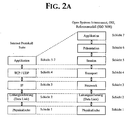
- FIG. 2a shows a schematic and self-explanatory assignment of the layers of a protocol stack according to FIG. 1 to an Internet protocol stack according to FIG. 2.
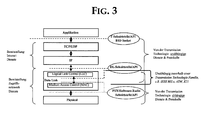
- FIG. 3 shows a service and technology-related subdivision of the Internet protocol stack according to the prior art.
- TCP / IP protocol stack shows a mobile station with a complete TCP / IP protocol stack according to the prior art. It represents the architecture of today's IP-based, wireless networks. There is a complete TCP / IP protocol stack in the base stations as well as in the mobile devices.
- the base stations are computing power and resources much more powerful than mobile devices and their functionality can be expanded more easily become.
- computing units in the fixed network such as Base stations Routers, servers, in terms of processor performance and storage capacity easier and lighter than the little mobile devices. Therefore, the logical consequence appears to be computing-intensive Outsource operations to the landline.
- the TCP / IP protocol stack is being processed very resource intensive and very complex to implement. Small mobile For many, mostly technical reasons, devices do not become too many parallel TCP connections with the landline. Therefore, a complete TCP / IP protocol stack brings not the desired optimal performance-cost ratio in the small mobile device.
- An end-to-end TCP connection or UDP transmission is split by the Mobile Access & Router Controller, MARC .
- the connection between MS and MARC is established through optimized and interchangeable communication objects.
- the connectivity MS ⁇ -> CH is completed via a "normal" TCP connection or UDP transfer between MARC and CH.
- the architecture of the SOCKLETS system means that the communication protocols can be dynamically adapted and configured to the requirements and possibilities of the respective access network.
- a socket emulation service provides the T interface.
- the interface to the applications by the SOCKLETS client preferably as Emulation of the BSD socket methods implemented.
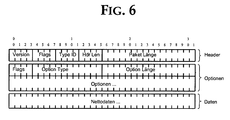
- the SOCKLETS client provides the corresponding Socket method calls are ready, translated and embedded in protocol data units (PDUs), see Fig. 6, the access network adaptation protocol (in access network adaptation layer in Fig. 5).
- PDUs protocol data units
- the MARC SOCKLETS server extracts the embedded methods and translates them in TCP / UDP function calls, provides (IP) addressing and routing mechanisms and manages the transmission control blocks of the corresponding TCP connections.
- the socket interface Internet protocol Interface, also called T-interface
- T-interface Internet protocol Interface
- IP Internet communication services
- the socket emulation service implemented the - preferably all - socket function call; this is particularly preferred under Consideration of extensions for proprietary operating systems, e.g. Microsoft's Window9x / NT / 2000 / XR / ME / CE / PC.
- These function calls can also preferably expanded internally with quality assurance and administrative functions.
- Access network protocol (AN-Proto)
- the access network layer (access network adaptation layer here in FIG. 5) depends on the transmission technology used. If wireless technology offers secure transmission, then an unsecured, simple Link Layer Control, LLC, protocol is used. Otherwise, a secure line protection protocol will be used, with flow control over a fixed transmission window (sliding window), sequence numbers and with positive or negative confirmation (acknowledgment) and corresponding retransmission mechanisms.
- Different access network protocols can be downloaded e.g. of an external value-added service provider. This also allows charging a full TCP / IP stack or other protocol stack, or loading Protocol objects for software defined radios are made possible.
- a “default” access network protocol stack which is for global wireless transport technology is preferably always in “standby”. While other log objects the "default" protocol or its parts are preferred not removed, but - if necessary - only temporarily deactivated. Therefore should the default access network protocol stack should be as resource-saving as possible.
- Default access network protocols can in one embodiment according to the present invention also be realized in such a way that they are not excluded from “removal”; grab it but then preferably higher security measures.
- the "default" protocol stack can usually serve as "fall-back” technology, for example when charging or Update of a new communication object fails.
- SOCKLETS PDUs can have different formats.
- a format of the SOCKLETS PDUs can consist of a general header followed by several terminal and task related options, as seen here in Figure 6.
- Option fields can carry status and control information, for example the status of the mobile station and the application or also executable code.
- the options are filled or processed in the SOCKLETS server and the data serialized or de-serialized, digital signatures generated or checked and the recovered Transfer the PDU to the corresponding "connection slot" of the server.
- Data from the CH are stored in the MARC by the Socket Emulation Service in SOCKLETS PDUs embedded, serialized, signed and delivered to the MS over the wireless networks.
- SOCKLETS client deserializes the data, checks the signature and delivers the data to the corresponding application.
- SOCKLETS PDU options option type explanation Source ID IP address and port number of the sender Target ID IP address and port number of the recipient Authentication ID Authentication method such as USIM, SIM, "Simple Public Key Infrastructure (see Ellison, RFC 2692:” SPKI Requirements ", Sept 1999)" (defined in RFC 2692) Flow ID Identification of the connection Class definition ID Executable code type Object Definition ID Identification of the object during the handover Signature ID Digital signature or hash value of the package.
- MSC message sequence chart
- the socket system function calls are embedded in SOCKLETS PDUs and on MARC or transmitted to the base stations.
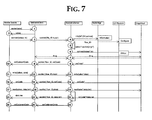
- the SOCKLETS server demultiplexes the PDU and establishes the connection to the remote host (Correspondent Host in Fig. 7 referred to here as CrspdHost).
- the architecture of the SOCKLETS system preferably does not allow blocking system calls in order not to tie up resources to inactive processes for an unnecessarily long time. All blocking calls to the socket library are provided with timeouts and interrupted with an error value after the time has elapsed.
- All blocking calls to the socket library are provided with timeouts and interrupted with an error value after the time has elapsed.
- the read () call (step 17 here in Fig. 7):
- a timer is started in step 19. If this expires before the read () call directed to the corresponding host has returned a value, Socket_Server sends an error back to the application in the mobile station.
- Timeout values are preferably calculated by the node Mgr, which monitors the utilization of the access network and the connections passed through by the L2-7 system .
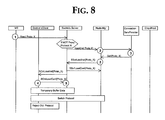
- FIG. 8 shows a so-called message sequence chart (MSC) for a protocol handover initiated by the mobile station (MS), with the MS-side injection and exchange of a protocol object being seen.
- MSC message sequence chart
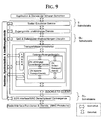
- Fig. 9 shows a SOCKLETS client with the corresponding modules of the mobile station (MS).
- the SOCKLETS client resides in the mobile end system (a mobile station [MS]) and is the link between applications and Medium Access Controller (MAC) of the respective wireless transport technology (such as radio, wire or light).
- MS mobile station
- MAC Medium Access Controller
- the functional elements, modules and services of the SOCKLETS client are here in FIG. 9 shown.
- MEC Mobile Access & Routing Controller
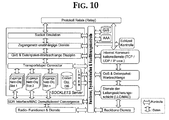
- the Mobile Access & Routing Controller, MARC is preferably able to manage and control connections from several mobile stations and applications; it initiates and monitors the exchange and download (download) of protocol objects in mobile stations (MS) and to itself and finally it also serves as a protocol relay (relay) to the Internet.
- Figure 11 shows a queue discipline in accordance with the present invention.
- each data packet is assigned a priority (filter).
- the priorities will be determined by policies.
- the policies are dependent on several factors, such as. Cost model, device capabilities, network utilization, value-added service, certainly.
- the quality specifications for the entire connection route (Mobile Station ⁇ -> MARC ⁇ -> Correspondent Host) is taken into account.
- Figure 12 shows a data buffering discipline for secure transmission in accordance with the present invention.
- the "data buffering discipline” is used for secure data transmission in the TRANSIT state.
- the data flow is controlled with the help of a status controller (state control).
- a buffer switch controls the path that the data packets have to take to the memory elements (FIFOs).
- the buffer switch forwards the data to the buffer memory 1.
- the packets are routed in parallel via two paths (switch position 2 ), for example one for the existing protocol scheme and one for the " Default "protocol.
- switch position 2 the packets are routed in parallel via two paths (switch position 2 ), for example one for the existing protocol scheme and one for the " Default "protocol.
- the switch routes the packages via path 3, for example.
- packets can be duplicated and stored in a temporary memory 4 .
- the temporary memory is monitored by a timer.
- the buffer elements can be dynamically generated and released again if necessary.
- the loaded data are saved with the help of the AAA module in the MARC and with the help of the loader (MARC and MS) examined, e.g. their digital signature or their hash value checked and their interface to the execution environment is checked.
- the digital one Signature or the hash value should guarantee that the executable code is trusted Provider comes.
- the interface check is said to crash the mobiles Prevent station or impairment of MARC functionality or at least but complicate.
- a convergence layer allows the transparent connection of existing ones MAC protocols as well as future "software defined radio" interfaces.
- the convergence layer is divided into a general (Common Part) and a transport-specific Layer divided.
- the common part layer divided into a control and a data path, represents the functional interfaces to the common medium-access services: security and error control, compression procedures, interface to handover mechanisms, configuration services for the radio modems, memory management for the packets, Segmentation and reassembly of data, multicast, addressing functions and paging (IDLE mode control).
- this layer interfaces for several radio technologies, such as. GSM, W-CDMA, HIPERLAN / 2, IEEE802.11, infrared, Bluetooth provided.
- this layer preferably contains a "software defined radio" Interface (SDR interface).
- DCH selected channel
- UE User Equipment
- MAC Medium Access Control
- RLC Radio Link Control
- PDCP Packet Data Convergence Protocol
- NodeB base station
- SRNC Serving Radio Network Control are fixed terms iS the 3G TS 25.301 (see chap. 3, 7ff.).
- Case 1 5 Here the SOCKLETS server or the MARC is located within the UTRAN, Fig. 5, and has access to the Uu interface.
- the protocol objects and thus part of the functionality of the protocol handover in UTRAN can take place via PDCP (PDCP: Packet Data Convergence Protocol), since the PDCP network layer covers all applications passed on transparently, whereby from the perspective of PDCP SOCKLETS are of course nothing else than applications (see 3GPP TS 25.323).
- PDCP terminates in SRNC (SRNC: Serving RNC. RNC: Radio Network Control), so that the SOCKLETS status can be passed on during a handover (relocation in UMTS nomenclature).
- the required communication objects are not yet in the cache of the new SRNC and possibly the MARC, then the corresponding protocol objects must be loaded. The mobile station can only continue to communicate via these protocol objects after installing and updating the corresponding objects in the MARC / SRNC target. If, on the other hand, it is not possible to load a protocol object into the target SRNC or MARC, MARC initiates a "fall back" of the mobile station in the "default" protocol (see also the explanations under the heading SOCKLETS Encapsulation Mechanism 6 on the Access Network protocol). Two different protocol data unit formats are defined for PDCP for point-to-point communication. SOCKLETS use PDCP data PDUs.
- the PDCP data PDU has the following format: PDCP PDU format (Source: 3GPP TS 25.323, Table 5) PDU type PID Data
- the type of the PDCP data PDU is defined in the PDU type field according to the following table.
- PDCP data PDU type field bit PDU type 000
- the PDU-ID field is used for information about the header compression.
- the PID field reflects the PDCP-Data-PDU type. bit description 00000 No header compression 00001-11111 Dynamically negotiated compression
- PID values become dynamic when negotiating PDCP parameters negotiated. This makes it possible to load new protocols via PDCP.
- the Iu-PS and Gn interfaces connect IP-based components that communicate via the GPRS tunneling protocol, GTP (The GTP-U is defined in 3G TS 29.060 and 3G TS 23.060.).
- GTP-U is defined in 3G TS 29.060 and 3G TS 23.060.
- SOCKLETS status can be embedded in GTP packets and routed from MARC to MARC.
- the SOCKLETS communication device is used in UTRAN, then it is very important that during a handover (in UMTS nomination with serving RNC relocation or routing area or location area update [3G TS 25.301, 3G TS 23.060]) is transferred to a new cell with the SOCKLETS status.
- the UMTS handover Mechanism is very complex, but for the SOCKLETS architecture it is only one point important.
- the SOCKLETS status may succeed after the "relocation preparation procedure" will be embedded in the "Relocation Commit” message that the source SRNC sends to the destination SRNC.
- the SRNC contexts become the target RNC transmitted.
- RNC RAB Radio Access Bearer
Landscapes
- Engineering & Computer Science (AREA)
- Computer Networks & Wireless Communication (AREA)
- Signal Processing (AREA)
- Computer Security & Cryptography (AREA)
- Mobile Radio Communication Systems (AREA)
Priority Applications (1)
| Application Number | Priority Date | Filing Date | Title |
|---|---|---|---|
| EP02028403A EP1322089A3 (fr) | 2001-12-19 | 2002-12-18 | Dispositifs et système pour rattacher dynamiquement, au niveau du protocole, des stations mobiles sans fil, à des réseaux utilisant le protocole IP |
Applications Claiming Priority (3)
| Application Number | Priority Date | Filing Date | Title |
|---|---|---|---|
| EP01130134 | 2001-12-19 | ||
| EP01130134 | 2001-12-19 | ||
| EP02028403A EP1322089A3 (fr) | 2001-12-19 | 2002-12-18 | Dispositifs et système pour rattacher dynamiquement, au niveau du protocole, des stations mobiles sans fil, à des réseaux utilisant le protocole IP |
Publications (2)
| Publication Number | Publication Date |
|---|---|
| EP1322089A2 true EP1322089A2 (fr) | 2003-06-25 |
| EP1322089A3 EP1322089A3 (fr) | 2005-11-16 |
Family
ID=26076798
Family Applications (1)
| Application Number | Title | Priority Date | Filing Date |
|---|---|---|---|
| EP02028403A Withdrawn EP1322089A3 (fr) | 2001-12-19 | 2002-12-18 | Dispositifs et système pour rattacher dynamiquement, au niveau du protocole, des stations mobiles sans fil, à des réseaux utilisant le protocole IP |
Country Status (1)
| Country | Link |
|---|---|
| EP (1) | EP1322089A3 (fr) |
Cited By (3)
| Publication number | Priority date | Publication date | Assignee | Title |
|---|---|---|---|---|
| WO2005076651A1 (fr) * | 2004-02-10 | 2005-08-18 | Forward Information Technologies Sa | Procede et systeme de transfert sans coupure de dispositifs mobiles dans des reseaux heterogenes |
| EP2216961A1 (fr) | 2009-01-27 | 2010-08-11 | Sony Corporation | Dispositif de contrôle de communication, procédé de contrôle communication, programme et système de communication |
| WO2013049290A1 (fr) * | 2011-09-27 | 2013-04-04 | Qualcomm Incorporated | Systèmes et procédé pour la communication sans fil à consommation réduite |
Family Cites Families (1)
| Publication number | Priority date | Publication date | Assignee | Title |
|---|---|---|---|---|
| US5903754A (en) * | 1994-06-21 | 1999-05-11 | Microsoft Corporation | Dynamic layered protocol stack |
-
2002
- 2002-12-18 EP EP02028403A patent/EP1322089A3/fr not_active Withdrawn
Cited By (7)
| Publication number | Priority date | Publication date | Assignee | Title |
|---|---|---|---|---|
| WO2005076651A1 (fr) * | 2004-02-10 | 2005-08-18 | Forward Information Technologies Sa | Procede et systeme de transfert sans coupure de dispositifs mobiles dans des reseaux heterogenes |
| US7620015B2 (en) | 2004-02-10 | 2009-11-17 | Forward Information Technologies Sa | Method and system for seamless handover of mobile devices in heterogeneous networks |
| EP2216961A1 (fr) | 2009-01-27 | 2010-08-11 | Sony Corporation | Dispositif de contrôle de communication, procédé de contrôle communication, programme et système de communication |
| US8369355B2 (en) | 2009-01-27 | 2013-02-05 | Sony Corporation | Communication control device, communication control method, program and communication system |
| WO2013049290A1 (fr) * | 2011-09-27 | 2013-04-04 | Qualcomm Incorporated | Systèmes et procédé pour la communication sans fil à consommation réduite |
| CN103828329A (zh) * | 2011-09-27 | 2014-05-28 | 高通股份有限公司 | 用于进行降低功率的无线通信的系统和方法 |
| US9131001B2 (en) | 2011-09-27 | 2015-09-08 | Qualcomm Incorporated | Systems and method for reduced power wireless communication |
Also Published As
| Publication number | Publication date |
|---|---|
| EP1322089A3 (fr) | 2005-11-16 |
Similar Documents
| Publication | Publication Date | Title |
|---|---|---|
| US8208430B2 (en) | Transparent interaction with multi-layer protocols via selective bridging and proxying | |
| DE60306832T2 (de) | Verfahren, Einrichtung und Medium zum Wechseln von Verbindungstechnologien | |
| EP3782401B1 (fr) | Dispositif client, noeud de commande de reseau et upf pour la transmission et la reception de flux de paquets de donnees en multiconnectivite | |
| US7190680B2 (en) | Apparatus and method of realizing link access control protocol for IP multicasting packet transmission in a mobile communication network | |
| DE60028862T2 (de) | System zum Aufbau einer Datenverbindung in drahtlosen Netzwerken | |
| DE60317992T2 (de) | Verfahren zum Übertragen von GPRS Datenpaketen aus unterschiedlichen PDP Kontexten gemäss ihrer relativen Priorität | |
| US20070025301A1 (en) | Method and system for rate control service in a network | |
| MXPA04009799A (es) | Control de enlace de radio para sistema de comunicacion movil multimedia en tiempo real. | |
| DE602005002328T2 (de) | Mobilitätslösung einer aktiven Sitzung für ein Punkt-zu-Punkt Protokoll | |
| CN102025593A (zh) | 分布式用户接入系统及方法 | |
| WO2001030042A2 (fr) | Procédé pour faire fonctionner un reseau de telephonie mobile | |
| GB2400278A (en) | Traffic flow template filtering | |
| WO1999066736A2 (fr) | Procede et systeme pour gestion de services support dans un systeme de telecommunication mobile de troisieme generation | |
| WO2005115028A1 (fr) | Procédé pour une communication sur un réseau étendu sans fil sur ip et l’internet | |
| US7920522B2 (en) | Method and apparatus for system interoperability in wireless communications | |
| MXPA05009691A (es) | Manejo de conexion de senalizacion de acoplamiento firme para acoplar una red inalambrica con una red celular. | |
| EP1472835B1 (fr) | Traitement d'en-tetes de paquets de differentes tailles pour service conversationnel par paquet dans un systeme de communications de mobiles | |
| US7286475B2 (en) | GPRS system and in-zone node apparatus, and bearer setting method used therefor | |
| EP1387533A1 (fr) | Communication de paquets de données sur canaux de signalisation et de trafic | |
| EP1849265B1 (fr) | Procede et noeuds permettant de prendre en charge des messages diffuses dans un domaine d'acces | |
| EP1322089A2 (fr) | Dispositifs et système pour rattacher dynamiquement, au niveau du protocole, des stations mobiles sans fil, à des réseaux utilisant le protocole IP | |
| WO2008057909A2 (fr) | Systèmes et procédés de réduction du signal dans le cadre de la communication sans fil | |
| US20020131447A1 (en) | System and method for wireless packet data content switch | |
| EP1493254A2 (fr) | Procede de transmission de donnees par des reseaux ip | |
| DE602004007002T2 (de) | Verfahren zur Datenübertragung innerhalb eines schnurlosen Gerätes mit verschiedenen Protokollstapeln |
Legal Events
| Date | Code | Title | Description |
|---|---|---|---|
| PUAI | Public reference made under article 153(3) epc to a published international application that has entered the european phase |
Free format text: ORIGINAL CODE: 0009012 |
|
| AK | Designated contracting states |
Designated state(s): AT BE BG CH CY CZ DE DK EE ES FI FR GB GR IE IT LI LU MC NL PT SE SI SK TR |
|
| AX | Request for extension of the european patent |
Extension state: AL LT LV MK RO |
|
| PUAL | Search report despatched |
Free format text: ORIGINAL CODE: 0009013 |
|
| AK | Designated contracting states |
Kind code of ref document: A3 Designated state(s): AT BE BG CH CY CZ DE DK EE ES FI FR GB GR IE IT LI LU MC NL PT SE SI SK TR |
|
| AX | Request for extension of the european patent |
Extension state: AL LT LV MK RO |
|
| 17P | Request for examination filed |
Effective date: 20060425 |
|
| AKX | Designation fees paid |
Designated state(s): AT BE BG CH CY CZ DE DK EE ES FI FR GB GR IE IT LI LU MC NL PT SE SI SK TR |
|
| 17Q | First examination report despatched |
Effective date: 20060627 |
|
| STAA | Information on the status of an ep patent application or granted ep patent |
Free format text: STATUS: THE APPLICATION IS DEEMED TO BE WITHDRAWN |
|
| 18D | Application deemed to be withdrawn |
Effective date: 20100701 |