EP1322094A1 - Méthode pour sélectionner un serveur dans un réseau de fourniture de contenu - Google Patents
Méthode pour sélectionner un serveur dans un réseau de fourniture de contenu Download PDFInfo
- Publication number
- EP1322094A1 EP1322094A1 EP01403337A EP01403337A EP1322094A1 EP 1322094 A1 EP1322094 A1 EP 1322094A1 EP 01403337 A EP01403337 A EP 01403337A EP 01403337 A EP01403337 A EP 01403337A EP 1322094 A1 EP1322094 A1 EP 1322094A1
- Authority
- EP
- European Patent Office
- Prior art keywords
- content
- user
- server
- surrogate
- network
- Prior art date
- Legal status (The legal status is an assumption and is not a legal conclusion. Google has not performed a legal analysis and makes no representation as to the accuracy of the status listed.)
- Granted
Links
Images




Classifications
-
- H—ELECTRICITY
- H04—ELECTRIC COMMUNICATION TECHNIQUE
- H04L—TRANSMISSION OF DIGITAL INFORMATION, e.g. TELEGRAPHIC COMMUNICATION
- H04L67/00—Network arrangements or protocols for supporting network services or applications
- H04L67/01—Protocols
- H04L67/10—Protocols in which an application is distributed across nodes in the network
- H04L67/1001—Protocols in which an application is distributed across nodes in the network for accessing one among a plurality of replicated servers
- H04L67/1004—Server selection for load balancing
- H04L67/101—Server selection for load balancing based on network conditions
-
- H—ELECTRICITY
- H04—ELECTRIC COMMUNICATION TECHNIQUE
- H04L—TRANSMISSION OF DIGITAL INFORMATION, e.g. TELEGRAPHIC COMMUNICATION
- H04L67/00—Network arrangements or protocols for supporting network services or applications
- H04L67/01—Protocols
- H04L67/10—Protocols in which an application is distributed across nodes in the network
- H04L67/1001—Protocols in which an application is distributed across nodes in the network for accessing one among a plurality of replicated servers
-
- H—ELECTRICITY
- H04—ELECTRIC COMMUNICATION TECHNIQUE
- H04L—TRANSMISSION OF DIGITAL INFORMATION, e.g. TELEGRAPHIC COMMUNICATION
- H04L67/00—Network arrangements or protocols for supporting network services or applications
- H04L67/2866—Architectures; Arrangements
- H04L67/288—Distributed intermediate devices, i.e. intermediate devices for interaction with other intermediate devices on the same level
-
- H—ELECTRICITY
- H04—ELECTRIC COMMUNICATION TECHNIQUE
- H04L—TRANSMISSION OF DIGITAL INFORMATION, e.g. TELEGRAPHIC COMMUNICATION
- H04L67/00—Network arrangements or protocols for supporting network services or applications
- H04L67/50—Network services
- H04L67/51—Discovery or management thereof, e.g. service location protocol [SLP] or web services
-
- H—ELECTRICITY
- H04—ELECTRIC COMMUNICATION TECHNIQUE
- H04L—TRANSMISSION OF DIGITAL INFORMATION, e.g. TELEGRAPHIC COMMUNICATION
- H04L67/00—Network arrangements or protocols for supporting network services or applications
- H04L67/50—Network services
- H04L67/52—Network services specially adapted for the location of the user terminal
-
- H—ELECTRICITY
- H04—ELECTRIC COMMUNICATION TECHNIQUE
- H04L—TRANSMISSION OF DIGITAL INFORMATION, e.g. TELEGRAPHIC COMMUNICATION
- H04L67/00—Network arrangements or protocols for supporting network services or applications
- H04L67/50—Network services
- H04L67/56—Provisioning of proxy services
- H04L67/563—Data redirection of data network streams
-
- H—ELECTRICITY
- H04—ELECTRIC COMMUNICATION TECHNIQUE
- H04L—TRANSMISSION OF DIGITAL INFORMATION, e.g. TELEGRAPHIC COMMUNICATION
- H04L67/00—Network arrangements or protocols for supporting network services or applications
- H04L67/50—Network services
- H04L67/56—Provisioning of proxy services
- H04L67/564—Enhancement of application control based on intercepted application data
-
- H—ELECTRICITY
- H04—ELECTRIC COMMUNICATION TECHNIQUE
- H04L—TRANSMISSION OF DIGITAL INFORMATION, e.g. TELEGRAPHIC COMMUNICATION
- H04L67/00—Network arrangements or protocols for supporting network services or applications
- H04L67/50—Network services
- H04L67/56—Provisioning of proxy services
- H04L67/565—Conversion or adaptation of application format or content
- H04L67/5651—Reducing the amount or size of exchanged application data
Definitions
- the invention relates to the field of networks, and more specifically to content delivery networks.
- the World Wide Web uses the stateless hypertext transfer protocol (HTTP) to allow a client to request resources from a server over a network.
- HTTP protocol enables the transparent navigation from Web servers to Web servers through hypertext links.
- a hypertext link makes an association between a part of text and a URL (Uniform Resource Locator).
- URL Uniform Resource Locator
- a resource itself can contain multiple resource locators.
- a Web browser that runs on the machine of the client sends a HTTP GET message to a Web server running on the machine of the server.
- the address of the resource on the server is determined by a Uniform Resource Locator (URL) from the form " ⁇ protocol>:// ⁇ server-address>/ ⁇ path>/ ⁇ content>".
- URL Uniform Resource Locator
- URLs with other protocols than HTTP are typically served by specialized servers (such as FTP servers, streaming media servers, etc.).
- the protocol HTTP is a client-server protocol, which uses a TCP network connection. How the data is interpreted by the browser depends on the MIME type of the returned data; other protocols than HTTP are usually handled by plug-ins that are called by the browser.
- CDN Content Delivery Networks
- a CDN thus comprises a number of surrogate servers, in which resources are replicated, and a redirection server for managing, upon request of a user, which of the surrogate servers should deliver the resources.
- US-B-6 185 598 suggests providing reflector mechanisms for intercepting resource requests made by clients and selectively reflecting the requests to repeaters. The reflectors select a best repeater from a set of possible repeaters and redirect the client to the selected best repeater. The client then makes the request to the selected best repeater. For selecting the best repeater, the network is partitioned into cost groups; according to the user, a set of "low cost" repeaters is selected, and one repeater is selected at random among the set. If the requested resource is not in the selected repeater, the repeater copies it from the origin server, and saves a local copy of the resource in order to serve subsequent requests.
- US-A-6 108 703 discusses a network architecture for a content provider, having a content provider site and a number of ghost servers. It suggests serving a base HTML portion of a web page from the content provider site, and serving the embedded objects for the page from the ghost servers located near to the client machine. This document suggests balancing load among ghost servers. Replication of objects from the content provider site to the ghost servers is carried out in a demand-based pull fashion : if a copy of a requested object is not present on the ghost server located near to the user, the ghost server retrieves a copy of the object from the content provider site or from another ghost server.
- the described method uses dynamic DNS redirection to select a surrogate server close to the end-user.
- the main disadvantage of DNS redirection is that the result might not be accurate for the requester, since the DNS server used by the end-user's browser is not close to the end-user. Moreover, with dynamic DNS it is not possible to get the context of the end-user.
- US-A-6 052 718 discusses replica routing, that is automatically redirecting client computers that request a service to a server replica for this service.
- the server replica selected is the one expected to provide the best performance to the client, based upon the client's location in the internetwork topology and the estimated performance of the internetwork.
- the described method uses real-time measurements, when an end-user requests a resource to calculate the nearest replica server.
- the end-user's browser is redirected by a replica router to the replica server by receiving from the described method an HTTP REDIRECT answer.
- the end-user's browser has to connect first to the to the replica router and then a second time to the replica server. This may cause unnecessary latency.
- server replicas contain the same basic information, but be specialized with local features, e.g. language features or buyer-location specific prices.
- the server replica is not selected according to the request of the client or according to the nature of the resource, but rather according to the geographical area, so that client routing is based on content specialization, but not on proximity.
- US-A-6 003 030 suggests replicating information among "smart mirror” sites. Every user is assigned to a specific delivery site based on an analysis of network performance with respect to each of the available delivery sites. The described method relies on special software that is installed at the end-user terminal, to choose the best surrogate server. This document does not specifically discuss the content of the "smart mirror” sites, the implicit assumption being that all mirror sites of the same content provider contain the same information.
- US-A-5 870 546 discusses redirection methods. These are used for tracking of a client reference to a resource locator. However, this document does not discuss how redirection methods could be applied to content delivery networks, or to the selection of a surrogate server in such a CDN.
- a process for selecting, in a content delivery network having at least two surrogate servers delivering content over a network, a surrogate server adapted to deliver content requested by a user comprising the steps of:
- the step of finding a subnetwork is carried out using an algorithm with a time complexity equal to or less than O(W), with W the length of an address in the network.
- the step of determining may comprise
- a distance between a surrogate server and a subnetwork may be selected from:
- Distances may be stored in a table with a subnetwork identifier as key.
- an entry in the table is preferably a list of surrogate servers identifiers, ordered by distance to the subnetwork identified by the key to the entry.
- the step of determining is carried out using an algorithm with a space complexity equal or less than O(N*(S+1)), with N the number of subnetworks and S the number of surrogate servers.
- the step of checking may comprise
- identifiers may be stored in a table with the content identifier as key.
- Each entry can be a bit array, one bit in the array being representative of the presence in a surrogate server of the content corresponding to the key to the entry.
- the step of checking is carried out using an algorithm with a space complexity equal or less than O(C*S), with C the number of content and S the number of surrogate servers.
- a request from a user contains an identifier of a set of real contents, each of said real content being contained in the content delivery network; in this case, the process further comprises, before the step of checking, a step of selecting a real content of the set according to the request of the user, and the step of checking comprises checking whether the closest surrogate server has the selected real content.
- the step of selecting a real content is preferably carried out according to information related to the user. This user-related information related to the user may be selected among:
- Real contents within a set may represent:
- the network comprises a private network, addresses of which are hidden from the rest of the network.
- the private network contains at least one surrogate server, and the process comprises
- the network comprises a private network, addresses of which are hidden from the rest of the network.
- the private network contains at least one surrogate server, and the process comprises
- the steps of defining, determining and checking may then be carried out in the redirection server outside of the private network.
- the invention also proposed a process for selecting, in a content delivery network having at least two surrogate servers delivering content over a network, a surrogate server adapted to deliver content requested by a user, the process comprising the steps of:
- the invention also propose a computer program product adapted to carry out this process, as well as a content delivery network with a redirection server and at least one surrogate server, the redirection server comprising computer programs means for carrying out the process.
- the invention proposes a method for selecting a surrogate server, in a content delivery network. It is intended to select the "optimal" surrogate server for the requested resource, for a request from a given user (or client).
- the word "optimal” reflects the capacity of the CDN to provide the requested resource to the user, as fast and as conveniently as possible for the user and, in the case of streams, as uninterrupted as possible.
- the invention is discussed in reference to an embodiment of the invention on the Internet, which also incorporates means to adapt the content for each viewer following given rules. This makes it possible to deliver different contents to different users although they may have issued a request for the same resource.
- the contents may differ according to various criteria, such as location of the user in the network, past behaviour of the user, subnetwork of the user, identity of the user or the technical characteristics of the device of the user, including speed of the device used by the user for connecting to the network or display device capabilities of the end user.
- This feature of the invention is however not compulsory, and selection of a surrogate server may be carried out without embodying this feature. For the sake of brevity, this feature is included in the description of the embodiments.
- meta-content is an identifier of a set of "real" contents, that is of contents actually provided by the CDN.
- the process does not enforce any constraint on how to group the real contents to obtain a meta-content.
- the way to group contents depends on the desired functionality. For instance:
- meta-content whereas only one URL needs to be maintained (one URL per meta-content), an end user can receive different content through this URL depending on a policy defined by the media manager.
- This policy depends on information regarding the user. For instance, in the case of economic broadband, the real content delivered to the end user may depend on the speed of the device through which the user connects to the network. In the case of advertisement insertion, the advertisement served on the user would depend on the past behaviour of the user, as discussed below in the example of a carrousel of advertisements.
- the invention allows for customization; thus the invention allows the support of various business models.
- the invention can be used to redirect to any resources a CDN might support, but is very well suited to support CDNs for streaming media.
- Streaming media are resources that are not downloaded to the end-user, but that are transmitted continuously from the server to the client until the resource was fully streamed or the viewer stops the receiving player.
- Streaming media is especially sensitive to interruptions through network congestion and packet losses. Streaming the media from the closest surrogate server minimizes the risks of loosing packets and of network congestion on the path of the streaming media packets.
- Figure 1 is a flowchart of the steps of a process according to an embodiment of the invention.
- Figure 2 is a description of the invention in terms of input and output of information. The method is carried out upon receiving a request from a user. As discussed, it is assumed that this request is issued for a meta-content, which identifies a set of real content.
- the request is issued by the user simply by selecting one URL for a given meta-content.
- the redirection server of the CDN is provided with the information displayed in box 20 of figure 2, that is
- step 2 of figure 2 where the redirection server receives the information from the user. It is also exemplified in figure 2 by the various arrows going from box 20 to box 22, which symbolizes the redirection server.
- a first step of the process is the finding of a subnetwork of the user.
- a subnetwork is defined in the present description as one element of a partition of the network; one may simply define a subnetwork as a set of IP addresses.
- the set of IP addresses can be aggregated into intervals if the subnetwork owns all IP addresses within this interval. This aggregation is important within the Internet to keep the routing tables small. The most often used aggregation is the CIDR format, see M. A. Ruiz-Sanchez et al. for details.
- the algorithm for finding a subnetwork in this step is discussed at length below.
- subnetwork identifier representative of the subnetwork to which the user belongs.
- the subnetwork is referenced Subnetwork A in figure 2 in box 26.
- the arrow in figure 2 from box 24 to box 26 simply indicates that the subnetwork is identified in the first step.
- step 6 of figure 2 where there is selected a content among the set of real content identified by meta content MC A .
- This step is represented in box 28 of figure 2. Once again, this step could be skipped, if the user issues a request to a given content.
- selection of a content is discussed below in reference to the examples; it is sufficient here to clarify that the selection may depend on various information. As shown by the arrow joining MC A to box 28, selection of the content will first depend on the requested meta-content, which identifies the set of possible contents. Second, selection of the content may depend on information received from the end-user, as shown by the arrow joining I A to box 28 in figure 2. Last, selection of the content may also depend on the location of the user in the network; one easy way to take this into account is to consider the subnetwork to which the user belongs. This is symbolized in figure 2 by the arrow joining boxes 26 and 28. After this step, there is provided a specific content, which is actually stored in at least one surrogate server of the CDN. This specific content is the "best" adapted content for the user, in the sense of the rules defined by the media manager in the CDN. It is referred to in figure 2 as C A , and is represented in box 40, which contains the output from the redirection server.
- the process then passes to step 8 of figure 1, box 30 of figure 2.
- the surrogate server closest to the subnetwork is determined.
- the "closest" server is defined in terms of the network topology, and in the sense of the metric used to measure the distance between surrogate servers and the subnetwork to which the end users belong. Examples of distances comprise
- the representative of the subnetwork may simply be one node of the subnetwork. It is preferably selected so that the distance (as defined above) from the outside to the representative is more or less the mean distance from the outside to all members of the subnetwork.
- the input in this step is mainly the identifier of the subnetwork. After this step, there is provided a current closest surrogate server.
- next step 10 it is checked whether the current closest surrogate server has the ability to serve the content requested by the user. In case one does not use meta-content, this step amounts to checking whether the current closest surrogate server has the content actually requested by the user. Otherwise, where one uses meta-content, this step amounts to checking whether the current closest surrogate server has the actual content C A selected in step 6, and is available for serving this content. This is shown in figure 2 by the arrow joining C A to box 30. Algorithms for carrying out this step are discussed below.
- step 10 If the answer in step 10 is "yes", then the current closest surrogate server has the relevant real content C A and may accept the client request; the process is terminated (step 12). In figure 2, this is represented by the output of IP Ss , that is by the output of the IP address of the optimal surrogate server.
- the selected surrogate server is also the closest possible one, in the sense of the distance used in the process.
- step 14 the current closest surrogate server is disregarded, and the process passes back to step 8. This means that step 8 will provide the next closest surrogate server - in terms of the distance used in the process.
- the method terminates when a surrogate server is found; although this is not represented in figure 1, the method would also terminate if no more surrogate servers exist within the CDN, or if there is no surrogate server that is able to serve the best adapted real content.
- step 10 it is checked whether the surrogate server has the content requested by the user, and whether it is available for serving this content; one may also carry out the checking of availability of the server separately, or simply not check the availability of the server.
- the advantage in checking separately the availability of the surrogate server is that this availability may change often, while the content of the surrogate server is likely to be more stable. It is also possible that the server be available, but that restrictions exist regarding maximum bandwidth usage; this could also be construed as checking the "availability" of the surrogate server.
- the following four algorithms may be used to calculate the best adapted real content, and the address of the closest surrogate server to the requesting end user, which has this real content.
- the algorithms may work on data that is read in at initialization time. The data is stored by each algorithm in data structures that allow efficient lookups and efficient updates within the main memory, as discussed below.
- the data can be stored in an external database that is read by the algorithms of the invented method at initializing time; it may be stored in different places if the four algorithms are carried out in different places. If the state in the content delivery system changes, the internal data may be changed accordingly. As example, the following state changes, within the CDN, may result in a update of the data: insertion, changes to, deletion of new content; failing of a surrogate server, changes in the list of subnetworks, changes in the weights for a surrogate server to reach a subnetwork.
- the first algorithm researches the smallest subnetwork of IP addresses from all subnets stored in a database.
- the problem of finding the smallest subnetwork is identical to finding the best matching prefix of a subnet within IP address lookup algorithms used within IP routers. See M.A. Ruiz Sanchez et al. for a survey and taxonomy of known IP address lookup algorithms.
- the input of the first algorithm is the IP address of the end-user's computer (or its gateway, if the computer is within a private network, as in enterprises for example).
- the subnetworks are stored in the CIDR notation in a database and uniquely enumerated and loaded at initialization time into the data structure needed by the first algorithm.
- the binary tree algorithm which is the most basic algorithm. Faster algorithms like binary search on prefix length could be taken instead, see M.A. Ruiz Sanchez et al. for different algorithms.
- Typical routing databases (such as the route table of a backbone router) can be stored with the discussed algorithms in main memory; the size of a binary tree in memory is in O(NW) in the worst case, where N is the number of given subnetworks and W is the length of the longest prefix (32 in Ipv4). A typical number for N is about 100,000 entries.
- the exact size of the structure highly depends on the given subnetworks and their prefix length. In the worst case, finding a subnetwork within this structure has a time complexity in O(W).
- the output of the first algorithm is the number or identifier of the smallest subnetwork in which the IP address of the end-user's computer resides.
- a real content may be selected, in case the user's request only issues a meta-content - an identifier to a set of real contents.
- the algorithm carried out in this step returns the real content id according to the meta-content id and to information related to the end user.
- This algorithm takes as input the meta-content id, and additional information on the end user, as discussed in relation to figure 2.
- the output is the real content id.
- this algorithm works on a data structure that is a table, preferably a hashtable with the meta-content id as key and a set of objects containing for a given meta-content a set of real content as values.
- a lookup operation in a hashtable has constant time complexity.
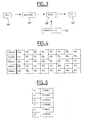
- Figure 3 shows the meta-content lookup process. This lookup process remains very general and the specific part in the meta-content lookup to each problem is contained in the object definition. Indeed, each object is a small data structure containing all the possible real contents corresponding to the given meta-content. The exact structure of this object depends on the functionality required. We give below several examples of such objects for economic broadband and for advertisement insertion.
- FIG. 3 shows at 44 the input to the algorithm, that is the meta-content identifier MC A . It is used as an entry to the hash table 46, and this return an object real content 48. Based on the information 50 regarding the user - exemplified by I A and the subnetwork identifier, as in figure 3 - the real content C A 52 is provided.
- the size in memory of the meta-content table is in O(M), where M is the number of meta-content entries.
- the lookup speed in this meta-content table is in O(1). As this table simply maps a meta-content id to an object, there are additional memory space and lookup speed requirements depending on the object type. The invention is not restricted to any kind of object.
- this content will be mapped to the identity object, i.e. the object that returns for each meta-content, one and only one real content.
- the process then selects the closest - in terms of the underlying topology and the selected distance - surrogate server to the subnetwork found by the algorithm of step 4.
- This algorithm knows the distances between all surrogate servers and the subnetworks in the database.
- this algorithm works on a data structure that is a table, preferably a hashtable with the subnetwork identifier as key and an ordered list of surrogate server identifiers as value. The list of surrogate server identifiers is ordered from the smallest to the longest distance between the surrogate servers and this subnetwork.
- This algorithm returns the first entry of this list when it is first called, the second of the list in a second call, and so on; this makes it possible to implement very easily the loop of steps 8, 10 and 14 of figure 1.
- the algorithm returns a special entry that denotes that no surrogate is available, if no more entries are available; this makes it possible to interrupt the loop, as discussed above.
- FIG 4 An example of such a hash table is given in figure 4, where the first column represents the entry key of the hash table (Subnet), and where each line represents the ordered list of the surrogate server (SS) for the subnetwork on the same line.
- this table could be easily compressed. Indeed, several subnetworks can have exactly the same position to all the surrogate servers.
- the size in memory of this table, used to map the closest surrogate server to the subnetwork of the end user, is in O(N*(S+1)) where N is the number of given subnetworks and S is the number of surrogate servers. Finding the closest surrogate server requires a lookup into the table, using the identifier of the subnetwork as an entry.
- a distance is selected, as explained above; a measurement method may then be chosen.
- a measurement method may then be chosen.
- the traceroute tool can be used for this purpose, but at the expense of a significant overhead in term of network traffic and time.
- a representative of this subnetwork is chosen for the measurement.
- This representative can be chosen according to a database of web servers, or in any other way that returns a valid representative, i.e. responding to the measurement protocol.
- the representative preferably has, as regards distance, a behaviour similar to the mean behaviour of the members of the subnetwork.
- each surrogate server is sent the list of the representatives of all the known subnetworks.
- the table that gives the distance between each surrogate server and each subnetwork is updated.
- the measurement process in this example, is carried out from the surrogate server, since the measurement tool is adapted for use from the point from which distance is measured.
- the distance is a parameter set manually, there would be no need to provide the surrogate servers with the list and to proceed with measurements from the surrogate servers.
- the process may choose randomly a surrogate server for this end user, but immediately add this end user as the representative of this subnetwork, and trigger the measurements from the surrogate servers to this representative.
- This self-learning capability allows for a high relevance of the measurement information and ensures that over time all end users that requests content from this CDN are in measured subnetworks. Still, it does not penalize access to the resource by a new end user.
- the process verifies that the requested content is actually accessible from the closest surrogate server. If the content is not available on this surrogate server, the process goes back to step 8 through step 14, thus choosing the next best surrogate server; if the content is available, the process terminates (step 12) and returns the chosen surrogate server identifier.
- the database holds for all surrogate servers the stored content identifiers.
- the algorithm loads at initialization time this data from the database and stores it in an internal data structure.
- One memory efficient implementation for this data structure is a hashtable with the content identifier as key and a bit array as value.
- the bit array it is useful to have the identifiers of the surrogate servers as unique integer values in the range from 1 to the number of deployed surrogate servers. So, the bit on position n denotes whether the surrogate server with the identifier n has the content, the bit is set to 0 if the surrogate server does not have the content, to 1 if it has the content.
- the size in memory of the table of figure 5 is in O(C*S) where S is the number of surrogate servers and C is the number of real contents.
- the lookup speed of this algorithm cannot be stated without a modeling of the distribution of the content among the surrogate servers. This lookup speed is empirically shown to be fast - a few number of lookups in the data structures.
- the invented method is applied to the architecture shown in figure 6. It shows the Internet 58, with a number of end users 60 and surrogate servers 62.
- the CDN further comprises a redirection server 64 and several proxies 66, 68 for the redirection server. All the algorithms described above may be implemented in the redirection server 64.
- the redirection server proxies 66, 68 aims to increase the number of request per second handled by the system. Indeed, the invented method is able to handle several hundred of thousand of request per seconds on standard PCs, but as the requests are HTTP based, the overhead induced by this protocol could make the number of requests drop down to only some thousands of requests per second.
- the idea beyond the redirection server proxy is to put the burden of the HTTP request handling in a large number of proxies, and that each proxy asks for the best adapted content and the optimal server that can serve this content to the redirection server with a simple and fast protocol. For instance, a permanent TCP connection can be opened between each proxy and the server, and each request is embedded within a TCP packet.
- the proxies can also be in charge of finding the information (device speed, profile, etc.) of the requesting end user. This way, all the overhead is pushed to the proxies that can be easily replicated, and the server is dedicated to perform the invented method.
- Figure 6 further shows an example of a request of an end user.
- the end user has found a link to a content he wants to receive on a web server (not shown in the figure). So the end user has an HTTP link to a meta-content, which points to the redirection server proxies.
- the end user has an HTTP link to a meta-content, which points to the redirection server proxies.
- two solutions can be considered :
- the end user sends an HTTP request to the redirection server proxy - step 70 in figure 6: HTTP://redirection_server_proxy_address/meta-content_id.
- HTTP://redirection_server_proxy_address/meta-content_id When the proxy receives this request, it extracts the IP address of the end user and the id of the requested meta-content. Additionally, the redirection server proxy can retrieve further information on the profile of the end user. This information can be obtained by several ways :
- the redirection server proxy Once the redirection server proxy has the IP address of the end user, the meta content id and eventually additional information on the end user (depending on the kind of meta-content lookup expected), the proxy sends a request - step 72 in figure 6 - with the IP address of the end user, the meta-content id and with the additional information on the end user.
- the redirection server performs the subnetwork lookup, the meta-content lookup, and the surrogate server lookup as specified above, and returns to the proxy - step 74 in figure 6 - the best adapted real content and the optimal surrogate server that can serve this real content.
- the redirection server proxy returns to the end user - step 76 in figure 6 - an HTTP redirect with the following URL: HTTP://optimal_surrogate_server_address/best_adapted_real_content_id. Finally, the end user connects to the optimal surrogate server asking for the best-adapted real content - step 78 in figure 6.
- meta-file This notion of redirection server proxy allows a feature that we call meta-file generation handling.
- a metafile can be as example a HTML document, an ASX file (metafile for Windows Media), a SMIL file (metafiles for RealNetworks), or any other file that contains URLs for meta-contents embedded within other content.
- each meta-content embedded within this HTML document can be flash animation.
- each meta-content embedded within this ASX file can be music clip.
- the meta-file id is referenced in a URL in a web page that the end user accesses : HTTP://redirection_server_proxy_address/meta-file_id
- the end user sends an HTTP request to the redirection server proxy - step 70 in figure 6 : HTTP://redirection_server_proxy_address/ meta-file_id
- the proxy downloads from a database a template for this meta-file.
- the template is similar to the metafile itself except that there are tags to identify where the surrogate server address must be included and tags to give the meta-content id and show where the real content id must be included (in fact as replacement of the meta-content id).
- the redirection server proxy extracts the IP address of the end user and extracts from this template all the meta-content ids. Additionally, the redirection server proxy can retrieve further information on the profile of the end user.
- the redirection server proxy Once the redirection server proxy has the IP address of the end user, the meta content ids and eventually additional information on the end user (depending on the kind of meta-content lookup expected), the proxy sends one request per meta-content id - step 72 in figure 6 - with the IP address of the end user, the meta-content id and with the additional information on the end user.
- the redirection server performs the subnetwork lookup, the meta-content lookup, and the surrogate server lookup as specified above, and returns to the proxy - step 74 in figure 6 - the best adapted real content and the optimal surrogate server that can server this real content.
- the redirection server proxy Once the redirection server proxy has the best adapted real content id and the optimal surrogate server for each meta-content id, it replaces each tag in the meta-file template with the relevant information and returns the generated meta-file to the end user - step 76 in figure 6. Finally, the end user connects for each real content to the optimal surrogate server, asking for the corresponding best adapted real content, as shown in step 78 in figure 6.
- the embodiment now discussed exemplifies an object for the Meta-Content Lookup: the Economic broadband Object, which may be used for streaming media.
- the economic broadband object allows solving the following problems :
- the object defined reaches the following scalability targets: Millions of contents; Thousands of regions; Four levels of quality for each content (0 is the lowest quality or no access to the content, and 3 is the highest quality); Four types of devices (we do not mean that we cope with only 4 devices, but that all devices can be mapped into four categories).
- the category 0 can be, for instance, for all the devices with a maximum throughput higher or equal than 28.8Kbit/s.
- category 1 could be for all the devices with a maximum throughput higher or equal to 56.6Kbit/s and for all the unknown devices.
- the category 2 could be for all the devices with a maximum throughput higher or equal to 300Kbit/s, and the category 3 could be for all the devices with a maximum throughput higher or equal to 700Kbit/s.
- all the contents for device type 1 can also be read by device type 2, and 3; all the contents for device type 2 can also be read by device type 3. This assumption is always verified when an increasing type refers to an increasing bandwidth capacity of the device.
- region is a set of subnetworks.
- the regions are maintained at the level of the structure that stores the subnetwork, in our embodiment the binary tree.
- each subnetwork is assigned to a default region.
- the media manager or CDN manager defines a new region and the new region id is assigned to the corresponding subnetworks.
- the route corresponding to the end user IP address is returned, but also the corresponding region id.
- the economic broadband object returns the real-content id based on the meta-content id, the device type of the end user, and the region id.
- the structure of this object is shown in figure 7.
- This object contains three arrays: The first array is the Region array; the second array is the Device array; the third array is the real content array.
- the first entry is an array with as many cells as regions, each cell containing a 2 bits flag that gives the quality for this content according to the region.
- the second entry is an array with four cells, one per category of devices. Each cell contains a 2 bit flag that gives the highest level of quality that this category of device can handle.
- this table could be easily compressed. Indeed, several objects will have exactly the same region array and the same device array. This correlation is due to the management of the content. It makes no sense to define completely different scenarios for each content. The easiest way to proceed is to define sets of contents that will have exactly the same configuration (i.e. same level of quality, same quality per region, same quality per device). The way to handle the compression is very simple.
- the region and, the device requires only 3 lookups in an array (one lookup per entry).
- the invented object can be restricted to a region only or to a device only lookup.
- the general economic broadband object gives a structure that is very flexible and allows for a large variety of configurations.
- quality among the real-contents for each meta-content id is uncorrelated. Indeed, in the example of figure 7, we can define C 1 as a 56Kbit/s content, C 18 as a 300Kbit/s, C 17 as a 700 Kbit/s, and C 2 as a 1.5Mbit/s. But we can also define C 1 as a sorry message at 56Kbit/s, C 18 as a 10 seconds trailer at 56Kbit/s, C 17 as a 3 minutes trailer at 56 Kbit/s, and C 2 as the full movie at 1.5 Mbit/s.
- the quality of each content is independent of the category of the devices. Therefore, the content provider has a total freedom when defining its real-contents, the only one requirement is to define a level of quality for each real-content, which is relative to the other real-contents for the same meta-content id.
- This embodiment makes it possible for the CDN to adapt the media effectively delivered to the user, according to the user information.
- Advertisement insertion Object allows solving the following problems :
- the objects defined reaches the following scalability targets: Thousands of ads, each ad corresponding to a different real advertisement for each region (the number of different real advertisement is, if we do not have static advertisements, the number of ads time the number of regions); Thousands of regions; Four types of devices (the explanation of the devices definition is the same as for the economic broadband object).
- region is defined as in the case of the economic broadband object.
- the advertisement insertion objects return the real-content id based on the meta-content id, the device type of the end user, and the region id.
- the input of the meta-content lookup when the advertisement insertion object is called is: the IP address of the end-user IP A , the meta-content id he wants to receive MC A , its device type D A , and the region R A corresponding to the IP address IP A of the end-user.
- This device type could be computed by the redirection server proxy when it receives the request from the end-user.
- figure 9 shows the regionalized advertisement object
- figure 10 shows the carousel of advertisement object
- figure 11 shows the per-view billing carousel of advertisement object.
- the embodiment solves the problems discussed above.
- the network comprises a private network, that is a network, the addresses of which are hidden from the rest of the network.
- a private network that is a network, the addresses of which are hidden from the rest of the network.
- NAT Network Address Translator
- proxy a proxy
- another network element that hides its IP address.
- redirection server it is not possible for the redirection server to find the optimal surrogate server.
- PNI private networks interfaces
- the private IP addresses of all the computers inside the private network are hidden from the outside of this private network.
- the invented method includes a solution to the problem of the localization of an end user inside a private network based on local redirection servers. This solution also works in case of nested private networks.
- the key of the solution is to place a local redirection server inside each private network that contains at least one surrogate server. In case a private network does not contain a surrogate server, it does not make sense to place a local redirection server inside it as this private network can be considered as a whole, and all the end users inside this private network will be redirected to the closest - in relation to the PNI - surrogate server outside of the private network.
- the solution to use the invention at the same time within and outside private networks uses the following mechanism.
- the subnetwork corresponding to the private IP addresses is declared in the list of subnetworks.
- a unique identifier for each private network must be defined in order to avoid collision inside the list of subnetworks.
- the main advantage of this method is that we can concatenate this public IP address with the subnetwork in order to obtain global and unique addresses of all subnetworks, and still use the same subnetwork lookup algorithm.
- the private subnetwork is declared for all these PNIs.
- the redirection server When the redirection server receives a request from an end user inside a private network, it searches whether there is a local redirection server inside this private network. If there is no local redirection server, the end user localization is the same as for the network element that defines the private network. If there is a local redirection server inside this private network, the redirect server does an HTTP redirect of the end user to the local redirection server; when the local redirection server receives the request from the end user, it searches whether this request comes from a PNI inside its own private network. If this is the case, the local redirection server redirects the end user to the redirection server of the nested subnetwork.
- This process occurs recursively until a local redirection server finds that the end user comes from its own private network. Then, the local redirection server sends a request to the redirection server with the IP address of the end user. The redirection server finds the best adapted real content and the optimal surrogate server according to the real location of the end user. Then the redirection server returns the meta-file to the local redirection server that forwards this meta-file to the end user.
- the local redirection server within a private network carries out the complete process, and contacts the redirection server outside the private network only in the case, when the requested content is not available on a local surrogate server.
- This setup assumes that the user makes the initial request to the local redirection server; if the Web page with the URL is hosted outside the private network this is possible by using different local DNS entries for the redirection server that returns for local users the IP address of the local redirection server.
- the invention was discussed above, without any specific indication of the practical implementation of the CDN.
- the algorithms discussed in the various steps of the invention may be carried out in the redirection server, since this is the location where the information is easily available.
- the redirection server can be placed in a central location of the CDN, but may also be replicated among different locations.
- An example would be a global CDN with redirection servers on each continent to minimize latencies..
- the algorithms may be programmed with known methods, based on the information given above.
- the invention has the following advantages over the prior art. As compared with DNS redirection method, the invention offers the following advantages :
- HTTP redirection methods compute the best server to satisfy a given request and respond with an HTTP redirection directive.
- the end-user's browser then connects to the URL given in the HTTP redirection directive.
- this invention responds with the expected file, in which the URLs to the requested contents have been substituted with the URLs to the optimal replica servers.
- the invention does not relies on special software that is installed at the end-user terminal, to chose the best surrogate server.
- the present invention can serve directly the best-adapted resource to the end-user, but with replacements for any hyperlinks to other resources to obtain best responses for those embedded resources. There is no need for the user to connect first to the to the replica router and then a second time to the replica server, as discussed in US-A-6 052 718; this avoids unnecessary latency. Contrary to US-B-6 185 598, the invention serves the resource with adapted resource locators depending on the end-user's and service provider's context, without needing to intercept resource requests.
Landscapes
- Engineering & Computer Science (AREA)
- Computer Networks & Wireless Communication (AREA)
- Signal Processing (AREA)
- Information Transfer Between Computers (AREA)
- Data Exchanges In Wide-Area Networks (AREA)
- Management, Administration, Business Operations System, And Electronic Commerce (AREA)
- Pharmaceuticals Containing Other Organic And Inorganic Compounds (AREA)
- Saccharide Compounds (AREA)
Priority Applications (5)
| Application Number | Priority Date | Filing Date | Title |
|---|---|---|---|
| DE60109947T DE60109947T2 (de) | 2001-12-21 | 2001-12-21 | Verfahren zur Server-Auswahl in einem Inhaltsauslieferungsnetzwerk |
| AT01403337T ATE292869T1 (de) | 2001-12-21 | 2001-12-21 | Verfahren zur server-auswahl in einem inhaltsauslieferungsnetzwerk |
| EP01403337A EP1322094B1 (fr) | 2001-12-21 | 2001-12-21 | Méthode pour sélectionner un serveur dans un réseau de fourniture de contenu |
| AU2002358812A AU2002358812A1 (en) | 2001-12-21 | 2002-12-20 | Process for processing a server in a content delivery network |
| PCT/EP2002/014908 WO2003055178A1 (fr) | 2001-12-21 | 2002-12-20 | Procede de selection d'un serveur dans un reseau de distribution de contenus |
Applications Claiming Priority (1)
| Application Number | Priority Date | Filing Date | Title |
|---|---|---|---|
| EP01403337A EP1322094B1 (fr) | 2001-12-21 | 2001-12-21 | Méthode pour sélectionner un serveur dans un réseau de fourniture de contenu |
Publications (2)
| Publication Number | Publication Date |
|---|---|
| EP1322094A1 true EP1322094A1 (fr) | 2003-06-25 |
| EP1322094B1 EP1322094B1 (fr) | 2005-04-06 |
Family
ID=8183044
Family Applications (1)
| Application Number | Title | Priority Date | Filing Date |
|---|---|---|---|
| EP01403337A Expired - Lifetime EP1322094B1 (fr) | 2001-12-21 | 2001-12-21 | Méthode pour sélectionner un serveur dans un réseau de fourniture de contenu |
Country Status (5)
| Country | Link |
|---|---|
| EP (1) | EP1322094B1 (fr) |
| AT (1) | ATE292869T1 (fr) |
| AU (1) | AU2002358812A1 (fr) |
| DE (1) | DE60109947T2 (fr) |
| WO (1) | WO2003055178A1 (fr) |
Cited By (18)
| Publication number | Priority date | Publication date | Assignee | Title |
|---|---|---|---|---|
| WO2005083976A1 (fr) * | 2004-02-17 | 2005-09-09 | Koninklijke Philips Electronics N.V. | Systeme, recepteur, procede, et programme pour la diffusion de contenu |
| WO2008122643A2 (fr) | 2007-04-10 | 2008-10-16 | Apertio Limited | Accès aux données amélioré dans des systèmes de serveurs distribués |
| EP2063598A4 (fr) * | 2006-09-22 | 2010-03-03 | Huawei Tech Co Ltd | Procédé, système et serveur frontière destinés à distribuer des ressources |
| EP2190168A1 (fr) | 2008-11-25 | 2010-05-26 | Huawei Technologies Co., Ltd. | Procédé de répartition, appareil de répartition et système de répartition |
| US8140676B2 (en) | 2007-04-10 | 2012-03-20 | Apertio Limited | Data access in distributed server systems |
| US8402147B2 (en) | 2007-04-10 | 2013-03-19 | Apertio Limited | Nomadic subscriber data system |
| US20130254333A1 (en) * | 2009-06-25 | 2013-09-26 | Fortinet, Inc. | Redirection content requests |
| US8782085B2 (en) | 2007-04-10 | 2014-07-15 | Apertio Limited | Variant entries in network data repositories |
| US20140201323A1 (en) * | 2013-01-15 | 2014-07-17 | Qualcomm Incorporated | Supporting transport diversity and time-shifted buffers for media streaming over a network |
| CN104468502A (zh) * | 2013-09-24 | 2015-03-25 | 奈飞公司 | 用于内容分布的服务器选择 |
| US9112873B2 (en) | 2007-04-10 | 2015-08-18 | Apertio Limited | Alias hiding in network data repositories |
| US9331979B2 (en) | 2011-07-29 | 2016-05-03 | Fortinet, Inc. | Facilitating content accessibility via different communication formats |
| CN105933226A (zh) * | 2016-04-20 | 2016-09-07 | 乐视控股(北京)有限公司 | 内容分发方法及系统 |
| TWI573420B (zh) * | 2015-07-08 | 2017-03-01 | Chunghwa Telecom Co Ltd | Service node selection system for content delivery network |
| WO2017101366A1 (fr) * | 2015-12-15 | 2017-06-22 | 乐视控股(北京)有限公司 | Procédé et serveur de programmation de nœud de service cdn |
| US9699138B2 (en) | 2011-07-29 | 2017-07-04 | Fortinet, Inc. | Directing clients based on communication format |
| CN110392020A (zh) * | 2018-04-18 | 2019-10-29 | 网宿科技股份有限公司 | 一种流媒体资源的传输方法及系统 |
| EP4649406A4 (fr) * | 2023-02-13 | 2026-04-15 | Kezzler As | Procédé et système pour déterminer une application de traçabilité d'origine pour un article de produit à l'aide d'un code sérialisé et à l'aide d'informations de crin ou de crix afin d'envoyer une réponse contextuelle |
Families Citing this family (3)
| Publication number | Priority date | Publication date | Assignee | Title |
|---|---|---|---|---|
| US7606937B2 (en) | 2005-12-02 | 2009-10-20 | Microsoft Corporation | Next site for distributed service connections |
| US20080243692A1 (en) * | 2007-03-30 | 2008-10-02 | Verizon Services Corp. | Content ingest, maintenance, and delivery |
| WO2024167419A1 (fr) * | 2023-02-10 | 2024-08-15 | Kezzler As | Procédé pour établir des connexions de réseau entre un client, une application de traçabilité d'origine et un système informatique associé à un acheteur dans un réseau et évoquer des fonctions sur des données provenant des deux systèmes |
Citations (3)
| Publication number | Priority date | Publication date | Assignee | Title |
|---|---|---|---|---|
| EP0817444A2 (fr) * | 1996-07-01 | 1998-01-07 | Sun Microsystems, Inc. | Système de résolution de noms, dépendante du contexte |
| US5968121A (en) * | 1997-08-13 | 1999-10-19 | Microsoft Corporation | Method and apparatus for representing and applying network topological data |
| WO2000057598A2 (fr) * | 1999-03-23 | 2000-09-28 | Koninklijke Philips Electronics N.V. | Gestion de volume dans un reseau de donnees |
-
2001
- 2001-12-21 EP EP01403337A patent/EP1322094B1/fr not_active Expired - Lifetime
- 2001-12-21 AT AT01403337T patent/ATE292869T1/de not_active IP Right Cessation
- 2001-12-21 DE DE60109947T patent/DE60109947T2/de not_active Expired - Lifetime
-
2002
- 2002-12-20 WO PCT/EP2002/014908 patent/WO2003055178A1/fr not_active Ceased
- 2002-12-20 AU AU2002358812A patent/AU2002358812A1/en not_active Abandoned
Patent Citations (3)
| Publication number | Priority date | Publication date | Assignee | Title |
|---|---|---|---|---|
| EP0817444A2 (fr) * | 1996-07-01 | 1998-01-07 | Sun Microsystems, Inc. | Système de résolution de noms, dépendante du contexte |
| US5968121A (en) * | 1997-08-13 | 1999-10-19 | Microsoft Corporation | Method and apparatus for representing and applying network topological data |
| WO2000057598A2 (fr) * | 1999-03-23 | 2000-09-28 | Koninklijke Philips Electronics N.V. | Gestion de volume dans un reseau de donnees |
Cited By (36)
| Publication number | Priority date | Publication date | Assignee | Title |
|---|---|---|---|---|
| WO2005083976A1 (fr) * | 2004-02-17 | 2005-09-09 | Koninklijke Philips Electronics N.V. | Systeme, recepteur, procede, et programme pour la diffusion de contenu |
| EP2063598A4 (fr) * | 2006-09-22 | 2010-03-03 | Huawei Tech Co Ltd | Procédé, système et serveur frontière destinés à distribuer des ressources |
| US8140676B2 (en) | 2007-04-10 | 2012-03-20 | Apertio Limited | Data access in distributed server systems |
| WO2008122643A3 (fr) * | 2007-04-10 | 2008-12-11 | Apertio Ltd | Accès aux données amélioré dans des systèmes de serveurs distribués |
| US8996572B2 (en) | 2007-04-10 | 2015-03-31 | Apertio Limited | Variant entries in network data repositories |
| US8402147B2 (en) | 2007-04-10 | 2013-03-19 | Apertio Limited | Nomadic subscriber data system |
| US8782085B2 (en) | 2007-04-10 | 2014-07-15 | Apertio Limited | Variant entries in network data repositories |
| WO2008122643A2 (fr) | 2007-04-10 | 2008-10-16 | Apertio Limited | Accès aux données amélioré dans des systèmes de serveurs distribués |
| US9112873B2 (en) | 2007-04-10 | 2015-08-18 | Apertio Limited | Alias hiding in network data repositories |
| EP2190168A1 (fr) | 2008-11-25 | 2010-05-26 | Huawei Technologies Co., Ltd. | Procédé de répartition, appareil de répartition et système de répartition |
| US8078723B2 (en) | 2008-11-25 | 2011-12-13 | Huawei Technologies Co., Ltd. | Dispatching method, dispatching apparatus and dispatching system |
| US8433793B2 (en) | 2008-11-25 | 2013-04-30 | Huawei Technologies Co., Ltd. | Dispatching method, dispatching apparatus and dispatching system |
| US20130254333A1 (en) * | 2009-06-25 | 2013-09-26 | Fortinet, Inc. | Redirection content requests |
| US20150195354A1 (en) * | 2009-06-25 | 2015-07-09 | Fortinet, Inc. | Redirection content requests |
| US9917914B2 (en) | 2011-07-29 | 2018-03-13 | Fortinet, Inc. | Facilitating content accessibility via different communication formats |
| US9537820B2 (en) | 2011-07-29 | 2017-01-03 | Fortinet, Inc. | Facilitating content accessibility via different communication formats |
| US10263950B2 (en) | 2011-07-29 | 2019-04-16 | Fortinet, Inc. | Directing clients based on communication format |
| US9699138B2 (en) | 2011-07-29 | 2017-07-04 | Fortinet, Inc. | Directing clients based on communication format |
| US9680791B2 (en) | 2011-07-29 | 2017-06-13 | Fortinet, Inc. | Facilitating content accessibility via different communication formats |
| US9331979B2 (en) | 2011-07-29 | 2016-05-03 | Fortinet, Inc. | Facilitating content accessibility via different communication formats |
| US9584472B2 (en) | 2011-07-29 | 2017-02-28 | Fortinet, Inc. | Facilitating content accessibility via different communication formats |
| US20140201323A1 (en) * | 2013-01-15 | 2014-07-17 | Qualcomm Incorporated | Supporting transport diversity and time-shifted buffers for media streaming over a network |
| CN105284093B (zh) * | 2013-01-15 | 2019-09-10 | 高通股份有限公司 | 用于取回媒体数据的方法和设备 |
| CN105284093A (zh) * | 2013-01-15 | 2016-01-27 | 高通股份有限公司 | 针对网络上的媒体流式传输支持传输分集和时移缓存器 |
| WO2014113383A1 (fr) * | 2013-01-15 | 2014-07-24 | Qualcomm Incorporated | Prise en charge de diversité de transport et de tampons de décalage horaire pour transmission multimédia en continu sur un réseau |
| US10015437B2 (en) * | 2013-01-15 | 2018-07-03 | Qualcomm Incorporated | Supporting transport diversity and time-shifted buffers for media streaming over a network |
| EP2852125A1 (fr) * | 2013-09-24 | 2015-03-25 | Netflix, Inc. | Sélection de serveur de distribution de contenu |
| CN104468502A (zh) * | 2013-09-24 | 2015-03-25 | 奈飞公司 | 用于内容分布的服务器选择 |
| US9998354B2 (en) | 2013-09-24 | 2018-06-12 | Netflix, Inc. | Server selection for content distribution |
| CN104468502B (zh) * | 2013-09-24 | 2019-03-08 | 奈飞公司 | 用于内容分布的服务器选择 |
| TWI573420B (zh) * | 2015-07-08 | 2017-03-01 | Chunghwa Telecom Co Ltd | Service node selection system for content delivery network |
| WO2017101366A1 (fr) * | 2015-12-15 | 2017-06-22 | 乐视控股(北京)有限公司 | Procédé et serveur de programmation de nœud de service cdn |
| CN105933226A (zh) * | 2016-04-20 | 2016-09-07 | 乐视控股(北京)有限公司 | 内容分发方法及系统 |
| CN110392020A (zh) * | 2018-04-18 | 2019-10-29 | 网宿科技股份有限公司 | 一种流媒体资源的传输方法及系统 |
| EP3576371A4 (fr) * | 2018-04-18 | 2019-12-04 | Wangsu Science & Technology Co., Ltd. | Procédé et système permettant de transmettre une ressource multimédia de diffusion en continu |
| EP4649406A4 (fr) * | 2023-02-13 | 2026-04-15 | Kezzler As | Procédé et système pour déterminer une application de traçabilité d'origine pour un article de produit à l'aide d'un code sérialisé et à l'aide d'informations de crin ou de crix afin d'envoyer une réponse contextuelle |
Also Published As
| Publication number | Publication date |
|---|---|
| EP1322094B1 (fr) | 2005-04-06 |
| ATE292869T1 (de) | 2005-04-15 |
| WO2003055178A1 (fr) | 2003-07-03 |
| DE60109947D1 (de) | 2005-05-12 |
| DE60109947T2 (de) | 2006-02-09 |
| AU2002358812A1 (en) | 2003-07-09 |
Similar Documents
| Publication | Publication Date | Title |
|---|---|---|
| EP1322094B1 (fr) | Méthode pour sélectionner un serveur dans un réseau de fourniture de contenu | |
| US6112239A (en) | System and method for server-side optimization of data delivery on a distributed computer network | |
| US6154744A (en) | System and method for optimized storage and retrieval of data on a distributed computer network | |
| US7035907B1 (en) | Manipulating content objects to control their display | |
| US7339937B2 (en) | Wide-area content-based routing architecture | |
| US8903950B2 (en) | Personalized content delivery using peer-to-peer precaching | |
| De Brito et al. | Information-centric networks: a new paradigm for the internet | |
| US10706029B2 (en) | Content name resolution for information centric networking | |
| JP4068158B2 (ja) | レプリカルーティング | |
| US7908337B2 (en) | System and method for using network layer uniform resource locator routing to locate the closest server carrying specific content | |
| US7343422B2 (en) | System and method for using uniform resource locators to map application layer content names to network layer anycast addresses | |
| US7565450B2 (en) | System and method for using a mapping between client addresses and addresses of caches to support content delivery | |
| US6223209B1 (en) | Distributed world wide web servers | |
| US6553376B1 (en) | Efficient content server using request redirection | |
| US7664876B2 (en) | System and method for directing clients to optimal servers in computer networks | |
| US20050097185A1 (en) | Localization link system | |
| US8307088B2 (en) | HTML delivery from edge-of-network servers in a content delivery network (CDN) | |
| EP1433077A1 (fr) | Systeme et procede d'orientation de clients vers des serveurs optimaux dans des reseaux informatiques | |
| Melati et al. | Caching Performance of Named Data Networking with NDNS | |
| EP1277327B1 (fr) | Systeme et procede d'utilisation d'un localisateur de ressources universel dans des couches de reseau pour localiser le serveur le plus proche renfermant un contenu specifique |
Legal Events
| Date | Code | Title | Description |
|---|---|---|---|
| PUAI | Public reference made under article 153(3) epc to a published international application that has entered the european phase |
Free format text: ORIGINAL CODE: 0009012 |
|
| AK | Designated contracting states |
Designated state(s): AT BE CH CY DE DK ES FI FR GB GR IE IT LI LU MC NL PT SE TR |
|
| AX | Request for extension of the european patent |
Extension state: AL LT LV MK RO SI |
|
| 17P | Request for examination filed |
Effective date: 20030613 |
|
| 17Q | First examination report despatched |
Effective date: 20030715 |
|
| RAP1 | Party data changed (applicant data changed or rights of an application transferred) |
Owner name: CASTIFY NETWORKS SA |
|
| AKX | Designation fees paid |
Designated state(s): AT BE CH CY DE DK ES FI FR GB GR IE IT LI LU MC NL PT SE TR |
|
| GRAP | Despatch of communication of intention to grant a patent |
Free format text: ORIGINAL CODE: EPIDOSNIGR1 |
|
| GRAS | Grant fee paid |
Free format text: ORIGINAL CODE: EPIDOSNIGR3 |
|
| GRAA | (expected) grant |
Free format text: ORIGINAL CODE: 0009210 |
|
| AK | Designated contracting states |
Kind code of ref document: B1 Designated state(s): AT BE CH CY DE DK ES FI FR GB GR IE IT LI LU MC NL PT SE TR |
|
| PG25 | Lapsed in a contracting state [announced via postgrant information from national office to epo] |
Ref country code: IT Free format text: LAPSE BECAUSE OF FAILURE TO SUBMIT A TRANSLATION OF THE DESCRIPTION OR TO PAY THE FEE WITHIN THE PRESCRIBED TIME-LIMIT;WARNING: LAPSES OF ITALIAN PATENTS WITH EFFECTIVE DATE BEFORE 2007 MAY HAVE OCCURRED AT ANY TIME BEFORE 2007. THE CORRECT EFFECTIVE DATE MAY BE DIFFERENT FROM THE ONE RECORDED. Effective date: 20050406 Ref country code: CH Free format text: LAPSE BECAUSE OF FAILURE TO SUBMIT A TRANSLATION OF THE DESCRIPTION OR TO PAY THE FEE WITHIN THE PRESCRIBED TIME-LIMIT Effective date: 20050406 Ref country code: LI Free format text: LAPSE BECAUSE OF FAILURE TO SUBMIT A TRANSLATION OF THE DESCRIPTION OR TO PAY THE FEE WITHIN THE PRESCRIBED TIME-LIMIT Effective date: 20050406 Ref country code: TR Free format text: LAPSE BECAUSE OF FAILURE TO SUBMIT A TRANSLATION OF THE DESCRIPTION OR TO PAY THE FEE WITHIN THE PRESCRIBED TIME-LIMIT Effective date: 20050406 Ref country code: AT Free format text: LAPSE BECAUSE OF FAILURE TO SUBMIT A TRANSLATION OF THE DESCRIPTION OR TO PAY THE FEE WITHIN THE PRESCRIBED TIME-LIMIT Effective date: 20050406 Ref country code: BE Free format text: LAPSE BECAUSE OF FAILURE TO SUBMIT A TRANSLATION OF THE DESCRIPTION OR TO PAY THE FEE WITHIN THE PRESCRIBED TIME-LIMIT Effective date: 20050406 Ref country code: FI Free format text: LAPSE BECAUSE OF FAILURE TO SUBMIT A TRANSLATION OF THE DESCRIPTION OR TO PAY THE FEE WITHIN THE PRESCRIBED TIME-LIMIT Effective date: 20050406 Ref country code: NL Free format text: LAPSE BECAUSE OF FAILURE TO SUBMIT A TRANSLATION OF THE DESCRIPTION OR TO PAY THE FEE WITHIN THE PRESCRIBED TIME-LIMIT Effective date: 20050406 |
|
| REG | Reference to a national code |
Ref country code: GB Ref legal event code: FG4D |
|
| REG | Reference to a national code |
Ref country code: CH Ref legal event code: EP |
|
| REG | Reference to a national code |
Ref country code: IE Ref legal event code: FG4D |
|
| REF | Corresponds to: |
Ref document number: 60109947 Country of ref document: DE Date of ref document: 20050512 Kind code of ref document: P |
|
| PG25 | Lapsed in a contracting state [announced via postgrant information from national office to epo] |
Ref country code: DK Free format text: LAPSE BECAUSE OF FAILURE TO SUBMIT A TRANSLATION OF THE DESCRIPTION OR TO PAY THE FEE WITHIN THE PRESCRIBED TIME-LIMIT Effective date: 20050706 Ref country code: SE Free format text: LAPSE BECAUSE OF FAILURE TO SUBMIT A TRANSLATION OF THE DESCRIPTION OR TO PAY THE FEE WITHIN THE PRESCRIBED TIME-LIMIT Effective date: 20050706 Ref country code: GR Free format text: LAPSE BECAUSE OF FAILURE TO SUBMIT A TRANSLATION OF THE DESCRIPTION OR TO PAY THE FEE WITHIN THE PRESCRIBED TIME-LIMIT Effective date: 20050706 |
|
| PG25 | Lapsed in a contracting state [announced via postgrant information from national office to epo] |
Ref country code: ES Free format text: LAPSE BECAUSE OF FAILURE TO SUBMIT A TRANSLATION OF THE DESCRIPTION OR TO PAY THE FEE WITHIN THE PRESCRIBED TIME-LIMIT Effective date: 20050717 |
|
| PG25 | Lapsed in a contracting state [announced via postgrant information from national office to epo] |
Ref country code: PT Free format text: LAPSE BECAUSE OF FAILURE TO SUBMIT A TRANSLATION OF THE DESCRIPTION OR TO PAY THE FEE WITHIN THE PRESCRIBED TIME-LIMIT Effective date: 20050908 |
|
| NLV1 | Nl: lapsed or annulled due to failure to fulfill the requirements of art. 29p and 29m of the patents act | ||
| REG | Reference to a national code |
Ref country code: CH Ref legal event code: PL |
|
| PG25 | Lapsed in a contracting state [announced via postgrant information from national office to epo] |
Ref country code: IE Free format text: LAPSE BECAUSE OF NON-PAYMENT OF DUE FEES Effective date: 20051221 Ref country code: CY Free format text: LAPSE BECAUSE OF FAILURE TO SUBMIT A TRANSLATION OF THE DESCRIPTION OR TO PAY THE FEE WITHIN THE PRESCRIBED TIME-LIMIT Effective date: 20051221 |
|
| PG25 | Lapsed in a contracting state [announced via postgrant information from national office to epo] |
Ref country code: LU Free format text: LAPSE BECAUSE OF NON-PAYMENT OF DUE FEES Effective date: 20051231 Ref country code: MC Free format text: LAPSE BECAUSE OF NON-PAYMENT OF DUE FEES Effective date: 20051231 |
|
| PLBE | No opposition filed within time limit |
Free format text: ORIGINAL CODE: 0009261 |
|
| STAA | Information on the status of an ep patent application or granted ep patent |
Free format text: STATUS: NO OPPOSITION FILED WITHIN TIME LIMIT |
|
| ET | Fr: translation filed | ||
| 26N | No opposition filed |
Effective date: 20060110 |
|
| REG | Reference to a national code |
Ref country code: IE Ref legal event code: MM4A |
|
| REG | Reference to a national code |
Ref country code: DE Ref legal event code: R082 Ref document number: 60109947 Country of ref document: DE Representative=s name: CABINET HIRSCH & ASSOCIES, FR |
|
| REG | Reference to a national code |
Ref country code: DE Ref legal event code: R081 Ref document number: 60109947 Country of ref document: DE Owner name: ASPERA FRANCE, FR Free format text: FORMER OWNER: CASTIFY NETWORKS S.A., VALBONNE, FR Effective date: 20131213 Ref country code: DE Ref legal event code: R081 Ref document number: 60109947 Country of ref document: DE Owner name: ASPERA FRANCE, FR Free format text: FORMER OWNER: CASTIFY NETWORKS S.A., VALBONNE, SOPHIA ANTIPOLIS, FR Effective date: 20131213 Ref country code: DE Ref legal event code: R082 Ref document number: 60109947 Country of ref document: DE Representative=s name: CABINET HIRSCH & ASSOCIES, FR Effective date: 20131213 |
|
| REG | Reference to a national code |
Ref country code: FR Ref legal event code: CD Owner name: ASPERA FRANCE, FR Effective date: 20140106 Ref country code: FR Ref legal event code: CA Effective date: 20140106 Ref country code: FR Ref legal event code: CJ Effective date: 20140106 |
|
| REG | Reference to a national code |
Ref country code: FR Ref legal event code: PLFP Year of fee payment: 15 |
|
| REG | Reference to a national code |
Ref country code: FR Ref legal event code: PLFP Year of fee payment: 16 |
|
| REG | Reference to a national code |
Ref country code: FR Ref legal event code: PLFP Year of fee payment: 17 |
|
| PGFP | Annual fee paid to national office [announced via postgrant information from national office to epo] |
Ref country code: DE Payment date: 20191126 Year of fee payment: 19 |
|
| PGFP | Annual fee paid to national office [announced via postgrant information from national office to epo] |
Ref country code: GB Payment date: 20201229 Year of fee payment: 20 Ref country code: FR Payment date: 20201210 Year of fee payment: 20 |
|
| REG | Reference to a national code |
Ref country code: DE Ref legal event code: R119 Ref document number: 60109947 Country of ref document: DE |
|
| PG25 | Lapsed in a contracting state [announced via postgrant information from national office to epo] |
Ref country code: DE Free format text: LAPSE BECAUSE OF NON-PAYMENT OF DUE FEES Effective date: 20210701 |
|
| REG | Reference to a national code |
Ref country code: GB Ref legal event code: PE20 Expiry date: 20211220 |
|
| PG25 | Lapsed in a contracting state [announced via postgrant information from national office to epo] |
Ref country code: GB Free format text: LAPSE BECAUSE OF EXPIRATION OF PROTECTION Effective date: 20211220 |