EP1335526A2 - Mehrfachprotokoll-Anrufverfolgung in GPRS Gb-Gr - Google Patents
Mehrfachprotokoll-Anrufverfolgung in GPRS Gb-Gr Download PDFInfo
- Publication number
- EP1335526A2 EP1335526A2 EP03250687A EP03250687A EP1335526A2 EP 1335526 A2 EP1335526 A2 EP 1335526A2 EP 03250687 A EP03250687 A EP 03250687A EP 03250687 A EP03250687 A EP 03250687A EP 1335526 A2 EP1335526 A2 EP 1335526A2
- Authority
- EP
- European Patent Office
- Prior art keywords
- data
- results
- gprs
- central server
- remote
- Prior art date
- Legal status (The legal status is an assumption and is not a legal conclusion. Google has not performed a legal analysis and makes no representation as to the accuracy of the status listed.)
- Granted
Links
- 238000000034 method Methods 0.000 claims abstract description 38
- 239000000523 sample Substances 0.000 claims abstract description 31
- 238000005259 measurement Methods 0.000 claims abstract description 10
- 238000012545 processing Methods 0.000 claims abstract description 7
- 238000012544 monitoring process Methods 0.000 claims description 7
- 238000010295 mobile communication Methods 0.000 claims description 5
- 238000003491 array Methods 0.000 claims description 2
- 230000004931 aggregating effect Effects 0.000 claims 1
- 230000008569 process Effects 0.000 abstract description 11
- 230000011664 signaling Effects 0.000 description 11
- 230000000694 effects Effects 0.000 description 9
- 238000010586 diagram Methods 0.000 description 5
- 238000013459 approach Methods 0.000 description 3
- 238000012546 transfer Methods 0.000 description 3
- 238000004891 communication Methods 0.000 description 2
- 230000002596 correlated effect Effects 0.000 description 2
- 230000008676 import Effects 0.000 description 2
- 230000002123 temporal effect Effects 0.000 description 2
- CSRZQMIRAZTJOY-UHFFFAOYSA-N trimethylsilyl iodide Substances C[Si](C)(C)I CSRZQMIRAZTJOY-UHFFFAOYSA-N 0.000 description 2
- 101000794153 Homo sapiens Tetraspanin-15 Proteins 0.000 description 1
- 102100030163 Tetraspanin-15 Human genes 0.000 description 1
- 238000004458 analytical method Methods 0.000 description 1
- 230000005540 biological transmission Effects 0.000 description 1
- 230000003993 interaction Effects 0.000 description 1
- 230000007246 mechanism Effects 0.000 description 1
- 238000012805 post-processing Methods 0.000 description 1
Images

Classifications
-
- H—ELECTRICITY
- H04—ELECTRIC COMMUNICATION TECHNIQUE
- H04W—WIRELESS COMMUNICATION NETWORKS
- H04W24/00—Supervisory, monitoring or testing arrangements
- H04W24/08—Testing, supervising or monitoring using real traffic
-
- H—ELECTRICITY
- H04—ELECTRIC COMMUNICATION TECHNIQUE
- H04L—TRANSMISSION OF DIGITAL INFORMATION, e.g. TELEGRAPHIC COMMUNICATION
- H04L41/00—Arrangements for maintenance, administration or management of data switching networks, e.g. of packet switching networks
- H04L41/22—Arrangements for maintenance, administration or management of data switching networks, e.g. of packet switching networks comprising specially adapted graphical user interfaces [GUI]
-
- H—ELECTRICITY
- H04—ELECTRIC COMMUNICATION TECHNIQUE
- H04L—TRANSMISSION OF DIGITAL INFORMATION, e.g. TELEGRAPHIC COMMUNICATION
- H04L43/00—Arrangements for monitoring or testing data switching networks
-
- H—ELECTRICITY
- H04—ELECTRIC COMMUNICATION TECHNIQUE
- H04W—WIRELESS COMMUNICATION NETWORKS
- H04W24/00—Supervisory, monitoring or testing arrangements
-
- H—ELECTRICITY
- H04—ELECTRIC COMMUNICATION TECHNIQUE
- H04L—TRANSMISSION OF DIGITAL INFORMATION, e.g. TELEGRAPHIC COMMUNICATION
- H04L43/00—Arrangements for monitoring or testing data switching networks
- H04L43/04—Processing captured monitoring data, e.g. for logfile generation
- H04L43/045—Processing captured monitoring data, e.g. for logfile generation for graphical visualisation of monitoring data
-
- H—ELECTRICITY
- H04—ELECTRIC COMMUNICATION TECHNIQUE
- H04L—TRANSMISSION OF DIGITAL INFORMATION, e.g. TELEGRAPHIC COMMUNICATION
- H04L43/00—Arrangements for monitoring or testing data switching networks
- H04L43/12—Network monitoring probes
Definitions
- the present invention relates to monitoring a mobile network, and more particularly to a method of performing a multi-protocol call trace on General Packet Radio Service (GPRS) Gb-Gr interfaces of a Global System for Mobile communications (GSM) network.
- GPRS General Packet Radio Service
- GSM Global System for Mobile communications
- GPRS is a standard from the European Telecommunications Standards Institute (ETSI) on packet data on mobile communications networks. By adding GPRS functionality to the Public Land Mobile Network (PLMN) operators give their subscribers access to external Internet Protocol-based (IP) networks.
- PLMN Public Land Mobile Network
- IP Internet Protocol-based
- GPRS introduces two new nodes for handling packet traffic, as shown in Fig. 1: a serving GPRS support node (SGSN) and a gateway GPRS support node (GGSN). These nodes interface with a home location register (HLR), a mobile switching center/visitor location register (MSC/VLR) and base station subsystems (BSS).
- HLR home location register
- MSC/VLR mobile switching center/visitor location register
- BSS base station subsystems
- the GGSN is coupled to the SGSN via an IP backbone, and the SGSN is coupled to the BSS and resides at the same hierarchical level in the network as the MSCNLR.
- the SGSN keeps track of the location of the GPRS user, performs security functions and handles access control, i.e., it does for the packet data service (PDS) what the MSC/VLR does for the circuit switched service (CSS).
- PDS packet data service
- SCSS circuit switched service
- a Gb interface regards the communication between the BSS and the SGSN
- a Gr interface regards the communication between the HLR and the SGSN.
- the Gb interface carries both signaling and payload messages.
- the signaling is related to the "signaling plane" and the payload is related to the "user plane.”
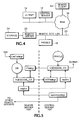
- the layout of the user plane is shown in Fig. 2 and the layout of the signaling plane is shown in Fig. 3.
- the protocols to be evaluated are the frame relay (FR), network service (NS), base station system GPRS protocol (BSSGP), the logical link control (LLC) and the GPRS mobility management and session management (GMM/SM).
- the requirements for call trace include tracing GPRS procedures on the Gb and Gr GPRS interfaces, with both real time and off-line GPRS procedure trace needed.
- the procedure trace on GPRS is applied network wide on all the GPRS Gb logical links and Gr signaling links available in the system. The user may view together the Gb and Gr results, if monitoring of these interfaces is available.
- the subscriber may complain: "Yesterday I wasn't able to get the GPRS service working" or "One hour ago my GPRS file transfer had a notably slow transfer rate.”
- the operator has to provide a reason why the service wasn't available and check the problem in the network, taking into account all the network entities that may be significant in the process, such as the cell, the BSS, the SGSN, the HLR, etc.
- the operator needs to store the GPRS Gb and Gr data of the network for a period of time, to analyze the stored GPRS data in a fast, easy way to get information about subscriber activity, to correlate Gb and Gr transactions as well as GPRS and GSM transactions and calls network wide, to analyze the GPRS Gb and Gr traffic in real time, and to display the results with different levels of detail.
- the straight forward way to have a multi-protocol procedure or call trace on GPRS is to store every packet data unit (PDU) from probes located at monitoring points in a centralized system and on demand from a user-client get the stored PDUs and decode and process them according to a trigger.
- PDU packet data unit
- the multi-protocol correlation may be done with more post-processing elaboration on the results of the previous process.
- This is not a fast, easy way to get the results of the procedure trace for the user.
- the problems of this approach are the bandwidth needed to get everything in a centralized repository and the extremely slow decoding process on huge amounts of PDUs. With this approach the results of a procedure trace applied on one day of GPRS data may be available after one day of processing.
- the present invention provides a method of multi-protocol call trace on GPRS Gb and Gr interfaces of a GSM network using distributed processing.
- Probes are situated at locations where measurements are desired in a monitored mobile network, such as at Gb and Gr interfaces, and are connected in a non-intrusive manner to the mobile network.
- a remote server is coupled to each probe over a local area network (LAN) to process data as it is acquired by the probe.
- the probe and remote server are coupled to a central server via a wide area network (WAN), as are client servers.
- the remote servers manage the probe data (packet data units - PDUs) in real time to create appropriate transactional and raw data indexes that are stored locally with the PDUs.
- Call/procedure trace applications are initiated from the client servers and disseminated by the central server to the remote servers.
- the remote servers provide results back to the central server which correlates the results and disseminates them back to the remote servers to obtain additional results for correlation.
- the results from the central server are provided to the client servers which display or visualize the results.
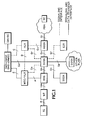
- a network monitoring system having a central server 12 that manages the system.
- Server clients 14 may be co-located with the central server or remotely connected via a wide area network (WAN) 16 .
- Probes 18 are situated at locations where measurements are desired, such as switches in the network being monitored, and are connected to the monitored network in a non-intrusive manner.
- a remote server 20 is connected via a local area network (LAN) 22 to the probes and is located at the measurement location.
- the remote server 20 and probes 18 are coupled to the central server 12 via the WAN 16 .
- a storage device 24 such as disk arrays, is coupled to the remote server 20 for storing raw PDU data and also is co-located with the probes 18 .
- the probes 18 are connected to the monitored network to collect all the PDUs and store them in the local storage device 24 .
- the remote server 20 manages the PDUs in real time to create appropriate indexing for them and provides a call/trace application on demand.
- the central server 12 collects the results from the remote server(s) 20 and aggregates them, and also communicates correlation triggers to the remote server(s).
- the clients 14 visualize or display the results, providing the graphic utilities to analyze them better including multi-windowing, arrow diagrams, text messages, etc.
- a GPRS/GSM subscriber is going to attach to the mobile network and start WEB browsing, and during this activity the subscriber receives a call from another subscriber so that an incoming GSM mobile call is appearing during the GPRS activity.
- the telecom network operator needs to trace the subscriber activity based only on its mobile station ISDN (MSISDN) telephone number as the user trigger.
- MSISDN mobile station ISDN
- Monitoring the Gr interface provides the correlation between the MSISDN and the international mobile subscriber identity (IMSI). This correlation is monitored following the incoming and outgoing messages pertaining to the "update location" and "insert subscriber data" messages transferred between the SGSN and the HLR. After this the IMSI is used to get all the GPRS GMM/SM messages in the Gb interface, correlating this information with the dynamic temporal logical link identifier (TLLI) addressing used typically in this interface.
- TLLI dynamic temporal logical link identifier
- the IMSI is used to correlate the incoming GSM call, because the BSSAP A-interface provides the PAGING message with IMSI/TMSI data that may be used to identify properly the incoming call. So at the end:
- This NET-GPRS system manages both the Gb and Gr signaling; correlates the Gb uplink and downlink information on the remote servers 20 rather than the probes 18 so that the probes don't have to exchange information real time but only monitor the signaling they see; manages dynamic addressing using TLLI information, typical of Gb signaling; and manages the TLLI/IMSI correspondence also outside the period of analysis that is typically needed for Gb signaling.
- More level index structures are used which are compiled by the probes 18 in real time and transferred to the local storage 24 of the co-located remote server 20 . These structures have two levels: a transactional level and a raw data index level.
- the remote server 20 is used to perform the search activities on user demand - a call/procedure trace session. In the remote server 20 an appropriate database program is used to reach better performances during the search activities. The correlation of the results is distributed between the remote server 20 and the central server 12 to allow multi-protocol correlation between GPRS Gb and Gr and between GSM and GPRS.
- the probes 18 store all the packet data units/message signal units (PDU/MSUs) in the raw data repository, i.e., the local storage 24 .
- the probes 18 decode the PDU/MSU.
- the probes 18 identify if a PDU belongs to a Gr transaction or to specific Gb procedures. For each Gr transaction and for each Gb GMM/SM PDU, the probes 18 compile an index record, named for this purpose a transactional detail record* (TDR*).
- TDR* transactional detail record*
- the TDR* has all the necessary subscriber information monitored by the PDU (IMSI, MSISDN number, etc.), and all the necessary information to identify all the PDU/MSUs related to this transaction (temporal logical link identifier - TLLI, routing area code/location area code - RAC/LAC, and international mobile subscriber identity - IMSI-- to identify the PDU related to a Gb procedure or the originating and destination identifiers, calling and called node identifiers for a Gr transaction). This information is denoted as parameters of signaling (PARSIGN).
- the TDR*s are transferred real time by the probes 18 to the local storage 24 .
- the probes 18 also compile another index structure, a "raw index file", inserting among other parameters the PARSIGN.
- the raw index file also is transferred by the probes 18 to the local storage 24 .
- the remote server 20 imports the TDR*s transferred by the probes 18 in an appropriate database structure with multi-indexing.
- the indexes are basically all triggers that may be used during search activities.
- the first phase is for the remote server 20 to look for the triggers in the database structure, such as the MSISDN, called or calling both, or the IMSI.
- the remote server 20 looks for correlated TDR*s, starting from those found in the search.
- the TDR*s are used in "correlation algorithms" to look for specific scenarios.
- the search is re-done at the remote server 20 with the TDR*s found by the other remote servers to allow correlation between more measurement sites. This dynamic correlation may be iterated until no more new TDR*s are found.
- the correlation algorithms are used to get more TDR*s and to merge the TDR*s belonging to the same scenario.
- the last phase begins with all the found TDR*s.
- Each remote server 20 gets all the PARSIGN information and with these keywords looks for the PDU/MSUs in the raw index files. Also time constraints coming from the TDR*s are used to look for less information in the raw index files.
- the resulting PDU/MSUs are sent to the central server 12 .
- the central server 12 processes these data, sorts them and inserts also text comments between them, if needed, to make the comprehension of the data flow easier - "the start of a GPRS connection" message is inserted before an attach request PDU.
- the results may be viewed in the clients 14 with different levels of detail: a synthetic window with only the synthetic view of the PDU/MSUs and the text messages; a complete detailed window with all the details about each PDU/MSU; a message window with the explanation in detail of each text message; a correlation window with all the information about the correlation process; a hexadecimal window for the hex view of the PDU/MSUs; or an arrow diagram providing a graphic representation of the data flow and text explanation.
- the layout of the software architecture is shown in Fig. 5.
- the TDR*s are input to a CdrTdrMgr module at the remote server 20 which processes them to import them into the database format for storage in the database 24 .
- a Vsession_CT module in both the remote and central servers 20, 12 is the core module for the call/procedure trace. The results from these modules are input to respective file manager modules in the opposing server. Also the output from the Vsession_CT module in the central server is distributed to a client 14 for viewing of the results. Also the RTFileMgr in the central server 12 polls the results of the different phases from the remote server 20. Respective reqSrv modules manage all other processes and start a new session. Finally a commandMgr module manages user commands from the client 14 .
- the present invention provides a fast, easy multi-protocol call/procedure trace on the GPRS Gb and Gr interfaces of a GPRS/GSM network by having a remote server at each monitoring site processing locally acquired PDU/MSUs on demand, using extensively the synthetic information provided real time by the probes (TDR*) and indexing this information appropriately with dynamic correlation of this information in a distributed architecture, managed with a remote server - central server handshaking of resulting information iteratively, so that the call/procedure trace application manages huge amounts of data while providing fast responses, minimizing bandwidth requirements and optimizing system resources.
Landscapes
- Engineering & Computer Science (AREA)
- Computer Networks & Wireless Communication (AREA)
- Signal Processing (AREA)
- Human Computer Interaction (AREA)
- Data Exchanges In Wide-Area Networks (AREA)
- Mobile Radio Communication Systems (AREA)
Applications Claiming Priority (2)
| Application Number | Priority Date | Filing Date | Title |
|---|---|---|---|
| US72724 | 2002-02-05 | ||
| US10/072,724 US6915110B2 (en) | 2002-02-05 | 2002-02-05 | Multi-protocol call trace on GPRS Gb-Gr |
Publications (3)
| Publication Number | Publication Date |
|---|---|
| EP1335526A2 true EP1335526A2 (de) | 2003-08-13 |
| EP1335526A3 EP1335526A3 (de) | 2004-08-04 |
| EP1335526B1 EP1335526B1 (de) | 2006-04-12 |
Family
ID=27610563
Family Applications (1)
| Application Number | Title | Priority Date | Filing Date |
|---|---|---|---|
| EP03250687A Expired - Lifetime EP1335526B1 (de) | 2002-02-05 | 2003-02-04 | Mehrfachprotokoll-Anrufverfolgung in GPRS Gb-Gr |
Country Status (3)
| Country | Link |
|---|---|
| US (1) | US6915110B2 (de) |
| EP (1) | EP1335526B1 (de) |
| DE (1) | DE60304496T2 (de) |
Cited By (2)
| Publication number | Priority date | Publication date | Assignee | Title |
|---|---|---|---|---|
| GB2428534A (en) * | 2005-07-20 | 2007-01-31 | Agilent Technologies Inc | Measuring a transit metric in a network |
| GB2429880A (en) * | 2005-09-01 | 2007-03-07 | Agilent Technologies Inc | Method for testing performance of a mobile telecommunications network |
Families Citing this family (9)
| Publication number | Priority date | Publication date | Assignee | Title |
|---|---|---|---|---|
| WO2005032186A1 (en) * | 2003-09-30 | 2005-04-07 | Telefonaktiebolaget Lm Ericsson (Publ) | Performance management of cellular mobile packet data networks |
| US20050250493A1 (en) * | 2003-11-14 | 2005-11-10 | Shany Elkarat | Terminated call control for roaming cellular telephony |
| US20070189273A1 (en) * | 2006-02-10 | 2007-08-16 | 3Com Corporation | Bi-planar network architecture |
| US20070049243A1 (en) * | 2005-09-01 | 2007-03-01 | Juergen Voss | Method and system for monitoring operation of a mobile telecommunications network |
| US8204500B2 (en) * | 2005-12-28 | 2012-06-19 | Starhome Gmbh | Optimal voicemail deposit for roaming cellular telephony |
| US20070226701A1 (en) * | 2006-03-23 | 2007-09-27 | Nokia Corporation | Automated central trace management |
| WO2008105687A1 (en) * | 2007-02-27 | 2008-09-04 | Telefonaktiebolaget Lm Ericsson (Publ) | Ordering tracing of wireless terminal activities |
| US9201752B2 (en) * | 2010-01-19 | 2015-12-01 | Ca, Inc. | System and method for correlating empirical data with user experience |
| US10798159B2 (en) * | 2017-07-26 | 2020-10-06 | Netapp, Inc. | Methods for managing workload throughput in a storage system and devices thereof |
Family Cites Families (5)
| Publication number | Priority date | Publication date | Assignee | Title |
|---|---|---|---|---|
| US5878420A (en) * | 1995-08-31 | 1999-03-02 | Compuware Corporation | Network monitoring and management system |
| US5958009A (en) * | 1997-02-27 | 1999-09-28 | Hewlett-Packard Company | System and method for efficiently monitoring quality of service in a distributed processing environment |
| DE19849578A1 (de) * | 1998-10-27 | 2000-01-13 | Siemens Ag | Verfahren und Mobilfunknetz zur Behandlung eines Paketdatendienstes |
| AU2001262958A1 (en) * | 2000-04-28 | 2001-11-12 | Internet Security Systems, Inc. | Method and system for managing computer security information |
| FR2809921B1 (fr) * | 2000-06-06 | 2002-08-16 | Nortel Matra Cellular | Procede pour le suivi de communications dans un systeme de radiocommunication cellulaire, et coeur de reseau mettant en oeuvre ce procede |
-
2002
- 2002-02-05 US US10/072,724 patent/US6915110B2/en not_active Expired - Fee Related
-
2003
- 2003-02-04 DE DE60304496T patent/DE60304496T2/de not_active Expired - Lifetime
- 2003-02-04 EP EP03250687A patent/EP1335526B1/de not_active Expired - Lifetime
Cited By (6)
| Publication number | Priority date | Publication date | Assignee | Title |
|---|---|---|---|---|
| GB2428534A (en) * | 2005-07-20 | 2007-01-31 | Agilent Technologies Inc | Measuring a transit metric in a network |
| GB2428534B (en) * | 2005-07-20 | 2010-06-02 | Agilent Technologies Inc | Measurement system and method of measuring a transit metric |
| US8331246B2 (en) | 2005-07-20 | 2012-12-11 | Jds Uniphase Corporation | Measurement system and method of measuring a transit metric |
| GB2429880A (en) * | 2005-09-01 | 2007-03-07 | Agilent Technologies Inc | Method for testing performance of a mobile telecommunications network |
| GB2429880B (en) * | 2005-09-01 | 2010-05-05 | Agilent Technologies Inc | Method for testing performance of a mobile telecommunications network |
| US8219075B2 (en) | 2005-09-01 | 2012-07-10 | Juergen Voss | Method for testing performance of a mobile telecommunications network |
Also Published As
| Publication number | Publication date |
|---|---|
| EP1335526B1 (de) | 2006-04-12 |
| US6915110B2 (en) | 2005-07-05 |
| US20030148755A1 (en) | 2003-08-07 |
| DE60304496D1 (de) | 2006-05-24 |
| DE60304496T2 (de) | 2006-12-21 |
| EP1335526A3 (de) | 2004-08-04 |
Similar Documents
| Publication | Publication Date | Title |
|---|---|---|
| US6785535B2 (en) | Method for monitoring communications in a cellular radiocommunication system, and network core therefor | |
| CA2550523C (en) | Method for determining mobile terminal performance in a running wireless network | |
| US7092398B2 (en) | System, method and computer program product for charging for competitive IP-over-wireless service | |
| EP1671506B1 (de) | Performance-management zellularer mobilpaketdatennetze | |
| CN1221155C (zh) | 在蜂窝无线电通信系统中监控通信的方法及其网络核心 | |
| US8750133B2 (en) | Method and monitoring component for network traffic monitoring | |
| EP1474941B1 (de) | Einrichtung zum testen eines paketvermittelten zellularfunknetzwerks | |
| US6915110B2 (en) | Multi-protocol call trace on GPRS Gb-Gr | |
| US7558585B2 (en) | Method of gathering location data of terminals in a communication network | |
| EP1570696B1 (de) | Verfahren und system zur positionierung in einem mobilkommunikationsnetz | |
| EP3050334B1 (de) | Verwaltung von roaming-informationen in der kommunikation | |
| Lin | OA&M for the GSM network | |
| US7580527B2 (en) | Communication monitoring in a mobile radio network | |
| CN103596156A (zh) | 生成含被叫方用户号码的呼叫明细记录的系统及方法 | |
| CN113727330B (zh) | 一种基于td-lte移动通信系统的用户信息处理方法和装置 | |
| CN113079524B (zh) | 一种基于信令软采的信令跟踪方法、基站及可读存储介质 | |
| KR100737685B1 (ko) | 무선인터넷 서비스 통합 로그 생성 시스템 및 그 방법 | |
| CN103596162A (zh) | 含被叫方用户号码的呼叫明细记录生成系统及生成方法 |
Legal Events
| Date | Code | Title | Description |
|---|---|---|---|
| PUAI | Public reference made under article 153(3) epc to a published international application that has entered the european phase |
Free format text: ORIGINAL CODE: 0009012 |
|
| AK | Designated contracting states |
Designated state(s): AT BE BG CH CY CZ DE DK EE ES FI FR GB GR HU IE IT LI LU MC NL PT SE SI SK TR |
|
| AX | Request for extension of the european patent |
Extension state: AL LT LV MK RO |
|
| RIN1 | Information on inventor provided before grant (corrected) |
Inventor name: BOVO, ANTONIO Inventor name: NICCHIO, ANDREA Inventor name: BIASUTTO, ALESSIO |
|
| RAP1 | Party data changed (applicant data changed or rights of an application transferred) |
Owner name: TEKTRONIX INTERNATIONAL SALES GMBH |
|
| PUAL | Search report despatched |
Free format text: ORIGINAL CODE: 0009013 |
|
| AK | Designated contracting states |
Kind code of ref document: A3 Designated state(s): AT BE BG CH CY CZ DE DK EE ES FI FR GB GR HU IE IT LI LU MC NL PT SE SI SK TR |
|
| AX | Request for extension of the european patent |
Extension state: AL LT LV MK RO |
|
| RIC1 | Information provided on ipc code assigned before grant |
Ipc: 7H 04L 12/56 B Ipc: 7H 04L 12/26 A |
|
| 17P | Request for examination filed |
Effective date: 20041108 |
|
| 17Q | First examination report despatched |
Effective date: 20041213 |
|
| AKX | Designation fees paid |
Designated state(s): DE FR GB IT |
|
| GRAP | Despatch of communication of intention to grant a patent |
Free format text: ORIGINAL CODE: EPIDOSNIGR1 |
|
| GRAS | Grant fee paid |
Free format text: ORIGINAL CODE: EPIDOSNIGR3 |
|
| GRAA | (expected) grant |
Free format text: ORIGINAL CODE: 0009210 |
|
| AK | Designated contracting states |
Kind code of ref document: B1 Designated state(s): DE FR GB IT |
|
| PG25 | Lapsed in a contracting state [announced via postgrant information from national office to epo] |
Ref country code: IT Free format text: LAPSE BECAUSE OF FAILURE TO SUBMIT A TRANSLATION OF THE DESCRIPTION OR TO PAY THE FEE WITHIN THE PRESCRIBED TIME-LIMIT;WARNING: LAPSES OF ITALIAN PATENTS WITH EFFECTIVE DATE BEFORE 2007 MAY HAVE OCCURRED AT ANY TIME BEFORE 2007. THE CORRECT EFFECTIVE DATE MAY BE DIFFERENT FROM THE ONE RECORDED. Effective date: 20060412 |
|
| REG | Reference to a national code |
Ref country code: GB Ref legal event code: FG4D |
|
| REF | Corresponds to: |
Ref document number: 60304496 Country of ref document: DE Date of ref document: 20060524 Kind code of ref document: P |
|
| ET | Fr: translation filed | ||
| PLBE | No opposition filed within time limit |
Free format text: ORIGINAL CODE: 0009261 |
|
| STAA | Information on the status of an ep patent application or granted ep patent |
Free format text: STATUS: NO OPPOSITION FILED WITHIN TIME LIMIT |
|
| 26N | No opposition filed |
Effective date: 20070115 |
|
| PGFP | Annual fee paid to national office [announced via postgrant information from national office to epo] |
Ref country code: FR Payment date: 20120227 Year of fee payment: 10 |
|
| PGFP | Annual fee paid to national office [announced via postgrant information from national office to epo] |
Ref country code: DE Payment date: 20120221 Year of fee payment: 10 |
|
| PGFP | Annual fee paid to national office [announced via postgrant information from national office to epo] |
Ref country code: GB Payment date: 20120221 Year of fee payment: 10 Ref country code: IT Payment date: 20120227 Year of fee payment: 10 |
|
| GBPC | Gb: european patent ceased through non-payment of renewal fee |
Effective date: 20130204 |
|
| REG | Reference to a national code |
Ref country code: FR Ref legal event code: ST Effective date: 20131031 |
|
| REG | Reference to a national code |
Ref country code: DE Ref legal event code: R119 Ref document number: 60304496 Country of ref document: DE Effective date: 20130903 |
|
| PG25 | Lapsed in a contracting state [announced via postgrant information from national office to epo] |
Ref country code: IT Free format text: LAPSE BECAUSE OF NON-PAYMENT OF DUE FEES Effective date: 20130204 |
|
| PG25 | Lapsed in a contracting state [announced via postgrant information from national office to epo] |
Ref country code: DE Free format text: LAPSE BECAUSE OF NON-PAYMENT OF DUE FEES Effective date: 20130903 Ref country code: GB Free format text: LAPSE BECAUSE OF NON-PAYMENT OF DUE FEES Effective date: 20130204 Ref country code: FR Free format text: LAPSE BECAUSE OF NON-PAYMENT OF DUE FEES Effective date: 20130228 |