EP1338947A1 - Un sous-système pour la gestion des états de l'alimentation et procédé pour changer l'état de l'alimentation d'un système ordinateur - Google Patents
Un sous-système pour la gestion des états de l'alimentation et procédé pour changer l'état de l'alimentation d'un système ordinateur Download PDFInfo
- Publication number
- EP1338947A1 EP1338947A1 EP02354034A EP02354034A EP1338947A1 EP 1338947 A1 EP1338947 A1 EP 1338947A1 EP 02354034 A EP02354034 A EP 02354034A EP 02354034 A EP02354034 A EP 02354034A EP 1338947 A1 EP1338947 A1 EP 1338947A1
- Authority
- EP
- European Patent Office
- Prior art keywords
- power state
- sub
- change
- receiver
- power
- Prior art date
- Legal status (The legal status is an assumption and is not a legal conclusion. Google has not performed a legal analysis and makes no representation as to the accuracy of the status listed.)
- Withdrawn
Links
Images

Classifications
-
- G—PHYSICS
- G06—COMPUTING OR CALCULATING; COUNTING
- G06F—ELECTRIC DIGITAL DATA PROCESSING
- G06F3/00—Input arrangements for transferring data to be processed into a form capable of being handled by the computer; Output arrangements for transferring data from processing unit to output unit, e.g. interface arrangements
- G06F3/01—Input arrangements or combined input and output arrangements for interaction between user and computer
- G06F3/03—Arrangements for converting the position or the displacement of a member into a coded form
- G06F3/033—Pointing devices displaced or positioned by the user, e.g. mice, trackballs, pens or joysticks; Accessories therefor
- G06F3/038—Control and interface arrangements therefor, e.g. drivers or device-embedded control circuitry
-
- G—PHYSICS
- G06—COMPUTING OR CALCULATING; COUNTING
- G06F—ELECTRIC DIGITAL DATA PROCESSING
- G06F1/00—Details not covered by groups G06F3/00 - G06F13/00 and G06F21/00
- G06F1/26—Power supply means, e.g. regulation thereof
- G06F1/32—Means for saving power
- G06F1/3203—Power management, i.e. event-based initiation of a power-saving mode
- G06F1/3206—Monitoring of events, devices or parameters that trigger a change in power modality
- G06F1/3215—Monitoring of peripheral devices
-
- G—PHYSICS
- G06—COMPUTING OR CALCULATING; COUNTING
- G06F—ELECTRIC DIGITAL DATA PROCESSING
- G06F21/00—Security arrangements for protecting computers, components thereof, programs or data against unauthorised activity
- G06F21/70—Protecting specific internal or peripheral components, in which the protection of a component leads to protection of the entire computer
- G06F21/81—Protecting specific internal or peripheral components, in which the protection of a component leads to protection of the entire computer by operating on the power supply, e.g. enabling or disabling power-on, sleep or resume operations
Definitions
- This invention relates to the general field of computer systems and relates, in particular, although not exclusively, to the field of power state subsystems which are operative to control the various power states that the system is able to adopt.
- the ACPI Advanced Configuration and Power Interface
- S0 in which the CPU is operating normally, and in which a relatively high amount of power is consumed
- S5 in which no power is supplied to the CPU and in which the overall amount of power required by the system is very low (typically less than 5 watts).
- the S1, S2, S3 and S4 states reflect progressively lower degrees of CPU activity and overall power consumption, with transitions between the states typically occurring when the associated computer has been idle for a specific length of time or when a peripheral device requests the system to adopt a higher (i.e. increased activity) power state to allow the device to function correctly.
- a "fully on" PC when connected to a network, can contribute to a decrease in the rate of flow of network traffic, with a primary object of the present invention thus being to provide a power state sub-system that is readily controllable in order to overcome or at least reduce these and other problems.
- a power state sub-system operative to change the system's power state
- the sub-system having a receiver operative to receive wireless control instructions and a control element operative, in response to such instructions, to effect a change in the system's power state.
- the receiver may be powered independently of the computer system, whereby its ability to receive control instructions is unaffected by the system's power state.
- the control instructions may specify a particular power state to which a transition is required.
- the change in power state involves a toggle between defined power states. In this way, a single control instruction may be used to effect transitions between upper and lower power states.
- the lower power state preferably is one in which the system context is saved.
- the software context i.e. status and content of any applications running
- the context is recorded, thus allowing the context to be restored when the higher power state is resumed.
- the system context may be saved to a system memory, preferably a volatile system memory such as RAM.
- the system context may be saved to a non-volatile storage device such as a hard disk drive (HDD).
- HDD hard disk drive
- the change in the system's power state may be effected using a ring indicator RI, USB or other such power management event (PME) signal.
- PME power management event
- a receiver may be connected to an appropriate serial, parallel or USB port with a predetermined signal generated by, or on the instruction of, the receiver, being sent to the port concerned.
- the wireless control instructions may include an identifier with the system's power state only being changed where the identifier is recognised.
- the identifier may be variable in accordance with a user's actions, whereby a user may selectively change the power state of one of a plurality of computer systems.
- the control instruction may be transmitted using an infrared or a radio frequency carrier.
- a method of changing the power state of a selected system comprising generating a control instruction and effecting a wireless transmission of the control instruction towards a receiver, whereby a control element, in response to the instruction, effects a change in the selected system's power state, the control instruction including a system identifier such that the power state change is effected in the selected system.
- the system identifier may be variable in accordance with a user's actions, whereby a user may selectively change the power state of one or more of the systems.
- the control instruction may be transmitted using an infrared or a radio frequency carrier.
- the invention in its second aspect, may comprise one or more of the features described in relation to the first aspect.
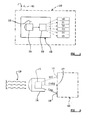
- Figure 1 shows a computer system 10, powered from a mains outlet 11, and a power state sub-system 12, itself powered from a separate mains outlet 13.
- the computer system 10 is intended to represent the key aspects of a PC, whose operation is influenced by the power state adopted by the system at a given time.
- the computer system 10 is not to be interpreted simply as referring to computer (e.g. PC) systems per se, but is intended also to encompass computerised systems such as those that may be found in a variety of devices such as printers, scanners, copiers, servers, fax machines and the like.
- the computer system is able to adopt one of a plurality of discrete power states (S0, S1, S2, S3, S4 and S5) such as are defined, from time to time, by industry-wide standards.
- S0 to S5 power states also known as sleep states
- ACPI Advanced Configuration and Power Interface
- S0 sleep state representing the highest level of system activity
- S5 the lowest.
- the power state sub-system 12 features a receiver 14 and a control element 15 which, in response to wireless instructions received by the receiver 14, effects a change in the system's power state, as explained in more detail below.
- the receiver 14 is a standalone infrared receiver, although it will be understood that other wireless carriers (such as RF) could similarly be employed.
- FIG. 2 illustrates how the receiver 14 may be connected to the computer system 10.
- control signals may be sent from the control element 15 to the system 10 via a standard serial (COM) port 16, a USB port 17 or via a network (LAN) port 18.
- COM serial
- LAN network
- the different types of control signal are indicated by RI#, USB# and LAN, with the incoming wireless control instructions being shown generally at 19.
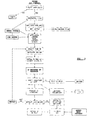
- Figure 3 shows, in a flow diagram manner, how the power state sub-system can be initialised and how a specific identifier (I.D.) may be assigned to a particular computer system.
- I.D. specific identifier
- detection software checks whether any appropriate (e.g. IR or RF) receivers are connected. Where no such receiver is found, an error message is generated, although where a relevant receiver is found, the associated port is configured, under software control.
- the software then initialises the receiver by configuring a hard-coded program (HCP) contained therein, and specifically, by setting an initialisation flag in the HCP memory. This indicates that the receiver is currently in the process of being initialised.
- HCP hard-coded program
- a driver (a serial driver where a serial COM port is used: a USB driver where the USB port is used) is associated with the relevant control signal.
- a serial driver where a serial COM port is used: a USB driver where the USB port is used
- RI# ring indicator
- USB# USB#
- the software then generates and displays a dialogue box indicating that the computer system has adopted a "ready" mode and that the receiver is awaiting a wireless instruction from an appropriate remote control device. Similarly, the system software is awaiting a signal from the serial/USB driver, as appropriate.
- a user then presses a particular key (or sequence of keys) on a remote control handset (not shown) with the key or key sequence corresponding to an ID which will be used to effect a change in the power state of a specified computer system.
- This ID is then sent from the handset to the receiver, and is received and analysed by the receiver's HCP.
- the HCP passes the thus-analysed ID to a buffer of the appropriate port and generates a RI#/USB# signal, as appropriate.
- This signal is passed to the Operating System and the serial/USB driver obtains the thus-analysed ID from the buffer.
- the system software displays the chosen ID on a screen, and seeks confirmation from the user that the ID is correct.
- the same key or key/sequence is entered into the remote control handset and transmitted to the receiver, in the manner described above.
- the system software analyses the repeat signal and compares the analysed signal with the ID first received. Where a match is not found, the ID selection steps are repeated. Where a match is found, however, the system software stores the ID in a system registry (e.g. a Windows® Registry) and launches an Application Program Interface (API) that is operative to await a power state control signal emanating from the HCP.
- a system registry e.g. a Windows® Registry
- API Application Program Interface
- the boot process of the system concerned is amended slightly to ensure that the API is run each time the computer system is booted.
- the API sends a command to the HCP for the HCP to store the thus-confirmed ID.
- the relevant ID is input into the remote handset and the thus-generated instruction is transmitted wirelessly towards the receiver concerned.
- the HCP of the receiver analyses the instructions and checks whether the thus-analysed ID matches that which is stored in the HCP memory. If no match is found, the ID is designated "not recognised” and no further action is taken.
- the HCP Where is match is found, and the ID is recognised, the HCP generates a RI# or USB# signal (depending on whether the receiver is connected to the system's serial COM or USB port) with the incoming RI#/USB# signal being intercepted by the appropriate driver and forwarded, using the API, to the ACPI functionality located within the main Operating System.
- the ACPI is operative to effect a downward transition to a sleep state such as S3.
- the system context e.g. data and application content
- the system context is saved to a volatile memory portion (such as the RAM) of the system.
- a downward transition to an S4 sleep state may be effected, in which case the system context is saved to a non-volatile storage device such as a HDD.
- the OS also then informs the chipset of the various signals and events (RI#, USB# or PME, for example) that are intended to wake the system from the sleep state, at some point in the future.
- the Operating System instructs the BIOS and chipset to prepare to enter the appropriate sleep state which, in the case of S3, halts operation of the CPU.
- the Operating System effects a more thorough "power-off" of the system.
- the ACPI finds that the system is in a "sleeping” state (such as S3 or S4), the ACPI is operative to generate a "wake” signal, thus bringing the system up to the S0 working state, for example.
- the CPU recommences operation: where an S4 awakening occurs, however, power must first be restored to the system. Whichever occurs, the BIOS initially takes control, passing it promptly to the Operating System in the case of an S3 awakening. Where an S4 awakening is effected, the BIOS executes a rapid reboot and then passes control to the Operating System. Where the system has been woken from an S3 or S4 sleep state, the system context (including any open application or uncompleted tasks) is restored, under OS control, meaning that the system is returned to the exact point that it was at when the system entered the S3/S4 sleep state.
- the thus-awoken system is rendered “visible” to any network components to which it may be connected, in contrast to its "invisible” status that corresponds to the system's sleep states.
- the invention allows selected computer systems to be powered up or down in accordance with a user request, on a wireless remote basis, with the power state of the computer having no influence on the ability of the wireless receiver to initiate the power state change, as the receiver is powered independently of the system concerned.
- the invention effectively allows computer system network elements, equipped with appropriately configured wireless receivers, to be added to, or removed from, a network topology by altering their power states and thus whether or not they play any substantial part in network activity.
- the remote and wireless operability of the invention allows power state changes to be made to relatively inaccessible systems such as may be found, for example, in industrial workplaces, where the systems may be protected by safety screens and the like.
Landscapes
- Engineering & Computer Science (AREA)
- Theoretical Computer Science (AREA)
- General Engineering & Computer Science (AREA)
- Physics & Mathematics (AREA)
- General Physics & Mathematics (AREA)
- Computer Hardware Design (AREA)
- Human Computer Interaction (AREA)
- Computer Security & Cryptography (AREA)
- Software Systems (AREA)
- Power Sources (AREA)
Priority Applications (2)
| Application Number | Priority Date | Filing Date | Title |
|---|---|---|---|
| EP02354034A EP1338947A1 (fr) | 2002-02-22 | 2002-02-22 | Un sous-système pour la gestion des états de l'alimentation et procédé pour changer l'état de l'alimentation d'un système ordinateur |
| US10/371,180 US20030233591A1 (en) | 2002-02-22 | 2003-02-24 | Power state sub-system and a method of changing the power state of a selected computer system |
Applications Claiming Priority (1)
| Application Number | Priority Date | Filing Date | Title |
|---|---|---|---|
| EP02354034A EP1338947A1 (fr) | 2002-02-22 | 2002-02-22 | Un sous-système pour la gestion des états de l'alimentation et procédé pour changer l'état de l'alimentation d'un système ordinateur |
Publications (1)
| Publication Number | Publication Date |
|---|---|
| EP1338947A1 true EP1338947A1 (fr) | 2003-08-27 |
Family
ID=27635909
Family Applications (1)
| Application Number | Title | Priority Date | Filing Date |
|---|---|---|---|
| EP02354034A Withdrawn EP1338947A1 (fr) | 2002-02-22 | 2002-02-22 | Un sous-système pour la gestion des états de l'alimentation et procédé pour changer l'état de l'alimentation d'un système ordinateur |
Country Status (2)
| Country | Link |
|---|---|
| US (1) | US20030233591A1 (fr) |
| EP (1) | EP1338947A1 (fr) |
Cited By (2)
| Publication number | Priority date | Publication date | Assignee | Title |
|---|---|---|---|---|
| WO2005050426A1 (fr) * | 2003-11-19 | 2005-06-02 | Sony Computer Entertainment Inc. | Procede, terminal et systeme de communication |
| WO2014035534A1 (fr) * | 2012-08-28 | 2014-03-06 | Intel Corporation | Mécanisme pour améliorer des trajets de fonctionnement efficaces pour des dispositifs de stockage dans des systèmes informatiques |
Families Citing this family (11)
| Publication number | Priority date | Publication date | Assignee | Title |
|---|---|---|---|---|
| US20060143485A1 (en) * | 2004-12-28 | 2006-06-29 | Alon Naveh | Techniques to manage power for a mobile device |
| US7664970B2 (en) | 2005-12-30 | 2010-02-16 | Intel Corporation | Method and apparatus for a zero voltage processor sleep state |
| TWI283342B (en) * | 2005-04-29 | 2007-07-01 | Quanta Comp Inc | Wireless control system |
| US7971081B2 (en) * | 2007-12-28 | 2011-06-28 | Intel Corporation | System and method for fast platform hibernate and resume |
| CN103959234B (zh) | 2011-10-01 | 2017-11-07 | 英特尔公司 | 计算系统的快速平台休眠与恢复 |
| US8984316B2 (en) | 2011-12-29 | 2015-03-17 | Intel Corporation | Fast platform hibernation and resumption of computing systems providing secure storage of context data |
| US9436268B2 (en) | 2012-09-27 | 2016-09-06 | Hewlett-Packard Development Company, L.P. | System power control using a power supply to provide voltage to subsystems in which a subsystem determines its operating state based on the voltage received by the subsystem |
| US9032139B2 (en) | 2012-12-28 | 2015-05-12 | Intel Corporation | Memory allocation for fast platform hibernation and resumption of computing systems |
| US11934249B2 (en) * | 2022-03-31 | 2024-03-19 | Intel Corporation | Methods and apparatus to manage energy usage and compute performance |
| EP4639290A1 (fr) * | 2022-12-23 | 2025-10-29 | Harman International Industries, Incorporated | Systèmes et procédés de commande de démarrage d'un système de véhicule |
| US12530069B2 (en) * | 2023-06-15 | 2026-01-20 | Dell Products L.P. | Managing power state triggering conditions of an information handling system |
Citations (4)
| Publication number | Priority date | Publication date | Assignee | Title |
|---|---|---|---|---|
| JPH02304611A (ja) * | 1989-05-19 | 1990-12-18 | Nec Corp | ワイヤレスキーボード |
| JPH11126134A (ja) * | 1997-10-23 | 1999-05-11 | Hitachi Ltd | 入力装置の共有化方法 |
| US20010020276A1 (en) * | 2000-03-02 | 2001-09-06 | Hong-Sam Kim | Method for automatically verifying security code of computer system operated by remote controller |
| US6308278B1 (en) * | 1997-12-29 | 2001-10-23 | Intel Corporation | Supplying standby voltage to memory and wakeup circuitry to wake a computer from a low power mode |
Family Cites Families (16)
| Publication number | Priority date | Publication date | Assignee | Title |
|---|---|---|---|---|
| DE69432661T2 (de) * | 1994-01-14 | 2004-03-25 | Sun Microsystems, Inc., Mountain View | Intelligenter Schalter |
| AUPN455695A0 (en) * | 1995-08-01 | 1995-08-24 | Canon Kabushiki Kaisha | Qam spread spectrum demodulation system |
| US5802305A (en) * | 1996-05-17 | 1998-09-01 | Microsoft Corporation | System for remotely waking a sleeping computer in power down state by comparing incoming packet to the list of packets storing on network interface card |
| US5896512A (en) * | 1996-09-11 | 1999-04-20 | Lucent Technologies Inc. | Modified network interface unit with terminal device access |
| US6182146B1 (en) * | 1997-06-27 | 2001-01-30 | Compuware Corporation | Automatic identification of application protocols through dynamic mapping of application-port associations |
| US5918059A (en) * | 1997-08-15 | 1999-06-29 | Compaq Computer Corporation | Method and apparatus for responding to actuation of a power supply switch for a computing system |
| JPH11161385A (ja) * | 1997-11-28 | 1999-06-18 | Toshiba Corp | コンピュータシステムおよびそのシステムステート制御方法 |
| JP3563256B2 (ja) * | 1998-02-13 | 2004-09-08 | 富士通株式会社 | 省電力機能の遠隔制御方法、情報処理装置及び記憶媒体 |
| US6119194A (en) * | 1998-03-19 | 2000-09-12 | Advanced Micro Devices, Inc. | Method and apparatus for monitoring universal serial bus activity |
| US6271752B1 (en) * | 1998-10-02 | 2001-08-07 | Lucent Technologies, Inc. | Intelligent multi-access system |
| US6493824B1 (en) * | 1999-02-19 | 2002-12-10 | Compaq Information Technologies Group, L.P. | Secure system for remotely waking a computer in a power-down state |
| US6571341B1 (en) * | 1999-07-23 | 2003-05-27 | Intel Corporation | Using a hardware-driven event to wake a computer from a sleeping state |
| JP3331595B2 (ja) * | 2000-06-05 | 2002-10-07 | 日東紡績株式会社 | 室内環境設計システム、室内環境評価システム、室内環境設計方法及び室内環境評価方法 |
| TWM249366U (en) * | 2001-01-02 | 2004-11-01 | Z Com Inc | Radio signal detection device of wireless local area network |
| JP2003078535A (ja) * | 2001-06-21 | 2003-03-14 | Allied Tereshisu Kk | 無線lanにおけるmacアドレス管理方法、無線lan用macアドレス管理プログラム、無線lan用macアドレス管理プログラムを記録した記録媒体、無線lan用固定局及び無線lanシステム |
| JP2003087271A (ja) * | 2001-09-12 | 2003-03-20 | Allied Tereshisu Kk | 無線lanシステムにおけるパケットの無限転送回避方法、パケット無限転送回避処理プログラム、パケット無限転送回避処理プログラムを記録した記録媒体、無線中継機及び無線lanシステム |
-
2002
- 2002-02-22 EP EP02354034A patent/EP1338947A1/fr not_active Withdrawn
-
2003
- 2003-02-24 US US10/371,180 patent/US20030233591A1/en not_active Abandoned
Patent Citations (4)
| Publication number | Priority date | Publication date | Assignee | Title |
|---|---|---|---|---|
| JPH02304611A (ja) * | 1989-05-19 | 1990-12-18 | Nec Corp | ワイヤレスキーボード |
| JPH11126134A (ja) * | 1997-10-23 | 1999-05-11 | Hitachi Ltd | 入力装置の共有化方法 |
| US6308278B1 (en) * | 1997-12-29 | 2001-10-23 | Intel Corporation | Supplying standby voltage to memory and wakeup circuitry to wake a computer from a low power mode |
| US20010020276A1 (en) * | 2000-03-02 | 2001-09-06 | Hong-Sam Kim | Method for automatically verifying security code of computer system operated by remote controller |
Non-Patent Citations (2)
| Title |
|---|
| PATENT ABSTRACTS OF JAPAN vol. 015, no. 088 (P - 1174) 4 March 1991 (1991-03-04) * |
| PATENT ABSTRACTS OF JAPAN vol. 1999, no. 10 31 August 1999 (1999-08-31) * |
Cited By (3)
| Publication number | Priority date | Publication date | Assignee | Title |
|---|---|---|---|---|
| WO2005050426A1 (fr) * | 2003-11-19 | 2005-06-02 | Sony Computer Entertainment Inc. | Procede, terminal et systeme de communication |
| WO2014035534A1 (fr) * | 2012-08-28 | 2014-03-06 | Intel Corporation | Mécanisme pour améliorer des trajets de fonctionnement efficaces pour des dispositifs de stockage dans des systèmes informatiques |
| US9207749B2 (en) | 2012-08-28 | 2015-12-08 | Intel Corporation | Mechanism for facilitating efficient operations paths for storage devices in computing systems |
Also Published As
| Publication number | Publication date |
|---|---|
| US20030233591A1 (en) | 2003-12-18 |
Similar Documents
| Publication | Publication Date | Title |
|---|---|---|
| CN1584788B (zh) | 计算机系统功率策略调整方法和设备以及相联系的计算机系统 | |
| US6760850B1 (en) | Method and apparatus executing power on self test code to enable a wakeup device for a computer system responsive to detecting an AC power source | |
| US6105142A (en) | Intelligent power management interface for computer system hardware | |
| US8032773B2 (en) | Power-saving control apparatus and method for computer system in standby mode | |
| US6360327B1 (en) | System with control registers for managing computer legacy peripheral devices using an advanced configuration power interface software power management system | |
| US8677117B2 (en) | Remote management of boot application | |
| US5978923A (en) | Method and apparatus for a computer power management function including selective sleep states | |
| US6715088B1 (en) | Method, apparatus and memory medium storing a program controlling power consumption of an electronic apparatus while connected to a network by constantly supplying status information to a management apparatus, over the network | |
| US7437575B2 (en) | Low power mode for device power management | |
| US7698584B2 (en) | Method, apparatus and system for enabling a new data processing device operating state | |
| US6285406B1 (en) | Power management schemes for apparatus with converged functionalities | |
| US8522054B2 (en) | Stand-by mode management method for use in a stand-by mode of a computer system with stand-by mode management module | |
| US20090083560A1 (en) | Computing Device Power Management | |
| EP1338947A1 (fr) | Un sous-système pour la gestion des états de l'alimentation et procédé pour changer l'état de l'alimentation d'un système ordinateur | |
| US7334138B2 (en) | Windows-driven power management for peripheral devices in a computer system | |
| JP3789792B2 (ja) | 携帯型コンピュータシステム及びその制御方法 | |
| US20110239019A1 (en) | Method and system for managing power consumption of a computing device | |
| US6282662B1 (en) | Power management override for portable computers | |
| KR950001418B1 (ko) | 세트업 기능 및 폽업 기능을 구비한 휴대용 컴퓨터의 폽업 제어 시스템 | |
| CN103019365B (zh) | 计算机、遥控系统、计算机控制方法以及遥控方法 | |
| US9672048B2 (en) | Electronic device and method for waking up operating system thereof | |
| US20090091538A1 (en) | Computer system and a method for determining whether a hot key is triggered | |
| US7636861B2 (en) | Bus technique for controlling power states of blades in a blade enclosure | |
| US20060053320A1 (en) | Data processing system capable of reducing power consumption and method of the same | |
| US8140878B2 (en) | Power conservation technique for blade computer systems |
Legal Events
| Date | Code | Title | Description |
|---|---|---|---|
| PUAI | Public reference made under article 153(3) epc to a published international application that has entered the european phase |
Free format text: ORIGINAL CODE: 0009012 |
|
| AK | Designated contracting states |
Designated state(s): AT BE CH CY DE DK ES FI FR GB GR IE IT LI LU MC NL PT SE TR |
|
| AX | Request for extension of the european patent |
Extension state: AL LT LV MK RO SI |
|
| 17P | Request for examination filed |
Effective date: 20040227 |
|
| AKX | Designation fees paid |
Designated state(s): DE FR GB |
|
| STAA | Information on the status of an ep patent application or granted ep patent |
Free format text: STATUS: THE APPLICATION IS DEEMED TO BE WITHDRAWN |
|
| 18D | Application deemed to be withdrawn |
Effective date: 20060909 |