EP1339187A2 - Transmission d'information à volume réduit de données d'identification - Google Patents
Transmission d'information à volume réduit de données d'identification Download PDFInfo
- Publication number
- EP1339187A2 EP1339187A2 EP02025054A EP02025054A EP1339187A2 EP 1339187 A2 EP1339187 A2 EP 1339187A2 EP 02025054 A EP02025054 A EP 02025054A EP 02025054 A EP02025054 A EP 02025054A EP 1339187 A2 EP1339187 A2 EP 1339187A2
- Authority
- EP
- European Patent Office
- Prior art keywords
- information
- identification
- types
- codes
- base station
- Prior art date
- Legal status (The legal status is an assumption and is not a legal conclusion. Google has not performed a legal analysis and makes no representation as to the accuracy of the status listed.)
- Granted
Links
Images


Classifications
-
- H—ELECTRICITY
- H04—ELECTRIC COMMUNICATION TECHNIQUE
- H04L—TRANSMISSION OF DIGITAL INFORMATION, e.g. TELEGRAPHIC COMMUNICATION
- H04L1/00—Arrangements for detecting or preventing errors in the information received
- H04L1/0001—Systems modifying transmission characteristics according to link quality, e.g. power backoff
- H04L1/0023—Systems modifying transmission characteristics according to link quality, e.g. power backoff characterised by the signalling
- H04L1/0025—Transmission of mode-switching indication
-
- H—ELECTRICITY
- H04—ELECTRIC COMMUNICATION TECHNIQUE
- H04B—TRANSMISSION
- H04B1/00—Details of transmission systems, not covered by a single one of groups H04B3/00 - H04B13/00; Details of transmission systems not characterised by the medium used for transmission
- H04B1/66—Details of transmission systems, not covered by a single one of groups H04B3/00 - H04B13/00; Details of transmission systems not characterised by the medium used for transmission for reducing bandwidth of signals; for improving efficiency of transmission
-
- H—ELECTRICITY
- H04—ELECTRIC COMMUNICATION TECHNIQUE
- H04B—TRANSMISSION
- H04B1/00—Details of transmission systems, not covered by a single one of groups H04B3/00 - H04B13/00; Details of transmission systems not characterised by the medium used for transmission
- H04B1/69—Spread spectrum techniques
- H04B1/707—Spread spectrum techniques using direct sequence modulation
-
- H—ELECTRICITY
- H04—ELECTRIC COMMUNICATION TECHNIQUE
- H04B—TRANSMISSION
- H04B7/00—Radio transmission systems, i.e. using radiation field
- H04B7/14—Relay systems
- H04B7/15—Active relay systems
- H04B7/185—Space-based or airborne stations; Stations for satellite systems
- H04B7/1853—Satellite systems for providing telephony service to a mobile station, i.e. mobile satellite service
- H04B7/18563—Arrangements for interconnecting multiple systems
-
- H—ELECTRICITY
- H04—ELECTRIC COMMUNICATION TECHNIQUE
- H04B—TRANSMISSION
- H04B7/00—Radio transmission systems, i.e. using radiation field
- H04B7/24—Radio transmission systems, i.e. using radiation field for communication between two or more posts
- H04B7/26—Radio transmission systems, i.e. using radiation field for communication between two or more posts at least one of which is mobile
- H04B7/2628—Radio transmission systems, i.e. using radiation field for communication between two or more posts at least one of which is mobile using code-division multiple access [CDMA] or spread spectrum multiple access [SSMA]
- H04B7/264—Radio transmission systems, i.e. using radiation field for communication between two or more posts at least one of which is mobile using code-division multiple access [CDMA] or spread spectrum multiple access [SSMA] for data rate control
-
- H—ELECTRICITY
- H04—ELECTRIC COMMUNICATION TECHNIQUE
- H04J—MULTIPLEX COMMUNICATION
- H04J13/00—Code division multiplex systems
-
- H—ELECTRICITY
- H04—ELECTRIC COMMUNICATION TECHNIQUE
- H04J—MULTIPLEX COMMUNICATION
- H04J13/00—Code division multiplex systems
- H04J13/10—Code generation
-
- H—ELECTRICITY
- H04—ELECTRIC COMMUNICATION TECHNIQUE
- H04L—TRANSMISSION OF DIGITAL INFORMATION, e.g. TELEGRAPHIC COMMUNICATION
- H04L1/00—Arrangements for detecting or preventing errors in the information received
- H04L1/0001—Systems modifying transmission characteristics according to link quality, e.g. power backoff
-
- H—ELECTRICITY
- H04—ELECTRIC COMMUNICATION TECHNIQUE
- H04L—TRANSMISSION OF DIGITAL INFORMATION, e.g. TELEGRAPHIC COMMUNICATION
- H04L1/00—Arrangements for detecting or preventing errors in the information received
- H04L1/0001—Systems modifying transmission characteristics according to link quality, e.g. power backoff
- H04L1/0006—Systems modifying transmission characteristics according to link quality, e.g. power backoff by adapting the transmission format
- H04L1/0007—Systems modifying transmission characteristics according to link quality, e.g. power backoff by adapting the transmission format by modifying the frame length
-
- H—ELECTRICITY
- H04—ELECTRIC COMMUNICATION TECHNIQUE
- H04L—TRANSMISSION OF DIGITAL INFORMATION, e.g. TELEGRAPHIC COMMUNICATION
- H04L1/00—Arrangements for detecting or preventing errors in the information received
- H04L1/0001—Systems modifying transmission characteristics according to link quality, e.g. power backoff
- H04L1/0009—Systems modifying transmission characteristics according to link quality, e.g. power backoff by adapting the channel coding
-
- H—ELECTRICITY
- H04—ELECTRIC COMMUNICATION TECHNIQUE
- H04L—TRANSMISSION OF DIGITAL INFORMATION, e.g. TELEGRAPHIC COMMUNICATION
- H04L1/00—Arrangements for detecting or preventing errors in the information received
- H04L1/0001—Systems modifying transmission characteristics according to link quality, e.g. power backoff
- H04L1/0023—Systems modifying transmission characteristics according to link quality, e.g. power backoff characterised by the signalling
- H04L1/0028—Formatting
- H04L1/0029—Reduction of the amount of signalling, e.g. retention of useful signalling or differential signalling
-
- H—ELECTRICITY
- H04—ELECTRIC COMMUNICATION TECHNIQUE
- H04L—TRANSMISSION OF DIGITAL INFORMATION, e.g. TELEGRAPHIC COMMUNICATION
- H04L1/00—Arrangements for detecting or preventing errors in the information received
- H04L1/0078—Avoidance of errors by organising the transmitted data in a format specifically designed to deal with errors, e.g. location
- H04L1/0083—Formatting with frames or packets; Protocol or part of protocol for error control
-
- H—ELECTRICITY
- H04—ELECTRIC COMMUNICATION TECHNIQUE
- H04L—TRANSMISSION OF DIGITAL INFORMATION, e.g. TELEGRAPHIC COMMUNICATION
- H04L27/00—Modulated-carrier systems
- H04L27/0012—Modulated-carrier systems arrangements for identifying the type of modulation
-
- H—ELECTRICITY
- H04—ELECTRIC COMMUNICATION TECHNIQUE
- H04W—WIRELESS COMMUNICATION NETWORKS
- H04W28/00—Network traffic management; Network resource management
- H04W28/02—Traffic management, e.g. flow control or congestion control
- H04W28/04—Error control
-
- H—ELECTRICITY
- H04—ELECTRIC COMMUNICATION TECHNIQUE
- H04W—WIRELESS COMMUNICATION NETWORKS
- H04W28/00—Network traffic management; Network resource management
- H04W28/02—Traffic management, e.g. flow control or congestion control
- H04W28/06—Optimizing the usage of the radio link, e.g. header compression, information sizing, discarding information
-
- H—ELECTRICITY
- H04—ELECTRIC COMMUNICATION TECHNIQUE
- H04B—TRANSMISSION
- H04B1/00—Details of transmission systems, not covered by a single one of groups H04B3/00 - H04B13/00; Details of transmission systems not characterised by the medium used for transmission
- H04B1/69—Spread spectrum techniques
- H04B1/707—Spread spectrum techniques using direct sequence modulation
- H04B1/7073—Synchronisation aspects
- H04B1/70735—Code identification
-
- H—ELECTRICITY
- H04—ELECTRIC COMMUNICATION TECHNIQUE
- H04B—TRANSMISSION
- H04B2201/00—Indexing scheme relating to details of transmission systems not covered by a single group of H04B3/00 - H04B13/00
- H04B2201/69—Orthogonal indexing scheme relating to spread spectrum techniques in general
- H04B2201/707—Orthogonal indexing scheme relating to spread spectrum techniques in general relating to direct sequence modulation
- H04B2201/70703—Orthogonal indexing scheme relating to spread spectrum techniques in general relating to direct sequence modulation using multiple or variable rates
-
- H—ELECTRICITY
- H04—ELECTRIC COMMUNICATION TECHNIQUE
- H04B—TRANSMISSION
- H04B7/00—Radio transmission systems, i.e. using radiation field
- H04B7/24—Radio transmission systems, i.e. using radiation field for communication between two or more posts
- H04B7/26—Radio transmission systems, i.e. using radiation field for communication between two or more posts at least one of which is mobile
- H04B7/2628—Radio transmission systems, i.e. using radiation field for communication between two or more posts at least one of which is mobile using code-division multiple access [CDMA] or spread spectrum multiple access [SSMA]
-
- H—ELECTRICITY
- H04—ELECTRIC COMMUNICATION TECHNIQUE
- H04J—MULTIPLEX COMMUNICATION
- H04J13/00—Code division multiplex systems
- H04J13/0077—Multicode, e.g. multiple codes assigned to one user
-
- H—ELECTRICITY
- H04—ELECTRIC COMMUNICATION TECHNIQUE
- H04J—MULTIPLEX COMMUNICATION
- H04J13/00—Code division multiplex systems
- H04J13/16—Code allocation
-
- H—ELECTRICITY
- H04—ELECTRIC COMMUNICATION TECHNIQUE
- H04L—TRANSMISSION OF DIGITAL INFORMATION, e.g. TELEGRAPHIC COMMUNICATION
- H04L1/00—Arrangements for detecting or preventing errors in the information received
- H04L1/0001—Systems modifying transmission characteristics according to link quality, e.g. power backoff
- H04L1/0002—Systems modifying transmission characteristics according to link quality, e.g. power backoff by adapting the transmission rate
- H04L1/0003—Systems modifying transmission characteristics according to link quality, e.g. power backoff by adapting the transmission rate by switching between different modulation schemes
-
- H—ELECTRICITY
- H04—ELECTRIC COMMUNICATION TECHNIQUE
- H04L—TRANSMISSION OF DIGITAL INFORMATION, e.g. TELEGRAPHIC COMMUNICATION
- H04L1/00—Arrangements for detecting or preventing errors in the information received
- H04L1/0001—Systems modifying transmission characteristics according to link quality, e.g. power backoff
- H04L1/0009—Systems modifying transmission characteristics according to link quality, e.g. power backoff by adapting the channel coding
- H04L1/0013—Rate matching, e.g. puncturing or repetition of code symbols
-
- H—ELECTRICITY
- H04—ELECTRIC COMMUNICATION TECHNIQUE
- H04L—TRANSMISSION OF DIGITAL INFORMATION, e.g. TELEGRAPHIC COMMUNICATION
- H04L1/00—Arrangements for detecting or preventing errors in the information received
- H04L1/004—Arrangements for detecting or preventing errors in the information received by using forward error control
-
- H—ELECTRICITY
- H04—ELECTRIC COMMUNICATION TECHNIQUE
- H04W—WIRELESS COMMUNICATION NETWORKS
- H04W4/00—Services specially adapted for wireless communication networks; Facilities therefor
- H04W4/18—Information format or content conversion, e.g. adaptation by the network of the transmitted or received information for the purpose of wireless delivery to users or terminals
-
- H—ELECTRICITY
- H04—ELECTRIC COMMUNICATION TECHNIQUE
- H04W—WIRELESS COMMUNICATION NETWORKS
- H04W72/00—Local resource management
- H04W72/20—Control channels or signalling for resource management
- H04W72/23—Control channels or signalling for resource management in the downlink direction of a wireless link, i.e. towards a terminal
Definitions
- the present invention generally relates to information transmission methods, mobile communications systems, mobile stations and base stations and, more particularly, to an information transmission method, a mobile communications system, a mobile station and a base station in which information is converted into identification data having a relatively small data size.
- HSDPA high speed downlink packet access
- 3GPP 3rd Generation Partnership Project
- a discussion on HSPDA underway in 3rd Generation Partnership Project (3GPP) is directed to changing of a modulation scheme and a Turbo coding rate in accordance with the quality of reception at a mobile station.
- a base station In changing a modulation scheme and a Turbo coding rate, it is necessary for a base station to notify a mobile station of the modulation scheme and the Turbo coding rate to be used.
- AMC adaptive modulation coding
- AMC adaptive modulation coding
- TR 3GPP Technical Report (TR) 25.858V1.0.0 "8 Associated Signaling" (hereinafter, referred to as reference 1) gives a description of the signaling.
- Information related to the modulation coding scheme includes transport-format and resource combination (TFRC).
- Fig. 12 shows an example of TFRC list given in reference 1.
- the list is provided in a portion of reference 1 where uplink signaling is described.
- the list lists substantially the same information related to the modulation coding scheme transmitted from the base station to the mobile station in downlink signaling.
- the list lists combinations of a modulation scheme, a transport block set (TBS) size and the number of codes.
- the modulation scheme may be one of two digital modulation schemes including quadrature phase shift keying and (QPSK) and 16 quadrature amplitude modulation (QAM).
- QPSK quadrature phase shift keying and
- QAM quadrature amplitude modulation
- a TBS size indicates the data size of a transport block (TrBlk) included in a frame multiplied by the number of blocks. That is, the TBS size indicates the data size of a frame.
- a TBS size is a parameter related to Turbo coding and is one type of information related to modulation coding scheme. It is assumed here that a multicode scheme, in which a plurality of channelization codes (spreading codes) are assigned to a mobile station, is used. The list lists the number of codes included in a multicode (in the illustration, the number of codes is 5).
- the turbo coding rate is 1/4 for TFRC(1), 1/2 for TFRC(2), 3/4 for TFRC(3), 1/2 for TFRC(4), 5/8 for TFRC(5) and 3/4 for TFRC(6). The information given above is not immediately available from the table of Fig. 12, though.
- the information In transmitting the information (TFRC, according to reference 1) related to the modulation coding scheme from the base station to the mobile station, the information is converted into identification data having a small data size for transmission.
- the identification data corresponds to transport-format and resource related information (TFRI) of reference 1.
- TFRI transport-format and resource related information
- the data size of TFRI is defined in reference 1 as follows.
- a channelization code set is a combination of a plurality of channelization codes assigned to a mobile station according to a multicode scheme.
- Fig. 12 listing TFRCs, would not be complete without listing channelization code sets instead of only the number of codes.
- Fig. 12 serves the purpose since it corresponds to a special case where the number of codes is fixed to 5. Therefore, only the number of codes is given.
- Traffic between the base station and the mobile station is reduced by employing an information transmission method in which the information related to the modulation coding scheme is converted into the identification data.
- identification data having an even smaller data size is desired.
- a general object of the present invention is to provide an information transmission method, a mobile communications system, a base station and a mobile station in which the aforementioned disadvantages are eliminated.
- Another and more specific object is to provide an information transmission method, a mobile communications system, a base station and a mobile station in which the data size of the identification data is reduced.
- the aforementioned objects can be achieved by an information transmission method, a mobile communications system, a base station and a mobile station in which information of a plurality of types having correlation is transmitted to a destination of communication, by converting the information of a plurality of types into identification data having a smaller data size than that of the information of a plurality of types.
- Each of items of information of a first type is identified by using an identification code for information of the first type in combination with identification codes for information of other types.
- the data size (quantity of signals) required for information transmission is reduced.
- the surplus data size made available as a result of the reduction may be used for redundancy coding so that the reliability of information transmission is improved.
- the invention is also helpful in building a system of great use particularly in AMC, in which system the modulation coding scheme is modified depending on an environment of communication.
- the spreading codes and the transport block set size in the information transmitted in relation to the modulation coding scheme, necessary and sufficient information related to the modulation coding scheme is transmitted.
- a combination of the identification number of a spreading code at the start of a series of spreading codes and the number of codes in a multicode is converted into an identification code. Accordingly, a necessary and sufficient number of identification codes related to the plurality of spreading codes are generated.
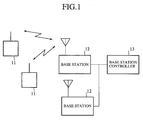
- Fig. 1 shows a construction of a mobile communications system according to a first embodiment.
- the communications system comprises a mobile station 11, a base station 12 and a base station controller 13.
- the mobile station 11 is capable of communicating with the base station 12 as it is being moved by the user carrying the mobile station 11.
- the base station 12 is equipment installed at a predefined location and is capable of simultaneous wireless communication with a plurality of mobile stations 11.
- the base station 12 is connected to a base station controller 13 hosting the base station 12 via a cable for transmission between the base station 12 and the base station controller 13.
- the base station 12 is responsible for connecting the mobile station 11 to a wire communication circuit.
- the base station controller 13 is connected to a plurality of base stations 12 and responsible for various types of control related to the base station 12.
- the base station controller 13 is also responsible for connecting the mobile station 11 to the public circuit network (not shown) via the base station 12.
- a signal originating from the mobile station 11 is transmitted to a destination of communication via the base station 12, the base station controller 13 and the public circuit network.
- a signal originating from the destination of communication is transmitted to the mobile station 11 via the public circuit network, the base station controller 13 and the base station 12.
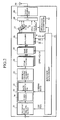
- Fig. 2 shows a construction of the base station of Fig. 1.
- Fig. 2 only shows a construction related to transmission.
- the base station comprises a transport block concatenation unit 21, a channel coding unit 22, a physical channel segmentation unit 23, an interleaving unit 24, a mapping unit 25, a spreading 26, a multiplier 27, a multiplexing unit 28, a transmission unit 29, an antenna 30, a resource management unit 31 and an information transmission unit 32.
- the channel coding unit 22 is provided with a Turbo coding unit 36 and a rate matching unit 37.
- Data transmitted from-the base station controller 13 is supplied to the transport block concatenation unit 21 of the base station 12 as a transport block of a fixed size.
- the transport block concatenation unit 21 generates a TBS by combining transport blocks such that the number of transport blocks is equal to a number corresponding to a TBS size requested by the resource management unit 31, i.e. the number obtained by dividing the TBS size by a transport block size.
- a TBS indicates a unit of process in the channel coding unit 22.
- the TBS output from the transport block concatenation unit 21 is subject to a Turbo coding in the Turbo coding unit 36 and also processed to have a predetermined data size in the rate matching unit 37.
- the channel coding unit 22, comprising the Turbo coding unit 36 and the rate matching unit 37 controls output data to have a predetermined data size, based on a coding rate requested by the resource management unit 31.
- the TBS output from the rate matching unit 37 is decomposed by the physical channel segmentation unit 23 into data for each physical channel having a predetermined size. Subsequently, the data is subject to an interleaving process in the interleaving unit 24 before being input to the mapping unit 25.
- the mapping unit 25 modulates the data output from the interleaving unit 24, using a digital modulation scheme (QPSK or 16QAM) requested by the resource management unit 31.
- the spreading unit 26 subjects the data output-from the mapping unit 25 to spreading, using a channelization code corresponding to an identification number (1, 2, ..., M) provided by the resource management unit 31.
- the multiplier 27 multiplies the data output from the spreading unit 26 by a gain (G).
- the multiplexing unit 28 multiplexes the data output from the multiplier 27, common pilot channel (CPICH) data and data for other channels.
- the data output from the multiplexing unit 28 is converted into a signal at a radio frequency in the transmission unit 29 for wireless transmission from the antenna 30 to the mobile station 11.
- the resource management unit 31 manages under its control information related to a modulation coding scheme used in communication with a plurality of mobile stations 11, the modulation coding scheme being changed depending on an environment of communication.
- the resource management unit 31 supplies that information to the relevant components of the base station.
- Information related to the modulation coding scheme managed by the resource management unit 31 is converted in the information transmission unit 32 into identification data having a small data size for transmission to the mobile station 11 via one of the other channels.
- the identification data comprises a first identification code indicating a channelization code set, a second identification code indicating a modulation scheme and a third identification code corresponding to a TBS size.
- the first identification code is obtained by converting the channelization code set into a corresponding code.
- the second identification code is obtained by converting the modulation scheme into a corresponding code.
- the third identification code is obtained by converting a combination of the number of codes in a multicode and a modulation pattern identification (TFRC) into a corresponding code.
- TFRC
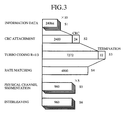
- Fig. 3 shows a process of preparing data for transmission performed in the base station of Fig. 1.
- step S1 a total of ten transport blocks each having a data size of 240 bits are combined so as to produce a 2400-bit TBS (transport block concatenation unit 21).
- step S2 24 CRC bits are attached to the 2400-bit TBS. This is a process preceding the Turbo coding in the channel coding unit 22 of Fig. 2.
- step S4 as a result of a rate matching process, the data size is controlled to 4800 bits (rate matching unit 37).
- the 4800-bit data is divided into five 960-bit data sets for respective physical channels (physical channel segmentation unit 23).
- step S6 each physical channel data is subject to an interleaving process.
- the data size remains unchanged (interleaving unit 24).
- the chip rate is 3.84 Mcps
- the spreading factor SF 16
- the frame size 2ms
- Fig. 4 is a block diagram showing a construction of a mobile station. Fig. 4 only shows a construction related to reception.
- the mobile station comprises an antenna 41, a reception unit 42, a despreading unit 43, a demapping unit 44, a deinterleaving unit 45, a physical channel concatenation unit 46, a channel decoding unit 47, a transport block extracting unit 48 and a conversion unit 49.
- the channel decoding unit 47 is provided with a rate dematching unit 51 and a Turbo decoding unit 52.
- the conversion unit 49 is provided with conversion tables 53, 54 and 55, and a conversion formula 56.
- a radio signal arriving from the base station 12 is received by the antenna 41, the frequency thereof being converted by the reception unit 42 from a radio frequency to a base band frequency.
- the despreading unit 43 subjects the signal output from the reception unit 42 to a despreading process using a plurality of channelization codes corresponding to identification numbers provided by the conversion unit 49. As a result of the despreading process, a symbol sequence for each physical channel is restored.
- the symbol sequence output from the despreading unit 43 is subject by the demapping unit 44 to a demodulating process using a digital modulation scheme requested by the conversion unit 49. Subsequently, the data from the demapping unit 44 is subject to a deinterleaving process in the deinterleaving unit 45.
- the physical channel concatenation unit 46 combines physical channel data so as to restore the TBS.
- the TBS is subject to rate dematching in the rate dematching unit 51 and to Turbo decoding in the Turbo decoding unit 52.
- the channel decoding unit 47 comprising the rate dematching unit 51 and the Turbo decoding unit 52, controls the data output therefrom to have a data size corresponding to the coding rate requested by the conversion unit 49.
- the transport block extracting unit 48 divides the TBS output from the Turbo decoding unit 52 into transport blocks, the number of transport blocks being requested by the conversion unit 49. The transport blocks are delivered to other processing blocks.
- the identification data transmitted from the information transmission unit 32 of the base station 12 is received via a channel other than the physical channels and input to the conversion unit 49.
- the identification data input to the conversion unit 49 is converted into information related to the modulation coding scheme by the conversion tables 53-55 and the conversion formula 56 provided in the conversion unit 49.
- the conversion table 53 is a table for converting an identification code indicating a channelization code set into a plurality of identification numbers (1, 2, ..., M) indicating respective channelization codes.
- the conversion table 53 is as shown in Figs. 5 through 7 (described later).
- the conversion table 54 is a table for converting an identification code indicating a modulation scheme (QPSK/16QAM) into data indicating either QPSK or 16QAM.
- the conversion table 54 is as shown in Fig.
- the conversion table 55 is a table for determining the number of transport blocks included in a transport block set, based on the identification data indicating the TBS size, the number of codes in a multicode and the modulation scheme.
- the conversion table 55 may constitute a portion of the tables of Figs. 9 through 11. Figs. 9 through 11 do not show the conversion table 55 itself.
- the conversion formula 56 is a conversion formula for determining the coding rate, based on the TBS size and the modulation scheme. Conversion from the identification data into information will be described below. A counterpart process is carried out in the information transmission unit 32 of the base station 12.
- the number of codes in a multicode is defined as the number of codes constituting a multicode.
- a channelization code set is denoted by the initial value and the number of codes in a multicode.
- Each of combinations of the initial value and the number of codes in a multicode is mapped into an identification code. The correspondence is as described below.
- Initial value Cch(16,1) number of codes in multicode 1-15 ⁇ identification codes 0-14 initial value Cch(16,2), number of codes in multicode 1-14 ⁇ identification codes 15-28 initial value Cch(16,3), number of codes in multicode 1-13 ⁇ identification codes 29-41 initial value Cch(16,4), number of codes in multicode 1-12 ⁇ identification codes 42-53 initial value Cch(16,5), number of codes in multicode 1-11 ⁇ identification codes 54-64 initial value Cch(16,6), number of codes in multicode 1-10 ⁇ identification codes 65-74 initial value Cch(16,7), number of codes in multicode 1-9 ⁇ identification codes 75-83 initial value Cch(16,8), number of codes in multicode 1-8 ⁇ identification codes 84-91 initial value Cch(16,9), number of codes in multicode 1-7 ⁇ identification codes 92-98 initial value Cch(16,10), number of codes in multicode 1-6 ⁇ identification codes 99-109 initial value Cch(16,11), number of codes in
- the total number of identification codes required to indicate the entire channelization code sets is 120.
- the identification code is represented by a decimal number.
- the identification code entered in Fig. 4 to indicate a channelization code set is represented by 7 binary bits (0000000-1111111). This is in accordance with signaling of a channelization code set using 7 bits described in reference 1.
- Fig. 8 shows a conversion table related to the coding scheme. It is assumed here that either QPSK or 16QAAM is used. An identification code 0 indicates QPSK and an identification code 1 indicates 16QAM. Identification of the conversion scheme only consumes 1 bit since either of the two should be represented. This is in accordance with 1-bit signaling of modulation scheme described in reference 1.
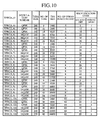
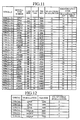
- Figs. 9 through 11 show conversion related to the TBS size. These figures are extended versions of Fig. 12, which is included in reference 1. As compared to Fig. 12 from reference 1, Figs. 9 through 11 have additional entries including the transport block (TrBlk) size, the number of transport blocks (TrBlk), and the identification code.
- the TrBlk size indicates a fixed 240-bit size of a transport block.
- TFRC(x,5) corresponds to TFRC(x) of Fig. 12.
- identification data column both a set of identification codes according to the embodiment and a set of identification codes according to the related art are listed.
- a decimal value indicating an identification code is made to match that of the number of TrBlk (the number of TrBlks) for a given TFRC, of a total of 90 TFRCs listed in Figs. 9 through 11.
- the TBS size is immediately known by multiplying the TrBlk size by the number of TrBlks.
- a disadvantage, however, is that a total of 90 identification codes (1-90) are necessary, thereby consuming 7 bits.
- Reference 1 describes TBS size siglaing using 6 bits. Therefore, in principle, a larger data size than is defined in reference 1 is required according to the related art.
- TFRC(1,y) and TFRC(4,y) are identified by the identification code 1
- TFRC(2,y) and TFRC(5,y) are identified by the identification code 2
- TFRC(3,y) and TFRC(6,y) are identified by the identification code 3.
- identification code as described above, if used alone, is only capable of identifying three TFRCs and is not capable of identifying the entire set of TBS sizes. In combination with the other identification codes, however, it is possible to identify the TBS size successfully. More specifically, the modulation scheme is known immediately from the conversion table of Fig. 8 listing the two identification codes. From the conversion tables of Figs.
- a total of 15 identification codes are known to identify a given number of codes in multicode.
- Reference 1 defines the use of 6 bits for TBS size signaling. Therefore, an advantageous reduction from 6 bits to 2 bits is achieved according to the embodiment.
- 4 bits other than the 2 bits consumed according to the embodiment may be used independently so that TBS sizes other than the TBS sizes listed in Figs. 9 through 11 (for example, 336, 10000 etc.) are transmitted.
- codes (0, 4-63) other than the codes 1-3 used for signaling may be used to transmit TBS sizes other than the TBS sizes listed in Figs. 9 through 11.
- the modulation scheme is QPSK
- St the number of codes in multicode
- St the number of codes in multicode
- the TBS size is identified by using in combination the identification code identifying the channelization code set, the identification code identifying the modulation scheme, and the identification code obtained by converting a combination of the number of codes in multicode and the modulation pattern identification (TFRC) into a corresponding code. Accordingly, the data size for TBS size identification is reduced. By putting the surplus data size available from the above reduction to the use of redundant coding, the reliability of information transmission is improved.
- the data size of the identification code corresponding to the TBS size is reduced by using both the number of codes in a multicode and the modulation pattern identification (TFRC).
- TFRC modulation pattern identification
- only one of the number of codes in a multicode and the modulation pattern identification (TFRC) may be used to reduce the data size for identification of the TBS size.
- the related-art identification code set listed in Figs. 9 through 11 may be used in combination with the modulation pattern identification so as to reduce the data size of the identification code identifying the channelization code set.
- the conversion table 55 is used for conversion between the TBS size and the identification code corresponding to the same.
- a conversion formula is used instead of the conversion table 55.
- the conversion formula is the same as the equation (2) given above.
- the equation (2) is a conversion formula for restoring the TBS size from the identification code corresponding to the TBS size, the identification code Mod identifying the modulation scheme and the number of codes in multicode MC.
- the second embodiment eliminates the need to store a conversion table so that the required storage capacity is reduced.
- the second embodiment finds a useful application in a mobile station having a limited capacity for storage.
Landscapes
- Engineering & Computer Science (AREA)
- Computer Networks & Wireless Communication (AREA)
- Signal Processing (AREA)
- Quality & Reliability (AREA)
- Physics & Mathematics (AREA)
- Astronomy & Astrophysics (AREA)
- Aviation & Aerospace Engineering (AREA)
- General Physics & Mathematics (AREA)
- Mobile Radio Communication Systems (AREA)
Priority Applications (26)
| Application Number | Priority Date | Filing Date | Title |
|---|---|---|---|
| EP05023772A EP1619920B8 (fr) | 2002-01-31 | 2002-11-11 | Système de communication d' informations |
| EP05000932A EP1524790B8 (fr) | 2002-01-31 | 2002-11-11 | Station de base |
| CN2006101001647A CN1909684B (zh) | 2002-01-31 | 2003-01-31 | 信息通知方法、移动通信系统、基站和移动台 |
| CN2006101005830A CN1882190B (zh) | 2002-01-31 | 2003-01-31 | 信息通知方法、移动通信系统、基站和移动台 |
| CN2007101989088A CN101174895B (zh) | 2002-01-31 | 2003-01-31 | 信息通知方法、移动通信系统、基站和移动台 |
| CN03803127A CN100579317C (zh) | 2002-01-31 | 2003-01-31 | 信息通知方法、移动通信系统、基站和移动台 |
| KR1020067015530A KR100816164B1 (ko) | 2002-01-31 | 2003-01-31 | 정보 통지 방법, 이동 통신 시스템, 및 기지국 |
| CN2006101005883A CN1882191B (zh) | 2002-01-31 | 2003-01-31 | 信息通知方法、移动通信系统、基站和移动台 |
| EP20030734910 EP1471756B8 (fr) | 2002-01-31 | 2003-01-31 | Procédé de communication d' informations |
| EP20050023552 EP1619919B8 (fr) | 2002-01-31 | 2003-01-31 | Station mobile |
| CN2007101989092A CN101179329B (zh) | 2002-01-31 | 2003-01-31 | 信息通知方法、移动通信系统、基站和移动台 |
| KR1020057006741A KR100677004B1 (ko) | 2002-01-31 | 2003-01-31 | 정보 통지 방법, 정보 통신 시스템 및 기지국 |
| JP2003565200A JP3776431B2 (ja) | 2002-01-31 | 2003-01-31 | 情報通知方法、移動通信システム、基地局および移動局 |
| KR1020047011761A KR100677002B1 (ko) | 2002-01-31 | 2003-01-31 | 정보 통지 방법 및 이동국 |
| CN2006101005879A CN1882122B (zh) | 2002-01-31 | 2003-01-31 | 信息通知方法、移动通信系统、基站和移动台 |
| PCT/JP2003/001035 WO2003065755A1 (fr) | 2002-01-31 | 2003-01-31 | Procede de notification d'informations, systeme de communications mobile, station de base et station mobile |
| KR1020047019626A KR100677003B1 (ko) | 2002-01-31 | 2003-01-31 | 정보 통지 방법 및 이동국 |
| KR1020047019627A KR100856604B1 (ko) | 2002-01-31 | 2003-01-31 | 정보 통지 방법, 정보 통신 시스템, 기지국 및 이동국 |
| US10/498,009 US7061892B2 (en) | 2002-01-31 | 2003-01-31 | Information notification method, mobile communications system, base station, and mobile station |
| JP2004133776A JP3776435B2 (ja) | 2002-01-31 | 2004-04-28 | 情報通知方法、移動通信システム、基地局および移動局 |
| JP2004143900A JP4335069B2 (ja) | 2002-01-31 | 2004-05-13 | 情報通知方法および移動通信システム |
| JP2005080275A JP3776439B2 (ja) | 2002-01-31 | 2005-03-18 | 情報通知方法、移動通信システムおよび基地局 |
| JP2005307208A JP3776447B2 (ja) | 2002-01-31 | 2005-10-21 | 情報通知方法、移動通信システムおよび基地局 |
| US11/311,160 US7656871B2 (en) | 2002-01-31 | 2005-12-20 | Information transmission method, mobile communication system, base station, and mobile station |
| US11/311,271 US7532602B2 (en) | 2002-01-31 | 2005-12-20 | Information transmission method, mobile communications system, base station and mobile station |
| US11/311,272 US7593369B2 (en) | 2002-01-31 | 2005-12-20 | Information transmission method, mobile communications system, base station and mobile station |
Applications Claiming Priority (2)
| Application Number | Priority Date | Filing Date | Title |
|---|---|---|---|
| JP2002023784 | 2002-01-31 | ||
| JP2002023784 | 2002-01-31 |
Related Child Applications (4)
| Application Number | Title | Priority Date | Filing Date |
|---|---|---|---|
| EP05023772A Division EP1619920B8 (fr) | 2002-01-31 | 2002-11-11 | Système de communication d' informations |
| EP05000932A Division EP1524790B8 (fr) | 2002-01-31 | 2002-11-11 | Station de base |
| EP05000932.3 Division-Into | 2005-01-18 | ||
| EP05023772.6 Division-Into | 2005-10-31 |
Publications (4)
| Publication Number | Publication Date |
|---|---|
| EP1339187A2 true EP1339187A2 (fr) | 2003-08-27 |
| EP1339187A3 EP1339187A3 (fr) | 2004-05-12 |
| EP1339187B1 EP1339187B1 (fr) | 2011-08-17 |
| EP1339187B8 EP1339187B8 (fr) | 2012-02-15 |
Family
ID=27606417
Family Applications (3)
| Application Number | Title | Priority Date | Filing Date |
|---|---|---|---|
| EP05000932A Expired - Lifetime EP1524790B8 (fr) | 2002-01-31 | 2002-11-11 | Station de base |
| EP05023772A Expired - Lifetime EP1619920B8 (fr) | 2002-01-31 | 2002-11-11 | Système de communication d' informations |
| EP02025054A Expired - Lifetime EP1339187B8 (fr) | 2002-01-31 | 2002-11-11 | Procédé de communication d' informations |
Family Applications Before (2)
| Application Number | Title | Priority Date | Filing Date |
|---|---|---|---|
| EP05000932A Expired - Lifetime EP1524790B8 (fr) | 2002-01-31 | 2002-11-11 | Station de base |
| EP05023772A Expired - Lifetime EP1619920B8 (fr) | 2002-01-31 | 2002-11-11 | Système de communication d' informations |
Country Status (4)
| Country | Link |
|---|---|
| US (8) | US6999439B2 (fr) |
| EP (3) | EP1524790B8 (fr) |
| KR (3) | KR100677002B1 (fr) |
| CN (11) | CN1258895C (fr) |
Cited By (3)
| Publication number | Priority date | Publication date | Assignee | Title |
|---|---|---|---|---|
| WO2009015315A1 (fr) * | 2007-07-26 | 2009-01-29 | Interdigital Technology Corporation | Procédé et appareil de réduction du surdébit de signalisation pendant une opération de demande de répétition automatique hybride de deux mots codes |
| US7633853B2 (en) | 2004-06-07 | 2009-12-15 | Nec Corporation | Method for decoding channelisation code set information in a spread spectrum receiver |
| US9392616B2 (en) | 2006-10-31 | 2016-07-12 | Telefonaktiebolaget Lm Ericsson (Publ) | HARQ in spatial multiplexing MIMO system |
Families Citing this family (31)
| Publication number | Priority date | Publication date | Assignee | Title |
|---|---|---|---|---|
| US6999439B2 (en) * | 2002-01-31 | 2006-02-14 | Mitsubishi Denki Kabushiki Kaisha | Information transmission method, mobile communications system, base station and mobile station in which data size of identification data is reduced |
| US7301929B2 (en) * | 2002-08-09 | 2007-11-27 | Spyder Navigations, L.L.C. | Method and system for transport block size signaling based on modulation type for HSDPA |
| US6804253B2 (en) * | 2002-10-01 | 2004-10-12 | Motorola, Inc. | Method for determining mobile station coding scheme adaptation capability |
| US8107885B2 (en) * | 2002-10-30 | 2012-01-31 | Motorola Mobility, Inc. | Method and apparatus for providing a distributed architecture digital wireless communication system |
| US7281189B2 (en) * | 2002-10-31 | 2007-10-09 | Matsushita Electric Indutrial Co., Ltd. | Apparatus and method for separately modulating systematic bits and parity bits in accordance with communication quality |
| US7489703B2 (en) * | 2002-12-20 | 2009-02-10 | Motorola, Inc. | Apparatus and method for a coding scheme selection |
| US9049722B2 (en) * | 2004-04-23 | 2015-06-02 | Qualcomm Incorporated | Methods and apparatus of enhancing performance in wireless communication systems |
| US8452294B2 (en) * | 2003-04-23 | 2013-05-28 | Qualcomm Incorporated | In-band ate indicator methods and apparatus |
| KR100678182B1 (ko) * | 2003-08-20 | 2007-02-02 | 삼성전자주식회사 | 비동기 광대역 부호분할 다중접속 시스템에서 상향링크 패킷 데이터 서비스 방법 및 장치 |
| GB0323246D0 (en) * | 2003-10-03 | 2003-11-05 | Fujitsu Ltd | Virtually centralized uplink scheduling |
| US7719376B2 (en) * | 2003-12-04 | 2010-05-18 | St-Ericsson Sa | Avoidance of discontinuities when switching between modulation schemes |
| JP4576868B2 (ja) * | 2004-04-14 | 2010-11-10 | 富士通株式会社 | 無線装置、受信方法、移動局 |
| US7584397B2 (en) * | 2004-06-10 | 2009-09-01 | Interdigital Technology Corporation | Method and apparatus for dynamically adjusting data transmission parameters and controlling H-ARQ processes |
| EP1645963B1 (fr) * | 2004-10-07 | 2014-05-14 | TELEFONAKTIEBOLAGET LM ERICSSON (publ) | Détermination de tailles de trames de mémoire pour l'allocation dynamique limitant la fragmentation interne |
| KR100606370B1 (ko) * | 2004-11-30 | 2006-07-31 | 엘지노텔 주식회사 | 3지피피 시스템에서의 스케줄링 정보의 오류검출 방법 |
| US9385843B2 (en) | 2004-12-22 | 2016-07-05 | Qualcomm Incorporated | Method and apparatus for using multiple modulation schemes for a single packet |
| CN101218770B (zh) | 2005-07-08 | 2015-07-15 | 富士通株式会社 | 无线资源分配方法、通信装置 |
| CN101361292B (zh) * | 2005-07-20 | 2014-01-08 | 高通股份有限公司 | 带内速率指示符方法和设备 |
| US7936831B2 (en) | 2005-07-20 | 2011-05-03 | Qualcomm Incorporated | Methods and apparatus for implementing and using an in-band rate indicator |
| US20090279477A1 (en) * | 2005-08-30 | 2009-11-12 | Ntt Docomo, Inc. | Mobile station, wireless access network apparatus, and mobile communication system |
| KR100678156B1 (ko) * | 2005-12-12 | 2007-02-02 | 삼성전자주식회사 | 무선 패킷 데이터 송신기 및 수신기와 송신 및 수신방법 |
| WO2007083728A1 (fr) * | 2006-01-23 | 2007-07-26 | Sharp Kabushiki Kaisha | Dispositif de station de base, dispositif de station mobile, procédé d'attribution d'identificateur de station mobile ainsi que programme et support d'enregistrement associés |
| US7903614B2 (en) * | 2006-04-27 | 2011-03-08 | Interdigital Technology Corporation | Method and apparatus for selecting link adaptation parameters for CDMA-based wireless communication systems |
| US8472448B2 (en) * | 2006-07-21 | 2013-06-25 | Intel Corporation | Wireless adaptive packet control message apparatus, systems, and methods |
| WO2008155743A2 (fr) * | 2007-06-20 | 2008-12-24 | Nokia Corporation | Appareil, procédé et support de mémoire de programme d'ordinateur permettant une signalisation efficace de réponse par canal d'accès aléatoire |
| KR101456004B1 (ko) * | 2008-02-05 | 2014-11-03 | 엘지전자 주식회사 | 전송 및 재전송에 적합한 데이터 패킷의 크기를 결정하는 방법 |
| EP2312884B1 (fr) * | 2008-08-08 | 2019-01-09 | Sharp Kabushiki Kaisha | Système de communication sans fil, dispositif de station de commande, et dispositif de terminal |
| CN103634851B (zh) * | 2012-08-27 | 2016-08-31 | 重庆重邮信科通信技术有限公司 | 一种传输块大小的获取方法和装置 |
| US20160270102A1 (en) * | 2015-03-14 | 2016-09-15 | Qualcomm Incorporated | Distributed scheduling to control interference for data transactions using grant-less transmissions |
| KR102219655B1 (ko) * | 2016-05-23 | 2021-02-24 | 미쓰비시덴키 가부시키가이샤 | 프로그래머블 로직 컨트롤러 |
| JP7134907B2 (ja) * | 2019-03-26 | 2022-09-12 | 株式会社東芝 | 衛星通信システムおよび通信制御方法 |
Family Cites Families (30)
| Publication number | Priority date | Publication date | Assignee | Title |
|---|---|---|---|---|
| US5404355A (en) * | 1992-10-05 | 1995-04-04 | Ericsson Ge Mobile Communications, Inc. | Method for transmitting broadcast information in a digital control channel |
| JPH08274756A (ja) | 1995-03-30 | 1996-10-18 | Toshiba Corp | 無線通信システム |
| JPH11509383A (ja) * | 1995-06-02 | 1999-08-17 | ディーエスシー、カミューニケイシャンズ、コーパレイシャン | 無線通信システムにおける通信パスを確立し維持する装置および方法 |
| JP3466797B2 (ja) | 1995-11-09 | 2003-11-17 | 株式会社東芝 | ディジタル移動通信システムの符号化多値変調方式 |
| US6167031A (en) | 1997-08-29 | 2000-12-26 | Telefonaktiebolaget Lm Ericsson (Publ) | Method for selecting a combination of modulation and channel coding schemes in a digital communication system |
| US6625133B1 (en) * | 1998-05-17 | 2003-09-23 | Lucent Technologies Inc. | System and method for link and media access control layer transaction initiation procedures |
| US6308082B1 (en) * | 1998-10-06 | 2001-10-23 | Telefonaktiebolaget L M Ericsson (Publ) | Cell-level throughput adjustment in digital cellular systems |
| FI109956B (fi) | 1998-12-16 | 2002-10-31 | Nokia Corp | Menetelmä lähisolujen tietojen välittämiseksi sekä menetelmän toteuttava järjestelmä ja matkaviestin |
| GB9911777D0 (en) | 1999-05-20 | 1999-07-21 | Univ Southampton | Transceiver |
| US6490270B1 (en) * | 1999-07-27 | 2002-12-03 | Lucent Technologies Inc. | Modulation method for transmitter |
| US6781970B1 (en) | 1999-08-27 | 2004-08-24 | Telefonaktiebolaget Lm Ericsson (Publ) | Transport format combination indicator mapping for telecommunications |
| FR2799320B1 (fr) * | 1999-10-04 | 2002-05-17 | Mitsubishi Electric France | Procede d'equilibrage de debit entre des canaux de transport de donnees, dispositif, station de base et station mobile correspondants |
| DE10025286B4 (de) | 1999-10-12 | 2004-12-23 | Siemens Ag | Verfahren zur Signalisierung in einem Funk-Kommunikationssystem und Basisstation in einem Funkkommunikationssystem |
| ATE418190T1 (de) * | 2000-01-14 | 2009-01-15 | Interdigital Tech Corp | Drahtloses kommunikationssystem mit selektiv dimensionierten datentransportblöcken |
| JP2001267982A (ja) * | 2000-03-22 | 2001-09-28 | Matsushita Electric Ind Co Ltd | Sttdエンコーディング方法およびダイバシティ送信機 |
| US6788959B2 (en) * | 2000-10-30 | 2004-09-07 | Nokia Corporation | Method and apparatus for transmitting and receiving dynamic configuration parameters in a third generation cellular telephone network |
| EP1209940A1 (fr) * | 2000-11-22 | 2002-05-29 | Lucent Technologies Inc. | Procédé et système pour l'ordonnancement de la transmission de paquets UMTS dans des canaux montants |
| JP3399923B2 (ja) | 2000-11-29 | 2003-04-28 | 松下電器産業株式会社 | 通信端末装置および通信端末装置における復号化方法 |
| KR100365183B1 (ko) * | 2000-12-07 | 2002-12-16 | 에스케이 텔레콤주식회사 | 비동기 이동 통신 시스템의 물리 계층에서의 적응 코딩을이용한 데이터 전송 방법 및 기지국 장치 |
| US6721834B2 (en) * | 2001-02-09 | 2004-04-13 | Lucent Technologies Inc. | Rate adaptation in a wireless communication system |
| US6870932B2 (en) * | 2001-05-07 | 2005-03-22 | Asustek Computer Inc. | Frame number identification and ciphering activation time synchronization for a wireless communications protocol |
| AU2002314411A1 (en) * | 2001-06-25 | 2003-01-08 | Nokia Corporation | Optimization of mcs and multicode with tfci signaling |
| US6697347B2 (en) * | 2001-08-22 | 2004-02-24 | Nokia Mobile Phones Ltd. | Method and apparatus for controlling transmission of packets in a wireless communication system |
| US6993352B2 (en) * | 2001-12-20 | 2006-01-31 | Qualcomm Incorporated | Acknowledging missed messages broadcast on a control channel |
| US7031254B2 (en) * | 2002-01-25 | 2006-04-18 | Lucent Technologies Inc. | Rate control system and method for a link within a wireless communications system |
| US6999439B2 (en) * | 2002-01-31 | 2006-02-14 | Mitsubishi Denki Kabushiki Kaisha | Information transmission method, mobile communications system, base station and mobile station in which data size of identification data is reduced |
| US7245598B2 (en) * | 2002-02-21 | 2007-07-17 | Qualcomm Incorporated | Feedback of channel quality information |
| US7301929B2 (en) * | 2002-08-09 | 2007-11-27 | Spyder Navigations, L.L.C. | Method and system for transport block size signaling based on modulation type for HSDPA |
| US6882857B2 (en) * | 2002-11-26 | 2005-04-19 | Qualcomm, Incorporated | Method and apparatus for efficient processing of data for transmission in a communication system |
| US8346256B2 (en) * | 2006-01-27 | 2013-01-01 | Alcatel Lucent | Method of multicast service provisioning |
-
2002
- 2002-08-22 US US10/225,204 patent/US6999439B2/en not_active Expired - Lifetime
- 2002-11-11 EP EP05000932A patent/EP1524790B8/fr not_active Expired - Lifetime
- 2002-11-11 CN CNB021503885A patent/CN1258895C/zh not_active Expired - Lifetime
- 2002-11-11 EP EP05023772A patent/EP1619920B8/fr not_active Expired - Lifetime
- 2002-11-11 EP EP02025054A patent/EP1339187B8/fr not_active Expired - Lifetime
- 2002-11-11 CN CN200610073393A patent/CN100583695C/zh not_active Expired - Lifetime
- 2002-11-11 CN CNB2004101000344A patent/CN100566211C/zh not_active Expired - Lifetime
- 2002-11-11 CN CN200610073392XA patent/CN1835418B/zh not_active Expired - Lifetime
-
2003
- 2003-01-31 KR KR1020047011761A patent/KR100677002B1/ko not_active Expired - Lifetime
- 2003-01-31 US US10/498,009 patent/US7061892B2/en not_active Expired - Lifetime
- 2003-01-31 CN CN2006101005883A patent/CN1882191B/zh not_active Expired - Lifetime
- 2003-01-31 CN CN2006101005879A patent/CN1882122B/zh not_active Expired - Lifetime
- 2003-01-31 KR KR1020047019627A patent/KR100856604B1/ko not_active Expired - Lifetime
- 2003-01-31 CN CN2006101001647A patent/CN1909684B/zh not_active Expired - Lifetime
- 2003-01-31 CN CN2007101989088A patent/CN101174895B/zh not_active Expired - Lifetime
- 2003-01-31 CN CN2006101005830A patent/CN1882190B/zh not_active Expired - Lifetime
- 2003-01-31 KR KR1020047019626A patent/KR100677003B1/ko not_active Expired - Lifetime
- 2003-01-31 CN CNA2007101989105A patent/CN101179330A/zh active Pending
- 2003-01-31 CN CN2007101989092A patent/CN101179329B/zh not_active Expired - Lifetime
-
2005
- 2005-05-09 US US11/124,270 patent/US7050413B2/en not_active Expired - Lifetime
- 2005-05-11 US US11/126,177 patent/US7031285B2/en not_active Expired - Lifetime
- 2005-12-20 US US11/311,272 patent/US7593369B2/en not_active Expired - Lifetime
- 2005-12-20 US US11/311,271 patent/US7532602B2/en not_active Expired - Lifetime
- 2005-12-20 US US11/311,160 patent/US7656871B2/en not_active Expired - Lifetime
-
2006
- 2006-01-12 US US11/330,080 patent/US7664077B2/en not_active Expired - Lifetime
Cited By (8)
| Publication number | Priority date | Publication date | Assignee | Title |
|---|---|---|---|---|
| US7633853B2 (en) | 2004-06-07 | 2009-12-15 | Nec Corporation | Method for decoding channelisation code set information in a spread spectrum receiver |
| US9392616B2 (en) | 2006-10-31 | 2016-07-12 | Telefonaktiebolaget Lm Ericsson (Publ) | HARQ in spatial multiplexing MIMO system |
| US9866353B2 (en) | 2006-10-31 | 2018-01-09 | Telefonaktiebolaget Lm Ericsson (Publ) | HARQ in spatial multiplexing MIMO system |
| US10326563B2 (en) | 2006-10-31 | 2019-06-18 | Telefonaktiebolaget Lm Ericsson (Publ) | HARQ in spatial multiplexing MIMO system |
| US11101942B2 (en) | 2006-10-31 | 2021-08-24 | Telefonaktiebolaget Lm Ericsson (Publ) | HARQ in spatial multiplexing MIMO system |
| US11777670B2 (en) | 2006-10-31 | 2023-10-03 | Telefonaktiebolaget Lm Ericsson (Publ) | HARQ in spatial multiplexing MIMO system |
| US12166592B2 (en) | 2006-10-31 | 2024-12-10 | Telefonaktiebolaget Lm Ericsson (Publ) | HARQ in spatial multiplexing MIMO system |
| WO2009015315A1 (fr) * | 2007-07-26 | 2009-01-29 | Interdigital Technology Corporation | Procédé et appareil de réduction du surdébit de signalisation pendant une opération de demande de répétition automatique hybride de deux mots codes |
Also Published As
Similar Documents
| Publication | Publication Date | Title |
|---|---|---|
| US7664077B2 (en) | Information transmission method, mobile communications system, base station and mobile station in which data size of identification data is reduced | |
| EP1619919B1 (fr) | Station mobile pour la transmission d'information à volume réduit de données d'identification | |
| JP3776447B2 (ja) | 情報通知方法、移動通信システムおよび基地局 |
Legal Events
| Date | Code | Title | Description |
|---|---|---|---|
| PUAI | Public reference made under article 153(3) epc to a published international application that has entered the european phase |
Free format text: ORIGINAL CODE: 0009012 |
|
| AK | Designated contracting states |
Designated state(s): AT BE BG CH CY CZ DE DK EE ES FI FR GB GR IE IT LI LU MC NL PT SE SK TR |
|
| AX | Request for extension of the european patent |
Extension state: AL LT LV MK RO SI |
|
| PUAL | Search report despatched |
Free format text: ORIGINAL CODE: 0009013 |
|
| AK | Designated contracting states |
Kind code of ref document: A3 Designated state(s): AT BE BG CH CY CZ DE DK EE ES FI FR GB GR IE IT LI LU MC NL PT SE SK TR |
|
| AX | Request for extension of the european patent |
Extension state: AL LT LV MK RO SI |
|
| RIC1 | Information provided on ipc code assigned before grant |
Ipc: 7H 04B 7/26 B Ipc: 7H 04J 13/04 A Ipc: 7H 04L 1/00 B |
|
| 17P | Request for examination filed |
Effective date: 20040429 |
|
| 17Q | First examination report despatched |
Effective date: 20040805 |
|
| AKX | Designation fees paid |
Designated state(s): DE FR GB |
|
| RAP1 | Party data changed (applicant data changed or rights of an application transferred) |
Owner name: MITSUBISHI DENKI KABUSHIKI KAISHA |
|
| 17Q | First examination report despatched |
Effective date: 20040805 |
|
| GRAP | Despatch of communication of intention to grant a patent |
Free format text: ORIGINAL CODE: EPIDOSNIGR1 |
|
| RIC1 | Information provided on ipc code assigned before grant |
Ipc: H04J 13/00 20110101AFI20110113BHEP Ipc: H04B 7/26 20060101ALI20110113BHEP Ipc: H04L 1/00 20060101ALI20110113BHEP |
|
| GRAS | Grant fee paid |
Free format text: ORIGINAL CODE: EPIDOSNIGR3 |
|
| GRAA | (expected) grant |
Free format text: ORIGINAL CODE: 0009210 |
|
| RIN1 | Information on inventor provided before grant (corrected) |
Inventor name: TAKANO, MICHIAKI |
|
| AK | Designated contracting states |
Kind code of ref document: B1 Designated state(s): DE FR GB |
|
| REG | Reference to a national code |
Ref country code: GB Ref legal event code: FG4D |
|
| REG | Reference to a national code |
Ref country code: DE Ref legal event code: R081 Ref document number: 60240776 Country of ref document: DE Owner name: BLACKBERRY LTD., WATERLOO, CA Free format text: FORMER OWNER: MITSUBISHI DENKI K.K., TOKYO, JP |
|
| REG | Reference to a national code |
Ref country code: DE Ref legal event code: R096 Ref document number: 60240776 Country of ref document: DE Effective date: 20111013 |
|
| RTI2 | Title (correction) |
Free format text: INFORMATION COMMUNICATION METHOD |
|
| RAP2 | Party data changed (patent owner data changed or rights of a patent transferred) |
Owner name: RESEARCH IN MOTION LIMITED |
|
| REG | Reference to a national code |
Ref country code: GB Ref legal event code: 732E Free format text: REGISTERED BETWEEN 20120315 AND 20120321 |
|
| PLBE | No opposition filed within time limit |
Free format text: ORIGINAL CODE: 0009261 |
|
| STAA | Information on the status of an ep patent application or granted ep patent |
Free format text: STATUS: NO OPPOSITION FILED WITHIN TIME LIMIT |
|
| 26N | No opposition filed |
Effective date: 20120521 |
|
| REG | Reference to a national code |
Ref country code: DE Ref legal event code: R097 Ref document number: 60240776 Country of ref document: DE Effective date: 20120521 |
|
| REG | Reference to a national code |
Ref country code: FR Ref legal event code: PLFP Year of fee payment: 14 |
|
| REG | Reference to a national code |
Ref country code: FR Ref legal event code: PLFP Year of fee payment: 15 |
|
| REG | Reference to a national code |
Ref country code: FR Ref legal event code: PLFP Year of fee payment: 16 |
|
| REG | Reference to a national code |
Ref country code: DE Ref legal event code: R082 Ref document number: 60240776 Country of ref document: DE Representative=s name: MERH-IP MATIAS ERNY REICHL HOFFMANN PATENTANWA, DE Ref country code: DE Ref legal event code: R081 Ref document number: 60240776 Country of ref document: DE Owner name: BLACKBERRY LTD., WATERLOO, CA Free format text: FORMER OWNER: MITSUBISHI DENKI KABUSHIKI KAISHA, TOKYO, JP |
|
| REG | Reference to a national code |
Ref country code: FR Ref legal event code: CA Effective date: 20180821 Ref country code: FR Ref legal event code: CD Owner name: BLACKBERRY LIMITED, CA Effective date: 20180821 |
|
| PGFP | Annual fee paid to national office [announced via postgrant information from national office to epo] |
Ref country code: GB Payment date: 20211129 Year of fee payment: 20 Ref country code: FR Payment date: 20211124 Year of fee payment: 20 Ref country code: DE Payment date: 20211126 Year of fee payment: 20 |
|
| REG | Reference to a national code |
Ref country code: DE Ref legal event code: R071 Ref document number: 60240776 Country of ref document: DE |
|
| REG | Reference to a national code |
Ref country code: GB Ref legal event code: PE20 Expiry date: 20221110 |
|
| PG25 | Lapsed in a contracting state [announced via postgrant information from national office to epo] |
Ref country code: GB Free format text: LAPSE BECAUSE OF EXPIRATION OF PROTECTION Effective date: 20221110 |