EP1340497A1 - Selbstemulgierende Systeme zur Abgabe von schwerlöslichen Arzneimitteln - Google Patents
Selbstemulgierende Systeme zur Abgabe von schwerlöslichen Arzneimitteln Download PDFInfo
- Publication number
- EP1340497A1 EP1340497A1 EP02290513A EP02290513A EP1340497A1 EP 1340497 A1 EP1340497 A1 EP 1340497A1 EP 02290513 A EP02290513 A EP 02290513A EP 02290513 A EP02290513 A EP 02290513A EP 1340497 A1 EP1340497 A1 EP 1340497A1
- Authority
- EP
- European Patent Office
- Prior art keywords
- paclitaxel
- composition according
- pharmaceutical composition
- sedds
- vitamin
- Prior art date
- Legal status (The legal status is an assumption and is not a legal conclusion. Google has not performed a legal analysis and makes no representation as to the accuracy of the status listed.)
- Withdrawn
Links
Images


Classifications
-
- A—HUMAN NECESSITIES
- A61—MEDICAL OR VETERINARY SCIENCE; HYGIENE
- A61K—PREPARATIONS FOR MEDICAL, DENTAL OR TOILETRY PURPOSES
- A61K9/00—Medicinal preparations characterised by special physical form
- A61K9/48—Preparations in capsules, e.g. of gelatin, of chocolate
- A61K9/4841—Filling excipients; Inactive ingredients
- A61K9/4858—Organic compounds
-
- A—HUMAN NECESSITIES
- A61—MEDICAL OR VETERINARY SCIENCE; HYGIENE
- A61K—PREPARATIONS FOR MEDICAL, DENTAL OR TOILETRY PURPOSES
- A61K31/00—Medicinal preparations containing organic active ingredients
- A61K31/33—Heterocyclic compounds
- A61K31/335—Heterocyclic compounds having oxygen as the only ring hetero atom, e.g. fungichromin
- A61K31/337—Heterocyclic compounds having oxygen as the only ring hetero atom, e.g. fungichromin having four-membered rings, e.g. taxol
-
- A—HUMAN NECESSITIES
- A61—MEDICAL OR VETERINARY SCIENCE; HYGIENE
- A61K—PREPARATIONS FOR MEDICAL, DENTAL OR TOILETRY PURPOSES
- A61K9/00—Medicinal preparations characterised by special physical form
- A61K9/10—Dispersions; Emulsions
- A61K9/107—Emulsions ; Emulsion preconcentrates; Micelles
- A61K9/1075—Microemulsions or submicron emulsions; Preconcentrates or solids thereof; Micelles, e.g. made of phospholipids or block copolymers
Definitions
- the present invention relates to a pharmaceutical excipient formulation, more particularly to a pharmaceutical pre-emulsion excipient enhancing the absorption of poorly water soluble drugs, particularly the oral absorption of taxoids.
- a few examples of therapeutic substances which are poorly hydrosoluble, are the following: Palmitoyl Rhizoxin, Penclomedine, Vitamin A and its derivatives (retinoic acid, isotretinoin, etc.), Tamoxifen, Etoposide, Campothecin, Navelbine, Valproic acid, Tacrolimus, Sirolimus (Rapamycin), Cyclosporin A, Clarithromicin, Testosterone, Estradiol, Progesterone, Ciprofloxacine, Fenofibrate, Benzafibrate, Azithromicine, Itraconazole, Miconazole, Propofol, Brimonidine, Latanoprost, and Paclitaxel.
- Paclitaxel one of the best known taxoid, disrupts tubulin dynamics. It has a significant clinical activity against a broad range of tumor types including breast, lung, head and neck, bladder, and platinum-refractory ovarian carcinoma (E. K. Rowinsky. The development and clinical utility of the taxoid class of antimicrotubule chemotherapy agents. Annu Rev Med. 48 : 353-74 (1997)).
- paclitaxel has a low therapeutic index. It is a complex diterpenoid product, with a bulky, extended fused ring system as well as a number of hydrophobic substituents, which lead to its poor solubility in water (1 ⁇ g/ml) resulting in serious formulation problems (R. T. Liggins, W. L.
- Taxol® a new antineoplastic agent for refractory ovarian cancer.
- polyoxyethylated castor oil also causes the nonlinear pharmacokinetic behavior of paclitaxel (A. Sparreboom, O. van Tellingen, W. J. Nooijen, J.H. Beijnen.
- Nonlinear pharmacokinetics of paclitaxel in mice results from the pharmaceutical vehicle Cremophor EL. Cancer Res. 56: 2112-5 (1996); O. van Tellingen, M. T. Huizing, V. R. Panday, J. H. Schellens, W. J. Nooijen, J. H. Beijnen. Cremophor EL causes (pseudo-) non-linear pharmacokinetics of paclitaxel in patients. Br J Cancer 81 : 330-5 (1999)).
- liposomes P. Crosasso, M. Ceruti, P. Brusa, S. Arpicco, F. Dosio, L. Cattel. Preparation, characterization and properties of sterically stabilized paclitaxel-containing liposomes. J Controlled Release. 63 : 19-30 (2000); A. Sharma, R. M. Straubinger. Novel taxol formulations: preparation and characterization of taxol-containing liposomes. Pharm Res. 11 : 889-96 (1994)), water-soluble prodrugs (J. M. Terwogt, B. Nuijen, W. W. T. B. Huinink, J. H. Beijnen.
- Another approach to overcome the hypersensitivity reactions resulting from polyoxyethylated castor oil can be the design of oral formulations of paclitaxel, even in the presence of polyoxyethylated castor oil, since it is not orally absorbed (J. M. M. Terwogt, M. M. Malingre, J. H. Beijnen, W. W. B. Huinink, H. Rosing, F. J. Koopman, O. van Tellingen, M. Swart, and J. H. M. Schellens. Coadministration of oral cyclosporin A enables oral therapy with paclitaxel. Clin Cancer Res. 5 : 3379-84 (1999)).
- Oral administration of paclitaxel would, thus, prevent the adverse effects caused by the vehicle substance polyoxyethylated castor oil and offer additional advantages over i.v. administration, including elimination of the need for frequent visits to the outpatient clinic and easier chronic administration (R. T. Dorr. Pharmacology and toxicology of Cremophor EL diluent. Ann Pharmacother. 28 : S11-4 (1994)).
- preclinical studies have suggested that paclitaxel is not significantly absorbed after oral administration; the systemic bioavailability in humans after oral paclitaxel administration is less than 6% (J. M. M. Terwogt, M. M. Malingre, J. H. Beijnen, W. W. B. Huinink, H.
- Cyclosporine A (CsA), a well-known immunosuppressive agent, was shown to be one of the most promising P-gp inhibitors to enhance the oral absorption of paclitaxel (J. M. M. Terwogt, M. M. Malingre, J. H. Beijnen, W. W.
- CsA is a registered drug and thus is more readily available for clinical studies.
- the use of CsA for long-term oral dosing may be hindered by its immunosuppressive side effect, which renders this compound less suitable for chronic use in cancer patients most of whom are already immunodeficient because of chemotherapy.
- SEDDS self-emulsifying drug delivery systems
- SEDDS consisting of isotropic mixtures of oil and surfactants could significantly improve the oral availability of poorly absorbed, hydrophobic and/or lipophilic drugs
- SEDDS are composed of natural or synthetic oils, surfactants and one or more hydrophilic solvents and co-solvents.
- the principal characteristic of SEDDS is their ability to form fine oil-in-water emulsions or microemulsions upon mild agitation following dilution by aqueous phases.
- Lipid microemulsions for improving drug dissolution and oral absorption physical and biopharmaceutical aspects. Pharm Res. 12 : 1561-72 (1995); S. Tenjarla. Microemulsions: an overview and pharmaceutical applications. Crit Rev Ther Drug Carrier Syst. 16 : 461-521 (1999)).
- the objective of the present invention is to provide a pharmaceutical composition in the form of a self micro-emulsifying drug delivery system comprising bile salts, for example sodium deoxycholate.
- bile salts for example sodium deoxycholate.
- the invention is directed to a pharmaceutical composition
- a pharmaceutical composition comprising:
- the bile salt is sodium deoxycholate.
- the one or more bile salts represent 1 to 40% (w/w) of the final composition.
- the sodium deoxycholate represents 1 to 40% (w/w) of the final composition;
- the vitamin E is from 2 to 6% (w/w) of the final composition.
- therapeutic agents are any compound which has a biological activity and is soluble in the oil phase.
- Said therapeutic agents may be antibiotics, analgesics, antidepressants, antipsychotics, hormones or chemotherapeutics.
- Agents like taxoids i.e. paclitaxel, docetaxel, their derivatives, analogs and prodrugs are preferred.
- compositions according to the invention contain a relative proportion of paclitaxel between 0.5 and 4% (w/w), preferably equal to 3% (w/w).
- Preferred pharmaceutical composition according to the instant invention comprises an emulsion including vitamin E, D- ⁇ -tocopheryl polyethylene glycol succinate 1000 (TPGS), polyoxyl hydrogenated castor oil and at least, one therapeutic agent, the relative proportions of vitamin E, TPGS and polyoxyl hydrogenated castor oil being respectively 10-60, 40-90, 10-80 (w/w) of the total oil phase, more preferably 10-45, 10-65 and 10-60.
- TPGS D- ⁇ -tocopheryl polyethylene glycol succinate 1000
- TPGS polyoxyl hydrogenated castor oil
- at least, one therapeutic agent the relative proportions of vitamin E, TPGS and polyoxyl hydrogenated castor oil being respectively 10-60, 40-90, 10-80 (w/w) of the total oil phase, more preferably 10-45, 10-65 and 10-60.
- Another preferred pharmaceutical composition according to the invention contains a relative proportion of vitamin E, TPGS, sodium deoxycholate and Tyloxapol are respectively 2-6, 5-60, 1-40 and 5-70 (w/w) of the total oil phase.
- the relative proportions of vitamin E, TPGS, sodium deoxycholate and Tyloxapol are respectively 3-5, 20-35, 2-20 and 20-40% (w/w) of the total oil phase.
- the relative proportions of propylene glycol are in the range of 0-50% (w/w) of the final formulation, preferably equal to 20% (w/w) and the relative proportions of ethanol are in the range of 5-50% (w/w) of the final formulation, preferably equal to 30% (w/w).
- composition according to the invention may be associated with any pharmaceutical excipient to form a dosage form, which can be administered to animals or humans via intravascular, oral, intramuscular, cutaneous and subcutaneous routes.
- emulsions according to the invention can be given by any of the following routes among others: intra-abdominal, intra-arterial, intra-articular, intra-capsular, intra-cervical, intra-cranial, intra-ductal, intra-dural, intra-lesional, intra-ocular, intra-locular, intra-lumbar, intra-mural, intra-operative, intra-parietal, intra-peritoneal, intra-plural, intra-pulmonary, intra-spinal, intra-thoracic, intra-tracheal, intra-tympanic, intra-uterine, intra-ventricular or transdermal or can be nebulised using suitable aerosol propellants.
- microemulsifying compositions according to the instant invention may be used for the treatment of different diseases like cancers, tumours, Kaposi's sarcoma, malignancies, uncontrolled tissue or cellular proliferation secondary to tissue injury, and any other disease conditions responsive to taxoids such as paclitaxel and docetaxel, and/or prodrugs and derivatives of the foregoing.
- taxoids such as paclitaxel and docetaxel, and/or prodrugs and derivatives of the foregoing.
- types of carcinoma which may be treated particularly effectively with oral paclitaxel, docetaxel, other taxoids, and their prodrugs and derivatives, are hepatocellular carcinoma and liver metastases, cancers of the gastrointestinal tract, pancreas, prostate and lung, and Kaposi's sarcoma.
- non-cancerous disease conditions which may be effectively treated with these active agents administered orally in accordance with the present invention are uncontrolled tissue or cellular proliferation secondary to tissue injury, polycystic kidney disease, inflammatory diseases (e. g., arthritis) and malaria.
- compositions may be administered in any known pharmaceutical oral dosage form.
- the formulations may be encapsulated in a soft or hard gelatin capsule or may be administered in the form of a liquid oily preparation.
- Each dosage form may include, apart from the essential components of the composition conventional pharmaceutical excipients, diluents, sweeteners, flavouring agents, colouring agents and any other inert ingredients regularly included in dosage forms intended for oral administration (see e. g., Remington's Pharmaceutical Sciences, 17th Ed., 1985).
- Precise amounts of each of the target drugs included in the oral dosage forms will vary depending on the age, weight, disease and condition of the patient.
- an advantageous method of the invention for treating mammalian patients (particularly human patients) suffering from taxoid-responsive disease conditions is to administer the oral formulations containing the taxoid target agent concomitantly with the administration of at least one dose of an oral bioavailability enhancing agent.
- An other advantageous method of the invention for treating mammalian patients is to administer the oral formulations containing the taxoid target agent concomitantly or separately with another antitumor agent like carboplatinum and the like.
- the preferred embodiment of the method of the invention for oral administration to humans of paclitaxel, its derivatives, analogs and prodrugs, and other taxoids comprises the oral administration of an oral absorption or bioavailability enhancing agent to a human patient simultaneously with, or prior to, or both simultaneously with and prior to the oral administration to increase the quantity of absorption of the intact target agent into the bloodstream.
- Figure 1a illustrates the pseudo-ternary diagram of SEDDS containing 1.25% paclitaxel, 10% DOC-Na, and 20% propylene glycol following 1:10 dilution with water.
- A microemulsions and/or micellar solutions stable for at least 6 hours with no paclitaxel precipitation.
- Figure 1b illustrates the pseudo-ternary diagram of SEDDS containing 5% vitamin E, 30% ethanol and 3% paclitaxel following 1:10 dilution with water.
- A microemulsions and/or micellar solutions stable for at least 2 hours with no paclitaxel precipitation, with droplet size in the range 1 to 10 nm.
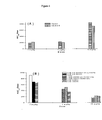
- Figure 4 illustrates the relationship between dose-adjusted AUC and administered dose for: (A) intravenous and (B) oral administration.
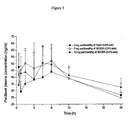
- Figure 5 illustrates the plasma paclitaxel concentration-time profiles after oral administration at constant drug concentration in the SEDDS administered at different doses.
- Paclitaxel (MW 853) with 99.34% (w/w) purity (HPLC) was purchased from Farmachem (Lugano, Switzerland). Vitamin E, deoxycholic acid sodium salt (DOC-Na) and Tyloxapol were bought from Sigma (St. Louis, MO, USA). D- ⁇ -tocopheryl polyethylene glycol succinate 1000 (TPGS) was a gift from Eastman Chemical (Kingsport, TN, USA). Ethanol was bought from SDS (Peypin, France). All solvents were HPLC grade.
- the blank formulation consisted of vitamin E, TPGS, polyoxyl hydrogenated castor oil, DOC-Na and propylene glycol.
- Paclitaxel was weighed and added to the blank formulation and thoroughly mixed to form a clear homogenous mixture.
- Paclitaxel emulsions may be formed following 1:10 dilution of SEDDS with distilled water.
- a ternary phase diagram study (S. Watnasirichaikule, N. M. Davies, T. Rades, I. G. Tucker. Preparation of biodegradable insulin nanocapsules from biocompatible microemulsions. Pharm Res. 17 : 684-9 (2000); M. Trotta, E. Ugazio, M. R. Gasco.
- the vitamin E and TPGS are mixed and DOC-Na is added in one hand.
- Tyloxapol and ethanol are mixed and paclitaxel is dissolved in said mixture.
- the drug containing Tyloxapol and ethanol mixture is added to vitamin E-TPGS-DOC-Na mixture to form a clear homogeneous oily mixture.
- Paclitaxel emulsion may be formed by dilution of SEDDS with distilled water.
- Emulsions were formed following 1:10 dilution of paclitaxel SEDDS with distilled water.
- the droplet size of the resultant emulsions was determined by the PCS method using a Coulter® Model N 4 SD (FL, USA).
- the Zeta potential of the resultant emulsions after 1:10 dilution of SEDDS with water was measured by a Malvern Zetasizer 3000 (Malvern, UK).
- Optimal SEDDS formulations obtained in 1.2.1. containing 0.5, 1.0, 1.5, 2.0,2.5 and 3% (w/w) paclitaxel were prepared. Microemulsions were formed after 1:10 dilution with pre-warmed distilled water (37 °C) and then stored at 37 °C to monitor the possible precipitation of paclitaxel. The chemical stability of paclitaxel in SEDDS containing 0.5 - 3% w/w paclitaxel at 4 and 25 °C was monitored using an analytical HPLC method (M. Andreeva, P. D. Iedmann, L. Binder, V. W. Armstrong, H. Meden, M. Binder, M. Oellerich.
- Fig. 1a shows that the formulations containing 1.25% paclitaxel, 10% DOC-Na and 20% propylene glycol in shaded area A of the ternary diagram can form microemulsions and/or micellar solutions following 1:10 dilution with water.
- the resultant microemulsions or micellar solutions can remain physically stable for at least 6 hours with no paclitaxel precipitation.
- the corresponding optimal blank formulation therefore, consisted of (%, w/w) vitamin E (20), TPGS (30), polyoxyl hydrogenated castor oil (20), DOC-Na (10) and propylene glycol (20).
- the formulations located in area B following aqueous dilution (1:10) do form microemulsions or micellar solutions, but paclitaxel precipitation appeared within 6 hours.
- the formulations located at area C can form emulsions or opaque dispersions with main droplet size larger than 100 nm whereas no paclitaxel precipitate was noted within 6 hours.
- Vitamin E used in paclitaxel SEDDS forms the oil phase in the resultant microemulsions after dilution of SEDDS with an aqueous phase.
- Vitamin E may not only improve the incorporation of paclitaxel into SEDDS to form stable microemulsions, but also might produce beneficial protective effects by quenching free radicals (K. Kline, W. Yu, B. G. Sanders. Vitamin E: mechanisms of action as tumor cell growth inhibitors. J Nutr. 131 : 161S-163S (2001)).
- TPGS a water-soluble surfactant, inhibits the P-gp efflux system, and thus, have a beneficial effect in improving the oral absorption of paclitaxel (R. J. Sokol, et al.
- Fig. 1b shows that the formulations containing 3% paclitaxel, 5% vitamin E and 30% ethanol in grey area A of the ternary diagram can form microemulsions and/or micellar solutions following 1:10 dilution with water.
- the resultant microemulsions or micellar solutions, with droplet size in the range of 1 to 10 nm, can remain physically stable for at least 2 hours with no paclitaxel precipitation.
- the formulations located in dark grey area B of the ternary diagram following aqueous dilution (1:10) do form submicron emulsions with droplet size in the range of 40 to 400 nm, with no paclitaxel precipitation for at least 2 hours.
- the droplet size of the resultant microemulsions was 31.5 ⁇ 4.0 nm for unimodal results and 1.0 ⁇ 0.4 nm for SDP weight results.
- the resultant microemulsions were negatively charged, and the zeta potential value was - 45.5 ⁇ 0.5 mV.
- the droplet size of the resultant microemulsions was 0.95 ⁇ 0.09 nm.
- the precipitation of the drug from the resultant microemulsions depended on the initial concentration of paclitaxel in SEDDS.
- the physical stability of paclitaxel in microemulsions decreased with the increase of paclitaxel concentration in SEDDS formulations.
- paclitaxel concentrations were lower than 1.25% w/w, the precipitation time was longer than 6 h. No precipitate was noted when the concentration was 0.5% w/w over 6 months.
- paclitaxel concentration was higher than 1.5% w/w, the drug precipitated easily from the resultant microemulsions.
- the precipitation time was about 2 h as the concentration was elevated to 2.5% w/w.
- Blood samples were collected into heparinized tubes at time points of 0.5, 1, 2, 4, 6, 8, 12 and 24 hours after oral dosing. Additional samples were collected at 1, 5, 15 min, 1.5 h and 3 h post intravenous dosing. At each time point, three rats were sacrificed to take the blood. All blood samples were immediately placed on ice upon collection and centrifuged at 4000 rpm for 15 min to obtain the plasma. Aliquots were stored at - 20°C until analysis.
- paclitaxel Prior to extraction, 0.05-2.0 ml of rat plasma that was diluted to a total of 2.0 ml with double distilled water for intravenous administration or 2.0 ml plasma for oral administration was mixed with 0.3 ⁇ g Taxotere® , dissolved in 50 ⁇ l methanol, used as an internal standard. Extraction of paclitaxel was accomplished by adding 4.0 ml of tert -butyl methyl ether and vortex-mixing the sample for 1.0 min.
- the mixture was then centrifuged for 10 min at 4000 rpm, after which 3.0 ml of the organic layer was transferred to a clean tube and evaporated to dryness under vacuum using a Labconco Vortex Evaporator (Lumitron Electronic Instrument Ltd., MO, USA) at 20 °C.
- Approximately 200 ⁇ l mobile phase was used to reconstitute the residue and 80 ⁇ l aliquot was injected into the HPLC equipped with a Hypersil® BDS C 18 (5 ⁇ m, 250 ⁇ 4.6 mm; Alltech, Deerfield, IL, USA) analytical column and a Betasil C 18 (5 ⁇ m, 10 ⁇ 4.6 mm; Alltech, Deerfield, IL, USA) guard column.
- the detection wavelength of paclitaxel was 227 nm (M. Andreeva, P. D. Iedmann, L. Binder, V. W. Armstrong, H. Meden, M. Binder, M. Oellerich. A simple and reliable reverse-phase high-performance liquid chromatographic procedure for determination of paclitaxel (taxol) in human serum. Ther Drug Monit. 19 : 327-32 (1997); A. Sharma, W. D. Conway, R. M. Straubinger. Reversed-phase high-performance liquid chromatographic determination of taxol in mouse plasma. J Chromatogr B Biomed Appl. 655 : 315-9 (1994)).
- the mobile phase was acetonitrile-water (48:52) and pumped at the flowrate of 1.5 ml/min.
- the analysis was carried out at room temperature.
- the retention time of paclitaxel and docetaxel was 12.4 and 11.0 min, respectively.
- the lower limit of quantification for paclitaxel was 10 ng/ml, and the range of linear response was 50-800 ng/ml (r 2 >0.9990).
- the observed recovery of paclitaxel was 96.8-101.6%, and the intra-day and inter-day assay variabilities were less than 5.6%.
- Pharmacokinetic parameters in plasma were obtained from the pooled concentration-time data of each experiment with statistical moment algorithm using the WinNonlin program package.
- AUCM 0- ⁇ AUMC 0-24 + (T 24 ⁇ C 24 )/k + C 24 /k
- the mean residence time (MRT) was determined by dividing AUMC 0- ⁇ by AUC 0- ⁇ .
- Paclitaxel plasma concentration data obtained following the i.v. administration were analyzed by the non-compartment and two-compartment models.
- Figs. 2 (A), (B) and (C) show the drug logarithmic concentration-time profiles after i.v. administration of Taxol® and paclitaxel SEDDS at the doses of 2, 5 and 10 mg/kg, respectively.
- the relevant pharmacokinetic parameters are outlined in Table 1.
- the clearance (Cl) of paclitaxel in Taxol® was 513.6, 433.8 and 118.3 (ml/h ⁇ kg) at the doses of 2, 5 and 10 mg/kg, respectively.
- the clearance of paclitaxel in SEDDS was 455.4, 493.6 and 137.3 (ml/h ⁇ kg) at the doses of 2, 5 and 10 mg/kg, respectively.
- the AUC 0- ⁇ of paclitaxel in Taxol® was 3894.4 (ng ⁇ h/ml) at the dose of 2 mg/kg, and it increased to 11525.5 (ng ⁇ h/ml) at the dose of 5 mg/kg and 84517.5 (ng ⁇ h/ml) at the dose of 10 mg/kg.
- the AUC 0- ⁇ of paclitaxel in SEDDS was 4392.1(ng.h/ml) at the dose of 2 mg/kg, and it escalated to 10129.9 (ng ⁇ h/ml) at the dose of 5 mg/kg and 72846.3 (ng ⁇ h/ml) at the dose of 10 mg/kg.
- the maximum concentration (C max ) and AUC 0- ⁇ of paclitaxel increased disproportionately with higher doses, and the clearance of paclitaxel decreased with the increase in dose, indicating a nonlinear or saturable pharmacokinetic behavior for Taxol® and SEDDS.
- the MRT and steady-state volume of distribution (V ss ) decreased with the increase of the dose, but the MRT and V ss of paclitaxel SEDDS were lower compared to Taxol® .
- the absolute bioavailability of paclitaxel SEDDS was 112.1% at the dose of 2 mg/kg, and it decreased to 87.9% at the dose of 5 mg/kg and to 86.2% at the dose of 10 mg/kg.
- Taxol® showed serious toxicity problems in the present study, and about 30% of the rats died at the dose of 10 mg/kg. On the contrary, there were no side effects of paclitaxel SEDDS at the same dose.
- Figs. 3 show the plasma paclitaxel concentration-time profiles after oral administration at the doses of 2, 5 and 10 mg/kg paclitaxel, respectively.
- Paclitaxel plasma concentration-time profiles after oral administration of 2 mg/kg paclitaxel SEDDS with 40 mg/kg CsA is shown in Fig 3 (D).
- Table 2 shows the relevant pharmacokinetic parameters calculated using non compartmental analysis.
- C max were between 40 and 60 ng/ml, except for the paclitaxel SEDDS co-administered with CsA (160 ng/ml).
- the AUC 0-24 of paclitaxel SEDDS increased slightly at all indicated doses.
- the fr of paclitaxel SEDDS between 0 and 24 h increased ranging from 1.5 to 10%, and this increase was inversely proportional to the increase in dose (Table 2).
- the fa of paclitaxel SEDDS between 0 and 24 h was as high as 28.1% at the dose of 2 mg/kg, and then decreased to 8.3% at the dose of 5 mg/kg and 1.1% at the dose of 10 mg/kg.
- the relative bioavailability (Fr) of paclitaxel SEDDS increased by 1.5% at the dose of 2 mg/kg, but it increased by 43.8% and 14.4% at the doses of 5 and 10 mg/kg, respectively.
- the absolute bioavailability (Fa) was 42.7, 22.2 and 1.0% at the doses of 2, 5 and 10 mg/kg paclitaxel, respectively.
- the AUC of paclitaxel SEDDS in non-fasted rats at the dose of 5 mg/kg showed a little decrease, but it was higher than that of Taxol® .
- This result indicated that there was a slight influence of food intake on the absorption of paclitaxel.
- the AUC of SEDDS with 0.5 % w/w paclitaxel was higher than that of SEDDS with 2.5% w/w paclitaxel (Fig. 3C). This indicated that the excipient concentration could slightly improve the absorption of paclitaxel in SEDDS.
- the AUC 0-24 of paclitaxel SEDDS increased 1.73 fold compared with that of Taxol® and 1.59 fold compared with that of SEDDS without CsA at the dose of 2 mg/kg paclitaxel.
- the C max significantly increased and reached the therapeutic level (0.1 ⁇ mol, equivalent to 85 ng/ml).
- the duration of plasma concentration above 0.1 ⁇ mol lasted nearly 4.0 h after oral paclitaxel SEDDS administration at the dose of 2 mg/kg co-administered with 40 mg/kg CsA, but this threshold was not reached after oral administration of Taxol® or SEDDS alone following a single dose administration.
- the relative bioavailability (Fr) of paclitaxel SEDDS with CsA was 133.9% and the absolute bioavailability (Fa) was 56.4% at the dose of 2 mg/kg.
- CsA can greatly increase the bioavailability of paclitaxel confirming previous reported results (J. M. M. Terwogt, M. M. Malingre, J. H. Beijnen, W. W. B. Huinink, H. Rosing, F. J. Koopman, O. van Tellingen, M. Swart, and J. H. M. Schellens. Coadministration of oral cyclosporin A enables oral therapy with paclitaxel. Clin Cancer Res. 5 : 3379-84 (1999); C. D.
- the MRT 0-24 of paclitaxel SEDDS was similar to that of Taxol® at all indicated doses, except that of paclitaxel SEDDS co-administered with CsA.
- the MRT 0- ⁇ of paclitaxel SEDDS increased at high doses compared with that of Taxol® .
- the MRT 0-24 and MRT 0- ⁇ of paclitaxel SEDDS co-administered with CsA were the shortest among all oral formulations at various doses.
- the relative bioavailability of paclitaxel SEDDS increased by 43.8% at the dose of 5 mg/kg, and by 14.1 and 25.1% at the dose of 10 mg/kg for the SEDDS formulation containing 2.5 and 0.5% w/w paclitaxel, respectively.
- the dose of 5 mg/kg paclitaxel has achieved the highest bioavailability (Table 2), indicating that 1.25% w/w paclitaxel in SEDDS was the optimal concentration.
- the disproportionate decrease of mean C max and AUC 0- ⁇ ( Figure 4B) values with the increase of the dose suggested that there is a saturable process in the absorption of oral paclitaxel.
- paclitaxel microemulsions can form following 1:10 dilution of SEDDS with an aqueous phase.
- the resulting microemulsions bear a negative or a positive charge.
- the oral bioavailability of paclitaxel could be improved significantly when paclitaxel was formulated into SEDDS.
- SEDDS is a promising system for improving the oral bioavailability of paclitaxel.
Landscapes
- Health & Medical Sciences (AREA)
- Chemical & Material Sciences (AREA)
- Life Sciences & Earth Sciences (AREA)
- Animal Behavior & Ethology (AREA)
- Medicinal Chemistry (AREA)
- Pharmacology & Pharmacy (AREA)
- Epidemiology (AREA)
- General Health & Medical Sciences (AREA)
- Public Health (AREA)
- Veterinary Medicine (AREA)
- Molecular Biology (AREA)
- Dispersion Chemistry (AREA)
- Biophysics (AREA)
- Pharmaceuticals Containing Other Organic And Inorganic Compounds (AREA)
- Medicinal Preparation (AREA)
Priority Applications (11)
| Application Number | Priority Date | Filing Date | Title |
|---|---|---|---|
| EP02290513A EP1340497A1 (de) | 2002-03-01 | 2002-03-01 | Selbstemulgierende Systeme zur Abgabe von schwerlöslichen Arzneimitteln |
| US10/507,857 US20050232952A1 (en) | 2002-03-01 | 2003-02-28 | Self emulsifying drug delivery systems for poorly soluble drugs |
| JP2003572547A JP2005523295A (ja) | 2002-03-01 | 2003-02-28 | 難溶性薬剤の自己乳化型薬物送達システム |
| IL16380803A IL163808A0 (en) | 2002-03-01 | 2003-02-28 | Self emulsifying drug delivery systems for poorly soluble drugs |
| PCT/IB2003/001336 WO2003074027A2 (en) | 2002-03-01 | 2003-02-28 | Self emulsifying drug delivery systems for poorly soluble drugs |
| EP03710117A EP1480636B1 (de) | 2002-03-01 | 2003-02-28 | Selbstemulgierende systeme zur abgabe von taxoiden |
| CA002478424A CA2478424A1 (en) | 2002-03-01 | 2003-02-28 | Self emulsifying drug delivery systems for poorly soluble drugs |
| ES03710117T ES2283756T3 (es) | 2002-03-01 | 2003-02-28 | Sistemas autoemulsionantes de administracion de farmaco para taxoides. |
| AT03710117T ATE359779T1 (de) | 2002-03-01 | 2003-02-28 | Selbstemulgierende systeme zur abgabe von taxoiden |
| AU2003214538A AU2003214538A1 (en) | 2002-03-01 | 2003-02-28 | Self emulsifying drug delivery systems for poorly soluble drugs |
| DE60313299T DE60313299T2 (de) | 2002-03-01 | 2003-02-28 | Selbstemulgierende systeme zur abgabe von taxoiden |
Applications Claiming Priority (1)
| Application Number | Priority Date | Filing Date | Title |
|---|---|---|---|
| EP02290513A EP1340497A1 (de) | 2002-03-01 | 2002-03-01 | Selbstemulgierende Systeme zur Abgabe von schwerlöslichen Arzneimitteln |
Publications (1)
| Publication Number | Publication Date |
|---|---|
| EP1340497A1 true EP1340497A1 (de) | 2003-09-03 |
Family
ID=27675780
Family Applications (1)
| Application Number | Title | Priority Date | Filing Date |
|---|---|---|---|
| EP02290513A Withdrawn EP1340497A1 (de) | 2002-03-01 | 2002-03-01 | Selbstemulgierende Systeme zur Abgabe von schwerlöslichen Arzneimitteln |
Country Status (1)
| Country | Link |
|---|---|
| EP (1) | EP1340497A1 (de) |
Cited By (4)
| Publication number | Priority date | Publication date | Assignee | Title |
|---|---|---|---|---|
| EP1510206A1 (de) * | 2003-08-29 | 2005-03-02 | Novagali Pharma SA | Selbstnanoemulgierende ölige Formulierung zur Verabreichung wasserschwerlöslicher Wirkstoffe |
| WO2008055146A3 (en) * | 2006-10-31 | 2008-10-09 | Wyeth Corp | Formulations of phospholipase enzyme inhibitors |
| CN102727446A (zh) * | 2011-04-06 | 2012-10-17 | 复旦大学 | 含难溶性药物的固体制剂及其制备方法 |
| CN115252802A (zh) * | 2021-04-29 | 2022-11-01 | 苏州裕泰医药科技有限公司 | 多西他赛-硬脂酸甘油三酯前药及其脂质制剂的制备 |
Citations (5)
| Publication number | Priority date | Publication date | Assignee | Title |
|---|---|---|---|---|
| US5496811A (en) * | 1992-08-28 | 1996-03-05 | Pharmos Corp. | Submicron emulsions as ocular drug delivery vehicles |
| WO1998030205A1 (en) * | 1997-01-07 | 1998-07-16 | Sonus Pharmaceuticals, Inc. | Emulsion vehicle for poorly soluble drugs |
| WO1999004787A1 (en) * | 1997-07-26 | 1999-02-04 | West Pharmaceutical Services Drug Delivery & Clinical Research Centre Limited | Taxol emulsion |
| WO1999006024A1 (en) * | 1997-07-29 | 1999-02-11 | Pharmacia & Upjohn Company | Self-emulsifying formulation for lipophilic compounds |
| WO1999045918A1 (en) * | 1998-03-10 | 1999-09-16 | Napro Biotherapeutics, Inc. | Methods and compositions for delivery of taxanes |
-
2002
- 2002-03-01 EP EP02290513A patent/EP1340497A1/de not_active Withdrawn
Patent Citations (5)
| Publication number | Priority date | Publication date | Assignee | Title |
|---|---|---|---|---|
| US5496811A (en) * | 1992-08-28 | 1996-03-05 | Pharmos Corp. | Submicron emulsions as ocular drug delivery vehicles |
| WO1998030205A1 (en) * | 1997-01-07 | 1998-07-16 | Sonus Pharmaceuticals, Inc. | Emulsion vehicle for poorly soluble drugs |
| WO1999004787A1 (en) * | 1997-07-26 | 1999-02-04 | West Pharmaceutical Services Drug Delivery & Clinical Research Centre Limited | Taxol emulsion |
| WO1999006024A1 (en) * | 1997-07-29 | 1999-02-11 | Pharmacia & Upjohn Company | Self-emulsifying formulation for lipophilic compounds |
| WO1999045918A1 (en) * | 1998-03-10 | 1999-09-16 | Napro Biotherapeutics, Inc. | Methods and compositions for delivery of taxanes |
Cited By (7)
| Publication number | Priority date | Publication date | Assignee | Title |
|---|---|---|---|---|
| EP1510206A1 (de) * | 2003-08-29 | 2005-03-02 | Novagali Pharma SA | Selbstnanoemulgierende ölige Formulierung zur Verabreichung wasserschwerlöslicher Wirkstoffe |
| WO2005020962A1 (en) * | 2003-08-29 | 2005-03-10 | Novagali Pharma Sa | Self-nanoemulsifying oily formulation for the administration of poorly water-soluble drugs |
| CN100488502C (zh) * | 2003-08-29 | 2009-05-20 | 诺瓦加利制药公司 | 用于施用水难溶性药物的自纳米乳化油性制剂 |
| WO2008055146A3 (en) * | 2006-10-31 | 2008-10-09 | Wyeth Corp | Formulations of phospholipase enzyme inhibitors |
| CN102727446A (zh) * | 2011-04-06 | 2012-10-17 | 复旦大学 | 含难溶性药物的固体制剂及其制备方法 |
| CN102727446B (zh) * | 2011-04-06 | 2015-06-17 | 复旦大学 | 含难溶性药物的固体制剂及其制备方法 |
| CN115252802A (zh) * | 2021-04-29 | 2022-11-01 | 苏州裕泰医药科技有限公司 | 多西他赛-硬脂酸甘油三酯前药及其脂质制剂的制备 |
Similar Documents
| Publication | Publication Date | Title |
|---|---|---|
| EP1480636B1 (de) | Selbstemulgierende systeme zur abgabe von taxoiden | |
| EP1658050B1 (de) | Selbst-nanoemulgierende ölige formulierung zur verabreichung von schwer wasserlöslichen arzneimitteln | |
| Constantinides et al. | Tocol emulsions for drug solubilization and parenteral delivery | |
| Date et al. | Parenteral microemulsions: an overview | |
| JP4695260B2 (ja) | 抗癌組成物 | |
| US6979456B1 (en) | Anticancer compositions | |
| Zhang et al. | Nanomicellar carriers for targeted delivery of anticancer agents | |
| KR101716878B1 (ko) | 글리세롤 지방산에스테르유도체 또는 프로필렌글리콜 지방산에스테르유도체를 함유한 두타스테리드와 타다라필의 복합 캡슐제제 조성물 및 이의 제조방법 | |
| KR20040009015A (ko) | 파클리탁셀의 가용화용 조성물 및 그의 제조 방법 | |
| WO2000078247A1 (en) | Oral pharmaceutical compositions containing taxanes and methods of treatment employing the same | |
| AU2011327824B2 (en) | Pharmaceutical composition of taxoids | |
| Li et al. | Pharmacokinetics and biodistribution of paclitaxel loaded in pegylated solid lipid nanoparticles after intravenous administration | |
| EP0999833A1 (de) | Taxol enthaltende emulsion | |
| US20060292186A1 (en) | Self-nanoemulsifying oily formulation for the administration of poorly water-soluble drugs | |
| Elhissi et al. | Taxane anticancer formulations: challenges and achievements | |
| Elhissi et al. | Taxane formulations: from plant to clinic | |
| Yin et al. | Improved solubility of docetaxel using a microemulsion delivery system: formulation optimization and evaluation | |
| HK1074006A (en) | Self-nanoemulsifying oily formulation for the administration of poorly water-soluble drugs | |
| RU2236226C2 (ru) | Пероральные фармацевтические композиции, содержащие таксаны, и способы лечения с их применением | |
| Nagarsenker et al. | Preformulation Studies for Microemulsion Formulation | |
| US20060024341A1 (en) | Microemulsion composition and related method | |
| KR20020027356A (ko) | 탁산을 함유하는 경구 투여용 약학적 조성물 및 이를이용한 치료방법 | |
| KR20070018003A (ko) | 특정 물질 p 길항제를 포함하는 마이크로에멀젼 제제 |
Legal Events
| Date | Code | Title | Description |
|---|---|---|---|
| PUAI | Public reference made under article 153(3) epc to a published international application that has entered the european phase |
Free format text: ORIGINAL CODE: 0009012 |
|
| AK | Designated contracting states |
Kind code of ref document: A1 Designated state(s): AT BE CH CY DE DK ES FI FR GB GR IE IT LI LU MC NL PT SE TR |
|
| AX | Request for extension of the european patent |
Extension state: AL LT LV MK RO SI |
|
| AKX | Designation fees paid | ||
| REG | Reference to a national code |
Ref country code: DE Ref legal event code: 8566 |
|
| STAA | Information on the status of an ep patent application or granted ep patent |
Free format text: STATUS: THE APPLICATION IS DEEMED TO BE WITHDRAWN |
|
| 18D | Application deemed to be withdrawn |
Effective date: 20040309 |