EP1341087A1 - Procédé et système de gestion d'un journal personnel d'évènements - Google Patents
Procédé et système de gestion d'un journal personnel d'évènements Download PDFInfo
- Publication number
- EP1341087A1 EP1341087A1 EP03290212A EP03290212A EP1341087A1 EP 1341087 A1 EP1341087 A1 EP 1341087A1 EP 03290212 A EP03290212 A EP 03290212A EP 03290212 A EP03290212 A EP 03290212A EP 1341087 A1 EP1341087 A1 EP 1341087A1
- Authority
- EP
- European Patent Office
- Prior art keywords
- activity
- event log
- event
- events
- personal
- Prior art date
- Legal status (The legal status is an assumption and is not a legal conclusion. Google has not performed a legal analysis and makes no representation as to the accuracy of the status listed.)
- Granted
Links
Images



Classifications
-
- G—PHYSICS
- G06—COMPUTING OR CALCULATING; COUNTING
- G06F—ELECTRIC DIGITAL DATA PROCESSING
- G06F11/00—Error detection; Error correction; Monitoring
- G06F11/30—Monitoring
- G06F11/34—Recording or statistical evaluation of computer activity, e.g. of down time, of input/output operation ; Recording or statistical evaluation of user activity, e.g. usability assessment
- G06F11/3466—Performance evaluation by tracing or monitoring
- G06F11/3476—Data logging
Definitions
- the invention relates to a method for managing a personal journal. of events containing events recorded by an activity run on a configured IT resource perimeter on a multicellular IT platform.
- this process relates to platforms multi-cell computing with multiple resource perimeters separate IT systems that can be activated successively or simultaneously on the platform.
- one of the axes of evolution of materials and / or IT systems concerns the implementation of maximum flexibility configurable IT resources for the benefit of a user, locally with significantly reduced IT resources.
- a multicellular platform PF of computer resources is used.
- the multicellular platform PF is formed by several calculation cells C kj comprising at least one central processing unit and local working memories including a non-volatile memory called NVRAM memory.
- the working memories of each cell are able in particular to contain an event log in which events occurring during the operation of the cell or of a group of cells are recorded. These events can be, for example, hardware incidents or alarms occurring during cell operation or even events recorded by an operating system, during its execution on this cell.
- This event log is also known by the acronym SEL (System Event Log).
- the common resources include mass memories including in particular system disks and data disks.
- Data discs include application or application software composed of computer programs to be executed and / or data to be processed.
- the system disks each include an operating system capable of managing the hardware resources of a cell or a group of cells.
- each operating system is capable of managing the event log of the cell or group of cells on which it is executed.
- the common resources include a data disk DD 1 containing application software L 1 , a system disk DS 1 containing an operating system OS 1 , a data disk DD 2 containing L 2 application software and a DS 2 system disk containing an OS 2 operating system.
- an activity designates all of the software means necessary to implement a function that a user of the system wants to perform. Examples of such functions are for example the establishment of payrolls or the generation of lists of customers to contact.
- An activity therefore comprises at least one operating system capable of managing the hardware computing resources of the platform. Since the function desired by the user is generally not fulfilled by the operating system alone, an operating activity commonly comprises in addition one or more application software intended to be executed on the operating system for perform the function or functions desired by the user.
- an activity A 1 comprises the software L 1 and the operating system OS 1 .
- the common resources are connected to the platform PF by addressable interconnection means M1 in accordance with a SAN (Storage Area Network) architecture.
- These interconnection means M1 are intended to allow access to common resources from any cell or group of cells configured on the platform PF.
- a data disk can be accessed from a cell C kj in a given configuration of the platform PF, then subsequently by a cell C kj + 1 in the context of a configuration different from the platform .
- Such interconnection means M1 are therefore able to allow all the cells of the platform to access the common resources without it being necessary to carry out any rewiring operation for this.
- the configurable or reconfigurable IT systems also include an administration tool MT allowing a user to group the hardware IT resources into perimeters of IT resources P i intended to execute operating activities A i .
- Each perimeter P i is formed by a group of cells C kj and a part of the common resources such as a data disk and at least one system disk. It is possible in these systems to define several perimeters P i .
- the perimeter P 1 delimited by a dotted line, comprises a first group of cells, the data disk DD 1 and the system disk DS 1 .
- the perimeter P 2 delimited by a dashed line, comprises a second group of cells, distinct from the first group of cells, the data disk DD 1 and the system disk DS 1 .
- perimeters P 1 and P 2 of FIG. 1 share common hardware resources, such as the same system disk, here DS 1 , they must be configured successively on the same platform. Otherwise, they can be configured simultaneously on the PF platform.
- Such systems correspond to systems or machines usually referred to as partition machines. They normally make it possible to install and execute simultaneously or successively different operating activities A i in different perimeters of the platform. However, these systems do not currently allow a user to restart the same activity in a different scope from that in which it was initially executed. Thus, for example, if the user wishes to restart activity A 1 , not in perimeter P 1 , but in perimeter P 2 , the information recorded in the event log by activity A 1 , when its execution on the perimeter P 1 , are lost. Indeed, the event log of the perimeter P 1 is recorded in the local working memories of this perimeter P 1 , and is not accessible from the perimeter P 2 . This loss of information, during the transfer of an activity from a perimeter of origin to a perimeter of destination, can lead to a dysfunction of this activity when it is executed in its new perimeter.
- the invention aims to remedy this drawback by proposing a process for managing an event log for a perimeter capable of enabling the restart of the same operating activity on a perimeter different from the one on which it was originally performed.
- the events recorded by this activity in the newspaper, during its previous execution on another perimeter are not lost.
- the events recorded by the activity are recorded, associated with an identifier for this activity, in a common journal of events accessible from all the configured perimeters or configurable on the platform. So even if this activity is restarted later on another perimeter different from that where it was previously executed, she still has access to the common log events.
- the events she recorded in this common event log is associated with its own identifier it it is possible to select and return to this activity only the events which concern her, that is to say, moreover, the events which she has itself registered. It is therefore immaterial, as far as the events recorded, by or for an activity, in the common journal events, whether this activity is performed on a particular perimeter or on another.
- a subject of the invention is also a storage memory.
- information for use in a newspaper management system event personnel according to the invention characterized in that it includes a common event log containing a list of events saved by several different operating activities, each of these events being associated with an identifier of the activity which saved it.
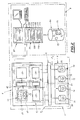
- Figure 2 shows a configurable system 2 of resources computer systems comprising a multicellular platform 4 connected by through means 6 of interconnection to computer resources sess 8. Platform 4 is also connected to a tool 9 of this platform 4.
- common IT resources only contain mass memories. These mass memories are here consist of two data disks 10 and 12 and two disks system 14 and 16. Data discs 10 and 12 are intended to contain application software as well as data to be processed. Here, the disc of data 10 contains application software 20 and the data disc 12 contains application software 22. These data disks 10, 12 include also data to be processed.
- the software 20, 22 are for example database management software or administration software material resources.
- system disks 14 and 16 have a operating system 24 and an operating system 26. These systems 24 and 26 are able to manage IT resources hardware of platform 4.
- each operating system offers functions for managing an event log using a game event log control instructions.
- These features are either implemented on the initiative of software running on this operating system, be implemented at the initiative of the operating system itself.
- the game used is a standard instruction set that conforms to IPMI standard interface specifications (Intelligent Platform Management Initiative) defined by INTEL. This specification defines both the interface material with which platform 4 must be equipped, that is to say for example information storage registers, as well as the software interface, i.e. for example device drivers or "drivers" whose system must be provided.
- This instruction set includes in particular a instruction for viewing the event log, instruction for save a new event in the event log and a instruction to clear the event log.
- a first operating activity A 1 is carried out when the software 20 is executed on the operating system 24.
- This activity A 1 therefore comprises the software 20 and the operating system 24.
- the multicellular platform 4 is divided into several cells of calculation.
- platform 4 has four calculation cells 30, 32, 34 and 36 identical. Thus, only cell 30 will be described in detail.
- the cell 30 is capable of being executed, independently or in cooperation with other cells, operating activities recorded in common resources. For this, this cell or group of cells is managed by the operating system of the activity, saved in the resources municipalities.
- the cell 30 further comprises a central processing unit 40 connected via data and address bus to a card input / output 42 and to local working memories 44.
- the data bus and address is also connected to a set 46 of interface cards with the administration tool 9 of platform 4.
- the central processing unit 40 is intended to execute calculation operations. To this end, it includes, in the embodiment described here, eight 64-bit microprocessors capable of running, in parallel and simultaneously, these calculation operations.
- the input / output card 42 is intended to ensure exchanges of information between common resources 8 and cell 30.
- the local working memories 44 include a unique identifier for the cell.
- this identifier is a serial number making it possible to distinguish this cell 30 from the other cells of the platform 4.
- the identifiers of each of the cells 30, 32, 34 and 36 will be respectively noted here C 1 , C 2 , C 3 and C 4 .
- the set 46 of interface cards here comprises two cards interface 48 and 50.
- the card 48 is connected to cells 30 and 36, while card 50 is connected to cells 32 and 34.
- These cards 48, 50 are connected to the administration tool 9. They are identical to each other and only card 48 will be described here.
- the card 48 is able to manage the material resources of the cells 30 and 36. For example, this card can detect directly operating errors of the hardware components forming these cells 30, 36 regardless of the operating system running on them.
- this card is suitable for transmitting to the administration tool 9 messages each containing an event to be recorded in a log events. These events concern the material resources of the cell 30 or 36. They are transmitted associated with the cell identifier. A event is for example a functional error or an incident technique occurred on a component of cell 30 or 36.
- These cards are also able to intercept system access of exploitation to the material resources of the cells.
- These cards include, for each cell, an IPMI hardware interface conforming to the specifications the Intelligent Platform Management Initiative (IPMI) interface, so that that the instructions for managing the event log for each cell generated by the running operating system be passed to this IPMI hardware interface.
- IPMI Intelligent Platform Management Initiative
- the cards 48, 50 are suitable for retransmitting immediately to the administration tool 9 any instruction to manage a event log intercepted via this IPMI interface. These instructions are transmitted to the administration tool 9 associated with a unique identifier used to identify the activity that issued this instruction.
- the interconnection means 6 are able to connect one any of the cells from platform 4 to any of the disks 10, 12, 14 and 16. Thus, thanks to the interconnection means 6, no operation of rewiring is required to connect any of the drives to one any of the cells of platform 4.
- These interconnection means are for example a network dedicated to the storage of information in accordance with SAN architecture (Storage Area Network) and made from products known as "Fiber Channel Switches” and marketed by example, by Brocade Communications Systems, Inc., 1745 Technology Drive, San Jose, CA 95110, U.S.A. and bearing references SW 3800 or SW 2040 from this supplier.
- the administration tool 9 is suitable for manage the configuration of platform 4. It is for example made from a computer 62 separate from platform 4, equipped with a screen, a keyboard and associated with a memory 64.
- Memory 64 contains a list of domains 70 and a log common event 72.
- List 70 contains the definition of several logical domains likely to be activated on platform 4.
- a logical domain groups together on the one hand an identity file and, on the other hand, a definition file of a hardware perimeter of IT resources.
- the identity file includes a unique identifier for an operating activity to be performed and attributes to save the execution context of this activity.
- these backup attributes are intended to contain all of the parameters of configuration necessary to run the operating system of the activity of so that this operating system can be run with same configuration parameters on any perimeter. The independence of the operating system from the resource perimeter material on which it is or will be executed is thus obtained.
- these backup attributes one of which is intended to store parameters of management of a personal event log specific to the activity.
- This attribute of backup is for example able to memorize the moment at which the activity issued his last instruction to erase his personal event log.
- the identity file also includes information to indicate what is the operating system to activate and what software (if any) of application to execute to perform the function desired by the user.
- the perimeter definition file contains a unique identifier for this perimeter and the definition of the hardware IT resources intended to be used to execute the operating activity corresponding to the activity identifier recorded in the file. identity of this domain.
- the definition of a perimeter comprises for this purpose one or more cell identifiers of platform 4, at least one reference to the system disk containing the operating system to be executed and, here, one or more references to disks of data containing the application software or applications to be executed and / or the data to be processed.
- the list 70 here comprises three domains denoted D 1 , D 2 and D 3 .
- the domain D 1 includes the definition of a perimeter P 1 , and an identity file Id 1 .
- the perimeter P 1 defined in this example includes cells 30, 32 and 36 of the platform 4, as well as the data disk 10 and the system disk 14.
- the identity file Id 1 includes an identifier of activity A 1 , and identifiers of the application software 20 and of the operating system 24.
- the domain D 2 comprises a file for defining a perimeter P 2 and an identity file Id 2 .
- the perimeter P 2 defined in this example includes cell 34, the data disk 12 and the system disk 16.
- the identity file Id 2 contains an activity identifier A 2 and identifiers of the application software 22 and the operating system 26.
- the domain D 3 comprises a file for defining a perimeter P 3 and the identity file Id 1 .
- the perimeter P 3 includes the cell 34, the data disk 10 and the system disk 14.
- the perimeters P 1 and P 2 are shown diagrammatically in dotted lines in FIG. 1.
- the perimeter P 3 is shown in broken lines.
- a perimeter such as the perimeter P 1 , comprising several cells
- the other cells of the same perimeter are slave cells.
- the master cell is for example automatically determined by choosing the cell with the lowest serial number in the perimeter. In such a situation, only the IPMI hardware interface associated with the master cell is used, to transmit to the administration tool 9, the events recorded by the activity executed in this multicellular perimeter.
- the computer 62 is equipped with administration software 76. This software is intended, under the control of an operator, to define and activate new logical domains in the system 2.
- the software 76 includes a module 102 for defining new domains and a domain activation module 104.
- Module 102 is able, under the control of an operator, to define new areas and register these in the list 70.
- this module 102 is intended to be used by the operator to create new definition files for perimeters and new identity files.
- This module is also clean to allow the operator to associate a perimeter definition file and a identity file to form a new logical domain.
- the module 104 is adapted to allow the operator to select from the list 70 an area to activate on platform 4. Such a activation of a domain consists, on the one hand, in configuring the perimeter such that defined in the field selected on platform 4 and, on the other hand, to be launched automatically, on the configured perimeter, the activity corresponding to the file of identity contained in this area. In addition, this module 104 is specific to allow the operator to deactivate one or more domains currently executed on platform 4.
- Administration software 76 is also able to save automatically, in log 72, the events transmitted by through interface cards 48 and 50.
- this software includes a module 106 for saving events in the log 72, a module 108 recording the management parameters of a personal journal of events, and a module 110 for reconstructing a personal journal events.
- the module 106 is able to save, in the log 72, the whole events transmitted by the activities executed or the cells activated, to the administration tool 9.
- this module 106 comprises a sub-module 112 for determining the scope of a received event and a sub-module 114 recording a new line in the journal 72.
- the sub-module 112 is adapted to determine what is the value of the scope attribute to record in column 82 of log 72 for this event. This sub-module is therefore able to determine, for each event to be recorded, what activities and / or perimeters will be allowed to view this event. In the simplified embodiment described here, this sub-module 112 is associated with a list containing all the events likely to occur and which must be consultable by all activities and whatever the scope.
- the sub-module 114 is capable of determining the identifier of the activity or the cell that transmitted the event. It is also able to record a new line in journal 72. This new line has the transmitted event, the identifier of the sender, the date of the event and the value of the scope attribute determined by the 112 sub-module for this event.
- the module 108 is suitable for recording the management parameters a personal event log specific to an activity in the file of identity associated with this activity. So, for example, module 108 is here suitable to be saved, in the backup attribute provided for this purpose in the file of identity, the date of the last instruction to erase the personal journal events of this activity.
- Module 110 is intended to reconstruct or restore a log event staff specific to each activity from information recorded in the journal 72.
- it comprises a sub-module 116 of selection from the journal 72 of events that can be viewed by an activity given. These events are here the events associated with the identifier of activity, events associated with the identifier of a cell contained in the scope on which this activity is carried out, and all the events including the scope attribute has the value "All".
- the module 110 also includes an activation sub-module 118 management parameters of the personal event log reconstructed by the sub-module 116.
- this sub-module 118 is capable of executing the last erase instruction saved in the identity file of the corresponding activity.
- the process of FIG. 4 presents, in phantom, a phase 130 of execution of activity A 1 on the perimeter P 1 , a phase 132 of execution of activity A 2 on the perimeter P 2 and a phase 134 for carrying out activity A 1 on the perimeter P 3 .
- Phases 130, 132 and 134 correspond respectively to the activation and execution of domains D 1 , D 2 and D 3 .
- the phases 130 and 132 are separated from the phase 134 by a step 136 of deactivation of the domains D 1 and D 2 then activation of the domain D 3 on the platform 4.
- the material resources of the perimeter P 3 are common either to the perimeter P 1 or to the perimeter P 2 .
- all of the necessary material resources must be released, which here corresponds to the deactivation of the perimeters P 1 and P 2 .
- Phases 132 and 134 are similar to phase 130. Thus, only this phase 130 will be described here in detail in the particular case of activity A 1 and the scope P 1 .
- Phase 130 includes a step 140 of saving an event by activity A 1 , a step 142 of saving an event by cell 30 a step 144 of sending, by activity A 1 , a instruction to modify its personal event log, and a step 146 of consulting the personal event log by activity A 1 .
- Step 140 occurs when activity A 1 transmits, to the IPMI interface of the interface card 48, an instruction to save a new event.
- This step 140 is therefore triggered by the reception, by the software 76 of the administration tool 9, of an event associated with an identifier indicating that this event is produced by the activity A 1 .
- the event thus received is recorded in the journal 72.
- This step mainly comprises a sub-step 150 of determining the attribute of scope followed by a sub-step 152 of recording a new line in newspaper 72.
- the sub-step 150 is performed by the sub-module 112 of the software 76.
- This sub-module 112 first compares the event received with the list of events associated with it. If the received event is identical to one of those contained in the associated event list, the scope attribute has the value "All". Otherwise, the event having been transmitted by activity A 1 is automatically associated with a scope attribute whose value is equal to "Source”.
- the recording sub-module 114 records, in the table forming the log 72, a new row comprising the event received in column 84, the instant of appearance of this event in column 86, the value of the scope attribute in column 82 and the activity identifier in column 80.
- activity A 1 successively records lines 90 and 98 in journal 72 during phase 130.
- Line 90 includes the identifier A 1 , the value "Source”, the event E a and the instant t a respectively in columns 80, 82, 84 and 86.
- the line 98 includes the identifier A 1 , the value "Source”, the event E e and the instant t e respectively in columns 80, 82, 84 and 86.
- Step 142 occurs when the software 76 receives a event generated directly by the cell without going through the IPMI interface or the operating system. These events concern, for example, the state of operation of one of the microcontrollers in this cell.
- Step 142 includes a substep 154 of determining the value of the attribute of scope associated with the event received followed by a substep 156 of recording the event in the log 72.
- Substep 154 is performed by the sub-module 112 for determining the value of the attribute of scope.
- the event received is compared to the list associated with the 112 sub-module and, if this is identical to one of the events contained in this list, the scope attribute has the value "All". In the case otherwise, the value of the scope attribute is set to "Local".
- Sub-step 156 is similar to sub-step 152 with the exception that it is the identifier C 1 of the cell 30 having emitted the event which is recorded in column 80 and not the identifier of the activity that issued the event.
- the list associated with the sub-module 112 for determining the scope includes an event E d .
- the event E d is assumed to occur at time t d in cell 30.
- Step 142 is then executed, which leads to recording line 96 in the log 72.
- This line 96 includes the identifier C 1 , the value "All", the event E d , and the instant t d respectively recorded in columns 80, 82, 84 and 86.
- step 144 of recording the modification instruction in the identity file associated with the activity is executed.
- the recording module 108 receives the modification instruction from the personal log transmitted via the IPMI interface of the card 48. This received instruction is then stored in the file saving attribute of identity Id 1 corresponding to activity A 1 having issued this instruction.
- activity A 1 issues an instruction to erase the event log at time t 1 . Consequently, the recording module 108 stores, in the identity file Id 1, that an erasure instruction has been issued at time t 1 .
- This step 146 includes a sub-step 160 of reconstruction of the personal event log specific to activity A 1 followed by a sub-step 162 of execution of the modification instructions applied to this reconstructed personal event log .
- the selection sub-module 116 of the module 110 selects, in the journal 72, the events which will be consultable or accessible by the activity A 1 .
- This selection sub-module 116 executes for this three selection operations 164, 166 and 168 successively or simultaneously.
- the selection operation 164 consists in selecting, in the journal 72, only all of the events associated with the identifier of the activity consulting its personal journal of events, that is to say here the identifier A 1 . This operation therefore leads to selecting, during phase 130, only lines 90 and 98 of the journal 72.
- the selection operation 166 consists in selecting only the set of events associated with an identifier of one of the cells of the perimeter P 1 on which the activity consulting his personal event log is executed, that is to say here with one of the identifiers C 1 , C 2 , C 4 . This operation therefore leads, in the example described here, to selecting line 96 of the log 72.
- the selection operation 168 consists, for its part, of selecting, in the log 72, only all of the events associated with a identifier different from that of the activity consulting the personal event log and different from that of the perimeter on which this activity is executed, but associated with a scope attribute authorizing the consultation of this event either by activity A 1 , or from the perimeter P 1 .
- the instruction execution module 118 applies, to the personal event log reconstructed during sub-step 160, the instructions for modifying this personal event log recorded in the file d identity Id 1 of activity A 1 consulting his personal diary of events.
- the sub-module 118 applies, to the personal event log reconstructed for activity A 1 , the erasing instruction recorded in the identity file Id 1 .
- the instant t 1 being assumed here after the instant t a and before the instant t d , the execution of this erasing instruction therefore only leads to erasing the line 90 selected to be incorporated in the personal journal d events of activity A 1 .
- the personal event log specific to the activity A 1 only comprises lines 96 and 98. Only these events will be available for activity A 1 when it is performed on the perimeter P 1 .
- step 146 consists in filtering the log 72 so as to select therein only the events which relate to activity A 1 when it is executed on the perimeter P 1 .
- the visibility that activity A 1 has of the journal 72 is limited to the events which concern it and conforms to the management parameters which have been recorded in its identity file.
- steps 140, 142, 144 and 146 have been described in order, these can occur in any order. Indeed, these stages are triggered either by the activity or by a perimeter cell.
- activity A 2 and the perimeter P 2 execute steps similar to steps 140 to 146. These steps will therefore not be described here in detail in the particular case, this time, where the identifier of activity is A 2 and where the cell identifier is C 3 .
- activity A 2 triggers the recording of line 94 in the common journal 72.
- This line 94 includes an identifier A 2 , the value "Source” , an event E c and an instant t c respectively recorded in columns 80, 82, 84 and 86.
- the cell 34 triggers the recording of line 92 comprising the identifier C 3 , the value " Local ", an event E b , and an instant t b respectively recorded in columns 80, 82, 84 and 86.
- the common journal includes both events recorded by activities A 1 and A 2 , as well as events recorded by the perimeters P 1 and P 2 .
- phase 134 activity A 1 is executed on the perimeter P 3 . Again, during this phase 134, steps similar to steps 140 to 146 are triggered either by the activity A 1 , or by the cell 34. Thus, these steps will not be described again.
- the log 72 is assumed to be in the state shown in FIG. 3 and the identity file Id 1 is assumed to include the erasing instruction produced at time t 1 .
- the instant t 1 is assumed to be posterior to the instant t a and anterior to the instant t b .
- the step of reconstructing a personal journal specific to activity A 1 leads to selecting lines 90, 92, 96 and 98 of journal 72.
- lines 90 and 98 include an identifier of the activity A 1 in column 80, line 92 has the cell identifier C 3 in column 80 and line 96 has a range attribute equal to "All".
- the substep of execution of the modification instructions recorded in the identity file Id 1 leads to deleting the line 90.
- the event E a occurred at a time prior to the last instruction d deletion contained in the Id 1 identity file.
- the personal event log ultimately includes only lines 92, 96 and 98 and only these events can be viewed by activity A 1 when it is executed on the perimeter P 3 .
- the system 2 therefore allows an activity to find, when it is executed on a current perimeter, all the events that it has recorded, whatever the perimeter on which it was executed previously. Thus, when an activity is transferred from a first perimeter to a second perimeter, the events recorded during its execution on the first perimeter are not lost. For example, line 98 can be consulted by activity A 1 when it is executed on the perimeter P 3 .
- the embodiment described here has the advantage that a event recorded by a cell is accessible from all perimeters containing this cell. So all the information about a scope are included in the personal activity log executed on this perimeter.
- the system 2 records, in a memory accessible from all the perimeters, and executes, during the consultation of a personal event log, the management parameters of this personal event log specific to the activity.
- the personal event log returned to each activity complies with its management parameters, regardless of the scope on which it has been or will be executed. For example, during the transfer of activity A 1 from perimeter P 1 to perimeter P 3 , line 90, which had been deleted when it was executed on perimeter P 1 , is not available again when it is execution on the perimeter P 3 .
- an event recorded by a given cell is likely to interest all of the configured perimeters and / or all of the activities executed or likely to be executed, this is incorporated into all the personal event logs of the activities executed.
- the event E d (line 96) has been recorded by cell 30, it can be consulted by activity A 1 when it is executed on the perimeter P 3 .
- events of general interest can be easily made available for all of the configured perimeters or all of the activities carried out.
- the value of the scope attribute is not limited to the three values described here. This attribute can for example be a list of several activity and / or perimeter identifiers authorized to consult the event corresponding.
- the common event log 72 has been described here as from a table in a database.
- the common log of events includes a file for each activity currently executed or having was executed on platform 4. This file contains an identifier for the activity, for example in the name of the file, and all the events recorded by this activity.
- the joint event log also includes a file by perimeter currently configured or having been configured on platform 4. This perimeter file includes a perimeter identifier, for example in the file name, and the set events recorded by cells in this perimeter.
- a personal diary of events is returned to a activity by associating the records contained in the file comprising the identifier of this activity to those contained in the file containing the identifier of the perimeter on which this activity is carried out.
- the administration tool 9 which has been described as separate from platform 4, is physically integrated into this platform multicellular computing.
- the identifier of the material resource that recorded an event in the common event log 72 is the identifier of the hardware component contained in a cell.
- This variant includes also a correspondence table capable of indicating, for each identifier of a hardware component, what cell contains it and so what is the perimeter that contains it.
Landscapes
- Engineering & Computer Science (AREA)
- General Engineering & Computer Science (AREA)
- Theoretical Computer Science (AREA)
- Computer Hardware Design (AREA)
- Quality & Reliability (AREA)
- Physics & Mathematics (AREA)
- General Physics & Mathematics (AREA)
- Debugging And Monitoring (AREA)
Abstract
Description
- lors de la sauvegarde d'un événement par une activité, une étape d'enregistrement, dans un journal commun d'événements, de l'événement associé à un identificateur de l'activité qui sauvegarde l'événement, et
- avant la consultation par une activité de son journal personnel d'évènements, une étape de reconstruction du journal personnel d'évènements à partir du journal commun d'évènements, cette étape de reconstruction comportant une opération de sélection dans le journal commun d'évènements des seuls évènements associés à l'identificateur de cette activité pour les inclure dans le journal personnel d'évènements reconstruit pour cette activité.
- les ressources informatiques matérielles des périmètres étant aptes à générer des évènements, le procédé comporte également une étape d'enregistrement, dans le journal commun d'évènements, d'un événement généré par une ressource informatique matérielle associée à un identificateur de cette ressource ayant causé cet évènement, et l'étape de reconstruction d'un journal personnel d'évènements propre à une activité comporte également une opération de sélection dans le journal commun d'évènements des seuls évènements associés à un identificateur d'une des ressources informatiques matérielles contenues dans le périmètre sur lequel est exécutée cette activité pour les inclure dans le journal personnel d'évènements reconstruit pour cette activité,
- lors de la sauvegarde d'un événement par une activité, une étape d'enregistrement, dans le journal commun d'évènements, d'un attribut de portée associé à cet événement indiquant quelles sont les activités autorisées à consulter cet événement et/ou les périmètres à partir desquels les activités sont autorisées à consulter cet événement, et l'étape de reconstruction d'un journal personnel d'évènements propre à une activité comporte également une opération de sélection dans le journal commun d'évènements des seuls évènements associés à un attribut de portée autorisant la consultation de ces évènements par l'activité exécutée et/ou à partir du périmètre sur lequel l'activité est exécutée pour les inclure dans le journal personnel d'évènements reconstruit pour cette activité,
- il comporte également :
- lors de l'émission par une activité d'une instruction de modification d'au moins un événement de son journal personnel d'évènements, une étape d'enregistrement de cette instruction associée à un identificateur de cette activité dans un fichier accessible par l'activité à partir de tous les périmètres de la plate-forme, et
- avant la consultation par une activité de son journal personnel d'évènements, une étape d'exécution de l'instruction de modification appliquée au journal personnel d'évènements reconstruit pour cette activité lors de l'étape de reconstruction.
- une plate-forme informatique multicellulaire,
- un outil d'administration apte à définir des périmètres matériels de ressources informatiques et à activer, simultanément ou successivement, ces périmètres sur la plate-forme, chaque périmètre comportant une ou plusieurs cellules de calcul,
- des moyens de stockage des activités d'exploitation, chaque activité d'exploitation contenant au moins un système d'exploitation apte à gérer les ressources informatiques du périmètre sur lequel elle est destinée à être exécutée,
- une mémoire contenant un journal commun d'évènements apte à stocker les évènements enregistrés par toutes les activités d'exploitation,
- un module d'enregistrement, dans le journal commun d'évènements, des évènements générés par chaque activité d'exploitation associée à un identificateur de l'activité qui sauvegarde cet événement, et
- un module de reconstruction d'un journal personnel d'évènements propre à une activité d'exploitation, à partir du journal commun d'évènements, ce module de reconstruction comportant un sous-module de sélection, dans le journal commun d'évènements, des seuls évènements associés à l'identificateur de cette activité d'exploitation pour les inclure dans le journal personnel d'évènements reconstruit pour cette activité.
- le journal personnel d'évènements propre à une activité d'exploitation contenant des évènements enregistrés par les ressources informatiques matérielles du périmètre sur lequel est exécutée cette activité, le système comporte également un module d'enregistrement, dans le journal commun d'évènements, de l'événement généré par une ressource informatique matérielle du périmètre associé à un identificateur de cette ressource, et en ce que le module de reconstruction d'un journal personnel d'évènements propre à une activité comporte également un sous-module de sélection, dans le journal commun d'évènements, des seuls évènements associés à un identificateur d'une des ressources informatiques matérielles contenues dans le périmètre sur lequel est exécutée cette activité pour les inclure dans le journal personnel d'évènements reconstruit pour cette activité,
- le système comporte également un module de sauvegarde dans le journal commun d'évènements d'un attribut de portée associé à chaque événement et indiquant quelles sont les activités autorisées à consulter cet événement et/ou les périmètres à partir desquels les activités sont autorisées à consulter cet événement, et le module de reconstruction d'un journal personnel d'évènements propre à une activité comporte également un sous-module de sélection dans le journal commun d'évènements des seuls évènements associés à un attribut de portée autorisant la consultation de ces évènements par l'activité exécutée et/ou à partir du périmètre sur lequel l'activité est exécutée pour les inclure dans le journal personnel d'évènements reconstruit pour cette activité, et
- il comporte également :
- un module d'enregistrement d'instructions de modification d'au moins un événement du journal personnel d'évènements propre à une activité, ce module d'enregistrement étant apte à enregistrer dans la mémoire ces instructions de modification associées à un identificateur de l'activité les ayant générées, et
- un module d'exécution des instructions de modification enregistrées par une activité dans la mémoire, ces instructions de modification étant appliquées au journal personnel d'évènements reconstruit pour cette activité par le module de reconstruction.
- le journal commun d'évènements contient également une liste d'évènements sauvegardés par des ressources informatiques matérielles contenues dans des périmètres, chacun de ces évènements étant associé à un identificateur de la ressource informatique matérielle qui l'a sauvegardé,
- le journal commun d'évènements contient un attribut de portée associé à chacun des évènements sauvegardés, cet attribut de portée indiquant quelles sont les activités autorisées à consulter cet événement et/ou les périmètres à partir desquels les activités sont autorisées à consulter cet événement.
- la figure 1 est une illustration schématique d'une plate-forme multicellulaire connue,
- la figure 2 est une illustration schématique de l'architecture matérielle d'un système conforme à l'invention,
- la figure 3 est un exemple d'un journal commun d'évènements mis en oeuvre dans le système de la figure 2 ; et
- la figure 4 est un organigramme d'un procédé de gestion d'un journal personnel d'évènements conforme à l'invention.
- "Source", c'est-à-dire que seule l'activité ayant enregistré cet événement peut consulter l'évènement,
- "Local", c'est-à-dire que seule l'activité exécutée sur un périmètre contenant la cellule ayant enregistré cet événement peut le consulter, et
- "All", c'est-à-dire que l'événement est consultable par toute activité et quel que soit le périmètre sur lequel elle est exécutée.
Claims (11)
- Procédé de gestion d'un journal personnel d'évènements propre à une activité d'exploitation contenant des évènements enregistrés par cette activité d'exploitation lorsqu'elle est exécutée sur un périmètre de ressources informatiques matérielles configuré sur une plate-forme informatique multicellulaire (4), chaque activité d'exploitation contenant au moins un système d'exploitation apte à gérer les ressources informatiques du périmètre sur lequel elle est destinée à être exécutée, et la plate-forme informatique multicellulaire (4) comportant plusieurs périmètres de ressources informatiques matérielles distincts activables successivement ou simultanément sur la plate-forme (4), caractérisé en ce que le procédé comporte :lors de la sauvegarde d'un événement par une activité, une étape (152) d'enregistrement, dans un journal commun d'événements (72), de l'événement associé à un identificateur de l'activité qui sauvegarde l'événement, etavant la consultation par une activité de son journal personnel d'évènements, une étape (160) de reconstruction du journal personnel d'évènements à partir du journal commun d'évènements (72), cette étape de reconstruction comportant une opération (164) de sélection dans le journal commun d'évènements (72) des seuls évènements associés à l'identificateur de cette activité pour les inclure dans le journal personnel d'évènements reconstruit pour cette activité.
- Procédé selon la revendication 1, caractérisé en ce que les ressources informatiques matérielles des périmètres étant aptes à générer des évènements, le procédé comporte également une étape (156) d'enregistrement, dans le journal commun d'évènements (72), d'un événement généré par une ressource informatique matérielle associée à un identificateur de cette ressource ayant causé cet évènement, et en ce que l'étape de reconstruction d'un journal personnel d'évènements propre à une activité comporte également une opération (166) de sélection dans le journal commun d'évènements (72) des seuls évènements associés à un identificateur d'une des ressources informatiques matérielles contenues dans le périmètre sur lequel est exécutée cette activité pour les inclure dans le journal personnel d'évènements reconstruit pour cette activité.
- Procédé selon l'une quelconque des revendications précédentes, caractérisé en ce qu'il comporte également :lors de la sauvegarde d'un événement par une activité, une étape (152, 156) d'enregistrement, dans le journal commun d'évènements (72), d'un attribut de portée associé à cet événement indiquant quelles sont les activités autorisées à consulter cet événement et/ou les périmètres à partir desquels les activités sont autorisées à consulter cet événement, et en ce que l'étape (160) de reconstruction d'un journal personnel d'évènements propre à une activité comporte également une opération (168) de sélection dans le journal commun d'évènements (72) des seuls évènements associés à un attribut de portée autorisant la consultation de ces évènements par l'activité exécutée et/ou à partir du périmètre sur lequel l'activité est exécutée pour les inclure dans le journal personnel d'évènements reconstruit pour cette activité.
- Procédé selon l'une quelconque des revendications précédentes, caractérisé en ce qu'il comporte également :lors de l'émission par une activité d'une instruction de modification d'au moins un événement de son journal personnel d'évènements, une étape (144) d'enregistrement de cette instruction associée à un identificateur de cette activité dans un fichier accessible par l'activité à partir de tous les périmètres de la plate-forme, etavant la consultation par une activité de son journal personnel d'évènements, une étape d'exécution (162) de l'instruction de modification appliquée au journal personnel d'évènements reconstruit pour cette activité lors de l'étape de reconstruction.
- Système de gestion d'un journal personnel d'évènements propre à une activité d'exploitation lors de son exécution, le système comportantcaractérisé en ce qu'il comporteune plate-forme informatique multicellulaire (4),un outil d'administration (9) apte à définir des périmètres de ressources informatiques matérielles et à activer, simultanément ou successivement, ces périmètres sur la plate-forme (4), chaque périmètre comportant une ou plusieurs cellules de calcul (30, 32, 34, 36),des moyens (10, 12, 14, 16) de stockage des activités d'exploitation, chaque activité d'exploitation contenant au moins un système d'exploitation apte à gérer les ressources informatiques du périmètre sur lequel elle est destinée à être exécutée,une mémoire (64) contenant un journal commun d'évènements (72) apte à stocker les évènements enregistrés par toutes les activités d'exploitation,un module (114) d'enregistrement, dans le journal commun d'évènements (72), des évènements générés par chaque activité d'exploitation associée à un identificateur de l'activité qui sauvegarde cet événement, etun module (110) de reconstruction d'un journal personnel d'évènements propre à une activité d'exploitation, à partir du journal commun d'évènements (72), ce module (110) de reconstruction comportant un sous-module (116) de sélection, dans le journal commun d'évènements (72), des seuls évènements associés à l'identificateur de cette activité d'exploitation pour les inclure dans le journal personnel d'évènements reconstruit pour cette activité.
- Système selon la revendication 5, caractérisé en ce que le journal personnel d'évènements (72) propre à une activité d'exploitation contenant des évènements enregistrés par les ressources informatiques matérielles du périmètre sur lequel est exécutée cette activité, le système comporte également un module (114) d'enregistrement, dans le journal commun d'évènements (72), de l'événement généré par une ressource informatique matérielle du périmètre associé à un identificateur de cette ressource, et en ce que le module (110) de reconstruction d'un journal personnel d'évènements propre à une activité comporte également un sous-module de sélection, dans le journal commun d'évènements (72), des seuls évènements associés à un identificateur d'une des ressources informatiques matérielles contenues dans le périmètre sur lequel est exécutée cette activité pour les inclure dans le journal personnel d'évènements reconstruit pour cette activité.
- Système selon la revendication 5 ou 6, caractérisé en ce qu'il comporte également un module (106) de sauvegarde dans le journal commun d'évènements (72) d'un attribut de portée associé à chaque événement et indiquant quelles sont les activités autorisées à consulter cet événement et/ou les périmètres à partir desquels les activités sont autorisées à consulter cet événement, et en ce que le module (110) de reconstruction d'un journal personnel d'évènements propre à une activité comporte également un sous-module (116) de sélection dans le journal commun d'évènements (72) des seuls évènements associés à un attribut de portée autorisant la consultation de ces évènements par l'activité exécutée et/ou à partir du périmètre sur lequel l'activité est exécutée pour les inclure dans le journal personnel d'évènements reconstruit pour cette activité.
- Système selon l'une quelconque des revendications 5 à 7, caractérisé en ce qu'il comporte également :un module (108) d'enregistrement d'instructions de modification d'au moins un événement du journal personnel d'évènements propre à une activité, ce module (108) d'enregistrement étant apte à enregistrer dans la mémoire (64) ces instructions de modification associées à un identificateur de l'activité les ayant générées, etun module (118) d'exécution des instructions de modification enregistrées par une activité dans la mémoire (64), ces instructions de modification étant appliquées au journal personnel d'évènements reconstruit pour cette activité par le module (110) de reconstruction.
- Mémoire (64) de stockage d'informations destinée à être utilisée dans un système de gestion d'un journal personnel d'évènements selon l'une quelconque des revendications 5 à 8, caractérisée en ce qu'elle comporte un journal commun d'évènements (72) contenant une liste d'évènements sauvegardés par plusieurs activités d'exploitation différentes, chacun de ces évènements étant associé à un identificateur de l'activité qui l'a sauvegardé.
- Mémoire (64) de stockage d'informations selon la revendication 9, caractérisée en ce que le journal commun d'évènements (72) contient également une liste d'évènements sauvegardés par des ressources informatiques matérielles contenues dans des périmètres, chacun de ces évènements étant associé à un identificateur de la ressource informatique matérielle qui l'a sauvegardé.
- Mémoire (64) de stockage d'informations selon la revendication 9 ou 10, caractérisée en ce que le journal commun d'évènements (72) contient un attribut de portée associé à chacun des évènements sauvegardés, cet attribut de portée indiquant quelles sont les activités autorisées à consulter cet événement et/ou les périmètres à partir desquels les activités sont autorisées à consulter cet événement.
Applications Claiming Priority (2)
| Application Number | Priority Date | Filing Date | Title |
|---|---|---|---|
| FR0201519A FR2835629B1 (fr) | 2002-02-07 | 2002-02-07 | Procede et systeme de gestion d'un journal personnel d'evenements propre a une activite d'exploitation executee sur un perimetre materiel de ressources informatiques et memoire mise en oeuvre dans ce systeme |
| FR0201519 | 2002-02-07 |
Publications (2)
| Publication Number | Publication Date |
|---|---|
| EP1341087A1 true EP1341087A1 (fr) | 2003-09-03 |
| EP1341087B1 EP1341087B1 (fr) | 2012-01-25 |
Family
ID=27619999
Family Applications (1)
| Application Number | Title | Priority Date | Filing Date |
|---|---|---|---|
| EP03290212A Expired - Lifetime EP1341087B1 (fr) | 2002-02-07 | 2003-01-28 | Procédé et système de gestion d'un journal personnel d'évènements |
Country Status (3)
| Country | Link |
|---|---|
| US (1) | US6820040B2 (fr) |
| EP (1) | EP1341087B1 (fr) |
| FR (1) | FR2835629B1 (fr) |
Cited By (1)
| Publication number | Priority date | Publication date | Assignee | Title |
|---|---|---|---|---|
| US8103591B2 (en) | 2004-10-01 | 2012-01-24 | Bull S.A.S. | Flexible management process for multiple activities executed on partitionable platforms of a multiple processor system |
Families Citing this family (7)
| Publication number | Priority date | Publication date | Assignee | Title |
|---|---|---|---|---|
| CA2453728A1 (fr) * | 2003-12-17 | 2005-06-17 | Ibm Canada Limited-Ibm Canada Limitee | Methode et systeme de presentation de deroulements d'evenements a l'aide de diagrammes de sequences |
| US7433985B2 (en) * | 2005-12-28 | 2008-10-07 | Intel Corporation | Conditional and vectored system management interrupts |
| JP2009121832A (ja) * | 2007-11-12 | 2009-06-04 | Sysmex Corp | 分析装置、分析システム及びコンピュータプログラム |
| TWI356301B (en) * | 2007-12-27 | 2012-01-11 | Ind Tech Res Inst | Memory management system and method for open platf |
| US10318477B2 (en) | 2010-05-26 | 2019-06-11 | Red Hat, Inc. | Managing and archiving system and application log files |
| US8725923B1 (en) * | 2011-03-31 | 2014-05-13 | Emc Corporation | BMC-based communication system |
| JP6972565B2 (ja) * | 2017-01-31 | 2021-11-24 | オムロン株式会社 | 情報処理装置、情報処理装置の制御方法、および、制御プログラム |
Citations (2)
| Publication number | Priority date | Publication date | Assignee | Title |
|---|---|---|---|---|
| US5345590A (en) * | 1990-08-31 | 1994-09-06 | International Business Machines Corporation | Method and apparatus for cross-partition control in a partitioned process environment |
| US6047353A (en) * | 1997-05-07 | 2000-04-04 | Emc Corporation | Method and apparatus for monitoring of host activities relating to an attached storage device |
Family Cites Families (6)
| Publication number | Priority date | Publication date | Assignee | Title |
|---|---|---|---|---|
| JP3614625B2 (ja) * | 1997-10-27 | 2005-01-26 | 株式会社日立製作所 | 管理マネージャ計算機、記録媒体、および、計算機運用管理方法 |
| US6434619B1 (en) * | 1998-04-29 | 2002-08-13 | Alcatel Canada Inc. | Internet-enabled service management system and method |
| US6542932B1 (en) * | 1999-06-11 | 2003-04-01 | Sun Microsystems, Inc. | Domain access control for logging systems |
| EP1451661A1 (fr) * | 2001-02-02 | 2004-09-01 | Opentv, Inc. | Systeme de gestion de suite de plate-forme de service |
| US6792564B2 (en) * | 2001-03-01 | 2004-09-14 | International Business Machines Corporation | Standardized format for reporting error events occurring within logically partitioned multiprocessing systems |
| US7127722B2 (en) * | 2001-06-18 | 2006-10-24 | Intel Corporation | Method and apparatus for avoiding multiple processing of the same IPMI system event |
-
2002
- 2002-02-07 FR FR0201519A patent/FR2835629B1/fr not_active Expired - Fee Related
-
2003
- 2003-01-28 EP EP03290212A patent/EP1341087B1/fr not_active Expired - Lifetime
- 2003-02-07 US US10/359,698 patent/US6820040B2/en not_active Expired - Lifetime
Patent Citations (2)
| Publication number | Priority date | Publication date | Assignee | Title |
|---|---|---|---|---|
| US5345590A (en) * | 1990-08-31 | 1994-09-06 | International Business Machines Corporation | Method and apparatus for cross-partition control in a partitioned process environment |
| US6047353A (en) * | 1997-05-07 | 2000-04-04 | Emc Corporation | Method and apparatus for monitoring of host activities relating to an attached storage device |
Cited By (1)
| Publication number | Priority date | Publication date | Assignee | Title |
|---|---|---|---|---|
| US8103591B2 (en) | 2004-10-01 | 2012-01-24 | Bull S.A.S. | Flexible management process for multiple activities executed on partitionable platforms of a multiple processor system |
Also Published As
| Publication number | Publication date |
|---|---|
| US20030149800A1 (en) | 2003-08-07 |
| EP1341087B1 (fr) | 2012-01-25 |
| US6820040B2 (en) | 2004-11-16 |
| FR2835629A1 (fr) | 2003-08-08 |
| FR2835629B1 (fr) | 2005-01-28 |
Similar Documents
| Publication | Publication Date | Title |
|---|---|---|
| EP1335287B1 (fr) | Procédé de mise à jour automatique d'un chemin d'accès au disque système d'un périmètre matériel de ressources informatiques, système pour exécuter ce procédé et mémoire utilisée dans ce système | |
| CH616252A5 (fr) | ||
| FR2681707A1 (fr) | Systeme de fichiers pour redistribuer selectivement des fichiers et procede pour affecter un espace de memoire dans un systeme informatique comportant de multiples dispositifs de stockage de donnees. | |
| EP0012886A1 (fr) | Unité de commande d'entrée/sortie pour système de traitement de données | |
| FR2664719A1 (fr) | Dispositif de controle pour une memoire tampon a partitionnement reconfigurable. | |
| EP1341087B1 (fr) | Procédé et système de gestion d'un journal personnel d'évènements | |
| FR2807532A1 (fr) | Dispositif et procede de memorisation de donnees de journalisation dans un reseau de communication | |
| EP0969625A1 (fr) | Agent de communication entre un administrateur et au moins une ressource d'un système informatique | |
| EP1719054B1 (fr) | Dispositif a memoire virtuelle partagee auto-administree apte a gerer au moins un flux de donnees multipiste | |
| EP1728164B1 (fr) | Procede pour l'emulation logicielle de disques durs d'une plate-forme informatique au niveau du systeme d'exploitation avec gestion parametrable a la volee des requetes d'ecriture et de lecture | |
| FR2767399A1 (fr) | Procede de determination du temps de demarrage d'un systeme informatique | |
| WO2010052440A1 (fr) | Procede et systeme de stockage virtualise d'un ensemble de donnees numeriques | |
| EP2413233A1 (fr) | Téléphone mobile sous android comprenant une chaîne de mise à disposition de contenus | |
| EP0784270B1 (fr) | Procédé pour ordonnancer une pluralité de messages provenant respectivement d'une pluralité de sources, et système pour la mise en oeuvre de ce procédé | |
| EP0407295B1 (fr) | Procédé d'observation de l'exécution d'un programme chargé dans un système informatique et dispositif pour la mise en oeuvre dudit procédé | |
| WO2021044094A1 (fr) | Procede de gestion d'un groupe de donnees dans un systeme informatique | |
| FR2873219A1 (fr) | Procede de sauvegarde distribuee sur des postes clients dans un reseau informatique | |
| EP3948574A1 (fr) | Système de stockage redondant de données, procédé et programme d'ordinateur correspondants | |
| FR2866729A1 (fr) | Dispositif a memoire virtuelle partagee auto-administree apte a gerer au moins un flux de donnees multipiste | |
| WO2022105616A1 (fr) | Balayages de système de fichiers parallèles avec de multiples files d'attente partagées | |
| FR3073061B1 (fr) | Procede de communication entre processus, programme d’ordinateur et installation informatique correspondants | |
| FR2864741A1 (fr) | Dispositif et methode de stockage de donnees audio/video dans un reseau domestique. | |
| FR2618578A1 (fr) | Systeme informatique modulaire embarque a memoire virtuelle integree | |
| FR3100350A1 (fr) | migration d’une chaîne de blocs de données | |
| WO2021089928A1 (fr) | Procédé pour exécuter une transaction |
Legal Events
| Date | Code | Title | Description |
|---|---|---|---|
| PUAI | Public reference made under article 153(3) epc to a published international application that has entered the european phase |
Free format text: ORIGINAL CODE: 0009012 |
|
| AK | Designated contracting states |
Kind code of ref document: A1 Designated state(s): AT BE BG CH CY CZ DE DK EE ES FI FR GB GR HU IE IT LI LU MC NL PT SE SI SK TR |
|
| AX | Request for extension of the european patent |
Extension state: AL LT LV MK RO |
|
| 17P | Request for examination filed |
Effective date: 20031007 |
|
| AKX | Designation fees paid |
Designated state(s): DE FR GB IT |
|
| RAP1 | Party data changed (applicant data changed or rights of an application transferred) |
Owner name: BULL SAS |
|
| 17Q | First examination report despatched |
Effective date: 20100820 |
|
| REG | Reference to a national code |
Ref country code: DE Ref legal event code: R079 Ref document number: 60339820 Country of ref document: DE Free format text: PREVIOUS MAIN CLASS: G06F0011140000 Ipc: G06F0011340000 |
|
| GRAP | Despatch of communication of intention to grant a patent |
Free format text: ORIGINAL CODE: EPIDOSNIGR1 |
|
| RIC1 | Information provided on ipc code assigned before grant |
Ipc: G06F 11/34 20060101AFI20110831BHEP |
|
| GRAS | Grant fee paid |
Free format text: ORIGINAL CODE: EPIDOSNIGR3 |
|
| GRAA | (expected) grant |
Free format text: ORIGINAL CODE: 0009210 |
|
| AK | Designated contracting states |
Kind code of ref document: B1 Designated state(s): DE FR GB IT |
|
| REG | Reference to a national code |
Ref country code: GB Ref legal event code: FG4D Free format text: NOT ENGLISH |
|
| REG | Reference to a national code |
Ref country code: DE Ref legal event code: R096 Ref document number: 60339820 Country of ref document: DE Effective date: 20120322 |
|
| PLBE | No opposition filed within time limit |
Free format text: ORIGINAL CODE: 0009261 |
|
| STAA | Information on the status of an ep patent application or granted ep patent |
Free format text: STATUS: NO OPPOSITION FILED WITHIN TIME LIMIT |
|
| 26N | No opposition filed |
Effective date: 20121026 |
|
| REG | Reference to a national code |
Ref country code: DE Ref legal event code: R097 Ref document number: 60339820 Country of ref document: DE Effective date: 20121026 |
|
| REG | Reference to a national code |
Ref country code: FR Ref legal event code: PLFP Year of fee payment: 14 |
|
| REG | Reference to a national code |
Ref country code: FR Ref legal event code: PLFP Year of fee payment: 15 |
|
| REG | Reference to a national code |
Ref country code: FR Ref legal event code: PLFP Year of fee payment: 16 |
|
| PGFP | Annual fee paid to national office [announced via postgrant information from national office to epo] |
Ref country code: IT Payment date: 20200123 Year of fee payment: 18 |
|
| PG25 | Lapsed in a contracting state [announced via postgrant information from national office to epo] |
Ref country code: IT Free format text: LAPSE BECAUSE OF NON-PAYMENT OF DUE FEES Effective date: 20210128 |
|
| PGFP | Annual fee paid to national office [announced via postgrant information from national office to epo] |
Ref country code: GB Payment date: 20220125 Year of fee payment: 20 Ref country code: DE Payment date: 20220120 Year of fee payment: 20 |
|
| PGFP | Annual fee paid to national office [announced via postgrant information from national office to epo] |
Ref country code: FR Payment date: 20220120 Year of fee payment: 20 |
|
| REG | Reference to a national code |
Ref country code: DE Ref legal event code: R071 Ref document number: 60339820 Country of ref document: DE |
|
| REG | Reference to a national code |
Ref country code: GB Ref legal event code: PE20 Expiry date: 20230127 |
|
| PG25 | Lapsed in a contracting state [announced via postgrant information from national office to epo] |
Ref country code: GB Free format text: LAPSE BECAUSE OF EXPIRATION OF PROTECTION Effective date: 20230127 |