EP1342412A1 - Rein triklines Metazachlor und Verfahren zu seiner Herstellung - Google Patents
Rein triklines Metazachlor und Verfahren zu seiner Herstellung Download PDFInfo
- Publication number
- EP1342412A1 EP1342412A1 EP03001599A EP03001599A EP1342412A1 EP 1342412 A1 EP1342412 A1 EP 1342412A1 EP 03001599 A EP03001599 A EP 03001599A EP 03001599 A EP03001599 A EP 03001599A EP 1342412 A1 EP1342412 A1 EP 1342412A1
- Authority
- EP
- European Patent Office
- Prior art keywords
- metazachlor
- triclinic
- solvent
- crystallization
- polar
- Prior art date
- Legal status (The legal status is an assumption and is not a legal conclusion. Google has not performed a legal analysis and makes no representation as to the accuracy of the status listed.)
- Granted
Links
Images


Classifications
-
- C—CHEMISTRY; METALLURGY
- C07—ORGANIC CHEMISTRY
- C07D—HETEROCYCLIC COMPOUNDS
- C07D231/00—Heterocyclic compounds containing 1,2-diazole or hydrogenated 1,2-diazole rings
- C07D231/02—Heterocyclic compounds containing 1,2-diazole or hydrogenated 1,2-diazole rings not condensed with other rings
- C07D231/10—Heterocyclic compounds containing 1,2-diazole or hydrogenated 1,2-diazole rings not condensed with other rings having two or three double bonds between ring members or between ring members and non-ring members
- C07D231/12—Heterocyclic compounds containing 1,2-diazole or hydrogenated 1,2-diazole rings not condensed with other rings having two or three double bonds between ring members or between ring members and non-ring members with only hydrogen atoms, hydrocarbon or substituted hydrocarbon radicals, directly attached to ring carbon atoms
-
- C—CHEMISTRY; METALLURGY
- C07—ORGANIC CHEMISTRY
- C07D—HETEROCYCLIC COMPOUNDS
- C07D233/00—Heterocyclic compounds containing 1,3-diazole or hydrogenated 1,3-diazole rings, not condensed with other rings
- C07D233/54—Heterocyclic compounds containing 1,3-diazole or hydrogenated 1,3-diazole rings, not condensed with other rings having two double bonds between ring members or between ring members and non-ring members
- C07D233/56—Heterocyclic compounds containing 1,3-diazole or hydrogenated 1,3-diazole rings, not condensed with other rings having two double bonds between ring members or between ring members and non-ring members with only hydrogen atoms or radicals containing only hydrogen and carbon atoms, attached to ring carbon atoms
-
- C—CHEMISTRY; METALLURGY
- C07—ORGANIC CHEMISTRY
- C07D—HETEROCYCLIC COMPOUNDS
- C07D249/00—Heterocyclic compounds containing five-membered rings having three nitrogen atoms as the only ring hetero atoms
- C07D249/02—Heterocyclic compounds containing five-membered rings having three nitrogen atoms as the only ring hetero atoms not condensed with other rings
- C07D249/08—1,2,4-Triazoles; Hydrogenated 1,2,4-triazoles
Definitions
- the invention relates to purely triclinic 2-chloro (2 ', 6'-dimethyl-N-pyrazol-1-ylmethyl) acetanilide (metazachlor) of the formula I, a process for the preparation of this purely triclinic modification and stable aqueous suspension concentrates containing it use as a herbicide.
- the well-known herbicidal active ingredient metazachlor crystallizes in various crystal modifications, which are characterized by different melting ranges.
- Both non-polar and polar solvents can be used.
- the solvent or mixture of solvents should expediently be chosen such that it does not dissolve more than 100 g, preferably not more than 80 g, in particular not more than 60 g, of metazachlor per liter in the temperature range from 50 to 70 ° C. Solvents which have only a low solubility in the temperature range desired for the crystallization are therefore preferred. Solvents in which metazachlor dissolves very well can still be used if the solubility is correspondingly reduced by adding a second solvent with low solubility, such as aliphatic hydrocarbons. It is possible to add the second solvent immediately or only in portions or continuously during the crystallization.
- Suitable non-polar solvents are in particular acyclic or cyclic aliphatic hydrocarbons such as petroleum ether, ligroin, cyclohexane, aromatic hydrocarbons such as toluene, xylene, cumene or aromatic-containing, technical solvent mixtures such as Solvesso® or Shellsol®.
- acyclic or cyclic aliphatic hydrocarbons such as petroleum ether, ligroin, cyclohexane, aromatic hydrocarbons such as toluene, xylene, cumene or aromatic-containing, technical solvent mixtures such as Solvesso® or Shellsol®.
- Suitable polar solvents are in particular alcohols such as methanol, ethanol, isopropanol, n-propanol, butanol, isobutanol, tert-butanol, octanol, ethylene glycol, propylene glycol and butanediols, ketones such as acetone and Butan-2-one, ethers such as diisopropyl ether, tetrahydrofuran and 1,4-dioxane, amides such as dimethylformamide and N-methylpyrrolidone, as well as dimethyl sulfoxide and diethylene glycol.
- alcohols such as methanol, ethanol, isopropanol, n-propanol, butanol, isobutanol, tert-butanol, octanol, ethylene glycol, propylene glycol and butanediols
- ketones such as acetone and Butan
- the metazachlor produced according to the invention is in a purely triclinic modification.
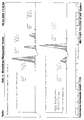
- the absence of the other crystal forms was determined by thermal analysis (Differential Scanning Calorimetry, DSC) Fig. 1, by an X-ray powder diffractogram Table 1 and by a stability test Table 2.
- the absence of the other crystal forms means that the monoclinic and the metastable crystal form melting at 84 ° C. can no longer be detected by the analytical methods mentioned and make up at most 0.5%, in particular not more than 0.2%.
- the purely triclinic metazachlor according to the invention is characterized by the following characteristic physical data: Measurement Method parameter Result dimension Thermal analysis (DSC) Onset 80.2 to 80.8 ° C heat of fusion 84-86 J / g X-ray powder diffraction angle Table 1 2 ⁇ microscope crystal form prismatic Table 2: Stability test for purely triclinic metazachlor, Examples 1-4. 5.0 g of metazachlor are stirred for 24 hours at 25 ° C. in 15 g of water using a magnetic stirrer. The metazachlor is suctioned off and air-dried. The modification is determined by thermal analysis (DSC) based on the melting behavior. In the case of mixtures, the composition is determined from the ratio of the melting areas.
- DSC thermal analysis
- the heat of fusion of the two crystal modifications was determined by thermal analysis (DSC), namely for monoclinic metazachlor 98-102 J / g and for triclinic metazachlor 84-86 J / g. Accordingly, monocline metazachlor is the least energetic modification, which can be called the energetic basic state. All other modifications, including the triclinic modification, are only metastable phases which, in the presence of seed crystals, are rearranged into monoclinic metazachlor by relatively low excitation energies. The purely triclinic metazachlor according to the invention is therefore presumably a frozen modification without seed crystals of another modification. Surprisingly, it has been shown that metazachlor is completely stable in this modification. A rearrangement into the monoclinic modification is not observed during storage, drying or wet grinding, nor when stirring in water.
- the thermal analysis can be carried out with different heating rates. If you select a heating rate of 10 K / min for the monoclinic metazachlor, you will find a singular melting range from 76.9 ° C (onset) to 79.4 ° C (peak), which is characteristic of monoclinic metazachlor (Fig. 2) , However, if one chooses a heating rate of 1 K / min one observes three separate melting ranges, the monoclinic (76.3-77.1 ° C), triclinic (80.6-81.0 ° C) and "metastable" (84 , 0-84.8 ° C) correspond to metazachlor (Fig. 3, upper curve).
- a herbicidal, aqueous suspension concentrate with a content of 10 to 60% by weight of metazachlor can be prepared from the purely triclinic metazachlor according to the invention by mixing with water, surface-active substances and other additives and then grinding in a ball mill.
- the onset temperature (° C) characterizes the start of melting of a phase and, in contrast to the peak temperature, is largely independent of the heating rate and is therefore particularly suitable for identifying the modifications.
- the indication J / g stands for the heat of fusion per gram and is also characteristic for the modification in a uniform phase.
Landscapes
- Chemical & Material Sciences (AREA)
- Organic Chemistry (AREA)
- Organic Low-Molecular-Weight Compounds And Preparation Thereof (AREA)
- Pharmaceuticals Containing Other Organic And Inorganic Compounds (AREA)
- Agricultural Chemicals And Associated Chemicals (AREA)
Abstract
Description
- Die Erfindung betrifft rein triklines 2-Chlor-(2',6'-dimethyl-N-pyrazol-1-ylmethyl)-acetanilid (Metazachlor) der Formel I, ein Verfahren zur Herstellung dieser rein triklinen Modifikation und diese enthaltende stabile wäßrige Suspensionskonzentrate für die Verwendung als Herbizid.

- Der bekannte herbizide Wirkstoff Metazachlor kristallisiert in verschiedenen Kristallmodifikationen, die durch unterschiedliche Schmelzbereiche charakterisiert sind.
- In der EP-B-411 408 sind drei Modifikationen von Metazachlor beschrieben:
- 1. Die trikline Kristallform mit einem Schmelzbereich von 78 bis 83 °C, die nach den in der DE-A-2 648 008, DE-A-2 830 764 und EP-A-12 216 beschriebenen Methoden durch Kristallisation aus einem unpolaren oder wenig polaren Lösungsmittel, wie Cyclohexan oder Toluol, erhältlich sein soll. In Form konzentrierter wäßriger Suspensionen soll diese Modifikation den Nachteil haben, daß sie häufig Agglomerate bildet, so daß ein gleichmäßiges Austragen der formulierten Ware nicht mehr gewährleistet ist.
- 2. Dieses unerwünschte Verhalten zeigt eine bei 76 °C schmelzende monokline Modifikation nicht. Sie wird erhalten, indem man Metazachlor aus einem polaren organischen Lösungsmittel umkristallisiert und nach vollständiger Kristallisation den Festkörper in üblicher Weise isoliert oder in dem man das Metazachlor aus wäßrig schwefelsaurer Lösung bei Temperaturen von 0 bis 50 °C in Gegenwart eines polaren mit Wasser mischbaren inerten organischen Lösungsmittels ausfällt.
Zu beiden Modifikationen werden charakteristische physikalische Daten angegeben. - 3. Eine metastabile bei 84 °C schmelzende Metazachlormodifikation, die durch Erwärmen von triklinem Metazachlor auf 84 °C und Anreiben der gebildeten Schmelze erhalten wird. Beim Stehen soll sich diese Kristallform mit einer Halbwertzeit von 5 Tagen in die bei 76 °C schmelzende monokline Modifikation umwandeln.
- In den für die Herstellung von triklinem Metazachlor benannten Druckschriften findet sich keine Angabe einer Kristallmodifikation oder einer verlässlichen Methode, aus der sich Aussagen zu einer Kristallmodifikationen ableiten ließen. Die publizierten Schmelzpunkte von 78 bis 83 °C der verschiedenen Synthesebeispiele lassen keinen eindeutigen Schluss zu, welche Metazachlormodifikation erhalten wurde und ob es sich dabei um reine Kristallformen oder um Gemische verschiedener Modifikationen handelte.
Dabei muss man anmerken, daß eine verlässliche Ermittlung der Kristallform aus dem Schmelzverhalten nur mit Hilfe der Thermoanalyse (DTA oder DSC) möglich ist. Bestimmung des Schmelzpunktes mit einem Schmelzpunktsröhrchen in einem Heizbad oder mit einem Schmelzblock nach Kofler ergeben nur Aussagen zum Anfang und Ende des Schmelzvorganges. Insbesondere erhält man keine Aussagen zu Phasenumwandlungen, zur Schmelzwärme und im Falle von Gemischen auch keine Angabe der prozentualen Zusammensetzung. In den zitierten Patenten wird die Verwendung von DTA oder DSC jedoch nicht erwähnt. - Bei der Überprüfung der Kristallisation von Metazachlor in Toluol, nach der üblichen Methode (Auflösen von Metazachlor in der Wärme und Kristallisation bis zur Raumtemperatur) hat sich nun überraschend herausgestellt, daß entgegen der Aussage der EP 411 408 nach den Verfahren der zitierten Patentanmeldungen kein rein triklines Metazachlor erhalten wird. Es entstehen vielmehr Gemische verschiedener Metazachlor Modifikationen, die in Abhängigkeit von den Kristallisationsbedingungen, insbesondere der Verweildauer bei Raumtemperatur einen Anteil von 1 bis 99 % an monoklinem Metazachlor aufweisen. Weiter wurde gefunden, daß solche Mischungen von Metazachlormodifikationen, insbesondere beim Vermahlen, beim Rühren in Wasser oder einem organischem Lösungsmittel einer langsamen aber stetig verlaufenden Umlagerung von triklinem zu monoklinem Metazachlor unterliegen. Wird bei diesen Versuchen fein gemahlenes Metazachlor eingesetzt, findet zusätzlich noch eine Zunahme der Korngröße statt, da das neu gebildete, monokline Metazachlor in kristalliner Form entsteht.
- Überraschend wurde nun gefunden, daß rein triklines Metazachlor erhalten wird, wenn man eine übersättigte Lösung von Metazachlor in einem organischen Lösungsmittel im Temperaturbereich von 45 bis 75 °C auskristallisieren lässt und nach vollständiger Kristallisation den Festkörper in üblicher Weise isoliert.
Die Temperatur beträgt bei der Kristallisation vorzugsweise 50 bis 70 °C, insbesondere 55 bis 60 °C. - Dabei können sowohl unpolare wie auch polare Lösungsmittel eingesetzt werden. Das Lösungsmittel oder Lösungsgemisch sollte zweckmäßig so gewählt werden, daß es im Temperaturbereich von 50 bis 70 °C nicht mehr als 100 g, vorzugsweise nicht mehr als 80 g, insbesondere nicht mehr als 60 g Metazachlor pro Liter löst. Es werden also Lösungsmittel bevorzugt, die nur ein geringes Lösungsvermögen in dem für die Kristallisation gewünschten Temperaturbereich aufweisen.
Lösungsmittel, in denen sich Metazachlor sehr gut löst, lassen sich dennoch verwenden, wenn durch Zugabe eines zweiten Lösungsmittels mit geringem Löslichkeitsvermögen wie beispielsweise aliphatische Kohlenwasserstoffe das Löslichkeitsvermögen entsprechend verringert wird. Dabei ist es möglich, das zweite Lösungsmittel sofort oder erst während der Kristallisation portionsweise oder kontinuierlich zuzusetzen. - Als unpolare Lösungsmittel eignen sich insbesondere acyclische oder cyclische aliphatische Kohlenwasserstoffe wie Petrolether, Ligroin, Cyclohexan, aromatische Kohlenwasserstoffe wie Toluol, Xylol, Cumol oder aromatenhaltige, technische Lösungsmittelgemische wie Solvesso® oder Shellsol®.
- Als polare Lösungsmittel eignen sich insbesondere Alkohole wie Methanol, Ethanol, Isopropanol, n-Propanol, Butanol, Isobutanol, tert.-Butanol, Oktanol, Ethylenglykol, Propylenglykol und Butandiole, Ketone wie Aceton und Butan-2-on, Ether wie Diisopropylether, Tetrahydrofuran und 1,4-Dioxan, Amide wie Dimethylformamid und N-Methylpyrrolidon, sowie Dimethylsulfoxid und Diethylenglykol.
- Das erfindungsgemäß hergestellte Metazachlor liegt in einer rein triklinen Modifikation vor. Die Abwesenheit der anderen Kristallformen wurde durch Thermoanalyse (Differential Scanning Calorimetry, DSC) Abb. 1, durch ein Röntgenpulverdiffraktogramm Tabelle 1 und durch einen Stabilitätstest Tabelle 2 festgestellt. Abwesenheit der anderen Kristallformen bedeutet, daß die monokline und die metastabile, bei 84 °C schmelzende Kristallform durch die genannten Analysenverfahren nicht mehr nachweisbar sind und höchstens 0,5 %, insbesondere nicht mehr als 0,2 % ausmachen.
- Das erfindungsgemäße rein trikline Metazachlor zeichnet sich durch folgende charakteristische physikalische Daten aus:
Meßmethode Parameter Ergebnis Dimension Thermoanalyse (DSC) Onset 80,2-80,8 °C Schmelzwärme 84-86 J/g Röntgenpulverdiffraktogramm Beugungswinkel Tabelle 1 2 Θ Mikroskop Kristallform Prismatisch 


Tabelle 2: Stabilitätstest für rein triklines Metazachlor, Beispiele 1-4. 5,0 g Metazachlor werden 24 Stunden bei 25°C in 15 g Wasser mit einem Magnetrührwerk gerührt. Man saugt das Metazachlor ab und trocknet an der Luft. Die Modifikation wird durch Thermoanalyse (DSC) anhand des Schmelzverhaltens ermittelt. Im Falle von Gemischen wird die Zusammensetzung aus dem Verhältnis der Schmelzflächen bestimmt. Eine rein trikline Modifikation erkennt man daran, daß nach 24 Stunden keine monokline Modifikation nachgewiesen werden kann (Beispiel 1). Schon geringe Zusätze von monoklinem Metazachlor bewirken, daß sich die gesamte Kristallmasse mehr oder weniger vollständig in die monokline Modifikation umwandelt, was sich leicht am Schmelzbereich erkennen lässt (Beispiele 2-4). Vor dem Stabilitätstest Nach dem Stabilitätstest Metazachlor DSC 822e Modifikation in % Bsp. Triklin Monoklin Onset °C Triklin Monoklin 1) 100 % - 80,60 100 % - 2) 99,5 % 0,5 % 75,6 + 80,4 99,8 % 0,2 % 3) 99 % 1 % 74,59 - 100% 4) 95 % 5 % 75,00 - 100% - Durch Thermoanalyse (DSC) wurden die Schmelzwärmen der beiden Kristallmodifikationen ermittelt und zwar für monoklines Metazachlor 98 - 102 J/g und für triklines Metazachlor 84 - 86 J/g. Monoklines Metazachlor ist demnach die energieärmste Modifikation, die man als energetischen Grundzustand bezeichnen kann. Alle anderen Modifikationen, auch die trikline Modifikation, sind nur metastabile Phasen, die bei Anwesenheit von Impfkristallen durch relativ geringe Anregungsenergien in monoklines Metazachlor umgelagert werden. Das erfindungsgemäße rein trikline Metazachlor ist also vermutlich eine eingefrorene Modifikation ohne Impfkristalle einer anderen Modifikation. Es hat sich überraschenderweise gezeigt, daß Metazachlor in dieser Modifikation vollständig stabil ist. Weder beim Lagern, Trocknen oder nassen Vermahlen noch beim Rühren in Wasser wird eine Umlagerung in die monokline Modifikation beobachtet.
- Die Thermoanalyse (DSC) lässt sich mit verschiedenen Aufheizraten durchführen. Wählt man für das monokline Metazachlor eine Aufheizrate von 10 K/min, so findet man einen singulären Schmelzbereich von 76,9 °C (Onset) bis 79,4 °C (Peak), der für monoklines Metazachlor charakteristisch ist (Abb. 2). Wählt man jedoch eine Aufheizrate von 1 K/min so beobachtet man drei getrennte Schmelzbereiche, die dem monoklinen (76,3-77,1 °C), triklinen (80,6-81,0 °C) und "metastabilen" (84,0-84,8 °C) Metazachlor entsprechen (Abb. 3, obere Kurve). Setzt man dem monoklinen Metazachlor 10 % triklines Metazachlor zu und wiederholt das Schmelzexperiment mit der gleichen Aufheizrate von 1 K/min beobachtet man nur noch zwei Schmelzbereiche für wenig monoklines und hauptsächlich triklines Metazachlor (Abb. 3, untere Kurve). Diese unterschiedlichen Resultate sind auf eine Umwandlung des monoklinen Metazachlors in die anderen Modifikation während des Schmelzvorganges zurückzuführen.
Bei der schnellen Aufheizrate von 10 K/min findet das System keine Zeit, die anderen Modifikationen zu bilden. Bei der langsamen Aufheizrate von 1K/min setzt jedoch gleichzeitig mit dem Schmelzen des monoklinen Metazachlors eine Phasenumwandlung zu den höher schmelzenden Modifikationen ein. Deutlich erkennbar ist die Phasenumwandlung durch einen exothermen Bereich zwischen 78-80 °C. Aus diesen Experimenten lässt sich ableiten, daß bei hohen Temperaturen die höher schmelzenden Modifikationen bevorzugt gebildet werden. Sind bereits Impfkristalle der triklinen Modifikation vorhanden, wird dabei ausschließlich die trikline Modifikation gebildet (Abb. 3, untere Kurve). - Aus dem erfindungsgemäßen, rein triklinen Metazachlor lässt sich durch Mischen mit Wasser, oberflächenaktiven Substanzen und weiteren Zusatzstoffen und anschließendem Vermahlen in einer Kugelmühle ein herbizides, wässriges Suspensionskonzentrat mit einem Gehalt von 10 bis 60 Gew.-% an Metazachlor herstellen.
- Zur Beurteilung der Lagerstabilität wurde das Suspensionskonzentrat zwei Wochen bei 54 °C (beschleunigter Lager-Test) oder 6 Monate bei 20 °C gelagert. Vor und nach Lagerung wurden der Wirkstoffgehalt, die Suspendierbarkeit, die Kornverteilung, der Siebrückstand und die Modifikation des Metazachlor bestimmt. Bei diesen Untersuchungen wurden keine signifikanten Veränderungen festgestellt (Tabelle 3).
Tabelle 3: Lagerstabilität eines wässrigen Suspensionskonzentrates (SC), das aus rein triklinem Metazachlor hergestellt wurde. Vor Lagerung Nach 2 Wochen bei 54 °C Nach 6 Monaten bei 20 °C Aussehen beigefarbene Flüssigkeit beigefarbene Flüssigkeit beigefarbene Flüssigkeit Metazachlor Gehalt 502 g/l 502 g/l 502 g/l Modifikation Triklin Triklin Triklin DSC822e Onset: 80,6 °C (85,6 J/g) Onset: 80,0 °C (84,7 J/g) Onset: 80,0 °C (84,4 J/g) Suspendierbarkeit In Schwebe befindliches Metazachlor in % zur Gesamtmenge Spontan 5 I SC in 100 I Wasser 94,1% 95,1% 94,5% nach 30 Min. Standzeit 2,5 l SC in 100 l Wasser 98,7% 94,2% 97,0% 1,0 I SC in 220 I Wasser 99,5% 97,5% 98,5% Nasssiebung Siebrückstand in Gew.-% zum Gesamtgewicht 75 µm Sieb 0,03% 0,07% 0,05% Statistische Verteilung der Partikelgröße Kornverteilung 50 % < 1,6 µm 50 % < 2,8 µm 50 % < 1,9 µm (Cilas 715 Granulometer) 90 % < 2,8 µm 90 % < 3,8 µm 90 % < 3,0 µm - Die folgenden Beispiele 1 bis 9 verdeutlichen das erfindungsgemäße Verfahren.
- 10 g Metazachlor werden in einem Lösungsmittel oder einem Gemisch von Lösungsmitteln bei 60-80 °C gelöst und auf eine Starttemperatur abgekühlt. Zur Auslösung einer gleichmäßigen Kristallisation setzt man ca. 20 mg triklines Metazachlor zu und lässt unter ständigem Rühren bis zur Endtemperatur abkühlen. Die Kristalle werden abgesaugt, getrocknet, gewogen und die Modifikation durch Thermoanalyse (Mettler-Toledo, DSC822e) ermittelt und im Beispiel 6 zusätzlich durch Röntgenpulverdiffraktometrie bestätigt.
- Die Onset Temperatur (°C) charakterisiert den Beginn des Schmelzens einer Phase und ist im Gegensatz zur Peak Temperatur weitgehend unabhängig von der Aufheizrate und deshalb besonders geeignet zur Identifikation der Modifikationen. Die Angabe J/g steht für die Schmelzwärme pro Gramm und ist bei einer einheitlichen Phase ebenfalls charakteristisch für die Modifikation.
Triklines Metazachlor Onset = 80 - 81 °C; J/g = 84 - 86 J/g Monoklines Metazachlor Onset = 75 - 76 °C; J/g = 98 - 102 J/g 
Claims (13)
- Metazachlor (2-Chlor-(2', 6'-dimethyl-N-pyrazol-1-yl-methyl)-acetanilid) der Formel I, dadurch gekennzeichnet, daß es nur aus der rein triklinen Modifikation besteht

- Rein triklines Metazachlor, gekennzeichnet durch folgende charakteristische physikalische Daten :
Meßmethode Parameter Ergebnis Dimension Thermoanalyse (DSC) Onset 80,2-80,8 °C Schmelzwärme 84-86 J/g Röntgenpulverdiffraktogramm Beugungswinkel Tabelle 1 2 Θ Mikroskop Kristallform Prismatisch - Rein triklines Metazachlor gemäß Ansprüche 1 und 2, dadurch gekennzeichnet, daß andere Modifikationen des Metazachlors höchstens 0,5 %, bevorzugt höchstens 0,2 % betragen.
- Verfahren zur Herstellung der Verbindung nach einem der Ansprüche 1 bis 3, dadurch gekennzeichnet, daß man eine übersättigte Lösung von Metazachlor aus einem organischen Lösungsmittel im Temperaturbereich von 45 bis 75 °C auskristallisieren lässt und nach vollständiger Kristallisation den Festkörper in üblicher Weise isoliert.
- Verfahren nach Anspruch 4, dadurch gekennzeichnet, daß die Temperatur bei der Kristallisation 50 bis 70 °C, vorzugsweise 55 bis 60 °C beträgt.
- Verfahren nach Anspruch 4 oder 5, dadurch gekennzeichnet, daß das organische Lösungsmittel oder Lösungsmittelgemisch im Temperaturbereich von 50 bis 70 °C nicht mehr als 100 g Metazachlor pro Liter, vorzugsweise nicht mehr als 80 g Metazachlor pro Liter, löst.
- Verfahren nach Anspruch 6, dadurch gekennzeichnet, daß das Lösungsmittel oder Lösungsmittelgemisch im Temperaturbereich von 50 bis 70 °C nicht mehr als 60 g Metazachlor pro Liter löst.
- Verfahren nach einem der Ansprüche 4 bis 7, dadurch gekennzeichnet, daß als Lösungsmittel unpolare Lösungsmittel aus der Gruppe von acyclischen oder cyclischen aliphatischen Kohlenwasserstoffe wie Petrolether, Ligroin, Cyclohexan, aromatischen Kohlenwasserstoffen wie Toluol, Xylol, Cumol oder aromatenhaltigen, technischen Lösungsmittelgemischen wie Solvesso® oder Shellsol® gewählt werden.
- Verfahren nach einem der Ansprüche 4 bis 7, dadurch gekennzeichnet, daß als Lösungsmittel polare Lösungsmittel aus der Gruppe von Alkoholen wie Methanol, Ethanol, Isopropanol, n-Propanol, Butanol, Isobutanol, tert.-Butanol, Oktanol, Ethylenglykol, Diethylenglykol, Propylenglykol und Butandiolen, Ketonen wie Aceton und Butan-2-on, Ethern wie Diisopropylether, Tetrahydrofuran und 1,4-Dioxan, Amiden wie Dimethylformamid und N-Methylpyrrolidon, sowie Dimethylsulfoxid gewählt werden.
- Verfahren nach einem der Ansprüche 4 bis 9, dadurch gekennzeichnet, daß als Lösungsmittel Gemische der in den Ansprüchen 8 und 9 definierten polaren und unpolaren Lösungsmittel im Verhältnis 1:2 bevorzugt 1:4 und insbesondere 1:6 eingesetzt werden.
- Verfahren nach einem der Ansprüche 4 bis 10, dadurch gekennzeichnet, daß man die Kristallisation im polaren Lösungsmittel oder einer Mischung aus polaren und unpolaren Lösungsmitteln beginnt und unpolares Lösungsmittel während der Kristallisation portionsweise oder kontinuierlich zusetzt.
- Verfahren nach einem der Ansprüche 4 bis 11, dadurch gekennzeichnet, daß man die Kristallisation durch Zugabe von Impfkristallen der Verbindung nach einem der Ansprüche 1 bis 3 auslöst.
- Stabiles, wäßriges Suspensionskonzentrat, enthaltend 10 bis 60 Gew.-% der Verbindung nach einem der Ansprüche 1 bis 3 und übliche Zusatzstoffe.
Applications Claiming Priority (2)
| Application Number | Priority Date | Filing Date | Title |
|---|---|---|---|
| DE10210409A DE10210409A1 (de) | 2002-03-09 | 2002-03-09 | Rein triklines Metazachlor und Verfahren zu seiner Herstellung |
| DE10210409 | 2002-03-09 |
Publications (2)
| Publication Number | Publication Date |
|---|---|
| EP1342412A1 true EP1342412A1 (de) | 2003-09-10 |
| EP1342412B1 EP1342412B1 (de) | 2007-09-26 |
Family
ID=27740724
Family Applications (1)
| Application Number | Title | Priority Date | Filing Date |
|---|---|---|---|
| EP03001599A Revoked EP1342412B1 (de) | 2002-03-09 | 2003-01-24 | Rein triklines Metazachlor und Verfahren zu seiner Herstellung |
Country Status (4)
| Country | Link |
|---|---|
| EP (1) | EP1342412B1 (de) |
| AT (1) | ATE373953T1 (de) |
| DE (2) | DE10210409A1 (de) |
| PL (1) | PL359057A1 (de) |
Cited By (2)
| Publication number | Priority date | Publication date | Assignee | Title |
|---|---|---|---|---|
| WO2005035509A1 (de) | 2003-09-18 | 2005-04-21 | Skw Stickstoffwerke Piesteritz Gmbh | 1h-azolyl-methyl-amide, verfahren zu ihrer herstellung und ihre verwendung als nitrifikationsinhibitoren |
| WO2009133083A2 (de) | 2008-04-29 | 2009-11-05 | Basf Se | Herbizide mischung |
Citations (4)
| Publication number | Priority date | Publication date | Assignee | Title |
|---|---|---|---|---|
| EP0012216A1 (de) * | 1978-11-15 | 1980-06-25 | BASF Aktiengesellschaft | Verfahren zur Herstellung weitgehend reiner Pyrazolverbindungen |
| EP0411408A1 (de) * | 1989-07-29 | 1991-02-06 | BASF Aktiengesellschaft | Monoklines Metazachlor und Verfahren zu seiner Herstellung |
| WO1996010913A1 (de) * | 1994-10-11 | 1996-04-18 | Basf Aktiengesellschaft | Stabile mischung, welche wasser und metazachlor enthält |
| WO2002058471A1 (de) * | 2001-01-26 | 2002-08-01 | Basf Aktiengesellschaft | Flüssige, metazachlor enthaltende mischungen |
-
2002
- 2002-03-09 DE DE10210409A patent/DE10210409A1/de not_active Ceased
-
2003
- 2003-01-24 EP EP03001599A patent/EP1342412B1/de not_active Revoked
- 2003-01-24 AT AT03001599T patent/ATE373953T1/de not_active IP Right Cessation
- 2003-01-24 DE DE50308259T patent/DE50308259D1/de not_active Expired - Fee Related
- 2003-03-07 PL PL03359057A patent/PL359057A1/xx not_active Application Discontinuation
Patent Citations (4)
| Publication number | Priority date | Publication date | Assignee | Title |
|---|---|---|---|---|
| EP0012216A1 (de) * | 1978-11-15 | 1980-06-25 | BASF Aktiengesellschaft | Verfahren zur Herstellung weitgehend reiner Pyrazolverbindungen |
| EP0411408A1 (de) * | 1989-07-29 | 1991-02-06 | BASF Aktiengesellschaft | Monoklines Metazachlor und Verfahren zu seiner Herstellung |
| WO1996010913A1 (de) * | 1994-10-11 | 1996-04-18 | Basf Aktiengesellschaft | Stabile mischung, welche wasser und metazachlor enthält |
| WO2002058471A1 (de) * | 2001-01-26 | 2002-08-01 | Basf Aktiengesellschaft | Flüssige, metazachlor enthaltende mischungen |
Cited By (2)
| Publication number | Priority date | Publication date | Assignee | Title |
|---|---|---|---|---|
| WO2005035509A1 (de) | 2003-09-18 | 2005-04-21 | Skw Stickstoffwerke Piesteritz Gmbh | 1h-azolyl-methyl-amide, verfahren zu ihrer herstellung und ihre verwendung als nitrifikationsinhibitoren |
| WO2009133083A2 (de) | 2008-04-29 | 2009-11-05 | Basf Se | Herbizide mischung |
Also Published As
| Publication number | Publication date |
|---|---|
| DE50308259D1 (de) | 2007-11-08 |
| DE10210409A1 (de) | 2003-09-18 |
| ATE373953T1 (de) | 2007-10-15 |
| EP1342412B1 (de) | 2007-09-26 |
| PL359057A1 (en) | 2003-09-22 |
Similar Documents
| Publication | Publication Date | Title |
|---|---|---|
| DE3872410T2 (de) | Optisch aktive verbindungen mit mehreren asymmetrischen kohlenstoffatomen. | |
| DE3733755C2 (de) | ||
| DD232184A5 (de) | Pestizide zusammensetzung | |
| EP0977736B1 (de) | Verfahren zur herstellung von reinem flupirtin-maleat und dessen modifikation a | |
| DE2614669C2 (de) | Gamma-kristalline wasserfreie Form von 7-(D-alpha-Formyloxy-alpha-phenylacetamido)-3-(1-methyl-1H-tetrazol-5- ylthiomethyl)-3-cephem-4-natriumcarboxylat und Verfahren zu ihrer Herstellung | |
| EP1342412B1 (de) | Rein triklines Metazachlor und Verfahren zu seiner Herstellung | |
| EP0002740B1 (de) | Verfahren zur Herstellung von kompaktem Nitroguanidin | |
| DE69600144T2 (de) | Verfahren zur Reinigung und Krystallisierung von Iopamidol | |
| EP0030209A1 (de) | Verfahren zur Herstellung von 1H-1,2,4-Triazol | |
| EP1007507B1 (de) | Verfahren zur herstellung von 2-cyanoindan-1-onen | |
| EP1517731B1 (de) | Verfahren zur herstellung einer spezifischen kristallmodifikation von 2-(2-chlor-4-mesyl-benzoyl)-cyclohexan-1,3-dion | |
| EP0005794B1 (de) | Verfahren zur stereospezifischen bzw. stereoselektiven Herstellung von Imidazolyl-oximetherderivaten und Imidazolyloximderivaten | |
| DE69408843T2 (de) | Verfahren zur Reinigung von Acifluorfen | |
| DE2162238C3 (de) | 2-Methyl-3,5-dijod-4-hydroxy-6-chlorpyridin-Derivate, Verfahren zu ihrer Herstellung und sie enthaltende herbizide Mittel | |
| DE60204721T2 (de) | Herstellung von kristallinen polymorphen von fosinopril natrium | |
| EP1476436A1 (de) | Verfahren zur herstellung von 2-anilino-4,6-dimethylpyrimidin | |
| DE2746762A1 (de) | Umwandlung von trans- in cis-n,n- dimethyl-9- eckige klammer auf 3-(4- methyl-1-piperazinyl)propyliden eckige klammer zu thioxanthen-2-sulfonamid und dessen gewinnung | |
| DE2128466A1 (de) | Phenazindenvate | |
| DE829168C (de) | Verfahren zur Herstellung von reinem, gut kristallisiertem Hexanitrodiphenylamin | |
| EP1497267B1 (de) | Verfahren zur herstellung von chiralen imidazolidin-2-onen | |
| DE3808355A1 (de) | 1-naphthoesaeure und deren funktionelle verbindungen, verfahren zu ihrer herstellung und ihre verwendung als pflanzenschutzmittel | |
| AT240339B (de) | Verfahren zur Herstellung neuer, Oxygruppen enthaltender oberflächenaktiver Sulfobetaine | |
| DE2433113B2 (de) | Verfahren zur Herstellung von Dichlorisocyanuratdihydrat mit niedriger Schüttdichte | |
| CH462172A (de) | Verfahren zur Herstellung oberflächenaktiver Sulfobetaine | |
| AT269886B (de) | Verfahren zur Herstellung neuer Benzomorphanderivate und ihrer Salze |
Legal Events
| Date | Code | Title | Description |
|---|---|---|---|
| PUAI | Public reference made under article 153(3) epc to a published international application that has entered the european phase |
Free format text: ORIGINAL CODE: 0009012 |
|
| AK | Designated contracting states |
Kind code of ref document: A1 Designated state(s): AT BE BG CH CY CZ DE DK EE ES FI FR GB GR HU IE IT LI LU MC NL PT SE SI SK TR |
|
| AX | Request for extension of the european patent |
Extension state: AL LT LV MK RO |
|
| 17P | Request for examination filed |
Effective date: 20030818 |
|
| AKX | Designation fees paid |
Designated state(s): AT BE BG CH CY CZ DE DK EE ES FI FR GB GR HU IE IT LI LU MC NL PT SE SI SK TR |
|
| 17Q | First examination report despatched |
Effective date: 20061011 |
|
| GRAP | Despatch of communication of intention to grant a patent |
Free format text: ORIGINAL CODE: EPIDOSNIGR1 |
|
| GRAS | Grant fee paid |
Free format text: ORIGINAL CODE: EPIDOSNIGR3 |
|
| GRAA | (expected) grant |
Free format text: ORIGINAL CODE: 0009210 |
|
| AK | Designated contracting states |
Kind code of ref document: B1 Designated state(s): AT BE BG CH CY CZ DE DK EE ES FI FR GB GR HU IE IT LI LU MC NL PT SE SI SK TR |
|
| REG | Reference to a national code |
Ref country code: GB Ref legal event code: FG4D Free format text: NOT ENGLISH |
|
| REG | Reference to a national code |
Ref country code: CH Ref legal event code: EP |
|
| REF | Corresponds to: |
Ref document number: 50308259 Country of ref document: DE Date of ref document: 20071108 Kind code of ref document: P |
|
| REG | Reference to a national code |
Ref country code: IE Ref legal event code: FG4D Free format text: LANGUAGE OF EP DOCUMENT: GERMAN |
|
| PG25 | Lapsed in a contracting state [announced via postgrant information from national office to epo] |
Ref country code: FI Free format text: LAPSE BECAUSE OF FAILURE TO SUBMIT A TRANSLATION OF THE DESCRIPTION OR TO PAY THE FEE WITHIN THE PRESCRIBED TIME-LIMIT Effective date: 20070926 |
|
| NLV1 | Nl: lapsed or annulled due to failure to fulfill the requirements of art. 29p and 29m of the patents act | ||
| GBV | Gb: ep patent (uk) treated as always having been void in accordance with gb section 77(7)/1977 [no translation filed] | ||
| PG25 | Lapsed in a contracting state [announced via postgrant information from national office to epo] |
Ref country code: NL Free format text: LAPSE BECAUSE OF FAILURE TO SUBMIT A TRANSLATION OF THE DESCRIPTION OR TO PAY THE FEE WITHIN THE PRESCRIBED TIME-LIMIT Effective date: 20070926 Ref country code: GR Free format text: LAPSE BECAUSE OF FAILURE TO SUBMIT A TRANSLATION OF THE DESCRIPTION OR TO PAY THE FEE WITHIN THE PRESCRIBED TIME-LIMIT Effective date: 20071227 Ref country code: ES Free format text: LAPSE BECAUSE OF FAILURE TO SUBMIT A TRANSLATION OF THE DESCRIPTION OR TO PAY THE FEE WITHIN THE PRESCRIBED TIME-LIMIT Effective date: 20080106 |
|
| REG | Reference to a national code |
Ref country code: IE Ref legal event code: FD4D |
|
| PG25 | Lapsed in a contracting state [announced via postgrant information from national office to epo] |
Ref country code: PT Free format text: LAPSE BECAUSE OF FAILURE TO SUBMIT A TRANSLATION OF THE DESCRIPTION OR TO PAY THE FEE WITHIN THE PRESCRIBED TIME-LIMIT Effective date: 20080226 Ref country code: SK Free format text: LAPSE BECAUSE OF FAILURE TO SUBMIT A TRANSLATION OF THE DESCRIPTION OR TO PAY THE FEE WITHIN THE PRESCRIBED TIME-LIMIT Effective date: 20070926 Ref country code: CZ Free format text: LAPSE BECAUSE OF FAILURE TO SUBMIT A TRANSLATION OF THE DESCRIPTION OR TO PAY THE FEE WITHIN THE PRESCRIBED TIME-LIMIT Effective date: 20070926 |
|
| PGFP | Annual fee paid to national office [announced via postgrant information from national office to epo] |
Ref country code: DE Payment date: 20071219 Year of fee payment: 6 |
|
| PLBI | Opposition filed |
Free format text: ORIGINAL CODE: 0009260 |
|
| PG25 | Lapsed in a contracting state [announced via postgrant information from national office to epo] |
Ref country code: SE Free format text: LAPSE BECAUSE OF FAILURE TO SUBMIT A TRANSLATION OF THE DESCRIPTION OR TO PAY THE FEE WITHIN THE PRESCRIBED TIME-LIMIT Effective date: 20071226 |
|
| EN | Fr: translation not filed | ||
| PLBI | Opposition filed |
Free format text: ORIGINAL CODE: 0009260 |
|
| PLAX | Notice of opposition and request to file observation + time limit sent |
Free format text: ORIGINAL CODE: EPIDOSNOBS2 |
|
| 26 | Opposition filed |
Opponent name: REALCHEMIE NEDERLAND B.V. Effective date: 20080623 Opponent name: GAT MICROENCAPSULATION AG Effective date: 20080624 Opponent name: MAC - GMBH Effective date: 20080623 |
|
| BERE | Be: lapsed |
Owner name: FEINCHEMIE SCHWEBDA G.M.B.H. Effective date: 20080131 |
|
| PG25 | Lapsed in a contracting state [announced via postgrant information from national office to epo] |
Ref country code: DK Free format text: LAPSE BECAUSE OF FAILURE TO SUBMIT A TRANSLATION OF THE DESCRIPTION OR TO PAY THE FEE WITHIN THE PRESCRIBED TIME-LIMIT Effective date: 20070926 |
|
| 26 | Opposition filed |
Opponent name: REALCHEMIE NEDERLAND B.V. Effective date: 20080623 Opponent name: REALCHEMIE NEDERLAND B.V. Effective date: 20080626 Opponent name: MAC - GMBH Effective date: 20080623 Opponent name: GAT MICROENCAPSULATION AG Effective date: 20080624 |
|
| PG25 | Lapsed in a contracting state [announced via postgrant information from national office to epo] |
Ref country code: MC Free format text: LAPSE BECAUSE OF NON-PAYMENT OF DUE FEES Effective date: 20080131 |
|
| REG | Reference to a national code |
Ref country code: CH Ref legal event code: PL |
|
| PG25 | Lapsed in a contracting state [announced via postgrant information from national office to epo] |
Ref country code: FR Free format text: LAPSE BECAUSE OF FAILURE TO SUBMIT A TRANSLATION OF THE DESCRIPTION OR TO PAY THE FEE WITHIN THE PRESCRIBED TIME-LIMIT Effective date: 20080704 Ref country code: IE Free format text: LAPSE BECAUSE OF FAILURE TO SUBMIT A TRANSLATION OF THE DESCRIPTION OR TO PAY THE FEE WITHIN THE PRESCRIBED TIME-LIMIT Effective date: 20070926 Ref country code: CH Free format text: LAPSE BECAUSE OF NON-PAYMENT OF DUE FEES Effective date: 20080131 Ref country code: LI Free format text: LAPSE BECAUSE OF NON-PAYMENT OF DUE FEES Effective date: 20080131 |
|
| PG25 | Lapsed in a contracting state [announced via postgrant information from national office to epo] |
Ref country code: GB Free format text: LAPSE BECAUSE OF FAILURE TO SUBMIT A TRANSLATION OF THE DESCRIPTION OR TO PAY THE FEE WITHIN THE PRESCRIBED TIME-LIMIT Effective date: 20070926 |
|
| PG25 | Lapsed in a contracting state [announced via postgrant information from national office to epo] |
Ref country code: EE Free format text: LAPSE BECAUSE OF FAILURE TO SUBMIT A TRANSLATION OF THE DESCRIPTION OR TO PAY THE FEE WITHIN THE PRESCRIBED TIME-LIMIT Effective date: 20070926 |
|
| PG25 | Lapsed in a contracting state [announced via postgrant information from national office to epo] |
Ref country code: BE Free format text: LAPSE BECAUSE OF NON-PAYMENT OF DUE FEES Effective date: 20080131 |
|
| PG25 | Lapsed in a contracting state [announced via postgrant information from national office to epo] |
Ref country code: AT Free format text: LAPSE BECAUSE OF NON-PAYMENT OF DUE FEES Effective date: 20080124 |
|
| PG25 | Lapsed in a contracting state [announced via postgrant information from national office to epo] |
Ref country code: SI Free format text: LAPSE BECAUSE OF FAILURE TO SUBMIT A TRANSLATION OF THE DESCRIPTION OR TO PAY THE FEE WITHIN THE PRESCRIBED TIME-LIMIT Effective date: 20070926 |
|
| PG25 | Lapsed in a contracting state [announced via postgrant information from national office to epo] |
Ref country code: CY Free format text: LAPSE BECAUSE OF FAILURE TO SUBMIT A TRANSLATION OF THE DESCRIPTION OR TO PAY THE FEE WITHIN THE PRESCRIBED TIME-LIMIT Effective date: 20070926 |
|
| RDAF | Communication despatched that patent is revoked |
Free format text: ORIGINAL CODE: EPIDOSNREV1 |
|
| PG25 | Lapsed in a contracting state [announced via postgrant information from national office to epo] |
Ref country code: BG Free format text: LAPSE BECAUSE OF FAILURE TO SUBMIT A TRANSLATION OF THE DESCRIPTION OR TO PAY THE FEE WITHIN THE PRESCRIBED TIME-LIMIT Effective date: 20071226 |
|
| PG25 | Lapsed in a contracting state [announced via postgrant information from national office to epo] |
Ref country code: DE Free format text: LAPSE BECAUSE OF NON-PAYMENT OF DUE FEES Effective date: 20090801 |
|
| RDAG | Patent revoked |
Free format text: ORIGINAL CODE: 0009271 |
|
| STAA | Information on the status of an ep patent application or granted ep patent |
Free format text: STATUS: PATENT REVOKED |
|
| 27W | Patent revoked |
Effective date: 20090823 |
|
| PG25 | Lapsed in a contracting state [announced via postgrant information from national office to epo] |
Ref country code: LU Free format text: LAPSE BECAUSE OF NON-PAYMENT OF DUE FEES Effective date: 20080124 Ref country code: HU Free format text: LAPSE BECAUSE OF FAILURE TO SUBMIT A TRANSLATION OF THE DESCRIPTION OR TO PAY THE FEE WITHIN THE PRESCRIBED TIME-LIMIT Effective date: 20080327 |
|
| PG25 | Lapsed in a contracting state [announced via postgrant information from national office to epo] |
Ref country code: TR Free format text: LAPSE BECAUSE OF FAILURE TO SUBMIT A TRANSLATION OF THE DESCRIPTION OR TO PAY THE FEE WITHIN THE PRESCRIBED TIME-LIMIT Effective date: 20070926 |
|
| PG25 | Lapsed in a contracting state [announced via postgrant information from national office to epo] |
Ref country code: IT Free format text: LAPSE BECAUSE OF NON-PAYMENT OF DUE FEES Effective date: 20080131 |