EP1343146B1 - Traitement d'un signal audio utilisant un modèle perceptuel - Google Patents
Traitement d'un signal audio utilisant un modèle perceptuel Download PDFInfo
- Publication number
- EP1343146B1 EP1343146B1 EP03003261A EP03003261A EP1343146B1 EP 1343146 B1 EP1343146 B1 EP 1343146B1 EP 03003261 A EP03003261 A EP 03003261A EP 03003261 A EP03003261 A EP 03003261A EP 1343146 B1 EP1343146 B1 EP 1343146B1
- Authority
- EP
- European Patent Office
- Prior art keywords
- envelope
- determining
- signal
- roughness
- nmr
- Prior art date
- Legal status (The legal status is an assumption and is not a legal conclusion. Google has not performed a legal analysis and makes no representation as to the accuracy of the status listed.)
- Expired - Lifetime
Links
Images
Classifications
-
- G—PHYSICS
- G10—MUSICAL INSTRUMENTS; ACOUSTICS
- G10L—SPEECH ANALYSIS TECHNIQUES OR SPEECH SYNTHESIS; SPEECH RECOGNITION; SPEECH OR VOICE PROCESSING TECHNIQUES; SPEECH OR AUDIO CODING OR DECODING
- G10L19/00—Speech or audio signals analysis-synthesis techniques for redundancy reduction, e.g. in vocoders; Coding or decoding of speech or audio signals, using source filter models or psychoacoustic analysis
- G10L19/02—Speech or audio signals analysis-synthesis techniques for redundancy reduction, e.g. in vocoders; Coding or decoding of speech or audio signals, using source filter models or psychoacoustic analysis using spectral analysis, e.g. transform vocoders or subband vocoders
Definitions
- the present invention relates to audio signal processing systems and methods, including such systems and methods for spatial shaping of noise content of such audio signals. More particularly, the present invention relates to methods and systems for shaping noise associated with audio signals to permit hiding such noise in bands of lower sensitivity for human auditory perception. Still more particularly, the present invention relates to noise shaping to improve audio coding, including reduced bit-rate coding.
- these or related bands are described in terms of a Bark scale.
- the totality of the bands covers the audio frequency spectrum up to 15.5 kHz.
- Critical band effects have been used to advantage in designing coders for audio signals. See, for example, M. R. Schroeder et al, "Optimizing Digital Speech Coders By Exploiting Masking Properties of the Human Ear," Journal of the Acoustical Society of America, Vol. 66, pp. 1647-1652 , December, 1979 and U.S. Patent Re 36,714 issued May 23, 2000 to J.D. Johnston and K. Brandenburg .
- noise shaping techniques have been widely employed in many speech, audio and image applications such as coding (compression) to take advantage of noise masking techniques in critical bands. See generally, N. Jayant, J. Johnston, and R. Safranek, "Signal compression based on models of human perception," Proceedings of the IEEE, vol. 81, October 1993 .
- Other areas in which noise shaping has proven useful include data hiding and watermarking, as described, for example, in G. C. Langelaar, I. Setyawan, and R. L. Lündijk, "Watermarking digital image and video data," IEEE Signal Processing Magazine, 2000 .
- One purpose of such prior techniques is to shape noise to be less perceptible (or not perceptible at all) in the final processed host signal. Many of these techniques shape noise by altering its spectrum, as, for example, using perceptual weighting filters in Code-Excited Linear Predictive (CELP) speech coders, and employing psychoacoustic models in audio coders.
- CELP Code-Excited Linear Predictive
- TNS temporal noise shaping
- AAC MPEG Advanced Audio Coder
- prior noise shaping techniques have operated on signals in frequency bands corresponding roughly to respective frequency bands occurring in the human cochlea (i.e., cochlea filter bands).
- Particular processing operations are typically based, at least in part, on an assumed model for human hearing. While many such models have proven useful in providing a basis for noise shaping purposes, nevertheless shortcomings have been discerned when applying various prior models.
- prior modeling of hearing has in some cases been based, at least in part, on processing based on the tonal and noise-like characteristics of input signals to determine a noise threshold, i.e., a signal level below which noise will be masked.
- a noise threshold i.e., a signal level below which noise will be masked.
- NMR Noise Masking Ratio
- a perceptual model is introduced that is not based on evaluating the noise-like vs. tonal nature of the input signal. Rather, the masking ability of a signal in accordance with this embodiment is based on the (time domain) roughness of the envelope of an input signal in particular cochlea filter bands.
- frequency domain techniques are used to develop necessary envelope and envelope roughness measures. A relationship is then advantageously developed between envelope roughness and NMR.
- embodiments of the present invention provide systems and methods for realizing results of time domain masking techniques in the frequency domain, i.e., for calculating NMRs for use in the frequency domain using time domain masking theory and improved processing techniques.
- Coder embodiments of the present invention prove to be compatible with well-known AAC coding standards.
- standard MDCT coefficients can be efficiently quantized based on the present improved human perceptual model and improved processing techniques.
- Present inventive processing of input signals advantageously comprises three main functions: (i) determining the envelope of the part of the audio signal x(t) which is inside a particular cochlea filter band (or so called critical band), (ii) quantifying a roughness measure for the envelope, and (iii) mapping the roughness measure to a NMR for the part of the input signal. This process can then be repeated for determining NMRs of the sginal for each critical band.
- This process can then be repeated for determining NMRs of the sginal for each critical band.
- X( ⁇ ) is the Fourier transform of x(t)
- Cochlea bands and filtering are described, e.g., in J. B. Alien, ''Cochlear micromechanics: A physical model of transduction," JASA, vol. 68, no. 6, pp. 1660-1670, 1980 ; and in J. B. Allen, "Modeling the noise damaged cochlea,” in The Mechanics and Biophysics of Hearing (P. Dallos, C. D. Geisler, J. W. Matthews, M. A. Ruggero, and C. R. Steele, eds.), (New York), pp. 324-332, Springer-Verlag, 1991 .
- Eq. (4) e i (t) is the square of the signal envelope corresponding to the ith cochlea filter band whose characteristic frequency is ⁇ i .
- F -1 in Eq. 4 represents the well-known Inverse Fourier Transform.
- Eq. (1) shows that an input audio signal envelope may be derived from the autocorrelation function of its single sided frequency spectrum, X ⁇ ( ⁇ ).
- Linear Prediction (LP) operations are well-known and are described, for example in the above-cited book by Jayant and Noll at page 267.
- the input to LP operations is advantageously chosen as X ⁇ ( ⁇ ), rather than time-domain inputs, as is often the case.
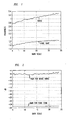
- Roughness of illustrative white noise and pure tone are shown in FIG. 1 on the traditional Bark scale. It should be noted that since the time signal is illustratively windowed by the well-known sin function (thereby increasing the roughness of the flat envelope of a pure tone), roughness of the illustrative pure tone is therefore greater than unity.
- mapping a calculated roughness measure for an arbitrary signal to the NMR of the signal is advantageously accomplished using the following steps:
- the constant, c is calculated by averaging its values for all i obtained by substituting r n (i) (the calculated roughness for a white noise input signal) for r s (i) and the theoretical NMR values.
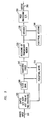
- FIG. 3 shows a system organization for an illustrative embodiment of the present invention.
- an analog signal on input 300 is applied to preprocessor 305 where it is sampled (typically at 44.1 kHz) and each sample is converted to a digital sequence (typically 16 bits) in standard fashion.
- preprocessor 305 typically at 44.1 kHz
- each sample is converted to a digital sequence (typically 16 bits) in standard fashion.
- digital sequence typically 16 bits
- Preprocessor 305 then advantageously groups these digital values in frames (or blocks or sets) of, e.g., 2048 digital values, corresponding to, an illustrative 46 msec of audio input.
- frames or blocks or sets
- Other typical values for these and other system or process parameters are discussed in the literature and known in well-known audio processing applications.
- each input digital value appears in two successive frames, first as part of the second half of the frame and then as part of the first half of the frame.
- Other particular overlapping parameters are well-known in the art.
- time-domain signal frames are then transformed in filterbank block 308 using.
- a modified discrete cosine transform such as that described in J. Princen, et al., "Sub-band Transform Coding Using Filter Bank Designs Based on Time Domain Aliasing Cancellation," IEEE ICASSP, 1987, pp. 2161-2164 .
- the illustrative resulting set of 1024 real coefficients (zero-frequency, Nyquist frequency, and all intermediate frequencies) resulting from the illustrative MDCT represents the short-term frequency spectrum of the input signal.
- MDCT coefficients are then quantized based on the NMRs calculated, illustratively using the method described above.
- Steps 1-5 illustratively correspond to the perceptual model block 310. Outputs of this block are scale factors for performing quantization in block 315 (step 6 above). All these scale factors will be sent as side information along with the quantized MDCT coefficients to medium 320.
- Perceptual model block 310 shown in FIG. 3 includes the perceptual modeling improvements of the present invention described above in embodiments.
- Filter bank 308 is shown supplying frequency components for the respective SFB, i, to the quantizer/coder 315 and to perceptual model 310 for calculating the average signal power in the SFB (step 5).
- the NMR has to be calculated (step 1-5) from the corresponding time signal frame resulted from block 305.
- Quantizer/coder block 315 in FIG. 3 represents well-known quantizer-coder structures that respond to perceptual model inputs and frequency components received from a source of frequency domain information, such as filter bank 308, for an input signal.
- Quantizer/coder 315 will correspond in various embodiments of the present invention to the well-known AAC coder, but other applications of the present invention may employ various transform or OCF coders and other standards-based coders.
- Block 320 in FIG. 3 represents a recording or transmission medium to which the coded outputs of quantizer/coder 315 are applied. Suitable formatting and modulation of the output signals from quantizer/coder 315 should be understood to be included in the medium block 320. Such techniques are well known to the art and will be dictated by the particular medium, transmission or recording rates and other system parameters. Further, if the medium 320 includes noise or other corrupting influences, it may be necessary to include additional error-control devices or processes, as is well known in the art. Thus, for example, if the medium is an optical recording medium similar to the standard CD devices, then redundancy coding of the type common in that medium can be used with the present invention.
- the medium is one used for transmission, e.g., a broadcast, telephone, or satellite medium
- error control mechanisms will advantageously be applied. Any modulation, redundancy or other coding to accommodate (or combat the effects of) the medium will, of course, be reversed (or otherwise subject to any appropriate complementary processing) upon the delivery from the channel or other medium 320 to a decoder, such as 330 in FIG. 3 .
- Coding parameters including scale factors information used at quantizer/coder 315 are therefore sent as side information along with quantized frequency coefficients.
- Such side information is used in decoder 330 and perceptual decoder 340 to reconstruct the original input signal from input 300 and supply this reconstructed signal on output port 360 after performing suitable conversion to time-domain signals, digital-to-analog conversion and any other desired post-processing in unit 350 in FIG. 3 .
- NMR side information is, of course supplied to perceptual decoder 340 for use there in controlling decoder 330 in restoring uniform quantization of transform (frequency) domain signals suitable for transformation back to the time domain.
- the originally coded information provided by quantizer/coder 315 will therefore be applied at a reproduction device, e.g., a CD player.
- Output on 360 is in such form as to be perceived by a listener upon playback as substantially identical to that supplied on input 300.
Landscapes
- Engineering & Computer Science (AREA)
- Physics & Mathematics (AREA)
- Spectroscopy & Molecular Physics (AREA)
- Computational Linguistics (AREA)
- Signal Processing (AREA)
- Health & Medical Sciences (AREA)
- Audiology, Speech & Language Pathology (AREA)
- Human Computer Interaction (AREA)
- Acoustics & Sound (AREA)
- Multimedia (AREA)
- Compression, Expansion, Code Conversion, And Decoders (AREA)
- Analogue/Digital Conversion (AREA)
Claims (7)
- Procédé pour déterminer des Taux de Masquage de Bruit, NMR1, pour un signal audio x(t) dans chaque bande de filtre cochléaire, le procédé comportant les étapes consistant à :déterminer une représentation de l'enveloppe de la partie dudit signal x(t) qui est à l'intérieur d'une bande de filtre cochléaire particulière,quantifier une mesure d'inégalité pour ladite enveloppe,appliquer ladite mesure d'inégalité à un rapport NMR pour la partie du signal qui est à l'intérieur de ladite bande de filtre cochléaire particulière, NMRi,où i désigne ladite bande de filtre cochléaire particulière, rt (i) est la mesure d'inégalité pour un son pur pour chaque bande i, rs (i) est l'inégalité du signal audio, et c est une constante.

- Procédé selon la revendication 1, dans lequel ladite détermination d'une représentation de l'enveloppe comporte la détermination de ei(t), le carré de ladite enveloppe.
- Procédé selon la revendication 1, dans lequel ladite détermination d'une représentation de ladite enveloppe comporte la détermination de X̃(f), où X(f) est la transformée de Fourier de x(t), et X̃(f) est la transformée de Fourier du signal analytique correspondant à x(t), X̃(f) étant un spectre fréquentiel à une seule bande défini sous la forme

- Procédé selon la revendication 3, comportant en outre l'étape consistant à :
filtrer ladite transformée X̃(f) par l'intermédiaire d'un filtre cochléaire, Hi(f), pour i = 1, 2, ... N afin de former des représentations dudit spectre fréquentiel à une seule bande pour les N bandes discrètes de ladite plage fréquentielle, lesdites représentations étant définies par X̃i(f) = X̃(f) Hi(f) - Procédé selon la revendication 4, dans lequel ladite détermination de ladite enveloppe comporte en outre la détermination de ei(t) pour lesdites N bandes discrètes conformément à

où ei (t) est le carré de ladite enveloppe de signal correspondant à la iième bande de filtre cochléaire ayant une fréquence caractéristique fi. - Procédé selon la revendication 5, dans lequel ladite quantification d'une mesure d'inégalité pour ladite enveloppe comporte l'exécution d'une prédiction linéaire de ladite enveloppe, ei(t) pour chaque bande i afin de déterminer des mesures d'inégalité à bande correspondantes rs(i).
- Procédé selon la revendication 2, dans lequel ladite constante, c, est déterminée en exécutant une prédiction linéaire de l'enveloppe, ei(t) pour chaque bande i pour un signal d'entrée de bruit blanc, de manière à déterminer des mesures d'inégalité à bande correspondantes rn(i),
en remplaçant lesdites valeurs rs(i) par rn(i) dans
en remplaçant NMRi par les valeurs théoriques connues pour un bruit blanc, de manière à déterminer une valeur, ci , pour chaque bande i, et
en mettant en moyenne lesdites valeurs de ci pour tous les bandes i afin de déterminer ladite valeur pour c.
Applications Claiming Priority (2)
| Application Number | Priority Date | Filing Date | Title |
|---|---|---|---|
| US90544 | 2002-03-04 | ||
| US10/090,544 US20100042406A1 (en) | 2002-03-04 | 2002-03-04 | Audio signal processing using improved perceptual model |
Publications (3)
| Publication Number | Publication Date |
|---|---|
| EP1343146A2 EP1343146A2 (fr) | 2003-09-10 |
| EP1343146A3 EP1343146A3 (fr) | 2004-07-21 |
| EP1343146B1 true EP1343146B1 (fr) | 2009-09-16 |
Family
ID=27753988
Family Applications (1)
| Application Number | Title | Priority Date | Filing Date |
|---|---|---|---|
| EP03003261A Expired - Lifetime EP1343146B1 (fr) | 2002-03-04 | 2003-02-24 | Traitement d'un signal audio utilisant un modèle perceptuel |
Country Status (4)
| Country | Link |
|---|---|
| US (1) | US20100042406A1 (fr) |
| EP (1) | EP1343146B1 (fr) |
| CA (1) | CA2419765A1 (fr) |
| DE (1) | DE60329248D1 (fr) |
Families Citing this family (13)
| Publication number | Priority date | Publication date | Assignee | Title |
|---|---|---|---|---|
| SE0202159D0 (sv) | 2001-07-10 | 2002-07-09 | Coding Technologies Sweden Ab | Efficientand scalable parametric stereo coding for low bitrate applications |
| WO2003046891A1 (fr) | 2001-11-29 | 2003-06-05 | Coding Technologies Ab | Procede permettant d'ameliorer la reconstruction des hautes frequences |
| SE0202770D0 (sv) * | 2002-09-18 | 2002-09-18 | Coding Technologies Sweden Ab | Method for reduction of aliasing introduces by spectral envelope adjustment in real-valued filterbanks |
| NL1029157C2 (nl) * | 2004-06-04 | 2007-10-03 | Samsung Electronics Co Ltd | Apparaat en werkwijze voor het coderen/decoderen van een audiosignaal. |
| EP1691348A1 (fr) * | 2005-02-14 | 2006-08-16 | Ecole Polytechnique Federale De Lausanne | Codage paramétrique combiné de sources audio |
| JPWO2007037359A1 (ja) * | 2005-09-30 | 2009-04-16 | パナソニック株式会社 | 音声符号化装置および音声符号化方法 |
| US20090138507A1 (en) * | 2007-11-27 | 2009-05-28 | International Business Machines Corporation | Automated playback control for audio devices using environmental cues as indicators for automatically pausing audio playback |
| EP2329399A4 (fr) * | 2008-09-19 | 2011-12-21 | Newsouth Innovations Pty Ltd | Procédé d'analyse d'un signal audio |
| US8472616B1 (en) * | 2009-04-02 | 2013-06-25 | Audience, Inc. | Self calibration of envelope-based acoustic echo cancellation |
| US9307321B1 (en) | 2011-06-09 | 2016-04-05 | Audience, Inc. | Speaker distortion reduction |
| WO2014112110A1 (fr) * | 2013-01-18 | 2014-07-24 | 株式会社東芝 | Synthétiseur de parole, dispositif de détection d'informations de filigrane électroniques, procédé de synthèse de parole, procédé de détection d'informations de filigrane électroniques, programme de synthèse vocale, et programme de détection d'informations de filigrane électroniques |
| JP6511033B2 (ja) * | 2016-10-31 | 2019-05-08 | 株式会社Nttドコモ | 音声符号化装置および音声符号化方法 |
| CN113395637B (zh) * | 2021-06-10 | 2022-09-09 | 上海傅硅电子科技有限公司 | 一种音频功放芯片输出电压的控制方法 |
Family Cites Families (7)
| Publication number | Priority date | Publication date | Assignee | Title |
|---|---|---|---|---|
| US4631747A (en) * | 1978-07-17 | 1986-12-23 | Raytheon Company | Digital sound synthesizer |
| US5040217A (en) * | 1989-10-18 | 1991-08-13 | At&T Bell Laboratories | Perceptual coding of audio signals |
| US5285498A (en) * | 1992-03-02 | 1994-02-08 | At&T Bell Laboratories | Method and apparatus for coding audio signals based on perceptual model |
| JPH08190764A (ja) * | 1995-01-05 | 1996-07-23 | Sony Corp | ディジタル信号処理方法、ディジタル信号処理装置及び記録媒体 |
| US5956674A (en) * | 1995-12-01 | 1999-09-21 | Digital Theater Systems, Inc. | Multi-channel predictive subband audio coder using psychoacoustic adaptive bit allocation in frequency, time and over the multiple channels |
| US6466912B1 (en) * | 1997-09-25 | 2002-10-15 | At&T Corp. | Perceptual coding of audio signals employing envelope uncertainty |
| US6115689A (en) * | 1998-05-27 | 2000-09-05 | Microsoft Corporation | Scalable audio coder and decoder |
-
2002
- 2002-03-04 US US10/090,544 patent/US20100042406A1/en not_active Abandoned
-
2003
- 2003-02-24 DE DE60329248T patent/DE60329248D1/de not_active Expired - Lifetime
- 2003-02-24 EP EP03003261A patent/EP1343146B1/fr not_active Expired - Lifetime
- 2003-02-25 CA CA002419765A patent/CA2419765A1/fr not_active Abandoned
Also Published As
| Publication number | Publication date |
|---|---|
| US20100042406A1 (en) | 2010-02-18 |
| DE60329248D1 (de) | 2009-10-29 |
| EP1343146A2 (fr) | 2003-09-10 |
| EP1343146A3 (fr) | 2004-07-21 |
| CA2419765A1 (fr) | 2003-09-04 |
Similar Documents
| Publication | Publication Date | Title |
|---|---|---|
| US11257505B2 (en) | Audio encoder, audio decoder and related methods using two-channel processing within an intelligent gap filling framework | |
| Carnero et al. | Perceptual speech coding and enhancement using frame-synchronized fast wavelet packet transform algorithms | |
| CN107925388B (zh) | 后置处理器、预处理器、音频编解码器及相关方法 | |
| CN103219010B (zh) | 对音频和/或语音信号进行编码和/或解码的方法和设备 | |
| KR101373004B1 (ko) | 고주파수 신호 부호화 및 복호화 장치 및 방법 | |
| US7110953B1 (en) | Perceptual coding of audio signals using separated irrelevancy reduction and redundancy reduction | |
| RU2734781C1 (ru) | Устройство для постобработки звукового сигнала с использованием выявления места всплеска | |
| CN100589657C (zh) | 编码音频的节约式响度测量方法及装置 | |
| JP3186292B2 (ja) | 高能率符号化方法及び装置 | |
| EP0446037A2 (fr) | Codage perceptuel hybride de signaux audio | |
| Erne | Perceptual audio coders" what to listen for" | |
| KR20110055515A (ko) | 스위치 가능한 바이패스를 가진 오디오 인코딩/디코딩 기법 | |
| EP1343146A2 (fr) | Traitement d'un signal audio utilisant un modèle perceptuel | |
| Ramprashad | The multimode transform predictive coding paradigm | |
| EP1517300B1 (fr) | Codage de données audio | |
| Nematollahi et al. | Digital speech watermarking based on linear predictive analysis and singular value decomposition | |
| Sen et al. | Use of an auditory model to improve speech coders | |
| Lincoln | An experimental high fidelity perceptual audio coder | |
| Virette | Low Delay Transform for High Quality Low Delay Audio Coding | |
| Bosi | Audio coding: Basic principles and recent developments | |
| Heute | Speech and audio coding—aiming at high quality and low data rates | |
| Vercellesi et al. | Objective and subjective evaluation MPEG layer III perceived quality | |
| Kim et al. | Perceptual relevance of the temporal envelope to the speech signal in the 4–7kHz band | |
| Pollak et al. | Audio Compression using Wavelet Techniques | |
| Nemer et al. | Perceptual Weighting to Improve Coding of Harmonic Signals |
Legal Events
| Date | Code | Title | Description |
|---|---|---|---|
| PUAI | Public reference made under article 153(3) epc to a published international application that has entered the european phase |
Free format text: ORIGINAL CODE: 0009012 |
|
| AK | Designated contracting states |
Kind code of ref document: A2 Designated state(s): AT BE BG CH CY CZ DE DK EE ES FI FR GB GR HU IE IT LI LU MC NL PT SE SI SK TR |
|
| AX | Request for extension of the european patent |
Extension state: AL LT LV MK RO |
|
| PUAL | Search report despatched |
Free format text: ORIGINAL CODE: 0009013 |
|
| RIC1 | Information provided on ipc code assigned before grant |
Ipc: 7H 04B 1/66 B Ipc: 7G 10L 19/02 A |
|
| AK | Designated contracting states |
Kind code of ref document: A3 Designated state(s): AT BE BG CH CY CZ DE DK EE ES FI FR GB GR HU IE IT LI LU MC NL PT SE SI SK TR |
|
| AX | Request for extension of the european patent |
Extension state: AL LT LV MK RO |
|
| 17P | Request for examination filed |
Effective date: 20050119 |
|
| AKX | Designation fees paid |
Designated state(s): DE FI FR GB NL SE |
|
| 17Q | First examination report despatched |
Effective date: 20050623 |
|
| 17Q | First examination report despatched |
Effective date: 20050623 |
|
| GRAP | Despatch of communication of intention to grant a patent |
Free format text: ORIGINAL CODE: EPIDOSNIGR1 |
|
| GRAS | Grant fee paid |
Free format text: ORIGINAL CODE: EPIDOSNIGR3 |
|
| GRAA | (expected) grant |
Free format text: ORIGINAL CODE: 0009210 |
|
| AK | Designated contracting states |
Kind code of ref document: B1 Designated state(s): DE FI FR GB NL SE |
|
| REG | Reference to a national code |
Ref country code: GB Ref legal event code: FG4D |
|
| REF | Corresponds to: |
Ref document number: 60329248 Country of ref document: DE Date of ref document: 20091029 Kind code of ref document: P |
|
| REG | Reference to a national code |
Ref country code: SE Ref legal event code: TRGR |
|
| PLBE | No opposition filed within time limit |
Free format text: ORIGINAL CODE: 0009261 |
|
| STAA | Information on the status of an ep patent application or granted ep patent |
Free format text: STATUS: NO OPPOSITION FILED WITHIN TIME LIMIT |
|
| 26N | No opposition filed |
Effective date: 20100617 |
|
| PGFP | Annual fee paid to national office [announced via postgrant information from national office to epo] |
Ref country code: SE Payment date: 20110209 Year of fee payment: 9 Ref country code: DE Payment date: 20110228 Year of fee payment: 9 Ref country code: NL Payment date: 20110216 Year of fee payment: 9 Ref country code: FI Payment date: 20110128 Year of fee payment: 9 Ref country code: FR Payment date: 20110201 Year of fee payment: 9 |
|
| PGFP | Annual fee paid to national office [announced via postgrant information from national office to epo] |
Ref country code: GB Payment date: 20110124 Year of fee payment: 9 |
|
| REG | Reference to a national code |
Ref country code: NL Ref legal event code: V1 Effective date: 20120901 |
|
| GBPC | Gb: european patent ceased through non-payment of renewal fee |
Effective date: 20120224 |
|
| PG25 | Lapsed in a contracting state [announced via postgrant information from national office to epo] |
Ref country code: FI Free format text: LAPSE BECAUSE OF NON-PAYMENT OF DUE FEES Effective date: 20120224 Ref country code: SE Free format text: LAPSE BECAUSE OF NON-PAYMENT OF DUE FEES Effective date: 20120225 |
|
| REG | Reference to a national code |
Ref country code: FR Ref legal event code: ST Effective date: 20121031 |
|
| REG | Reference to a national code |
Ref country code: DE Ref legal event code: R119 Ref document number: 60329248 Country of ref document: DE Effective date: 20120901 |
|
| PG25 | Lapsed in a contracting state [announced via postgrant information from national office to epo] |
Ref country code: GB Free format text: LAPSE BECAUSE OF NON-PAYMENT OF DUE FEES Effective date: 20120224 Ref country code: NL Free format text: LAPSE BECAUSE OF NON-PAYMENT OF DUE FEES Effective date: 20120901 Ref country code: FR Free format text: LAPSE BECAUSE OF NON-PAYMENT OF DUE FEES Effective date: 20120229 |
|
| PG25 | Lapsed in a contracting state [announced via postgrant information from national office to epo] |
Ref country code: DE Free format text: LAPSE BECAUSE OF NON-PAYMENT OF DUE FEES Effective date: 20120901 |