EP1343323B1 - Anzeige von erweitertem Dateninhalt - Google Patents
Anzeige von erweitertem Dateninhalt Download PDFInfo
- Publication number
- EP1343323B1 EP1343323B1 EP03251399A EP03251399A EP1343323B1 EP 1343323 B1 EP1343323 B1 EP 1343323B1 EP 03251399 A EP03251399 A EP 03251399A EP 03251399 A EP03251399 A EP 03251399A EP 1343323 B1 EP1343323 B1 EP 1343323B1
- Authority
- EP
- European Patent Office
- Prior art keywords
- enhanced content
- running program
- items
- distribution unit
- detected
- Prior art date
- Legal status (The legal status is an assumption and is not a legal conclusion. Google has not performed a legal analysis and makes no representation as to the accuracy of the status listed.)
- Expired - Lifetime
Links
- 230000002452 interceptive effect Effects 0.000 claims description 30
- 230000005540 biological transmission Effects 0.000 claims description 23
- 238000000034 method Methods 0.000 claims description 22
- 230000000737 periodic effect Effects 0.000 claims description 20
- 230000004044 response Effects 0.000 claims description 14
- 230000001360 synchronised effect Effects 0.000 description 3
- 230000001960 triggered effect Effects 0.000 description 3
- 230000009471 action Effects 0.000 description 2
- 230000004913 activation Effects 0.000 description 2
- 230000006978 adaptation Effects 0.000 description 2
- 238000004519 manufacturing process Methods 0.000 description 2
- 238000004458 analytical method Methods 0.000 description 1
- 230000009849 deactivation Effects 0.000 description 1
- 230000006870 function Effects 0.000 description 1
- 230000004048 modification Effects 0.000 description 1
- 238000012986 modification Methods 0.000 description 1
- 238000001214 thermospray mass spectrometry Methods 0.000 description 1
- 238000011491 transcranial magnetic stimulation Methods 0.000 description 1
- 125000000026 trimethylsilyl group Chemical group [H]C([H])([H])[Si]([*])(C([H])([H])[H])C([H])([H])[H] 0.000 description 1
Images


Classifications
-
- H—ELECTRICITY
- H04—ELECTRIC COMMUNICATION TECHNIQUE
- H04N—PICTORIAL COMMUNICATION, e.g. TELEVISION
- H04N21/00—Selective content distribution, e.g. interactive television or video on demand [VOD]
- H04N21/20—Servers specifically adapted for the distribution of content, e.g. VOD servers; Operations thereof
- H04N21/25—Management operations performed by the server for facilitating the content distribution or administrating data related to end-users or client devices, e.g. end-user or client device authentication, learning user preferences for recommending movies
- H04N21/254—Management at additional data server, e.g. shopping server, rights management server
-
- H—ELECTRICITY
- H04—ELECTRIC COMMUNICATION TECHNIQUE
- H04N—PICTORIAL COMMUNICATION, e.g. TELEVISION
- H04N21/00—Selective content distribution, e.g. interactive television or video on demand [VOD]
- H04N21/20—Servers specifically adapted for the distribution of content, e.g. VOD servers; Operations thereof
- H04N21/21—Server components or server architectures
- H04N21/222—Secondary servers, e.g. proxy server, cable television Head-end
- H04N21/2221—Secondary servers, e.g. proxy server, cable television Head-end being a cable television head-end
-
- H—ELECTRICITY
- H04—ELECTRIC COMMUNICATION TECHNIQUE
- H04N—PICTORIAL COMMUNICATION, e.g. TELEVISION
- H04N21/00—Selective content distribution, e.g. interactive television or video on demand [VOD]
- H04N21/20—Servers specifically adapted for the distribution of content, e.g. VOD servers; Operations thereof
- H04N21/23—Processing of content or additional data; Elementary server operations; Server middleware
- H04N21/231—Content storage operation, e.g. caching movies for short term storage, replicating data over plural servers, prioritizing data for deletion
- H04N21/23106—Content storage operation, e.g. caching movies for short term storage, replicating data over plural servers, prioritizing data for deletion involving caching operations
-
- H—ELECTRICITY
- H04—ELECTRIC COMMUNICATION TECHNIQUE
- H04N—PICTORIAL COMMUNICATION, e.g. TELEVISION
- H04N21/00—Selective content distribution, e.g. interactive television or video on demand [VOD]
- H04N21/20—Servers specifically adapted for the distribution of content, e.g. VOD servers; Operations thereof
- H04N21/23—Processing of content or additional data; Elementary server operations; Server middleware
- H04N21/235—Processing of additional data, e.g. scrambling of additional data or processing content descriptors
-
- H—ELECTRICITY
- H04—ELECTRIC COMMUNICATION TECHNIQUE
- H04N—PICTORIAL COMMUNICATION, e.g. TELEVISION
- H04N21/00—Selective content distribution, e.g. interactive television or video on demand [VOD]
- H04N21/40—Client devices specifically adapted for the reception of or interaction with content, e.g. set-top-box [STB]; Operations thereof
- H04N21/43—Processing of content or additional data, e.g. demultiplexing additional data from a digital video stream; Elementary client operations, e.g. monitoring of home network or synchronising decoder's clock; Client middleware
- H04N21/433—Content storage operation, e.g. storage operation in response to a pause request, caching operations
- H04N21/4331—Caching operations, e.g. of an advertisement for later insertion during playback
-
- H—ELECTRICITY
- H04—ELECTRIC COMMUNICATION TECHNIQUE
- H04N—PICTORIAL COMMUNICATION, e.g. TELEVISION
- H04N21/00—Selective content distribution, e.g. interactive television or video on demand [VOD]
- H04N21/40—Client devices specifically adapted for the reception of or interaction with content, e.g. set-top-box [STB]; Operations thereof
- H04N21/43—Processing of content or additional data, e.g. demultiplexing additional data from a digital video stream; Elementary client operations, e.g. monitoring of home network or synchronising decoder's clock; Client middleware
- H04N21/435—Processing of additional data, e.g. decrypting of additional data, reconstructing software from modules extracted from the transport stream
-
- H—ELECTRICITY
- H04—ELECTRIC COMMUNICATION TECHNIQUE
- H04N—PICTORIAL COMMUNICATION, e.g. TELEVISION
- H04N21/00—Selective content distribution, e.g. interactive television or video on demand [VOD]
- H04N21/40—Client devices specifically adapted for the reception of or interaction with content, e.g. set-top-box [STB]; Operations thereof
- H04N21/47—End-user applications
- H04N21/472—End-user interface for requesting content, additional data or services; End-user interface for interacting with content, e.g. for content reservation or setting reminders, for requesting event notification, for manipulating displayed content
- H04N21/4722—End-user interface for requesting content, additional data or services; End-user interface for interacting with content, e.g. for content reservation or setting reminders, for requesting event notification, for manipulating displayed content for requesting additional data associated with the content
-
- H—ELECTRICITY
- H04—ELECTRIC COMMUNICATION TECHNIQUE
- H04N—PICTORIAL COMMUNICATION, e.g. TELEVISION
- H04N21/00—Selective content distribution, e.g. interactive television or video on demand [VOD]
- H04N21/80—Generation or processing of content or additional data by content creator independently of the distribution process; Content per se
- H04N21/81—Monomedia components thereof
- H04N21/8126—Monomedia components thereof involving additional data, e.g. news, sports, stocks, weather forecasts
-
- H—ELECTRICITY
- H04—ELECTRIC COMMUNICATION TECHNIQUE
- H04N—PICTORIAL COMMUNICATION, e.g. TELEVISION
- H04N21/00—Selective content distribution, e.g. interactive television or video on demand [VOD]
- H04N21/80—Generation or processing of content or additional data by content creator independently of the distribution process; Content per se
- H04N21/85—Assembly of content; Generation of multimedia applications
- H04N21/854—Content authoring
- H04N21/8547—Content authoring involving timestamps for synchronizing content
-
- H—ELECTRICITY
- H04—ELECTRIC COMMUNICATION TECHNIQUE
- H04N—PICTORIAL COMMUNICATION, e.g. TELEVISION
- H04N21/00—Selective content distribution, e.g. interactive television or video on demand [VOD]
- H04N21/80—Generation or processing of content or additional data by content creator independently of the distribution process; Content per se
- H04N21/85—Assembly of content; Generation of multimedia applications
- H04N21/858—Linking data to content, e.g. by linking an URL to a video object, by creating a hotspot
-
- H—ELECTRICITY
- H04—ELECTRIC COMMUNICATION TECHNIQUE
- H04N—PICTORIAL COMMUNICATION, e.g. TELEVISION
- H04N21/00—Selective content distribution, e.g. interactive television or video on demand [VOD]
- H04N21/80—Generation or processing of content or additional data by content creator independently of the distribution process; Content per se
- H04N21/85—Assembly of content; Generation of multimedia applications
- H04N21/858—Linking data to content, e.g. by linking an URL to a video object, by creating a hotspot
- H04N21/8586—Linking data to content, e.g. by linking an URL to a video object, by creating a hotspot by using a URL
-
- H—ELECTRICITY
- H04—ELECTRIC COMMUNICATION TECHNIQUE
- H04N—PICTORIAL COMMUNICATION, e.g. TELEVISION
- H04N7/00—Television systems
- H04N7/16—Analogue secrecy systems; Analogue subscription systems
- H04N7/162—Authorising the user terminal, e.g. by paying; Registering the use of a subscription channel, e.g. billing
- H04N7/165—Centralised control of user terminal ; Registering at central
Definitions
- This invention relates to interactive television systems, and in particular to the display of enhanced content in interactive television systems.
- a prior art interactive television system is shown generally in Figure 1 .
- the system includes a digital video data provider 1, decoders 3a-c for converting the digital video data to an analogue format, a television 5 at each decoder for displaying the video data, and enhanced content transmitted over a network 2.
- the enhanced content is transmitted to decoders, or set-top boxes (STBs), which then display pages of enhanced content on a television.
- a user input device 4 is provided at each decoder 3a-c so that a user can adjust settings of the decoder and/or the television 5 and respond to queries or questions in the enhanced content.
- the user input device 4 could, for example, be a keypad or remote control.
- the enhanced content is typically content available to be displayed at the direct or indirect request of a user onto a television screen.
- the enhanced content is typically in addition to the basic A/V data of a television program or movie. It may consist of information, such as news, television schedules, or weather reports, or may invite a response from a user.
- Enhanced content may be transmitted over a network independently of A/V data, or alternatively may be embedded in the A/V data.
- interactive television suggests that a viewer can provide input to the system, for example to respond to queries within the enhanced content or to control the video stream that he receives.
- An example of a user input/response is an answer to a question posed in the enhanced content (or interactive content). If the video content being displayed on a television is, for example, a quiz show, it may be desirable to provide interactive content consisting of quiz questions corresponding to those being asked in the quiz show.
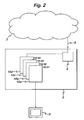
- FIG. 2 shows in more detail the decoding arrangement of a prior art interactive television system.
- a network 2 provides decoder 3 with a stream of enhanced content 8, together with an indication of the required flow of that content. The flow will normally be indicated by reference to a video stream that that enhanced content accompanies..
- the enhanced content 8 is inputted to a formatting unit 9 for formatting its input signal into a series of pages 10a-d of enhanced content for display on television 5.
- Each page 10a-d could have associated with it a time at which it is to be displayed on the television.
- the pages 10a-d are associated with a television program which commences at 16.30.
- the first page, 10a is to be displayed at 16.31.
- the second page, 10b is to be displayed at 16.32, and 10c and 10d are to be displayed at 16.38 and 16.40 respectively.
- the broadcast schedule must be known by the provider of enhanced content in advance of the transmission of the stream of enhanced content 8. In this way, the time at which each page of enhanced content is to be displayed can be embedded into the stream 8 before transmission.
- the enhanced content provider requiring information regarding the start time of each television program for which it is providing enhanced content, it also needs information on the timing of any scheduled intermissions in each program.
- this arrangement for the display of enhanced content is incapable of making adjustments to accommodate changes to the advertised broadcast schedule.
- the arrangement cannot accommodate unadvertised intermissions in the broadcast. These could occur if the broadcast has to be interrupted for some reason.
- the broadcast is to be interrupted by advertisements the position and duration of the advertising breaks must be taken into account when the enhanced content is set up. If the broadcast is to be shown on a number of channels which have different advertising schedules then the enhanced content must be set up for each one. As a result, enhanced content for one program may continue to be displayed after that program has been interrupted.
- Document WO 01/82623 discloses a method of inserting enhanced contents into a television broadcast, in particular according to the ATVEF standard.
- the content might be pre-stored into a set-top box, and displayed upon reception of a trigger inserted into the broadcast.
- a method for controlling presentation of items of enhanced content in an interactive television system comprising at least one distribution unit and a plurality of decoder units arranged to store items of enhanced content and cause them to be presented to a user on receipt of a trigger signal from the distribution unit, the method comprising: storing the items of enhanced content at the decoder units; storing at the distribution unit a schedule indicating a desired synchronisation between the items of enhanced content and a running program with which the enhanced content is associated, the running program comprising a timing stream and a series of periodic indications of the identity of the running program; transmitting the running program to the decoder units over a transmission channel via the distribution unit; and at the distribution unit analysing traffic passing over the transmission channel so as to determine whether the said periodic indications of the identity of the running program continue to be detected as passing over the transmission channel, and generating trigger signals in respect of the enhanced content associated with the running program only whilst it is determined that the said periodic indications continue to be detected as passing over the transmission channel
- a distribution unit for an interactive television system wherein items of enhanced content can be presented to users
- the interactive television system comprising a plurality of decoder units arranged to store items of enhanced content and cause them to be presented to a user on receipt of a trigger signal from the distribution unit
- the distribution unit comprising: a store for storing a schedule indicating a desired synchronisation between the items of enhanced content and a running program with which the enhanced content is associated, the running program comprising a timing stream and a series of periodic indications of the identity of the running program; a transmitter for transmitting the running program to the decoder units over a transmission channel; and a traffic analyser for analysing traffic passing over the transmission channel so as to determine whether the said periodic indications of the identity of the running program continue to be detected as passing over the transmission channel, and transmitting such trigger signals only whilst it is determined that the said periodic continue to be detected as passing over the transmission channel.
- the said periodic indications of the identity of the running program are deemed not to continue to be detected if no such indication is detected over an interval greater than a predetermined interval.
- the predetermined interval may, for example, be equal to once or twice the period of the indications.
- the distribution unit determines that the said periodic indications no longer continue to be detected it transmits a halt signal to the decoders, and in response to such a signal the decoders cause the halting presentation of enhanced content associated with the running program.
- the schedule indicates a presentation time for each of the items of enhanced content
- the method comprises the steps of: at the distribution unit analysing a timing stream of traffic passing over the transmission channel, and if the current value of the timing stream matches a value stored in the schedule as the time for presentation of one of the items of enhanced content, and if the said periodic indications of the identity of the running program continue to be detected as passing over the transmission channel, transmitting a trigger signal to the decoders to trigger them to present that one of the items of enhanced content.
- the trigger signal suitably includes an indication of the identity of said one of the items of enhanced content.
- each of the decoders causes the said one of the items of enhanced content to be presented.
- the distribution unit Preferably after the distribution unit has determined that the said periodic indications had no longer continue to be detected, on the distribution unit determining that the said indications it determines that the said indications are again being detected it transmits a signal to the decoders to cause them to present any of the items of enhanced content that should currently be presented according to the schedule.
- the enhanced content is suitably transmitted to the decoders via the distribution unit.
- the enhanced content, the running program and the trigger signals are transmitted from the distribution unit to the each decoder over the same physical link.
- the running program preferably comprises a video stream and/or an audio stream.
- the video or audio stream is conveniently in a digital format, in which case the timing stream is preferably is a timing stream of the digital format.
- the digital format may be an MPEG format.
- the running program and the items of enhanced content are presented to the user by the same means.
- That means is conveniently a television.
- the distribution unit may additionally be capable of transmitting trigger signals to the decoder when instructed to do so by a control unit of the distribution system.
- the distribution unit may be arranged only to transmit such trigger signals only whilst the indications of the identity of the program continue to be received, but this is not essential as it could rely on the control unit to determine that the program is continuing.
- the distribution unit provides running program, enhanced content and trigger signals to a plurality of decoders.
- decoders may be of a similar type or located in a similar geographical area.
- the running program is transmitted to the decoding unit as a stream, and the decoding unit causes each part (e.g. frame) of the running program to be displayed immediately it is received.
- the running program could be transmitted to the decoding unit as a video stream on a broadcast video channel.
- a combined presentation including items of enhanced content and a running program such as a video stream is prepared by a content provider.
- the content provider also defines a synchronisation schedule which indicates the points relative to the running of the video stream at which each of the items of enhanced content is to be presented (played out) to a user.
- the content provider is indicated at 11.
- the synchronisation schedule suitably relates the presentation of some or all of the items of enhanced content to a corresponding time relative to the video stream.
- Codes are embedded periodically in the video stream. Each code includes a timing field which indicates the time offset between the start of the stream and the point in the stream at which that code is embedded.
- the synchronisation schedule indicates the time as indicated by the embedded codes at which enhanced content is to be presented.
- the content provider 11 transmits the enhanced content, the video stream and the synchronisation schedule over link 18 to a playout management centre (PMC) 30.
- PMC playout management centre
- certain changes are made to the data to adapt them for successfully being played out over the distribution system of which the playout management centre is a part.
- the enhanced content is adapted if necessary so that it can be decoded by the types of decoders (e.g. set-top boxes) that are used in the system.
- UCC unified content code
- Each UCC message suitably consists of a 15-digit code according to the following layout: Pos: 15 14 13 12 11 10 9 8 7 6 5 4 3 2 1
- Pos 15 14 13 12 11 10 9 8 7 6 5 4 3 2 1
- C a 4-digit company number
- P a 7-digit product number
- CS a 1-digit checksum number conforming to ISO/IEC 15420 Annex A
- the UCC codes indicate the identity of a program by means of the R, C and P numbers.
- Each UCC also includes a timestamp that indicates the timing of that UCC relative to the start of the video stream.
- the transformed enhanced content, video stream and synchronisation schedule are transmitted over a link 33 to a media control manager (MCM) 13.
- MCM media control manager
- the overall distribution system may comprise two or more MCMs, each serving different geographical areas and/or types of decoder.
- a number of decoders such as set-top box 34 or digital televisions are connected to the distribution unit 13. Each decoder is capable of decoding received items of enhanced content and video stream and causing them to be presented to a user via presentation means such as television 5.
- a controller 14 is also available to a user, whereby the user can indicate to the decoder which channel he wishes to receive.
- the enhanced content for the presentation and preferably also the synchronisation schedule for the presentation are transmitted by the playout management centre (PMC) 30 to the Media Control Manager (MCM) 13.
- the MCM Media Control Manager
- the synchronisation schedule is stored and the enhanced content can be buffered, if necessary, in buffer 35.
- the enhanced content is transmitted by the MCM to the decoders that it serves, for instance set-top box (STB) 34, and buffered there, e.g. in buffer 36.
- STB set-top box
- the enhanced content could be transmitted to the decoders in stages.
- the decoders can store the enhanced content, but are arranged not to present it until triggered to do so by a trigger signal from the MCM.
- the video stream is transmitted to the MCM 13 and distributed from there to the decoders.
- a traffic analyser analyses the UCC codes in the video stream and the timing stream of the video stream.
- the traffic analyser signals the trigger generator to create and broadcast the triggers.
- the traffic analyser also synchronises the clock used by the trigger generator for the timed trigger broadcasting.
- the traffic analyser monitors the UCC codes as they are received. Whilst UCC codes indicating the identity of the presentation are being received in the video stream the trigger generator is enabled to generate trigger signals for sending to the decoders in respect of the enhanced content of that presentation. If the traffic analyser determines that such UCC codes are no longer being received, for example because no such UCC code has been detected for a predetermined period, then it is disabled for generating trigger signals for sending to the decoders in respect of the enhanced content of that presentation. When the traffic analyser determines that such UCC codes are no longer being received, the trigger generator preferably also transmits a signal to the decoders to cause them to disable the play-out of the enhanced content of that presentation.
- the traffic analyser monitors the timing stream of the video stream of the presentation and compares the current value of the timing stream with the timings indicated in the synchronisation schedule.
- the MCM maintains a clock that is synchronised to the timestamps contained in the UCCs. When the current value of the clock matches a timing indicated in the synchronisation schedule for an item of enhanced data, and the trigger generator is enabled for generating trigger signals, the trigger generator sends a trigger signal to the decoders to trigger them play out that item of enhanced content.
- the trigger generator determines from the synchronisation schedule whether an item of enhanced content should be being presented at the point at which the video stream has resumed. If so, it triggers the decoders to present that item.
- the playout of the enhanced content of the presentation will also be interrupted since the UCCs of the presentation will stop being received.
- the UCCs of the presentation will restart and the enhanced content will be resumed.
- the decoders are arranged to be responsive to the trigger and halt signals to cause enhanced content to be presented, or to halt presentation of enhanced content respectively.
- video stream, enhanced content and the trigger signals are sent to each decoder only in accordance with the channel selection of the decoder's user. Also, a user may select not to have enhanced content presented to him from time to time, for example by configuring his set-top box accordingly.
- the presentation of items of enhanced content may also be triggered by their being called by a user using a hyperlink from another item of enhanced content; or by the transmission to the decoders, via the MCM, of an ad hoc trigger signal from a controller at the PMC.
- the enhanced content could include video and/or audio data or (if used with a suitable unit for presenting the data to a user) other forms of data.
- the enhanced content could be defined as pages or clips of information, or in other ways.
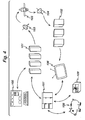
- Figure 4 shows an example of a broadcast network in which the present system may be employed.
- the network shown in Figure 4 comprises an Edit Suite 100, a Playout Management Centre 101, a Media Control Manager 102, uplink and downlink stations 103 and 104, a satellite 105, a decoder 106, and a Transaction Management System 107.
- the decoder 106 may, for example, be a set-top box or a digital television.
- the components can communicate with each other as indicated by the arrows in Figure 4 .
- Interactive content is produced at the Edit Suite 100 (specifically, in a Content Production Manager (CPM)) on generic re-usable templates.
- the general templates can be manipulated by designers to produce a template with the desired format for a particular application. This specific template can then be saved to the memory of the CPM. Subsequent data can be added easily and quickly to the application-specific template, for example, daily news, weather or TV guides.
- EBC Event Broker Console
- Meta-data (the UCCs and timestamps described above) is then added to the main broadcast stream (i.e. the video stream) that is associated with the content of the template.
- the meta-data allows the stream script to be triggered in real-time to synchronise the content with the main broadcast stream.
- the EBC can be used to manage the broadcast of interactive pages, as will be described later.
- the template data is passed to a Playout Management Centre (PMC) 101, which converts the data to a signal (representing pages of interactive content) in the relevant format for any platform on which it is to be received and displayed.
- the PMC can store the interactive content until it is needed.
- MCM Media Control Manager
- the interactive content could be sent to an uplink station 103 and transmitted via a satellite 105 to a downlink station 104 or could be sent in another way, for instance by cable.
- the MCM 102 is located in a cable TV digital head end.
- the MCM receives interactive data from a PMC 101, stores it until it is to be played out, and, in response to receiving a trigger, broadcasts it to decoders 106.
- the decoders could be set-top boxes connected to televisions, or they could be digital televisions.
- the MCM can be informed in a number of ways of when to cause a page of interactive content to be played out, by being transmitted from the MCM to the decoder 106, and subsequently displayed. For example, if the television event to which the interactive content is related is being broadcast live, then an editor at an Edit Suite 100 can manually trigger the play-out of the content from the MCMs 102. to ensure that the content is synchronised with an appropriate part of the television event. A trigger would be sent from the Edit Suite 100 to the PMC 101; the PMC would transcode the trigger and forward it to the MCM 102, and then the MCM would broadcast the trigger towards decoders 106.
- meta-data is not added to the content, but instead an engineer directly controls the sending of the (de)activation signal and the triggers according to the images from the main broadcast stream, the activation and deactivation signal respectively initiate and terminate the broadcasting of the enhancements, the triggers are used to trigger the decoder to display the required page.
- triggers can be arranged to be sent automatically at predetermined times during a television event.
- the MCM has access to a time schedule and on the basis of this schedule, sends triggers to decoders at the times when it is desired for the interactive content to be played out.
- a TV programme might start at 7.30pm, and triggers could then be sent automatically from the MCM 102 at 7.31pm, 7.35pm, 7.42pm and so on, depending on the parts of the programme with which each page of interactive content is related.
- markers could be embedded in the video signal associated with a particular set of interactive pages, and triggers could be generated in dependence on the association between the markers and the pages. These markers would be the meta-data referred to above which is added to the video stream.
- the MCM 102 can also manage the bandwidth allocated to video signals and interactive content signals according to television events taking place. Content can also be stored/buffered at the MCM.
- a Transaction Management System (TMS) 107 is employed to deal with responses of subscribers to the interactive content broadcast.
- the TMS is capable of handling large numbers of concurrent responses, and can produce, for example, lists of winners of a competition following the subscriber responses.
- the TMS is linked to the PMC so that information related to subscriber responses can be fed back and inserted into broadcasts from the MCM 102.
- the PMC can communicate with the TMS.
- the TMS is linked to a banking system 108.
- the TMS may send signals to other functions such as a third party fulfilment centre 109 so as to action user responses, for example to fulfil purchases or issue prizes.
- Editors at the Edit Suites 100 can communicate with the TMS 107 via PMC 101 in order to determine how the TMS should react to responses sent from subscribers.
- Decoders 106 would be positioned locally to individual viewers, for example in their homes or in public buildings.
Landscapes
- Engineering & Computer Science (AREA)
- Multimedia (AREA)
- Signal Processing (AREA)
- Computer Security & Cryptography (AREA)
- Databases & Information Systems (AREA)
- Human Computer Interaction (AREA)
- Two-Way Televisions, Distribution Of Moving Picture Or The Like (AREA)
- Television Systems (AREA)
Claims (17)
- Verfahren zur Kontrolle der Präsentation von Posten von erweitertem Inhalt in einem interaktiven Fernsehsystem, das zumindest eine Verteilungseinheit und eine Vielheit von Decoder-Einheiten umfasst, die eingerichtet sind, Posten von erweitertem Inhalt zu speichern und zu bewirken, dass sie, bei Empfang eines Triggersignals von der Verteilungseinheit, einem Benutzer präsentiert werden, wobei das Verfahren umfasst:Speichern der Posten von erweitertem Inhalt an den Decoder-Einheiten;Speichern eines Zeitplans an der Verteilungseinheit, der eine erwünschte Synchronisation zwischen den Posten von erweitertem Inhalt und einem laufenden Programm anzeigt, mit dem der erweiterte Inhalt assoziiert ist, wobei das laufende Programm einen Timing-Strom und eine Reihe von periodischen Anzeigen der Identität des laufenden Programms umfasst;Senden des laufenden Programms an die Decoder-Einheiten über einen Übertragungskanal via die Verteilungseinheit; undan der Verteilungseinheit Analysieren von Datenverkehr, der über den Übertragungskanal läuft, um zu ermitteln, ob die besagten periodischen Anzeigen der Identität des laufenden Programms weiterhin als über den Übertragungskanal laufend detektiert werden, und Generieren von Triggersignalen in Bezug auf den erweiterten mit dem laufenden Programm assoziierten Inhalt nur während ermittelt wird, dass die besagten periodischen Anzeigen weiterhin als über den Übertragungskanal laufend detektiert werden.
- Verfahren wie in Anspruch 1 beansprucht, wobei die besagten periodischen Anzeigen der Identität des laufenden Programms als nicht weiterhin detektiert erachtet werden, falls keine derartige Anzeige über ein Intervall detektiert wird, das größer als ein vorbestimmtes Intervall ist.
- Verfahren wie in Anspruch 2 beansprucht, wobei das vorbestimmte Intervall der Periode der Anzeigen entspricht.
- Verfahren wie in Anspruch 2 beansprucht, wobei das vorbestimmte Intervall zweimal der Periode der Anzeigen entspricht.
- Verfahren wie in einem beliebigen vorhergehenden Anspruch beansprucht, wobei, wenn die Verteilungseinheit ermittelt, dass die besagten periodischen Anzeigen nicht länger weiterhin detektiert werden, diese ein Signal an die Decoder sendet und die Decoder als Antwort auf ein derartiges Signal das Anhalten der Präsentation von erweitertem Inhalt bewirken, der mit dem laufenden Programm assoziiert ist.
- Verfahren wie in einem beliebigen vorhergehenden Anspruch beansprucht, wobei der Plan eine Präsentationszeit für jeden der Posten von erweitertem Inhalt anzeigt und das Verfahren die folgenden Schritte umfasst:an der Verteilungseinheit das Analysieren eines Timing-Stroms des Datenverkehrs des laufenden Programms, das über den Übertragungskanal läuft und, falls der aktuelle Wert des Timing-Stroms einem Wert gleichkommt, der im Zeitplan als die Zeit zur Präsentation eines der Posten von erweitertem Inhalt gespeichert ist und, falls die besagten periodischen Anzeigen der Identität des laufenden Programms weiterhin als über den Übertragungskanal laufend detektiert werden, Senden eines Triggersignals an die Decoder, um diese zu triggern jenen einen Posten der Posten von erweitertem Inhalt zu präsentieren.
- Verfahren wie in Anspruch 6 beansprucht, wobei das Triggersignal eine Anzeige der Identität des besagten einen Postens der Posten von erweitertem Inhalt einschließt.
- Verfahren wie in Anspruch 7 beansprucht, wobei, als Antwort auf das Triggersignal, jeder der Decoder bewirkt, das der eine Posten der Posten von erweitertem Inhalt präsentiert wird.
- Verfahren wie in einem beliebigen vorhergehenden Anspruch beansprucht, wobei, nach dem die Verteilungseinheit ermittelt hat, dass die besagten periodischen Anzeigen nicht länger weiterhin detektiert werden müssen, bei Ermitteln der Verteilungseinheit, dass die besagten Anzeigen, die sie ermittelt, wiederum detektiert werden, diese ein Signal an die Decoder sendet, um zu bewirken, dass diese einen beliebigen der Posten von erweitertem Inhalt präsentieren, der aktuell übereinstimmend mit dem Zeitplan präsentiert werden sollte.
- Verfahren wie in einem beliebigen vorhergehenden Anspruch beansprucht, wobei der erweiterte Inhalt via die Verteilungseinheit an die Decoder gesendet wird.
- Verfahren wie in Anspruch 10 beansprucht, wobei der erweiterte Inhalt, das laufende Programm und die Triggersignale von der Verteilungseinheit über dieselbe physikalische Verbindung an den oder jeden Decoder gesendet werden.
- Verfahren wie in einem beliebigen vorhergehenden Anspruch beansprucht, wobei das laufende Programm einen Videostrom umfasst.
- Verfahren wie in einem beliebigen vorhergehenden Anspruch beansprucht, wobei das laufende Programm einen Audiostrom umfasst.
- Verfahren wie in Anspruch 12 oder 13 beansprucht, wobei der Video- oder Audiostrom ein digitales Format hat und der Timing-Strom ein Timing-Strom des digitalen Formats ist.
- Verfahren wie in einem beliebigen Anspruch beansprucht, wobei das laufende Programm und die Posten von erweitertem Inhalt dem Benutzer durch das gleiche Mittel präsentiert werden.
- Verfahren wie in Anspruch 15 beansprucht, wobei jenes Mittel ein Fernseher ist.
- Verteilungseinheit für ein interaktives Fernsehsystem, wobei dem Benutzer Posten von erweitertem Inhalt präsentiert werden können, wobei das interaktive Fernsehsystem eine Vielheit von Decoder-Einheiten umfasst, die eingerichtet sind, Posten von erweitertem Inhalt zu speichern und zu bewirken, dass diese, bei Empfang eines Triggersignals von der Verteilungseinheit, einem Benutzer präsentiert werden, wobei die Verteilungseinheit umfasst:einen Speicher zum Speichern eines Zeitplans, der eine erwünschte Synchronisation zwischen den Posten von erweitertem Inhalt und einem laufenden Programm anzeigt, mit dem der erweiterte Inhalt assoziiert ist, wobei das laufende Programm einen Timing-Strom und eine Reihe von periodischen Anzeigen der Identität des laufenden Programms umfasst;einen Sender zum Senden des laufenden Programms an die Decoder-Einheiten über einen Übertragungskanal; undeinen Verkehrsanalysator zum Analysieren von Datenverkehr, der über den Übertragungskanal läuft, um zu ermitteln, ob die besagten periodischen Anzeigen der Identität des laufenden Programms weiterhin als über den Übertragungskanal laufend detektiert werden und Senden derartiger Triggersignale nur während ermittelt wird, dass die besagten periodischen Anzeigen weiterhin als über den Übertragungskanal laufend detektiert werden.
Applications Claiming Priority (2)
| Application Number | Priority Date | Filing Date | Title |
|---|---|---|---|
| GB0205400A GB2387984B (en) | 2002-03-07 | 2002-03-07 | Display of enhanced content |
| GB0205400 | 2002-03-07 |
Publications (3)
| Publication Number | Publication Date |
|---|---|
| EP1343323A2 EP1343323A2 (de) | 2003-09-10 |
| EP1343323A3 EP1343323A3 (de) | 2004-01-02 |
| EP1343323B1 true EP1343323B1 (de) | 2012-08-08 |
Family
ID=9932519
Family Applications (1)
| Application Number | Title | Priority Date | Filing Date |
|---|---|---|---|
| EP03251399A Expired - Lifetime EP1343323B1 (de) | 2002-03-07 | 2003-03-07 | Anzeige von erweitertem Dateninhalt |
Country Status (5)
| Country | Link |
|---|---|
| US (1) | US8132223B2 (de) |
| EP (1) | EP1343323B1 (de) |
| AU (1) | AU2003200899B2 (de) |
| CA (1) | CA2421344C (de) |
| GB (1) | GB2387984B (de) |
Families Citing this family (8)
| Publication number | Priority date | Publication date | Assignee | Title |
|---|---|---|---|---|
| EP1487214A1 (de) * | 2003-06-11 | 2004-12-15 | Digital Multimedia Technologies S.P.A. | Verfahren und System zum Synchronisieren von MHP Anwendungen mit einem Datenpaketstrom |
| GB0320618D0 (en) * | 2003-09-03 | 2003-10-01 | Koninkl Philips Electronics Nv | Monitoring of a broadcast signal |
| WO2005076961A2 (en) * | 2004-02-04 | 2005-08-25 | Goldpocket Interactive | Synchronization and automation in an itv environment |
| GB0411172D0 (en) * | 2004-05-19 | 2004-06-23 | Chello Broadband N V | Display of enhanced content |
| GB0411683D0 (en) * | 2004-05-25 | 2004-06-30 | Chello Broadband N V | Triggering enhanced content |
| GB0411682D0 (en) * | 2004-05-25 | 2004-06-30 | Chello Broadband N V | Display of enhanced content |
| WO2006126852A1 (en) * | 2005-05-26 | 2006-11-30 | Electronics And Telecommunications Research Institute | Method and apparatus for synchronizing data service with video service in digital multimedia broadcasting |
| GB0616030D0 (en) * | 2006-08-11 | 2006-09-20 | Answerback Interactive | Interactive electronic system and method for a plurality of users |
Family Cites Families (20)
| Publication number | Priority date | Publication date | Assignee | Title |
|---|---|---|---|---|
| US4230990C1 (en) * | 1979-03-16 | 2002-04-09 | John G Lert Jr | Broadcast program identification method and system |
| US5532735A (en) * | 1994-04-29 | 1996-07-02 | At&T Corp. | Method of advertisement selection for interactive service |
| EP0781488B1 (de) * | 1995-07-11 | 2000-04-05 | Philips Electronics N.V. | Video-auf-anfrage-system |
| AU7246996A (en) * | 1995-09-29 | 1997-04-17 | Boston Technology, Inc. | Multimedia architecture for interactive advertising |
| US6240555B1 (en) * | 1996-03-29 | 2001-05-29 | Microsoft Corporation | Interactive entertainment system for presenting supplemental interactive content together with continuous video programs |
| SG67468A1 (en) * | 1997-01-03 | 1999-09-21 | Texas Instruments Inc | An apparatus for producing interactive television programs |
| US6061719A (en) * | 1997-11-06 | 2000-05-09 | Lucent Technologies Inc. | Synchronized presentation of television programming and web content |
| US7882520B2 (en) * | 2000-12-20 | 2011-02-01 | Tivo Inc. | Broadcast program recording overrun and underrun scheduling system |
| US7028327B1 (en) * | 2000-02-02 | 2006-04-11 | Wink Communication | Using the electronic program guide to synchronize interactivity with broadcast programs |
| EP1205075A2 (de) * | 2000-03-21 | 2002-05-15 | Koninklijke Philips Electronics N.V. | System und verfahren zur automatischen inhaltaufbesserung von einem multimediadarstellungsgerät |
| US7013479B2 (en) * | 2000-04-14 | 2006-03-14 | Matsushita Electric Industrial Co., Ltd. | Broadcasting apparatus and method for pre-transmitting data carousel and receiving apparatus for receiving data carousel |
| US9788058B2 (en) * | 2000-04-24 | 2017-10-10 | Comcast Cable Communications Management, Llc | Method and system for automatic insertion of interactive TV triggers into a broadcast data stream |
| JP4240766B2 (ja) * | 2000-06-26 | 2009-03-18 | パナソニック株式会社 | データ蓄積方法およびそれを実現した受信装置および放送システム |
| US7269842B1 (en) * | 2000-08-31 | 2007-09-11 | Intel Corporation | Time shifting enhanced television triggers |
| US20020083464A1 (en) * | 2000-11-07 | 2002-06-27 | Mai-Ian Tomsen | System and method for unprompted, context-sensitive querying during a televison broadcast |
| US20030023970A1 (en) * | 2000-12-11 | 2003-01-30 | Ruston Panabaker | Interactive television schema |
| US20020133817A1 (en) * | 2001-03-13 | 2002-09-19 | Markel Steven O. | Affinity marketing for interactive media systems |
| US20020144260A1 (en) * | 2001-03-29 | 2002-10-03 | Koninklijke Philips Electronics N.V. | Method for adaptive data/content insertion in MPEG2 transport stream |
| US20030084453A1 (en) * | 2001-11-01 | 2003-05-01 | Commerce Tv Corporation | System and method for providing product information over an interactive television system |
| US8555313B2 (en) * | 2002-04-09 | 2013-10-08 | Ericsson Television Inc. | System and method for coordinating interactive television programs |
-
2002
- 2002-03-07 GB GB0205400A patent/GB2387984B/en not_active Expired - Fee Related
-
2003
- 2003-03-07 CA CA2421344A patent/CA2421344C/en not_active Expired - Fee Related
- 2003-03-07 EP EP03251399A patent/EP1343323B1/de not_active Expired - Lifetime
- 2003-03-07 AU AU2003200899A patent/AU2003200899B2/en not_active Ceased
- 2003-03-07 US US10/383,928 patent/US8132223B2/en active Active
Also Published As
| Publication number | Publication date |
|---|---|
| GB2387984B (en) | 2005-11-09 |
| EP1343323A2 (de) | 2003-09-10 |
| US8132223B2 (en) | 2012-03-06 |
| CA2421344C (en) | 2012-12-04 |
| CA2421344A1 (en) | 2003-09-07 |
| GB0205400D0 (en) | 2002-04-24 |
| GB2387984A (en) | 2003-10-29 |
| AU2003200899B2 (en) | 2007-11-01 |
| EP1343323A3 (de) | 2004-01-02 |
| US20030200554A1 (en) | 2003-10-23 |
| AU2003200899A1 (en) | 2003-09-25 |
Similar Documents
| Publication | Publication Date | Title |
|---|---|---|
| US7028327B1 (en) | Using the electronic program guide to synchronize interactivity with broadcast programs | |
| EP1343323B1 (de) | Anzeige von erweitertem Dateninhalt | |
| CA2568514C (en) | Display of enhanced content | |
| EP1766972B1 (de) | Verfahren und system zur anzeige von erweitertem dateninhalt | |
| EP1343324B1 (de) | Nachrichtenübertragung in einem interaktiven Fernsehsystem | |
| CA2421342C (en) | Enhancement for interactive tv formatting apparatus | |
| AU2003200901B9 (en) | Response timing | |
| EP1343320B1 (de) | Medienwiedergabesystem |
Legal Events
| Date | Code | Title | Description |
|---|---|---|---|
| PUAI | Public reference made under article 153(3) epc to a published international application that has entered the european phase |
Free format text: ORIGINAL CODE: 0009012 |
|
| AK | Designated contracting states |
Kind code of ref document: A2 Designated state(s): AT BE BG CH CY CZ DE DK EE ES FI FR GB GR HU IE IT LI LU MC NL PT RO SE SI SK TR |
|
| AX | Request for extension of the european patent |
Extension state: AL LT LV MK RO |
|
| PUAL | Search report despatched |
Free format text: ORIGINAL CODE: 0009013 |
|
| AK | Designated contracting states |
Kind code of ref document: A3 Designated state(s): AT BE BG CH CY CZ DE DK EE ES FI FR GB GR HU IE IT LI LU MC NL PT RO SE SI SK TR |
|
| AX | Request for extension of the european patent |
Extension state: AL LT LV MK RO |
|
| RIC1 | Information provided on ipc code assigned before grant |
Ipc: 7H 04N 7/173 A Ipc: 7H 04N 7/16 B |
|
| 17P | Request for examination filed |
Effective date: 20040628 |
|
| AKX | Designation fees paid |
Designated state(s): AT BE BG CH CY CZ DE DK EE ES FI FR GB GR HU IE IT LI LU MC NL PT RO SE SI SK TR |
|
| RAP1 | Party data changed (applicant data changed or rights of an application transferred) |
Owner name: CHELLOMEDIA PROGRAMMING B.V. |
|
| RAP1 | Party data changed (applicant data changed or rights of an application transferred) |
Owner name: UPC BROADBAND OPERATIONS B.V. |
|
| REG | Reference to a national code |
Ref country code: DE Ref legal event code: R079 Ref document number: 60341722 Country of ref document: DE Free format text: PREVIOUS MAIN CLASS: H04N0007173000 Ipc: H04N0007160000 |
|
| GRAP | Despatch of communication of intention to grant a patent |
Free format text: ORIGINAL CODE: EPIDOSNIGR1 |
|
| RIC1 | Information provided on ipc code assigned before grant |
Ipc: H04N 21/435 20110101ALI20120126BHEP Ipc: H04N 21/433 20110101ALI20120126BHEP Ipc: H04N 21/222 20110101ALI20120126BHEP Ipc: H04N 21/4722 20110101ALI20120126BHEP Ipc: H04N 21/231 20110101ALI20120126BHEP Ipc: H04N 21/8547 20110101ALI20120126BHEP Ipc: H04N 21/254 20110101ALI20120126BHEP Ipc: H04N 21/235 20110101ALI20120126BHEP Ipc: H04N 21/81 20110101ALI20120126BHEP Ipc: H04N 7/16 20110101AFI20120126BHEP Ipc: H04N 21/858 20110101ALI20120126BHEP |
|
| GRAS | Grant fee paid |
Free format text: ORIGINAL CODE: EPIDOSNIGR3 |
|
| GRAA | (expected) grant |
Free format text: ORIGINAL CODE: 0009210 |
|
| AK | Designated contracting states |
Kind code of ref document: B1 Designated state(s): AT BE BG CH CY CZ DE DK EE ES FI FR GB GR HU IE IT LI LU MC NL PT RO SE SI SK TR |
|
| REG | Reference to a national code |
Ref country code: GB Ref legal event code: FG4D |
|
| REG | Reference to a national code |
Ref country code: CH Ref legal event code: EP Ref country code: AT Ref legal event code: REF Ref document number: 570257 Country of ref document: AT Kind code of ref document: T Effective date: 20120815 |
|
| REG | Reference to a national code |
Ref country code: IE Ref legal event code: FG4D |
|
| REG | Reference to a national code |
Ref country code: NL Ref legal event code: T3 |
|
| REG | Reference to a national code |
Ref country code: DE Ref legal event code: R096 Ref document number: 60341722 Country of ref document: DE Effective date: 20121011 |
|
| REG | Reference to a national code |
Ref country code: RO Ref legal event code: EPE |
|
| REG | Reference to a national code |
Ref country code: CH Ref legal event code: NV Representative=s name: BOVARD AG, CH |
|
| PG25 | Lapsed in a contracting state [announced via postgrant information from national office to epo] |
Ref country code: CY Free format text: LAPSE BECAUSE OF FAILURE TO SUBMIT A TRANSLATION OF THE DESCRIPTION OR TO PAY THE FEE WITHIN THE PRESCRIBED TIME-LIMIT Effective date: 20120808 Ref country code: FI Free format text: LAPSE BECAUSE OF FAILURE TO SUBMIT A TRANSLATION OF THE DESCRIPTION OR TO PAY THE FEE WITHIN THE PRESCRIBED TIME-LIMIT Effective date: 20120808 |
|
| PG25 | Lapsed in a contracting state [announced via postgrant information from national office to epo] |
Ref country code: SI Free format text: LAPSE BECAUSE OF FAILURE TO SUBMIT A TRANSLATION OF THE DESCRIPTION OR TO PAY THE FEE WITHIN THE PRESCRIBED TIME-LIMIT Effective date: 20120808 Ref country code: SE Free format text: LAPSE BECAUSE OF FAILURE TO SUBMIT A TRANSLATION OF THE DESCRIPTION OR TO PAY THE FEE WITHIN THE PRESCRIBED TIME-LIMIT Effective date: 20120808 Ref country code: GR Free format text: LAPSE BECAUSE OF FAILURE TO SUBMIT A TRANSLATION OF THE DESCRIPTION OR TO PAY THE FEE WITHIN THE PRESCRIBED TIME-LIMIT Effective date: 20121109 Ref country code: PT Free format text: LAPSE BECAUSE OF FAILURE TO SUBMIT A TRANSLATION OF THE DESCRIPTION OR TO PAY THE FEE WITHIN THE PRESCRIBED TIME-LIMIT Effective date: 20121210 |
|
| REG | Reference to a national code |
Ref country code: SK Ref legal event code: T3 Ref document number: E 13057 Country of ref document: SK |
|
| PG25 | Lapsed in a contracting state [announced via postgrant information from national office to epo] |
Ref country code: ES Free format text: LAPSE BECAUSE OF FAILURE TO SUBMIT A TRANSLATION OF THE DESCRIPTION OR TO PAY THE FEE WITHIN THE PRESCRIBED TIME-LIMIT Effective date: 20121119 Ref country code: EE Free format text: LAPSE BECAUSE OF FAILURE TO SUBMIT A TRANSLATION OF THE DESCRIPTION OR TO PAY THE FEE WITHIN THE PRESCRIBED TIME-LIMIT Effective date: 20120808 Ref country code: DK Free format text: LAPSE BECAUSE OF FAILURE TO SUBMIT A TRANSLATION OF THE DESCRIPTION OR TO PAY THE FEE WITHIN THE PRESCRIBED TIME-LIMIT Effective date: 20120808 |
|
| PG25 | Lapsed in a contracting state [announced via postgrant information from national office to epo] |
Ref country code: IT Free format text: LAPSE BECAUSE OF FAILURE TO SUBMIT A TRANSLATION OF THE DESCRIPTION OR TO PAY THE FEE WITHIN THE PRESCRIBED TIME-LIMIT Effective date: 20120808 |
|
| PLBE | No opposition filed within time limit |
Free format text: ORIGINAL CODE: 0009261 |
|
| STAA | Information on the status of an ep patent application or granted ep patent |
Free format text: STATUS: NO OPPOSITION FILED WITHIN TIME LIMIT |
|
| REG | Reference to a national code |
Ref country code: HU Ref legal event code: AG4A Ref document number: E015514 Country of ref document: HU |
|
| 26N | No opposition filed |
Effective date: 20130510 |
|
| PG25 | Lapsed in a contracting state [announced via postgrant information from national office to epo] |
Ref country code: BG Free format text: LAPSE BECAUSE OF FAILURE TO SUBMIT A TRANSLATION OF THE DESCRIPTION OR TO PAY THE FEE WITHIN THE PRESCRIBED TIME-LIMIT Effective date: 20121108 |
|
| REG | Reference to a national code |
Ref country code: DE Ref legal event code: R097 Ref document number: 60341722 Country of ref document: DE Effective date: 20130510 |
|
| PG25 | Lapsed in a contracting state [announced via postgrant information from national office to epo] |
Ref country code: MC Free format text: LAPSE BECAUSE OF NON-PAYMENT OF DUE FEES Effective date: 20130331 |
|
| PG25 | Lapsed in a contracting state [announced via postgrant information from national office to epo] |
Ref country code: TR Free format text: LAPSE BECAUSE OF FAILURE TO SUBMIT A TRANSLATION OF THE DESCRIPTION OR TO PAY THE FEE WITHIN THE PRESCRIBED TIME-LIMIT Effective date: 20120808 |
|
| REG | Reference to a national code |
Ref country code: FR Ref legal event code: PLFP Year of fee payment: 14 |
|
| REG | Reference to a national code |
Ref country code: FR Ref legal event code: PLFP Year of fee payment: 15 |
|
| REG | Reference to a national code |
Ref country code: FR Ref legal event code: PLFP Year of fee payment: 16 |
|
| REG | Reference to a national code |
Ref country code: DE Ref legal event code: R082 Ref document number: 60341722 Country of ref document: DE Representative=s name: PAGE, WHITE & FARRER GERMANY LLP, DE |
|
| PGFP | Annual fee paid to national office [announced via postgrant information from national office to epo] |
Ref country code: IE Payment date: 20220321 Year of fee payment: 20 Ref country code: HU Payment date: 20220216 Year of fee payment: 20 Ref country code: GB Payment date: 20220322 Year of fee payment: 20 Ref country code: DE Payment date: 20220329 Year of fee payment: 20 Ref country code: CH Payment date: 20220324 Year of fee payment: 20 Ref country code: AT Payment date: 20220318 Year of fee payment: 20 |
|
| PGFP | Annual fee paid to national office [announced via postgrant information from national office to epo] |
Ref country code: SK Payment date: 20220218 Year of fee payment: 20 Ref country code: RO Payment date: 20220221 Year of fee payment: 20 Ref country code: NL Payment date: 20220310 Year of fee payment: 20 Ref country code: LU Payment date: 20220325 Year of fee payment: 20 Ref country code: FR Payment date: 20220325 Year of fee payment: 20 Ref country code: CZ Payment date: 20220307 Year of fee payment: 20 Ref country code: BE Payment date: 20220325 Year of fee payment: 20 |
|
| REG | Reference to a national code |
Ref country code: DE Ref legal event code: R071 Ref document number: 60341722 Country of ref document: DE |
|
| REG | Reference to a national code |
Ref country code: NL Ref legal event code: MK Effective date: 20230306 |
|
| REG | Reference to a national code |
Ref country code: CH Ref legal event code: PL |
|
| REG | Reference to a national code |
Ref country code: BE Ref legal event code: MK Effective date: 20230307 Ref country code: GB Ref legal event code: PE20 Expiry date: 20230306 Ref country code: IE Ref legal event code: MK9A Ref country code: SK Ref legal event code: MK4A Ref document number: E 13057 Country of ref document: SK Expiry date: 20230307 |
|
| REG | Reference to a national code |
Ref country code: AT Ref legal event code: MK07 Ref document number: 570257 Country of ref document: AT Kind code of ref document: T Effective date: 20230307 |
|
| PG25 | Lapsed in a contracting state [announced via postgrant information from national office to epo] |
Ref country code: IE Free format text: LAPSE BECAUSE OF EXPIRATION OF PROTECTION Effective date: 20230307 Ref country code: CZ Free format text: LAPSE BECAUSE OF EXPIRATION OF PROTECTION Effective date: 20230307 |
|
| PG25 | Lapsed in a contracting state [announced via postgrant information from national office to epo] |
Ref country code: SK Free format text: LAPSE BECAUSE OF EXPIRATION OF PROTECTION Effective date: 20230307 Ref country code: GB Free format text: LAPSE BECAUSE OF EXPIRATION OF PROTECTION Effective date: 20230306 |