EP1344408B1 - Telekommunikationssystem und verfahren zur informationsübertragung zwischen einer steuereinheit eines intelligenten netzwerks und einem endgerät - Google Patents
Telekommunikationssystem und verfahren zur informationsübertragung zwischen einer steuereinheit eines intelligenten netzwerks und einem endgerät Download PDFInfo
- Publication number
- EP1344408B1 EP1344408B1 EP00991225A EP00991225A EP1344408B1 EP 1344408 B1 EP1344408 B1 EP 1344408B1 EP 00991225 A EP00991225 A EP 00991225A EP 00991225 A EP00991225 A EP 00991225A EP 1344408 B1 EP1344408 B1 EP 1344408B1
- Authority
- EP
- European Patent Office
- Prior art keywords
- message
- terminals
- control unit
- information
- network
- Prior art date
- Legal status (The legal status is an assumption and is not a legal conclusion. Google has not performed a legal analysis and makes no representation as to the accuracy of the status listed.)
- Expired - Lifetime
Links
Images

Classifications
-
- H—ELECTRICITY
- H04—ELECTRIC COMMUNICATION TECHNIQUE
- H04Q—SELECTING
- H04Q3/00—Selecting arrangements
- H04Q3/0016—Arrangements providing connection between exchanges
- H04Q3/0029—Provisions for intelligent networking
Definitions
- This invention relates to a telecommunication system for transferring telephone calls and/or data between a first terminal and at least one second terminal, comprising: a telecommunication network for the transfer of the telephone calls and/or the data; an Intelligent Network (IN) control unit, coupled to the telecommunication network for providing Intelligent Network services in the telecommunication network; and a message server unit, coupled to the telecommunication network for receiving a first message from one of the terminals and for sending a second message to at least one of the terminals.
- the invention further relates to a method for transferring information in such telecommunication system, from the IN control unit to at least one of the terminals and vice versa, and the invention relates to the use of the first and the second message in such telecommunication system.
- Telecommunication systems for making telephone calls, and transferring data comprising a telecommunication network such as a Public Switched Telecommunications Network (PSTN) or a Public Land Mobile Network (PLMN), are often equipped with Intelligent Network (IN) services.
- PSTN Public Switched Telecommunications Network
- PLMN Public Land Mobile Network
- IN services enhance the functionality of the telecommunication system and allow for personalised services offered by or via the telecommunication system.
- IN services have been described in detail in the ITU-TS Recommendation Q.1200. These services comprise for example short number services allowing the user to contact a personal voice mail box using a short, generic number, personal number services, where a number is coupled to a person instead of to a telephone extension.
- IN services comprise pre-paid services, toll free calling services, credit-card services and Virtual Private Network (VPN) services, allowing groups of users, such as employees of a company to make use of a public telecommunication system while obtaining a functionality comparable to a private telecommunication network such as a Private Branch exchange (PBX).
- PBX Private Branch exchange
- an IN control unit such as a Service Control Point (SCP) is provided in the telecommunication system.
- the IN control unit controls the IN functions: e.g. it re-routes telephone calls, it interprets short numbers, it can trace the position of a mobile user, it can enable, block or interrupt telephone calls and can keep record on call-credit information in the case of a pre-paid user.
- the IN control unit comprises user specific data for every user that has access to IN functions. These data can comprise a user profile defining which IN services have been activated for the user as well as user specific parameters for these IN services. Also the data can comprise other user specific data, such as the location of the mobile terminal of the user. Besides the user specific data, the IN control unit also holds an amount of generic, i.e. non user specific data such as information about the call charges per time unit.
- a problem is that it is difficult to transfer data between the IN control unit and a user. It is for example difficult to transfer generic and user specific data, which is related to IN functions, such as call-charges and call-credits of pre-paid terminals, from the IN control unit to a terminal. Also, the user or an other authorised person cannot have easy access to the generic data and to the user specific data related to the respective IN functions as well as does not have the capability to easily send data to the IN control unit, for example to change a profile. This means that it is difficult for a user to get information such as about which services are currently active and that it is difficult for a user to change his or her profile. Also for other persons, as for example facility managers having an authorisation to do so, it is difficult to obtain or change such data.
- a known solution at least for an aspect of this problem is to transform the data from the IN control unit into voice by a text to speech conversion unit which is located in a Mobile Switching Center (MSC). Once converted to speech, a speech signal is transmitted from the MSC to the terminal of the user. In this way the user is able to listen to the data requested.
- MSC Mobile Switching Center
- a disadvantage is that text to speech conversion is a one-way connection: To enable the user to not only receive information but also to transmit information, additional solutions are required. An other disadvantage is that this solution requires the full bandwidth of a voice signal, which forms an additional load on the system.
- Another known solution for the above mentioned problem is to send unstructured supplementary service data (USSD) from a mobile station to the SCP and vice-versa.
- USB unstructured supplementary service data
- a disadvantage is that it is not a very user friendly solution, because the instructions a user sends to the SCP generally consist of numeric codes, which the user has to remember or lookup in a list, or which codes must have been preprogrammed in the mobile station.
- An other disadvantage is that this solution only functions when the mobile station is switched on: in the case a mobile station has been switched off and the IN control unit tries to transmit data to this user, no connection to the mobile station can be made and the SCP has to accept a failure or has to retry to transmit the data.
- An object of the invention is to remove or at least reduce the drawbacks of the prior art. Another object of the invention is to simplify the use of IN services. Also an object of the invention is to make the transfer of data between the IN control unit and a user simple and user friendly. A further object of the invention is to allow for easy transfer of information from the IN control unit to a terminal. Also an object is to give users or other authorised persons easy access to the generic and user related data in the IN control unit and the ability to easily change their profiles. Another object of the invention is to open-up opportunities for providing new intelligent services that can be created because of making the data and profiles accessible.
- the telecommunication system according to the invention is characterised in that the IN control unit is adapted to send the first message to the message server unit and/or to receive the second message from the message server unit, wherein the IN control unit is advantageously adapted to define a contents of the first message and/or interpret a contents of the second message for taking a specific action.
- an advantage is that, apart from the adaptations in the IN control unit and the message server, no substantial modifications are required for the rest of the telecommunication system.
- a further advantage is that it is relatively easy to develop as well as relatively easy to standardise, because an existing type of messaging is used.
- Still a further advantage is that most existing terminals are prepared to use the new functionality that can be offered, because a substantial amount of existing terminals already have the messaging functionality implemented.
- message server units have been implemented in a large amount of communication network technologies, making the invention widely usable. The message can be sent to a single terminal or to a group of terminals, the latter may be useful for VPN services.
- SCP service control point
- SMSC Short Message Service Center
- the IN control unit is adapted to be coupled to the message server unit, enabling the IN control unit to send the first message and/or receive the second message to and/or from the message server unit, where advantageously the IN control unit is coupled to the message server unit via an interface. Because the IN control unit is adapted to be coupled to the message server unit, additional traffic generated by the messages sent between the IN control unit and the message server unit generates no supplementary load on the regular interfaces between the IN control unit and the telecommunication network and the messages can be lead via an additional interface, such as a digital wired connection.
- the IN control unit is coupled to the message server unit via an interface, a protocol for communication via the interface comprising Simple Mail Transfer Protocol (SMTP) or Short Message Peer to Peer (SMPP) Protocol running on top of Transmission Control Protocol / Internet Protocol (TCP/IP).
- SMTP Simple Mail Transfer Protocol
- SMPP Short Message Peer to Peer
- TCP/IP Transmission Control Protocol/Internet Protocol
- the telecommunication network can comprise a mobile telecommunication network, such as a GSM network where the IN control unit can comprise a Service Control Point (SCP).
- SCP Service Control Point
- the GSM network can, for example, be expanded with advanced data communication technology such as Wireless Access Protocol (WAP) and General Packet Radio Service (GPRS).
- WAP Wireless Access Protocol
- GPRS General Packet Radio Service
- the telecommunication network can comprise a Wideband Code Division Multiple Access (W-CDMA) network, in which case the IN control unit can comprise a Service Capability Server (SCS).
- the SCS is connected to at least one Application Server (AS), which assists the SCS by performing specific tasks.
- AS is connected to the SCS via a respective interface.
- the respective interface to the at least one AS can comply to the Parlay Application Programming Interface (API) standard. Also the respective interfaces can differ from each other.
- API Parlay Application Programming Interface
- the telecommunication network can comprise for example a Code Division Multiple Access (CDMA) network, a Time Division Multiple Access (TDMA) network or a Personal Digital Cellular (PDC) network.
- CDMA Code Division Multiple Access
- TDMA Time Division Multiple Access
- PDC Personal Digital Cellular
- At least two telecommunication networks are coupled, such as two telecommunication networks each covering a different geographic area, or two telecommunication networks each operated by a different operator.
- each one of the terminals can be restricted to operate in a single network or can be enabled to operate in a number of networks.
- At least one of the terminals comprises a Mobile Station, a computer system or a Public Switched Telephone Network (PSTN) extension.
- PSTN Public Switched Telephone Network
- the message server unit comprises a Short Message Service Center (SMSC) and at least one of the messages comprises a Short Message (SM) according to the GSM Short Message Service (SMS) standard, or the 3rd Generation Partnership Project (3GPP) SMS standard.
- SMS Short Message Service
- 3GPP 3rd Generation Partnership Project
- Each Short Message comprises a maximum content which is equivalent to 160 characters. It is possible that at least two Short Messages are coupled, which is known within the GSM SMS standard and the 3GPP SMS standard. This allows to send a long content exceeding the above maximum content, making use of Short Messages.
- the Short Message technology allows to make use of additional protocols in the content of the message, such as WAP, HTML or e-mail, so that these protocols can be used also, offering numerous possibilities for future uses and services.
- At least one of the messages can comprise alphanumerical, textual, graphical or moving pictorial, video information, so that various kinds of messages can be sent and/or received by the terminal, such as text, pictograms etc. enabling to build a user friendly user interface for the IN functions.
- the invention further comprises a method for transferring information in a telecommunication system as outlined above, from one of the terminals to the IN control unit, the method comprising: preparing the first message and storing it in said terminal, the first message comprising the information; transferring the first message from said terminal to the message server unit; and transferring the second message from the message server unit to the IN control unit, the second message comprising the information.
- the invention comprises a method for transferring information in the telecommunication system, from the IN control unit to at least one of the terminals, the method comprising: preparing a first message in the IN control unit, the first message comprising the information; transferring the first message from the IN control unit to a message server unit; and transferring the second message from the message server unit to at least one terminal, the second message comprising the information.
- the messages can comprise user data or generic data that is available in the IN control unit, such as information about the location of one of the terminals, about an account of a subscriber of one of the terminals, about a call-credit balance of one of the terminals, about a charge of a telephone call or about the operation of the IN control unit.
- the preparing and sending of at least one of the messages can be initiated by an event occurring in the telecommunication system, such as a change in a location of one of the terminals, an exceeding of predefined call credit limits, a change in a user profile of one of the terminals, a set-up or termination of a call, an exceeding of a predefined time period, a message received from one of the terminals or a change in the operation conditions of the IN control unit.
- an event occurring in the telecommunication system such as a change in a location of one of the terminals, an exceeding of predefined call credit limits, a change in a user profile of one of the terminals, a set-up or termination of a call, an exceeding of a predefined time period, a message received from one of the terminals or a change in the operation conditions of the IN control unit.
- the invention comprises a use of the first and the second message in a telecommunication system as outlined above to transfer information from the IN control unit to at least one of the terminals, and a use of the first and the second message in such telecommunication system to transfer information from one of the terminals to the IN control unit.
- a specific use is to send textual information about the charge of a call to a user of a terminal, wherein the information about the charge of the call can be sent during the call or after the call.
- Another use is to send an indication to a user when a terminal of the user enters or leaves a certain location area.
- a further use is to send an indication to a terminal when another one of the terminals enters or leaves a certain location area.
- Still a further use is to send information about the location of one of the terminals to this terminal or to another one of the terminals.
- Another use is to monitor a subscription of one of the terminals from another one of the terminals. In this use, a warning can be sent to said other one of the terminals when said one of the terminals reaches a certain credit threshold.
- a warning can be sent to the other one of the terminals when the one of the terminals performs a call with a call charge that goes beyond a predefined financial limit.
- a further use is to send a message to one of the terminals attempting to call another one of the terminals, when the other one of the terminals can not be reached.
- a user of the other one of the terminals can at least partly define the contents of the message.
- a further use is to send a call overview to one of the terminals, the call overview can be comprised in an e-mail.
- a further use is to change a user profile from one of the terminals.
- Other uses include to send an overview of a user profile to one of the terminals, where the user profile can be comprised in an e-mail, to upgrade a balance of a pre-paid account from a Visiting Public Land Mobile Network (VPLMN), or to inform an operator about an operating condition of the IN control unit by sending information about the operating condition to one of the terminals, where the information about the operating condition can comprise status information, traffic-load information and/or error message information.
- VPN Visiting Public Land Mobile Network
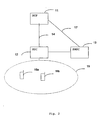
- Fig. 1 shows an Intelligent Network control unit, such as a Service Control Point (SCP) 1. Also, Fig. 1 shows a telecommunication network, in this example a Public Land Mobile Network PLMN formed by a GSM network. From the GSM network only a few parts are shown: a Mobile Switching Center (MSC) 2 which is coupled to a Short Message Service Center (SMSC) 3. In the coverage area 5 of the GSM network, Mobile Stations (MSs) 6a, 6b, functioning as terminals, can be coupled in a wireless way to the MSC 2 by means of Base Stations and Base Station Controllers. The Base Stations and Base Station Controllers are known per se and therefore not shown.
- SCP Service Control Point
- Fig. 1 shows a telecommunication network, in this example a Public Land Mobile Network PLMN formed by a GSM network. From the GSM network only a few parts are shown: a Mobile Switching Center (MSC) 2 which is coupled to a Short Message Service Center (SMSC) 3. In the coverage area
- the coupling between the GSM network and the SCP 1 is implemented by means of an interface 4 between the MSC 2 and the SCP 1.
- the MSC 2 performs the switching operations for setting up normal telephone calls for the MS 6a, 6b. If, for example during set-up of a telephone call, the MSC 2 recognises that the MS 6a, 6b has access to IN functions, then the MSC 2 sends data to the SCP 1, and the MSC 2 receives instructions from the SCP 1 about the handling and routing of the call. If a first MS 6a sends a message, in this case a Short Message, to a second MS 6b, then the Short Message is first sent from the first MS 6a via the MSC 2 to the SMSC 3. The SMSC 3 then attempts to deliver the SM to the second MS 6b, which has been assigned by the first MS, by sending the SM via the MSC 2 to the second MS 6b.
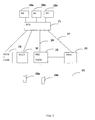
- the telecommunication system comprises a SCP 11 functioning as IN control unit and a telecommunication network, in this example also a Public Land Mobile Network formed by a GSM network. Also similar to Fig. 1 , only a few parts from the GSM network are shown.
- a Mobile Switching Center (MSC) 12 which is coupled to a Short Message Service Center (SMSC) 13.
- SMS Short Message Service Center
- the coupling between the GSM network and the SCP 11 is, similar to Fig.
- the system in fig. 2 has an interface 17 between the SCP 11 and the SMSC 13.
- This interface 17 makes it possible to implement direct communication between the SMSC 13 and the SCP 11.
- the interface 17 makes use of SMTP, and TCP/IP, Transmission Control Protocol running on top of Internet Protocol, which protocols are supported by most vendors of SMSC.
- the SCP 11 is adapted to communicate using these protocols, by means of suitable adaptations which include suitable programming.
- the interface 17 allows to transmit Short Messages between the SMSC 13 and the SCP 11, which Short Messages might be encapsulated by other data, following the specifications of the communication protocols used.
- the MSC 12 sends data to the SCP 11 and the MSC 12 receives data back from the SCP 11 containing instructions, in the way described with fig. 1 .
- a Short Message is prepared in the MS 16a and is sent, via the MSC 12 to the SMSC 13. Now the SMSC 13 sends a second Short Message, containing the information from the first Short Message to the SCP 11 via the interface 17 between the SMSC 13 and the SCP 11.
- the SCP 11 is adapted by means of suitable programming to interpret the message received from the SMSC 13. Next the SCP 11 prepares a Short Message containing the required data and sends this Short Message to the SMSC 13. Then the SMSC 13 again sends a Short Message, containing the required data to the MS 16a.
- Fig. 3 shows a telecommunication system comprising a mobile telecommunications network, in this case a so-called 3rd generation W-CDMA network.
- the IN control unit is implemented by means of a Service Capability Server (SCS) 21, which is connected to a number of Application Servers (AS) 28a, 28b, 28c.
- SCS Service Capability Server
- AS Application Servers
- the SCS 21 is connected to a PSTN 29, in this case an Integrated Services Digital Network (ISDN), to a computer network via a Voice over IP (VoIP) server 30, and to a Public Land Mobile Network PLMN, in this case a 3rd generation, W-CDMA network, from which only an MSC 22 and a coverage area 25 are shown, in which Mobile Stations 26a, 26b, acting as terminals, can be coupled wirelessly to the MSC 22.
- the connection between the SCS 21 and the MSC 22 is implemented by means of an interface 24.
- the MSC 22 is connected to an SMSC 23, for the handling of Short Messages sent from or to a terminal, such as a Mobile Station 26a, 26b, as described with fig. 1 and fig. 2 .
- the SCS 21 is coupled to the SMSC 23 via an interface 27, and the SCS 21 is adapted to receive as well as to send Short Messages. This allows the user of a Mobile Station 26a to communicate in an easy way with the SCS by sending a Short Message. This Short Message is routed from the Mobile Station 26a, via the MSC 22 to the SMSC 23. The SMSC 23 in turn sends a Short Message to the SCS 21 via the interface 27.
- the SCS 21 is assisted by at least one suitably programmed AS 28a, 28b, 28c to interpret the contents of a Short Message received and to define the contents of a Short Message which is to be sent.
- the SCS 21 prepares a Short Message and sends this via the interface 27 to the SMSC 23.
- the SMSC 23 in turn sends a Short Message via the MSC 22 to the Mobile Station 26a.
- the invention allows to easily implement a large amount of other advanced, user friendly functions. It is, for example, possible to send information to a computer system residing at the house of a subscriber.
- a use could be that, when the Mobile Station of the subscriber approaches the location area of his house, a message is sent by the IN control unit to the computer system, enabling to activate for example the heating system of the house.
- Another example could be to supervise children. When a child leaves a predefined location area, a message is sent to the telephones of its parents. Still another example is to update an IN profile or check other IN settings from a portable computer or Personal Digital Assistant (PDA) via a personal web-page. Alternatively, an SCP could write all relevant information to a web-page. To accomplish this, the IN control unit sends messages containing web content such as HTML to the message server, which sends messages to a web server. The web server can be inspected from a Mobile Station equipped with a browsing functionality.
- PDA Personal Digital Assistant
Landscapes
- Engineering & Computer Science (AREA)
- Computer Networks & Wireless Communication (AREA)
- Mobile Radio Communication Systems (AREA)
- Telephonic Communication Services (AREA)
Claims (36)
- Telekommunikationssystem zum Übertragen von Telefonanrufen und/oder Daten zwischen einem ersten Endgerät (6a, 16a, 26a) und mindestens einem zweiten Endgerät (6b, 16b, 26b), umfassend:- ein Telekommunikationsnetz zur Übertragung der Telefonanrufe und/oder der Daten;- eine intelligente Netz (IN - Intelligent Network)-Steuereinheit (1, 11, 21), die an das Telekommunikationsnetz zum Bereitstellen von intelligenten Netzdiensten in dem Telekommunikationsnetz gekoppelt ist; und- eine Nachrichtenservereinheit (3, 13, 23), die an das Telekommunikationsnetz zum Empfangen einer ersten Nachricht von einem der Endgeräte (6a, 16a, 26a, 6b, 16b, 26b) und zum Senden einer zweiten Nachricht an mindestens eines der Endgeräte (6a, 16a, 26a, 6b, 16b, 26b) gekoppelt ist, dadurch gekennzeichnet, dassdie IN-Steuereinheit (11, 21) dazu geeignet ist, die erste Nachricht an die Nachrichtenservereinheit (13, 23) zu senden und/oder die zweite Nachricht von der Nachrichtenservereinheit (13, 23) zu empfangen, die IN-Steuereinheit (11, 21) dazu geeignet ist, an die Nachrichtenservereinheit (13, 23) gekoppelt zu werden, wobei die IN-Steuereinheit (11, 21) dazu befähigt wird, die erste Nachricht an die Nachrichtenservereinheit (13, 23) zu senden und/oder die zweite Nachricht von dieser zu empfangen, und die IN-Steuereinheit (11, 21) an die Nachrichtenservereinheit (13, 23) über eine Schnittstelle (17, 27) zwischen der IN-Steuereinheit (11, 21) und der Nachrichtenservereinheit (13, 23) gekoppelt ist.
- Telekommunikationssystem nach Anspruch 1, wobei die IN-Steuereinheit (11, 21) dazu geeignet ist, einen Inhalt der ersten Nachricht zu definieren.
- Telekommunikationssystem nach Anspruch 1, wobei die IN-Steuereinheit (11, 21) dazu geeignet ist, einen Inhalt der zweiten Nachricht zum Ergreifen einer spezifischen Maßnahme zu interpretieren.
- Telekommunikationssystem nach Anspruch 1, wobei die IN-Steuereinheit (11, 21) an die Nachrichtenservereinheit (13, 23) über die Schnittstelle (17, 27), ein Protokoll zur Kommunikation über die Schnittstelle (17, 27), das ein Simple Mail Transfer Protocol (SMTP) oder ein - Short Message Peer to Peer Protocol (SMPP) umfasst, gekoppelt ist.
- Telekommunikationssystem nach einem der vorhergehenden Ansprüche, wobei das Telekommunikationsnetz ein mobiles Telekommunikationsnetz wie ein Netz des globalen Systems zur mobilen Kommunikation (GSM - Global System Mobile) oder ein Breitbandnetz mit Vielfachzugriff im Codemultiplex (W-CDMA - Wideband Code Division Multiple Access)umfasst.
- Telekommunikationssystem nach Anspruch 5, wobei die IN-Steuereinheit (11, 21) einen Dienststeuerpunkt (SCP - Service Control Point) umfasst.
- Telekommunikationssystem nach Anspruch 5, wobei die IN-Steuereinheit (11, 21) einen Diensttauglichkeit-Server (SCS - Service-Capability Server) umfasst, der mit mindestens einem Anwendungsserver (AS - Application Server) (28a, 28b, 28c) verbunden ist, der den SCS durch Ausführen bestimmter Aufgaben unterstützt, wobei jeder AS (28a, 28b, 28c) eine entspechende Schnittstelle zu dem SCS (11, 21) aufweist.
- Telekommunikationssystem nach einem der vorhergehenden Ansprüche, wobei mindestens eines der Endgeräte (16a, 26a, 16b, 26b) eine Mobilstation (MS - Mobile Station), ein Computersystem oder eine öffentliche Fernsprechnetz (PSTN - Public Switched Telephone Network)-Erweiterung umfasst.
- Telekommunikationssystem nach einem der vorhergehenden Ansprüche, wobei die Nachrichtenservereinheit (13, 23) eine Kurznachrichten-Dienststelle (SMSC - Short Message Service Center) umfasst.
- Telekommunikationssystem nach einem der vorhergehenden Ansprüche, wobei mindestens eine der Nachrichten eine Kurznachricht (SM - Short Message) gemäß dem GSM-Kurznachrichtendienst (SMS - Short Messsage Service)-Standard oder einen SMS-Standard des Partnerschaftsprojekts der dritten Generation (3GPP - 3rd Generation Partnership Project) umfasst.
- Telekommunikationssystem nach einem der vorhergehenden Ansprüche, wobei mindestens eine der Nachrichten einen Inhalt umfasst, der das Wireless Application Protocol (WAP) oder HTML einhält, oder eine E-Mail, alphanumerische Informationen, Textinformationen, grafische Informationen oder Bildinformationen, Videoinformationen umfasst.
- Verfahren zum Übertragen von Informationen in einem Telekommunikationssystem nach Anspruch 1 von einem einer Gruppe, welche die IN-Steuereinheit (11, 21) und eines der Endgeräte (16a, 26a, 16b, 26b) umfasst, zum anderen der Gruppe, welche die IN-Steuereinheit (11, 21) und das andere der Endgeräte (16a, 26a, 16b, 26b) umfasst, wobei das Verfahren Folgendes umfasst:- Erstellen einer ersten Nachricht und Speichern der Nachricht in einem der Gruppe, welche die IN-Steuereinheit (11, 21) und eines der Endgeräte (16a, 26a, 16b, 26b) umfasst, wobei die erste Nachricht die Informationen umfasst;- Übertragen der ersten Nachricht von dem genannten der Gruppe, welche die IN-Steuerinformationen (11, 21) und eines der Endgeräte (16a, 26a, 16b, 26b) umfasst, zur Nachrichtenservereinheit (13, 23); und- Übertragen der zweiten Nachricht von der Nachrichtenservereinheit (13, 23) zum anderen der Gruppe, welche die IN-Steuereinheit (11, 21) und das eine der Endgeräte (16a, 26a, 16b, 26b) umfasst, wobei die zweite Nachricht die Informationen umfasst, wobei die IN-Steuereinheit (11, 21) mit dem Nachrichtenserver (13, 23) über eine Schnittstelle (17, 27) zwischen der IN-Steuereinheit und der Nachrichtenservereinheit gekoppelt wird.
- Verfahren nach Anspruch 12, wobei das Telekommunikationsnetz ein mobiles Telekommunikationsnetz wie ein Netz des globalen Systems zur mobilen Kommunikation (GSM) oder ein Breitbandnetz mit Vielfachzugriffs im Codemultiplex (W-CDMA) umfasst.
- Verfahren nach Anspruch 13, wobei die IN-Steuereinheit (11, 21) einen Dienststeuerpunkt (SCP) oder einen Diensttauglichkeit-Server (SCS) umfasst, der mit mindestens einem Anwendungsserver (AS) (28a, 28b, 28c) verbunden ist, der den SCS durch Ausführen spezifischer Aufgaben unterstützt, wobei jeder AS (28a, 28b, 28c) eine entsprechende Schnittstelle zu dem SCS aufweist.
- Verfahren nach einem der Ansprüche 12 bis 14, wobei mindestens eines der Endgeräte (16a, 26a, 16b, 26b) eine Mobilstation (MS), ein Computersystem oder eine öffentliche Fernsprechnetz (PSTN)-Erweiterung umfasst.
- Verfahren nach einem der Ansprüche 12 bis 15, wobei die Nachrichtenservereinheit (13, 23) eine Kurznachrichten-Dienststelle (SMSC) umfasst.
- Verfahren nach einem der Ansprüche 12 bis 16, wobei mindestens eine der Nachrichten eine Kurznachricht (SM) gemäß dem GSM-Kurznachrichtendienst (SMS)-Standard oder dem SMS-Standard des Partnerschaftsprojekt der dritten Generation (3GPP) umfasst.
- Verfahren nach Anspruch 17, wobei mindestens zwei Kurznachrichten (SM) verbunden werden.
- Verfahren nach Anspruch 17 oder 18, wobei mindestens eine der Nachrichten einen Inhalt umfasst, der das wireless application protocol (WAP) oder HTML einhält oder eine E-Mail umfasst.
- Verfahren nach einem der Ansprüche 12 bis 19, wobei mindestens eine der Nachrichten alphanumerische Informationen, Textinformationen, grafische Informationen oder bewegliche Bildinformationen, Videoinformationen umfasst.
- Verfahren nach einem der Ansprüche 12 bis 20, wobei mindestens eine der Nachrichten Informationen über einen Standort eines der Endgeräte (16a, 26a, 16b, 26b), Informationen über ein Konto eines Teilnehmers eines der Endgeräte (16a, 26a, 16b, 26b), Informationen über ein Anrufguthaben eines der Endgeräte (16a, 26a, 16b, 26b), Informationen über eine Abrechnung eines Telefonanrufs oder Informationen über den Betrieb der IN-Steuereinheit (11, 21) umfasst.
- Verfahren nach einem der Ansprüche 12 bis 21, wobei eine Erstellung und/oder Übertragung mindestens einer der Nachrichten durch ein Ereignis in dem Telekommunikationssystem initiiert wird.
- Verfahren nach einem der Ansprüche 12 bis 22, wobei das Ereignis einen Wechsel eines Standorts eines der Endgeräte (16a, 26a, 16b, 26b), ein Überschreiten von vordefinierten Anrufguthabengrenzen, eine Veränderung in einem Benutzerprofil eines der Endgeräte (16a, 26a, 16b, 26b), einen Aufbau oder eine Beendigung eines Anrufs, ein Überschreiten eines vordefinierten Zeitraums, eine Nachricht, die von einem der Endgeräte (16a, 26a, 16b, 26b) empfangen wird, oder eine Veränderung hinsichtlich der Betriebsbedingungen der IN-Steuereinheit (11, 21) umfasst.
- Verwendung einer ersten und einer zweiten Nachricht in dem Telekommunikationssystem nach einem der Ansprüche 1 bis 11, um Information von einem einer Gruppe, welche die IN-Steuereinheit (11, 21) und eines der Endgeräte (16a, 26a, 16b, 26b) umfasst, zu einem anderen der Gruppe, welche die IN-Steuereinheit (11, 21) und eines der Endgeräte (16a, 26a, 16b, 26b) umfasst, zu übertragen, wobei die IN-Steuereinheit (11, 21) mit der Nachrichtenservereinheit über eine Schnittstelle (17, 27) zwischen der IN-Steuereinheit und der Nachrichtenservereinheit verbunden ist.
- Verwendung der ersten und der zweiten Nachricht nach Anspruch 24, um Textinformationen über die Abrechnung eines Anrufs während des Anrufs oder nach dem Anruf an einen Benutzer zu senden.
- Verwendung der ersten und der zweiten Nachricht nach Anspruch 24, um einem Benutzer eine Anzeige darüber zu senden, wann das Endgerät (16a, 26a) des Benutzers oder ein anderes der Endgeräte (16b, 26b) einen bestimmten Standortbereich betritt oder verlässt.
- Verwendung der ersten und der zweiten Nachricht nach Anspruch 24, um Informationen über den Standort eines der Endgeräte (16a, 26a, 16b, 26b) an dieses Endgerät (16a, 26a) oder an ein anderes der Endgeräte (16b, 26b) zu senden.
- Verwendung der ersten und der zweiten Nachricht nach Anspruch 24, um eine Teilnahme eines der Endgeräte (16a, 26a, 16b, 26b) von einem anderen der Endgeräte (16a, 26a, 16b, 26b) zu überwachen.
- Verwendung der ersten und der zweiten Nachricht nach Anspruch 28, wobei eine Warnung an das andere der Endgeräte (16a, 26a, 16b, 26b) gesendet wird, wenn das eine der Endgeräte (16a, 26a, 16b, 26b) einen bestimmten Guthabenschwellenwert erreicht oder einen Anruf mit einer Anrufabrechnung ausführt, die über eine vordefinierte Geldgrenze hinausgeht.
- Verwendung der ersten und der zweiten Nachricht nach Anspruch 24, um eine Nachricht an eines der Endgeräte (16a, 26a, 16b, 26b) zu senden, welches versucht, ein anderes der Endgeräte (16a, 26a, 16b, 26b) anzurufen, wenn das andere der Endgeräte (16a, 26a, 16b, 26b) nicht erreicht werden kann.
- Verwendung der ersten und der zweiten Nachricht nach Anspruch 30, wobei der Inhalt der Nachricht mindestens teilweise von einem Benutzer des anderen der Endgeräte (16a, 26a, 16b, 26b) definiert wird.
- Verwendung der ersten und der zweiten Nachricht nach Anspruch 24, um eine Rufübersicht an eines der Endgeräte (16a, 26a, 16b, 26b) zu senden, wobei diese Übersicht zum Beispiel in einer E-Mail enthalten ist.
- Verwendung der ersten und der zweiten Nachricht nach Anspruch 24, um ein Benutzerprofil von einem der Endgeräte (16a, 26a, 16b, 26b) zu verändern.
- Verwendung der ersten und der zweiten Nachricht nach Anspruch 24, um eine Übersicht eines Benutzerprofils an eines der Endgeräte (16a, 26a, 16b, 26b) zu senden, wobei diese Übersicht zum Beispiel in einer E-Mail enthalten ist.
- Verwendung der ersten und der zweiten Nachricht nach Anspruch 24, um ein Guthaben eines Prepaid-Kontos von einem besuchten öffentlichen landgestützten Mobilfunknetz (VPLMN - Visiting Public Land Mobile Network) aufzustocken.
- Verwendung der ersten und der zweiten Nachricht nach Anspruch 24, um einen Betreiber durch Senden von Informationen über die Betriebsbedingung an eines der Endgeräte (16a, 26a, 16b, 26b) über eine Betriebsbedingung der IN-Steuereinheit (11, 21) zu informieren, wobei die Betriebsbedingung Statusinformationen wie Verkehrsvolumeninformationen und/oder Fehlermeldungsinformationen umfasst.
Applications Claiming Priority (1)
| Application Number | Priority Date | Filing Date | Title |
|---|---|---|---|
| PCT/EP2000/012992 WO2002051167A1 (en) | 2000-12-18 | 2000-12-18 | Telecommunication system and method for transferring information between an intelligent network control unit and a terminal |
Publications (2)
| Publication Number | Publication Date |
|---|---|
| EP1344408A1 EP1344408A1 (de) | 2003-09-17 |
| EP1344408B1 true EP1344408B1 (de) | 2008-04-09 |
Family
ID=8164210
Family Applications (1)
| Application Number | Title | Priority Date | Filing Date |
|---|---|---|---|
| EP00991225A Expired - Lifetime EP1344408B1 (de) | 2000-12-18 | 2000-12-18 | Telekommunikationssystem und verfahren zur informationsübertragung zwischen einer steuereinheit eines intelligenten netzwerks und einem endgerät |
Country Status (7)
| Country | Link |
|---|---|
| US (1) | US20040033815A1 (de) |
| EP (1) | EP1344408B1 (de) |
| AT (1) | ATE392095T1 (de) |
| AU (1) | AU2001231612A1 (de) |
| DE (1) | DE60038576D1 (de) |
| ES (1) | ES2304999T3 (de) |
| WO (1) | WO2002051167A1 (de) |
Families Citing this family (9)
| Publication number | Priority date | Publication date | Assignee | Title |
|---|---|---|---|---|
| JP3933066B2 (ja) * | 2003-03-11 | 2007-06-20 | ブラザー工業株式会社 | 電話端末および記録再生プログラム |
| US20050288926A1 (en) * | 2004-06-25 | 2005-12-29 | Benco David S | Network support for wireless e-mail using speech-to-text conversion |
| EP1832129B1 (de) * | 2004-12-31 | 2011-11-23 | Telefonaktiebolaget LM Ericsson (publ) | Telekommunikationssystem und verfahren zum transfer von sms-nachrichten zwischen endgeräten und intelligenten netzwerkdiensten |
| EP1946576A1 (de) * | 2005-09-30 | 2008-07-23 | Telefonaktiebolaget LM Ericsson (publ) | Verfahren und kommunikationsnetz zum bereitstellen von ansagen in einer bevorzugten sprache während des roamens |
| CN103780775A (zh) * | 2005-09-30 | 2014-05-07 | 艾利森电话股份有限公司 | 用于在漫游时以本国语言提供网络消息的方法和系统 |
| KR100731809B1 (ko) * | 2006-02-13 | 2007-06-22 | 삼성전자주식회사 | 이동통신 단말기 간의 착 발신 전환에 따른 과금 처리 방법 |
| US10242328B2 (en) * | 2007-02-26 | 2019-03-26 | Service Bureau Intel S.A. | Tracking telecommunication expenses |
| US8504006B2 (en) * | 2008-12-30 | 2013-08-06 | Symbol Technologies, Inc. | Interactive management of wireless WAN (WWAN) mobile devices |
| US10237402B1 (en) | 2018-06-04 | 2019-03-19 | Sorenson Ip Holdings, Llc | Management of communications between devices |
Family Cites Families (15)
| Publication number | Priority date | Publication date | Assignee | Title |
|---|---|---|---|---|
| DE4408598A1 (de) * | 1994-03-15 | 1995-09-21 | Sel Alcatel Ag | Telekommunikationssystem und Telekommunikationsendeinrichtung |
| US5742905A (en) * | 1994-09-19 | 1998-04-21 | Bell Communications Research, Inc. | Personal communications internetworking |
| US5752188A (en) * | 1994-12-23 | 1998-05-12 | Telefonaktiebolaget Lm Ericsson | Unstructured supplementary service data from a home location register to an external node |
| US5915008A (en) * | 1995-10-04 | 1999-06-22 | Bell Atlantic Network Services, Inc. | System and method for changing advanced intelligent network services from customer premises equipment |
| US6330244B1 (en) * | 1996-09-05 | 2001-12-11 | Jerome Swartz | System for digital radio communication between a wireless lan and a PBX |
| US5960416A (en) * | 1997-02-27 | 1999-09-28 | Block; Robert S. | Real time subscriber billing at a subscriber location in an unstructured communication network |
| US20010048738A1 (en) * | 1997-04-03 | 2001-12-06 | Sbc Technology Resourses, Inc. | Profile management system including user interface for accessing and maintaining profile data of user subscribed telephony services |
| CN1166219C (zh) * | 1997-05-09 | 2004-09-08 | 美国阿尔卡塔尔资源有限合伙公司 | 具有多个服务控制点的通信系统和通信方法 |
| JP3391673B2 (ja) * | 1997-10-08 | 2003-03-31 | 富士通株式会社 | サービス管理装置およびサービス管理装置のデータベース照合方法並びにデータベース照合プログラムが記録されたコンピュータ読み取り可能な記録媒体 |
| AU2418099A (en) * | 1998-08-11 | 2000-03-06 | Swisscom Ag | Method for providing intelligent network support to a mobile subscriber |
| US6631186B1 (en) * | 1999-04-09 | 2003-10-07 | Sbc Technology Resources, Inc. | System and method for implementing and accessing call forwarding services |
| US6560456B1 (en) * | 1999-05-24 | 2003-05-06 | Openwave Systems, Inc. | System and method for providing subscriber-initiated information over the short message service (SMS) or a microbrowser |
| JP2003533071A (ja) * | 1999-09-03 | 2003-11-05 | ノキア コーポレイション | ショートメッセージをscpで交換するための移動アプリケーションパート(map)インターフェイス |
| US6522876B1 (en) * | 1999-10-04 | 2003-02-18 | Sprint Spectrum L.P. | System for managing telecommunications services through use of customized profile management codes |
| US6847639B2 (en) * | 2000-12-05 | 2005-01-25 | Lucent Technologies Inc. | Managing feature interaction among a plurality of independent feature servers in telecommunications servers |
-
2000
- 2000-12-18 AU AU2001231612A patent/AU2001231612A1/en not_active Abandoned
- 2000-12-18 US US10/451,040 patent/US20040033815A1/en not_active Abandoned
- 2000-12-18 WO PCT/EP2000/012992 patent/WO2002051167A1/en not_active Ceased
- 2000-12-18 EP EP00991225A patent/EP1344408B1/de not_active Expired - Lifetime
- 2000-12-18 AT AT00991225T patent/ATE392095T1/de not_active IP Right Cessation
- 2000-12-18 DE DE60038576T patent/DE60038576D1/de not_active Expired - Lifetime
- 2000-12-18 ES ES00991225T patent/ES2304999T3/es not_active Expired - Lifetime
Also Published As
| Publication number | Publication date |
|---|---|
| ES2304999T3 (es) | 2008-11-01 |
| US20040033815A1 (en) | 2004-02-19 |
| WO2002051167A1 (en) | 2002-06-27 |
| AU2001231612A1 (en) | 2002-07-01 |
| EP1344408A1 (de) | 2003-09-17 |
| ATE392095T1 (de) | 2008-04-15 |
| DE60038576D1 (de) | 2008-05-21 |
Similar Documents
| Publication | Publication Date | Title |
|---|---|---|
| FI111899B (fi) | Menetelmä laskutuksen kohdentamiseksi sanomien välitysjärjestelmässä, välitysjärjestelmä, palvelin ja päätelaite | |
| CA2314103C (en) | Digital cellular telecommunications with short message service over the packet channel | |
| AU748197B2 (en) | On-line notification in a mobile communications system | |
| EP1352537B1 (de) | Verfahren und vorrichtung zur behandlung von telefonanrufen an unerreichbare mobiltelefone | |
| US7768994B2 (en) | Data transmission method and apparatus | |
| EP2098082B1 (de) | Verfahren und Vorrichtung für einen Kurznachrichtendienst mit Elternkontrolle | |
| US20040058667A1 (en) | Method for providing a collect call service in a mobile communication system | |
| CN101132552B (zh) | 一种通过移动通信网络ps域发送短信的方法和系统 | |
| US6944467B2 (en) | Method and system for routing of short messages in a telecommunication system | |
| EP1118240A1 (de) | Rückrufverfahren und vorrichtung in einem mobilen kommunikationssystem | |
| EP1145577A1 (de) | Verfahren und system für nachrichtenwegleitung | |
| EP1219125A1 (de) | Übertragung einer kurznachricht in einem telekomunikationssystem | |
| US20040033815A1 (en) | Telecommunication system and method for transferring information between an intelligent network control unit and a terminal | |
| WO2010073263A2 (en) | Instant messaging over unstructured supplementary service data (ussd) | |
| US20040053618A1 (en) | Management of calls to a roaming subscriber | |
| EP2173120A2 (de) | Verfahren zum Fernsteuern eines tragbaren Endgerätes und System dafür | |
| WO1997022219A2 (en) | Method and apparatus for indicating to a wireless network the operational mode of a wireless communicator | |
| EP1444856B1 (de) | Roaming in einer mms-umgebung | |
| EP1300036B1 (de) | Mobiles Kommunikationsgerät und Verfahren zum Verbinden mit einer Internet-Site | |
| EP1641306B1 (de) | System und Verfahren zur Dienststeuerung | |
| EP2106167B1 (de) | Kostengünstigstes Routing einer Kommunikationsverbindung für ein mobiles Kommunikationsgerät | |
| GB2411084A (en) | Distributed message transmission system | |
| EP1286523A2 (de) | Benutzerschnittstellenanordnung für Dienstbetreiberschnittstelle | |
| EP1616443B1 (de) | Kommunikationsverfahren für mobile dienste | |
| Gidlow | Data services on PCN |
Legal Events
| Date | Code | Title | Description |
|---|---|---|---|
| PUAI | Public reference made under article 153(3) epc to a published international application that has entered the european phase |
Free format text: ORIGINAL CODE: 0009012 |
|
| 17P | Request for examination filed |
Effective date: 20030714 |
|
| AK | Designated contracting states |
Kind code of ref document: A1 Designated state(s): AT BE CH CY DE DK ES FI FR GB GR IE IT LI LU MC NL PT SE TR |
|
| AX | Request for extension of the european patent |
Extension state: AL LT LV MK RO SI |
|
| RAP1 | Party data changed (applicant data changed or rights of an application transferred) |
Owner name: TELEFONAKTIEBOLAGET LM ERICSSON (PUBL) |
|
| GRAP | Despatch of communication of intention to grant a patent |
Free format text: ORIGINAL CODE: EPIDOSNIGR1 |
|
| GRAS | Grant fee paid |
Free format text: ORIGINAL CODE: EPIDOSNIGR3 |
|
| GRAA | (expected) grant |
Free format text: ORIGINAL CODE: 0009210 |
|
| AK | Designated contracting states |
Kind code of ref document: B1 Designated state(s): AT BE CH CY DE DK ES FI FR GB GR IE IT LI LU MC NL PT SE TR |
|
| REG | Reference to a national code |
Ref country code: GB Ref legal event code: FG4D |
|
| REG | Reference to a national code |
Ref country code: CH Ref legal event code: EP |
|
| REG | Reference to a national code |
Ref country code: IE Ref legal event code: FG4D |
|
| REF | Corresponds to: |
Ref document number: 60038576 Country of ref document: DE Date of ref document: 20080521 Kind code of ref document: P |
|
| NLV1 | Nl: lapsed or annulled due to failure to fulfill the requirements of art. 29p and 29m of the patents act | ||
| PG25 | Lapsed in a contracting state [announced via postgrant information from national office to epo] |
Ref country code: PT Free format text: LAPSE BECAUSE OF FAILURE TO SUBMIT A TRANSLATION OF THE DESCRIPTION OR TO PAY THE FEE WITHIN THE PRESCRIBED TIME-LIMIT Effective date: 20080909 Ref country code: FI Free format text: LAPSE BECAUSE OF FAILURE TO SUBMIT A TRANSLATION OF THE DESCRIPTION OR TO PAY THE FEE WITHIN THE PRESCRIBED TIME-LIMIT Effective date: 20080409 Ref country code: NL Free format text: LAPSE BECAUSE OF FAILURE TO SUBMIT A TRANSLATION OF THE DESCRIPTION OR TO PAY THE FEE WITHIN THE PRESCRIBED TIME-LIMIT Effective date: 20080409 |
|
| REG | Reference to a national code |
Ref country code: ES Ref legal event code: FG2A Ref document number: 2304999 Country of ref document: ES Kind code of ref document: T3 |
|
| PG25 | Lapsed in a contracting state [announced via postgrant information from national office to epo] |
Ref country code: AT Free format text: LAPSE BECAUSE OF FAILURE TO SUBMIT A TRANSLATION OF THE DESCRIPTION OR TO PAY THE FEE WITHIN THE PRESCRIBED TIME-LIMIT Effective date: 20080409 |
|
| EN | Fr: translation not filed | ||
| PG25 | Lapsed in a contracting state [announced via postgrant information from national office to epo] |
Ref country code: DK Free format text: LAPSE BECAUSE OF FAILURE TO SUBMIT A TRANSLATION OF THE DESCRIPTION OR TO PAY THE FEE WITHIN THE PRESCRIBED TIME-LIMIT Effective date: 20080409 Ref country code: SE Free format text: LAPSE BECAUSE OF FAILURE TO SUBMIT A TRANSLATION OF THE DESCRIPTION OR TO PAY THE FEE WITHIN THE PRESCRIBED TIME-LIMIT Effective date: 20080709 |
|
| PLBE | No opposition filed within time limit |
Free format text: ORIGINAL CODE: 0009261 |
|
| STAA | Information on the status of an ep patent application or granted ep patent |
Free format text: STATUS: NO OPPOSITION FILED WITHIN TIME LIMIT |
|
| PG25 | Lapsed in a contracting state [announced via postgrant information from national office to epo] |
Ref country code: BE Free format text: LAPSE BECAUSE OF FAILURE TO SUBMIT A TRANSLATION OF THE DESCRIPTION OR TO PAY THE FEE WITHIN THE PRESCRIBED TIME-LIMIT Effective date: 20080409 |
|
| 26N | No opposition filed |
Effective date: 20090112 |
|
| PG25 | Lapsed in a contracting state [announced via postgrant information from national office to epo] |
Ref country code: DE Free format text: LAPSE BECAUSE OF FAILURE TO SUBMIT A TRANSLATION OF THE DESCRIPTION OR TO PAY THE FEE WITHIN THE PRESCRIBED TIME-LIMIT Effective date: 20080710 Ref country code: FR Free format text: LAPSE BECAUSE OF FAILURE TO SUBMIT A TRANSLATION OF THE DESCRIPTION OR TO PAY THE FEE WITHIN THE PRESCRIBED TIME-LIMIT Effective date: 20090130 |
|
| PG25 | Lapsed in a contracting state [announced via postgrant information from national office to epo] |
Ref country code: MC Free format text: LAPSE BECAUSE OF NON-PAYMENT OF DUE FEES Effective date: 20081231 |
|
| REG | Reference to a national code |
Ref country code: CH Ref legal event code: PL |
|
| PG25 | Lapsed in a contracting state [announced via postgrant information from national office to epo] |
Ref country code: IT Free format text: LAPSE BECAUSE OF FAILURE TO SUBMIT A TRANSLATION OF THE DESCRIPTION OR TO PAY THE FEE WITHIN THE PRESCRIBED TIME-LIMIT Effective date: 20080409 |
|
| PG25 | Lapsed in a contracting state [announced via postgrant information from national office to epo] |
Ref country code: CY Free format text: LAPSE BECAUSE OF FAILURE TO SUBMIT A TRANSLATION OF THE DESCRIPTION OR TO PAY THE FEE WITHIN THE PRESCRIBED TIME-LIMIT Effective date: 20080409 |
|
| PG25 | Lapsed in a contracting state [announced via postgrant information from national office to epo] |
Ref country code: IE Free format text: LAPSE BECAUSE OF NON-PAYMENT OF DUE FEES Effective date: 20081218 Ref country code: CH Free format text: LAPSE BECAUSE OF NON-PAYMENT OF DUE FEES Effective date: 20081231 Ref country code: LI Free format text: LAPSE BECAUSE OF NON-PAYMENT OF DUE FEES Effective date: 20081231 |
|
| PG25 | Lapsed in a contracting state [announced via postgrant information from national office to epo] |
Ref country code: LU Free format text: LAPSE BECAUSE OF NON-PAYMENT OF DUE FEES Effective date: 20081218 |
|
| PG25 | Lapsed in a contracting state [announced via postgrant information from national office to epo] |
Ref country code: TR Free format text: LAPSE BECAUSE OF FAILURE TO SUBMIT A TRANSLATION OF THE DESCRIPTION OR TO PAY THE FEE WITHIN THE PRESCRIBED TIME-LIMIT Effective date: 20080409 |
|
| PG25 | Lapsed in a contracting state [announced via postgrant information from national office to epo] |
Ref country code: GR Free format text: LAPSE BECAUSE OF FAILURE TO SUBMIT A TRANSLATION OF THE DESCRIPTION OR TO PAY THE FEE WITHIN THE PRESCRIBED TIME-LIMIT Effective date: 20080710 |
|
| PGFP | Annual fee paid to national office [announced via postgrant information from national office to epo] |
Ref country code: GB Payment date: 20121227 Year of fee payment: 13 |
|
| PGFP | Annual fee paid to national office [announced via postgrant information from national office to epo] |
Ref country code: ES Payment date: 20121226 Year of fee payment: 13 |
|
| GBPC | Gb: european patent ceased through non-payment of renewal fee |
Effective date: 20131218 |
|
| PG25 | Lapsed in a contracting state [announced via postgrant information from national office to epo] |
Ref country code: GB Free format text: LAPSE BECAUSE OF NON-PAYMENT OF DUE FEES Effective date: 20131218 |
|
| REG | Reference to a national code |
Ref country code: ES Ref legal event code: FD2A Effective date: 20150327 |
|
| PG25 | Lapsed in a contracting state [announced via postgrant information from national office to epo] |
Ref country code: ES Free format text: LAPSE BECAUSE OF NON-PAYMENT OF DUE FEES Effective date: 20131219 |