EP1345456A2 - Mobildienstenarchitektur - Google Patents
Mobildienstenarchitektur Download PDFInfo
- Publication number
- EP1345456A2 EP1345456A2 EP02259027A EP02259027A EP1345456A2 EP 1345456 A2 EP1345456 A2 EP 1345456A2 EP 02259027 A EP02259027 A EP 02259027A EP 02259027 A EP02259027 A EP 02259027A EP 1345456 A2 EP1345456 A2 EP 1345456A2
- Authority
- EP
- European Patent Office
- Prior art keywords
- mobile
- services platform
- services
- recited
- subscriber
- Prior art date
- Legal status (The legal status is an assumption and is not a legal conclusion. Google has not performed a legal analysis and makes no representation as to the accuracy of the status listed.)
- Withdrawn
Links
- 230000004044 response Effects 0.000 claims abstract description 29
- 238000004891 communication Methods 0.000 claims abstract description 19
- 238000013519 translation Methods 0.000 claims description 6
- 238000013507 mapping Methods 0.000 claims description 3
- 238000007726 management method Methods 0.000 description 27
- 239000008186 active pharmaceutical agent Substances 0.000 description 8
- 238000002507 cathodic stripping potentiometry Methods 0.000 description 4
- 240000005020 Acaciella glauca Species 0.000 description 2
- 230000001413 cellular effect Effects 0.000 description 2
- 230000006870 function Effects 0.000 description 2
- 230000010354 integration Effects 0.000 description 2
- 238000012544 monitoring process Methods 0.000 description 2
- 238000005457 optimization Methods 0.000 description 2
- 235000003499 redwood Nutrition 0.000 description 2
- 230000004913 activation Effects 0.000 description 1
- 230000006978 adaptation Effects 0.000 description 1
- 230000004075 alteration Effects 0.000 description 1
- 230000008901 benefit Effects 0.000 description 1
- 239000003795 chemical substances by application Substances 0.000 description 1
- 235000014510 cooky Nutrition 0.000 description 1
- 230000009849 deactivation Effects 0.000 description 1
- 238000012217 deletion Methods 0.000 description 1
- 230000037430 deletion Effects 0.000 description 1
- 230000001419 dependent effect Effects 0.000 description 1
- 238000010586 diagram Methods 0.000 description 1
- 238000011156 evaluation Methods 0.000 description 1
- 230000036541 health Effects 0.000 description 1
- 238000009434 installation Methods 0.000 description 1
- 230000007246 mechanism Effects 0.000 description 1
- 238000010295 mobile communication Methods 0.000 description 1
- 230000004048 modification Effects 0.000 description 1
- 238000012986 modification Methods 0.000 description 1
- 238000012546 transfer Methods 0.000 description 1
Images


Classifications
-
- H—ELECTRICITY
- H04—ELECTRIC COMMUNICATION TECHNIQUE
- H04L—TRANSMISSION OF DIGITAL INFORMATION, e.g. TELEGRAPHIC COMMUNICATION
- H04L67/00—Network arrangements or protocols for supporting network services or applications
- H04L67/34—Network arrangements or protocols for supporting network services or applications involving the movement of software or configuration parameters
-
- H—ELECTRICITY
- H04—ELECTRIC COMMUNICATION TECHNIQUE
- H04L—TRANSMISSION OF DIGITAL INFORMATION, e.g. TELEGRAPHIC COMMUNICATION
- H04L67/00—Network arrangements or protocols for supporting network services or applications
- H04L67/01—Protocols
- H04L67/04—Protocols specially adapted for terminals or networks with limited capabilities; specially adapted for terminal portability
-
- H—ELECTRICITY
- H04—ELECTRIC COMMUNICATION TECHNIQUE
- H04L—TRANSMISSION OF DIGITAL INFORMATION, e.g. TELEGRAPHIC COMMUNICATION
- H04L67/00—Network arrangements or protocols for supporting network services or applications
- H04L67/2866—Architectures; Arrangements
- H04L67/30—Profiles
- H04L67/306—User profiles
-
- H—ELECTRICITY
- H04—ELECTRIC COMMUNICATION TECHNIQUE
- H04L—TRANSMISSION OF DIGITAL INFORMATION, e.g. TELEGRAPHIC COMMUNICATION
- H04L67/00—Network arrangements or protocols for supporting network services or applications
- H04L67/50—Network services
- H04L67/55—Push-based network services
-
- H—ELECTRICITY
- H04—ELECTRIC COMMUNICATION TECHNIQUE
- H04L—TRANSMISSION OF DIGITAL INFORMATION, e.g. TELEGRAPHIC COMMUNICATION
- H04L9/00—Cryptographic mechanisms or cryptographic arrangements for secret or secure communications; Network security protocols
- H04L9/40—Network security protocols
-
- H—ELECTRICITY
- H04—ELECTRIC COMMUNICATION TECHNIQUE
- H04L—TRANSMISSION OF DIGITAL INFORMATION, e.g. TELEGRAPHIC COMMUNICATION
- H04L69/00—Network arrangements, protocols or services independent of the application payload and not provided for in the other groups of this subclass
- H04L69/30—Definitions, standards or architectural aspects of layered protocol stacks
- H04L69/32—Architecture of open systems interconnection [OSI] 7-layer type protocol stacks, e.g. the interfaces between the data link level and the physical level
- H04L69/322—Intralayer communication protocols among peer entities or protocol data unit [PDU] definitions
- H04L69/329—Intralayer communication protocols among peer entities or protocol data unit [PDU] definitions in the application layer [OSI layer 7]
-
- H—ELECTRICITY
- H04—ELECTRIC COMMUNICATION TECHNIQUE
- H04Q—SELECTING
- H04Q2213/00—Indexing scheme relating to selecting arrangements in general and for multiplex systems
- H04Q2213/13098—Mobile subscriber
-
- H—ELECTRICITY
- H04—ELECTRIC COMMUNICATION TECHNIQUE
- H04Q—SELECTING
- H04Q2213/00—Indexing scheme relating to selecting arrangements in general and for multiplex systems
- H04Q2213/13106—Microprocessor, CPU
-
- H—ELECTRICITY
- H04—ELECTRIC COMMUNICATION TECHNIQUE
- H04Q—SELECTING
- H04Q2213/00—Indexing scheme relating to selecting arrangements in general and for multiplex systems
- H04Q2213/13109—Initializing, personal profile
-
- H—ELECTRICITY
- H04—ELECTRIC COMMUNICATION TECHNIQUE
- H04Q—SELECTING
- H04Q2213/00—Indexing scheme relating to selecting arrangements in general and for multiplex systems
- H04Q2213/13196—Connection circuit/link/trunk/junction, bridge, router, gateway
-
- H—ELECTRICITY
- H04—ELECTRIC COMMUNICATION TECHNIQUE
- H04Q—SELECTING
- H04Q2213/00—Indexing scheme relating to selecting arrangements in general and for multiplex systems
- H04Q2213/13349—Network management
-
- H—ELECTRICITY
- H04—ELECTRIC COMMUNICATION TECHNIQUE
- H04Q—SELECTING
- H04Q2213/00—Indexing scheme relating to selecting arrangements in general and for multiplex systems
- H04Q2213/13389—LAN, internet
Definitions
- At least one embodiment of the present invention pertains to computer and communications networks, and more particularly, to a mobile services platform that enables mobile clients on a wireless telecommunications network to access network servers on a wireline computer network.
- Personal mobile communication/computing devices such as cellular telephones, personal digital assistants (PDAs) and two-way pagers, have become ubiquitous in most modern countries. These devices are sometimes collectively called “mobile devices”. Many of the latest generation mobile devices provide their users with the ability to access resources on the Internet via wireless telecommunications networks (or simply, “wireless networks”). For example, some of these mobile devices allow their users to access World Wide Web pages, exchange email and download files over the Internet.
- wireless telecommunications networks or simply, “wireless networks”
- a device called a gateway is often used to enable these mobile devices to do this.
- the gateway is (or includes) a server computer system that is coupled between the wireless network and the Internet.
- the gateway typically translates/converts between the languages and protocols used on the Internet (e.g., HTTP and HTML) and the languages and protocols used by the mobile devices (e.g., WAP and WML).
- Such gateways are produced by Openwave Systems Inc. of Redwood City, Galifornia.
- the gateway is typically operated by the communications service provider (CSP), e.g., the operator of the wireless network.
- CSP communications service provider
- the present invention includes a mobile services platform to enable multiple mobile clients operating on a wireless telecommunications network to access one or more network servers operating on a wireline computer network, where the mobile clients are used by subscribers of wireless telecommunications services.
- the mobile services platform comprises a data communications interface to the wireline computer network, a data communications interface to the wireless telecommunications network, a set of application modules, a set of service modules, a network services management (NSM) subsystem, a subscriber and service management (SSM) subsystem, and an administration subsystem.
- the application modules provide applications for execution during communications between the mobile clients and the network servers in response to requests from the mobile clients to access the applications.
- the service modules provide services that are automatically invoked during communications between mobile clients and the network servers.
- the NSM subsystem includes a proxy to proxy requests and responses between the network servers and the mobile clients.
- the SSM subsystem manages data relating to the subscribers and subscriptions of the subscribers and determines the applications and services to which the subscribers have access.
- the administration subsystem enables administrative operations to be performed on the mobile services platform.
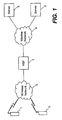
- FIG. 1 is a conceptual block diagram illustrating an example of a network environment in which the MSP can be implemented
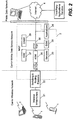
- Figure 2 illustrates a high-level architecture of the MSP in relation to other network elements
- FIG. 3 illustrates the NSM subsystem
- FIG. 4 illustrates the SSM subsystem
- FIG. 5 illustrates the OA&M subsystem
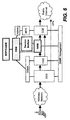
- Figure 6 illustrates a first example of how the MSP can be implemented in a network environment
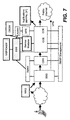
- Figure 7 illustrates a second example of how the MSP can be implemented in a network environment.
- MSP mobile services platform
- wireless network wireless network
- wireline computer network a mobile services platform
- references to "one embodiment” or “an embodiment” mean that the feature being referred to is included in at least one embodiment of the present invention.
- separate references to "one embodiment” or “an embodiment” in this description do not necessarily refer to the same embodiment; however, such embodiments are also not mutually exclusive unless so stated, and except as will be readily apparent to those skilled in the art from the description.
- a feature, structure, act, etc. described in one embodiment may also be included in other embodiments.
- the present invention can include a variety of combinations and/or integrations of the embodiments described herein.
- the MSP described herein enables CSPs to provide a broader range of services and applications to mobile devices, so that CSPs can become value-added intermediaries in the network environment.
- the MSP includes applications for execution during transactions between mobile clients and network servers in response to requests from mobile clients, and services for automatic invocation during communications between mobile clients and network servers.
- the MSP also includes a network services management subsystem that includes a proxy to proxy requests and responses between network servers and mobile clients.
- the MSP further includes a developer services management subsystem to enable and control access by external entities to subscriber-related information in the mobile services platform, and an administration subsystem to enable administrative operations to be performed.
- FIG. 1 shows an example of a network environment in which the invention can be implemented.
- one or more mobile devices 1 are connected to the MSP 2 through a wireless network 3.
- the mobile devices 1 may include, for example, one or more cellular telephones, personal digital assistants (PDAs), two-way pagers, laptop computers, and/or other similar devices with wireless data communication capability.
- the MSP 2 is also connected to a wireline computer network ("wireline network") 4, such as the Internet.
- the wireline network 4 could alternatively be a local area network (LAN), a private wide area network (WAN), or a corporate intranet.
- a number of network servers 5 are also connected to the wireline network.
- the mobile devices 1 may operate as clients when interacting with the network servers 5.
- the network servers 5 may be, for example, World Wide Web servers or other types of content servers.
- the MSP 2 controls the connection to the mobile client devices 1 (session management), retrieving content from network servers 5 on behalf of the mobile devices 1 (proxying), and ensuring that the content provided to the mobile devices 1 is in a form that the mobile device 1 can understand (translation).
- the MSP 2 may also perform many other functions, such as billing, enhanced services, and push content delivery.
- FIG. 2 illustrates the functional architecture of the MSP 2 in relation to other network elements, according to certain embodiments of the invention.
- the MSP 2 is designed to interoperate with 2.5G and 3G wireless networks.
- the MSP is coupled to the mobile devices 1 through a wireless infrastructure 21 and various switching and routing elements 22, and is also coupled to the wireline network 4, which in the illustrated embodiment is the Internet.
- the wireless infrastructure 21 may be considered to include the mobile devices 1 and the wireless network 3.
- the wireless network 3 is specific to the CSP and may have any of various different wireless architectures.
- the switching and routing elements 22 may also be referred to as the Inter-Working Function (IWF) and are the elements that convert the wireless network-specific data protocols to the industry standard Internet Protocol (IP) based protocols.
- IWF Inter-Working Function
- IP Internet Protocol
- the MSP 2 may provide various different components.
- the MSP 2 includes: a set of one or more application modules 24, a set of one or more service modules 25, a network services management (NSM) subsystem 26, a subscriber and service management (SSM) subsystem 27, a developer services management (DSM) subsystem 28, and an operation administration and management (OA&M) subsystem 29.
- NSM network services management
- SSM subscriber and service management
- DSM developer services management
- OA&M operation administration and management
- These components may be contained within a single physical device (e.g., a server computer), or they may be distributed between two or more separate physical devices coupled to each other on a network 30 (as shown), such as a LAN. As shown, these components may communicate with each other using, for example, Hypertext Transport Protocol (HTTP) over Transfer Control Protocol (TCP).
- HTTP Hypertext Transport Protocol
- TCP Transfer Control Protocol
- the NSM subsystem 26 may communicate with the switching and routing elements 22 using, for example, HTTP over wireless TCP (W-TCP).
- Each of the application modules 24 provides an application for execution during communications between mobile devices 1 and network servers 5 in response to requests from the mobile clients 1 to access the applications.
- Examples of such applications are a home page manager to enable control of a home page of the subscribers, or a download module to enable features and functionality (e.g., ring tones, wallpapers) to be downloaded to mobile clients 1.
- the service modules 25 enable the MSP 2 to manage various internal services or third-party services that are invoked automatically (i.e., without any request for the service from a mobile client) during communications between a mobile client 1 and a network server 5.
- Examples of such services are: a location service broker to provide location information relating to a mobile device 1; a translation service broker to translate content from a network server 5 into a form more compatible with a mobile device 1; a push engine to push content to a mobile device 1; and a commerce broker to provide electronic commerce services to a mobile device 1.
- the NSM subsystem 26 includes a Web server and a proxy, as described further below.
- the proxy proxies requests and responses between the network servers and the mobile clients.
- the NSM subsystem 26 is also responsible for invoking one or more of the applications and/services, when appropriate, to enhance at least some of the requests from mobile devices 1 and responses from network servers 5.
- the SSM subsystem 27 manages data relating to the mobile subscribers (i.e., users of mobile devices 1) and their subscriptions to wireless services and also manages the applications and services to which the subscribers have access.
- the DSM subsystem 28 enables and controls access by entities external to the MSP 2 to subscriber-related information maintained in the MSP 2.
- the DSM subsystem 28 may allow an operator-unique asset such as an operator's billing system to be accessible to external entities over an IP network.
- the OA&M subsystem 29 enables various administrative operations to be performed on the MSP, as described further below.
- the various components of the MSP 2 will now be described in greater detail with reference to Figures 3 through 5.
- the NSM subsystem 26 has the ability to create policy definitions, which can be consumed by third party proxies and network elements. This allows for creation of comprehensive service package definitions across all components of the system. Additionally, it allows the MSP 2 to be the key enabler for delivery of new types of network services (e.g. personalized content transcoding, location etc.), which are currently not a part of the de facto IP network/transport layer.
- FIG. 3 shows the NSM subsystem 26 in greater detail in relation to various service modules, according to certain embodiments of the invention.
- the NSM subsystem 26 may communicate with the service modules 25 using any of various protocols operating over HTTP, such as Internet Calendar Access Protocol (ICAP) or a proprietary protocol.
- ICAP Internet Calendar Access Protocol
- the NSM subsystem 26 includes a proxy 31, and a Web server 32.
- the proxy 31 is to proxy requests and responses between the mobile devices and the network servers. In most scenarios, the proxy 31 will act as the entry point into the NSM subsystem 26.
- It can be a generic HTTP 1.1 compliant proxy, for example, such as the Apache Proxy or the Cisco Content Optimization Engine (COE) Proxy.
- the Web server 32 can be an HTTP 1.1 compliant Web server, such as Apache.
- the NSM subsystem 26 also includes: an application program interface (API) dispatcher 33 that includes a proxy interface 34; a proxy API abstraction 35; another API dispatcher 36 that includes a Web interface 37; and a Web API abstraction 38.
- API application program interface
- the API Dispatcher layer 33 and 36 is where each outgoing request is tapped. Service and policy decisions made here determine what needs to be done with the request.
- the API abstractions 35 and 38 are to ensure that the NSM subsystem 26 is not dependent on a specific proxy or Web server.
- the NSM subsystem 26 also includes a set of NSM subscriber service modules 39 to provide subscriber services that enhance requests or responses in a manner tailored for individual mobile (client) devices 1.
- the NSM subscriber service modules 39 are the "value add" component of the NSM subsystem 26.
- the services may include, for example, adding basic authentication information or other subscriber information to requests, adding cookies in the response path, and/or adding other types of information to requests or responses.
- the NSM subscriber service modules 39 are not to be confused with the service modules 25 shown in Figures 2 and 3.
- the service modules 25 provide the core of the functionality that makes the MSP a "Value Add Intermediary".
- a few examples of service modules 25 are a location service broker, translation service broker, content push, and commerce broker.
- Each of the service modules 25 may support one or more of the following types of MSP APIs: proxy path, internal origin server based, third-party origin server based, and standards based.
- the service modules can be invoked in the proxy request/response path.
- the value add information e.g., location information
- Value added services such as transcoding can also be provided in response path.
- SOAP Simple Object Access Protocol
- UM unified messaging
- third-party network applications can make network-initiated queries into the MSP to use the functionality of the service modules.
- applications can use the mPriv Style of developer APIs to use the functionality of the commerce broker or to get the location of a user.
- each service module can support any standards based protocol specific to its domain.
- the location broker module may support WAP Location Protocol
- the push module may support PAP, etc.
- the SSM subsystem 27 will now be described in greater detail.
- the SSM subsystem can be viewed as the Network Operating System for the CSP.
- Figure 4 shows the SSM subsystem 27 according to certain embodiments of the invention.
- the SSM subsystem 27 includes a subscriber management (SMG) module 41, a subscriber database (“SMG store") 42 to store subscriber data, a provider management module 43, an identity management module 44, an application/service management module 45, an authentication module 46, a COS/Plan management module 47, and a roles & access control module 48, and a subscription management module 49.
- SMG subscriber management
- SMG store subscriber database
- the SMG module 41 provides access to subscriber data in the SMG store 42, which may be shared by one or more applications.
- the Openwave LDAP Directory from Openwave Systems Inc. of Redwood City, California may be used.
- the SMG module 41 provides APIs for user lifecycle management, i.e., creation, deletion and updates.
- the subscription management module 49 manages the association of a subscriber to a class of service (COS) or service. It also allows the CSP to define "plans" for its subscribers. Plans are the mechanism through which the CSP defines how and what COS of service is provided to a subscriber. Activation and deactivation of subscribers is also handled in this module.
- COS class of service
- the provider management module 43 enables an entity external to the MSP 2 to perform functionality of the SSM subsystem 27 for a particular subset of the mobile devices 1.
- this module allows a "Root Provider” or CSP to configure "Sub-Providers” or “Partners”, who in turn can own an manage a section of the subscriber population.
- the identity management module 44 gives the ability to identify a subscriber using an identity other than the Global ID (GID) used in the SMG module 41 (e.g. e-mail, MSISDN, NAI etc.). These identities are referred to as application-specific identities (ASIDs).
- the identity management module 44 provides the ability to map between these identities and the GID.
- the identity management module 44 thus identifies a subscriber by mapping an identity of the subscriber provided by an external entity (an ASID) to an identity in an MSP-internal canonical format and then associating the identity in the canonical format with the subscriber.
- the application/service management module 45 provides application lifecycle management, including allowing the CSP to define the set of applications and services to which its subscribers have access.
- the authentication module 46 provides for "single sign-on", by which a subscriber is authenticated once and then can use multiple different applications and services.
- the COS/Plan management module 47 allows the CSP to define Plans and COS values.
- the roles & access control module 48 allows for Definition of access control and roles for operators, including access control list (ACL) management and evaluation.
- Figure 5 shows the OA&M subsystem 29 of the MSP 2 in greater detail, according to certain embodiments of the invention.
- the OA&M subsystem 29 includes a configuration manager 51 to configure services and features for the mobile clients, and a common administrative panel 52, which is a "pluggable" graphical user interface to allow a network administrator to configure services and features for the mobile clients.
- the administrative panel 52 allows the administrative functionality of new services and applications to register as they become available.
- the OA&M subsystem 29 also includes a Simple Network Management Protocol (SNMP) monitoring module 53 that provides for a common SNMP based monitoring of the system health.
- SNMP Simple Network Management Protocol
- the OA&M subsystem 29 includes: a logging module 54 that provides consistent format and levels of logging across all components; a local access terminal (LAT) tool 55 to allow determination of system usage; a billing manager 56 to log billable events in a standard format for all components; and an installer 57 to provide a consistent installation scheme for all the components.
- LAT local access terminal
- FIG. 6 illustrates an example of how the MSP 2 can be implemented in a network environment.
- the illustrated network configuration includes a service selection gateway (SSG), a content services gateway (CSG) and a content optimization engine (COE).
- SSG provides a Remote Authentication Dial-In User Service (RADIUS) proxy to the Home Agent and other elements of the wireless network 3 for both Simple IP and Mobile IP authentication, while offering service selection management and policy-based traffic direction for the subscribers.
- the SSG also correlates access-requests, access-accepts and accounting start/stop.
- the CSG provides uniform resource locator (URL) based billing and switching.
- the COE provides a content transcoding and caching engine.
- the functionality of the SSG, CSG and COE are available in devices manufactured by Cisco Systems of San Jose, California.
- the mobile platform server (MPS) is a third-party content adaptation server, such as is available from Brience, Inc. of San Francisco, California.
- Figure 7 shows a variation of the architecture shown in Figure 6 as another example of how the MSP can be implemented in a network environment.
- certain components of the NSM subsystem e.g., the subservices
- the subservices are service enablers for the COE.
- This integration tends to reduce the total cost of ownership for the CSP as well as providing a better end-to-end response time.
- a developer service gateway (DSGW) publishes and provides to third-party applications access to the MSP's service module APIs.
- a mobile access gateway (MAG) provides to 3G and WAP-compliant mobile devices access into the MSP 2.
- the various elements of the MSP described above and other features described above may be implemented in the form of software executing on a general-purpose computer, or in the form of special-purpose hardware, or a combination thereof.
- the element is provided in the form of computer instructions stored in, and executed from, a storage medium (such as random access memory, read-only memory, a mass storage device such as a CD- or DVD-based medium, or a combination thereof), to provide the described functionality.
Landscapes
- Engineering & Computer Science (AREA)
- Computer Networks & Wireless Communication (AREA)
- Signal Processing (AREA)
- Computer Security & Cryptography (AREA)
- Mobile Radio Communication Systems (AREA)
Applications Claiming Priority (4)
| Application Number | Priority Date | Filing Date | Title |
|---|---|---|---|
| US286509 | 1988-12-19 | ||
| US36494802P | 2002-03-14 | 2002-03-14 | |
| US364948P | 2002-03-14 | ||
| US10/286,509 US20040215711A1 (en) | 2002-03-14 | 2002-10-31 | Mobile services platform architecture |
Publications (2)
| Publication Number | Publication Date |
|---|---|
| EP1345456A2 true EP1345456A2 (de) | 2003-09-17 |
| EP1345456A3 EP1345456A3 (de) | 2005-05-04 |
Family
ID=27767518
Family Applications (1)
| Application Number | Title | Priority Date | Filing Date |
|---|---|---|---|
| EP02259027A Withdrawn EP1345456A3 (de) | 2002-03-14 | 2002-12-31 | Mobildienstenarchitektur |
Country Status (2)
| Country | Link |
|---|---|
| US (1) | US20040215711A1 (de) |
| EP (1) | EP1345456A3 (de) |
Cited By (8)
| Publication number | Priority date | Publication date | Assignee | Title |
|---|---|---|---|---|
| WO2005032098A1 (en) * | 2003-09-29 | 2005-04-07 | Mobilitec, Inc. | Service platform for cellular telephony |
| EP1555793A3 (de) * | 2004-01-15 | 2006-02-01 | Openwave Systems Inc. | Stateful-Pushanzeige |
| WO2006121813A1 (en) * | 2005-05-05 | 2006-11-16 | Qualcomm Incorporated | Methods and apparatus for auto-subscription in a network environment |
| WO2010100343A1 (fr) * | 2009-03-05 | 2010-09-10 | Opencode Systems O.O.D. | Centre, reseau multiservices generique, de, creation e,t d'orchestration d'applications et de services reseaux |
| US7984085B1 (en) | 2004-10-25 | 2011-07-19 | Network Appliance, Inc. | Rate of change of data using on-the-fly accounting |
| EP1872527B1 (de) * | 2005-04-18 | 2013-05-29 | Research In Motion Limited | System und verfahren zum ermöglichen eines gruppenabonnements für asynchrone anwendungen auf push-basis auf einer drahtlosen vorrichtung |
| US9979611B2 (en) | 2009-06-17 | 2018-05-22 | Constantin Staykoff | Client-server system for network services and applications for mobile telecommunications terminals |
| US12610347B2 (en) | 2023-05-05 | 2026-04-21 | T-Mobile Usa, Inc. | Escalated and persistent messages for network service access by subscriber devices of a wireless telecommunication network |
Families Citing this family (36)
| Publication number | Priority date | Publication date | Assignee | Title |
|---|---|---|---|---|
| FR2841071B1 (fr) * | 2002-06-13 | 2004-12-10 | Cit Alcatel | Procede de mise a disposition dynamique d'un terminal raccorde a un reseau de communications public, de services offerts par un reseau de communications prive |
| KR100526562B1 (ko) * | 2003-03-26 | 2005-11-03 | 삼성전자주식회사 | 이동통신 단말기의 응용 프로그램 기동 방법 및이동통신망 서비스시스템의 서비스데이터 제공방법 |
| US20050038698A1 (en) * | 2003-08-12 | 2005-02-17 | Lukose Rajan M. | Targeted advertisement with local consumer profile |
| US7831573B2 (en) * | 2003-08-12 | 2010-11-09 | Hewlett-Packard Development Company, L.P. | System and method for committing to a set |
| US7958496B2 (en) * | 2003-12-22 | 2011-06-07 | Telefonaktiebolaget L M Ericsson (Publ) | Method of and system for application service exchange across different execution environments |
| US7464148B1 (en) * | 2004-01-30 | 2008-12-09 | Juniper Networks, Inc. | Network single entry point for subscriber management |
| US20060041472A1 (en) * | 2004-08-23 | 2006-02-23 | Lukose Rajan M | Systems and methods of interfacing an advertisement with a message presentation client |
| US20060095551A1 (en) * | 2004-10-29 | 2006-05-04 | Leung John C K | Extensible service processor architecture |
| DE102005011206B4 (de) * | 2005-03-09 | 2016-10-06 | Vodafone Holding Gmbh | Datenaustauschverbindung zwischen Mobilfunknetz und Internet |
| US7945545B1 (en) | 2005-10-13 | 2011-05-17 | Hewlett-Packard Development Company, L.P. | Method and system for utilizing user information to provide a network address |
| US20070088603A1 (en) * | 2005-10-13 | 2007-04-19 | Jouppi Norman P | Method and system for targeted data delivery using weight-based scoring |
| US7945585B1 (en) | 2005-10-13 | 2011-05-17 | Hewlett-Packard Development Company, L.P. | Method and system for improving targeted data delivery |
| US8280906B1 (en) | 2005-10-27 | 2012-10-02 | Hewlett-Packard Development Company, L.P. | Method and system for retaining offers for delivering targeted data in a system for targeted data delivery |
| WO2007085023A2 (en) * | 2006-01-20 | 2007-07-26 | Josef Berger | Systems and methods for operating communication processes using a personalized communication web server |
| US8296181B1 (en) | 2006-04-27 | 2012-10-23 | Hewlett-Packard Development Company, L.P. | Method and system for offsetting printing costs in a system for targeted data delivery |
| US8015117B1 (en) | 2006-04-27 | 2011-09-06 | Hewlett-Packard Development Company, L.P. | Method and system for anonymous reporting |
| FI20060425A0 (fi) * | 2006-05-02 | 2006-05-02 | First Hop Oy | Toimintavalmiuksien välittäjä ja viestijärjestelmä |
| US7894448B1 (en) | 2006-05-24 | 2011-02-22 | Hewlett-Packard Development Company, L.P. | Proving that a user profile satisfies selection criteria for targeted data delivery |
| US7584223B1 (en) | 2006-06-28 | 2009-09-01 | Hewlett-Packard Development Company, L.P. | Verifying information in a database |
| US7975150B1 (en) | 2006-06-28 | 2011-07-05 | Hewlett-Packard Development Company, L.P. | Method and system for protecting queryable data |
| US7890857B1 (en) | 2006-07-25 | 2011-02-15 | Hewlett-Packard Development Company, L.P. | Method and system for utilizing sizing directives for media |
| US7881337B2 (en) * | 2006-08-24 | 2011-02-01 | Raytheon Company | Methods and apparatus for information management systems |
| US7987471B2 (en) * | 2007-01-26 | 2011-07-26 | Microsoft Corporation | Mobile device management proxy system |
| US20090077213A1 (en) * | 2007-09-17 | 2009-03-19 | Richard Nedwich | System and Method for Advising Network Solutions |
| US20100241664A1 (en) * | 2007-11-07 | 2010-09-23 | Dialplus, Inc. | Smart web pages provisioning system and method for mobile devices |
| CN102067518A (zh) * | 2007-11-21 | 2011-05-18 | 阿尔卡特朗讯 | 响应于事件来调用服务的功能的系统和方法及使用该系统和方法的服务管理系统 |
| US8418079B2 (en) | 2009-09-01 | 2013-04-09 | James J. Nicholas, III | System and method for cursor-based application management |
| MY147279A (en) * | 2010-03-18 | 2012-11-30 | Mimos Berhad | Integrated service delivery platform system and method thereof |
| EP2410777B1 (de) * | 2010-07-21 | 2016-10-26 | Apple Inc. | Virtuelle Zugangsmodul-Verteilungsvorrichtung und Verfahren |
| US8738729B2 (en) | 2010-07-21 | 2014-05-27 | Apple Inc. | Virtual access module distribution apparatus and methods |
| US8555067B2 (en) | 2010-10-28 | 2013-10-08 | Apple Inc. | Methods and apparatus for delivering electronic identification components over a wireless network |
| KR101971621B1 (ko) * | 2011-11-11 | 2019-04-24 | 삼성전자주식회사 | 서버와 디바이스를 중개하는 방법 및 장치, 컴퓨터로 읽을 수 있는 기록 매체 |
| US9256717B2 (en) * | 2012-03-02 | 2016-02-09 | Verizon Patent And Licensing Inc. | Managed mobile media platform systems and methods |
| US9804994B2 (en) * | 2013-03-15 | 2017-10-31 | Microsoft Technology Licensing, Llc | Application architecture supporting multiple services and caching |
| CN105704188B (zh) * | 2014-11-27 | 2019-04-12 | 华为软件技术有限公司 | 应用与服务的部署方法和装置 |
| US11877218B1 (en) | 2021-07-13 | 2024-01-16 | T-Mobile Usa, Inc. | Multi-factor authentication using biometric and subscriber data systems and methods |
Family Cites Families (5)
| Publication number | Priority date | Publication date | Assignee | Title |
|---|---|---|---|---|
| US6301609B1 (en) * | 1999-07-07 | 2001-10-09 | Lucent Technologies Inc. | Assignable associate priorities for user-definable instant messaging buddy groups |
| NL1014018C2 (nl) * | 2000-01-05 | 2001-07-24 | Arnoud Bruins Jan Van Houten | Serviceplatform voor interactief berichtenverkeer. |
| CA2409920C (en) * | 2000-06-22 | 2013-05-14 | Microsoft Corporation | Distributed computing services platform |
| US20020176378A1 (en) * | 2001-05-22 | 2002-11-28 | Hamilton Thomas E. | Platform and method for providing wireless data services |
| US7088995B2 (en) * | 2001-12-13 | 2006-08-08 | Far Eastone Telecommunications Co., Ltd. | Common service platform and software |
-
2002
- 2002-10-31 US US10/286,509 patent/US20040215711A1/en not_active Abandoned
- 2002-12-31 EP EP02259027A patent/EP1345456A3/de not_active Withdrawn
Cited By (12)
| Publication number | Priority date | Publication date | Assignee | Title |
|---|---|---|---|---|
| WO2005032098A1 (en) * | 2003-09-29 | 2005-04-07 | Mobilitec, Inc. | Service platform for cellular telephony |
| US8818338B2 (en) | 2003-09-29 | 2014-08-26 | Alcatel Lucent | Service platform for cellular telephony |
| EP1555793A3 (de) * | 2004-01-15 | 2006-02-01 | Openwave Systems Inc. | Stateful-Pushanzeige |
| US7984085B1 (en) | 2004-10-25 | 2011-07-19 | Network Appliance, Inc. | Rate of change of data using on-the-fly accounting |
| EP1872527B1 (de) * | 2005-04-18 | 2013-05-29 | Research In Motion Limited | System und verfahren zum ermöglichen eines gruppenabonnements für asynchrone anwendungen auf push-basis auf einer drahtlosen vorrichtung |
| WO2006121813A1 (en) * | 2005-05-05 | 2006-11-16 | Qualcomm Incorporated | Methods and apparatus for auto-subscription in a network environment |
| US8745653B2 (en) | 2005-05-05 | 2014-06-03 | Qualcomm Incorporated | Methods and apparatus for auto-subscription in a network environment |
| WO2010100343A1 (fr) * | 2009-03-05 | 2010-09-10 | Opencode Systems O.O.D. | Centre, reseau multiservices generique, de, creation e,t d'orchestration d'applications et de services reseaux |
| FR2942931A1 (fr) * | 2009-03-05 | 2010-09-10 | Opencode Systmes Ood | Centre reseau multiservices generique de creation et d'orchestration d'applications et de services reseaux |
| US9225612B2 (en) | 2009-03-05 | 2015-12-29 | Constantin Staykoff | Generic multiservice network centre for creating and orchestrating network applications and services |
| US9979611B2 (en) | 2009-06-17 | 2018-05-22 | Constantin Staykoff | Client-server system for network services and applications for mobile telecommunications terminals |
| US12610347B2 (en) | 2023-05-05 | 2026-04-21 | T-Mobile Usa, Inc. | Escalated and persistent messages for network service access by subscriber devices of a wireless telecommunication network |
Also Published As
| Publication number | Publication date |
|---|---|
| US20040215711A1 (en) | 2004-10-28 |
| EP1345456A3 (de) | 2005-05-04 |
Similar Documents
| Publication | Publication Date | Title |
|---|---|---|
| EP1345456A2 (de) | Mobildienstenarchitektur | |
| US8626934B2 (en) | System and method for controlling access to legacy push protocols based upon a policy | |
| US8605667B2 (en) | Systems and methods for exposing different service facades of an underlying network | |
| US7295532B2 (en) | System, device and computer readable medium for providing networking services on a mobile device | |
| EP1026867A2 (de) | System und Verfahren zur Unterstützung von konfigurierbaren Politiken für Dienste in verzeichnisbasierten Netzwerken | |
| US9137316B2 (en) | Controlling receipt of electronic advertising | |
| US20050015340A1 (en) | Method and apparatus for supporting service enablers via service request handholding | |
| EP2397950A1 (de) | Push-Gateway für Web-Dienste sowie Verfahren | |
| US10154007B1 (en) | Enterprise cloud access control and network access control policy using risk based blocking | |
| WO2002019729A1 (en) | Service interaction | |
| JP2006504297A (ja) | サービスアクセスゲートウェイ | |
| US20050228870A1 (en) | Application-based protocol and proxy selection by a mobile device in a multi-protocol network environment | |
| CN1545788B (zh) | 用于服务等级协议检查的具有代理业务能力服务器的安全网关及其方法 | |
| Srirama et al. | Mobile Host: A Feasibility Analysis of Mobile Web Service Provisioning. | |
| CN108989420A (zh) | 注册服务的方法及系统、调用服务的方法及系统 | |
| US9071506B2 (en) | Accessing web services using network management information | |
| Reuther et al. | A model for service-oriented communication systems | |
| CN1867905B (zh) | 提供共享客户机-服务器通信接口的通信系统和相关方法 | |
| WO2003044615A2 (en) | Network services broker system and method | |
| US20030023729A1 (en) | Network access arrangement | |
| Venezia et al. | Communication web services composition and integration | |
| US20230122746A1 (en) | System and method for enabling secure web access | |
| Yew et al. | Quality of service management for the virtual home environment | |
| Gore | Automated proxy injection for redistributed applications | |
| KR100841793B1 (ko) | 통신 네트워크 |
Legal Events
| Date | Code | Title | Description |
|---|---|---|---|
| PUAI | Public reference made under article 153(3) epc to a published international application that has entered the european phase |
Free format text: ORIGINAL CODE: 0009012 |
|
| AK | Designated contracting states |
Kind code of ref document: A2 Designated state(s): AT BE BG CH CY CZ DE DK EE ES FI FR GB GR IE IT LI LU MC NL PT SE SI SK TR |
|
| AX | Request for extension of the european patent |
Extension state: AL LT LV MK RO |
|
| PUAL | Search report despatched |
Free format text: ORIGINAL CODE: 0009013 |
|
| AK | Designated contracting states |
Kind code of ref document: A3 Designated state(s): AT BE BG CH CY CZ DE DK EE ES FI FR GB GR IE IT LI LU MC NL PT SE SI SK TR |
|
| AX | Request for extension of the european patent |
Extension state: AL LT LV MK RO |
|
| 17P | Request for examination filed |
Effective date: 20051025 |
|
| AKX | Designation fees paid |
Designated state(s): DE FR GB |
|
| STAA | Information on the status of an ep patent application or granted ep patent |
Free format text: STATUS: THE APPLICATION IS DEEMED TO BE WITHDRAWN |
|
| 18D | Application deemed to be withdrawn |
Effective date: 20060504 |