EP1345780B1 - Tintenstrahlaufzeichnungsmedium - Google Patents
Tintenstrahlaufzeichnungsmedium Download PDFInfo
- Publication number
- EP1345780B1 EP1345780B1 EP01995084A EP01995084A EP1345780B1 EP 1345780 B1 EP1345780 B1 EP 1345780B1 EP 01995084 A EP01995084 A EP 01995084A EP 01995084 A EP01995084 A EP 01995084A EP 1345780 B1 EP1345780 B1 EP 1345780B1
- Authority
- EP
- European Patent Office
- Prior art keywords
- medium according
- film
- water
- surfactant
- microporous film
- Prior art date
- Legal status (The legal status is an assumption and is not a legal conclusion. Google has not performed a legal analysis and makes no representation as to the accuracy of the status listed.)
- Expired - Lifetime
Links
- 108010010803 Gelatin Proteins 0.000 claims description 69
- 229920000159 gelatin Polymers 0.000 claims description 69
- 235000019322 gelatine Nutrition 0.000 claims description 69
- 235000011852 gelatine desserts Nutrition 0.000 claims description 69
- 239000000243 solution Substances 0.000 claims description 62
- 239000004094 surface-active agent Substances 0.000 claims description 60
- -1 sulphate ester Chemical class 0.000 claims description 55
- 239000008273 gelatin Substances 0.000 claims description 51
- 239000002245 particle Substances 0.000 claims description 47
- 239000010410 layer Substances 0.000 claims description 34
- 229920003169 water-soluble polymer Polymers 0.000 claims description 34
- 229920000642 polymer Polymers 0.000 claims description 31
- VYPSYNLAJGMNEJ-UHFFFAOYSA-N Silicium dioxide Chemical compound O=[Si]=O VYPSYNLAJGMNEJ-UHFFFAOYSA-N 0.000 claims description 30
- 239000000945 filler Substances 0.000 claims description 29
- 238000000576 coating method Methods 0.000 claims description 27
- 239000011248 coating agent Substances 0.000 claims description 24
- 229920001577 copolymer Polymers 0.000 claims description 24
- 229920002451 polyvinyl alcohol Polymers 0.000 claims description 22
- 238000000034 method Methods 0.000 claims description 21
- 239000000203 mixture Substances 0.000 claims description 21
- 239000007864 aqueous solution Substances 0.000 claims description 20
- XLYOFNOQVPJJNP-UHFFFAOYSA-N water Substances O XLYOFNOQVPJJNP-UHFFFAOYSA-N 0.000 claims description 20
- 239000004372 Polyvinyl alcohol Substances 0.000 claims description 18
- 239000011148 porous material Substances 0.000 claims description 15
- VGGSQFUCUMXWEO-UHFFFAOYSA-N Ethene Chemical compound C=C VGGSQFUCUMXWEO-UHFFFAOYSA-N 0.000 claims description 14
- 239000005977 Ethylene Substances 0.000 claims description 14
- 239000000123 paper Substances 0.000 claims description 14
- VTYYLEPIZMXCLO-UHFFFAOYSA-L Calcium carbonate Chemical compound [Ca+2].[O-]C([O-])=O VTYYLEPIZMXCLO-UHFFFAOYSA-L 0.000 claims description 12
- 239000000463 material Substances 0.000 claims description 11
- 229920003171 Poly (ethylene oxide) Polymers 0.000 claims description 10
- 239000011230 binding agent Substances 0.000 claims description 10
- 239000001267 polyvinylpyrrolidone Substances 0.000 claims description 10
- 235000013855 polyvinylpyrrolidone Nutrition 0.000 claims description 10
- 239000004743 Polypropylene Substances 0.000 claims description 9
- 239000002253 acid Substances 0.000 claims description 9
- 229920001155 polypropylene Polymers 0.000 claims description 9
- 235000019422 polyvinyl alcohol Nutrition 0.000 claims description 9
- 229920000036 polyvinylpyrrolidone Polymers 0.000 claims description 9
- 239000000377 silicon dioxide Substances 0.000 claims description 9
- 229920001169 thermoplastic Polymers 0.000 claims description 9
- GWEVSGVZZGPLCZ-UHFFFAOYSA-N Titan oxide Chemical compound O=[Ti]=O GWEVSGVZZGPLCZ-UHFFFAOYSA-N 0.000 claims description 8
- 239000000654 additive Substances 0.000 claims description 8
- 238000004519 manufacturing process Methods 0.000 claims description 7
- 239000000693 micelle Substances 0.000 claims description 7
- 239000005871 repellent Substances 0.000 claims description 7
- 239000011800 void material Substances 0.000 claims description 7
- 239000003945 anionic surfactant Substances 0.000 claims description 6
- TZCXTZWJZNENPQ-UHFFFAOYSA-L barium sulfate Chemical compound [Ba+2].[O-]S([O-])(=O)=O TZCXTZWJZNENPQ-UHFFFAOYSA-L 0.000 claims description 6
- 229910000019 calcium carbonate Inorganic materials 0.000 claims description 6
- 239000003093 cationic surfactant Substances 0.000 claims description 6
- 229920002678 cellulose Polymers 0.000 claims description 6
- 239000001913 cellulose Substances 0.000 claims description 6
- 239000004793 Polystyrene Substances 0.000 claims description 5
- 150000003863 ammonium salts Chemical class 0.000 claims description 5
- FAHBNUUHRFUEAI-UHFFFAOYSA-M hydroxidooxidoaluminium Chemical compound O[Al]=O FAHBNUUHRFUEAI-UHFFFAOYSA-M 0.000 claims description 5
- 229920000573 polyethylene Polymers 0.000 claims description 5
- 229920002223 polystyrene Polymers 0.000 claims description 5
- 239000011241 protective layer Substances 0.000 claims description 5
- 239000000741 silica gel Substances 0.000 claims description 5
- 229910002027 silica gel Inorganic materials 0.000 claims description 5
- OEPOKWHJYJXUGD-UHFFFAOYSA-N 2-(3-phenylmethoxyphenyl)-1,3-thiazole-4-carbaldehyde Chemical compound O=CC1=CSC(C=2C=C(OCC=3C=CC=CC=3)C=CC=2)=N1 OEPOKWHJYJXUGD-UHFFFAOYSA-N 0.000 claims description 4
- 239000004698 Polyethylene Substances 0.000 claims description 4
- XTXRWKRVRITETP-UHFFFAOYSA-N Vinyl acetate Chemical compound CC(=O)OC=C XTXRWKRVRITETP-UHFFFAOYSA-N 0.000 claims description 4
- 230000002776 aggregation Effects 0.000 claims description 4
- 238000004220 aggregation Methods 0.000 claims description 4
- VXAUWWUXCIMFIM-UHFFFAOYSA-M aluminum;oxygen(2-);hydroxide Chemical compound [OH-].[O-2].[Al+3] VXAUWWUXCIMFIM-UHFFFAOYSA-M 0.000 claims description 4
- 229910001593 boehmite Inorganic materials 0.000 claims description 4
- 229920006228 ethylene acrylate copolymer Polymers 0.000 claims description 4
- 238000002156 mixing Methods 0.000 claims description 4
- 239000002736 nonionic surfactant Substances 0.000 claims description 4
- 230000002940 repellent Effects 0.000 claims description 4
- 239000000758 substrate Substances 0.000 claims description 4
- 239000004416 thermosoftening plastic Substances 0.000 claims description 4
- 239000004408 titanium dioxide Substances 0.000 claims description 4
- 230000002745 absorbent Effects 0.000 claims description 3
- 239000002250 absorbent Substances 0.000 claims description 3
- 150000003868 ammonium compounds Chemical class 0.000 claims description 3
- 239000002280 amphoteric surfactant Substances 0.000 claims description 3
- 229920005672 polyolefin resin Polymers 0.000 claims description 3
- 229920002689 polyvinyl acetate Polymers 0.000 claims description 3
- 239000011118 polyvinyl acetate Substances 0.000 claims description 3
- 125000002730 succinyl group Chemical group C(CCC(=O)*)(=O)* 0.000 claims description 3
- 229910021653 sulphate ion Inorganic materials 0.000 claims description 3
- 229920001059 synthetic polymer Polymers 0.000 claims description 3
- 229920002554 vinyl polymer Polymers 0.000 claims description 3
- VXNZUUAINFGPBY-UHFFFAOYSA-N 1-Butene Chemical compound CCC=C VXNZUUAINFGPBY-UHFFFAOYSA-N 0.000 claims description 2
- IMROMDMJAWUWLK-UHFFFAOYSA-N Ethenol Chemical group OC=C IMROMDMJAWUWLK-UHFFFAOYSA-N 0.000 claims description 2
- WHNWPMSKXPGLAX-UHFFFAOYSA-N N-Vinyl-2-pyrrolidone Chemical group C=CN1CCCC1=O WHNWPMSKXPGLAX-UHFFFAOYSA-N 0.000 claims description 2
- 229920002302 Nylon 6,6 Polymers 0.000 claims description 2
- 229920001328 Polyvinylidene chloride Polymers 0.000 claims description 2
- BZHJMEDXRYGGRV-UHFFFAOYSA-N Vinyl chloride Chemical compound ClC=C BZHJMEDXRYGGRV-UHFFFAOYSA-N 0.000 claims description 2
- NIXOWILDQLNWCW-UHFFFAOYSA-N acrylic acid group Chemical group C(C=C)(=O)O NIXOWILDQLNWCW-UHFFFAOYSA-N 0.000 claims description 2
- 150000001253 acrylic acids Chemical class 0.000 claims description 2
- IAQRGUVFOMOMEM-UHFFFAOYSA-N butene Natural products CC=CC IAQRGUVFOMOMEM-UHFFFAOYSA-N 0.000 claims description 2
- 125000002091 cationic group Chemical group 0.000 claims description 2
- 238000001816 cooling Methods 0.000 claims description 2
- 125000001495 ethyl group Chemical group [H]C([H])([H])C([H])([H])* 0.000 claims description 2
- 229910021485 fumed silica Inorganic materials 0.000 claims description 2
- 229920000554 ionomer Polymers 0.000 claims description 2
- 239000011159 matrix material Substances 0.000 claims description 2
- 125000005395 methacrylic acid group Chemical class 0.000 claims description 2
- 125000002496 methyl group Chemical group [H]C([H])([H])* 0.000 claims description 2
- TWNQGVIAIRXVLR-UHFFFAOYSA-N oxo(oxoalumanyloxy)alumane Chemical compound O=[Al]O[Al]=O TWNQGVIAIRXVLR-UHFFFAOYSA-N 0.000 claims description 2
- 229920000933 poly (ε-caprolactam) Polymers 0.000 claims description 2
- 229920003229 poly(methyl methacrylate) Polymers 0.000 claims description 2
- 229920002401 polyacrylamide Polymers 0.000 claims description 2
- 229920000058 polyacrylate Polymers 0.000 claims description 2
- 239000004926 polymethyl methacrylate Substances 0.000 claims description 2
- 229920005606 polypropylene copolymer Polymers 0.000 claims description 2
- QQONPFPTGQHPMA-UHFFFAOYSA-N propylene Natural products CC=C QQONPFPTGQHPMA-UHFFFAOYSA-N 0.000 claims description 2
- 125000004805 propylene group Chemical group [H]C([H])([H])C([H])([*:1])C([H])([H])[*:2] 0.000 claims description 2
- 229920005992 thermoplastic resin Polymers 0.000 claims 3
- HSHXDCVZWHOWCS-UHFFFAOYSA-N N'-hexadecylthiophene-2-carbohydrazide Chemical compound CCCCCCCCCCCCCCCCNNC(=O)c1cccs1 HSHXDCVZWHOWCS-UHFFFAOYSA-N 0.000 claims 1
- 239000001866 hydroxypropyl methyl cellulose Substances 0.000 claims 1
- 229920003088 hydroxypropyl methyl cellulose Polymers 0.000 claims 1
- 235000010979 hydroxypropyl methyl cellulose Nutrition 0.000 claims 1
- 239000004711 α-olefin Substances 0.000 claims 1
- 239000010408 film Substances 0.000 description 84
- 238000010521 absorption reaction Methods 0.000 description 22
- 239000002904 solvent Substances 0.000 description 20
- 238000005259 measurement Methods 0.000 description 13
- 238000005470 impregnation Methods 0.000 description 12
- HFQQZARZPUDIFP-UHFFFAOYSA-M sodium;2-dodecylbenzenesulfonate Chemical compound [Na+].CCCCCCCCCCCCC1=CC=CC=C1S([O-])(=O)=O HFQQZARZPUDIFP-UHFFFAOYSA-M 0.000 description 11
- 235000008733 Citrus aurantifolia Nutrition 0.000 description 10
- 235000011941 Tilia x europaea Nutrition 0.000 description 10
- 239000004571 lime Substances 0.000 description 10
- 238000001035 drying Methods 0.000 description 9
- 230000008569 process Effects 0.000 description 9
- 210000000988 bone and bone Anatomy 0.000 description 8
- 238000007639 printing Methods 0.000 description 8
- APSBXTVYXVQYAB-UHFFFAOYSA-M sodium docusate Chemical compound [Na+].CCCCC(CC)COC(=O)CC(S([O-])(=O)=O)C(=O)OCC(CC)CCCC APSBXTVYXVQYAB-UHFFFAOYSA-M 0.000 description 8
- 230000007704 transition Effects 0.000 description 8
- 229920002472 Starch Polymers 0.000 description 7
- 239000012790 adhesive layer Substances 0.000 description 7
- 238000002474 experimental method Methods 0.000 description 7
- 230000003993 interaction Effects 0.000 description 7
- 229920000098 polyolefin Polymers 0.000 description 7
- 239000008107 starch Substances 0.000 description 7
- 235000019698 starch Nutrition 0.000 description 7
- 238000012360 testing method Methods 0.000 description 7
- DDXLVDQZPFLQMZ-UHFFFAOYSA-M dodecyl(trimethyl)azanium;chloride Chemical compound [Cl-].CCCCCCCCCCCC[N+](C)(C)C DDXLVDQZPFLQMZ-UHFFFAOYSA-M 0.000 description 6
- 238000002203 pretreatment Methods 0.000 description 6
- 230000015572 biosynthetic process Effects 0.000 description 5
- 235000014113 dietary fatty acids Nutrition 0.000 description 5
- 239000000194 fatty acid Substances 0.000 description 5
- 229930195729 fatty acid Natural products 0.000 description 5
- 239000011247 coating layer Substances 0.000 description 4
- PNEYBMLMFCGWSK-UHFFFAOYSA-N Alumina Chemical class [O-2].[O-2].[O-2].[Al+3].[Al+3] PNEYBMLMFCGWSK-UHFFFAOYSA-N 0.000 description 3
- 239000004677 Nylon Substances 0.000 description 3
- 239000004952 Polyamide Substances 0.000 description 3
- DBMJMQXJHONAFJ-UHFFFAOYSA-M Sodium laurylsulphate Chemical compound [Na+].CCCCCCCCCCCCOS([O-])(=O)=O DBMJMQXJHONAFJ-UHFFFAOYSA-M 0.000 description 3
- 238000013459 approach Methods 0.000 description 3
- 230000000052 comparative effect Effects 0.000 description 3
- 230000000694 effects Effects 0.000 description 3
- 150000004665 fatty acids Chemical class 0.000 description 3
- 230000002349 favourable effect Effects 0.000 description 3
- 239000007789 gas Substances 0.000 description 3
- 230000002209 hydrophobic effect Effects 0.000 description 3
- 239000011256 inorganic filler Substances 0.000 description 3
- 229910003475 inorganic filler Inorganic materials 0.000 description 3
- 238000011068 loading method Methods 0.000 description 3
- 229920001778 nylon Polymers 0.000 description 3
- 239000012766 organic filler Substances 0.000 description 3
- 229920002647 polyamide Polymers 0.000 description 3
- 241000251468 Actinopterygii Species 0.000 description 2
- 229920001817 Agar Polymers 0.000 description 2
- 102000009027 Albumins Human genes 0.000 description 2
- 108010088751 Albumins Proteins 0.000 description 2
- 241000206672 Gelidium Species 0.000 description 2
- 229920000084 Gum arabic Polymers 0.000 description 2
- 229920000663 Hydroxyethyl cellulose Polymers 0.000 description 2
- 239000004354 Hydroxyethyl cellulose Substances 0.000 description 2
- CSNNHWWHGAXBCP-UHFFFAOYSA-L Magnesium sulfate Chemical compound [Mg+2].[O-][S+2]([O-])([O-])[O-] CSNNHWWHGAXBCP-UHFFFAOYSA-L 0.000 description 2
- 241000978776 Senegalia senegal Species 0.000 description 2
- PPBRXRYQALVLMV-UHFFFAOYSA-N Styrene Chemical compound C=CC1=CC=CC=C1 PPBRXRYQALVLMV-UHFFFAOYSA-N 0.000 description 2
- XLOMVQKBTHCTTD-UHFFFAOYSA-N Zinc monoxide Chemical compound [Zn]=O XLOMVQKBTHCTTD-UHFFFAOYSA-N 0.000 description 2
- 235000010489 acacia gum Nutrition 0.000 description 2
- 239000000205 acacia gum Substances 0.000 description 2
- 150000007513 acids Chemical class 0.000 description 2
- 235000010419 agar Nutrition 0.000 description 2
- 239000002216 antistatic agent Substances 0.000 description 2
- OSGAYBCDTDRGGQ-UHFFFAOYSA-L calcium sulfate Chemical compound [Ca+2].[O-]S([O-])(=O)=O OSGAYBCDTDRGGQ-UHFFFAOYSA-L 0.000 description 2
- 239000003795 chemical substances by application Substances 0.000 description 2
- 239000004927 clay Substances 0.000 description 2
- 229910052570 clay Inorganic materials 0.000 description 2
- 239000000084 colloidal system Substances 0.000 description 2
- 239000008367 deionised water Substances 0.000 description 2
- 239000000975 dye Substances 0.000 description 2
- 150000004820 halides Chemical class 0.000 description 2
- 230000007062 hydrolysis Effects 0.000 description 2
- 238000006460 hydrolysis reaction Methods 0.000 description 2
- 235000019447 hydroxyethyl cellulose Nutrition 0.000 description 2
- 238000003475 lamination Methods 0.000 description 2
- 239000004816 latex Substances 0.000 description 2
- 229920000126 latex Polymers 0.000 description 2
- 239000012982 microporous membrane Substances 0.000 description 2
- 239000001814 pectin Substances 0.000 description 2
- 235000010987 pectin Nutrition 0.000 description 2
- 229920001277 pectin Polymers 0.000 description 2
- 239000002985 plastic film Substances 0.000 description 2
- 229920006255 plastic film Polymers 0.000 description 2
- 239000004417 polycarbonate Substances 0.000 description 2
- 229920000515 polycarbonate Polymers 0.000 description 2
- 229920000728 polyester Polymers 0.000 description 2
- 229920000570 polyether Polymers 0.000 description 2
- 229920000139 polyethylene terephthalate Polymers 0.000 description 2
- 229920005862 polyol Polymers 0.000 description 2
- 150000003077 polyols Chemical class 0.000 description 2
- 229920000915 polyvinyl chloride Polymers 0.000 description 2
- 239000004800 polyvinyl chloride Substances 0.000 description 2
- 235000018102 proteins Nutrition 0.000 description 2
- 108090000623 proteins and genes Proteins 0.000 description 2
- 102000004169 proteins and genes Human genes 0.000 description 2
- 229920005989 resin Polymers 0.000 description 2
- 239000011347 resin Substances 0.000 description 2
- 150000004756 silanes Chemical class 0.000 description 2
- 229920002545 silicone oil Polymers 0.000 description 2
- 235000019333 sodium laurylsulphate Nutrition 0.000 description 2
- DAJSVUQLFFJUSX-UHFFFAOYSA-M sodium;dodecane-1-sulfonate Chemical compound [Na+].CCCCCCCCCCCCS([O-])(=O)=O DAJSVUQLFFJUSX-UHFFFAOYSA-M 0.000 description 2
- 239000007787 solid Substances 0.000 description 2
- 239000010457 zeolite Substances 0.000 description 2
- IXPNQXFRVYWDDI-UHFFFAOYSA-N 1-methyl-2,4-dioxo-1,3-diazinane-5-carboximidamide Chemical compound CN1CC(C(N)=N)C(=O)NC1=O IXPNQXFRVYWDDI-UHFFFAOYSA-N 0.000 description 1
- IIZPXYDJLKNOIY-JXPKJXOSSA-N 1-palmitoyl-2-arachidonoyl-sn-glycero-3-phosphocholine Chemical compound CCCCCCCCCCCCCCCC(=O)OC[C@H](COP([O-])(=O)OCC[N+](C)(C)C)OC(=O)CCC\C=C/C\C=C/C\C=C/C\C=C/CCCCC IIZPXYDJLKNOIY-JXPKJXOSSA-N 0.000 description 1
- VVOIQBFMTVCINR-WWMZEODYSA-N 11-deoxycorticosterone pivalate Chemical compound C1CC2=CC(=O)CC[C@]2(C)[C@@H]2[C@@H]1[C@@H]1CC[C@H](C(=O)COC(=O)C(C)(C)C)[C@@]1(C)CC2 VVOIQBFMTVCINR-WWMZEODYSA-N 0.000 description 1
- AGBXYHCHUYARJY-UHFFFAOYSA-N 2-phenylethenesulfonic acid Chemical compound OS(=O)(=O)C=CC1=CC=CC=C1 AGBXYHCHUYARJY-UHFFFAOYSA-N 0.000 description 1
- 229910002012 Aerosil® Inorganic materials 0.000 description 1
- 229920002134 Carboxymethyl cellulose Polymers 0.000 description 1
- 229920001747 Cellulose diacetate Polymers 0.000 description 1
- 229920002284 Cellulose triacetate Polymers 0.000 description 1
- 239000004375 Dextrin Substances 0.000 description 1
- 229920001353 Dextrin Polymers 0.000 description 1
- IAYPIBMASNFSPL-UHFFFAOYSA-N Ethylene oxide Chemical compound C1CO1 IAYPIBMASNFSPL-UHFFFAOYSA-N 0.000 description 1
- 101000631899 Homo sapiens Ribosome maturation protein SBDS Proteins 0.000 description 1
- 229920000271 Kevlar® Polymers 0.000 description 1
- 241001465754 Metazoa Species 0.000 description 1
- YNAVUWVOSKDBBP-UHFFFAOYSA-N Morpholine Chemical class C1COCCN1 YNAVUWVOSKDBBP-UHFFFAOYSA-N 0.000 description 1
- 229920002292 Nylon 6 Polymers 0.000 description 1
- 229910019142 PO4 Inorganic materials 0.000 description 1
- 229920002873 Polyethylenimine Polymers 0.000 description 1
- 239000004642 Polyimide Substances 0.000 description 1
- 239000004721 Polyphenylene oxide Substances 0.000 description 1
- 229920002396 Polyurea Polymers 0.000 description 1
- 102100028750 Ribosome maturation protein SBDS Human genes 0.000 description 1
- 239000004809 Teflon Substances 0.000 description 1
- 229920006362 Teflon® Polymers 0.000 description 1
- 239000004699 Ultra-high molecular weight polyethylene Substances 0.000 description 1
- 229910021536 Zeolite Inorganic materials 0.000 description 1
- NNLVGZFZQQXQNW-ADJNRHBOSA-N [(2r,3r,4s,5r,6s)-4,5-diacetyloxy-3-[(2s,3r,4s,5r,6r)-3,4,5-triacetyloxy-6-(acetyloxymethyl)oxan-2-yl]oxy-6-[(2r,3r,4s,5r,6s)-4,5,6-triacetyloxy-2-(acetyloxymethyl)oxan-3-yl]oxyoxan-2-yl]methyl acetate Chemical compound O([C@@H]1O[C@@H]([C@H]([C@H](OC(C)=O)[C@H]1OC(C)=O)O[C@H]1[C@@H]([C@@H](OC(C)=O)[C@H](OC(C)=O)[C@@H](COC(C)=O)O1)OC(C)=O)COC(=O)C)[C@@H]1[C@@H](COC(C)=O)O[C@@H](OC(C)=O)[C@H](OC(C)=O)[C@H]1OC(C)=O NNLVGZFZQQXQNW-ADJNRHBOSA-N 0.000 description 1
- 238000000862 absorption spectrum Methods 0.000 description 1
- 230000009471 action Effects 0.000 description 1
- 230000002730 additional effect Effects 0.000 description 1
- 230000000996 additive effect Effects 0.000 description 1
- 125000000217 alkyl group Chemical group 0.000 description 1
- XAGFODPZIPBFFR-UHFFFAOYSA-N aluminium Chemical compound [Al] XAGFODPZIPBFFR-UHFFFAOYSA-N 0.000 description 1
- 229910052782 aluminium Inorganic materials 0.000 description 1
- WNROFYMDJYEPJX-UHFFFAOYSA-K aluminium hydroxide Chemical compound [OH-].[OH-].[OH-].[Al+3] WNROFYMDJYEPJX-UHFFFAOYSA-K 0.000 description 1
- 239000003963 antioxidant agent Substances 0.000 description 1
- 229920001585 atactic polymer Polymers 0.000 description 1
- OGBUMNBNEWYMNJ-UHFFFAOYSA-N batilol Chemical class CCCCCCCCCCCCCCCCCCOCC(O)CO OGBUMNBNEWYMNJ-UHFFFAOYSA-N 0.000 description 1
- 230000005540 biological transmission Effects 0.000 description 1
- 229920001400 block copolymer Polymers 0.000 description 1
- 230000000903 blocking effect Effects 0.000 description 1
- AXCZMVOFGPJBDE-UHFFFAOYSA-L calcium dihydroxide Chemical compound [OH-].[OH-].[Ca+2] AXCZMVOFGPJBDE-UHFFFAOYSA-L 0.000 description 1
- 239000000920 calcium hydroxide Substances 0.000 description 1
- 229910001861 calcium hydroxide Inorganic materials 0.000 description 1
- 239000001175 calcium sulphate Substances 0.000 description 1
- 235000011132 calcium sulphate Nutrition 0.000 description 1
- 125000003917 carbamoyl group Chemical group [H]N([H])C(*)=O 0.000 description 1
- 239000001768 carboxy methyl cellulose Substances 0.000 description 1
- 235000010948 carboxy methyl cellulose Nutrition 0.000 description 1
- 239000008112 carboxymethyl-cellulose Substances 0.000 description 1
- 239000005018 casein Substances 0.000 description 1
- BECPQYXYKAMYBN-UHFFFAOYSA-N casein, tech. Chemical compound NCCCCC(C(O)=O)N=C(O)C(CC(O)=O)N=C(O)C(CCC(O)=N)N=C(O)C(CC(C)C)N=C(O)C(CCC(O)=O)N=C(O)C(CC(O)=O)N=C(O)C(CCC(O)=O)N=C(O)C(C(C)O)N=C(O)C(CCC(O)=N)N=C(O)C(CCC(O)=N)N=C(O)C(CCC(O)=N)N=C(O)C(CCC(O)=O)N=C(O)C(CCC(O)=O)N=C(O)C(COP(O)(O)=O)N=C(O)C(CCC(O)=N)N=C(O)C(N)CC1=CC=CC=C1 BECPQYXYKAMYBN-UHFFFAOYSA-N 0.000 description 1
- 235000021240 caseins Nutrition 0.000 description 1
- 229920002301 cellulose acetate Polymers 0.000 description 1
- 238000007385 chemical modification Methods 0.000 description 1
- 238000006243 chemical reaction Methods 0.000 description 1
- 239000008199 coating composition Substances 0.000 description 1
- 239000003086 colorant Substances 0.000 description 1
- 230000009918 complex formation Effects 0.000 description 1
- 229910052593 corundum Inorganic materials 0.000 description 1
- 239000003431 cross linking reagent Substances 0.000 description 1
- 238000007766 curtain coating Methods 0.000 description 1
- 230000007423 decrease Effects 0.000 description 1
- 230000007812 deficiency Effects 0.000 description 1
- 238000013461 design Methods 0.000 description 1
- 235000019425 dextrin Nutrition 0.000 description 1
- HNPSIPDUKPIQMN-UHFFFAOYSA-N dioxosilane;oxo(oxoalumanyloxy)alumane Chemical compound O=[Si]=O.O=[Al]O[Al]=O HNPSIPDUKPIQMN-UHFFFAOYSA-N 0.000 description 1
- 125000005066 dodecenyl group Chemical group C(=CCCCCCCCCCC)* 0.000 description 1
- 125000003438 dodecyl group Chemical group [H]C([H])([H])C([H])([H])C([H])([H])C([H])([H])C([H])([H])C([H])([H])C([H])([H])C([H])([H])C([H])([H])C([H])([H])C([H])([H])C([H])([H])* 0.000 description 1
- 230000002255 enzymatic effect Effects 0.000 description 1
- 150000002170 ethers Chemical class 0.000 description 1
- 229940117927 ethylene oxide Drugs 0.000 description 1
- 238000007765 extrusion coating Methods 0.000 description 1
- 239000004744 fabric Substances 0.000 description 1
- 238000001914 filtration Methods 0.000 description 1
- 238000009472 formulation Methods 0.000 description 1
- 238000007756 gravure coating Methods 0.000 description 1
- 238000010438 heat treatment Methods 0.000 description 1
- 125000000623 heterocyclic group Chemical group 0.000 description 1
- 229920001903 high density polyethylene Polymers 0.000 description 1
- 239000004700 high-density polyethylene Substances 0.000 description 1
- 229920001519 homopolymer Polymers 0.000 description 1
- 125000001165 hydrophobic group Chemical group 0.000 description 1
- 229920013821 hydroxy alkyl cellulose Polymers 0.000 description 1
- 229920003063 hydroxymethyl cellulose Polymers 0.000 description 1
- 229940031574 hydroxymethyl cellulose Drugs 0.000 description 1
- 238000003384 imaging method Methods 0.000 description 1
- MTNDZQHUAFNZQY-UHFFFAOYSA-N imidazoline Chemical class C1CN=CN1 MTNDZQHUAFNZQY-UHFFFAOYSA-N 0.000 description 1
- 230000006872 improvement Effects 0.000 description 1
- 238000007641 inkjet printing Methods 0.000 description 1
- 238000011835 investigation Methods 0.000 description 1
- 239000002563 ionic surfactant Substances 0.000 description 1
- 150000002500 ions Chemical class 0.000 description 1
- 229920001580 isotactic polymer Polymers 0.000 description 1
- NLYAJNPCOHFWQQ-UHFFFAOYSA-N kaolin Chemical compound O.O.O=[Al]O[Si](=O)O[Si](=O)O[Al]=O NLYAJNPCOHFWQQ-UHFFFAOYSA-N 0.000 description 1
- 229910052622 kaolinite Inorganic materials 0.000 description 1
- 239000004761 kevlar Substances 0.000 description 1
- 238000002372 labelling Methods 0.000 description 1
- 238000010030 laminating Methods 0.000 description 1
- 235000010445 lecithin Nutrition 0.000 description 1
- 239000000787 lecithin Substances 0.000 description 1
- 229940067606 lecithin Drugs 0.000 description 1
- 239000007788 liquid Substances 0.000 description 1
- 229920001684 low density polyethylene Polymers 0.000 description 1
- 239000004702 low-density polyethylene Substances 0.000 description 1
- VTHJTEIRLNZDEV-UHFFFAOYSA-L magnesium dihydroxide Chemical compound [OH-].[OH-].[Mg+2] VTHJTEIRLNZDEV-UHFFFAOYSA-L 0.000 description 1
- 239000000347 magnesium hydroxide Substances 0.000 description 1
- 229910001862 magnesium hydroxide Inorganic materials 0.000 description 1
- 239000000395 magnesium oxide Substances 0.000 description 1
- CPLXHLVBOLITMK-UHFFFAOYSA-N magnesium oxide Inorganic materials [Mg]=O CPLXHLVBOLITMK-UHFFFAOYSA-N 0.000 description 1
- 229910052943 magnesium sulfate Inorganic materials 0.000 description 1
- 235000019341 magnesium sulphate Nutrition 0.000 description 1
- AXZKOIWUVFPNLO-UHFFFAOYSA-N magnesium;oxygen(2-) Chemical compound [O-2].[Mg+2] AXZKOIWUVFPNLO-UHFFFAOYSA-N 0.000 description 1
- FPYJFEHAWHCUMM-UHFFFAOYSA-N maleic anhydride Chemical compound O=C1OC(=O)C=C1 FPYJFEHAWHCUMM-UHFFFAOYSA-N 0.000 description 1
- 239000006224 matting agent Substances 0.000 description 1
- 238000000691 measurement method Methods 0.000 description 1
- 239000012528 membrane Substances 0.000 description 1
- 239000010445 mica Substances 0.000 description 1
- 229910052618 mica group Inorganic materials 0.000 description 1
- 229910052757 nitrogen Inorganic materials 0.000 description 1
- 229910017464 nitrogen compound Inorganic materials 0.000 description 1
- 230000003287 optical effect Effects 0.000 description 1
- 239000011368 organic material Substances 0.000 description 1
- 235000013808 oxidized starch Nutrition 0.000 description 1
- 239000001254 oxidized starch Substances 0.000 description 1
- 125000006353 oxyethylene group Chemical group 0.000 description 1
- 239000005022 packaging material Substances 0.000 description 1
- 230000035515 penetration Effects 0.000 description 1
- 230000035699 permeability Effects 0.000 description 1
- 239000010452 phosphate Substances 0.000 description 1
- 125000005498 phthalate group Chemical group 0.000 description 1
- 239000000049 pigment Substances 0.000 description 1
- 229920000548 poly(silane) polymer Polymers 0.000 description 1
- 229920001495 poly(sodium acrylate) polymer Polymers 0.000 description 1
- 229920001707 polybutylene terephthalate Polymers 0.000 description 1
- 239000005020 polyethylene terephthalate Substances 0.000 description 1
- 229920000223 polyglycerol Polymers 0.000 description 1
- 229920001721 polyimide Polymers 0.000 description 1
- 239000002952 polymeric resin Substances 0.000 description 1
- 229920000193 polymethacrylate Polymers 0.000 description 1
- 229920001451 polypropylene glycol Polymers 0.000 description 1
- 229920001296 polysiloxane Polymers 0.000 description 1
- 239000005077 polysulfide Substances 0.000 description 1
- 229920001021 polysulfide Polymers 0.000 description 1
- 150000008117 polysulfides Polymers 0.000 description 1
- 229920001343 polytetrafluoroethylene Polymers 0.000 description 1
- 229920000131 polyvinylidene Polymers 0.000 description 1
- 239000000843 powder Substances 0.000 description 1
- 230000001681 protective effect Effects 0.000 description 1
- 150000003222 pyridines Chemical class 0.000 description 1
- HNJBEVLQSNELDL-UHFFFAOYSA-N pyrrolidin-2-one Chemical compound O=C1CCCN1 HNJBEVLQSNELDL-UHFFFAOYSA-N 0.000 description 1
- 238000007347 radical substitution reaction Methods 0.000 description 1
- 238000011160 research Methods 0.000 description 1
- 150000003839 salts Chemical class 0.000 description 1
- 229920006395 saturated elastomer Polymers 0.000 description 1
- 239000000344 soap Substances 0.000 description 1
- 235000010413 sodium alginate Nutrition 0.000 description 1
- 239000000661 sodium alginate Substances 0.000 description 1
- 229940005550 sodium alginate Drugs 0.000 description 1
- NNMHYFLPFNGQFZ-UHFFFAOYSA-M sodium polyacrylate Chemical compound [Na+].[O-]C(=O)C=C NNMHYFLPFNGQFZ-UHFFFAOYSA-M 0.000 description 1
- 241000894007 species Species 0.000 description 1
- 238000005507 spraying Methods 0.000 description 1
- 229910001220 stainless steel Inorganic materials 0.000 description 1
- 239000010935 stainless steel Substances 0.000 description 1
- 230000008961 swelling Effects 0.000 description 1
- 229920001576 syndiotactic polymer Polymers 0.000 description 1
- 238000003786 synthesis reaction Methods 0.000 description 1
- 229920003002 synthetic resin Polymers 0.000 description 1
- 239000000454 talc Substances 0.000 description 1
- 229910052623 talc Inorganic materials 0.000 description 1
- 239000010409 thin film Substances 0.000 description 1
- 229920000785 ultra high molecular weight polyethylene Polymers 0.000 description 1
- 229940124543 ultraviolet light absorber Drugs 0.000 description 1
- 229920006163 vinyl copolymer Polymers 0.000 description 1
- 229920001567 vinyl ester resin Polymers 0.000 description 1
- 239000003232 water-soluble binding agent Substances 0.000 description 1
- 239000002023 wood Substances 0.000 description 1
- 229910001845 yogo sapphire Inorganic materials 0.000 description 1
- 239000011787 zinc oxide Substances 0.000 description 1
Images
Classifications
-
- B—PERFORMING OPERATIONS; TRANSPORTING
- B41—PRINTING; LINING MACHINES; TYPEWRITERS; STAMPS
- B41M—PRINTING, DUPLICATING, MARKING, OR COPYING PROCESSES; COLOUR PRINTING
- B41M5/00—Duplicating or marking methods; Sheet materials for use therein
- B41M5/50—Recording sheets characterised by the coating used to improve ink, dye or pigment receptivity, e.g. for ink-jet or thermal dye transfer recording
- B41M5/502—Recording sheets characterised by the coating used to improve ink, dye or pigment receptivity, e.g. for ink-jet or thermal dye transfer recording characterised by structural details, e.g. multilayer materials
- B41M5/506—Intermediate layers
-
- B—PERFORMING OPERATIONS; TRANSPORTING
- B41—PRINTING; LINING MACHINES; TYPEWRITERS; STAMPS
- B41M—PRINTING, DUPLICATING, MARKING, OR COPYING PROCESSES; COLOUR PRINTING
- B41M5/00—Duplicating or marking methods; Sheet materials for use therein
- B41M5/50—Recording sheets characterised by the coating used to improve ink, dye or pigment receptivity, e.g. for ink-jet or thermal dye transfer recording
- B41M5/502—Recording sheets characterised by the coating used to improve ink, dye or pigment receptivity, e.g. for ink-jet or thermal dye transfer recording characterised by structural details, e.g. multilayer materials
- B41M5/508—Supports
-
- B—PERFORMING OPERATIONS; TRANSPORTING
- B41—PRINTING; LINING MACHINES; TYPEWRITERS; STAMPS
- B41M—PRINTING, DUPLICATING, MARKING, OR COPYING PROCESSES; COLOUR PRINTING
- B41M5/00—Duplicating or marking methods; Sheet materials for use therein
- B41M5/50—Recording sheets characterised by the coating used to improve ink, dye or pigment receptivity, e.g. for ink-jet or thermal dye transfer recording
- B41M5/52—Macromolecular coatings
- B41M5/5218—Macromolecular coatings characterised by inorganic additives, e.g. pigments, clays
-
- B—PERFORMING OPERATIONS; TRANSPORTING
- B41—PRINTING; LINING MACHINES; TYPEWRITERS; STAMPS
- B41M—PRINTING, DUPLICATING, MARKING, OR COPYING PROCESSES; COLOUR PRINTING
- B41M5/00—Duplicating or marking methods; Sheet materials for use therein
- B41M5/50—Recording sheets characterised by the coating used to improve ink, dye or pigment receptivity, e.g. for ink-jet or thermal dye transfer recording
- B41M5/52—Macromolecular coatings
- B41M5/5236—Macromolecular coatings characterised by the use of natural gums, of proteins, e.g. gelatins, or of macromolecular carbohydrates, e.g. cellulose
-
- B—PERFORMING OPERATIONS; TRANSPORTING
- B41—PRINTING; LINING MACHINES; TYPEWRITERS; STAMPS
- B41M—PRINTING, DUPLICATING, MARKING, OR COPYING PROCESSES; COLOUR PRINTING
- B41M5/00—Duplicating or marking methods; Sheet materials for use therein
- B41M5/50—Recording sheets characterised by the coating used to improve ink, dye or pigment receptivity, e.g. for ink-jet or thermal dye transfer recording
- B41M5/52—Macromolecular coatings
- B41M5/5254—Macromolecular coatings characterised by the use of polymers obtained by reactions only involving carbon-to-carbon unsaturated bonds, e.g. vinyl polymers
Definitions
- the present invention relates generally to an ink jet recording medium, preferably of photographic quality, that has excellent ink absorption speed, good wettability characteristics and a good image printing quality.
- At least one ink receptive layer is coated on a support such as a paper or a transparent film.
- the ink receptive layer typically contains various proportions of water soluble binders and fillers. The proportions of these components affect the properties of the coatings e.g. ink absorption properties and the gloss quality appearance of the ink jet media.
- ink jet receptive coating formulation One of the important properties of an ink jet receptive coating formulation is the liquid absorptivity. The majority, if not all, of the ink solvent has to be absorbed by the coating layer itself. Only when paper or cloth or cellulose is used as a support, some part of the solvent may be absorbed by the support. It is thus obvious that both the binder and the filler should have a significant ability to absorb the ink solvent.
- the microporous film has the primary function to absorb the ink solvent.
- the typical microporous film suitable for this purpose is described among others in US-A 4833172 and commercially available under the name TESLIN®.
- the major part of the microporous film comprises precipitated silica particles, which is suitable for absorbing the ink solvent.
- the hydrophilic microporous films, which are commonly used for filtration purposes are also suitable to be used for the ink solvent absorbing layer.
- US-A-6 020 058 describes an ink material wherein on top of the microporous film, a coating solution is coated. This coated solution will stay on the surface in order to enhance the printed image quality with high color fidelity (dry thickness of this layer is around 20 ⁇ m). The coating will thus not penetrate into the pores of the microporous film, since it is not meant as an impregnating agent.
- microporous films with a comparable void volume which are significantly thinner (thickness less than 150 ⁇ m) and cheaper than the said hydrophilic microporous film.
- BE-A 1012087, EP-A 0283200 and US-A 4350655 some examples thereof have been described.
- These microporous films are usually applied in the products that have a limited use and for disposable goods. Examples of such products include medically related products such as surgical drapes and gowns, disposable personal care absorbent products such as diapers and sanitary napkins, protective clothing, sport wears and the like.
- the pore structure of said films is permeable for gas, but these films are typically water repellent. It is believed that the water repellent property of these films is caused by the polyolefin resin content of the films which is hydrophobic and the manufacturing method which involving treatment of the filler particles with fatty acids salts, silicone oils or with silanes.
- the filler particles which are usually calcium carbonate that is white and low in price, need to be treated in order to make the filler hydrophobic and to obtain a polymer loading amount which is preferably higher than 65 wt%.
- the object of the present invention is to provide an ink jet recording medium comprising a microporous film, said recording medium having advantageous properties in relation to ink absorption speed, wettability characteristics and a image printing quality, more in particular being suited to produce images of photographic quality.
- an ink jet recording media comprising:
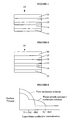
- Figure 1 illustrates one of the embodiments of the invention.
- Ink jet recording medium 10 comprises of a pre-treated microporous film 11.
- the microporous film is laminated to a support 14 by means of an adhesive layer 13. Therefore coating and laminating techniques can be applied which are known to those skilled in the art. Non limiting example of such a process is coating the adhesive layer 14 on the support by using a bar coating, gravure coating, roll coating, curtain coating, spray coating, extrusion coating or the like and adhere said microporous film 11 thereon. Thereafter, the aqueous pre-treatment solution is coated on the microporous film prior to coating the ink receiving layer 12.
- the microporous layer 11 can be of any porous films produced by the processes involving mixing of thermoplastic polymer with at least one filler, extruding the mixture at an elevated temperature to form a film, optionally pre-stretching the film, cooling the pre-stretched film to solidified the film and stretching the solidified film to form a microporous film.
- the thickness of the microporous film should be less than 150 ⁇ m, preferably between 15 and 150 ⁇ m, more preferably between 35 and 100 ⁇ m.
- microporous film Minor amounts, usually less than 15 percent by weight, of other materials may optionally be present in the microporous film.
- examples of such materials include matting agents such as titanium dioxide; optical brightener; surfactants; pH controllers, antioxidants, ultraviolet light absorbers, dyes, antistatic agent and the like.
- the said microporous film is permeable to gas and is water repellent. Due to its water-repellent properties, it does not have enough absorption speed towards water. Hence, we need to pre-treat said microporous film by a hydrophilic coating solution.
- the absorption speed of the microporous film can be increased significantly by applying a coating solution comprising a water-soluble polymer and the appropriate surfactant at a certain concentration.
- the suitable concentration of the surfactant depends on the amount and kind of the water-soluble polymers.
- CAC critical aggregation concentration
- CMC critical micelle concentration
- Figure 3 shows a schematic representation of a plot of surface tension versus the logarithmic value of the surfactant concentration, illustrating the position of the transition points.
- T1 and T2 The labelling of these two transition points, T1 and T2, was introduced by M.N. Jones, in "Journals of Colloid and Interfacial Science” number 23 (1967), page 36, in his studies of sodium dodecyl sulphate (SDS) and poly-ethylene-oxide. This is in contrast with aqueous surfactant solution where only one break point at the critical micellization concentration (CMC) is observed.
- SDS sodium dodecyl sulphate
- CMC critical micellization concentration
- transition points T1 and T2 There are various suitable methods for determining the transition points T1 and T2 mentioned above. Besides the surface tension measurement, one can apply the conductivity measurement, the viscosity measurement, the turbidity measurement and dye absorption spectra measurement.
- critical aggregation concentration means the first transition point T1, where the complex formation of water-soluble polymer and surfactant aggregates starts.
- critical micelle concentration means the second transition points T2, where the formation of regular surfactant micelles in the solution starts.
- the behaviour for the water-soluble polymer / surfactant solution from this point onwards will be the same as that of pure surfactant solution.
- the concentration of the surfactant in the water-soluble polymer / surfactant solution should be higher than the CAC value of the surfactant in said solution.
- the preferred amount of surfactant is between the CAC and the CMC value of the surfactant in the water-soluble polymer / surfactant solution itself. More preferably, the amount of the surfactant is equal to or higher than the CMC value.
- the value for the CAC as well as for CMC are determined herein by a surface tension measurement method known to those skilled in the art.
- the suitable surfactant species can be selected from any surfactant that is classified as cationic surfactants, anionic surfactant, non-ionic surfactants or amphoteric surfactants.
- anionic surfactants are including, but not limited to, the fatty acid surfactants such as the regular soaps, phosphate ester surfactants, sulphate ester surfactant such as sodium dodecylsulphate, sulphated fatty acid surfactants such as sulfated monoglycerides and other polyols, and sulphated alkanolamides, sulphated ethers, sulphated alkylphenol ethoxylates, aliphatic sulfonates such as sodium dodecylsulphonate, alkylaryl sulphonates such as sodium dodecyl benzenesulphonate and ⁇ -sulphocarboxylic acids and their derivatives.
- the fatty acid surfactants such as the regular soaps, phosphate ester surfactants, sulphate ester surfactant such as sodium dodecylsulphate, sulphated fatty acid surfactants such as sulfated monoglycerides
- Suitable cationic surfactants includes the groups containing alkyl nitrogen compounds such as simple ammonium salts containing at least one long chain alkyl group and one or more amine hydrogens, and quartenary ammonium compounds in which all amine hydrogens have been replaced by organic radical substitution, and the groups of cationic surfactants those contain heterocyclic materials characterised by the N-alkylpyridum halides, salts of alkyl-substituted pyridines, morpholinium salts, and imidazolinium derivatives.
- the nonionic surfactants include the polyoxy-ethylenes which have the general formula RX(CH 2 CH 2 O) n H where R is normally a typical surfactant hydrophobic group, but may also be a polyether such as polyoxypropylene and X is an O, N or another functionality capable of linking the polyoxyethylene chain to the hydrophobe.
- R normally a typical surfactant hydrophobic group, but may also be a polyether such as polyoxypropylene and X is an O, N or another functionality capable of linking the polyoxyethylene chain to the hydrophobe.
- the "n" represent the average number of the oxyethylene units and should have a value of higher than 5 to impart sufficient water solubility.
- Another examples of non-ionic surfactants are the derivatives of sugar, derivatives of polyglycerols and other polyols.
- amphoteric surfactants are those categorised as the ampholites such as aminocarboxyclic acids and lecithin, betaines and sulfobetaines.
- the selection of the suitable surfactant depends very much on the surface tension of the microporous film itself. In order to have an effective penetration into the pores of the microporous film it is preferred to use a surfactant that has a surface tension value which is equal, more preferably less than the surface tension value of the microporous film.
- the anionic surfactants including the group of alkylaryl sulphonate such as sodium dodecyl benzene sulphonate, the aliphatic sulfonates such as sodium dodecyl sulphonates and the sulphate ester surfactant such as Aerosil OT have received our preference.
- the preferred cationic surfactants comprises the groups that contain quartenary ammonium compounds, such as dodecyl trimethyl ammonium chloride.
- the amount of water-soluble polymer should preferably be higher than or equal to 0.01 percent weight in order to have significant effect on the increase of the absorption and wettability properties of the treated microporous film.
- the preferred amount of the water-soluble polymers is preferably equal to or higher than 0.1 weight percent.
- the viscosity of the solution limits the maximum amount of the water-soluble polymer. It is believed that the viscosity of the solution higher than 50 cP will not effectively penetrate into the pores.
- concentration of water-soluble polymer higher than 10 weight percent is usually not favourable since the viscosity of the water-soluble/polymer solution will become too high.
- the maximum concentration may be higher than 10 weight percent.
- the water-soluble polymers can be selected from any of the polymers categorised as bio-polymers, synthesis polymers and the mixtures thereof, as long as it is soluble in water.
- bio-polymers include protein such as gelatin, casein and other water-soluble protein, dextrin, and starch.
- suitable gelatins are in fact those produced from, among others, the bones and skins of animal through the acid or lime treatment, and also those which are modified afterwards through a chemical reaction, enzymatic treatment or heat treatment.
- suitable gelatins examples include acid treated pig skin gelatins, acid treated ossein gelatins, lime treated osse ⁇ n gelatins, fish skin gelatins, chemically modified gelatins such as modified gelatins with phthalate group, modified gelatins with quartenary ammonium derivatives, modified gelatins with succinyl and dodecenyl succinyl groups, modified gelatin with carbamyl groups, modified gelatin with lauryl groups, modified gelatins with vinyl alcohol groups, modified gelatins with vinyl pyrrolidone, modified gelatins with styrene sulphonate, hydrolysed gelatins and recombinant gelatins.
- suitable bio-polymers are including starch and starch derivates such as cationic starch, amphoteric starch, oxidized starch, and gum arabic.
- An acid or lime bone gelatin for example, has a typical molecular weight in the range of 100 kD to 180 kD.
- the molecular weight of the lime bone gelatin can be reduced to around 23 kD or even lower when a multiple hydrolysis process is applied to the gelatin.
- a higher molecular weight gelatin on the other hand, can be produced by a chemical modification of the gelatin itself.
- the interaction between the water-soluble polymer and the surfactant plays a significant roll. It is believed that a polymer molecule having average molecular weight higher than 200 kD is not suitable for this invention, since the molecules may not efficiently penetrates into the pores.
- molecular weight of smaller than 1 kD will provide to less interaction with the surfactant molecules.
- the preferred molecular weight for the bio-polymer is thus between 1kD and 200 kD, more preferably between 5 kD and 50 kD.
- Examples of synthetic water-soluble polymers are polyvinyl alcohol, carboxylated polyvinyl alcohol, cellulose derivatives such as polyacryl-amide-hydroxy alkylcellulose, carboxymethylcellulose and hydroxyethylcellulose, hydroxypolyvinyl pyrrolidone, sodium polyacrylate, polyacrylamide, polyamideepichlorohydrin resin, sodium alginate, alkalinically soluble copolymers of styrene and maleic acid anhydride, polyaminoamide resins, polyethyleneoxid, polyethylene imine, quartenary ammoniumsalt polymers, NBR latex, and polyethylene oxide (PEO).
- polyvinyl alcohol carboxylated polyvinyl alcohol
- cellulose derivatives such as polyacryl-amide-hydroxy alkylcellulose, carboxymethylcellulose and hydroxyethylcellulose, hydroxypolyvinyl pyrrolidone
- sodium polyacrylate polyacrylamide
- polyamideepichlorohydrin resin sodium alginate
- the preferred average molecular weight of the synthetic polymers is in the range of 14 kD to 200 kD.
- the suitable pH of the aqueous solution can be determined.
- the IEP of the (bio)-polymers lies preferably between pH 3.5 and 12.
- some appropriate additives thereto may be added into the pre-treatment aqueous solution.
- hydrophilic particles selected from the non porous colloidal silicious particles, aluminum oxide, calcium carbonate or the mixture thereof.
- the non-limiting examples of silicious particles are: silica, mica, montmoriillonite, kaolinite, zeolites and aluminum polysilica.
- the porous particles such as boehmite, pseudo-boehmite, precipitated silica, silica gel, fumed silica or mixture thereof, are also effective for increasing the absorption speed of the ink solvent.
- the size of the non-porous colloidal particles should be lower than 700 nanometers in order to avoid blocking of the pores of microporous film. The preferred range for the particle size is in between 5 to 100 nm and more preferably between 10 and 70 nm.
- the size of the particles may be somewhat larger than the non-porous colloidal particles since these particles have the ability to absorb the ink solvent.
- Particle size between 100 to 2000 nm is suitable to be used herein.
- the suitable pore size of the porous particles should be in the range of 1 and 500 nm.
- the maximum amount of the particles in the water-soluble polymer / surfactant is mainly determined by the final viscosity of the solution. Depending on the charges of the water-soluble polymer, the surfactant and the particles, some degree of interaction between those three components may be expected. This interaction may result in a high solution viscosity, which is not favourable for this invention.
- Additive particles' amount higher than 50 weight percent of the aqueous solution is thought to be not practical.
- the suitable amount should be lower than 45 weight percent.
- the preferred amount for the particles is lower than 35 weight percent and it is more preferable to have a concentration in the range of 1 and 30 weight percent.
- thermoplastic polymers suitable for manufacturing the microporous film are available in a huge number and kinds.
- any substantially water-insoluble thermoplastic polymers, that can be extruded, calandered, pressed or rolled into film, sheet, strip or web may be used.
- the polymer resin is stretched after production. This can be done in the conventional way.
- the stretching may be monoaxially or biaxially. Generally the degree of stretching is such that it the required pore volume is obtained.
- the polymer may be a single polymer or a mixture of polymers.
- the polymers may be homopolymers, copolymers, random polymers, block copolymers, atactic polymers, isotactic polymers, syndiotactic polymers, linear polymers, or branched polymers.
- the mixtures may be homogeneous, or it may comprise two or more polymeric phases.
- thermoplastic polymers examples include the polyolefins, poly(halo-substituted polyolefins), polyesters, polyamides, polyurethans, polyureas, polystyrene, poly(vinyl-halides), poly (vinylidene halides), polystyrenes, poly(vinyl esters), polycarbonates, polyethers, polysulfides, polyimides, polysilanes, polysiloxanes, polycaprolactames, polyacrylates, and polymethacrylates.
- thermoplastic polymers examples include high density polyethylene, low density polyethylene, ultra high molecular weight polyethylene, polypropylene (atactic, isotactic or syndiotic), poly(vinyl chloride), polytetrafluroethylene, copolymers of ethylene and alpha-olefines, copolymers of ethylene and acrylic acids, copolymers of ethylene and methacrylic acids, copolymers of ethylene and vinyl acetate, copolymers of propylene and alpha-olefines, poly(vinylidene chloride), copolymers of vinylidene chloride and vinyl acetate, copolymers of vinylidene chloride and vinyl chloride, copolymers of ethylene and propylene, copolymers of ethylene and butene, poly(vinyl acetate), polystyrene, poly(omega-aminoundecanoic acid), poly(-methyl methacrylate), poly(hexamethylene adipamide), poly(
- the preferred thermoplastics are polyolefin comprising polyethylene, polypropylene, co-polymers of ethylene and alpha-olefines, vinyl ethylene-acetate co-polymers, methyl ethylene-acrylate co-polymers, ethyl ethylene-acrylate co-polymers, acrylic ethylene-acid co-polymers and the ionomers or the mixture thereof.
- the fillers can be selected either from the groups of organic fillers and inorganic fillers.
- organic fillers include wood particles, pulp particles, cellulose type particles, polymer particles such as Teflon TM particles and Kevlar TM particles, nylon particles dispersed in polypropylene, polybutylene terephthalate particles in polypropylene, and polypropylene dispersed in polyethylene terephthalate.
- the important characteristics of these organic fillers are it size and the shape of the particles. Spheres are preferred and they can be hollow or solid.
- inorganic fillers examples include the groups consisting of calcium carbonate, clay, silica, titanium dioxide, talc, clay, kaoline, magnesium sulphate, barium sulphate, calcium sulphate, aluminum hydroxide, magnesium hydroxide, calcium hydroxide, magnesium oxide, zinc oxide, zeolite.
- the preferred filler is calcium carbonate, silica barium sulphate, titanium dioxide or mixture thereof, having particle sizes lower than 40 ⁇ m, preferably in the range of 0.5 and 10 ⁇ m.
- the amount of filler added to the polyolefin depends on the desired properties of the microporous film including tear strength, water vapour transmission rate and stretchability. It is believed that the voids volume created in the microporous film can not be reached sufficiently for the invention mentioned herein with an amount of filler less than about 30 percent by weight. The more we are able to increase the filler loading amount, the more suitable the film will be due to the increase of the void volume. In order to obtain a filler loading higher than 80 weight percent in the polymer, it may be necessary to coat the inorganic filler with fatty acids such as fatty acid ester, silicone oil or silanes.
- fatty acids such as fatty acid ester, silicone oil or silanes.
- the microporous film is adhered on a support 14 through an adhesive layer 13, as it is illustrated in figure 1.
- the adhesive layer 13 can be of any materials that have a good properties for adhering the microporous film 11 on the support 14. Examples of such materials are included polyolefin such as polyethylen and polypropylene, polyesthers, polyamide, starch, gelatin, gums arabic, pectin, albumin and agar-agar. More preferable materials for the adhesive layer 13 are those which are permeable to various gas, especially to air and water vapour. The examples of the preferred materials for the adhesive layer is included starch, gelatin, pectin, gum arabic, albumin and agar-agar.
- the support 14 is preferably coated on the back side with a polymer matrix comprises of at least a polyolefin resin and an anti-static agent. This back coating is illustrated in figure 1 as the layer 15. Furthermore, the support is selected from a photographic base paper, a synthetic paper or a plastic film.
- plastic film examples include polyolefins such as polyethylene and polypropylene, vinyl copolymers such as polyvinyl acetate, polyvinyl chloride and polystyrene, polyamide such as 6,6-nylon and 6-nylon, polyesters such as polyethylene terephtalate, polyethylene-2 and 6-naphtalate and polycarbonate, and cellulose acetates such as cellulose triacetate and cellulose diacetate.
- polyolefins such as polyethylene and polypropylene
- vinyl copolymers such as polyvinyl acetate, polyvinyl chloride and polystyrene
- polyamide such as 6,6-nylon and 6-nylon
- polyesters such as polyethylene terephtalate, polyethylene-2 and 6-naphtalate and polycarbonate
- cellulose acetates such as cellulose triacetate and cellulose diacetate.
- the ink receiving layer 12 is characterised by the hygroscopic properties of said layer and its high ability to fix the image with a precise dot size and to provide good image stability.
- the said ink receiving layer comprises binders, fine porous pigments particles selected from the groups of aluminum oxides such as boehmite and pseudo-boehmite and those of silica such as silica gel and precipitated silica, and optionally various known additives, including surfactants, dye-fixing agent, mordant, etc.
- the ink receiving layer 12 may comprise other materials to improve the whiteness and the glossiness appearances of the ink jet medium 10.
- binder it is usually possible to employ an organic material such as gelatin or one of its modified products, poly (vinyl alcohol), NBR latex, cellulose derivatives, quartenary ammonium salt polymers poly vinyl pyrrolidone or other suitable binders.
- organic material such as gelatin or one of its modified products, poly (vinyl alcohol), NBR latex, cellulose derivatives, quartenary ammonium salt polymers poly vinyl pyrrolidone or other suitable binders.
- an over-coating layer 26 may comprise cellulose derivatives such as hydroxymethyl cellulose and hydroxyethyl cellulose, polyvinyl alcohol or gelatin in combination with a suitable cross-linking agent.
- the over coating layer is non-porous but is ink permeable.
- the aqueous impregnation solution is prepared by solving 1 weight percent of a hydrolysed lime bone gelatin (GEL-1) having an iso-electric point around pH 5.2, average MW around 23 KD, in water by swelling the gelatin particles for 15 minutes and dissolving the swollen gelatin at temperature of 40°C.
- GEL-1 hydrolysed lime bone gelatin
- the solution is then coated on an ACE microporous film type 949, purchased from ACE S.A. (Belgium), by using a RK grooved bar coater #2.
- the ACE film is attached to a normal copying paper prior to coating.
- the coated solution is dried at room temperature and thereafter the contact angle as well as the absorption speed of 1 ⁇ l water drop on the pre-treated ACE film, by using the VCA contact angle apparatus made by AST Product, Inc. (USA).
- the Software of the VCA, VCA 2500 records the changes of the contact angle as well as the volume of the drop for 10 seconds with a recording speed of 4 images per seconds.
- the absorbed volume as function of time is then calculated by simply extracting the initial volume of drops with the remaining volume of the drop. The result of the measurements is given in table 1.
- Another aqueous impregnation solution is prepared by solving 2 weight percent of GEL-1 according to the procedure mentioned in example 1.
- ICN Biochemicals, Inc. USA
- This aqueous solution is then coated on the ACE film type 949 according to the procedure mentioned in example 1. After drying, the contact angle as well as the absorption speed of 1 ⁇ l water drop on the pre-treated ACE film are measured, using the VCA contact angle apparatus. The result of the measurements is given in table 1.
- the ACE 949 film is impregnated with an aqueous solution containing 1 wt% GEL-1 and 50 mmol/L SBDS as in example 2.
- the result of the contact angle and absorption speed measurement is given in table 1.
- the contact angle of 1 ⁇ l water drop as well as the absorption speed of 1 ⁇ l water drop on the untreated ACE film are measured by the method described in example 1.
- a GEL-2 solution is added in such a way that the final concentration of SDBS and GEL-2 in the solution is respectively 60 mmol/L and 1 wt%.
- the temperature of the solution is kept at 40°C.
- the gelatin GEL-2 is a lime bone gelatin having an IEP around pH 5.0 and MW around 160 KD.
- the ACE 949 film is then impregnated with this solution according to example 1.
- the contact angle and absorption speed of the treated ACE film towards water drops is measured according to the method mentioned in example 1, and the results are given in table 2.
- Example 4 is repeated by using GEL-3 solution in stead of GEL-2.
- the GEL-3 is a phthalated lime bone gelatin having an IEP around pH 3.8 and having average MW around 180 KD.
- the results of the contact angle and absorption speed measurement can be found in table 2.
- Example 4 is repeated by using GEL-4 solution in stead of GEL-2.
- GEL-4 is an acid pigskin gelatin having an IEP around pH 9.0 and having average MW around 130 KD. The results of the contact angle and absorption speed measurement can be found in table 2.
- Example 4 is repeated by using polyvinyl alcohol (PVA) solution in stead of GEL-2 at room temperature.
- PVA polyvinyl alcohol
- the PVA is the Mowiol 23-88, purchased from Clariant GmbH , Frankfurt, Germany.
- the hydrolyses grade of the PVA is 87.7 mol%.
- the results of the contact angle and absorption speed measurement can be found in table 2.
- Example 4 is repeated by using GEL-1 solution.
- 50 mmol/L dodecyl trimethyl ammonium chloride (DTMAC) is used as surfactant in stead of SDBS.
- the DTMAC solution of 50weight percent is obtained from ICN Biomedicals Inc.
- the results of the contact angle and absorption speed measurement can be found in table 2.
- An ACE microporous films is adhered onto a 166 gr/m 2 paper base by means of an adhesive layer containing phtalated lime bone gelatin (GEL-3) and silica gel (Sylojet 703 A, from Grace Davidson, USA).
- GEL-3 phtalated lime bone gelatin
- silica gel Sylojet 703 A, from Grace Davidson, USA.
- the dry solid content ratio between the GEL-3 and Silica gel is 1 to 2.
- the surface tension of the ACE film is measured by the contact angle method known in the field of art and is amounted 30-38 dyne/cm.
- the impregnation solution is prepared by mixing the solutions of 2 wt% GEL-5 with 2wt% Aerosol OT (Nippon Yushi, Japan) and de-ionized water in such away that the final concentration of the GEL-5 and Aerosol OT is respectively 1wt% and 0.8 wt%.
- the gelatin GEL-5 is a hydrolyzed lime gelatin having an IEP around pH 5.2 and MW around 1.5 to 2 KD.
- the surface tension of 1wt% Aerosol OT in water is 25 dyne/cm.
- the ink receiving solution is prepared by mixing 615 parts of 28.6 wt% of HP-14 sol, 275 parts of 10wt% of PVA Mowiol 23-88 (purchased from Clariant), and 110 parts of de-ionized water.
- HP-14 powder contains alumina hydrate of boehmite structure and is purchased from Sasol, Germany.
- the ACE film is treated with the impregnation solution by using a RK grooved bar #3 and dried at room temperature for about 3 hours. Thereafter, the ink receiving solution is coated on the impregnated ACE film by using a RK grooved bar # 5 and dried at 70C for about 2 hours.
- microporous ink jet media is further subjected to an ink-jet printing test.
- a standard pattern comprising the colours magenta, cyan, yellow, green, red, blue and black in 5 different densities is printed on the above mentioned microporous substrates.
- the printers which were used herein are Epson PM 770C and HP 990.
- a white paper was overlaid on the printed microporous substrate and a stainless steel roller with a weight of 10 kg was rolled over the white paper slowly.
- the drying speed of the microporous substrate was determined by analyzing visually the colour density of the print which was transferred to the white paper. A lower density at the white paper means a better drying speed of the ink jet solvent.
- the results of the printing test can be found in table 3.
- GEL-6 is used in the impregnation solution in stead of GEL-5.
- the GEL-6 is a lime bone gelatin having average MW of 160 kD and an IEP around pH 5.
- the result of the printing test can be found in table 3.
Landscapes
- Laminated Bodies (AREA)
- Ink Jet Recording Methods And Recording Media Thereof (AREA)
- Application Of Or Painting With Fluid Materials (AREA)
Claims (42)
- Tintenstrahl-Aufzeichnungsmedium, das umfasst:einen Träger,einen an dem Träger haftenden wasserabstoßenden mikroporösen Film, bei dem es sich um einen orientierten thermoplastischen Film handelt, der Füllstoffe umfasst und Verbindungskanäle zwischen den Poren aufweist mit einem Hohlraumvolumen zwischen 30 und 90 Vol.-% des gesamten mikroporösen Films, wobei der mikroporöse Film mit einer wässrigen Lösung imprägniert ist, die mindestens ein wasserlösliches Polymer und ein Tensid umfasst,mindestens eine Tinte aufnehmende Schicht als Überzug auf dem imprägnierte mikroporösen Film und gegebenenfallseine Schutzschicht auf der Oberseite der Tinte aufnehmenden Schicht.
- Medium nach Anspruch 1, in dem die Dicke des mikroporösen Films weniger als 150 µm beträgt.
- Medium nach Anspruch 1 oder 2, in dem die Dicke des mikroporösen Films zwischen 15 und 100 µm liegt.
- Medium nach den Ansprüchen 1 bis 3, in dem die Menge des wasserlöslichen Polymers mindestens 0,01 Gew.%, bezogen auf das Gewicht der wässrigen Lösung, beträgt.
- Medium nach den Ansprüchen 1 bis 4, in dem die Menge des Tensids in der wässrigen Lösung höher ist als die kritische Aggregationskonzentration (CAC) der Tensid/wasserlöslichen Polymer-Lösung selbst.
- Medium nach Anspruch 5, in dem die Menge des Tensids in der wässrigen Lösung zwischen der kritischen Aggregationskonzentration (CAC) und der kritischen Micellenkonzentration (CMC) der Tensid/wasserlöslichen Polymerlösung selbst liegt.
- Medium nach Anspruch 5, in dem die Menge des Tensids gleich oder höher ist als die kritische Micellenkonzentration (CMC) der Tensid/wasserlöslichen Polymer-Lösung.
- Medium nach den Ansprüchen 1 bis 7, in dem die Viskosität der wässrigen Lösung während der Behandlung des mikroporösen Films weniger als 50 cP beträgt.
- Medium nach den Ansprüchen 1 bis 8, in dem das wasserlösliche Polymer ausgewählt ist aus einer Gruppe von Materialien, die besteht aus Gelatine, phthalalierter Gelatine, modifizierter Gelatine mit Ammonium-Derivaten, modifizierter Gelatine mit Succinylgruppen, modifizierter Gelatine mit Vinylalkoholgruppen, modifizierter Gelatine mit Vinylpyrrolidongruppen, hydrolysierter Gelatine, Polyvinylalkohol (PVA), Polyvinylpyrrolidon (PVP), Polyethylenoxid (PEO), Polyacrylamid, Polyacrylat und Mischungen davon.
- Medium nach Anspruch 9, in dem das wasserlösliche Polymer Gelatine, Polyvinylalkohol (PVA), Polyvinylpyrrolidon (PVP), Polyethylenoxid (PEO) oder Mischungen davon umfasst.
- Medium nach den Ansprüchen 1 bis 10, in dem das wasserlösliche Polymer Gelatine mit einem durchschnittlichen Molekulargewicht zwischen 1 und 200 kD oder Polyvinylalkohol (PVA), Polyvinylpyrrolidon (PVP), Polyethylenoxid (PEO) oder Mischungen der synthetischen Polymeren mit einem durchschnittlichen Molekulargewicht zwischen 14 und 200 kD umfasst.
- Medium nach Anspruch 11, in dem das wasserlösliche Polymer Gelatine mit einem durchschnittlichen Molekulargewicht zwischen 1 und 50 kD oder Polyvinylalkohol (PVA), Polyvinylpyrrolidon (PVP), Polyethylenoxid (PEO) oder Mischungen der synthetischen Polymeren mit einem durchschnittlichen Molekulargewicht zwischen 60 und 180 kD umfasst.
- Medium nach den Ansprüchen 1 bis 12, in dem der isoelektrische Punkt (IEP) des wasserlöslichen Polymers in dem Bereich von pH 3,5 bis 12 liegt.
- Medium nach den Ansprüchen 1 bis 13, in dem das Tensid ausgewählt ist aus der Gruppe, die besteht aus anionischen Tensiden, kationischen, nicht-ionischen und amphoteren Tensiden.
- Medium nach Anspruch 14, in dem das Tensid ausgewählt ist aus den anionischen Tensiden, die Alkylarylsulfonate, Sulfatester und aliphatische Sulfonate enthalten, und aus den kationischen Tensiden, die quaternäre Ammonium-Verbindungen enthalten.
- Medium nach den Ansprüchen 1 bis 15, in dem die wässrige Lösung außerdem Additive in einer Menge von weniger als 45 Gew.-%, bezogen auf das Gewicht der wässrigen Lösung, enthält.
- Medium nach Anspruch 16, in dem die Menge der Additive weniger als 35 Gew.-%, bezogen auf das Gewicht der wässrigen Lösung, beträgt.
- Medium nach Anspruch 16 oder 17, in dem die Menge der Additive in dem Bereich zwischen 1 und 30 Gew.%, bezogen auf das Gewicht der wässrigen Lösung, liegt.
- Medium nach einem der Ansprüche 16 bis 18, in dem die Additive umfassen nicht-poröse kolloidale Teilchen, ausgewählt aus der Gruppe, die besteht aus Siliciumdioxid-haltigen Teilchen, Aluminiumoxid und Calciumcarbonat, oder poröse Teilchen einschließlich Boehmit, Pseudoboehmit, präzipitiertes Siliciumdioxid, Silicagel und abgerauchtem Siliciumdioxid und Mischungen davon.
- Medium nach Anspruch 19, in dem die Größe der kolloidalen Teilchen in dem Bereich zwischen 5 und 700 nm liegt.
- Medium nach Anspruch 20, in dem die Größe der kolloidalen Teilchen in dem Bereich zwischen 5 und 100 nm liegt.
- Medium nach Anspruch 21, in dem die Größe der kolloidalen Teilchen in dem Bereich zwischen 5 und 70 nm liegt.
- Medium nach Anspruch 19 bis 22, in dem die Additive poröse Teilchen mit einer durchschnittlichen Teilchengröße in dem Bereich zwischen 100 und 2000 nm umfassen.
- Medium nach Anspruch 23, in dem die Größe der Poren der porösen Teilchen in dem Bereich zwischen 1 und 500 nm liegt.
- Medium nach den Ansprüchen 1 bis 24, in dem der mikroporöse Film erhältlich ist durch ein Herstellungsverfahren, das umfasst
das Vermischen eines orientierbaren thermoplastischen Harzes mit mindestens einem beschichteten Füllstoff,
das Extrudieren der Mischung bei erhöhten Temperaturen zur Bildung eines Films daraus,
das Vorverstrecken des Films,
das Abkühlen des Films, bis der Film erstarrt ist, und Verstrecken des abgekühlten Films zur Bildung eines mikroporösen Films. - Medium nach den Ansprüchen 1 bis 25, in dem der mikroporöse Film 30 bis 90 Gew.-% Füllstoff umfasst.
- Medium nach den Ansprüchen 1 bis 26, in dem der Füllstoff Calciumcarbonat, Bariumsulfat, Siliciumdioxid, Titandioxid oder eine Mischung davon umfasst.
- Medium nach den Ansprüchen 1 bis 27, in dem der Füllstoff eine durchschnittliche Teilchengröße von weniger als 40 µm aufweist.
- Medium nach Anspruch 28, in dem der Füllstoff eine durchschnittliche Teilchengröße aufweist, die vorzugsweise zwischen 0,5 und 10 µm liegt.
- Medium nach den Ansprüchen 25 bis 29, in dem das thermoplastische Harz Polyethylen, Polypropylen, Copolymere von Ethylen und α-Olefinen, Copolymere von Ethylen und Acrylsäuren, Copolymere von Ethylen und Methacrylsäuren, Copolymere von Ethylen und Vinylacetat, Copolymere von Propylen und α-Olefinen, Poly(vinylidenchlorid), Copolymere von Vinylidenchlorid und Vinylacetat, Copolymere von Vinylidenchlorid und Vinylchlorid, Copolymere von Ethylen und Propylen, Copolymere von Ethylen und Buten, Poly(vinylacetat), Polystyrol, Poly(ω-aminoundecansäure), Poly(methylmethacrylat), Poly(hexamethylenadipamid) und/oder Poly(ε-caprolactam) umfasst.
- Medium nach Anspruch 30, in dem das thermoplastische Harz Polyethylen; Polypropylen; Copolymere von Ethylen und α-Olefinen; Vinylethylen-Acetat-Copolymere, Methylethylen-Acrylat-Copolymere, Ethylethylen-Acrylat-Copolymere, Acryl-Ethylen-Säure-Copolymere und lonomere oder eine Mischung davon umfasst.
- Medium nach den Ansprüchen 1 bis 31, in dem der Träger ein fotografisches Trägerpapier, ein synthetisches Papier oder ein Filmsubstrat ist.
- Medium nach den Ansprüchen 1 bis 32, in dem auf eine Seite des Trägers eine Polymermatrix auflaminiert ist, die mindestens ein Polyolefinharz umfasst.
- Medium nach den Ansprüchen 1 bis 33, in dem die Tinte aufnehmende Schicht absorptionsfähige Teilchen und ein Bindemittel umfasst.
- Medium nach Anspruch 34, in dem die absorptionsfähigen Teilchen in der Tinte aufnehmenden Schicht Siliciumdioxid, Boehmit, Pseudoboehmit oder eine Kombination davon sind.
- Medium nach Anspruch 34 oder 35, in dem das Bindemittel in der Tinte aufnehmenden Schicht Gelatine, Polyvinylalkohol, Polyvinylpyrrolidon, CelluloseDerivate oder Mischungen davon umfasst.
- Medium nach den Ansprüchen 1 bis 36, das außerdem eine für Tinte durchlässige Schutzschicht auf der Oberseite der Tinte aufnehmenden Schicht umfasst.
- Medium nach Anspruch 37, in dem die Schutzschicht Hydroxypropylmethylcellulose, Polyvinylalkohol oder eine Gelatinelösung umfasst.
- Verfahren zur Herstellung eines Tintenstrahl-Aufzeichnungsmediums, das die Stufen umfasst:wobei die Stufe (a) vor der Stufe (c) durchgeführt wird.a. Vorbehandeln eines wasserabstoßenden mikroporösen Films mit einer wässrigen Lösung, die mindestens ein wasserlösliches Polymer und ein Tensid umfasst, wobei der mikroporöse Film ein orientierter thermoplastischer Film ist, der Füllstoffe umfasst und Verbindungskanäle zwischen den Poren aufweist mit einem Hohlraumvolumen zwischen 30 und 90 Vol.-% des gesamten mikroporösen Films;b. haftendes Verbinden des Films mit einem Träger;c. Aufbringen einer Tinte aufnehmenden Schicht auf den Film; woran sich gegebenenfalls anschließtd. das Aufbringen einer Schutzschicht auf die Oberseite der Tinte aufnehmenden Schicht;
- Verfahren nach Anspruch 39, worin die Stufe (a) vor der Stufe (b) durchgeführt wird.
- Verfahren zur Erzeugung eines dauerhaften scharfen Tintenstrahl-Aufzeichnungsbildes, das die Stufe umfasst:Bereitstellen eines Tintenstrahl-Aufzeichnungsmediums nach einem der Ansprüche 1 bis 38 und Inkontaktbringen der Tintenstrahltinte mit dem Medium in Form eines gewünschten Bildmusters.
- Hydrophiler und hygroskopischer mikroporöser Film, der erhältlich ist durch Imprägnieren eines wasserabstoßenden Films, der einen orientierten thermoplastischen Kunststoff und mindestens einen Füllstoff umfasst, wobei der Film für Luft und Wasserdampf durchlässig ist und ein Hohlraumvolumen zwischen 30 und 90 Vol.-%, bezogen auf den gesamten Film, aufweist, mit einer wässrigen Lösung, die mindestens ein wasserlösliches Polymer und ein Tensid umfasst.
Priority Applications (1)
| Application Number | Priority Date | Filing Date | Title |
|---|---|---|---|
| EP01995084A EP1345780B1 (de) | 2000-12-28 | 2001-12-27 | Tintenstrahlaufzeichnungsmedium |
Applications Claiming Priority (4)
| Application Number | Priority Date | Filing Date | Title |
|---|---|---|---|
| EP00204778 | 2000-12-28 | ||
| EP00204778 | 2000-12-28 | ||
| PCT/NL2001/000944 WO2002053391A1 (en) | 2000-12-28 | 2001-12-27 | Ink jet recording medium |
| EP01995084A EP1345780B1 (de) | 2000-12-28 | 2001-12-27 | Tintenstrahlaufzeichnungsmedium |
Publications (2)
| Publication Number | Publication Date |
|---|---|
| EP1345780A1 EP1345780A1 (de) | 2003-09-24 |
| EP1345780B1 true EP1345780B1 (de) | 2005-11-23 |
Family
ID=8172540
Family Applications (1)
| Application Number | Title | Priority Date | Filing Date |
|---|---|---|---|
| EP01995084A Expired - Lifetime EP1345780B1 (de) | 2000-12-28 | 2001-12-27 | Tintenstrahlaufzeichnungsmedium |
Country Status (4)
| Country | Link |
|---|---|
| US (1) | US20050030363A1 (de) |
| EP (1) | EP1345780B1 (de) |
| DE (1) | DE60115285T2 (de) |
| WO (1) | WO2002053391A1 (de) |
Families Citing this family (12)
| Publication number | Priority date | Publication date | Assignee | Title |
|---|---|---|---|---|
| EP1479715A1 (de) * | 2003-05-15 | 2004-11-24 | Fuji Photo Film B.V. | Mikroporöser film |
| FR2861755B1 (fr) * | 2003-11-05 | 2006-02-10 | Eastman Kodak Co | Materiau destine a la formation d'images par impression par jet d'encre |
| FR2861754B1 (fr) * | 2003-11-05 | 2006-02-10 | Eastman Kodak Co | Materiau destine a la formation d'images par impression par jet d'encre |
| FR2861757B1 (fr) * | 2003-11-05 | 2006-02-24 | Eastman Kodak Co | Materiau destine a la formation d'images par impression par jet d'encre |
| FR2861756B1 (fr) * | 2003-11-05 | 2006-02-24 | Eastman Kodak Co | Materiau destine a la formation d'images par impression par jet d'encre |
| FR2874033B1 (fr) * | 2004-08-05 | 2006-10-27 | Eastman Kodak Co | Procede de traitement d'un materiau destine a la formation d'images par impression par jet d'encre |
| WO2008075579A1 (ja) * | 2006-12-21 | 2008-06-26 | Nippon Kasei Chemical Company Limited | 調湿シート |
| CN105754180B (zh) * | 2009-11-06 | 2019-11-22 | 惠普开发有限公司 | 喷墨记录材料 |
| JP5689882B2 (ja) | 2009-11-06 | 2015-03-25 | ヒューレット−パッカード デベロップメント カンパニー エル.ピー.Hewlett‐Packard Development Company, L.P. | インクジェット記録材料 |
| JP2013022826A (ja) * | 2011-07-21 | 2013-02-04 | Seiko Epson Corp | 画像記録装置、画像記録方法、プログラム、プログラム記録媒体 |
| CN102632738B (zh) * | 2012-03-07 | 2014-02-05 | 崇州市双星特种纸品厂 | 数码影像胶片及其制备方法 |
| US10357986B2 (en) * | 2012-07-18 | 2019-07-23 | Hewlett-Packard Development Company, L.P. | Fabric print media |
Family Cites Families (13)
| Publication number | Priority date | Publication date | Assignee | Title |
|---|---|---|---|---|
| US4861644A (en) | 1987-04-24 | 1989-08-29 | Ppg Industries, Inc. | Printed microporous material |
| JPH072430B2 (ja) | 1988-12-16 | 1995-01-18 | 旭硝子株式会社 | 記録用シート |
| JPH0524336A (ja) | 1991-07-17 | 1993-02-02 | Asahi Glass Co Ltd | 記録用シートおよび記録物 |
| DE4322178C2 (de) | 1993-07-03 | 1996-11-07 | Schoeller Felix Jun Papier | Aufzeichnungsmaterial für Ink-Jet-Druckverfahren |
| EP0634287B1 (de) | 1993-07-16 | 1997-03-12 | Asahi Glass Company Ltd. | Aufzeichnungsblatt und Verfahren zu seiner Herstellung |
| WO1997022467A1 (en) * | 1995-12-15 | 1997-06-26 | Ppg Industries, Inc. | Printing sheet |
| US5605750A (en) | 1995-12-29 | 1997-02-25 | Eastman Kodak Company | Microporous ink-jet recording elements |
| US5912071A (en) * | 1996-04-24 | 1999-06-15 | Asahi Glass Company Ltd. | Recording medium and method for its production |
| DE19618607C2 (de) | 1996-05-09 | 1999-07-08 | Schoeller Felix Jun Foto | Aufzeichnungsmaterial für Tintenstrahl-Druckverfahren |
| US6020058A (en) * | 1997-06-13 | 2000-02-01 | Ppg Industris Ohio, Inc. | Inkjet printing media |
| US6187419B1 (en) * | 1997-07-17 | 2001-02-13 | Asahi Glass Company Ltd. | Recording medium for pigment ink |
| US6114022A (en) | 1997-08-11 | 2000-09-05 | 3M Innovative Properties Company | Coated microporous inkjet receptive media and method for controlling dot diameter |
| US6025068A (en) * | 1998-02-13 | 2000-02-15 | Ppg Industries Ohio, Inc. | Inkjet printable coating for microporous materials |
-
2001
- 2001-12-27 EP EP01995084A patent/EP1345780B1/de not_active Expired - Lifetime
- 2001-12-27 WO PCT/NL2001/000944 patent/WO2002053391A1/en not_active Ceased
- 2001-12-27 DE DE60115285T patent/DE60115285T2/de not_active Expired - Fee Related
- 2001-12-27 US US10/465,947 patent/US20050030363A1/en not_active Abandoned
Also Published As
| Publication number | Publication date |
|---|---|
| WO2002053391A8 (en) | 2002-11-21 |
| DE60115285D1 (de) | 2005-12-29 |
| US20050030363A1 (en) | 2005-02-10 |
| WO2002053391A1 (en) | 2002-07-11 |
| DE60115285T2 (de) | 2006-07-13 |
| EP1345780A1 (de) | 2003-09-24 |
Similar Documents
| Publication | Publication Date | Title |
|---|---|---|
| EP0947350B1 (de) | Aufzeichnungsmaterial für das Tintenstrahldruckverfahren | |
| EP1345780B1 (de) | Tintenstrahlaufzeichnungsmedium | |
| EP1627010B1 (de) | Mikroporöser film | |
| EP1417102B1 (de) | Tintenstrahlaufzeichnungsmedium | |
| US6489008B1 (en) | Ink jet recording element | |
| US20030072935A1 (en) | Porous resin film | |
| EP1184192A2 (de) | Tintenstrahldruckverfahren | |
| US20030017321A1 (en) | Porous resin film | |
| JP3758378B2 (ja) | インクジェット記録用紙 | |
| EP1654127A1 (de) | Tintenstrahlaufzeichnungsmedium | |
| JP4149764B2 (ja) | インクジェット記録要素 | |
| EP1567361B1 (de) | Tintenstrahlaufzeichnungsmaterial | |
| EP1705027A1 (de) | Aufzeichnungsmedium | |
| US20020146542A1 (en) | Porous polyethylene film with an ink jet printed surface | |
| JP2001277706A (ja) | インクジェット被記録媒体及びプリント媒体への転写記録方法 | |
| US20050287314A1 (en) | Ink-jet recording medium | |
| EP1302331B1 (de) | Durchlässig Aufzeichnungsträger mit einer glänzenden Beschichtung | |
| JP3976144B2 (ja) | インクジェット記録媒体 | |
| JP2001113822A (ja) | インクジェット記録用シート | |
| JP2002103784A (ja) | インクジェット記録シート | |
| JPH10181185A (ja) | インクジェット記録体及びその製造方法 |
Legal Events
| Date | Code | Title | Description |
|---|---|---|---|
| PUAI | Public reference made under article 153(3) epc to a published international application that has entered the european phase |
Free format text: ORIGINAL CODE: 0009012 |
|
| 17P | Request for examination filed |
Effective date: 20030627 |
|
| AK | Designated contracting states |
Kind code of ref document: A1 Designated state(s): AT BE CH CY DE DK ES FI FR GB GR IE IT LI LU MC NL PT SE TR |
|
| 17Q | First examination report despatched |
Effective date: 20040210 |
|
| RBV | Designated contracting states (corrected) |
Designated state(s): DE FR GB NL |
|
| GRAP | Despatch of communication of intention to grant a patent |
Free format text: ORIGINAL CODE: EPIDOSNIGR1 |
|
| GRAS | Grant fee paid |
Free format text: ORIGINAL CODE: EPIDOSNIGR3 |
|
| RIN1 | Information on inventor provided before grant (corrected) |
Inventor name: VAN DER VELDEN-SCHUERMANS, BERNADETTE C.A.M. Inventor name: DE VRIES, IEKE |
|
| GRAA | (expected) grant |
Free format text: ORIGINAL CODE: 0009210 |
|
| AK | Designated contracting states |
Kind code of ref document: B1 Designated state(s): DE FR GB NL |
|
| REG | Reference to a national code |
Ref country code: GB Ref legal event code: FG4D |
|
| REF | Corresponds to: |
Ref document number: 60115285 Country of ref document: DE Date of ref document: 20051229 Kind code of ref document: P |
|
| ET | Fr: translation filed | ||
| PLBE | No opposition filed within time limit |
Free format text: ORIGINAL CODE: 0009261 |
|
| STAA | Information on the status of an ep patent application or granted ep patent |
Free format text: STATUS: NO OPPOSITION FILED WITHIN TIME LIMIT |
|
| 26N | No opposition filed |
Effective date: 20060824 |
|
| REG | Reference to a national code |
Ref country code: FR Ref legal event code: CD |
|
| NLT1 | Nl: modifications of names registered in virtue of documents presented to the patent office pursuant to art. 16 a, paragraph 1 |
Owner name: FUJIFILM MANUFACTURING EUROPE B.V. |
|
| PGFP | Annual fee paid to national office [announced via postgrant information from national office to epo] |
Ref country code: NL Payment date: 20081219 Year of fee payment: 8 |
|
| PGFP | Annual fee paid to national office [announced via postgrant information from national office to epo] |
Ref country code: DE Payment date: 20090129 Year of fee payment: 8 |
|
| PGFP | Annual fee paid to national office [announced via postgrant information from national office to epo] |
Ref country code: GB Payment date: 20081224 Year of fee payment: 8 |
|
| PGFP | Annual fee paid to national office [announced via postgrant information from national office to epo] |
Ref country code: FR Payment date: 20081215 Year of fee payment: 8 |
|
| REG | Reference to a national code |
Ref country code: NL Ref legal event code: V1 Effective date: 20100701 |
|
| GBPC | Gb: european patent ceased through non-payment of renewal fee |
Effective date: 20091227 |
|
| REG | Reference to a national code |
Ref country code: FR Ref legal event code: ST Effective date: 20100831 |
|
| PG25 | Lapsed in a contracting state [announced via postgrant information from national office to epo] |
Ref country code: FR Free format text: LAPSE BECAUSE OF NON-PAYMENT OF DUE FEES Effective date: 20091231 Ref country code: NL Free format text: LAPSE BECAUSE OF NON-PAYMENT OF DUE FEES Effective date: 20100701 |
|
| PG25 | Lapsed in a contracting state [announced via postgrant information from national office to epo] |
Ref country code: DE Free format text: LAPSE BECAUSE OF NON-PAYMENT OF DUE FEES Effective date: 20100701 |
|
| PG25 | Lapsed in a contracting state [announced via postgrant information from national office to epo] |
Ref country code: GB Free format text: LAPSE BECAUSE OF NON-PAYMENT OF DUE FEES Effective date: 20091227 |