EP1347642A2 - Appareil, procédé, et programme de réception de radiodiffusion numérique. - Google Patents
Appareil, procédé, et programme de réception de radiodiffusion numérique. Download PDFInfo
- Publication number
- EP1347642A2 EP1347642A2 EP03251622A EP03251622A EP1347642A2 EP 1347642 A2 EP1347642 A2 EP 1347642A2 EP 03251622 A EP03251622 A EP 03251622A EP 03251622 A EP03251622 A EP 03251622A EP 1347642 A2 EP1347642 A2 EP 1347642A2
- Authority
- EP
- European Patent Office
- Prior art keywords
- control information
- transport stream
- information
- broadcast program
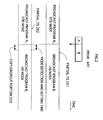
- partial
- Prior art date
- Legal status (The legal status is an assumption and is not a legal conclusion. Google has not performed a legal analysis and makes no representation as to the accuracy of the status listed.)
- Withdrawn
Links
Images






Classifications
-
- H—ELECTRICITY
- H04—ELECTRIC COMMUNICATION TECHNIQUE
- H04N—PICTORIAL COMMUNICATION, e.g. TELEVISION
- H04N9/00—Details of colour television systems
- H04N9/79—Processing of colour television signals in connection with recording
- H04N9/80—Transformation of the television signal for recording, e.g. modulation, frequency changing; Inverse transformation for playback
- H04N9/804—Transformation of the television signal for recording, e.g. modulation, frequency changing; Inverse transformation for playback involving pulse code modulation of the colour picture signal components
- H04N9/806—Transformation of the television signal for recording, e.g. modulation, frequency changing; Inverse transformation for playback involving pulse code modulation of the colour picture signal components with processing of the sound signal
- H04N9/8063—Transformation of the television signal for recording, e.g. modulation, frequency changing; Inverse transformation for playback involving pulse code modulation of the colour picture signal components with processing of the sound signal using time division multiplex of the PCM audio and PCM video signals
-
- H—ELECTRICITY
- H04—ELECTRIC COMMUNICATION TECHNIQUE
- H04N—PICTORIAL COMMUNICATION, e.g. TELEVISION
- H04N5/00—Details of television systems
- H04N5/76—Television signal recording
-
- H—ELECTRICITY
- H04—ELECTRIC COMMUNICATION TECHNIQUE
- H04N—PICTORIAL COMMUNICATION, e.g. TELEVISION
- H04N5/00—Details of television systems
- H04N5/76—Television signal recording
- H04N5/91—Television signal processing therefor
- H04N5/913—Television signal processing therefor for scrambling ; for copy protection
- H04N2005/91307—Television signal processing therefor for scrambling ; for copy protection by adding a copy protection signal to the video signal
- H04N2005/91328—Television signal processing therefor for scrambling ; for copy protection by adding a copy protection signal to the video signal the copy protection signal being a copy management signal, e.g. a copy generation management signal [CGMS]
-
- H—ELECTRICITY
- H04—ELECTRIC COMMUNICATION TECHNIQUE
- H04N—PICTORIAL COMMUNICATION, e.g. TELEVISION
- H04N5/00—Details of television systems
- H04N5/76—Television signal recording
- H04N5/765—Interface circuits between an apparatus for recording and another apparatus
-
- H—ELECTRICITY
- H04—ELECTRIC COMMUNICATION TECHNIQUE
- H04N—PICTORIAL COMMUNICATION, e.g. TELEVISION
- H04N5/00—Details of television systems
- H04N5/76—Television signal recording
- H04N5/78—Television signal recording using magnetic recording
- H04N5/781—Television signal recording using magnetic recording on disks or drums
Definitions
- the present invention relates to a digital broadcast receiving apparatus that stores a received transport stream (hereafter referred to as TS) as a partial TS, and reproduces a broadcast program contained in the stored partial TS, or controls copying of the broadcast program into an external storage apparatus.
- TS received transport stream
- a partial TS is a bitstream obtained by removing TS packets, which do not relate to one or more specifically selected broadcast programs, from the TS packets that conform to MPEG (Moving Picture Experts Group) 2 ("BS Digital Broadcast Receiving Apparatus", Chapter 9, 9.1.7 to 9.1.9, ARIB STD-B2, version 1.1, Association of Radio Industries and Businesses).
- MPEG Motion Picture Experts Group
- Japanese Laid-Open Patent Application No. 11-168718 discloses a digital broadcast receiving apparatus that receives, stores, and reproduces a TS.
- a TS includes a plurality of broadcast programs multiplexed therein. Of these, only one or more broadcast programs are stored as selected by users, the rest of the broadcast programs, which do no relate to the selected programs, are stored as a partial TS.
- the partial TS contains information necessary for reproducing the broadcast programs such EMM (Entitlement Management Message) in which information regarding the contract is written, CAT (Conditional Access Table) that specifies packet identifiers of TS packets for transmitting the EMM, as well as PAT (Program Association Table) and PMT (Program Map Table), where these pieces of information are repeatedly multiplexed therein.
- the PMT contains DTCP_CCI (Digital Transmission Content Protection_Copy Control Information) which includes information concerning a digital copy of a broadcast program.
- the PMT also contains bit rate information that corresponds to a recording mode of a broadcast program.
- Fig. 1A is a schematic illustration of a partial TS stored in a digital broadcast receiving apparatus.
- a partial TS 101 includes PATs, PMTs, CATs, and EMMs, as well as elementary streams (ES) 102 that constitute a broadcast program.
- PATs PATs
- PMTs PMTs
- CATs CATs
- EMMs elementary streams
- ES elementary streams
- the first problem is as follows.
- a conventional digital broadcast receiving apparatus receives, at a time t0, a user instruction to output a partial TS to an external storage apparatus to be stored therein, the conventional digital broadcast receiving apparatus interprets PMT to judge whether a copy is available, and removes EMM that should not be output to the external storage apparatus. Due to this operation, the conventional digital broadcast receiving apparatus cannot output the partial TS until a time t3 as shown in Fig. 1B.
- the first PAT is extracted at a time t1. Since the PID of the PMT is included in the PAT, the first PMT is extracted at a time t2. The time period between the time t0 and t2 is approximately 100 ms.
- the digital broadcast receiving apparatus refers to the extracted PMT to judge whether the ESs constituting the broadcast program can be output to the external storage apparatus . However, the digital broadcast receiving apparatus still has a work of removing the CAT and EMM that should not be output to the external storage apparatus. It is at the time t3 that the digital broadcast receiving apparatus extracts the CAT and obtain the PID of the EMM. After this, the EMM is removed, and the partial TS 111 is output to the external storage apparatus.
- the digital broadcast receiving apparatus cannot output the ESs corresponding to the first part of the broadcast program, for approximately 10 seconds at the maximum since the reception of the user instruction.
- the second problem concerns recording of the partial TS in the external storage apparatus after receiving it from the digital broadcast receiving apparatus.
- Fig. 2 is a schematic illustration of (i) a partial TS output from a conventional digital broadcast receiving apparatus to an external storage apparatus and (ii) a partial TS recorded in the external storage apparatus, where broadcast programs A and B are output in sequence.
- the broadcast program A is presented with a standard image quality
- the broadcast program B is presented with a high image quality for the high-definition TV.
- the broadcast program A is recorded in the STD mode
- the broadcast program B is recorded in the HS mode.
- the external storage apparatus receives the partial TS 201, and records the broadcast program A in the STD mode. However, the external storage apparatus fails to record the first portion of the broadcast program B while it obtains the PMT, interprets it to detect the recording mode, and sets the recording mode in the external storage apparatus. As a result, the partial TS 202 having been recorded in the external storage apparatus has a copy-dropout portion 203.
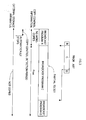
- Fig. 3 shows a partial TS containing a broadcast program C as a target program to be copied to a conventional external storage apparatus, and its recording state.
- a partial TS 301 also contains, as offsets, broadcast programs B and D that are respectively the preceding and succeeding programs of the broadcast program C.
- the copy control information written in the PMT or the like indicates that the broadcast program C is set to "free", and the broadcast program B to "no_more_copies".
- the external storage apparatus receives the partial TS 301 and interprets the copy control information in regard with the broadcast program B, which is an offset, and if it continues to detect the "no_more_copies" for a certain time period, automatically stops recording the partial TS 301. When this happens, even if the copy control information for the broadcast program C being the recording target is set to "free", the broadcast program C is not recorded.
- the first object of the present invention is therefore to provide a digital broadcast receiving apparatus that can output a partial TS to an external storage apparatus without a dropout in the first portion thereof.
- the second object of the present invention is to provide a digital broadcast receiving apparatus that prevents an external storage apparatus from failing to record a partial TS, which is received from the digital broadcast receiving apparatus, due to a change of the recording mode or due to the copy control information, and that prevents the external storage apparatus from failing to record a portion of the partial TS.
- a digital broadcast receiving apparatus connected to an external storage apparatus, comprising: a first storage unit; a first control unit operable to store into the first storage unit a partial transport stream which is contained in a transport stream sent from outside and includes (i) elementary streams constituting a broadcast program and (ii) control information for controlling the broadcast program, and to create, from the control information, broadcast program attachment information which is used in outputting the partial transport stream to the external storage apparatus; a second storage unit operable to store the created broadcast program attachment information with indication of a correspondence with the partial transport stream stored in the first storage unit; a second control unit operable to, in accordance with the broadcast program attachment information, give an instruction to update the control information in the first storage unit; and an interface operable to receive the update instruction from the second control unit, read the partial transport stream from the first storage unit, update the control information contained in the read partial transport stream, and output the partial transport stream with the updated control information, to the external storage apparatus.
- the interface recognizes in advance the control information to be updated. This enables the digital broadcast receiving apparatus to output the partial transport stream to the external storage apparatus from the start while updating the control information.
- the above digital broadcast receiving apparatus may further comprise a receiving unit operable to receive an instruction to copy or move a broadcast program, wherein the second control unit obtains from the second storage unit a piece of broadcast program attachment information that corresponds to a partial transport stream containing the broadcast program specified in the received instruction.
- the digital broadcast receiving apparatus can output the partial transport stream containing the specified broadcast program to the external storage apparatus.
- the first control unit may include: a copy control information reading subunit operable to read copy control information written in a Program Map Table contained in the control information
- the second control unit may include: a copy control information update instructing subunit operable to, if copy control information in the piece of broadcast program attachment information is set to "copy_once", give an instruction to set the copy control information in the Program Map Table to "copy_once” and "moving”, and the interface updates the Program Map Table in accordance with the instruction given by the copy control information update instructing subunit and outputs the updated Program Map Table.
- the digital broadcast receiving apparatus can output the partial transport stream containing the copy control information set to "copy_once", to the external storage apparatus.
- the second control unit may further include a deleting subunit operable to, if the interface has output the partial transport stream by setting the control information in the Program Map Table to "moving", delete the output partial transport stream from the first storage unit, and after the outputting is completed, delete the piece of broadcast program attachment information from the second storage unit.
- the digital broadcast receiving apparatus can delete a partial transport stream after moving it to the external storage apparatus by the "move" function.
- the partial transport stream stored in the first storage unit may include at least two broadcast programs that are sequential to each other in a time domain
- the first control unit includes a bit rate information reading subunit operable to read bit rate information for each broadcast program from a Program Map Table included in the control information
- the second control unit may include a recording mode instructing subunit operable to obtain bit rate information from the broadcast program attachment information stored in the second storage unit, and if a bit rate for a preceding broadcast program is different from a bit rate for a succeeding broadcast program, give an instruction to set a recording mode corresponding to the bit rate for the succeeding broadcast program
- the interface upon receiving the instruction to set the recording mode from the recording mode instructing subunit, instructs the external storage apparatus to set a recording mode at a time a predetermined time period earlier than a time when the partial transport stream containing the broadcast program starts to be output.
- the above-described construction prevents a problem that the digital broadcast receiving apparatus cannot output elementary streams for the specified broadcast program until it detects transport packets which should not be output to the external storage apparatus, and deletes the detected transport packets.
- the second object of the present invention is fulfilled by the above digital broadcast receiving apparatus in which the partial transport stream stored in the first storage unit includes at least two broadcast programs that are sequential to each other in a time domain, the first control unit includes a bit rate information reading subunit operable to read bit rate information for each broadcast program from a Program Map Table included in the control information, the second control unit includes a recording mode instructing subunit operable to obtain bit rate information from the broadcast program attachment information stored in the second storage unit, and if a bit rate for a preceding broadcast program is different from a bit rate for a succeeding broadcast program, give an instruction to set a recording mode corresponding to the bit rate for the succeeding broadcast program, and the interface, upon receiving the instruction to set the recording mode from the recording mode instructing subunit, instructs the external storage apparatus to set a recording mode at a time a predetermined time period earlier than a time when the partial transport stream containing the broadcast program starts to be output.
- the above-described construction solves a problem that when the copy target broadcast programs change, the first portion of the second broadcast program fails to be copied due to a change of the recording mode.
- the predetermined time period may range from a time when the external storage apparatus receives the instruction to set the recording mode to a time when a recording operation is stabilized.
- the broadcast program in the partial transport stream stored in the first storage unit may be recorded therein by a timer-controlled recording as a target program, and the partial transport stream also includes, as an offset, another broadcast program that precedes the target program
- the first control unit includes: an offset time extracting subunit operable to extract a time period of the offset from an Event Information Table contained in the control information; a copy control information creating subunit operable to create, from a Program Map Table contained in the control information, copy control information in relation to the target program and the offset
- the second control unit includes: a control information updating subunit operable to extract a piece of control information, which corresponds to a point in time a predetermined time period ⁇ later than a start of the target program, and update the extracted control information, a default value of the time period ⁇ being determined from the control information; an output start instructing subunit operable to, if the copy control information is set to "free" for both the target program and the offset, give an instruction to start recording in the external apparatus, and
- the external storage apparatus can completely record a partial TS, which is received from the digital broadcast receiving apparatus and includes a broadcast program that is a target of a copy.
- the output start instructing subunit may give an instruction to stand by for recording in the external storage apparatus, then after the update information notifying subunit gives an instruction to set the updated piece of control information in the partial transport stream, give an instruction to output the target program in the partial transport stream to the external storage apparatus so as to start recording.
- the above-described construction solves a problem that a target main program cannot be copied due to the control information indicating that an offset broadcast program cannot be copied.
- the first object is fulfilled by a digital broadcast receiving method for use in a digital broadcast receiving apparatus connected to an external storage apparatus, comprising: a first control step for storing into a first storage area a partial transport stream which is contained in a transport stream sent from outside and includes (i) elementary streams constituting a broadcast program and (ii) control information for controlling the broadcast program, and creating, from the control information, broadcast program attachment information, which is used in outputting the partial transport stream to the external storage apparatus, and storing into a second storage area the created broadcast program attachment information with indication of a correspondence with the partial transport stream stored in the first storage area; a second control step for, in accordance with the broadcast program attachment information, giving an instruction to update the control information in the first storage area; and an outputting step for receiving the update instruction, reading the partial transport stream from the first storage area, updating the control information contained in the read partial transport stream, and outputting the partial transport stream with the updated control information, to the external storage apparatus.
- the digital broadcast receiving apparatus can output a complete partial TS to the external storage apparatus without a dropout in the first portion thereof.
- the first object is also fulfilled by a digital broadcast receiving program applied to a digital broadcast receiving apparatus which includes a computer connected to an external storage apparatus, the digital broadcast receiving program causing the computer to execute: a first control step for storing into a first storage area a partial transport stream which is contained in a transport stream sent from outside and includes (i) elementary streams constituting a broadcast program and (ii) control information for controlling the broadcast program, and creating, from the control information, broadcast program attachment information, which is used in outputting the partial transport stream to the external storage apparatus, and storing into a second storage area the created broadcast program attachment information with indication of a correspondence with the partial transport stream stored in the first storage area; a second control step for, in accordance with the broadcast program attachment information, giving an instruction to update the control information in the first storage area; and an outputting step for receiving the update instruction, reading the partial transport stream from the first storage area, updating the control information contained in the read partial transport stream, and outputting the partial transport stream with the updated control information, to the external storage apparatus.
- the digital broadcast receiving apparatus can output a complete partial TS to the external storage apparatus without a dropout in the first portion thereof.
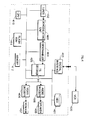
- Fig. 4 shows the construction of a digital broadcast receiving apparatus as the first embodiment of the present invention.
- the digital broadcast receiving apparatus includes: a hard diskdrive (HDD) 401 embedded therein; a tuner 402; ademodulating unit 403; a descrambler 404; a TS decoder 405; a video decoder 406; a monitor 407; an audio decoder 408; a speaker 409; a CPU 410; a flash ROM 411; a memory 412; and a digital interface 413.
- the digital interface 413 is connected to a videocassette recorder (VCR) 420 being an external storage apparatus, based on the IEEE1394 protocol.
- VCR videocassette recorder
- the HDD 401 stores partial TSs, where the partial TSs include a broadcast program, among broadcast programs multiplexed in a TS transmitted from a broadcast station, that has been instructed by the user to be recorded.
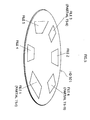
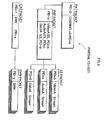
- Fig. 5 is a schematic illustration of the partial TSs stored in a HD 501 which is a recording medium included in the HDD 401.
- Partial TS-I, partial TS-II, and partial TS-III are stored as files 1, 3, and 6, respectively.
- FIG. 6 is a schematic illustration of a partial TS, as an example.
- a partial TS-I 601 includes a broadcast program that is broadcast on a channel A.
- the partial TS-I 601 includes a PAT packet, a PMT packet, ES packets respectively containing video, audio, and data of the broadcast program, and an EMM packet.
- the partial TS-I 601 also includes an SIT (Service Information Table) packet and other information, though they are omitted here.
- SIT Service Information Table
- the tuner 402 under control of the CPU 410, has an antenna (not illustrated) receive a transponder having a specified frequency, obtains a modulated wave, and outputs the obtained modulated wave to the demodulating unit 403.
- the demodulating unit 403 demodulates the modulated wave to obtain a multiplexed TS packet, and outputs the obtained TS packet to the descrambler 404.
- the descrambler 404 descrambles the TS and outputs the descrambled TS to the TS decoder 405. If a TS received from a broadcast station has not been scrambled, a demodulated TS is directly output from the demodulating unit 403 to the TS decoder 405.
- the TS decoder 405 under control of the CPU 410, decodes the TS it receives.
- the TS decoder 405 stores into the memory 412 such tables as PAT and PMT defined by a PSI (Program Specific Information) multiplexed in the TS, outputs an ES packet containing audio data to the audio decoder 408, and outputs an ES packet containing video data to the video decoder 406.
- the audio decoder 408 decodes an audio ES to an audio signal, and has the speaker 409 output a sound.
- the video decoder 406 decodes a video ES to a video signal, and has the monitor 407 output an image.
- the TS decoder 405 When recording a broadcast program into the HDD 401, the TS decoder 405, under control of the CPU 410, extracts, from the TS, ESs containing video data, audio data or the like of the broadcast program, a PAT, a PMT, a CAT, an EMM or the like, and stores extracted information into the HDD 401 as a partial TS.
- a DTCP descriptor to be added to the PMT is created from a digital copy control descriptor and a content availability descriptor that are contained in the PMT, and the created DTCP descriptor is output.
- Fig. 7A shows an example of contents of a PMT included in a TS that is input to the TS decoder 405. Items contained in a left column 702 show contents of a PMT 701, and information related to the items are given in a right column 703.
- Table-id in the left column 702 indicates a table identifier identifying the PMT 701, used for extracting the PMT 701, and is specified by a PAT.
- a digital copy control descriptor identified by "0xC1" and a content availability descriptor identified by "0xDE” constitute copy control information from which a DTCP descriptor is created.
- Fig. 7B shows an example of contents of a PMT included in a partial TS stored in the HDD 401.
- a PMT 711 compared with the PMT 701, additionally has a DTCP descriptor identified by "0x88".
- the DTCP descriptor identified by “descriptor_tag” "0x88” contains "retention_move_mode” and "DTCP_CCI”.
- the retention_move_mode indicates a move state and is set to "0" to indicate being in a move state, or "1" to indicate being in a non-move state.
- the DTCP_CCI indicates how copy is available and is set to "00" to indicate “free”, “10” to indicate “copy_once” (that is, copy is available only once), or "01” to indicate "no_more_copies” (that is, copy is not available any more).
- the TS decoder 405 under control of the CPU 410, if the digital copy control descriptor in the PMT indicates a one-generation copy, outputs a DTCP descriptor with a DTCP_CCI set to "01" indicating "no_more_copies".
- the CPU 410 obtains values of the retention_move_mode and DTCP_CCI, which are written in the DTCP descriptor in the PMT in the output partial TS, in units of broadcast programs or ESs constituting a broadcast program.
- the CPU 410 also causes the TS decoder 405 to obtain from a CAT packet a value of "EMM_PID" identifying an EMM packet.
- the CPU 410 then causes the TS decoder 405 to store the obtained values into the flash ROM 411 as broadcast program attachment information by correlating them with a partial TS that include the broadcast program stored in the HDD 401.
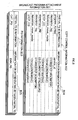
- Broadcast program attachment information 801 is composed of (i) copy control information 802 obtained from the PMT and (ii) PID information 803 concerning the CAT and the EMM.
- the copy control information 802 and the PID information 803 respectively contain information 804 and 805 that are both information for differentiating a partial TS corresponding to a broadcast program stored in the HDD 401. If, for example, the broadcast program is included in the partial TS-I as shown in Fig. 5, its file name "file 1" is written in each of the information 804 and 805.
- the HDD 401 When being instructed to reproduce a broadcast program stored in the HDD 401, reads a partial TS including the specified broadcast program from the HDD 401, extracts the PAT, PMT, EMM, SIT and the like from the partial TS and stores them into the memory 412, and outputs audio ESs to the audio decoder 408 and video ESs to the video decoder 406, respectively.
- the CPU 410 controls each component in accordance with a control program stored in the flash ROM.
- the CPU 410 Upon receiving an instruction from a receiving unit (not illustrated) to record into the HDD 401 a broadcast program transmitted from a broadcast station, the CPU 410 instructs the tuner 402 to select a channel, and instructs the TS decoder 405 to record the partial TS and the broadcast program attachment information into the HDD 401 and the flash ROM 411, respectively.
- the receiving unit Upon receiving an instruction from the receiving unit to copy the broadcast program included in the partial TS stored in the HDD 401, obtains from the flash ROM 411 the broadcast program attachment information 801 of the partial TS including the broadcast program.
- the CPU 410 receives an instruction to copy a partial TS recorded in the HDD 401 when the DTCP_CCI in the copy control information 802 is set to "10" indicating "copy_once", the CPU 410, for example, instructs the video decoder 406 to display a message "copy is not available” on the monitor 407 since the copy is prohibited and recording by the external VCR 401 is not available.
- the CPU 410 If the CPU 410 receives an instruction to move a partial TS recorded in the HDD 401 when the DTCP_CCI in the copy control information 802 is set to "10" indicating "copy_once", the CPU 410 instructs the digital interface 413 to change the value of the retention_move_mode in the PMT from “1” to "0", namely from “being in a non-move state” to "being in a move state”, and to change the value of the DTCP_CCI from "01” to "10", namely from "no_more_copies" to "copy_once".
- the CPU 410 also notifies the digital interface 413 of the PIDs of the CAT and the EMM written in the PID information 803, instructing the digital interface 413 not to output the CAT and the EMM, and instructing to read the partial TS including the specified broadcast program.
- the flash ROM 411 stores a control program that enables the CPU 410 to operate as a control unit.
- the flash ROM 411 also stores pieces of broadcast program attachment information 801 shown in Fig. 8 that are correlated by the TS decoder 405 with partial TSs including broadcast programs recorded in the HDD 401.
- the memory 412 stores control information such as a PAT and a PMT multiplexed in a TS transmitted from a broadcast station.
- the digital interface 413 is connected to the VCR 420 being an external storage apparatus, and outputs partial TSs to the VCR 420 in conformance with the protocol defined in IEEE1394.
- the digital interface 413 Upon receiving from the CPU 410 an instruction to rewrite values of the DTCP_CCI and the retention_move_mode constituting the copy control information of the PMT included in the partial TS, an instruction to delete the CAT and the EMM, and an instruction to read the specified partial TS, the digital interface 413 reads the specified partial TS from the HDD 401, updates the contents of the PMT, and outputs the partial TS, from which the CAT and the EMM have been deleted, to the VCR 420.
- the digital interface 413 can output the specified partial TS to the VCR 420 without cutting ESs constituting the first portion of the first broadcast program of the specified partial TS since the digital interface 413 is notified in advance of contents of a PMT change or PIDs of the CAT and EMM to be deleted.
- the CPU 410 When outputting a partial TS with the value of the retention_move_mode set to "0", the CPU 410 outputs the partial TS and at the same time deletes the partial TS from the HDD 401. After outputting all the specified partial TSs, the CPU 410 deletes the broadcast program attachment information related to the output partial TSs.
- the CPU 410 waits for an instruction to record a broadcast program into the HDD 401 (S902), and if the instruction is received, instructs the TS decoder 405 to extract ESs, a PAT and the like that constitute the specified broadcast program.
- the TS decoder 405 After extracting a PAT (S904), the TS decoder 405 extracts a PMT using a PID of the PMT written in the extracted PAT as a filtering condition (S906). After confirming the extraction of the PMT, the TS decoder 405 obtains copy control information from the extracted PMT, the copy control information being a digital copy control descriptor and a content availability descriptor, and creates a DTCP descriptor from the obtained copy control information (S908). The TS decoder 405 then judges whether a PID of an EMM has been obtained (S910). If the judgment result is affirmative, the control moves to S918, and if the judgment result is negative, the control moves to S912.
- the TS decoder 405 waits for a CAT to be extracted, and if the CAT is extracted, obtains a PID of an EMM from the extracted CAT (S914). The TS decoder 405 then judges whether copy control information has been obtained (S916). If the judgment result is negative, the control returns to S904, and if the judgment result is affirmative, the control goes to S918.
- the TS decoder 405 stores the obtained copy control information and PIDs of EMMs or the like into the flash ROM 411 as broadcast program attachment information by correlating them with a file name of a partial TS recorded in the HDD 401.
- the TS decoder 405 judges whether the recording of the specified broadcast program has completed (S920). If the judgment result is affirmative, the process ends, and if the judgment result is negative, the control returns to S902.
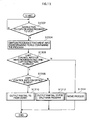
- the CPU 410 waits for an instruction by the user to copy or move a broadcast program from the HDD 401 to the VCR 420 (S1002), and if the instruction is received, obtains apiece of broadcast program attachment information 801 correlated with the specified broadcast program from the flash ROM 411 (S1004).
- the CPU 410 judges whether the copy control information should be updated by referring to the value of the DTCP_CCI in the copy control information 802 in the obtained piece of broadcast program attachment information 801. That is to say, if the value is "00", there is no need to update the copy control information; if the value is "10” and the move instruction has been received, the value of the DTCP_CCI in the PMT in the partial TS stored in the HDD 401 should be updated from “01” to "10”, and the value of the retention_move_mode should be updated from “1” to “0”; and if the value is "10” and the copy instruction has been received, a message "copy is not available” is presented to the user, and the process ends (S1006).
- the CPU 410 then notifies the digital interface 413 of the PIDs of the CAT and EMM to be deleted from the partial TS (S1010), and instructs the digital interface 413 to read the specified partial TS (S1012).
- the digital interface 413 read the specified partial TS from the HDD 401, replaces the PMT in the partial TS with the updated PMT, outputs the partial TS, from which the CAT and EMM have been deleted, to the VCR 420 (S1014), and continues the operation in S1014 until the reading of the partial TS from the HDD 401 is completed (S1016).
- the broadcast program attachment information 801 is stored in the flash ROM 411.
- the broadcast program attachment information 801 may be stored in the HDD 401 as a file different from the partial TS.
- the broadcast program attachment information 801 may be stored as the file 4 shown in Fig. 3.
- the copy control information is only explained in relation to updating of the DTCP descriptor in the PMT.
- information EMI containing copy control information that is different from the one in the partial TS is also output when the partial TS is output to the VCR 420.
- the EMI which is updated in the same way as the DTCP_CCI of the DTCP descriptor in the PMT in the partial TS, is, for example, stored in the file 2 shown in Fig. 5.
- the EMI is information conforming to the IEEE1394 protocol.
- the copy control information in the EMI when the copy control information in the EMI is set to "no_more_copies", the value of the retention_move_mode should be changed to "0", and the copy control information in the EMI should be changed to "copy_once".
- the broadcast program attachment information is obtained and stored when a broadcast program is recorded.
- the broadcast program attachment information may be obtained prior to issuing of the read instruction to the digital interface 413. In this case, however, the output of the partial TS to the VCR 420 is delayed as much as it requires to obtain the broadcast program attachment information.
- an external storage apparatus outputs control information to a VCR 420 with certain timing to prevent the problem that a copy is not available or a copy dropout is generated when a copy target broadcast program changes from one to another in the VCR 420.
- Embodiment 2 has the following construction, as well as the construction of Embodiment 1.
- Fig. 11 shows an example of the broadcast program attachment information stored in the flash ROM 411.
- a piece of broadcast program attachment information 1101 is correlated with a partial TS stored in the HDD 401 as a file A 1102.
- the file A contains a broadcast program C having been recorded by a timer-controlled recording, a broadcast program B that is an offset having been transmitted prior to the broadcast program C, and a broadcast program D that is an offset following the broadcast program C.
- information concerning the broadcast program D is omitted.
- the broadcast program attachment information 1101 contains items such as a copy information ID 1105 in relation to the broadcast program (main program) 1103, which has been recorded by a timer-controlled recording, and the broadcast program (offset) 1104.
- the copy information ID 1105 has values "1" and "0" indicating the main program and the offset, respectively.
- An offset value 1106 is a predetermined value representing a recording time that is added to before and after the main program so that the main program can be recorded completely.
- the offset value 1106 is obtained by referring to an EIT (Event Information Table).
- An EMI 1107 is copy control information that indicates whether copy is available.
- the EMI 1107 is set to "free” for the main program, and "copy_once" for the offset.
- Bit rate information 1108 specifies a recording mode related to the image quality which is classified into standard (represented as “STD”) and high-quality (represented as "HS").
- STD standard
- HS high-quality
- the bit rate information 1108 is set to 24 Mbps (bit per second), which corresponds to the high-quality, for the main program, and is set to 12 Mbps, which corresponds to the standard, for the offset.
- Digital interface output availability information 1109 indicates whether data can be output in conformance with the IEEE1394 protocol.
- the digital interface output availability information 1109 is set to "available" for both the main program and the offset.
- the EMI 1107, bit rate information 1108, and digital interface output availability information 1109 are created from information written in a PMT.
- the CPU 410 creates a piece of broadcast program attachment information 1101 for each file of partial TS stored in the HDD 401.
- the CPU 410 When a broadcast program is recorded by a timer-controlled recording with an offset, the CPU 410 writes the values "1" and "0" to differentiate between the main program and the offset.
- the offset value 1106 is obtained from information of the recording time written in the EIT.
- the CPU 410 refers to the copy control information in the PMT extracted by the TS decoder 405 and determines how copy is available for each of the main program and the offset.
- the information provided in the EMI 1107 may change with time even within the broadcast program. A strictly restricted value is written.
- the highest value of the bit rate is written.
- the digital interface output availability information 1109 is also obtained from the PMT.
- Fig. 12 is a schematic illustration of a partial TS being a file A corresponding to the broadcast program attachment information 1101.
- T0 indicates the starting time of the broadcast program B being an offset.
- the time T0 is one minute earlier than "T2", that is, the starting time of the broadcast program C.
- Times "T1" and “T3" are set empirically, where the time T1 is a predetermined time period “N” earlier than the time T2, and the time T3 is a predetermined time period " ⁇ " later than the time T2.
- the time period N ranges from a point in time at which an instruction to change the recording state of the VCR 420 is issued to a point in time at which the recording operation is stabilized.
- the time period ⁇ is an appropriate starting time period of the broadcast program C, and the control information such as PMT for the broadcast program C is used as the default value thereof.
- the time periods N and ⁇ are respectively set to two seconds in advance.
- the CPU 410 waits for a receiving unit (not illustrated) to receive from the user an instruction to copy or move a broadcast program to the VCR 420 (S1302), and if the instruction is received, obtains apiece of broadcast program attachment information 1101, which is correlated with a partial TS containing the specified broadcast program and stored in the HDD 401 as a file, from the flash ROM 411 (S1304).
- the CPU 410 judges whether copy control information for the main program written in the EMI 1107 is set to "free” and the copy instruction has been received (S1306). If the judgment result of S1306 is affirmative, the CPU 410 judges whether copy control information for the offset is set to "free” (S1308). If the judgment result of S1308 is affirmative, the CPU 410 outputs the partial TS starting with the start of the offset andends the whole process (S1310). If the judgment result of S1308 is negative, the CPU 410 outputs the partial TS for only the main program (S1312).
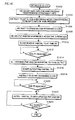
- the CPU 410 obtains by reading from the HDD 401 the PMT and EMI in correspondence with a point in time immediately after the time T3 that is a predetermined time period " ⁇ " later than the start of the main program (broadcast program C) (S1402). The CPU 410 then obtains bit rate information for the main program and the offset from the broadcast program attachment information 1101 (S1404). The CPU 410 then judges whether the bit rate of the main program matches with that of the offset (S1406). If the judgment result of S1406 is negative, the CPU 410 creates recording mode update information that corresponds to the bit rate of the main program (S1408). More particularly, if the bit rate of the main program is 24 Mbps and the bit rate of the offset is 12b Mbps, the CPU 410 creates recording mode update information of "HS".
- the CPU 410 then instructs via the digital interface 413 to set, in the VCR 420, the recording mode (for example, recording mode of STD) that corresponds to the bit rate information of the offset (S1410).
- the CPU 410 then instructs via the digital interface 413 to start recording in the VCR 420 (S1412).
- the CPU 410 then waits for stabilization of the recording operation of the VCR 420 (S1414). Generally, the stabilization requires approximately 2-5 seconds.
- the CPU 410 notifies the digital interface 413 of the PMT and EMI having been updated when the PMT and EMI included in the partial TS stored in the HDD 401 should be updated (S1416). At the same time, the CPU 410 instructs the digital interface 413 to start outputting the partial TS to the VCR 420 (S1418).
- the digital interface 413 starts to read the partial TS at the time T0, the starting time of the broadcast program B (S1502).
- the digital interface 413 then outputs the partial TS to the VCR 420 after replacing the PMT and EMI with the updated PMT and EMI which have been notified from the CPU 410 (S1504).
- the control information such as PMT in the read partial TS is stored into the memory 412. If the control information such as PMT should be updated, the CPU 410 notifies the digital interface 413 of it as necessary.
- the digital interface 413 outputs the partial TS after replacing the PMT or the like with a corresponding, updated one which has been notified from the CPU 410.
- the CPU 410 waits for the time T1 to be reached (s1506), and if the time T1 is reached, judges whether the recording mode update information has been created in S1408 (S1508). If the judgment result of S1508 is affirmative, the CPU 410 outputs the created recording mode update information to the VCR 420 via the digital interface 4413 (S1510).
- the recording mode in the VCR 420 is changed, for example, from STD (standard rate) to HS (high-quality rate) in a stable manner.
- the CPU 410 adds necessary changes to the PMT and EMI obtained in S1402, and instructs the digital interface 413 to set the changes in the partial TS to be output.
- the digital interface 413 in accordance with the instruction from the CPU 410, outputs the partial TS to the VCR 420 (S1512). That is to say, after the time T1, the partial TS, in which the PMT and EMI corresponding to the time T3 are set, is output to the VCR 420.
- the CPU 410 waits for the time T3 to be reached (S1514), and if the time T3 is reached, updates the PMT and EMI, which have been read from the HDD 401 and stored in the memory 412, as necessary, and notifies the digital interface 413 of the updated PMT and EMI.
- the digital interface 413 outputs the partial TS to the VCR 420 after replacing the PMT and EMI with the updated PMT and EMI which have been notified from the CPU 410 (S1516).
- the digital interface 413 continues this process until all the packets in the partial TS have been output (S1518), and ends the whole process.
- This process prevents a case where the main program cannot be copied since information for the offset is set to "no_more_copies" although information for the main program is set to copy available.
- the CPU 410 obtains the bit rate information corresponding to the main program from the broadcast program attachment information 1101 stored in the flash ROM 411 (S1602), instructs, via the digital interface 413, to set a recording mode corresponding to the obtained bit rate information (for example, recording mode "HS" when the bit rate information is set to 24 Mbps) in the VCR 420 (S1604).
- a recording mode corresponding to the obtained bit rate information for example, recording mode "HS" when the bit rate information is set to 24 Mbps
- the CPU 410 then instructs the VCR 420 to stand by for recording, via the digital interface 413 (S1606).
- the CPU 410 then instructs, via the digital interface 413, to obtain by reading from the HDD 401 the PMT and EMI in correspondence with a point in time immediately after the time T3 that is a predetermined time period " ⁇ " later than the start of the main program (S1608).
- the digital interface 413 starts to read the partial TS from the HDD 401 at the time T0 (S1610).
- the CPU 410 waits for the time T1 to be reached (s1612), and if the time T1 is reached, instructs the digital interface 413 to add necessary changes to the PMT and EMI obtained in S1608, and to set the changes in the partial TS (S1614).
- the digital interface 413 according to the instruction from the CPU 410, outputs the partial TS to the VCR 420 (S1616), and at the same time, instructs the VCR 420 to start recording (S1618).
- the CPU 410 waits for the time T3 to be reached (S1620), and if the time T3 is reached, updates the PMT and EMI, which have been read from the HDD 401 and stored in the memory 412, as necessary, and notifies the digital interface 413 of the updated PMT and EMI.
- the digital interface 413 outputs the partial TS to the VCR 420 after replacing the PMT and EMI with the updated PMT and EMI which have been notified from the CPU 410 (S1622).
- the digital interface 413 continues this process until all the packets in the partial TS have been output (S1624), and ends the whole process.
- the present embodiment outputs the PMT and EMI at the time T3 when the main program has stabilized. This prevents the problems that a copy dropout is generated when the PAT, PMT or the like is updated when a recording target changes from the offset to the main program, and that the main program is not recorded since the EMI information of the offset is not set to "free".
- the move process in S1314 is basically the same as the process shown in Figs. 14 and 15 in which the partial TS is output from the start. However, different from the copy process in the VCR 420, in the move process for moving to the VCR 420, after the partial TS is read by the digital interface 413 from the HDD 401, the partial TS is deleted from the HDD 401.
- partial TSs are recorded in the HDD 401.
- partial TSs may be recorded in a random access, large-capacity recording medium such as DVD-RAM, SD card, or semiconductor memory.
- partial TSs are recorded in units of files.
- information that manages recording positions of the partial TSs in a recording medium may be held and used so that the partial TSs can be accessed.
Landscapes
- Engineering & Computer Science (AREA)
- Multimedia (AREA)
- Signal Processing (AREA)
- Television Signal Processing For Recording (AREA)
- Two-Way Televisions, Distribution Of Moving Picture Or The Like (AREA)
- Signal Processing For Digital Recording And Reproducing (AREA)
- Television Systems (AREA)
Applications Claiming Priority (4)
| Application Number | Priority Date | Filing Date | Title |
|---|---|---|---|
| JP2002073624 | 2002-03-18 | ||
| JP2002073624 | 2002-03-18 | ||
| JP2002210500 | 2002-07-19 | ||
| JP2002210500 | 2002-07-19 |
Publications (2)
| Publication Number | Publication Date |
|---|---|
| EP1347642A2 true EP1347642A2 (fr) | 2003-09-24 |
| EP1347642A3 EP1347642A3 (fr) | 2008-03-12 |
Family
ID=27791022
Family Applications (1)
| Application Number | Title | Priority Date | Filing Date |
|---|---|---|---|
| EP03251622A Withdrawn EP1347642A3 (fr) | 2002-03-18 | 2003-03-17 | Appareil, procédé, et programme de réception de radiodiffusion numérique. |
Country Status (3)
| Country | Link |
|---|---|
| US (1) | US20030233665A1 (fr) |
| EP (1) | EP1347642A3 (fr) |
| CN (1) | CN100393127C (fr) |
Cited By (2)
| Publication number | Priority date | Publication date | Assignee | Title |
|---|---|---|---|---|
| EP2190181A2 (fr) | 2008-10-27 | 2010-05-26 | Hitachi Consumer Electronics Co. Ltd. | Procédé de contrôle de résultat |
| US8818167B2 (en) | 2012-01-31 | 2014-08-26 | Sony Corporation | Receiving apparatus, receiving method, and program |
Families Citing this family (10)
| Publication number | Priority date | Publication date | Assignee | Title |
|---|---|---|---|---|
| US7529471B2 (en) * | 2002-06-25 | 2009-05-05 | International Business Machines Corporation | Personal video recording with storage space loans |
| JP4385099B2 (ja) * | 2003-12-03 | 2009-12-16 | 株式会社日立製作所 | 放送受信装置及びストリーム出力装置 |
| JP4871494B2 (ja) * | 2004-03-31 | 2012-02-08 | パナソニック株式会社 | 映像信号処理装置 |
| JP2006024320A (ja) * | 2004-07-09 | 2006-01-26 | Pioneer Electronic Corp | 情報記録装置及び方法、情報再生装置及び方法、情報記録再生装置及び方法、並びにコンピュータプログラム |
| CN100336402C (zh) * | 2005-03-16 | 2007-09-05 | 西安电子科技大学 | Mpeg-2单节目传输流多路复用方法 |
| KR20080007511A (ko) * | 2005-05-10 | 2008-01-21 | 톰슨 라이센싱 | 고속 디지털 케이블 튜닝을 위해 액세스 정보를 캐싱하는방법 및 장치 |
| KR101258987B1 (ko) * | 2005-08-02 | 2013-04-26 | 삼성전자주식회사 | 방송 수신 장치 및 방송 수신 장치의 채널 전환 방법 |
| KR20070106322A (ko) * | 2006-04-28 | 2007-11-01 | 엘지전자 주식회사 | 디지털 방송 신호와 상기 신호를 처리하는 장치 및 방법 |
| CN101442663A (zh) * | 2007-11-22 | 2009-05-27 | 华为技术有限公司 | 一种网络电视业务的实现方法、装置和系统 |
| WO2011016241A1 (fr) | 2009-08-05 | 2011-02-10 | パナソニック株式会社 | Contrôleur de transmission, contrôleur de réception, procédé de commande de transmission, procédé de commande de réception et programme de commande de transmission |
Family Cites Families (22)
| Publication number | Priority date | Publication date | Assignee | Title |
|---|---|---|---|---|
| JPH04501184A (ja) * | 1988-08-12 | 1992-02-27 | モー,ゴードン | リカバリー記録システム、特に商用ラジオ/テレビ放送のリカバリー記録システム |
| US7134131B1 (en) * | 1992-12-09 | 2006-11-07 | Sedna Patent Services, Llc | Digital broadcast program billing |
| US5813010A (en) * | 1995-04-14 | 1998-09-22 | Kabushiki Kaisha Toshiba | Information storage and information transmission media with parental control |
| US6263147B1 (en) * | 1996-02-28 | 2001-07-17 | Sun Microsystems, Inc. | Delayed decision recording device |
| JP2991980B2 (ja) * | 1996-11-07 | 1999-12-20 | 三菱電機株式会社 | 映像記録装置 |
| US6987854B2 (en) * | 1997-09-25 | 2006-01-17 | Thomson Licensing S.A. | Method and apparatus for recording of encrypted digital data |
| JP3465813B2 (ja) * | 1997-10-29 | 2003-11-10 | 日本ビクター株式会社 | ディジタル放送受信装置及びディジタル情報記録再生装置 |
| EP0917355A1 (fr) * | 1997-11-14 | 1999-05-19 | Sony International (Europe) GmbH | Distribution de flux de transport MPEG-2 sur un réseau domestique IEEE 1394 |
| JP2000040294A (ja) * | 1998-05-20 | 2000-02-08 | Sony Corp | 情報処理装置および方法、並びに記録媒体 |
| CN1867068A (zh) * | 1998-07-14 | 2006-11-22 | 联合视频制品公司 | 交互式电视节目导视系统及其方法 |
| US6233389B1 (en) * | 1998-07-30 | 2001-05-15 | Tivo, Inc. | Multimedia time warping system |
| US6986159B1 (en) * | 1998-10-15 | 2006-01-10 | Matsushita Electric Industrial Co., Ltd. | Method and system for receiving and recording digital broadcast programs |
| US7865929B1 (en) * | 1998-11-12 | 2011-01-04 | Sony Corporation | Receiving apparatus of digital broadcasting and display method of recording program associated information |
| US20020056102A1 (en) * | 2000-03-23 | 2002-05-09 | Hughes Electronics Corporation | Personal video on-demand system and method |
| JP4034502B2 (ja) * | 2000-06-30 | 2008-01-16 | 株式会社東芝 | 放送番組記録再生方法および放送番組記録再生装置 |
| US7274863B2 (en) * | 2000-08-21 | 2007-09-25 | Sony Corporation | Data stream processing device and method and program storage medium |
| EP1215905B2 (fr) * | 2000-12-15 | 2010-04-21 | Panasonic Corporation | Appareil de réception avec unité d'enregistrement pour enregistrer un signal de radiodiffusion brouillé et appareil de radiodiffusion pour brouiller un signal à diffuser, et procédés associés |
| EP1231782A1 (fr) * | 2001-02-13 | 2002-08-14 | Sony International (Europe) GmbH | Dispositif d'accord pour un réseau de distribution de données |
| CA2666635C (fr) * | 2001-02-21 | 2016-03-22 | United Video Properties, Inc. | Systemes et procedes pour guides d'emissions interactifs comportant des caracteristiques d'enregistrement video personnel |
| US7457883B2 (en) * | 2001-10-12 | 2008-11-25 | Cisco Technology, Inc. | Mechanism for implementing network discovery in a cable network |
| JP2003169292A (ja) * | 2001-11-30 | 2003-06-13 | Victor Co Of Japan Ltd | アフレコ装置、コンピュータプログラム、記録媒体、伝送方法及び再生装置 |
| US7149415B2 (en) * | 2002-05-23 | 2006-12-12 | Microsoft Corporation | Program recording completion |
-
2003
- 2003-03-17 EP EP03251622A patent/EP1347642A3/fr not_active Withdrawn
- 2003-03-18 CN CNB031206492A patent/CN100393127C/zh not_active Expired - Fee Related
- 2003-06-12 US US10/389,124 patent/US20030233665A1/en not_active Abandoned
Cited By (6)
| Publication number | Priority date | Publication date | Assignee | Title |
|---|---|---|---|---|
| EP2190181A2 (fr) | 2008-10-27 | 2010-05-26 | Hitachi Consumer Electronics Co. Ltd. | Procédé de contrôle de résultat |
| EP2190181A3 (fr) * | 2008-10-27 | 2010-08-04 | Hitachi Consumer Electronics Co. Ltd. | Procédé de contrôle de résultat |
| US8484754B2 (en) | 2008-10-27 | 2013-07-09 | Hitachi Consumer Electronics Co., Ltd. | Output control method |
| US8918909B2 (en) | 2008-10-27 | 2014-12-23 | Hitachi Maxell, Ltd. | Output control method |
| US8818167B2 (en) | 2012-01-31 | 2014-08-26 | Sony Corporation | Receiving apparatus, receiving method, and program |
| EP2624485A3 (fr) * | 2012-01-31 | 2014-11-12 | Sony Corporation | Récepteur pour enregistrer des programmes avec des signets personnels |
Also Published As
| Publication number | Publication date |
|---|---|
| CN100393127C (zh) | 2008-06-04 |
| US20030233665A1 (en) | 2003-12-18 |
| CN1445993A (zh) | 2003-10-01 |
| EP1347642A3 (fr) | 2008-03-12 |
Similar Documents
| Publication | Publication Date | Title |
|---|---|---|
| JP4640846B2 (ja) | プログラム内容を復元する方法 | |
| JP4646151B2 (ja) | プログラムを表すパケット化されたデータストリームを復号化する方法 | |
| JP2001502854A (ja) | ディジタルデータ処理用プログラム特定情報の形成方法 | |
| EP1347642A2 (fr) | Appareil, procédé, et programme de réception de radiodiffusion numérique. | |
| US6324126B1 (en) | Method for recording an audio broadcast multiplexed with accompanying program information | |
| KR100731189B1 (ko) | 신호처리장치, 화상표시장치 및 화상표시방법 | |
| JP4154825B2 (ja) | ディジタル放送受信システム | |
| JP2005167768A (ja) | 放送番組の記録方法及び放送受信装置 | |
| CN102611933A (zh) | 用于选择视频信号的用户预期部分的方法 | |
| JP3878565B2 (ja) | デジタル放送受信装置及びデジタル放送受信方法並びにデジタル放送受信プログラム | |
| JP2002325235A (ja) | コンテンツ送信装置並びにその方法及びコンテンツ受信装置並びにその方法 | |
| EP2228986B1 (fr) | Appareil d'enregistrement de diffusion | |
| US20070147772A1 (en) | Broadcast recording apparatus and broadcast recording method | |
| JP3600109B2 (ja) | デジタルテレビ放送受信機 | |
| JP2006352721A (ja) | 受信装置 | |
| JP2006245715A (ja) | デジタル放送対応受信装置 |
Legal Events
| Date | Code | Title | Description |
|---|---|---|---|
| PUAI | Public reference made under article 153(3) epc to a published international application that has entered the european phase |
Free format text: ORIGINAL CODE: 0009012 |
|
| AK | Designated contracting states |
Kind code of ref document: A2 Designated state(s): AT BE BG CH CY CZ DE DK EE ES FI FR GB GR HU IE IT LI LU MC NL PT SE SI SK TR |
|
| AX | Request for extension of the european patent |
Extension state: AL LT LV MK RO |
|
| PUAL | Search report despatched |
Free format text: ORIGINAL CODE: 0009013 |
|
| AK | Designated contracting states |
Kind code of ref document: A3 Designated state(s): AT BE BG CH CY CZ DE DK EE ES FI FR GB GR HU IE IT LI LU MC NL PT SE SI SK TR |
|
| AX | Request for extension of the european patent |
Extension state: AL LT LV MK RO |
|
| 17P | Request for examination filed |
Effective date: 20080618 |
|
| AKX | Designation fees paid |
Designated state(s): DE FR GB |
|
| RAP1 | Party data changed (applicant data changed or rights of an application transferred) |
Owner name: PANASONIC CORPORATION |
|
| STAA | Information on the status of an ep patent application or granted ep patent |
Free format text: STATUS: THE APPLICATION HAS BEEN WITHDRAWN |
|
| 18W | Application withdrawn |
Effective date: 20090428 |