EP1349408A2 - Kommunikationssystem und Verfahren - Google Patents
Kommunikationssystem und Verfahren Download PDFInfo
- Publication number
- EP1349408A2 EP1349408A2 EP03100101A EP03100101A EP1349408A2 EP 1349408 A2 EP1349408 A2 EP 1349408A2 EP 03100101 A EP03100101 A EP 03100101A EP 03100101 A EP03100101 A EP 03100101A EP 1349408 A2 EP1349408 A2 EP 1349408A2
- Authority
- EP
- European Patent Office
- Prior art keywords
- coverage
- wireless serving
- communication units
- serving communication
- topology map
- Prior art date
- Legal status (The legal status is an assumption and is not a legal conclusion. Google has not performed a legal analysis and makes no representation as to the accuracy of the status listed.)
- Withdrawn
Links
Images


Classifications
-
- H—ELECTRICITY
- H04—ELECTRIC COMMUNICATION TECHNIQUE
- H04W—WIRELESS COMMUNICATION NETWORKS
- H04W24/00—Supervisory, monitoring or testing arrangements
- H04W24/08—Testing, supervising or monitoring using real traffic
-
- H—ELECTRICITY
- H04—ELECTRIC COMMUNICATION TECHNIQUE
- H04W—WIRELESS COMMUNICATION NETWORKS
- H04W16/00—Network planning, e.g. coverage or traffic planning tools; Network deployment, e.g. resource partitioning or cells structures
- H04W16/18—Network planning tools
Definitions
- This invention relates to a communication system and method.
- it relates to wireless communication systems and particularly network management of wireless communication systems.
- the invention is applicable to, but not limited to, the generation of a dynamic coverage-based topology map for a wireless cell-based communication system.
- Wireless communication systems typically provide for radio telecommunication links to be arranged between a plurality of base transceiver stations (BTSs) and a plurality of subscriber units, often termed mobile stations (MSs).
- BTSs base transceiver stations
- MSs mobile stations
- each BTS has associated with it a particular geographical coverage area (or cell). Transmit power and receiver sensitivity of both the BTS and the plurality of MS define the coverage area where the BTS can maintain acceptable communications with MSs operating within its serving cell. Often these cells combine to produce an extensive coverage area.
- Radio coverage prediction is one of the most challenging and time consuming task in designing a mobile communication network. Effective usage of the frequency spectrum, one of the scarcest resources for any operator, leads to both better communication network quality and increased capacity.
- the control hub of cellular-based communication systems such as Global System for Mobile communications (GSM) and TErrestrial Trunked RAdio (TETRA) systems, is known as the Operations and Management Controller (OMC).
- GSM Global System for Mobile communications
- TETRA TErrestrial Trunked RAdio
- OMC Operations and Management Controller
- the OMC includes a substantial amount of network management functionality, which monitors and controls the various functions and communications within the network.
- a fault management application typically exists as part of the network management system.
- the fault management application provides, inter-alia, indications of failures of specific BTSs within the wireless communication system.
- any operational loss of a BTS, or indeed reduction in transmit power or receiver sensitivity of a BTS results in a reduction of the actual coverage of the wireless communication system.
- the field measurement approach has a number of disadvantages. It is unacceptable to both the user and the network operator, as there is a long delay in identifying and rectifying the problem.
- the network operator needs to be aware of the failure as soon as possible, and the consequences of the failure, so that a contingency plan can be implemented.
- a wireless cell-based communication system comprises a plurality of wireless serving communication units providing communication in respective overlapping coverage areas.
- the plurality of wireless serving communication units are operably coupled by a management control function.
- a coverage-based topology map generating function is operably coupled to a fault management application for providing wireless serving communication unit fault data as part of the status information of said number of wireless serving communication units.
- Status report messages are obtained for a number of the wireless serving communication units and processed by the management control function.
- the coverage-based topology map generating function combines operational status information of the number of wireless serving communication units with coverage information of the wireless serving communication units to generate a composite coverage-based topology map.
- the composite coverage-based topology map is presented to a network operator in a substantially real-time manner so that a determination can be made as to the operational status of the system with respect to coverage.
- a method for generating a composite coverage-based topology map of a wireless cell-based communication system includes a plurality of wireless serving communication units providing communication in respective overlapping coverage areas.
- the method includes the steps of locating a number of the wireless serving communication units on a geographical map and overlaying a number of respective coverage maps associated with the wireless serving communication units.
- a number of the respective coverage maps are adapted according to status information obtained from said wireless serving communication units to generate the composite coverage-based topology map.
- a storage medium storing composite coverage-based topology map software.
- a composite coverage-based topology map generation application for use in a wireless cell-based communication system.
- the composite coverage-based topology map generation application combines operational status information of a number of wireless serving communication units with coverage information of the wireless serving communication units to generate a composite coverage-based topology map.
- inventive concepts described herein provide at least a mechanism to incorporate real-time BTS status information in a coverage prediction tool and/or network management application, to determine dynamically the impact on system coverage due to changes in the operation (particularly failures) of BTSs.
- a trunked radio communications system 100 supporting a TErrestrial Trunked RAdio (TETRA) air-interface
- TETRA TErrestrial Trunked RAdio
- ETSI European Telecommunications Standards Institute
- the air-interface protocol is administered from base transceiver sites that are geographically spaced apart - one base site supporting a cell (or, for example, sectors of a cell).
- a plurality of subscriber units such as a mixture of MSs 112-116 and fixed terminals (not shown), communicate over the selected air-interface 118-120 with a plurality of base transceiver stations (BTS) 122-132.
- BTS base transceiver stations
- the system infrastructure in a TETRA system is generally referred to as a switching and management infrastructure (SwMI) 110, which substantially contains all of the system elements apart from the mobile units.
- the BTSs 122-132 may be connected to a conventional public-switched telephone network (PSTN) 134 through base station controllers (BSCs) 136-140 and mobile switching centres (MSCs) 142-144.
- PSTN public-switched telephone network
- BSCs base station controllers
- MSCs mobile switching centres
- Each BTS 122-132 is principally designed to serve its primary cell, with each BTS 122-132 containing one or more transceivers.
- the BTSs 122-132 communicate 156-166 with the rest of the trunking system infrastructure via a frame relay interface 168.
- Each BSC 136-140 may control one or more BTSs 122-132, with BSCs 136-140 generally interconnected through MSCs 142-144. Each BSC 136-140 is therefore able to communicate with one another, if desired, to pass system administration information therebetween, with BSCs 136-140 responsible for establishing and maintaining control channel and traffic channels to serviceable MSs 112-116 affiliated therewith. The interconnection of BSCs 136-140 therefore allows the trunked radio communication system to support handover of the MSs 112-116 between cells.
- Each MSC 142-144 provides a gateway to the PSTN 134, with MSCs 142-144 interconnected through an operations and management centre (OMC) 146 that administers general control of the trunked radio system 100, as will be understood by those skilled in the art.
- OMC operations and management centre
- the various system elements, such as BSCs 136-138 and OMC 146, will include control logic 148-152, with the various system elements usually having associated memory 154 (shown only in relation to BSC 138 for the sake of clarity).
- the memory typically stores historically compiled operational data as well as in-call data, system information and control algorithms.
- the OMC 146 includes a network management application 155, a subset of which is a fault management application 157.
- a third party may provide the fault management application 157, and operably coupled (hooked) to the network management application 155 as an additional software and/or hardware application/function.
- the network management application 155 in the OMC 146 has been adapted to incorporate a coverage-based topology map generating function (159). More generally, the adaption to the network management application 155 may be incorporated in the OMC 146 in any suitable manner. For example, a new microprocessor may be incorporated into the OMC 146, where the microprocessor may include the coverage-based topology map generating function (159).
- a new memory element storing inter-alia such coverage-based topology map generation software may be used to replace the existing memory element.
- an existing microprocessor or digital signal processor may be adapted to facilitate the coverage-based topology map generation. It is envisaged that such re-programming may be effected by any suitable means, for example using an RS232 or USB communication link, as known in the art.
- the required adaptation of a processing operation, and/or incorporation of new coverage-based topology map generation software may be employed in the form of processor-implementable instructions or data stored on a storage medium, such as a floppy disk, hard disk, PROM, RAM or any combination of these or other storage multimedia.
- a storage medium such as a floppy disk, hard disk, PROM, RAM or any combination of these or other storage multimedia.
- the following information is provided to the coverage-based topology map generating function (159) in the OMC 146, in order to generate a composite coverage-based topology map:
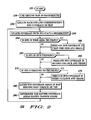
- a flowchart 200 illustrates the inventive concepts of the present invention in greater detail.
- the method starts at step 210.
- a graphical user interface is used, and the 'ground' map is used as a base layer (background) in the generation of a composite coverage-based map, as shown in step 220.
- each BTS in the wireless communication system 100 is overlaid on the composite coverage map together with any known coverage map corresponding to the respective BTS, as in step 230.
- the coverage information related to the respective BTSs is adapted based on regular BTS status information updates, as shown in step 240.
- a BTS is supporting a wide-area trunking mode of operation, in step 250, then its entire coverage is indicated in a particular first colour and/or shade, for example a shade of green, as in step 255. If a particular BTS is operating in a site-trunking mode of operation, in step 260, instead of a wide-area trunking mode of operation in step 255, then the colour of that particular BTS coverage area is set to a second colour, say a shade of yellow, in step 265.
- a BTS switches from a wide-area trunking mode of operation, indicated by a shade of green in step 255, to a site-trunking mode of operation, the BTS coverage area in the composite map, switches from a shade of green to a shade of yellow.
- step 275 If a BTS site is in a no-trunking mode of operation in step 270, then the colour of that particular BTS coverage area is set to a third colour, say, a shade of red, in step 275.
- the layering of coverage areas in the composite coverage map always keeps the 'best' colour (representing the best coverage area) on top of the map, as shown in step 280.
- different shades of a particular colour when spread across a number of BTS coverage areas, indicate the variation in BTS coverage for BTS's operating in the same mode of operation. In this manner, a darker shade may be configured to indicate a better coverage than a lighter shade.
- the coverage area indications for the respective BTS maps are transparent. In this manner, respective shades and colours of BTS maps, when overlaid to generate a composite coverage-based map, reflect the 'true' system coverage at any particular location.
- the layers are transparent, but only the colour of the top layer is shown. In this way, it is possible for the network operation to see the outline of lower layers, but the colour of the top layer is not affected.
- a benefit of using a composite of transparent layers is that it is possible to see the map in the background.
- a further alternative is that if the network operator wishes to see the coverage of one of the lower layers, it is envisaged that the operator is provided with an option to temporarily move a lower layer to become the top layer.
- the composite coverage-based map may also indicate the better coverage areas within shades of particular colours.
- a first overlapping coverage area 315 exists covering a region where a wireless communication unit may be supported in its communications by either a BTS supporting area 310 or a BTS supporting area 330.
- a second overlapping coverage area 320 exists covering a region where a wireless communication unit may be supported in its communications by either a BTS supporting area 310 or a BTS supporting area 340.
- a third overlapping coverage area 325 exists covering a region where a wireless communication unit may be supported in its communications by any of the three BTSs.
- the additional layers of colour and shade associated with the BTS supporting these overlapping areas identifies these areas as ones potentially with better coverage. Furthermore, an indication of the modes of operation available to wireless communication units in that area can be obtained, based on the particular colour shown in the respective areas. For example, if the first overlapping coverage area 315 exhibited an orange colour, by combining yellow and red transparencies, the network operator can readily determine that a subscriber unit in this area 315 is capable of being supported in a wide-area trunking mode or a no-trunking mode of operation, in the example scenario given.
- the present invention has been described with respect to a private or public mobile radio (PMR) communication system, whereby provision of a variety of trunking types is supported by a number of BTS.
- PMR public mobile radio
- inventive concepts described herein are applicable to any wireless cell-based communication system.
- the inventive concepts find particular benefit in wireless cell-based communication systems offering different modes of operation that affect the coverage area being supported, for example cellular communication systems at 850 MHz supporting a GSM system and at 1800/1900 MHz supporting a Personal Communication System (PCS)-based system.
- PCS Personal Communication System
- the different modes of operation could relate to particular co-located BTSs (or Node Bs in UMTS parlance), where pico-cells, micro-cells and/or macrocell communications can be supported from a single site.
- the network operator can adapt the performance or operational characteristics of working adjacent BTS, when a BTS failure is recognised. For example, with a real-time understanding of the impact on the system coverage due to the BTS failure, the network operator may adjust any adaptive antenna array of an adjacent BTS. In such a manner, the adjacent BTS may be able to increase its transmit power in the direction of the failed BTS, to minimise the impact on coverage loss, if the network operator so decided.
- the initial coverage map may be/have been created to show the difference between portable and mobile coverage, for example based on transmit power.
- This means the coverage map of a single BTS would have (at least) two shades - one shade for both portable and mobile coverage (the area closest to the BTS) and another shade for the mobile coverage only (further away from the BTS). If the BTS fails then the colour would changes for the entire BTS - both portable and mobile coverage.
Landscapes
- Engineering & Computer Science (AREA)
- Computer Networks & Wireless Communication (AREA)
- Signal Processing (AREA)
- Mobile Radio Communication Systems (AREA)
Applications Claiming Priority (2)
| Application Number | Priority Date | Filing Date | Title |
|---|---|---|---|
| GB0207339 | 2002-03-28 | ||
| GB0207339A GB2387070B (en) | 2002-03-28 | 2002-03-28 | Wireless communication systems and consoles for use therein |
Publications (2)
| Publication Number | Publication Date |
|---|---|
| EP1349408A2 true EP1349408A2 (de) | 2003-10-01 |
| EP1349408A3 EP1349408A3 (de) | 2005-11-09 |
Family
ID=9933903
Family Applications (1)
| Application Number | Title | Priority Date | Filing Date |
|---|---|---|---|
| EP03100101A Withdrawn EP1349408A3 (de) | 2002-03-28 | 2003-01-20 | Kommunikationssystem und Verfahren |
Country Status (2)
| Country | Link |
|---|---|
| EP (1) | EP1349408A3 (de) |
| GB (1) | GB2387070B (de) |
Cited By (3)
| Publication number | Priority date | Publication date | Assignee | Title |
|---|---|---|---|---|
| EP1701561A1 (de) * | 2005-03-07 | 2006-09-13 | Vodafone Holding GmbH | Hybrides Mobilfunksystem für Kommunikationsanwendungen |
| CN101983526A (zh) * | 2008-01-31 | 2011-03-02 | 日本电气株式会社 | 无线通信系统、基站设备、移动控制节点以及无线通信的方法 |
| CN109614527A (zh) * | 2018-11-16 | 2019-04-12 | 深圳供电局有限公司 | 检修视图生成方法、装置、计算机设备和存储介质 |
Families Citing this family (1)
| Publication number | Priority date | Publication date | Assignee | Title |
|---|---|---|---|---|
| WO2021220259A1 (en) | 2020-04-30 | 2021-11-04 | Elbit Systems C4I and Cyber Ltd. | Systems and methods for managing collaboration between network devices over a communications nework |
Family Cites Families (3)
| Publication number | Priority date | Publication date | Assignee | Title |
|---|---|---|---|---|
| US5023900A (en) * | 1989-12-07 | 1991-06-11 | Tayloe Daniel R | Cellular radiotelephone diagnostic system |
| DE4207290C2 (de) * | 1992-03-07 | 1998-05-28 | Deutsche Telekom Ag | Verfahren zur Zuteilung von Frequenzen an Sender für picozellulare Funknetze |
| US5490285A (en) * | 1993-05-20 | 1996-02-06 | Motorola, Inc. | Method of topographically displaying selected information in a cellular communication system |
-
2002
- 2002-03-28 GB GB0207339A patent/GB2387070B/en not_active Expired - Fee Related
-
2003
- 2003-01-20 EP EP03100101A patent/EP1349408A3/de not_active Withdrawn
Cited By (16)
| Publication number | Priority date | Publication date | Assignee | Title |
|---|---|---|---|---|
| EP1701561A1 (de) * | 2005-03-07 | 2006-09-13 | Vodafone Holding GmbH | Hybrides Mobilfunksystem für Kommunikationsanwendungen |
| US9949150B2 (en) | 2008-01-31 | 2018-04-17 | Nec Corporation | Wireless communication system, base station device, move control node, and method of wireless communication |
| CN101983526A (zh) * | 2008-01-31 | 2011-03-02 | 日本电气株式会社 | 无线通信系统、基站设备、移动控制节点以及无线通信的方法 |
| EP2632214A1 (de) * | 2008-01-31 | 2013-08-28 | NEC Corporation | Drahtloses Kommunikationssystem, Basisstationsvorrichtung, Bewegungssteuerungsknoten und Verfahren zur drahtlosen Kommunikation |
| US8923127B2 (en) | 2008-01-31 | 2014-12-30 | Nec Corporation | Wireless communication system, base station device, move control node, and method of wireless communication |
| CN104581791A (zh) * | 2008-01-31 | 2015-04-29 | 日本电气株式会社 | 无线通信系统、基站设备、移动控制节点以及无线通信的方法 |
| CN104684012A (zh) * | 2008-01-31 | 2015-06-03 | 日本电气株式会社 | 无线通信系统、基站设备、移动控制节点以及无线通信的方法 |
| EP2244507A4 (de) * | 2008-01-31 | 2012-02-22 | Nec Corp | Drahtloses kommunikationssystem, basisstationseinrichtung, bewegungssteuerknoten und verfahren zur drahtlosen kommunikation |
| US10791473B2 (en) | 2008-01-31 | 2020-09-29 | Nec Corporation | Wireless communication system, base station device, move control node, and method of wireless communication |
| US9615323B2 (en) | 2008-01-31 | 2017-04-04 | Nec Corporation | Wireless communication system, base station device, move control node, and method of wireless communication |
| CN104684012B (zh) * | 2008-01-31 | 2018-07-13 | 日本电气株式会社 | 无线通信系统、基站设备、移动控制节点以及无线通信的方法 |
| US20180199216A1 (en) | 2008-01-31 | 2018-07-12 | Nec Corporation | Wireless communication system, base station device, move control node, and method of wireless communication |
| US10271230B2 (en) | 2008-01-31 | 2019-04-23 | Nec Corporation | Wireless communication system, base station device, move control node, and method of wireless communication |
| US10492087B2 (en) | 2008-01-31 | 2019-11-26 | Nec Corporation | Wireless communication system, base station device, move control node, and method of wireless communication |
| CN109614527A (zh) * | 2018-11-16 | 2019-04-12 | 深圳供电局有限公司 | 检修视图生成方法、装置、计算机设备和存储介质 |
| CN109614527B (zh) * | 2018-11-16 | 2021-05-25 | 深圳供电局有限公司 | 检修视图生成方法、装置、计算机设备和存储介质 |
Also Published As
| Publication number | Publication date |
|---|---|
| GB2387070B (en) | 2004-08-11 |
| EP1349408A3 (de) | 2005-11-09 |
| GB2387070A (en) | 2003-10-01 |
| GB0207339D0 (en) | 2002-05-08 |
Similar Documents
| Publication | Publication Date | Title |
|---|---|---|
| US20230049063A1 (en) | Communication method and apparatus | |
| Galkin et al. | Deployment of UAV-mounted access points according to spatial user locations in two-tier cellular networks | |
| JP4426117B2 (ja) | 経路損失の改良推定値を用いたチャネル割り当て | |
| EP4068668B1 (de) | Informationsübertragungsverfahren und -vorrichtung | |
| US6047186A (en) | Method and system for solving cellular communications frequency planning problem | |
| US20040203717A1 (en) | Method, system and radio network management functionality for radio data mapping to physical location in a cellular telecommunications network | |
| US7577103B2 (en) | Dynamic methods for improving a wireless network | |
| EP4181572A1 (de) | Verfahren und vorrichtung zur zellenneuauswahl | |
| HUP0000376A2 (hu) | Eljárás és rendszer leadó interferencia megbecsülésére celluláris kommunikációs rendszerben | |
| EP4102890A1 (de) | Zellenübergabeverfahren, elektronische vorrichtung und speichermedium | |
| JP2007520170A (ja) | Cdmaネットワークパラメータの動的自動最適化のための方法およびシステム | |
| EP1215928B1 (de) | Intelligentes Optimierungssystem und Verfahren zur Optimierung der Kommunikationsleistung in einem zellularen Kommunikationsnetz | |
| GB2404113A (en) | Cell-based communication system and method for frequency planning | |
| Mahdi | Survivability Analysis of GSM Network Systems | |
| JPH11331930A (ja) | 近隣の関係付けに基づいたコスト値を使用するセルラ―・システムの動作の制御 | |
| RU2335097C2 (ru) | Способ работы системы мобильной связи, система мобильной связи, мобильная станция и устройство для определения подгруппы смежных ячеек радиосвязи системы мобильной связи | |
| CN1934879B (zh) | 频率重新规划系统、单元和方法 | |
| EP1349408A2 (de) | Kommunikationssystem und Verfahren | |
| WO2021056159A1 (zh) | 一种信息处理方法、通信设备、卫星 | |
| Isabona | Maximising coverage and capacity with QoS Guarantee in GSM network by means of cell cluster optimization | |
| US7317895B2 (en) | Method of controlling a satellite communication system, a timing unit, and a control unit of a timing unit | |
| US7299051B2 (en) | Method and apparatus for frequency planning in a cellular communications system using modified neighbour lists | |
| GB2356531A (en) | Load shedding in a CDMA network | |
| Menolascino et al. | Third generation mobile systems planning issues | |
| AU7345900A (en) | Method and network for providing to a positioning data |
Legal Events
| Date | Code | Title | Description |
|---|---|---|---|
| PUAI | Public reference made under article 153(3) epc to a published international application that has entered the european phase |
Free format text: ORIGINAL CODE: 0009012 |
|
| AK | Designated contracting states |
Kind code of ref document: A2 Designated state(s): AT BE BG CH CY CZ DE DK EE ES FI FR GB GR HU IE IT LI LU MC NL PT SE SI SK TR |
|
| AX | Request for extension of the european patent |
Extension state: AL LT LV MK RO |
|
| PUAL | Search report despatched |
Free format text: ORIGINAL CODE: 0009013 |
|
| AK | Designated contracting states |
Kind code of ref document: A3 Designated state(s): AT BE BG CH CY CZ DE DK EE ES FI FR GB GR HU IE IT LI LU MC NL PT SE SI SK TR |
|
| AX | Request for extension of the european patent |
Extension state: AL LT LV MK RO |
|
| RIC1 | Information provided on ipc code assigned before grant |
Ipc: 7H 04Q 7/34 A |
|
| 17P | Request for examination filed |
Effective date: 20060509 |
|
| AKX | Designation fees paid |
Designated state(s): AT BE BG CH CY CZ DE DK EE ES FI FR GB GR HU IE IT LI LU MC NL PT SE SI SK TR |
|
| STAA | Information on the status of an ep patent application or granted ep patent |
Free format text: STATUS: THE APPLICATION HAS BEEN WITHDRAWN |
|
| 17Q | First examination report despatched |
Effective date: 20071029 |
|
| 18W | Application withdrawn |
Effective date: 20071013 |