EP1351467A2 - Réautentification automatique dans une architecture client-serveur avec des terminaux - Google Patents
Réautentification automatique dans une architecture client-serveur avec des terminaux Download PDFInfo
- Publication number
- EP1351467A2 EP1351467A2 EP03004229A EP03004229A EP1351467A2 EP 1351467 A2 EP1351467 A2 EP 1351467A2 EP 03004229 A EP03004229 A EP 03004229A EP 03004229 A EP03004229 A EP 03004229A EP 1351467 A2 EP1351467 A2 EP 1351467A2
- Authority
- EP
- European Patent Office
- Prior art keywords
- server
- session
- client device
- random number
- auto
- Prior art date
- Legal status (The legal status is an assumption and is not a legal conclusion. Google has not performed a legal analysis and makes no representation as to the accuracy of the status listed.)
- Granted
Links
Images



Classifications
-
- G—PHYSICS
- G06—COMPUTING OR CALCULATING; COUNTING
- G06F—ELECTRIC DIGITAL DATA PROCESSING
- G06F13/00—Interconnection of, or transfer of information or other signals between, memories, input/output devices or central processing units
- G06F13/10—Program control for peripheral devices
- G06F13/105—Program control for peripheral devices where the program performs an input/output emulation function
- G06F13/107—Terminal emulation
-
- H—ELECTRICITY
- H04—ELECTRIC COMMUNICATION TECHNIQUE
- H04L—TRANSMISSION OF DIGITAL INFORMATION, e.g. TELEGRAPHIC COMMUNICATION
- H04L63/00—Network architectures or network communication protocols for network security
- H04L63/08—Network architectures or network communication protocols for network security for authentication of entities
-
- H—ELECTRICITY
- H04—ELECTRIC COMMUNICATION TECHNIQUE
- H04L—TRANSMISSION OF DIGITAL INFORMATION, e.g. TELEGRAPHIC COMMUNICATION
- H04L63/00—Network architectures or network communication protocols for network security
- H04L63/12—Applying verification of the received information
- H04L63/126—Applying verification of the received information the source of the received data
-
- H—ELECTRICITY
- H04—ELECTRIC COMMUNICATION TECHNIQUE
- H04L—TRANSMISSION OF DIGITAL INFORMATION, e.g. TELEGRAPHIC COMMUNICATION
- H04L67/00—Network arrangements or protocols for supporting network services or applications
- H04L67/14—Session management
Definitions
- the invention relates to user and session authentication in systems having remote terminals.
- a server system can deliver a conventional Windows® desktop, as well as the latest Windows®-based applications, to a remotely located desktop computing device which is referred to as a client device or remote terminal.
- the remote terminal is often a personal computer running specialized terminal emulation software.
- the remote terminal runs software that is specifically designed for operation with Windows® Terminal Services.
- a single server system can support multiple users and corresponding user sessions. Each user logs on and sees only their individual session, which is managed transparently by the server operating system and is independent of any other client session.
- the server system Communications between the server system and the various remote terminals are frequently by means of a network of some sort.
- the network might be a private local-area network, a private or public wide-area network, or a publicly-accessible network such as the Internet.
- Various forms of encryption are utilized between the server system and the remote terminals to ensure privacy and data integrity over these otherwise unsecure forms of network communications. Both the server system software and the remote terminal software are designed to support this encryption.
- RDP remote desktop protocol
- RDP uses its own video driver on the server system to render display output by constructing the rendering information into network packets and sending them over the network to the client device.
- the client receives the rendering data and interprets it into corresponding Win32® GDI API calls.
- client mouse and keyboard messages are redirected from the client to the server.
- RDP uses its own virtual keyboard and mouse driver to receive these keyboard and mouse events.
- RDP provides support for various other features, such as print redirection, clipboard mapping, remote control, and network load balancing.
- RDP enables data compression, data encryption, and logon and logoff services.
- RDP communications are typically packaged or embedded within the TCP/IP protocol.
- the server system is capable of executing a number of different sessions. Each user session is typically associated with a single user and remote terminal, although the same session might be associated with different remote terminals during different time periods.
- the user To initiate a user session, the user establishes a secure connection between a particular client device and the server system.
- the server system then utilizes the I/O capabilities of the client device to authenticate the user, in a process referred to as a "logon" process. Authentication is typically performed by requesting user credentials, which normally comprise a user name and password.
- the server system Upon receiving valid credentials, the server system creates a session and connects the client device to that session.
- the server system In many networked environments, and particularly in the Internet environment, data connections are unreliable and can be easily lost.
- losing data communications between the server system and the client device does not necessarily terminate the session associated with that client device. Rather, the session is kept active for a predefined time period, and the user can log back on to that session using the same client device or a different client device.
- the logon process is similar to the initial logon process, in that the server system authenticates the user by requesting user credentials. Rather than creating a new session, however, the server system recognizes the user as being associated with an existing session, and reconnects the user to that session.
- the client device might retain a session identifier from the previous session and submit the session identifier during the subsequent logon process to reconnect to that session.
- the client device and server system share auto-reconnect data.
- the client Upon subsequently losing and re-establishing communications with the server system, the client sends an auto-authenticate request to the server.
- the auto-authenticate request includes a session verifier that is based at least in part on the shared auto-reconnect data.
- the server validates the session verifier. If the validation is successful, the server automatically re-authenticates the client device.
- Fig. 1 shows an exemplary embodiment of a terminal server system 10.
- System 10 includes a server computer or system 12 and a plurality of remote terminals or client devices 14.
- Remote clients 14 communicate with server computer 12 by means of a network 16, which may be a local-area network, a wide-area network, a publicly-accessible network such as the public Internet, or some other type of data communications network.
- a network 16 may be a local-area network, a wide-area network, a publicly-accessible network such as the public Internet, or some other type of data communications network.
- one or more of remote clients 14 might utilize non-network means of communications with server system 12, such as dedicated or on-demand dial-up connections, or other forms of direct or point-to-point data communications.
- Both the server system 10 and the individual client computers are conventional, general desktop computers or computers of other types, although specialized computers and other more specific-purpose devices might also be used to perform the functions of these components.
- a specific and detailed example of a computer suitable for performing the described functions will be set forth below, in conjunction with Fig. 8.
- server system 12 runs a version of the Microsoft® Windows® server operating system and includes terminal server features such as those described above, generally referred to as "Terminal Services.”
- Terminal Services application programs in this environment execute on server system 12 rather than on the individual client devices 14. Keyboard, mouse, display, and print information, however, is transmitted back and forth between the server and the remote terminal. This division of responsibility is generally transparent to users. To a user, it appears just as if the applications were running on the client device; user interface functions, including graphical interface elements and user input functions are carried out through the client device. In many cases, the client device will be configured with terminal emulation software to coordinate these functions with the server.
- the Terminal Services of the Microsoft® Windows® server operating system executes multiple server sessions in conjunction with remote terminals or client devices 14, wherein user applications execute primarily on the server system and user I/O is performed through the client devices.
- the term "session” refers generally to a set of changing state information associated with a given client device. In a terminal server environment such as that described herein, this state information resides on server system 12 rather than on individual client computers 14.
- the session or state information for a given client computer relates to whatever application programs are being executed by server system 12 on behalf of the client computer.
- the invention can be used in a variety of situations where a server authenticates clients as a condition to allowing such clients to utilize services of the server.
- the invention is especially useful in situations where server/client communications are unreliable and subject to interruptions.
- Figs. 2-5 show actions performed by server system 12 and client device 14 relating to authentication and automatic re-authentication after a communications failure. Note that the actions shown in Figs. 2-5 are performed by software running on either server system 12 or on one of client devices 14. In the described embodiment, the actions are integrated within the Terminal Services software running on server system 12 or within the terminal emulation software running on client devices 14. In other embodiments, the described actions can be integrated with other types of software.
- Fig. 2 shows actions performed by server 12 in establishing a new session for a particular client device.
- An initial action 20 comprises establishing a secure data communications channel between server system 12 and client device 14. In the described embodiment, this is accomplished using the RDP (Remote Desktop Protocol) and various encryption techniques employed by RDP.
- RDP uses RC4, a secret key cryptographic method developed by RSA Data Security, Inc., of Redwood City, California, to secure the communications channel.
- SSL secure sockets layer
- the term "secure" is used to indicate that communications between the server and client are relatively free from potential interception or eavesdropping.
- a relatively unsecure communications medium such as the Internet
- communications security is normally provided by encryption. However, encryption may not be necessary if the communications medium itself is secure.
- a subsequent action 22, which is performed over the secure communications channel using RDP, comprises authenticating the client or client device for a server session.
- this action comprises a logon process in which the user is requested or prompted at the client device for user credentials such as a user name and password, which are in turn received and validated by the server.
- the user credentials often comprise a user name and password
- other types of credentials may also be utilized.
- the user might be prompted to provide biometric information such as a fingerprint or retinal scan, to provide a hardware token such as smart card or other device, or to provide some other form of identification.
- authentication will be under control of the server system 12, which transmits graphical prompts for display at client device 14 and in turn receives user credentials from client device 14.
- the terminal emulation software running on client device 14 may have special security features that operate in conjunction with the server software to enhance the security of the logon process.
- an action 24 comprises initiating a session on server system 12 for the requesting client device.
- the auto-reconnect data comprises a session ID number and a first random number. In the described embodiment, both of these numbers are generated by the server system 12 and sent to client device 14 over the secure communications channel.
- the session ID is a number that is associated with the client's current server session and that is unique among currently executing sessions.
- the first random number is a 16-byte number that is generated using a cryptographically secure random number generator, and might include pseudo-random numbers.
- An action 27 comprises storing the auto-reconnect data at the server for later use.
- the server In conjunction with the auto-reconnect data, the server also stores a reference to the server session for which the auto-reconnect data was generated.
- Fig. 3 illustrates actions performed by client device 14 in establishing a new session for a particular client device. For the most part, these actions are counterparts of the actions illustrated by Fig. 4.
- An action 28 comprises requesting and establishing a secure communications channel between client device 14 and server system 12, using RDP as described above.
- a subsequent action 29 comprises providing user credentials to server system 12 in a logon process to authenticate client device 14 with server system 12 and to initiate a server session associated with client device 14.
- An action 30 comprises sharing auto-reconnect data with the server system.
- the auto-reconnect data comprises a session ID number and a first random number.
- both of these numbers are received from the server system.
- one or both of these numbers might be generated by the client device and sent to the server.
- An action 31 comprises storing the auto-reconnect data at the client device 14.
- these numbers are preferably stored in volatile program memory rather than in the non-volatile file system of the client device, so that the auto-reconnect data is difficult to access from other application programs that might be executing on client device 14.
- Fig. 4 illustrates actions performed by client device 14 after losing and re-establishing communications with server system 12.
- the loss of communications might result from a data error, timeout, communications media failure, or any one of a number of different events.
- a communications loss is temporary, and the user is able to re-connect client device 14 with server system 12 after a short delay.
- Reconnection often involves a manual step performed by the user.
- the reconnection process can, however, be automated.
- the terminal emulation software of client device 14 can be designed to automatically and repeatedly attempt to reconnect to server system 12 after a communications loss.
- the eventual result is an action 33 of re-establishing of a secure communication channel between client device 14 and server 12.
- the client and server share a second random number in an action 34.
- the second random number is a different value than the first random number, but is generated by server system 12 in a manner that is similar or identical to generation of the first random number.
- the second random number is a 16-byte value that is received by client device 14 from server system 12.
- An action 35 then comprises calculating or deriving a client session verifier at the client device from at least a portion of the auto-reconnect data. More specifically, this comprises deriving the client session verifier at least in part from the first random number, and at least in part from the second random number.
- the session verifier is a one-way hash of some combination of the two random numbers. For example, the two numbers might be added, multiplied, or concatenated together, after which a one way hash is performed on the result to yield the session verifier.
- HMAC shed message authentication code
- Other hash functions could alternatively be used.
- An action 36 comprises requesting automatic re-authentication by the server system without providing user credentials.
- this action comprises sending an auto-authenticate request from the client device to the server system.
- the auto-authenticate request includes (a) the session ID (previously received in action 32) and (b) the session verifier calculated in the previous action. Assuming that this request is successful, the client device is reconnected to the original server session. Note that the client device is not required to store the user credentials in order to provide automatic re-authentication.
- Fig. 5 illustrates actions performed by server system 12 after losing communications between client device 14 and server system 12.
- An action 38 comprises re-establishing a secure communications channel between client device 14 and server system 12. This is accomplished in response to client-initiated communications, utilizing the encryption features of RDP or other encryption technologies.
- a subsequent action 40 comprises generating and sharing the second random number between server system 12 and client device 14.
- this second random number is generated by server system 12 in a manner that is similar or identical to generation of the first random number.
- the client device might be responsible for generating the second random number, and for sending it to server system 12.
- An action 42 comprises receiving the auto-authenticate request from the client device 14.
- the auto-authenticate request includes (a) a session ID and (b) a client session verifier that has been calculated by the client device 14 as already described.
- An action 44 comprises calculating or deriving a server session verifier.
- the server session verifier is calculated in the same manner as the client session verifier, by taking a one-way hash of the first and second random numbers.
- An action 46 comprises validating the client session verifier by comparing it to the server session verifier. If the two verifiers match, the validation is successful and an action 48 is performed of automatically re-authenticating the requesting client device for the session indicated by the session ID received in the auto-authenticate request ⁇ without requesting user credentials. Once authenticated for the requested session, the client device is re-connected to that session and normal session operations resume. If the two verifiers do not match, the validation is not successful and the auto-authenticate request is refused. In this case, the client device is not re-connected to the requested session, and a more conventional user logon process 50 is initiated ⁇ typically requiring the user to enter his or her user credentials..
- Actions 26 and 27 of Fig. 2 and actions 30 and 31 of Fig. 3 are repeated every time a client device is re-authenticated for a particular session. That is, the first random number is re-generated and shared anew between the server system and the client device after every successful re-authentication. This assures that only one client device at a time can connect to a particular session.
- At least a portion of the auto-reconnect data is automatically regenerated and shared anew at predetermined time intervals.
- the first random number is re-generated and re-shared between server system 12 and client device 14 approximately every hour. Once a newly generated first random number is shared between the server and the client, the old random number is invalidated and will no longer work for reconnection.
- Fig. 6 shows the process or periodically changing the random number portion of the auto-reconnect data and sending it to the client.
- An action 66 comprises generating and sending the first random number to the client and recording a timestamp.
- a subsequent action 68 comprises comparing the timestamp to the current time to determine whether a predetermined time period, such as an hour, has elapsed. If it has, execution loops back to action 66 where a new random number is generated and sent to the client, and a new timestamp is recorded. If the time period has not expired, block 68 is reiterated until the result of the comparison is true, whereupon action 66 is executed again.
- a predetermined time period such as an hour
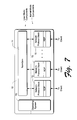
- Fig. 7 shows pertinent details of how the server system 14 is implemented within the operating system of a computer.
- the computer has an operating system 70 which supervises what are known as user and kernel modes. Programs or program components typically run in one of these two modes. Kernel mode is typically reserved for lower-level system software components that are relatively critical to operation of the computer. Application programs typically run under the operating system in the non-kernel user mode, and make calls to components of the kernel mode in order to perform system-level functions. The kernel mode is typically supported by the microprocessor hardware of the computer.
- a terminal server system there are one or more user-level server components 71 that manage user sessions and perform various functions associated with user sessions.
- multiple protocol stacks or communications components 72 that run within the kernel mode to perform lower-level communications functions between the server and the respective clients.
- the stack manages communications under the RDP protocol and under lower-level protocols such as TCP, IP, UDP, etc.
- communications between server component 71 and the multiple protocol stacks 72 are by way of function calls made by server component 71 to stacks 72.
- the protocol stack 72 for a particular session is responsible for generating and sending the first random number to the associated client device, and for re-generating and re-sending the first random number at periodic intervals. Specifically, every time protocol stack is called upon to perform server/client communications, it checks to see if the predetermined time period has elapsed and regenerates and re-sends the first random number if the time period has elapsed. This allows the random number to be changed and resent without instigation by the terminal server component 71. Using this technique, a new random number is sent only if the predetermined time period has elapsed and only if the protocol stack is active in sending or receiving data.
- This architecture is advantageous because it avoids the use of a dedicated user-mode "spin" thread that might be otherwise necessary in order to periodically re-send the first random number to the client at periodic intervals.
- the use of such a thread would potentially be expensive in terms of computer resources.
- the elimination of such a thread is a significant advantage.
- a received auto-reconnect request is processed by a new protocol stack 72 and passed to terminal server component 71.
- the terminal server component receives a session ID and a client session verifier.
- the server component 71 identifies the protocol stack 72 that was associated with the session before the communications failure, and queries that protocol stack for the most recent first random number that was shared with the client for that session. The server component then uses that random number to calculate the server session verifier and to validate the session verifier received from the client.
- Fig. 8 shows components of typical example of such a computer, referred by to reference numeral 100.
- the components shown in Fig. 8 are only examples, and are not intended to suggest any limitation as to the scope of the functionality of the invention; the invention is not necessarily dependent on the features shown in Fig. 8.
- various different general purpose or special purpose computing system configurations can be used.
- Examples of well known computing systems, environments, and/or configurations that may be suitable for use with the invention include, but are not limited to, personal computers, server computers, hand-held or laptop devices, multiprocessor systems, microprocessor-based systems, set top boxes, programmable consumer electronics, network PCs, minicomputers, mainframe computers, distributed computing environments that include any of the above systems or devices, and the like.
- program modules include routines, programs, objects, components, data structures, etc. that perform particular tasks or implement particular abstract data types. Tasks might also be performed by remote processing devices that are linked through a communications network.
- program modules may be located in both local and remote computer storage media.
- the instructions and/or program modules are stored at different times in the various computer-readable media that are either part of the computer or that can be read by the computer.
- Programs are typically distributed, for example, on floppy disks, CD-ROMs, DVD, or some form of communication media such as a modulated signal. From there, they are installed or loaded into the secondary memory of a computer. At execution, they are loaded at least partially into the computer's primary electronic memory.
- the invention described herein includes these and other various types of computer-readable media when such media contain instructions, programs, and/or modules for implementing the steps and actions described above in conjunction with microprocessors or other data processors.
- the invention also includes the computer itself when programmed according to the methods and techniques described above.
- programs and other executable program components such as the operating system are illustrated herein as discrete blocks, although it is recognized that such programs and components reside at various times in different storage components of the computer, and are executed by the data processor(s) of the computer.
- the components of computer 100 may include, but are not limited to, a processing unit 120, a system memory 130, and a system bus 121 that couples various system components including the system memory to the processing unit 120.
- the system bus 121 may be any of several types of bus structures including a memory bus or memory controller, a peripheral bus, and a local bus using any of a variety of bus architectures.
- bus architectures include Industry Standard Architecture (ISA) bus, Micro Channel Architecture (MCA) bus, Enhanced ISA (EISAA) bus, Video Electronics Standards Association (VESA) local bus, and Peripheral Component Interconnect (PCI) bus also known as the Mezzanine bus.
- Computer 100 typically includes a variety of computer-readable media.
- Computer-readable media can be any available media that can be accessed by computer 100 and includes both volatile and nonvolatile media, removable and non-removable media.
- Computer-readable media may comprise computer storage media and communication media.
- Computer storage media include both volatile and nonvolatile, removable and non-removable media implemented in any method or technology for storage of information such as computer-readable instructions, data structures, program modules, or other data.
- Computer storage media includes, but is not limited to, RAM, ROM, EEPROM, flash memory or other memory technology, CD-ROM, digital versatile disks (DVD) or other optical disk storage, magnetic cassettes, magnetic tape, magnetic disk storage or other magnetic storage devices, or any other medium which can be used to store the desired information and which can be accessed by computer 110.
- Communication media typically embodies computer-readable instructions, data structures, program modules or other data in a modulated data signal such as a carrier wave or other transport mechanism and includes any information delivery media.
- modulated data signal means a signal that has one or more if its characteristics set or changed in such a manner as to encode information in the signal.
- communication media includes wired media such as a wired network or direct-wired connection and wireless media such as acoustic, RF, infrared and other wireless media. Combinations of any of the above should also be included within the scope of computer readable media.
- the system memory 130 includes computer storage media in the form of volatile and/or nonvolatile memory such as read only memory (ROM) 131 and random access memory (RAM) 132.
- ROM read only memory
- RAM random access memory
- BIOS basic input/output system
- RAM 132 typically contains data and/or program modules that are immediately accessible to and/or presently being operated on by processing unit 120.
- Fig. 8 illustrates operating system 134, application programs 135, other program modules 136, and program data 137.
- the computer 100 may also include other removable/non-removable, volatile/nonvolatile computer storage media.
- Fig. 8 illustrates a hard disk drive 141 that reads from or writes to non-removable, nonvolatile magnetic media, a magnetic disk drive 151 that reads from or writes to a removable, nonvolatile magnetic disk 152, and an optical disk drive 155 that reads from or writes to a removable, nonvolatile optical disk 156 such as a CD ROM or other optical media.
- removable/non-removable, volatile/nonvolatile computer storage media that can be used in the exemplary operating environment include, but are not limited to, magnetic tape cassettes, flash memory cards, digital versatile disks, digital video tape, solid state RAM, solid state ROM, and the like.
- the hard disk drive 141 is typically connected to the system bus 121 through an non-removable memory interface such as interface 140, and magnetic disk drive 151 and optical disk drive 155 are typically connected to the system bus 121 by a removable memory interface such as interface 150.
- hard disk drive 141 is illustrated as storing operating system 144, application programs 145, other program modules 146, and program data 147. Note that these components can either be the same as or different from operating system 134, application programs 135, other program modules 136, and program data 137. Operating system 144, application programs 145, other program modules 146, and program data 147 are given different numbers here to illustrate that, at a minimum, they are different copies.
- a user may enter commands and information into the computer 100 through input devices such as a keyboard 162 and pointing device 161, commonly referred to as a mouse, trackball, or touch pad.
- Other input devices may include a microphone, joystick, game pad, satellite dish, scanner, or the like.
- a monitor 191 or other type of display device is also connected to the system bus 121 via an interface, such as a video interface 190.
- computers may also include other peripheral output devices such as speakers 197 and printer 196, which may be connected through an output peripheral interface 195.
- the computer may operate in a networked environment using logical connections to one or more remote computers, such as a remote computer 180.
- the remote computer 180 may be a personal computer, a server, a router, a network PC, a peer device or other common network node, and typically includes many or all of the elements described above relative to computer 100, although only a memory storage device 181 has been illustrated in Fig. 8.
- the logical connections depicted in Fig. 8 include a local area network (LAN) 171 and a wide area network (WAN) 173, but may also include other networks.
- LAN local area network
- WAN wide area network
- Such networking environments are commonplace in offices, enterprise-wide computer networks, intranets, and the Internet.
- the computer 100 When used in a LAN networking environment, the computer 100 is connected to the LAN 171 through a network interface or adapter 170. When used in a WAN networking environment, the computer 100 typically includes a modem 172 or other means for establishing communications over the WAN 173, such as the Internet.
- the modem 172 which may be internal or external, may be connected to the system bus 121 via the user input interface 160, or other appropriate mechanism.
- program modules depicted relative to the computer 100, or portions thereof may be stored in the remote memory storage device.
- Fig. 8 illustrates remote application programs 185 as residing on memory device 181. It will be appreciated that the network connections shown are exemplary and other means of establishing a communications link between the computers may be used.
Landscapes
- Engineering & Computer Science (AREA)
- General Engineering & Computer Science (AREA)
- Computer Security & Cryptography (AREA)
- Computer Networks & Wireless Communication (AREA)
- Signal Processing (AREA)
- Theoretical Computer Science (AREA)
- Computer Hardware Design (AREA)
- Computing Systems (AREA)
- Physics & Mathematics (AREA)
- General Physics & Mathematics (AREA)
- Computer And Data Communications (AREA)
- Information Transfer Between Computers (AREA)
Applications Claiming Priority (2)
| Application Number | Priority Date | Filing Date | Title |
|---|---|---|---|
| US10/116,803 US7080404B2 (en) | 2002-04-01 | 2002-04-01 | Automatic re-authentication |
| US116803 | 2002-04-01 |
Publications (3)
| Publication Number | Publication Date |
|---|---|
| EP1351467A2 true EP1351467A2 (fr) | 2003-10-08 |
| EP1351467A3 EP1351467A3 (fr) | 2007-07-18 |
| EP1351467B1 EP1351467B1 (fr) | 2017-04-26 |
Family
ID=28041093
Family Applications (1)
| Application Number | Title | Priority Date | Filing Date |
|---|---|---|---|
| EP03004229.5A Expired - Lifetime EP1351467B1 (fr) | 2002-04-01 | 2003-02-25 | Reauthentification automatique dans une architecture client-serveur avec des terminaux |
Country Status (5)
| Country | Link |
|---|---|
| US (3) | US7080404B2 (fr) |
| EP (1) | EP1351467B1 (fr) |
| JP (1) | JP4572059B2 (fr) |
| CN (2) | CN100354852C (fr) |
| TW (1) | TWI280769B (fr) |
Cited By (13)
| Publication number | Priority date | Publication date | Assignee | Title |
|---|---|---|---|---|
| WO2004093405A1 (fr) * | 2003-04-18 | 2004-10-28 | Koninklijke Philips Electronics N.V. | Identifiant secret pour le renouvellement d'abonnements |
| WO2005036857A1 (fr) * | 2003-10-10 | 2005-04-21 | Citrix Systems, Inc. | Reconnexion automatique d'un client par le biais de sessions de communication fiables et persistantes |
| WO2005093542A1 (fr) * | 2004-03-26 | 2005-10-06 | Bce Inc. | Systeme et procede de securite |
| US7080404B2 (en) * | 2002-04-01 | 2006-07-18 | Microsoft Corporation | Automatic re-authentication |
| WO2009068489A1 (fr) * | 2007-11-27 | 2009-06-04 | Gemalto Sa | Procédé pour protéger l'accès à un objet électronique connecté à un ordinateur |
| US7562146B2 (en) | 2003-10-10 | 2009-07-14 | Citrix Systems, Inc. | Encapsulating protocol for session persistence and reliability |
| US7661129B2 (en) | 2002-02-26 | 2010-02-09 | Citrix Systems, Inc. | Secure traversal of network components |
| US7685630B2 (en) | 2006-05-04 | 2010-03-23 | Citrix Online, Llc | Methods and systems for providing scalable authentication |
| US7984157B2 (en) | 2002-02-26 | 2011-07-19 | Citrix Systems, Inc. | Persistent and reliable session securely traversing network components using an encapsulating protocol |
| EP2622811A4 (fr) * | 2010-09-30 | 2014-06-25 | Microsoft Corp | Reconnexion unifiée à de multiples serveurs distants |
| WO2014205461A3 (fr) * | 2013-05-24 | 2015-04-23 | Paima Prashant Govind | Processus d'authentification d'une identité d'un utilisateur |
| US9331991B2 (en) | 2004-08-31 | 2016-05-03 | Citrix Systems, Inc. | Authenticating a client using linked authentication credentials |
| US9454657B2 (en) | 2004-12-03 | 2016-09-27 | Bce Inc. | Security access device and method |
Families Citing this family (87)
| Publication number | Priority date | Publication date | Assignee | Title |
|---|---|---|---|---|
| AU2001267198A1 (en) * | 2000-06-09 | 2001-12-17 | Certicom Corp. | A method for the application of implicit signature schemes |
| US7917638B1 (en) * | 2002-05-31 | 2011-03-29 | Barry Appelman | Transparent reconnection |
| US7370350B1 (en) * | 2002-06-27 | 2008-05-06 | Cisco Technology, Inc. | Method and apparatus for re-authenticating computing devices |
| US7428595B2 (en) * | 2002-09-30 | 2008-09-23 | Sharp Laboratories Of America, Inc. | System and method for streaming TCP messages in an enterprise network |
| US20040068572A1 (en) * | 2002-10-04 | 2004-04-08 | Zhixue Wu | Methods and systems for communicating over a client-server network |
| US8233392B2 (en) | 2003-07-29 | 2012-07-31 | Citrix Systems, Inc. | Transaction boundary detection for reduction in timeout penalties |
| US7630305B2 (en) | 2003-07-29 | 2009-12-08 | Orbital Data Corporation | TCP selective acknowledgements for communicating delivered and missed data packets |
| US7616638B2 (en) | 2003-07-29 | 2009-11-10 | Orbital Data Corporation | Wavefront detection and disambiguation of acknowledgments |
| US8270423B2 (en) | 2003-07-29 | 2012-09-18 | Citrix Systems, Inc. | Systems and methods of using packet boundaries for reduction in timeout prevention |
| CA2422334C (fr) * | 2003-03-17 | 2009-06-09 | British Telecommunications Public Limited Company | Authentification d'utilisateurs de reseau |
| US7409451B1 (en) | 2003-05-30 | 2008-08-05 | Aol Llc, A Delaware Limited Liability Company | Switching between connectivity types to maintain connectivity |
| US20050039002A1 (en) * | 2003-07-29 | 2005-02-17 | International Business Machines Corporation | Method, system and program product for protecting a distributed application user |
| US8437284B2 (en) | 2003-07-29 | 2013-05-07 | Citrix Systems, Inc. | Systems and methods for additional retransmissions of dropped packets |
| US8432800B2 (en) * | 2003-07-29 | 2013-04-30 | Citrix Systems, Inc. | Systems and methods for stochastic-based quality of service |
| US7656799B2 (en) | 2003-07-29 | 2010-02-02 | Citrix Systems, Inc. | Flow control system architecture |
| US8238241B2 (en) | 2003-07-29 | 2012-08-07 | Citrix Systems, Inc. | Automatic detection and window virtualization for flow control |
| US7735120B2 (en) * | 2003-12-24 | 2010-06-08 | Apple Inc. | Server computer issued credential authentication |
| JP4200909B2 (ja) * | 2004-01-29 | 2008-12-24 | 日本電気株式会社 | 乱数生成共有システム、暗号化通信装置及びそれらに用いる乱数生成共有方法 |
| US7464266B2 (en) * | 2004-02-13 | 2008-12-09 | Microsoft Corporation | Cheap signatures for synchronous broadcast communication |
| KR100690764B1 (ko) | 2004-06-08 | 2007-03-09 | 엘지전자 주식회사 | 아이엠피에스 클라이언트의 상태정보 동기화 방법 |
| US8504665B1 (en) * | 2004-06-30 | 2013-08-06 | Kaseya International Limited | Management of a device connected to a remote computer using the remote computer to effect management actions |
| US20090024757A1 (en) * | 2004-07-30 | 2009-01-22 | Proctor David W | Automatic Protocol Determination For Portable Devices Supporting Multiple Protocols |
| US7587751B2 (en) * | 2004-08-02 | 2009-09-08 | Cisco Technology, Inc. | Method and apparatus for automatically re-validating multiple clients of an authentication system |
| US7756984B2 (en) * | 2004-09-27 | 2010-07-13 | Citrix Systems, Inc. | Systems and methods for virtual host name roaming |
| US20060218636A1 (en) * | 2005-03-24 | 2006-09-28 | David Chaum | Distributed communication security systems |
| US7594020B2 (en) * | 2005-05-31 | 2009-09-22 | Microsoft Corporation | Re-establishing a connection for an application layer via a service layer |
| CN100334842C (zh) * | 2005-07-01 | 2007-08-29 | 倚天资讯股份有限公司 | 与服务器间断线自动重连方法 |
| US20070165582A1 (en) * | 2006-01-18 | 2007-07-19 | Puneet Batta | System and method for authenticating a wireless computing device |
| US20070220598A1 (en) * | 2006-03-06 | 2007-09-20 | Cisco Systems, Inc. | Proactive credential distribution |
| US8265005B2 (en) * | 2006-03-06 | 2012-09-11 | Qualcomm Incorporated | Method and apparatus for communicating with a wireless network using a single address for multiple processors |
| JP4251207B2 (ja) * | 2006-04-28 | 2009-04-08 | ソニー株式会社 | サーバ装置、再接続制御方法、機器装置、再接続方法、プログラム、および記録媒体 |
| US7730302B2 (en) | 2006-05-05 | 2010-06-01 | Microsoft Corporation | Secure and modifiable configuration files used for remote sessions |
| US7818003B2 (en) * | 2006-05-12 | 2010-10-19 | Microsoft Corporation | Communication device auto negotiate reconnect |
| US7865727B2 (en) * | 2006-08-24 | 2011-01-04 | Cisco Technology, Inc. | Authentication for devices located in cable networks |
| WO2008035450A1 (fr) * | 2006-09-20 | 2008-03-27 | Secured Communications, Inc. | Authentification par un identifiant ponctuel |
| US20080148385A1 (en) * | 2006-12-19 | 2008-06-19 | Kwok-Yan Leung | Sectionalized Terminal System And Method |
| US8902449B1 (en) | 2007-01-03 | 2014-12-02 | Crimson Corporation | Systems and methods for determining when results from a criteria scan are deleted from a computing device |
| US8201218B2 (en) * | 2007-02-28 | 2012-06-12 | Microsoft Corporation | Strategies for securely applying connection policies via a gateway |
| US7770214B2 (en) * | 2007-04-17 | 2010-08-03 | International Business Machines Corporation | Apparatus, system, and method for establishing a reusable and reconfigurable model for fast and persistent connections in database drivers |
| US7881329B2 (en) * | 2007-05-25 | 2011-02-01 | Sharp Laboratories Of America, Inc. | Method and system for maintaining high reliability logical connection |
| CN101321382B (zh) | 2007-06-05 | 2011-09-21 | 中兴通讯股份有限公司 | 高速分组数据会话释放方法 |
| US20090007250A1 (en) * | 2007-06-27 | 2009-01-01 | Microsoft Corporation | Client authentication distributor |
| US20090006537A1 (en) * | 2007-06-29 | 2009-01-01 | Microsoft Corporation | Virtual Desktop Integration with Terminal Services |
| US8457307B2 (en) * | 2007-07-17 | 2013-06-04 | Certicom Corp. | Method and system for generating implicit certificates and applications to identity-based encryption (IBE) |
| US8291481B2 (en) * | 2007-09-18 | 2012-10-16 | Microsoft Corporation | Sessionless redirection in terminal services |
| US20090079694A1 (en) * | 2007-09-20 | 2009-03-26 | Rgb Spectrum | Integrated control system with keyboard video mouse (kvm) |
| US7769828B2 (en) * | 2007-10-05 | 2010-08-03 | International Business Machines Corporation | System for provisioning time sharing option (TSO) and interactive productivity system facility (ISPF) services in a network environment |
| US8184065B2 (en) * | 2007-11-12 | 2012-05-22 | Rgb Spectrum | Efficient mode switching in a video processor system |
| US8161160B2 (en) * | 2008-02-28 | 2012-04-17 | Microsoft Corporation | XML-based web feed for web access of remote resources |
| US8683062B2 (en) | 2008-02-28 | 2014-03-25 | Microsoft Corporation | Centralized publishing of network resources |
| JP5298592B2 (ja) * | 2008-03-26 | 2013-09-25 | 日本電気株式会社 | タイムスタンプパケット通信システム、タイムスタンプパケット送信機、タイムスタンプパケット受信機 |
| US8756660B2 (en) * | 2008-04-17 | 2014-06-17 | Microsoft Corporation | Enabling two-factor authentication for terminal services |
| US8612862B2 (en) * | 2008-06-27 | 2013-12-17 | Microsoft Corporation | Integrated client for access to remote resources |
| US7941549B2 (en) * | 2008-09-16 | 2011-05-10 | Microsoft Corporation | Protocol exchange and policy enforcement for a terminal server session |
| US20100115116A1 (en) * | 2008-11-03 | 2010-05-06 | Micron Technology, Inc. | System and method for switching communication protocols in electronic interface devices |
| US9071843B2 (en) * | 2009-02-26 | 2015-06-30 | Microsoft Technology Licensing, Llc | RDP bitmap hash acceleration using SIMD instructions |
| JP5478917B2 (ja) * | 2009-03-05 | 2014-04-23 | キヤノン株式会社 | 画像処理装置、画像処理装置の制御方法、及びプログラム |
| US8555069B2 (en) * | 2009-03-06 | 2013-10-08 | Microsoft Corporation | Fast-reconnection of negotiable authentication network clients |
| US9578113B2 (en) | 2009-04-15 | 2017-02-21 | Wyse Technology L.L.C. | Method and apparatus for transferring remote session data |
| US9448815B2 (en) * | 2009-04-15 | 2016-09-20 | Wyse Technology L.L.C. | Server-side computing from a remote client device |
| US8676926B2 (en) | 2009-04-15 | 2014-03-18 | Wyse Technology L.L.C. | System and method for handling remote drawing commands |
| US20100268762A1 (en) * | 2009-04-15 | 2010-10-21 | Wyse Technology Inc. | System and method for scrolling a remote application |
| US9553953B2 (en) | 2009-04-15 | 2017-01-24 | Dell Products L.P. | Method and apparatus for extending capabilities of a virtualization domain to support features available in a normal desktop application |
| US9106696B2 (en) * | 2009-04-15 | 2015-08-11 | Wyse Technology L.L.C. | Method and apparatus for portability of a remote session |
| US9189124B2 (en) * | 2009-04-15 | 2015-11-17 | Wyse Technology L.L.C. | Custom pointer features for touch-screen on remote client devices |
| US9088414B2 (en) * | 2009-06-01 | 2015-07-21 | Microsoft Technology Licensing, Llc | Asynchronous identity establishment through a web-based application |
| DE102009024604B4 (de) * | 2009-06-10 | 2011-05-05 | Infineon Technologies Ag | Erzeugung eines Session-Schlüssels zur Authentisierung und sicheren Datenübertragung |
| US10057239B2 (en) * | 2009-12-17 | 2018-08-21 | Pulse Secure, Llc | Session migration between network policy servers |
| WO2011149558A2 (fr) | 2010-05-28 | 2011-12-01 | Abelow Daniel H | Réalité alternée |
| US8412836B2 (en) | 2010-07-07 | 2013-04-02 | Microsoft Corporation | User authentication across multiple network stacks |
| WO2012040837A1 (fr) | 2010-09-01 | 2012-04-05 | Jigsee Inc. | Systèmes et procédés de diffusion multimédia en flux continu résiliente |
| CN103023638B (zh) * | 2011-09-22 | 2016-03-30 | 阿里巴巴集团控股有限公司 | 一种基于移动终端的身份验证方法及装置 |
| KR101900994B1 (ko) | 2011-10-10 | 2018-11-08 | 휴렛-팩커드 디벨롭먼트 컴퍼니, 엘.피. | 클라이언트-호스트 접속 수립 |
| US8984606B2 (en) | 2011-12-22 | 2015-03-17 | Hewlett-Packard Development Company, L.P. | Re-authentication |
| CN103391292A (zh) * | 2013-07-18 | 2013-11-13 | 百度在线网络技术(北京)有限公司 | 针对移动应用的安全登录方法、系统和装置 |
| US9774739B2 (en) | 2014-03-20 | 2017-09-26 | Genesys Telecommunications Laboratories, Inc. | Resource sharing in a peer-to-peer network of contact center nodes |
| US9588830B2 (en) * | 2014-03-20 | 2017-03-07 | Genesys Telecommunications Laboratories, Inc. | Local survivability in a distributed contact center environment |
| US9614853B2 (en) * | 2015-01-20 | 2017-04-04 | Enzoo, Inc. | Session security splitting and application profiler |
| US10834065B1 (en) | 2015-03-31 | 2020-11-10 | F5 Networks, Inc. | Methods for SSL protected NTLM re-authentication and devices thereof |
| US10404698B1 (en) | 2016-01-15 | 2019-09-03 | F5 Networks, Inc. | Methods for adaptive organization of web application access points in webtops and devices thereof |
| US10122799B2 (en) | 2016-03-29 | 2018-11-06 | Experian Health, Inc. | Remote system monitor |
| CN107086041A (zh) * | 2017-03-27 | 2017-08-22 | 竹间智能科技(上海)有限公司 | 基于加密计算的语音情感分析方法及装置 |
| JP6914436B2 (ja) * | 2018-11-02 | 2021-08-04 | グーグル エルエルシーGoogle LLC | 認証のためのシステムおよび方法 |
| US11610004B2 (en) | 2021-04-14 | 2023-03-21 | Bank Of America Corporation | System for implementing enhanced file encryption technique |
| US12238080B2 (en) * | 2021-05-20 | 2025-02-25 | Zebra Technologies Corporation | Accelerated reconnection in authenticated networks |
| CN114363397B (zh) * | 2021-12-14 | 2024-08-06 | 阿里巴巴(中国)有限公司 | 会话处理方法、装置、电子设备和存储介质 |
| US20250220424A1 (en) * | 2023-12-29 | 2025-07-03 | Htc Corporation | Method and system for resuming connection, and computer readable storage medium |
Family Cites Families (17)
| Publication number | Priority date | Publication date | Assignee | Title |
|---|---|---|---|---|
| JP3463399B2 (ja) * | 1995-03-13 | 2003-11-05 | 富士通株式会社 | 通信システムおよびアクセス応答装置およびアクセス要求装置 |
| US5708780A (en) * | 1995-06-07 | 1998-01-13 | Open Market, Inc. | Internet server access control and monitoring systems |
| US5740361A (en) * | 1996-06-03 | 1998-04-14 | Compuserve Incorporated | System for remote pass-phrase authentication |
| JPH1125048A (ja) * | 1997-06-30 | 1999-01-29 | Hitachi Ltd | ネットワークシステムのセキュリティ管理方法 |
| US6061741A (en) * | 1997-05-28 | 2000-05-09 | International Business Machines Corporation | Method and apparatus for synchronization of connectionless applications across a network by using simple encryption tokens |
| JP3608905B2 (ja) * | 1997-05-29 | 2005-01-12 | 三菱電機株式会社 | データ通信システム及びデータ通信方法 |
| US6085247A (en) * | 1998-06-08 | 2000-07-04 | Microsoft Corporation | Server operating system for supporting multiple client-server sessions and dynamic reconnection of users to previous sessions using different computers |
| US6092196A (en) * | 1997-11-25 | 2000-07-18 | Nortel Networks Limited | HTTP distributed remote user authentication system |
| US6341312B1 (en) * | 1998-12-16 | 2002-01-22 | International Business Machines Corporation | Creating and managing persistent connections |
| US6226752B1 (en) * | 1999-05-11 | 2001-05-01 | Sun Microsystems, Inc. | Method and apparatus for authenticating users |
| JP2001175602A (ja) * | 1999-12-20 | 2001-06-29 | Casio Comput Co Ltd | 通信端末接続確立方法および通信システム |
| JP3709319B2 (ja) * | 2000-02-24 | 2005-10-26 | 中部日本電気ソフトウェア株式会社 | 端末からホストコンピュータへの再接続方法 |
| CN1283827A (zh) * | 2000-08-18 | 2001-02-14 | 郝孟一 | 通用电子信息网络认证系统及方法 |
| US7100200B2 (en) * | 2001-06-13 | 2006-08-29 | Citrix Systems, Inc. | Method and apparatus for transmitting authentication credentials of a user across communication sessions |
| US20050198379A1 (en) * | 2001-06-13 | 2005-09-08 | Citrix Systems, Inc. | Automatically reconnecting a client across reliable and persistent communication sessions |
| US7080404B2 (en) * | 2002-04-01 | 2006-07-18 | Microsoft Corporation | Automatic re-authentication |
| US8117328B2 (en) * | 2002-06-25 | 2012-02-14 | Microsoft Corporation | System and method for automatically recovering from failed network connections in streaming media scenarios |
-
2002
- 2002-04-01 US US10/116,803 patent/US7080404B2/en not_active Expired - Fee Related
-
2003
- 2003-02-25 EP EP03004229.5A patent/EP1351467B1/fr not_active Expired - Lifetime
- 2003-02-27 TW TW092104331A patent/TWI280769B/zh not_active IP Right Cessation
- 2003-03-28 CN CNB031087116A patent/CN100354852C/zh not_active Expired - Fee Related
- 2003-03-28 CN CN200710180834.5A patent/CN101136944A/zh active Pending
- 2003-03-31 JP JP2003096096A patent/JP4572059B2/ja not_active Expired - Fee Related
-
2006
- 2006-01-24 US US11/275,681 patent/US7383571B2/en not_active Expired - Fee Related
- 2006-01-25 US US11/275,711 patent/US7475421B2/en not_active Expired - Fee Related
Cited By (24)
| Publication number | Priority date | Publication date | Assignee | Title |
|---|---|---|---|---|
| US7502726B2 (en) | 2001-06-13 | 2009-03-10 | Citrix Systems, Inc. | Systems and methods for maintaining a session between a client and host service |
| US8874791B2 (en) | 2001-06-13 | 2014-10-28 | Citrix Systems, Inc. | Automatically reconnecting a client across reliable and persistent communication sessions |
| US8090874B2 (en) | 2001-06-13 | 2012-01-03 | Citrix Systems, Inc. | Systems and methods for maintaining a client's network connection thru a change in network identifier |
| US7340772B2 (en) | 2001-06-13 | 2008-03-04 | Citrix Systems, Inc. | Systems and methods for continuing an operation interrupted from a reconnection between a client and server |
| US7984157B2 (en) | 2002-02-26 | 2011-07-19 | Citrix Systems, Inc. | Persistent and reliable session securely traversing network components using an encapsulating protocol |
| US7661129B2 (en) | 2002-02-26 | 2010-02-09 | Citrix Systems, Inc. | Secure traversal of network components |
| US7475421B2 (en) | 2002-04-01 | 2009-01-06 | Microsoft Corporation | Automatic re-authentication |
| US7080404B2 (en) * | 2002-04-01 | 2006-07-18 | Microsoft Corporation | Automatic re-authentication |
| US7383571B2 (en) | 2002-04-01 | 2008-06-03 | Microsoft Corporation | Automatic re-authentication |
| WO2004093405A1 (fr) * | 2003-04-18 | 2004-10-28 | Koninklijke Philips Electronics N.V. | Identifiant secret pour le renouvellement d'abonnements |
| WO2005036857A1 (fr) * | 2003-10-10 | 2005-04-21 | Citrix Systems, Inc. | Reconnexion automatique d'un client par le biais de sessions de communication fiables et persistantes |
| US7562146B2 (en) | 2003-10-10 | 2009-07-14 | Citrix Systems, Inc. | Encapsulating protocol for session persistence and reliability |
| WO2005093542A1 (fr) * | 2004-03-26 | 2005-10-06 | Bce Inc. | Systeme et procede de securite |
| US7861081B2 (en) | 2004-03-26 | 2010-12-28 | Bce Inc. | Security system and method |
| US9331991B2 (en) | 2004-08-31 | 2016-05-03 | Citrix Systems, Inc. | Authenticating a client using linked authentication credentials |
| US9454657B2 (en) | 2004-12-03 | 2016-09-27 | Bce Inc. | Security access device and method |
| US7685630B2 (en) | 2006-05-04 | 2010-03-23 | Citrix Online, Llc | Methods and systems for providing scalable authentication |
| EP2071487A1 (fr) * | 2007-11-27 | 2009-06-17 | Axalto | Procédé de sécurisation des accès à un objet électronique connecté à un ordinateur |
| US8316437B2 (en) | 2007-11-27 | 2012-11-20 | Gemalto Sa | Method for protecting the access to an electronic object connected to a computer |
| WO2009068489A1 (fr) * | 2007-11-27 | 2009-06-04 | Gemalto Sa | Procédé pour protéger l'accès à un objet électronique connecté à un ordinateur |
| EP2622811A4 (fr) * | 2010-09-30 | 2014-06-25 | Microsoft Corp | Reconnexion unifiée à de multiples serveurs distants |
| WO2014205461A3 (fr) * | 2013-05-24 | 2015-04-23 | Paima Prashant Govind | Processus d'authentification d'une identité d'un utilisateur |
| GB2529982A (en) * | 2013-05-24 | 2016-03-09 | Prashant Govind Paima | A process for authenticating an identity of a user |
| US10051468B2 (en) | 2013-05-24 | 2018-08-14 | Prashant G. Paima | Process for authenticating an identity of a user |
Also Published As
| Publication number | Publication date |
|---|---|
| CN1448861A (zh) | 2003-10-15 |
| US20060101505A1 (en) | 2006-05-11 |
| TW200305326A (en) | 2003-10-16 |
| US7383571B2 (en) | 2008-06-03 |
| CN100354852C (zh) | 2007-12-12 |
| JP2003308300A (ja) | 2003-10-31 |
| US20060117106A1 (en) | 2006-06-01 |
| EP1351467A3 (fr) | 2007-07-18 |
| US7080404B2 (en) | 2006-07-18 |
| CN101136944A (zh) | 2008-03-05 |
| JP4572059B2 (ja) | 2010-10-27 |
| US7475421B2 (en) | 2009-01-06 |
| US20030188195A1 (en) | 2003-10-02 |
| EP1351467B1 (fr) | 2017-04-26 |
| TWI280769B (en) | 2007-05-01 |
Similar Documents
| Publication | Publication Date | Title |
|---|---|---|
| US7080404B2 (en) | Automatic re-authentication | |
| US7992203B2 (en) | Methods and systems for secure shared smartcard access | |
| US6189100B1 (en) | Ensuring the integrity of remote boot client data | |
| US9092635B2 (en) | Method and system of providing security services using a secure device | |
| US8756660B2 (en) | Enabling two-factor authentication for terminal services | |
| US7533265B2 (en) | Establishment of security context | |
| EP2550769B1 (fr) | Système et procédé de maintenance à distance de plusieurs clients dans un réseau électronique au moyen de machines virtuelles | |
| US9038162B2 (en) | Creating secure interactive connections with remote resources | |
| EP2002373B1 (fr) | Prestation de services de sécurité utilisant un dispositif sécurisé | |
| US8892602B2 (en) | Secure configuration of authentication servers | |
| IL194962A (en) | Intentional policy of delegating single-signal powers over secure access to communications network resources | |
| US20020103909A1 (en) | Methods, systems and computer program products for resuming SNA application-client communications after loss of an IP network connection | |
| US7571308B1 (en) | Method for controlling access to a network by a wireless client | |
| US20020162023A1 (en) | Method and system for authentication through a communications pipe | |
| US7634655B2 (en) | Efficient hash table protection for data transport protocols | |
| CN119210980B (zh) | 访问服务器的方法及装置、服务器、系统和存储介质 | |
| US12388900B2 (en) | Universal session protocol | |
| CN108156162B (zh) | 面向移动应用程序的认证方法及装置 | |
| CN116032609A (zh) | 量子云桌面的登录方法以及电子设备 |
Legal Events
| Date | Code | Title | Description |
|---|---|---|---|
| PUAI | Public reference made under article 153(3) epc to a published international application that has entered the european phase |
Free format text: ORIGINAL CODE: 0009012 |
|
| AK | Designated contracting states |
Kind code of ref document: A2 Designated state(s): AT BE BG CH CY CZ DE DK EE ES FI FR GB GR HU IE IT LI LU MC NL PT SE SI SK TR |
|
| AX | Request for extension of the european patent |
Extension state: AL LT LV MK RO |
|
| PUAL | Search report despatched |
Free format text: ORIGINAL CODE: 0009013 |
|
| AK | Designated contracting states |
Kind code of ref document: A3 Designated state(s): AT BE BG CH CY CZ DE DK EE ES FI FR GB GR HU IE IT LI LU MC NL PT SE SI SK TR |
|
| AX | Request for extension of the european patent |
Extension state: AL LT LV MK RO |
|
| RIC1 | Information provided on ipc code assigned before grant |
Ipc: H04L 29/06 20060101AFI20030728BHEP Ipc: H04L 29/08 20060101ALI20070611BHEP Ipc: G06F 13/10 20060101ALI20070611BHEP |
|
| 17P | Request for examination filed |
Effective date: 20071214 |
|
| 17Q | First examination report despatched |
Effective date: 20080115 |
|
| AKX | Designation fees paid |
Designated state(s): AT BE BG CH CY CZ DE DK EE ES FI FR GB GR HU IE IT LI LU MC NL PT SE SI SK TR |
|
| RAP1 | Party data changed (applicant data changed or rights of an application transferred) |
Owner name: MICROSOFT TECHNOLOGY LICENSING, LLC |
|
| GRAP | Despatch of communication of intention to grant a patent |
Free format text: ORIGINAL CODE: EPIDOSNIGR1 |
|
| INTG | Intention to grant announced |
Effective date: 20161111 |
|
| GRAS | Grant fee paid |
Free format text: ORIGINAL CODE: EPIDOSNIGR3 |
|
| GRAA | (expected) grant |
Free format text: ORIGINAL CODE: 0009210 |
|
| AK | Designated contracting states |
Kind code of ref document: B1 Designated state(s): AT BE BG CH CY CZ DE DK EE ES FI FR GB GR HU IE IT LI LU MC NL PT SE SI SK TR |
|
| REG | Reference to a national code |
Ref country code: GB Ref legal event code: FG4D |
|
| REG | Reference to a national code |
Ref country code: CH Ref legal event code: EP |
|
| REG | Reference to a national code |
Ref country code: AT Ref legal event code: REF Ref document number: 888756 Country of ref document: AT Kind code of ref document: T Effective date: 20170515 |
|
| REG | Reference to a national code |
Ref country code: IE Ref legal event code: FG4D |
|
| REG | Reference to a national code |
Ref country code: DE Ref legal event code: R096 Ref document number: 60350151 Country of ref document: DE |
|
| REG | Reference to a national code |
Ref country code: NL Ref legal event code: MP Effective date: 20170426 |
|
| REG | Reference to a national code |
Ref country code: AT Ref legal event code: MK05 Ref document number: 888756 Country of ref document: AT Kind code of ref document: T Effective date: 20170426 |
|
| PG25 | Lapsed in a contracting state [announced via postgrant information from national office to epo] |
Ref country code: NL Free format text: LAPSE BECAUSE OF FAILURE TO SUBMIT A TRANSLATION OF THE DESCRIPTION OR TO PAY THE FEE WITHIN THE PRESCRIBED TIME-LIMIT Effective date: 20170426 |
|
| PG25 | Lapsed in a contracting state [announced via postgrant information from national office to epo] |
Ref country code: GR Free format text: LAPSE BECAUSE OF FAILURE TO SUBMIT A TRANSLATION OF THE DESCRIPTION OR TO PAY THE FEE WITHIN THE PRESCRIBED TIME-LIMIT Effective date: 20170727 Ref country code: AT Free format text: LAPSE BECAUSE OF FAILURE TO SUBMIT A TRANSLATION OF THE DESCRIPTION OR TO PAY THE FEE WITHIN THE PRESCRIBED TIME-LIMIT Effective date: 20170426 Ref country code: ES Free format text: LAPSE BECAUSE OF FAILURE TO SUBMIT A TRANSLATION OF THE DESCRIPTION OR TO PAY THE FEE WITHIN THE PRESCRIBED TIME-LIMIT Effective date: 20170426 Ref country code: FI Free format text: LAPSE BECAUSE OF FAILURE TO SUBMIT A TRANSLATION OF THE DESCRIPTION OR TO PAY THE FEE WITHIN THE PRESCRIBED TIME-LIMIT Effective date: 20170426 |
|
| PG25 | Lapsed in a contracting state [announced via postgrant information from national office to epo] |
Ref country code: SE Free format text: LAPSE BECAUSE OF FAILURE TO SUBMIT A TRANSLATION OF THE DESCRIPTION OR TO PAY THE FEE WITHIN THE PRESCRIBED TIME-LIMIT Effective date: 20170426 Ref country code: BG Free format text: LAPSE BECAUSE OF FAILURE TO SUBMIT A TRANSLATION OF THE DESCRIPTION OR TO PAY THE FEE WITHIN THE PRESCRIBED TIME-LIMIT Effective date: 20170726 |
|
| REG | Reference to a national code |
Ref country code: FR Ref legal event code: PLFP Year of fee payment: 16 |
|
| REG | Reference to a national code |
Ref country code: DE Ref legal event code: R097 Ref document number: 60350151 Country of ref document: DE |
|
| PG25 | Lapsed in a contracting state [announced via postgrant information from national office to epo] |
Ref country code: CZ Free format text: LAPSE BECAUSE OF FAILURE TO SUBMIT A TRANSLATION OF THE DESCRIPTION OR TO PAY THE FEE WITHIN THE PRESCRIBED TIME-LIMIT Effective date: 20170426 Ref country code: SK Free format text: LAPSE BECAUSE OF FAILURE TO SUBMIT A TRANSLATION OF THE DESCRIPTION OR TO PAY THE FEE WITHIN THE PRESCRIBED TIME-LIMIT Effective date: 20170426 Ref country code: DK Free format text: LAPSE BECAUSE OF FAILURE TO SUBMIT A TRANSLATION OF THE DESCRIPTION OR TO PAY THE FEE WITHIN THE PRESCRIBED TIME-LIMIT Effective date: 20170426 Ref country code: EE Free format text: LAPSE BECAUSE OF FAILURE TO SUBMIT A TRANSLATION OF THE DESCRIPTION OR TO PAY THE FEE WITHIN THE PRESCRIBED TIME-LIMIT Effective date: 20170426 |
|
| PG25 | Lapsed in a contracting state [announced via postgrant information from national office to epo] |
Ref country code: IT Free format text: LAPSE BECAUSE OF FAILURE TO SUBMIT A TRANSLATION OF THE DESCRIPTION OR TO PAY THE FEE WITHIN THE PRESCRIBED TIME-LIMIT Effective date: 20170426 |
|
| PLBE | No opposition filed within time limit |
Free format text: ORIGINAL CODE: 0009261 |
|
| STAA | Information on the status of an ep patent application or granted ep patent |
Free format text: STATUS: NO OPPOSITION FILED WITHIN TIME LIMIT |
|
| 26N | No opposition filed |
Effective date: 20180129 |
|
| PG25 | Lapsed in a contracting state [announced via postgrant information from national office to epo] |
Ref country code: SI Free format text: LAPSE BECAUSE OF FAILURE TO SUBMIT A TRANSLATION OF THE DESCRIPTION OR TO PAY THE FEE WITHIN THE PRESCRIBED TIME-LIMIT Effective date: 20170426 |
|
| REG | Reference to a national code |
Ref country code: CH Ref legal event code: PL |
|
| PG25 | Lapsed in a contracting state [announced via postgrant information from national office to epo] |
Ref country code: MC Free format text: LAPSE BECAUSE OF FAILURE TO SUBMIT A TRANSLATION OF THE DESCRIPTION OR TO PAY THE FEE WITHIN THE PRESCRIBED TIME-LIMIT Effective date: 20170426 |
|
| REG | Reference to a national code |
Ref country code: IE Ref legal event code: MM4A |
|
| REG | Reference to a national code |
Ref country code: BE Ref legal event code: MM Effective date: 20180228 |
|
| PG25 | Lapsed in a contracting state [announced via postgrant information from national office to epo] |
Ref country code: CH Free format text: LAPSE BECAUSE OF NON-PAYMENT OF DUE FEES Effective date: 20180228 Ref country code: LU Free format text: LAPSE BECAUSE OF NON-PAYMENT OF DUE FEES Effective date: 20180225 Ref country code: LI Free format text: LAPSE BECAUSE OF NON-PAYMENT OF DUE FEES Effective date: 20180228 |
|
| PG25 | Lapsed in a contracting state [announced via postgrant information from national office to epo] |
Ref country code: IE Free format text: LAPSE BECAUSE OF NON-PAYMENT OF DUE FEES Effective date: 20180225 |
|
| PG25 | Lapsed in a contracting state [announced via postgrant information from national office to epo] |
Ref country code: BE Free format text: LAPSE BECAUSE OF NON-PAYMENT OF DUE FEES Effective date: 20180228 |
|
| PGFP | Annual fee paid to national office [announced via postgrant information from national office to epo] |
Ref country code: DE Payment date: 20190212 Year of fee payment: 17 Ref country code: GB Payment date: 20190220 Year of fee payment: 17 Ref country code: FR Payment date: 20190111 Year of fee payment: 17 |
|
| PG25 | Lapsed in a contracting state [announced via postgrant information from national office to epo] |
Ref country code: TR Free format text: LAPSE BECAUSE OF FAILURE TO SUBMIT A TRANSLATION OF THE DESCRIPTION OR TO PAY THE FEE WITHIN THE PRESCRIBED TIME-LIMIT Effective date: 20170426 |
|
| PG25 | Lapsed in a contracting state [announced via postgrant information from national office to epo] |
Ref country code: HU Free format text: LAPSE BECAUSE OF FAILURE TO SUBMIT A TRANSLATION OF THE DESCRIPTION OR TO PAY THE FEE WITHIN THE PRESCRIBED TIME-LIMIT; INVALID AB INITIO Effective date: 20030225 Ref country code: PT Free format text: LAPSE BECAUSE OF FAILURE TO SUBMIT A TRANSLATION OF THE DESCRIPTION OR TO PAY THE FEE WITHIN THE PRESCRIBED TIME-LIMIT Effective date: 20170426 |
|
| PG25 | Lapsed in a contracting state [announced via postgrant information from national office to epo] |
Ref country code: CY Free format text: LAPSE BECAUSE OF FAILURE TO SUBMIT A TRANSLATION OF THE DESCRIPTION OR TO PAY THE FEE WITHIN THE PRESCRIBED TIME-LIMIT Effective date: 20170426 |
|
| REG | Reference to a national code |
Ref country code: DE Ref legal event code: R119 Ref document number: 60350151 Country of ref document: DE |
|
| GBPC | Gb: european patent ceased through non-payment of renewal fee |
Effective date: 20200225 |
|
| PG25 | Lapsed in a contracting state [announced via postgrant information from national office to epo] |
Ref country code: GB Free format text: LAPSE BECAUSE OF NON-PAYMENT OF DUE FEES Effective date: 20200225 Ref country code: DE Free format text: LAPSE BECAUSE OF NON-PAYMENT OF DUE FEES Effective date: 20200901 Ref country code: FR Free format text: LAPSE BECAUSE OF NON-PAYMENT OF DUE FEES Effective date: 20200229 |