EP1352911A1 - Inhibiteurs de l'enzyme de conversion de l'angiotensine - Google Patents
Inhibiteurs de l'enzyme de conversion de l'angiotensine Download PDFInfo
- Publication number
- EP1352911A1 EP1352911A1 EP02729576A EP02729576A EP1352911A1 EP 1352911 A1 EP1352911 A1 EP 1352911A1 EP 02729576 A EP02729576 A EP 02729576A EP 02729576 A EP02729576 A EP 02729576A EP 1352911 A1 EP1352911 A1 EP 1352911A1
- Authority
- EP
- European Patent Office
- Prior art keywords
- pro
- peptides
- angiotensin converting
- converting enzyme
- val
- Prior art date
- Legal status (The legal status is an assumption and is not a legal conclusion. Google has not performed a legal analysis and makes no representation as to the accuracy of the status listed.)
- Withdrawn
Links
Images




Classifications
-
- A—HUMAN NECESSITIES
- A23—FOODS OR FOODSTUFFS; TREATMENT THEREOF, NOT COVERED BY OTHER CLASSES
- A23J—PROTEIN COMPOSITIONS FOR FOODSTUFFS; WORKING-UP PROTEINS FOR FOODSTUFFS; PHOSPHATIDE COMPOSITIONS FOR FOODSTUFFS
- A23J3/00—Working-up of proteins for foodstuffs
- A23J3/14—Vegetable proteins
- A23J3/16—Vegetable proteins from soybean
-
- A—HUMAN NECESSITIES
- A23—FOODS OR FOODSTUFFS; TREATMENT THEREOF, NOT COVERED BY OTHER CLASSES
- A23J—PROTEIN COMPOSITIONS FOR FOODSTUFFS; WORKING-UP PROTEINS FOR FOODSTUFFS; PHOSPHATIDE COMPOSITIONS FOR FOODSTUFFS
- A23J3/00—Working-up of proteins for foodstuffs
- A23J3/30—Working-up of proteins for foodstuffs by hydrolysis
- A23J3/32—Working-up of proteins for foodstuffs by hydrolysis using chemical agents
- A23J3/34—Working-up of proteins for foodstuffs by hydrolysis using chemical agents using enzymes
- A23J3/346—Working-up of proteins for foodstuffs by hydrolysis using chemical agents using enzymes of vegetable proteins
-
- A—HUMAN NECESSITIES
- A23—FOODS OR FOODSTUFFS; TREATMENT THEREOF, NOT COVERED BY OTHER CLASSES
- A23L—FOODS, FOODSTUFFS OR NON-ALCOHOLIC BEVERAGES, NOT OTHERWISE PROVIDED FOR; PREPARATION OR TREATMENT THEREOF
- A23L33/00—Modifying nutritive qualities of foods; Dietetic products; Preparation or treatment thereof
- A23L33/10—Modifying nutritive qualities of foods; Dietetic products; Preparation or treatment thereof using additives
- A23L33/17—Amino acids, peptides or proteins
- A23L33/18—Peptides; Protein hydrolysates
-
- A—HUMAN NECESSITIES
- A61—MEDICAL OR VETERINARY SCIENCE; HYGIENE
- A61P—SPECIFIC THERAPEUTIC ACTIVITY OF CHEMICAL COMPOUNDS OR MEDICINAL PREPARATIONS
- A61P43/00—Drugs for specific purposes, not provided for in groups A61P1/00-A61P41/00
-
- A—HUMAN NECESSITIES
- A61—MEDICAL OR VETERINARY SCIENCE; HYGIENE
- A61P—SPECIFIC THERAPEUTIC ACTIVITY OF CHEMICAL COMPOUNDS OR MEDICINAL PREPARATIONS
- A61P9/00—Drugs for disorders of the cardiovascular system
- A61P9/12—Antihypertensives
-
- C—CHEMISTRY; METALLURGY
- C07—ORGANIC CHEMISTRY
- C07K—PEPTIDES
- C07K14/00—Peptides having more than 20 amino acids; Gastrins; Somatostatins; Melanotropins; Derivatives thereof
- C07K14/415—Peptides having more than 20 amino acids; Gastrins; Somatostatins; Melanotropins; Derivatives thereof from plants
-
- C—CHEMISTRY; METALLURGY
- C07—ORGANIC CHEMISTRY
- C07K—PEPTIDES
- C07K7/00—Peptides having 5 to 20 amino acids in a fully defined sequence; Derivatives thereof
- C07K7/04—Linear peptides containing only normal peptide links
- C07K7/06—Linear peptides containing only normal peptide links having 5 to 11 amino acids
-
- A—HUMAN NECESSITIES
- A61—MEDICAL OR VETERINARY SCIENCE; HYGIENE
- A61K—PREPARATIONS FOR MEDICAL, DENTAL OR TOILETRY PURPOSES
- A61K38/00—Medicinal preparations containing peptides
Definitions
- the present invention relates to an angiotensin converting enzyme inhibitor, particularly an inhibitor peptide for angiotensin converting enzyme and a method of producing the inhibitor. More specifically, the present invention relates to an inhibitory peptide for angiotensin converting enzyme which is capable of being orally ingested and a method of producing the peptide. The present invention further relates to an antihypertensive containing an angiotensin converting enzyme inhibitor, particularly an inhibitory peptide for angiotensin converting enzyme.
- Angiotensin converting enzyme generates angiotensin II having vasopressor activity including vasoconstriction by cleaving C-terminal His-Leu of inactive angiotensin I. It is a vasopressor enzyme also having the activity of degrading bradykinin which has strong vasodilator action. It is known that hypertension can be treated by inhibiting the function of angiotensin converting enzyme.
- An angiotensin converting enzyme inhibitor was originally found in a snake poison as a peptide which enhances ileum smooth muscle contraction in guinea pig caused by bradykinin and was called as bradykinin potentiator.
- proteolytic enzymes are used to modify the properties of proteins for food products.
- the applicant reported a thiol protease having high proteolytic activity toward proteins, particularly proteins for food products (JP-Kokai No. 8-264) and the applicant also reported that the hydrolysates having low bitterness were prepared with the protease (protease D3) on proteins (JP-Kokai NO. 12-83695).
- the object of the present invention is to provide a peptide having an angiotensin converting enzyme inhibitory activity with improved in the taste, and to provide a method of producing an angiotensin converting enzyme inhibitors comprising at least one of such peptides.
- Another object of the present invention is to provide an antihypertensive comprising the peptide having angiotensin converting enzyme inhibitory activity.
- the inventors of the present invention have found that the protease D3 derived from germinating soybean cotyledons is an enzyme which can produce hydrolysates having less bitterness than those produced with other commercially available enzymes (JP-Kokai No. 2000-83695) and that angiotensin converting enzyme inhibitor existed in the soy protein hydrolysates with D3. Further investigation of the hydrolysates led to the establishment of the present invention.
- the peptide of the present invention which has an angiotensin converting enzyme inhibitory activity and which is improved in the taste is any of the five peptides represented by the following formula (1) to (5) and the salts thereof:
- the method according to the present invention is the method of producing hydrolysates characterized in that a protein, particularly a soybean protein, is reacted with protease D3.
- the present invention is also an antihypertensive comprising at least one of these peptides or the salts thereof.
- Fig. 1 is the schematic diagram showing the procedures of constructing plasmid pUCTRPproD3-N.
- pUCTRPproD3-N contains the promoter region derived from pUCTRPMTG(+)D2trp and the sequence encoding the pro-part of D3.
- Fig. 2 is the schematic diagram showing the procedures of constructing plasmid pUC-D3-C.
- pUC-D3-C contains the sequence encoding the sequence of the pro-part and mature D3 sequence.
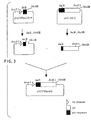
- Fig. 3 is the schematic diagram showing the procedures of constructing plasmid pUCTRPproD3.
- pUCTRPproD3 contains the promoter region derived from pUCTRPMTG(+)D2trp, the sequence encoding the pro-sequence of D3 and mature D3 sequence.
- Fig. 4 shows the chromatography on gel filtration and angiotensin converting-enzyme inhibitory activity of soybean protein hydrolysates with protease D3.
- Open square ( ⁇ ) represents the absorbance at 215nm and black circle ( ⁇ ) represents the inhibition rate (%) for the enzyme.
- Fig. 5 shows the chromatography on reverse-phase column chromatography and angiotensin converting enzyme inhibitory activity of the fractions that exhibited angiotensin converting enzyme inhibitory activity after gel-filtration of soybean protein hydrolysates solution with protease D3.
- Open square ( ⁇ ) represents the absorbance at 215nm and black circle ( ⁇ ) represents the inhibition rate (%) for the enzyme.
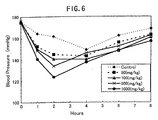
- Fig. 6 shows the hypotensive effect of the soybean protein hydrolysates solution prepared with protease D3.
- Black diamond represents the change in the blood pressure in SHR rats for the case in which the control solution was given
- black rectangular ( ⁇ ), black triangle ( ⁇ ), cross mark (X) and black circle ( ⁇ ) represent the case in which 100mg/kg, 500mg/kg and 1000mg/kg of soybean protein hydrolysates prepared with D3 was given, respectively.
- hydrolysates containing the peptides of the present invention may be easily prepared in large quantity with protease D3.
- Protease D3 used for producing hydrolysates containing the peptides of the present invention is the proteolytic enzyme which allows the production of peptides having low bitterness, as described above.
- Protease D3 may be obtained from, for example, germinating soybean cotyledons at about day 10 of germination according to the method described in JP-Kokai No. 8-264.
- recombinant protease D3 rD3
- Recombinant protease D3 can be also obtained by autocatalytic processing of recombinant inactive protease proD3 having pro-sequence.
- Recombinant proD3 may be produce in, for example, E.coli, yeast or Aspergillus.
- Protease D3 derived from germinating soybean cotyledons is described in JP-Kokai No. 9-121870.
- D3- ⁇ and D3- ⁇ are described as recombinant D3s, both of which may be used for producing the peptides of the present invention.
- rD3 may be produced by using trp promoter, as the promoter which can be easily induced by Tryptophan defective medium and the clone pUCa (JP-Kokai No. 9-12-121870, FERM NP-7835 (originally deposited as FERM P-14687) (Independent Administrative Agency, National Institute of Advance Industrial Science and Technology, Tsukuba Central 6, 1-1, Higashi 1-Chome Tsukuba-shi, Ibaraki-ken, 305-8566 Japan)).
- trp promoter as the promoter which can be easily induced by Tryptophan defective medium and the clone pUCa
- JP-Kokai No. 9-12-121870, FERM NP-7835 originally deposited as FERM P-14687) (Independent Administrative Agency, National Institute of Advance Industrial Science and Technology, Tsukuba Central 6, 1-1, Higashi 1-Chome Tsukuba-shi, Ibaraki-ken, 305-8566 Japan)
- Trp promoter is a strong promoter.
- plasmid pTTG2-22 JP-Kokai No.6-225775
- TG Crysophrys major transglutaminase
- plasmid pUCTRPMTG(+)D2 JP-Kokai No.
- the conversion into high-active D3 by autocatalytic activation may be conducted in the condition described in JP-Kokai No. 9-121870, namely by subjecting proD3 to 200mM NaCl solution at about pH 4, and incubating at between about 30°C and about 50°C, preferably at between about 35°C and about 45°C.
- This enzyme may be reacted with proteins at pH 3 to pH 7, preferably at pH 3.5 to 5.5, at about 30°C to 50°C, preferably at about 35°C to 45°C.
- Protease D3 can hydrolyze proteins very efficiently at these conditions to generate the peptides of the present invention.
- the peptides of the present invention may be produced with D3 on soybean proteins, particularly soybean storage proteins.
- the substrates for protease D3 may be purified soybean proteins, but the products obtained by merely grinding or suspending proteins, optionally processing proteins with acids or alkali or those followed by removing the insoluble fractions by centrifugation or filtration can also be used.
- the degradation may be conducted by adjusting the substrate solution such as those described above to about pH 3 - 7, preferably about pH 3.5 - 5.5, particularly preferably about pH 4.0 - pH 5.0, adding to the solution rD3 prepared as described above such that the ratio of substrate to enzyme (substrate/enzyme) will be about 100/1 - 1000/1 and incubating for 6 - 60 hours at about 30°C to about 50°C, preferably at about 35°C to about 45°C. After incubating, the supernatant can be obtained by, for example, centrifugation after inactivating the enzyme by, for example, heating.
- the supernatant may be neutralized with, for example, NaOH, and recovering the hydrolysates by, for example, freeze-drying, to obtain crude hydrolysates containing the peptides of the present invention.
- the crude proteolytic degradation product containing the peptides of the present invention may be further purified.
- the fact that the peptides of the present invention have the molecular weight raging 654 to 1029 may be utilized.
- the high molecular weight fraction having the molecular weight of 2000 or more may be removed by gel filtration chromatography and the low molecular weight fraction may be further fractionated by reverse-phase chromatography.
- the angiotensin converting enzyme inhibitory activity in these fractions may be confirmed as follows.
- substances which may be the substrate of angiotensin converting enzyme such as p-hydroxyl benzoyl glycyl-L-histidyl -L-leucine, an angiotensin converting enzyme such as the commercially available rabbit pulmonal angiotensin converting enzyme and the aforementioned partially purified fraction to give rise to the reaction and determined the activity by colorimetric analysis of the reaction solution.
- angiotensin converting enzyme such as p-hydroxyl benzoyl glycyl-L-histidyl -L-leucine
- an angiotensin converting enzyme such as the commercially available rabbit pulmonal angiotensin converting enzyme and the aforementioned partially purified fraction to give rise to the reaction and determined the activity by colorimetric analysis of the reaction solution.
- the peptides of the present invention are obtained by further purifying the hydrolysates obtained by the methods such as the aforementioned method or by further purifying the partially purified fractions of the hydrolysates.
- the techniques for purifying proteins are well known, which include ion-exchange chromatography, reverse phase high-performance liquid chromatography, affinity chromatography and the like.
- the peptides of the present invention are chemically synthesized.
- the peptides of the present invention can be synthesized according to the conventional peptide synthesizing methods such as solid phase synthesis.
- the thus synthesized peptides may be purified by, for example, ion-exchange chromatography, reverse phase high-performance liquid chromatography, affinity chromatography and the like.
- Such solid phase synthesis techniques and the subsequent purification of peptides are well known in the art.
- angiotensin converting enzyme inhibitor peptides may be used in any type of food products, beverages or medical diet. Additionally, the hydrolysates prepared according to the methods of the present invention may be used as the materials for foods after being appropriately processed dependent on the purpose.
- the angiotensin converting enzyme inhibitory peptides of the present invention may be used as antihypertensive.
- the peptides or the hydrolysates of the present invention, alone or together with various pharmaceutically acceptable carriers or additives, may be orally or parenterally administered, but it is preferable to administer them orally, and most preferably they will be administered by mixing them into foods or beverages as described above.
- the suitable dosage for aforementioned purpose may be determined depending on the intended therapeutic effects, the manner of administration, the duration of therapy, the age and the body weight.
- 100mg/(kg body weight) to 1000mg/(kg body weight) or more is preferable as one dosage.
- the angiotensin converting enzyme inhibitory peptides of the present invention has no adverse effects or has minimum adverse effects, if any, and they can be therefore ingested more than 1000mg/kg body weight or ingested plural times a day with foods or beverages over a long period.
- the other methods for oral administration or the formulations for parenteral administration may be obtained according to the conventional formulation methods depending on the purpose and the manner of administration by mixing with, for example, inert diluents such as lactose, calcium carbonate or calcium phosphate, swelling agents such as alginic acid, cornstarch or starch, sweetening agents such as sucrose, lactose or saccharine, aromatics, coloring agents, humectants such as magnesium stearate and talc or excipients such as wax.
- inert diluents such as lactose, calcium carbonate or calcium phosphate
- swelling agents such as alginic acid, cornstarch or starch
- sweetening agents such as sucrose, lactose or saccharine
- aromatics such as coloring agents
- humectants such as magnesium stearate and talc
- excipients such as wax.
- D3- ⁇ cDNA SEQ ID NO:6
- cDNA library prepared with mRNA obtained from germinating soybean cotyledons was introduced into an expression vector being capable of functioning in E.coli.
- D3 gene the clone pUCa (JP-Kokai No. 9-121870, FERM BP-7835 (originally deposited as P-14687)) was used wherein the full length D3- ⁇ cDNA had been integrated.
- the integration of DNA fragment was conducted by PCR to ligating trp promoter to the upstream region of D3- ⁇ cDNA. Firstly, the region containing trp promoter (SEQ ID NO:8) from MTG expression plasmid pUCTRPMTG(+)D2 (JP-Kokai No. 11-75876) and the partial region of the D3 cDNA from pUCa were amplified by PCR.
- the primers for amplifying trp promoter were TRP-N2 (SEQ ID NO:9) and TRP-C2 (SEQ ID NO:10) and the primers for partially amplifying D3 were D3-N (SEQ ID NO: 11) and D3-C (SEQ ID NO:12)3 wherein TRP-N2 and D3-N were sense primers, and TRP-C2 and D3-C were antisense primers.
- D3-N was designed such that it could connect 11 bases sequence for ligation with the sequence containing trp promoter and the initiating ATG codon to the sequence starting at TAC encoding Tyr at position -107 (supposed to be the starting point of pro-sequence) of D3 indicated as SEQ ID NO:6. This sequence is complementary to the sequence in TRP-C2. Hindlll site was introduced into D3-C.
- PCR was conducted for pUCTRPMTG(+)D2 using the primer TRP-N2 and TRP-C2, and for pUCa using the primer D3-N and D3-C, under the condition of 35 cycles of [94°C for 30 seconds, 72°C for 2 minutes], respectively.
- Each PCR product was extracted with phenol/chloroform, precipitated with ethanol and was dissolved in 100 ⁇ l of H 2 O.
- the product of the second PCR was extracted with phenol/chloroform, precipitated with ethanol, digested with Hindlll and EcoRl, and subcloned into pUC 18 to obtain pUCTRPproD3-N (Fig. 1), the sequence of which was confirmed.
- D3-C2 is the primer for mutating TGT encoding Cys of residue No. 248 in the amino acid sequence indicated as SEQ ID NO:6 to TGA, the stop codon.
- PCR was conducted for pUCa using the primers D3-N2 and D3-C2 under the condition of 35 cycles of [94°C for 30 seconds, 55°C for 1 minute and 72°C for 3 minutes]. Each PCR product was extracted with phenol/chloroform and was cloned into Smal site of pUC18 to obtain pUC-D3-C (Fig. 2), of which sequence was confirmed.
- ProD3 expression plasmid driven by trp promoter was generated by using the partial fragment of thus obtained plasmid. Namely, Sacll-Hindlll fragment (large) of pUCTRPproD3-N and SacII-HindIII fragment (small) of pUC-D3-C were ligated to obtain pUCTRPproD3 (Fig. 3).
- the proD3 expression plasmid obtained according to Reference Example 1 was expressed in E.coli to finally obtain D3 in its active form.
- E.coli strain JM109 (Takarashuzo CO., Ltd.) was transformed with pUCTRPproD3 and was selected on agar plates containing ampicillin to obtain transformants. The transformants were inoculated on M9-casamino acid medium containing ampicillin and cultured at 37°C for about 20 hours. Consequently, the intended D3 gene product was accumulated as protein inclusion bodies within the cells.
- the cells were sonicated and the protein inclusion bodies were recovered by centrifugation.
- the protein inclusion bodies were washed and dissolved in 8M urea - 10mM dithiothreitol - 50mM NaCI - 50mM Tris-HCI - 5mM disodium ethylenediaminetetraacetate solution (pH 8).
- the resulted solution was also referred to as "solubilized proD3 solution”.
- the three-dimensional structural reconversion (refolding) of the denatured proD3 in the solubilized proD3 solution into proD3 having the naturally occurring three-dimensional structure was carried out according to the following procedures.
- solubilized proD3 solution 2.5ml was added to PD-10 column (Amersham Bioscience), which had been previously equilibrated with 1mM reduced glutathione - 0.1 to 0.5mM oxidized glutathione - 50mM potassium phosphate - 5mM disodium ethylenediaminetetraacetate solution (pH 10.5) and then 3.5ml of 50mM potassium phosphate (pH 10.5) was added. The eluent was recovered as refolded proD3.
- proD3 having the molecular weight of about 41 k was converted to highly active D3 having the molecular weight of about 30k. This highly active D3 was used for proteolytic hydrolysis.
- the peptides prepared as described in Example 1 were dissolved to the concentration of 5mg/ml, subjected to gel filtration column (Superdex75 HR 10/30; Amersham Bioscience) after filtration, and the fractions having the molecular weight of 2000 or less were divided to seven fractions. 0.05% TFA was used as a mobile phase, and the flow rate was 0.5ml/min. and the detection was carried out by determining the absorbance at 215nm. The angiotensin converting enzyme inhibitory activity of each fraction was determined and five fractions, G1 to G5 (Fig.
- the active fractions obtained by gel filtration were then fractionated by using reverse column COSMOSIL 5C18 ARA4.6/250 (Nakarai Tesque).
- Solution A distilled water containing 0.05% TFA
- solution B acetonitrile containing 0.065% TFA
- concentration gradient technique where the concentration of solution B increased from 0% to 50% for 50 minutes with the flow rate of 0.75ml/min. 0.75ml aliquots were collected.
- the results showed that the angiotensin conversion enzyme inhibitory activity tend to be high when the concentration gradient of solution B is in the range from about 20% to 30% of solution B (Fig. 5).
- candidate peptides Five peptides were selected which were expected from the sequence to be derived from storage proteins taking large scale preparation into account, and which contained Pro residue or which were expected to have high hydrophobicity.
- the peptides were synthesized by solid phase method. The procedure of synthesizing Tyr-Val-Val-Phe-Lys is described below. 50mg of Fmoc-Lys(Boc) resin (p-alkoxy benzyl alcohol resin into which Fmoc-Lys(Boc)-OH was introduced at a ratio of 0.48mmol/g resin; Nova Biochem) was suspended in DMF (1 ml) and the suspension was shaken for 1 hour to allow the resin to swell.
- Fmoc-Lys(Boc) resin p-alkoxy benzyl alcohol resin into which Fmoc-Lys(Boc)-OH was introduced at a ratio of 0.48mmol/g resin; Nova Biochem
- the resin was subjected to the following Fmoc group removing cycle and Fmoc amino acid condensation cycle.
- Fmoc group removing cycle (a - d) and Fmoc amino acid condensation cycle (f - h) were repeated similarly to condense Fmoc-Val-OH, Fmoc-Val-OH and Fmoc-Tyr(But)-OH (all of them were supplied by Nova Biochem) sequentially to obtain Fmoc-Tyr(But)-Val-Val-Phe-Lys(Boc)resin.
- Isolated soybean protein (AP-SU, Ajinomoto Co., Inc.) were dissolved in 50ml of deionized water, denatured at 120°C for 20 minutes and adjusted to pH 4.5. D3 was added to 0.5% of the substrate and allowed to react on the substrate at 40°C for 48 hours. After the reaction was completed the mixture was centrifuged and the pH of the supernatant was adjusted to about neutral point. The supernatant was then heated to 100°C for 10 minutes to inactivate the enzyme. After cooling on ice, desalination was carried out by using an electrodialyzer (Micro Acilyzer G3, Asahikasei, AC-110-800 cartridge); the product was freeze-dried and stored. The average molecular weight of the obtained hydrolysates was 1053. IC 50 value, the concentration for 50% inhibition against ACE, was 180 ⁇ g/ml as measured according to the same method as described in Example 4.
- the 9 weeks old spontaneously hypertensive model rats (SHR/lzm:SPF) were purchase from Japan SLC Co.
- the rats were pre-fed including quarantine of one week.
- the animals which did not exhibit any abnormality were used to estimate the hypotensive effect of hydrolysates.
- the animals were kept separately in movable stainless rack in the environment of 22 ⁇ 3°C, 50 ⁇ 20% humidity, 12 hours light/dark cycle (8:00 - 20:00) and 13-17 times/hour ventilation.
- the animals were fed with solid diet, Labo MR Stock (Nihon Mattan Industry, Co.), by stainless solid diet feeder and, for the water, the animals received tap water through a polysulphone waterer, and both of them were given ad libitum.
- soybean protein hydrolysates The amount of the soybean protein hydrolysates in each group was shown in Table 3.
- the hydrolysates were dissolved in distilled water (Otuka Distilled Water, Otuka Pharmaceutical Co., Ltd.).
- the control group received only the distilled water. 4 hours after receiving them, the rats were given 9g of feed, when the measurement was finished.
- the amount of hydrolysates given in each group Group Received amount (mg/kg) Received Volume (ml/kg) Number of animals Control 0 10 7 soybean protein hydrolysates 50 10 7 100 10 7 500 10 7 1000 10 7
- the tests were carried out by determining the blood pressure and heart rate of 10 weeks old SHR rat by using noninvasive automated blood pressure manometer for small animals (MK-2000, Muromachi Kikai, Co.). Classification was carried out by stratified sequential randomized controlled trial using systolic blood pressure as the indicator. After grouping, the rats were starved overnight, and then the test samples were orally injected at 10ml/(kg body weight). After 0, 1, 2, 4 and 6 hours, the blood pressure and heart rate of the rats were determined. The significant difference between each group was determined by comparing the average values for each group which received the sample against the control group using Tukey-Kramer method (StatView-J 5.0) and the significant difference was to be recognized when the significance level was 5% or less.
- Tukey-Kramer method StatView-J 5.0
- soybean protein hydrolysate was shown to exhibit significant hypotensive effect in vivo at the administration of 100mg/(kg body weight) or more in SHR and the dosage response was observed.
- biologically active peptides namely, angiotensin converting enzyme inhibitor peptides, which are derived from soybean protein and which have improved taste
- angiotensin converting enzyme inhibitor peptides which are derived from soybean protein and which have improved taste
- enzymatic hydrolysates containing angiotensin converting enzyme inhibitor peptides having low bitterness can be produced.
- soybean protein hydrolysates containing these peptides have the hypotensive effect.
- the angiotensin converting enzyme inhibitory peptides of the present invention and the hydrolysates containing the peptides can be used for various foods including healthy foods having hypotensive effect.
Landscapes
- Chemical & Material Sciences (AREA)
- Life Sciences & Earth Sciences (AREA)
- Health & Medical Sciences (AREA)
- Organic Chemistry (AREA)
- Biochemistry (AREA)
- Engineering & Computer Science (AREA)
- General Health & Medical Sciences (AREA)
- Nutrition Science (AREA)
- Food Science & Technology (AREA)
- Polymers & Plastics (AREA)
- Proteomics, Peptides & Aminoacids (AREA)
- Medicinal Chemistry (AREA)
- Molecular Biology (AREA)
- Biophysics (AREA)
- Genetics & Genomics (AREA)
- Chemical Kinetics & Catalysis (AREA)
- General Chemical & Material Sciences (AREA)
- Nuclear Medicine, Radiotherapy & Molecular Imaging (AREA)
- Gastroenterology & Hepatology (AREA)
- Animal Behavior & Ethology (AREA)
- Mycology (AREA)
- Public Health (AREA)
- Veterinary Medicine (AREA)
- Botany (AREA)
- Pharmacology & Pharmacy (AREA)
- Bioinformatics & Cheminformatics (AREA)
- Cardiology (AREA)
- Heart & Thoracic Surgery (AREA)
- Medicines That Contain Protein Lipid Enzymes And Other Medicines (AREA)
- Peptides Or Proteins (AREA)
- Preparation Of Compounds By Using Micro-Organisms (AREA)
- Medicines Containing Plant Substances (AREA)
- Coloring Foods And Improving Nutritive Qualities (AREA)
Applications Claiming Priority (5)
| Application Number | Priority Date | Filing Date | Title |
|---|---|---|---|
| JP2001007400 | 2001-01-16 | ||
| JP2001007400 | 2001-01-16 | ||
| JP2001308974 | 2001-10-04 | ||
| JP2001308974 | 2001-10-04 | ||
| PCT/JP2002/000194 WO2002055546A1 (fr) | 2001-01-16 | 2002-01-15 | Inhibiteurs de l'enzyme de conversion de l'angiotensine |
Publications (2)
| Publication Number | Publication Date |
|---|---|
| EP1352911A1 true EP1352911A1 (fr) | 2003-10-15 |
| EP1352911A4 EP1352911A4 (fr) | 2007-11-28 |
Family
ID=26607750
Family Applications (1)
| Application Number | Title | Priority Date | Filing Date |
|---|---|---|---|
| EP02729576A Withdrawn EP1352911A4 (fr) | 2001-01-16 | 2002-01-15 | Inhibiteurs de l'enzyme de conversion de l'angiotensine |
Country Status (4)
| Country | Link |
|---|---|
| US (1) | US20040014670A1 (fr) |
| EP (1) | EP1352911A4 (fr) |
| JP (1) | JP3893616B2 (fr) |
| WO (1) | WO2002055546A1 (fr) |
Families Citing this family (8)
| Publication number | Priority date | Publication date | Assignee | Title |
|---|---|---|---|---|
| JP2006052171A (ja) * | 2004-08-12 | 2006-02-23 | Gunze Ltd | Ace阻害剤 |
| JP2009040696A (ja) * | 2007-08-07 | 2009-02-26 | Kikkoman Corp | 新規アンジオテンシン変換酵素阻害ペプチド |
| JP2010163400A (ja) * | 2009-01-19 | 2010-07-29 | Kikkoman Corp | 新規アンジオテンシン変換酵素阻害ペプチド |
| JP2010248096A (ja) * | 2009-04-13 | 2010-11-04 | Rheology Kino Shokuhin Kenkyusho:Kk | Trp含有ペプチド |
| JP2013241470A (ja) * | 2013-08-30 | 2013-12-05 | Kikkoman Corp | ペプチド含有組成物 |
| WO2017010133A1 (fr) * | 2015-07-16 | 2017-01-19 | サントリーホールディングス株式会社 | Composition qui contient un peptide dérivé d'un végétal ou d'un animal et qui inhibe la carnosinase sérique |
| CN112125952B (zh) * | 2019-06-06 | 2021-11-30 | 中国科学院大连化学物理研究所 | 一种猪源ace抑制活性多肽与药物组合物或食品及应用 |
| US11980627B2 (en) | 2019-06-14 | 2024-05-14 | Joshua O. Atiba | Triple pharmaceutical composition for proteinaceous infection |
Family Cites Families (4)
| Publication number | Priority date | Publication date | Assignee | Title |
|---|---|---|---|---|
| JPH0725793B2 (ja) * | 1989-11-24 | 1995-03-22 | 農林水産省食品総合研究所長 | アンギオテンシン変換酵素阻害物質 |
| JPH08269087A (ja) * | 1992-03-02 | 1996-10-15 | Fumio Yamauchi | 新規なテトラペプチド、ペンタペプチドその製法およびそれらを有効成分とする血圧降下剤 |
| JP2000083695A (ja) * | 1998-09-16 | 2000-03-28 | Ajinomoto Co Inc | 低苦味ペプチドの製造法 |
| US6303359B1 (en) * | 1999-03-15 | 2001-10-16 | Ajinomoto Co., Inc. | DNA molecule encoding new aminopeptidase, and method of producing the aminopeptidase |
-
2002
- 2002-01-15 WO PCT/JP2002/000194 patent/WO2002055546A1/fr not_active Ceased
- 2002-01-15 EP EP02729576A patent/EP1352911A4/fr not_active Withdrawn
- 2002-01-15 JP JP2002556614A patent/JP3893616B2/ja not_active Expired - Fee Related
-
2003
- 2003-07-15 US US10/618,644 patent/US20040014670A1/en not_active Abandoned
Also Published As
| Publication number | Publication date |
|---|---|
| JPWO2002055546A1 (ja) | 2004-05-13 |
| EP1352911A4 (fr) | 2007-11-28 |
| US20040014670A1 (en) | 2004-01-22 |
| JP3893616B2 (ja) | 2007-03-14 |
| WO2002055546A1 (fr) | 2002-07-18 |
Similar Documents
| Publication | Publication Date | Title |
|---|---|---|
| Zhang et al. | Identification of novel angiotensin I-converting enzyme (ACE) inhibitory peptides from wheat gluten hydrolysate by the protease of Pseudomonas aeruginosa | |
| Kodera et al. | Identification of an angiotensin I‐converting enzyme inhibitory peptides from protein hydrolysates by a soybean protease and the antihypertensive effects of hydrolysates in 4 spontaneously hypertensive model rats | |
| Abubakar et al. | Structural analysis of new antihypertensive peptides derived from cheese whey protein by proteinase K digestion | |
| Maruyama et al. | Angiotensin I-converting enzyme inhibitory activity of the C-terminal hexapeptide of αs1-casein | |
| US7597904B2 (en) | Metalloproteinase inhibitory agent | |
| CA2825157C (fr) | Agent de traitement therapeutique ou preventif du diabete | |
| JP2010520274A (ja) | ホエーからのace抑制ペプチド及び同物を提供する方法 | |
| KIM et al. | Novel angiotensin-I-converting enzyme inhibitory peptides derived from recombinant human αs1-casein expressed in Escherichia coli | |
| US5338668A (en) | Opioid peptides derived from wheat proteins | |
| CA2546497A1 (fr) | Hydrolysat de caseine et son procede de production et d'utilisation | |
| JP2009500404A (ja) | アンギオテンシン変換酵素を阻害するペプチド | |
| Sutopo et al. | Screening potential hypertensive peptides using two consecutive bioassay-guided SPE fractionations and identification of an ACE inhibitory peptide, DHSTAVW (DW7), derived from pearl garlic protein hydrolysate | |
| EP1352911A1 (fr) | Inhibiteurs de l'enzyme de conversion de l'angiotensine | |
| OHTA et al. | Antihypertensive action of the orally administered protease hydrolysates of chum salmon head and their angiotensin I-converting enzyme inhibitory peptides | |
| US7125702B2 (en) | Process for the preparation of angiotensis converting enzyme (ACE) inhibitors and its use | |
| López-Fandiño et al. | Egg-protein-derived peptides with antihypertensive activity | |
| Hwang et al. | Angiotensin I-converting enzyme inhibitory activity of protein hydrolysates from tuna broth | |
| JP3651878B2 (ja) | 畜肉タンパク質由来の血圧降下ペプチド | |
| Katayama et al. | Peptic hydrolysate of porcine crude myosin has many active fractions inhibiting angiotensin I-converting enzyme | |
| JP3637066B2 (ja) | アンジオテンシン転換酵素阻害剤 | |
| JP2006347937A (ja) | 畜肉タンパク質由来の血圧降下ペプチド | |
| KR100600578B1 (ko) | 가자미 프레임으로부터 분리한 가수분해물 및 이를함유하는 항고혈압 조성물 | |
| JPH10212245A (ja) | アンジオテンシン変換酵素阻害剤 | |
| Kim et al. | Production of angiotensin-I converting enzyme inhibitory hydrolysates from egg albumen | |
| JP2004067553A (ja) | アンギオテンシン変換酵素阻害ペプチド |
Legal Events
| Date | Code | Title | Description |
|---|---|---|---|
| PUAI | Public reference made under article 153(3) epc to a published international application that has entered the european phase |
Free format text: ORIGINAL CODE: 0009012 |
|
| 17P | Request for examination filed |
Effective date: 20030708 |
|
| AK | Designated contracting states |
Kind code of ref document: A1 Designated state(s): AT BE CH CY DE DK ES FI FR GB GR IE IT LI LU MC NL PT SE TR |
|
| AX | Request for extension of the european patent |
Extension state: AL LT LV MK RO SI |
|
| A4 | Supplementary search report drawn up and despatched |
Effective date: 20071025 |
|
| STAA | Information on the status of an ep patent application or granted ep patent |
Free format text: STATUS: THE APPLICATION HAS BEEN WITHDRAWN |
|
| 18W | Application withdrawn |
Effective date: 20071214 |