EP1357744B1 - Gestion de resssources de contrôle télévisuel - Google Patents
Gestion de resssources de contrôle télévisuel Download PDFInfo
- Publication number
- EP1357744B1 EP1357744B1 EP03005432A EP03005432A EP1357744B1 EP 1357744 B1 EP1357744 B1 EP 1357744B1 EP 03005432 A EP03005432 A EP 03005432A EP 03005432 A EP03005432 A EP 03005432A EP 1357744 B1 EP1357744 B1 EP 1357744B1
- Authority
- EP
- European Patent Office
- Prior art keywords
- media resource
- control
- software object
- media
- request
- Prior art date
- Legal status (The legal status is an assumption and is not a legal conclusion. Google has not performed a legal analysis and makes no representation as to the accuracy of the status listed.)
- Expired - Lifetime
Links
Images


Classifications
-
- H—ELECTRICITY
- H04—ELECTRIC COMMUNICATION TECHNIQUE
- H04N—PICTORIAL COMMUNICATION, e.g. TELEVISION
- H04N21/00—Selective content distribution, e.g. interactive television or video on demand [VOD]
- H04N21/40—Client devices specifically adapted for the reception of or interaction with content, e.g. set-top-box [STB]; Operations thereof
- H04N21/41—Structure of client; Structure of client peripherals
- H04N21/414—Specialised client platforms, e.g. receiver in car or embedded in a mobile appliance
- H04N21/4147—PVR [Personal Video Recorder]
-
- H—ELECTRICITY
- H04—ELECTRIC COMMUNICATION TECHNIQUE
- H04N—PICTORIAL COMMUNICATION, e.g. TELEVISION
- H04N21/00—Selective content distribution, e.g. interactive television or video on demand [VOD]
- H04N21/40—Client devices specifically adapted for the reception of or interaction with content, e.g. set-top-box [STB]; Operations thereof
- H04N21/41—Structure of client; Structure of client peripherals
- H04N21/4104—Peripherals receiving signals from specially adapted client devices
- H04N21/4122—Peripherals receiving signals from specially adapted client devices additional display device, e.g. video projector
-
- H—ELECTRICITY
- H04—ELECTRIC COMMUNICATION TECHNIQUE
- H04N—PICTORIAL COMMUNICATION, e.g. TELEVISION
- H04N21/00—Selective content distribution, e.g. interactive television or video on demand [VOD]
- H04N21/40—Client devices specifically adapted for the reception of or interaction with content, e.g. set-top-box [STB]; Operations thereof
- H04N21/41—Structure of client; Structure of client peripherals
- H04N21/426—Internal components of the client ; Characteristics thereof
-
- H—ELECTRICITY
- H04—ELECTRIC COMMUNICATION TECHNIQUE
- H04N—PICTORIAL COMMUNICATION, e.g. TELEVISION
- H04N21/00—Selective content distribution, e.g. interactive television or video on demand [VOD]
- H04N21/40—Client devices specifically adapted for the reception of or interaction with content, e.g. set-top-box [STB]; Operations thereof
- H04N21/43—Processing of content or additional data, e.g. demultiplexing additional data from a digital video stream; Elementary client operations, e.g. monitoring of home network or synchronising decoder's clock; Client middleware
- H04N21/432—Content retrieval operation from a local storage medium, e.g. hard-disk
- H04N21/4325—Content retrieval operation from a local storage medium, e.g. hard-disk by playing back content from the storage medium
-
- H—ELECTRICITY
- H04—ELECTRIC COMMUNICATION TECHNIQUE
- H04N—PICTORIAL COMMUNICATION, e.g. TELEVISION
- H04N21/00—Selective content distribution, e.g. interactive television or video on demand [VOD]
- H04N21/40—Client devices specifically adapted for the reception of or interaction with content, e.g. set-top-box [STB]; Operations thereof
- H04N21/43—Processing of content or additional data, e.g. demultiplexing additional data from a digital video stream; Elementary client operations, e.g. monitoring of home network or synchronising decoder's clock; Client middleware
- H04N21/433—Content storage operation, e.g. storage operation in response to a pause request, caching operations
- H04N21/4334—Recording operations
-
- H—ELECTRICITY
- H04—ELECTRIC COMMUNICATION TECHNIQUE
- H04N—PICTORIAL COMMUNICATION, e.g. TELEVISION
- H04N21/00—Selective content distribution, e.g. interactive television or video on demand [VOD]
- H04N21/40—Client devices specifically adapted for the reception of or interaction with content, e.g. set-top-box [STB]; Operations thereof
- H04N21/43—Processing of content or additional data, e.g. demultiplexing additional data from a digital video stream; Elementary client operations, e.g. monitoring of home network or synchronising decoder's clock; Client middleware
- H04N21/435—Processing of additional data, e.g. decrypting of additional data, reconstructing software from modules extracted from the transport stream
-
- H—ELECTRICITY
- H04—ELECTRIC COMMUNICATION TECHNIQUE
- H04N—PICTORIAL COMMUNICATION, e.g. TELEVISION
- H04N21/00—Selective content distribution, e.g. interactive television or video on demand [VOD]
- H04N21/40—Client devices specifically adapted for the reception of or interaction with content, e.g. set-top-box [STB]; Operations thereof
- H04N21/43—Processing of content or additional data, e.g. demultiplexing additional data from a digital video stream; Elementary client operations, e.g. monitoring of home network or synchronising decoder's clock; Client middleware
- H04N21/442—Monitoring of processes or resources, e.g. detecting the failure of a recording device, monitoring the downstream bandwidth, the number of times a movie has been viewed, the storage space available from the internal hard disk
- H04N21/44231—Monitoring of peripheral device or external card, e.g. to detect processing problems in a handheld device or the failure of an external recording device
-
- H—ELECTRICITY
- H04—ELECTRIC COMMUNICATION TECHNIQUE
- H04N—PICTORIAL COMMUNICATION, e.g. TELEVISION
- H04N21/00—Selective content distribution, e.g. interactive television or video on demand [VOD]
- H04N21/40—Client devices specifically adapted for the reception of or interaction with content, e.g. set-top-box [STB]; Operations thereof
- H04N21/43—Processing of content or additional data, e.g. demultiplexing additional data from a digital video stream; Elementary client operations, e.g. monitoring of home network or synchronising decoder's clock; Client middleware
- H04N21/443—OS processes, e.g. booting an STB, implementing a Java virtual machine in an STB or power management in an STB
-
- H—ELECTRICITY
- H04—ELECTRIC COMMUNICATION TECHNIQUE
- H04N—PICTORIAL COMMUNICATION, e.g. TELEVISION
- H04N5/00—Details of television systems
- H04N5/76—Television signal recording
- H04N5/765—Interface circuits between an apparatus for recording and another apparatus
- H04N5/775—Interface circuits between an apparatus for recording and another apparatus between a recording apparatus and a television receiver
-
- H—ELECTRICITY
- H04—ELECTRIC COMMUNICATION TECHNIQUE
- H04N—PICTORIAL COMMUNICATION, e.g. TELEVISION
- H04N21/00—Selective content distribution, e.g. interactive television or video on demand [VOD]
- H04N21/40—Client devices specifically adapted for the reception of or interaction with content, e.g. set-top-box [STB]; Operations thereof
- H04N21/47—End-user applications
- H04N21/478—Supplemental services, e.g. displaying phone caller identification, shopping application
-
- H—ELECTRICITY
- H04—ELECTRIC COMMUNICATION TECHNIQUE
- H04N—PICTORIAL COMMUNICATION, e.g. TELEVISION
- H04N5/00—Details of television systems
- H04N5/76—Television signal recording
- H04N5/765—Interface circuits between an apparatus for recording and another apparatus
Definitions
- This invention relates to a television entertainment system and, in particular, to controlling access to multiple media resources within the system.
- Television entertainment systems include a plurality of media resources, for example, one or more tuners for receiving media content that is being broadcast, and one or more video ports for displaying media content.
- a basic television may have one tuner and one video port, allowing a user to view media being broadcast on only one channel at a time.
- a television entertainment system that includes one video port, two tuners, and a recording device (e.g., digital video recorder (DVR) hardware) provides more options. For example, a user may be able view media being broadcast on one channel (using the video port and one tuner), while recording media being broadcast on another channel, by allowing the DVR to control the second tuner.
- DVR digital video recorder
- Television entertainment systems with multiple media resources e.g., tuners and video ports
- a plurality of devices capable of controlling the media resources e.g., media recording devices, interactive game systems, etc.
- the media resources e.g., media recording devices, interactive game systems, etc.
- a user may program the first recorder to begin recording a two-hour movie on channel 2 at 3:00 pm.
- the user may program the second recorder to begin recording a half-hour sitcom on channel 4 at 3:30pm.
- the first recorder controls the tuner from 3:00 pm until 3:30 pm.
- a decision must be made as to whether to allow the first recorder to continue recording the movie or stop the first recorder and allow the second recorder to record the half-hour sitcom.
- US 6,363,434 relates to a home entertainment system where different multimedia devices are coupled via a communication protocol using IEEE 1394 communication standard.
- One embodiment defines a home server, which is connected via an IEEE 1394 bus. All resources of a home entertainment network are controlled and managed by a software resource manager located on the home server. The resources may, for example, be devices, routing paths between devices, etc.
- the home server further includes a plurality of software device proxies, each for controlling one of the devices of the home entertainment network.
- FR 2,779,595 relates to a plurality of devices connected via a network, e.g., IEEE 1394 standard.
- Each device may include one or more sub-devices which can be resources in the form of software modules or software elements.
- a device may be a digital television decoder or a video recorder.
- Each device is furnished with a "resource manager which manages the reservations for local resources.
- An application wishing to make a reservation for a resource may obtain control of the resource and addresses its control commands directly to the resource. The resource manager is not contacted subsequently other than to indicate whether the resource has been freed.
- WO 97/28630 relates to the communication between multiple electronic devices via interconnections.
- a VCR may include a tuner, as well as line inputs for receiving composite television signals from other A/V devices or a line output of a DSS unit. The line output of the VCR provides a composite television signal output to line input of a TV.
- a control microprocessor within the VCR controls the communication of control information to the DSS unit via a digital I/O port.
- One device can modify operations scheduled in another device that may involve an error or conflict in an effort to achieve the object of the original operation.
- EP 971 506 discloses a home network with plural media resource devices being reserved, released etc. by a resource manager.
- a client device within a television system includes one or more media resources that may be controlled by one or more instances of TV controls.
- An arbiter component monitors and facilitates access to and control of the media resources.
- a television entertainment system may include a plurality of media resources (e.g ., tuners and video ports) that can be controlled by one or more functional objects within a client device or by one or more distributed client devices.
- An example functional object within a client device is a digital video recorder implemented as part of a television set-top box.
- Other example client devices within a television entertainment system may include a television, a set-top box, a video cassette recorder (VCR), a digital video disc (DVD) player, and a digital video recorder (DVR).
- VCR video cassette recorder
- DVD digital video disc
- DVR digital video recorder
- One or more tuners and one or more video ports may be included as part of a device ( e .
- Client devices control media resources when performing device-specific functions.
- a DVR controls a tuner when recording a program that is being broadcast.
- the DVR controls a video port when playing a program that was previously recorded.
- a television controls both a tuner and a video port when displaying a program that is being broadcast on a particular channel.
- FIG. 1 illustrates an exemplary environment in which a system that controls access to media resources may be implemented.
- Exemplary environment 100 includes a television 102 and a client device 104.
- Client device 104 includes one or more media resources including, for example, one or more video ports 106 and one or more tuners 108.
- Video ports 106 are media resources that facilitate the display of video content.
- Tuners 108 are media resources that facilitate the reception of broadcast media by tuning, for example, to a particular broadcast channel.
- Client device 104 is also equipped with one or more TV controls 110 and an arbiter 112.
- TV controls 110 are software objects that may be instantiated by a client device, for example, a VCR, a television, a DVD player, or a DVR.
- TV controls 110 are objects that may have access to or control of one or more media resources.
- a TV control has an associated state that indicates the type of media resources the TV control has access to.
- Arbiter 112 is a module that monitors and facilitates access to and control of the video ports 106 and tuners 108 by the TV controls 110.
- Client device 104 optionally includes one or more applications 114.
- Applications 114 may include, for example a DVR application that can communicate with the arbiter 112, instantiate TV controls 110, and control one or more video ports 106 and/or tuners 108.
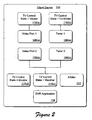
- FIG. 2 illustrates TV controls of various states within client device 104.
- This implementation shows the TV controls in four different states: “viewer”, “controller”, “watcher”, and “monitor”.
- Client device 104 includes two video ports 106(a) and 106(b) and two tuners 108(a) and 108(b).
- a TV control in the "viewer” state has access to and controls a video port, as represented by video port 106(a).
- DVR application 114 may instantiate a TV control in the "viewer” state to facilitate playing a pre-recorded tape.
- a TV control in the "controller” state has access to and controls a tuner, as represented by tuner 108(a).
- DVR application 114 may instantiate a TV control in the "controller" state to facilitate recording a program that is being broadcast on a television channel while the television is either off or is tuned to another channel. Because the DVR is capable of recording the program received through a tuner without displaying the same program through a video port, the associated TV control does not need to control a video port.
- a TV control in the "watcher” state has access to and controls both a tuner and a video port, as represented by tuner 108(b) and video port 106(b), respectively.
- a television set may instantiate a TV control in the "watcher” state to facilitate displaying a program that is currently being broadcast on a particular channel.
- a TV control in the "monitor" state is able to monitor both tuners and video ports, as represented by tuners 108(a) and 108(b) and video ports 106(a) and 106(b), but does not control a media resource.
- a TV control monitor allows one program module to receive notification of events that occur in another program module.
- a user interface module may use a TV control monitor object to receive notification of an OnTunerAcquired event when a program module, such as a DVR application 114 receives a particular tuner.
- One type of TV control monitor is able to listen to activity associated with one or more specific resources (e.g., a tuner).
- the TV control does not request any resources; it listens to activity associated with a specific resource or set of resources.
- TV control monitor represents a "collection" of all the TV controls in the system. Events occurring in association with resources are signaled through this collection object. Arbiter 112 may use the TV control "collection" object to listen to and act upon resource requests.
- Arbiter 112 monitors video ports 106 and tuners 108, and processes requests for control of media resources from TV controls 110. For example, if a new TV control is instantiated that requests access to and control of a video port, arbiter 112 receives the request. Arbiter 112 then determines whether to allow TV control 110(a) to continue to control video port 1 106(a) and whether to allow TV control 110(c) to continue to control video port 2 106(b).
- the arbiter 112 may request that either TV control 110(a) relinquish control of video port 1 106(a) or TV control 110(c) relinquish control of video port 2 106(b) so that the newly instantiated TV control can control video port 1 106(a) or video port 2 106(b), respectively.
- a television entertainment system may include a television and a set-top box with one tuner and two video ports.
- the two video ports enable the set-top box to output two video signals, possibly including other static graphics, to the input of the television, which may have two display regions (e.g ., picture-in-picture).
- Software running on the set-top box allows playback of programs recorded by DVR software in the set-top box, and tuning to broadcast channels using the tuner.
- the system is able to decode multiple DVR programs at once, and can playback DVR programs in either of the video regions.
- One of the video regions could instead be used for live video received through the tuner.
- both video regions it is not necessary for both video regions to be viewed at once, but there is a maximum of two video regions that can be visible at one time.
- a user may want to watch playback of a recorded show in the main television display region, while watching a live broadcast in a smaller picture-in-picture (PIP) window.
- the two television display regions are associated with the two available video ports. If a user decides to watch a second recorded DVR program in the PIP window instead of the live broadcast, control of one of the video ports must be re-assigned from the television to the DVR.
- a DVR playback module requests the video port from a live broadcast module to gain control of the video port in order to display the second recorded DVR program in the PIP window.
- FIG. 3 illustrates one exemplary TV control in more detail.
- the TV control is implemented to include methods for requesting, locking, and releasing media resources and event handlers that define the TV control's behavior in response to particular events.
- Examples of possible methods 302 used in TV control 110 include: RequestVideoPort, LockVideoPort, ReleaseVideoPort, RequestTuner, LockTuner, and ReleaseTuner.
- Examples of possible event handlers used in TV control 110 include: OnVideoPortRequested, OnVideoPortAcquired, OnVideoPortLost, OnTunerRequested, OnTunerAcquired, and OnTunerLost.
- a TV control executes the RequestVideoPort method or the RequestTuner method, respectively. For example, when a user signals a DVR to play a recorded program, the TV control instantiated by the DVR executes the RequestVideoPort method of the TV control to gain access to and control of a video port so that the recorded program can be displayed.
- the RequestVideoPort (or RequestTuner) method sends a request for control of a video port (or tuner) to the arbiter component 112. In an alternate implementation, the method sends the request directly to one or more video ports.
- Additional data can be passed along with the request in a code parameter.
- This data may be a string, a number, or another object that the arbiter or destination TV control object can use to identify the purpose of the request and aid in resolving resource conflicts.
- the code parameter may be further passed through the OnVideoPortRequested and OnTunerRequested event handlers.
- a TV control executes the LockVideoPort method or the LockTuner method, respectively.
- the TV control instantiated by the DVR may execute the LockTuner method to prevent any other TV control from forcing the TV control instantiated by the DVR to relinquish control of the tuner before the program is entirely recorded.
- This functionality may prevent a user from accidentally changing the channel to which the tuner is tuned while the DVR is in the record mode, resulting in an undesired recording.
- a TV control can set a lock flag as part of a request for a resource. If the resource is not immediately available, the request may remain pending until the resource is available. The lock flag indicates that the TV control it to be locked as the owner of the resource immediately after the resource is assigned to the TV control.
- a TV control executes the ReleaseVideoPort method or the ReleaseTuner method, respectively.
- the TV control instantiated by the DVR may execute the ReleaseTuner method, releasing the tuner controlled by the TV control instantiated by the DVR and making the tuner available for control by another TV control.
- the arbiter 112 is notified. If there is a pending request that can be filled using the released resource, the requesting object will be given control of resource.
- the arbiter 112 receives notification of a LostVideoPort or LostTuner event for one TVcontrol and receives notification of an AcquiredVideoPort or AcquiredTuner event for another TV control.
- Methods 302 described above are executed by a TV control to perform a particular task (e.g ., request a video port or tuner, lock a video port or tuner, or release a video port or tuner).
- event handlers 304 are executed by a TV control in response to a particular event.
- An OnVideoPortRequested event handler implemented as part of TV control 110 includes instructions that are executed when the TV control requests a video port.
- a user may be watching a channel that is currently being recorded by a DVR on a single-tuner system.
- the TV control associated with the television is responsible for tuning and viewing, and needs control of the tuner.
- the tuner is controlled and locked by the TV control associated with the DVR that is recording.
- the TV control associated with the television issues a RequestTuner method and may pass "Main TV" as a code. This request is sent to the TV control associated with the DVR as the OnTunerRequested event.
- the TV control associated with the DVR examines the code passed with the request and determines whether to release the tuner.
- the TV control associated with the DVR may ignore the request, in which case the channel being viewed by the user will not change.
- the TV control associated with the DVR may send a message instructing a user interface program module to display a message on the screen indicating that the user cannot change the channel because a program is currently being recorded by the DVR.
- An OnVideoPortAcquired event handler implemented as part of TV control 110 includes instructions that are executed when the TV control gains access to and control of a video port. For example, when TV control 110 executes the RequestVideoPort method, the OnVideoPortRequested event handler is also executed. When, in response to executing the RequestVideoPort method, TV control 110 gains control of a video port, the OnVideoPortAcquired event hander is executed.
- a user may be channel surfing when the DVR is scheduled to begin a recording.
- the DVR program module creates a new instance of a TV control that requires locked control of the tuner in order to perform the scheduled record.
- the TV control associated with the DVR calls the RequestTuner method. If the TV control that is currently controlling the tuner does not have the tuner locked, control of the tuner is automatically assigned to the TV control associated with the DVR (i.e., the TV control that called the RequestTuner method).
- the TV control associated with the DVR issues a command to tune to the appropriate channel and prepare to start recording.
- An OnVideoPortLost event handler implemented as part of TV control 110 includes instructions that are executed when the TV control loses control of a video port. For example, when TV control 110 executes the ReleaseVideoPort method and control of the video port is successfully relinquished, the OnVideoPortLost event handler is executed.
- An OnTunerRequested event handler, an OnTunerAcquired event handler, and an OnTunerLost event handler are implemented similarly.
- a TV control associated with the DVR has control of, and may have locked, the tuner. If an event from an emergency alert system (EAS) is detected, the set-top box may be directed to tune to another channel for emergency broadcast information.
- An EAS program module creates an instance of a TV control and requests locked control of the tuner.
- the TV control associated with the DVR receives the request and releases the tuner.
- the DVR receives notification of an OnTunerLost event. The DVR may use this event notification as a signal to stop recording.
- TV controls 110 communicate directly with the media resources (e.g., video ports 106 and tuners 108).
- an arbiter component 112 facilitates communication to and from the TV controls 110 and determines how media resources are allocated.
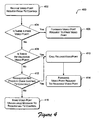
- FIG. 4 is an example flow diagram of video port allocation performed by an arbiter component.
- an arbiter component receives a request from a TV control for access to and control of a video port.
- TV control 110(a) executes a RequestVideoPort method, sending a request to arbiter 112 for control of a video port.
- the arbiter component determines whether there is an available video port to satisfy the request. If there is an available video port (i.e., the "yes" branch from block 404), the arbiter component forwards the video port request to the available video port (block 406). For example, if video port 1 106(a) is available when arbiter 112 receives a request via a RequestVideoPort method from TV Control 110(a), then arbiter 112 forwards the video port request to video port 1 106(a).
- the arbiter determines whether there is a video port that is being controlled by another TV control, but is not locked (block 408). If there is a video port that is controlled, but is not locked (i.e., the "yes” branch from block 408), the arbiter calls the ReleaseVideoPort method of the controlling TV control (block 410). Then, at block 414, when the TV control that has control of the unlocked video port releases the video port, the arbiter forwards the video port request to the released video port.
- TV control 110(a) has control of video port 1 106(a), but assume it does not have it locked. If arbiter 112 receives a video port request from a newly instantiated TV control (not shown), the arbiter 112 may call the ReleaseVideoPort method of TV control 110(a), forcing it to relinquish control of video port 1 106(a). The arbiter 112 may then forward the video port request received from the newly instantiated TV control to video port 1 106(a).
- the arbiter determines whether the requesting TV control has priority over a TV control currently controlling a video port. If the arbiter determines that the requesting TV control does have priority over a TV control currently controlling a video port (i.e., the "yes" branch from block 412), the process continues at block 410 as described above.
- the arbiter may determine priority based on a code passed by a TV control as part of a request.
- the arbiter determines that the requesting TV control does not have priority over a TV control currently controlling a video port (i.e., the "no" branch from block 412), then the arbiter generates and sends a message indicating that there are no available video ports to the requesting TV control.
- Tuner allocation may be performed by an arbiter component in the same way that video port allocation is described with reference to Figure 4 .
Landscapes
- Engineering & Computer Science (AREA)
- Multimedia (AREA)
- Signal Processing (AREA)
- Databases & Information Systems (AREA)
- Automation & Control Theory (AREA)
- Computer Networks & Wireless Communication (AREA)
- Software Systems (AREA)
- Two-Way Televisions, Distribution Of Moving Picture Or The Like (AREA)
- Selective Calling Equipment (AREA)
Claims (17)
- Dispositif client permettant de contrôler l'accès à une ou plusieurs ressource(s) multimédia dans un système multimédia, la ou les ressource(s) multimédia comportant au moins l'un d'un bloc d'accord (108) et d'un port vidéo (106), le dispositif client comportant:un ou plusieurs objet(s) logiciel(s) (110), chacun d'eux constituant un contrôle télévisuel capable d'accéder à la ou les ressource(s) multimédia et de la/les contrôler, et possédant un état associé qui indique le type de ressource multimédia à laquelle l'objet logiciel a accès, l'état associé étant l'un des états suivants:un état de visionneuse, dans lequel un objet logiciel a accès au port vidéo et le contrôle ;un état de contrôleur, dans lequel un objet logiciel a accès au bloc d'accord et le contrôle ;un état d'observateur, dans lequel un objet logiciel a accès à la fois au bloc d'accord et au port vidéo et les contrôle ;un état de moniteur, dans lequel un objet logiciel est capable de surveiller à la fois le bloc d'accord et le port vidéo, mais ne contrôle pas une ressource multimédia ; etun arbitre (112), constitué d'un module conçu pour surveiller la ou les ressource(s) multimédia et pour arbitrer le contrôle de la ou des ressource(s) multimédia au moyen du ou des objet(s) logiciel(s), dans lequel l'arbitrage comporte la réception d'une demande de contrôle de type de ressource multimédia provenant de l'un des objets logiciels et le traitement de la demande pour déterminer s'il y a lieu d'attribuer un autre objet logiciel pour poursuivre le contrôle d'une ressource multimédia dudit type de ressource multimédia ou s'il y a lieu de demander audit objet logiciel d'abandonner le contrôle de la ressource multimédia.
- Dispositif client selon la revendication 1, dans lequel l'arbitre, lors de la réception de la demande, détermine que la ressource multimédia est-disponible et réachemine la demande vers la ressource multimédia.
- Dispositif client selon la revendication 1, dans lequel l'arbitre, à réception de la demande, détermine que la ressource multimédia n'est pas disponible et empêche le réacheminement de la demande vers la ressource multimédia.
- Dispositif client selon la revendication 1, dans lequel l'arbitre, à réception de la demande provenant d'un premier objet logiciel, détermine que la ressource multimédia est contrôlée par un deuxième objet logiciel, et provoque l'abandon du contrôle de la ressource multimédia par le deuxième objet logiciel pour faciliter la prise de contrôle de la ressource multimédia par le premier objet logiciel.
- Dispositif client selon la revendication 4, dans lequel l'arbitre détermine en outre que le premier
objet logiciel possède une priorité supérieure à celle du deuxième objet logiciel en référence au contrôle de la ressource multimédia. - Dispositif client selon la revendication 1, comportant au moins l'un des éléments constitués d'un téléviseur, d'un lecteur de disque vidéo numérique, d'un boîtier décodeur de télévision, d'un enregistreur de vidéo numérique, d'un magnétoscope à cassettes et d'un boîtier décodeur de télévision possédant un enregistreur intégré de vidéo numérique.
- Dispositif client selon la revendication 6, dans lequel le ou les objet(s) logiciel(s) est/sont instancié(s) par au moins l'un des éléments constitués d'un téléviseur, d'un lecteur de disque vidéo numérique, d'un boîtier décodeur de télévision, d'un enregistreur de vidéo numérique, d'un magnétoscope à cassettes et d'un boîtier décodeur de télévision possédant un enregistreur intégré de vidéo numérique.
- Procédé de mise en oeuvre d'un dispositif client permettant de contrôler l'accès à une ou plusieurs ressource(s) multimédia, chacune des ressources multimédia possédant un type associé de ressource multimédia dans lequel le type de ressources multimédia comporte l'un d'un port vidéo ou d'un bloc d'accord, le procédé comportant:l'instanciation d'un ou plusieurs objet(s) logiciel(s), chacun d'eux constituant un contrôle télévisuel capable d'accéder à la ou les ressource(s) multimédia et de la/les contrôler, et possédant un état associé qui indique le type de ressource multimédia à laquelle l'objet logiciel a accès, l'état associé étant l'un des états suivants:un état de visionneuse, dans lequel un objet logiciel a accès au port vidéo et le contrôle ;un état de contrôleur, dans lequel un objet logiciel a accès au bloc d'accord et le contrôle ;un état d'observateur, dans lequel un objet logiciel a accès à la fois au bloc d'accord et au port vidéo et les contrôle ;un état de moniteur, dans lequel un objet logiciel est capable de surveiller à la fois le bloc d'accord et le port vidéo, mais ne contrôle pas une ressource multimédia ; etl'arbitrage de l'accès aux ressources multimédia et de leur contrôle par le ou les objet(s) logiciel(s), dans lequel l'arbitrage comporte :la réception (402) d'une demande provenant de l'un des objets logiciels pour le contrôle d'un type de ressource multimédia ; etle traitement de la demande pour déterminer (404, 408, 412) s'il y a lieu d'attribuer un autre objet logiciel pour poursuivre le contrôle d'une ressource multimédia dudit type de ressource multimédia ou s'il y a lieu de demander audit objet logiciel d'abandonner le contrôle de la ressource multimédia.
- Procédé selon la revendication 8, dans lequel l'arbitrage comporte:la détermination (404) de la disponibilité d'une ressource multimédia appartenant à un type de ressource multimédia parmi plusieurs ressources multimédia ; etdans l'éventualité où une ressource multimédia appartenant au type de ressource multimédia est disponible, le réacheminement (406) de la demande provenant de l'objet logiciel vers la ressource multimédia appartenant au type de ressource multimédia qui est disponible.
- Procédé selon la revendication 8 ou 9, dans lequel l'objet logiciel est instancié par l'un, au moins, des éléments constitués d'un téléviseur, d'un lecteur de disque vidéo numérique, d'un boîtier décodeur de télévision, d'un enregistreur de vidéo numérique, d'un magnétoscope à cassettes et d'un boîtier décodeur de télévision possédant un enregistreur intégré de vidéo numérique.
- Procédé selon la revendication 9, comportant en outre :dans l'éventualité où une ressource multimédia appartenant au type de ressource multimédia est contrôlée par un deuxième objet logiciel, empêcher le réacheminement de la demande vers la ressource multimédia.
- Procédé selon la revendication 9, comportant en outre :dans l'éventualité où une ressource multimédia appartenant au type de ressource multimédia est contrôlée par un deuxième objet logiciel, provoquer l'abandon (410) par le deuxième objet logiciel du contrôle de la ressource multimédia.
- Procédé selon la revendication 9, comportant en outre :dans l'éventualité où une ressource multimédia appartenant au type de ressource multimédia est contrôlée par un deuxième objet logiciel, la détermination (412) d'une priorité de contrôle multimédia associée à l'objet logiciel, relative au deuxième objet logiciel ; etdans l'éventualité où la priorité de contrôle multimédia indique que l'objet logiciel possède une priorité supérieure à celle du deuxième objet logiciel, provoquer (410) l'abandon du contrôle de la ressource multimédia par le deuxième objet logiciel.
- Procédé selon la revendication 9, comportant en outre :la réception (402) d'une deuxième demande provenant d'un deuxième objet logiciel pour le contrôle de la ressource multimédia ;la détermination du contrôle de la ressource multimédia par l'objet logiciel ;le déclenchement (410) de l'abandon du contrôle de la ressource multimédia par l'objet logiciel ; etle réacheminement (414) de la deuxième demande vers la ressource multimédia.
- Procédé selon la revendication 14, comportant en outre :la détermination d'une priorité supérieure du deuxième objet logiciel par rapport à celle de l'objet logiciel.
- Procédé selon la revendication 9, comportant en outre :la réception d'une deuxième demande, provenant d'un deuxième objet logiciel, pour le contrôle de la ressource multimédia ;la détermination du contrôle par l'objet logiciel de la ressource multimédia ;la détermination du verrouillage par l'objet logiciel de la ressource multimédia ; etl'empêchement du réacheminement de la deuxième demande vers la ressource multimédia.
- Contenu ou contenus multimédia lisibles par ordinateur, contenant des instructions exécutables par ordinateur qui, lorsqu'elles sont exécutées, provoquent la mise en oeuvre par un dispositif client du procédé selon l'une des revendications 8 à 16.
Applications Claiming Priority (2)
| Application Number | Priority Date | Filing Date | Title |
|---|---|---|---|
| US133987 | 2002-04-26 | ||
| US10/133,987 US7861273B2 (en) | 2002-04-26 | 2002-04-26 | TV control resource management |
Publications (2)
| Publication Number | Publication Date |
|---|---|
| EP1357744A1 EP1357744A1 (fr) | 2003-10-29 |
| EP1357744B1 true EP1357744B1 (fr) | 2011-11-16 |
Family
ID=28791035
Family Applications (1)
| Application Number | Title | Priority Date | Filing Date |
|---|---|---|---|
| EP03005432A Expired - Lifetime EP1357744B1 (fr) | 2002-04-26 | 2003-03-13 | Gestion de resssources de contrôle télévisuel |
Country Status (3)
| Country | Link |
|---|---|
| US (1) | US7861273B2 (fr) |
| EP (1) | EP1357744B1 (fr) |
| AT (1) | ATE534238T1 (fr) |
Families Citing this family (32)
| Publication number | Priority date | Publication date | Assignee | Title |
|---|---|---|---|---|
| US7773859B1 (en) * | 2000-08-30 | 2010-08-10 | Microsoft Corporation | Resolving recording conflicts between coinciding programming |
| JP2004274159A (ja) * | 2003-03-05 | 2004-09-30 | Toshiba Corp | 情報機器及び資源制御方法 |
| US20040226035A1 (en) * | 2003-05-05 | 2004-11-11 | Hauser David L. | Method and apparatus for detecting media content |
| US20050157215A1 (en) * | 2003-09-11 | 2005-07-21 | Echostar Techonologies Corporation | Method and apparatus for detecting an inactive channel selecting resource in a television converter |
| US8812749B2 (en) * | 2003-12-31 | 2014-08-19 | Intel Corporation | Programmable video processing and video storage architecture |
| US7093053B2 (en) * | 2004-01-24 | 2006-08-15 | V. R. Technology Co., Ltd. | Console chip and single memory bus system |
| US8112784B1 (en) | 2004-04-28 | 2012-02-07 | Echostar Corporation | Device comprising multiple channel selectors |
| US8087057B2 (en) | 2004-04-28 | 2011-12-27 | Echostar Technologies L.L.C. | Television converter device including an internet protocol interface |
| US20060041920A1 (en) * | 2004-08-19 | 2006-02-23 | Samsung Electronics Co., Ltd. | Method and system for transparent addition of features to network devices |
| WO2006065787A2 (fr) * | 2004-12-15 | 2006-06-22 | Thomson Licensing | Appareil a syntoniseurs multiples offrant une fonction d'alerte de secours |
| WO2006129819A1 (fr) | 2005-05-31 | 2006-12-07 | Matsushita Electric Industrial Co., Ltd. | Terminal recepteur de radiodiffusion et procede d'execution de programme |
| US9948882B2 (en) | 2005-08-11 | 2018-04-17 | DISH Technologies L.L.C. | Method and system for toasted video distribution |
| KR100753511B1 (ko) * | 2005-08-24 | 2007-08-31 | 엘지전자 주식회사 | 방송 프로그램 저장방법 및 장치 |
| US7634652B2 (en) | 2006-01-12 | 2009-12-15 | Microsoft Corporation | Management of streaming content |
| US7669222B2 (en) * | 2006-01-17 | 2010-02-23 | Microsoft Corporation | Virtual tuner management |
| US8739230B2 (en) | 2006-01-20 | 2014-05-27 | Microsoft Corporation | Manager/remote content architecture |
| US7685306B2 (en) * | 2006-01-20 | 2010-03-23 | Microsoft Corporation | Streaming content navigation |
| US8701023B1 (en) | 2006-02-16 | 2014-04-15 | Cypress Semiconductor Corporation | Global parameter management graphical user interface (GUI) for embedded application design |
| JP4865355B2 (ja) * | 2006-02-21 | 2012-02-01 | キヤノン株式会社 | 放送受信装置及び放送受信装置の制御方法 |
| US20070204313A1 (en) * | 2006-02-27 | 2007-08-30 | Microsoft Corporation | Token Locking to Schedule Content Consumption |
| US20070203714A1 (en) * | 2006-02-28 | 2007-08-30 | Microsoft Corporation | Purchasable Token Bandwidth Portioning |
| FR2908951A1 (fr) * | 2006-11-20 | 2008-05-23 | France Telecom | Procede de modification de l'ensemble des flux recus par un dispositif sur un reseau |
| US20080196055A1 (en) * | 2007-02-09 | 2008-08-14 | Cable Television Laboratories, Inc. | Restricting access to content |
| US20090150940A1 (en) * | 2007-12-05 | 2009-06-11 | Echostar Technologies Corporation | Downloading of an interactive application to a broadcast programming receiver |
| US20090244378A1 (en) * | 2008-03-27 | 2009-10-01 | Wanhua Chen | Record and replay television device and method |
| KR100937690B1 (ko) * | 2008-04-08 | 2010-01-20 | 주식회사 알티캐스트 | 가상 채널 서비스 제공 방법 및 장치 |
| US8196165B2 (en) * | 2008-04-28 | 2012-06-05 | General Instrument Corporation | Method and apparatus for delivering emergency alert system (EAS) messages over a switched digital video (SDV) system |
| GB2463329B (en) * | 2008-09-10 | 2013-02-20 | Echostar Advanced Technologies L L C | Set-top box emulation system |
| CA2677024C (fr) * | 2008-09-19 | 2019-04-16 | Sony Corporation | Systeme et procede de radiodiffusion terrestre d'alertes d'urgence |
| US9122317B2 (en) * | 2009-08-06 | 2015-09-01 | Kyocera Corporation | Electronic device and screen display method |
| CN101651822B (zh) * | 2009-08-26 | 2012-02-29 | 中兴通讯股份有限公司 | 一种机顶盒以及实现节目录制与播放的方法和装置 |
| US8873938B2 (en) * | 2011-09-14 | 2014-10-28 | Eldon Technology Limited | Handling requests when available channel selectors are in use |
Citations (1)
| Publication number | Priority date | Publication date | Assignee | Title |
|---|---|---|---|---|
| EP0971506A1 (fr) * | 1998-07-06 | 2000-01-12 | Sony International (Europe) GmbH | Procédé pour contrôler un appareil de réseau dans un réseau comprenant plusieurs appareils |
Family Cites Families (24)
| Publication number | Priority date | Publication date | Assignee | Title |
|---|---|---|---|---|
| JPS60230774A (ja) * | 1984-04-28 | 1985-11-16 | Sony Corp | 画像表示装置 |
| US5010399A (en) * | 1989-07-14 | 1991-04-23 | Inline Connection Corporation | Video transmission and control system utilizing internal telephone lines |
| GB2247375A (en) | 1990-08-09 | 1992-02-26 | Tatung | Domestic audio/visual entertainment system |
| US5657091A (en) * | 1995-11-01 | 1997-08-12 | International Business Machines Corporation | Video display controller, user interface and programming structure for such interface |
| US5737028A (en) * | 1995-11-01 | 1998-04-07 | International Business Machines Corporation | Previous channel listing with cursor controlled user interface for television video displays |
| US6507953B1 (en) | 1996-02-02 | 2003-01-14 | Thomson Licensing S.A. | System and method for interfacing multiple electronic devices |
| US6240555B1 (en) * | 1996-03-29 | 2001-05-29 | Microsoft Corporation | Interactive entertainment system for presenting supplemental interactive content together with continuous video programs |
| US6055560A (en) * | 1996-11-08 | 2000-04-25 | International Business Machines Corporation | System and method to provide interactivity for a networked video server |
| US6317885B1 (en) * | 1997-06-26 | 2001-11-13 | Microsoft Corporation | Interactive entertainment and information system using television set-top box |
| US6665869B1 (en) * | 1997-09-05 | 2003-12-16 | United Video Properties, Inc. | Program guide application interface system |
| US6133938A (en) * | 1998-03-14 | 2000-10-17 | Sony Corporation Of Japan | Descriptor mechanism for assuring indivisible execution of AV/C operations |
| US7028304B1 (en) * | 1998-05-26 | 2006-04-11 | Rockwell Collins | Virtual line replaceable unit for a passenger entertainment system, method and article of manufacture |
| FR2779595B1 (fr) | 1998-06-08 | 2000-07-21 | Thomson Multimedia Sa | Procede de gestion de priorites d'acces a des ressources dans un reseau domestique et appareil de mise en oeuvre |
| US6363434B1 (en) | 1999-03-30 | 2002-03-26 | Sony Corporation Of Japan | Method of managing resources within a network of consumer electronic devices |
| US6618764B1 (en) * | 1999-06-25 | 2003-09-09 | Koninklijke Philips Electronics N.V. | Method for enabling interaction between two home networks of different software architectures |
| WO2001026296A1 (fr) * | 1999-10-07 | 2001-04-12 | Sony Corporation | Dispositif, procede de commande et support |
| US20030121027A1 (en) * | 2000-06-23 | 2003-06-26 | Hines Kenneth J. | Behavioral abstractions for debugging coordination-centric software designs |
| US7886330B2 (en) * | 2000-06-30 | 2011-02-08 | Jlb Ventures Llc | Enhanced home entertainment system with removable long-term storage |
| US7657916B2 (en) * | 2000-07-31 | 2010-02-02 | Cisco Technology, Inc. | Digital subscriber television networks with local physical storage devices and virtual storage |
| CN100379289C (zh) | 2001-05-24 | 2008-04-02 | Vixs系统公司 | 多媒体系统中管理信息资源及多路复用频道的方法与设备 |
| US20030172380A1 (en) * | 2001-06-05 | 2003-09-11 | Dan Kikinis | Audio command and response for IPGs |
| US6927806B2 (en) * | 2002-02-21 | 2005-08-09 | Scientific-Atlanta, Inc. | Systems, methods and apparatuses for minimizing subscriber-perceived digital video channel tuning delay |
| US20030188320A1 (en) * | 2002-04-02 | 2003-10-02 | Intervideo, Inc. | Method and system for a distributed digital video recorder |
| US20030206719A1 (en) * | 2002-04-23 | 2003-11-06 | Jim Bumgardner | Storage Management for a Video Recorder |
-
2002
- 2002-04-26 US US10/133,987 patent/US7861273B2/en not_active Expired - Fee Related
-
2003
- 2003-03-13 AT AT03005432T patent/ATE534238T1/de active
- 2003-03-13 EP EP03005432A patent/EP1357744B1/fr not_active Expired - Lifetime
Patent Citations (1)
| Publication number | Priority date | Publication date | Assignee | Title |
|---|---|---|---|---|
| EP0971506A1 (fr) * | 1998-07-06 | 2000-01-12 | Sony International (Europe) GmbH | Procédé pour contrôler un appareil de réseau dans un réseau comprenant plusieurs appareils |
Also Published As
| Publication number | Publication date |
|---|---|
| EP1357744A1 (fr) | 2003-10-29 |
| US20030204853A1 (en) | 2003-10-30 |
| ATE534238T1 (de) | 2011-12-15 |
| US7861273B2 (en) | 2010-12-28 |
| HK1059859A1 (en) | 2004-07-16 |
Similar Documents
| Publication | Publication Date | Title |
|---|---|---|
| US7861273B2 (en) | TV control resource management | |
| US6363434B1 (en) | Method of managing resources within a network of consumer electronic devices | |
| RU2524164C2 (ru) | Телевизионные сеансы совместного использования | |
| US8713607B2 (en) | Multi-room user interface | |
| US7546283B2 (en) | Networked personal video recorder with shared resource and distributed content | |
| US8607280B2 (en) | Resource and capability borrowing | |
| US7412538B1 (en) | Request event manager and event lists for home and office systems and networks | |
| US20090222875A1 (en) | Distributed tuner allocation and conflict resolution | |
| JP2002540739A (ja) | ネットワークにおけるリソースの管理方法及び装置 | |
| JP4688932B2 (ja) | 仮想チューナ管理 | |
| US20220350666A1 (en) | Resource allocation method, device and audio-visual playback terminal | |
| EP1816853A2 (fr) | Procedé de gestion d'option de préférences utilisateur dans un recepteur de radiodiffusion capable de recevoir la radiodiffusion de données et recepteur de radiodiffusion pour contrôler la structure classe/interface | |
| WO2001050290A1 (fr) | Gestionnaire de ressources realisant un controle d'acces lie aux utilisateurs | |
| EP1552651A1 (fr) | Procede pour etablir une connexion par defaut dans un reseau et dispositifs sources et collecteurs associes | |
| HK1059859B (en) | Tv control resource management | |
| KR20070120147A (ko) | 근거리 통신망 내에서 수신된 서비스를 관리하기 위한 장치및 방법 | |
| US6072442A (en) | Local communication system and station for use in such a system | |
| US20050271040A1 (en) | Centralized resource manager and resource conflicts in a home area network | |
| CN1976413B (zh) | 数字数据广播接收器及控制其分辨率的方法和设备 | |
| US20070174656A1 (en) | Manager/Remote Content Architecture | |
| JP2001027955A (ja) | 複数の端末と、すべての端末に配布されるソフトウェアシステムとを有するネットワーク | |
| KR20050019805A (ko) | 네트워크에서 디폴트 연결 확립 방법, 그리고 관련된 소스및 싱크 디바이스 | |
| HK1060008A (en) | Distributed tuner allocation and conflict resolution |
Legal Events
| Date | Code | Title | Description |
|---|---|---|---|
| PUAI | Public reference made under article 153(3) epc to a published international application that has entered the european phase |
Free format text: ORIGINAL CODE: 0009012 |
|
| AK | Designated contracting states |
Kind code of ref document: A1 Designated state(s): AT BE BG CH CY CZ DE DK EE ES FI FR GB GR HU IE IT LI LU MC NL PT RO SE SI SK TR |
|
| AX | Request for extension of the european patent |
Extension state: AL LT LV MK RO |
|
| 17P | Request for examination filed |
Effective date: 20040415 |
|
| REG | Reference to a national code |
Ref country code: HK Ref legal event code: DE Ref document number: 1059859 Country of ref document: HK |
|
| AKX | Designation fees paid |
Designated state(s): AT BE BG CH CY CZ DE DK EE ES FI FR GB GR HU IE IT LI LU MC NL PT RO SE SI SK TR |
|
| 17Q | First examination report despatched |
Effective date: 20090316 |
|
| GRAP | Despatch of communication of intention to grant a patent |
Free format text: ORIGINAL CODE: EPIDOSNIGR1 |
|
| GRAS | Grant fee paid |
Free format text: ORIGINAL CODE: EPIDOSNIGR3 |
|
| GRAA | (expected) grant |
Free format text: ORIGINAL CODE: 0009210 |
|
| AK | Designated contracting states |
Kind code of ref document: B1 Designated state(s): AT BE BG CH CY CZ DE DK EE ES FI FR GB GR HU IE IT LI LU MC NL PT RO SE SI SK TR |
|
| REG | Reference to a national code |
Ref country code: GB Ref legal event code: FG4D |
|
| REG | Reference to a national code |
Ref country code: CH Ref legal event code: EP |
|
| REG | Reference to a national code |
Ref country code: IE Ref legal event code: FG4D |
|
| REG | Reference to a national code |
Ref country code: DE Ref legal event code: R096 Ref document number: 60339109 Country of ref document: DE Effective date: 20120112 |
|
| REG | Reference to a national code |
Ref country code: NL Ref legal event code: T3 |
|
| PG25 | Lapsed in a contracting state [announced via postgrant information from national office to epo] |
Ref country code: GR Free format text: LAPSE BECAUSE OF FAILURE TO SUBMIT A TRANSLATION OF THE DESCRIPTION OR TO PAY THE FEE WITHIN THE PRESCRIBED TIME-LIMIT Effective date: 20120217 Ref country code: SI Free format text: LAPSE BECAUSE OF FAILURE TO SUBMIT A TRANSLATION OF THE DESCRIPTION OR TO PAY THE FEE WITHIN THE PRESCRIBED TIME-LIMIT Effective date: 20111116 Ref country code: PT Free format text: LAPSE BECAUSE OF FAILURE TO SUBMIT A TRANSLATION OF THE DESCRIPTION OR TO PAY THE FEE WITHIN THE PRESCRIBED TIME-LIMIT Effective date: 20120316 Ref country code: BE Free format text: LAPSE BECAUSE OF FAILURE TO SUBMIT A TRANSLATION OF THE DESCRIPTION OR TO PAY THE FEE WITHIN THE PRESCRIBED TIME-LIMIT Effective date: 20111116 Ref country code: SE Free format text: LAPSE BECAUSE OF FAILURE TO SUBMIT A TRANSLATION OF THE DESCRIPTION OR TO PAY THE FEE WITHIN THE PRESCRIBED TIME-LIMIT Effective date: 20111116 |
|
| PG25 | Lapsed in a contracting state [announced via postgrant information from national office to epo] |
Ref country code: CY Free format text: LAPSE BECAUSE OF FAILURE TO SUBMIT A TRANSLATION OF THE DESCRIPTION OR TO PAY THE FEE WITHIN THE PRESCRIBED TIME-LIMIT Effective date: 20111116 |
|
| PGFP | Annual fee paid to national office [announced via postgrant information from national office to epo] |
Ref country code: IT Payment date: 20120320 Year of fee payment: 10 |
|
| PG25 | Lapsed in a contracting state [announced via postgrant information from national office to epo] |
Ref country code: SK Free format text: LAPSE BECAUSE OF FAILURE TO SUBMIT A TRANSLATION OF THE DESCRIPTION OR TO PAY THE FEE WITHIN THE PRESCRIBED TIME-LIMIT Effective date: 20111116 Ref country code: CZ Free format text: LAPSE BECAUSE OF FAILURE TO SUBMIT A TRANSLATION OF THE DESCRIPTION OR TO PAY THE FEE WITHIN THE PRESCRIBED TIME-LIMIT Effective date: 20111116 Ref country code: EE Free format text: LAPSE BECAUSE OF FAILURE TO SUBMIT A TRANSLATION OF THE DESCRIPTION OR TO PAY THE FEE WITHIN THE PRESCRIBED TIME-LIMIT Effective date: 20111116 Ref country code: BG Free format text: LAPSE BECAUSE OF FAILURE TO SUBMIT A TRANSLATION OF THE DESCRIPTION OR TO PAY THE FEE WITHIN THE PRESCRIBED TIME-LIMIT Effective date: 20120216 Ref country code: DK Free format text: LAPSE BECAUSE OF FAILURE TO SUBMIT A TRANSLATION OF THE DESCRIPTION OR TO PAY THE FEE WITHIN THE PRESCRIBED TIME-LIMIT Effective date: 20111116 |
|
| REG | Reference to a national code |
Ref country code: HK Ref legal event code: GR Ref document number: 1059859 Country of ref document: HK |
|
| PG25 | Lapsed in a contracting state [announced via postgrant information from national office to epo] |
Ref country code: RO Free format text: LAPSE BECAUSE OF FAILURE TO SUBMIT A TRANSLATION OF THE DESCRIPTION OR TO PAY THE FEE WITHIN THE PRESCRIBED TIME-LIMIT Effective date: 20111116 |
|
| REG | Reference to a national code |
Ref country code: AT Ref legal event code: MK05 Ref document number: 534238 Country of ref document: AT Kind code of ref document: T Effective date: 20111116 |
|
| PLBE | No opposition filed within time limit |
Free format text: ORIGINAL CODE: 0009261 |
|
| STAA | Information on the status of an ep patent application or granted ep patent |
Free format text: STATUS: NO OPPOSITION FILED WITHIN TIME LIMIT |
|
| 26N | No opposition filed |
Effective date: 20120817 |
|
| PG25 | Lapsed in a contracting state [announced via postgrant information from national office to epo] |
Ref country code: MC Free format text: LAPSE BECAUSE OF NON-PAYMENT OF DUE FEES Effective date: 20120331 |
|
| REG | Reference to a national code |
Ref country code: CH Ref legal event code: PL |
|
| REG | Reference to a national code |
Ref country code: DE Ref legal event code: R097 Ref document number: 60339109 Country of ref document: DE Effective date: 20120817 |
|
| REG | Reference to a national code |
Ref country code: IE Ref legal event code: MM4A |
|
| PG25 | Lapsed in a contracting state [announced via postgrant information from national office to epo] |
Ref country code: LI Free format text: LAPSE BECAUSE OF NON-PAYMENT OF DUE FEES Effective date: 20120331 Ref country code: IE Free format text: LAPSE BECAUSE OF NON-PAYMENT OF DUE FEES Effective date: 20120313 Ref country code: AT Free format text: LAPSE BECAUSE OF FAILURE TO SUBMIT A TRANSLATION OF THE DESCRIPTION OR TO PAY THE FEE WITHIN THE PRESCRIBED TIME-LIMIT Effective date: 20111116 Ref country code: CH Free format text: LAPSE BECAUSE OF NON-PAYMENT OF DUE FEES Effective date: 20120331 |
|
| PG25 | Lapsed in a contracting state [announced via postgrant information from national office to epo] |
Ref country code: ES Free format text: LAPSE BECAUSE OF FAILURE TO SUBMIT A TRANSLATION OF THE DESCRIPTION OR TO PAY THE FEE WITHIN THE PRESCRIBED TIME-LIMIT Effective date: 20120227 |
|
| PG25 | Lapsed in a contracting state [announced via postgrant information from national office to epo] |
Ref country code: FI Free format text: LAPSE BECAUSE OF FAILURE TO SUBMIT A TRANSLATION OF THE DESCRIPTION OR TO PAY THE FEE WITHIN THE PRESCRIBED TIME-LIMIT Effective date: 20111116 |
|
| PG25 | Lapsed in a contracting state [announced via postgrant information from national office to epo] |
Ref country code: IT Free format text: LAPSE BECAUSE OF NON-PAYMENT OF DUE FEES Effective date: 20130313 |
|
| PG25 | Lapsed in a contracting state [announced via postgrant information from national office to epo] |
Ref country code: TR Free format text: LAPSE BECAUSE OF FAILURE TO SUBMIT A TRANSLATION OF THE DESCRIPTION OR TO PAY THE FEE WITHIN THE PRESCRIBED TIME-LIMIT Effective date: 20111116 |
|
| PG25 | Lapsed in a contracting state [announced via postgrant information from national office to epo] |
Ref country code: LU Free format text: LAPSE BECAUSE OF NON-PAYMENT OF DUE FEES Effective date: 20120313 |
|
| PG25 | Lapsed in a contracting state [announced via postgrant information from national office to epo] |
Ref country code: HU Free format text: LAPSE BECAUSE OF FAILURE TO SUBMIT A TRANSLATION OF THE DESCRIPTION OR TO PAY THE FEE WITHIN THE PRESCRIBED TIME-LIMIT Effective date: 20030313 |
|
| REG | Reference to a national code |
Ref country code: DE Ref legal event code: R082 Ref document number: 60339109 Country of ref document: DE Representative=s name: GRUENECKER, KINKELDEY, STOCKMAIR & SCHWANHAEUS, DE |
|
| REG | Reference to a national code |
Ref country code: GB Ref legal event code: 732E Free format text: REGISTERED BETWEEN 20150108 AND 20150114 |
|
| REG | Reference to a national code |
Ref country code: DE Ref legal event code: R082 Ref document number: 60339109 Country of ref document: DE Representative=s name: GRUENECKER PATENT- UND RECHTSANWAELTE PARTG MB, DE Effective date: 20150126 Ref country code: DE Ref legal event code: R081 Ref document number: 60339109 Country of ref document: DE Owner name: MICROSOFT TECHNOLOGY LICENSING, LLC, REDMOND, US Free format text: FORMER OWNER: MICROSOFT CORP., REDMOND, WASH., US Effective date: 20150126 Ref country code: DE Ref legal event code: R081 Ref document number: 60339109 Country of ref document: DE Owner name: MICROSOFT TECHNOLOGY LICENSING, LLC, REDMOND, US Free format text: FORMER OWNER: MICROSOFT CORP., REDMOND, WASH., US Effective date: 20111123 |
|
| REG | Reference to a national code |
Ref country code: NL Ref legal event code: SD Effective date: 20150706 |
|
| REG | Reference to a national code |
Ref country code: FR Ref legal event code: TP Owner name: MICROSOFT TECHNOLOGY LICENSING, LLC, US Effective date: 20150724 |
|
| REG | Reference to a national code |
Ref country code: FR Ref legal event code: PLFP Year of fee payment: 14 |
|
| REG | Reference to a national code |
Ref country code: FR Ref legal event code: PLFP Year of fee payment: 15 |
|
| REG | Reference to a national code |
Ref country code: FR Ref legal event code: PLFP Year of fee payment: 16 |
|
| PGFP | Annual fee paid to national office [announced via postgrant information from national office to epo] |
Ref country code: GB Payment date: 20190313 Year of fee payment: 17 Ref country code: DE Payment date: 20190226 Year of fee payment: 17 |
|
| PGFP | Annual fee paid to national office [announced via postgrant information from national office to epo] |
Ref country code: FR Payment date: 20190213 Year of fee payment: 17 Ref country code: NL Payment date: 20190313 Year of fee payment: 17 |
|
| REG | Reference to a national code |
Ref country code: DE Ref legal event code: R119 Ref document number: 60339109 Country of ref document: DE |
|
| REG | Reference to a national code |
Ref country code: NL Ref legal event code: MM Effective date: 20200401 |
|
| PG25 | Lapsed in a contracting state [announced via postgrant information from national office to epo] |
Ref country code: NL Free format text: LAPSE BECAUSE OF NON-PAYMENT OF DUE FEES Effective date: 20200401 |
|
| PG25 | Lapsed in a contracting state [announced via postgrant information from national office to epo] |
Ref country code: FR Free format text: LAPSE BECAUSE OF NON-PAYMENT OF DUE FEES Effective date: 20200331 Ref country code: DE Free format text: LAPSE BECAUSE OF NON-PAYMENT OF DUE FEES Effective date: 20201001 |
|
| GBPC | Gb: european patent ceased through non-payment of renewal fee |
Effective date: 20200313 |
|
| PG25 | Lapsed in a contracting state [announced via postgrant information from national office to epo] |
Ref country code: GB Free format text: LAPSE BECAUSE OF NON-PAYMENT OF DUE FEES Effective date: 20200313 |